

Sarcopenic-obesity and cardiovascular disease risk in the elderly
Open accessThe DOI matches its Crossref record; 42 of the 43 references it cites were found in a registry or an index, and 1 are not checked yet.
Abstract
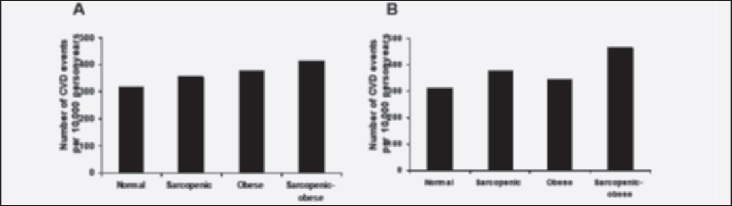
OBJECTIVES: To determine: 1) whether sarcopenic-obesity is a stronger predictor of cardiovascular disease (CVD) than either sarcopenia or obesity alone in the elderly, and 2) whether muscle mass or muscular strength is a stronger marker of CVD risk. DESIGN: Prospective cohort study. PARTICIPANTS: Participants included 3366 community-dwelling older (>or= 65 years) men and women who were free of CVD at baseline. MEASUREMENTS: Waist circumference (WC), bioimpedance analysis, and grip strength were used to measure abdominal obesity, whole-body muscle mass, and muscular strength, respectively. Subjects were classified as normal, sarcopenic, obese, or sarcopenic-obese based on measures of WC and either muscle mass or strength. Participants were followed for 8 years for CVD development and proportional hazard regression models were used to compare risk estimates for CVD in the four groups after adjusting for age, sex, race, income, smoking, alcohol, and cognitive status. RESULTS: Compared with the normal group, CVD risk was not significantly elevated within the obese, sarcopenic, or sarcopenic-obese groups as determined by WC and muscle mass. When determined by WC and muscle strength, CVD risk was not significantly increased in the sarcopenic or obese groups, but was increased by 23% (95% confidence interval: 0.99-1.54, P=0.06) within the sarcopenic-obese group. CONCLUSION: Sarcopenia and obesity alone were not sufficient to increase CVD risk. Sarcopenic-obesity, based on muscle strength but not muscle mass, was modestly associated with increased CVD risk. These findings imply that strength may be more important than muscle mass for CVD protection in old age.
Overview
The claims and statistics of this paper haven’t been checked yet.
Free: it reads the open-access text and checks the first 5 claims that cite a source we can check. Create a free account to check every claim.
Integrity signals
Registry
Cites
Statistics
Figures
Verification
Claims the paper makes
The claims and statistics of this paper haven’t been checked yet.
Free: it reads the open-access text and checks the first 5 claims that cite a source we can check. Create a free account to check every claim.
Claims other papers make about this one
Each is checked against this paper’s own text: does it say what the citing paper says it does?
The source backs part of the claim, not all of it — or backs it for a different population, condition or comparison.
In the citing paper
“The Cardiovascular Health Study, a large prospective study of 3,366 community-dwelling older individuals, demonstrated an association between dynapenic obesity (based on handgrip strength and WC) and the highest risk of CVD (105).”
From Health Consequences of Sarcopenic Obesity: A Narrative Review (2020) · cites this paper as [105]
Experimental — accuracy not yet measuredThe cited source says what the claim attributes to it.
In the citing paper
“Investigators from the Cardiovascular Health Study used low grip strength and high waist circumference to define low muscle strength and obesity. Rates approached 11.1%201, while data from FNIH classified 4.1% of men and 14.0% of women as having sarcopenic obesity using high BMI and low grip strength as measures of obesity and low muscle strength, respectively202.”
From Sarcopenic obesity in older adults: aetiology, epidemiology and treatment strategies (2018) · cites this paper as [201]
The cited source says what the claim attributes to it.
In the citing paper
“Recent cross-sectional and cohort studies suggest that sarcopenic obesity, as measured by muscle strength rather than muscle mass, is associated with increased risks of CVD (48) and cardiovascular mortality (39); however, this finding is challenged by certain studies that imply that sarcopenic obesity may have weak links to CVD (39, 49) or even no association with CVD, independent of sarcopenia or”
From Sarcopenic obesity: epidemiology, pathophysiology, cardiovascular disease, mortality, and management (2023) · cites this paper as [48]
In the citing paper
“In contrast, the risk of CVD was not significantly higher in the sarcopenic obesity group, when defined using BIA-measured muscle mass; thus, muscle strength may be more important predictor of CVD than muscle mass.”
From Health Consequences of Sarcopenic Obesity: A Narrative Review (2020) · cites this paper as [105]
In the citing paper
“Compared to that in participants without sarcopenia or obesity, the risk of CVD did not significantly increase in the dynapenia or obesity groups. However, the risk of CVD increased by 23% in the dynapenia and obesity groups.”
From Health Consequences of Sarcopenic Obesity: A Narrative Review (2020) · cites this paper as [105]
1 more claim about this paper
Create a free account to see every claim other papers make about this one.
Self-check
Percentages, sums and reported differences re-computed from the paper’s own numbers.
The self-check needs the paper’s full text.
Citations
Cites
Folstein, M. F., Folstein, S. E., & McHugh, P. R. (1975) · Journal of Psychiatric Research · doi:10.1016/0022-3956(75)90026-6 · Cited by 88,282 · cited 1×
“Cognitive Function. Cognitive function was measured using the 30-point Mini-Mental State Examination ( 22 ).”
Toprak, O., Kurt, H., Sarı, Y., Şarkış, C., Us, H., & Kırık, A. (2017) · Kidney and Blood Pressure Research · doi:10.1159/000468530 · Cited by 29,627
Grundy, S. M., Bilheimer, D. W., Chait, A., Clark, L. T., Denke, M. A., Havel, R. J., Hazzard, W. R., Hulley, S. B., Hunninghake, D. B., Kreisberg, R. A., et al. (1993) · JAMA · doi:10.1001/jama.269.23.3015 · Cited by 27,947
Expert Panel on Detection, E. (2001) · JAMA: The Journal of the American Medical Association · doi:10.1001/jama.285.19.2486 · Cited by 26,011
Chobanian, A. V. (2003) · JAMA · doi:10.1001/jama.289.19.2560 · Cited by 25,386
Hirono, N., Mori, E., Ikejiri, Y., Imamura, T., Shimomura, T., Hashimoto, M., Yamashita, H., & Ikeda, M. (1997) · Brain and nerve · Cited by 21,039
Kok, J. S., Berg, I. J., & Scherder, E. J. A. (2013) · Dementia and Geriatric Cognitive Disorders Extra · doi:10.1159/000353441 · Cited by 20,589
Older Adults' Reasons for Using Technology while Aging in Place
Peek, S. T. M., Luijkx, K. G., Rijnaard, M. D., Nieboer, M. E., van der Voort, C. S., Aarts, S., van Hoof, J., Vrijhoef, H. J. M., & Wouters, E. J. M. (2016) · Gerontology · doi:10.1159/000430949 · Cited by 19,690
Sensitivity and False Alarm Rate of a Fall Sensor in Long-Term Fall Detection in the Elderly
Kangas, M., Korpelainen, R., Vikman, I., Nyberg, L., & Jämsä, T. (2015) · Gerontology · doi:10.1159/000362720 · Cited by 18,909
Detection, evaluation, and treatment of high blood cholesterol in adults (Adult Treatment Panel III)
Grundy, S. M., Becker, D. M., Clark, L. T., Cooper, R., Denke, M. A., Howard, J. L., Hunninghake, D. B., Illingworth, D. R., Luepker, R. V., McBride, P. E., et al. (2002) · Civil War Book Review · Cited by 12,198
Cited by
Sarcopenic obesity in older adults: aetiology, epidemiology and treatment strategies
Batsis, J. A., & Villareal, D. T. (2018) · Nature Reviews Endocrinology · doi:10.1038/s41574-018-0062-9 · Cited by 1,382
Sarcopenia with limited mobility: an international consensus
Morley, J. E., Abbatecola, A. M., Argiles, J. M., Baracos, V., Bauer, J., Bhasin, S., Cederholm, T., Stewart Coats, A. J., Cummings, S. R., Evans, W. J., et al. (2011) · Journal of the American Medical Directors Association · doi:10.1016/j.jamda.2011.04.014 · Cited by 1,125
Sarcopenia and Cardiovascular Diseases
Damluji, A. A., Alfaraidhy, M., AlHajri, N., Rohant, N. N., Kumar, M., Al Malouf, C., Bahrainy, S., Ji Kwak, M., Batchelor, W. B., Forman, D. E., et al. (2023) · Circulation · doi:10.1161/circulationaha.123.064071 · Cited by 645
Srikanthan, P., Hevener, A. L., & Karlamangla, A. S. (2010) · PLoS ONE · doi:10.1371/journal.pone.0010805 · Cited by 600
“Consistent with this, Stephen et al. found a positive association between sarcopenic obesity and cardiovascular disease in the older adults from the Cardiovascular Health Study [8].”
BackgroundSarcopenic obesity: a critical appraisal of the current evidence
Prado, C. M. M., Wells, J. C. K., Smith, S. R., Stephan, B. C. M., & Siervo, M. (2012) · Clinical Nutrition · doi:10.1016/j.clnu.2012.06.010 · Cited by 589
Lim, S., Kim, J. H., Yoon, J. W., Kang, S. M., Choi, S. H., Park, Y. J., Kim, K. W., Lim, J. Y., Park, K. S., & Jang, H. C. (2010) · Diabetes Care · doi:10.2337/dc10-0107 · Cited by 588
“Second, we did not consider muscle quality or the infiltration of fat into muscle, which has been shown to be associated with reduced strength, the incidence of mobility disability, and insulin resistance (13,15).”
BackgroundInfluentialAtkins, J. L., Whincup, P. H., Morris, R. W., Lennon, L. T., Papacosta, O., & Wannamethee, S. G. (2014) · Journal of the American Geriatrics Society · doi:10.1111/jgs.12652 · Cited by 509
“A large longitudinal study, the Cardiovascular Health Study, found that sarcopenic obesity classified using muscle strength was modestly associated with CVD risk but that sarcopenic obesity classified using muscle mass was not associated with CVD risk.(15) A previous report from this cohort examined anthropometric ind…”
BackgroundResultMuscle loss and obesity: the health implications of sarcopenia and sarcopenic obesity
Wannamethee, S. G., & Atkins, J. L. (2015) · Proceedings of the Nutrition Society · doi:10.1017/s002966511500169x · Cited by 404
Sarcopenia and sarcopenic obesity
Choi, K. M. (2016) · The Korean Journal of Internal Medicine · doi:10.3904/kjim.2016.193 · Cited by 344
“Stephen and Janssen [61] showed that sarcopenic obesity is associated with increased CVD risk based on muscle strength but not muscle mass.”
BackgroundLee, Y.-H., Jung, K. S., Kim, S. U., Yoon, H.-J., Yun, Y. J., Lee, B.-W., Kang, E. S., Han, K.-H., Lee, H. C., & Cha, B.-S. (2015) · Journal of Hepatology · doi:10.1016/j.jhep.2015.02.051 · Cited by 340
“associated with sarcopaenia [3,6-8].”
Sanada, K., Miyachi, M., Tanimoto, M., Yamamoto, K., Murakami, H., Okumura, S., Gando, Y., Suzuki, K., Tabata, I., & Higuchi, M. (2010) · European Journal of Applied Physiology · doi:10.1007/s00421-010-1473-z · Cited by 309
“with increased CVD risk (Stephen and Janssen 2009).”
Health Consequences of Sarcopenic Obesity: A Narrative Review
Roh, E., & Choi, K. M. (2020) · Frontiers in Endocrinology · doi:10.3389/fendo.2020.00332 · Cited by 304
“The Cardiovascular Health Study, a large prospective study of 3,366 communitydwelling older individuals, demonstrated an association between dynapenic obesity (based on handgrip strength and WC) and the highest risk of CVD (105).”
BackgroundSarcopenic obesity: epidemiology, pathophysiology, cardiovascular disease, mortality, and management
Wei, S., Nguyen, T. T., Zhang, Y., Ryu, D., & Gariani, K. (2023) · Frontiers in Endocrinology · doi:10.3389/fendo.2023.1185221 · Cited by 291
“Several cross-sectional studies have indicated that sarcopenic obesity might be independently linked to other CVDs such as myocardial infarction, arrhythmia, and diastolic dysfunction (63, 64).”
BackgroundInfluentialChung, J.-Y., Kang, H.-T., Lee, D.-C., Lee, H.-R., & Lee, Y.-J. (2013) · Archives of Gerontology and Geriatrics · doi:10.1016/j.archger.2012.09.007 · Cited by 283
Bernstein, M., & Munoz, N. (2012) · Journal of the Academy of Nutrition and Dietetics · doi:10.1016/j.jand.2012.06.015 · Cited by 283
“In addition, sarcopenia and obesity together in older adults have found to be modestly associated with increased cardiovascular disease.(100) Screening to identifying elderly subjects with sarcopenic obesity is clinically relevant and should become more widespread so that effective treatment can be implemented to atte…”
BackgroundTian, S., & Xu, Y. (2016) · Geriatrics & Gerontology International · doi:10.1111/ggi.12579 · Cited by 274
Bhanji, R. A., Narayanan, P., Allen, A. M., Malhi, H., & Watt, K. D. (2017) · Hepatology · doi:10.1002/hep.29420 · Cited by 258
“Similarly, myosteatosis has also been shown to be associated with IR.((17)) The presence of both sarcopenia and obesity acts synergistically leading to a more-severe IR and dysglycemia.”
BackgroundInfluentialDiabetes and Sarcopenic Obesity: Pathogenesis, Diagnosis, and Treatments
Wang, M., Tan, Y., Shi, Y., Wang, X., Liao, Z., & Wei, P. (2020) · Frontiers in Endocrinology · doi:10.3389/fendo.2020.00568 · Cited by 231
“Due to the chronic progress of SO, the symptoms hardly draw people’s attention, resulting in poor diagnosis, which causes negative consequences of quality of life and all-cause mortality (8).”
BackgroundThe implications of sarcopenia and sarcopenic obesity on cardiometabolic disease
Kim, T. N., & Choi, K. M. (2015) · Journal of Cellular Biochemistry · doi:10.1002/jcb.25077 · Cited by 225
“…Cardiovascular Health Study found that JOURNAL OF CELLULAR BIOCHEMISTRY SARCOPENIC OBESITY AND CARDIOMETABOLIC DISEASE 1175 subjects with SO that was defined using muscle strength had an increased CVD risk than did those with SO that was defined using muscle mass [Stephen and Janssen, 2009].”
BackgroundMethodInfluentialBuch, A., Carmeli, E., Boker, L. K., Marcus, Y., Shefer, G., Kis, O., Berner, Y., & Stern, N. (2016) · Experimental Gerontology · doi:10.1016/j.exger.2016.01.008 · Cited by 227
Waters, D. (2010) · Clinical Interventions in Aging · doi:10.2147/cia.s6920 · Cited by 220
“Some, in fact, have suggested that the “best” measure should be based on muscle strength rather than on mass particularly in the context of cardiovascular disease risk.(19)”
Kim, T. N., Park, M. S., Lim, K. I., Choi, H. Y., Yang, S. J., Yoo, H. J., Kang, H. J., Song, W., Choi, H., Baik, S. H., et al. (2013) · Clinical Endocrinology · doi:10.1111/j.1365-2265.2012.04433.x · Cited by 208
Leser, S. (2013) · Nutrition Bulletin · doi:10.1111/nbu.12063 · Cited by 205
Sarcopenic obesity is closely associated with metabolic syndrome
Lu, C.-W., Yang, K.-C., Chang, H.-H., Lee, L.-T., Chen, C.-Y., & Huang, K.-C. (2013) · Obesity Research & Clinical Practice · doi:10.1016/j.orcp.2012.02.003 · Cited by 198
Ranasinghe, C., Gamage, P., Katulanda, P., Andraweera, N., Thilakarathne, S., & Tharanga, P. (2013) · BMC Public Health · doi:10.1186/1471-2458-13-797 · Cited by 193
The Epidemiology of Sarcopenia
Janssen, I. (2011) · Clinics in Geriatric Medicine · doi:10.1016/j.cger.2011.03.004 · Cited by 191
“were estimated by bioelectrical impedance analysis, was not a risk factor for the development of cardiovascular disease over an 8-year follow-up period.(21) A 2006 study reported that older patients with sarcopenia were twice as likely to contract infection during a hospital stay than were older patients with a normal…”
BackgroundMethodSelf-citationSarcopenic obesity in ageing: cardiovascular outcomes and mortality
Atkins, J. L., & Wannamathee, S. G. (2020) · British Journal of Nutrition · doi:10.1017/s0007114520002172 · Cited by 187
“Stephen & Janssen (79) 2009 (39) .”
InfluentialWaters, D. L., & Baumgartner, R. N. (2011) · Clinics in Geriatric Medicine · doi:10.1016/j.cger.2011.03.007 · Cited by 185
Baek, S. J., Nam, G. E., Han, K. D., Choi, S. W., Jung, S. W., Bok, A. R., Kim, Y. H., Lee, K. S., Han, B. D., & Kim, D. H. (2014) · Journal of Endocrinological Investigation · doi:10.1007/s40618-013-0011-3 · Cited by 182
Evolution of sarcopenia research
Janssen, I. (2010) · Applied Physiology, Nutrition, and Metabolism · doi:10.1139/h10-067 · Cited by 181
“Additional research on over 3000 members of the Cardiovascular Health Study cohort found that sarcopenia was not a risk factor for the development of cardiovascular disease over an 8-year followup period (Stephen and Janssen 2009).”
BackgroundInfluentialSelf-citationPhysical Activity and Sarcopenic Obesity: Definition, Assessment, Prevalence and Mechanism
Lee, D.-C., Shook, R. P., Drenowatz, C., & Blair, S. N. (2016) · Future Science OA · doi:10.4155/fsoa-2016-0028 · Cited by 177
Sarcopenic Obesity: Epidemiologic Evidence, Pathophysiology, and Therapeutic Perspectives
Koliaki, C., Liatis, S., Dalamaga, M., & Kokkinos, A. (2019) · Current Obesity Reports · doi:10.1007/s13679-019-00359-9 · Cited by 176
Kim, T. N., Park, M. S., Lim, K. I., Yang, S. J., Yoo, H. J., Kang, H. J., Song, W., Seo, J. A., Kim, S. G., Kim, N. H., et al. (2011) · Diabetes Research and Clinical Practice · doi:10.1016/j.diabres.2011.06.013 · Cited by 167
“reported that sarcopenia and obesity alone were not sufficient to increase CVD risk in a community-dwelling elderly population [30].”
Figueroa, A., Park, S. Y., Seo, D. Y., Sanchez-Gonzalez, M. A., & Baek, Y. H. (2011) · Menopause · doi:10.1097/gme.0b013e3182135442 · Cited by 164
“Recent studies have indicated that increased isometric and dynamic muscle strength may have a protective effect against arterial stiffness,(5) hypertension,(6) and cardiovascular diseases.(7) The deleterious changes in arterial and muscular function seem to be associated with estrogen deficiency in early postmenopausa…”
BackgroundFarmer, R. E., Mathur, R., Schmidt, A. F., Bhaskaran, K., Fatemifar, G., Eastwood, S. V., Finan, C., Denaxas, S., Smeeth, L., & Chaturvedi, N. (2019) · Journal of the American Heart Association · doi:10.1161/jaha.118.011638 · Cited by 144
“The finding that muscle strength defined by HGS appears to be of greater prognostic value than muscle mass defined by SMMI adds to a growing body of evidence;.(5,37) In contrast to a recent study also using the UKB,(4) we found no clear evidence of an effect of sarcopenia on incident or recurring CVD events.”
ResultMeasurement of hand grip strength in the elderly: A scoping review with recommendations
Mehmet, H., Yang, A. W. H., & Robinson, S. R. (2019) · Journal of Bodywork and Movement Therapies · doi:10.1016/j.jbmt.2019.05.029 · Cited by 165
Obesity in breast cancer – What is the risk factor?
James, F. R., Wootton, S. A., Jackson, A. A., Wiseman, M. J., Copson, E., & Cutress, R. (2015) · European Journal of Cancer · doi:10.1016/j.ejca.2015.01.057 · Cited by 155
“A recent study found sarcopenic obesity to be a strong predictor of cardiovascular disease [19].”
BackgroundKim, J.-H., Cho, J. J., & Park, Y. S. (2015) · Journal of Korean Medical Science · doi:10.3346/jkms.2015.30.3.264 · Cited by 126
“However, in the Cardiovascular Health Study, CVD risk was not significantly elevated in the obese, sarcopenic, or sarcopenic-obese groups as determined by waist circumference and muscle mass (13).”
BackgroundFukuda, T., Bouchi, R., Takeuchi, T., Tsujimoto, K., Minami, I., Yoshimoto, T., & Ogawa, Y. (2018) · Cardiovascular Diabetology · doi:10.1186/s12933-018-0700-5 · Cited by 124
“In the prospective survey of 3366 community-dwelling older men and women, sarcopenic obesity evaluated using waist circumference (WC) and muscle strength was associated with the highest risk of CVD event [36].”
BackgroundSarcopenia and the cardiometabolic syndrome: A narrative review
Bahat, G., & İlhan, B. (2016) · European Geriatric Medicine · doi:10.1016/j.eurger.2015.12.012 · Cited by 144
Kemmler, W., Weissenfels, A., Teschler, M., Willert, S., Bebenek, M., Shojaa, M., Kohl, M., Freiberger, E., Sieber, C., & von Stengel, S. (2017) · Clinical Interventions in Aging · doi:10.2147/cia.s137987 · Cited by 123
“38,40,43 46 Perna et al 45 who compared people aged 65 + years without and with sarcopenia or SO confirmed the worse metabolic and inflammatory status of the latter cohorts in general, however, with a better metabolic profile of the SO compared with the sarcopenia patients.”
Sarcopenic obesity in the elderly and strategies for weight management
Li, Z., & Heber, D. (2012) · Nutrition Reviews · doi:10.1111/j.1753-4887.2011.00453.x · Cited by 111
Aggio, D. A., Sartini, C., Papacosta, O., Lennon, L. T., Ash, S., Whincup, P. H., Wannamethee, S. G., & Jefferis, B. J. (2016) · Preventive Medicine · doi:10.1016/j.ypmed.2016.08.040 · Cited by 110
Obesity phenotypes and cardiovascular risk: From pathophysiology to clinical management
Preda, A., Carbone, F., Tirandi, A., Montecucco, F., & Liberale, L. (2023) · Reviews in Endocrine and Metabolic Disorders · doi:10.1007/s11154-023-09813-5 · Cited by 144
“In the Cardiovascular Health Study, a large prospective study of community-dwelling older men and women, SO based on WC and muscle strength was associated with the highest risk of CVD and HF over 8 years as compared with healthy subjects [211].”
BackgroundLow muscle mass and low muscle strength associate with nonalcoholic fatty liver disease
Gan, D., Wang, L., Jia, M., Ru, Y., Ma, Y., Zheng, W., Zhao, X., Yang, F., Wang, T., Mu, Y., et al. (2020) · Clinical Nutrition · doi:10.1016/j.clnu.2019.04.023 · Cited by 95
Sarcopenic obesity: An appraisal of the current status of knowledge and management in elderly people
Molino, S., Dossena, M., Buonocore, D., & Verri, M. (2016) · The Journal of nutrition, health and aging · doi:10.1007/s12603-015-0631-8 · Cited by 91
Uchmanowicz, I., Łoboz-Rudnicka, M., Szeląg, P., Jankowska‐Polańska, B., & Łoboz−Grudzień, K. (2014) · Current Heart Failure Reports · doi:10.1007/s11897-014-0198-4 · Cited by 103
Di Sebastiano, K. M., & Mourtzakis, M. (2012) · Applied Physiology, Nutrition, and Metabolism · doi:10.1139/h2012-079 · Cited by 91
Rossi, A. P., Fantin, F., Caliari, C., Zoico, E., Mazzali, G., Zanardo, M., Bertassello, P., Zanandrea, V., Micciolo, R., & Zamboni, M. (2016) · Clinical Nutrition · doi:10.1016/j.clnu.2015.02.005 · Cited by 89
Neto, L. S. S., Karnikowiski, M. G. O., Tavares, A. B., & Lima, R. M. (2012) · PubMed · Cited by 122
Han, P., Yu, H., Ma, Y., Kang, L., Fu, L., Jia, L., Chen, X., Yu, X., Hou, L., Wang, L., et al. (2017) · Scientific Reports · doi:10.1038/s41598-017-08488-8 · Cited by 82
Liu, L.-K., Lee, W., Chen, L., Hwang, A., Ming‐Hsien, L. I. N., Peng, L., & Chen, L. (2014) · Geriatrics and gerontology international/Geriatrics & gerontology international · doi:10.1111/ggi.12208 · Cited by 92
Interaction between sarcopenia and nonalcoholic fatty liver disease
Joo, S. K., & Kim, W. (2023) · Clinical and Molecular Hepatology · doi:10.3350/cmh.2022.0358 · Cited by 78
“Likewise, myosteatosis, defined as fatty infiltration of muscle, is associated with reduced muscle function, IR, and a high risk of mortality in cirrhotic patients.(34,35) Both sarcopenia and obesity simultaneously induce more severe IR and glycemic dysregulation.”
BackgroundPhysical performance and disability in schizophrenia
Strassnig, M., Signorile, J. F., Gonzalez, C., & Harvey, P. D. (2014) · Schizophrenia Research Cognition · doi:10.1016/j.scog.2014.06.002 · Cited by 93
Dynapenic Abdominal Obesity and Metabolic Risk Factors in Adults 50 Years of Age and Older
Sénéchal, M., Dionne, I. J., & Brochu, M. (2012) · Journal of Aging and Health · doi:10.1177/0898264312440324 · Cited by 74
Perna, S., Peroni, G., Faliva, M. A., Bartolo, A., Naso, M., Miccono, A., & Rondanelli, M. (2017) · Aging Clinical and Experimental Research · doi:10.1007/s40520-016-0701-8 · Cited by 77
Domiciano, D. S., Figueiredo, C. P., Lopes, J., Caparbo, V. F., Takayama, L., Menezes, P. R., Bonfá, E., & Pereira, R. M. R. (2012) · Osteoporosis International · doi:10.1007/s00198-012-2002-1 · Cited by 95
Kim, J.-K., Bae, M., Lee, K., Kim, J., & Hong, S. G. (2022) · Biosensors · doi:10.3390/bios12030167 · Cited by 83
“Osteoporosis, falls, and fractures can occur easily, whereas the blood and hormonal buffering action of the muscle are moderated, reducing the basal metabolic rate, making chronic diseases unmanageable, and increasing the likelihood of aggravating diabetes and cardiovascular disease [3].”
BackgroundSarcopenia and sarcopenic obesity classifications and cardiometabolic risks in older women
dos Santos, E. P., Gadelha, A. B., Safons, M. P., Nóbrega, O. T., Oliveira, R. J., & Lima, R. M. (2014) · Archives of Gerontology and Geriatrics · doi:10.1016/j.archger.2014.03.012 · Cited by 69
“Regarding cardiovascular risk factors, Stephen and Janssen (2009) reported that sarcopenia alone was not associated with increased risk, while SO, not based on FFM but on muscle strength, was modestly associated with greater cardiovascular risk factors.”
Identification of sarcopenic obesity in postmenopausal women: a cutoff proposal
Oliveira, R. J., Bottaro, M., Júnior, J. T., Farinatti, P. T. V., Bezerra, L. A., & Lima, R. M. (2011) · Brazilian Journal of Medical and Biological Research · doi:10.1590/s0100-879x2011007500135 · Cited by 68
“An increasing number of studies have been conducted to better understand the pathophysiology of sarcopenia (2,3,6,21), but recent literature has also focused on the obesity/low muscle mass combination (22-27) with sarcopenic obesity described as an important public health problem (24,26).”
BackgroundMid-adulthood cardiometabolic risk factor profiles of sarcopenic obesity
Ma, J., Hwang, S., McMahon, G. M., Curhan, G. C., Mclean, R. R., Murabito, J. M., & Fox, C. S. (2016) · Obesity · doi:10.1002/oby.21356 · Cited by 68
“In a large prospective cohort study conducted in 3,366 older adults aged 65 years or above in the Cardiovascular Health Study (15), sarcopenic obesity was defined as the lowest tertile of grip strength and highest tertile of waist circumference.”
BackgroundAdverse effects of coexistence of sarcopenia and metabolic syndrome in Japanese women
Sanada, K., Iemitsu, M., Murakami, H., Gando, Y., Kawano, H., Kawakami, R., Tabata, I., & Miyachi, M. (2012) · European Journal of Clinical Nutrition · doi:10.1038/ejcn.2012.43 · Cited by 72
Prevalence of low muscle mass according to body mass index in older adults
Graf, C. E., Pichard, C., Herrmann, F. R., Sieber, C. C., Zekry, D., & Genton, L. (2016) · Nutrition · doi:10.1016/j.nut.2016.10.002 · Cited by 73
Silva Neto, L. S., Karnikowiski, M. G. O., Tavares, A. B., & Lima, R. M. (2012) · Brazilian Journal of Physical Therapy · doi:10.1590/s1413-35552012005000044 · Cited by 65
Triglyceride–Glucose Index as a Potential Indicator of Sarcopenic Obesity in Older People
Kim, B., Kim, G., Lee, Y., Taniguchi, K., Isobe, T., & Oh, S. (2023) · Nutrients · doi:10.3390/nu15030555 · Cited by 65
“Moreover, because sarcopenic obesity progresses slowly, the early stages of the condition do not receive sufficient attention, which leads to a delay in diagnosis and significant consequences with respect to quality of life and all-cause mortality [3,6,7].”
BackgroundDutra, M. T., Avelar, B. P., Souza, V. C., Bottaro, M., Oliveira, R. J., Nóbrega, O. T., & Moreno Lima, R. (2017) · Clinical Physiology and Functional Imaging · doi:10.1111/cpf.12287 · Cited by 63
“…2005; Schrager et al., 2007), which in conjunction with other documented negative outcomes related to SO such as increased cardiometabolic risk (Stephen & Janssen, 2009) and reduced functional capacity (Oliveira et al., 2011), provide further evidence that this condition is an important public…”
ResultEffects of progressive elastic band resistance exercise for aged osteosarcopenic adiposity women
Lee, Y.-H., Lee, P.-H., Lin, L.-F., Liao, C.-D., Liou, T.-H., & Huang, S.-W. (2021) · Experimental Gerontology · doi:10.1016/j.exger.2021.111272 · Cited by 62
Wang, H., Hai, S., Liu, Y. X., Cao, L., Liu, Y., Liu, P., Yang, Y., & Dong, B. (2019) · The Journal of nutrition, health and aging · doi:10.1007/s12603-018-1088-3 · Cited by 61
Evans, K., Abdelhafiz, D., & Abdelhafiz, A. H. (2021) · Postgraduate Medicine · doi:10.1080/00325481.2021.1942934 · Cited by 61
Park, M., Hwang, S. Y., Kim, N. H., Kim, S. G., Choi, K. M., Baik, S. H., & Yoo, H. J. (2023) · Journal of Obesity & Metabolic Syndrome · doi:10.7570/jomes23005 · Cited by 68
Ricciardi, C., Edmunds, K. J., Recenti, M., Sigurdsson, S. O., Gudnason, V. G., Carraro, U., & Gargiulo, P. (2020) · Scientific Reports · doi:10.1038/s41598-020-59873-9 · Cited by 66
Wong, A., Kwak, Y., Scott, S. D., Pekas, E. J., Son, W., Kim, J.-S., & Park, S. (2018) · Menopause The Journal of The North American Menopause Society · doi:10.1097/gme.0000000000001288 · Cited by 67
Sarcopenic Obesity and Cardiovascular Disease: An Overlooked but High-Risk Syndrome
Mirzai, S., Carbone, S., Batsis, J. A., Kritchevsky, S. B., Kitzman, D. W., & Shapiro, M. D. (2024) · Current Obesity Reports · doi:10.1007/s13679-024-00571-2 · Cited by 77
“…cohort study, for example, compared the risk of incident CVD among 3,366 older US adults (≥ 65 years) from the Cardiovascular Health Study with SO defined by two definitions, one strength-based using HGS with WC and the other body composition-based using height-adjusted SMM by BIA with WC [56].”
BackgroundMethodInfluentialFigueroa, A., Alvarez‐Alvarado, S., Ormsbee, M. J., Madzima, T. A., Campbell, J. C., & Wong, A. (2015) · Experimental Gerontology · doi:10.1016/j.exger.2015.01.046 · Cited by 71
“Nevertheless, because cardiovascular disease risk increases by 23% in obese adults with reduced muscle mass, but not in those with normal strength (Stephen and Janssen, 2009), improvements in leg muscle strength with WBVT may reduce cardiovascular risk in obese postmenopausal women by reducing physical disability.”
Obesity paradox in older sarcopenic adults ― a delay in aging: A systematic review and meta-analysis
Eitmann, S., Mátrai, P., Hegyi, P. J., Balaskó, M., Erőss, B. M., Dorogi, K., & Pétervári, E. (2023) · Ageing Research Reviews · doi:10.1016/j.arr.2023.102164 · Cited by 66
Park, S., Kwak, Y., & Pekas, E. J. (2019) · Journal of Applied Physiology · doi:10.1152/japplphysiol.00209.2019 · Cited by 64
Chuang, S.-Y., Hsu, Y.-Y., Chen, R. C.-Y., Liu, W.-L., & Pan, W.-H. (2016) · The Journals of Gerontology Series A: Biological Sciences and Medical Sciences · doi:10.1093/gerona/glv192 · Cited by 52
“In addition, studies revealed hypertriglyceridemic waist is associated with an increased risk of cardiovascular disease (32,33) and found a direct association between hypertriglyceridemic waist and cardiovascular mortality in elderly individuals (13).”
BackgroundInfluentialChoudhary, N. S., Saigal, S., Saraf, N., Mohanka, R., Rastogi, A., Goja, S., Menon, P. B., Mishra, S., Mittal, A., & Soin, A. S. (2015) · Clinical Transplantation · doi:10.1111/ctr.12505 · Cited by 52
Wannamethee, S. G., & Atkins, J. L. (2023) · Current Diabetes Reports · doi:10.1007/s11892-023-01522-2 · Cited by 49
Ryu, J. Y., Choi, H. M., Yang, H.-I., & Kim, K. S. (2020) · International Journal of Molecular Sciences · doi:10.3390/ijms21186887 · Cited by 55
Ossowski, Z. M., Skrobot, W. R., Aschenbrenner, P., Česnaitienė, V. J., & Smaruj, M. (2016) · Clinical Interventions in Aging · doi:10.2147/cia.s118995 · Cited by 58
Sarcopenia: Tilting the Balance of Protein Homeostasis
Tan, K. T., Ang, S. T., & Tsai, S. (2019) · PROTEOMICS · doi:10.1002/pmic.201800411 · Cited by 58
The effects of lifestyle interventions in dynapenic-obese postmenopausal women
Sénéchal, M., Bouchard, D. R., Dionne, I. J., & Brochu, M. (2012) · Menopause · doi:10.1097/gme.0b013e318248f50f · Cited by 48
Bollinger, L. M., Powell, J. J. S., Houmard, J. A., Witczak, C. A., & Brault, J. J. (2015) · Obesity · doi:10.1002/oby.21081 · Cited by 47
“These risks are compounded by coincident low levels of muscle mass, which has been identified as “sarcopenic obesity” (2-5).”
Kim, Y., Han, B., Han, K., Shin, K. E., Lee, H., Kim, T. R., Cho, K.-H., Kim, D., Kim, Y., Kim, H., et al. (2015) · Endocrine · doi:10.1007/s12020-015-0577-y · Cited by 50
Özkök, S., Aydın, Ç. Ö., Sacar, D. E., Çatıkkaş, N. M., Erdoğan, T., Bozkurt, M. E., Kılıç, C., Karan, M. A., & Bahat, G. (2022) · Clinical Nutrition · doi:10.1016/j.clnu.2022.09.005 · Cited by 55
Alagiakrishnan, K., Banach, M., Ahmed, A., & Aronow, W. S. (2016) · Annals of Medicine · doi:10.1080/07853890.2016.1197415 · Cited by 50
“In the prospective Cardiovascular Health Study, sarcopenic obesity was associated with a 42% increase in risk of HF over eight years of follow-up (64).”
BackgroundYu, S., Umapathysivam, K., & Visvanathan, R. (2014) · International Journal of Evidence-Based Healthcare · doi:10.1097/xeb.0000000000000018 · Cited by 44
“However, sarcopenia was found not to be a risk factor for the development of cardiovascular diseases at 8 years in another study.(39)”
Mogi, M., Kohara, K., Nakaoka, H., Kan‐no, H., Tsukuda, K., Wang, X., Chisaka, T., Bai, H., Shan, B., Kukida, M., et al. (2015) · Journal of Cachexia Sarcopenia and Muscle · doi:10.1002/jcsm.12044 · Cited by 49
“Journal of Cachexia, Sarcopenia and Muscle published by John Wiley & Sons Ltd on behalf of the Society of Sarcopenia, Cachexia and Wasting Disorders This is an open access article under the terms of the Creative Commons Attribution-NonCommercial-NoDerivs License, which permits use and distribution in any medium, provi…”
Rech, C. R., Dellagrana, R. A., Marucci, M. D. F. N., & Petróski, E. L. (2012) · Brazilian Journal of Kinanthropometry and Human Performance · doi:10.5007/1980-0037.2012v14n1p23 · Cited by 74
“O IMC médio da amostra foi 28 kg/m2 (3,75), variando de 18,4 kg/m2 a 39,3 kg/m2.”
BackgroundLee, S., Lee, Y., Kim, K. J., Lee, W., Kwon, O., & Kim, J. (2013) · Osteoporosis International · doi:10.1007/s00198-013-2378-6 · Cited by 45
“A number of cardiometabolic disorders, including diabetes mellitus, metabolic syndrome, and coronary artery disease, have been also associated with sarcopenia [11–14].”
BackgroundMoreno‐Franco, B., Pérez‐Tasigchana, R. F., López‐García, E., Laclaustra, M., Gutiérrez-Fisac, J. L., Rodríguez‐Artalejo, F., & Guallar‐Castillón, P. (2018) · Scientific Reports · doi:10.1038/s41598-018-28982-x · Cited by 45
Nascimento, D. D. C., da Cunha Oliveira, S., Leite Vieira, D. C., Schwerz Funghetto, S., Silva, A. O., Valduga, R., Schoenfeld, B. J., & Prestes, J. (2018) · International Journal of General Medicine · doi:10.2147/ijgm.s187285 · Cited by 41
Sarcopenic obesity is significantly associated with coronary artery calcification
Chung, G. E., Park, H. E., Lee, H., Kim, M. J., Choi, S.-Y., Yim, J. Y., & Yoon, J. W. (2021) · Frontiers in Medicine · doi:10.3389/fmed.2021.651961 · Cited by 39
“They reported that sarcopenia (defined as reduced muscle strength or mass) and obesity alone did not affect the risk of cardiovascular disease, but SO (defined by reduced muscle strength) was associated with a 23% increased risk of cardiovascular disease (6).”
BackgroundSarcopenic Obesity: Involvement of Oxidative Stress and Beneficial Role of Antioxidant Flavonoids
Jung, U. J. (2023) · Antioxidants · doi:10.3390/antiox12051063 · Cited by 47
Sung, M. J., Lim, T. S., Jeon, M. Y., Lee, H. W., Kim, B. K., Kim, D. Y., Ahn, S. H., Han, K., Park, J. Y., & Kim, S. U. (2020) · Gut and Liver · doi:10.5009/gnl19126 · Cited by 41
Rozenberg, D., Orsso, C. E., Chohan, K., Orchanian‐Cheff, A., Nourouzpour, S., Nicholson, J. M., Elangeswaran, B., Vagaon, A., Fidler, L. M., Singer, L. G., et al. (2020) · Transplant International · doi:10.1111/tri.13749 · Cited by 42
“Introduction Body composition (muscle and fat mass) is an important marker of overall health in people with chronic disease [1].”
BackgroundTabibi, H., As'habi, A., Najafi, I., & Hedayati, M. (2018) · Kidney Research and Clinical Practice · doi:10.23876/j.krcp.18.0064 · Cited by 37
“In addition, some investigations in non-CKD patients showed that dynapenic obesity and sarcopenic obesity increased CVD and mortality [11-15].”
BackgroundMethodWilhelmsen, A., Tsintzas, K., & Jones, S. W. (2021) · GeroScience · doi:10.1007/s11357-021-00322-4 · Cited by 44
Dynapenia and Metabolic Health in Obese and Nonobese Adults Aged 70 Years and Older: The LIFE Study
Aubertin‐Leheudre, M., Anton, S. D., Beavers, D. P., Manini, T. M., Fielding, R. A., Newman, A. B., Church, T., Kritchevsky, S. B., Conroy, D. E., McDermott, M. M., et al. (2016) · Journal of the American Medical Directors Association · doi:10.1016/j.jamda.2016.10.001 · Cited by 41
Metadata
- Authors
- Stephen, W. C., & Janssen, I.
- Affiliations
- Queen's University (CA)
- Corresponding author
- Janssen, I.
- ORCID
- Janssen, I.
- Venue
- The Journal of nutrition, health and aging
- Publisher
- Elsevier BV
- Published
- 2009-05
- Volume
- 13
- Issue
- 5
- Pages
- 460-466
- ISSN
- 1279-7707 (ISSN-L)
- PMC
- PMC12880267
- OpenAlex
- W2079791223
- Cited by
- 301
- References
- 43
- Citations by year
- 2026: 8 · 2025: 21 · 2024: 16 · 2023: 28 · 2022: 20 · 2021: 22 · 2020: 18 · 2019: 14 · 2018: 19 · 2017: 10 · 2016: 23 · 2015: 23 · 2014: 19 · 2013: 11 · 2012: 25
- FWCI
- 10.60
- Type
- journal article
- Language
- en
- Open access
- hybrid
- doi.org
- Licence
- cc-by-nc-nd
- www.elsevier.com/tdm/userlicense/1.0/ (tdm)
- www.elsevier.com/legal/tdmrep-license (tdm)
- creativecommons.org/licenses/by-nc-nd/4.0/ (vor, 5349 d)
- Locations
- The journal of nutrition health & aging (publishedVersion, cc-by-nc-nd)
- Europe PMC (PubMed Central) (publishedVersion, cc-by-nc-nd)
- PubMed (publishedVersion)
- PubMed Central (publishedVersion, cc-by-nc-nd)
- Topics
- Health Sciences › Medicine › Physiology (medical) › Nutrition and Health in Aging
- Health Sciences › Medicine › Physiology (medical) › Body Composition Measurement Techniques
- Health Sciences › Medicine › Geriatrics and Gerontology › Frailty in Older Adults
- Keywords
- sarcopenic obesity, sarcopenia, obesity, cardiovascular risk, older adults, muscle strength, grip strength, muscle mass, waist circumference, abdominal obesity, bioelectrical impedance analysis
- MeSH terms
- Adipose Tissue, Aged, Aged, 80 and over, Body Composition, Cardiovascular Diseases, Female, Follow-Up Studies, Humans, Longitudinal Studies, Male, Muscular Atrophy, Obesity, Prospective Studies, Risk Factors, United States, Cohort Studies, Geriatric Assessment, Comorbidity, Electric Impedance, Age Distribution, Muscle, Skeletal, Hand Strength, Muscle Weakness, Waist Circumference
About these checks
Registry, retraction, Cites and statistics results are computed, not judged, with one exception: a printed reference that no index lists is read once by a model before it counts as a citation error. Claims are extracted by a model and kept only when their quote appears verbatim in the text; each cited source is then checked, with a model’s help, for whether it says what the claim relies on. Those verdicts can be wrong — read the claim’s quote and the cited source before relying on one.
Statistics and arithmetic are recomputed, not judged.
Confidence bands are shown only for fields calibrated on our annotated test set. None is calibrated yet, so no band is shown.
What counts as a claim ›How we measure confidence ›How we check this ›
Are you an author, or do you see a problem with this page? Request a review
Data sources
Bibliographic data: Semantic Scholar, OpenAlex, Crossref.
Contains information from the Semantic Scholar Academic Graph Datasets, made available under the ODC Attribution License (ODC-BY 1.0).
Semantic Scholar’s data is described in: Kinney, R., et al. (2023). The Semantic Scholar Open Data Platform. arXiv:2301.10140.
