

Sarcopenic-obesity and cardiovascular disease risk in the elderly
Open accessThe DOI matches its Crossref record; 42 of the 43 references it cites were found in a registry or an index, and 1 are not checked yet.
Abstract
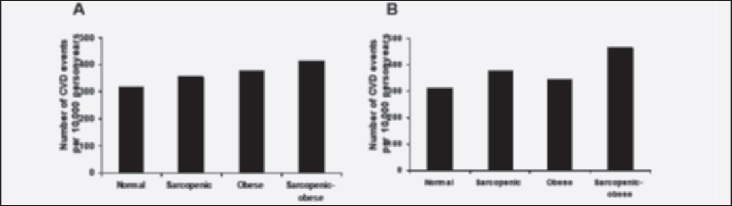
OBJECTIVES: To determine: 1) whether sarcopenic-obesity is a stronger predictor of cardiovascular disease (CVD) than either sarcopenia or obesity alone in the elderly, and 2) whether muscle mass or muscular strength is a stronger marker of CVD risk. DESIGN: Prospective cohort study. PARTICIPANTS: Participants included 3366 community-dwelling older (>or= 65 years) men and women who were free of CVD at baseline. MEASUREMENTS: Waist circumference (WC), bioimpedance analysis, and grip strength were used to measure abdominal obesity, whole-body muscle mass, and muscular strength, respectively. Subjects were classified as normal, sarcopenic, obese, or sarcopenic-obese based on measures of WC and either muscle mass or strength. Participants were followed for 8 years for CVD development and proportional hazard regression models were used to compare risk estimates for CVD in the four groups after adjusting for age, sex, race, income, smoking, alcohol, and cognitive status. RESULTS: Compared with the normal group, CVD risk was not significantly elevated within the obese, sarcopenic, or sarcopenic-obese groups as determined by WC and muscle mass. When determined by WC and muscle strength, CVD risk was not significantly increased in the sarcopenic or obese groups, but was increased by 23% (95% confidence interval: 0.99-1.54, P=0.06) within the sarcopenic-obese group. CONCLUSION: Sarcopenia and obesity alone were not sufficient to increase CVD risk. Sarcopenic-obesity, based on muscle strength but not muscle mass, was modestly associated with increased CVD risk. These findings imply that strength may be more important than muscle mass for CVD protection in old age.
Overview
The claims and statistics of this paper haven’t been checked yet.
Free: it reads the open-access text and checks the first 5 claims that cite a source we can check. Create a free account to check every claim.
Integrity signals
Registry
Cites
Statistics
Figures
Verification
Claims the paper makes
The claims and statistics of this paper haven’t been checked yet.
Free: it reads the open-access text and checks the first 5 claims that cite a source we can check. Create a free account to check every claim.
Claims other papers make about this one
Each is checked against this paper’s own text: does it say what the citing paper says it does?
The source backs part of the claim, not all of it — or backs it for a different population, condition or comparison.
In the citing paper
“The Cardiovascular Health Study, a large prospective study of 3,366 community-dwelling older individuals, demonstrated an association between dynapenic obesity (based on handgrip strength and WC) and the highest risk of CVD (105).”
From Health Consequences of Sarcopenic Obesity: A Narrative Review (2020) · cites this paper as [105]
Experimental — accuracy not yet measuredThe cited source says what the claim attributes to it.
In the citing paper
“Investigators from the Cardiovascular Health Study used low grip strength and high waist circumference to define low muscle strength and obesity. Rates approached 11.1%201, while data from FNIH classified 4.1% of men and 14.0% of women as having sarcopenic obesity using high BMI and low grip strength as measures of obesity and low muscle strength, respectively202.”
From Sarcopenic obesity in older adults: aetiology, epidemiology and treatment strategies (2018) · cites this paper as [201]
The cited source says what the claim attributes to it.
In the citing paper
“Recent cross-sectional and cohort studies suggest that sarcopenic obesity, as measured by muscle strength rather than muscle mass, is associated with increased risks of CVD (48) and cardiovascular mortality (39); however, this finding is challenged by certain studies that imply that sarcopenic obesity may have weak links to CVD (39, 49) or even no association with CVD, independent of sarcopenia or”
From Sarcopenic obesity: epidemiology, pathophysiology, cardiovascular disease, mortality, and management (2023) · cites this paper as [48]
In the citing paper
“In contrast, the risk of CVD was not significantly higher in the sarcopenic obesity group, when defined using BIA-measured muscle mass; thus, muscle strength may be more important predictor of CVD than muscle mass.”
From Health Consequences of Sarcopenic Obesity: A Narrative Review (2020) · cites this paper as [105]
In the citing paper
“Compared to that in participants without sarcopenia or obesity, the risk of CVD did not significantly increase in the dynapenia or obesity groups. However, the risk of CVD increased by 23% in the dynapenia and obesity groups.”
From Health Consequences of Sarcopenic Obesity: A Narrative Review (2020) · cites this paper as [105]
1 more claim about this paper
Create a free account to see every claim other papers make about this one.
Self-check
Percentages, sums and reported differences re-computed from the paper’s own numbers.
The self-check needs the paper’s full text.
Citations
Cites
Folstein, M. F., Folstein, S. E., & McHugh, P. R. (1975) · Journal of Psychiatric Research · doi:10.1016/0022-3956(75)90026-6 · Cited by 88,282 · cited 1×
“Cognitive Function. Cognitive function was measured using the 30-point Mini-Mental State Examination ( 22 ).”
Toprak, O., Kurt, H., Sarı, Y., Şarkış, C., Us, H., & Kırık, A. (2017) · Kidney and Blood Pressure Research · doi:10.1159/000468530 · Cited by 29,627
Grundy, S. M., Bilheimer, D. W., Chait, A., Clark, L. T., Denke, M. A., Havel, R. J., Hazzard, W. R., Hulley, S. B., Hunninghake, D. B., Kreisberg, R. A., et al. (1993) · JAMA · doi:10.1001/jama.269.23.3015 · Cited by 27,947
Expert Panel on Detection, E. (2001) · JAMA: The Journal of the American Medical Association · doi:10.1001/jama.285.19.2486 · Cited by 26,011
Chobanian, A. V. (2003) · JAMA · doi:10.1001/jama.289.19.2560 · Cited by 25,386
Hirono, N., Mori, E., Ikejiri, Y., Imamura, T., Shimomura, T., Hashimoto, M., Yamashita, H., & Ikeda, M. (1997) · Brain and nerve · Cited by 21,030
Kok, J. S., Berg, I. J., & Scherder, E. J. A. (2013) · Dementia and Geriatric Cognitive Disorders Extra · doi:10.1159/000353441 · Cited by 20,589
Older Adults' Reasons for Using Technology while Aging in Place
Peek, S. T. M., Luijkx, K. G., Rijnaard, M. D., Nieboer, M. E., van der Voort, C. S., Aarts, S., van Hoof, J., Vrijhoef, H. J. M., & Wouters, E. J. M. (2016) · Gerontology · doi:10.1159/000430949 · Cited by 19,690
Sensitivity and False Alarm Rate of a Fall Sensor in Long-Term Fall Detection in the Elderly
Kangas, M., Korpelainen, R., Vikman, I., Nyberg, L., & Jämsä, T. (2015) · Gerontology · doi:10.1159/000362720 · Cited by 18,909
Detection, evaluation, and treatment of high blood cholesterol in adults (Adult Treatment Panel III)
Grundy, S. M., Becker, D. M., Clark, L. T., Cooper, R., Denke, M. A., Howard, J. L., Hunninghake, D. B., Illingworth, D. R., Luepker, R. V., McBride, P. E., et al. (2002) · Civil War Book Review · Cited by 12,198
Cited by
Items 101–200 of 300
Kim, J. H., Bo, Y. H., Hong, E. S., Ohn, J. H., Kim, C. H., Kim, H. W., Ahn, H. Y., Yoon, J. W., Kang, S. M., Park, Y. J., et al. (2010) · Journal of the Korean Geriatrics Society · doi:10.4235/jkgs.2010.14.3.121 · Cited by 35
Cardiometabolic disease in the older person: prediction and prevention for the generalist physician
Sinclair, A. J., & Abdelhafiz, A. H. (2020) · Cardiovascular Endocrinology & Metabolism · doi:10.1097/xce.0000000000000193 · Cited by 47
Yu, B., Jia, S., Sun, T., Liu, J., Jin, J., Zhang, S., Xiao, Q., Dong, H., & Ou, Y. (2024) · The journal of nutrition health & aging · doi:10.1016/j.jnha.2024.100353 · Cited by 46
Bouchi, R., Nakano, Y., Ohara, N., Takeuchi, T., Murakami, M., Asakawa, M., Sasahara, Y., Numasawa, M., Minami, I., Izumiyama, H., et al. (2016) · Cardiovascular Diabetology · doi:10.1186/s12933-016-0384-7 · Cited by 36
“A previous study demonstrated that sarcopenic obesity, defined as reduced skeletal muscle mass and power with increased (visceral) obesity, is associated with CVD events [42] and arterial stiffness [43].”
BackgroundA significant association of non-obese non-alcoholic fatty liver disease with sarcopenic obesity
Kashiwagi, K., Takayama, M., Fukuhara, K., Shimizu‐Hirota, R., Chu, P., Nakamoto, N., Inoue, N., Iwao, Y., & Kanai∥, T. (2020) · Clinical Nutrition ESPEN · doi:10.1016/j.clnesp.2020.05.025 · Cited by 36
Influence of Severe Sarcopenia on Cardiovascular Risk Factors in Nonobese Men
Abe, T., Thiebaud, R. S., Loenneke, J. P., Bemben, M. G., Loftin, M., & Fukunaga, T. (2012) · Metabolic Syndrome and Related Disorders · doi:10.1089/met.2012.0057 · Cited by 36
Park, S., Wong, A., Son, W., & Pekas, E. J. (2020) · Journal of Applied Physiology · doi:10.1152/japplphysiol.00744.2019 · Cited by 33
“cardiovascular disease conditions (48, 66, 87).”
Is dynapenic abdominal obesity a risk factor for cardiovascular mortality? A competing risk analysis
Ramírez, P. C., de Oliveira, D. C., Máximo, R. D. O., de Souza, A. F., Luiz, M. M., Delinocente, M. L. B., Steptoe, A., de Oliveira, C. M., & Alexandre, T. D. S. (2023) · Age and Ageing · doi:10.1093/ageing/afac301 · Cited by 34
“It has also been considered to be more important than sarcopenic obesity regarding the risk of cardiovascular disease in old age [5].”
BackgroundUrine melatonin levels are inversely associated with sarcopenia in postmenopausal women
Lee, J., Kim, J., & Lee, D. (2013) · Menopause The Journal of The North American Menopause Society · doi:10.1097/gme.0b013e318291f6c8 · Cited by 33
“Recent studies have also reported that sarcopenia is associated with an increased risk of cardiometabolic diseases.(3) The associations between hypertension, dyslipidemia, and diabetes with sarcopenia have been reported in previous studies.”
Zdzieblik, D., Jendricke, P., Oesser, S., Gollhofer, A., & König, D. (2021) · International Journal of Environmental Research and Public Health · doi:10.3390/ijerph18094837 · Cited by 37
“This, together with an increase in fat mass, is often accompanied by orthopedic complaints and an impairment of cardiometabolic risk factors such as increased weight, waist circumference and triglyceride levels, reduced HDLcholesterol or impaired glucose tolerance [3].”
BackgroundKim, S., Choi, Y. J., Huh, B. W., Kim, C. S., Park, S. W., Lee, E. J., Cho, Y.-W., & Huh, K. B. (2011) · Diabetes Care · doi:10.2337/dc11-0743 · Cited by 28
“Subjects with a particular phenotype may be more prone to developing metabolic and cardiovascular diseases than those with the opposite phenotype or those with high abdominal fat mass alone (15,16).”
BackgroundAdditive effect of low skeletal muscle mass and abdominal obesity on coronary artery calcification
Jun, J. E., Kang, M., Jin, S.-M., Kim, K., Hwang, Y.-C., Jeong, I.-K., & Kim, J. H. (2021) · European Journal of Endocrinology · doi:10.1530/eje-20-0885 · Cited by 27
A prospective study of risk factors for cardiovascular events among the elderly
Cabrera, M. A. S., Mesas, A. E., & de Andrade, S. M. (2012) · Clinical Interventions in Aging · doi:10.2147/cia.s37211 · Cited by 29
“Many authors have already demonstrated that global obesity does not represent an independent CV risk factor in elderly individuals.(13,14) However, a study of elderly Chinese individuals found a positive association between BMI and CV risk,(15) showing that BMI can still be a good CVD marker in certain ethnicities.”
Choe, E. Y., Lee, Y., Choi, Y. J., Huh, B. W., Lee, B., Kim, S., Kang, E. S., Cha, B., Lee, E. J., Huh, K. B., et al. (2017) · Journal of Gastroenterology and Hepatology · doi:10.1111/jgh.14011 · Cited by 28
Long noncoding RNA ZFP36L2-AS functions as a metabolic modulator to regulate muscle development
Cai, B., Ma, M., Zhang, J., Kong, S., Zhou, Z., Li, Z., Abdalla, B. A., Xu, H., Zhang, X., Lawal, R. A., et al. (2022) · Cell Death and Disease · doi:10.1038/s41419-022-04772-2 · Cited by 37
Chung, W., Park, J. H., Chung, H. S., Yu, J. M., Kim, D. S., & Moon, S. (2019) · Scientific Reports · doi:10.1038/s41598-019-45717-8 · Cited by 30
Liu, L.-K., Chen, L.-Y., Yeh, K.-P., Lin, M.-H., Hwang, A.-C., Peng, L.-N., & Chen, L.-K. (2014) · Journal of Clinical Gerontology and Geriatrics · doi:10.1016/j.jcgg.2014.01.002 · Cited by 26
Therapeutic considerations of sarcopenia in heart failure patients
Saitoh, M., Ebner, N., von Haehling, S., Anker, S. D., & Springer, J. (2018) · Expert Review of Cardiovascular Therapy · doi:10.1080/14779072.2018.1424542 · Cited by 31
“The prevalence of sarcopenic obesity in a recent study of adults in the United States was estimated to be 18% of women and 42% of men with a mean age of ~70 years, with increased risks of mortality [29].”
BackgroundA Collagen Hydrolysate Containing Tripeptides Ameliorates Sarcopenia in Middle-Aged Mice
Kim, J. E., Kwon, E., & Han, Y. (2022) · Molecules · doi:10.3390/molecules27092718 · Cited by 28
“This may ultimately lead to metabolic diseases, including decreased lung and cardiovascular function [6,7].”
BackgroundZhang, X., He, Z., Si, Q., Hu, X., Yang, L., Gu, X., Du, L.-J., Wang, L., Pan, L., Li, Y., et al. (2022) · Journal of Diabetes Research · doi:10.1155/2022/2229139 · Cited by 28
“The similar pattern was also found in other studies before, which discovered that SO was much closer related to the risk of IR [39], metabolic syndrome [40], and cardiovascular diseases than sarcopenia or obesity alone [41, 42].”
ResultLiu, X., Wang, Y., Wang, Z., Li, L., Yang, H., Liu, J., & Li, Z. (2023) · Frontiers in Endocrinology · doi:10.3389/fendo.2023.1237971 · Cited by 29
Fahs, C. A., Thiebaud, R. S., Rossow, L. M., Loenneke, J. P., Bemben, D. A., & Bemben, M. G. (2017) · Clinical Physiology and Functional Imaging · doi:10.1111/cpf.12467 · Cited by 30
Mankowski, R. T., Anton, S. D., & Aubertin‐Leheudre, M. (2015) · Current Geriatrics Reports · doi:10.1007/s13670-015-0132-y · Cited by 35
Kim, T. N., Won, J. C., Kim, Y. J., Lee, E. J., Kim, M.-K., Park, M. S., Lee, S. K., Kim, J. M., Ko, K. S., & Rhee, B. D. (2013) · Diabetes Research and Clinical Practice · doi:10.1016/j.diabres.2013.05.014 · Cited by 28
“reported that SO was associated with a 23% increased risk of cardiovascular disease in elderly adults during 10 years of follow-up [6].”
BackgroundSarcopenic obesity — a current problem of modern geriatrics
Kurmaev, D. P., Bulgakova, S. V., & Treneva, E. V. (2023) · Russian Journal of Geriatric Medicine · doi:10.37586/2686-8636-4-2022-228-235 · Cited by 32
Association between dynapenic obesity and risk of cardiovascular disease: The Hisayama study
Setoyama, Y., Honda, T., Tajimi, T., Sakata, S., Oishi, E., Furuta, Y., Shibata, M., Hata, J., Kitazono, T., Nakashima, Y., et al. (2024) · Journal of Cachexia Sarcopenia and Muscle · doi:10.1002/jcsm.13564 · Cited by 24
Lee, K. (2016) · Journal of Clinical Densitometry · doi:10.1016/j.jocd.2016.07.009 · Cited by 25
Pasdar, Y., Darbandi, M., Rezaeian, S., Najafi, F., Hamzeh, B., & Bagheri, A. (2022) · Frontiers in Public Health · doi:10.3389/fpubh.2021.705055 · Cited by 27
“ORIGINAL RESEARCH published: 02 February 2022 doi: 10.3389/fpubh.2021.705055 Frontiers in Public Health | www.frontiersin.org 1 February 2022 | Volume 9 | Article 705055 Edited by: Arshed Ali Quyyumi, Emory University, United States Reviewed by: Shirin Djalalinia, Ministry of Health and Medical Education, Iran Moloud…”
BackgroundInfluentialMonteiro, M., Gabriel, R., Sousa, M. F., Castro, M. N. E., & Moreira, M. H. (2010) · Maturitas · doi:10.1016/j.maturitas.2010.06.012 · Cited by 26
Ageing, adiposity indexes and low muscle mass in a clinical sample of overweight and obese women
Siervo, M., Stephan, B. C. M., Nasti, G., & Colantuoni, A. (2011) · Obesity Research & Clinical Practice · doi:10.1016/j.orcp.2011.05.001 · Cited by 30
“[4] Stephen W, Janssen I.”
BackgroundMethodInfluentialAssociation of BMI and Cardiovascular Risk Stratification in the Elderly African‐American Females
Javed, F., Aziz, E. F., Sabharwal, M. S., Nadkarni, G. N., Khan, S., Cordova, J. P., Benjo, A. M., Gallagher, D., Herzog, E., Messerli, F. H., et al. (2011) · Obesity · doi:10.1038/oby.2010.307 · Cited by 23
“It is translating into a much bigger problem in elderly population complicated by the phenomenon of sarcopenic obesity (22).”
BackgroundKoo, H. S., Kim, M. J., Kim, K., & Kim, Y. (2014) · Clinical Endocrinology · doi:10.1111/cen.12509 · Cited by 26
Sarcopenia is associated with cardiovascular risk in men with COPD, independent of adiposity
Leem, A. Y., Kim, Y. S., Chung, K. S., Park, M. S., Kang, Y. A., Park, Y., & Jung, J. Y. (2022) · Respiratory Research · doi:10.1186/s12931-022-02109-3 · Cited by 23
“Sarcopenic patients with COPD who had concomitant central obesity reportedly showed greater physical function, compared to sarcopenic patients with COPD who did not have central obesity [32].”
BackgroundResultPark, S., Kim, S., & Shin, J. Y. (2021) · Journal of Diabetes · doi:10.1111/1753-0407.13216 · Cited by 21
“The prevalence of sarcopenia in individuals with chronic diseases, such as cardiovascular disease (CVD), type 2 diabetes mellitus, and dementia, is higher than in those without chronic diseases.14 CVD is a major cause of death in patients with type 2 diabetes.15 Studies have highlighted an association between sarcopen…”
BackgroundInfluentialUnderstanding the development of sarcopenic obesity
Gross, D. C., Cheever, C. R., & Batsis, J. A. (2023) · Expert Review of Endocrinology & Metabolism · doi:10.1080/17446651.2023.2267672 · Cited by 21
Novel subgroups of obesity and their association with outcomes: a data-driven cluster analysis
Takeshita, S., Nishioka, Y., Tamaki, Y., Kamitani, F., Mohri, T., Nakajima, H., Kurematsu, Y., Okada, S., Myojin, T., Noda, T., et al. (2024) · BMC Public Health · doi:10.1186/s12889-024-17648-1 · Cited by 19
“Sarcopenic obesity has been reported to be associated with increased risks of metabolic diseases [39–41] and cardiovascular diseases [42, 43].”
BackgroundLee, S. W., Youm, Y., Kim, C. O., Lee, W. J., Choi, W., Chu, S. H., Park, Y.-R., & Kim, H. C. (2014) · Archives of Gerontology and Geriatrics · doi:10.1016/j.archger.2014.01.008 · Cited by 23
Kang, M. K., & Park, J.-G. (2021) · Diagnostics · doi:10.3390/diagnostics11050854 · Cited by 22
Sarcopenia among people living with HIV and the effect of antiretroviral therapy on body composition
Konishi, K., Nakagawa, H., Asaoka, T., Kasamatsu, Y., Goto, T., & Shirano, M. (2022) · Medicine · doi:10.1097/md.0000000000031349 · Cited by 23
“Furthermore, it is important to note that hidden obesity may lead to “sarcopenia obesity,” which is considered to increase the risk of physical function decline and development of metabolic diseases more significantly than sarcopenia because of its large amount of fat.[14] Among the 23 patients diagnosed with sarcopen…”
BackgroundReinikainen, J., Kuulasmaa, K., Oskarsson, V., Amouyel, P., Biasch, K., Brenner, H., Ponti, R. D., Donfrancesco, C., Drygas, W., Ferrières, J., et al. (2023) · European Journal of Preventive Cardiology · doi:10.1093/eurjpc/zwad359 · Cited by 24
The effect of sarcopenic obesity on cardiovascular disease and all-cause mortality in older people
Atkins, J. L., & Wannamethee, S. G. (2015) · Reviews in Clinical Gerontology · doi:10.1017/s0959259815000076 · Cited by 18
Body Composition, Sarcopenia, and Suicidal Ideation in Elderly Koreans: Hallym Aging Study
Kim, J. H., Kim, D.-H., & Park, Y. S. (2016) · Journal of Korean Medical Science · doi:10.3346/jkms.2016.31.4.604 · Cited by 18
“In recent studies, a decline in muscle mass without simultaneously considering muscle function was found to be not associated with health outcomes related to sarcopenia (23,24).”
BackgroundA Simple Ultrasound Correlate of Visceral Fat
Oh, J., Kim, S., Shin, D.-K., Park, K., Park, S. W., & Cho, Y. (2011) · Ultrasound in Medicine & Biology · doi:10.1016/j.ultrasmedbio.2011.05.844 · Cited by 21
Aragão, F. R., Abrantes, C. G., Gabriel, R., Sousa, M. F., Castelo‐Branco, C., & Moreira, M. H. (2011) · Menopause The Journal of The North American Menopause Society · doi:10.1097/gme.0b013e31821b00b0 · Cited by 25
Liu, D., Zhong, J., Wen, W., Ruan, Y., Zhang, Z., Sun, J. M., & Chen, H. (2021) · Diabetes Metabolic Syndrome and Obesity · doi:10.2147/dmso.s326195 · Cited by 16
“Meanwhile, another prospective cohort study conducted in older male and female also indicated that obesity coexisted with low muscle amount (categorized using total-body muscle quantity and waist circumference) did not predict the occurrence of CVD events.(17) However, a cross-sectional population-based research of 73…”
ResultIkeue, K., Kusakabe, T., Yamakage, H., Ishii, K., & Satoh‐Asahara, N. (2023) · Nutrition Metabolism and Cardiovascular Diseases · doi:10.1016/j.numecd.2023.09.008 · Cited by 19
Nutritional Considerations in Preventing Muscle Atrophy
Creţoiu, S. M., & Zugravu, C. (2018) · Advances in experimental medicine and biology · doi:10.1007/978-981-13-1435-3_23 · Cited by 19
Cardiac hypertrophy in sarcopenic obese C57BL/6J mice is independent of Akt/mTOR cellular signaling
Perry, R. A., Brown, L. A., Haynie, W. S., Brown, J. L., Rosa‐Caldwell, M. E., Lee, D. E., Greene, N. P., & Washington, T. A. (2018) · Experimental Gerontology · doi:10.1016/j.exger.2018.06.023 · Cited by 14
“, 2015), and sarcopenic obesity has been correlated with increased risk of cardiac events (Stephen and Janssen, 2009).”
Lim, H., Son, K., & Lim, H. (2023) · Nutrients · doi:10.3390/nu15071574 · Cited by 16
“Research showed that the risk of cardiometabolic diseases was greater with SO than with sarcopenia or obesity alone [21].”
BackgroundAn elevated plasma level of visfatin increases the risk of myocardial infarction
Yang, Y., Li, Z., Tao, H. F., Qi, X., Wang, W. L., Yang, L., Wang, H., & Xu, P. (2014) · Genetics and Molecular Research · doi:10.4238/2014.january.24.18 · Cited by 14
Scott, D. S., & Hirani, V. (2015) · European Geriatric Medicine · doi:10.1016/j.eurger.2015.11.009 · Cited by 21
Himoto, T., Miyatake, K., Maeba, T., & Masaki, T. (2020) · Canadian Journal of Gastroenterology and Hepatology · doi:10.1155/2020/3576974 · Cited by 14
“3e prognosis of patients with sarcopenic obesity appears to be much more unfavorable than that of patients with obesity or sarcopenia alone [27].”
BackgroundTajima, T., Kaga, H., Someya, Y., Tabata, H., Naito, H., Kakehi, S., Ito, N., Yamasaki, N., Sato, M., Kadowaki, S., et al. (2024) · Journal of the Endocrine Society · doi:10.1210/jendso/bvae016 · Cited by 16
“Individuals with sarcopenic obesity have a higher risk for T2DM [3], hypertension [4], reduced activities of daily living [5], cardiovascular disease (CVD) [6], and all-cause mortality [7] than individuals only with sarcopenia or obesity.”
BackgroundBooranasuksakul, U., Tsintzas, K., Macdonald, I. A., Stephan, B. C. M., & Siervo, M. (2024) · Clinical Nutrition ESPEN · doi:10.1016/j.clnesp.2024.08.017 · Cited by 16
Myostatin as a plausible biomarker for early stage of sarcopenic obesity
Ishibashi, C., Nakanishi, K., Nishida, M., Shinomiya, H., Shinzawa, M., Kanayama, D., Yamamoto, R., Kudo, T., Nagatomo, I., & Yamauchi‐Takihara, K. (2024) · Scientific Reports · doi:10.1038/s41598-024-79534-5 · Cited by 16
Sarcopenia and cardiovascular risk in physically active adult and elderly women
de Castro, E. A., Lima, L. M., Cerqueira, M. S., Gobbi, S., & Doimo, L. A. (2014) · Motriz Revista de Educação Física · doi:10.1590/s1980-65742014000100014 · Cited by 13
“In a longitudinal study by Stephen and Janssen (2009), where 2033 women aged 65 or older were evaluated for 8 years, no significant associations between CVD and obesity-sarcopenia were found.”
BackgroundKim, S. H., Kim, W. D., Yang, S., Kwon, S., & Choi, K. H. (2018) · Journal of Occupational and Environmental Medicine · doi:10.1097/jom.0000000000001412 · Cited by 16
Frisoli, A., Duque, G., Paes, Â. T., Diniz, A. R., Lima, E., de Azevedo, E., & Moisés, V. A. (2023) · Archives of Endocrinology and Metabolism · doi:10.20945/2359-3997000000587 · Cited by 19
“Sarcopenic and obese individuals are at higher risk for cardiovascular diseases; however, when both are present, the risk appears to be even more significant, even though longitudinal studies have shown conflicting results depending on the obesity criterion used (35,36).”
ResultSato, M., Tamura, Y., Murao, Y., Yorikawa, F., Katsumata, Y., Watanabe, S., Zen, S., Kodera, R., Oba, K., Toyoshima, K., et al. (2024) · Journal of Diabetes Investigation · doi:10.1111/jdi.14274 · Cited by 12
“Recent reports have shown that sarcopenic abdominal obesity, de fi ned by low muscle strength or high waist circumference, is associated with high rates of cardiovascular events or mortality 5,6 .”
BackgroundRelationship between sarcopenia and cardiovascular disease risk among Taiwanese older adults.
Chen, Y., Chen, W.-L., Peng, T., Liaw, F.-Y., Chao, Y., & Kao, T. (2022) · PubMed Central · doi:10.1017/s1368980022000684 · Cited by 8
“muscle strength is suggested to be more important for CVD risk than muscle mass(15).”
BackgroundLee, H., & Park, S. (2023) · Epidemiology and Health · doi:10.4178/epih.e2023059 · Cited by 14
Zuliani, G., Soavi, C., Maggio, M. G., Vita, F. D., Cherubini, A., & Volpato, S. (2015) · European Geriatric Medicine · doi:10.1016/j.eurger.2014.11.010 · Cited by 14
“Sarcopenic obesity has a strong impact on global health, worse than obesity or sarcopenia alone [64,65]; in post-menopausal women sarcopenic obesity was associated with lower gait speed and cardiopulmonary fitness [62].”
BackgroundObésité sarcopénique et altérations du métabolisme protéique musculaire
Tardif, N., Salles, J., Guillet, C., Gadéa, É., Boirie, Y., & Walrand, S. (2011) · Nutrition Clinique et Métabolisme · doi:10.1016/j.nupar.2011.07.004 · Cited by 15
Whole-body vibration as a potential countermeasure for dynapenia and arterial stiffness
Figueroa, A., Jaime, S. J., & Alvarez‐Alvarado, S. (2016) · Integrative Medicine Research · doi:10.1016/j.imr.2016.06.004 · Cited by 13
Intersecting Genetics of Frailty and Cardiovascular Disease
Ahisar, Y., Thanassoulis, G., Huang, K., Ohayon, S. M., & Afilalo, J. (2021) · The journal of nutrition health & aging · doi:10.1007/s12603-021-1673-8 · Cited by 13
“This relationship is thought to be explained in part by decreased physical activity and common risk markers between sarcopenic obesity and CVD (42), and obesity itself is a driving factor for frailty and CVD (43, 44).”
Fico, B. G., Maharaj, A., Pena, G. S., & Huang, C. (2023) · Biology · doi:10.3390/biology12060865 · Cited by 19
So, E., Choi, S. K., & Joung, H. (2019) · British Journal Of Nutrition · doi:10.1017/s000711451900117x · Cited by 13
“Moreover, the rates of physical disabilities (49,50) , comorbidities (51) , and mortality (52,53) are higher in sarcopenic obesity than those in sarcopenia or obesity alone.”
BackgroundPredictors of Sarcopenia in an Obese Asian Population
Sung, M. J., Park, J. Y., Lee, H. W., Kim, B. K., Kim, D. Y., Ahn, S. H., & Kim, S. U. (2021) · Nutrition and Cancer · doi:10.1080/01635581.2021.1895232 · Cited by 13
“gestive heart failure, and mortality (3, 23, 24).”
BackgroundMohammadi, P., Varpaei, H. A., khamseh, A. K. P., Mohammadi, M., Rahimi, M., & Orandi, A. (2022) · Journal of Nutrition and Metabolism · doi:10.1155/2022/5016649 · Cited by 14
“Sarco-obesity, as defined by muscular strength rather than muscle mass, is related to an increased risk of cardiovascular diseases, according to Janssen and Stephen [23].”
Association between Muscle Loss and Urinary Incontinence in Elderly Korean Women
Park, H.-J., Choo, S. R., Kim, S.-H., Lee, H.-K., & Son, K. Y. (2015) · Korean Journal of Family Medicine · doi:10.4082/kjfm.2015.36.1.22 · Cited by 12
Luo, Y., Shu, L., Wang, Y., Zhao, X., Han, M., Liu, Y., Xu, Y. J., & Han, B. (2025) · International Journal of Obesity · doi:10.1038/s41366-025-01909-z · Cited by 15
“The risk of SO-related CCVD was higher in studies with hospital-based samples (OR: 2.89, 95% CI: 1.70 – 4.90, p < 0.001, n = 5 [15, 17 – 19, 23])”
InfluentialHackney, K. J., Brown, L. W. J., Stone, K. A., & Tennent, D. J. (2018) · Techniques in Orthopaedics · doi:10.1097/bto.0000000000000271 · Cited by 11
Heart failure and senile asthenia syndrome
Kotovskaya, Y. V., Розанов, А. В., Хаджимурадович, К. Д., & Ткачева, О. Н. (2018) · Meditsinskiy sovet = Medical Council · doi:10.21518/2079-701x-2018-16-72-79 · Cited by 10
Effects of Sarcopenic Obesity on Cardiovascular Disease and All-Cause Mortality
Atkins, J. L. (2018) · Elsevier eBooks · doi:10.1016/b978-0-12-810422-4.00007-5 · Cited by 11
Asociación entre obesidad sarcopénica con resistencia a la insulina y síndrome metabólico
Pérez‐Cruz, E., Castro-Martínez, D., & Guzmán, O. P. G. (2021) · Medicina Clínica · doi:10.1016/j.medcli.2021.07.023 · Cited by 13
Han, S. Y., Kim, N. H., Kim, D., Kim, Y., Park, Y. K., & Kim, S. M. (2022) · Medicina · doi:10.3390/medicina58121768 · Cited by 12
“Other studies showed that the incidence and total mortality rate significantly increased only in patients with both sarcopenia and obesity [56].”
BackgroundDynapenic Obesity and Prevalence of Type 2 Diabetes in Middle-Aged Japanese Men
Kawakami, R., Sawada, S. S., Lee, I.-M. M., Matsushita, M., Gando, Y., Okamoto, T., Tsukamoto, K., Higuchi, M., Miyachi, M., & Blair, S. N. (2015) · Journal of Epidemiology · doi:10.2188/jea.je20140256 · Cited by 10
Dzien, A., Winner, H., Theurl, E., Dzien‐Bischinger, C., & Lechleitner, M. (2013) · Obesity Facts · doi:10.1159/000348573 · Cited by 16
Altankhuyag, I., Byambaa, A., Tuvshinjargal, A., Bayarmunkh, A., Jadamba, T., Dagvajantsan, B., & Byambasukh, O. (2021) · Neuroscience Research Notes · doi:10.31117/neuroscirn.v4i3suppl.97 · Cited by 9
Guan, Z., Stephan, B. C. M., Donini, L. M., Prado, C. M. M., Sim, M., & Siervo, M. (2024) · Proceedings of The Nutrition Society · doi:10.1017/s0029665124007559 · Cited by 14
“Findings from these longitudinal studies are summarised in Table 1 (47 – 52) , four of which revealed a significant association between SO and an elevated risk of overall CVD (49 – 52) .”
Khalid, S. I., Massaad, E., Kiapour, A., Bridge, C. P., Rigney, G. H., Burrows, A., Shim, J., Ramos, R. D. L. G., Tobert, D. G., Schoenfeld, A. J., et al. (2023) · Journal of Neurosurgery Spine · doi:10.3171/2023.9.spine23864 · Cited by 13
Effective Diet and Exercise Interventions to Improve Body Composition in Obese Individuals
Rankin, J. W. (2013) · American Journal of Lifestyle Medicine · doi:10.1177/1559827613507879 · Cited by 15
dos Santos, V. R., Christófaro, D. G. D., Gomes, I. C., Viezel, J., Júnior, I. F. F., & Gobbo, L. A. (2016) · Diabetes & Metabolic Syndrome Clinical Research & Reviews · doi:10.1016/j.dsx.2016.12.019 · Cited by 10
“In subjects who present high fat and low muscle mass concomitantly [10,11] metabolic complications may be higher [12], increasing the public health care cost [13].”
BackgroundSarcopenia and Cardiac Dysfunction
Wong, A. K., & Frishman, W. H. (2019) · Cardiology in Review · doi:10.1097/crd.0000000000000285 · Cited by 14
Sarcopenia in heart failure: ‘waste’ the appropriate time and resources, not the muscles
Kokkinidis, D. G., Arfaras-Melainis, A., & Giannakoulas, G. A. (2020) · European Journal of Preventive Cardiology · doi:10.1093/eurjpc/zwaa139 · Cited by 9
Gastrointestinal hemorrhage complicating systemic neurofibromatosis.
Melin, M. M., Grotz, R. L., & Nivatvongs, S. (1994) · PubMed · Cited by 11
Nakano, R., Takebe, N., Ono, M., Hangai, M., Nakagawa, R., Yashiro, S., Murai, T., Nagasawa, K., Takahashi, Y., Satoh, J., et al. (2017) · Obesity Science & Practice · doi:10.1002/osp4.97 · Cited by 8
“In a general population study of 3,366 subjects with 8 years of follow-up, the risk of CVD was not significantly increased in the sarcopenic or the obese group, but a 23% increase was noted in the group with sarcopenic obesity (14).”
Lee, K. (2021) · European Journal of Cancer Care · doi:10.1111/ecc.13365 · Cited by 8
Konishi, K., Nakagawa, H., Asaoka, T., Kasamatsu, Y., Goto, T., & Shirano, M. (2024) · AIDS Research and Therapy · doi:10.1186/s12981-024-00599-3 · Cited by 8
Park, S., Shin, J., & Baek, S. (2020) · International Journal of Environmental Research and Public Health · doi:10.3390/ijerph17155534 · Cited by 9
Prise en charge nutritionnelle périopératoire du patient obèse
Quilliot, D., & Ziegler, O. (2010) · Nutrition Clinique et Métabolisme · doi:10.1016/j.nupar.2010.10.002 · Cited by 9
Takayama, M., Azuma, K., Hayashi, K., Shimizu‐Hirota, R., Makino, K., Bessho, R., Yoshida, T., Kashiwagi, K., Hirose, H., Inoue, N., et al. (2017) · Health Evaluation and Promotion · doi:10.7143/jhep.44.587 · Cited by 8
The Change in Muscle Mass Among Kidney Transplant Recipients: A Prospective Cohort Study
Kosoku, A., Ishihara, T., Iwai, T., Nishide, S., Kabei, K., Maeda, K., Kumada, N., & Uchida, J. (2022) · Transplantation Proceedings · doi:10.1016/j.transproceed.2021.08.064 · Cited by 11
Batsis, J. A., Petersen, C. L., Crow, R. S., Cook, S. B., Stevens, C. J., Seo, L. M., Brooks, E., & MacKenzie, T. A. (2019) · Clinical Nutrition · doi:10.1016/j.clnu.2019.10.032 · Cited by 9
“Reduced muscle mass, specifically low appendicular lean muscle mass (ALM), is associated with impaired physical function[2], cardiovascular disease[3], and mortality[4].”
BackgroundYılmaz, Ö., & Bahat, G. (2019) · Geriatrics and gerontology international/Geriatrics & gerontology international · doi:10.1111/ggi.13609 · Cited by 8
Malandish, A., & Rahmati‐Yamchi, M. (2022) · Journal of Molecular and Cellular Cardiology Plus · doi:10.1016/j.jmccpl.2022.100026 · Cited by 17
“It seems that increased CRF and decreased TBF lead to a reduction in aging-induced diseases such as CVD [40], sarcopenia, and sarcopenia obesity in older adults [41, 42].”
Luo, Y., Chen, X., Liu, Y., Xu, Y. J., Liu, G., & Han, B. (2025) · Frontiers in Medicine · doi:10.3389/fmed.2025.1581146 · Cited by 7
“For instance, an 8-year community-based cohort study of 3,366 older adults without baseline CVD found that SO increased CVD risk by 23%, whereas sarcopenia or obesity alone did not significantly elevate the risk (25).”
Jubayar, A. M., Khan, S., Sadi, J., Uddin, N., Goni, O., Khatun, M., Siddique, A. E., Kabir, E., Rimi, R. K., Beauty, S. A., et al. (2025) · Environmental Research · doi:10.1016/j.envres.2025.121059 · Cited by 8
Huang, A.-C., Lu, H.-K., Liang, C.-W., Hsieh, K.-C., Tsai, Y.-S., & Lai, C.-L. (2025) · Frontiers in Nutrition · doi:10.3389/fnut.2025.1546499 · Cited by 10
Habitual Exercise May Maintain Endothelium-Dependent Dilation in Overweight Postmenopausal Women
Sanders, K., Maresh, C. M., Ballard, K. D., Creighton, B. C., Pryor, J. L., Kraemer, W. J., Volek, J. S., & Anderson, J. M. (2014) · Journal of Aging and Physical Activity · doi:10.1123/japa.2012-0251 · Cited by 9
Metadata
- Authors
- Stephen, W. C., & Janssen, I.
- Affiliations
- Queen's University (CA)
- Corresponding author
- Janssen, I.
- ORCID
- Janssen, I.
- Venue
- The Journal of nutrition, health and aging
- Publisher
- Elsevier BV
- Published
- 2009-05
- Volume
- 13
- Issue
- 5
- Pages
- 460-466
- ISSN
- 1279-7707 (ISSN-L)
- PMC
- PMC12880267
- OpenAlex
- W2079791223
- Cited by
- 301
- References
- 43
- Citations by year
- 2026: 8 · 2025: 21 · 2024: 16 · 2023: 28 · 2022: 20 · 2021: 22 · 2020: 18 · 2019: 14 · 2018: 19 · 2017: 10 · 2016: 23 · 2015: 23 · 2014: 19 · 2013: 11 · 2012: 25
- FWCI
- 10.60
- Type
- journal article
- Language
- en
- Open access
- hybrid
- doi.org
- Licence
- cc-by-nc-nd
- www.elsevier.com/tdm/userlicense/1.0/ (tdm)
- www.elsevier.com/legal/tdmrep-license (tdm)
- creativecommons.org/licenses/by-nc-nd/4.0/ (vor, 5349 d)
- Locations
- The journal of nutrition health & aging (publishedVersion, cc-by-nc-nd)
- Europe PMC (PubMed Central) (publishedVersion, cc-by-nc-nd)
- PubMed (publishedVersion)
- PubMed Central (publishedVersion, cc-by-nc-nd)
- Topics
- Health Sciences › Medicine › Physiology (medical) › Nutrition and Health in Aging
- Health Sciences › Medicine › Physiology (medical) › Body Composition Measurement Techniques
- Health Sciences › Medicine › Geriatrics and Gerontology › Frailty in Older Adults
- Keywords
- sarcopenic obesity, sarcopenia, obesity, cardiovascular risk, older adults, muscle strength, grip strength, muscle mass, waist circumference, abdominal obesity, bioelectrical impedance analysis
- MeSH terms
- Adipose Tissue, Aged, Aged, 80 and over, Body Composition, Cardiovascular Diseases, Female, Follow-Up Studies, Humans, Longitudinal Studies, Male, Muscular Atrophy, Obesity, Prospective Studies, Risk Factors, United States, Cohort Studies, Geriatric Assessment, Comorbidity, Electric Impedance, Age Distribution, Muscle, Skeletal, Hand Strength, Muscle Weakness, Waist Circumference
About these checks
Registry, retraction, Cites and statistics results are computed, not judged, with one exception: a printed reference that no index lists is read once by a model before it counts as a citation error. Claims are extracted by a model and kept only when their quote appears verbatim in the text; each cited source is then checked, with a model’s help, for whether it says what the claim relies on. Those verdicts can be wrong — read the claim’s quote and the cited source before relying on one.
Statistics and arithmetic are recomputed, not judged.
Confidence bands are shown only for fields calibrated on our annotated test set. None is calibrated yet, so no band is shown.
What counts as a claim ›How we measure confidence ›How we check this ›
Are you an author, or do you see a problem with this page? Request a review
Data sources
Bibliographic data: Semantic Scholar, OpenAlex, Crossref.
Contains information from the Semantic Scholar Academic Graph Datasets, made available under the ODC Attribution License (ODC-BY 1.0).
Semantic Scholar’s data is described in: Kinney, R., et al. (2023). The Semantic Scholar Open Data Platform. arXiv:2301.10140.
