

Natural Quinone Dyes: A Review on Structure, Extraction Techniques, Analysis and Application Potential
Open accessThe DOI matches its Crossref record; 202 of the 205 references it cites were found in a registry or an index; 19 of the 181 sources its claims cite were checked for support.
Abstract
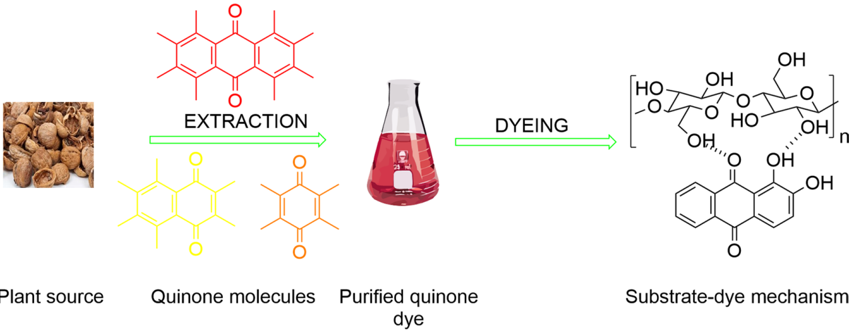
Abstract Synthetic dyes are by far the most widely applied colourants in industry. However, environmental and sustainability considerations have led to an increasing efforts to substitute them with safer and more sustainable equivalents. One promising class of alternatives is the natural quinones; these are class of cyclic organic compounds characterized by a saturated (C6) ring that contains two oxygen atoms that are bonded to carbonyls and have sufficient conjugation to show color. Therefore, this study looks at the potential of isolating and applying quinone dye molecules from a sustainable source as a possible replacement for synthetic dyes. It presents an in-depth description of the three main classes of quinoid compounds in terms of their structure, occurrence biogenesis and toxicology. Extraction and purification strategies, as well as analytical methods, are then discussed. Finally, current dyeing applications are summarised. The literature review shows that natural quinone dye compounds are ubiquitous, albeit in moderate quantities, but all have a possibility of enhanced production. They also display better dyeability, stability, brightness and fastness compared to other alternative natural dyes, such as anthocyanins and carotenoids. Furthermore, they are safer for the environment than are many synthetic counterparts. Their extraction, purification and analysis are simple and fast, making them potential substitutes for their synthetic equivalents. Graphic Abstract
Overview
CoChat Summary
TL;DR
This review argues that natural quinone dyes—benzoquinones, naphthoquinones, and anthraquinones—are promising, more sustainable alternatives to synthetic dyes because they are widely occurring, biodegradable, and can dye natural and synthetic textiles. It synthesizes their structures, sources, extraction/purification methods, analytical detection, toxicity, and application potential.
Key findings
- Quinones are ubiquitous but usually present at limited concentrations; the review reports over 700 known anthraquinone sources, over 120 naphthoquinone sources, and a limited number of benzoquinones, with flowering plants the main source.
- Extraction efficiency varies strongly by method and solvent: Soxhlet gave the highest total quinone yield from *Diospyros anisandra* stem bark at 11.5 mg/g dw, versus 5 mg/g dw for dynamic maceration, 4.5 mg/g dw for ultrasound-assisted, and 3.75 mg/g dw for static maceration. Reflux was most efficient for *R. emodi* at 77.9% recovery, compared with sublimation 53.32%, ultrasonication 51.79%, and maceration 37.31%.
- Solvent polarity affects yield: for alizarin, yields decreased from methanol (0.15%) to ethanol (0.03%), ethyl ether (0.018%), and acetone (0.018%); for naphthoquinones, methanol gave 0.06%, chloroform 0.0146%, and ethyl acetate 0.009%. Benzoquinone was obtained in high quantity (1.45%) with chloroform, while alcohol-water mixtures gave higher glycoside values (2.63–4.6%).
- Natural quinones are not automatically harmless: anthraquinones from *Rumex patientia* can cause pathological effects at high doses (≥4000 mg/kg), and some natural anthraquinones may have genotoxic effects at ≥1000 mg/kg over at least 2 weeks, despite low bioavailability (<0.1). Compared with synthetic dyes, however, natural quinone effluents are described as more easily degradable.
Methods
- Narrative literature review covering structure, occurrence, biogenesis, toxicology, extraction, purification, chemical analysis, and dyeing applications of natural quinones.
- Literature searched in Web of Science and Google Scholar using phrases such as “quinone dyes,” “natural quinone,” “natural dyes,” “quinone compound,” “natural anthraquinone,” “natural naphthoquinone,” and “natural benzoquinone,” within the period 1998–2019.
- The review synthesizes reported extraction methods, analytical techniques, and dyeing results, including tables of sources, concentrations, analytical conditions, and application outcomes.
Limitations
- The paper states that TLC has slow speed, poor separation quality, and difficult scalability; titrimetric methods have declined due to numerous limitations; GC-MS requires derivatisation and can give biased quantification; MS and CE require ionisation, complicating procedures.
- It states that many purification techniques are analytical rather than large-scale, so further purification to a pure component would be an industrial challenge, especially given quinone complexity.
- It notes that natural quinones are not without risk and should not automatically be considered “green” and harmless; high-temperature, long-duration extraction with methanol or ethanol can form colour-modifying artefacts. Evident from the text: this is a narrative review, not a systematic review or meta-analysis, and the search was limited to 1998–2019 and two databases.
Model-written summary. Check it against the paper before relying on it.
Integrity signals
Registry
Cites
Statistics
Figures



Verification
Claims the paper makes
15 Valid · 7 Not valid · 111 Not checked · 66 Own results and interpretations
Some cited sources support this claim and some don’t — read each source’s verdict below.
In the paper
“Anthraquinone pigments have been isolated in concentrations in excess of 30 mg/(g dw) (dw: dry weight) from Morinda citrifolia, R. emodi, Rheum undulatum, Rubia cardigolia and Tectona grandis [38,41,42].”
§ Natural Quinone Dyes: A Review on Structure, Extraction Techniques, Analysis and Application Potential > Occurrence
What the sources say
- Partly supportedcites [38] 38. Aditya, A.U., Pereira, G.R., Laddha, K.S.: Assessment of con- ventional and novel extraction techniqueson extraction efficiency of five anthraquinones from Rheum emodi. J. Food Sci. Technol. 52, 6574-6582 (2015) sourceExperimental — accuracy not yet measured
The Extraction by SE section reports 58.58 mg/g of total anthraquinones from native Rheum emodi samples, supporting the claim for that species. The paper does not report concentrations above 30 mg/g for the other four named species; its mention of Morinda citrifolia concerns an earlier extraction method. Passage page numbers are not available in our copy. (LLM, conf=0.90)
- Disputedcites [41] 41. Kosikowska, U., Smolarz, H.D., Malm, A.: Antimicrobial activ- ity and total content of polyphenols of Rheum L. species growing in Poland. Cent. Eur. J. Biol. 5(6), 814-820 (2010) sourceExperimental — accuracy not yet measured
Of the five species the claim lists, our copy studies only Rheum undulatum, and its Results (p. ~3) state that the total content of anthracene derivatives and anthraquinones in R. undulatum 'did not exceed 20.4 and 18.1 ... mg/g' of dry weight (Table 1: 20.4 ± 0.60 and 18.1 ± 0.80 mg/g) — i.e. well below the claimed threshold of >30 mg/g dw. The only >30 mg/g figure in the paper belongs to R. palmatum (36.3 mg/g anthracene derivatives including 34.0 ± 1.2 mg/g anthraquinones, Results and Table 1), a species absent from the claim's list. Morinda citrifolia, Rheum emodi, Rubia cordifolia and Tectona grandis are not mentioned anywhere in our copy (searched: those names, and mg/g anthraquinone content), so nothing there supports the claim for them. (LLM, conf=0.68)
Checked by a reasoning model — may be wrong.
- Not checked — no full text of the sourcecites [42] 42. Bhuyan, R., Saikia, C.N.: Isolation of colour components from native dye-bearing plants in northeastern India. Biores. Technol. 96(3), 363-372 (2005). https:// doi. org/ 10. 1016/j. biort ech. 2004. 02. 032 source
plain- Asserted: passes — The authors put it forward as true.
- Checkable: passes — It can be checked against evidence.
- Load-bearing: unclear — It is unclear whether the paper’s conclusions depend on it.
- Based: passes — The paper gives a reason why it holds.
- Partly supported
The cited sources support only part of this claim — read each source’s verdict below.
In the paper
“However, cellulosic fibres have low substantivity to the natural quinone colorants resulting in poor dye affinity [29].”
§ Natural Quinone Dyes: A Review on Structure, Extraction Techniques, Analysis and Application Potential > Cellulose-Based Fibres
What the sources say
- Partly supportedcites [29] 29. Zakaria, R.M., Nizam, E.H., Al Mamun, H., Yousuf, A., Ali, R., Rahman, L., Miah, R.: Dyeing of S/J cotton knit fabric with natural dye extracts from green walnut shells: assessment of mor- danting effect on fastness properties. J. Text. Sci. Technol. 3, 17-30 (2017) sourceExperimental — accuracy not yet measured
The Introduction (page unavailable) says natural dyes generally require a mordant, and §2.5.4 says mordanting increased walnut dye’s affinity for cotton knit fabric. These passages support an affinity concern, but the paper does not state that cellulosic fibres have low substantivity to natural quinone colorants or establish that as the cause of poor affinity. (LLM, conf=0.78)
states a cause- Asserted: passes — The authors put it forward as true.
- Checkable: passes — It can be checked against evidence.
- Load-bearing: unclear — It is unclear whether the paper’s conclusions depend on it.
- Based: passes — The paper gives a reason why it holds.
- Partly supported
The cited sources support only part of this claim — read each source’s verdict below.
In the paper
“Conversely, benzoquinone was obtained in a high quantity (1.45%) when chloroform was used as the extraction solvent [109] while alcohol-water mixtures gave higher values for glycosides (2.63-4.6%)[104].”
§ Natural Quinone Dyes: A Review on Structure, Extraction Techniques, Analysis and Application Potential > Extraction Parameters
What the sources say
- Partly supportedcites [104] 103. Zhe, W., Pei, M., Lijia, X., Chunnian, H., Yong, P., Peigen, X.: Evaluation of the content variation of anthraquinone glycosides in rhubarb by UPLC-PDA. Chem. Cent. J. (2013). https:// doi. org/ 10. 1186/ 1752-153X-7-170 105. sourceExperimental — accuracy not yet measured
In Results and discussion, the extraction-optimization section says 80% methanol gave the best glycoside extraction efficiency among the solvents tested. The comparison-of-content section reports species means of 26.30–46.21 mg/g, equivalent to about 2.63–4.62%, using that extraction method. The paper does not establish that alcohol–water mixtures generally gave higher values across that percentage range; the range reflects differences between species. (LLM, conf=0.84)
plainstates a cause- Asserted: passes — The authors put it forward as true.
- Checkable: passes — It can be checked against evidence.
- Load-bearing: unclear — It is unclear whether the paper’s conclusions depend on it.
- Based: passes — The paper gives a reason why it holds.
- Partly supported
The cited sources support only part of this claim — read each source’s verdict below.
In the paper
“The synthetic Reactive Blue 19 dye, in comparison, would take 46 years at pH 7 and 25 °C [92].”
§ Natural Quinone Dyes: A Review on Structure, Extraction Techniques, Analysis and Application Potential > Toxicity of Natural Quinones
What the sources say
- Partly supportedcites [92] 92. Carmen, Z., Daniela, S.: Textile organic dyes-characteristics, polluting effects and separation/elimination procedures from industrial effluents-a critical overview. In: Puzyn, T., Mostrag, A. (eds.) Organic pollutants ten years after the stockholm con- vention-environmental and analytical update. InTech, London (2012) sourceExperimental — accuracy not yet measured
The Introduction reports a 46-year half-life at pH 7 and 25 °C, but specifies hydrolysed Reactive Blue 19. A half-life is not the time required for the dye to degrade completely, and the citing sentence omits the hydrolysed qualifier. (LLM, conf=0.88)
hedged- Asserted: passes — The authors put it forward as true.
- Checkable: passes — It can be checked against evidence.
- Load-bearing: passes — The paper’s conclusions depend on it.
- Based: passes — The paper gives a reason why it holds.
- Partly supported
The cited sources support only part of this claim — read each source’s verdict below.
In the paper
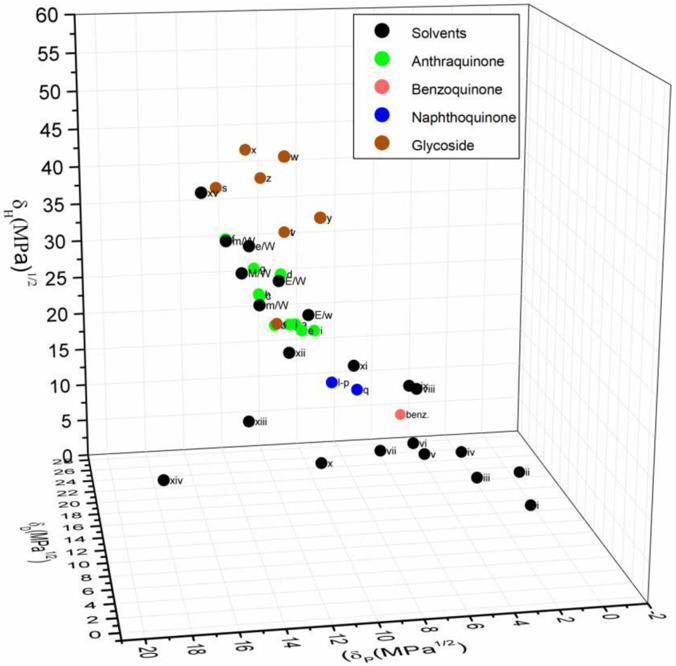
“These predictions are supported by the findings listed in Table 3, which shows that alcohol-water based extracts, having lower relative energy differences (≤ 1), generates higher anthraquinone yields (about twofold) compared to solvents such as water, ethanol or benzene that all have higher relative energy differences (> 1) [104,105].”
§ Natural Quinone Dyes: A Review on Structure, Extraction Techniques, Analysis and Application Potential > Extraction Parameters
What the sources say
- Partly supportedcites [104] 103. Zhe, W., Pei, M., Lijia, X., Chunnian, H., Yong, P., Peigen, X.: Evaluation of the content variation of anthraquinone glycosides in rhubarb by UPLC-PDA. Chem. Cent. J. (2013). https:// doi. org/ 10. 1186/ 1752-153X-7-170 105. sourceExperimental — accuracy not yet measured
The Results and discussion section (Optimization of quantitative analysis; page not supplied) reports that 80% methanol extracted six anthraquinone glycosides more efficiently than pure methanol or the other methanol–water mixtures tested. It does not report relative energy differences, an approximately twofold yield, or comparisons with water, ethanol, or benzene. (LLM, conf=0.87)
- Not matchedcites [105] 104. Bhuyan, R., Saikia, C.N.: Extraction of natural colourants from of Marinda angustifolia Roxb.: their identification and studies of dyeing characteristics on wool. Indian J. Chem. Technol. 10, 131-136 (2003) 106.
Its entry has no title and year that we can search by.
plainstates a cause- Asserted: passes — The authors put it forward as true.
- Checkable: passes — It can be checked against evidence.
- Load-bearing: passes — The paper’s conclusions depend on it.
- Based: passes — The paper gives a reason why it holds.
- Partly supported
67 more claims · 2 with their cited sources checked
Create a free account to see all 199 claims and to verify the 37 references still open.
- Probably not a substantial claim. 64
- It may state two separate claims as one. 83
Self-check
Percentages, sums and reported differences re-computed from the paper’s own numbers.
Each contradiction between two passages listed here was confirmed by an independent check.
Rated minor: it would not touch a result — a value no result rests on, a p-value that stays on the same side of the significance level, or a conflict that is clerical, resolved elsewhere in the paper, or outside its own findings.
In the paper
§ Natural Quinone Dyes: A Review on Structure, Extraction Techniques, Analysis and Application Potential > Abstract
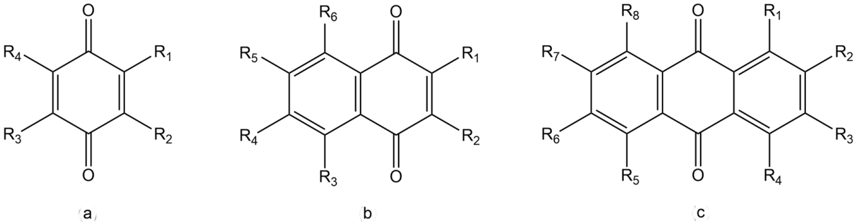
“a saturated (C6) ring that contains two oxygen atoms that are bonded to carbonyls and have sufficient conjugation to show color”
§ Natural Quinone Dyes: A Review on Structure, Extraction Techniques, Analysis and Application Potential > Structure
“a basic benzoquinone chromophore (Fig. 1a) consisting of two carbonyl groups with two carbon-carbon double bonds”
Rated minor: it would not touch a result — a value no result rests on, a p-value that stays on the same side of the significance level, or a conflict that is clerical, resolved elsewhere in the paper, or outside its own findings.
In the paper
§ Natural Quinone Dyes: A Review on Structure, Extraction Techniques, Analysis and Application Potential > UV-Vis Spectroscopy
“all coloured anthraquinones typically show four to five peaks within the visible region; one peak above 430 nm and the rest below 300 nm”
§ Natural Quinone Dyes: A Review on Structure, Extraction Techniques, Analysis and Application Potential > UV-Vis Spectroscopy
“one peak above 430 nm and the rest below 300 nm”
Citations
Cites
(1971) · Elsevier eBooks · doi:10.1016/b978-0-12-689650-3.x5001-4 · Cited by 1,275 · cited 10×
“However, it has been reported to occur in flowering plants, in fungi, in lichens, and in insects like beetles, millipedes and other arthropods capable of synthesising benzoquinone and its derivatives [20].”
BackgroundInfluential(2012) · doi:10.5772/32373 · Cited by 640 · cited 1×
“The synthetic Reactive Blue 19 dye, in comparison, would take 46 years at pH 7 and 25 °C [92].”
BackgroundCurrent approaches toward production of secondary plant metabolites
Hussain, M. S., Fareed, S., Ansari, S., Rahman, M. A., Ahmad, I., & Saeed, M. (2012) · Journal of Pharmacy And Bioallied Sciences · doi:10.4103/0975-7406.92725 · Cited by 636
Current approaches and challenges for the metabolite profiling of complex natural extracts
Wolfender, J.-L., Marti, G., Thomas, A., & Bertrand, S. (2015) · Journal of Chromatography A · doi:10.1016/j.chroma.2014.10.091 · Cited by 635
Natural Colorants: Historical, Processing and Sustainable Prospects
Yusuf, M., Shabbir, M., & Mohammad, F. (2017) · Natural Products and Bioprospecting · doi:10.1007/s13659-017-0119-9 · Cited by 597 · cited 4×
“On this basis, natural dyes are further grouped as indigoids, pyridine-based, carotenoids, quinoids, flavonoids, betalains, tannins and dihydropyrans [4, 5].”
BackgroundMethodInfluential(2007) · Pharmacognosy Reviews/Bioinformatics Trends/Pharmacognosy review · Cited by 522
Cox, L. R., Thomas, E. J., & Clayden, J. (2007) · Cited by 496
Fabrication of “Roll-off” and “Sticky” Superhydrophobic Cellulose Surfaces via Plasma Processing
Balu, B., Breedveld, V., & Hess, D. W. (2008) · Langmuir · doi:10.1021/la703766c · Cited by 495 · cited 1×
“Other surface treatment methods, including UV-irradiation [204], oxygen plasma treatment [205], enzyme pretreatment [206] and biomimetic procedures [207] have been used mostly to improve substantivity, dye strength, dye uptake and colour fastness to washing, rubbing and light.”
BackgroundUpdate on natural food pigments - A mini-review on carotenoids, anthocyanins, and betalains
Rodriguez-Amaya, D. B. (2019) · Food Research International · doi:10.1016/j.foodres.2018.05.028 · Cited by 463
(2009) · Cited by 418
Research works printed but not linked: 32
- 2. Rao, C.R., Wasif, A.I., Patil, P.: Natural dyes making their way back to a golden age. Text. Asia 43, 28-31 (2012)
- 12. Bruna de Campos, V.-C., Marin-Morales, M.A.: Azo dyes: characterization and toxicity-a review. Text. Light Ind. Sci. Technol. (TLIST) 2(2), 85-103 (2013)
- 14. Enviromental Control, I.: Anthraquinone dye toxicological profiles, vol. 198312. Consumer Product Safety Commission, Rockville (1981)
- 31. Leistner, E.: Biosynthesis of plants quinones. In: Biochemistry of plants, vol. 3, pp. 403-420. Academic Press inc., Bonn (1981)
- 32. Harborne, J.B.: Phytochemical methods: a guide to modern tech- niques of plant nalysis. Chapman and Hall, New York (1998)
- 45. Basant, T., Jahan, S.: Process development of silk dyeing with natural dye extracted from plumbago zeylanica roots. Man-Made Text. India 42(4), 137-139 (2014)
- 60. Vinay, P., Ashawat, M.S., Verma, C.P.S.: Pattern of anth- raquinone derivatives in some Cassia species: qualitative and quantitative estimantion. World J. Pharm. Pharm. Sci. 5(11), 1067-1096 (2016)
- 61. Gritsanapan, W., Aurapa, S.: Determination of anthroquinone glycoside content in Cassia fistula leaf extract for alternative source of luxative drug. Indian J. Pharm. Sci. 3(1), 42-45 (2009)
- 68. Boonyapranai, K., Tungpradit, R., Lhieochaiphant, S., Phutra- kul, S.: Optimization of submerged culture for the production of naphthoquinones pigment by Fusarium verticillioides. Chi- ang Mai J. Sci 35(3), 457-466 (2008)
- 73. Mussak, R., Thomas, B.: Handbook of natural colourants. Wiley, Chichester (2009)
- 82. Samanta, A.K., Konar, A.: Dyeing of textiles with natural dyes. In: Perrin, E., Kumbasar, A. (eds.) Natural dyes, pp. 30-56. Fon- tana, InTech (2011)
- 84. Dananjaya, S.H.S., Edussuriya, M., Dissanayake, A.S.: Inhibition action of lawsome on the corrosion of mild steel. Online J. Sci. Technol. 2(2), 32-36 (2012)
- 93. Environmental, Protection, Agency: Anthraquinone (122701) Fact sheet. In. Office of pesticide programs, 1200 Pennsylvania Avenue, NW, Washington, D.C. 20460, pp. 1-7 (1998)
- 94. Commission, E.: Public consultation on the proposed ban on the use of 49 cosmetic substances in hair dye products. In: Direc- torate-general enterprise and industry unit F/3, C.a.M.D. (ed.). Brussels, Belgium, pp. 1-7 (2007)
- 100. Dhandapani, S.R., Sankar, A.K.: Antibacterial activity and UV property of shikonin on silk substrate. J. Text. Appar. Technol. Manage. 5(4), 1-7 (2007) 101.
- Salman, R.K., Salih, J.M.: A new approach to estimate Hansen solubility using maple software. Int. J. Appl. Eng. Res. 12(15), 4858–4863 (2017)
- 110. Ford, L.L: Chemical analysis and elucidation of anthraquinone and flavonoid type compounds with applications to historical artefactsand sustainability. Ph. D. thesis. The University of Leeds, (2017) 112.
- 116. Kang, J., Zhang, P., Gao, Z., Zhang, J., Yan, Z., Wang, H., Chen, R.: Naphthohydroquinones, naphthoquinones, anthraquinones, and a naphthohydroquinone dimer isolated from the aerial parts of Morinda parvifolia and their cytotoxic effects through up- regulation of p53. Phytochemistry 130, 144-151 (2016). https:// doi. org/ 10. 1016/j. phyto chem. 2016. 04. 001 118. · DOI
- 126. Rocio, B.-A., Andres, U.-C., Carlos, Q.-N., Gonzalo, C.-E., Mirb- ela, C.: Fafrin: a selective chemical method for the separation of quinones from the stem bark of Diospiros anisandra. Int. J. Curr. Pharm. Res. 5(4), 13-17 (2013) 128.
- 130. Nandini, S., Partha, G., Sharma, U.K., Swati, S., Sinha, K., Arvind, G.: Microwave-assisted efficient extraction and stability of juglone in different solvents from juglans regia: quantification of six phenolic constituents by validated RP-HPLC and evalu- ation of antimicrobial activity. Anal. Lett. 42(16), 2592-2609 (2009). https:// doi. org/ 10. 1080/ 00032 71090 32020 55 132 · DOI
- 145. El-Najjar, N., Gali-Muhtasib, H., Ketola, R.A., Vuorela, P., Urtti, A., Vuorela, H.: The chemical and biological activities of quinones: overview and implications in analytical detection. Phytochem. Rev. 10(3), 353 (2011). https:// doi. org/ 10. 1007/ s11101-011-9209-1 148. · DOI · Paper page
- 156. Hulanicki, A., Maj-Żurica, M., Glab, S.: Ttrimetry | potentiom- etry. In: Reedjk, J. (ed.) Reference module in chemistry, molec- ular sciences and chemical engineering, molecular sciences and chemical engineering, pp. 114-121. Elsevier, Amsterdam (2013) 159.
- 160. Jiying, P., Yinghui, W., Kefu, Y.: Sensitive determination of qui- nones by high-performance liquid chromatography-electroscopy ionization-tandem with methanol derivatization. Jpn. Soc. Anal. Chem. 32, 335-340 (2018) 163.
- 177. Roy, S., Jayanta, M.: Identification of quinones and coumarins in Swietenia macrophylla leaf. In: Proceedings: Recent trends and experimental approaches in science, technology,and nature, Jodhpur, India, pp 302-305 (2016) 180.
- 180. Bhuyan, R., Saikia, C.N.: Isolation of colour components from native dye-bearing plants in nothern India. Bioresour. Technol. 96, 365-372 (2005) 183. · DOI · Paper page
- 190. Son, E.J., Kim, J.H., Kim, K., Park, C.B.: Quinone and its derivatives for energy harvesting and storage materials. J. Mater. Chem. A 4(29), 11179-11202 (2016). https:// doi. org/ 10. 1039/ C6TA0 3123D 193. · DOI · Paper page
- 191. Khattak, S., Rafique, S., Hussain, T., Inayat, F., Bashir, A.: Colour fastness and tensile strength of ccotton fabric dyed with natural extracts of Alkanna tinctoria by continuous dye- ing technique. J. Chem. Soc. Pak. 37, 903-909 (2015) 194.
- 195. Bukhari, M.N., Shabbir, M., Rather, L.J., Shahid, M., Singh, U., Khan, M.A., Mohammad, F.: Dyeing studies and fastness properties of brown naphtoquinone colorant extracted from Juglans regia L. on natural protein fibre using different meta salt mordants. Text. Cloth. Sustain. (2017). https:// doi. org/ 10. 1186/ s40689-016-0025-2 198. · DOI · Paper page
- 197. Vankar, P.S., Shanker, R., Mahanta, D., Tiwari, S.C.: Ecof- riendly sonicator dyeing of cotton with Rubia cordifolia Linn. using biomordant. Dyes Pigments 76(1), 207-212 (2008). https:// doi. org/ 10. 1016/j. dyepig. 2006. 08. 023 200. · DOI · Paper page
- 198. Malomo, D., Abimbade, S.A., Oluwaseun, A.K., Ghareba, O.E.: Likely mechanism of dye adhesion on fabrics. Int. J. Adv. Sci. Eng. Technol. 5(3), 1-7 (2017) 201.
- 206. Broadbent, A.D.: Basic principles of textile colouration. Soci- ety of Dyers and Colourists, Sherbrooke (2001) 209.
- 210. Shahin, M.F., Ahmed, R.M., Marie, M.M.: Optimizing the dye- ing process of alkali-treated polyester fabric with dolu natural dye. Int. J. Eng. Res. Appl. 4(6), 35-40 (2014) 213.
Cited by
Items 101–185 of 185
Aćimović, M., Lončar, B. L., Todosijević, M. M., Lekić, S., Erceg, T., Pezo, M. L., & Pezo, L. L. (2024) · Horticulturae · doi:10.3390/horticulturae10101116 · Cited by 5
Ionic Liquid Processing of Residual Wood Powder into Additive-Free Wood Composites
Barr, M. R., & Lee, K. (2024) · Waste and Biomass Valorization · doi:10.1007/s12649-024-02586-1 · Cited by 2
Casarotti, G. G., de Oliveira, B. S., Stanišić, D., et al. (2024) · Food and Bioprocess Technology · doi:10.1007/s11947-024-03459-0 · Cited by 2
“Its presence in fruits, vegetables, and plants has been associated with an intense brown color (Dulo et al., 2021; Waterhouse & Nikolantonaki, 2015; Ito et al., 2020).”
Hopkins, S. L., Harrington, J. L., Matheson, C., et al. (2026) · Crystal Growth & Design · doi:10.1021/acs.cgd.5c01502 · Cited by 2
Green Dyeing of Silk and Cotton Fabrics using Acacia nilotica seed podPreprint
Rasel, Z. U., Khatun, H., Ahmed, F., Kadri, J., Maitra, B., Saha, B. K., & Rabbi, M. A. (2022) · Research Square · doi:10.21203/rs.3.rs-1470064/v1 · Cited by 3
Silva, H. C. D., Leite, T. O. C., Rodrigues, S. C., Carvalho, B. L. C. D., Martins, M. T. M., Fiorot, R. G., Dias, F. R. F., Campos, V. R., Ferreira, V. F., Cunha, A. C., et al. (2022) · ACS Omega · doi:10.1021/acsomega.2c04607 · Cited by 2
Li, X., & Hou, H. (2025) · Food Microbiology · doi:10.1016/j.fm.2025.105016 · Cited by 3
Li, S., Xiong, J., Zheng, L., et al. (2025) · Forests · doi:10.3390/f16050755 · Cited by 2
Permatasari, A., Lee, W., & Kwon, Y. (2022) · International Journal of Energy Research · doi:10.1002/er.8465 · Cited by 2
“In particular, quinones and their derivatives are favorable candidates due to their benefits of low cost, low toxicity, and high reversibility in electrochemical reactions.(32-35) As example of using organic materials as redox active materials, ARFBs using 1,2-benzoquinone-3,5-disulfonic acid (Tiron) and anthraquinone…”
BackgroundAvendaño, C., López‐Alvarado, P., Pérez, J. M., Alonso, M. Á. V., Pascual‐Alfonso, E., Ruiz-Serrano, M., & Menéndez, J. C. (2024) · Molecules · doi:10.3390/molecules29020489 · Cited by 4
Advancement in Natural Dyes Extraction and Application for Textile Finishing
Apau, E., Tawiah, B., & Boadi, M. A. (2025) · SDGs and textiles · doi:10.1007/978-981-95-0469-5_4 · Cited by 2
Electroanalysis of food dyes – A review
Krempiński, A., Półtorak, Ł., & Rudnicki, K. (2026) · Food Chemistry · doi:10.1016/j.foodchem.2026.148426 · Cited by 1
Dumancas, G. G., Viswanath, L., Wang, R., et al. (2022) · Elsevier eBooks · doi:10.1016/b978-0-12-824315-2.00255-4 · Cited by 1
Introduction to quinone-based materials in drug discovery
Mohan, L. (2024) · Elsevier eBooks · doi:10.1016/b978-0-443-24126-0.00001-9 · Cited by 1
Kristiani, N. K. A., Putra, I. P. Y. A., Putri, N. W. P. S., Leliqia, N. P. E., Ujam, N. T., & Ariantari, N. P. (2023) · Jurnal Ilmiah Medicamento · doi:10.36733/medicamento.v9i2.6910 · Cited by 1
Experimental and computational analysis of SERCA inhibition by naphthoquinone derivatives
Cheng, S., Kumar, S., Sobota, S., Drennan, A., Johnson, N., Maleh, S., Almahmodi, D., & Paula, S. (2026) · Bioorganic & Medicinal Chemistry · doi:10.1016/j.bmc.2026.118657 · Cited by 1
Barragán-Avilez, C., Pareja-Loaiza, P. X., Girón-Domínguez, K., et al. (2025) · Insects · doi:10.3390/insects17010034 · Cited by 1
“This specific localization may be associated with a protective role during germination or with defense against predators and pathogens in early developmental stages [29,36,37].”
Natural Food Pigments: From Biosynthesis to Application
Shi, Z., Zhao, Y., Meng, J., Bo, Y., Zhao, Q., Zhang, G., Zhang, L., Wang, Y., Yuan, W. F., Wang, J., et al. (2026) · Journal of Agricultural and Food Chemistry · doi:10.1021/acs.jafc.5c05093 · Cited by 2
Hefny, M., Orabi, R. G., Kamel, M. M., Kalil, H., Bayachou, M., & Mostafa, N. Y. (2025) · Applied Nano · doi:10.3390/applnano6030011 · Cited by 2
“This reaction exemplifies a straightforward yet highly efficient chemical transformation, where NaOH facilitates the removal of acetyl groups from DAI, leading to the formation of the hydroquinone form of DHI and the concomitant release of sodium acetate as a byproduct [29].”
Importance of Quinones in Drug Discovery
Das, P. P., Sharmah, H., Ahmed, L. A., Dash, A. K., & Kumar, D. (2025) · BENTHAM SCIENCE PUBLISHERS eBooks · doi:10.2174/9798898810276125010003 · Cited by 1
Effective identification and differential analysis of anticancer peptides
Zhang, L., Hu, X., Xiao, K., & Kong, L. (2024) · Biosystems · doi:10.1016/j.biosystems.2024.105246 · Cited by 1
Du, J., Yang, K.-L., Yuan, Z., He, R., Liao, Q., Liu, S., Li, C., Meng, S., Long, X., Su, Q., et al. (2025) · Scientific Reports · doi:10.1038/s41598-025-16966-7 · Cited by 1
“They also participate in electron transfer, redox reactions, and molecular signal transduction, making them widely applicable in medicine and dye industries 98,99 .”
Why is the ground state of m -benzoquinone a triplet?
Leyva‐Parra, L., & Pino‐Rios, R. (2023) · New Journal of Chemistry · doi:10.1039/d3nj03212d · Cited by 1
The crystal structure of 5-nitronaphthoquinone, C10H5NO4
Barrientos, C., Galdámez, A., & Moris, S. (2023) · Zeitschrift für Kristallographie - New Crystal Structures · doi:10.1515/ncrs-2023-0211 · Cited by 1
Singh, R. K., Zubair, R. K., Suresh, S., Lonari, S. B., & Phatake, R. S. (2024) · Elsevier eBooks · doi:10.1016/b978-0-443-24126-0.00003-2 · Cited by 2
Enhancing the efficiency of hemp fiber dyeing with natural dyes: Indigo and lac
CHOUYTAN, J., THIRAWAT, R., KHOTRADHA, D., Ruangteprat, T., Sittitanadol, I., & Udon, S. (2024) · Journal of Metals Materials and Minerals · doi:10.55713/jmmm.v34i2.1873 · Cited by 4
“[31].”
BackgroundFungal Secondary Metabolites as Food Preservatives
Pandit, N. K., Sharma, P., Mohanty, A., Rout, P. R., & Meena, S. S. (2025) · Fungal biology · doi:10.1007/978-3-032-04519-5_3 · Cited by 2
Zhang, H., Yang, J., Zhou, Y., et al. (2026) · Materials Research Express · doi:10.1088/2053-1591/ae409a · Cited by 1
Sharma, V., Jamwal, R., & Dutt, H. C. (2025) · Fibers and Polymers · doi:10.1007/s12221-025-00954-9 · Cited by 1
Sustainable Printing of Cotton Woven Fabrics with Turmeric, Red Chilli, and Cinnamon
Haji, A., Ordu, D. S., & ÇOŞKUN, H. (2025) · Fibers and Polymers · doi:10.1007/s12221-025-01260-0 · Cited by 3
Rheay, H. T., Compton, D. L., Brownstein, K. J., & Skory, C. D. (2025) · Results in Chemistry · doi:10.1016/j.rechem.2025.102349 · Cited by 1
Kim, H. J. (2024) · Colorants · doi:10.3390/colorants3030013 · Cited by 1
“Naphthoquinone, one of the quinonoid compounds, comprises many isomers, such as alkannin, lawsone, juglone, lapachol, plumbargin, and shikonin [23,24].”
BackgroundChemistry of Natural Dye for Functional Applications
Pargai, D. (2024) · IntechOpen eBooks · doi:10.5772/intechopen.1005834 · Cited by 1
Anthocyanin-Based Natural Dyes and Nanoscale Coatings
Jabar, J. M., & Yılmaz, M. (2024) · Engineering materials · doi:10.1007/978-981-97-5922-4_9 · Cited by 1
Oguzie, C. K., Obidiegwu, M. U., Obasi, H. C., Nnorom, O. O., & Onuegbu, G. C. (2024) · International Journal of Advanced Science and Engineering · doi:10.29294/ijase.10.3.2024.3556-3565 · Cited by 1
Introduction to Chemistry of Microbial Colorants
Ramesh, P. V., Gowda, K. R. S., & More, S. S. (2025) · Wiley eBooks · doi:10.1002/9781394287888.ch6 · Cited by 3
Phytochemical-Based Potential Therapeutic Interventions in the Management of COVID-19
Zafar, T., Naik, A. Q., & Shaik, B. (2024) · Springer eBooks · doi:10.1007/978-3-031-63677-6_7
Kirana, O. S. S., Muslih, Z. S., Shobah, F. N., Purbowati, R., Rozafia, A. I., Rosyidah, A., Utomo, W. P., Sazali, N., & Hartanto, D. (2025) · South African Journal of Chemical Engineering · doi:10.1016/j.sajce.2025.12.003
Mordants and Mordanting in Natural Dyeing
Bhandari, N. L., Bhandari, G., & Rokaya, M. B. (2026) · Springer eBooks · doi:10.1007/978-3-032-23229-8_5
Electrosynthesis of quinones, a brief overview
Segura‐Quezada, L. A., Tapia‐Juárez, M., Barrera-Nava, M. P., Chacón-García, L., & Solorio‐Alvarado, C. R. (2025) · Tetrahedron Letters · doi:10.1016/j.tetlet.2025.155801 · Cited by 1
Biochar for Remediation of Textile Industrial Waste
Kumar, V., & Singh, V. (2025) · Textile science and clothing technology · doi:10.1007/978-3-032-04974-2_13
Identification Techniques of Natural and Synthetic Quinones Using Various Methods
Battula, S., & Dash, A. K. (2025) · BENTHAM SCIENCE PUBLISHERS eBooks · doi:10.2174/9798898810276125010005
Термохимические характеристики 2,6-ди-трет-бутил-пара-бензохинона
Goryunova, P. E., Pashanova, K. I., Новичков, Г. А., Smirnova, N. N., Пискунов, А. В., & Маркин, А. В. (2023) · Журнал физической химии · doi:10.31857/s0044453723110092
Machado, K. N. (2022) · Digital Library of Theses and Dissertations (Universidade de São Paulo) · doi:10.11606/t.9.2022.tde-20052022-083019
Understanding Quinones with Reference to Biochemistry
Ali, A., Mujahid, M. H., Paul, A., & Upadhyay, T. K. (2025) · BENTHAM SCIENCE PUBLISHERS eBooks · doi:10.2174/9798898810276125010010 · Cited by 2
Fajardo, E., Bustos, V., Cazar, M. E., et al. (2026) · The Journal of Solid Waste Technology and Management · doi:10.5276/jswtm/iswmaw/523/2026.1001
Chowdhury, M. A., Alam, M. M., Ahmed, N., Islam, M. S., & Mazumder, B. C. (2026) · RSC Advances · doi:10.1039/d6ra07080a
Intellectual property considerations for quinone-based materials
Tantray, A. A., Rode, N. R., Khandare, L. N., et al. (2024) · Elsevier eBooks · doi:10.1016/b978-0-443-24126-0.00016-0
Quantifying Anthocyanins: Solving Red Solutes
Nosov, A. V., & Fomenkov, A. A. (2026) · Russian Journal of Plant Physiology · doi:10.1134/s1021443726601217
Dyeing and antimicrobial finish with lemon leaves
Shukla, D., & Vankar, P. S. (2026) · Elsevier eBooks · doi:10.1016/b978-0-443-27515-9.00002-1
Poorniammal, R., Prabhu, S., & Dufossé, L. (2025) · Wiley eBooks · doi:10.1002/9781394287888.ch12
Mumcu, T., Öncüoğlu, S., Mumcu, A., et al. (2026) · Journal of Molecular Structure · doi:10.1016/j.molstruc.2026.147389
Kumari, B., Kumar, P., Pandey, R., Bhargava, A., & Pandey, B. (2026) · Annales Pharmaceutiques Françaises · doi:10.1016/j.pharma.2026.07.002
Singh, K., Gupta, J. K., Pathak, D., Kumar, S., Srivastava, A., Mishra, A. K., Patel, A., & Prajapati, H. (2023) · Current Traditional Medicine · doi:10.2174/0122150838258736231007045743
Thermochemical Characteristics of 2,6-Di-tert-butyl-para-benzoquinone
Goryunova, P. E., Pashanova, K. I., Novichkov, G. A., Smirnova, N. N., Piskunov, A. V., & Маркин, А. В. (2023) · Russian Journal of Physical Chemistry A · doi:10.1134/s0036024423110092
Kim, H. T. T., & Song, T. Q. L. (2025) · EAI Endorsed Transactions on Sustainable Manufacturing and Renewable Energy · doi:10.4108/eetsmre.8985
Eco-friendly drugs induce cellular changes in colistin-resistant bacteria
Al-Khattaf, F. S., Aloufi, A. S., Moglad, E. H. O., Ncibi, S., AlMuraikhi, N. A., Almaarik, B. M., Alaaullah, M. H. I., Ali, R., Abdalaziz, H. S. M., Alaaullah, M. H. I., et al. (2024) · Green Processing and Synthesis · doi:10.1515/gps-2024-0097
Barani, H. (2026) · Elsevier eBooks · doi:10.1016/b978-0-443-27536-4.00010-2
Dash, A., Samanta, B., Parida, S. P., Pati, T., Dash, L., Panda, B. S., Sahoo, C. R., & Mohapatra, S. (2026) · RSC Advances · doi:10.1039/d6ra07021c
Chan, E. W. C. (2023) · Indian Journal of Pharmaceutical Education and Research · doi:10.5530/ijper.58.1.40
Nano-engineered Hybrid Materials for Cationic Dye Removal
Acheampong, N. A., Okoampah, E., Bonso, N. K., & Imoro, A. Z. (2023) · Smart nanomaterials technology · doi:10.1007/978-981-99-3901-5_13 · Cited by 1
Song, W., Liu, J., Ren, Z., et al. (2026) · Chemical Engineering Journal · doi:10.1016/j.cej.2026.182633
Alkersh, B. M., Ghozlan, H. A., Sabry, S. A., Hassan, S. W. M., & Sikaily, A. E. (2026) · Scientific Reports · doi:10.1038/s41598-026-43500-0
Kajiya, D. (2026) · Journal of Chemical Education · doi:10.1021/acs.jchemed.6c00145
Phytochemicals: classification, biosynthesis, extraction, and analysis
Kasote, D. M. (2025) · Elsevier eBooks · doi:10.1016/b978-0-443-33710-9.00009-1 · Cited by 1
Adhikary, K., Godwin, T. S., Karunanithi, A., Sarkar, R., Abubakar, M., Nag, S., Barman, S., Datta, N., & Maiti, R. (2026) · Pharmaceutics · doi:10.3390/pharmaceutics18091191 · Cited by 1
Substituent and Matrix Effects in Electron-Induced One- and Two-Electron Reduction of Quinones
Somani, A., & Sander, W. (2026) · The Journal of Physical Chemistry A · doi:10.1021/acs.jpca.6c01210
Biological Aspects of Marine Biofilm Bacterial PigmentPreprint
Balasubramanian, V., Rajendran, R., Arulprakasam, A., et al. (2024) · doi:10.22541/au.170663864.43866124/v1
Natural dyes as eco-friendly corrosion inhibitors: A sustainable approach to metal protection
Chandela, L., Shukla, S. K., Singh, S. K., et al. (2026) · Zastita materijala · doi:10.62638/zasmat1808
“Long-term limitation lies in the natural variability of their source material and the inconsistencies introduced during extraction and purification, which produce batches of differing composition and hydroxyl content, complicating systematic evaluation and scale-up[26,27,34,65].”
InfluentialCalcium carbonate-naphthoquinone hybrid pigments inspired by biomineral coloration in sea urchins
Sardhalia, V. (2023) · theses.fr (ABES) · doi:10.70675/26bc8a9fzf8c6z4334z95b8z536d8043fe21 · Cited by 2
Efficient Synthesis of Quinone-Based Glycohybrids
Sharma, S., Yadav, Y., Kumar, R., & Sagar, R. (2025) · BENTHAM SCIENCE PUBLISHERS eBooks · doi:10.2174/9798898810276125010007
Mechanism elucidation of color formation in sugarcane juice during enzymaticPreprint
Casarotti, G. G., de Oliveira, B. S., Stanišić, D., et al. (2023) · Research Square · doi:10.21203/rs.3.rs-2987320/v1
A Confluence of Academia, Industry, and Consumer Needs on Plant Secondary Metabolites
Ramani, S., Nimbalkar, S., Pujari, P. A., & Ravi, A. S. (2025) · Springer eBooks · doi:10.1007/978-3-642-36202-6_236-1
Diversity of Microbial Pigments: Types and Sources
Nayak, P., Thakur, U., Yadav, S., & Kumar, K. V. (2025) · CABI eBooks · doi:10.1079/9781836990505.0003
Metabolic Pathways of Microbial Detoxification of Toxic Dyes
Sharma, J. K., Gupta, M. K., Rabani, M. S., Pathak, A., Tripathi, S., Gupta, C., & Shrivastav, M. (2025) · Textile science and clothing technology · doi:10.1007/978-3-032-04974-2_18 · Cited by 1
Crystal Structure and Optical Behavior of Diamino-Substituted 1,4-Benzoquinones
Gaile, A., Belyakov, S., Zhizhkun, S., & Batenko, N. G. (2025) · Crystals · doi:10.3390/cryst15110986
“Additionally, naturally occurring quinone derivatives can potentially replace synthetic azodyes due to the latter’s known toxicity [9].”
Feuer, K., & Schreiner, P. R. (2026) · Organic Letters · doi:10.1021/acs.orglett.6c02602
Ferreira, C. (2025) · theses.fr (ABES) · doi:10.70675/f2e5868cz484ez4ea7zb6bdza7103fabccc4
Rediscovering Armstrong’s quinoid theory with machine learning using quantum chemistryPreprint
Fujita, T., Terayama, K., Sumita, M., Tamura, R., Nakamura, Y., Naito, M., & Tsuda, K. (2022) · ChemRxiv · doi:10.26434/chemrxiv-2022-2w3t5
Hasan, M. E., Attia, G., Elekhnawy, E., et al. (2026) · Applied Microbiology and Biotechnology · doi:10.1007/s00253-026-13960-5
“Among plant secondary metabolites, anthraquinones (AQs) constitute a substantial class of natural compounds found in bacteria, fungi, and higher plants (Dulo et al. 2021).”
Tuneable material properties of an ionosolv-derived all-wood biocomposite
Pourkhatoun, M., Lee, K., & Barr, M. R. (2026) · Discover Materials · doi:10.1007/s43939-026-00822-0
Metadata
- Authors
- Dulo, B., Phan, K., Githaiga, J., Raes, K., & De Meester, S.
- Affiliations
- Ghent University (BE)
- Moi University (KE)
- Venue
- Waste and Biomass Valorization
- Published
- 2021-05-10
- Volume
- 12
- Issue
- 12
- Pages
- 6339-6374
- ISSN
- 1877-2641 (ISSN-L)
- 1877-265X
- OpenAlex
- W3161009214
- Cited by
- 181
- References
- 205
- Citations by year
- 2026: 24 · 2025: 45 · 2024: 47 · 2023: 39 · 2022: 22 · 2021: 4
- FWCI
- 12.83
- Type
- journal article
- Language
- en
- Open access
- hybrid
- doi.org
- Licence
- cc-by
- creativecommons.org/licenses/by/4.0 (tdm)
- creativecommons.org/licenses/by/4.0 (vor)
- Locations
- Waste and Biomass Valorization (publishedVersion, cc-by)
- Ghent University Academic Bibliography (Ghent University) (publishedVersion, other-oa)
- Ghent University Academic Bibliography (Ghent University) (submittedVersion, cc-by)
- Greater South Information System
- Funders
- VLIR-UOS (KE2018TEA464A103)
- Topics
- Physical Sciences › Materials Science › Polymers and Plastics › Dyeing and Modifying Textile Fibers
- Health Sciences › Medicine › Pathology and Forensic Medicine › Biological Stains and Phytochemicals
- Life Sciences › Biochemistry, Genetics and Molecular Biology › Biotechnology › Microbial Metabolism and Applications
- Keywords
- natural dyes, synthetic dye alternatives, dye extraction, dye purification, structure-activity relationship, dye toxicity, dye fastness, anthocyanins, carotenoids
About these checks
Registry, retraction, Cites and statistics results are computed, not judged, with one exception: a printed reference that no index lists is read once by a model before it counts as a citation error. Claims are extracted by a model and kept only when their quote appears verbatim in the text; each cited source is then checked, with a model’s help, for whether it says what the claim relies on. Those verdicts can be wrong — read the claim’s quote and the cited source before relying on one.
The claim verdicts this report counts are experimental: their accuracy is not yet measured.
A language model drew the claims from the paper on 2026-10-10, under version 3 of the claim definition (model deepseek-v4.1-flash, prompt extract-v3).
A second model labelled each claim on 2026-10-10 (model jev-1.13-20260917, definition revision gold-guideline-v0.2).
Cited sources are checked with a language model’s help (gpt-6-sol and qwen3.8-omni-flash).
Statistics and arithmetic are recomputed, not judged.
Confidence bands are shown only for fields calibrated on our annotated test set. None is calibrated yet, so no band is shown.
What counts as a claim ›How we measure confidence ›How we check this ›
Are you an author, or do you see a problem with this page? Request a review
Data sources
Bibliographic data: Semantic Scholar, OpenAlex, Crossref.
Contains information from the Semantic Scholar Academic Graph Datasets, made available under the ODC Attribution License (ODC-BY 1.0).
Semantic Scholar’s data is described in: Kinney, R., et al. (2023). The Semantic Scholar Open Data Platform. arXiv:2301.10140.
