

Mindfulness-Based Interventions During Pregnancy: a Systematic Review and Meta-analysis
Open accessThe DOI matches its Crossref record; 60 of the 61 references it cites were found in a registry or an index.
Abstract
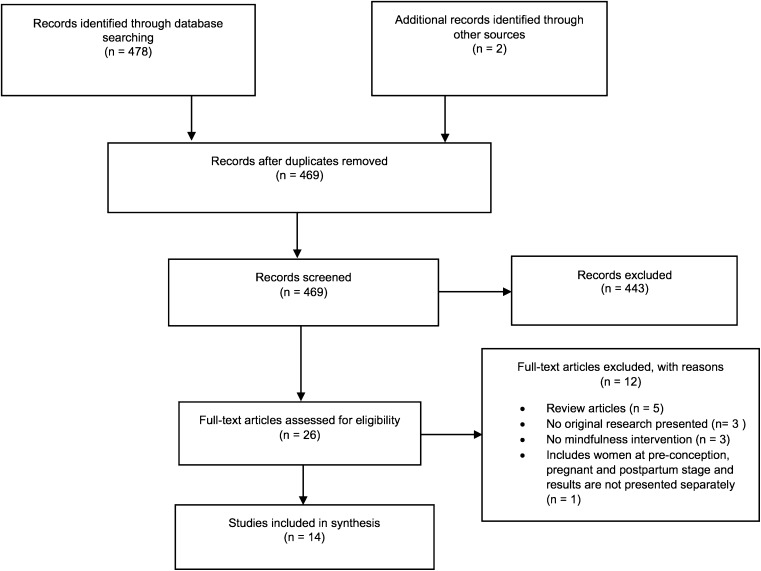
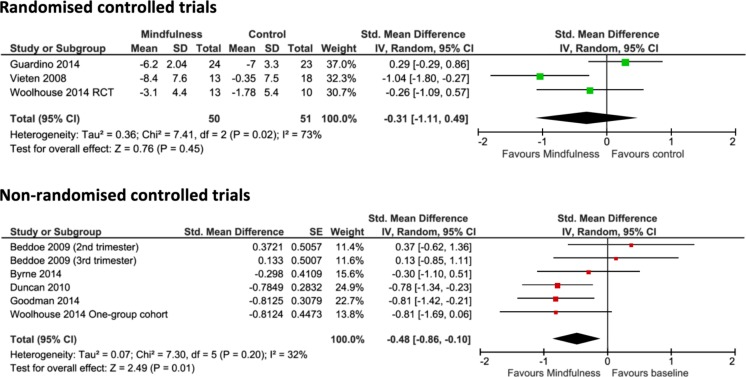
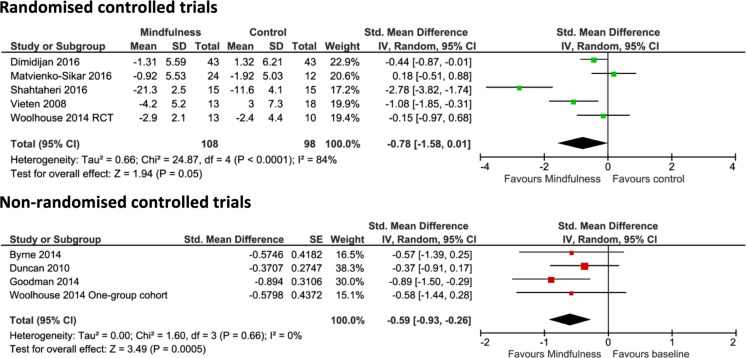
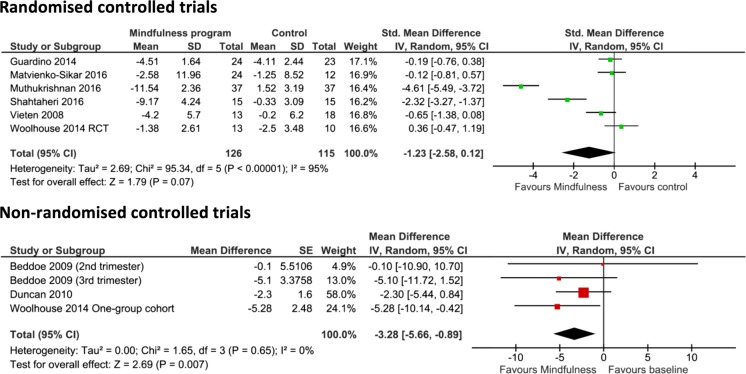
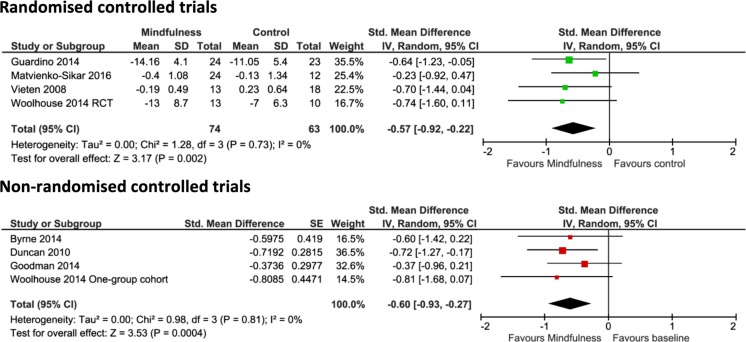
This systematic review aims to assess the effect of mindfulness-based interventions carried out during pregnancy exploring mindfulness and mental health outcomes. A systematic review was conducted to appraise the current literature on the subject area. Inclusion and exclusion criteria were agreed and after reviewing titles, abstracts and full papers, 14 articles met the inclusion criteria and were included in the review. The quality of included articles was checked using the Quality Assessment Tool for Quantitative Studies. Pooled results of the randomised controlled trials (RCTs) reporting outcomes on anxiety, depression and perceived stress indicated no differences between the mindfulness intervention group and the control group. Pooled results of the non-RCTs reporting anxiety, depression and perceived stress showed a significant benefit for the mindfulness group. Mindfulness as an outcome was assessed in four RCTs for which the pooled results show a significant difference in favour of the mindfulness intervention when compared to a control group. The pooled results of the four non-RCTs also indicate a significant difference following mindfulness intervention. Results suggest that mindfulness-based interventions can be beneficial for outcomes such as anxiety, depression, perceived stress and levels of mindfulness during the perinatal period. Further research would be useful to explore if such benefits are sustained during the post-natal period.
Overview
The claims and statistics of this paper haven’t been checked yet.
Free: it reads the open-access text and checks the first 5 claims that cite a source we can check. Create a free account to check every claim.
Integrity signals
Registry
Cites
Statistics
Figures
Verification
Claims the paper makes
The claims and statistics of this paper haven’t been checked yet.
Free: it reads the open-access text and checks the first 5 claims that cite a source we can check. Create a free account to check every claim.
Claims other papers make about this one
Each is checked against this paper’s own text: does it say what the citing paper says it does?
The source backs part of the claim, not all of it — or backs it for a different population, condition or comparison.
In the citing paper
“Support programs during pregnancy, such as mindfulness-based therapies, have shown positive outcomes, primarily in reducing parental stress, anxiety, and depression (Dhillon etal., 2017; Dimidjian, etal., 2015; Duncan & Bardacke, 2010).”
From A Qualitative Investigation of a Prenatal Mindfulness Relationship-Based (PMRB) Program to Support Maternal Mental Health and Mother–Baby Relationship During Pregnancy and Post-Partum (2024) · cites this paper as Dhillon et al., 2017
Experimental — accuracy not yet measuredThe source backs part of the claim, not all of it — or backs it for a different population, condition or comparison.
In the citing paper
“Mindfulness-based interventions (MBIs) have recently come into focus as effective treatments for reducing symptoms of depression, anxiety, and stress in the general population (41, 42) and in pregnant women (43–47), combining elements of CBT and psychoeducational content.”
From Acceptance, experiences, and needs of hospitalized pregnant women toward an electronic mindfulness-based intervention: A pilot mixed-methods study (2022) · cites this paper as [43]
Experimental — accuracy not yet measuredThe source backs part of the claim, not all of it — or backs it for a different population, condition or comparison.
In the citing paper
“However, there are only few studies of pregnancy-specific eMBIs with only small samples and lacking randomized controlled approaches (43, 51, 55, 63).”
From Acceptance, experiences, and needs of hospitalized pregnant women toward an electronic mindfulness-based intervention: A pilot mixed-methods study (2022) · cites this paper as [43]
Experimental — accuracy not yet measuredThe source backs part of the claim, not all of it — or backs it for a different population, condition or comparison.
In the citing paper
“The majority of studies are pilot and feasibility trials that are not adequately powered to demonstrate the effectiveness [3, 18, 19].”
From Mindfulness-based stress reduction adapted to pregnant women with psychosocial vulnerabilities—a protocol for a randomized feasibility study in a Danish hospital-based outpatient setting (2021) · cites this paper as [18]
Experimental — accuracy not yet measuredThe source backs part of the claim, not all of it — or backs it for a different population, condition or comparison.
In the citing paper
“Pooled results of uncontrolled studies and (underpowered) RCT’s evaluating anxiety, depression, and perceived stress have demonstrated a significant benefit for different MBIs when compared with a control group. 29”
From Fear of childbirth, nonurgent obstetric interventions, and newborn outcomes: A randomized controlled trial comparing mindfulness‐based childbirth and parenting with enhanced care as usual. (2022) · cites this paper as [29]
Experimental — accuracy not yet measured
2 more claims about this paper
Create a free account to see every claim other papers make about this one.
Self-check
Percentages, sums and reported differences re-computed from the paper’s own numbers.
The self-check needs the paper’s full text.
Citations
Cites
(2008) · Medical Entomology and Zoology · Cited by 7,477
Cochrane Database of Systematic Reviews
(2011) · Progress in Neurology and Psychiatry · doi:10.1002/pnp.208 · Cited by 4,667
The effect of mindfulness based therapy on anxiety and depression: A meta analytic review
Hofmann, S. G., Sawyer, A. T., Witt, A. A., & Oh, D. (2010) · Journal of Consulting and Clinical Psychology · doi:10.1037/a0018555 · Cited by 3,846 · cited 1×
“A meta-analysis demonstrated that mindfulness-based therapy is a promising intervention for treating anxiety and mood problems in clinical populations (Hofmann et al. 2010).”
Evaluating non-randomised intervention studies
Deeks, J., Dinnes, J., D'Amico, R., Sowden, A., Sakarovitch, C., Song, F., Petticrew, M., & Altman, D. (2003) · Health Technology Assessment · doi:10.3310/hta7270 · Cited by 2,907
JOURNAL OF CLINICAL AND DIAGNOSTIC RESEARCH
(2020) · JOURNAL OF CLINICAL AND DIAGNOSTIC RESEARCH · doi:10.7860/jcdr · Cited by 2,095
Alternative Therapies in Health and Medicine
Bick, D. (1996) · JAMA: The Journal of the American Medical Association · doi:10.1001/jama.1996.03530370072040 · Cited by 1,734
Chiesa, A., & Serretti, A. (2009) · The Journal of Alternative and Complementary Medicine · doi:10.1089/acm.2008.0495 · Cited by 1,681
Antenatal maternal stress and long‐term effects on child neurodevelopment: how and why?
Talge, N. M., Neal, C., Glover, V., & the Early Stress, T. R. A. P. S. N. F. A. N. E. O. C. A. A. M. H. (2007) · Journal of Child Psychology and Psychiatry · doi:10.1111/j.1469-7610.2006.01714.x · Cited by 1,349 · cited 1×
“…increase in obstetric complications including stillbirth, low birth weight infants, postnatal specialist care for the infant and susceptibility to more adverse neurodevelopmental outcomes including behavioural, emotional and cognitive problems (Bonari et al. 2004; Glover 2011; Talge et al. 2007).”
BackgroundCohort study of depressed mood during pregnancy and after childbirth
Evans, J., Heron, J., Francomb, H., Oke, S., & Golding, J. (2001) · BMJ · doi:10.1136/bmj.323.7307.257 · Cited by 1,280 · cited 1×
“After reading the full-text, 12 articles were excluded for the following reasons: review articles (Arendt and Tessmer-Tuck 2013; Field 2008; Khianman et al. 2012; Marc et al. 2011; Smith et al. 2011), no original research presented (Beattie et al. 2014; Beddoe and Lee 2008; Donegan 2015), no…”
BackgroundDunkel Schetter, C., & Tanner, L. (2012) · Current Opinion in Psychiatry · doi:10.1097/yco.0b013e3283503680 · Cited by 1,268 · cited 2×
“Preterm birth has adverse implications for foetal neurodevelopment and child outcomes and is the leading cause of infant mortality and morbidity (Schetter and Tanner 2012; Wadhwa et al. 2011).”
Background
Research works printed but not linked: 2
- Cohen JS Mindfulness and self-compassion in the transition to motherhood: a prospective study of postnatal mood and attachment 2010 New York Columbia University
- Shahtaheri E Hosseinian S Ebrahimi M Jalilabadi Z Mirderikvand F The impact of stress reduction program based on mindfulness and conscious yoga on depression, perceived stress and quality of life in pregnant women Acta Medica Mediterranea 2016 32 5 2047 2050
Cited by
Items 101–200 of 239
Maternal mindfulness during pregnancy predicts newborn neurobehavior
Ostlund, B. D., Olavson, K., Brown, M. A., Shakiba, N., Saenz, C., Crowell, S. E., & Conradt, E. D. (2021) · Developmental Psychobiology · doi:10.1002/dev.22131 · Cited by 9
“…a practice that cultivates awareness and acceptance, mindfulness is thought to facilitate emotion regulation and, consequently, reduce anxiety and stress among pregnant women (Dhillon et al., 2017; Guardino et al., 2014; Pan et al., 2019; see Taylor et al., 2016 for conflicting results).”
BackgroundRainford, M., Barbour, L. A., Birch, D., Catalano, P. M., Daniels, E., Gremont, C., Marshall, N., Wharton, K., & Thornburg, K. L. R. (2024) · Annals of the New York Academy of Sciences · doi:10.1111/nyas.15122 · Cited by 14
Designing Positive Organizational Psychology Interventions
Donaldson, S. I., & Chen, C. L. (2021) · Wiley eBooks · doi:10.1002/9781118977415.ch1 · Cited by 11
Skovbjerg, S., Birk, D., Bruggisser, S., Wolf, A. L. A., & Fjorback, L. (2021) · Pilot and Feasibility Studies · doi:10.1186/s40814-021-00860-w · Cited by 8
“The majority of studies are pilot and feasibility trials that are not adequately powered to demonstrate the effectiveness [3, 18, 19].”
BackgroundGökbulut, N., Cengizhan, S. Ö., Akça, E. İ., & CERAN, E. (2024) · International Journal of Nursing Practice · doi:10.1111/ijn.13238 · Cited by 17
Root, A. L., Crossley, N. P., Heck, J. L., McCage, S., Proulx, J. A., & Jones, E. J. (2023) · The Journal of Cardiovascular Nursing · doi:10.1097/jcn.0000000000001054 · Cited by 8
Vázquez-Lara, M. D., Rúger-Navarrete, A., Mohamed-Abdel-Lah, S., Gómez‐Urquiza, J. L., Fernández-Carrasco, F. J., Díaz, L. R., Caparrós-González, R. A., Palomo-Gómez, R., Riesco-González, F. J., & Vázquez-Lara, J. M. (2025) · Healthcare · doi:10.3390/healthcare13121378 · Cited by 19
Anolak, H., Lau, F., Davis, D. L., Browne, J., & Watt, B. (2023) · Sexual & Reproductive Healthcare · doi:10.1016/j.srhc.2023.100830 · Cited by 11
The Relation of Maternal Psychosocial Risk Factors to Infant Safe Sleep Practices
Gates, K. A., Chahin, S. S., Damashek, A. L., Dickson, C. A., Lubwama, G., Lenz, D., Bautista, T., & Kothari, C. (2024) · Maternal and Child Health Journal · doi:10.1007/s10995-023-03880-5 · Cited by 7
Agampodi, T. C., Katumuluwa, S., Pattiyakumbura, T., Rankaduwa, N., Dissanayaka, T., & Agampodi, S. B. (2018) · F1000Research · doi:10.12688/f1000research.17049.1 · Cited by 7
“Nevertheless, two recent systematic reviews (Dhillon et al., 2017; Roy Malis et al., 2017) shows mixed results on mindfulness based interventions in pregnancy.”
Pushing beyond the silos: the obstetrician’s role in perinatal depression care
Hoffman, M. C. (2020) · The Journal of Maternal-Fetal & Neonatal Medicine · doi:10.1080/14767058.2019.1691990 · Cited by 8
“Other prevention strategies include psychotherapy, mindfulness-based cognitive therapy, and mindfulness-based stress reduction, although these approaches may be more effective for mild to moderate depression [28].”
BackgroundThe protective value of trait mindfulness for mothers' anxiety during the perinatal period
Leyland, A. F., Boekhorst, M. G. B. M., Offermans, J. E., Emerson, L.-M., Hulsbosch, L. P., & Potharst, E. S. (2023) · Acta Psychologica · doi:10.1016/j.actpsy.2023.104034 · Cited by 6
Sansone, A., Stapleton, P., & Patching, A. (2024) · Mindfulness · doi:10.1007/s12671-024-02399-2 · Cited by 6
“Support programs during pregnancy, such as mindfulness-based therapies, have shown positive outcomes, primarily in reducing parental stress, anxiety, and depression (Dhillon et al., 2017; Dimidjian, et al., 2015; Duncan & Bardacke, 2010).”
GlowGrow: Designing an ambient biofeedback system for pregnancy stress management
Xue, M., Yu, B., Wu, J., Sun, X., Fang, P., Yao, C., Ying, F., Luo, S., & Zhang, S. (2025) · PLoS ONE · doi:10.1371/journal.pone.0320866 · Cited by 7
“Mindfulness [48] and expressive writing [9] train pregnant women to develop the skill of paying attention to their sensations and emotions [49] and overcoming maternal distress, depression, and anxiety [50].”
Compassion fatigue and satisfaction among pharmacists: Prevalence and associated factors
Salihu, E. Y., Tewogbola, P. O., Joseph, D. T., Ofuokwu-Oduniyi, J., & Chewning, B. A. (2025) · Research in Social and Administrative Pharmacy · doi:10.1016/j.sapharm.2025.04.003 · Cited by 6
Agampodi, T. C., Katumuluwa, S., Pattiyakumbura, T., Rankaduwa, N., Dissanayaka, T., & Agampodi, S. B. (2018) · F1000Research · doi:10.12688/f1000research.17049.2 · Cited by 12
Rådmark, L., Osika, W., Wallén, M. B., Nissen, E., Lönnberg, G., Bränström, R., Henje, E., Gardner, R. M., Fransson, E., Karlsson, H., et al. (2023) · BMC Pregnancy and Childbirth · doi:10.1186/s12884-023-05528-2 · Cited by 10
“A recently published systematic review [3] and a meta-analysis [18] have concluded that there is sufficient evidence for the use of mindfulness interventions for anxiety, stress and depression reduction in the perinatal period, but that research of the effects on other pregnancy-related outcomes is yet insufficient.”
BackgroundNamdar, P., Hoseini, N., Dehghankar, L., Noorian, S., Golestaneh, F., Beheshti, S., Taheri, S., & Yekefallah, L. (2021) · The Practising Midwife · doi:10.55975/vhwk4106 · Cited by 6
Torres-Giménez, A., Sureda, B., Roca-Lecumberri, A., Andrés-Perpiñá, S., Solé, E., & Gelabert, E. (2024) · Journal of Psychiatric Research · doi:10.1016/j.jpsychires.2023.11.003 · Cited by 5
Mannocci, A., Ciavardini, S., Mattioli, F., Massimi, A., D’Egidio, V., Lia, L., Scaglietta, F., Giannini, A., Antico, R., Dorelli, B., et al. (2022) · International Journal of Environmental Research and Public Health · doi:10.3390/ijerph19031461 · Cited by 5
“In the context of pregnancy and motherhood, a recent systematic review and meta-analysis of mindfulness-based interventions in pregnancy found that mindfulness-based interventions may be beneficial for outcomes such as anxiety, depression, perceived stress and levels of mindfulness [25].”
BackgroundDevelopment and Initial Validation of the State Four Facet Mindfulness Questionnaire
Raynes, S., & Dobkins, K. R. (2025) · Assessment · doi:10.1177/10731911251330092 · Cited by 6
“These interventions typically consist of several weeks of a structured program, designed for clinical populations (see Creswell, 2017; Dawson et al., 2020; Dhillon et al., 2017; Goldberg et al., 2018, 2022; Goyal et al., 2014, p. 201 for reviews).”
van Uytsel, H., Ameye, L., Devlieger, R., Bijlholt, M., der Gucht, K. V., Jacquemyn, Y., & Bogaerts, A. (2023) · PLoS ONE · doi:10.1371/journal.pone.0284770 · Cited by 7
Anxiety and associated factors in Northwest Ethiopian pregnant women: a broad public health concern
Haile, T. T., Kebede, A. A., Gessesse, D. N., Tsega, N. T., Aklil, M. B., Temesgan, W. Z., Anteneh, T. A., Tibebu, N. S., Alemu, H. N., Seyoum, A. T., et al. (2024) · Frontiers in Public Health · doi:10.3389/fpubh.2023.1300229 · Cited by 7
The feasibility of ‘Mind the Bump’: A mindfulness based maternal behaviour change intervention
Hennelly, S. E., Perman‐Howe, P. R., Foxcroft, D., & Smith, L. A. (2020) · Complementary Therapies in Clinical Practice · doi:10.1016/j.ctcp.2020.101178 · Cited by 7
“This reflects a later review’s conclusion that the current evidence base is not sufficient to assert that MBIs improve clinical aspects of pregnancy mental health [35].”
BackgroundAswitami, N. G. A. P., Darma, I. G. G. M. S., & Ardi, N. M. S. M. (2021) · Jurnal Profesi Medika Jurnal Kedokteran dan Kesehatan · doi:10.33533/jpm.v15i2.3710 · Cited by 5
“Reported increases in pregnancy complications caused by anxiety and depression of pregnancy are newborn mortality, low birth weight infants, postnatal depression, and susceptibility to behavioral and cognitive problems in infants.(6) Reported other studies that support that anxiety in”
ResultTabi, K., Bhullar, M., Fantu, L., Shulman, B., Dueck, R., Hippman, C., Ryan, D. M., & Stewart, S. E. (2022) · BMJ Open · doi:10.1136/bmjopen-2021-051935 · Cited by 12
Ciciolla, L. M., Addante, S., Shreffler, K. M., & Croff, J. M. (2023) · Women s Health Reports · doi:10.1089/whr.2022.0090 · Cited by 7
Iacob, E., Kausler, R., Williams, M., Dorn, U. P., Simonsen, S. E., Smid, M. C., & Latendresse, G. (2025) · Journal of Midwifery & Women s Health · doi:10.1111/jmwh.13767 · Cited by 5
Değirmenci, F., Kisaçam, K. P. A., & YILMAZ, D. V. (2025) · Worldviews on Evidence-Based Nursing · doi:10.1111/wvn.70034 · Cited by 12
Mindfulness-based stress reduction intervention during pregnancy changes maternal brain
Gomez, Y., Nakaki, A., Conti, A., Castro‐Barquero, S., Gambosi, B., Casas, I., Genero, M., Youssef, L., Benítez, L., Encabo, N., et al. (2025) · Scientific Reports · doi:10.1038/s41598-025-07787-9 · Cited by 6
“MBSR is gathering positive evidence for the pregnant population with depression and anxiety symptoms 7,20 .”
Chapman, R. R., Mohamed, S. B., Rage, H., Abdulahi, A., Jimenez, J., Gavin, A. R., Zetell, J., Chatterjee, K. N., Valderrábano, S., Sundar, S., et al. (2023) · Journal of Racial and Ethnic Health Disparities · doi:10.1007/s40615-023-01608-3 · Cited by 5
“Patient awareness, mindfulness [39], self-trust, and related control and ease are all components of embodied self-knowledge that promote agency—the ability to make an informed decision—and self-efficacy—confidence to act on decisions to initiate a request for connection and possibly care from their provider or clinic.”
BackgroundCalhoun, R. E., Thompson, S. F., Treadway, A., Long, R. B., Shimomaeda, L., Metje, A., Moini, N., Price, C. J., Kantrowitz‐Gordon, I., Nurius, P. S., et al. (2023) · Journal of Child and Family Studies · doi:10.1007/s10826-023-02657-2 · Cited by 6
“A limited number of small RCTs examining mindfulness-based interventions carried out during pregnancy are suggestive of changes to maternal anxiety, depression, and stress (Dhillon et al., 2017).”
BackgroundWang, J., Huang, Y., Wu, L., Sun, Y., Zhang, X., & Cao, F. (2024) · Journal of Sleep Research · doi:10.1111/jsr.14272 · Cited by 4
“…are highly modifiable; for example, although further validation is needed in rigorous randomized controlled trials, mindfulness-based interventions (Dhillon et al., 2017; Winbush et al., 2007) have been hypothesized to improve prenatal insomnia symptoms by disengaging participants from repetitive…”
Xie, W., Wang, M., Ng, S., Lu, S., Yeung, A., Chan, K. P., & Lo, H. H. M. (2024) · Mindfulness · doi:10.1007/s12671-024-02457-9 · Cited by 5
“The eight-session MBI was designed by integrating and modifying elements from Mindfulness-Based Cognitive Therapy (MBCT) (Dhillon et al., 2017).”
The importance of yoga and mindfulness during pregnancy
Vaamonde, D., Algar‐Santacruz, C., Pettit, J. R., Chacon, B., & Dillard, D. M. (2022) · Elsevier eBooks · doi:10.1016/b978-0-12-818309-0.00018-6 · Cited by 6
The science and practice of positive psychology: from a bold vision to PERMA+4
Donaldson, S. I., Gaffaney, J., & Cabrera, V. (2022) · Elsevier eBooks · doi:10.1016/b978-0-323-91497-0.00129-6 · Cited by 5
Walls, J., Farewell, C. V., Traikoff, K., Burns, H., Whalen, J., Shefferman, M., & Leiferman, J. A. (2022) · OBM Integrative and Complementary Medicine · doi:10.21926/obm.icm.2203038 · Cited by 3
Indian Academy of Pediatrics Consensus Guidelines on Preconception Care
Singh, H., Nair, M. K. C., Kariya, P., Bhatt, S., Janardhanan, D., Shanthi, B. L., Sodhi, M. K., Elizebath, K. E., Kumari, T. L. R., Kinjawadekar, U., et al. (2024) · Indian Pediatrics · doi:10.1007/s13312-024-3151-y · Cited by 4
Знаменська, Т. К., Zbrozhyk, E. V., Vorobiova, O. V., Nikulina, L., & Golota, T. (2023) · Neonatology surgery and perinatal medicine · doi:10.24061/2413-4260.xiii.4.50.2023.1 · Cited by 7
Caldwell, J., Meredith, P. J., Whittingham, K., & Ziviani, J. M. (2022) · OBM Integrative and Complementary Medicine · doi:10.21926/obm.icm.2203028 · Cited by 3
Management of cancer pain in pregnancy: can opioids be used?
Nafula, E. W., Weru, J. K., & Yennurajalingam, S. (2023) · Annals of Palliative Medicine · doi:10.21037/apm-23-74 · Cited by 5
Mindfulness and Cardiometabolic Health During Pregnancy: An Integrative Review
Lindsay, K. L., Guo, Y., & Gyllenhammer, L. E. (2024) · Mindfulness · doi:10.1007/s12671-024-02337-2 · Cited by 3
“…et al., 2015; Kwon et al., 2020; Mooventhan, 2019; Sheffield & Woods-Giscombe, 2016) and the three that investigated mindfulness interventions (Dhillon et al., 2017; Hall et al., 2016; Lever Taylor et al., 2016), all argue in favor of positive intervention effectiveness for psychological…”
Contributions of mindfulness in high-risk pregnancy: a mixed methods systematic review
Dutra, I. N., Seixinho, S., Baixinho, C. L., Presado, M. H., & Fernández, R. G. (2025) · Heliyon · doi:10.1016/j.heliyon.2025.e43059 · Cited by 3
Tian, Y., Ma, R., Cui, N., Wang, J., Huang, Y., Guo, K., Liu, X., Fang, H., Dong, M., Wan, C., et al. (2025) · Journal of Medical Internet Research · doi:10.2196/77260 · Cited by 4
“Systematic reviews and meta-analyses [17,18,70] have suggested that mindfulness interventions (including digital mindfulness interventions) during pregnancy may improve maternal prepartum and postpartum depression, anxiety, and stress, although their effects on husbands remain unclear.”
Khoury, J. E., Nguyen, M., Baker, N., Giles, L., Tulipan, T., Campbell-Yeo, M. L., Allen, V. M., & Perrot, T. S. (2026) · Child Abuse & Neglect · doi:10.1016/j.chiabu.2026.107919 · Cited by 2
Karakuş, A., & Akyürek, G. (2026) · American Journal of Occupational Therapy · doi:10.5014/ajot.2026.051415 · Cited by 2
“The sustained effects of ACOT on anxiety and QoL support previous findings that have highlighted the efficacy of mindfulness-based psychoeducational interventions during pregnancy (Abera et al., 2024; Dhillon et al., 2017).”
Das, D., Deb, N., & choudhury, S. S. S. (2026) · Biomedical Physics & Engineering Express · doi:10.1088/2057-1976/ae55a8 · Cited by 3
Lederman, R. P., & Weis, K. L. (2020) · Springer eBooks · doi:10.1007/978-3-030-45738-9_11 · Cited by 2
Psychischer Stress – Implikationen für Schwangerschaftseintritt und -verlauf
Wischmann, T. H., Zacher, M., & Ditzen, B. (2022) · Gynäkologische Endokrinologie · doi:10.1007/s10304-022-00443-9 · Cited by 2
Mindfulness‐Based Interventions for the Occurrence of Postpartum Depression in Elderly Primiparas
Mei, R., Peng, F., Xiong, J., Liu, C., Liu, X., Wang, F., & Lv, L. (2022) · Contrast Media & Molecular Imaging · doi:10.1155/2022/4202676 · Cited by 3
Mindfulness in Pregnancy, Childbirth and Parenting
Aktürk, S. O., & Yılmaz, T. (2023) · Etkili Hemşirelik Dergisi · doi:10.46483/deuhfed.1076031 · Cited by 4
Effectiveness of Mindfulness-Based Cognitive Therapy (MBCT) in PreventingDepression Symptoms
Pandey, S. (2023) · Indian Journal of Health Studies · doi:10.56490/ijhs.2023.5205 · Cited by 3
Siegmann, E.-M., Eichler, A., Buchholz, V. N., Gerlach, J., Pontones, C. A., Titzmann, A., Arnaud, N., Mühle, C., Beckmann, M. W., Fasching, P. A., et al. (2023) · Journal of Clinical Medicine · doi:10.3390/jcm12196142 · Cited by 4
“Mindfulness-oriented treatments can be characterized by cultivating a non-judgmental and non-reactive awareness as well as an acceptance of inner thoughts, feelings, and body sensations in the present moment [76,77].”
BackgroundSelf-Efficacy and Anxiety Level of Third-Trimester Primigravida
Susanti, S., Hassan, H. C., & Aljaberi, M. A. A. (2023) · International Journal of Health Sciences · doi:10.59585/ijhs.v1i3.143 · Cited by 9
“Anxiety and depression during pregnancy are significant complications reported to affect 20 - 40% of pregnant women [2].”
BackgroundSimmons, A., Louder, C. N., Franklin, A., del Rey, G. M., & Nicolas, G. (2024) · Journal of Prevention and Health Promotion · doi:10.1177/26320770241272185 · Cited by 3
“Empirical support has been found for a multitude of interventions to reduce stress in general and amongst pregnant women, specifically (Dhillon et al., 2017; Guardino et al., 2014).”
The effect of mindfulness therapy on the pregnant women’s anxiety level in facing childbirth
Wulandari, A. N., & Susanti, B. A. D. (2019) · International Journal of Community Medicine and Public Health · doi:10.18203/2394-6040.ijcmph20193965 · Cited by 5
Prenatal yoga and excessive gestational weight gain: A review of evidence and potential mechanisms
Green, J., Larkey, L., Leiferman, J. A., Buman, M. P., Oh, C., & Huberty, J. (2022) · Complementary Therapies in Clinical Practice · doi:10.1016/j.ctcp.2022.101551 · Cited by 4
Salihu, E. Y., Ali, A. M., Hassan, J. H., Joseph, D. T., & Chewning, B. A. (2024) · Cureus · doi:10.7759/cureus.70019 · Cited by 3
Rizzi, S., Pavesi, M. C., Moser, A., Paolazzi, F., Marchesoni, M., Poggianella, S., Gadotti, E., & Forti, S. (2025) · JMIR Formative Research · doi:10.2196/58265 · Cited by 3
“Mindfulness practices enable pregnant women to manage stress, anxiety, and depression actively, equipping them with valuable skills for various situations, including childbirth [14,16-19].”
Birner, C., & Große, G. (2021) · Research Square · doi:10.21203/rs.3.rs-223224/v1 · Cited by 4
“The systematic review and meta-analysis of Dhillon et al. (2017) also found benefits of mindfulness based interventions in RCT and non-RCT studies on anxiety, while mixed results are shown for perceived stress.”
BackgroundMindfulness-Based Interventions using Artificial Intelligence: A Systematic Review ProtocolPreprint
Shankar, R., Devi, F., & Xu, Q. (2025) · medRxiv · doi:10.1101/2025.06.20.25329981 · Cited by 2
“MBIs have also been adapted for specific populations, such as pregnant women [9], older adults [10], and healthcare professionals [11].”
Orue, I., & Echabe-Ecenarro, O. (2026) · Journal of Reproductive and Infant Psychology · doi:10.1080/02646838.2025.2502378 · Cited by 1
“…studies have shown that mindfulness-based interventions during key periods, such as pregnancy, childbirth, and parenting, can effectively lower depressive symptoms and reduce levels of stress and anxiety (Babbar et al., 2021; Dhillon et al., 2017; Reangsing et al., 2024; Trapani et al., 2024).”
Effect of mindfulness based interventon on sleep quality in nulliparous pregnant women
Borghei, N. S., Niazy, A., Behnampour, N., & Esfehani, M. (2021) · کومش · doi:10.52547/koomesh.23.5.563 · Cited by 2
Reese, S. E., Conradt, E. D., Riquino, M. R., & Garland, E. L. (2021) · Frontiers in Psychology · doi:10.3389/fpsyg.2021.688359 · Cited by 2
Interest in prenatal stress management training: association with medical risk and mental health
Fairbrother, N., Keeney, C., & Albert, A. K. (2023) · Journal of Reproductive and Infant Psychology · doi:10.1080/02646838.2023.2254800 · Cited by 3
“Results from two recent systematic reviews found that mindfulness-based SMT decreased levels of anxiety in pregnancy (Dhillon et al., 2017; Shi & MacBeth, 2017).”
Haßdenteufel, K., Müller, M., Abele, H., Brucker, S. Y., Graf, J., Zipfel, S., Bauer, A., Jakubowski, P., Pauluschke‐Fröhlich, J., Wallwiener, M., et al. (2024) · Journal of Medical Internet Research · doi:10.2196/56230 · Cited by 1
“Looking deeper, studies using a mere digital approach often failed to find a benefit of such interventions for psychological distress while face-to-face interventions usually did [41,42].”
Écija, C., Catalá, P., Gutiérrez, L., & Peñacoba, C. (2025) · Clinical and Experimental Obstetrics & Gynecology · doi:10.31083/ceog26969 · Cited by 2
“Research has shown that pregnant women who attended mindfulness training develop the ability to notice their worries, therefore being better able to tolerate and cope with them [51–54].”
Bublitz, M. H., Anderson, M. R., Bourjeily, G. R., & Salmoirago‐Blotcher, E. (2025) · Journal of Psychosomatic Research · doi:10.1016/j.jpsychores.2025.112183 · Cited by 3
EFEITOS DA PRÁTICA DE MINDFULNESS EM GESTANTES E PARTURIENTES ATENDIDAS NO AMBIENTE HOSPITALAR
Salvador, A. P. D. A., da Mata, J. A. L., Nora, C. R. D., Sanfelice, C. F. D. O., Rocha, C. M. F., & Weissheimer, A. M. (2025) · Revista Enfermagem Atual In Derme · doi:10.31011/reaid-2025-v.99-n.supl.1-art.2513 · Cited by 2
Why mindfulness matters in musculoskeletal therapies: a narrative review
Bablis, P., Day, R. R., Bablis, S., & Pollard, H. P. (2025) · Frontiers in Psychology · doi:10.3389/fpsyg.2025.1518141 · Cited by 2
Mindfulness-Based Intervention for Pregnant Woman and Effects on Bonding: A Systematic Review
Beauvois, C., & Soubelet, A. (2026) · Mindfulness · doi:10.1007/s12671-025-02748-9 · Cited by 2
Mindfulness-based cognitive therapy and depression
Ewais, T. (2021) · Elsevier eBooks · doi:10.1016/b978-0-12-817933-8.00042-6 · Cited by 1
Vaamonde, D., Algar‐Santacruz, C., & Dillard, D. M. (2022) · Elsevier eBooks · doi:10.1016/b978-0-12-818309-0.00012-5 · Cited by 2
Lederman, R. P., & Weis, K. L. (2020) · Springer eBooks · doi:10.1007/978-3-030-45738-9_6 · Cited by 1
Hsu, C.-Y., Chen, C.-L., Tsai, L., & Tsai, J. (2022) · Frontiers in Pharmacology · doi:10.3389/fphar.2022.870659 · Cited by 1
“Physiological, psychological, social, or fetal factors may be detrimental to prenatal health, possibly leading to miscarriages, premature birth, or stillbirths (Hu, 2006; Dhillon et al., 2017).”
BackgroundHitijahubessy, C. N. M., Tatisina, C. M., & Rahakbauw, G. Z. (2022) · JURNAL ABDI MERCUSUAR · doi:10.36984/jam.v2i2.358 · Cited by 1
Assessing the Effects of Mindfulness-Based Intervention on Anxiety and Cortisol in Pregnancy
Kundarti, F. I., Komalyna, I. N. T., Titisari, I., Kiswati, K., & Jamhariyah, J. (2023) · Universal Journal of Public Health · doi:10.13189/ujph.2023.110524 · Cited by 2
Branjerdporn, G., Gillespie, K. M., Martin, E. K., Kissane, V., Young, A. D., Ewais, T., Goldsmith, K., Wilson, S., Adhikary, S. R., Mcgahan, G., et al. (2023) · Trials · doi:10.1186/s13063-023-07746-7 · Cited by 2
Iloma, D. O., Abikoye, G. E., Nnam, M. U., & Ogbonnaya, C. E. (2023) · Current Psychology · doi:10.1007/s12144-023-05449-5 · Cited by 1
“Considering these situations, a practical solution becomes necessary, as we join previous researchers (see, for example, Dhillon et al., 2017; Isgut et al., 2017; Rolston & Lloyd-Richardson, 2020; etc.) to provide evidence base explanations and scientific answers to the problem under investigation.”
New treatments: Opportunities and challenges
Drysdale, A. T., Poleshuck, E. L., Ramsey, M. H., & Monk, C. E. (2024) · Seminars in Perinatology · doi:10.1016/j.semperi.2024.151941 · Cited by 1
“…of mindfulness interventions during pregnancy supported this conclusion, finding significant depression, anxiety, and stress effects in uncontrolled studies but trend or insignificant effects in pooled RCTs. 87 Two recent reviews of mindfulness-based interventions show more positive findings.”
Sun, S., Pisani, C., Pellowski, J. A., Go, M., & Loucks, E. B. (2025) · Mindfulness · doi:10.1007/s12671-025-02699-1 · Cited by 1
“As mindfulness-based interventions have shown efficacy in improving mental health for pregnant people (Dhillon et al., 2017; Reangsing et al., 2024; Shi & MacBeth, 2017), they may have the potential to fill this gap for people with GDM as part of their comprehensive medical care package.”
Kvasnak, K., Brunton, G., Lemonde, M., Chyzzy, B., & Dick, J. A. (2021) · International Health Trends and Perspectives · doi:10.32920/ihtp.v1i2.1438 · Cited by 1
Sharma, S. R., Devi, S., Pallerla, S., Rane, S., & Wagh, N. R. (2026) · Psychology Health & Medicine · doi:10.1080/13548506.2026.2691409 · Cited by 1
Contact with the present moment including shared psychological presence
Whittingham, K., & Coyne, L. W. (2019) · Elsevier eBooks · doi:10.1016/b978-0-12-814669-9.00009-6
Preconception and Pregnancy Health
Scott, M. L., & Stuart, L. (2020) · Elsevier eBooks · doi:10.1016/b978-0-323-43044-9.00211-9
Pleine conscience et relations de couple
Dierickx, C. (2018) · Elsevier eBooks · doi:10.1016/b978-2-294-75892-8.00007-5
Jenkins, A., Kearney, L. N., George, K., & Kannis‐Dymand, L. (2022) · Research Square · doi:10.21203/rs.3.rs-1037571/v1 · Cited by 1
Mathias, S., Daigle, P., Dancause, K. N., & Gadais, T. (2019) · SportRxiv (OSF Preprints) · doi:10.31236/osf.io/j6mq3
(2020) · Vandenhoeck & Ruprecht eBooks · doi:10.13109/9783666404986.233
MacKinnon, A., Sedov, I., Silang, K., Kumari, J., Giesbrecht, G. F., Campbell, T. S., & Tomfohr‐Madsen, L. M. (2022) · PsyArXiv (OSF Preprints) · doi:10.31234/osf.io/er7p6 · Cited by 1
Zhang, X., Li, Y., Wang, J., Huang, Y., Mao, F., Wu, L., Sun, J., & Cao, F. (2022) · doi:10.2196/preprints.41298
Kermack, A. (2022) · Cambridge University Press eBooks · doi:10.1017/9781009025270.004
Mindfulness-Based Interventions during Pregnancy and Labour
Merchante, M. S., & Martinez-Hurtado, E. D. (2022) · Recent advances in anesthesiology · doi:10.2174/9789815051841122040022
Postpartum Depression: Overcoming Mental Health Challenges during Parenthood
Walls, J., Leiferman, J. A., Farewell, C. V., & Lacy, R. (2023) · Health · doi:10.4236/health.2023.157046
Unger, K. G., Sanapo, L., Bourjeily, G. R., Salmoirago‐Blotcher, E., & Bublitz, M. H. (2023) · Journal of Integrative and Complementary Medicine · doi:10.1089/jicm.2023.0254
Vaishnav, S. B., Mody, S. K., Sheth, V., Asrani, M. R., Ganjiwale, J., Sapre, S. A., & Raithatha, N. S. (2023) · Research Square · doi:10.21203/rs.3.rs-3448125/v1 · Cited by 1
Evaluation of psychological stress in pregnant females during COVID era
Kaur, P., Sehgal, A., Tandon, R., Deepti, & Arun, P. (2023) · International Journal of Reproduction Contraception Obstetrics and Gynecology · doi:10.18203/2320-1770.ijrcog20233303
Pemberdayaan Kesehatan Ibu Hamil dengan Aplikasi Mindfulness Pregnancy
Kundarti, F. I., Titisari, I., & Rahayu, D. E. (2023) · Poltekita Jurnal Pengabdian Masyarakat · doi:10.33860/pjpm.v4i3.2882 · Cited by 2
Meditation and music intervention for improving pregnancy psychological health
Hussain, S., & Priya, M. (2023) · Yoga Mimamsa · doi:10.4103/ym.ym_34_23
Metadata
- Authors
- Dhillon, A., Sparkes, E., & Duarte, R. V.
- Affiliations
- University of Staffordshire (GB)
- Coventry University (GB)
- University of Birmingham (GB)
- Corresponding author
- Duarte, Rui V.
- Venue
- Mindfulness
- Published
- 2017-04-17
- Volume
- 8
- Issue
- 6
- Pages
- 1421-1437
- ISSN
- 1868-8527 (ISSN-L)
- 1868-8535
- PMC
- PMC5693962
- OpenAlex
- W2607016890
- Cited by
- 239
- References
- 61
- Citations by year
- 2026: 18 · 2025: 29 · 2024: 26 · 2023: 53 · 2022: 36 · 2021: 36 · 2020: 21 · 2019: 14 · 2018: 6
- FWCI
- 1.71
- Type
- journal article
- Language
- en
- Open access
- hybrid
- doi.org
- Locations
- Mindfulness (publishedVersion, cc-by)
- Europe PMC (PubMed Central) (publishedVersion, cc-by)
- PubMed Central (publishedVersion, cc-by)
- PubMed (publishedVersion)
- University of Birmingham Research Portal (University of Birmingham) (submittedVersion, cc-by)
- Funders
- University of Birmingham
- Topics
- Social Sciences › Psychology › Clinical Psychology › Mindfulness and Compassion Interventions
- Health Sciences › Medicine › Public Health, Environmental and Occupational Health › Maternal Mental Health During Pregnancy and Postpartum
- Social Sciences › Psychology › Applied Psychology › Digital Mental Health Interventions
- Keywords
- mindfulness-based interventions, pregnancy, perinatal mental health, anxiety, depression, perceived stress, prenatal care
About these checks
Registry, retraction, Cites and statistics results are computed, not judged, with one exception: a printed reference that no index lists is read once by a model before it counts as a citation error. Claims are extracted by a model and kept only when their quote appears verbatim in the text; each cited source is then checked, with a model’s help, for whether it says what the claim relies on. Those verdicts can be wrong — read the claim’s quote and the cited source before relying on one.
Statistics and arithmetic are recomputed, not judged.
Confidence bands are shown only for fields calibrated on our annotated test set. None is calibrated yet, so no band is shown.
What counts as a claim ›How we measure confidence ›How we check this ›
Are you an author, or do you see a problem with this page? Request a review
Data sources
Bibliographic data: Semantic Scholar, OpenAlex, Crossref.
Contains information from the Semantic Scholar Academic Graph Datasets, made available under the ODC Attribution License (ODC-BY 1.0).
Semantic Scholar’s data is described in: Kinney, R., et al. (2023). The Semantic Scholar Open Data Platform. arXiv:2301.10140.
