

Mindfulness-Based Interventions During Pregnancy: a Systematic Review and Meta-analysis
Open accessThe DOI matches its Crossref record; 60 of the 61 references it cites were found in a registry or an index.
Abstract
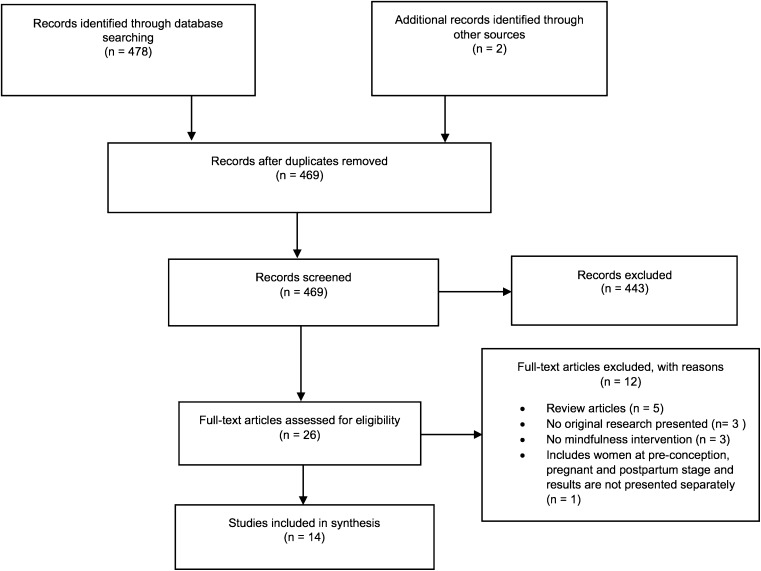
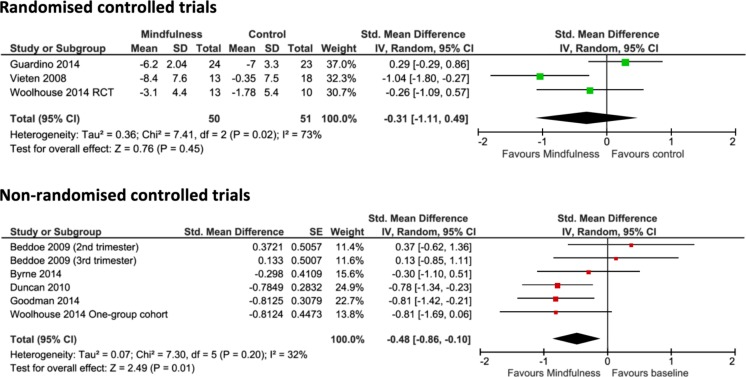
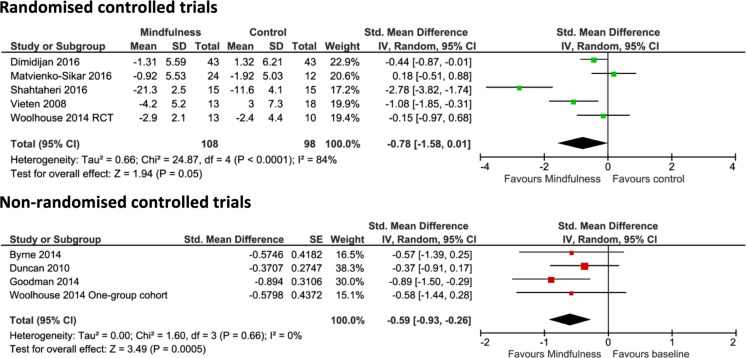
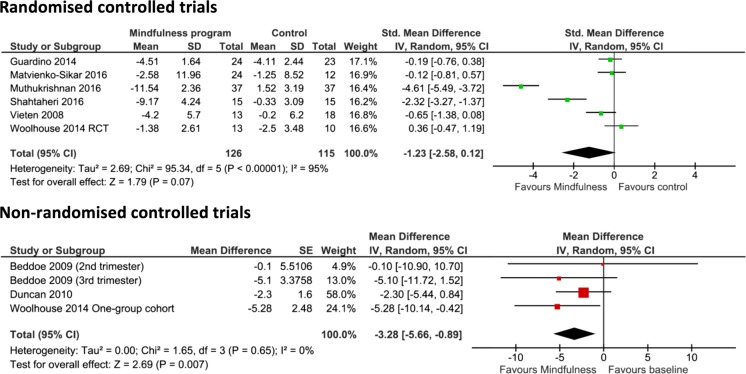
This systematic review aims to assess the effect of mindfulness-based interventions carried out during pregnancy exploring mindfulness and mental health outcomes. A systematic review was conducted to appraise the current literature on the subject area. Inclusion and exclusion criteria were agreed and after reviewing titles, abstracts and full papers, 14 articles met the inclusion criteria and were included in the review. The quality of included articles was checked using the Quality Assessment Tool for Quantitative Studies. Pooled results of the randomised controlled trials (RCTs) reporting outcomes on anxiety, depression and perceived stress indicated no differences between the mindfulness intervention group and the control group. Pooled results of the non-RCTs reporting anxiety, depression and perceived stress showed a significant benefit for the mindfulness group. Mindfulness as an outcome was assessed in four RCTs for which the pooled results show a significant difference in favour of the mindfulness intervention when compared to a control group. The pooled results of the four non-RCTs also indicate a significant difference following mindfulness intervention. Results suggest that mindfulness-based interventions can be beneficial for outcomes such as anxiety, depression, perceived stress and levels of mindfulness during the perinatal period. Further research would be useful to explore if such benefits are sustained during the post-natal period.
Overview
The claims and statistics of this paper haven’t been checked yet.
Free: it reads the open-access text and checks the first 5 claims that cite a source we can check. Create a free account to check every claim.
Integrity signals
Registry
Cites
Statistics
Figures
Verification
Claims the paper makes
The claims and statistics of this paper haven’t been checked yet.
Free: it reads the open-access text and checks the first 5 claims that cite a source we can check. Create a free account to check every claim.
Claims other papers make about this one
Each is checked against this paper’s own text: does it say what the citing paper says it does?
The source backs part of the claim, not all of it — or backs it for a different population, condition or comparison.
In the citing paper
“Support programs during pregnancy, such as mindfulness-based therapies, have shown positive outcomes, primarily in reducing parental stress, anxiety, and depression (Dhillon etal., 2017; Dimidjian, etal., 2015; Duncan & Bardacke, 2010).”
From A Qualitative Investigation of a Prenatal Mindfulness Relationship-Based (PMRB) Program to Support Maternal Mental Health and Mother–Baby Relationship During Pregnancy and Post-Partum (2024) · cites this paper as Dhillon et al., 2017
Experimental — accuracy not yet measuredThe source backs part of the claim, not all of it — or backs it for a different population, condition or comparison.
In the citing paper
“Mindfulness-based interventions (MBIs) have recently come into focus as effective treatments for reducing symptoms of depression, anxiety, and stress in the general population (41, 42) and in pregnant women (43–47), combining elements of CBT and psychoeducational content.”
From Acceptance, experiences, and needs of hospitalized pregnant women toward an electronic mindfulness-based intervention: A pilot mixed-methods study (2022) · cites this paper as [43]
Experimental — accuracy not yet measuredThe source backs part of the claim, not all of it — or backs it for a different population, condition or comparison.
In the citing paper
“However, there are only few studies of pregnancy-specific eMBIs with only small samples and lacking randomized controlled approaches (43, 51, 55, 63).”
From Acceptance, experiences, and needs of hospitalized pregnant women toward an electronic mindfulness-based intervention: A pilot mixed-methods study (2022) · cites this paper as [43]
Experimental — accuracy not yet measuredThe source backs part of the claim, not all of it — or backs it for a different population, condition or comparison.
In the citing paper
“The majority of studies are pilot and feasibility trials that are not adequately powered to demonstrate the effectiveness [3, 18, 19].”
From Mindfulness-based stress reduction adapted to pregnant women with psychosocial vulnerabilities—a protocol for a randomized feasibility study in a Danish hospital-based outpatient setting (2021) · cites this paper as [18]
Experimental — accuracy not yet measuredThe source backs part of the claim, not all of it — or backs it for a different population, condition or comparison.
In the citing paper
“Pooled results of uncontrolled studies and (underpowered) RCT’s evaluating anxiety, depression, and perceived stress have demonstrated a significant benefit for different MBIs when compared with a control group. 29”
From Fear of childbirth, nonurgent obstetric interventions, and newborn outcomes: A randomized controlled trial comparing mindfulness‐based childbirth and parenting with enhanced care as usual. (2022) · cites this paper as [29]
Experimental — accuracy not yet measured
2 more claims about this paper
Create a free account to see every claim other papers make about this one.
Self-check
Percentages, sums and reported differences re-computed from the paper’s own numbers.
The self-check needs the paper’s full text.
Citations
Cites
(2008) · Medical Entomology and Zoology · Cited by 7,477
Cochrane Database of Systematic Reviews
(2011) · Progress in Neurology and Psychiatry · doi:10.1002/pnp.208 · Cited by 4,667
The effect of mindfulness based therapy on anxiety and depression: A meta analytic review
Hofmann, S. G., Sawyer, A. T., Witt, A. A., & Oh, D. (2010) · Journal of Consulting and Clinical Psychology · doi:10.1037/a0018555 · Cited by 3,846 · cited 1×
“A meta-analysis demonstrated that mindfulness-based therapy is a promising intervention for treating anxiety and mood problems in clinical populations (Hofmann et al. 2010).”
Evaluating non-randomised intervention studies
Deeks, J., Dinnes, J., D'Amico, R., Sowden, A., Sakarovitch, C., Song, F., Petticrew, M., & Altman, D. (2003) · Health Technology Assessment · doi:10.3310/hta7270 · Cited by 2,907
JOURNAL OF CLINICAL AND DIAGNOSTIC RESEARCH
(2020) · JOURNAL OF CLINICAL AND DIAGNOSTIC RESEARCH · doi:10.7860/jcdr · Cited by 2,095
Alternative Therapies in Health and Medicine
Bick, D. (1996) · JAMA: The Journal of the American Medical Association · doi:10.1001/jama.1996.03530370072040 · Cited by 1,734
Chiesa, A., & Serretti, A. (2009) · The Journal of Alternative and Complementary Medicine · doi:10.1089/acm.2008.0495 · Cited by 1,681
Antenatal maternal stress and long‐term effects on child neurodevelopment: how and why?
Talge, N. M., Neal, C., Glover, V., & the Early Stress, T. R. A. P. S. N. F. A. N. E. O. C. A. A. M. H. (2007) · Journal of Child Psychology and Psychiatry · doi:10.1111/j.1469-7610.2006.01714.x · Cited by 1,349 · cited 1×
“…increase in obstetric complications including stillbirth, low birth weight infants, postnatal specialist care for the infant and susceptibility to more adverse neurodevelopmental outcomes including behavioural, emotional and cognitive problems (Bonari et al. 2004; Glover 2011; Talge et al. 2007).”
BackgroundCohort study of depressed mood during pregnancy and after childbirth
Evans, J., Heron, J., Francomb, H., Oke, S., & Golding, J. (2001) · BMJ · doi:10.1136/bmj.323.7307.257 · Cited by 1,280 · cited 1×
“After reading the full-text, 12 articles were excluded for the following reasons: review articles (Arendt and Tessmer-Tuck 2013; Field 2008; Khianman et al. 2012; Marc et al. 2011; Smith et al. 2011), no original research presented (Beattie et al. 2014; Beddoe and Lee 2008; Donegan 2015), no…”
BackgroundDunkel Schetter, C., & Tanner, L. (2012) · Current Opinion in Psychiatry · doi:10.1097/yco.0b013e3283503680 · Cited by 1,268 · cited 2×
“Preterm birth has adverse implications for foetal neurodevelopment and child outcomes and is the leading cause of infant mortality and morbidity (Schetter and Tanner 2012; Wadhwa et al. 2011).”
Background
Research works printed but not linked: 2
- Cohen JS Mindfulness and self-compassion in the transition to motherhood: a prospective study of postnatal mood and attachment 2010 New York Columbia University
- Shahtaheri E Hosseinian S Ebrahimi M Jalilabadi Z Mirderikvand F The impact of stress reduction program based on mindfulness and conscious yoga on depression, perceived stress and quality of life in pregnant women Acta Medica Mediterranea 2016 32 5 2047 2050
Cited by
Items 201–239 of 239
EFICÁCIA DOS PROGRAMAS BASEADOS EM MINDFULNESS PARA DEPRESSÃO
Silva, L. P., de Sá, A. R., Schneider, I. J. C., & Silva, C. V. (2023) · Revista Contemporânea · doi:10.56083/rcv3n12-157
Sari, D. N., Safrudin, S., Mardeyanti, M., Karningsih, K., & Yulfitria, F. (2023) · Jurnal Aisyah Jurnal Ilmu Kesehatan · doi:10.30604/jika.v8i3.303 · Cited by 2
“Pregnant women preferred mindfulness-based interventions more so than pharmacotherapy (Dhillon, et al., 2017).”
BackgroundHaßdenteufel, K., Müller, M., Abele, H., Brucker, S. Y., Graf, J., Zipfel, S., Bauer, A., Jakubowski, P., Pauluschke‐Fröhlich, J., Wallwiener, M., et al. (2024) · doi:10.2196/preprints.56230
Effectiveness of Online Mindfulness-Based Intervention on Depression in Pregnancy
Kundarti, F. I., Titisari, I., Kiswati, K., Jamhariyah, J., & Rahayu, D. E. (2023) · JURNAL INFO KESEHATAN · doi:10.31965/infokes.vol21.iss2.1186
“However, there are few pregnancy-specific eMBI studies with small samples and a lack of randomized control trial approaches (Hall et al., 2016; Taylor, Cavanagh ,& Strauss, 2016; Dhillon, Sparkes & Duarte, 2017; Krusche, Crane, & Dymond, 2019).”
BackgroundKonsam, M., Praharaj, S. K., Shetty, J., Panda, S., Vani Lakshmi, R., Kamath, A., & Sonia, R. (2024) · Psychology of Music · doi:10.1177/03057356241258958 · Cited by 1
“Anxiety and depression during pregnancy are responsible for around 20% to 40% risk of developing obstet-rical complications (Dhillon et al., 2017; Verbeek et al., 2015).”
Hasemann, L., Elkenkamp, S., Müller, M., Bauer, A., Wallwiener, S., & Greiner, W. (2024) · Health Economics Review · doi:10.1186/s13561-024-00537-z
Jin, J., Xu, W., Wang, Y., Yang, X., Wang, S., Li, D., & Liu, X. (2024) · Current Psychology · doi:10.1007/s12144-024-06632-y
“In clinical settings, mindfulness-based psychotherapy has been shown to improve mood states among patients with various conditions, including cancer (Wu et al., 2022; Xunlin et al., 2020), chronic fatigue syndrome (Requier et al., 2023), and pregnancy (Dhillon et al., 2017; Pan et al., 2019).”
Notash, F. D., Vafa, M. A., & Farzadi, L. (2023) · Utāq-i bāzargānī. · doi:10.61186/ijpb.17.2.143
Donofry, S. D., Damon, S. T., Jouppi, R. J., Davis, J. A., Conlon, R. P. K., Call, C. C., & Levine, M. D. (2025) · SSRN Electronic Journal · doi:10.2139/ssrn.5244654
Sareh, E., Borghei, N. S., Ozouni‐Davaji, R. B., & Rajabi, A. (2025) · Research Square · doi:10.21203/rs.3.rs-6320037/v1
Lumbreras-Marquez, M. I., Lazaridou, A., Villela-Franyutti, D., Fields, K. G., Farber, M. K., Nelson, E. R., Schreiber, K. L., & Arce, D. Y. (2025) · Pain Medicine · doi:10.1093/pm/pnaf075
Noorlinda, N., & Sartika, S. (2025) · Journal of Current Health Sciences · doi:10.47679/jchs.2025124 · Cited by 4
Seixinho, S., & Presado, M. H. (2025) · Frontiers in Global Women s Health · doi:10.3389/fgwh.2025.1558231
Sansone, A., Stapleton, P., Patching, A., & Lawrence, Z. (2025) · OBM Integrative and Complementary Medicine · doi:10.21926/obm.icm.2504046 · Cited by 1
Ruíz-Íñiguez, R., Sacristán-Martín, O., Burgos-Julián, F. A., Casillas-Barragán, B., Resurrección, D., & Duncan, L. G. (2025) · Mindfulness · doi:10.1007/s12671-025-02694-6
“Emerging evidence suggests that participation in an MBI during the perinatal period could be an effective treatment for reducing depression in this population (Dhillon et al., 2017; Pan et al., 2019).”
Fan, Z., Yang, Z., Li, S., Cao, Z., & Zhang, F. (2025) · Maternal and Child Health Journal · doi:10.1007/s10995-025-04187-3
“Research indicates that some women are more susceptible to various psychological disorders during pregnancy (Ghahremani et al., 2022), with up to 20% of women experiencing depression and anxiety during pregnancy (Dhillon et al., 2017).”
Veringa‐Skiba, I. K., Ziemer, K. L., de Bruin, E. I., de Bruin, E. J., & Bögels, S. M. (2022) · Figshare · doi:10.6084/m9.figshare.18739392
Chow, R., Huang, E., Li, A., Li, S., Fu, S. Y., Son, J. S., & Foster, W. G. (2021) · Figshare · doi:10.6084/m9.figshare.13535507
Branjerdporn, G., Gillespie, K. M., Martin, E. K., Kissane, V., Young, A., Ewais, T., Goldsmith, K., Wilson, S., Adhikary, S. R., Mcgahan, G., et al. (2023) · Figshare · doi:10.6084/m9.figshare.24630243
Skovbjerg, S., Birk, D., Bruggisser, S., Wolf, A. L. A., & Fjorback, L. O. (2021) · Figshare · doi:10.6084/m9.figshare.14728544
Branjerdporn, G., Gillespie, K. M., Martin, E. K., Kissane, V., Young, A., Ewais, T., Goldsmith, K., Wilson, S., Adhikary, S. R., Mcgahan, G., et al. (2024) · Figshare · doi:10.6084/m9.figshare.26644417
Veringa‐Skiba, I. K., Ziemer, K. L., de Bruin, E. I., de Bruin, E. J., & Bögels, S. M. (2022) · Figshare · doi:10.6084/m9.figshare.18739395
Veringa‐Skiba, I. K., Ziemer, K. L., de Bruin, E. I., de Bruin, E. J., & Bögels, S. M. (2022) · Figshare · doi:10.6084/m9.figshare.18739398
Hasemann, L., Elkenkamp, S., Müller, M., Bauer, A., Wallwiener, S., & Greiner, W. (2024) · Figshare · doi:10.6084/m9.figshare.26755789
Branjerdporn, G., Gillespie, K. M., Martin, E. K., Kissane, V., Young, A., Ewais, T., Goldsmith, K., Wilson, S., Adhikary, S. R., Mcgahan, G., et al. (2024) · Figshare · doi:10.6084/m9.figshare.24630459
Periconceptional Aspects of Multiple Pregnancy
Devlieger, R. G. L., Lodewijckx, K., Foulon, A., Shafran, Y. W., & Lewi, L. (2026) · Springer eBooks · doi:10.1007/978-3-032-09464-3_4
Donofry, S. D., Dämon, S., Jouppi, R. J., Davis, J. A., Kolko, R. P., Call, C. C., & Levine, M. D. (2026) · Appetite · doi:10.1016/j.appet.2026.108545 · Cited by 2
Vaishnav, S. B., Mody, S. K., Ganjiwale, J. D., Vaishnav, R. B., Asrani, M. R., & Raithatha, N. S. (2026) · Journal of Public Health and Primary Care · doi:10.4103/jphpc.jphpc_43_25
Mindfulness-Based Interventions in Perinatal Populations: a Scoping Review
Anderson, M. R., Roske, C., Carr, C., Go, M., Sharp, M., & Musicaro, R. M. (2026) · Mindfulness · doi:10.1007/s12671-026-02884-w
“Of these studies, 24 were meta-analyses or reviews, 16 were RCTs, 15 were pilot studies, 2 were qualitative, and 4 were uncontrolled or quasi-experimental.”
InfluentialKüçükkaya, B., Öztürk, S., & Ekrem, E. C. (2026) · BMC Complementary Medicine and Therapies · doi:10.1186/s12906-026-05452-w
“…reactions, improving stress tolerance, and reducing cortisol levels, MBSR fosters self-confidence, self-compassion, attentional control, empathy, positive emotions, and psychological well-being, while simultaneously decreasing depression, anxiety, stress, and fear of childbirth [12, 29, 30].”
Gliske, K., Buchanan, G. J. R., Carlson, D. D., Cai, Q., Waring, M. E., & Zhang, N. (2026) · Mindfulness · doi:10.1007/s12671-026-02917-4
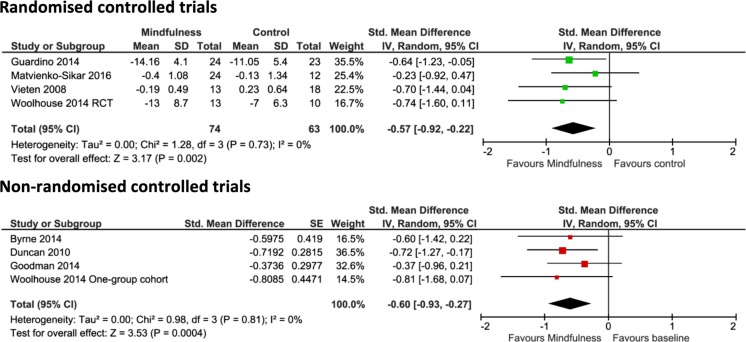
“Dhillon et al. (2017) reported non-significant effects across included RCTs ( SMD = −0.31), and significant effects within included NRCTs ( SMD = −0.48).”
InfluentialMindfulness: Foundations, interventions, and effects
Burattini, S., Giannandrea, A., D'Onofrio, M., Srinivasan, N., & Raffone, A. (2026) · Elsevier eBooks · doi:10.1016/b978-0-443-29258-3.00088-4
Soultanopoulos, G. C., Idzenga, J. J., Kamperman, A. M., van Pampus, M. G., Ket, J. C. F., Henrichs, J., & Verhoeven, C. J. M. (2026) · Journal of Psychosomatic Obstetrics & Gynecology · doi:10.1080/0167482x.2026.2714888 · Cited by 1
Pujiati, E., & Ananta, P. (2025) · Proceeding Cendekia International Conference Health and Technology · doi:10.31596/pcicht.v3i.183 · Cited by 2
“Mindfulness, as part of non-pharmacological therapy, has been proven effective in reducing anxiety, depression, and stress through improved emotional regulation and full awareness of the present moment (Dhillon, Sparkes, and Duarte., 2017).”
Dolkar, C., Sashikumar, P. P., Miranda, J. P., & D’Souza, V. (2026) · Journal of Health and Allied Sciences NU · doi:10.25259/jhasnu_210_2026
Kaur, M. (2026) · doi:10.63247/ayurveda360.ptsr.c003
Heydarifard, S., Safaralinezhad, F., & Safaralinezhad, A. (2026) · Health Science Reports · doi:10.1002/hsr2.73154
“Mindfulness has been associated with enhanced empathy, emotional attunement, and constructive communication within intimate relationships [12, 13], and prior studies in non‐ perinatal populations have reported positive associations between mindfulness and relationship satisfaction [28–31].”
Sautier, J., Tarquinio, C., Cardoso, T., & Rotonda, C. (2026) · Midwifery · doi:10.1016/j.midw.2026.105007
Stierman, E. K., Clifford, S., Kramer, B. E., Soto, M., Minihane, M., Mary, M., Spielman, K. L., Daggula, K., & Creanga, A. A. (2026) · Journal of Affective Disorders Reports · doi:10.1016/j.jadr.2026.101194
Metadata
- Authors
- Dhillon, A., Sparkes, E., & Duarte, R. V.
- Affiliations
- University of Staffordshire (GB)
- Coventry University (GB)
- University of Birmingham (GB)
- Corresponding author
- Duarte, Rui V.
- Venue
- Mindfulness
- Published
- 2017-04-17
- Volume
- 8
- Issue
- 6
- Pages
- 1421-1437
- ISSN
- 1868-8527 (ISSN-L)
- 1868-8535
- PMC
- PMC5693962
- OpenAlex
- W2607016890
- Cited by
- 239
- References
- 61
- Citations by year
- 2026: 18 · 2025: 29 · 2024: 26 · 2023: 53 · 2022: 36 · 2021: 36 · 2020: 21 · 2019: 14 · 2018: 6
- FWCI
- 1.71
- Type
- journal article
- Language
- en
- Open access
- hybrid
- doi.org
- Locations
- Mindfulness (publishedVersion, cc-by)
- Europe PMC (PubMed Central) (publishedVersion, cc-by)
- PubMed Central (publishedVersion, cc-by)
- PubMed (publishedVersion)
- University of Birmingham Research Portal (University of Birmingham) (submittedVersion, cc-by)
- Funders
- University of Birmingham
- Topics
- Social Sciences › Psychology › Clinical Psychology › Mindfulness and Compassion Interventions
- Health Sciences › Medicine › Public Health, Environmental and Occupational Health › Maternal Mental Health During Pregnancy and Postpartum
- Social Sciences › Psychology › Applied Psychology › Digital Mental Health Interventions
- Keywords
- mindfulness-based interventions, pregnancy, perinatal mental health, anxiety, depression, perceived stress, prenatal care
About these checks
Registry, retraction, Cites and statistics results are computed, not judged, with one exception: a printed reference that no index lists is read once by a model before it counts as a citation error. Claims are extracted by a model and kept only when their quote appears verbatim in the text; each cited source is then checked, with a model’s help, for whether it says what the claim relies on. Those verdicts can be wrong — read the claim’s quote and the cited source before relying on one.
Statistics and arithmetic are recomputed, not judged.
Confidence bands are shown only for fields calibrated on our annotated test set. None is calibrated yet, so no band is shown.
What counts as a claim ›How we measure confidence ›How we check this ›
Are you an author, or do you see a problem with this page? Request a review
Data sources
Bibliographic data: Semantic Scholar, OpenAlex, Crossref.
Contains information from the Semantic Scholar Academic Graph Datasets, made available under the ODC Attribution License (ODC-BY 1.0).
Semantic Scholar’s data is described in: Kinney, R., et al. (2023). The Semantic Scholar Open Data Platform. arXiv:2301.10140.
