

Mindfulness-Based Interventions During Pregnancy: a Systematic Review and Meta-analysis
Open accessThe DOI matches its Crossref record; 60 of the 61 references it cites were found in a registry or an index.
Abstract
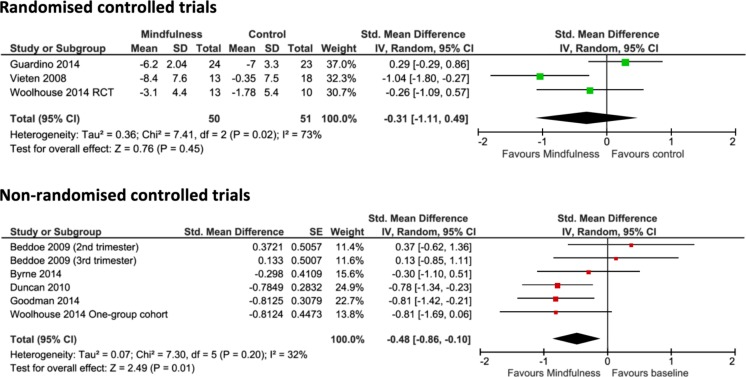
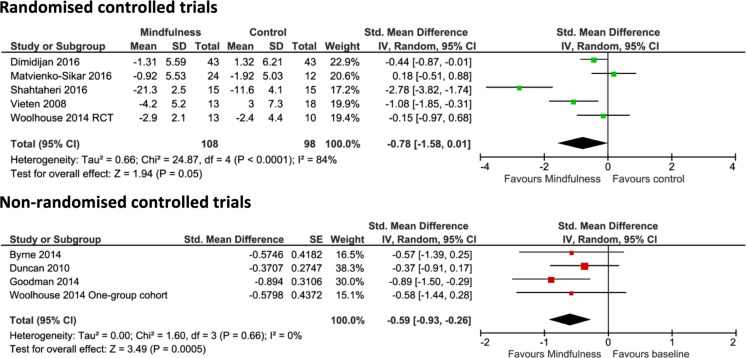
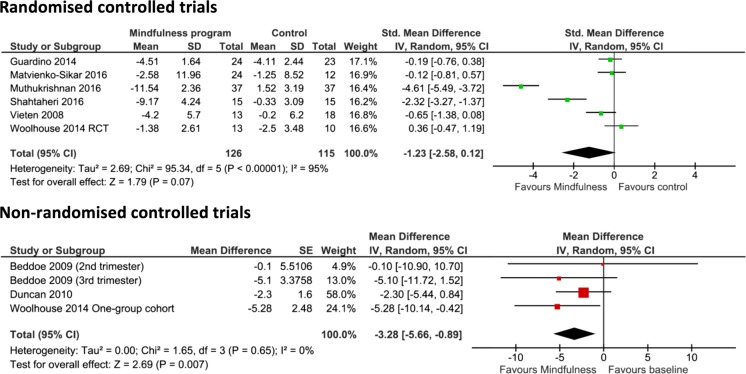
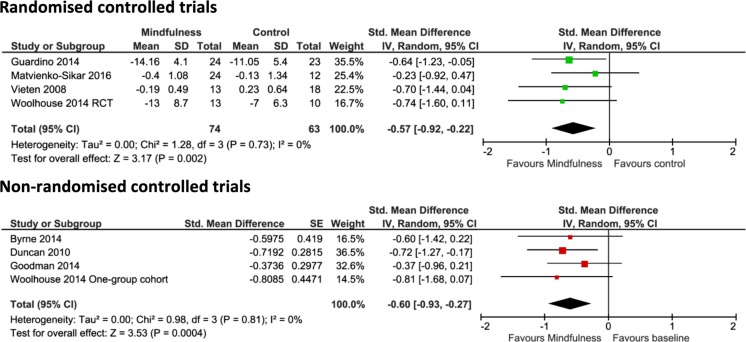
This systematic review aims to assess the effect of mindfulness-based interventions carried out during pregnancy exploring mindfulness and mental health outcomes. A systematic review was conducted to appraise the current literature on the subject area. Inclusion and exclusion criteria were agreed and after reviewing titles, abstracts and full papers, 14 articles met the inclusion criteria and were included in the review. The quality of included articles was checked using the Quality Assessment Tool for Quantitative Studies. Pooled results of the randomised controlled trials (RCTs) reporting outcomes on anxiety, depression and perceived stress indicated no differences between the mindfulness intervention group and the control group. Pooled results of the non-RCTs reporting anxiety, depression and perceived stress showed a significant benefit for the mindfulness group. Mindfulness as an outcome was assessed in four RCTs for which the pooled results show a significant difference in favour of the mindfulness intervention when compared to a control group. The pooled results of the four non-RCTs also indicate a significant difference following mindfulness intervention. Results suggest that mindfulness-based interventions can be beneficial for outcomes such as anxiety, depression, perceived stress and levels of mindfulness during the perinatal period. Further research would be useful to explore if such benefits are sustained during the post-natal period.
Overview
The claims and statistics of this paper haven’t been checked yet.
Free: it reads the open-access text and checks the first 5 claims that cite a source we can check. Create a free account to check every claim.
Integrity signals
Registry
Cites
Statistics
Figures
Verification
Claims the paper makes
The claims and statistics of this paper haven’t been checked yet.
Free: it reads the open-access text and checks the first 5 claims that cite a source we can check. Create a free account to check every claim.
Claims other papers make about this one
Each is checked against this paper’s own text: does it say what the citing paper says it does?
The source backs part of the claim, not all of it — or backs it for a different population, condition or comparison.
In the citing paper
“Support programs during pregnancy, such as mindfulness-based therapies, have shown positive outcomes, primarily in reducing parental stress, anxiety, and depression (Dhillon etal., 2017; Dimidjian, etal., 2015; Duncan & Bardacke, 2010).”
From A Qualitative Investigation of a Prenatal Mindfulness Relationship-Based (PMRB) Program to Support Maternal Mental Health and Mother–Baby Relationship During Pregnancy and Post-Partum (2024) · cites this paper as Dhillon et al., 2017
Experimental — accuracy not yet measuredThe source backs part of the claim, not all of it — or backs it for a different population, condition or comparison.
In the citing paper
“Mindfulness-based interventions (MBIs) have recently come into focus as effective treatments for reducing symptoms of depression, anxiety, and stress in the general population (41, 42) and in pregnant women (43–47), combining elements of CBT and psychoeducational content.”
From Acceptance, experiences, and needs of hospitalized pregnant women toward an electronic mindfulness-based intervention: A pilot mixed-methods study (2022) · cites this paper as [43]
Experimental — accuracy not yet measuredThe source backs part of the claim, not all of it — or backs it for a different population, condition or comparison.
In the citing paper
“However, there are only few studies of pregnancy-specific eMBIs with only small samples and lacking randomized controlled approaches (43, 51, 55, 63).”
From Acceptance, experiences, and needs of hospitalized pregnant women toward an electronic mindfulness-based intervention: A pilot mixed-methods study (2022) · cites this paper as [43]
Experimental — accuracy not yet measuredThe source backs part of the claim, not all of it — or backs it for a different population, condition or comparison.
In the citing paper
“The majority of studies are pilot and feasibility trials that are not adequately powered to demonstrate the effectiveness [3, 18, 19].”
From Mindfulness-based stress reduction adapted to pregnant women with psychosocial vulnerabilities—a protocol for a randomized feasibility study in a Danish hospital-based outpatient setting (2021) · cites this paper as [18]
Experimental — accuracy not yet measuredThe source backs part of the claim, not all of it — or backs it for a different population, condition or comparison.
In the citing paper
“Pooled results of uncontrolled studies and (underpowered) RCT’s evaluating anxiety, depression, and perceived stress have demonstrated a significant benefit for different MBIs when compared with a control group. 29”
From Fear of childbirth, nonurgent obstetric interventions, and newborn outcomes: A randomized controlled trial comparing mindfulness‐based childbirth and parenting with enhanced care as usual. (2022) · cites this paper as [29]
Experimental — accuracy not yet measured
2 more claims about this paper
Create a free account to see every claim other papers make about this one.
Self-check
Percentages, sums and reported differences re-computed from the paper’s own numbers.
The self-check needs the paper’s full text.
Citations
Cites
(2008) · Medical Entomology and Zoology · Cited by 7,477
Cochrane Database of Systematic Reviews
(2011) · Progress in Neurology and Psychiatry · doi:10.1002/pnp.208 · Cited by 4,667
The effect of mindfulness based therapy on anxiety and depression: A meta analytic review
Hofmann, S. G., Sawyer, A. T., Witt, A. A., & Oh, D. (2010) · Journal of Consulting and Clinical Psychology · doi:10.1037/a0018555 · Cited by 3,846 · cited 1×
“A meta-analysis demonstrated that mindfulness-based therapy is a promising intervention for treating anxiety and mood problems in clinical populations (Hofmann et al. 2010).”
Evaluating non-randomised intervention studies
Deeks, J., Dinnes, J., D'Amico, R., Sowden, A., Sakarovitch, C., Song, F., Petticrew, M., & Altman, D. (2003) · Health Technology Assessment · doi:10.3310/hta7270 · Cited by 2,907
JOURNAL OF CLINICAL AND DIAGNOSTIC RESEARCH
(2020) · JOURNAL OF CLINICAL AND DIAGNOSTIC RESEARCH · doi:10.7860/jcdr · Cited by 2,095
Alternative Therapies in Health and Medicine
Bick, D. (1996) · JAMA: The Journal of the American Medical Association · doi:10.1001/jama.1996.03530370072040 · Cited by 1,734
Chiesa, A., & Serretti, A. (2009) · The Journal of Alternative and Complementary Medicine · doi:10.1089/acm.2008.0495 · Cited by 1,681
Antenatal maternal stress and long‐term effects on child neurodevelopment: how and why?
Talge, N. M., Neal, C., Glover, V., & the Early Stress, T. R. A. P. S. N. F. A. N. E. O. C. A. A. M. H. (2007) · Journal of Child Psychology and Psychiatry · doi:10.1111/j.1469-7610.2006.01714.x · Cited by 1,349 · cited 1×
“…increase in obstetric complications including stillbirth, low birth weight infants, postnatal specialist care for the infant and susceptibility to more adverse neurodevelopmental outcomes including behavioural, emotional and cognitive problems (Bonari et al. 2004; Glover 2011; Talge et al. 2007).”
BackgroundCohort study of depressed mood during pregnancy and after childbirth
Evans, J., Heron, J., Francomb, H., Oke, S., & Golding, J. (2001) · BMJ · doi:10.1136/bmj.323.7307.257 · Cited by 1,280 · cited 1×
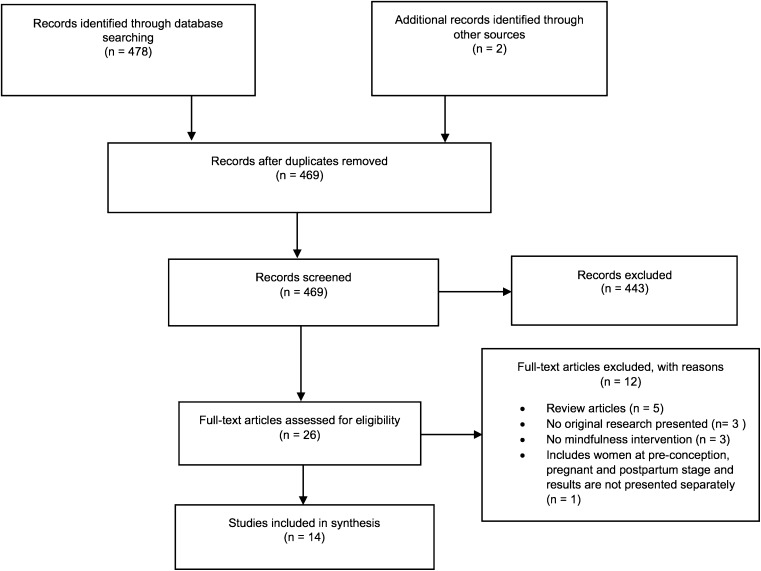
“After reading the full-text, 12 articles were excluded for the following reasons: review articles (Arendt and Tessmer-Tuck 2013; Field 2008; Khianman et al. 2012; Marc et al. 2011; Smith et al. 2011), no original research presented (Beattie et al. 2014; Beddoe and Lee 2008; Donegan 2015), no…”
BackgroundDunkel Schetter, C., & Tanner, L. (2012) · Current Opinion in Psychiatry · doi:10.1097/yco.0b013e3283503680 · Cited by 1,268 · cited 2×
“Preterm birth has adverse implications for foetal neurodevelopment and child outcomes and is the leading cause of infant mortality and morbidity (Schetter and Tanner 2012; Wadhwa et al. 2011).”
Background
Research works printed but not linked: 2
- Cohen JS Mindfulness and self-compassion in the transition to motherhood: a prospective study of postnatal mood and attachment 2010 New York Columbia University
- Shahtaheri E Hosseinian S Ebrahimi M Jalilabadi Z Mirderikvand F The impact of stress reduction program based on mindfulness and conscious yoga on depression, perceived stress and quality of life in pregnant women Acta Medica Mediterranea 2016 32 5 2047 2050
Cited by
Traylor, C. S., Johnson, J. D., Kimmel, M. C., & Manuck, T. A. (2020) · American Journal of Obstetrics & Gynecology MFM · doi:10.1016/j.ajogmf.2020.100229 · Cited by 320
“Another systematic review and metaanalysis of 14 studies in 2017 also found that this intervention may help with anxiety, depression, and perceived stress; however, there is a lack of evidence from adequately powered randomized controlled trials (RCTs).(50) The article called for future research into the potential of…”
Sun, Y., Li, Y., Wang, J., Chen, Q., Bazzano, A. N., & Cao, F. (2021) · Journal of Medical Internet Research · doi:10.2196/23410 · Cited by 165
“Studies assessing associations between mindfulness training and prenatal depression have not indicated clear agreement in between-group postintervention effects [3,44,49].”
BackgroundResultPerinatal depression and infant mental health
Goodman, J. H. (2019) · Archives of Psychiatric Nursing · doi:10.1016/j.apnu.2019.01.010 · Cited by 154
Zemestani, M., & Fazeli Nikoo, Z. (2020) · Archives of Women's Mental Health · doi:10.1007/s00737-019-00962-8 · Cited by 127
“Given the high prevalence of perinatal mood and anxiety disorders during pregnancy (Dhillon et al. 2017) and significant cost associated with delayed treatment (Madigan et al.”
BackgroundResultInfluentialAn Overview of Maternal Anxiety During Pregnancy and the Post-Partum Period
Wallace, K. L., & Araji, S. (2020) · JOURNAL OF MENTAL HEALTH AND CLINICAL PSYCHOLOGY · doi:10.29245/2578-2959/2020/4.1221 · Cited by 168
Crovetto, F., Crispi, F., Casas, R., Martín-Asuero, A., Borràs, R., Vieta, E., Estruch, R., Gratacós, E., IMPACT BCN Trial Investigators, Paules, C., et al. (2021) · JAMA · doi:10.1001/jama.2021.20178 · Cited by 116
Yang, M., Jia, G., Sun, S., Ye, C., Zhang, R., & Yu, X. (2019) · Journal of Midwifery & Women's Health · doi:10.1111/jmwh.12944 · Cited by 99
Tseng, J.-F., Chen, S., Au, H., Chipojola, R., Lee, G. T., Lee, P., Shyu, M.-L., & Kuo, S. (2020) · International Journal of Nursing Studies · doi:10.1016/j.ijnurstu.2020.103770 · Cited by 146
Psychological treatment of perinatal depression: a meta-analysis
Cuijpers, P., Franco, P., Ciharova, M., Miguel, C., Segre, L., Quero, S., & Karyotaki, E. (2023) · Psychological Medicine · doi:10.1017/s0033291721004529 · Cited by 103
Smith, C. A., Shewamene, Z., Galbally, M., Schmied, V., & Dahlen, H. (2019) · Journal of Affective Disorders · doi:10.1016/j.jad.2018.11.054 · Cited by 98
Concerns of women regarding pregnancy and childbirth during the COVID-19 pandemic
Ahlers‐Schmidt, C. R., Hervey, A. M., Neil, T., Kuhlmann, S., & Kuhlmann, Z. C. (2020) · Patient Education and Counseling · doi:10.1016/j.pec.2020.09.031 · Cited by 90
“In general, up to ne quarter (25 %) of women experience psychological distress uring pregnancy which can lead to poor birth outcomes [22,23].”
Gkintoni, E., Vassilopoulos, S. P., & Νικολάου, Γ. (2025) · Journal of Clinical Medicine · doi:10.3390/jcm14051703 · Cited by 136
Goetz, M., Schiele, C., Müller, M., Matthies, L. M., Deutsch, T. M., Spano, C., Graf, J., Zipfel, S., Bauer, A., Brucker, S. Y., et al. (2020) · Journal of Medical Internet Research · doi:10.2196/17593 · Cited by 90
“A review and meta-analysis of randomized controlled trials (RCTs) estimating the overall effects of electronic MBIs on mental health showed a small but significant beneficial effects on depression, anxiety, well-being, and mindfulness.”
ResultInfluentialMindfulness meditation for workplace wellness: An evidence map
Hilton, L. G., Marshall, N. J., Motala, A., Taylor, S. L., Miake-Lye, I. M., Baxi, S., Shanman, R. M., Solloway, M. R., Beroesand, J. M., & Hempel, S. (2019) · Work · doi:10.3233/wor-192922 · Cited by 77
Ng, Q. X., Venkatanarayanan, N., Loke, W., Yeo, W.-S., Lim, D. Y., Chan, H. W., & Sim, W.-S. (2019) · Complementary Therapies in Clinical Practice · doi:10.1016/j.ctcp.2018.10.016 · Cited by 68
Ma, L., Zhang, Y., & Cui, Z. (2019) · Mindfulness · doi:10.1007/s12671-019-01192-w · Cited by 86
“Furthermore, although the overall number of studies included in this meta-analysis is favorable to previous meta-analyses of MBIs for other populations (Abbott et al. 2014; Dhillon et al. 2017; Strauss et al. 2014), several of the subgroup analyses were based on a small number of studies.”
BackgroundResultInfluentialZarenejad, M., Yazdkhasti, M., Rahimzadeh, M., Tourzani, Z. M., & Saeieh, S. E. (2020) · Brain and Behavior · doi:10.1002/brb3.1561 · Cited by 89
“Due to the scarcity of trial studies, more research is needed to investigate the effect of mindfulness on stress and anxiety during pregnancy (Dhillon et al., 2017).”
BackgroundAppraisal of systematic reviews on interventions for postpartum depression: systematic review
Chow, R., Huang, E., Li, A., Li, S., Fu, S. Y., Son, J. S., & Foster, L. (2021) · BMC Pregnancy and Childbirth · doi:10.1186/s12884-020-03496-5 · Cited by 73
Veringa‐Skiba, I. K., de Bruin, E. I., van Steensel, F. J. A., & Bögels, S. M. (2022) · Birth · doi:10.1111/birt.12571 · Cited by 59
Prenatal Yoga for Back Pain, Balance, and Maternal Wellness: A Randomized, Controlled Pilot Study
Holden, S. C., Manor, B. D., Zhou, J., Zera, C., Davis, R. B., & Yeh, G. Y. (2019) · Global Advances in Health and Medicine · doi:10.1177/2164956119870984 · Cited by 93
Warriner, S., Crane, C., Dymond, M., & Krusche, A. (2018) · Midwifery · doi:10.1016/j.midw.2018.05.004 · Cited by 57
Leng, L. L., Yin, X. C., & Ng, S. M. (2023) · Comprehensive Psychiatry · doi:10.1016/j.comppsych.2023.152375 · Cited by 55
Respiratory therapy for the treatment of anxiety: Meta-analytic review and regression
Leyro, T. M., Versella, M. V., Yang, M.-J., Brinkman, H. R., Hoyt, D. L., & Lehrer, P. (2021) · Clinical Psychology Review · doi:10.1016/j.cpr.2021.101980 · Cited by 53
Sanjuan, P. M., Fokas, K. F., Tonigan, J. S., Henry, M. C., Christian, K. L., Rodríguez, A., Larsen, J., Yonke, N., & Leeman, L. M. (2021) · Journal of Affective Disorders · doi:10.1016/j.jad.2021.08.079 · Cited by 68
Kalmbach, D. A., Roth, T., Cheng, P., Ong, J. C., Rosenbaum, E., & Drake, C. L. (2020) · Sleep Health · doi:10.1016/j.sleh.2019.11.011 · Cited by 50
Meditation and Mindfulness in Pregnancy and Postpartum: A Review of the Evidence
Babbar, S., Oyarzabal, A. J., & Oyarzabal, E. A. (2021) · Clinical Obstetrics & Gynecology · doi:10.1097/grf.0000000000000640 · Cited by 65
Zhang, X., Li, Y., Wang, J., Mao, F., Wu, L., Huang, Y., Sun, J., & Cao, F. (2023) · Journal of Medical Internet Research · doi:10.2196/41298 · Cited by 58
“Previous studies have preliminarily identified the effectiveness of MBIs during pregnancy [6,7]; however, most of these studies were nonrandomized controlled pilot trials or had high dropout rates and poor compliance.”
Min, W., Jiang, C., Li, Z., & Wang, Z. (2023) · Journal of Affective Disorders · doi:10.1016/j.jad.2023.03.053 · Cited by 64
Pan, W., Lin, L.-C., Kuo, L.-Y., Chiu, M.-J., & Ling, P. (2023) · BMC Pregnancy and Childbirth · doi:10.1186/s12884-023-05873-2 · Cited by 82
Yan, H., Wu, Y., & Li, H. (2022) · Journal of Affective Disorders · doi:10.1016/j.jad.2022.03.002 · Cited by 54
Corbally, L., & Wilkinson, M. (2021) · Mindfulness · doi:10.1007/s12671-021-01697-3 · Cited by 50
Psychotherapeutic Treatments for Depression During Pregnancy
Genovez, M., Vanderkruik, R. C., Lemon, E. L., & Dimidjian, S. (2018) · Clinical Obstetrics & Gynecology · doi:10.1097/grf.0000000000000388 · Cited by 43
Güney, E., Cengizhan, S. Ö., OKYAY, E. K., Zeynep, B. A. L., & Uçar, T. (2022) · Complementary Therapies in Clinical Practice · doi:10.1016/j.ctcp.2022.101566 · Cited by 44
“2 systematic review and meta-analysis of mindfulness-based interventions in pregnancy found that MBSR could be useful for overcoming problems such as anxiety, depression, perceived distress, and increasing mindfulness levels [18].”
BackgroundMethodHaßdenteufel, K., Müller, M., Abele, H., Brucker, S. Y., Graf, J., Zipfel, S., Bauer, A., Jakubowski, P., Pauluschke‐Fröhlich, J., Wallwiener, M., et al. (2023) · Psychiatry Research · doi:10.1016/j.psychres.2023.115599 · Cited by 45
“A 2017 review analyzing RCTs investigating the use of MBIs during pregnancy found no significant reduction in mental distress in these studies but did suggest MBIs had a positive effect on mental health (Dhillon et al., 2017).”
Abdolalipour, S., Mohammad‐Alizadeh‐Charandabi, S., Mashayekh‐Amiri, S., & Mirghafourvand, M. (2023) · Journal of Affective Disorders · doi:10.1016/j.jad.2023.04.020 · Cited by 47
Guo, P., Zhang, X., Liu, N., Wang, J., Chen, D., Sun, W., Li, P., & Zhang, W. (2020) · Journal of Advanced Nursing · doi:10.1111/jan.14588 · Cited by 44
Prenatal stress self-help mindfulness intervention via social media: a randomized controlled trial
Zhang, X., Lin, P., Sun, J., Sun, Y., Shao, D., Cao, D., & Cao, F. (2023) · Journal of Mental Health · doi:10.1080/09638237.2021.1952947 · Cited by 36
“Systematic reviews and meta-analyses suggest that mindfulness interventions may be associated with beneficial outcomes during pregnancy (Dhillon et al., 2017; MatvienkoSikar et al., 2016).”
BackgroundDonaldson, S. I., Cabrera, V., & Gaffaney, J. (2021) · Frontiers in Psychology · doi:10.3389/fpsyg.2021.739352 · Cited by 50
Hulsbosch, L. P., Nyklíček, I., Potharst, E. S., Meems, M., Boekhorst, M. G. B. M., & Pop, V. J. M. (2020) · BMC Pregnancy and Childbirth · doi:10.1186/s12884-020-2843-0 · Cited by 39
Lönnberg, G., Jonas, W., Bränström, R., Nissen, E., & Niemi, M. (2020) · Mindfulness · doi:10.1007/s12671-020-01403-9 · Cited by 39
“…MBIs conclude that there are limited positive findings and call thus for more adequately powered, longitudinal RCTs in order to establish sufficient evidence for effectiveness (Badker and Misri 2017; Dhillon et al. 2017; Hall et al. 2016; Matvienko-Sikar et al. 2016; Shi and MacBeth 2017).”
Backgroundvan der Meulen, R. T., Veringa‐Skiba, I. K., van Steensel, F. J. A., Bögels, S. M., & de Bruin, E. I. (2022) · Midwifery · doi:10.1016/j.midw.2022.103545 · Cited by 49
Mathias, S., Daigle, P., Dancause, K. N., & Gadais, T. (2020) · Journal of Outdoor and Environmental Education · doi:10.1007/s42322-020-00058-3 · Cited by 43
“Prenatal interventions focused on improving maternal psychosocial health, such as mindfulness interventions (Dhillon et al. 2017) and meditation and relaxation yoga (Gong et al. 2015), have been shown to reduce stress, anxiety, and depression during pregnancy and potentially postnatally.”
BackgroundAddressing Adverse Childhood and Adult Experiences During Prenatal Care
Johnson, S. B., Kasparian, N. A., Cullum, A. S., FLANAGAN, T. A., Ponting, C., Kowalewski, L., & Main, E. K. (2023) · Obstetrics and Gynecology · doi:10.1097/aog.0000000000005199 · Cited by 36
Leng, L. L., Yin, M. X. C., Chan, C., & Ng, S. M. (2023) · Journal of Affective Disorders · doi:10.1016/j.jad.2023.04.133 · Cited by 38
Crovetto, F., Crispi, F., Borràs, R., Paulés, C., Casas, R. M., Martín-Asuero, A., Arranz, Á., Vieta, E., Estruch, R., & Gratacós, E. (2021) · Trials · doi:10.1186/s13063-021-05309-2 · Cited by 38
“A recent meta-analysis pooling the results of randomized controlled trials (RCTs) [34] reported a non-significant trend in favor of MBRS interventions to reduce anxiety, depression, and perceived stress.”
MethodMaternal Childhood Adversity as a Risk for Perinatal Complications and NICU Hospitalization
Ciciolla, L. M., Shreffler, K. M., & Tiemeyer, S. M. (2021) · Journal of Pediatric Psychology · doi:10.1093/jpepsy/jsab027 · Cited by 27
Sacristán-Martín, O., Germán, M. Á. S., García‐Campayo, J., Duncan, L. G., Bardacke, N., Fernández-Alonso, C., Garcia-Sacristan, G., Garcia-Sacristan, D., Barceló‐Soler, A., & Montero‐Marín, J. (2019) · Trials · doi:10.1186/s13063-019-3739-z · Cited by 40
Mao, F., Sun, Y., Li, Y., Cui, N., & Cao, F. (2022) · Asian Journal of Psychiatry · doi:10.1016/j.ajp.2022.103321 · Cited by 32
Shorey, S., Ang, L., & Chee, C. Y. I. (2019) · Nursing Outlook · doi:10.1016/j.outlook.2019.05.004 · Cited by 31
Hulsbosch, L. P., Potharst, E., Schwabe, I., Boekhorst, M., Pop, V., & Nyklíček, I. (2023) · Journal of Affective Disorders · doi:10.1016/j.jad.2023.04.009 · Cited by 28
Perinatal Anxiety and Depression in Minority Women
Gennaro, S., O'Connor, C., McKay, E. A., Gibeau, A. M., Aviles, M., Hoying, J., & Melnyk, B. M. (2020) · MCN The American Journal of Maternal/Child Nursing · doi:10.1097/nmc.0000000000000611 · Cited by 36
Respectful maternity care in the UK using a decolonial lens
Lokugamage, A. U., Robinson, N., Pathberiya, S. D. C., Wong, S., & Douglass, C. (2022) · SN Social Sciences · doi:10.1007/s43545-022-00576-5 · Cited by 45
“2020a, b) Mindfulness has been shown to improve mental health outcomes during the perinatal period.(Dhillon et al. 2017) Yoga can improve anxiety during pregnancy.”
BackgroundTrapani, S., Caglioni, M., Villa, G., Manara, D. F., & Caruso, R. (2023) · Journal of Integrative and Complementary Medicine · doi:10.1089/jicm.2023.0114 · Cited by 34
“9 So far, the literature concerning long-term outcomes— defined in this study as periods ranging from 3 to 6 months postpartum, a definition that may encompass what could be considered ‘‘medium-term’’ in other contexts—of implementing MBIs during pregnancy in the postpartum period has not been…”
InfluentialCallanan, F., Tuohy, T., Bright, A., & Grealish, A. (2021) · Midwifery · doi:10.1016/j.midw.2021.103169 · Cited by 38
Nakaki, A., Crovetto, F., Urru, A., Piella, G., Borràs, R., Comte, V., Vellvé, K., Paulés, C., Segalés, L., Dacal, M., et al. (2023) · American Journal of Obstetrics & Gynecology MFM · doi:10.1016/j.ajogmf.2023.101188 · Cited by 30
Effect of mindfulness meditation on depression during pregnancy: A meta-analysis
Li, Y., Chen, J.-H., Chen, B.-X., Wang, T., Wu, Z., Huang, X., & Li, S.-S. (2022) · Frontiers in Psychology · doi:10.3389/fpsyg.2022.963133 · Cited by 23
“, 2014), and may reduce the risk of depression in high-risk pregnant women (Dhillon et al., 2017).”
BackgroundUmeoguaju, F. U., Akaninwor, J. O., Essien, E. B., Amadi, B. A., Igboekwe, C. O., Ononamadu, C. J., & Ikimi, C. G. (2023) · Toxicology Reports · doi:10.1016/j.toxrep.2023.06.011 · Cited by 31
Mefrouche, M. L., Siegmann, E.-M., Böhme, S., Berking, M., & Kornhuber, J. (2023) · European Journal of Investigation in Health Psychology and Education · doi:10.3390/ejihpe13090122 · Cited by 36
Mancinelli, E., Bassi, G., Gabrielli, S., & Salcuni, S. (2022) · International Journal of Environmental Research and Public Health · doi:10.3390/ijerph19159549 · Cited by 21
Rania, N. (2019) · Health Psychology Open · doi:10.1177/2055102919844492 · Cited by 26
“In recent decades, to reduce the fear of pain during labour, various practices have spread, including mindfulness (Dhillon et al., 2017), which can also reduce anxiety and depression both during the perinatal and postnatal periods.”
BackgroundReangsing, C., Punsuwun, S., & Oerther, S. E. (2024) · Journal of Affective Disorders · doi:10.1016/j.jad.2024.02.049 · Cited by 28
Veringa‐Skiba, I. K., Ziemer, K. L., de Bruin, E. I., de Bruin, E. J., & Bögels, S. M. (2022) · BMC Pregnancy and Childbirth · doi:10.1186/s12884-022-04380-0 · Cited by 33
“pooled results of uncontrolled studies [4].”
ResultGarfield, L., & Watson‐Singleton, N. N. (2020) · Western Journal of Nursing Research · doi:10.1177/0193945920950336 · Cited by 26
Mobile well-being in pregnancy: suggestions from a quasi-experimental controlled study
Carissoli, C., Gasparri, D., Riva, G., & Villani, D. (2021) · Behaviour and Information Technology · doi:10.1080/0144929x.2021.1894484 · Cited by 21
“…number of adverse prenatal and postnatal outcomes, such as fear and pain of childbirth, depression, anxiety and negative affect (Duncan et al. 2017; Dhillon, Sparkes, and Duarte 2017), providing pregnant women with more empowerment and satisfaction with childbirth by increasing positive affect,…”
BackgroundRoubinov, D. S., Epel, E. S., Coccia, M., Coleman‐Phox, K., Vieten, C., Adler, N. E., Laraia, B. A., & Bush, N. R. (2022) · Journal of Consulting and Clinical Psychology · doi:10.1037/ccp0000776 · Cited by 19
Zhang, D., Tsang, K. W. K., Duncan, L. G., Yip, B. H. K., Chan, D. C. C., Lee, E. K. P., Gao, T. T., Tam, W. H., Lam, K. Y., Tong, W. H., et al. (2023) · Mindfulness · doi:10.1007/s12671-022-02046-8 · Cited by 17
Pregnant women’s use of a consumer-based meditation mobile app: A descriptive study
Green, J., Neher, T. L., Puzia, M., Laird, B., & Huberty, J. (2022) · Digital Health · doi:10.1177/20552076221089098 · Cited by 20
Zhang, X., Mao, F., Li, Y., Wang, J., Wu, L., Sun, J., & Cao, F. (2022) · Psychoneuroendocrinology · doi:10.1016/j.psyneuen.2022.105913 · Cited by 20
Ivey, S. L., Hanley, H. R., Taylor, C., Stock, E. O., Vora, N., Woo, J., Johnson, S., Merz, C. N. B., & Right Care Women's Cardiovascular Writing Group (2022) · Clinical Cardiology · doi:10.1002/clc.23921 · Cited by 18
Mindfulness in Pregnancy: A Brief Intervention for Women at Risk
Abatemarco, D. J., Gannon, M., Short, V. L., Baxter, J., Metzker, K. M., Reid, L., & Catov, J. M. (2021) · Maternal and Child Health Journal · doi:10.1007/s10995-021-03243-y · Cited by 16
Gori, A., Topino, E., & Musetti, A. (2023) · Journal of Personalized Medicine · doi:10.3390/jpm13020237 · Cited by 25
“, see Hanrahan and colleagues [93], Normann and Morina [94], and Mayo-Wilson and colleagues [95] for meta-analyses), as well as for perceived stress in different samples (such as Patients with Irritable Bowel Syndrome [96] or pregnant women [97]).”
Zimmermann, M., Julce, C., Sarkar, P. R., McNicholas, E., Xu, W., Carr, C., Boudreaux, E. D., Lemon, S. C., & Byatt, N. (2023) · General Hospital Psychiatry · doi:10.1016/j.genhosppsych.2023.08.005 · Cited by 22
Factors associated with psychological distress among Australian women during pregnancy
McDonald, H. M., Sherman, K. A., & Kasparian, N. A. (2020) · Personality and Individual Differences · doi:10.1016/j.paid.2020.110577 · Cited by 18
Lönnberg, G., Niemi, M., Salomonsson, B., Bränström, R., Nissen, E., & Jonas, W. (2021) · Mindfulness · doi:10.1007/s12671-021-01658-w · Cited by 20
Wang, D., Weng, X., & Gao, L. (2021) · Midwifery · doi:10.1016/j.midw.2021.103152 · Cited by 18
Ozturk, C. S., & Demir, K. (2023) · Journal of Medical Systems · doi:10.1007/s10916-023-01942-3 · Cited by 20
Khoramirad, A., Abedini, Z., & Khalajinia, Z. (2021) · Journal of Education and Health Promotion · doi:10.4103/jehp.jehp_1620_20 · Cited by 17
“[16,21] Other studies showed dispositional mindfulness is related to greater adult attachment security,[35] and it has been emphasized that integrating mindfulness meditation and yoga into the daily life of pregnant women can improve prenatal attachment.[36]”
BackgroundTrait mindfulness scores are related to trajectories of depressive symptoms during pregnancy
Hulsbosch, L. P., Boekhorst, M. G. B. M., Endendijk, J. J., Nyklíček, I., Potharst, E. S., & Pop, V. J. M. (2022) · Journal of Psychiatric Research · doi:10.1016/j.jpsychires.2022.04.023 · Cited by 16
Hulsbosch, L. P., Boekhorst, M. G. B. M., Lodder, P., Potharst, E. S., Nyklíček, I., Bergink, V., Oei, S. G., Verhoeven, C. J. M., & Pop, V. J. M. (2022) · BJOG An International Journal of Obstetrics & Gynaecology · doi:10.1111/1471-0528.17273 · Cited by 14
Silverwood, V., Bullock, L., Jordan, J. L., Turner, K. M., Chew-Graham, C. A., Kingstone, T., & Dawson, S. (2023) · BJGP Open · doi:10.3399/bjgpo.2023.0022 · Cited by 19
Park, S., Cho, H. Y., Park, J. Y., Chung, K., & Jhung, K. (2024) · Journal of Medical Internet Research · doi:10.2196/56601 · Cited by 15
“While previous studies have demonstrated the benefits of MBIs for perinatal mental health [25,31], our study is among the first to evaluate a fully self-guided, short-term (4-week) mobile intervention without the need for in-person guidance.”
Longitudinal associations between mindfulness and changes to body image in first-time parent couples
Tavares, I. M., Nobre, P. J., Heiman, J. R., & Rosen, N. O. (2023) · Body Image · doi:10.1016/j.bodyim.2023.01.002 · Cited by 18
Mindfulness-Based Interventions for Postpartum Depression: A Systematic Review and Meta-Analysis
Yang, M., Song, B., Jiang, Y., Lin, Y., & Liu, J. (2023) · Iranian Journal of Public Health · doi:10.18502/ijph.v52i12.14311 · Cited by 31
Depression in Children's Lives
Crnic, K. A., & Lin, B. (2021) · Cambridge University Press eBooks · doi:10.1017/9781108887144 · Cited by 13
Matvienko‐Sikar, K., Redsell, S. A., & Flannery, C. (2021) · Journal of Reproductive and Infant Psychology · doi:10.1080/02646838.2021.1976400 · Cited by 18
“Psychotherapeutic, behavioural, educational, or complementary and alternative interventions (Mendelson et al., 2017), and e-health interventions generally (Dol et al., 2017), did not demonstrate effects on anxiety or stress for mothers of infants in the NICU.”
BackgroundLengua, L. J., Thompson, S. F., Calhoun, R. E., Long, R. B., Price, C. J., Kantrowitz‐Gordon, I., Shimomaeda, L., Nurius, P. S., Katz, L. F., Sommerville, J. A., et al. (2023) · Mindfulness · doi:10.1007/s12671-023-02096-6 · Cited by 24
Brown, H., Krogh-Jespersen, S., Tandon, D., Graham, A., Mackiewicz Seghete, K., & Wakschlag, L. (2021) · Prenatal Stress and Child Development · doi:10.1007/978-3-030-60159-1_20 · Cited by 13
Schiele, C., Goetz, M., Hassdenteufel, K., Müller, M., Graf, J., Zipfel, S., & Wallwiener, S. (2022) · Frontiers in Psychiatry · doi:10.3389/fpsyt.2022.939577 · Cited by 12
“However, there are only few studies of pregnancy-specific eMBIs with only small samples and lacking randomized controlled approaches (43, 51, 55, 63).”
BackgroundGodage, P., Giggins, O. M., Doyle, J., & Byrne, A. (2025) · Oxford Open Digital Health · doi:10.1093/oodh/oqaf006 · Cited by 13
“…demonstrated that pregnant women who practice mind-fulness techniques such as Mindfulness-Based Stress Reduction (MBSR) and Mindfulness-Based Cognitive Therapy (MBCT) experience a notable reduction in symptoms of depression, anxiety and stress, along with enhancement in general well-being [16, 17].”
Costa, J., Santos, O., Virgolino, A., Pereira, M. E., Stefanovska–Petkovska, M., Silva, H., Navarro‐Costa, P., Barbosa, M., das Neves, R. C., Silva, I. D. E., et al. (2021) · International Journal of Environmental Research and Public Health · doi:10.3390/ijerph18052558 · Cited by 22
“The few studies that assessed the effectiveness of MBT on perinatal mental health outcomes suggest a reduction in anxiety [58,59] and depression symptoms [63].”
BackgroundSansone, A., Stapleton, P., Patching, A., & Lawrence, Z. (2024) · OBM Integrative and Complementary Medicine · doi:10.21926/obm.icm.2401001 · Cited by 18
Feli, R., Heydarpour, S., Yazdanbakhsh, K., & Heydarpour, F. (2024) · BMC Psychiatry · doi:10.1186/s12888-024-06442-3 · Cited by 24
Ward, K., Herekar, A., Wang, P., & Lindsay, K. L. (2023) · International Journal of Environmental Research and Public Health · doi:10.3390/ijerph20075421 · Cited by 13
“Mindfulness-based interventions (MBIs), such as mindfulness-based stress reduction, have been shown to reduce depressive symptoms during pregnancy [5].”
BackgroundAkça, E. İ., Cengizhan, S. Ö., & Gökbulut, N. (2023) · Mindfulness · doi:10.1007/s12671-023-02247-9 · Cited by 14
“Additionally, Dhillon et al. (2017), in a systematic review and meta-analysis of mindfulness-based interventions in pregnancy, have stated that the MBSR program can be used to solve problems such as anxiety, depression, and perceived stress and that the practice increases the awareness levels of…”
Tetrahedral feature map for analyzing meditative states in prenatal EEG
Das, D., Deb, N., & Choudhury, S. S. (2025) · Engineering Research Express · doi:10.1088/2631-8695/add4c3 · Cited by 10
Ladekarl, M., de Wolff, M. G., Nohr, E. A., Olsen, N. J., Specht, I. O., Heitmann, B. L., & Brødsgaard, A. (2022) · Midwifery · doi:10.1016/j.midw.2022.103421 · Cited by 13
Laifer, L. M., DiLillo, D., & Brock, R. L. (2023) · Development and Psychopathology · doi:10.1017/s0954579421000894 · Cited by 9
Sansone, A. (2024) · Frontiers in Psychology · doi:10.3389/fpsyg.2024.1420588 · Cited by 15
“…evidence of mindfulness practices improving health outcomes during pregnancy and the post-partum period, promoting healthy behaviors that support the relationship between mothers and fathers and the transition to parenthood (Dhillon et al., 2017; Babbar et al., 2021; Leavitt et al., 2023).”
BackgroundWi, D., Lee, R. Y., & Kantrowitz‐Gordon, I. (2025) · PLoS ONE · doi:10.1371/journal.pone.0322931 · Cited by 10
Dick, J. A., Sun, W., Stanyon, W., Papaconstantinou, E. A., D’Paiva, V., Jiwani-Ebrahim, N., & Dennis, C. (2019) · Journal of Child and Family Studies · doi:10.1007/s10826-019-01657-5 · Cited by 12
Metadata
- Authors
- Dhillon, A., Sparkes, E., & Duarte, R. V.
- Affiliations
- University of Staffordshire (GB)
- Coventry University (GB)
- University of Birmingham (GB)
- Corresponding author
- Duarte, Rui V.
- Venue
- Mindfulness
- Published
- 2017-04-17
- Volume
- 8
- Issue
- 6
- Pages
- 1421-1437
- ISSN
- 1868-8527 (ISSN-L)
- 1868-8535
- PMC
- PMC5693962
- OpenAlex
- W2607016890
- Cited by
- 239
- References
- 61
- Citations by year
- 2026: 18 · 2025: 29 · 2024: 26 · 2023: 53 · 2022: 36 · 2021: 36 · 2020: 21 · 2019: 14 · 2018: 6
- FWCI
- 1.71
- Type
- journal article
- Language
- en
- Open access
- hybrid
- doi.org
- Locations
- Mindfulness (publishedVersion, cc-by)
- Europe PMC (PubMed Central) (publishedVersion, cc-by)
- PubMed Central (publishedVersion, cc-by)
- PubMed (publishedVersion)
- University of Birmingham Research Portal (University of Birmingham) (submittedVersion, cc-by)
- Funders
- University of Birmingham
- Topics
- Social Sciences › Psychology › Clinical Psychology › Mindfulness and Compassion Interventions
- Health Sciences › Medicine › Public Health, Environmental and Occupational Health › Maternal Mental Health During Pregnancy and Postpartum
- Social Sciences › Psychology › Applied Psychology › Digital Mental Health Interventions
- Keywords
- mindfulness-based interventions, pregnancy, perinatal mental health, anxiety, depression, perceived stress, prenatal care
About these checks
Registry, retraction, Cites and statistics results are computed, not judged, with one exception: a printed reference that no index lists is read once by a model before it counts as a citation error. Claims are extracted by a model and kept only when their quote appears verbatim in the text; each cited source is then checked, with a model’s help, for whether it says what the claim relies on. Those verdicts can be wrong — read the claim’s quote and the cited source before relying on one.
Statistics and arithmetic are recomputed, not judged.
Confidence bands are shown only for fields calibrated on our annotated test set. None is calibrated yet, so no band is shown.
What counts as a claim ›How we measure confidence ›How we check this ›
Are you an author, or do you see a problem with this page? Request a review
Data sources
Bibliographic data: Semantic Scholar, OpenAlex, Crossref.
Contains information from the Semantic Scholar Academic Graph Datasets, made available under the ODC Attribution License (ODC-BY 1.0).
Semantic Scholar’s data is described in: Kinney, R., et al. (2023). The Semantic Scholar Open Data Platform. arXiv:2301.10140.
