

Self-compassion and Psychological Distress in Adolescents—a Meta-analysis
Open accessThe DOI matches its Crossref record; 98 of the 98 references it cites were found in a registry or an index.
Abstract
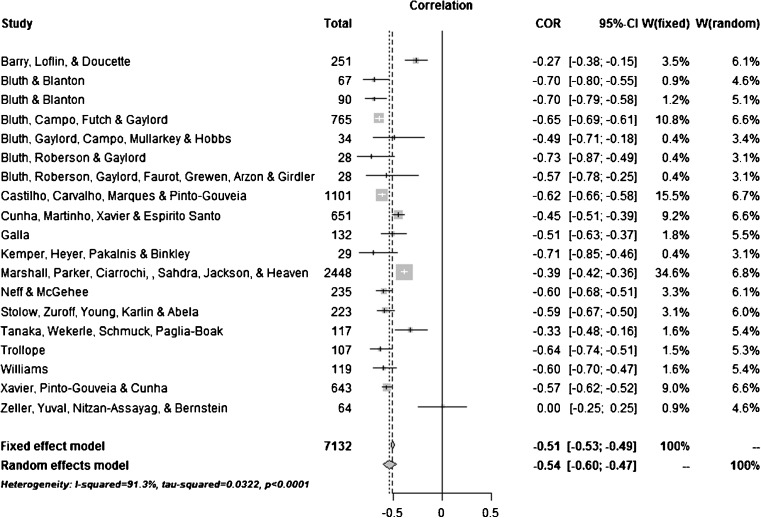
Research indicates that self-compassion is relevant to adolescents’ psychological well-being, and may inform the development of mental health and well-being interventions for youth. This meta-analysis synthesises the existing literature to estimate the magnitude of effect for the association between self-compassion and psychological distress in adolescents. Our search identified 19 relevant studies of adolescents (10–19 years; N = 7049) for inclusion. A large effect size was found for an inverse relationship between self-compassion and psychological distress indexed by anxiety, depression, and stress ( r = − 0.55; 95% CI − 0.61 to − 0.47). The identified studies were highly heterogeneous, however sensitivity analyses indicated that correction for publication bias did not significantly alter the pattern of results. These findings replicate those in adult samples, suggesting that lack of self-compassion may play a significant role in causing and/or maintaining emotional difficulties in adolescents. We conclude that self-compassion may be an important factor to target in psychological distress and well-being interventions for youth.
Overview
The claims and statistics of this paper haven’t been checked yet.
Free: it reads the open-access text and checks the first 5 claims that cite a source we can check. Create a free account to check every claim.
Integrity signals
Registry
Cites
Statistics
Figures
Verification
Claims the paper makes
The claims and statistics of this paper haven’t been checked yet.
Free: it reads the open-access text and checks the first 5 claims that cite a source we can check. Create a free account to check every claim.
Claims other papers make about this one
Each is checked against this paper’s own text: does it say what the citing paper says it does?
The cited source says what the claim attributes to it.
In the citing paper
“and adolescents ( r = -0.55; Marsh et al. 2018)”
From Effectiveness of Self-Compassion Related Therapies: a Systematic Review and Meta-analysis (2019) · cites this paper as Marsh et al. 2018
Self-check
Percentages, sums and reported differences re-computed from the paper’s own numbers.
The self-check needs the paper’s full text.
Citations
Cites
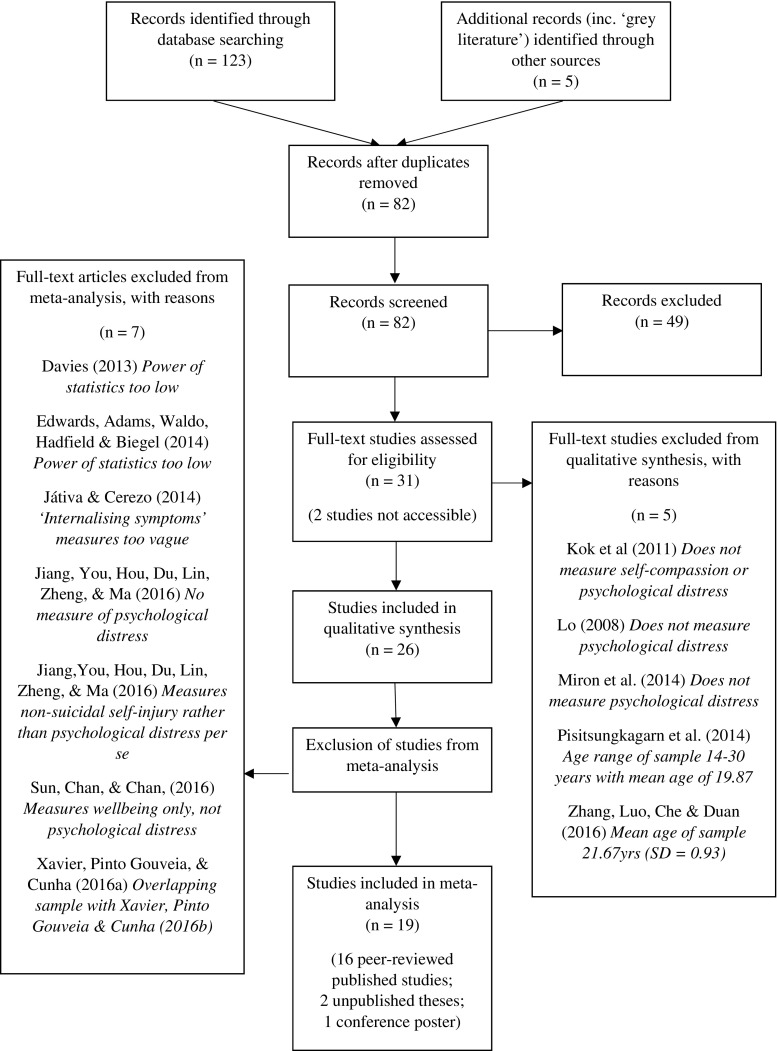
Preferred Reporting Items for Systematic Reviews and Meta-Analyses: the PRISMA statement
Moher, D., Liberati, A., Tetzlaff, J., Altman, D. G., & for the PRISMA Group (2009) · BMJ · doi:10.1136/bmj.b2535 · Cited by 83,823
Preferred Reporting Items for Systematic Reviews and Meta-Analyses: The PRISMA Statement
Moher, D., Liberati, A., Tetzlaff, J., Altman, D. G., & The PRISMA Group (2009) · PLoS Medicine · doi:10.1371/journal.pmed.1000097 · Cited by 64,042 · cited 2×
“A systematic review was performed using PRISMA criteria (Moher et al. 2009).”
BackgroundMethodMeasuring inconsistency in meta-analyses
Higgins, J. P. T., Thompson, S. G., Deeks, J. J., & Altman, D. G. (2003) · BMJ · doi:10.1136/bmj.327.7414.557 · Cited by 63,139 · cited 1×
“Higgins et al. (2003) suggested that I2 values of 0, 25, 50, and 75% indicate zero, low, moderate, and high heterogeneity, respectively.”
BackgroundThe CES-D Scale: A Self-Report Depression Scale for Research in the General Population
Radloff, L. S. (1977) · Applied Psychological Measurement · doi:10.1177/014662167700100306 · Cited by 53,267
Preferred reporting items for systematic reviews and meta-analyses: the PRISMA Statement.
(2009) · PubMed Central · Cited by 44,859
Meta-analysis in clinical trials
DerSimonian, R., & Laird, N. (1986) · Controlled Clinical Trials · doi:10.1016/0197-2456(86)90046-2 · Cited by 39,552 · cited 2×
“2001), using DerSimonian Laird (DerSimonian and Laird 1986) estimators for between-study variance.”
MethodA Global Measure of Perceived Stress
Cohen, S., Kamarck, T., & Mermelstein, R. (1983) · Journal of Health and Social Behavior · doi:10.2307/2136404 · Cited by 32,807
Development and validation of brief measures of positive and negative affect: The PANAS scales.
Watson, D., Clark, L. A., & Tellegen, A. (1988) · Journal of Personality and Social Psychology · doi:10.1037/0022-3514.54.6.1063 · Cited by 32,433
(1970) · Cited by 24,983
Conducting Meta-Analyses in R with the metafor Package
Viechtbauer, W. (2010) · Journal of Statistical Software · doi:10.18637/jss.v036.i03 · Cited by 20,464 · cited 2×
“Analyses were conducted in RStudio (RStudio Version 3.2.2) using the ‘metafor’ (Viechtbauer 2010) and ‘meta’ packages (Schwarzer 2007).”
MethodInfluential
Research works printed but not linked: 7
- Beck, A. T., & Steer, R. A. (1987). Manual for the revised Beck depression inventory. San Antonio: Psychological Corporation.
- Conway, D. G. (2007). The role of internal resources in academic achievement: exploring the meaning of self-compassion in the adaptive functioning of low-income college students (Unpublished doctoral dissertation, University of Pittsburgh, USA).
- Davies, G. (2013). An investigation into the effectiveness of mindfulness-based cognitive therapy with adolescents (Unpublished doctoral dissertation: Canterbury Christ Church University, United Kingdom).
- Lachar, D., & Gruber, C. P. (1995). Personality inventory for youth (PIY) manual: technical guide. Los Angeles: Western Psychological Services.
- Schwarzer, G. (2007). Meta: an R package for meta-analysis. R news, 7(3), 40–45.
- Trollope, M. (2009). Stressful life-events and adolescent depression: the possible roles of self-criticism and self-compassion (Unpublished doctoral dissertation, University of East Anglia, United Kingdom).
- Xavier, A., Cunha, M., & Pinto Gouveia, J. (2015). Deliberate self-harm in adolescence: the impact of childhood experiences, negative affect and fears of compassion. Revista de Psicopatología y Psicología Clínica, 20(1), 41–49.
Cited by
Items 201–300 of 403
Braet, J., Debra, G., & Giletta, M. (2025) · Behaviour Research and Therapy · doi:10.1016/j.brat.2025.104807 · Cited by 6
Liu, S., Xu, J., Cao, H., An, Y., Li, Y., Li, Z., Gao, M. M., & Han, Z. R. (2024) · Journal of Child Psychology and Psychiatry · doi:10.1111/jcpp.14027 · Cited by 10
Nguyen, V. T., & Nguyen, C.-T. P. (2023) · Mental Health and Social Inclusion · doi:10.1108/mhsi-07-2023-0076 · Cited by 9
Kara, E., Çimşir, E., & Alçay, A. (2023) · Mindfulness · doi:10.1007/s12671-023-02266-6 · Cited by 12
“…role in the prevention and treatment of mental health problems in different populations, including gifted individuals, has been repeatedly supported by empirical research (e.g., Costa et al., 2016; MacBeth & Gumley, 2012; Marsh et al., 2018; Pollet & Schnell, 2017; Turanzas et al., 2020).”
Lau‐Zhu, A., & Vella, L. (2023) · Adoption & Fostering · doi:10.1177/03085759231207397 · Cited by 7
“CFT is promising for care-experienced youth given that lower self-compassion is associated with psychological distress and experiences of early maltreatment (Marsh, Chan and MacBeth, 2018; Zhang et al., 2021).”
BackgroundExploring a self-compassion intervention with LGBTQIA+ youth and young adults
Iacono, G., Craig, S. L., Brennan, D. J., Loveland, E. K., & Crowder, R. (2023) · Journal of Gay & Lesbian Mental Health · doi:10.1080/19359705.2023.2204817 · Cited by 15
“Marsh et al. (2018) conducted a meta-analysis of the extant youth self-compassion literature in order to estimate the magnitude of effect for the association between self-compassion and psychological distress among youth ( n = 7049).”
BackgroundMethodResultInfluentialGutiérrez-Hernández, M. E., Fanjul, L. F., Díaz, A., Oyanadel, C., & Castro, W. P. (2023) · European Journal of Investigation in Health Psychology and Education · doi:10.3390/ejihpe13040058 · Cited by 7
“This influence is especially relevant for emotional distress and disorders [8–10], including initial emotional development during adolescence [11] The specific relationship patterns of the three SC components are similar to those found for general SC.”
BackgroundExperiences of Users with an Online Self-Guided Mental Health Training Program Using Gamification
van der Lubbe, L. M., Gerritsen, C., Klein, M. C. A., Rodgers, R. F., & Hindriks, K. V. (2023) · Journal of Healthcare Informatics Research · doi:10.1007/s41666-022-00124-z · Cited by 5
Child Sexual Abuse Victimization: Focus on Self-Compassion
Wekerle, C., Kim, K. K., & Wong, N. (2022) · Frontiers in Psychiatry · doi:10.3389/fpsyt.2022.818774 · Cited by 10
Huang, L., Liang, K., Chen, S., Ren, Y., Zhu, Y., & Chi, X. (2021) · Risk Management and Healthcare Policy · doi:10.2147/rmhp.s336709 · Cited by 7
Zhao, F. (2021) · BMC Psychiatry · doi:10.1186/s12888-021-03531-5 · Cited by 6
“Therefore, using independent measures to test self-compassion and mindfulness was suggested [17].”
BackgroundMethodSocial Alienation and Psychological Distress in Israeli Adolescents
Savaya, R., Berger, R., Ronen, T., & Roziner, I. (2021) · Child and Adolescent Social Work Journal · doi:10.1007/s10560-021-00786-5 · Cited by 4
Chan, E. W. W., Liang, L., Liu, N. H., & Hou, W. K. (2021) · Journal of Health Psychology · doi:10.1177/13591053211030994 · Cited by 5
Self-compassion: conceptualization, research, and interventions (Brief review)
Foroughi, A., Khanjani, S., Rafiee, S., & Taheri, A. A. (2020) · Shenakht Journal of Psychology and Psychiatry · doi:10.29252/shenakht.6.6.77 · Cited by 11
Modification of Fyodor Vasilyuk and Elena Sheryagina’s Technique of Comforting Strategies
Холмогорова, А. Б., Zaretsky, V. K., Klimenkova, E. N., & Volozhanina, N. S. (2019) · Cultural-Historical Psychology · doi:10.17759/chp.2019150109 · Cited by 8
“Мета-анализы, синтезировавшие более 98 исследований зафиксировали, что самосострадание связано со снижением рисков психопатологии и ростом уровня психологического благополучия, как у взрослых, так и у подростков [24; 25; 29].”
Carreiras, D., Castilho, P., & Cunha, M. (2021) · Psychologica · doi:10.14195/1647-8606_64-2_2 · Cited by 4
Litlabø, V. R., Haga, M., Richter, I., & Sigmundsson, H. (2026) · Frontiers in Education · doi:10.3389/feduc.2025.1703538 · Cited by 6
Huțul, T., Mațcu-Zaharia, M., Huțul, A., & Karner‐Huțuleac, A. (2025) · Psychological Reports · doi:10.1177/00332941241310983 · Cited by 6
“Among the most common negative consequences are the principal components of psychological distress: anxiety, depression, and stress (Elhai et al., 2020; Lin et al., 2021; Marsh et al., 2018; Miller-Roenigk et al., 2023).”
Sessions, L., Robertson, N., Jones, C. R., & Welham, A. (2024) · Journal of Evidence-Based Social Work · doi:10.1080/26408066.2024.2439267 · Cited by 10
An, Y., Gao, F., Long, X., Wang, S., & Ma, X. (2024) · Current Psychology · doi:10.1007/s12144-024-06685-z · Cited by 4
“Moreover, previous research has also revealed the significant impact of self-compassion on the development and maintenance of depressive symptoms in adolescents (Marsh et al., 2018; Pullmer et al., 2019).”
Beltes, C., Giannou, K., & Mantzios, M. (2024) · Heliyon · doi:10.1016/j.heliyon.2024.e36920 · Cited by 5
Yaşar, H. K., ALABAY, M. B., DEMİR, M., & AYDOĞDU, F. (2023) · Türk Psikolojik Danışma ve Rehberlik Dergisi · doi:10.17066/tpdrd.1267342_5 · Cited by 5
Lathren, C., Bluth, K., & Tatera, J. L. (2023) · Journal of Child and Family Studies · doi:10.1007/s10826-023-02617-w · Cited by 5
To Love Yourself: Psychological Approach to Predict Healthy Lifestyle Behaviour in Adolescents
Hedo, D. J. P. K., & Katmini, K. (2022) · Jurnal Kesehatan Masyarakat · doi:10.15294/kemas.v18i2.36294 · Cited by 5
Wong, N., Kim, K. K., Ren, P., Liu, W. S., Oh, S. S., Strickland, N. J., Stewart, S. H., & Wekerle, C. (2022) · International Journal of Child and Adolescent Resilience · doi:10.54488/ijcar.2022.303 · Cited by 6
“Existing reviews on similar topics include meta-analyses on self-compassion and psychological distress among adolescents (Marsh et al., 2018), and the differential effects of self-compassion components on well-being and psychological distress (Chio et al., 2021).”
BackgroundTrajectories of Self-compassion and Psychological Symptoms in Newly Diagnosed Cancer Patients
Wang, J., Hu, Y., Wei, L., Liu, A., Yao, J., Schroevers, M. J., & Zhu, L. (2022) · Mindfulness · doi:10.1007/s12671-021-01809-z · Cited by 6
Amaranggani, A. P., Prana, T. T., Arsari, N. M. C. D., Surbakti, A. M., & Rahmandani, A. (2021) · Journal An-Nafs Kajian Penelitian Psikologi · doi:10.33367/psi.v6i2.1623 · Cited by 18
Pengpid, S., & Peltzer, K. (2021) · Vulnerable Children and Youth Studies · doi:10.1080/17450128.2021.1896825 · Cited by 4
“© 2021 Informa UK Limited, trading as Taylor & Francis Group promotion of psychological well-being and early mental health intervention, in order to safeguard against the development of mental health issues’ (Marsh et al., 2018, p. 1011).”
BackgroundDifferent Shades of Beauty: Adolescents’ Perspectives on Drawing From Observation
Wolk, N., Barak, A., & Yaniv, D. (2020) · Frontiers in Psychology · doi:10.3389/fpsyg.2020.00687 · Cited by 6
Psychometric Properties of the Self-Compassion Scale in the Polish Population
Holas, P., Shevchuk, Y., & Jankowski, T. (2023) · Roczniki Psychologiczne · doi:10.18290/rpsych2023.0009 · Cited by 4
Tsarev, A. (2026) · Journal of Creativity in Mental Health · doi:10.1080/15401383.2026.2639545 · Cited by 6
“Meta-analyses demonstrate that self-compassion predicts adolescent psychological well-being, academic performance, and resilience more robustly than self-esteem (Marsh et al., 2018; Neff & Germer, 2013).”
Türk, F., & Acet, P. (2026) · Child Abuse & Neglect · doi:10.1016/j.chiabu.2026.107886 · Cited by 6
Laughton, S., Abkhezr, P., Kirby, J. N., & Burton, N. W. (2026) · British Journal of Guidance and Counselling · doi:10.1080/03069885.2025.2529009 · Cited by 3
Wu, S., Li, R., Jia, S., Xiong, W., & Ren, Z. (2026) · Current Psychology · doi:10.1007/s12144-025-08778-9 · Cited by 2
“Research indicates that self-compassion enhances well-being, reduces maladaptive coping, and mitigates anxious and depressive symptoms in adolescents (Ewert et al., 2021; Marsh et al., 2018; Zessin et al., 2015).”
Self-compassion and stress responses among early adolescents
Zieff, G. H., Jameson, T., Nutini, A., Battaglini, A. M., Jopling, E. N., Grocott, B. B., Rnic, K., Puterman, E. M., & LeMoult, J. (2025) · Psychoneuroendocrinology · doi:10.1016/j.psyneuen.2025.107694 · Cited by 3
Siwalette, I. C., & Huwae, A. (2025) · Bulletin of Counseling and Psychotherapy · doi:10.51214/002025071579000 · Cited by 3
“…by their developmental conditions as the participants in this study are adolescents within a wide age range with different developmental stages (Marsh et al., 2018), hence it is understandable that the participants' life satisfaction and emotional stability have not yet reached optimal levels.”
Uslu, B., Busching, R., & Warschburger, P. (2025) · Mindfulness · doi:10.1007/s12671-025-02698-2 · Cited by 3
“There is a growing interest in this topic with respect to children and adolescents as well (Bluth et al., 2016a, 2016b; Marsh et al., 2018; Neff & McGehee, 2010; Tali et al., 2023), but to our knowledge, only a few validation studies have been conducted on the use of the Self-Compassion Scale with…”
InfluentialAsiyah, D., Mahmudah, M., Saepulah, A., & Perdana, F. J. (2025) · Konselor · doi:10.24036/02025143142-0-86 · Cited by 5
Xue, S., Lu, A., Zhu, K., Chen, W., Xu, Y., Ao, L., & Chen, J. (2025) · Journal of Youth and Adolescence · doi:10.1007/s10964-025-02238-0 · Cited by 4
Schöne‐Hoffmann, R., Schäfer, S. K., David, C., Reis, D., Benick, M., & Perels, F. (2025) · Campbell Systematic Reviews · doi:10.1002/cl2.70054 · Cited by 3
Razza, R. A., Liu, Q., Feng, R., Hao, X. A., Kirkman, K. A., & Merrin, G. J. (2025) · Contemporary School Psychology · doi:10.1007/s40688-025-00548-5 · Cited by 10
Paetzold, I., Gugel, J., Schick, A., Rauschenberg, C., Hirjak, D., Boecking, B., Doi, L., Schwannauer, M., & Reininghaus, U. (2024) · Psychology and Psychotherapy Theory Research and Practice · doi:10.1111/papt.12565 · Cited by 7
“Replicating meta-analytical findings (Ferrari et al., 2019; Marsh et al., 2018; Wilson et al., 2019), we found that the intervention strengthened participants' soothing system and self-compassion which improved well-being and reduced negative affect.”
Work-related well-being in early career: A role of self-compassion
Krejčová, K., Krejčí, I., Chýlová, H., Rymešová, P., & Michálek, P. (2024) · Heliyon · doi:10.1016/j.heliyon.2024.e41377 · Cited by 12
“This finding is observable across countries [99] and corresponds to a higher vulnerability to stress and incidence of anxiety and depression in women [100,101].”
The causal model of spiritual well-being based on an accompanist of god and spiritual intelligence
Moshashaei, S. K. D., Yārahmadi, Y., & Sharifi, H. P. (2024) · Journal of Education and Health Promotion · doi:10.4103/jehp.jehp_1283_23 · Cited by 5
Neiman, N., Boothroyd, D. B., Anjur, K., Bensen, R., Yeh, A. M., & Wren, A. A. (2024) · Inflammatory Bowel Diseases · doi:10.1093/ibd/izae170 · Cited by 8
Hubungan Intellectual Humility, Self-Compassion dan Psychological Well-Being pada Siswa
Naini, R., Muarifah, A., Mashar, R., Herdiansyah, D., & Kunanti, A. (2024) · JBKI (Jurnal Bimbingan Konseling Indonesia) · doi:10.26737/jbki.v9i1.5451 · Cited by 8
“Beberapa penelitian dan meta-analisis menyimpulkan bahwa rasa sayang pada diri sendiri berhubungan negatif dengan stres (MacBeth & Gumley, 2012; Marsh et al., 2018) dan tekanan psikologis (MacBeth & Gumley, 2012) dan berhubungan positif dengan kesejahteraan (Zessin et al., 2015).”
BackgroundJoy, P. R., Aston, M. L., Thomas, A., Hammond, C., & Hammond, B. (2024) · SAGE Open · doi:10.1177/21582440241248002 · Cited by 3
“Western scholars like Neff (2011) teach the practices of self-compassion and promote the transformative power of such practices while several meta-analyses have examined the relationship between self-compassion, depression, anxiety, and psychotherapy (Egan et al., 2022; Marsh et al., 2018).”
Kresovich, A., MacLean, K., Lancaster, C., Torres, E. D., Temple, J. R., & Mumford, E. A. (2023) · Journal of Child and Adolescent Mental Health · doi:10.2989/17280583.2024.2336473 · Cited by 5
“Higher levels of self-compassion among youth are also associated with lower levels of distress (Marsh et al., 2018), reduced violence exposure (perpetration (Morley, 2015) and victimisation (Múzquiz et al., 2023)), and reduced intrapersonal violence (i.e., self-harm, suicidal ideation) (Cleare et…”
BackgroundLavi‐Rotenberg, A., Frishman, N., Igra, L., Gilboa‐Schechtman, E., & Hasson‐Ohayon, I. (2023) · The Journal of Nervous and Mental Disease · doi:10.1097/nmd.0000000000001724 · Cited by 5
Self-compassion as a Newly Observed Dimension of the Student's Personality
Krejčová, K., Rymešová, P., & Chýlová, H. (2023) · Journal on Efficiency and Responsibility in Education and Science · doi:10.7160/eriesj.2023.160205 · Cited by 5
“The lower level of the SC in females is not surprising because it relates to generally higher vulnerability to stress and, consequently, higher prevalence of difficulties such as anxiety and depression (Grevenstein et al., 2017; Marsh et al., 2018; Gutiérrez-Hernández et al., 2021).”
BackgroundWang, H., Wang, J., Wei, X., & Lei, L. (2022) · Journal of Interpersonal Violence · doi:10.1177/08862605221116316 · Cited by 6
Putra, I. G. N. E., & Artini, N. N. A. (2022) · Jurnal Berkala Epidemiologi · doi:10.20473/jbe.v10i12022.1-10 · Cited by 3
Self-care of Caregivers: Self-Compassion in a Population of Dutch Medical Students and Residents
Godthelp, J., Muntinga, M. E., Niessen, T., Leguit, P., & Abma, T. (2020) · MedEdPublish · doi:10.15694/mep.2020.000222.1 · Cited by 5
“…a myriad of compassion interventions has been implemented and evaluated (Kirby, 2017) which are empirically supported by a wealth of research linking self-compassion to psychological well-being, life-satisfaction and social connectedness (MacBeth and Gumley, 2012; Marsh, Chan and MacBeth, 2018).”
BackgroundHickey, T., Nelson, B., Enticott, J., & Meadows, G. N. (2020) · Schizophrenia Research · doi:10.1016/j.schres.2020.06.023 · Cited by 4
Wallin, L., Svedin, C. G., Wiberg, M., & Dennhag, I. (2026) · Frontiers in Psychology · doi:10.3389/fpsyg.2025.1653979 · Cited by 2
“Previous studies have consistently shown that higher levels of self-compassion are associated with lower levels of negative emotional states (Gilbert, 2020; Marsh et al., 2018).”
Prabawa, A. F., Hidayah, N., Indreswari, H., Atmoko, A., Ramli, M., Antika, E. R., & Mahalle, S. (2025) · Multidisciplinary Science Journal · doi:10.31893/multiscience.2026235 · Cited by 3
Şerifoğlu, K., & Yılmaz, E. (2025) · International Journal of Children s Spirituality · doi:10.1080/1364436x.2025.2558632 · Cited by 3
“Studies conducted with adults and adolescents show that self-compassion is associated with many dimensions of psychological well-being, including higher optimism, greater sense of social connectedness, happiness, and lower stress and depression (Marsh, Chan, and MacBeth 2018).”
Masculinity and help-seeking in male collegiate athletes: The role of self-compassion
Harker, J. R., & Petrie, T. A. (2025) · Journal of American College Health · doi:10.1080/07448481.2025.2552833 · Cited by 5
“…has been linked directly to many positive psychological outcomes, such as lower levels of anxiety, depression, and shame, more life satisfaction, and higher levels of psychological well-being (e.g., 45,47–49 ) and is considered a key psycho-social resource in coping with stress and uncertainty.”
Miao, M., Wen, J., Cao, R., Jin, S., & Gan, Y. (2025) · Mindfulness · doi:10.1007/s12671-025-02649-x · Cited by 3
“A meta-analysis by Marsh et al. (2018) revealed a large effect in the association between self-compassion and psychological distress.”
Cherpe, S., Cunha, M. I. V. A., Xavier, A., Matos, A. P., Arnarson, E. Ö., Craighead, W. E., & Pinto‐Gouveia, J. (2025) · Adolescents · doi:10.3390/adolescents5030045 · Cited by 3
“Self-compassion has been linked to depressive symptoms in studies using both cross-sectional and longitudinal designs; however, the test of its mediatiating effect is scarce [39,45–49].”
InfluentialCompassionate self-care for nurses and midwives: A sequential explanatory mixed methods study
Steen, M., Othman, S. M. E., Fereday, J. A., Briley, A. L., Xu, Q., & Vernon, R. (2025) · Applied Nursing Research · doi:10.1016/j.apnr.2025.151986 · Cited by 4
Experience-sampling methods for self-compassion research: A meta-analysis
Fraser, M. I., Yap, K., Sahdra, B. K., Li, W., Andreacchio, M. T., Wong, T. Y., & Ciarrochi, J. (2025) · Journal of Contextual Behavioral Science · doi:10.1016/j.jcbs.2025.100913 · Cited by 5
A Systematic Review of Self-report Measures Used to Assess Compassion in Children and Young People
Hubbard, J., Leeuwerik, T., & Strauss, C. (2025) · Mindfulness · doi:10.1007/s12671-025-02569-w · Cited by 4
“…self-compassion in CYP has been associated with enhanced wellbeing, happiness, mindfulness, resilience, social connectedness, and mastery-oriented goals, in addition to reduced anxiety, depression, and performance-oriented goals (Marsh et al., 2018; Neff & McGehee, 2010; Neff et al., 2021).”
McArthur, S., McLaren, S., & Goldie, P. D. (2025) · Journal of Clinical Psychology · doi:10.1002/jclp.23764 · Cited by 2
“Research focused on the cisgender population suggests that self ‐ compassion ameliorates distress (Brenner et al. 2018; Marsh, Chan, and MacBeth 2018), though few studies have focused on its protectiveness against psychopathology (e.g., ED symptomatology) among TNB populations, and none have done…”
Salazar, L. R., & Correa, P. (2025) · Communication Quarterly · doi:10.1080/01463373.2025.2450004 · Cited by 2
“A meta-analysis among adolescents found that self-compassion had a buffer effect against mental health outcomes, and was inversely related to psychological distress (e.g., depression, stress, and anxiety) (Marsh et al., 2018).”
The Association of Family Incivility with Adolescent Depression: A Moderated Mediation Model
Miao, M., Jin, S., & Gan, Y. (2024) · Behavioral Sciences · doi:10.3390/bs14121159 · Cited by 3
Techmanska, A., Ortner, E., & Stöckmann, C. (2024) · Zagreb international review of economics and business/Zagreb international review of economics & business · doi:10.2478/zireb-2024-0030 · Cited by 4
“Therefore, self-efficacy can be characterized as cognitive beliefs tied to specific goals, involving future-oriented judgments that are relatively context-specific (Bong & Skaalvik, 2003; Marsh, Chan, & MacBeth, 2018).”
Tavares, L., Vagos, P., Cunha, M. I. V. A., & Xavier, A. (2024) · Mindfulness · doi:10.1007/s12671-024-02441-3 · Cited by 2
“Several studies have demonstrated the psychological and physical benefits of fostering self-compassion and this protective role has been found in persons of all ages (e.g., Han & Kim, 2023; Marsh et al., 2018; Tavares et al., 2020).”
Carreiras, D., Castilho, P., & Cunha, M. I. V. A. (2023) · Journal of Child and Adolescent Mental Health · doi:10.2989/17280583.2023.2289607 · Cited by 4
Ryynanen, J., MacLennan, K., Witten, E., Tipp, C., Wisdom, S., & Chan, S. W. Y. (2023) · Wellcome Open Research · doi:10.12688/wellcomeopenres.19584.1 · Cited by 3
Self-citationNoursina, S., & Kiani, Q. (2023) · Nursing and Midwifery Journal · doi:10.61186/unmf.21.7.558 · Cited by 3
Sospedra, C. B., Adelantado‐Renau, M., Beltran‐Valls, M. R., & Moliner‐Urdiales, D. (2022) · International Journal of Sport and Exercise Psychology · doi:10.1080/1612197x.2022.2089198 · Cited by 3
“Therefore, it is an important time frame for the promotion of psychological well-being and the implementation of early mental health interventions when needed (Marsh et al., 2017).”
BackgroundPalevičiūtė, G., Čapkauskienė, S., & Miežienė, B. (2021) · Baltic Journal of Sport and Health Sciences · doi:10.33607/bjshs.v1i120.1051 · Cited by 4
Bowornkittikun, A., Pisitsungkagarn, K., & Jarukasemthawee, S. (2021) · ACP official conference proceedings · doi:10.22492/issn.2187-4743.2021.2 · Cited by 3
The Big Five Personality Traits as a Predictors Self Compassion in Adolescents
Qadriyah, S., Ayriza, Y., Setiawati, F. A., & Wibowo, Y. S. (2020) · doi:10.4108/eai.4-8-2020.2302416 · Cited by 8
Pengpid, S., & Peltzer, K. (2022) · Journal of Psychology in Africa · doi:10.1080/14330237.2021.2002031 · Cited by 5
Yoga: Theory and Practice-A Course that Illustrates Why Yoga Belongs in the Academy.
Klatt, M., & Webster, O. (2019) · International Journal of Yoga Therapy · doi:10.17761/2019-00022 · Cited by 2
“Yet a recent meta-analysis 12 confirmed that for adolescents (including late adolescents who are college-aged), an inverse relationship exists between self-compassion and psychological distress, indexed by anxiety, depression, and stress.”
BackgroundBagheri, J., Birashk, B., Dehghani, M., & Farid, A. A. A. (2019) · Iranian Journal of Psychiatry and Clinical Psychology · doi:10.32598/ijpcp.25.3.328 · Cited by 2
Relationship Between Self-Compassion and Non-Suicidal Self Injury In Adolescents
Zahra, A., Mawarpury, M., Sari, K., & Sari, N. (2024) · International Conference on Psychology and Health Issues (ICoPHI) · doi:10.4108/eai.4-11-2023.2344828 · Cited by 2
“A meta-analysis study by [19] found that the developmental stage of adolescence plays a crucial role in the level of self-compassion in adolescents aged 10-19.”
BackgroundSabourin, C., Turgeon, S., Martin, L., Rathwell, S., Bruner, M. W., Cairney, J., & Camiré, M. (2022) · Journal of Clinical Sport Psychology · doi:10.1123/jcsp.2021-0101 · Cited by 4
Hutomo, B. A., Wahyuni, L., & Yudhistira, S. (2026) · Priviet Social Sciences Journal · doi:10.55942/pssj.v6i8.1216 · Cited by 1
“This finding aligns with the previous research by Marsh et al. (2018), who found a positive relationship between poverty, ethnic minorities, and self-compassion.”
Examining Depression Levels Among Gifted Individuals
Alçay, A., & Ceyhan, E. (2026) · Gifted Child Quarterly · doi:10.1177/00169862261457574 · Cited by 1
Lathren, C., DiMaio, S., Nip, H., Tatera, J. L., Diaz, V., Bluth, K., Herringa, R. J., & Heyn, S. A. (2026) · Family Relations · doi:10.1111/fare.70241 · Cited by 1
Mechler, J., Lindqvist, K., Falkenström, F., Carlbring, P., Lilliengren, P., Andersson, G., & Philips, B. (2026) · Psychotherapy Research · doi:10.1080/10503307.2026.2686693 · Cited by 1
Rahayu, S., Chodijah, S., & Hayati, H. (2026) · Malahayati International Journal of Nursing and Health Science · doi:10.33024/minh.v9i3.3102 · Cited by 1
“These findings strengthen evidence suggest that self-compassion functions as a protective factor against psychological distress (Marsh et al., 2018).”
A biopsychosocial safeness model: New directions for psychotherapy research and practice
Paucsik, M., & Pellissier, S. (2026) · Acta Psychologica · doi:10.1016/j.actpsy.2026.106797 · Cited by 2
Burić, I., ter Avest, M. J., Helmond, P., Assink, M., Nikolić, M., Pizarro-Carmona, A., Möller, E. L., de Bruin, E. I., Bögels, S. M., Greven, C. U., et al. (2026) · Mindfulness · doi:10.1007/s12671-026-02832-8 · Cited by 2
“Other meta-analyses have restricted their scope to specific populations such as youth (e.g.Marsh et al., 2018; Muris et al., 2024).”
InfluentialÇetiner, E. M., & Kavradım, S. T. (2026) · Supportive Care in Cancer · doi:10.1007/s00520-026-10660-8 · Cited by 2
“These findings show that self-compassion is an accessible and can be learned quality in cancer patients [49, 50].”
Moloney-Gibb, D., Sherwell, C. S., Lynn, S., Day, J. J., & Kirby, J. N. (2026) · Child and Adolescent Social Work Journal · doi:10.1007/s10560-026-01089-3 · Cited by 1
“…health and wellbeing in adolescents, which for the purposes of this study is operationalised as ages between 12 and 18 years, as that aligns with the age ranges specified in the CFT literature on adolescents (e.g. Sousa et al., 2021, 2022; Ribeiro da Silva et al., 2019, 2021; Marsh et al., 2018 ).”
Young people’s experiences of compassion-focused group therapy: A reflexive thematic analysis
Parkrud, H. H., Anderberg, M., Vestin, M., & Dennhag, I. (2026) · Psychotherapy Research · doi:10.1080/10503307.2026.2625272 · Cited by 2
Rowlinson, K., Grummitt, L. R., Newton, N. C., Chapman, C. E., Maratos, F. A., Kelly, E. V., & Barrett, E. L. (2026) · Australian Psychologist · doi:10.1080/00050067.2025.2603448 · Cited by 2
Chen, H., Bi, K., YIP, P. S. F., & Chong, E. S. K. (2025) · Journal of Youth and Adolescence · doi:10.1007/s10964-025-02300-x · Cited by 1
“The beneficial psychological effects of self-compassion have been well documented across different populations, including adolescents (Marsh et al., 2018).”
Wang, Q., Cao, X., & Tai, Q. (2025) · BMC Psychiatry · doi:10.1186/s12888-025-07442-7 · Cited by 2
“A meta-analysis of 19 studies covering 7049 adolescents exploring the association between self-compassion and depression revealed that a large effect size was observed for the negative relationship between self-compassion and psychological distress indexed by depression [36].”
Vu, H. A., & Rivera, L. M. (2025) · Self and Identity · doi:10.1080/15298868.2025.2526457 · Cited by 1
“Data from before the COVID-19 pandemic also shows that self-compassion was consistently linked with low psychological distress (i.e., stress and anxiety) in samples of adults and adolescents, regardless of their gender identities (for meta-analyses, see MacBeth & Gumley, 2012; Marsh et al., 2018).”
Kızıltepe, R., & Kaçar‐Başaran, S. (2025) · International Journal of Social Psychiatry · doi:10.1177/00207640251362726 · Cited by 2
“A large body of research indicates that having high levels of self-compassion is positively correlated with well-being (Zessin et al., 2015) and negatively correlated with psychological distress (Marsh et al., 2018).”
The Quiet Ego: A Meta-Analytical Review
Rogawski, M., Simonsmeier, B. A., & Buecker, S. (2025) · Journal of Happiness Studies · doi:10.1007/s10902-025-00923-2 · Cited by 4
Razza, R. A., Zhang, Y., & Edelstein, A. (2025) · School Psychology International · doi:10.1177/01430343251361133 · Cited by 4
“…high-light the critical role that self-compassion plays in alleviating psychological distress and promoting emotional well-being during adolescence (Marsh et al., 2018) and suggest the importance of differentiating compassionate self-responding (CS) and uncompassionate (USC) self-responding when…”
State Self-Compassion and Response to Failure: The Mediating Role of Causal Attributions
Conway, T. L., & Johnson, E. A. (2025) · Mindfulness · doi:10.1007/s12671-025-02587-8 · Cited by 1
“…attitudes are associated with a wide range of psychological benefits, including lower levels of psychopathology (MacBeth & Gumley, 2012; Marsh et al., 2018), less rumination and anger, and greater self-worth, happiness, optimism, self-efficacy, initiative, and curiosity (Neff & Vonk,…”
STRATEGI SELF-COMPASSION: MENGURANGI STRES DI KALANGAN SISWA SMA
Febrianti, V., & Boediman, L. M. (2024) · JIP (Jurnal Intervensi Psikologi) · doi:10.20885/intervensipsikologi.vol16.iss2.art6 · Cited by 6
“Stres yang tinggi dapat membawa dampak negatif bagi diri para siswa SMA T. Penelitian sebelumnya menemukan dampak negatif dari stres yang tidak dikelola, seperti kecemasan, depresi, penggunaan zat berbahaya, dan bahkan percobaan bunuh diri (Marsh et al., 2018).”
Diagnostic validation of the 00325 Inadequate Self‐Compassion
Devesa, A. M., Martínez, D. G., de Souza‐Oliveira, A. C., Jiménez, D. M., Pérez, P. E., & Moreno, I. M. (2024) · International Journal of Nursing Knowledge · doi:10.1111/2047-3095.12502 · Cited by 1
Metadata
- Authors
- Marsh, I. C., Chan, S. W. Y., & MacBeth, A.
- Affiliations
- University of Edinburgh (GB)
- Corresponding author
- MacBeth, Angus
- Venue
- Mindfulness
- Published
- 2017-11-25
- Volume
- 9
- Issue
- 4
- Pages
- 1011-1027
- ISSN
- 1868-8527 (ISSN-L)
- 1868-8535
- PMC
- PMC6061226
- OpenAlex
- W2769880865
- Cited by
- 465
- References
- 97
- Citations by year
- 2026: 58 · 2025: 72 · 2024: 71 · 2023: 73 · 2022: 76 · 2021: 55 · 2020: 41 · 2019: 12 · 2018: 6
- FWCI
- 2.46
- Type
- journal article
- Language
- en
- Open access
- hybrid
- doi.org
- Locations
- Mindfulness (publishedVersion, cc-by)
- Europe PMC (PubMed Central) (publishedVersion, cc-by)
- PubMed Central (publishedVersion, cc-by)
- PubMed (publishedVersion)
- Edinburgh Research Explorer (University of Edinburgh) (submittedVersion, cc-by)
- Funders
- University of Edinburgh
- Topics
- Social Sciences › Psychology › Clinical Psychology › Mindfulness and Compassion Interventions
- Social Sciences › Psychology › Social Psychology › Psychological Well-being and Life Satisfaction
- Social Sciences › Psychology › Developmental and Educational Psychology › Student Stress and Coping
- Keywords
- self-compassion, psychological distress, adolescents, anxiety, depression, stress, youth mental health, well-being interventions, emotional problems
About these checks
Registry, retraction, Cites and statistics results are computed, not judged, with one exception: a printed reference that no index lists is read once by a model before it counts as a citation error. Claims are extracted by a model and kept only when their quote appears verbatim in the text; each cited source is then checked, with a model’s help, for whether it says what the claim relies on. Those verdicts can be wrong — read the claim’s quote and the cited source before relying on one.
Statistics and arithmetic are recomputed, not judged.
Confidence bands are shown only for fields calibrated on our annotated test set. None is calibrated yet, so no band is shown.
What counts as a claim ›How we measure confidence ›How we check this ›
Are you an author, or do you see a problem with this page? Request a review
Data sources
Bibliographic data: Semantic Scholar, OpenAlex, Crossref.
Contains information from the Semantic Scholar Academic Graph Datasets, made available under the ODC Attribution License (ODC-BY 1.0).
Semantic Scholar’s data is described in: Kinney, R., et al. (2023). The Semantic Scholar Open Data Platform. arXiv:2301.10140.
