

Self-compassion and Psychological Distress in Adolescents—a Meta-analysis
Open accessThe DOI matches its Crossref record; 98 of the 98 references it cites were found in a registry or an index.
Abstract
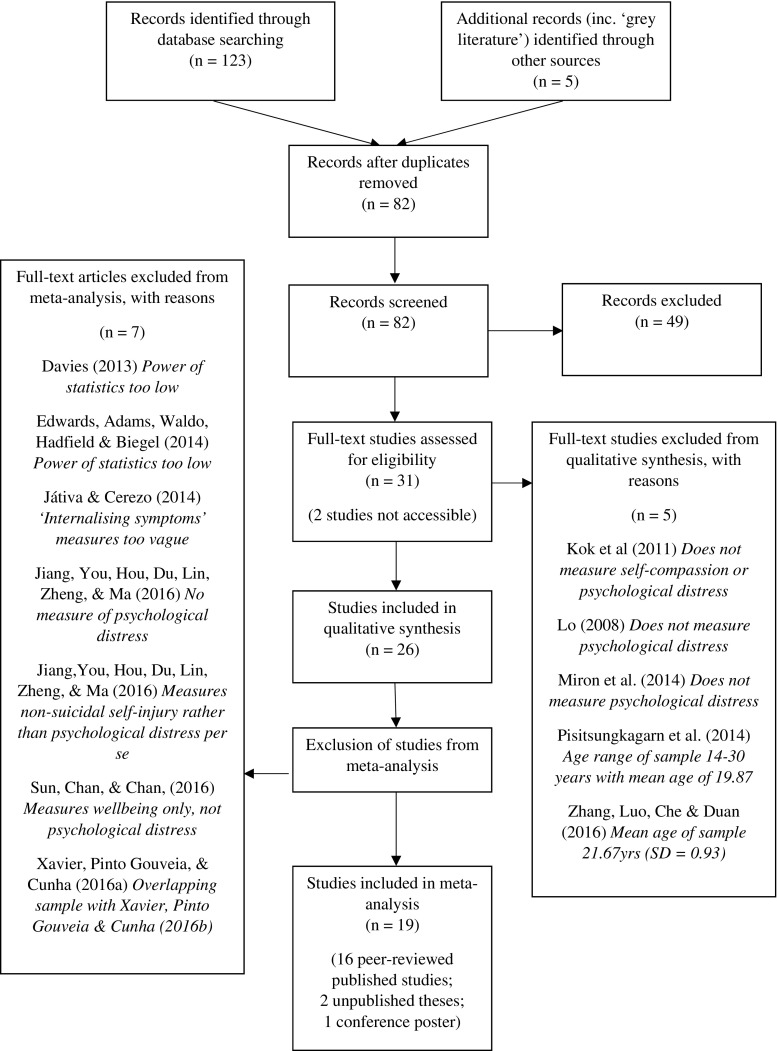
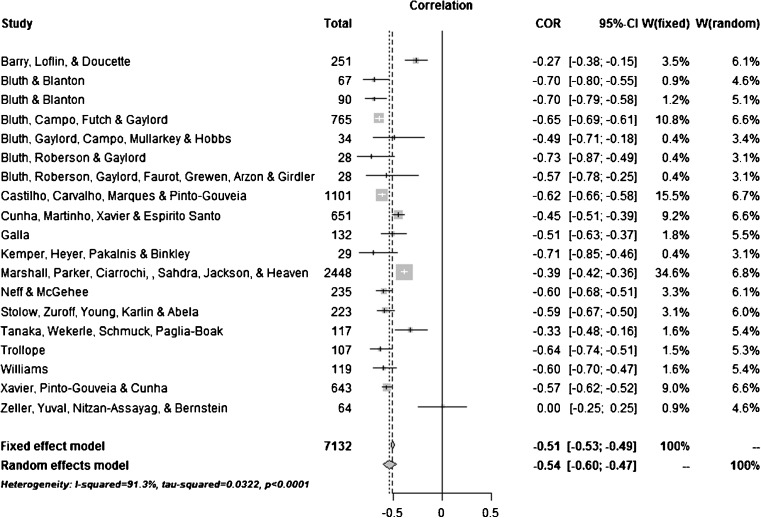
Research indicates that self-compassion is relevant to adolescents’ psychological well-being, and may inform the development of mental health and well-being interventions for youth. This meta-analysis synthesises the existing literature to estimate the magnitude of effect for the association between self-compassion and psychological distress in adolescents. Our search identified 19 relevant studies of adolescents (10–19 years; N = 7049) for inclusion. A large effect size was found for an inverse relationship between self-compassion and psychological distress indexed by anxiety, depression, and stress ( r = − 0.55; 95% CI − 0.61 to − 0.47). The identified studies were highly heterogeneous, however sensitivity analyses indicated that correction for publication bias did not significantly alter the pattern of results. These findings replicate those in adult samples, suggesting that lack of self-compassion may play a significant role in causing and/or maintaining emotional difficulties in adolescents. We conclude that self-compassion may be an important factor to target in psychological distress and well-being interventions for youth.
Overview
The claims and statistics of this paper haven’t been checked yet.
Free: it reads the open-access text and checks the first 5 claims that cite a source we can check. Create a free account to check every claim.
Integrity signals
Registry
Cites
Statistics
Figures
Verification
Claims the paper makes
The claims and statistics of this paper haven’t been checked yet.
Free: it reads the open-access text and checks the first 5 claims that cite a source we can check. Create a free account to check every claim.
Claims other papers make about this one
Each is checked against this paper’s own text: does it say what the citing paper says it does?
The cited source says what the claim attributes to it.
In the citing paper
“and adolescents ( r = -0.55; Marsh et al. 2018)”
From Effectiveness of Self-Compassion Related Therapies: a Systematic Review and Meta-analysis (2019) · cites this paper as Marsh et al. 2018
Self-check
Percentages, sums and reported differences re-computed from the paper’s own numbers.
The self-check needs the paper’s full text.
Citations
Cites
Preferred Reporting Items for Systematic Reviews and Meta-Analyses: the PRISMA statement
Moher, D., Liberati, A., Tetzlaff, J., Altman, D. G., & for the PRISMA Group (2009) · BMJ · doi:10.1136/bmj.b2535 · Cited by 83,823
Preferred Reporting Items for Systematic Reviews and Meta-Analyses: The PRISMA Statement
Moher, D., Liberati, A., Tetzlaff, J., Altman, D. G., & The PRISMA Group (2009) · PLoS Medicine · doi:10.1371/journal.pmed.1000097 · Cited by 64,042 · cited 2×
“A systematic review was performed using PRISMA criteria (Moher et al. 2009).”
BackgroundMethodMeasuring inconsistency in meta-analyses
Higgins, J. P. T., Thompson, S. G., Deeks, J. J., & Altman, D. G. (2003) · BMJ · doi:10.1136/bmj.327.7414.557 · Cited by 63,139 · cited 1×
“Higgins et al. (2003) suggested that I2 values of 0, 25, 50, and 75% indicate zero, low, moderate, and high heterogeneity, respectively.”
BackgroundThe CES-D Scale: A Self-Report Depression Scale for Research in the General Population
Radloff, L. S. (1977) · Applied Psychological Measurement · doi:10.1177/014662167700100306 · Cited by 53,267
Preferred reporting items for systematic reviews and meta-analyses: the PRISMA Statement.
(2009) · PubMed Central · Cited by 44,859
Meta-analysis in clinical trials
DerSimonian, R., & Laird, N. (1986) · Controlled Clinical Trials · doi:10.1016/0197-2456(86)90046-2 · Cited by 39,552 · cited 2×
“2001), using DerSimonian Laird (DerSimonian and Laird 1986) estimators for between-study variance.”
MethodA Global Measure of Perceived Stress
Cohen, S., Kamarck, T., & Mermelstein, R. (1983) · Journal of Health and Social Behavior · doi:10.2307/2136404 · Cited by 32,807
Development and validation of brief measures of positive and negative affect: The PANAS scales.
Watson, D., Clark, L. A., & Tellegen, A. (1988) · Journal of Personality and Social Psychology · doi:10.1037/0022-3514.54.6.1063 · Cited by 32,433
(1970) · Cited by 24,983
Conducting Meta-Analyses in R with the metafor Package
Viechtbauer, W. (2010) · Journal of Statistical Software · doi:10.18637/jss.v036.i03 · Cited by 20,464 · cited 2×
“Analyses were conducted in RStudio (RStudio Version 3.2.2) using the ‘metafor’ (Viechtbauer 2010) and ‘meta’ packages (Schwarzer 2007).”
MethodInfluential
Research works printed but not linked: 7
- Beck AT Steer RA Manual for the revised Beck depression inventory 1987 San Antonio Psychological Corporation
- Conway, D. G. (2007). The role of internal resources in academic achievement: exploring the meaning of self-compassion in the adaptive functioning of low-income college students (Unpublished doctoral dissertation, University of Pittsburgh, USA).
- Davies, G. (2013). An investigation into the effectiveness of mindfulness-based cognitive therapy with adolescents (Unpublished doctoral dissertation: Canterbury Christ Church University, United Kingdom).
- Lachar D Gruber CP Personality inventory for youth (PIY) manual: technical guide 1995 Los Angeles Western Psychological Services
- Schwarzer G Meta: an R package for meta-analysis R news 2007 7 3 40 45
- Trollope, M. (2009). Stressful life-events and adolescent depression: the possible roles of self-criticism and self-compassion (Unpublished doctoral dissertation, University of East Anglia, United Kingdom).
- Xavier A Cunha M Pinto Gouveia J Deliberate self-harm in adolescence: the impact of childhood experiences, negative affect and fears of compassion Revista de Psicopatología y Psicología Clínica 2015 20 1 41 49
Cited by
Items 101–200 of 403
Eryılmaz, A., KURTULUŞ, H. Y., & Yıldırım, M. (2024) · Children and Youth Services Review · doi:10.1016/j.childyouth.2024.107669 · Cited by 22
Self-Compassion: Unveiling Mental Health Through Emotion Regulation in High-school Students
Syafitri, N., Lubis, R., Indrawan, Y. F., & Choong, T. C. (2024) · Tazkiya Journal of Psychology · doi:10.15408/tazkiya.v12i1.37794 · Cited by 23
“Therefore, self-compassion acts as a predictor of well-being in adolescents (Marsh et al., 2018).”
BackgroundYamasaki, K., Sampei, A., & Miyata, H. (2024) · PLoS ONE · doi:10.1371/journal.pone.0297691 · Cited by 22
Gao, Y., Liu, X., Liu, J., & Wang, H. (2023) · Psychology Research and Behavior Management · doi:10.2147/prbm.s417258 · Cited by 31
Anasori, E., Soliman, M. S. A., & da Costa, C. M. M. (2023) · European Journal of Tourism Research · doi:10.54055/ejtr.v35i.3056 · Cited by 24
“Then, the stressful working environment exerts a more harmful effect on people with low self-compassion (Marsh et al., 2018; Thimm et al., 2017).”
BackgroundResultInfluentialMuris, P., Bongers, K., Schenning, C., Meesters, C. M. G., & Otgaar, H. (2022) · Children · doi:10.3390/children9121930 · Cited by 23
“In general, the results accord well with what has been found in research with adults: higher levels of self-compassion are accompanied by lower levels of psychopathology, with most research focusing on emotional problems such as anxiety and depression [7].”
ResultShahsavarinia, K., Amiri, P., Mousavi, Z., Gilani, N., Saadati, M., & Soleimanpour, H. (2022) · BMC Psychiatry · doi:10.1186/s12888-022-04017-8 · Cited by 29
Volkaert, B., Verbeken, S., Debeuf, T., Michels, N., & Braet, C. (2022) · Mindfulness · doi:10.1007/s12671-022-01838-2 · Cited by 19
“Although there is convincing evidence that trait and trained self-compassion are also linked to adolescents’ mental health (Bluth et al., 2016a; Bluth & Eisenlohr-Moul, 2017; Marsh et al., 2018), experimental research is needed to unravel the effects of self-compassion on adolescents’ stress response patterns.”
BackgroundHasselberg, A., & Rönnlund, M. (2020) · Cogent Psychology · doi:10.1080/23311908.2020.1769807 · Cited by 21
Cheung, H. N., Ho, W. S., Habibi, M., Chan, S. W. Y., & Williams, J. (2023) · Mindfulness · doi:10.1007/s12671-023-02170-z · Cited by 20
Self-citationWang, S., Tang, Q., Lv, Y., Tao, Y., Liu, X., Zhang, L., & Liu, G. (2023) · Behavioral Sciences · doi:10.3390/bs13060472 · Cited by 22
“There have also been numerous studies demonstrating that individuals with low self-compassion suffer from much lower levels of mental health and are more depleted by injury and illness than those with high self-compassion [38,81,82].”
BackgroundLiu, A., Xu, B., Liu, M., Wang, W., & Wu, X. (2023) · Journal of Clinical Psychology · doi:10.1002/jclp.23501 · Cited by 17
Seekis, V., Bradley, G. L., & Duffy, A. L. (2021) · Journal of Adolescent Research · doi:10.1177/07435584211011471 · Cited by 21
Pengpid, S., & Peltzer, K. (2021) · Journal of Psychology in Africa · doi:10.1080/14330237.2021.1928918 · Cited by 13
Self-Compassion as a Moderator between Clinical Perfectionism and Psychological Distress
Adams, V., Howell, J., & Egan, S. J. (2023) · Australian Psychologist · doi:10.1080/00050067.2022.2125281 · Cited by 12
“…of self-compassion, in adults, there is a moderate relationship between higher selfcompassion and lower anxiety (r = −.51) and depression (r = −.52) (MacBeth & Gumley, 2012), also seen in adolescents, with a moderate relationship between selfcompassion and distress (r = −.55) (Marsh et al., 2017).”
BackgroundWang, T., & Xicong, W. (2024) · Frontiers in Psychology · doi:10.3389/fpsyg.2024.1327789 · Cited by 14
The promise of compassion-based therapy as a novel intervention for adolescent PTSD
Brinckman, B., Alfaro, E., Wooten, W., & Herringa, R. J. (2023) · Journal of Affective Disorders Reports · doi:10.1016/j.jadr.2023.100694 · Cited by 17
“Marsh et al. (2018) asserted that self-compassion may be an important ingredient in the mental health treatment for youth and that lack of self-compassion may be a causal or maintaining factor in child and adolescent psychological maladjustment.”
BackgroundPaetzold, I., Schick, A., Rauschenberg, C., Hirjak, D., Banaschewski, T., Meyer‐Lindenberg, A., Boehnke, J. R., Boecking, B., & Reininghaus, U. (2023) · Behaviour Research and Therapy · doi:10.1016/j.brat.2023.104367 · Cited by 18
Self-Compassion and Anxiety in Adolescents with and without Anxiety Disorder
Tali, E., Potharst, E. S., de Bruin, E. I., & Utens, E. M. W. J. (2023) · Children · doi:10.3390/children10071181 · Cited by 22
“Self-compassion is a psychological concept rooted in Buddhist philosophy and is considered the same as compassion towards others merely turned inward [8].”
BackgroundPutra, I. G. N. E., Pradnyani, P. E., Putra, G. W., Astiti, N. L. E. P., Derayanti, N. W., Artini, N. N. A., Astuti, P. A. S., Dendup, T., & Ratan, Z. A. (2022) · Journal of Biosocial Science · doi:10.1017/s0021932022000426 · Cited by 21
“Due to changes in physical, social, and cognitive aspects, adolescents are vulnerable to psychological distress, and therefore, early mental health and psychological well-being promotion are important to combat the development of mental health problems (Marsh et al., 2018).”
Iyer, M., Sharma, R., & Sahasrabudhe, S. S. (2022) · Indian Journal of Psychiatry · doi:10.4103/indianjpsychiatry.indianjpsychiatry_409_21 · Cited by 18
“[16] Lack of regard for self and others, finding refuge online to hide from harsh realities of life and a preference to the online self-identity over real identity are probable causative factors of online aggression and psychological ill health.”
Zhang, J. W., Howell, R. T., Chen, S., Goold, A. R., Bilgin, B., Chai, W. J., & Ramis, T. (2022) · Clinical Psychology & Psychotherapy · doi:10.1002/cpp.2714 · Cited by 17
“…recent meta-analyses shows that most of the research has used the SCS and/or SF-SCS in cross-sectional correlation designs, with only a handful using longitudinal and experimental designs (MacBeth & Gumley, 2012; Marsh et al., 2018; Sirois et al., 2015; Yarnell et al., 2015; Zessin et al., 2015).”
Ren, Y., Zhang, S., Huang, C., Zhang, J., Jiang, T., & Fang, Y. (2024) · Frontiers in Psychiatry · doi:10.3389/fpsyt.2024.1417355 · Cited by 14
Zhang, J., & Wang, E. (2024) · Current Psychology · doi:10.1007/s12144-024-06249-1 · Cited by 12
Self-compassion and health-related quality of life in individuals with endometriosis
Skinner, C. M., & Kuijer, R. G. (2024) · Psychology and Health · doi:10.1080/08870446.2024.2325506 · Cited by 16
“Self-compassion has been consistently related to higher psychological wellbeing in the general population (Marsh et al., 2018; Zessin et al., 2015).”
Büchner, A., Ewert, C., Hoffmann, C. F. A., Schröder–Abé, M., & Horstmann, K. T. (2024) · Journal of Personality · doi:10.1111/jopy.12924 · Cited by 11
“Meta-analyses support the protective nature of self-compassion by linking it to well-being (Zessin et al., 2015), mental health (MacBeth & Gumley, 2012; Marsh et al., 2018; Turk & Waller, 2020), adaptive coping (Ewert et al., 2021), physical health and health behavior (Phillips & Hine, 2021).”
Exploring the relevance of a psychology-based resilience app (JoyPop™) for Indigenous youth
Kim, K. K., Au-Yeung, A., Dagher, D., Jacobs, N., Martin‐Hill, D., & Wekerle, C. (2023) · Child Abuse & Neglect · doi:10.1016/j.chiabu.2023.106343 · Cited by 12
Gruber, E., Baumann, I., Vonderlin, E., Bents, H., Heidenreich, T., Mander, J., & Kalmar, J. (2023) · Journal of Child and Family Studies · doi:10.1007/s10826-023-02569-1 · Cited by 15
“This replicates the results of other research teams supposing self-compassion to be a potential resilience factor in adults and youths (Bluth and Blanton 2015; Marsh et al. 2018; Neff and McGehee 2010).”
BackgroundResultInfluentialSelf-Compassion in Chinese Young Adults: Its Measurement and Measurement Construct
Zhao, M., Ford, T. J., Smithson, J., Wang, P., & Karl, A. (2022) · Assessment · doi:10.1177/10731911221137540 · Cited by 13
“This research has demonstrated a positive association between self-compassion and mental well-being in adolescents (Marsh et al., 2018) and adults (Zessin et al.”
BackgroundZhu, L., Wei, L., Xiaomin, Y., Zhao, J., Yu, Y., Sun, S., Wang, X., Yao, J., & Xie, J. (2022) · Psycho-Oncology · doi:10.1002/pon.6070 · Cited by 14
Huang, L., Liang, K., Jiang, W., Huang, Q., Gong, N., & Chi, X. (2021) · Children · doi:10.3390/children8050403 · Cited by 13
“We also found that weak SC was a decisive risk factor for mental health problems, which supported the previous studies [66,67].”
ResultDonovan, E., Bluth, K., Scott, H., Mohammed, M., & Cousineau, T. M. (2021) · Journal of American College Health · doi:10.1080/07448481.2021.1891077 · Cited by 15
“who have higher self-compassion experience less psychopathology, defined as stress, anxiety, and depression.(7,8)”
BackgroundHuang, P., Lin, Z., Wang, B., & Du, Z. (2025) · Frontiers in Psychology · doi:10.3389/fpsyg.2025.1510987 · Cited by 17
Self-compassion from an Islamic lens: fostering mental well-being
Maktar, A., Sidik, M. S. M., Fatahyah, Y., & Awang, A. (2025) · Journal of Spirituality in Mental Health · doi:10.1080/19349637.2025.2473048 · Cited by 16
“The study of Marsh et al. (2018) and Rahma and Puspitasari (2019) found that there is a strong correlation between emotional difficulties and low levels of self-compassion in adolescents and individuals with mental health problems.”
Leung, T. Y., Lam, C. B., & Chung, K. K. H. (2024) · Early Childhood Education Journal · doi:10.1007/s10643-024-01819-1 · Cited by 14
“Corroborating such views, studies have linked self-compassion to fewer depressive symptoms and intrusive thoughts, less rumination over mistakes and imperfections, and more positive emotions and higher satisfaction with life (Marsh et al., 2018).”
Shi, X., Zhang, W., Chen, X., & Ya, Z. (2024) · Journal of Youth and Adolescence · doi:10.1007/s10964-024-02069-5 · Cited by 17
“…and adolescents have found moderate to large effect sizes between self-compassion and psychopathology, indicating higher levels of self-compassion were associated with lower levels of mental health symptoms (Ferrari et al., 2019; MacBeth & Gumley, 2012; Marsh et al., 2018; Zessin et al., 2015).”
Tuned In! An affirmative mindfulness intervention for sexual and gender diverse young people
Iacono, G. (2024) · International journal of LGBTQ+ youth studies. · doi:10.1080/19361653.2024.2382964 · Cited by 14
“MBIs have been shown to significantly enhance the mental well-being of young individuals (Biegel et al., 2009; Bluth et al., 2016, 2021, 2023; Donovan et al., 2021; Dunning et al., 2019; Haydicky et al., 2015; Marsh et al., 2018; Sibinga et al., 2008; Tan, 2016; Zoogman et al., 2015).”
Bluth, K., Knox, M. C., Press, A., & Lathren, C. (2023) · Emerging Adulthood · doi:10.1177/21676968231189902 · Cited by 14
“…in adult and adolescent populations have found that greater self-compassion is linked to reduced psychopathology (i.e., depression, anxiety, stress, non-suicidal self-injury, suicidal ideation) with moderate to large effect sizes (MacBeth & Gumley, 2012; Marsh et al., 2018; Suh & Jeong, 2021).”
BackgroundER, Y. O., & Deniz, M. E. (2022) · Cukurova University Faculty of Education Journal · doi:10.14812/cuefd.1074927 · Cited by 17
Carnelius, F., & Dennhag, I. (2022) · Nordic Journal of Psychiatry · doi:10.1080/08039488.2022.2089231 · Cited by 16
“As seen in a meta-analysis including 19 studies on the effect of self-compassion on emotional distress in adolescents, higher levels of self-compassion served as a protective factor against depression and other mental disorders [25].”
BackgroundMarthoenis, M., & Schouler‐Ocak, M. (2022) · Child and Adolescent Social Work Journal · doi:10.1007/s10560-022-00818-8 · Cited by 16
“Increased demands and physical and psychosocial changes among older age groups are among the possible explanations for a higher rate of PD (Byrne et al., 2007; Marsh et al., 2018).”
BackgroundResultDunkley‐Smith, A. J., Reupert, A., Ling, M., & Sheen, J. A. (2021) · Journal of Adolescence · doi:10.1016/j.adolescence.2021.05.001 · Cited by 16
Boggiss, A. L., Consedine, N. S., Jefferies, C., Bluth, K., Hofman, P. L., & Serlachius, A. S. (2020) · BMJ Open · doi:10.1136/bmjopen-2019-034452 · Cited by 16
Andreu, C. I., & García‐Rubio, C. (2019) · Springer eBooks · doi:10.1007/978-3-030-25513-8_9 · Cited by 18
Hou, J., Qu, D., Bu, H., Chen, B., Liu, G., & Yu, N. X. (2025) · Current Psychology · doi:10.1007/s12144-024-07227-3 · Cited by 14
“Several meta-analyses have shown that demographic differences (e.g., age and sex) may partially explain, although inconsistently, the heterogeneity of the associations between self-compassion and psychological distress (Marsh et al., 2018; Yarnell et al., 2015).”
Liu, X., Cui, L., & Yang, Y. (2024) · Journal of Youth and Adolescence · doi:10.1007/s10964-024-02087-3 · Cited by 13
“Considering the bene-fi ts of self-compassion on adolescents ’ psychological (e.g., Marsh et al., 2018) and interpersonal functions (e.g., Liu et al., 2023), exploring the development trajectory of adolescents ’ self-compassion is necessary for better coping and development in this period.”
Moroń, M., & Kocur, D. J. (2023) · Mindfulness · doi:10.1007/s12671-023-02256-8 · Cited by 12
“Self-compassion has recently been demonstrated as a protective factor for various dimensions of well-being (Phillips & Hine, 2021; Zessin et al., 2015), while lack of self-compassion was regarded as a risk factor for distress and psychopathology (Marsh et al., 2018).”
Self-compassion and neural activity during self-appraisals in depressed and healthy adolescents
Liu, G., Santana‐Gonzalez, C., Zeffiro, T. A., Zhang, N., Engstrom, M., & Quevedo, K. M. (2023) · Journal of Affective Disorders · doi:10.1016/j.jad.2023.07.012 · Cited by 15
Truong, Q. C., Nguyen, T. M., An, N. H., Medvedeva, A., & Medvedev, O. N. (2022) · Mindfulness · doi:10.1007/s12671-022-01950-3 · Cited by 13
Zhou, T., Bian, X., Zhang, K., Zheng, S., Lin, Y., Zheng, H., Liu, J., & Finan, J. M. (2022) · Frontiers in Psychiatry · doi:10.3389/fpsyt.2022.837846 · Cited by 12
“A meta-analysis of 19 studies conducted with adolescents found a large effect size for a negative relationship between self-compassion and psychological distress (indexed by anxiety, depression, and stress) (27), which indicated a protective effect of self-compassion for adolescents when met with personal challenges o…”
BackgroundZhao, M., Ford, T. J., Wang, P., & Karl, A. (2021) · Current Psychology · doi:10.1007/s12144-021-02485-x · Cited by 12
Emotional recovery following divorce: Will the real self-compassion please stand up?
Chau, R. F., Sawyer, W. N., Greenberg, J., Mehl, M. R., & Sbarra, D. A. (2021) · Journal of Social and Personal Relationships · doi:10.1177/02654075211047238 · Cited by 19
Rahmandani, A., Kahija, Y. F. L., & Salma, S. (2021) · Yonago acta medica · doi:10.33160/yam.2021.05.013 · Cited by 16
Pengpid, S., & Peltzer, K. (2021) · Journal of Psychology in Africa · doi:10.1080/14330237.2021.1903158 · Cited by 12
“Therefore, it is an important period to prevent mental health problems or psychologicl distress (Marsh et al ., 2018) .”
BackgroundLiu, C., Lin, L.-J., Zhang, K., & Chiou, W. (2025) · Behavioral Sciences · doi:10.3390/bs15070909 · Cited by 15
“Meta-analyses have found correlations between the two ranging from 0.55 to 0.70 (Marsh et al., 2018), and evidence suggests that self-compassion mediates the beneficial effects of mindfulness on psychological well-being and occupational functioning (Crego et al., 2022).”
InfluentialBüyüköksüz, E., Tekin, I., Arıkan, S., İlkay, Ş., & Erözkan, A. (2025) · BMC Psychology · doi:10.1186/s40359-025-03070-8 · Cited by 9
“A meta-analysis of experimental design showed that self-compassion interventions significantly ameliorate different mental disorders (eating behavior, rumination, stress, depression, anxiety) [13, 14].”
Liu, M., Yu, X., Liu, A., Wu, X., & Lin, W. (2025) · Child Abuse & Neglect · doi:10.1016/j.chiabu.2025.107475 · Cited by 8
Vestin, M., Wallin, L., Naesström, M., Blomqvist, I., Svedin, C. G., Beaumont, E., Jokinen, J., & Dennhag, I. (2025) · Frontiers in Psychology · doi:10.3389/fpsyg.2025.1547046 · Cited by 8
“Over the past 30 years, studies on CFT have demonstrated benefits for adults, including reductions in depression, self-criticism, distress, and anxiety (Ferrari et al., 2019; Marsh et al., 2018; Williamson, 2020; Craig et al., 2020; Wakelin et al., 2022; Petrocchi et al., 2023).”
Suggesting self-compassion training in schools to stop cyberbullying: a narrative review
Aledeh, M., Sokan‐Adeaga, A. A., Adam, H., Aledeh, S., & Kotera, Y. (2024) · Discover Psychology · doi:10.1007/s44202-023-00110-5 · Cited by 23
“…training has been proven to be effective for people suffering from several mental health-related problems such as stress, anxiety, and depression [61, 62], therefore, self-compassion and self-compassion training can be suggested to support both victims and perpetrators of cyberbullying.”
Jin, S., Jianqing, L., & Miao, M. (2023) · Mindfulness · doi:10.1007/s12671-023-02188-3 · Cited by 9
Köksal, Z., Topkaya, N., & Şahin, E. (2023) · Elektronik Sosyal Bilimler Dergisi · doi:10.17755/esosder.1223885 · Cited by 17
Translation and validation of the Swedish version of the Self-Compassion Scale for Youth
Henje, E., Wiberg, M., & Dennhag, I. (2023) · Australian Psychologist · doi:10.1080/00050067.2023.2217326 · Cited by 11
“The result of two recent meta-analyses, one for adults (MacBeth & Gumley, 2012) and one for young people (Marsh et al., 2018), showed strong correlations between perceived self-compassion and psychological stress, anxiety and depression.”
BackgroundResultChen, Y., Zhang, B., & Hu, Y. (2022) · Mindfulness · doi:10.1007/s12671-022-01978-5 · Cited by 10
The Role of Self-compassion to Depression in Teenagers Mediated by Emotion Regulation
Meilasari, A. , & Utami, M. S. (2022) · Jurnal Psikologi · doi:10.22146/jpsi.67752 · Cited by 15
“It is consistent with previous research that self-compassion and depression symptoms have negative relation (Bluth et al., 2017; Marsh et al., 2018).”
ResultMechanisms of Change Underlying Mindfulness-Based Practice Among Adolescents
Zhang, Y., Razza, R. A., Wang, Q., Bergen‐Cico, D., & Liu, Q. (2022) · Mindfulness · doi:10.1007/s12671-022-01881-z · Cited by 16
“Thus, self-compassion has been considered a particularly prominent construct to cultivate during adolescence because of its positive impact on emotional and psychological well-being (Galla, 2016; Marsh et al., 2018; Neff & McGehee, 2010; Turk & Waller, 2020).”
BackgroundChen, L. A., Wu, C., Lee, M., Lin, C., Kao, S., Tu, C., & Chen, R. (2021) · Journal of Nursing Scholarship · doi:10.1111/jnu.12703 · Cited by 15
Adolescent Women with Experience of Dating Violence: Self-compassion and Posttraumatic Growth
Nabilah, V., & Kusristanti, C. (2021) · Psychological Research on Urban Society · doi:10.7454/proust.v4i2.116 · Cited by 8
“Briefly, self-compassion can help survivors correct negative thoughts about themselves caused by traumatic events and help them find traumatic events’ meaning as related to their psychological well-being (Marsh et al., 2018; Scoglio et al., 2015; Wong & Yeung, 2017).”
BackgroundWillems, R., Drossaert, C. H. C., ten Klooster, P. M., Miedema, H. S., & Bohlmeijer, E. T. (2021) · International Journal of Environmental Research and Public Health · doi:10.3390/ijerph18189651 · Cited by 15
“The awareness that suffering happens to everyone and the ability to see this suffering in the right perspective, without overreacting [26,27], helps to reduce feelings of distress [29,30].”
BackgroundQuinlan, H., Hadden, K. L., & Storey, D. P. (2021) · Youth & Society · doi:10.1177/0044118x211002857 · Cited by 17
The Neuroscience of Happiness and Well-Being
Rosenfeld, A. J. (2018) · Child and Adolescent Psychiatric Clinics of North America · doi:10.1016/j.chc.2018.11.002 · Cited by 11
Cunha, M., Xavier, A., Salvador, M. C., & Castilho, P. (2024) · Child & Youth Care Forum · doi:10.1007/s10566-023-09765-6 · Cited by 7
İme, Y., Akyıl, Y., & Çağlar, A. (2025) · Psychological Reports · doi:10.1177/00332941251351236 · Cited by 8
Wang, Z., Zheng, J., & Wang, X. (2025) · Psychological Reports · doi:10.1177/00332941251316439 · Cited by 6
“Numerous studies have identi-fi ed self-compassion as a protective factor against depression and anxiety (Bluth & Eisenlohr-Moul, 2017; MacBeth & Gumley, 2012; Marsh et al., 2018).”
Liu, Y., Yang, X., Liu, Y., Wei, C., Zhao, J., & Kong, F. (2024) · Applied Psychology Health and Well-Being · doi:10.1111/aphw.12607 · Cited by 11
Cross-Cultural Psychology and Compassion
Kotera, Y., Martínez-Rives, N. L., Aledeh, M., Colman, R. D., Veasey, C. M., Harrington, T., Komori, N., Ozaki, A., Griner, D., Ali, Y., et al. (2024) · Encyclopedia · doi:10.3390/encyclopedia4040098 · Cited by 28
Reducing Suicide Ideation in Transgender Adolescents with Mindful Self-Compassion: An Open Trial
Bluth, K., Bryce, A., Lathren, C., Park, J., Pflum, S. R., & Clayton, M. G. (2024) · Mindfulness · doi:10.1007/s12671-024-02421-7 · Cited by 9
“…with depression, anxiety, and psychological distress in adults and adolescents in meta-analyses (adults: MacBeth & Gumley, 2012; adolescents: Marsh et al., 2018), greater self-compassion is associated with lower suicidal behavior and ideation among community adults, college students,…”
Peltzer, K., & Pengpid, S. (2024) · Child and Adolescent Social Work Journal · doi:10.1007/s10560-024-00963-2 · Cited by 8
“Among the reasons for a higher rate of mental distress among older age groups are increased demands and physical and psychosocial changes (Marsh et al., 2018).”
Applying a process-based therapy approach to compassion focused therapy: A synergetic alliance
Fraser, M. I., & Gregory, K. (2024) · Journal of Contextual Behavioral Science · doi:10.1016/j.jcbs.2024.100754 · Cited by 11
Tran, T., Vo, A. T. N., Nguyen, A., & Nguyen, T. (2023) · Journal of Rational-Emotive & Cognitive-Behavior Therapy · doi:10.1007/s10942-023-00509-y · Cited by 8
“Our present results are not consistent with previous findings, which demonstrated that SC appeared to have the potential to prevent risky behaviors caused by mental distress (Marsh et al., 2018).”
Maynard, M. L., Quenneville, S., Hinves, K., Talwar, V., & Bosacki, S. (2022) · Adolescents · doi:10.3390/adolescents3010003 · Cited by 12
“Anxiety, depression, stress, emotional dysregulation, and personality disorders have all demonstrated a negative relation to self-compassion [13], with evidence suggesting low levels of self-compassion significantly predict psychological distress [52].”
BackgroundSelf‐compassion and related factors in severe mental illness: A scoping review
Kurebayashi, Y., & Sugimoto, H. (2022) · Perspectives In Psychiatric Care · doi:10.1111/ppc.13017 · Cited by 9
Chen, H., Wang, K., Yang, N., Bi, K., & Chong, E. S. K. (2025) · Adolescent Research Review · doi:10.1007/s40894-025-00265-3 · Cited by 8
Khanjani, S., Foroughi, A., Parvizifard, A., Moghadam, M. S., Rajabi, M., Mojtahedzadeh, P., & Altman, J. K. (2025) · Journal of Research in Medical Sciences · doi:10.4103/jrms.jrms_520_23 · Cited by 6
İme, Y. (2025) · Current Psychology · doi:10.1007/s12144-025-07378-x · Cited by 13
“This interconnectedness can create a supportive environment where adolescents feel valued and understood, which is essential for mental well-being (Marsh et al., 2018).”
Prizeman, K., Weinstein, N., & McCabe, C. (2024) · Brain and Behavior · doi:10.1002/brb3.70028 · Cited by 11
“Extensive research demonstrates the link between higher self-compassion and lower symptoms of clinical depression and anxiety (Bluth et al., 2015, 2016; Marsh et al., 2018; Muris & Otgaar, 2020; Neff, 2003, 2020).”
BackgroundDai, X., Lu, S., Sullivan, A. A., & Hu, H. (2024) · Journal of Affective Disorders · doi:10.1016/j.jad.2024.07.096 · Cited by 8
Hemşirelik Öğrencilerinin Psikolojik Sağlamlık ve Öz-Şefkat Düzeylerinin Belirlenmesi
PINAR, Ş. D., & Ceylan, B. (2024) · Journal of General Health Sciences (JGEHES) Necmettin Erbakan University · doi:10.51123/jgehes.2024.108 · Cited by 7
Poetar, C.-R., & Criț, C. I. (2024) · Sexuality Research and Social Policy · doi:10.1007/s13178-023-00929-6 · Cited by 7
“…role between minority stress and anxiety and depressive symptoms, which is consistent with hypothesis 3 and in line with previous research that indicated the role of self–compassion in the relationship between minority stress and psychological distress (MacBeth & Gumley, 2012; Marsh et al., 2018).”
Perceived Parenting Style and Adolescent Self-Compassion: A Longitudinal, Within-Person Approach
Kaufmann, S., Ciarrochi, J., Yap, K., & Fraser, M. I. (2023) · Mindfulness · doi:10.1007/s12671-023-02232-2 · Cited by 11
“Self-compassion has emerged as an important construct in the study of adolescent mental health and psychopathology (Marsh et al., 2018; Neff & McGehee, 2010).”
Empathy as Mediator in Relationship between Self-Compassion and Prosocial Behavior among Adolescents
Widyastuti, A., & Savitri, L. S. Y. (2023) · Jurnal Psikologi · doi:10.22146/jpsi.78312 · Cited by 10
Can mindfulness play a role in building social-emotional capacities among youth exposed to screens?
Kim, S., Munten, S., Stafford, S., & Kolla, N. J. (2023) · Frontiers in Psychiatry · doi:10.3389/fpsyt.2023.1165217 · Cited by 9
Ekbäck, E., Blomqvist, I., Dennhag, I., & Henje, E. (2022) · Nordic Journal of Psychiatry · doi:10.1080/08039488.2022.2128409 · Cited by 9
“It is possible that some individuals with depressive symptoms do not find themselves worthy of love and compassion [60], and not valued enough to feel sorry for.”
BackgroundSelf-compassion and social stress: Links with subjective stress and cortisol responses
Ketay, S., Beck, L. A., & Dajci, J. (2022) · Self and Identity · doi:10.1080/15298868.2022.2117733 · Cited by 8
Puspitaningrum, N. P. P., & Pudjiati, S. R. R. (2021) · Jurnal Ilmiah Psikologi Terapan · doi:10.22219/jipt.v9i2.14265 · Cited by 9
Javidi, Z., Prior, K. N., Sloan, T. L., & Bond, M. J. (2021) · Current Psychology · doi:10.1007/s12144-021-01490-4 · Cited by 11
Self‐compassion for youth in small city centres: A school‐based pilot project
Henson, A. M., Ruglis, J., Sinacore, A. L., Fitzpatrick, M. R., & Lanteigne, D. M. (2020) · Counselling and Psychotherapy Research · doi:10.1002/capr.12374 · Cited by 7
Othman, S., Steen, M., & Abdelnasser, N. (2025) · Aging & Mental Health · doi:10.1080/13607863.2025.2476653 · Cited by 5
The Role of Self‐Compassion in Teachers' Well‐Being: A Systematic Review and Meta‐Analysis
Wong, M. Y. C., Fung, H. W., Yuan, G. F., & Tao, S. (2025) · International Journal of Psychology · doi:10.1002/ijop.70098 · Cited by 10
Xue, S., Lu, A., Zhu, K., Chen, J., Li, X., Wang, X., & Liang, Y. (2025) · Journal of Adolescence · doi:10.1002/jad.70002 · Cited by 7
Ford, M., Rothmann, S., & van Zyl, L. E. (2025) · BMC Psychology · doi:10.1186/s40359-025-02922-7 · Cited by 5
“Research on self-compassion has focused on emotional well-being, showing significantly positive correlations with positive affect, happiness, optimism, and life satisfaction [12, 13] and significantly negative correlations with depression and personal distress [14–16].”
Metadata
- Authors
- Marsh, I. C., Chan, S. W. Y., & MacBeth, A.
- Affiliations
- University of Edinburgh (GB)
- Corresponding author
- MacBeth, Angus
- Venue
- Mindfulness
- Published
- 2017-11-25
- Volume
- 9
- Issue
- 4
- Pages
- 1011-1027
- ISSN
- 1868-8527 (ISSN-L)
- 1868-8535
- PMC
- PMC6061226
- OpenAlex
- W2769880865
- Semantic Scholar
- cac2affdafc70f4cd96df4299fb5987ce5c35b78
- Cited by
- 465
- References
- 97
- Citations by year
- 2026: 58 · 2025: 72 · 2024: 71 · 2023: 73 · 2022: 76 · 2021: 55 · 2020: 41 · 2019: 12 · 2018: 6
- FWCI
- 2.46
- Type
- journal article
- Language
- en
- Open access
- hybrid
- doi.org
- Locations
- Mindfulness (publishedVersion, cc-by)
- Europe PMC (PubMed Central) (publishedVersion, cc-by)
- PubMed Central (publishedVersion, cc-by)
- PubMed (publishedVersion)
- Edinburgh Research Explorer (University of Edinburgh) (submittedVersion, cc-by)
- Funders
- University of Edinburgh
- Topics
- Social Sciences › Psychology › Clinical Psychology › Mindfulness and Compassion Interventions
- Social Sciences › Psychology › Social Psychology › Psychological Well-being and Life Satisfaction
- Social Sciences › Psychology › Developmental and Educational Psychology › Student Stress and Coping
- Keywords
- self-compassion, psychological distress, adolescents, anxiety, depression, stress, youth mental health, well-being interventions, emotional problems
About these checks
Registry, retraction, Cites and statistics results are computed, not judged, with one exception: a printed reference that no index lists is read once by a model before it counts as a citation error. Claims are extracted by a model and kept only when their quote appears verbatim in the text; each cited source is then checked, with a model’s help, for whether it says what the claim relies on. Those verdicts can be wrong — read the claim’s quote and the cited source before relying on one.
Statistics and arithmetic are recomputed, not judged.
Confidence bands are shown only for fields calibrated on our annotated test set. None is calibrated yet, so no band is shown.
What counts as a claim ›How we measure confidence ›How we check this ›
Are you an author, or do you see a problem with this page? Request a review
Data sources
Bibliographic data: Semantic Scholar, OpenAlex, Crossref.
Contains information from the Semantic Scholar Academic Graph Datasets, made available under the ODC Attribution License (ODC-BY 1.0).
Semantic Scholar’s data is described in: Kinney, R., et al. (2023). The Semantic Scholar Open Data Platform. arXiv:2301.10140.
