

Self-compassion and Psychological Distress in Adolescents—a Meta-analysis
Open accessThe DOI matches its Crossref record; 98 of the 98 references it cites were found in a registry or an index.
Abstract
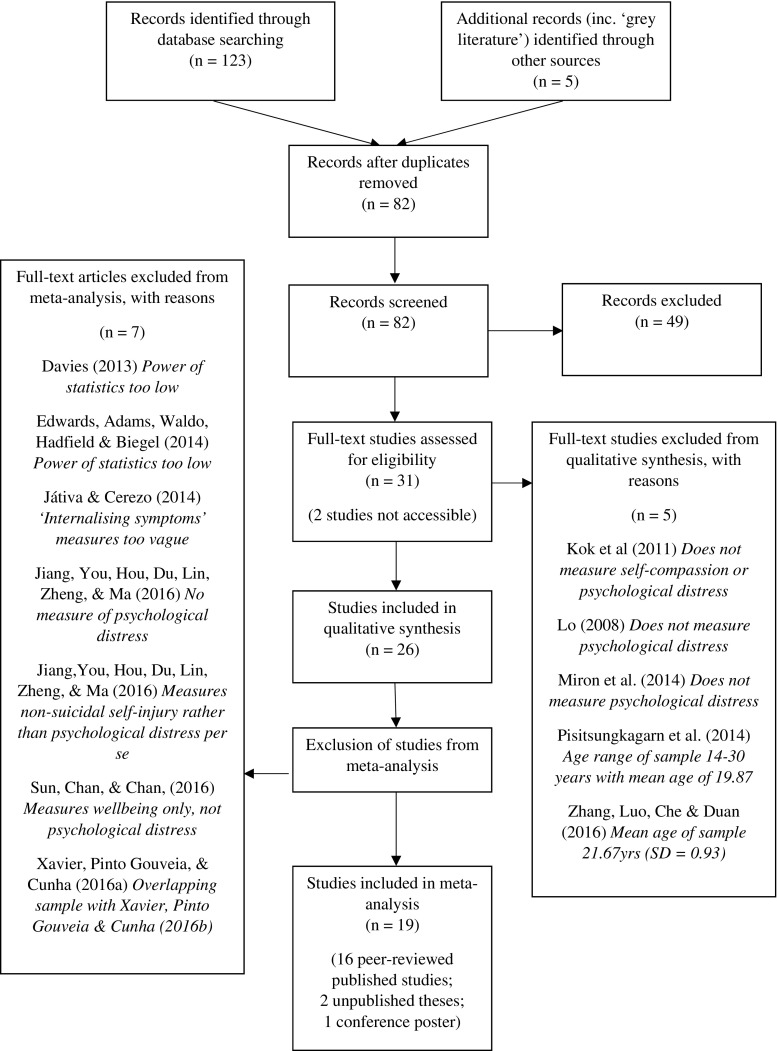
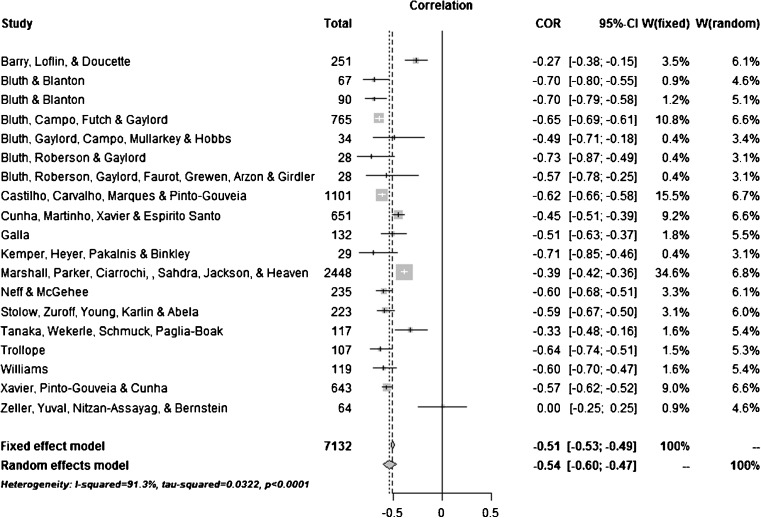
Research indicates that self-compassion is relevant to adolescents’ psychological well-being, and may inform the development of mental health and well-being interventions for youth. This meta-analysis synthesises the existing literature to estimate the magnitude of effect for the association between self-compassion and psychological distress in adolescents. Our search identified 19 relevant studies of adolescents (10–19 years; N = 7049) for inclusion. A large effect size was found for an inverse relationship between self-compassion and psychological distress indexed by anxiety, depression, and stress ( r = − 0.55; 95% CI − 0.61 to − 0.47). The identified studies were highly heterogeneous, however sensitivity analyses indicated that correction for publication bias did not significantly alter the pattern of results. These findings replicate those in adult samples, suggesting that lack of self-compassion may play a significant role in causing and/or maintaining emotional difficulties in adolescents. We conclude that self-compassion may be an important factor to target in psychological distress and well-being interventions for youth.
Overview
The claims and statistics of this paper haven’t been checked yet.
Free: it reads the open-access text and checks the first 5 claims that cite a source we can check. Create a free account to check every claim.
Integrity signals
Registry
Cites
Statistics
Figures
Verification
Claims the paper makes
The claims and statistics of this paper haven’t been checked yet.
Free: it reads the open-access text and checks the first 5 claims that cite a source we can check. Create a free account to check every claim.
Claims other papers make about this one
Each is checked against this paper’s own text: does it say what the citing paper says it does?
The cited source says what the claim attributes to it.
In the citing paper
“and adolescents ( r = -0.55; Marsh et al. 2018)”
From Effectiveness of Self-Compassion Related Therapies: a Systematic Review and Meta-analysis (2019) · cites this paper as Marsh et al. 2018
Self-check
Percentages, sums and reported differences re-computed from the paper’s own numbers.
The self-check needs the paper’s full text.
Citations
Cites
Preferred Reporting Items for Systematic Reviews and Meta-Analyses: the PRISMA statement
Moher, D., Liberati, A., Tetzlaff, J., Altman, D. G., & for the PRISMA Group (2009) · BMJ · doi:10.1136/bmj.b2535 · Cited by 83,823
Preferred Reporting Items for Systematic Reviews and Meta-Analyses: The PRISMA Statement
Moher, D., Liberati, A., Tetzlaff, J., Altman, D. G., & The PRISMA Group (2009) · PLoS Medicine · doi:10.1371/journal.pmed.1000097 · Cited by 64,042 · cited 2×
“A systematic review was performed using PRISMA criteria (Moher et al. 2009).”
BackgroundMethodMeasuring inconsistency in meta-analyses
Higgins, J. P. T., Thompson, S. G., Deeks, J. J., & Altman, D. G. (2003) · BMJ · doi:10.1136/bmj.327.7414.557 · Cited by 63,139 · cited 1×
“Higgins et al. (2003) suggested that I2 values of 0, 25, 50, and 75% indicate zero, low, moderate, and high heterogeneity, respectively.”
BackgroundThe CES-D Scale: A Self-Report Depression Scale for Research in the General Population
Radloff, L. S. (1977) · Applied Psychological Measurement · doi:10.1177/014662167700100306 · Cited by 53,267
Preferred reporting items for systematic reviews and meta-analyses: the PRISMA Statement.
(2009) · PubMed Central · Cited by 44,859
Meta-analysis in clinical trials
DerSimonian, R., & Laird, N. (1986) · Controlled Clinical Trials · doi:10.1016/0197-2456(86)90046-2 · Cited by 39,552 · cited 2×
“2001), using DerSimonian Laird (DerSimonian and Laird 1986) estimators for between-study variance.”
MethodA Global Measure of Perceived Stress
Cohen, S., Kamarck, T., & Mermelstein, R. (1983) · Journal of Health and Social Behavior · doi:10.2307/2136404 · Cited by 32,807
Development and validation of brief measures of positive and negative affect: The PANAS scales.
Watson, D., Clark, L. A., & Tellegen, A. (1988) · Journal of Personality and Social Psychology · doi:10.1037/0022-3514.54.6.1063 · Cited by 32,433
(1970) · Cited by 24,983
Conducting Meta-Analyses in R with the metafor Package
Viechtbauer, W. (2010) · Journal of Statistical Software · doi:10.18637/jss.v036.i03 · Cited by 20,464 · cited 2×
“Analyses were conducted in RStudio (RStudio Version 3.2.2) using the ‘metafor’ (Viechtbauer 2010) and ‘meta’ packages (Schwarzer 2007).”
MethodInfluential
Research works printed but not linked: 7
- Beck, A. T., & Steer, R. A. (1987). Manual for the revised Beck depression inventory. San Antonio: Psychological Corporation.
- Conway, D. G. (2007). The role of internal resources in academic achievement: exploring the meaning of self-compassion in the adaptive functioning of low-income college students (Unpublished doctoral dissertation, University of Pittsburgh, USA).
- Davies, G. (2013). An investigation into the effectiveness of mindfulness-based cognitive therapy with adolescents (Unpublished doctoral dissertation: Canterbury Christ Church University, United Kingdom).
- Lachar, D., & Gruber, C. P. (1995). Personality inventory for youth (PIY) manual: technical guide. Los Angeles: Western Psychological Services.
- Schwarzer, G. (2007). Meta: an R package for meta-analysis. R news, 7(3), 40–45.
- Trollope, M. (2009). Stressful life-events and adolescent depression: the possible roles of self-criticism and self-compassion (Unpublished doctoral dissertation, University of East Anglia, United Kingdom).
- Xavier, A., Cunha, M., & Pinto Gouveia, J. (2015). Deliberate self-harm in adolescence: the impact of childhood experiences, negative affect and fears of compassion. Revista de Psicopatología y Psicología Clínica, 20(1), 41–49.
Cited by
Self-compassion: Theory, method, research, and intervention
Neff, K. D. (2023) · Annual Review of Psychology · doi:10.1146/annurev-psych-032420-031047 · Cited by 931
“…populations have found moderate to large effect sizes indicating an inverse association between selfcompassion and negative mental states such as depression, anxiety, stress, and suicidal ideation (Ferrari et al. 2019,Hughes et al. 2021,MacBeth &Gumley 2012,Marsh et al. 2018, Suh & Jeong 2021).”
BackgroundEffectiveness of Self-Compassion Related Therapies: a Systematic Review and Meta-analysis
Wilson, A. C., Mackintosh, K., Power, K., & Chan, S. W. Y. (2019) · Mindfulness · doi:10.1007/s12671-018-1037-6 · Cited by 301
Self-citationTurk, F., & Waller, G. (2020) · Clinical Psychology Review · doi:10.1016/j.cpr.2020.101856 · Cited by 248
Self-Compassion and Current Close Interpersonal Relationships: a Scoping Literature Review
Lathren, C. R., Rao, S. S., Park, J., & Bluth, K. (2021) · Mindfulness · doi:10.1007/s12671-020-01566-5 · Cited by 186
Development and Validation of the Self-Compassion Scale for Youth
Neff, K. D., Bluth, K., Tóth-Király, I., Davidson, O., Knox, M. C., Williamson, Z., & Costigan, A. (2021) · Journal of Personality Assessment · doi:10.1080/00223891.2020.1729774 · Cited by 175
“For example, a meta-analysis found a strong negative association with depression, anxiety and stress (Marsh et al., 2018) among adolescents.”
BackgroundResultSelf-Compassion: A Potential Path to Adolescent Resilience and Positive Exploration
Bluth, K., Mullarkey, M., & Lathren, C. (2018) · Journal of Child and Family Studies · doi:10.1007/s10826-018-1125-1 · Cited by 178
“Research on selfcompassion with adolescents has paralleled these findings, with those high in self-compassion reporting less depression, anxiety, and stress (Bluth and Blanton 2015; Marsh et al. 2017), less engagement in self-injurious behavior and fewer suicide attempts (Xavier et al.”
ResultNew frontiers in understanding the benefits of self-compassion
Bluth, K., & Neff, K. D. (2018) · Self and Identity · doi:10.1080/15298868.2018.1508494 · Cited by 152
Egan, S. J., Rees, C. S., Delalande, J., Greene, D., Fitzallen, G., Brown, S., Webb, M., & Finlay-Jones, A. (2022) · Administration and Policy in Mental Health and Mental Health Services Research · doi:10.1007/s10488-021-01170-2 · Cited by 140
A meta-analysis of the relation between self-compassion and self-efficacy
Liao, K. Y.-H., Stead, G. B., & Liao, C.-Y. (2021) · Mindfulness · doi:10.1007/s12671-021-01626-4 · Cited by 109
Reliabilitas dan validitas Self-Compassion Scale versi Bahasa Indonesia
Sugianto, D., Suwartono, C., & Sutanto, S. H. (2020) · Jurnal Psikologi Ulayat · doi:10.24854/jpu107 · Cited by 223
Muris, P., & Otgaar, H. (2023) · Psychology Research and Behavior Management · doi:10.2147/prbm.s402455 · Cited by 205
Social anxiety and self-compassion in adolescents
Gill, C., Watson, L., Williams, C., & Chan, S. W. Y. (2018) · Journal of Adolescence · doi:10.1016/j.adolescence.2018.10.004 · Cited by 88
Self-citationHughes, M., Brown, S. L., Campbell, S., Dandy, S., & Cherry, M. G. (2021) · Mindfulness · doi:10.1007/s12671-021-01602-y · Cited by 88
Lathren, C., Bluth, K., & Park, J. (2019) · Personality and Individual Differences · doi:10.1016/j.paid.2019.02.008 · Cited by 109
Mohammadpour, M., Ghorbani, V., Khoramnia, S., Ahmadi, S. M., Ghvami, M., & Maleki, M. (2020) · Iranian Journal of Psychiatry · doi:10.18502/ijps.v15i3.3813 · Cited by 85
A systematic review of the relation between self‐compassion and depressive symptoms in adolescents
Pullmer, R., Chung, J., Samson, L., Balanji, S., & Zaitsoff, S. (2019) · Journal of Adolescence · doi:10.1016/j.adolescence.2019.06.006 · Cited by 75
Yang, Y., Kong, X., Guo, Z., & Kou, Y. (2021) · Mindfulness · doi:10.1007/s12671-021-01605-9 · Cited by 85
Effects of Childhood Maltreatment on Self-Compassion: A Systematic Review and Meta-Analysis
Zhang, H., Li, J., Sun, B., & Wei, Q. (2021) · Trauma Violence & Abuse · doi:10.1177/15248380211043825 · Cited by 75
“That is because that available meta-analyses have demonstrated that poor self-compassion is associated with psychological distress (Marsh et al., 2018) and even psychopathology (MacBeth & Gumley, 2012).”
COVID-19 Lockdown and Mental Health in a Sample Population in Spain: The Role of Self-Compassion
Gutiérrez-Hernández, M. E., Fanjul, L. F., Díaz, A., Reyes-Hurtado, P., Herrera-Rodríguez, J. F., Enjuto-Castellanos, M. D. P., & Castro, W. P. (2021) · International Journal of Environmental Research and Public Health · doi:10.3390/ijerph18042103 · Cited by 84
Wong, M. Y. C., Chung, P., & Leung, K. M. (2020) · Mindfulness · doi:10.1007/s12671-020-01513-4 · Cited by 94
Tariq, A., Quayle, E., Lawrie, S. M., Reid, C. L., & Chan, S. W. Y. (2021) · Journal of Affective Disorders · doi:10.1016/j.jad.2021.09.031 · Cited by 86
Self-citationCarvalho, S. A., & Guiomar, R. (2022) · LGBT Health · doi:10.1089/lgbt.2021.0434 · Cited by 56
“…studies suggesting its potentially buffering effect against psychopathological symptoms (e.g., depression and anxiety), 6 including in adolescence, 7 its role in promoting a range of adaptive behaviors 8 and well-being, 9 and suggesting its contribution to better physical health indicators by…”
Chan, K. K. S., Lee, J. C., Yu, E. K. W., Chan, A. W. Y., Leung, A. N. M., Cheung, R. Y. M., Li, C. W., Kong, R. H.-M., Chen, J., Wan, L. Y. S. 溫., et al. (2022) · Mindfulness · doi:10.1007/s12671-022-01891-x · Cited by 103
Tariq, A., Reid, C. L., & Chan, S. W. Y. (2021) · Psychological Medicine · doi:10.1017/s0033291721001458 · Cited by 96
Self-citationPullmer, R., Coelho, J. S., & Zaitsoff, S. L. (2019) · International Journal of Eating Disorders · doi:10.1002/eat.23081 · Cited by 80
Pengpid, S., & Peltzer, K. (2020) · BMC Psychiatry · doi:10.1186/s12888-020-02888-3 · Cited by 67
““Adolescence is a critical period characterised by vulnerability to psychological distress, and is therefore an important time for promotion of psychological well-being and early mental health intervention, in order to safeguard against the development of mental health issues” [4].”
BackgroundSahdra, B. K., Ciarrochi, J., Fraser, M. I., Yap, K., Haller, E., Hayes, S. C., Hofmann, S. G., & Gloster, A. T. (2023) · Mindfulness · doi:10.1007/s12671-023-02187-4 · Cited by 68
Theory of Mind, Self-Knowledge, and Perceptions of Loneliness in Emerging Adolescents
Bosacki, S., Moreira, F. P., Sitnik, V., Andrews, K., & Talwar, V. (2019) · The Journal of Genetic Psychology · doi:10.1080/00221325.2019.1687418 · Cited by 74
“Research on self-compassion has exploded in popularity in the past 15 years (Bluff & Neff, 2018), and the majority of research shows consistently positive links between self-compassion and emotional well-being (Marsh et al., 2017).”
BackgroundSelf-compassion and Adolescents’ Positive and Negative Cognitive Reactions to Daily Life Problems
Muris, P., Otgaar, H., Meesters, C., Heutz, A., & van den Hombergh, M. (2019) · Journal of Child and Family Studies · doi:10.1007/s10826-019-01353-4 · Cited by 46
Jiang, Y., Ren, Y., Liu, T., & You, J. (2020) · Psychology and Psychotherapy Theory Research and Practice · doi:10.1111/papt.12293 · Cited by 66
“Self-compassion is one such factor that has been paid growing attention to on its benefits against youth psychological distress (see Marsh, Chan, & MacBeth, 2018 for a review), including NSSI (e.g., Jiang, You, Zheng, & Lin, 2017).”
BackgroundBluth, K., Lathren, C., Clepper-Faith, M., Larson, L. M., Ogunbamowo, D. O., & Pflum, S. (2023) · Journal of Adolescent Research · doi:10.1177/07435584211062126 · Cited by 45
“…al., 2018), and most notably, LGBTQ youth (Hatchel et al., 2019), and has been reported as being inversely associated with depression, anxiety, and stress in adults (see meta-analysis: MacBeth & Gumley, 2012) and adolescents (see review and meta-analysis: Marsh et al., 2018; Pullmer et al., 2019).”
BackgroundBurke, A. S., Shapero, B. G., Pelletier-Baldelli, A., Deng, W. Y., Nyer, M. B., Leathem, L., Namey, L., Landa, C., Cather, C., & Holt, D. J. (2020) · Frontiers in Psychiatry · doi:10.3389/fpsyt.2019.01030 · Cited by 42
Lappalainen, P., Lappalainen, R., Keinonen, K., Kaipainen, K., Puolakanaho, A., Muotka, J., & Kiuru, N. (2023) · Journal of Contextual Behavioral Science · doi:10.1016/j.jcbs.2022.12.001 · Cited by 41
Ștefan, C. A. (2019) · Journal of Adolescence · doi:10.1016/j.adolescence.2019.08.013 · Cited by 51
Phillips, W. J., & Wisniewski, A. T. (2021) · Computers in Human Behavior Reports · doi:10.1016/j.chbr.2021.100128 · Cited by 41
Chen, Q., & Zhu, Y. (2021) · Health & Social Care in the Community · doi:10.1111/hsc.13438 · Cited by 54
Pohjola, V., Nurkkala, M., & Virtanen, J. I. (2021) · BMC Oral Health · doi:10.1186/s12903-020-01357-3 · Cited by 49
“As the requirement for independent functioning increases in adolescence, anxiety and social phobia (SP) may affect young person’s ability to cope and can adversely impact one’s quality of life [5, 6].”
BackgroundVigna, A. J., Poehlmann-Tynan, J., & Koenig, B. W. (2018) · Self and Identity · doi:10.1080/15298868.2018.1457566 · Cited by 32
García-Campayo, J., Barceló-Soler, A., Martínez-Rubio, D., Navarrete, J., Pérez-Aranda, A., Feliu-Soler, A., Luciano, J. V., Baer, R., Kuyken, W., & Montero-Marin, J. (2024) · Assessment · doi:10.1177/10731911231203966 · Cited by 35
“This finding is in accordance with previous evidence, since self-compassion has been consistently linked to less psychological distress and higher wellbeing (Marsh et al., 2018).”
ResultCoutts, J. J., Al‐Kire, R. L., & Weidler, D. J. (2023) · PLoS ONE · doi:10.1371/journal.pone.0286992 · Cited by 46
Iacono, G., Craig, S. L., Crowder, R., Brennan, D. J., & Loveland, E. K. (2022) · Mindfulness · doi:10.1007/s12671-021-01787-2 · Cited by 31
Joneghani, R. B. N., Joneghani, R. B. N., Dustmohammadloo, H., Bouzari, P., Ebrahimi, P., & Fekete‐Farkas, M. (2023) · Healthcare · doi:10.3390/healthcare11131884 · Cited by 63
“In addition, providing appropriate treatment plans, such as a mindful self-compassion program, can be useful to strengthen nurses’ self-compassion [33].”
BackgroundBoggiss, A. L., Consedine, N. S., Schache, K., Jefferies, C., Bluth, K., Hofman, P. L., & Serlachius, A. S. (2020) · Diabetic Medicine · doi:10.1111/dme.14352 · Cited by 41
Tran, M. A. Q., Khoury, B., Chau, N. N. T., Van Pham, M., Dang, A. T. N., Ngo, T. V., Ngo, T. T., Truong, T. M., & Le Dao, A. K. (2024) · Journal of Rational-Emotive & Cognitive-Behavior Therapy · doi:10.1007/s10942-022-00487-7 · Cited by 31
Ferrari, M., Beath, A., Einstein, D. A., Yap, K., & Hunt, C. J. (2022) · Current Psychology · doi:10.1007/s12144-022-03408-0 · Cited by 58
Psychometric Validation of the Persian Self-Compassion Scale Youth Version
Nazari, N., Hernández, R. M., Ocaña-Fernández, Y., & Griffiths, M. D. (2022) · Mindfulness · doi:10.1007/s12671-021-01801-7 · Cited by 47
Muris, P., Fernández‐Martínez, I., & Otgaar, H. (2024) · Clinical Child and Family Psychology Review · doi:10.1007/s10567-024-00471-w · Cited by 43
“There is abundant evidence indicating that adult individuals characterized by high levels (versus low levels) of self-compassion are less prone to develop emotional psychopathology (MacBeth & Gumley, 2012), and this has also been repeatedly shown in adolescent samples (Marsh et al., 2018).”
BackgroundLiu, G., Zhang, N., Teoh, J. Y., Egan, C., Zeffiro, T. A., Davidson, R. J., & Quevedo, K. (2020) · Psychological Medicine · doi:10.1017/s0033291720002482 · Cited by 45
A Systematic Review of Self-Compassion in Chronic Pain: From Correlation to Efficacy
Lanzaro, C., Carvalho, S. A., Lapa, T. A., Valentim, A., & Gago, B. (2021) · The Spanish Journal of Psychology · doi:10.1017/sjp.2021.22 · Cited by 29
“Other studies examined the relationship between SC and psychological distress in adolescents and found that higher levels of SC were associated with lower levels of distress (Marsh et al., 2018; Pielech et al., 2016).”
BackgroundPóka, T., Fodor, L. A., Barta, A., & Mérő, L. (2023) · Current Psychology · doi:10.1007/s12144-023-04834-4 · Cited by 38
“…Chio et al., 2021; Ewert et al., 2021; Ferrari et al., 2019; Inwood & Ferrari, 2018; Kirby et al., 2017; Liao et al., 2021; MacBeth & Gumley, 2012; Marsh et al., 2018; Muris & Petrocchi, 2016; Wang & Lou, 2022; Zessin et al., 2015) investigated the role of self-compassion, and the results support…”
Liang, K., Huang, L., Qu, D., Bu, H., & Chi, X. (2022) · Journal of Affective Disorders · doi:10.1016/j.jad.2022.09.078 · Cited by 50
“Considering self-compassion has been regarded as an important factor to target in psychological well-being interventions (Marsh et al., 2018), conducting related research under the pandemic background is needed to provide insights into further interventions.”
BackgroundHatun, O., & Kurtça, T. T. (2022) · Current Psychology · doi:10.1007/s12144-022-02824-6 · Cited by 56
Múzquiz, J., García, A. M. P., & Bermúdez, J. (2022) · Current Psychology · doi:10.1007/s12144-022-02924-3 · Cited by 49
“, 2017; MacBeth & Gumley, 2012) and in adolescents (Bluth & Blanton, 2015; Edwards et al., 2014; Marsh et al., 2018).”
Fan, Q., Li, Y., Gao, Y., Nazari, N., & Griffiths, M. D. (2022) · International Journal of Mental Health and Addiction · doi:10.1007/s11469-021-00727-4 · Cited by 41
Profiles of self‐compassion and psychological outcomes in cancer patients
Wei, L., Xie, J., Wu, L., Yao, J., Zhu, L., & Liu, A. (2022) · Psycho-Oncology · doi:10.1002/pon.5931 · Cited by 33
“Meta‐analyses of the general population found negative associations between self‐compassion and anxiety, depression, and stress.(7,9) In the context of cancer, cross‐sectional research has found that higher self‐compassion is related to better psychological well‐being in people with prostate cancer,(10) breast cancer,…”
BackgroundZhao, F., Li, Y., Ma, J., & Qin, Z.-J. (2022) · BMC Nursing · doi:10.1186/s12912-022-00835-z · Cited by 41
“Thus, self-compassionate people are likely to reduce distress [16].”
BackgroundExploring the relationship between self-compassion and body dysmorphic symptoms in adolescents
Allen, L. M., Roberts, C., Zimmer‐Gembeck, M. J., & Farrell, L. J. (2020) · Journal of Obsessive-Compulsive and Related Disorders · doi:10.1016/j.jocrd.2020.100535 · Cited by 54
Validation of the Chinese Version of Self-Compassion Scale for Youth (SCS-Y)
Huang, L., Chen, Z., Jiang, W., Qu, D., Wang, Y., Fang, X., Han, H., Huang, C., Li, Z., & Chi, X. (2022) · Mindfulness · doi:10.1007/s12671-022-02024-0 · Cited by 33
Finlay‐jones, A. L., Parkinson, A., Sirois, F. M., Perry, Y., Boyes, M. E., & Rees, C. S. (2023) · Journal of Medical Internet Research · doi:10.2196/44016 · Cited by 41
“Among adolescents, meta-analytic evidence demonstrates large inverse effects for the relationship between self-compassion and distress [30], although experimental studies with this population are limited [31].”
BackgroundPyszkowska, A., Rożnawski, K., & Farny, Z. (2021) · PeerJ · doi:10.7717/peerj.12591 · Cited by 41
Pila, E., Gilchrist, J. D., Kowalski, K. C., & Sabiston, C. M. (2021) · Psychology of sport and exercise · doi:10.1016/j.psychsport.2021.102083 · Cited by 31
Prentice, K., Rees, C. S., & Finlay‐jones, A. L. (2021) · Mindfulness · doi:10.1007/s12671-021-01685-7 · Cited by 40
Self-compassion and social anxiety in late adolescence: Contributions of self-reflection and insight
Ștefan, C. A., & Cheie, L. (2020) · Self and Identity · doi:10.1080/15298868.2020.1861082 · Cited by 38
“Based on evidence showing a decreasing effect of self-compassion on social anxiety (Marsh et al., 2018; Werner et al., 2012), we first expected self-compassion to predict fewer social anxiety symptoms in late adolescents.”
Pengpid, S., & Peltzer, K. (2020) · Psychological Reports · doi:10.1177/0033294120968502 · Cited by 33
Is Self-Compassion Protective Among Sexual- and Gender-Minority Adolescents Across Racial Groups?
Vigna, A. J., Poehlmann, J., & Koenig, B. W. (2020) · Mindfulness · doi:10.1007/s12671-019-01294-5 · Cited by 33
“Thought to facilitate the acceptance of difficulty instead of avoiding processing the difficulty or of feeling somehow at fault for experiencing distress, SC has been negatively correlated with psychopathology, with a medium effect size in both adolescence and adulthood (MacBeth and Gumley 2012; Marsh et al. 2017).”
BackgroundTypes of Digital Mindfulness: Improving Mental Health Among College Students – A Scoping Review
Yosep, I., Suryani, S., Mediani, H. S., Mardhiyah, A., & Ibrahim, K. (2024) · Journal of Multidisciplinary Healthcare · doi:10.2147/jmdh.s443781 · Cited by 41
“51 Efforts to guide meditation therapy can also be done by providing modules or guidelines for implementing meditation therapy.”
BackgroundA Bibliometric Review of Self-Compassion Research: Science Mapping the Literature, 1999 to 2020
Swami, V., Andersen, N., & Furnham, A. (2021) · Mindfulness · doi:10.1007/s12671-021-01662-0 · Cited by 25
Mechanisms of Mindfulness: A Longitudinal Study of a Mindfulness-Based Stress Reduction Program
Davis, K. M., Wojcik, C. M., Baillie, A. J., Foley, E., Goddard, T., Lau, M. A., & Haigh, E. A. P. (2024) · Mindfulness · doi:10.1007/s12671-024-02359-w · Cited by 25
“…of self-compassion is found in numerous cross-sectional and longitudinal studies, in which self-compassion showed consistent negative associations with many forms of psychopathology, such as depression, anxiety, self-injury, and suicidality (Lou et al., 2022; Marsh et al., 2018; Per et al., 2022).”
Neuenschwander, R., & von Gunten, F. O. (2024) · Current Psychology · doi:10.1007/s12144-024-07053-7 · Cited by 44
Sadowski, I., & Khoury, B. (2022) · Frontiers in Virtual Reality · doi:10.3389/frvir.2022.892905 · Cited by 23
“construct of self-compassion to enhanced well-being and reduced psychopathology in adults and adolescents (MacBeth & Gumley, 2012; Zessin et al., 2015; Marsh et al., 2018).”
BackgroundLathren, C., Bluth, K., & Zvara, B. J. (2020) · Journal of Family Theory & Review · doi:10.1111/jftr.12388 · Cited by 39
“…evidence suggests that self-compassion is an adaptive way of self-relating with robust links to psychological health (Zessin et al., 2015) and inverse associations with depression, anxiety, and stress in adults (MacBeth & Gumley, 2012) and adolescents (Marsh et al., 2017).”
BackgroundThe link between self‐compassion and psychotic‐like experiences: A matter of distress?
Scheunemann, J., Schlier, B., Ascone, L., & Lincoln, T. M. (2018) · Psychology and Psychotherapy Theory Research and Practice · doi:10.1111/papt.12193 · Cited by 27
Schreiber, R. E., & Veilleux, J. C. (2021) · Personality and Individual Differences · doi:10.1016/j.paid.2021.111191 · Cited by 36
The protective role of self-compassion on test anxiety among adolescents
O’Driscoll, D., & McAleese, M. (2023) · Pastoral Care in Education · doi:10.1080/02643944.2022.2054021 · Cited by 22
Internet-based CBT for adolescents with low self-esteem: a pilot randomized controlled trial
Berg, M., Lindegaard, T., Flygare, A.-L., Sjöbrink, J., Hagvall, L., Palmebäck, S., Klemetz, H., Ludvigsson, M., & Andersson, G. (2022) · Cognitive Behaviour Therapy · doi:10.1080/16506073.2022.2060856 · Cited by 30
“Lack of self-compassion have been connected to emotional difficulties in adolescents, and researchers have suggested self-compassion to be an important factor when constructing mental health interventions for youths (Marsh et al., 2018), which is supported by the findings in the present study.”
ResultBennetts, A. (2021) · Complementary Therapies in Clinical Practice · doi:10.1016/j.ctcp.2021.101514 · Cited by 37
Is parents’ education level associated with adolescent self-compassion?
Bluth, K., Park, J., & Lathren, C. (2020) · EXPLORE · doi:10.1016/j.explore.2020.02.003 · Cited by 37
Arslan, G., Özdemir Bişkin, S., & Kocaayan, F. (2025) · Children and Youth Services Review · doi:10.1016/j.childyouth.2024.108109 · Cited by 20
Can dimensions of parenting style contribute to self-compassion among South African adolescents?
Dakers, J., & Guse, T. (2020) · Journal of Family Studies · doi:10.1080/13229400.2020.1852951 · Cited by 29
Bratt, A. S., Gralberg, I.-M., Svensson, I., & Rusner, M. (2020) · Clinical Child Psychology and Psychiatry · doi:10.1177/1359104520931583 · Cited by 20
“In turn, such shame and self-criticism can contribute to, and maintain, mental health problems (Gilbert & Procter, 2006; Leaviss & Uttley, 2015), particularly in adolescence (Castilho et al., 2017; Cunha et al., 2012; Gilbert & Irons, 2009; Marsh et al., 2018).”
BackgroundPullmer, R., Zaitsoff, S. L., & Coelho, J. S. (2019) · Mindfulness · doi:10.1007/s12671-019-01254-z · Cited by 21
“A meta-analysis established a strong inverse relation between self-compassion and psychological distress in adolescents (Marsh et al., 2017).”
BackgroundKong, X., Cui, L., Li, J., & Yang, Y. (2022) · Journal of Child and Family Studies · doi:10.1007/s10826-022-02413-y · Cited by 21
“A recent meta-analysis demonstrated a large effect size (r=−0.55) for the relationship between self-compassion and negative emotional states indexed by anxiety, depression, and stress in adolescents (Marsh et al., 2017).”
BackgroundResultInfluentialCha, J. E., Boggiss, A. L., Serlachius, A. S., Cavadino, A., Kirby, J. N., & Consedine, N. S. (2022) · Mindfulness · doi:10.1007/s12671-022-01935-2 · Cited by 43
Arslan, G. (2023) · Personality and Individual Differences · doi:10.1016/j.paid.2023.112232 · Cited by 27
Gao, P., Mosazadeh, H., & Nazari, N. (2023) · International Journal of Mental Health and Addiction · doi:10.1007/s11469-023-01014-0 · Cited by 27
“Research has shown that self-compassion is a protective factor against loneliness (Akin, 2010), psychological distress (Marsh et al., 2018), and depression (Fan et al., 2022).”
Michelle, M. C. L., Schwannauer, M., & Chan, S. W. Y. (2019) · Psychology and Psychotherapy Theory Research and Practice · doi:10.1111/papt.12245 · Cited by 22
Self-citationBennett, V., Gill, C., Miller, P., Lewis, P., NeurOX, Y. P. A. G., Hamilton-Giachritsis, C. E., & Lavi, I. (2022) · Health Expectations · doi:10.1111/hex.13621 · Cited by 23
Asano, K., Tsuchiya, M., Okamoto, Y., Ohtani, T., Sensui, T., Masuyama, A., Isato, A., Shoji, M., Shiraishi, T., Shimizu, E., et al. (2022) · Frontiers in Psychology · doi:10.3389/fpsyg.2022.903842 · Cited by 31
“However, as most studies use the total score as a measure of self-compassion (MacBeth and Gumley, 2012; Zessin et al., 2015; Marsh et al., 2018; Liao et al., 2021), we also used the total score as the outcome measure.”
BackgroundMethodNurturing self-compassionate performers
Walton, C. C., Osborne, M. S., Gilbert, P., & Kirby, J. N. (2022) · Australian Psychologist · doi:10.1080/00050067.2022.2033952 · Cited by 25
Finlay‐jones, A. L., Boyes, M. E., Perry, Y., Sirois, F. M., Lee, R. K., & Rees, C. S. (2020) · BMC Public Health · doi:10.1186/s12889-020-8226-7 · Cited by 26
Tinsae, T., Shumet, S., Takelle, G. M., Rtbey, G., Melkam, M., Andualem, F., Nakie, G., Segon, T., Koye, S., Fentahun, S., et al. (2024) · Child and Adolescent Psychiatry and Mental Health · doi:10.1186/s13034-024-00782-4 · Cited by 20
““Adolescence is a crucial time for promoting psychological well-being and early mental health intervention to safeguard against the development of mental health issues, as it is characterized by vulnerability to mental health distress [11–13].”
BackgroundEffects of soothing images and soothing sounds on mood and well‐being
Witten, E., Ryynanen, J., Wisdom, S., Tipp, C., & Chan, S. W. Y. (2022) · British Journal of Clinical Psychology · doi:10.1111/bjc.12400 · Cited by 22
“In meta-analyses, greater self-compassion has been linked to decreased psychological distress including depression, anxiety and stress across age groups (MacBeth and Gumley, 2012; Marsh, Chan, & MacBeth, 2018).”
BackgroundSelf-citationBluth, K., Lathren, C., Park, J., Lynch, C., Curry, J., Harris‐Britt, A., & Gaylord, S. (2024) · Journal of Adolescence · doi:10.1002/jad.12277 · Cited by 15
“…can be accessed at emotionally challenging times, self-compassion in both adults and adolescents has demonstrated inverse relationships with depressive symptoms with large effect sizes (see meta-analyses among adults: MacBeth & Gumley, 2012; adolescents: Marsh et al., 2018; Pullmer et al., 2019).”
BackgroundCompassion for others and well-being: a meta-analysis
Zhuniq, M., Winter, F., & Aguilar‐Raab, C. (2025) · Scientific Reports · doi:10.1038/s41598-025-23460-7 · Cited by 34
“Similar demographic patterns have been observed in self-compassion research e.g., 53–55 , though findings remain context-dependent.”
Lifespan perspective on self-compassion: Insights from age-groups and gender comparisons
Tavares, L., Xavier, A., Vagos, P., Castilho, P., Cunha, M. I. V. A., & Pinto‐Gouveia, J. (2024) · Applied Developmental Science · doi:10.1080/10888691.2024.2432864 · Cited by 18
Li, W., Beath, A., Ciarrochi, J., & Fraser, M. I. (2023) · Current Psychology · doi:10.1007/s12144-023-05049-3 · Cited by 25
“The SCS-SF has high internal consistency and reliability (Raes et al., 2011), and has been used extensively in adolescent populations (Marsh et al., 2018; Bluth et al., 2018; Muris, 2016).”
Paetzold, I., Schick, A., Rauschenberg, C., Hirjak, D., Banaschewski, T., Meyer‐Lindenberg, A., Butz, S., Floesser, C., Schültke, L., Boehnke, J. R., et al. (2022) · JMIR Formative Research · doi:10.2196/39511 · Cited by 19
“By showing this in a longitudinal intervention study, the current findings extend evidence from a meta-analysis indicating associations of self-compassion and psychological distress in general [95].”
ResultPastore, O. L., Brett, B., & Fortier, M. (2022) · Psychological Reports · doi:10.1177/00332941221084902 · Cited by 22
“Meta-analyses and systematic reviews have shown that self-compassion is associated with reduced psychopathology such as stress, depression and anxiety in both adult and adolescent samples (Ferrari et al., 2019; Marsh et al., 2017; Neff et al., 2018; Zessin et al., 2015).”
BackgroundNguyen, A., Grummitt, L. R., Barrett, E. L., Bailey, S., Gardner, L. A., Champion, K. E., Halladay, J. E., Maratos, F. A., Hunter, E., Rowlinson, K., et al. (2025) · Mental Health & Prevention · doi:10.1016/j.mhp.2025.200430 · Cited by 26
Asselmann, E., Bendau, A., Hoffmann, C. F. A., & Ewert, C. (2024) · Journal of Happiness Studies · doi:10.1007/s10902-024-00755-6 · Cited by 35
“These findings are partially consistent with previous evidence that higher self-compassion is associated with higher affective well-being and lower symptoms of stress (Booker & Dunsmore, 2019; Marsh et al., 2018; Zessin et al., 2015).”
Metadata
- Authors
- Marsh, I. C., Chan, S. W. Y., & MacBeth, A.
- Affiliations
- University of Edinburgh (GB)
- Corresponding author
- MacBeth, Angus
- Venue
- Mindfulness
- Published
- 2017-11-25
- Volume
- 9
- Issue
- 4
- Pages
- 1011-1027
- ISSN
- 1868-8527 (ISSN-L)
- 1868-8535
- PMC
- PMC6061226
- OpenAlex
- W2769880865
- Cited by
- 465
- References
- 97
- Citations by year
- 2026: 58 · 2025: 72 · 2024: 71 · 2023: 73 · 2022: 76 · 2021: 55 · 2020: 41 · 2019: 12 · 2018: 6
- FWCI
- 2.46
- Type
- journal article
- Language
- en
- Open access
- hybrid
- doi.org
- Locations
- Mindfulness (publishedVersion, cc-by)
- Europe PMC (PubMed Central) (publishedVersion, cc-by)
- PubMed Central (publishedVersion, cc-by)
- PubMed (publishedVersion)
- Edinburgh Research Explorer (University of Edinburgh) (submittedVersion, cc-by)
- Funders
- University of Edinburgh
- Topics
- Social Sciences › Psychology › Clinical Psychology › Mindfulness and Compassion Interventions
- Social Sciences › Psychology › Social Psychology › Psychological Well-being and Life Satisfaction
- Social Sciences › Psychology › Developmental and Educational Psychology › Student Stress and Coping
- Keywords
- self-compassion, psychological distress, adolescents, anxiety, depression, stress, youth mental health, well-being interventions, emotional problems
About these checks
Registry, retraction, Cites and statistics results are computed, not judged, with one exception: a printed reference that no index lists is read once by a model before it counts as a citation error. Claims are extracted by a model and kept only when their quote appears verbatim in the text; each cited source is then checked, with a model’s help, for whether it says what the claim relies on. Those verdicts can be wrong — read the claim’s quote and the cited source before relying on one.
Statistics and arithmetic are recomputed, not judged.
Confidence bands are shown only for fields calibrated on our annotated test set. None is calibrated yet, so no band is shown.
What counts as a claim ›How we measure confidence ›How we check this ›
Are you an author, or do you see a problem with this page? Request a review
Data sources
Bibliographic data: Semantic Scholar, OpenAlex, Crossref.
Contains information from the Semantic Scholar Academic Graph Datasets, made available under the ODC Attribution License (ODC-BY 1.0).
Semantic Scholar’s data is described in: Kinney, R., et al. (2023). The Semantic Scholar Open Data Platform. arXiv:2301.10140.
