

Convolutional neural networks: an overview and application in radiology
Open accessThe DOI matches its Crossref record; 65 of the 65 references it cites were found in a registry or an index; 30 of the 49 sources its claims cite were checked for support.
Abstract
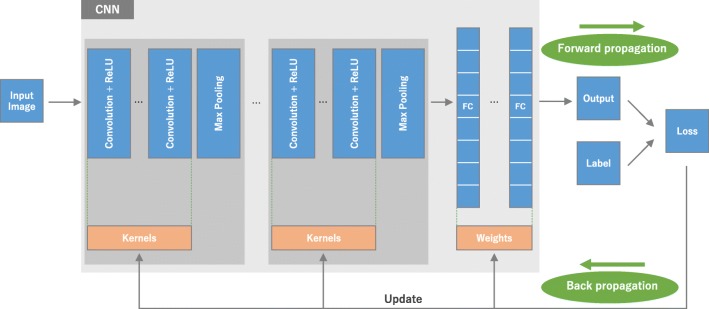
Convolutional neural network (CNN), a class of artificial neural networks that has become dominant in various computer vision tasks, is attracting interest across a variety of domains, including radiology. CNN is designed to automatically and adaptively learn spatial hierarchies of features through backpropagation by using multiple building blocks, such as convolution layers, pooling layers, and fully connected layers. This review article offers a perspective on the basic concepts of CNN and its application to various radiological tasks, and discusses its challenges and future directions in the field of radiology. Two challenges in applying CNN to radiological tasks, small dataset and overfitting, will also be covered in this article, as well as techniques to minimize them. Being familiar with the concepts and advantages, as well as limitations, of CNN is essential to leverage its potential in diagnostic radiology, with the goal of augmenting the performance of radiologists and improving patient care. KEY POINTS: • Convolutional neural network is a class of deep learning methods which has become dominant in various computer vision tasks and is attracting interest across a variety of domains, including radiology. • Convolutional neural network is composed of multiple building blocks, such as convolution layers, pooling layers, and fully connected layers, and is designed to automatically and adaptively learn spatial hierarchies of features through a backpropagation algorithm. • Familiarity with the concepts and advantages, as well as limitations, of convolutional neural network is essential to leverage its potential to improve radiologist performance and, eventually, patient care.
Overview
CoChat Summary
TL;DR
This narrative review explains the basic concepts of convolutional neural networks (CNNs) — their building blocks, training, and data requirements — and surveys their application to radiological tasks such as classification, segmentation, detection, image denoising, and report analysis. It highlights small datasets and overfitting as the two central challenges for CNN use in radiology and reviews techniques to mitigate them.
Key findings
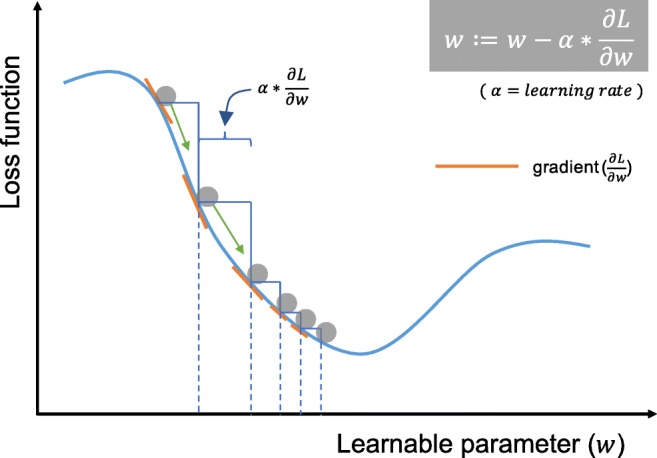
- CNN is composed of convolution, pooling, and fully connected layers; convolution and pooling perform feature extraction while fully connected layers map features to outputs, with kernels and weights learned via backpropagation and gradient descent.
- CNN differs from conventional radiomics in that it does not require hand-crafted feature extraction or expert segmentation, but is far more data hungry and computationally expensive, typically requiring GPUs.
- Reported application results cited in the review include: an ensemble of AlexNet and GoogLeNet 2D-CNNs achieving a best AUC of 0.99 for detecting pulmonary tuberculosis on 1007 chest radiographs; a CNN-based CADe system trained on ~45,000 mammography images outperforming a hand-crafted-feature CADe system at low sensitivity and matching it at high sensitivity; and a detection system built from 33,688 bounding boxes mined from radiologists' reports showing significantly improved detection accuracy with pseudo-category labels.
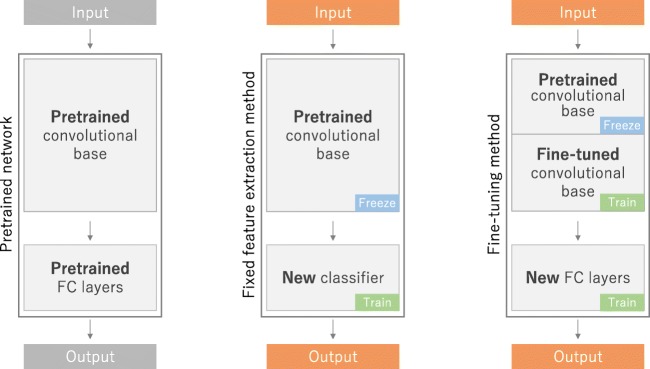
- Transfer learning from ImageNet (1.4 million images, 1000 classes) via fixed feature extraction or fine-tuning is presented as a key strategy for training on small datasets; U-net is highlighted for segmentation because it captures multiscale spatial context and can be trained end-to-end from limited data.
Methods
- Design: narrative review article (not a primary study), covering CNN concepts, training, data/label considerations, overfitting, small-dataset strategies, and radiology applications.
- Scope: applications are organized into classification, segmentation, detection, and "others" (denoising, image reconstruction, report classification); recurrent neural networks and other deep learning models are explicitly stated to be beyond the article's scope.
- Evidence base: illustrative prior studies are cited rather than systematically searched or quantitatively pooled; no new data, sample, or statistical analysis is generated by the authors.
Limitations
- Stated: the article is a perspective/overview, and other deep learning models such as recurrent neural networks for sequence models are beyond its scope; the details of improved gradient descent algorithms (momentum, RMSprop, Adam) are also stated to be beyond scope.
- Stated: whether semi-supervised techniques (pseudo-label, GANs) actually improve deep learning performance in radiology "is not clear and remains an area of active investigation," and whether medical pretrained networks would outperform ImageNet-pretrained transfer learning is likewise unclear.
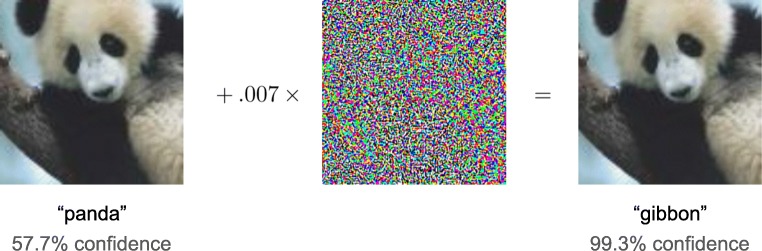
- Evident from the text: as a narrative review it reports no systematic search strategy, inclusion criteria, or quantitative synthesis, so the cited performance figures are illustrative examples rather than a comparative or exhaustive assessment; the authors also note deep learning's "black box" nature and vulnerability to adversarial examples as unresolved concerns for clinical robustness.
Model-written summary. Check it against the paper before relying on it.
Integrity signals
Registry
Cites
Statistics
Figures
Verification
Claims the paper makes
23 Valid · 11 Not valid · 6 Not checked · 47 Own results and interpretations
The sources with a verdict support this claim; the rest weren’t checked yet, have no full text we could read, or their verdicts aren’t rated yet.
In the paper
“several studies have already been published in areas such as lesion detection [7], classification [8], segmentation [9], image reconstruction [10, 11], and natural language processing [12].”
§ Convolutional neural networks: an overview and application in radiology > Introduction
What the sources say
- Not checked — no full text of the sourcecites [7] Lakhani P Sundaram B Deep learning at chest radiography: automated classification of pulmonary tuberculosis by using convolutional neural networks Radiology 2017 284 574 582 10.1148/radiol.2017162326 28436741 source
- Not checked — no full text of the sourcecites [8] Yasaka K Akai H Abe O Kiryu S Deep learning with convolutional neural network for differentiation of liver masses at dynamic contrast-enhanced CT: a preliminary study Radiology 2018 286 887 896 10.1148/radiol.2017170706 29059036 source
- Supportedcites [9] Christ PF, Elshaer MEA, Ettlinger F et al (2016) Automatic liver and lesion segmentation in CT using cascaded fully convolutional neural networks and 3D conditional random fields. In: Ourselin S, Joskowicz L, Sabuncu M, Unal G, Wells W (eds) Proceedings of Medical image computing and computer-assisted intervention – MICCAI 2016. 10.1007/978-3-319-46723-8_48 source
The citation [9] is attached to “segmentation,” not to the other listed applications. The paper’s opening page (p. 1) describes its CNN-based method for segmenting liver and lesions in CT images, so it is an example of the cited kind of study. (LLM, conf=0.95)
plain- Asserted: passes — The authors put it forward as true.
- Checkable: passes — It can be checked against evidence.
- Load-bearing: unclear — It is unclear whether the paper’s conclusions depend on it.
- Based: passes — The paper gives a reason why it holds.
Every source the paper cites for this claim was checked and supports it.
In the paper
“The results demonstrate that detection accuracy could be significantly improved by incorporating pseudo-category labels.”
§ Convolutional neural networks: an overview and application in radiology > Applications in radiology > Others
What the sources say
- Supportedcites [55] Yan K, Wang X, Lu L, Summers RM (2017) DeepLesion: automated deep mining, categorization and detection of significant radiology image findings using large-scale clinical lesion annotations. arXiv. Available online at: https://arxiv.org/pdf/1710.01766.pdf. Accessed 29 Jan 2018 source
In Results and Discussion (p. 7), the paper compares detection without categorization labels against detection with pseudo-category labels. Test accuracy rises from 59.45% to 64.30% overall, with improvements of 3–8 percentage points across the five lesion clusters. (LLM, conf=0.92)
hedgedstates a possible cause- Asserted: passes — The authors put it forward as true.
- Checkable: passes — It can be checked against evidence.
- Load-bearing: passes — The paper’s conclusions depend on it.
- Based: passes — The paper gives a reason why it holds.
- Supported
Every source the paper cites for this claim was checked and supports it.
In the paper
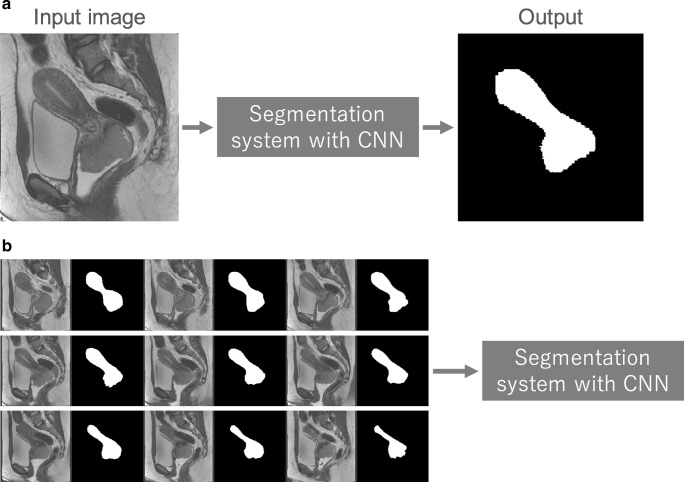
“As a result, U-net could be trained end-to-end from a limited number of training data.”
§ Convolutional neural networks: an overview and application in radiology > Applications in radiology > Segmentation
What the sources say
- Supportedcites [48] Ronneberger O, Fischer P, Brox T (2015) U-net: convolutional networks for biomedical image segmentation. In: Navab N, Hornegger J, Wells W, Frangi A (eds) Proceedings of Medical Image Computing and Computer-Assisted Intervention – MICCAI 2015. 10.1007/978-3-319-24574-4_28 source
The paper’s opening section states directly that U-Net can be trained end-to-end from very few images. The Conclusion likewise says it needs very few annotated images, thanks to data augmentation with elastic deformations. (LLM, conf=0.95)
hedgedstates a cause- Asserted: passes — The authors put it forward as true.
- Checkable: passes — It can be checked against evidence.
- Load-bearing: unclear — It is unclear whether the paper’s conclusions depend on it.
- Based: passes — The paper gives a reason why it holds.
- Supported
The sources with a verdict support this claim; the rest weren’t checked yet, have no full text we could read, or their verdicts aren’t rated yet.
In the paper
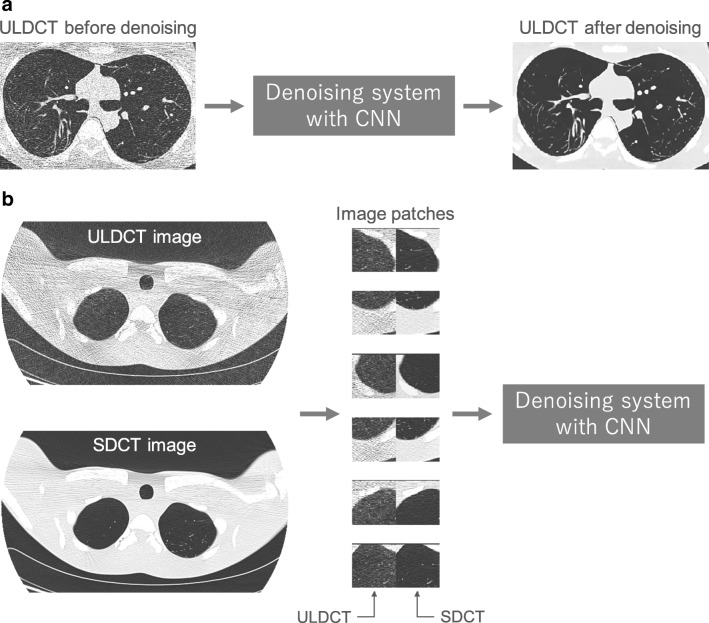
“Two previous studies showed that low-dose and ultra-low-dose CT images could be effectively denoised using deep learning [52, 53].”
§ Convolutional neural networks: an overview and application in radiology > Applications in radiology > Others
What the sources say
- Not checked — no full text of the sourcecites [52] Chen H Zhang Y Zhang W Low-dose CT via convolutional neural network Biomed Opt Express 2017 8 679 694 10.1364/BOE.8.000679 28270976 PMC5330597 source
- Supportedcites [53] Nishio M Nagashima C Hirabayashi S Convolutional auto-encoder for image denoising of ultra-low-dose CT Heliyon 2017 3 e00393 10.1016/j.heliyon.2017.e00393 28920094 PMC5577435 source
The Abstract (Materials and methods; Conclusion) reports that a convolutional auto-encoder denoised ultra-low-dose CT images of a chest phantom and performed better in visual assessments than the comparison methods. This supports the ultra-low-dose portion attributed to this study; the sentence cites two studies for the combined low-dose and ultra-low-dose claim. (LLM, conf=0.92)
hedgedstates a cause- Asserted: passes — The authors put it forward as true.
- Checkable: passes — It can be checked against evidence.
- Load-bearing: unclear — It is unclear whether the paper’s conclusions depend on it.
- Based: passes — The paper gives a reason why it holds.
The cited sources support only part of this claim — read each source’s verdict below.
In the paper
“Their study showed that U-net could effectively produce noiseless CT images from the subsampled sinogram.”
§ Convolutional neural networks: an overview and application in radiology > Applications in radiology > Others
What the sources say
- Partly supportedcites [54] Jin KH McCann MT Froustey E Unser M Deep convolutional neural network for inverse problems in imaging IEEE Trans Image Process 2017 26 4509 4522 10.1109/TIP.2017.2713099 28641250 sourceExperimental — accuracy not yet measured
The Experiments and Results section (p. 9) tests FBPConvNet on subsampled CT sinograms, and the Biomedical Dataset results (p. 13) report satisfactory removal of streaking artifacts and improved SNR. The network uses a modified U-net, but the paper does not claim its output is noiseless; the Discussion (p. 16) notes that artifacts can remain. (LLM, conf=0.88)
boostedstates a cause- Asserted: passes — The authors put it forward as true.
- Checkable: passes — It can be checked against evidence.
- Load-bearing: passes — The paper’s conclusions depend on it.
- Based: passes — The paper gives a reason why it holds.
- Partly supported
18 more claims · 8 with their cited sources checked
Create a free account to see all 87 claims and to verify the 4 references still open.
- Probably not a substantial claim. 56
- It may state two separate claims as one. 31
Citations
Cites
Deep Residual Learning for Image Recognition
He, K., Zhang, X., Ren, S., & Sun, J. (2016) · 2016 IEEE Conference on Computer Vision and Pattern Recognition (CVPR) · doi:10.1109/cvpr.2016.90 · Cited by 235,474 · cited 1×
“At present, many models pretrained on the ImageNet challenge dataset are open to the public and readily accessible, along with their learned kernels and weights, such as AlexNet [3], VGG [30], ResNet [31], Inception [32], and DenseNet [33].”
MethodVery Deep Convolutional Networks for Large-Scale Image Recognition
Simonyan, K., & Zisserman, A. (2014) · arXiv · doi:10.48550/arxiv.1409.1556 · Cited by 114,148 · cited 2×
“To perform unsupervised categorization, the following three steps were iteratively performed: (i) feature extraction using pretrained VGG16 model [30] from the lesions in the bounding box, (ii) clustering of the features, and (iii) fine-tuning of VGG16 based on the results of the clustering.”
MethodU-Net: Convolutional Networks for Biomedical Image Segmentation
Ronneberger, O., Fischer, P., & Brox, T. (2015) · Lecture notes in computer science · doi:10.1007/978-3-319-24574-4_28 · Cited by 99,404 · cited 1×
“Although segmentation based on image patch was successfully performed in deep learning, U-net of Ronneberger et al. [48] outperformed the image patch-based method on the ISBI [IEEE (The Institute of Electrical and Electronics Engineers) International Symposium on Biomedical Imaging] challenge for…”
MethodAdam: A Method for Stochastic Optimization
Kingma, D. P., & Ba, J. (2014) · arXiv · doi:10.48550/arxiv.1412.6980 · Cited by 98,946
LeCun, Y., Bengio, Y., & Hinton, G. (2015) · Nature · doi:10.1038/nature14539 · Cited by 84,126
Faster R-CNN: Towards Real-Time Object Detection with Region Proposal Networks
Ren, S., He, K., Girshick, R., & Sun, J. (2017) · IEEE Transactions on Pattern Analysis and Machine Intelligence · doi:10.1109/tpami.2016.2577031 · Cited by 73,472 · cited 1×
“The study also suggested that the detection system was built using the Faster R-CNN method [56], the lesions in the bounding box, and their corresponding pseudo-category.”
MethodFaster R-CNN: Towards Real-Time Object Detection with Region Proposal Networks
Ren, S., He, K., Girshick, R., & Sun, J. (2015) · arXiv · doi:10.48550/arxiv.1506.01497 · Cited by 70,812
Densely Connected Convolutional Networks
Huang, G., Liu, Z., Van Der Maaten, L., & Weinberger, K. Q. (2017) · 2017 IEEE Conference on Computer Vision and Pattern Recognition (CVPR) · doi:10.1109/cvpr.2017.243 · Cited by 48,566 · cited 1×
“At present, many models pretrained on the ImageNet challenge dataset are open to the public and readily accessible, along with their learned kernels and weights, such as AlexNet [3], VGG [30], ResNet [31], Inception [32], and DenseNet [33].”
MethodGoing deeper with convolutions
Szegedy, C., Liu, W., Jia, Y., Sermanet, P., Reed, S., Anguelov, D., Erhan, D., Vanhoucke, V., & Rabinovich, A. (2015) · 2015 IEEE Conference on Computer Vision and Pattern Recognition (CVPR) · doi:10.1109/cvpr.2015.7298594 · Cited by 48,562 · cited 5×
“According to the results, the best area under the curve of receiver operating characteristic curves for detecting pulmonary tuberculosis from healthy cases was 0.99, which was obtained by ensemble of the AlexNet and GoogLeNet 2D-CNNs.”
MethodInfluentialImageNet Large Scale Visual Recognition Challenge
Russakovsky, O., Deng, J., Su, H., Krause, J., Satheesh, S., Ma, S., Huang, Z., Karpathy, A., Khosla, A., Bernstein, M., et al. (2015) · International Journal of Computer Vision · doi:10.1007/s11263-015-0816-y · Cited by 39,380 · cited 1×
“…neural network (CNN), a class of artificial neural networks that has been a dominant method in computer vision tasks since the astonishing results were shared on the object recognition competition known as the ImageNet Large Scale Visual Recognition Competition (ILSVRC) in 2012 [2, 3].”
Method
Research works printed but not linked: 3
- Krizhevsky A, Sutskever I, Hinton GE (2012) ImageNet classification with deep convolutional neural networks. Adv Neural Inf Process Syst 25. Available online at: https://papers.nips.cc/paper/4824-imagenet-classification-with-deep-convolutional-neural-networks.pdf. Accessed 22 Jan 2018
- Lee DH (2013) Pseudo-label: the simple and efficient semi-supervised learning method for deep neural networks. In: Proceedings of the ICML 2013 Workshop: Challenges in Representation Learning. Available online at: http://deeplearning.net/wp-content/uploads/2013/03/pseudo_label_final.pdf. Accessed 23 Jan 2018
- Kurata Y, Nishio M, Fujimoto K et al (2018) Automatic segmentation of uterus with malignant tumor on MRI using U-net. In: Proceedings of the Computer Assisted Radiology and Surgery (CARS) 2018 congress (accepted)
Cited by
Items 2,301–2,400 of 4,673
Free-space optical encoder for computer vision
Choi, M., & Majumdar, A. (2025) · npj Nanophotonics · doi:10.1038/s44310-025-00082-5 · Cited by 10
“Especially, in deep ANNs, the fi rst few layers perform convolutional operationsto extract featuremaps from the raw input images 19 .”
Breast cancer risk assessment for screening: a hybrid artificial intelligence approach
Tendero, R., Larroza, A., Pérez‐Benito, F. J., Pérez-Cortés, J.-C., Román, M., & Llobet, R. (2025) · European Radiology · doi:10.1007/s00330-025-11980-9 · Cited by 7
“We developed three AI-based models using two distinct architectures: Extremely Randomized Trees (ERT) [27] and Convolutional Neural Networks (CNN) [28].”
Dual-splitting conformal prediction for multi-step time series forecasting
Yu, Q., Cao, Z., Wang, R., Yang, Z., Deng, L., Hu, M., Luo, Y., & Zhou, X. (2025) · Applied Soft Computing · doi:10.1016/j.asoc.2025.113825 · Cited by 7
“Various methods can be employed for vertical classification, such as k-Nearest Neighbors [39], Dynamic Time Warping [40], Hidden Markov Models [41], Convolutional Neural Networks [42], and Long Short-Term Memory Networks [43].”
Zhang, Y., Gao, X., Zhou, M., Hu, T., Ta, N., Li, D., Wang, D., Qu, X., & Wang, H. (2025) · European Journal of Radiology · doi:10.1016/j.ejrad.2025.112465 · Cited by 7
Prospects and challenges of deep learning in gynecologic malignancies
Zhang, Y., & Zeng, L. (2025) · Frontiers in Oncology · doi:10.3389/fonc.2025.1592078 · Cited by 10
Photonic Encoding‐Driven Neuromorphic and Cryptographic System Based on Oxide Semiconductor Device
Park, H., Jang, H., Park, S., Na, H., & Kim, S. (2025) · Advanced Functional Materials · doi:10.1002/adfm.202520150 · Cited by 9
Next generation data-driven flood susceptibility modelling with spatial machine learning
Mukomberanwa, N. T., & Madamombe, H. K. (2025) · Scientific African · doi:10.1016/j.sciaf.2025.e03082 · Cited by 7
HyOCNN: Hybrid-optimized convolutional neural network for robust image classification
Abdalla, K. H., Daneshfar, F., Hosseini, E., & Oussalah, M. (2025) · Biomedical Signal Processing and Control · doi:10.1016/j.bspc.2025.109040 · Cited by 11
Amézquita-Sánchez, J. P., Centeno-Bautista, M. A., Valtierra‐Rodriguez, M., & Adeli, H. (2026) · Journal of Applied Biomedicine · doi:10.1016/j.bbe.2026.02.003 · Cited by 6
Mora, J. P., Bedle, H., & Marfurt, K. J. (2022) · Interpretation · doi:10.1190/int-2021-0151.1 · Cited by 5
Extended tapping torque test to differentiate metalworking fluids
Demmerling, A. L., Wei, X., & Söffker, D. (2022) · Tribology International · doi:10.1016/j.triboint.2022.107819 · Cited by 5
BgNet: Classification of benign and malignant tumors with MRI multi-plane attention learning
Liu, H., Jiao, M., Xing, X., Ouyang, H., Yuan, Y., Liu, J., Li, Y., Wang, C., Lang, N., Qian, Y., et al. (2022) · Frontiers in Oncology · doi:10.3389/fonc.2022.971871 · Cited by 5
“Feature layer fusion module Convolutional neural network (CNN) can adaptively learn the features and spatial hierarchy of images (16), and the attention mechanism can correlate the global features well”
BackgroundClassification of Pneumonia Based on X-Ray Images with ResNet-50 Architecture
Rachman, S. A., Bagaskara, D. C., Magdalena, R., & Saidah, S. (2023) · Lecture notes in electrical engineering · doi:10.1007/978-981-99-0248-4_9 · Cited by 9
Leveraging global binary masks for structure segmentation in medical images
Kazemimoghadam, M., Yang, Z., Chen, M., Ma, L., Lu, W., & Gu, X. (2023) · Physics in Medicine and Biology · doi:10.1088/1361-6560/acf2e2 · Cited by 7
Rajalakshmi, T., & Senthilkumar, C. (2023) · International Journal on Recent and Innovation Trends in Computing and Communication · doi:10.17762/ijritcc.v11i8.7929 · Cited by 5
GOWDL: gene ontology-driven wide and deep learning model for cell typing of scRNA-seq data
Fiannaca, A., Rosa, M. L., Paglia, L. L., Gaglio, S., & Urso, A. M. (2023) · Briefings in Bioinformatics · doi:10.1093/bib/bbad332 · Cited by 5
“CNN is usually used to extract features that share topological or proximity properties, such as groups of close pixels in an image [39, 40].”
MethodArtificial Intelligence in Battle against Antimicrobial Resistance: Opportunities and Challenges
Nayak, E. A. D. S. K. (2023) · International Journal on Recent and Innovation Trends in Computing and Communication · doi:10.17762/ijritcc.v11i9.8824 · Cited by 8
Deep learning-based idiomatic expression recognition for the Amharic language
Endalie, D., Haile, G., & Taye, W. (2023) · PLoS ONE · doi:10.1371/journal.pone.0295339 · Cited by 5
Krokos, G., Kotwal, T., Malaih, A. A., Barrington, S. F., Jackson, P. A., Hicks, R. J., Marsden, P. K., & Fischer, B. M. (2023) · Biomedical Physics & Engineering Express · doi:10.1088/2057-1976/ad160e · Cited by 6
Bukhtoyarov, V., Nelyub, V., Юрьевич, Е. Д., Nelyub, S., & Gantimurov, A. (2024) · Communications in computer and information science · doi:10.1007/978-3-031-51057-1_11 · Cited by 7
Large scale models in radiology: revolutionizing the future of medical imaging
Li, Y., Liu, J., Zhang, Y., Wei, J., Yang, L., Yang, X., Shi, Y., Zhao, L., Yang, W., Li, H., et al. (2024) · Radiology Science · doi:10.15212/radsci-2023-0018 · Cited by 6
Prediction of human age based on face image using deep convolutional neural network
Abbas, Z. H., & Shaker, S. H. (2024) · AIP conference proceedings · doi:10.1063/5.0190537 · Cited by 5
Application of deep learning in radiation therapy for cancer
Wen, X., Zhao, C., Zhao, B., Yuan, M., Chang, J. S., Liu, W., Meng, J., Shi, L., Yang, S., Zeng, J., et al. (2024) · Cancer/Radiothérapie · doi:10.1016/j.canrad.2023.07.015 · Cited by 5
Tang, L., Wu, T., Hu, R., Gu, Q., Yang, X., & Mao, H. Z. (2024) · Quantitative Imaging in Medicine and Surgery · doi:10.21037/qims-23-1471 · Cited by 6
“For example, convolutional neural networks (CNN) are typically used to perform recognition tasks in images by learning complex features of tumors to define tumor regions for segmentation in MRI (5).”
A deep learning-based system for accurate diagnosis of pelvic bone tumors
Shouman, M., Rahouma, K. H., & Hamed, H. F. A. (2024) · Bulletin of Electrical Engineering and Informatics · doi:10.11591/eei.v13i3.6861 · Cited by 8
“High performance in the classification, segmentation, and detection tasks of medical pictures is suggested by a CNN approach with many architectures, especially in a medical application [10].”
BackgroundAli, E. H., Sadek, S., Nashef, G. Z. E., & Makki, Z. F. (2024) · Algorithms · doi:10.3390/a17050207 · Cited by 10
Detection of milk adulteration using coffee ring effect and convolutional neural network
Parsain, T., Tripathi, A., & Tiwari, A. (2024) · Food Additives & Contaminants Part A · doi:10.1080/19440049.2024.2358518 · Cited by 5
“CNNs are employed in image pattern extraction and recognition (Gu et al. 2018; Yamashita et al. 2018; Saxena 2022).”
MethodPerformance of Neural Networks in the Prediction of Nitrogen Nutrition in Strawberry Plants
Regazzo, J. R., da Silva, T. L., Tavares, M. S., Sardinha, E. J. D. S., Figueiredo, C. G., Couto, J. L., Gomes, T. M., Tech, A. R. B., & Baesso, M. M. (2024) · AgriEngineering · doi:10.3390/agriengineering6020102 · Cited by 10
Wang, Q., Han, X. J., Song, L., Zhang, X., Zhang, B., Gu, Z., Jiang, B., Li, C., Li, X., & Yu, Y. (2024) · Medical Physics · doi:10.1002/mp.17316 · Cited by 7
“…on convolutional neural networks (CNNs) have been developed to facilitate the automated analysis of different medical images for QC purposes, 7–9 including chest X-ray images, 10–13 breast X-ray images, 14,15 knee X-ray images, 16,17 computed tomography (CT) images, 18,19 diffusion magnetic…”
Wafa, A. A., Essa, R. M., Abohany, A. A., & Abdelkader, H. E. (2024) · Neural Computing and Applications · doi:10.1007/s00521-024-10287-y · Cited by 12
Yeoh, P. S. Q., Bing, L., Goh, S. L., Hasikin, K. B., Wu, X., Hum, Y. C., Tee, Y. K., & Lai, K. W. (2022) · IEEE Access · doi:10.1109/access.2024.3454374 · Cited by 5
Data Augmentation using Spatial Transformation for Brain Tumor Segmentation Improvement
Susanto, E. K., Tjandrasa, H., & Fatichah, C. (2024) · International Seminar on Intelligent Technology and Its Applications · doi:10.1109/isitia63062.2024.10668391 · Cited by 7
“Current image processing deep learning architectures are primarily based on Convolutional Neural Networks (CNNs) [1]–[3].”
BackgroundHtun, N. T., & Tun, K. M. M. (2024) · International Conference on Advanced Information Technologies (ICAIT) · doi:10.1109/icait65209.2024.10754918 · Cited by 5
Artificial Intelligence in Endoscopy Quality Measures
Maan, S. A., Agrawal, R., Singh, S. P., & Thakkar, S. J. (2025) · Gastrointestinal Endoscopy Clinics of North America · doi:10.1016/j.giec.2024.10.001 · Cited by 7
Improvement of a Subpixel Convolutional Neural Network for a Super-Resolution Image
Ağalday, M. F., & Çınar, A. (2025) · Applied Sciences · doi:10.3390/app15052459 · Cited by 7
Richter, A. R., Scholz, F., Eggeler, G., Frenzel, J. A., & Thomé, P. (2025) · Materials Characterization · doi:10.1016/j.matchar.2025.114878 · Cited by 6
Jou, Y., Putra, V. P., Silitonga, R. M., Sukwadi, R., & Inderawati, M. M. W. (2025) · Processes · doi:10.3390/pr13030683 · Cited by 5
Kim, M., Park, T., Kang, J., Kim, M.-J., Kwon, M. J., Oh, B. Y., Kim, J. W., Ha, S., Yang, W. S., Cho, B., et al. (2025) · Scientific Reports · doi:10.1038/s41598-024-84348-6 · Cited by 10
“Instead, TL facilitates a more efficient learning process for interpreting complicated appendicitis cases by adapting pre-trained tasks, as opposed to starting the ML process from scratch 30 .”
CNN Issues in Skin Lesion Classification: Data Distribution and Quantity
Ramella, G., & Serino, L. (2025) · IEEE Access · doi:10.1109/access.2025.3556479 · Cited by 8
“Convolutional Neural Networks (CNNs) have proven to be an indispensable tool in the fight against cancer [1], [2], [3] and in many other applicative fields [4], [5], [6], [7], [8].”
Wu, J., Guo, J. W., & Wu, J. (2025) · Physics of Fluids · doi:10.1063/5.0267721 · Cited by 11
Tan, J. C. K. (2025) · Vision · doi:10.3390/vision9020033 · Cited by 5
“The accuracy of CNN-based classification can vary significantly depending on the training dataset [14,15].”
Machine Learning in Future Wireless Communications: Innovations, Applications, and Open Challenges
Fatima, S., & Kondamuri, S. R. (2025) · Wireless Personal Communications · doi:10.1007/s11277-025-11770-y · Cited by 11
“Deep learning involves deep neural networks (DNNs) with multiple hidden layers [17] and encompasses specialized structures like convolutional neural networks (CNNs) [18] for spatial data analysis and recurrent neural networks (RNNs) for sequential data processing [19].”
A Hybrid PSO-GA Optimized Approach for COVID-19 Detection Using CT Scan
Fathy, A., Abdelkader, H. M., Chelloug, S. A., Muthanna, M. S. A., & Abdelatey, A. (2025) · IEEE Access · doi:10.1109/access.2025.3581852 · Cited by 6
“Furthermore, the classification accuracy of CNN models often enhances with a greater number of convolutional layers [14].”
The use of artificial intelligence in damage assessment of historical buildings
Ararat, M. B., & Yenice, T. K. (2025) · Frontiers of Architectural Research · doi:10.1016/j.foar.2025.06.008 · Cited by 9
Using Recurrent Neural Networks for Action and Intention Recognition of Car Drivers
Torstensson, M., Durán, B., & Englund, C. (2019) · International Conference on Pattern Recognition Applications and Methods · doi:10.5220/0007682502320242 · Cited by 6
“As mentioned in (Yamashita et al., 2018) dropout layers can be used to reduce overfittning and have therefore been used after the dense layers.”
MethodSkin Lesion Classification Based on Convolutional Neural Networks
Pratiwi, R. A., Nurmaini, S., & Rini, D. P. (2019) · Computer Engineering and Applications Journal · doi:10.18495/comengapp.v8i3.290 · Cited by 5
“CNN is very efficient for image processing because feature extractors can be optimized, applied to each feature image position [8].”
MethodA Novel Image Classification Model Jointing Attention and ResNet for Scratch
Zhao, S., Qiu, L., Qi, P., & Sun, Y. (2020) · International Wireless Communications and Mobile Computing Conference (IWCMC) · doi:10.1109/iwcmc48107.2020.9148279 · Cited by 5
“In the image classification filed, compared with traditional image classification methods, deep learning methods [7] can automatically learn more abstract levels of data features, which significantly improves the effect of image classification.”
MethodFace Recognition Based on Harris Detector and Convolutional Neural Networks
Zeghina, A. O., Zoubia, O., & Behloul, A. (2020) · Lecture notes in networks and systems · doi:10.1007/978-3-030-58861-8_12 · Cited by 5
Diagnosis of Inflammatory Bowel Disease by Abdominal Ultrasound and Color Doppler Techniques
Ahmed, R. F., Debian, H., Fawzi, M., Elsergany, H. F., Soliman, M. Y., Mohmed, A. A. H., Kandil, A., Elmaghraby, M. B., Abd-Elsalam, S. M., & Abo-Amer, Y. E.-E. (2021) · Current Medical Imaging Formerly Current Medical Imaging Reviews · doi:10.2174/1573405616666210104114536 · Cited by 7
Performance analysis of mAlexnet by training option and activation function tuning on parking images
Rahman, S., Ramli, M., Arnia, F., Muharar, R., & Sembiring, A. (2021) · IOP Conference Series Materials Science and Engineering · doi:10.1088/1757-899x/1087/1/012084 · Cited by 9
TÜRKİYE'DEKİ KELEBEK TÜRLERİNİN BASAMAKLI EVRİŞİMLİ SİNİR AĞLARI İLE SINIFLANDIRILMASI
ELMAS, B. (2021) · Konya Journal of Engineering Sciences · doi:10.36306/konjes.844847 · Cited by 5
Malaria Parasite Classification using Deep Convolutional Neural Network
Paul, A., & Bania, R. K. (2021) · International Conference on Computational Intelligence and Computing Applications (ICCICA) · doi:10.1109/iccica52458.2021.9697307 · Cited by 5
Pneumonia Detection using Dense Convolutional Network (DenseNet) Architecture
Anggreainy, M. S., Wulandari, A., & Illyasu, A. M. (2021) · International Seminar on Research of Information Technology and Intelligent Systems (ISRITI) · doi:10.1109/isriti54043.2021.9702803 · Cited by 5
Diah, N. M., Jahim, M. L. M., Roslan, N. A. M., et al. (2021) · IEEE International Conference on Recent Advances and Innovations in Engineering (ICRAIE) · doi:10.1109/icraie52900.2021.9704033 · Cited by 5
“CNN is a mathematical construct of three types of layers or building blocks: convolution, pooling, and fully interconnected layers [10].”
BackgroundConvolutional Neural Network—A Practical Case Study
Azevedo, J., & Portela, F. (2022) · Lecture notes in networks and systems · doi:10.1007/978-981-16-7618-5_27 · Cited by 6
Human gesture system in Human Robot Interaction for reliability analysis
Panagou, S., Fruggiero, F., & Lambiase, A. (2022) · Procedia Computer Science · doi:10.1016/j.procs.2022.01.379 · Cited by 7
Ashenden, S. K. (2021) · Elsevier eBooks · doi:10.1016/b978-0-12-820045-2.00007-6 · Cited by 6
Karabacak, Y. E., & Özmen, N. G. (2022) · Konya Journal of Engineering Sciences · doi:10.36306/konjes.1049489 · Cited by 5
GACSNet: A Lightweight Network for the Noninvasive Blood Glucose Detection
Yang, R., Wu, Y., Liu, X., & Chen, W. (2022) · Applied Artificial Intelligence · doi:10.1080/08839514.2022.2081898 · Cited by 5
“Convolutional neural network (CNN) is a representative network in the field of deep learning (Yao, Lei, and Zhong 2019).”
BackgroundHuo, M., Peng, S., Li, J., Zhang, Y., & Qiao, Y. (2022) · Journal of Oncology · doi:10.1155/2022/8704784 · Cited by 5
“+e structural features of network local connection and convolution kernel weight sharing reduce the complexity of the model, especially when dealing with two-dimensional images, it has good robustness for image displacement, scaling, and nonlinear deformation [24].”
BackgroundImproving ESRGAN with an additional image quality loss
Choi, Y., & Park, H. (2022) · Multimedia Tools and Applications · doi:10.1007/s11042-022-13452-4 · Cited by 6
“With the great success of convolutional neural networks (CNN) [31] in various types of computer vision tasks, current SR studies have attempted to leverage CNNs, and the resulting learning-based SR approaches outperform traditional ones in accuracy and efficiency [28].”
BackgroundApplication of artificial neural network in determining the fabric weave pattern
Das, S. K., & Shanmugaraja, K. (2022) · Zastita materijala · doi:10.5937/zasmat2203291d · Cited by 5
A CNN-based Approach for Multi-Classification of Brain Tumors
Nallamolu, S., Nandanwar, H., Singh, A. K., & Navaneethakrishnan, S. C. (2022) · Asian Conference on Innovation in Technology (ASIANCON) · doi:10.1109/asiancon55314.2022.9908994 · Cited by 7
“CNN is a mathematical construct made up of three layers: convolutional, pooling, and fully connected layers [16].”
BackgroundThe Application of Deep Convolution Neural Network in Volleyball Video Behavior Recognition
Liang, C., & Liang, Z. (2022) · IEEE Access · doi:10.1109/access.2022.3221530 · Cited by 5
“Such a mechanism can quickly, effectively, and accurately obtain the data feature [15].”
BackgroundA Survey on Artificial Intelligence Techniques for Malware Detection
Faisal, H., Hindy, H., Gaber, S., et al. (2022) · doi:10.5121/csit.2022.122308 · Cited by 5
A novel deep learning simulation to predict radon activity concentration in soil layers
Bezzout, H., & Faylali, H. E. (2023) · Journal of Radioanalytical and Nuclear Chemistry · doi:10.1007/s10967-022-08735-x · Cited by 5
“Therefore, there are different types of deep neural networks such as ANN (Artificial Neural Network) [21], CNN (Convolutional Neural Network) [22] and RNN (Recurrent Neural network) [23].”
BackgroundLee, M., Choi, H., Kim, J.-H., Do, J., Kwon, H., Jeong, S., Sim, D., & Oh, S. (2023) · IEEE Access · doi:10.1109/access.2023.3254589 · Cited by 5
“Each channel in the feature map, which is the output of the k-th convolution layer data, is extracted from the input of the k-th convolution layer using each filter of the convolution layer, therefore, each channel of the feature map is treated as possibly independent [19].”
MethodIraqi Sign Language Translator system using Deep Learning
Mohammed, R., & Kadhem, S. M. (2023) · Al-Salam Journal for Engineering and Technology · doi:10.55145/ajest.2023.01.01.0013 · Cited by 5
The Analysis of Enterprise Improvement in Global Commodity Price Prediction Based on Deep Learning
Huang, A., Chen, H., Hu, X., & Dai, L. (2023) · Journal of Global Information Management · doi:10.4018/jgim.321115 · Cited by 5
“Finally, the underlying parameters are mapped to a new space in the entire connection layer to collect parameters and further calculate the sample scores (Yamashita et al., 2018).”
BackgroundTao, S., Bai, L., Tian, Z., et al. (2023) · IEEE Transactions on Radiation and Plasma Medical Sciences · doi:10.1109/trpms.2023.3271627 · Cited by 5
“The sparse-view CT can also be achieved with deep learning technique [42], [43].”
BackgroundAn Intelligent Dog Breed Recognition System Using Deep Learning
Madhan, E. S., Kaushik, A., & Raju, R. (2022) · International Journal of Data Informatics and Intelligent Computing · doi:10.59461/ijdiic.v1i1.12 · Cited by 7
Human Facial Emotion Recognition using Deep Learning Techniques
Rane, M. E., Shahare, S., Daware, S., Shedge, Y., Deshmukh, S., & Sarak, G. (2023) · International Conference on Advances in Electrical, Computing, Communication and Sustainable Technologies (ICAECT) · doi:10.1109/icaect57570.2023.10118341 · Cited by 6
“A large number of CNN architectures/models have been designed and developed and offered over the years which are helpful in problems related to emotion recognition [3].”
BackgroundSaleh, O. S. (2023) · SN Computer Science · doi:10.1007/s42979-023-01829-7 · Cited by 5
“Depending on the application, the number of convolution and pooling layers may be increased [22].”
BackgroundConvolutional Neural Network (CNN) Algorithm for Geometrical Batik Sade’ Motifs
Septiani, N. W. P., Setiawan, H. A., Lestari, M., Agus, I., Wulan, R., Irawan, A., & Sutrisno, S. (2023) · International Conference on Computer Science, Information Technology and Engineering (ICCoSITE) · doi:10.1109/iccosite57641.2023.10127829 · Cited by 8
“The first two layers, convolution, and pooling, perform feature extraction, while the third layer, fully connected, maps the extracted features to the final output, such as classification [19].”
BackgroundChen, W., & Li, M. (2023) · Preventive Medicine · doi:10.1016/j.ypmed.2023.107642 · Cited by 9
Martínez-Amaya, J., Longépé, N., Nieves, V., et al. (2023) · Frontiers in Earth Science · doi:10.3389/feart.2023.1223154 · Cited by 5
Motie, P., Hemmati, G., Hazrati, P., Lazar, M., Varzaneh, F. A., Mohammad‐Rahimi, H., Golkar, M., & Motamedian, S. R. (2023) · Springer eBooks · doi:10.1007/978-981-19-8602-4_15 · Cited by 11
Shirasuna, V. Y., & Gradvohl, A. L. S. (2023) · Astronomy and Computing · doi:10.1016/j.ascom.2023.100753 · Cited by 5
Sentiment Analysis for Vietnamese – Based Hybrid Deep Learning Models
Dang, C. N., Garcı́a, M. N. M., la Prieta, F. D., Nguyen, K. C., & Ngo, V. M. (2023) · Lecture notes in computer science · doi:10.1007/978-3-031-40725-3_25 · Cited by 10
Du, S., Zhang, J., Yue, M., et al. (2023) · Gas Science and Engineering · doi:10.1016/j.jgsce.2023.205093 · Cited by 5
Aegyptos: Mobile Application for Hieroglyphs Detection, Translation and Pronunciation
Mohsen, S. E., Mansour, R., Bassem, A., et al. (2023) · International Mobile, Intelligent, and Ubiquitous Computing Conference (MIUCC) · doi:10.1109/miucc58832.2023.10278338 · Cited by 5
López, J., Rosli, R., Ratkovich, N., Nemoto, R. H., Pereyra, E., & Sarica, C. (2023) · Experimental Thermal and Fluid Science · doi:10.1016/j.expthermflusci.2023.111103 · Cited by 5
Melhaoui, O. E., Benchaou, S., Said, S., et al. (2023) · Engineered Science · doi:10.30919/es1026 · Cited by 5
Chaka, K. T., Shiferaw, A. A., & Sharew, S. T. (2023) · Journal of Natural Fibers · doi:10.1080/15440478.2023.2286615 · Cited by 7
“CNN is designed to automatically and adaptively learn spatial hierarchies of features through backpropagation by using multiple building blocks, such as convolution layers, pooling layers, and fully connected layers (Yamashita et al. 2018).”
MethodJara-Gavilanes, A., Hurtado, R., & Guzmán-Ortiz, S. A. (2023) · Latin American Computer Conference (CLEI) · doi:10.1109/clei60451.2023.10346202 · Cited by 5
“• CNN: it is a deep learning algorithm that classifies images by extracting and recognizing low and high-level patterns [18].”
BackgroundMendes, F., Mascarenhas, M., Ribeiro, T., Afonso, J. P. L., Cardoso, P., Martins, M., Cardoso, H., Andrade, P., Ferreira, J. P. S., Saraiva, M. M., et al. (2024) · Cancers · doi:10.3390/cancers16010208 · Cited by 10
“Convolutional neural networks (CNNs) are a human cortex-inspired multi-layer architecture, with high proficiency for image pattern detection [11].”
BackgroundA deep learning framework for accurate diagnosis of colorectal cancer using histological images
Attia, M. M., Areed, N. F. F., Amer, H. M., & El-Seddek, M. (2024) · International Journal of Power Electronics and Drive Systems/International Journal of Electrical and Computer Engineering · doi:10.11591/ijece.v14i2.pp2167-2180 · Cited by 10
“They can automatically learn and recognize patterns within visual data [35].”
BackgroundBreast Cancer Image Classification using Convolutional Neural Networks (CNN) Models
Boukaache, A., EDİNNE, B. N., & Boudjehem, D. (2024) · International Journal of Informatics and Applied Mathematics · doi:10.53508/ijiam.1407152 · Cited by 9
Wang, X., Chai, Z., Li, S., Liu, Y., Li, C., Jiang, Y., & Liu, Q. (2024) · Bioinformatics · doi:10.1093/bioinformatics/btae063 · Cited by 6
“While DL-based approaches employ state-of-the-art neural network-based algorithms, including Artificial Neural Networks (Yang 2008), Convolutional Neural Networks (Yamashita et al. 2018), Deep Neural Networks (Samek et al. 2021), Capsule Neural Networks (Sabour et al. 2017), and Graph Neural Networks (Zhou et al. 2020…”
MethodImplementing Image Processing and Deep Learning Techniques to Analyze Skin Cancer Images
Mushtaq, S., & Singh, O. (2024) · International Journal of Computing and Digital Systems · doi:10.12785/ijcds/150188 · Cited by 6
Jauro, F., Gital, A. Y., Abdullahi, A. U., Abdulsalami, A. O., Abdullahi, M., Ibrahim, A. A., & Chiroma, H. (2024) · Intelligent Systems with Applications · doi:10.1016/j.iswa.2024.200349 · Cited by 7
Boukar, M. M., Mahamat, A. A., Djibrine, O. H., & Abubakar, U. B. (2024) · International Conference on Artificial Intelligence, Computer, Data Sciences and Applications (ACDSA) · doi:10.1109/acdsa59508.2024.10467777 · Cited by 5
“The details of this architecture may be found in reference [20].”
BackgroundEnhancing Stock Price Prediction Method Based on CNN-LSTM hybrid model
Ding, Y. (2023) · Highlights in Business Economics and Management · doi:10.54097/hbem.v21i.14760 · Cited by 5
“[4 ] Pooling Layer is mainly for further feature sampling of the previous convolutional layer, including maximum pooling operation and average pooling operation, i.e., maximum feature extraction and average feature extraction, and finally the extracted features are output.”
BackgroundIoT-Fog-based framework to prevent vehicle–road accidents caused by self-visual distracted drivers
Saini, M., Adebayo, S. O., & Arora, V. (2024) · Multimedia Tools and Applications · doi:10.1007/s11042-024-19050-w · Cited by 7
“The final convolution or pooling often flattens (converts the output feature maps into a one-dimensional array of numbers or vectors) and connects the output feature maps to one or more fully connected layers where each input is coupled with each output by a learnable weight [30].”
Nandan, A. K., & Mathew, A. (2024) · Environmental Advances · doi:10.1016/j.envadv.2024.100539 · Cited by 9
Yang, D., Zhao, J., Xu, P., Du, B., & Dong, J. (2024) · Applied Sciences · doi:10.3390/app14093845 · Cited by 5
Saeidi, N., Karshenas, H., Shoushtarian, B. M., Hatamikia, S., Woitek, R., & Mahbod, A. (2026) · International Journal of Imaging Systems and Technology · doi:10.1002/ima.70346 · Cited by 13
“Among these, graph neural networks (GNN) and graph convolutional neural networks (GCNN) have gained considerable attention in recent years [17].”
Sedighi, A., Hamzeh, S., Alavipanah, S. K., Naseri, A. A., & Atkinson, P. M. (2024) · Remote Sensing Applications Society and Environment · doi:10.1016/j.rsase.2024.101243 · Cited by 13
Vovan, T., & Phamtoan, D. (2024) · Knowledge-Based Systems · doi:10.1016/j.knosys.2024.112003 · Cited by 5
Ashry, E. R., Maghraby, F. A., El-Latif, Y. M. A., & Agag, M. (2024) · International Journal of Computational Intelligence Systems · doi:10.1007/s44196-024-00527-3 · Cited by 7
Metadata
- Authors
- Yamashita, R., Nishio, M., Do, R. K. G., & Togashi, K.
- Affiliations
- Memorial Sloan Kettering Cancer Center (US)
- Kyoto University (JP)
- Corresponding author
- Yamashita, Rikiya
- Venue
- Insights into Imaging
- Published
- 2018-06-22
- Volume
- 9
- Issue
- 4
- Pages
- 611-629
- ISSN
- 1869-4101 (ISSN-L)
- PMC
- PMC6108980
- OpenAlex
- W2809254203
- Cited by
- 4,682
- References
- 55
- Citations by year
- 2026: 390 · 2025: 701 · 2024: 915 · 2023: 889 · 2022: 772 · 2021: 592 · 2020: 312 · 2019: 97 · 2018: 12
- FWCI
- 5.66
- Type
- journal article
- Language
- en
- Open access
- gold
- doi.org
- Licence
- cc-by
- creativecommons.org/licenses/by/4.0 (tdm)
- creativecommons.org/licenses/by/4.0 (vor)
- Locations
- Insights into Imaging (publishedVersion, cc-by)
- Europe PMC (PubMed Central) (publishedVersion, other-oa)
- PubMed Central (publishedVersion, cc-by)
- PubMed (publishedVersion)
- DOAJ (DOAJ: Directory of Open Access Journals) (submittedVersion, cc-by-sa)
- Funders
- Japan Society for the Promotion of Science (JP16K19883)
- Topics
- Health Sciences › Medicine › Health Informatics › Artificial Intelligence in Healthcare and Education
- Health Sciences › Medicine › Radiology, Nuclear Medicine and Imaging › Radiomics and Machine Learning in Medical Imaging
- Physical Sciences › Computer Science › Computer Vision and Pattern Recognition › Advanced Neural Network Applications
- Keywords
- convolutional neural networks, deep learning in radiology, convolutional layers, pooling layers, small datasets, overfitting, computer-aided diagnosis, radiology image analysis
About these checks
Registry, retraction, Cites and statistics results are computed, not judged, with one exception: a printed reference that no index lists is read once by a model before it counts as a citation error. Claims are extracted by a model and kept only when their quote appears verbatim in the text; each cited source is then checked, with a model’s help, for whether it says what the claim relies on. Those verdicts can be wrong — read the claim’s quote and the cited source before relying on one.
The claim verdicts this report counts are experimental: their accuracy is not yet measured.
A language model drew the claims from the paper on 2026-10-10, under version 3 of the claim definition (model deepseek-v4.1-flash, prompt extract-v3).
A second model labelled each claim on 2026-10-10 (model jev-1.13-20260917, definition revision gold-guideline-v0.2).
Cited sources are checked with a language model’s help (gpt-6-sol).
Statistics and arithmetic are recomputed, not judged.
Confidence bands are shown only for fields calibrated on our annotated test set. None is calibrated yet, so no band is shown.
What counts as a claim ›How we measure confidence ›How we check this ›
Are you an author, or do you see a problem with this page? Request a review
Data sources
Bibliographic data: Semantic Scholar, OpenAlex, Crossref.
Contains information from the Semantic Scholar Academic Graph Datasets, made available under the ODC Attribution License (ODC-BY 1.0).
Semantic Scholar’s data is described in: Kinney, R., et al. (2023). The Semantic Scholar Open Data Platform. arXiv:2301.10140.
