

The DOI matches its Crossref record; 59 of the 62 references it cites were found in a registry or an index.
Homophily and polarization on political twitter during the 2017 Norwegian election
Open accessAbstract
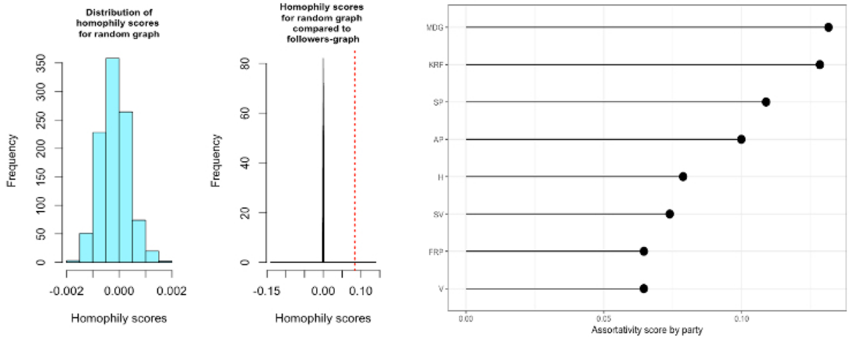
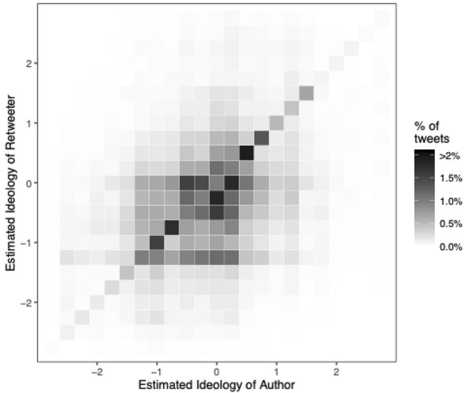
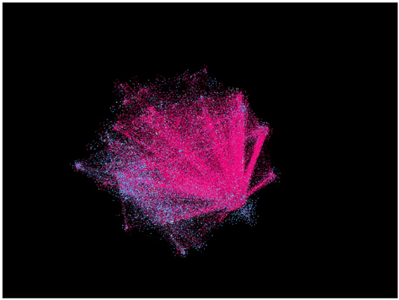
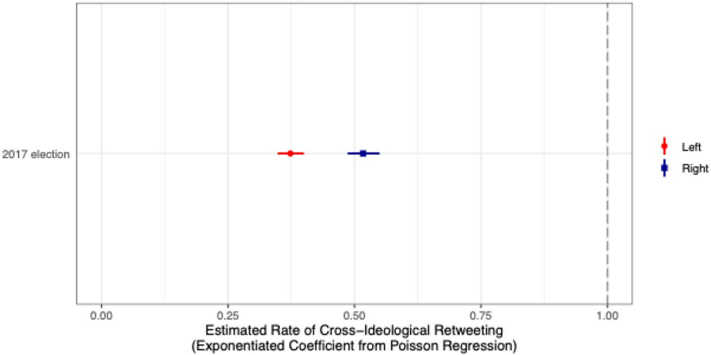
Ideological homophily on social media has been receiving increased scholarly interest, as it is associated with the formation of filter bubbles, echo chambers, and increased ideological polarization. And yet, no linkage necessarily exists between ideological homophily, echo chambers, and polarization. Despite political interactions on social media taking place to a large extent between like-minded individuals, cross-cutting interactions are also frequent. Using Twitter data, we investigated the extent to which ideological homophily, echo chambers, and polarization occur together and characterize the network of political Twitter users during the 2017 election in Norway. Despite the presence of some degree of ideological homophily, we did not find evidence of echo chambers in the Norwegian political Twittersphere during the 2017 election. And yet, the retweet network is characterized by a significant degree of polarization across ideological blocs. Our findings support the thesis according to which polarization on social media may have drivers other than the technological deterministic effect of social media affordances enhancing the formation of online echo chambers.
Overview
The claims and statistics of this paper haven’t been checked yet.
Run the check — free, no account needed. It reads the open-access text and checks the sources it cites.
Integrity signals
Registry
Cites
Statistics
Figures
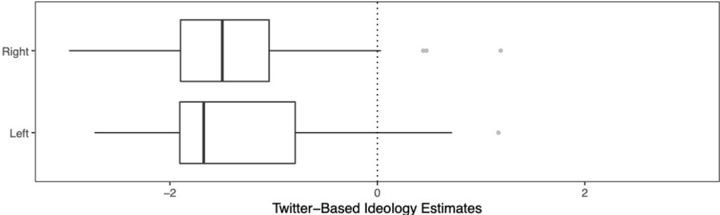
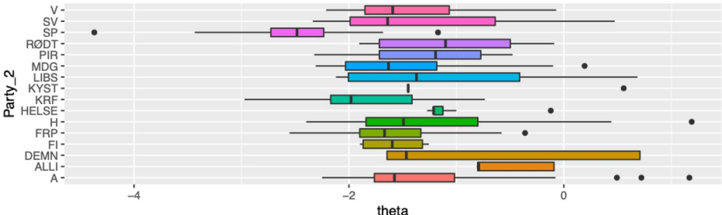
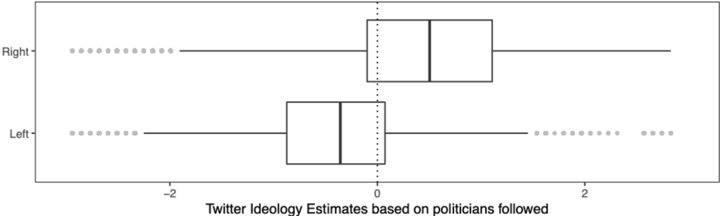
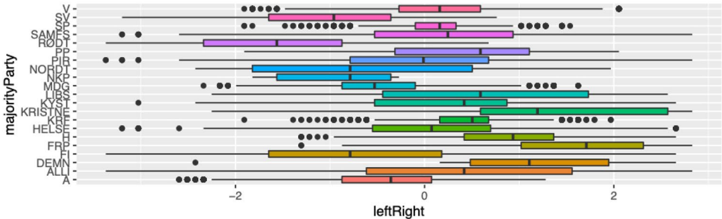

Verification
Claims the paper makes
The claims and statistics of this paper haven’t been checked yet.
Run the check — free, no account needed. It reads the open-access text and checks the sources it cites.
Claims other papers make about this one
Each is checked against this paper’s own text: does it say what the citing paper says it does?
The cited source says what the claim attributes to it.
In the citing paper
“Network-Level Homophily: Measures the overall homophily of a network to understand the systemic tendencies for like-minded clustering [99,117].”
From A systematic review of echo chamber research: comparative analysis of conceptualizations, operationalizations, and varying outcomes (2025) · cites this paper as [117]
Self-check
Percentages, sums and reported differences re-computed from the paper’s own numbers.
The self-check needs the paper’s full text.
Citations
Cites
Birds of a Feather: Homophily in Social Networks
McPherson, M., Smith-Lovin, L., & Cook, J. M. (2001) · Annual Review of Sociology · doi:10.1146/annurev.soc.27.1.415 · Cited by 18,567
Finding community structure in very large networks
Clauset, A., Newman, M. E. J., & Moore, C. (2004) · Physical Review E · doi:10.1103/physreve.70.066111 · Cited by 7,390
Assortative Mixing in Networks
Newman, M. E. J. (2002) · Physical Review Letters · doi:10.1103/physrevlett.89.208701 · Cited by 5,034
The Spread of Obesity in a Large Social Network over 32 Years
Christakis, N. A., & Fowler, J. H. (2007) · New England Journal of Medicine · doi:10.1056/nejmsa066082 · Cited by 5,007
Newman, M. (2002) · Physical review. E, Statistical, nonlinear, and soft matter physics · doi:10.1103/physreve.67.026126 · Cited by 3,130
Jacomy, M., Venturini, T., Heymann, S., & Bastian, M. (2014) · PLoS ONE · doi:10.1371/journal.pone.0098679 · Cited by 2,909
The spread of behavior in an online social network experiment
Centola, D. (2010) · Science · doi:10.1126/science.1185231 · Cited by 2,692
The political blogosphere and the 2004 U.S. election: divided they blog
Adamic, L. A., & Glance, N. (2005) · Proceedings of the 3rd international workshop on Link discovery · doi:10.1145/1134271.1134277 · Cited by 2,619
A 61-million-person experiment in social influence and political mobilization
Bond, R. M., Fariss, C. J., Jones, J. J., Kramer, A. D. I., Marlow, C., Settle, J. E., & Fowler, J. H. (2012) · Nature · doi:10.1038/nature11421 · Cited by 2,575
The collective dynamics of smoking in a large social network
Christakis, N. A., & Fowler, J. H. (2008) · New England Journal of Medicine · doi:10.1056/nejmsa0706154 · Cited by 2,390
Fowler, J. H., & Christakis, N. A. (2008) · BMJ · doi:10.1136/bmj.a2338 · Cited by 1,990
FILTER BUBBLE: Wie wir im Internet entmündigt werden
Pariser, E. (2012) · doi:10.3139/9783446431164 · Cited by 1,849
What Drives Media Slant? Evidence From U.S. Daily Newspapers
Gentzkow, M. A., & Shapiro, J. M. (2010) · Econometrica · doi:10.3982/ecta7195 · Cited by 1,559
Tweeting From Left to Right: Is Online Political Communication More Than an Echo Chamber?
Barberá, P., Jost, J. T., Nagler, J., Tucker, J. A., & Bonneau, R. (2015) · Psychological Science · doi:10.1177/0956797615594620 · Cited by 1,472
Polarization and Partisan Selective Exposure
Stroud, N. J. (2010) · Journal of Communication · doi:10.1111/j.1460-2466.2010.01497.x · Cited by 1,346
The Consequences of Cross-Cutting Networks for Political Participation
Mutz, D. C. (2002) · American Journal of Political Science · doi:10.2307/3088437 · Cited by 1,265 · cited 1×
“However, network diversity and ideological heterogeneity have been demonstrated to be associated with higher levels of political tolerance (Mutz 2002).”
Political Polarization on Twitter
Conover, M., Ratkiewicz, J., Francisco, M., Goncalves, B., Flammini, A., & Menczer, F. (2011) · Zenodo · doi:10.5281/zenodo.4589064 · Cited by 1,254
Colleoni, E., Rozza, A., & Arvidsson, A. (2014) · Journal of Communication · doi:10.1111/jcom.12084 · Cited by 1,151
The echo chamber is overstated: the moderating effect of political interest and diverse media
Dubois, E., & Blank, G. (2018) · Information, Communication & Society · doi:10.1080/1369118x.2018.1428656 · Cited by 1,055
Echo chambers online?: Politically motivated selective exposure among Internet news users
Garrett, R. K. (2009) · Journal of Computer-Mediated Communication · doi:10.1111/j.1083-6101.2009.01440.x · Cited by 1,040
Birds of the Same Feather Tweet Together: Bayesian Ideal Point Estimation Using Twitter Data
Barberá, P. (2015) · Political Analysis · doi:10.1093/pan/mpu011 · Cited by 982 · cited 4×
“Here, we proceed with the endorsement approach and estimate ideology using both Barberá (2015) and Halber-stam and Knight’s (2014) methods, enabling us to validate estimates on the set of political actors for whom we know the party to which they belong for the results with the first method.”
InfluentialA Comparative Analysis of Community Detection Algorithms on Artificial Networks
Yang, Z., Algesheimer, R., & Tessone, C. J. (2016) · Scientific Reports · doi:10.1038/srep30750 · Cited by 835
Politically Motivated Reinforcement Seeking: Reframing the Selective Exposure Debate
Garrett, R. K. (2009) · Journal of Communication · doi:10.1111/j.1460-2466.2009.01452.x · Cited by 714
Network analysis reveals open forums and echo chambers in social media discussions of climate change
Williams, H. T. P., McMurray, J. R., Kurz, T., & Hugo Lambert, F. (2015) · Global Environmental Change · doi:10.1016/j.gloenvcha.2015.03.006 · Cited by 631
Political Polarization on Twitter
Conover, M., Ratkiewicz, J., Francisco, M., Goncalves, B., Menczer, F., & Flammini, A. (2021) · Proceedings of the International AAAI Conference on Web and Social Media · doi:10.1609/icwsm.v5i1.14126 · Cited by 626 · cited 3×
“…into like-minded subgroups with little linkage between each other (Adamic and Glance 2005; Aragón et al. 2013; Barbera 2015; Colleoni et al. 2014; Conover et al. 2011, 2012; Feller et al. 2021; Gaines and Mondak 2009; Garcia et al. 2015; Gruzd and Roy 2014; Hal-berstam and Knight 2014; Hargittai…”
Dynamic debates: an analysis of group polarization over time on Twitter
Yardi, S., & Boyd, D. (2010) · Bulletin of Science, Technology & Society · doi:10.1177/0270467610380011 · Cited by 625
Wojcieszak, M., & Mutz, D. C. (2009) · Journal of Communication · doi:10.1111/j.1460-2466.2008.01403.x · Cited by 623
Himelboim, I., McCreery, S., & Smith, M. A. (2013) · Journal of Computer-Mediated Communication · doi:10.1111/jcc4.12001 · Cited by 553
A Machine Learning Approach to Twitter User Classification
Marco Pennacchiotti, B., & Popescu, A.-M. (2021) · Proceedings of the International AAAI Conference on Web and Social Media · doi:10.1609/icwsm.v5i1.14139 · Cited by 548
Social Media, Network Heterogeneity, and Opinion Polarization
Lee, J. K., Choi, J., Kim, C., & Kim, Y. (2014) · Journal of Communication · doi:10.1111/jcom.12077 · Cited by 493
Brundidge, J. (2010) · Journal of Communication · doi:10.1111/j.1460-2466.2010.01509.x · Cited by 471
The Motivated Processing of Political Arguments
Taber, C. S., Cann, D. M., & Kucsova, S. (2009) · Political Behavior · doi:10.1007/s11109-008-9075-8 · Cited by 465
Halberstam, Y., & Knight, B. G. (2016) · Journal of Public Economics · doi:10.1016/j.jpubeco.2016.08.011 · Cited by 417
Quattrociocchi, W., Scala, A., & Sunstein, C. R. (2016) · SSRN Electronic Journal · doi:10.2139/ssrn.2795110 · Cited by 389 · cited 1×
“…2013; Barbera 2015; Colleoni et al. 2014; Conover et al. 2011, 2012; Feller et al. 2021; Gaines and Mondak 2009; Garcia et al. 2015; Gruzd and Roy 2014; Hal-berstam and Knight 2014; Hargittai et al. 2008; Himelboim et al. 2013; Lawrence et al. 2010; Quattrociocchi et al. 2016; Yardi and Boyd 2010).”
Social Media, Echo Chambers, and Political Polarization
Barberá, P. (2020) · Social Media and Democracy · doi:10.1017/9781108890960.004 · Cited by 373
Lawrence, E., Sides, J., & Farrell, H. (2010) · Perspectives on Politics · doi:10.1017/s1537592709992714 · Cited by 352
Nunn, C. Z., Crockett, H. J., & Williams, J. A. (1978) · Jossey-Bass Publishers eBooks · Cited by 328
Sunstein, C. (2018) · Princeton University Press eBooks · doi:10.1515/9781400890521 · Cited by 289
(2012) · Cited by 289
Democrats, republicans and starbucks afficionados
Marco Pennacchiotti, B., & Popescu, A.-M. (2011) · ACM SIGKDD Conference on Knowledge Discovery and Data Mining (KDD) · doi:10.1145/2020408.2020477 · Cited by 282
Investigating Political Polarization on Twitter: A Canadian Perspective
Gruzd, A., & Roy, J. (2014) · Policy & Internet · doi:10.1002/1944-2866.poi354 · Cited by 280
Echo Chambers on Social Media: A Systematic Review of the Literature
Ludovic Terren, L. T., & Rosa Borge-Bravo, R. B.-B. (2021) · Review of Communication Research · doi:10.12840/issn.2255-4165.028 · Cited by 272
Cross-ideological discussions among conservative and liberal bloggers
Hargittai, E., Gallo, J., & Kane, M. (2007) · Public Choice · doi:10.1007/s11127-007-9201-x · Cited by 246
Partisan asymmetries in online political activity
Conover, M. D., Gonçalves, B., Flammini, A., & Menczer, F. (2012) · EPJ Data Science · doi:10.1140/epjds6 · Cited by 234
Bond, R. M., & Messing, S. (2015) · American Political Science Review · doi:10.1017/s0003055414000525 · Cited by 211
Choosing your network: Social preferences in an online health community
Centola, D. M., & van de Rijt, A. (2014) · Social Science & Medicine · doi:10.1016/j.socscimed.2014.05.019 · Cited by 191
Vaccari, C., Valeriani, A., Barberá, P., Jost, J. T., Nagler, J., & Tucker, J. A. (2016) · Social Media + Society · doi:10.1177/2056305116664221 · Cited by 188
Automatic abstracting and indexing—survey and recommendations
Edmundson, H. P., & Wyllys, R. E. (1961) · Communications of the ACM · doi:10.1145/366532.366545 · Cited by 163
Echo chamber and trench warfare dynamics in online debates
Karlsen, R., Steen-Johnsen, K., Wollebæk, D., & Enjolras, B. (2017) · European Journal of Communication · doi:10.1177/0267323117695734 · Cited by 154
Self-citationAragón, P., Kappler, K. E., Kaltenbrunner, A., Laniado, D., & Volkovich, Y. (2013) · Policy & Internet · doi:10.1002/1944-2866.poi327 · Cited by 123
Ideological and Temporal Components of Network Polarization in Online Political Participatory Media
García, D., Abisheva, A., Schweighofer, S., Serdült, U., & Schweitzer, F. (2015) · Policy & Internet · doi:10.1002/poi3.82 · Cited by 91
Typing Together? Clustering of Ideological Types in Online Social Networks
Gaines, B. J., & Mondak, J. J. (2009) · Journal of Information Technology & Politics · doi:10.1080/19331680903031531 · Cited by 77
The Civic Web: Online Politics and Democratic Values
Bimber, B. (2003) · Political Science Quarterly · doi:10.1002/j.1538-165x.2003.tb01255.x · Cited by 73
Divided They Tweet: The Network Structure of Political Microbloggers and Discussion Topics
Feller, A., Kuhnert, M., Sprenger, T. O., & Welpe, I. M. (2021) · Proceedings of the International AAAI Conference on Web and Social Media · doi:10.1609/icwsm.v5i1.14150 · Cited by 61
Political Homophily in a Large-Scale Online Communication Network
Bond, R. M., & Sweitzer, M. D. (2018) · Communication Research · doi:10.1177/0093650218813655 · Cited by 50
Halberstam, Y., & Knight, B. G. (2014) · National Bureau of Economic Research · doi:10.3386/w20681 · Cited by 32
Stroud, N. J. (2014) · Oxford University Press eBooks · doi:10.1093/oxfordhb/9780199793471.013.009 · Cited by 26
Measuring squid fishery governance efficacy: A social-ecological system analysis
Aguilera, S. E. (2018) · International Journal of the Commons · doi:10.18352/ijc.821 · Cited by 24
Bursting the filter bubble: the mediating effect of discussion frequency on network heterogeneity
Strauss, N., Alonso-Muñoz, L., & de Zúñiga, H. G. (2020) · Online information review (Print) · doi:10.1108/oir-11-2019-0345 · Cited by 23
Facts and Where to Find Them: Empirical Research on Internet Platforms and Content Moderation
Keller, D., & Leerssen, P. (2020) · Data Archiving and Networked Services (DANS) · doi:10.1017/9781108890960
Research works printed but not linked: 5
- Huber G, Malhotra N (2013) Dimensions of political homophily: Isolating choice homophily along political characteristics. Paper presented at the American Political Science Association annual meeting, New Orleans, LA
- Lijphart A (1999) Patterns of democracy. Government forms and performances in thirty-six countries. Yale University Press, New Haven
- Nunn CZ, Crockett AJ, Williams AJ (1978) Tolerance for non-conformity. Jossey-Bass Publishers
- Pariser E (2011) The Filter Bubble. Penguin Books
- Sunstein C (2001) Republic. com. princeton. Princeton University Press, NJ
Cited by
Sorted by citations
Hartmann, D., Wang, S. M., Pohlmann, L., & Berendt, B. (2025) · Journal of Computational Social Science · doi:10.1007/s42001-025-00381-z · Cited by 59
Li, H. (2024) · Wireless Networks · doi:10.1007/s11276-024-03772-8 · Cited by 55
Larsson, A. O., Tønnesen, H., Magin, M., & Skogerbø, E. (2024) · New Media & Society · doi:10.1177/14614448241229156 · Cited by 28
Social Media Ethics: Balancing Transparency, AI Marketing, and Misinformation
Skandali, D. (2025) · Encyclopedia · doi:10.3390/encyclopedia5030086 · Cited by 8
A systematic review on social media echo chambers and political persuasion
Latupeirissa, J. J. P., & Cistadewi, N. M. W. (2025) · Jurnal Studi Komunikasi (Indonesian Journal of Communications Studies) · doi:10.25139/jsk.v9i2.10041 · Cited by 5
Metadata
- Authors
- Enjolras, B., & Salway, A.
- Affiliations
- Institute for Social Research (NO)
- University of Sussex (GB)
- Corresponding author
- Enjolras, Bernard
- Venue
- Social Network Analysis and Mining
- Published
- 2022-12-23
- Volume
- 13
- Issue
- 1
- ISSN
- 1869-5450 (ISSN-L)
- 1869-5469
- OpenAlex
- W4312181503
- Cited by
- 22
- References
- 62
- Citations by year
- 2026: 5 · 2025: 7 · 2024: 3 · 2023: 7
- FWCI
- 5.64
- Type
- journal article
- Language
- en
- Open access
- hybrid
- doi.org
- Locations
- Social Network Analysis and Mining (publishedVersion, cc-by)
- Research Square (acceptedVersion, cc-by)
- NORA - Norwegian Open Research Archives (submittedVersion, other-oa)
- Funders
- Norges Forskningsråd (NFR: 281194)
- Topics
- Social Sciences › Communication › Social Media and Politics
- Social Sciences › Sociology and Political Science › Misinformation and Its Impacts
- Social Sciences › Sociology and Political Science › Media Influence and Politics
- Keywords
- political polarization, echo chambers, filter bubbles, retweet networks, social media affordances, online political discourse
About these checks
Registry, retraction, Cites and statistics results are computed, not judged, with one exception: a printed reference that no index lists is read once by a model before it counts as a citation error. Claims are extracted by a model and kept only when their quote appears verbatim in the text; each cited source is then checked, with a model’s help, for whether it says what the claim relies on. Those verdicts can be wrong — read the claim’s quote and the cited source before relying on one.
Statistics and arithmetic are recomputed, not judged.
Confidence bands are shown only for fields calibrated on our annotated test set. None is calibrated yet, so no band is shown.
What counts as a claim ›How we measure confidence ›How we check this ›
Are you an author, or do you see a problem with this page? Request a review
