

Natural Colorants: Historical, Processing and Sustainable Prospects
Open accessThe DOI matches its Crossref record; 122 of the 131 references it cites were found in a registry or an index.
Abstract
With the public's mature demand in recent times pressurized the textile industry for use of natural colorants, without any harmful effects on environment and aquatic ecosystem, and with more developed functionalities simultaneously. Advanced developments for the natural bio-resources and their sustainable use for multifunctional clothing are gaining pace now. Present review highlights historical overview of natural colorants, classification and predominantly processing of colorants from sources, application on textiles surfaces with the functionalities provided by them. Chemistry of natural colorants on textiles also discussed with relevance to adsorption isotherms and kinetic models for dyeing of textiles.
Overview
The claims and statistics of this paper haven’t been checked yet.
Free: it reads the open-access text and checks the first 5 claims that cite a source we can check. Create a free account to check every claim.
Integrity signals
Registry
Cites
Statistics
Figures
Verification
Claims the paper makes
The claims and statistics of this paper haven’t been checked yet.
Free: it reads the open-access text and checks the first 5 claims that cite a source we can check. Create a free account to check every claim.
Claims other papers make about this one
Each is checked against this paper’s own text: does it say what the citing paper says it does?
The source backs part of the claim, not all of it — or backs it for a different population, condition or comparison.
In the citing paper
“Quinone dyes have been used for various applications, such as histological staining, rust prevention on metal surfaces, and increasing the conversion efficiency of solar cells, and they have found use as sensors, pH indicators, pigments, inks and dyes for leather, wood, medicine, food and textiles [5,64,65,190,191].”
From Natural Quinone Dyes: A Review on Structure, Extraction Techniques, Analysis and Application Potential (2021) · cites this paper as [5]
Experimental — accuracy not yet measured
Self-check
Percentages, sums and reported differences re-computed from the paper’s own numbers.
The self-check needs the paper’s full text.
Citations
Cites
Physical chemistry of surfaces
(1998) · Choice Reviews Online · doi:10.5860/choice.35-4499 · Cited by 11,648
Insights into the modeling of adsorption isotherm systems
Foo, K. Y., & Hameed, B. H. (2010) · Chemical Engineering Journal · doi:10.1016/j.cej.2009.09.013 · Cited by 8,479
Chemistry and biochemistry of plant pigments
Goodwin, T. W. (1976) · Medical Entomology and Zoology · Cited by 3,081
Physical chemistry of surfaces
Taylor, P. (1991) · Colloids and Surfaces · doi:10.1016/0166-6622(91)80262-m · Cited by 2,811 · cited 1×
“Once a layer occupied with molecules, adsorption process saturates and the graphically a plateau obtained [106].”
BackgroundRedlich, O., & Peterson, D. L. (1959) · The Journal of Physical Chemistry · doi:10.1021/j150576a611 · Cited by 2,607
Kinetic Models for the Sorption of Dye from Aqueous Solution by Wood
Ho, Y. S., & Mckay, G. (1998) · Process Safety and Environmental Protection · doi:10.1205/095758298529326 · Cited by 1,656
Extraction, Isolation And Characterization Of Bioactive Compounds From Plants’ Extracts
Sasidharan, S., Chen, Y., Saravanan, D., Sundram, K., & Latha, L. (2010) · African Journal of Traditional, Complementary and Alternative Medicines · doi:10.4314/ajtcam.v8i1.60483 · Cited by 1,456
Techniques of flavonoid identification.
Markham, K. R. (1982) · Academic Press eBooks · Cited by 1,307
Techniques of flavonoid identification:
Wollenweber, E. (1983) · Phytochemistry · doi:10.1016/0031-9422(83)80259-3 · Cited by 1,172
Adsorption isotherm models for basic dye adsorption by peat in single and binary component systems
Allen, S. J., Mckay, G., & Porter, J. F. (2004) · Journal of Colloid and Interface Science · doi:10.1016/j.jcis.2004.08.078 · Cited by 1,051
Research works printed but not linked: 33
- Khan MA Khan M Srivastava PK Mohammad F Colourage. 2005 52 12 53 60
- Yusuf M Mohammad F Shabbir M Khan MA Text. Cloth. Sust. 2016 2 1 1 9
- Kulkarni SS Gokhale AV Bodake UM Pathade GR Univ. J. Environ. Res. Technol. 2011 1 2 135 139
- Swamy VN Gowda KN Sudhakar R Indian J. Trad. Knowl. 2016 15 2 278 284
- Crowfoot CM Riefstahl E Patterned Textiles in Pharaonic Egypt 1944 New York Brooklyn Museum, Brooklyn Institute of Arts and Sciences 382 455
- T.C. Golyon, Le lin et sa teinture en Egypte des procedes ancestraux aux pratiques importee. Aspects del’artisanat du textile dans le monde Mediterraneen, VII Siecle av. (J.C.a l’Epoque Recente 1996) pp. 13–25
- Redford DB The Oxford Encyclopaedia of Ancient Egypt 2001 Cairo The American University in Cairo Press
- Van PM Hooft T Raven MJ Van-Rooij EHC Vogelsang-Eastwood GM Pharaonic and Early Medieval Egyptian Textiles 1994 Leiden RIJKS Museum van Oudheden
- Alam MM Rahman ML Haque MZ Bangladesh J. Scientific Ind. Res. 2007 42 2 217 222
- Vankar PS Natural Dyes for Industrial Applications 2007 New Delhi National Institute of Industrial Research
- Gulrajani ML Indian J. Fibre Text. Res. 2001 26 1/2 191 201
- Naqvi HK Urban Centres and Industries in Upper India 1968 Delhi Asia Publishing House 12
- M.L. Gulrajani, D. Gupta (eds.), Natural Dyes and Their Application to Textiles (IIT New Delhi, New Delhi, 1992) pp. 19–45
- M.L. Gulrajani, D. Gupta (eds.), Natural Dyes and Their Application to Textiles (IIT New Delhi, New Delhi, 1992), pp. 59–79
- Adem ON Turkish J. Chem. 1996 20 3 194 203
- Gulrajani ML Bhaumik S Oppermann W Hardtmann G Indian J. Fibre Text. Res. 2003 8 2 221 226
- Rajendran R Balakumar C Kalaivani J Sivakumar R J. Text. Apparel Technol. Manag. 2011 7 2 1 12
- Bhattacharyya N Natural Dyes for Textiles and Their Eco-friendly Applications 2010 New Delhi IAFL Publications
- Naz S Bhatti IA Adeel S Indian J. Fibre Text. Res. 2011 36 2 132 136
- Lagergren S Zur theorie der Sogenannten Absorption Gelöster Stoffe 1898 Stockholm PA Norstedt & söner
- Yusuf M J. Chem. Pharmaceut. Res. 2016 8 3 571 575
- Ramachandran T Rajendrakumar K Rajendran R IE (I) J-TX. 2004 84 42 47
- Joshi M Wazed AS Purwar R Rajendran S Indian J. Fibre Text. Res. 2009 34 3 295 304
- Çalis A Çelik GY Katircioglu H African J. Biotechnol. 2009 8 2 291 293
- Chen C Chang WY Indian J. Fibre Text. Res. 2007 32 122 125
- Gupta D Bhaumik S Indian J. Fibre Text. Res. 2007 32 254 263
- Gupta D Laha A Indian J. Fibre Text. Res. 2007 32 1 88 92
- N. Rungruangkitkrai, N. Tubtimthai, A. Cholachatpinyo, R. Mongkholrattanasit, UV protection properties of wool fabric dyed with eucalyptus leaf extract by the padding techniques, in RMUTP international conference: textiles and fashion (Bangkok, 2012)
- Shakyawar DB Raja AS Kumar A Pareek PK Indian J. Fibre Text. Res. 2015 40 2 200 202
- Chattopadhyay P Chatterjee S Sen SK African J. Biotechnol. 2008 7 17 2972 2985
- Islam S Am. J. Food Sci. Technol. 2016 4 4 109 114
- Gengatharan A Dykes GA Choo WS LWT-Food Sci. Technol. 2015 64 2 645 649
- Bakowska-Barczak A Pol. J. Food Nut. Sci. 2005 14 55 107 116
Cited by
Items 101–200 of 652
A Valuable Observation of Eco-friendly Natural Dyes for Valuable Utilisation in the Textile industry
Ebrahim, S. A., Mosaad, M., Othman, H. A., & Hassabo, A. G. (2021) · Journal of Textiles Coloration and Polymer Science · doi:10.21608/jtcps.2021.97342.1090 · Cited by 51
Mansour, R., & Ali, H. B. (2019) · Journal of Natural Fibers · doi:10.1080/15440478.2019.1675217 · Cited by 41
“They are used for food coloring (Yusuf et al. 2015), painting (Yusuf, Shabbir, and Mohammad 2017) and textile dyeing (Aggarwal, Kumar, and Bharti 2003; Mansour 2018).”
MethodBioactive component integrated textiles: A promising source of medicine and healthcare
Ghosh, J., Repon, M. R., Pranta, A. D., Rupanty, N. S., Khan, F., & Noor, T. (2025) · Journal of Engineered Fibers and Fabrics · doi:10.1177/15589250241308561 · Cited by 53
Bencheikh, I., Azoulay, K., Mabrouki, J., Hajjaji, S. E., Dahchour, A., Moufti, A., & Dhiba, D. (2020) · Scientific African · doi:10.1016/j.sciaf.2020.e00509 · Cited by 47
Hajı, A., & Vadood, M. (2021) · Fibers and Polymers · doi:10.1007/s12221-021-1161-0 · Cited by 40
A natural yellow colorant from Buddleja officinalis for dyeing hemp fabric
Yan, X., Hong, L., Pei, S., Hamilton, A., Sun, H., Yang, R., Liu, A., & Yang, L. (2021) · Industrial Crops and Products · doi:10.1016/j.indcrop.2021.113968 · Cited by 42
Indigo---the Crop that Created History and then Itself Became History
Prasad, R. (2018) · Revista de Fomento Social · doi:10.16943/ijhs/2018/v53i3/49461 · Cited by 39
“…almost all indigo dye is produced synthetically, although in recent years there is some growing interest and demand for natural dyes (Stevens, 2015; Yusuf et al, 2017), because it is believed that natural indigo has antibacterial, antifungal, deodorizing , skin disease or eczema preventing and…”
BackgroundRecent Developments in Materials Science for the Conservation and Restoration of Historic Artifacts
Doni, M. B., Fierăscu, I., & Fierăscu, R. C. (2024) · Applied Sciences · doi:10.3390/app142311363 · Cited by 43
Kinetics of dyeing natural protein fibers with silver nanoparticles
Tang, B., Yao, Y. D., Wu, C., Chen, X., Zou, F., & Wang, X. (2017) · Dyes and Pigments · doi:10.1016/j.dyepig.2017.09.015 · Cited by 39
Arifeen, W.-U., Rehman, F., Adeel, S., Zuber, M. A., Ahmad, M. N., & Ahmad, T. (2021) · Environmental Science and Pollution Research · doi:10.1007/s11356-021-14277-8 · Cited by 40
Daphedar, A. B., Kakkalameli, S. B., Faniband, B., Bilal, M., Bhargava, R. N., Ferreira, L. F. R., Rahdar, A., Mahadevan, G. D., & Mulla, S. I. (2022) · Environmental Science and Pollution Research · doi:10.1007/s11356-022-21196-9 · Cited by 39
“Naturally occurring dyes are originally originated from living things such as vegetables, plants, trees, lichens, insects, and other different sources found in nature (e.g., alizarin and indigo) (Yusuf et al. 2017).”
Recent Use of Natural Animal Dyes in Various Field
Alashkar, A. A., & Hassabo, A. G. (2021) · Journal of Textiles Coloration and Polymer Science · doi:10.21608/jtcps.2021.79791.1067 · Cited by 38
Simultaneous dyeing and multifunctional finishing of natural fabrics with Hibiscus flowers extract
Rehan, M., Ibrahim, G. E., Mashaly, H., Hasanin, M. S., Rashad, H. G., & Mowafi, S. (2022) · Journal of Cleaner Production · doi:10.1016/j.jclepro.2022.133992 · Cited by 38
Bacterial pigments and their applications
Muhammad, M., Basıt, A., Majeed, M., Shah, A. A., Ullah, I., Mohamed, H. I., Khan, A. R., & Ghanaim, A. M. (2023) · Elsevier eBooks · doi:10.1016/b978-0-323-95251-4.00019-3 · Cited by 37
Bio-based additives for thermoplastics
Paoli, M. D., & Waldman, W. R. (2019) · Polímeros · doi:10.1590/0104-1428.06318 · Cited by 39
“We will not discuss this matter further as the focus of this review is thermoplastics, but we refer the reader to a comprehensive review on this subject[18].”
BackgroundMansour, R., Dhouib, S., & Sakli, F. (2020) · Journal of Natural Fibers · doi:10.1080/15440478.2020.1758280 · Cited by 37
“Ultraviolet radiation (UVR) from the sun causes sunburns, tanning, premature skin aging, and wrinkling, and its overexposure leads to skin cancer (John et al. 2013; Yusuf, Shabbir, and Mohammad 2017).”
BackgroundDeodorizing for fiber and fabric: Adsorption, catalysis, source control and masking
Wang, J., Tang, B., Bai, W., Lu, X., Liu, Y., & Wang, X. (2020) · Advances in Colloid and Interface Science · doi:10.1016/j.cis.2020.102243 · Cited by 37
Menezes, B. D. S., Solidade, L. S., Conceição, A. A., Júnior, M. N. S., Leal, P. L., de Brito, E. S., Canuto, K. M., Mendonça, S., de Siqueira, F. G., & Marques, L. M. (2020) · AMB Express · doi:10.1186/s13568-020-01054-y · Cited by 40
Ferfera‐Harrar, H., Benhalima, T., & Sadi, A. (2021) · Polymer Bulletin · doi:10.1007/s00289-021-03795-7 · Cited by 37
Imani, H., Gharanjig, K., & Ahmadi, Z. (2022) · Industrial Crops and Products · doi:10.1016/j.indcrop.2022.114970 · Cited by 35
Karan, H., Roles, J., Hankamer, B. D., & Ross, I. L. (2023) · Algal Research · doi:10.1016/j.algal.2023.103187 · Cited by 33
Rahman, M. M., Koh, J., & Hong, K. H. (2023) · Journal of Natural Fibers · doi:10.1080/15440478.2023.2290856 · Cited by 33
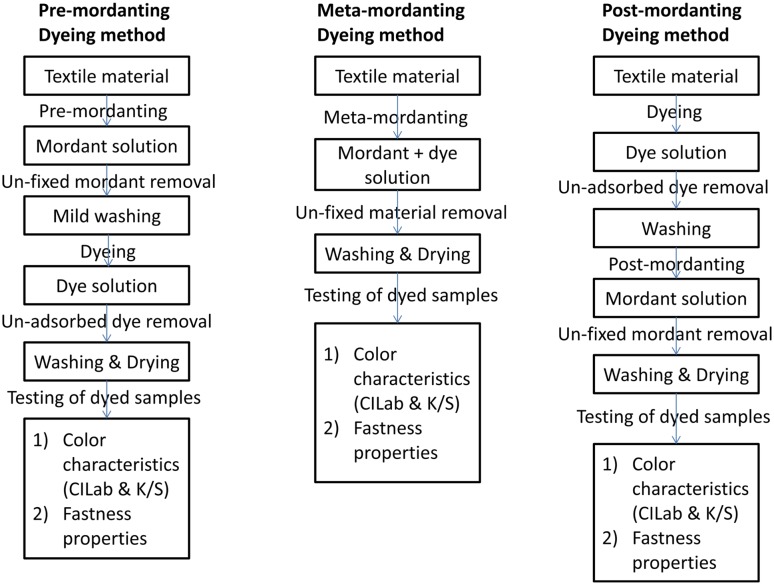
“They can be applied before, during, or after dyeing (Yusuf, Shabbir, and Mohammad 2017).”
Mansour, D., Alblawi, E., Alsukaibi, A. K. D., & Shammari, B. A. (2024) · Sustainable Water Resources Management · doi:10.1007/s40899-023-01022-x · Cited by 33
“They are extensively consumed in cosmetic and food industries and their global annual production is about 700,000 tons (Yusuf et al. 2017).”
Understanding the Fastness Issues of Natural Dyes
Islam, T., Islam, K. M. R., Hossain, S., Jalil, M. A., & Bashar, M. M. (2024) · IntechOpen eBooks · doi:10.5772/intechopen.1005363 · Cited by 40
Silva, T. L., Cazetta, A. L., Zhang, T., Koh, K., Silva, R., Asefa, T., & Almeida, V. C. (2019) · ACS Applied Energy Materials · doi:10.1021/acsaem.9b00145 · Cited by 33
Trends and Challenges in the Industrialization of Natural Colorants
Neves, M. I. L., Silva, E. K., & Meireles, M. A. A. (2019) · Food and public health · doi:10.5923/j.fph.20190902.01 · Cited by 39
Aty, A. A. A. E., El‐Bassyouni, G. T., Abdel-Zaher, N. A., & Guirguis, O. W. (2018) · Fibers and Polymers · doi:10.1007/s12221-018-8239-3 · Cited by 36
El-Zaher, N. A., El‐Bassyouni, G. T., Esawy, M. A., & Guirguis, O. W. (2019) · Journal of Natural Fibers · doi:10.1080/15440478.2019.1689884 · Cited by 32
“For dyeing any textile substrate, extraction of color component from natural sources is vital to assess the dyeing characteristics and to maximize the color yield (Yusuf, Shabbir, and Mohammad 2017).”
BackgroundChen, W., Ye, K., Zhu, X., Zhang, H., Si, R., Chen, J., Chen, Z., Song, K., Yu, Z., & Han, B. (2021) · Marine Drugs · doi:10.3390/md20010016 · Cited by 33
Shabbir, M., Rather, L. J., Azam, M., Haque, Q. M. R., Khan, M. A., & Mohammad, F. (2018) · Journal of Natural Fibers · doi:10.1080/15440478.2018.1500336 · Cited by 32
“Natural dyes obtained from natural resources are reported to be environmental-friendly and biodegradable (Rather et al. 2016a; Shahid et al. 2013; Yusuf, Shabbir, and Mohammad 2017) in nature which favors the attention of modern people of scientific approach.”
BackgroundSelf-citationAdeel, S., Salman, M., Usama, M., Rehman, F., Ahmad, T., & Amin, N. (2021) · Journal of Natural Fibers · doi:10.1080/15440478.2021.1904480 · Cited by 38
Sengupta, S., & Bhowal, J. (2022) · Environmental Science and Pollution Research · doi:10.1007/s11356-022-24241-9 · Cited by 31
“The toxic effects of artificial textile colorants have forced to consider natural sources as an alternative that has a less harmful effect on the environment (Yusuf et al. 2017).”
BackgroundZhang, L., Wang, L., Cunningham, A. B., Shi, Y., & Wang, Y. (2019) · Journal of Ethnobiology and Ethnomedicine · doi:10.1186/s13002-019-0314-3 · Cited by 30
“Nowadays, synthetic indigo still dominates denim dyeing with the consumption of several thousand tons annually [7].”
BackgroundSchmitt, J., & Handy, S. T. (2019) · Beilstein Journal of Organic Chemistry · doi:10.3762/bjoc.15.171 · Cited by 29
Mamun, M. A. A., Hajı, A., Mahmud, M. H., Repon, M. R., & Islam, M. T. (2023) · Coatings · doi:10.3390/coatings13020413 · Cited by 29
The potentials of plant-based colorants for sustainable textile dyeing industry
Nambela, L. (2023) · Research Journal of Textile and Apparel · doi:10.1108/rjta-04-2023-0043 · Cited by 30
Maulik, S. R., Chakraborty, L., & Pandit, P. (2021) · Fibers and Polymers · doi:10.1007/s12221-021-0092-0 · Cited by 28
Ullah, R., Naeemullah, & Tüzen, M. (2023) · Journal of Molecular Structure · doi:10.1016/j.molstruc.2023.135509 · Cited by 28
Noby, N., Khattab, S. N., & Soliman, N. A.-M. (2023) · Bioresources and Bioprocessing · doi:10.1186/s40643-023-00662-3 · Cited by 33
“In response to this, an upsurge in the demand for natural dyes has been noticed in the past few years to replace synthetic ones (Yusuf et al. 2017).”
BackgroundShabbir, M., Rather, L. J., Bukhari, M. N., Islam, S. U., Khan, M. A., & Mohammad, F. (2018) · Journal of Natural Fibers · doi:10.1080/15440478.2018.1441085 · Cited by 29
Self-citationSteberl, K., Hartung, J., Münz, S., & Graeff‐Hönninger, S. (2020) · Agronomy · doi:10.3390/agronomy10050664 · Cited by 27
Production of coffee-dyed bacterial cellulose as a bio-leather and using it as a dye adsorbent
Kim, H., & Kim, H. R. (2022) · PLoS ONE · doi:10.1371/journal.pone.0265743 · Cited by 27
“Natural dyes are non-toxic, non-carcinogenic, biodegradable, and do not cause environmental pollution as they do not generate toxic wastewater [13].”
BackgroundAhmad, N., Vunduk, J., Klaus, A. S., Dahlan, N. Y., Ghosh, S. B., Muhammad‐Sukki, F., Dufossé, L., Bani, N. A., & Wan‐Mohtar, W. A. A. Q. I. (2022) · Sustainability · doi:10.3390/su142113894 · Cited by 31
“In addition to pigments extracted from numerous plants, mushrooms were also a common material for dyeing fabrics due to the wide range of vivid colours [30].”
BackgroundMijas, G., Josa, M., Cayuela, D., & Riba‐Moliner, M. (2022) · Polymers · doi:10.3390/polym14214508 · Cited by 33
Cardoso, S. H., de Oliveira, C. R., Guimarães, A. S., do Nascimento, J., Carmo, J. D. O. D. S., Ferro, J. N. D. S., Correia, A. C. D. C., & Barreto, E. (2018) · Chemico-Biological Interactions · doi:10.1016/j.cbi.2018.06.007 · Cited by 27
Andriamanantena, M., Danthu, P., Cardon, D., Razafimbelo, F. F., Ramaroson‐Raonizafinimanana, B., Razafintsalama, V. E., Rakotonandrasana, S. R., Ethève, A., Petit, T., & Caro, Y. (2019) · Chemistry & Biodiversity · doi:10.1002/cbdv.201900442 · Cited by 29
“market as an alternative to potentially hazardous synthetic colorants.([4,5]) Natural colorants can provide renewable and sustainable bioresource products with minimal environmental impact.”
BackgroundLeather Dyeing by Plant-Derived Colorants in the Presence of Natural Additives
Brudzyńska, P., Sionkowska, A., & Grisel, M. (2022) · Materials · doi:10.3390/ma15093326 · Cited by 27
“Other advanced and sustainable dyeing systems based on radiation treatment include UV, gamma radiation, and plasma [25].”
BackgroundResource efficiency and environmental impact of juglone in Pericarpium Juglandis: A review
Liu, S., Cheng, S., Jia, J., & Cui, J. (2022) · Frontiers in Environmental Science · doi:10.3389/fenvs.2022.999059 · Cited by 36
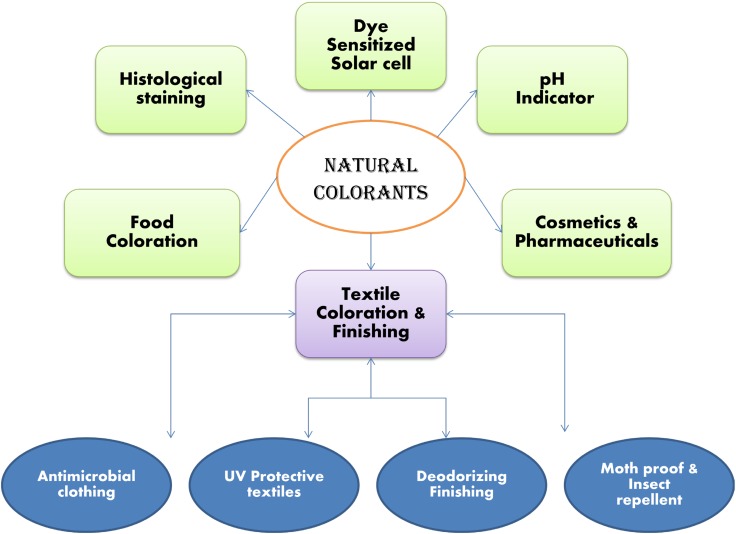
“Natural dyes were used for coloration of various textile industry, as well as cosmetic industry, pharmaceutical industry, food industry, etc. (Yusuf et al., 2017).”
BackgroundDyeing properties of natural Gardenia on the lyocell fabric pretreated with tannic acid
Ke, G., Mulla, M. S., Peng, F., & Chen, S. (2022) · Cellulose · doi:10.1007/s10570-022-04896-w · Cited by 26
Raji, Y., Nadi, A., Chemchame, Y., Mechnou, I., Bouari, A. E., Cherkaοui, O., & Zyade, S. (2023) · Fibers and Polymers · doi:10.1007/s12221-023-00019-9 · Cited by 26
Investigation of Flower Yield and Quality in Different Color Safflower Genotypes
Erbaş, S., & Mutlucan, M. (2023) · Agronomy · doi:10.3390/agronomy13040956 · Cited by 26
Advanced Materials and Technologies for Antimicrobial Finishing of Cellulosic Textiles
Ibrahim, N. A., Eid, B. M., & Abdellatif, F. H. H. (2018) · Wiley eBooks · doi:10.1002/9781119407850.ch13 · Cited by 29
Ma, P., Wang, Y., & Fan, K. (2026) · Food Chemistry X · doi:10.1016/j.fochx.2026.103634 · Cited by 37
“Colorimetric pH indicators utilizing anthocyanins leverage reversible color alterations in acidic and alkaline environments to assess spoilage in fish and fresh pork sausage (Yusuf et al., 2017).”
Azoic Deep Dyeing of Silk and UV Protection Using Plant Polyphenols and Diazonium Coupling
Vuthiganond, N., Nakpathom, M., & Mongkholrattanasit, R. (2020) · Fibers and Polymers · doi:10.1007/s12221-020-9057-y · Cited by 25
Islam, M. T., Liman, M. L. R., Roy, M. N., Hossain, M. M., Repon, M. R., & Mamun, M. A. A. (2021) · Journal of the Textile Institute · doi:10.1080/00405000.2021.1892337 · Cited by 26
Senthilkumar, K., Kumar, M. N., Devi, V. C., Saravanan, K., & Easwaramoorthi, S. (2019) · Energy, environment, and sustainability · doi:10.1007/978-981-15-0410-5_1 · Cited by 31
Natural Dye Extraction and Dyeing of Different Fibers: A Review
Bota, S. R., & Indrie, L. (2021) · Wiley eBooks · doi:10.1002/9781119710288.ch4 · Cited by 31
Balbuena, S. Y. G., Chicatto-Gasperín, V., Santacruz‐Juárez, E., Ocaranza‐Sánchez, E., Ramírez‐López, C., García‐Meza, M. G., Tapia-López, L., la Torre, R. R. R.-D., & Robles-López, M. R. (2024) · Applied Food Research · doi:10.1016/j.afres.2024.100388 · Cited by 27
Soutelino, M. E. M., Vieira, G. D. P., Goulart, M. B., Miranda, K. C., da Conceição, R. P., Pimentel, T. C., da Cruz, A. G., & Rocha, R. S. (2024) · Trends in Food Science & Technology · doi:10.1016/j.tifs.2024.104370 · Cited by 29
Annatto-colored Poly(3-hydroxybutyrate): A Comprehensive Study on Photodegradation
Pagnan, C. S., Mottin, A. C., Oréfice, R. L., Ayres, E., & Câmara, J. J. D. (2017) · Journal of Polymers and the Environment · doi:10.1007/s10924-017-1026-1 · Cited by 26
Sustainable Isolation of Natural Dyes from Plant Wastes for Textiles
Adeel, S., Amin, N., Fazal‐ur‐Rehman, Ahmad, T., Batool, F., & Hassan, A. (2020) · Wiley eBooks · doi:10.1002/9781119620532.ch17 · Cited by 28
El-Bassuony, A. A. H., Ibrahim, A. F., & Abdelsalam, H. K. (2025) · Cellulose · doi:10.1007/s10570-025-06700-x · Cited by 23
The Effect of Metal Mordant and Biomordant on Color Strength of Dyed Woolen Yarn with Natural Dyes
Veysian, M., & Nateri, A. S. (2023) · Fibers and Polymers · doi:10.1007/s12221-023-00375-6 · Cited by 23
Eyüpoğlu, Ş., Eyüpoğlu, C., Merdan, N., & Karakuş, O. (2024) · Sustainability · doi:10.3390/su162210129 · Cited by 22
“Some substrates have been investigated for their ability to improve fastness properties [11].”
Conversion of Agro-industrial Wastes into Value-Added Products
Mohamed, H., Shah, A. M., & Song, Y. (2021) · ACS symposium series · doi:10.1021/bk-2021-1392.ch010 · Cited by 22
Do, K. L., Su, M., Mushtaq, A., Ahsan, T., & Zhao, F. W. (2023) · Textile Research Journal · doi:10.1177/00405175231167603 · Cited by 23
“Plant-based dyes impart a wide range of hues and possess immanent functional properties, such as antioxidant, antimicrobial, de-odorizing, insect-repellent, and UV protective activities.(14,15) Natural dyes are easily available and biodegradable, and can be extracted from the flowers, roots, bark, leaves, and fruits o…”
BackgroundPainting the picture of food colouring agents: Near-ubiquitous molecules of everyday life – A review
Pereira, H., Deuchande, T., Fundo, J. F., Leal, T., Pintado, M., & Amaro, A. L. (2023) · Trends in Food Science & Technology · doi:10.1016/j.tifs.2023.104249 · Cited by 23
Klanovicz, N., Camargo, A. F., Stefanski, F. S., Zanivan, J., Scapini, T., Pollon, R., Warken, A. J., Paliga, L. R., Preczeski, K. P., Ribeiro, A. A. G. A., et al. (2019) · Bioprocess and Biosystems Engineering · doi:10.1007/s00449-019-02222-6 · Cited by 22
Engineered nanomaterials: scope in today’s textile industry
Shabbir, M., & Kaushik, M. (2020) · Elsevier eBooks · doi:10.1016/b978-0-12-821381-0.00010-7 · Cited by 22
Self-citationBait, S., Shinde, S. S., Adivarekar, R. V., & Sekar, N. (2020) · Dyes and Pigments · doi:10.1016/j.dyepig.2020.108420 · Cited by 22
Perspectives on Berberine and the Regulation of Gut Microbiota: As an Anti-Inflammatory Agent
Quintero, J., Galvez-Ruiz, J. C., Ibarra, A. A. M., & Leyva‐Peralta, M. A. (2025) · Pharmaceuticals · doi:10.3390/ph18020193 · Cited by 24
“Berberine is Berberine is found in higher concentrations in these plants’ bark, leaves, branches, rhizomes, roots, and stems [3,6,8]. found in higher concentrations in these plants’ bark, leaves, branches, rhizomes, roots, and stems [3,6,8].”
InfluentialSustainable functional finishing for cotton fabrics using chestnut shell extract
Hong, K. H. (2021) · Cellulose · doi:10.1007/s10570-021-04273-z · Cited by 22
Microbe-mediated remediation of dyes: Current status and future challenges
Akansha, K., Kaur, T., Yadav, A., Kour, D., Kumar, A., Singh, S., Mishra, S., Kumar, L., Miglani, K., Singh, K. P., et al. (2022) · Journal of Applied Biology & Biotechnology · doi:10.7324/jabb.2023.113491 · Cited by 24
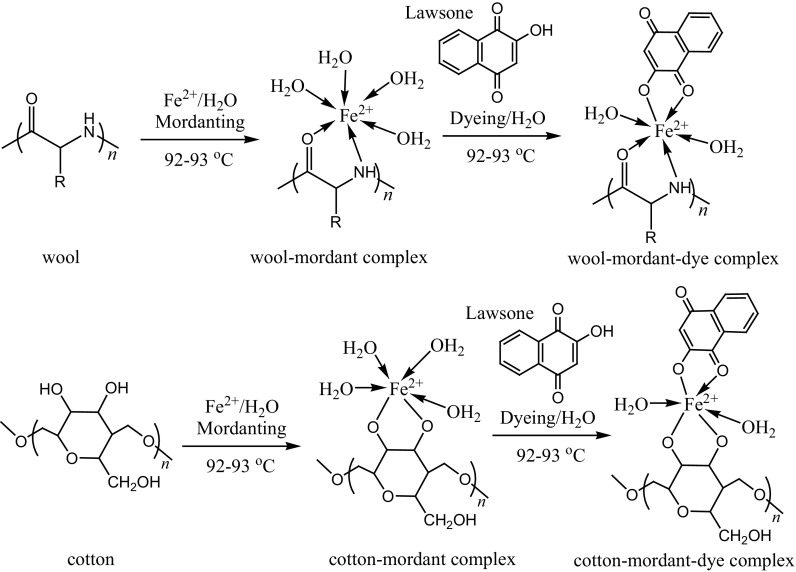
“These metallic mordants after mixing with dye in fiber form an insoluble precipitate, leading to both dye and mordant getting fixed [23].”
BackgroundOlas, B., Urbańska, K., & Bryś, M. (2020) · Food and Chemical Toxicology · doi:10.1016/j.fct.2020.111437 · Cited by 21
Lekhak, U. M. (2023) · Elsevier eBooks · doi:10.1016/b978-0-323-91235-8.00021-8 · Cited by 23
Green extraction of dyes and pigments from natural resources
Islam, M. T., Farhan, M. S., & Mahmud, M. H. (2023) · Elsevier eBooks · doi:10.1016/b978-0-443-15213-9.00002-8 · Cited by 26
Jin, F., Meng, C., Gao, W., Zhang, G., Xu, Z., & Min, J. (2024) · Industrial Crops and Products · doi:10.1016/j.indcrop.2024.118031 · Cited by 20
Recent Approaches and Advancements in Natural Dyes
Das, S., & Maulik, S. R. (2023) · Sustainable textiles · doi:10.1007/978-3-031-47471-2_4 · Cited by 25
Animal Based Natural Dyes: A Short Review
Adeel, S., Rafi, S., Mustaan, M. A., Salman, M., & Ghaffar, A. (2018) · Wiley eBooks · doi:10.1002/9781119407850.ch4 · Cited by 20
Samanta, A. K. (2018) · Wiley eBooks · doi:10.1002/9781119407850.ch11 · Cited by 20
Efficient Extraction of Natural Dyes from Selected Plant Species
Janani, L., Byamukama, R., & Wanyama, P. A. G. (2021) · Chemistry Africa · doi:10.1007/s42250-021-00248-6 · Cited by 20
“Many dye yielding plants are used as medicines in various traditional medicinal therapies [7, 9].”
BackgroundNewer Natural Dyes for Various Textiles
Vankar, P. S., & Shukla, D. (2019) · Elsevier eBooks · doi:10.1016/b978-0-08-102686-1.00001-9 · Cited by 21
Andriamanantena, M., Razafimbelo, F. F., Ramaroson‐Raonizafinimanana, B., Cardon, D., Danthu, P., Lebeau, J., Petit, T., & Caro, Y. (2021) · Journal of Cleaner Production · doi:10.1016/j.jclepro.2021.126979 · Cited by 21
Carminic acid extracted from cochineal insect as photosensitizer for dye‐sensitized solar cells
Koçak, Y., & Yıldız, A. (2021) · International Journal of Energy Research · doi:10.1002/er.6883 · Cited by 19
“Dyes from various natural sources, especially from the animals such as insects, have been drawing attention among naturally available dyes.(14) Of these, the utilization of insect-based dyes has been gaining great popularity to have knowledge of them and to know how one can wield them for the DSSC performance with the…”
BackgroundRotich, V., Wangila, P. F., & Cherutoi, J. K. (2022) · Journal of Chemistry · doi:10.1155/2022/2233414 · Cited by 25
Rotich, V., Wangila, P. F., & Cherutoi, J. K. (2022) · Journal of Analytical Methods in Chemistry · doi:10.1155/2022/2229500 · Cited by 19
“Natural dyes have been the primary color additives for numerous uses over the millennia up to the 19th century [9, 10].”
BackgroundAmorim, L. F. A., Gomes, A. P., & Gouveia, I. C. (2022) · Polymers · doi:10.3390/polym14183869 · Cited by 19
“Thus, natural dyes, from different sources, appear as a promising alternative, due to their biodegradability, non-toxicity, non-carcinogenicity, and their environmentally friendly production [14,15].”
BackgroundLiman, M. L. R., Islam, M. T., Hossain, M. M., Sarker, P., & Repon, M. R. (2021) · Environmental Technology & Innovation · doi:10.1016/j.eti.2021.101621 · Cited by 18
Ion‐in‐Conjugation: A Promising Concept for Multifunctional Organic Semiconductors
Yu, C., He, J., & Lu, J. (2022) · Small · doi:10.1002/smll.202204023 · Cited by 17
Spadaro, D., Tropea, A., Citro, I., Trocino, S., Giuffrida, D., Rigano, F., Morales‐Oyervides, L., Brinkhoff, T., Tiso, T., Dufossé, L., et al. (2024) · Dyes and Pigments · doi:10.1016/j.dyepig.2024.112311 · Cited by 17
Chitosan: Sustainable and Environmental‐Friendly Resource for Textile Industry
Shabbir, M., Rather, L. J., & Mohammad, F. (2017) · Wiley eBooks · doi:10.1002/9781119364849.ch9 · Cited by 20
Self-citationShi, J.-Y., Cai, W.-Q., Luo, X.-T., Su, B., Xiao, J.-W., Zhang, G., Yang, Q.-Q., & Zhang, B. (2023) · Biochemical Engineering Journal · doi:10.1016/j.bej.2023.108992 · Cited by 16
Mesrar, F. E., Tachallait, H., Bougrin, K., & Benhida, R. (2023) · Industrial Crops and Products · doi:10.1016/j.indcrop.2023.117807 · Cited by 17
Jabar, J. M., Alabi, K. A., & Lawal, A. T. (2020) · SN Applied Sciences · doi:10.1007/s42452-020-03653-7 · Cited by 16
The effect of solvent volume ratio and extraction time on the yield of red dye from sappanwood
Septiani, I. E., Kumoro, A. C., & Djaeni, M. (2021) · IOP Conference Series Materials Science and Engineering · doi:10.1088/1757-899x/1053/1/012128 · Cited by 19
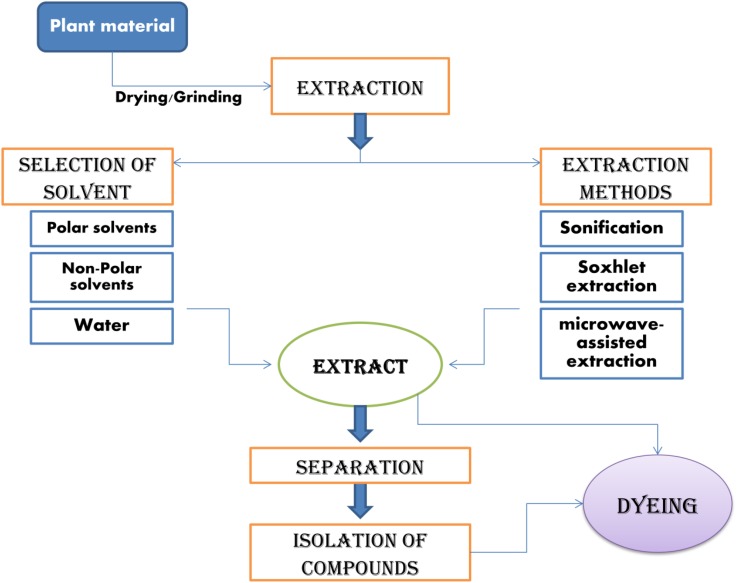
“extraction methods, for instance, ultrasound-assisted extraction, microwave-assisted extraction, supercritical-fluid extraction and pressurized-liquid extraction [6].”
BackgroundInfluentialDo, K. L., Mushtaq, A., Zhao, F. W., & Su, M. (2023) · Coloration Technology · doi:10.1111/cote.12711 · Cited by 16
Rahaman, M. T., Khan, M. S. H., & Mamun, M. A. A. (2025) · Materials Circular Economy · doi:10.1007/s42824-025-00168-7 · Cited by 16
“These have been an essential part of textile manufacturing for millennia in many different cultures (Bender 1947; Yusuf et al. 2017).”
Zschätzsch, M., Steudler, S., Reinhardt, O., Bergmann, P., Ersoy, F., Stange, S., Wagenführ, A., Walther, T., Berger, R. G., & Werner, A. (2021) · Engineering in Life Sciences · doi:10.1002/elsc.202000079 · Cited by 16
“Although natural dyes have considerable ecological advantages over synthetic dyes, their industrial production has remained difficult until today, mainly due to low yields [5].”
BackgroundNatural Coloring Agents for Fibers and Their Medicinal Values: A Review
Rana, R., Dhiman, K., & Ashawat, M. S. (2022) · Journal of Natural Fibers · doi:10.1080/15440478.2022.2068730 · Cited by 16
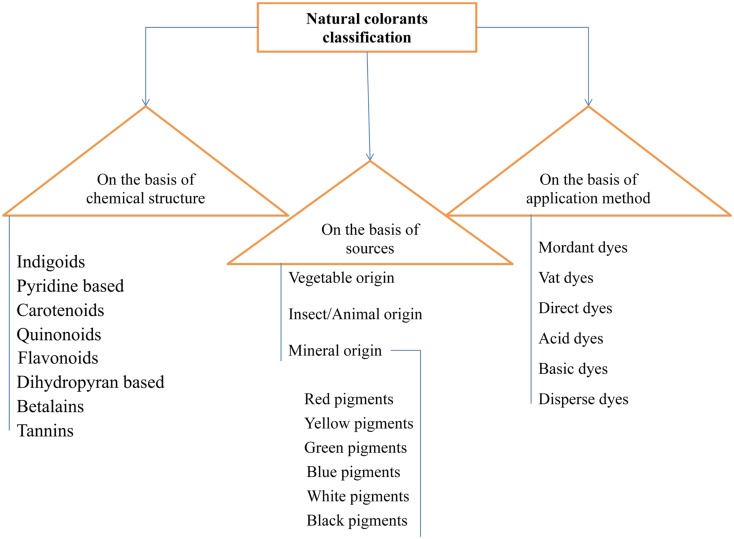
“(2) Based on their chemical structures (Saxena and Raja 2014; Vankar 2000a; Delgado-Vargas and Lopez 2002; Yusuf, Shabbir, and Mohammad 2017):”
BackgroundToprak-Cavdur, T., Uysal, S., & Gisbert-Payá, J. (2022) · Journal of Natural Fibers · doi:10.1080/15440478.2022.2105469 · Cited by 15
“This might have showed that ‘S’ was from the mordant dye class according to the application classification (Yusuf, Shabbir, and Mohammad 2017).”
BackgroundMethodInfluential
Metadata
- Authors
- Yusuf, M., Shabbir, M., & Mohammad, F.
- Affiliations
- Maharshi Dayanand University (IN)
- Jamia Millia Islamia (IN)
- Corresponding author
- Yusuf, Mohd
- Shabbir, Mohd
- Mohammad, Faqeer
- Venue
- Natural Products and Bioprospecting
- Published
- 2017-01-16
- Volume
- 7
- Issue
- 1
- Pages
- 123-145
- ISSN
- 2192-2195 (ISSN-L)
- 2192-2209
- PMC
- PMC5315675
- OpenAlex
- W2572261390
- Semantic Scholar
- 53fbd91d525b2be8b27a16e810911295aed4e3a1
- Cited by
- 597
- References
- 131
- Citations by year
- 2026: 44 · 2025: 82 · 2024: 69 · 2023: 86 · 2022: 78 · 2021: 89 · 2020: 72 · 2019: 47 · 2018: 22 · 2017: 8
- FWCI
- 4.60
- Type
- journal article
- Language
- en
- Open access
- diamond
- doi.org
- Locations
- Natural Products and Bioprospecting (publishedVersion, cc-by)
- PubMed Central (publishedVersion, cc-by)
- PubMed (publishedVersion)
- Topics
- Physical Sciences › Materials Science › Polymers and Plastics › Dyeing and Modifying Textile Fibers
- Health Sciences › Medicine › Pathology and Forensic Medicine › Biological Stains and Phytochemicals
- Physical Sciences › Chemistry › Analytical Chemistry › Dye analysis and toxicity
- Keywords
- natural colorants, textile dyeing, natural dyes, sustainable dyeing, multifunctional textiles, dye adsorption isotherms, dyeing kinetics, environmental impact of dyes
About these checks
Registry, retraction, Cites and statistics results are computed, not judged, with one exception: a printed reference that no index lists is read once by a model before it counts as a citation error. Claims are extracted by a model and kept only when their quote appears verbatim in the text; each cited source is then checked, with a model’s help, for whether it says what the claim relies on. Those verdicts can be wrong — read the claim’s quote and the cited source before relying on one.
Statistics and arithmetic are recomputed, not judged.
Confidence bands are shown only for fields calibrated on our annotated test set. None is calibrated yet, so no band is shown.
What counts as a claim ›How we measure confidence ›How we check this ›
Are you an author, or do you see a problem with this page? Request a review
Data sources
Bibliographic data: Semantic Scholar, OpenAlex, Crossref.
Contains information from the Semantic Scholar Academic Graph Datasets, made available under the ODC Attribution License (ODC-BY 1.0).
Semantic Scholar’s data is described in: Kinney, R., et al. (2023). The Semantic Scholar Open Data Platform. arXiv:2301.10140.
