

Natural Colorants: Historical, Processing and Sustainable Prospects
Open accessThe DOI matches its Crossref record; 122 of the 131 references it cites were found in a registry or an index.
Abstract
With the public's mature demand in recent times pressurized the textile industry for use of natural colorants, without any harmful effects on environment and aquatic ecosystem, and with more developed functionalities simultaneously. Advanced developments for the natural bio-resources and their sustainable use for multifunctional clothing are gaining pace now. Present review highlights historical overview of natural colorants, classification and predominantly processing of colorants from sources, application on textiles surfaces with the functionalities provided by them. Chemistry of natural colorants on textiles also discussed with relevance to adsorption isotherms and kinetic models for dyeing of textiles.
Overview
The claims and statistics of this paper haven’t been checked yet.
Free: it reads the open-access text and checks the first 5 claims that cite a source we can check. Create a free account to check every claim.
Integrity signals
Registry
Cites
Statistics
Figures
Verification
Claims the paper makes
The claims and statistics of this paper haven’t been checked yet.
Free: it reads the open-access text and checks the first 5 claims that cite a source we can check. Create a free account to check every claim.
Claims other papers make about this one
Each is checked against this paper’s own text: does it say what the citing paper says it does?
The source backs part of the claim, not all of it — or backs it for a different population, condition or comparison.
In the citing paper
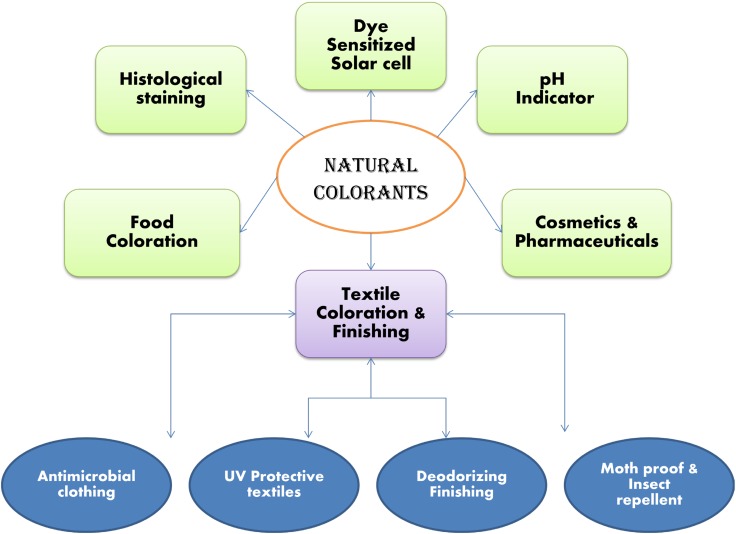
“Quinone dyes have been used for various applications, such as histological staining, rust prevention on metal surfaces, and increasing the conversion efficiency of solar cells, and they have found use as sensors, pH indicators, pigments, inks and dyes for leather, wood, medicine, food and textiles [5,64,65,190,191].”
From Natural Quinone Dyes: A Review on Structure, Extraction Techniques, Analysis and Application Potential (2021) · cites this paper as [5]
Experimental — accuracy not yet measured
Self-check
Percentages, sums and reported differences re-computed from the paper’s own numbers.
The self-check needs the paper’s full text.
Citations
Cites
Physical chemistry of surfaces
(1998) · Choice Reviews Online · doi:10.5860/choice.35-4499 · Cited by 11,648
Insights into the modeling of adsorption isotherm systems
Foo, K. Y., & Hameed, B. H. (2010) · Chemical Engineering Journal · doi:10.1016/j.cej.2009.09.013 · Cited by 8,479
Chemistry and biochemistry of plant pigments
Goodwin, T. W. (1976) · Medical Entomology and Zoology · Cited by 3,081
Physical chemistry of surfaces
Taylor, P. (1991) · Colloids and Surfaces · doi:10.1016/0166-6622(91)80262-m · Cited by 2,811 · cited 1×
“Once a layer occupied with molecules, adsorption process saturates and the graphically a plateau obtained [106].”
BackgroundRedlich, O., & Peterson, D. L. (1959) · The Journal of Physical Chemistry · doi:10.1021/j150576a611 · Cited by 2,607
Kinetic Models for the Sorption of Dye from Aqueous Solution by Wood
Ho, Y. S., & Mckay, G. (1998) · Process Safety and Environmental Protection · doi:10.1205/095758298529326 · Cited by 1,656
Extraction, Isolation And Characterization Of Bioactive Compounds From Plants’ Extracts
Sasidharan, S., Chen, Y., Saravanan, D., Sundram, K., & Latha, L. (2010) · African Journal of Traditional, Complementary and Alternative Medicines · doi:10.4314/ajtcam.v8i1.60483 · Cited by 1,456
Techniques of flavonoid identification.
Markham, K. R. (1982) · Academic Press eBooks · Cited by 1,307
Techniques of flavonoid identification:
Wollenweber, E. (1983) · Phytochemistry · doi:10.1016/0031-9422(83)80259-3 · Cited by 1,172
Adsorption isotherm models for basic dye adsorption by peat in single and binary component systems
Allen, S. J., Mckay, G., & Porter, J. F. (2004) · Journal of Colloid and Interface Science · doi:10.1016/j.jcis.2004.08.078 · Cited by 1,051
Research works printed but not linked: 33
- Khan MA Khan M Srivastava PK Mohammad F Colourage. 2005 52 12 53 60
- Yusuf M Mohammad F Shabbir M Khan MA Text. Cloth. Sust. 2016 2 1 1 9
- Kulkarni SS Gokhale AV Bodake UM Pathade GR Univ. J. Environ. Res. Technol. 2011 1 2 135 139
- Swamy VN Gowda KN Sudhakar R Indian J. Trad. Knowl. 2016 15 2 278 284
- Crowfoot CM Riefstahl E Patterned Textiles in Pharaonic Egypt 1944 New York Brooklyn Museum, Brooklyn Institute of Arts and Sciences 382 455
- T.C. Golyon, Le lin et sa teinture en Egypte des procedes ancestraux aux pratiques importee. Aspects del’artisanat du textile dans le monde Mediterraneen, VII Siecle av. (J.C.a l’Epoque Recente 1996) pp. 13–25
- Redford DB The Oxford Encyclopaedia of Ancient Egypt 2001 Cairo The American University in Cairo Press
- Van PM Hooft T Raven MJ Van-Rooij EHC Vogelsang-Eastwood GM Pharaonic and Early Medieval Egyptian Textiles 1994 Leiden RIJKS Museum van Oudheden
- Alam MM Rahman ML Haque MZ Bangladesh J. Scientific Ind. Res. 2007 42 2 217 222
- Vankar PS Natural Dyes for Industrial Applications 2007 New Delhi National Institute of Industrial Research
- Gulrajani ML Indian J. Fibre Text. Res. 2001 26 1/2 191 201
- Naqvi HK Urban Centres and Industries in Upper India 1968 Delhi Asia Publishing House 12
- M.L. Gulrajani, D. Gupta (eds.), Natural Dyes and Their Application to Textiles (IIT New Delhi, New Delhi, 1992) pp. 19–45
- M.L. Gulrajani, D. Gupta (eds.), Natural Dyes and Their Application to Textiles (IIT New Delhi, New Delhi, 1992), pp. 59–79
- Adem ON Turkish J. Chem. 1996 20 3 194 203
- Gulrajani ML Bhaumik S Oppermann W Hardtmann G Indian J. Fibre Text. Res. 2003 8 2 221 226
- Rajendran R Balakumar C Kalaivani J Sivakumar R J. Text. Apparel Technol. Manag. 2011 7 2 1 12
- Bhattacharyya N Natural Dyes for Textiles and Their Eco-friendly Applications 2010 New Delhi IAFL Publications
- Naz S Bhatti IA Adeel S Indian J. Fibre Text. Res. 2011 36 2 132 136
- Lagergren S Zur theorie der Sogenannten Absorption Gelöster Stoffe 1898 Stockholm PA Norstedt & söner
- Yusuf M J. Chem. Pharmaceut. Res. 2016 8 3 571 575
- Ramachandran T Rajendrakumar K Rajendran R IE (I) J-TX. 2004 84 42 47
- Joshi M Wazed AS Purwar R Rajendran S Indian J. Fibre Text. Res. 2009 34 3 295 304
- Çalis A Çelik GY Katircioglu H African J. Biotechnol. 2009 8 2 291 293
- Chen C Chang WY Indian J. Fibre Text. Res. 2007 32 122 125
- Gupta D Bhaumik S Indian J. Fibre Text. Res. 2007 32 254 263
- Gupta D Laha A Indian J. Fibre Text. Res. 2007 32 1 88 92
- N. Rungruangkitkrai, N. Tubtimthai, A. Cholachatpinyo, R. Mongkholrattanasit, UV protection properties of wool fabric dyed with eucalyptus leaf extract by the padding techniques, in RMUTP international conference: textiles and fashion (Bangkok, 2012)
- Shakyawar DB Raja AS Kumar A Pareek PK Indian J. Fibre Text. Res. 2015 40 2 200 202
- Chattopadhyay P Chatterjee S Sen SK African J. Biotechnol. 2008 7 17 2972 2985
- Islam S Am. J. Food Sci. Technol. 2016 4 4 109 114
- Gengatharan A Dykes GA Choo WS LWT-Food Sci. Technol. 2015 64 2 645 649
- Bakowska-Barczak A Pol. J. Food Nut. Sci. 2005 14 55 107 116
Cited by
Alizadeh-Sani, M., Mohammadian, E., Rhim, J.-W., & Jafari, S. M. (2020) · Trends in Food Science & Technology · doi:10.1016/j.tifs.2020.08.014 · Cited by 466
Sustainable and Bio-Based Food Packaging: A Review on Past and Current Design Innovations
Versino, F., Ortega, F., Monroy, Y., Rivero, S., López, O. V., & García, M. A. (2023) · Foods · doi:10.3390/foods12051057 · Cited by 422
“Ultramarine Blue Mineral Lapis lazuli [349]”
BackgroundInfluentialKhan, M. D., Singh, A., Khan, M. Z., Tabraiz, S., & Sheikh, J. (2023) · Journal of Water Process Engineering · doi:10.1016/j.jwpe.2023.103579 · Cited by 384
Cleaner dyeing of textiles using plasma treatment and natural dyes: A review
Hajı, A., & Naebe, M. (2020) · Journal of Cleaner Production · doi:10.1016/j.jclepro.2020.121866 · Cited by 380
Nabi, B. G., Mukhtar, K., Ahmed, W., Manzoor, M. F., Ranjha, M. M. A. N., Kieliszek, M., Bhat, Z. F., & Aadil, R. M. (2023) · Food Bioscience · doi:10.1016/j.fbio.2023.102403 · Cited by 250
A brief review on natural dyes, pigments: Recent advances and future perspectives
Yadav, S., Tiwari, K. S., Gupta, C., Tiwari, M. K., Khan, A., & Sonkar, S. P. (2023) · Results in Chemistry · doi:10.1016/j.rechem.2022.100733 · Cited by 264
Sonu, Rani, G. M., Pathania, D., Abhimanyu, Umapathi, R., Rustagi, S., Huh, Y. S., Gupta, V. K., Kaushik, A., & Chaudhary, V. (2023) · Science of The Total Environment · doi:10.1016/j.scitotenv.2023.162667 · Cited by 247
Palacios-Mateo, C., van der Meer, Y., & Seide, G. (2021) · Environmental Sciences Europe · doi:10.1186/s12302-020-00447-x · Cited by 249
Fungi as a Potential Source of Pigments: Harnessing Filamentous Fungi
Kalra, R., Conlan, X. A., & Goel, M. (2020) · Frontiers in Chemistry · doi:10.3389/fchem.2020.00369 · Cited by 240
Kim, H.-J., Roy, S., & Rhim, J.-W. (2022) · Food Hydrocolloids · doi:10.1016/j.foodhyd.2021.107294 · Cited by 235
Genetic engineering of microalgae for enhanced biorefinery capabilities
Fayyaz, M., Chew, K. W., Show, P. L., Ling, T. C., Ng, I.-S., & Chang, J.-S. (2020) · Biotechnology Advances · doi:10.1016/j.biotechadv.2020.107554 · Cited by 225
Plant Extracts as Skin Care and Therapeutic Agents
Michalak, M. (2023) · International Journal of Molecular Sciences · doi:10.3390/ijms242015444 · Cited by 196
“Another source of alkannin, which is a naphthoquinone derivative, is the root of common bugloss ( Anchusa officinalis ) [279,281,282].”
BackgroundInfluentialTextile dyeing using natural mordants and dyes: a review
Repon, M. R., Dev, B., Rahman, M. A., Jurkonienė, S., Haji, A., Alim, M. A., & Kumpikaitė, E. (2024) · Environmental Chemistry Letters · doi:10.1007/s10311-024-01716-4 · Cited by 167
“…of natural brown dyes include lady’s mantle ( Alchemilla vulgaris ), chayroot ( Oldenlandia umbellate ), manjith ( Rubio cordifolia ), milfoil ( Achillea millefolium ), sanders wood ( Pterocarpus santalinus ), dolu ( Rheum emodi ), and walnut hull (Hao et al. 2006; Patel 2011; Yusuf et al. 2017).”
InfluentialDulo, B., Phan, K., Githaiga, J., Raes, K., & De Meester, S. (2021) · Waste and Biomass Valorization · doi:10.1007/s12649-021-01443-9 · Cited by 181
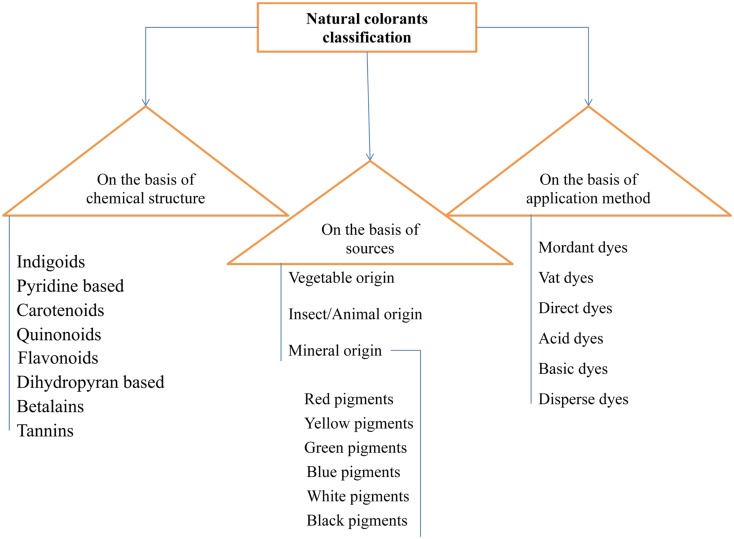
“On this basis, natural dyes are further grouped as indigoids, pyridine-based, carotenoids, quinoids, flavonoids, betalains, tannins and dihydropyrans [4, 5].”
BackgroundMethodInfluentialFried, R., Oprea, I., Fleck, K., & Rudroff, F. (2022) · Green Chemistry · doi:10.1039/d1gc02968a · Cited by 170
Halal Cosmetics: A Review on Ingredients, Production, and Testing Methods
Sugibayashi, K., Yusuf, E., Todo, H., Dahlizar, S., Sakdiset, P., Arce, F. J., & See, G. L. (2019) · Cosmetics · doi:10.3390/cosmetics6030037 · Cited by 218
“Colorants Carotene (red-orange) [7,36] Lithospermum purple (violet) [7,36] Paprika (yellow, orange, red) [7,36] Safflower (yellow, red) [7,36] Turmeric (yellow) [7,36]”
BackgroundSmart monitoring of gas/temperature changes within food packaging based on natural colorants
Mohammadian, E., Alizadeh‐Sani, M., & Jafari, S. M. (2020) · Comprehensive Reviews in Food Science and Food Safety · doi:10.1111/1541-4337.12635 · Cited by 177
Fungal Pigments: Potential Coloring Compounds for Wide Ranging Applications in Textile Dyeing
Venil, C. K., Velmurugan, P., Dufossé, L., Renuka Devi, P., & Veera Ravi, A. (2020) · Journal of Fungi · doi:10.3390/jof6020068 · Cited by 152
“Following the gradual application of natural dyes in different parts of the world, quercitron, the pigment extracted from the inner bark of oak, was patented as a dyeing material in America in 1775 [8].”
BackgroundNatural bio-colorant and pigments: Sources and applications in food processing
Singh, T., Pandey, V. K., Dash, K. K., Zanwar, S., & Singh, R. (2023) · Journal of Agriculture and Food Research · doi:10.1016/j.jafr.2023.100628 · Cited by 218
A review on source, chemistry, green synthesis and application of textile colorants
Nambela, L., Haule, L. V., & Mgani, Q. (2020) · Journal of Cleaner Production · doi:10.1016/j.jclepro.2019.119036 · Cited by 158
Clay-based nanomaterials and their adsorptive removal efficiency for dyes and antibiotics: A review
Ciğeroğlu, Z., El Messaoudi, N., Şenol, Z. M., Başkan, G., Georgin, J., & Gubernat, S. (2024) · Materials Today Sustainability · doi:10.1016/j.mtsust.2024.100735 · Cited by 156
Use of Bacterial Isolates in the Treatment of Textile Dye Wastewater: A Review
Moyo, S., Makhanya, B. P., & Zwane, P. E. (2022) · Heliyon · doi:10.1016/j.heliyon.2022.e09632 · Cited by 148
Natural Pigments of Microbial Origin
Pailliè-Jiménez, M. E., Stincone, P., & Brandelli, A. (2020) · Frontiers in Sustainable Food Systems · doi:10.3389/fsufs.2020.590439 · Cited by 159
“Agardhiella, Polysiphonia produce different groups of pigments, such as carotenoids, chlorophylls and phycobiliproteins (PBPs), known as non-toxic water-soluble proteins mostly found in Rhodophyta (red algae), Cyanobacteria, and Cryptophyta (Yusuf et al., 2017; Noreña-Caro and Benton, 2018; Arashiro et al., 2020).”
BackgroundSynthetic Dyes: A Threat to the Environment and Water Ecosystem
Yusuf, M. (2019) · Wiley eBooks · doi:10.1002/9781119526599.ch2 · Cited by 147
Self-citationEnhancing production of microalgal biopigments through metabolic and genetic engineering
Saini, D. K., Chakdar, H., Pabbi, S., & Shukla, P. (2020) · Critical Reviews in Food Science and Nutrition · doi:10.1080/10408398.2018.1533518 · Cited by 141
“Many clinical trials have been done to cure or prevent some health disorders like joint-tendon health, eye and brain health, cardiovascular health, etc (Zhang et al. 2014).”
BackgroundA Review of Environmental Impact of Azo Dyes
Alzain, H., Kalimugogo, V., & Hussein, K. (2023) · International Journal of Research and Review · doi:10.52403/ijrr.20230682 · Cited by 183
Microbial Pigments: Major Groups and Industrial Applications
Barreto, J. V. D. O., Casanova, L. M., Neves, A., Reis-Mansur, M. C. P. P., & Vermelho, A. B. (2023) · Microorganisms · doi:10.3390/microorganisms11122920 · Cited by 143
“However, their use has declined over the years due to the difficulty of production and animal exploitation [33].”
BackgroundTextile colouration with natural colourants: A review
Uddin, M. A., Rahman, M. M., Haque, A. N. M. A., Smriti, S. A., Datta, E., Farzana, N., Chowdhury, S., Haider, J., & Sayem, A. S. M. (2022) · Journal of Cleaner Production · doi:10.1016/j.jclepro.2022.131489 · Cited by 131
Natural Dyes and Pigments: Extraction and Applications
Mansour, R. (2018) · Wiley eBooks · doi:10.1002/9781119407850.ch5 · Cited by 146
Olas, B., Białecki, J., Urbańska, K., & Bryś, M. (2021) · Advances in Nutrition · doi:10.1093/advances/nmab081 · Cited by 131
Use of Phycobiliproteins from Atacama Cyanobacteria as Food Colorants in a Dairy Beverage Prototype
Galetović, A., Seura, F., Gallardo, V., Graves, R., Cortés, J., Valdivia, C., Núñez, J., Tapia, C., Neira, I., Sanzana, S., et al. (2020) · Foods · doi:10.3390/foods9020244 · Cited by 107
Kanelli, M., Mandic, M., Kalakona, M., Vasilakos, S. P., Kekos, D., Nikodinović‐Runić, J., & Topakas, E. (2018) · Frontiers in Microbiology · doi:10.3389/fmicb.2018.01495 · Cited by 111
“Violacein and other natural pigments have been examined for application in textile industry as they bring no harmful effects on environment and aquatic ecosystem and provide more developed functionalities to textiles simultaneously (Yusuf et al., 2017).”
BackgroundReview on Extraction and Application of Natural Dyes
Sk, M. S., Mia, R., Haque, M. A., & Shamim, A. M. (2021) · Textile & Leather Review · doi:10.31881/tlr.2021.09 · Cited by 147
Modi, S., Yadav, V. K., Gacem, A., Ali, I. H., Dave, D., Khan, S. H., Yadav, K. K., Rather, S., Ahn, Y., Son, C. T., et al. (2022) · Water · doi:10.3390/w14111749 · Cited by 117
From green to blue economy: Marine biorefineries for a sustainable ocean-based economy
Veríssimo, N. V. P., Mussagy, C. U., Oshiro, A. A., Mendonça, C. M. N., Santos‐Ebinuma, V. C., Pessoa, A., Oliveira, R. P. D. S., & Pereira, J. F. B. (2021) · Green Chemistry · doi:10.1039/d1gc03191k · Cited by 110
Structure and Properties of Dyes and Pigments
Kumar, A., Dixit, U., Singh, K., Prakash Gupta, S., & S. Jamal Beg, M. (2021) · Dyes and Pigments - Novel Applications and Waste Treatment · doi:10.5772/intechopen.97104 · Cited by 102
Hujjatusnaini, N., Corebima, A. D., Prawiro, S. R., & Gofur, A. (2022) · Jurnal Pendidikan IPA Indonesia · doi:10.15294/jpii.v11i1.27148 · Cited by 100
“The 21st-century skills are the primary targets in the curriculum of educational institutions around the world (Alismail & McGuire, 2015; Yusuf et al., 2017; Wang et al., 2018; Haviz et al., 2018) because a good skill in the 21st century has become one of the solutions to answer the challenges of…”
BackgroundThe interactions between anthocyanin and whey protein: A review
Ren, S., Jiménez‐Flores, R., & Giusti, M. M. (2021) · Comprehensive Reviews in Food Science and Food Safety · doi:10.1111/1541-4337.12854 · Cited by 100
UV protection afforded by textile fabrics made of natural and regenerated cellulose fibres
Kocić, A., Bizjak, M., Popović, D., Poparić, G. B., & Stanković, S. B. (2019) · Journal of Cleaner Production · doi:10.1016/j.jclepro.2019.04.355 · Cited by 97
Shabbir, M., Rather, L. J., & Mohammad, F. (2018) · Industrial Crops and Products · doi:10.1016/j.indcrop.2018.04.016 · Cited by 95
Self-citationMetal mordants and biomordants
İşmal, Ö. E., & Yıldırım, L. (2018) · Elsevier eBooks · doi:10.1016/b978-0-08-102491-1.00003-4 · Cited by 129
Srivastava, A., Kalwani, M., Chakdar, H., Pabbi, S., & Shukla, P. (2022) · Bioresource Technology · doi:10.1016/j.biortech.2022.127071 · Cited by 97
Biopigments of Microbial Origin and Their Application in the Cosmetic Industry
Kiki, M. J. (2023) · Cosmetics · doi:10.3390/cosmetics10020047 · Cited by 94
Renita, A. A., Gajaria, T. K., Sathish, S., Kumar, J. A., Lakshmi, D. S., Kujawa, J., & Kujawski, W. M. (2023) · Foods · doi:10.3390/foods12071521 · Cited by 95
“If utilized under such circumstances, it deteriorates their properties of being beneficial to human health [1].”
BackgroundAdeel, S., Hussaan, M., Rehman, F., Habib, N., Salman, M., Naz, S., Amin, N., & Akhtar, N. (2018) · Journal of Natural Fibers · doi:10.1080/15440478.2018.1448317 · Cited by 84
“It is also found that 2% of Al and 1% Fe as post-mordants have given high K/S (Figure 6).”
BackgroundInfluentialNguyen, T. L., Ora, A., Häkkinen, S. T., Ritala, A., Räisänen, R., Kallioinen, M., & Melin, K. (2023) · Biomass Conversion and Biorefinery · doi:10.1007/s13399-023-04726-4 · Cited by 91
Alam, M. W., Kumar, J. V., Awad, M., Saravanan, P., Al‐Sowayan, N. S., Rosaiah, P., & Nivetha, M. S. (2025) · Journal of Food Process Engineering · doi:10.1111/jfpe.70035 · Cited by 95
Zhou, Q., Rather, L. J., Ali, A., Wang, W., Zhang, Y., Haque, Q. M. R., & Li, Q. (2020) · Dyes and Pigments · doi:10.1016/j.dyepig.2020.108230 · Cited by 84
García-Salinas, M. J., & Ariza, M. J. (2019) · Applied Sciences · doi:10.3390/app9122515 · Cited by 82
“Dyes from bio-resources or natural dyes were the first ones used by human beings, and nowadays, ecological and health concerns have made natural dyes preferable to synthetic ones in different fields such as cosmetic, pharmaceutical, textile, or food industries [1].”
BackgroundAmin, N., Rehman, F., Adeel, S., Ahamd, T., Muneer, M., & Hajı, A. (2019) · Environmental Science and Pollution Research · doi:10.1007/s11356-019-06868-3 · Cited by 82
Insights on the use of alternative solvents and technologies to recover bio‐based food pigments
Mesquita, L. M. D. S., Martins, M., Pisani, L. P., Ventura, S. P. M., & de Rosso, V. V. (2020) · Comprehensive Reviews in Food Science and Food Safety · doi:10.1111/1541-4337.12685 · Cited by 82
“Moreover, the manufacture of synthetic food pigments is extremely aggressive to the environment, which increases the public’s desire toward environmentally friendly processes (Yusuf et al., 2017) and more sustainable pigments in their daily base products.”
BackgroundMetwally, R. A., Sikaily, A. E., El‐Sersy, N. A., Ghozlan, H. A., & Sabry, S. A. (2021) · The Egyptian Journal of Aquatic Research · doi:10.1016/j.ejar.2021.05.004 · Cited by 79
Azmin, S. N. H. M., Sulaiman, N. S., Nor, M. S. M., Abdullah, P. S., Kari, Z. A., & Pati, S. (2022) · Applied Biochemistry and Biotechnology · doi:10.1007/s12010-022-04050-z · Cited by 99
“Public’s awareness for environmentally benign and non-toxic sustainability in bio-resourced colourants has developed a revolution in natural product research and development [50, 64].”
BackgroundSustainability Assessment of Cotton-Based Textile Wet Processing
Kabir, S. M. F., Chakraborty, S., Hoque, S. M. A., & Mathur, K. (2019) · Clean Technologies · doi:10.3390/cleantechnol1010016 · Cited by 85
“To perform mordanting, different metal salts including heavy metals; for example, ammonia alum, chrome alum, potash alum, soda alum, potassium dichromate, copper acetate, cuprous chloride, zinc tetrafluoroborate, lanthanum oxide [56] are used, which are themselves more pernicious to the environment than many other syn…”
BackgroundSustainability of the use of natural dyes in the textile industry
Elsahida, K., Fauzi, A. M., Sailah, I., & Siregar, I. Z. (2019) · IOP Conference Series Earth and Environmental Science · doi:10.1088/1755-1315/399/1/012065 · Cited by 74
Modification of wool protein fiber with plasma and dendrimer: Effects on dyeing with cochineal
Sajed, T., Hajı, A., Mehrizi, M. K., & Nasiriboroumand, M. (2017) · International Journal of Biological Macromolecules · doi:10.1016/j.ijbiomac.2017.09.038 · Cited by 74
Safety Evaluation of Fungal Pigments for Food Applications
Poorniammal, R., Prabhu, S., Dufossé, L., & Kannan, J. (2021) · Journal of Fungi · doi:10.3390/jof7090692 · Cited by 77
“On the other hand, consumers have a growing awareness of natural products where toxicants may also be present [2].”
BackgroundGreener therapeutic pH-sensing wound dressing based on Curcuma Longa and cellulose hydrogel
Arafa, A. A., Nada, A. A., Ibrahim, A. Y., Zahran, M. K., & Hakeim, O. A. (2021) · European Polymer Journal · doi:10.1016/j.eurpolymj.2021.110744 · Cited by 74
Gamage, D. G. N. D., Dharmadasa, R. M., Abeysinghe, D. C., Wijesekara, R. G. S., Prathapasinghe, G. A., & Someya, T. (2022) · Evidence-based Complementary and Alternative Medicine · doi:10.1155/2022/9940548 · Cited by 77
“) Tausch Alkannin Red/purple [24, 25] Annatto Bixa orellana L.”
BackgroundInfluentialBiological and Photocatalytic Degradation of Congo Red, a Diazo Sulfonated Substituted Dye: a Review
Khan, R. R. M., Qamar, H., Hameed, A., Rehman, A. U., Pervaiz, M. A., Saeed, Z., Adnan, A., & Rashid, A. (2022) · Water Air & Soil Pollution · doi:10.1007/s11270-022-05935-9 · Cited by 74
“Chemical testing of several findings, for example, the red fabric from the ancient tomb of Egyptian King Tutankhamen, confirmed the existence of textile colorants (Yusuf et al., 2017).”
BackgroundAdvances in Genetic Engineering in Improving Photosynthesis and Microalgal Productivity
Hu, J., Wang, D., Chen, H., & Wang, Q. (2023) · International Journal of Molecular Sciences · doi:10.3390/ijms24031898 · Cited by 64
“Microalgae are a powerful, promising, renewable, and high-quality source of biopigments [84].”
BackgroundMandal, S., & Venkatramani, J. (2023) · Environmental Science and Pollution Research · doi:10.1007/s11356-023-26281-1 · Cited by 71
Mesquita, L. M. D. S., Martins, M., Maricato, É., Nunes, C., Quinteiro, P. S. G. N., Dias, A. C., Coutinho, J. A. P., Pisani, L. P., de Rosso, V. V., & Ventura, S. P. M. (2020) · ACS Sustainable Chemistry & Engineering · doi:10.1021/acssuschemeng.9b06424 · Cited by 72
Flower Extracts as Multifunctional Dyes in the Cosmetics Industry
Bujak, T., Zagórska-Dziok, M., Ziemlewska, A., Nizioł‐Łukaszewska, Z., Lal, K., Wasilewski, T., & Hordyjewicz‐Baran, Z. (2022) · Molecules · doi:10.3390/molecules27030922 · Cited by 70
Singh, M., Vajpayee, M., & Ledwani, L. (2021) · Materials Today Proceedings · doi:10.1016/j.matpr.2021.01.078 · Cited by 77
Hajı, A., Ashraf, S., Nasiriboroumand, M., & Lievens, C. (2020) · Fibers and Polymers · doi:10.1007/s12221-020-9587-3 · Cited by 64
Ulagesan, S., Nam, T., & Choi, Y. (2021) · Molecules · doi:10.3390/molecules26216479 · Cited by 69
Gong, K., Rather, L. J., Zhou, Q., Wang, W., & Li, Q. (2019) · Journal of the Textile Institute · doi:10.1080/00405000.2019.1698228 · Cited by 66
“…this, applications of bio-colorants to textile substrates shall be helpful to entrepreneurs to take up this venture which have good potential and bright future in a number of applied sectors: leather, textiles and clothing, cosmetics, food, pharmaceutical, and paint industries (Yusuf et al., 2017).”
BackgroundAgro-Industrial Waste Materials and their Recycled Value-Added Applications: Review
Yusuf, M. (2017) · Springer eBooks · doi:10.1007/978-3-319-48281-1_48-1 · Cited by 90
Self-citationPriyadharsini, P., SundarRajan, P., Pavithra, K. G., Naveen, S., SanjayKumar, S., Gnanaprakash, D., Arun, J., & Pugazhendhi, A. (2023) · Journal of Cleaner Production · doi:10.1016/j.jclepro.2023.139180 · Cited by 64
Petropoulos, S. A., Sampaio, S. L., Gioia, F. D., Tzortzakis, N., Rouphael, Y., Kyriacou, M. C., & Ferreira, I. C. F. R. (2019) · Antioxidants · doi:10.3390/antiox8120617 · Cited by 67
“In addition to pre-harvest factors, postharvest conditions and processing methods may have an impact on bioavailability and biostability of natural matrices and coloring compounds [13,73,74].”
BackgroundRather, L. J., Shabbir, M., Li, Q., & Mohammad, F. (2019) · Environmental Progress & Sustainable Energy · doi:10.1002/ep.13187 · Cited by 63
Self-citationPotentials of Natural Dyes for Textile Applications
Zerin, I., Farzana, N., Sayem, A. S. M., Anang, D. M., & Haider, J. (2019) · Elsevier eBooks · doi:10.1016/b978-0-12-803581-8.11668-6 · Cited by 65
Chemical, Biological, and Pharmacological Prospects of Caffeic Acid
(2022) · Biointerface Research in Applied Chemistry · doi:10.33263/briac134.324 · Cited by 60
Functional Properties of Natural Dyed Textiles
Pargai, D., Jahan, S., & Gahlot, M. (2020) · IntechOpen eBooks · doi:10.5772/intechopen.88933 · Cited by 59
Rahman, M., Billah, M. M., Hack‐Polay, D., & Alam, A. (2020) · Technological Forecasting and Social Change · doi:10.1016/j.techfore.2020.120204 · Cited by 57
Popescu, V., Blaga, A. C., Pruneanu, M., Cristian, I. N., Pîslaru, M., Popescu, A., Rotaru, V., Crețescu, I., & Caşcaval, D. (2021) · Polymers · doi:10.3390/polym13223867 · Cited by 58
“The recovery of these peels by extracting dyes and then using them as nutrients or as natural fertilizer is beneficial and can be a sustainable option [4,5].”
BackgroundMethodInfluentialStoica, F., Râpeanu, G., Rațu, R. N., Stănciuc, N., Croitoru, C., Țopa, D., & Jităreanu, G. (2025) · Agriculture · doi:10.3390/agriculture15030270 · Cited by 52
Venil, C. K., Dufossé, L., Velmurugan, P., Malathi, M., & Lakshmanaperumalsamy, P. (2021) · Textiles · doi:10.3390/textiles1010003 · Cited by 52
Optimization and multiple in vitro activity potentials of carotenoids from marine Kocuria sp. RAM1
Metwally, R. A., El‐Sersy, N. A., Sikaily, A. E., Sabry, S. A., & Ghozlan, H. A. (2022) · Scientific Reports · doi:10.1038/s41598-022-22897-4 · Cited by 53
Cleaner pathway for developing bioactive textile materials using natural dyes: a review
Repon, M. R., Islam, T., Islam, T., Ghorab, A. E., & Rahman, M. M. (2023) · Environmental Science and Pollution Research · doi:10.1007/s11356-023-26131-0 · Cited by 53
“Natural dyes are classified into three major categories: (a) based on chemical structure (indigoids, carotenoids, pyridines, quinonoids, flavonoids, dihydropyran, betalains, and tannins), (b) based on sources (vegetable origin, animal origin, and mineral origin), and (c) based on application method (mordant dyes, vat…”
BackgroundElmaaty, T. A., Sayed-Ahmed, K., Magdi, M., & Elsisi, H. G. (2023) · Scientific Reports · doi:10.1038/s41598-022-27110-0 · Cited by 50
Amoli‐Diva, M., Anvari, A., & Sadighi‐Bonabi, R. (2019) · Ceramics International · doi:10.1016/j.ceramint.2019.05.355 · Cited by 50
Biomordants and new alternatives to the sustainable natural fiber dyeings
Pinheiro, L., Kohan, L., Duarte, L. O., Garavello, M. E. D. P. E., & Baruque-Ramos, J. (2019) · SN Applied Sciences · doi:10.1007/s42452-019-1384-5 · Cited by 50
Abate, M. T., Zhou, Y., Guan, J.-P., Chen, G., Ferri, A., & Nierstrasz, V. A. (2019) · The Journal of Supercritical Fluids · doi:10.1016/j.supflu.2019.104703 · Cited by 50
Bayart, M., Adjallé, K., Diop, A. L., Ovlaque, P., Barnabé, S., Robert, M., & Elkoun, S. (2020) · Composite Interfaces · doi:10.1080/09276440.2020.1773179 · Cited by 53
Rahman, M. M., Koh, J., & Hong, K. (2022) · Industrial Crops and Products · doi:10.1016/j.indcrop.2022.115562 · Cited by 63
Mesquita, L. M. D. S., Neves, B. V., Pisani, L. P., & de Rosso, V. V. (2020) · LWT · doi:10.1016/j.lwt.2020.109022 · Cited by 49
Dyeing of Cochineal Natural Dye on Cotton Fabrics Treated with Oxidant and Chitosan
Ke, G., Zhu, K., & Chowdhury, M. H. (2019) · Journal of Natural Fibers · doi:10.1080/15440478.2019.1623742 · Cited by 47
Natural blue pigments and bikaverin
dos Santos, M. C., & Bicas, J. L. (2020) · Microbiological Research · doi:10.1016/j.micres.2020.126653 · Cited by 55
A comprehensive review on moth repellent finishing of woolen textiles
Medha, K., Salim, R., Devi, L. J., Samant, L., & Jose, S. (2021) · Journal of Cultural Heritage · doi:10.1016/j.culher.2021.02.006 · Cited by 50
Dyeing of polyamide 6 fabric with new bio-colorant and bio-mordants
Hajı, A., Ghaheh, F. S., & Mohammadi, L. (2022) · Environmental Science and Pollution Research · doi:10.1007/s11356-022-24862-0 · Cited by 45
“1 3 Such dyes are obtained from plants, animals, and minerals; their appealing colors are not only attractive to the human’s eyes, but also, they are of particular interest in many industries such as textiles, cosmetics, and leather (Yusuf et al. 2017).”
BackgroundPopescu, V., Astanei, D. G., Burlică, R., Popescu, A., Munteanu, C., Ciolacu, F., Ursache, M., Ciobanu, L., & Cocean, A. (2019) · Journal of Cleaner Production · doi:10.1016/j.jclepro.2019.05.281 · Cited by 45
The use of D-optimal design in optimization of wool dyeing with Juglansregia bark
Hajı, A., Qavamnia, S. S., & MAJID, N. (2018) · Industria Textila · doi:10.35530/it.069.02.1509 · Cited by 44
Saleem, H., Mazhar, S., Syed, Q., Javed, M. Q., & Adnan, A. (2021) · Arabian Journal of Chemistry · doi:10.1016/j.arabjc.2021.103005 · Cited by 44
Bioproduction process of natural products and biopharmaceuticals: Biotechnological aspects
Süntar, I. P., Çetinkaya, S., Haydaroğlu, Ü. S., & Habtemariam, S. (2021) · Biotechnology Advances · doi:10.1016/j.biotechadv.2021.107768 · Cited by 47
Extraction and Application of Natural Dyes
Iqbal, S., & Ansari, T. N. (2021) · Wiley eBooks · doi:10.1002/9781119818915.ch1 · Cited by 52
Do, K. L., Su, M., & Zhao, F. W. (2022) · Dyes and Pigments · doi:10.1016/j.dyepig.2022.110482 · Cited by 46
Dyes and Pigments: Interventions and How Safe and Sustainable Are Colors of Life!!!
Dave, S., Das, J., Varshney, B., & Sharma, V. P. (2022) · Environmental science and engineering · doi:10.1007/978-3-031-08991-6_1 · Cited by 62
Natural Dyes: Extraction and Applications
Chungkrang, L., Bhuyan, S., & Phukan, A. R. (2021) · International Journal of Current Microbiology and Applied Sciences · doi:10.20546/ijcmas.2021.1001.195 · Cited by 42
“Natural pigments obtained from natural resources with active functional components have shown high biological activities and exhibited different properties depending on each kind of pigments which make them excellent colouring materials for natural cosmetics and functional health foods (Yusuf et al., 2017).”
BackgroundInfluential
Metadata
- Authors
- Yusuf, M., Shabbir, M., & Mohammad, F.
- Affiliations
- Maharshi Dayanand University (IN)
- Jamia Millia Islamia (IN)
- Corresponding author
- Yusuf, Mohd
- Shabbir, Mohd
- Mohammad, Faqeer
- Venue
- Natural Products and Bioprospecting
- Published
- 2017-01-16
- Volume
- 7
- Issue
- 1
- Pages
- 123-145
- ISSN
- 2192-2195 (ISSN-L)
- 2192-2209
- PMC
- PMC5315675
- OpenAlex
- W2572261390
- Semantic Scholar
- 53fbd91d525b2be8b27a16e810911295aed4e3a1
- Cited by
- 597
- References
- 131
- Citations by year
- 2026: 44 · 2025: 82 · 2024: 69 · 2023: 86 · 2022: 78 · 2021: 89 · 2020: 72 · 2019: 47 · 2018: 22 · 2017: 8
- FWCI
- 4.60
- Type
- journal article
- Language
- en
- Open access
- diamond
- doi.org
- Locations
- Natural Products and Bioprospecting (publishedVersion, cc-by)
- PubMed Central (publishedVersion, cc-by)
- PubMed (publishedVersion)
- Topics
- Physical Sciences › Materials Science › Polymers and Plastics › Dyeing and Modifying Textile Fibers
- Health Sciences › Medicine › Pathology and Forensic Medicine › Biological Stains and Phytochemicals
- Physical Sciences › Chemistry › Analytical Chemistry › Dye analysis and toxicity
- Keywords
- natural colorants, textile dyeing, natural dyes, sustainable dyeing, multifunctional textiles, dye adsorption isotherms, dyeing kinetics, environmental impact of dyes
About these checks
Registry, retraction, Cites and statistics results are computed, not judged, with one exception: a printed reference that no index lists is read once by a model before it counts as a citation error. Claims are extracted by a model and kept only when their quote appears verbatim in the text; each cited source is then checked, with a model’s help, for whether it says what the claim relies on. Those verdicts can be wrong — read the claim’s quote and the cited source before relying on one.
Statistics and arithmetic are recomputed, not judged.
Confidence bands are shown only for fields calibrated on our annotated test set. None is calibrated yet, so no band is shown.
What counts as a claim ›How we measure confidence ›How we check this ›
Are you an author, or do you see a problem with this page? Request a review
Data sources
Bibliographic data: Semantic Scholar, OpenAlex, Crossref.
Contains information from the Semantic Scholar Academic Graph Datasets, made available under the ODC Attribution License (ODC-BY 1.0).
Semantic Scholar’s data is described in: Kinney, R., et al. (2023). The Semantic Scholar Open Data Platform. arXiv:2301.10140.
