

Natural Colorants: Historical, Processing and Sustainable Prospects
Open accessThe DOI matches its Crossref record; 122 of the 131 references it cites were found in a registry or an index.
Abstract
With the public's mature demand in recent times pressurized the textile industry for use of natural colorants, without any harmful effects on environment and aquatic ecosystem, and with more developed functionalities simultaneously. Advanced developments for the natural bio-resources and their sustainable use for multifunctional clothing are gaining pace now. Present review highlights historical overview of natural colorants, classification and predominantly processing of colorants from sources, application on textiles surfaces with the functionalities provided by them. Chemistry of natural colorants on textiles also discussed with relevance to adsorption isotherms and kinetic models for dyeing of textiles.
Overview
The claims and statistics of this paper haven’t been checked yet.
Free: it reads the open-access text and checks the first 5 claims that cite a source we can check. Create a free account to check every claim.
Integrity signals
Registry
Cites
Statistics
Figures
Verification
Claims the paper makes
The claims and statistics of this paper haven’t been checked yet.
Free: it reads the open-access text and checks the first 5 claims that cite a source we can check. Create a free account to check every claim.
Claims other papers make about this one
Each is checked against this paper’s own text: does it say what the citing paper says it does?
The source backs part of the claim, not all of it — or backs it for a different population, condition or comparison.
In the citing paper
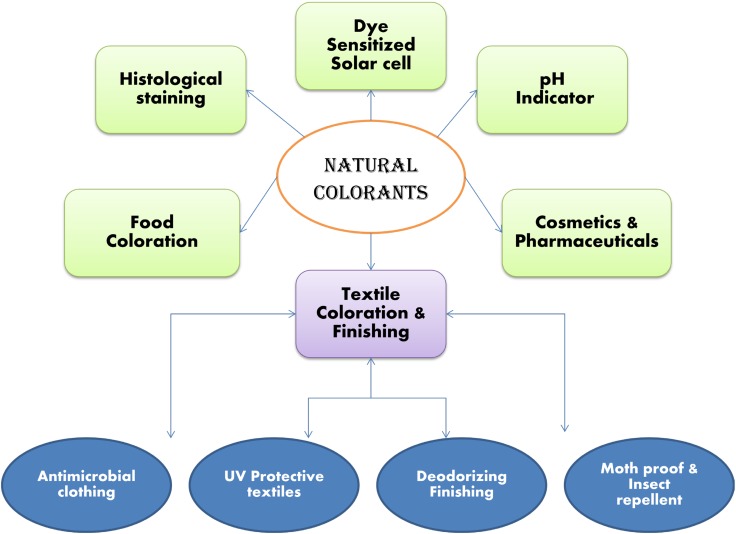
“Quinone dyes have been used for various applications, such as histological staining, rust prevention on metal surfaces, and increasing the conversion efficiency of solar cells, and they have found use as sensors, pH indicators, pigments, inks and dyes for leather, wood, medicine, food and textiles [5,64,65,190,191].”
From Natural Quinone Dyes: A Review on Structure, Extraction Techniques, Analysis and Application Potential (2021) · cites this paper as [5]
Experimental — accuracy not yet measured
Self-check
Percentages, sums and reported differences re-computed from the paper’s own numbers.
The self-check needs the paper’s full text.
Citations
Cites
Physical chemistry of surfaces
(1998) · Choice Reviews Online · doi:10.5860/choice.35-4499 · Cited by 11,648
Insights into the modeling of adsorption isotherm systems
Foo, K. Y., & Hameed, B. H. (2010) · Chemical Engineering Journal · doi:10.1016/j.cej.2009.09.013 · Cited by 8,479
Chemistry and biochemistry of plant pigments
Goodwin, T. W. (1976) · Medical Entomology and Zoology · Cited by 3,081
Physical chemistry of surfaces
Taylor, P. (1991) · Colloids and Surfaces · doi:10.1016/0166-6622(91)80262-m · Cited by 2,811 · cited 1×
“Once a layer occupied with molecules, adsorption process saturates and the graphically a plateau obtained [106].”
BackgroundRedlich, O., & Peterson, D. L. (1959) · The Journal of Physical Chemistry · doi:10.1021/j150576a611 · Cited by 2,607
Kinetic Models for the Sorption of Dye from Aqueous Solution by Wood
Ho, Y. S., & Mckay, G. (1998) · Process Safety and Environmental Protection · doi:10.1205/095758298529326 · Cited by 1,656
Extraction, Isolation And Characterization Of Bioactive Compounds From Plants’ Extracts
Sasidharan, S., Chen, Y., Saravanan, D., Sundram, K., & Latha, L. (2010) · African Journal of Traditional, Complementary and Alternative Medicines · doi:10.4314/ajtcam.v8i1.60483 · Cited by 1,456
Techniques of flavonoid identification.
Markham, K. R. (1982) · Academic Press eBooks · Cited by 1,307
Techniques of flavonoid identification:
Wollenweber, E. (1983) · Phytochemistry · doi:10.1016/0031-9422(83)80259-3 · Cited by 1,172
Adsorption isotherm models for basic dye adsorption by peat in single and binary component systems
Allen, S. J., Mckay, G., & Porter, J. F. (2004) · Journal of Colloid and Interface Science · doi:10.1016/j.jcis.2004.08.078 · Cited by 1,051
Research works printed but not linked: 33
- Khan MA Khan M Srivastava PK Mohammad F Colourage. 2005 52 12 53 60
- Yusuf M Mohammad F Shabbir M Khan MA Text. Cloth. Sust. 2016 2 1 1 9
- Kulkarni SS Gokhale AV Bodake UM Pathade GR Univ. J. Environ. Res. Technol. 2011 1 2 135 139
- Swamy VN Gowda KN Sudhakar R Indian J. Trad. Knowl. 2016 15 2 278 284
- Crowfoot CM Riefstahl E Patterned Textiles in Pharaonic Egypt 1944 New York Brooklyn Museum, Brooklyn Institute of Arts and Sciences 382 455
- T.C. Golyon, Le lin et sa teinture en Egypte des procedes ancestraux aux pratiques importee. Aspects del’artisanat du textile dans le monde Mediterraneen, VII Siecle av. (J.C.a l’Epoque Recente 1996) pp. 13–25
- Redford DB The Oxford Encyclopaedia of Ancient Egypt 2001 Cairo The American University in Cairo Press
- Van PM Hooft T Raven MJ Van-Rooij EHC Vogelsang-Eastwood GM Pharaonic and Early Medieval Egyptian Textiles 1994 Leiden RIJKS Museum van Oudheden
- Alam MM Rahman ML Haque MZ Bangladesh J. Scientific Ind. Res. 2007 42 2 217 222
- Vankar PS Natural Dyes for Industrial Applications 2007 New Delhi National Institute of Industrial Research
- Gulrajani ML Indian J. Fibre Text. Res. 2001 26 1/2 191 201
- Naqvi HK Urban Centres and Industries in Upper India 1968 Delhi Asia Publishing House 12
- M.L. Gulrajani, D. Gupta (eds.), Natural Dyes and Their Application to Textiles (IIT New Delhi, New Delhi, 1992) pp. 19–45
- M.L. Gulrajani, D. Gupta (eds.), Natural Dyes and Their Application to Textiles (IIT New Delhi, New Delhi, 1992), pp. 59–79
- Adem ON Turkish J. Chem. 1996 20 3 194 203
- Gulrajani ML Bhaumik S Oppermann W Hardtmann G Indian J. Fibre Text. Res. 2003 8 2 221 226
- Rajendran R Balakumar C Kalaivani J Sivakumar R J. Text. Apparel Technol. Manag. 2011 7 2 1 12
- Bhattacharyya N Natural Dyes for Textiles and Their Eco-friendly Applications 2010 New Delhi IAFL Publications
- Naz S Bhatti IA Adeel S Indian J. Fibre Text. Res. 2011 36 2 132 136
- Lagergren S Zur theorie der Sogenannten Absorption Gelöster Stoffe 1898 Stockholm PA Norstedt & söner
- Yusuf M J. Chem. Pharmaceut. Res. 2016 8 3 571 575
- Ramachandran T Rajendrakumar K Rajendran R IE (I) J-TX. 2004 84 42 47
- Joshi M Wazed AS Purwar R Rajendran S Indian J. Fibre Text. Res. 2009 34 3 295 304
- Çalis A Çelik GY Katircioglu H African J. Biotechnol. 2009 8 2 291 293
- Chen C Chang WY Indian J. Fibre Text. Res. 2007 32 122 125
- Gupta D Bhaumik S Indian J. Fibre Text. Res. 2007 32 254 263
- Gupta D Laha A Indian J. Fibre Text. Res. 2007 32 1 88 92
- N. Rungruangkitkrai, N. Tubtimthai, A. Cholachatpinyo, R. Mongkholrattanasit, UV protection properties of wool fabric dyed with eucalyptus leaf extract by the padding techniques, in RMUTP international conference: textiles and fashion (Bangkok, 2012)
- Shakyawar DB Raja AS Kumar A Pareek PK Indian J. Fibre Text. Res. 2015 40 2 200 202
- Chattopadhyay P Chatterjee S Sen SK African J. Biotechnol. 2008 7 17 2972 2985
- Islam S Am. J. Food Sci. Technol. 2016 4 4 109 114
- Gengatharan A Dykes GA Choo WS LWT-Food Sci. Technol. 2015 64 2 645 649
- Bakowska-Barczak A Pol. J. Food Nut. Sci. 2005 14 55 107 116
Cited by
Items 401–500 of 652
Xu, F., Zhang, Z., Zhao, Z., Liu, J., & Wang, H. (2024) · Fibers and Polymers · doi:10.1007/s12221-024-00563-y · Cited by 3
Emongor, V. E., Setshogela, P. B., & Tiroesele, B. (2024) · Journal of Medicinal Plants Studies · doi:10.22271/plants.2024.v12.i6b.1774 · Cited by 3
(2024) · Letters in Applied NanoBioScience · doi:10.33263/lianbs133.148 · Cited by 12
Phytochemical Analysis of Gymnema sylvestre and Vigna unguiculata
Sharma, D., & Yusuf, M. (2025) · Journal of Engineering Science and Sustainability · doi:10.55559/jess.v1i1.446 · Cited by 3
Self-citationA Review on Phytochemistry, Pharmacological and Coloring Potential of Lawsonia Inermis
Yusuf, M. (2018) · Wiley eBooks · doi:10.1002/9781119407850.ch9 · Cited by 6
Self-citationBait, S., Shinde, S. S., Adivarekar, R. V., & Sekar, N. (2020) · AATCC Journal of Research · doi:10.14504/ajr.7.2.4 · Cited by 3
Stevens, J. S. (2021) · Crystal Growth & Design · doi:10.1021/acs.cgd.1c01290 · Cited by 3
Situmeang, R., Romiyati, R., Yuwono, S. D., Manurung, P., Firdaus, I., & Sembiring, S. (2022) · Advances in Natural Sciences Nanoscience and Nanotechnology · doi:10.1088/2043-6262/ac8d8f · Cited by 3
Dyeing and printing Natural Fibers with Algae-Based Colorants
Moldovan, S. (2021) · RiuNet (Universitat Politècnica de València) · doi:10.4995/thesis/10251/180349 · Cited by 5
Application of Ionic Liquid Solvents in the Food Industry
Mesquita, L. M. D. S., Murador, D. C., & de Rosso, V. V. (2022) · Encyclopedia of Ionic Liquids · doi:10.1007/978-981-33-4221-7_8 · Cited by 3
Potent Natural Dyestuffs from Onion Skin to Fabrics Using or Lacking Bio-Mordants
Mubeen, S., Batool, T., & Hussain, G. S. (2024) · IntechOpen eBooks · doi:10.5772/intechopen.1005579 · Cited by 2
Nautiyal, S., Semwal, D. K., & Semwal, R. B. (2025) · Vegetos · doi:10.1007/s42535-025-01330-x · Cited by 2
Advancements in Textile Printing from Conventional to Modern Practices
Anik, H. R., & Akter, M. (2025) · Springer eBooks · doi:10.1007/978-981-96-5091-0_12 · Cited by 2
Introduction to the Therapeutic Potential of Boronic Acid Derivatives
Yusuf, M., Jayant, V., & Sharma, D. (2025) · Journal of Engineering Science and Sustainability · doi:10.55559/jess.v1i1.457 · Cited by 2
Self-citationTextile coloring with Indonesian tropical plants
Rahayuningsih, E., & Permana, A. D. C. (2025) · Research Journal of Textile and Apparel · doi:10.1108/rjta-01-2025-0003 · Cited by 2
Insect and Animal-Derived Biocolours
Chaudhary, M., Solanki, P., Sharma, R., Joshi, S., Brar, B., Walia, A., & Putatunda, C. (2025) · Springer eBooks · doi:10.1007/978-981-95-1738-1_6 · Cited by 2
Harnessing ultrasound for quinonoid colorants extraction: an overview
Patil, S. R., Patil, K. B., & Bagwan, M. I. (2026) · Journal of the Iranian Chemical Society · doi:10.1007/s13738-025-03339-0 · Cited by 2
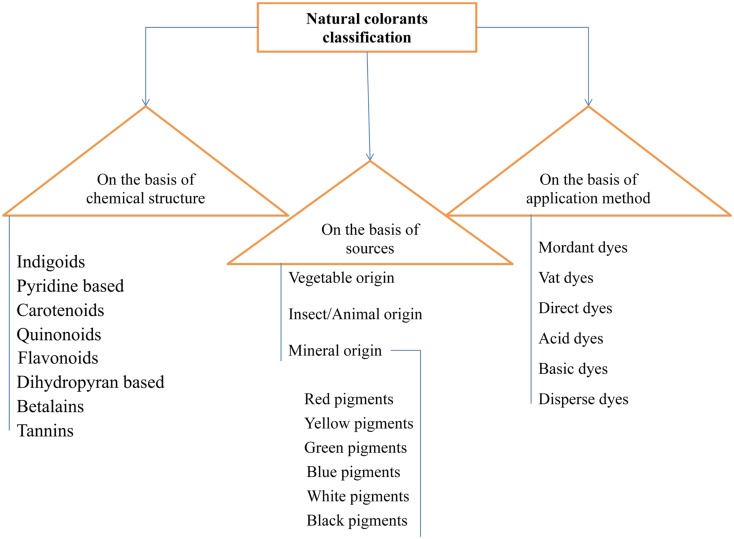
“Based on this framework, natural dyes are further categorised into the following groups: flavonoids, carotenoids, indigoids, quinonoids, pyridine-based compounds, betalains, tannins, and dihydropyrans [3, 6 ].”
InfluentialSamarawickrama, R., Memon, H., Wijayapala, S., Fernando, A. N., Bandara, G. P., & Mendis, S. (2026) · Fibers and Polymers · doi:10.1007/s12221-026-01342-7 · Cited by 2
Adnan, N., Nishat, N., Nawaz, H., Khan, M. Q., & Umar, M. (2026) · Sustainability · doi:10.3390/su18062881 · Cited by 2
Kanadi, A. A., Yakubu, J., Shalbugau, K. W., Atiku, J. U., Yakubu, J. S., & Dass, P. M. (2026) · Kwaghe International Journal of Sciences and Technology · doi:10.58578/kijst.v3i1.9400 · Cited by 2
“Tannin yields a range of colors, such as yellow, brown, gray, and black in natural dyes (Yusuf et al., 2017).”
Safapour, S., Rather, L. J., Mir, S. S., Toprak-Cavdur, T., Çavdur, F., Dar, Q. F., & Assiri, M. A. (2026) · Environmental Science and Pollution Research · doi:10.1007/s11356-026-37788-8 · Cited by 2
Are natural dye-based textile enterprises economically sustainable? Evidence from Assam, India
Dutta, M., Hazarika, B. B., & Saikia, M. (2026) · Journal of Economic and Social Measurement · doi:10.1177/07479662261457009 · Cited by 2
Hoque, M. B., Faisal, M. A. H., Das, D., Haque, P., Shahid, D. M. A., Rahman, M. M., Bhuiyan, M. A. R., Bhuiyan, A. H., & Hannan, M. A. (2026) · Fibers and Polymers · doi:10.1007/s12221-026-01493-7 · Cited by 2
“Reviews by Mohammad Yusuf et al. and A. K. Samanta et al. explored natural colorants and dye technologies and reported UPF improvement after tannin treatment, yet UV protection remains a secondary effect rather than a systematically analyzed functional property [23, 24].”
Harmon, J. (2020) · International Textile and Apparel Association Annual Conference (ITAA) · doi:10.31274/itaa.12165 · Cited by 2
Enzyme-assisted Extraction of Bioactive Ingredients
Das, S., Nadar, S. S., & Rathod, V. K. (2022) · Royal Society of Chemistry eBooks · doi:10.1039/9781839165894-00269 · Cited by 4
Plant Pigments as Colorants in Foodstuff: A Review Article
Singh, M., Parmar, F., & Solanki, H. (2023) · International Journal for Research in Applied Science and Engineering Technology · doi:10.22214/ijraset.2023.49635 · Cited by 2
Mirror-Stamping: A new TLC-SERS method for color authentication
Dai, H., & He, L. (2023) · Talanta Open · doi:10.1016/j.talo.2023.100237 · Cited by 2
Sustainable Colorants from Natural Resources
Nivedha, K., & Kalaiarasi, K. (2023) · Sustainable textiles · doi:10.1007/978-3-031-37323-7_2 · Cited by 2
Role of natural dyes in making sustainable textiles
Vankar, P. S., & Shukla, D. (2023) · Elsevier eBooks · doi:10.1016/b978-0-323-85257-9.00002-5 · Cited by 2
Kalaycı, E., Yavaş, A., & Avinç, O. (2023) · Sustainable textiles · doi:10.1007/978-3-031-47471-2_14 · Cited by 3
Using Black Carrot Extracts as an Alternative Biological Dye for Tissue Staining
Ebrahimi, M. T. V., Gheshlagh, F. M., & Parham, A. (2024) · Iranian Journal of Veterinary Medicine · doi:10.32598/ijvm.18.2.1005381 · Cited by 5
Extraction, characterization, and isolation of natural colorants and pigments
Kaur, N., & Kaur, G. (2024) · Elsevier eBooks · doi:10.1016/b978-0-443-13842-3.00009-5 · Cited by 2
Innovations in textile pretreatments
Santos, T. F., Santos, C. M. D. S., do Nascimento, J. H. O., & Paul, R. (2024) · Elsevier eBooks · doi:10.1016/b978-0-323-90392-9.00010-0 · Cited by 2
Functionalized nanoclays in textile industry for the stabilization of natural pigments
Martínez, M. A., Ollier, R. P., Consolo, V. F., Álvarez, V. A., & Gonzalez, J. (2025) · Elsevier eBooks · doi:10.1016/b978-0-443-15894-0.00008-2 · Cited by 3
In Silico Docking Analysis of Bioactive Phytoconstituents for Targeting Glucose Transporters
Sharma, D., & Yusuf, M. (2024) · Jabirian Journal of Biointerface Research in Pharmaceutics and Applied Chemistry · doi:10.55559/jjbrpac.v1i5.428 · Cited by 2
Self-citationFungal derived dye as potential photosensitizer for antimicrobial photodynamic therapy
de Lima, I. A., Lima, C. D. A., de Annunzio, S. R., Oliveira, F. E., da Silva, S. S., Fontana, C. R., & Santos‐Ebinuma, V. C. (2025) · Journal of Photochemistry and Photobiology B Biology · doi:10.1016/j.jphotobiol.2025.113116 · Cited by 2
Pharmaceutical Aids of Natural Origin
Yele, S., Deshpande, A., Salgar, K., & Kalaskar, M. G. (2025) · Wiley eBooks · doi:10.1002/9781394203680.ch14 · Cited by 2
Sharmila, M., Divya, R., Saniya, A., & Prakash, C. (2025) · Archives for Technical Sciences · doi:10.70102/afts.2025.1732.093 · Cited by 2
Valorisation of Forest Waste into Natural Textile Dyes—Case Study of Pine Cones
Barreto, A., Martins, J. M., Ferreira, N., Brás, I., & Carvalho, L. (2025) · Forests · doi:10.3390/f16050769 · Cited by 2
The Antibacterial Properties of Plant-Derived Natural Colorants: A Review
Gupta, S. (2025) · Colorants · doi:10.3390/colorants4020016 · Cited by 5
Anbarwati, S. F., Kusumastuti, A., & Marlangen, R. (2025) · TEKNOBUGA Jurnal Teknologi Busana dan Boga · doi:10.15294/teknobuga.v13i1.32269 · Cited by 2
Mohammady, E. Y., Elshobary, M. E., & Ashour, M. (2025) · IntechOpen eBooks · doi:10.5772/intechopen.1010715 · Cited by 2
Utilising plant‐derived dyes for designed changeability in textiles
Sebekova, Z., & Machatová, Z. (2025) · Coloration Technology · doi:10.1111/cote.70034 · Cited by 2
Oliveira, M. A. B., Pereira, S. T., Mendonça, A. R. D. A., Lopes, E. J. D. S., Mundim, F. G. L., & Pereira, R. M. (2018) · Revista Eletrônica Acervo Saúde · doi:10.25248/reas.e132.2019 · Cited by 2
pH and Redox Induced Color Changes in Protein Crystals Suffused with Dyes
McPherson, A. (2019) · Crystals · doi:10.3390/cryst9030126 · Cited by 2
Production of sauces based on lipidic carotenoid pumpkin extract
Nelyubina, E. G., Bobkova, E. Y., Ivanov, D. V., Grygoryants, I. A., & Terekhova, A. A. (2020) · IOP Conference Series Earth and Environmental Science · doi:10.1088/1755-1315/422/1/012090 · Cited by 2
High-Performance Natural Dyes for Cellulosic Fibers: Review - part 2
El-Hawary, N. S. (2020) · Journal of Textiles Coloration and Polymer Science · doi:10.21608/jtcps.2020.19140.1032 · Cited by 2
“From the beginning of its use to the dyeing of textiles through traditional methods to the innovative and sophisticated methods that have been trending lately, natural colors are gaining their spaces in textile coloring and jobs [3].”
BackgroundCosmeceutical Applications of Biosurfactants
Bezerra, K. G. O., & Sarubbo, L. A. (2021) · Wiley eBooks · doi:10.1002/9781119671022.ch19 · Cited by 4
Dyeing of Jute Fabric by Eucalyptus Bark Extract
Datta, D. B., Majumdar, A., & Das, D. (2021) · Journal of Natural Fibers · doi:10.1080/15440478.2021.2009396 · Cited by 2
“Natural dyes were replaced by synthetic dyes in the nineteenth century because of their low cost, wide range of shades, dyeability, color fastness, and reproducibility (Yusuf, Shabbir, and Mohammad 2017).”
BackgroundKaushik, A., & Giri, P. P. (2020) · Wiley eBooks · doi:10.1002/9781119593249.ch7 · Cited by 2
(2020) · Environmental and Experimental Biology · doi:10.22364/eeb.18.15 · Cited by 2
“Natural pigments are obtained mainly from plants or microorganisms (Yusuf et al. 2017).”
A Review: Sustainable Material Selection for Children’s Wear
Che, J. (2021) · Journal of Textile Science & Fashion Technology · doi:10.33552/jtsft.2021.09.000708 · Cited by 2
Polysaccharide-Composites Materials as Adsorbents for Organic Dyes
Toledo, P. V. O., & Petri, D. F. S. (2022) · Sustainable textiles · doi:10.1007/978-981-19-2832-1_8 · Cited by 2
Swann, K., & Barret, G. (2023) · Acta Horticulturae · doi:10.17660/actahortic.2023.1361.5 · Cited by 3
Nazir, F., Nazir, A., Ahmad, R., Abid, H. A., Abbas, T., & Shah, A. A. (2024) · Research Square · doi:10.21203/rs.3.rs-4822441/v1 · Cited by 2
Bioactivity and Stability Studies of Betalain-Containing Extracts from Beta vulgaris L.
Fadzillah, N. A., Othman, R., Hassan, N. M., Bakar, A. E. A., Noh, N. H., & Mahmad, N. (2019) · Journal of Pharmacy and Nutrition Sciences · doi:10.29169/1927-5951.2019.09.02.4 · Cited by 1
Al-Qadri, F. A., Alsaiari, R. A., Alsaiari, M., Musa, E. M., Shedaiwa, I., Mohamed, M. M., & Alkorbi, F. (2021) · Asian Journal of Chemistry · doi:10.14233/ajchem.2022.23407 · Cited by 1
Niawanti, H., Yani, F., Herman, M., & Rafliansyah, H. (2022) · AIP conference proceedings · doi:10.1063/5.0111847 · Cited by 2
Zigene, Z. D., Kassahun, B. M., & Fikadu, D. (2023) · Journal of Floriculture and Landscaping · doi:10.25081/jfcls.2023.v9.8567 · Cited by 1
“It is fat-soluble carotenoid pigments have been extensively used effectively to dye fabrics commercially (Lin et al., 2015; Yusuf et al., 2017; Elsahida et al., 2019).”
BackgroundCotton Textile Industry in Ancient India (Tools, Techniques, and Organization)
Wadhwa, S. (2023) · Springer texts in business and economics · doi:10.1007/978-3-031-33302-6_28 · Cited by 1
Efficiency of EDTA-Na2 and Oxalic Acid Mixture in Removing Lead from Calcareous and Gypsum Soils
Al-Mamoori, G. S., Ali, Z. H., Alhamdani, A. S. H., Abdulhasan, M. J., & Marjan, R. H. (2024) · International Journal of Design & Nature and Ecodynamics · doi:10.18280/ijdne.190235 · Cited by 1
“Initially, the removal rises rapidly due to the release of weakly bonded ions with soil particles, followed by a gradual decrease, consistent with previous reports [26, 27].”
ResultMohammad, H. J., & Kadhim, Z. N. (2024) · Analytical Methods in Environmental Chemistry Journal · doi:10.24200/amecj.v7.i02.319 · Cited by 1
(2023) · Asian Journal of Agriculture and Biology · doi:10.35495/ajab.2023.265 · Cited by 3
Anthocyanin-Based Natural Dyes and Nanoscale Coatings
Jabar, J. M., & Yılmaz, M. (2024) · Engineering materials · doi:10.1007/978-981-97-5922-4_9 · Cited by 1
Tran, U. N. T., Phan, H. N., Minh, N. S. N., Hoang, T. T., & Bui, H. M. (2024) · Vietnam Journal of Science and Technology/Science and Technology · doi:10.15625/2525-2518/19056 · Cited by 1
“Many environmentally friendly coloring methods have been developed and used, including dyes derived from flowers, leaves, roots, barks, and so on [1, 4–6].”
MethodVaja, P. N., Borkhataria, C. H., Popaniya, H. S., & Tank, C. J. (2024) · Asian Journal of Pharmaceutical Research · doi:10.52711/2231-5691.2024.00036 · Cited by 1
Chauhan, S., Sindhu, K. C., Bhandari, M., Poudel, P., Yadav, R. K., Ranabhat, P., Shrestha, S., & Shrestha, A. (2025) · Jabirian Journal of Biointerface Research in Pharmaceutics and Applied Chemistry · doi:10.55559/jjbrpac.v1i6.443 · Cited by 1
Natural Dyes for the Coloration of Food Packaging
Toki, G. F. I., Mia, R., & Das, A. (2025) · Engineering materials · doi:10.1007/978-981-96-0369-5_15 · Cited by 1
Saini, P., Goswami, A., Gaur, Y., & Bhatt, E. (2025) · Advances in Science, Technology & Innovation/Advances in science, technology & innovation · doi:10.1007/978-3-031-80189-1_2 · Cited by 1
Kamaleshwaran, N. K., Sundharaiya, K., Rajadurai, K. R., Sivakumar, K. P., Amirtham, D., & Shanthanu, R. (2025) · Plant Science Today · doi:10.14719/pst.8023 · Cited by 1
Pato, A. H., Chandio, I. A., Javaid, S., Channa, I. A., Balouch, A., Sharmmari, B. A., Pervez, T., Al‐Jahwar, F. K., Liu, W., Ibrahim, T. K., et al. (2025) · Applied Organometallic Chemistry · doi:10.1002/aoc.70195 · Cited by 1
Sustainable Cosmeceuticals Based on Natural Colorants from Plants
Abrar, S., Anjum, A., Younas, A., Abbas, S., Kiran, S., Iqbal, S., & Naveed, H. Q. (2025) · Springer eBooks · doi:10.1007/978-3-031-86087-4_4 · Cited by 1
SIMULTANEOUS DYEING AND FINISHING OF COTTON FABRICS USING RED OCHER EARTH PIGMENT
HOLKAR, H., NARAYAN, S., Sheikh, J. N., & Singh, N. (2025) · Cellulose Chemistry and Technology · doi:10.35812/cellulosechemtechnol.2025.59.38 · Cited by 3
Karim, I., & Pornpakakul, S. (2025) · Polish Journal of Environmental Studies · doi:10.15244/pjoes/205817 · Cited by 1
“Sustainability in textile dyes (colorants) existed even before the Industrial Revolution when production procedures were written to optimize resources and cost [10].”
Application of biotechnology in the process of mothproof finishing of wool
Nabiyeva, I. A., Islamova, Z. S., Baxodirovna, M. D., & Abdumajidov, A. A. (2025) · AIP conference proceedings · doi:10.1063/5.0269554 · Cited by 1
Sharma, R., Naveen Kumar, P., Yadav, A., & Aggarwal, N. K. (2025) · ChemistrySelect · doi:10.1002/slct.202502113 · Cited by 1
Thi, T. T. N., Nguyen, T. A., & Quang, L. T. (2025) · International Conference on Applying New Technology in Green Buildings (ATiGB) · doi:10.1109/atigb66719.2025.11142162 · Cited by 1
“They are biodegradable, generally non-toxic, and renewable, thus aligning well with the principles of sustainable development [7].”
Pigments: Antimicrobial compounds with market potential
Poorniammal, R., Prabhu, S., & Dufossé, L. (2025) · Elsevier eBooks · doi:10.1016/b978-0-443-24017-1.00010-5 · Cited by 1
Extraction of Natural Dye from Allium Cepa and Azadirachta Indica for Dyeing Cotton Fabric
Choudhary, M., Singh, Y. K., & Singh, P. P. (2025) · International Journal of Scientific Research in Science and Technology · doi:10.32628/ijsrst25125502 · Cited by 1
Revealing sassanid dyeing practices through synchrotron FTIR
Dehkordi, M. H., Kamel, G. S., Rozatian, A. S. H., Madani, F. S., Noohi, S., Refaat, A., Nokandeh, J., & Emami, M. (2025) · Scientific Reports · doi:10.1038/s41598-025-25106-0 · Cited by 1
Applications of Microbial Pigments in Pharmaceuticals and Cosmetics
Tekawade, J. A., Redkar, M. R., Biradar, V. R., Pawar, P. K., & Patil, S. (2025) · CABI eBooks · doi:10.1079/9781836990505.0011 · Cited by 1
Yadeta, G., Rafera, S., & Tibebu, D. (2026) · International Journal of Food Science and Biotechnology · doi:10.11648/j.ijfsb.20261101.13 · Cited by 1
Ali, N. F., & Abd-Elsalam, I. S. (2026) · International Journal of Agricultural Technology · doi:10.63369/ijat.2026.22.4.1563-1580 · Cited by 1
Seliyen, K., Venugopal, S., & Khambhaty, Y. (2026) · Environmental Science and Pollution Research · doi:10.1007/s11356-026-38105-z · Cited by 1
“Compared to synthetic dyes, both plant-derived and microbial pigments offer environmentally sustainable alternatives due to their biodegradable nature and lower toxicity (Venil et al. 2013; Yusuf et al. 2017).”
Barcellos, L. F., Carvalho, M. A. F., Silva, D. A., & Felgueiras, H. P. (2026) · Journal of Cleaner Production · doi:10.1016/j.jclepro.2026.149199 · Cited by 1
Duan, Y., Ali, A. B. M., Malik, A., Kumar, M., Vasudev, V., Sharma, A., Gajbhiye, P., & Oza, A. D. (2026) · Journal of Material Cycles and Waste Management · doi:10.1007/s10163-026-02690-5 · Cited by 1
“Their use for value-added product synthesis, however, decreases the environmental load and production costs [32].”
Consumer Acceptance of Textile Products Dyed Using Recycled Food Waste.
Batch, D. D. (2019) · NCSU Libraries Repository (North Carolina State University Libraries) · Cited by 1
Araujo-Chaves, J. C., Bellini, B., dos Santos, H. F., Rosa, D. D. S., & Nantes, I. L. (2019) · Matéria (Rio de Janeiro) · doi:10.1590/s1517-707620190003.0715 · Cited by 1
“Until the mid-nineteenth century, the dyes were derived from organic compounds extracted from plants or animals.[1] [2] Dyes extracted from biological tissues have low durability and to improve the industrial process, new types of synthetic dyes have been developed, with complex and varied aromatic structures, such as…”
BackgroundCOLORANTES NATURALES DEL VALLE DE ZONGO (BOLIVIA) Y SUS APLICACIONES TEXTILES
Ibáñez-Calero, S. L., & Afonso, K. E. L. (2020) · Revista Investigación & Desarrollo · doi:10.23881/idupbo.020.1-1i · Cited by 1
Vijaykumar, S. D. (2020) · Wiley eBooks · doi:10.1002/9781119593249.ch3 · Cited by 1
Ranathunga, G. M., Kaluarachchi, I. H. R., Wijayapala, U. G. S., & Karunarathne, P. V. M. (2020) · Journal of Advanced Research in Social Sciences and Humanities · doi:10.26500/jarssh-05-2020-0602 · Cited by 1
Suciatmih (2021) · IOP Conference Series Earth and Environmental Science · doi:10.1088/1755-1315/762/1/012079 · Cited by 1
Innovative approaches in the application of natural dyes on wool—Road to green coloration
Gokarneshan, N., Padma, B., & Rekha, V. B. (2021) · Elsevier eBooks · doi:10.1016/b978-0-323-85204-3.00010-5 · Cited by 1
UV Protection: Historical Perspectives and State‐of‐the‐Art Achievements
Vrînceanu, N., & Coman, D. (2021) · Wiley eBooks · doi:10.1002/9781119818915.ch7 · Cited by 1
Kusumawati, N., Sianita, M. M., Santosa, A., Muslim, S., & Auliya, A. R. S. (2021) · International Journal on Advanced Science Engineering and Information Technology · doi:10.18517/ijaseit.11.5.13400 · Cited by 1
Synthesis of Functionalized Pararosaniline over Mild Conditions
Gutiérrez, L., Orrego, A. V., & Ferretti, C. A. (2021) · International Electronic Conference on Synthetic Organic Chemistry (ECSOC) · doi:10.3390/ecsoc-25-11712 · Cited by 1
brief review on herbal lipsticks using natural colorants over synthetic colorants
Ansari, S., Ghildiyal, H., & Mukopadayay, S. (2022) · International Journal of Health Sciences · doi:10.53730/ijhs.v6ns3.8556 · Cited by 1
“Melanin is responsible for the color of the hair, skin, and fur of animals.[9]”
BackgroundAntimicrobial dyeing of cotton from Euclea racemosa root
Amanuel, L. (2022) · Research Journal of Textile and Apparel · doi:10.1108/rjta-07-2021-0097 · Cited by 1
Ancient Weaving and Dyeing Techniques
Dewey, H. M., Lord, M. D., Youn, S., Budhathoki-Uprety, J., & Mathur, K. (2022) · Wiley eBooks · doi:10.1002/9781119792284.ch10 · Cited by 1
Asiamah, E. A. (2023) · Annals of Advanced Biomedical Sciences · doi:10.23880/aabsc-16000197 · Cited by 1
Metadata
- Authors
- Yusuf, M., Shabbir, M., & Mohammad, F.
- Affiliations
- Maharshi Dayanand University (IN)
- Jamia Millia Islamia (IN)
- Corresponding author
- Yusuf, Mohd
- Shabbir, Mohd
- Mohammad, Faqeer
- Venue
- Natural Products and Bioprospecting
- Published
- 2017-01-16
- Volume
- 7
- Issue
- 1
- Pages
- 123-145
- ISSN
- 2192-2195 (ISSN-L)
- 2192-2209
- PMC
- PMC5315675
- OpenAlex
- W2572261390
- Semantic Scholar
- 53fbd91d525b2be8b27a16e810911295aed4e3a1
- Cited by
- 597
- References
- 131
- Citations by year
- 2026: 44 · 2025: 82 · 2024: 69 · 2023: 86 · 2022: 78 · 2021: 89 · 2020: 72 · 2019: 47 · 2018: 22 · 2017: 8
- FWCI
- 4.60
- Type
- journal article
- Language
- en
- Open access
- diamond
- doi.org
- Locations
- Natural Products and Bioprospecting (publishedVersion, cc-by)
- PubMed Central (publishedVersion, cc-by)
- PubMed (publishedVersion)
- Topics
- Physical Sciences › Materials Science › Polymers and Plastics › Dyeing and Modifying Textile Fibers
- Health Sciences › Medicine › Pathology and Forensic Medicine › Biological Stains and Phytochemicals
- Physical Sciences › Chemistry › Analytical Chemistry › Dye analysis and toxicity
- Keywords
- natural colorants, textile dyeing, natural dyes, sustainable dyeing, multifunctional textiles, dye adsorption isotherms, dyeing kinetics, environmental impact of dyes
About these checks
Registry, retraction, Cites and statistics results are computed, not judged, with one exception: a printed reference that no index lists is read once by a model before it counts as a citation error. Claims are extracted by a model and kept only when their quote appears verbatim in the text; each cited source is then checked, with a model’s help, for whether it says what the claim relies on. Those verdicts can be wrong — read the claim’s quote and the cited source before relying on one.
Statistics and arithmetic are recomputed, not judged.
Confidence bands are shown only for fields calibrated on our annotated test set. None is calibrated yet, so no band is shown.
What counts as a claim ›How we measure confidence ›How we check this ›
Are you an author, or do you see a problem with this page? Request a review
Data sources
Bibliographic data: Semantic Scholar, OpenAlex, Crossref.
Contains information from the Semantic Scholar Academic Graph Datasets, made available under the ODC Attribution License (ODC-BY 1.0).
Semantic Scholar’s data is described in: Kinney, R., et al. (2023). The Semantic Scholar Open Data Platform. arXiv:2301.10140.
