

Natural Colorants: Historical, Processing and Sustainable Prospects
Open accessThe DOI matches its Crossref record; 122 of the 131 references it cites were found in a registry or an index.
Abstract
With the public's mature demand in recent times pressurized the textile industry for use of natural colorants, without any harmful effects on environment and aquatic ecosystem, and with more developed functionalities simultaneously. Advanced developments for the natural bio-resources and their sustainable use for multifunctional clothing are gaining pace now. Present review highlights historical overview of natural colorants, classification and predominantly processing of colorants from sources, application on textiles surfaces with the functionalities provided by them. Chemistry of natural colorants on textiles also discussed with relevance to adsorption isotherms and kinetic models for dyeing of textiles.
Overview
The claims and statistics of this paper haven’t been checked yet.
Free: it reads the open-access text and checks the first 5 claims that cite a source we can check. Create a free account to check every claim.
Integrity signals
Registry
Cites
Statistics
Figures
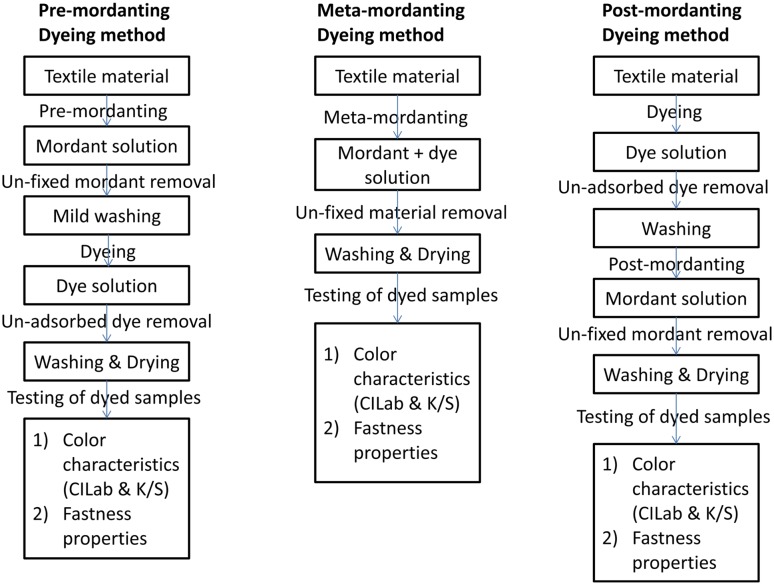
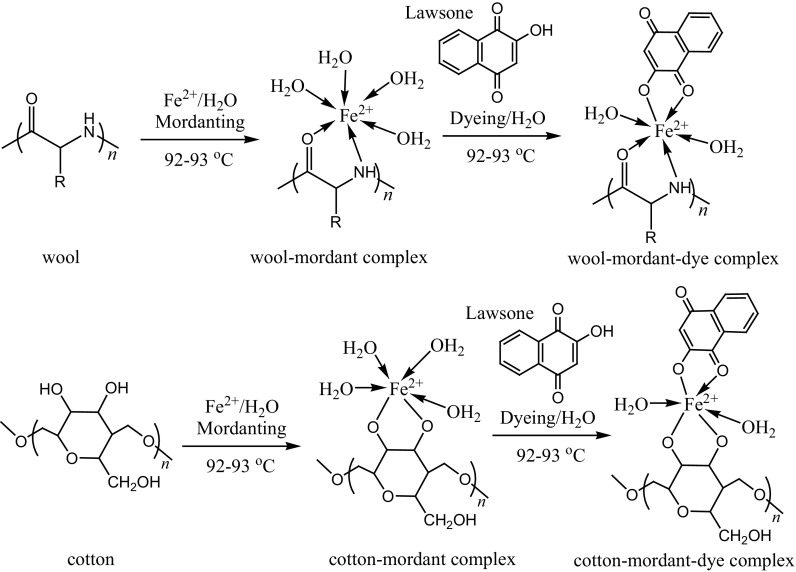
Verification
Claims the paper makes
The claims and statistics of this paper haven’t been checked yet.
Free: it reads the open-access text and checks the first 5 claims that cite a source we can check. Create a free account to check every claim.
Claims other papers make about this one
Each is checked against this paper’s own text: does it say what the citing paper says it does?
The source backs part of the claim, not all of it — or backs it for a different population, condition or comparison.
In the citing paper
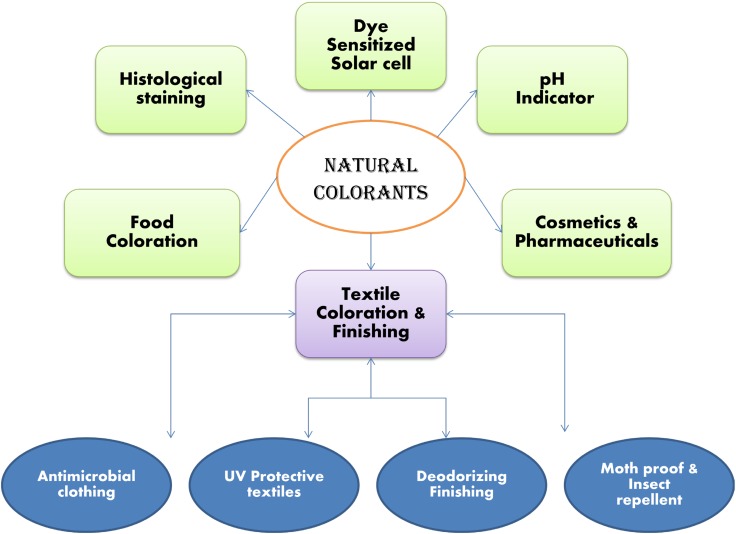
“Quinone dyes have been used for various applications, such as histological staining, rust prevention on metal surfaces, and increasing the conversion efficiency of solar cells, and they have found use as sensors, pH indicators, pigments, inks and dyes for leather, wood, medicine, food and textiles [5,64,65,190,191].”
From Natural Quinone Dyes: A Review on Structure, Extraction Techniques, Analysis and Application Potential (2021) · cites this paper as [5]
Experimental — accuracy not yet measured
Self-check
Percentages, sums and reported differences re-computed from the paper’s own numbers.
The self-check needs the paper’s full text.
Citations
Cites
Physical chemistry of surfaces
(1998) · Choice Reviews Online · doi:10.5860/choice.35-4499 · Cited by 11,648
Insights into the modeling of adsorption isotherm systems
Foo, K. Y., & Hameed, B. H. (2010) · Chemical Engineering Journal · doi:10.1016/j.cej.2009.09.013 · Cited by 8,479
Chemistry and biochemistry of plant pigments
Goodwin, T. W. (1976) · Medical Entomology and Zoology · Cited by 3,081
Physical chemistry of surfaces
Taylor, P. (1991) · Colloids and Surfaces · doi:10.1016/0166-6622(91)80262-m · Cited by 2,811 · cited 1×
“Once a layer occupied with molecules, adsorption process saturates and the graphically a plateau obtained [106].”
BackgroundRedlich, O., & Peterson, D. L. (1959) · The Journal of Physical Chemistry · doi:10.1021/j150576a611 · Cited by 2,607
Kinetic Models for the Sorption of Dye from Aqueous Solution by Wood
Ho, Y. S., & Mckay, G. (1998) · Process Safety and Environmental Protection · doi:10.1205/095758298529326 · Cited by 1,656
Extraction, Isolation And Characterization Of Bioactive Compounds From Plants’ Extracts
Sasidharan, S., Chen, Y., Saravanan, D., Sundram, K., & Latha, L. (2010) · African Journal of Traditional, Complementary and Alternative Medicines · doi:10.4314/ajtcam.v8i1.60483 · Cited by 1,456
Techniques of flavonoid identification.
Markham, K. R. (1982) · Academic Press eBooks · Cited by 1,307
Techniques of flavonoid identification:
Wollenweber, E. (1983) · Phytochemistry · doi:10.1016/0031-9422(83)80259-3 · Cited by 1,172
Adsorption isotherm models for basic dye adsorption by peat in single and binary component systems
Allen, S. J., Mckay, G., & Porter, J. F. (2004) · Journal of Colloid and Interface Science · doi:10.1016/j.jcis.2004.08.078 · Cited by 1,051
Research works printed but not linked: 33
- Khan MA Khan M Srivastava PK Mohammad F Colourage. 2005 52 12 53 60
- Yusuf M Mohammad F Shabbir M Khan MA Text. Cloth. Sust. 2016 2 1 1 9
- Kulkarni SS Gokhale AV Bodake UM Pathade GR Univ. J. Environ. Res. Technol. 2011 1 2 135 139
- Swamy VN Gowda KN Sudhakar R Indian J. Trad. Knowl. 2016 15 2 278 284
- Crowfoot CM Riefstahl E Patterned Textiles in Pharaonic Egypt 1944 New York Brooklyn Museum, Brooklyn Institute of Arts and Sciences 382 455
- T.C. Golyon, Le lin et sa teinture en Egypte des procedes ancestraux aux pratiques importee. Aspects del’artisanat du textile dans le monde Mediterraneen, VII Siecle av. (J.C.a l’Epoque Recente 1996) pp. 13–25
- Redford DB The Oxford Encyclopaedia of Ancient Egypt 2001 Cairo The American University in Cairo Press
- Van PM Hooft T Raven MJ Van-Rooij EHC Vogelsang-Eastwood GM Pharaonic and Early Medieval Egyptian Textiles 1994 Leiden RIJKS Museum van Oudheden
- Alam MM Rahman ML Haque MZ Bangladesh J. Scientific Ind. Res. 2007 42 2 217 222
- Vankar PS Natural Dyes for Industrial Applications 2007 New Delhi National Institute of Industrial Research
- Gulrajani ML Indian J. Fibre Text. Res. 2001 26 1/2 191 201
- Naqvi HK Urban Centres and Industries in Upper India 1968 Delhi Asia Publishing House 12
- M.L. Gulrajani, D. Gupta (eds.), Natural Dyes and Their Application to Textiles (IIT New Delhi, New Delhi, 1992) pp. 19–45
- M.L. Gulrajani, D. Gupta (eds.), Natural Dyes and Their Application to Textiles (IIT New Delhi, New Delhi, 1992), pp. 59–79
- Adem ON Turkish J. Chem. 1996 20 3 194 203
- Gulrajani ML Bhaumik S Oppermann W Hardtmann G Indian J. Fibre Text. Res. 2003 8 2 221 226
- Rajendran R Balakumar C Kalaivani J Sivakumar R J. Text. Apparel Technol. Manag. 2011 7 2 1 12
- Bhattacharyya N Natural Dyes for Textiles and Their Eco-friendly Applications 2010 New Delhi IAFL Publications
- Naz S Bhatti IA Adeel S Indian J. Fibre Text. Res. 2011 36 2 132 136
- Lagergren S Zur theorie der Sogenannten Absorption Gelöster Stoffe 1898 Stockholm PA Norstedt & söner
- Yusuf M J. Chem. Pharmaceut. Res. 2016 8 3 571 575
- Ramachandran T Rajendrakumar K Rajendran R IE (I) J-TX. 2004 84 42 47
- Joshi M Wazed AS Purwar R Rajendran S Indian J. Fibre Text. Res. 2009 34 3 295 304
- Çalis A Çelik GY Katircioglu H African J. Biotechnol. 2009 8 2 291 293
- Chen C Chang WY Indian J. Fibre Text. Res. 2007 32 122 125
- Gupta D Bhaumik S Indian J. Fibre Text. Res. 2007 32 254 263
- Gupta D Laha A Indian J. Fibre Text. Res. 2007 32 1 88 92
- N. Rungruangkitkrai, N. Tubtimthai, A. Cholachatpinyo, R. Mongkholrattanasit, UV protection properties of wool fabric dyed with eucalyptus leaf extract by the padding techniques, in RMUTP international conference: textiles and fashion (Bangkok, 2012)
- Shakyawar DB Raja AS Kumar A Pareek PK Indian J. Fibre Text. Res. 2015 40 2 200 202
- Chattopadhyay P Chatterjee S Sen SK African J. Biotechnol. 2008 7 17 2972 2985
- Islam S Am. J. Food Sci. Technol. 2016 4 4 109 114
- Gengatharan A Dykes GA Choo WS LWT-Food Sci. Technol. 2015 64 2 645 649
- Bakowska-Barczak A Pol. J. Food Nut. Sci. 2005 14 55 107 116
Cited by
Items 201–300 of 652
Phan, H. N., Bui, H. M., & Vu, N. K. (2023) · Research Journal of Textile and Apparel · doi:10.1108/rjta-06-2022-0071 · Cited by 16
Mohamed, A., Shaarawy, S., Elshemy, N., Hebeish, A., & Hassabo, A. (2022) · Egyptian Journal of Chemistry · doi:10.21608/ejchem.2022.137464.6053 · Cited by 14
Adsorptive and photocatalytic removal of colored pollutants from wastewaters: a critical review
Ahmed, M. A., & Mohamed, A. A. (2025) · Elsevier eBooks · doi:10.1016/b978-0-443-21701-2.00020-9 · Cited by 16
Eco-Friendly Extraction of Curcumin from Turmeric and Dyeability of Textile Fibers
Popescu, V., Alexandrescu, A.-D., Popescu, G., & Vasilache, V. (2025) · Fibers · doi:10.3390/fib13060073 · Cited by 14
Sharma, M. K., & Mohammad, A. (2020) · Wiley eBooks · doi:10.1002/9781119593249.ch4 · Cited by 14
Gharred, N., Baaka, N., Bettache, N., Hamdi, A., Dbeibia, A., Dhaouadi, H., Morère, A., Menut, C., & Dridi‐Dhaouadi, S. (2021) · Waste and Biomass Valorization · doi:10.1007/s12649-021-01375-4 · Cited by 14
Multi-Fiber Dyeing Improvement Using Natural Supercritical CO2 Extracts
Dhouibi, N., Baaka, N., Charradi, R., Bouine, I., Dhaouadi, H., & Dridi‐Dhaouadi, S. (2021) · Fibers and Polymers · doi:10.1007/s12221-021-0422-2 · Cited by 19
Extraction of yellow fluorescent Caesalpinia sappan L. dye for photovoltaic application
Surana, K., Bhattacharya, B., & Majumder, S. (2021) · Optical Materials · doi:10.1016/j.optmat.2021.111347 · Cited by 14
Ethnomedicinal, Pharmacological and Commercial Perspectives of Laccifer lacca Body Exudate (LBE)
(2022) · Letters in Applied NanoBioScience · doi:10.33263/lianbs121.021 · Cited by 18
“have a great potential in the form of folklore medicines [2,3] and sometimes food supply chain due to specific edibility of some insects.”
BackgroundA study on the coloration effectiveness of Chromolaena odorata on the worsted wool fabric
Pham, C. T. N., Phan, H. N., Hoang, T. T., Dao, T. T. T., & Bui, H. M. (2022) · Research Journal of Textile and Apparel · doi:10.1108/rjta-07-2022-0089 · Cited by 14
Rostini, I., JUNIANTO, J., & Warsiki, E. (2023) · Applied Sciences · doi:10.3390/app13148205 · Cited by 14
Sadeghi‐Kiakhani, M., Tehrani‐Bagha, A. R., Miri, F. S., Hashemi, E., & Safi, M. (2022) · BioMetals · doi:10.1007/s10534-022-00366-9 · Cited by 14
“Despite some exhaustive review papers on the textile dyeing with natural dyes, few scientific papers are on the use of Achillea millefolium petals in the dyeing and antimicrobial treatment of cotton fabrics (Iqbal et al. 2008; Rajendran et al. 2013; Yusuf et al. 2017; Arora et al. 2012; Rehman et al. 2012).”
BackgroundMethodInfluentialÖzdemir, M. B., Karadağ, R., & Koseoglu, I. (2025) · Scientific Reports · doi:10.1038/s41598-025-05032-x · Cited by 15
A novel Cu–Al LDH/g-C3N4 Z-scheme photocatalyst for environmental remediation of cresol red
Rath, A., Sahu, P. K., Champati, A., Pradhan, A., Madhual, A., Mishra, P. M., & Naik, B. (2025) · Discover Applied Sciences · doi:10.1007/s42452-025-07438-8 · Cited by 13
“Due to their extensive usage in several industries, these dyes are now an essential part of industrial effluent [9, 10].”
Biochar-metal nanocomposites for azo dye removal: advancements, mechanisms, and future prospects
Borpujari, P., Khan, S., Dutta, J., & Borah, D. (2025) · Discover Applied Sciences · doi:10.1007/s42452-025-07706-7 · Cited by 14
“The earliest dyes used by humans date back to 2600 BC and were derived from natural sources such as plants, insects, mollusks, and minerals [27, 150].”
Adeel, S., Kiran, S., Ahmad, T., Habib, N., Tariq, K., & Hussaan, M. (2020) · Wiley eBooks · doi:10.1002/9781119620396.ch14 · Cited by 13
The Sustainable Coloration of Wool Fabric Using Naturally Extracted Dyes from Sappan Heartwood
Datta, M. K., Talukder, M. E., Faisal, A. M., Sarker, A., & Jiang, H. (2021) · Journal of Natural Fibers · doi:10.1080/15440478.2021.1982825 · Cited by 14
“…environment-friendly colorants as they are extracted from natural sources like plants, animal, and mineral sources (Fernández-López, Fernández-Lledó, and Angosto 2020; Gebhardt et al. 2020; Hasan et al. 2020a; Mahmud et al. 2019; Nambela, Haule, and Mgani 2020; Yusuf, Shabbir, and Mohammad 2017).”
BackgroundEco-Friendly Dyeing of Wool Fabrics with Natural Dye Extracted from Citrus Sinensis L Peels
Romdhanı, Z., Sakji, N., & Hamdaoui, M. (2022) · Fibers and Polymers · doi:10.1007/s12221-022-4478-4 · Cited by 14
Scope of Natural Dyes and Biomordants in Textile Industry for Cleaner Production
Balachandran, B., & Sabumon, P. C. (2023) · Sustainable textiles · doi:10.1007/978-3-031-35451-9_4 · Cited by 15
Role of fungi in biotechnology
Aggarwal, S., & Kumari, A. (2024) · Elsevier eBooks · doi:10.1016/b978-0-443-19049-0.00009-8 · Cited by 13
Rather, L. J., Dar, Q. F., Zhou, Q., Long, H., & Li, Q. (2020) · Journal of the Textile Institute · doi:10.1080/00405000.2020.1779166 · Cited by 13
“However, determinantal side effects of azo and benzidine dyes have forced researchers to adopt traditional natural dyeing techniques (a simple adsorption method) (Nazem et al., 2007; Yusuf et al., 2017).”
BackgroundSingh, S., Kayode, A. T., & Vernwal, S. (2022) · Environmental Challenges · doi:10.1016/j.envc.2022.100459 · Cited by 13
Penna, A. C. G., Durço, B. B., Pagani, M. M., Pimentel, T. C., Mársico, E. T., Silva, A. C. O., & Esmerino, E. A. (2022) · Journal of Sensory Studies · doi:10.1111/joss.12734 · Cited by 13
Dutta, S., & Bansal, P. (2020) · Textile science and clothing technology · doi:10.1007/978-981-15-9169-3_14 · Cited by 15
Rehan, M., El‐Sayed, H., El-Hawary, N. S., Mashaly, H., & Elshemy, N. S. (2024) · Industrial & Engineering Chemistry Research · doi:10.1021/acs.iecr.4c01969 · Cited by 12
Insights into polymorphism and inclusion properties in organic compounds
Jayant, V., & Yusuf, M. (2024) · Discover Chemistry. · doi:10.1007/s44371-024-00054-2 · Cited by 12
Self-citationChaithra, R., Harshitha, D., & Renuka, C. G. (2025) · Journal of Fluorescence · doi:10.1007/s10895-024-04121-w · Cited by 16
CRITICAL REVIEW ON PAST, PRESENT AND FUTURE SCOPE OF DIAMONDBACK MOTH MANAGEMENT
Jamtsho, T., Banu, N., & Kinley, C. (2021) · PLANT ARCHIVES · doi:10.51470/plantarchives.2021.v21.no1.159 · Cited by 12
“, 2011), lac (Yusuf et al., 2017), and silk, respectively (Rao et al.”
Background(2023) · Biointerface Research in Applied Chemistry · doi:10.33263/briac136.570 · Cited by 12
Ultrasound‐Based Wet Processes in Textile Industry
Körlü, A., & Bahtiyari, M. İ. (2021) · Wiley eBooks · doi:10.1002/9781119710288.ch10 · Cited by 12
Aromatic plants: a multifaceted asset
Anuradha., & Bharadvaja, N. (2023) · Revista Brasileira de Botânica · doi:10.1007/s40415-023-00882-z · Cited by 12
Ascomycota as a source of natural colorants
de Oliveira, L. A., Segundo, W. O. P. F., de Souza, É. S., Peres, E. G., Koolen, H. H. F., & de Souza, J. V. B. (2022) · Brazilian Journal of Microbiology · doi:10.1007/s42770-022-00768-4 · Cited by 11
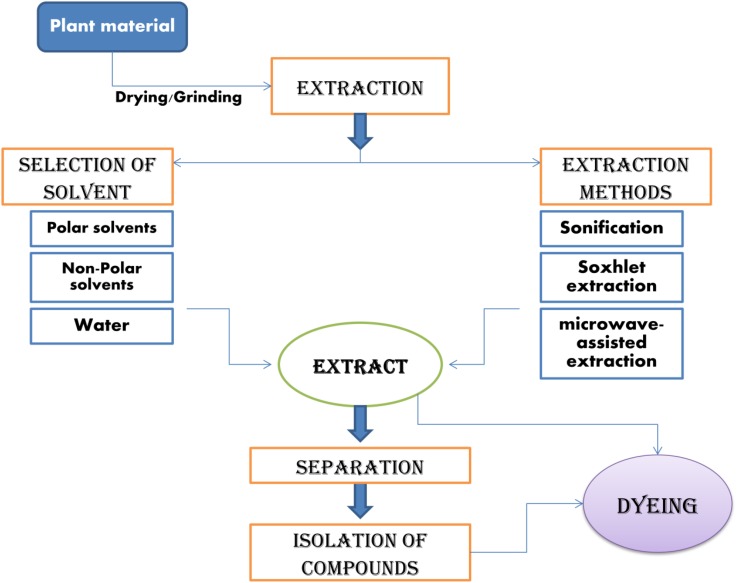
“Soxhlet extraction, sonification, and heating under reflux are some of the extraction methods commonly used for obtaining these compounds [3, 34, 35].”
MethodBarkaat, S., Matiha, Adeel, S., Habib, N., Jabli, M., Imran, M., & Mia, R. (2025) · Results in Engineering · doi:10.1016/j.rineng.2025.107211 · Cited by 14
Exploring the Potential of Tannin Based Colorants Towards Functional Value Addition of Wool Textiles
Shabbir, M., Rather, L. J., & Mohammad, F. (2019) · Fibers and Polymers · doi:10.1007/s12221-019-9059-9 · Cited by 11
Self-citationRosyida, A., Suranto, S., Masykuri, M., & Margono, M. (2021) · Pigment & Resin Technology · doi:10.1108/prt-03-2021-0034 · Cited by 11
Yağlıoğlu, A. Ş., Eser, F., & Dölarslan, M. (2022) · AATCC Journal of Research · doi:10.1177/24723444221081464 · Cited by 11
Józó, M., Várdai, R., Bartos, A., Móczó, J., & Pukánszky, B. (2022) · Molecules · doi:10.3390/molecules27196423 · Cited by 13
Production of Natural Pigments by Penicillium brevicompactum Using Agro-Industrial Byproducts
Basto, B., da Silva, N. R., Teixeira, J. A., & Silvério, S. C. (2022) · Fermentation · doi:10.3390/fermentation8100536 · Cited by 12
Sobandi, B., Supiarza, H., Gunara, S., Gunawan, W., & Hamdani, H. Y. (2023) · Fibres and Textiles · doi:10.15240/tul/008/2023-3-005 · Cited by 11
“According to Pedro, et al, replacing chemicals with natural materials is not only healthy and safe but also in practice there lie the socalled aspects of empowerment and passing on skills to the next generation [9].”
MethodMosisa, T. D., & Hordofa, D. F. (2024) · Discover Global Society · doi:10.1007/s44282-024-00061-9 · Cited by 11
“Research from South Africa by Yusuf et al. [49]found beekeeping cooperatives struggled with issues like lack of planning, theft, weak skills development and extension services.”
Wu, S., Liu, L., Zhang, X., & Wang, Z. (2021) · Process Biochemistry · doi:10.1016/j.procbio.2021.02.017 · Cited by 11
Gürses, A. (2018) · Elsevier eBooks · doi:10.1016/b978-0-08-102491-1.00002-2 · Cited by 15
Effect of amphiphilic ionic liquids on the colorimetric properties of polyketides colorants
Veríssimo, N. V. P., Nakamura, C. N., Oliveira, F. E., Kuhn, B. L., Frizzo, C. P., Pereira, J. F. B., & Santos‐Ebinuma, V. C. (2022) · Journal of Molecular Liquids · doi:10.1016/j.molliq.2022.119857 · Cited by 11
Agro-industrial Waste Materials and Their Recycled Value-Added Applications: Review
Yusuf, M. (2019) · Springer eBooks · doi:10.1007/978-3-319-68255-6_48 · Cited by 14
Self-citationWang, X., Ma, D., Wei, Y., Gu, W., Wang, Y. F., Liu, B., Lei, Y., & Liang, S. (2025) · Dyes and Pigments · doi:10.1016/j.dyepig.2025.113093 · Cited by 10
Dye adsorption onto electrospun films made of polylactic acid and gelatin
Sokolova, A. I., Pavlova, E. R., Bagrov, D. V., Klinov, D. V., & Шайтан, К. В. (2018) · Molecular Crystals and Liquid Crystals · doi:10.1080/15421406.2018.1563945 · Cited by 10
“The growing awareness of ecological safety makes all industries seek ecofriendly dyes instead of synthetic ones [2], and this drives the demand for efficient dye removal procedures [3].”
BackgroundMurani, V., Joshi, K., Sharma, K. R., & Archit, D. (2020) · International Journal of Science and Research (IJSR) · doi:10.21275/sr201111110135 · Cited by 10
“Some plants might possess over one color depending upon from that a part of the plant they're extracted [7, 20].”
BackgroundKumar, A., Pramanik, J., Batta, K., Bamal, P., Prajapati, B. G., & Singh, S. K. (2024) · International Journal of Food Science & Technology · doi:10.1111/ijfs.16922 · Cited by 11
Ishimoto, C. K., Paulino, B. N., Neri-Numa, I. A., & Bicas, J. L. (2024) · Food Research International · doi:10.1016/j.foodres.2024.115082 · Cited by 10
Yadav, L., Abedeen, M. Z., Agarwal, M., & Gupta, R. (2025) · Solar Energy · doi:10.1016/j.solener.2025.113553 · Cited by 10
Sirirak, J., Suppharatthanya, P., CHANTHA, K., Girdthep, S., & Chayabutra, S. (2021) · Journal of Metals Materials and Minerals · doi:10.55713/jmmm.v31i2.1009 · Cited by 10
Freeman, H. S., dos Santos, T. C., Chen, Y., Vendemiatti, J. A. D. S., de Oliveira, Á. C., Vacchi, F. I., Vinueza, N. R., & Umbuzeiro, G. D. A. (2021) · Environmental Science and Pollution Research · doi:10.1007/s11356-021-17388-4 · Cited by 10
“Following this discovery, synthetic dyes soon became available worldwide, and by 1880 most natural dyes were replaced by synthetic dyes on a global scale (Drivas et al. 2011; Yusuf et al. 2017).”
BackgroundEffect of gamma radiation on a natural pigment and its possible use as a label dosimeter
El-Kader, N. M. A., & Gafar, S. M. (2022) · Journal of Radioanalytical and Nuclear Chemistry · doi:10.1007/s10967-021-08120-0 · Cited by 10
“Apart from their application in industries and textiles, natural dyes are also used within the color of food, medicines, food packaging, and in leather-based processing, and a number of the dyeyielding plants are used as drugs in various conventional medicinal treatments [3, 4].”
Background(2020) · Global NEST Journal · doi:10.30955/gnj.003336 · Cited by 10
“These dyes are obtained from plants, animals & minerals, having alluring colors which not only attracts human beings but also have gained particular place in textiles, cosmetics, leather etc. (Yusuf et al., 2017).”
BackgroundEncapsulation of polyketide colorants in chitosan and maltodextrin microparticles
Galván, K. L. P., Veríssimo, N. V. P., Santana, J. S., Lemos, P. V. F., de Souza, C. O., Cardoso, L. G., Assis, D. D. J., Marcelino, H. R., de Oliveira, T. T. B., Biasoto, A. C. T., et al. (2024) · International Journal of Biological Macromolecules · doi:10.1016/j.ijbiomac.2024.132173 · Cited by 10
Introduction to Textiles and Finishing Materials
Shabbir, M., & Sheikh, J. N. (2020) · Wiley eBooks · doi:10.1002/9781119620396.ch1 · Cited by 10
Self-citationJia, Y., Jiang, H., Wang, Y., Liu, Z., & Peng, L. (2022) · Fibers and Polymers · doi:10.1007/s12221-022-4940-3 · Cited by 9
Journey of natural pigments from ancient antiquity to present: Insights on sustainable development
Sarkar, S., Khatun, D., Dutta, B., & Bandopadhyay, R. (2022) · Revista de Fomento Social · doi:10.1007/s43539-022-00059-9 · Cited by 9
Gnanadhas, F., Surendarnath, S., Natarajan, S., Gnanamanickam, M. S., Amesho, K. T. T., & Sharma, B. (2023) · Environmental Science and Pollution Research · doi:10.1007/s11356-023-28326-x · Cited by 9
Using Herbal dyes as an alternative staining method for sperm evaluation
Ebrahimi, M., & Parham, A. (2020) · Veterinary Medicine and Science · doi:10.1002/vms3.268 · Cited by 9
Bacterial Pigments: An Untapped Colorful Microbial World
Kamble, G. R., Hiremath, G., Hiremath, S. V., & Hiremath, M. B. (2022) · Microorganisms for sustainability · doi:10.1007/978-981-16-4574-7_15 · Cited by 12
Silva, L. M. C., Silva, P. M. D. S., Pagnan, C. S., & Ayres, E. (2023) · Coloration Technology · doi:10.1111/cote.12704 · Cited by 9
Barani, H., & Rahmani, F. (2023) · Fibers and Polymers · doi:10.1007/s12221-023-00274-w · Cited by 9
Pidhatika, B., Ninan, N., Bright, R., Palms, D., Rahmawan, Y., & Vasilev, K. A. (2024) · Journal of Applied Polymer Science · doi:10.1002/app.55130 · Cited by 9
Production of pigments in Alternanthera sessilis calli mediated by plant growth regulators and light
Milech, C., Lucho, S. R., Kleinowski, A. M., Dutra, D. B., Soares, M. M., & Braga, E. J. B. (2017) · Acta Scientiarum Biological Sciences · doi:10.4025/actascibiolsci.v39i3.36312 · Cited by 9
Introduction to Textiles and the Environment
Shabbir, M., & Naim, M. (2019) · Wiley eBooks · doi:10.1002/9781119526599.ch1 · Cited by 10
Self-citationPreparation and characterization of lake pigments from sappan wood using Thai local clays
Sirirak, J., Worawannotai, N., Suwanchawalit, C., & Chayabutra, S. (2020) · Journal of Metals Materials and Minerals · doi:10.55713/jmmm.v30i1.560 · Cited by 9
“The use of natural dye and natural lake pigments as colorants in the production of cosmetics, paints, and inks has become more attractive to industries in recent years due to health awareness and environmental impact of synthetic dyes [9-12].”
BackgroundNatural dye plants used by Dayak Iban in Sungai Utik, Kapuas Hulu, West Kalimantan, Indonesia
Wahdina, W., Setiadi, D., Purwanto, Y., & Qayim, I. (2021) · Biodiversitas Journal of Biological Diversity · doi:10.13057/biodiv/d220342 · Cited by 9
Green natural dye from Buddleja officinalis and its ultrasonic dyeing on cotton fabric
Ke, G., Zhao, Z., Chen, S., & Li, J. (2021) · Pigment & Resin Technology · doi:10.1108/prt-10-2020-0110 · Cited by 9
Plant‐Based Colorants: Isolation and Application
Bhandari, V., Badanayak, P., & Jose, S. (2024) · Wiley eBooks · doi:10.1002/9783527839032.ch7 · Cited by 8
Toning with Nature: A Review of Natural Ingredients in Cosmetic Formulations
Sisodia, A., Chettupalli, A. K., Bukke, S. P. N., Rahaman, S. A., Chaudhary, S., & Nicholas, B. (2025) · Natural Product Communications · doi:10.1177/1934578x251353560 · Cited by 12
Study of Naturally-derived Biomolecules as Therapeutics against SARS-CoV-2 Viral Spike Protein
Khanal, P., Chawla, U., Praveen, S., Malik, Z., Malik, S., Yusuf, M., Khan, S. A., & Sharma, M. K. (2021) · Journal of Pharmaceutical Research International · doi:10.9734/jpri/2021/v33i28a31524 · Cited by 8
“Medicinal plants and herbs and their derived active phytochemicals/compounds, especially flavonoids have long been used for the treatment of various disorders and diseases [35] due to their enhanced unique abilities of active compounds [20,21,36] such as antimicrobial, anticancer, antioxidant and antineuroinflammatory…”
BackgroundSelf-citationIntroduction to agro-industrial waste
Tariq, A., Bhawani, S. A., Moheman, A., & Alotaibi, K. M. (2023) · Elsevier eBooks · doi:10.1016/b978-0-12-823349-8.00008-3 · Cited by 10
Daramola, I. V., & Awojobi, K. O. (2023) · Journal of Advances in Microbiology · doi:10.9734/jamb/2023/v23i8742 · Cited by 8
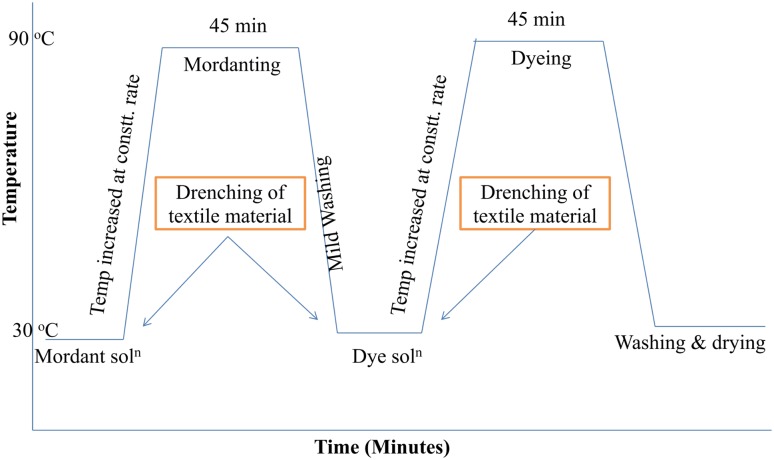
“The choice of suitable mordant was important for better fixation, adhesion, and sometimes a change in the colour shade of the pigment to the fabric [5].”
BackgroundExploring colorant production by amazonian filamentous fungi: Stability and applications
de Oliveira, L. A., Sanches, M. A., Segundo, W. O. P. F., Santiago, P. A. L., Lima, R. Q., Cortez, A. C. A., de Souza, É. S., Lima, M. P., Lima, É. S., Koolen, H. H. F., et al. (2023) · Journal of Basic Microbiology · doi:10.1002/jobm.202300444 · Cited by 8
Ain, Q. U., Nazli, Z.-I.-H., Aslam, M., Zafar, I., Afridi, H. I., Unar, A., Jamshaid, M., Rehman, R., Shoukat, W., Mouada, H., et al. (2024) · Natural Product Communications · doi:10.1177/1934578x241231463 · Cited by 13
“According to earlier researchers, 25 – 27 dyed products contrast more with natural colors.”
Carotenoids based smart packaging: A comprehensive review
Sharath Kumar, N., Dar, A. H., Srivastava, S., Dash, K. K., & Pandey, V. K. (2024) · Measurement Food · doi:10.1016/j.meafoo.2024.100190 · Cited by 14
Sabino, C. V. D. M., da Silva, B. J. P., de Menezes, D. L. B., da Silva, F. M. A., de Souza, T. P., Koolen, H. H. F., de Lima, Á. A. N., & Lima, É. S. (2021) · Food Technology and Biotechnology · doi:10.17113/ftb.59.01.21.6809 · Cited by 36
“Natural dyes are distinguished by their biocompatibility, which makes them an alternative to the widely-marketed synthetic dyes (1,2).”
BackgroundMicroalgae‐Based UV Protection Compounds
Costa, J. A. V., Moreira, J. B., Izaguirres, G. G., Teixeira, L. M., & de Morais, M. G. (2021) · Wiley eBooks · doi:10.1002/9781119717317.ch10 · Cited by 11
Nakamura, C. N., Veríssimo, N. V. P., Oliveira, F. E., Frizzo, C. P., Pérez‐Sánchez, G., Coutinho, J. A. P., Pereira, J. F. B., & Santos‐Ebinuma, V. C. (2023) · Separation and Purification Technology · doi:10.1016/j.seppur.2023.124070 · Cited by 9
“For these reasons, most food industries modify or accentuate them by including colorants in their aliments [2].”
BackgroundNew trends in the application of natural dyes in textile dyeing
Popescu, V. (2023) · Elsevier eBooks · doi:10.1016/b978-0-443-15213-9.00004-1 · Cited by 11
High-Performance Natural Dyes for Cellulosic Fibers Review - part 1
El-Hawary, N. S. (2019) · Journal of Textiles Coloration and Polymer Science · doi:10.21608/jtcps.2019.8154.1018 · Cited by 8
Steberl, K., Hartung, J., & Graeff‐Hönninger, S. (2020) · Agronomy · doi:10.3390/agronomy10091272 · Cited by 9
Hussin, N. S. M., Ismail, A. R., Hasbullah, S. W., & Kadir, N. A. (2020) · IOP Conference Series Earth and Environmental Science · doi:10.1088/1755-1315/549/1/012081 · Cited by 10
Sari, S. W., Djamil, R., & Faizatun, F. (2021) · Indonesian Journal of Chemistry · doi:10.22146/ijc.60414 · Cited by 8
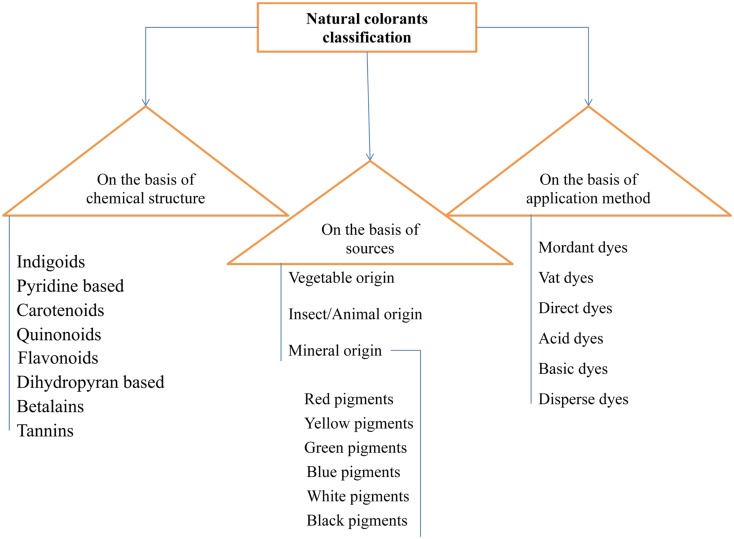
“It has been classified into six classes based on application methods which are mordant dyes, vat dyes, direct dyes, acid dyes, basic dyes, and disperse dyes [18].”
BackgroundGeelani, S. M., Bhat, R. A., Ara, S., Mir, N. A., Bhat, S. J. A., & Mishra, P. K. (2021) · Current Research in Green and Sustainable Chemistry · doi:10.1016/j.crgsc.2021.100182 · Cited by 8
Simultaneous dyeing and finishing of wool and natural silk fabrics using Azolla pinnata extract
Azab, D., Mowafi, S., & El‐Sayed, H. (2023) · Emergent Materials · doi:10.1007/s42247-023-00519-7 · Cited by 8
“However, the excessive use of synthetic dyes in the coloration of textile substrates led to the accumulation of polluting contaminants in the drained wastewater [3].”
BackgroundApplication of Ionic Liquid Solvents in the Food Industry
Mesquita, L. M. D. S., Murador, D. C., & de Rosso, V. V. (2019) · Encyclopedia of Ionic Liquids · doi:10.1007/978-981-10-6739-6_8-1 · Cited by 8
Islam, S., Jalil, M. A., Motaleb, K. Z. M. A., Saeed, M. A., Belowar, S., Rahamatolla, M., Hossain, S., Mukit, M. A., & Khan, A. N. (2025) · Sustainability & Circularity NOW · doi:10.1055/a-2695-7703 · Cited by 10
Safapour, S., Shabbir, M., Rather, L. J., Mir, S. S., & Assiri, M. A. (2025) · Environmental Science and Pollution Research · doi:10.1007/s11356-025-37294-3 · Cited by 7
“Madder , known for its deep red to reddish-brown tones, contains a range of anthraquinone derivatives including purpurin, alizarin, munjistin, and pseudopurpurin that confer rich color and antioxidant potential (Naqvi et al. 2024; Yusuf et al. 2017a, 2015).”
Self-citationIdentification, extraction, and application of orange peel color extracts for silk fabric coloration
Che, J., Dannenberg, J. M., Yu, M., Xu, Y., & Liu, Y. (2023) · Heliyon · doi:10.1016/j.heliyon.2023.e23836 · Cited by 7
“It is a common practice that natural dyes are commonly used on protein fibers other than cotton textiles [15 – 17].”
BackgroundInsights into Adsorbents: Activated Carbon for Effective Adsorption
Singh, D. (2024) · Jabirian Journal of Biointerface Research in Pharmaceutics and Applied Chemistry · doi:10.55559/jjbrpac.v1i2.233 · Cited by 7
Printing with Natural Dye Extract from Japanese Knotweed Leaves
Klančnik, M. (2024) · Fibers and Polymers · doi:10.1007/s12221-024-00760-9 · Cited by 8
Evaluation of wool dyeing potentials of some plant species growing in Southeastern Anatolia Region
Yilmaz, H., Çakır, A., & Açıkyıldız, M. (2018) · Journal of Natural Fibers · doi:10.1080/15440478.2018.1441091 · Cited by 7
Colorimetric properties of batik fabrics colored using gambier liquid waste
Failisnur, F., Sofyan, S., & Silfia, S. (2021) · Journal of Physics Conference Series · doi:10.1088/1742-6596/1940/1/012092 · Cited by 7
“The dyes used are mostly sourced from synthetic and are suspected to be toxic and carcinogenic [16,17] .”
BackgroundCüce, M. (2021) · Journal of Natural Fibers · doi:10.1080/15440478.2021.1990179 · Cited by 7
“Dyestuffs obtained from plants with antibacterial properties prevent the growth of microorganisms and thus give antibacterial properties to the textile surfaces (Yusuf, Shabbir, and Mohammad 2017).”
BackgroundBait, S., Shinde, S. S., Adivarekar, R. V., & Sekar, N. (2021) · Journal of the Indian Chemical Society · doi:10.1016/j.jics.2021.100236 · Cited by 7
Ultrasonic-assisted antimicrobial functionalization of cotton knitwear with plant extracts
Grujić, D., Savić, A., Topalić‐Trivunović, L., Bizjak, M., Velemir, A., & Milanovic, J. Z. (2022) · Journal of the Textile Institute · doi:10.1080/00405000.2022.2114287 · Cited by 7
“Some natural dyes even have properties of therapeutic value, and they are therefore used in medicine as well (Yusuf et al., 2017).”
BackgroundPhotocatalytic Degradation of Textile Dye Using Green Synthesized Nanoparticles
(2022) · Letters in Applied NanoBioScience · doi:10.33263/lianbs124.102 · Cited by 7
“The use of natural dyes was largely removed by the mid-nineteenth century following the identification of artificial colors [20].”
InfluentialValorization of Beetroot Waste for Extraction of Natural Dye for Textile and Food Applications
Sooch, B. S., Sandhu, N., Mann, M. K., & Ray, R. C. (2024) · Springer eBooks · doi:10.1007/978-981-99-8266-0_11 · Cited by 10
Metadata
- Authors
- Yusuf, M., Shabbir, M., & Mohammad, F.
- Affiliations
- Maharshi Dayanand University (IN)
- Jamia Millia Islamia (IN)
- Corresponding author
- Yusuf, Mohd
- Shabbir, Mohd
- Mohammad, Faqeer
- Venue
- Natural Products and Bioprospecting
- Published
- 2017-01-16
- Volume
- 7
- Issue
- 1
- Pages
- 123-145
- ISSN
- 2192-2195 (ISSN-L)
- 2192-2209
- PMC
- PMC5315675
- OpenAlex
- W2572261390
- Semantic Scholar
- 53fbd91d525b2be8b27a16e810911295aed4e3a1
- Cited by
- 597
- References
- 131
- Citations by year
- 2026: 44 · 2025: 82 · 2024: 69 · 2023: 86 · 2022: 78 · 2021: 89 · 2020: 72 · 2019: 47 · 2018: 22 · 2017: 8
- FWCI
- 4.60
- Type
- journal article
- Language
- en
- Open access
- diamond
- doi.org
- Locations
- Natural Products and Bioprospecting (publishedVersion, cc-by)
- PubMed Central (publishedVersion, cc-by)
- PubMed (publishedVersion)
- Topics
- Physical Sciences › Materials Science › Polymers and Plastics › Dyeing and Modifying Textile Fibers
- Health Sciences › Medicine › Pathology and Forensic Medicine › Biological Stains and Phytochemicals
- Physical Sciences › Chemistry › Analytical Chemistry › Dye analysis and toxicity
- Keywords
- natural colorants, textile dyeing, natural dyes, sustainable dyeing, multifunctional textiles, dye adsorption isotherms, dyeing kinetics, environmental impact of dyes
About these checks
Registry, retraction, Cites and statistics results are computed, not judged, with one exception: a printed reference that no index lists is read once by a model before it counts as a citation error. Claims are extracted by a model and kept only when their quote appears verbatim in the text; each cited source is then checked, with a model’s help, for whether it says what the claim relies on. Those verdicts can be wrong — read the claim’s quote and the cited source before relying on one.
Statistics and arithmetic are recomputed, not judged.
Confidence bands are shown only for fields calibrated on our annotated test set. None is calibrated yet, so no band is shown.
What counts as a claim ›How we measure confidence ›How we check this ›
Are you an author, or do you see a problem with this page? Request a review
Data sources
Bibliographic data: Semantic Scholar, OpenAlex, Crossref.
Contains information from the Semantic Scholar Academic Graph Datasets, made available under the ODC Attribution License (ODC-BY 1.0).
Semantic Scholar’s data is described in: Kinney, R., et al. (2023). The Semantic Scholar Open Data Platform. arXiv:2301.10140.
