

Conjunctivitis in Dupilumab Clinical Trials for Adolescents with Atopic Dermatitis or Asthma
Open accessThe DOI matches its Crossref record; 56 of the 57 references it cites were found in a registry or an index.
Abstract
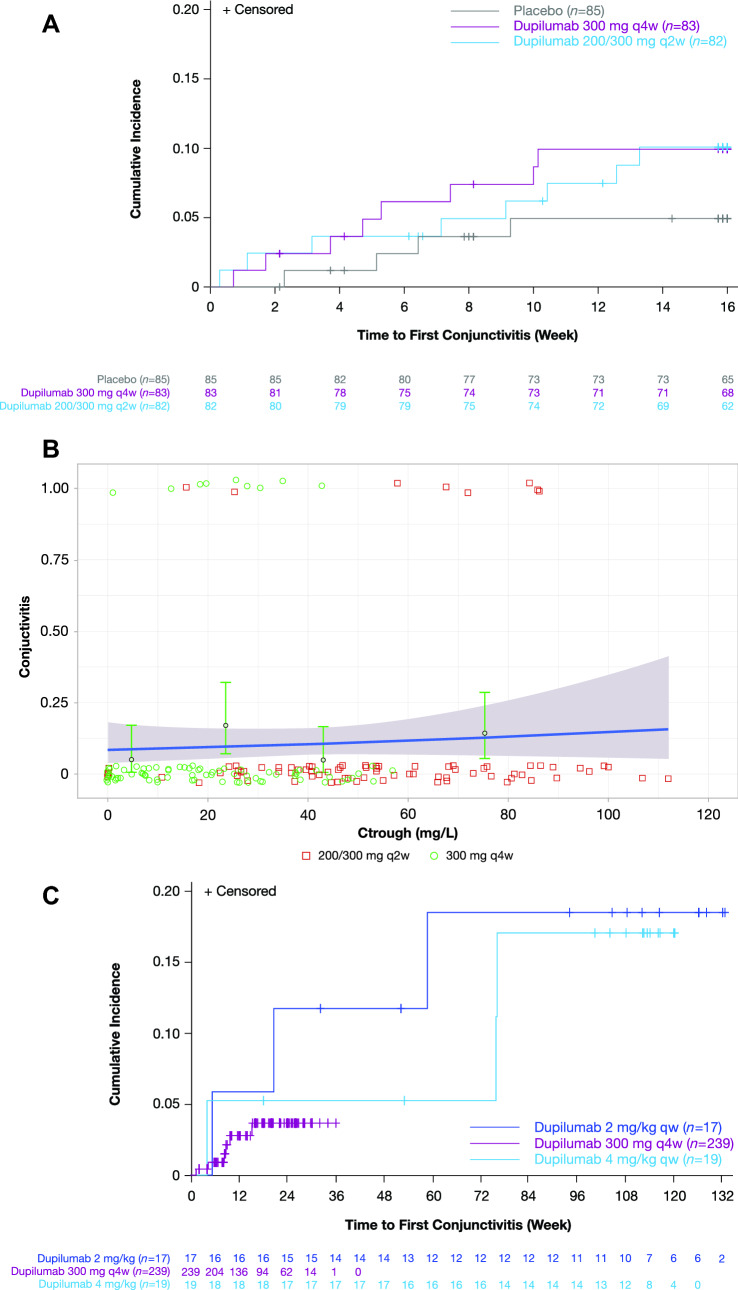
BACKGROUND: Conjunctivitis is a known comorbidity of atopic dermatitis. Dupilumab clinical trials for moderate-to-severe atopic dermatitis in adults showed a higher conjunctivitis incidence for dupilumab-treated patients than placebo-treated patients, whereas trials for uncontrolled asthma reported lower rates for both dupilumab and placebo. OBJECTIVE: The objective of this study was to evaluate the incidence and severity of conjunctivitis in dupilumab clinical trials in adolescents with moderate-to-severe atopic dermatitis or uncontrolled asthma. METHODS: We evaluated the incidence of conjunctivitis in adolescents (aged 12 to < 18 years) in three phase III trials. Ocular events were diagnosed and treated based on patient-reported symptoms and an external eye examination by study investigators, in most cases without an ophthalmologic referral. In LIBERTY AD ADOL (16-week, randomized, placebo-controlled, double-blinded trial), adolescents with moderate-to-severe atopic dermatitis were randomized to subcutaneous placebo, dupilumab 300 mg every 4 weeks, or dupilumab every 2 weeks (200 mg, patients < 60 kg at baseline; 300 mg, ≥ 60 kg at baseline). In LIBERTY AD PED-OLE (open-label extension), pediatric patients from previous dupilumab atopic dermatitis trials received dupilumab 2 mg/kg or 4 mg/kg weekly (up to 300 mg) or 300 mg every 4 weeks. In LIBERTY ASTHMA QUEST (randomized, double-blinded, placebo-controlled trial), patients with uncontrolled moderate-to-severe asthma were randomized to 52 weeks of add-on therapy with dupilumab 200 or 300 mg every 2 weeks or matched-volume placebo. RESULTS: In ADOL, more dupilumab-treated (17/165; 10.3%) than placebo-treated patients (4/85; 4.7%) reported one or more conjunctivitis event. All events were mild to moderate in severity; 12 (7.3%) dupilumab-treated and 4 (4.7%) placebo-treated patients received treatment. Most patients with conjunctivitis (dupilumab, 12/17; placebo, 4/4) recovered/resolved during the treatment period. The risk of conjunctivitis showed no relationship with dupilumab serum concentration. In PED-OLE, 12/275 adolescents (4.4%) reported one or more conjunctivitis event. Most conjunctivitis events were mild to moderate. Ten patients received treatment for conjunctivitis. Ten patients recovered/resolved during the study. In QUEST, similar low proportions of dupilumab-treated (2/68, 2.9%) and placebo-treated (1/39, 2.6%) adolescents reported one or more conjunctivitis event. All events were mild to moderate. One dupilumab-treated patient received treatment for conjunctivitis. All cases recovered/resolved during the study. No patients in these trials discontinued study treatment temporarily or permanently because of conjunctivitis. In ADOL, one case of unspecified viral keratitis (specific viral etiology not known) in the dupilumab 300-mg every 4 weeks group and one case of allergic blepharitis in the placebo group were reported; both events resolved during the treatment period, and neither led to treatment discontinuation. CONCLUSIONS: Dupilumab-treated adolescents in atopic dermatitis trials had a higher incidence of conjunctivitis than placebo-treated patients, whereas overall rates of conjunctivitis among adolescents in the asthma trial were lower than in atopic dermatitis trials and were similar for dupilumab- and placebo-treated patients. Most events were mild to moderate, most recovered/resolved, and none prompted study withdrawal. These results are similar to those reported in adult trials and support a drug-disease interaction. CLINICALTRIALS. GOV IDENTIFIERS: NCT03054428, NCT02612454, NCT02414854. Conjunctivitis in Dupilumab Clinical Trials for Adolescents with Atopic Dermatitis or Asthma (MP4 18453 kb).
Overview
The claims and statistics of this paper haven’t been checked yet.
Free: it reads the open-access text and checks the first 5 claims that cite a source we can check. Create a free account to check every claim.
Integrity signals
Registry
Cites
Statistics
Figures
Verification
Claims the paper makes
The claims and statistics of this paper haven’t been checked yet.
Free: it reads the open-access text and checks the first 5 claims that cite a source we can check. Create a free account to check every claim.
Claims other papers make about this one
Each is checked against this paper’s own text: does it say what the citing paper says it does?
The cited source says what the claim attributes to it.
In the citing paper
“Higher rates were described in long-term studies and in real-world reports83–86 but interestingly not in asthma94.”
From Atopic dermatitis: an expanding therapeutic pipeline for a complex disease (2022) · cites this paper as [94]
Self-check
Percentages, sums and reported differences re-computed from the paper’s own numbers.
The self-check needs the paper’s full text.
Citations
Cites
Two Phase 3 Trials of Dupilumab versus Placebo in Atopic Dermatitis
Simpson, E. L., Bieber, T., Guttman-Yassky, E., Beck, L. A., Blauvelt, A., Cork, M. J., Silverberg, J. I., Deleuran, M., Kataoka, Y., Lacour, J.-P., et al. (2016) · New England Journal of Medicine · doi:10.1056/nejmoa1610020 · Cited by 2,110
Self-citationDupilumab Efficacy and Safety in Moderate-to-Severe Uncontrolled Asthma
Castro, M., Corren, J., Pavord, I. D., Maspero, J., Wenzel, S., Rabe, K. F., Busse, W. W., Ford, L., Sher, L., FitzGerald, J. M., et al. (2018) · New England Journal of Medicine · doi:10.1056/nejmoa1804092 · Cited by 1,986 · cited 4×
“LIBERTY ASTHMA QUEST (QUEST; EFC13579, ClinicalTrials.gov Identifier: NCT02414854) [23] was a randomized, double-blinded, placebo-controlled, parallelgroup, phase III trial.”
MethodSelf-citationDupilumab Treatment in Adults with Moderate-to-Severe Atopic Dermatitis
Beck, L. A., Thaçi, D., Hamilton, J. D., Graham, N. M., Bieber, T., Rocklin, R., Ming, J. E., Ren, H., Kao, R., Simpson, E., et al. (2014) · New England Journal of Medicine · doi:10.1056/nejmoa1314768 · Cited by 1,421
Self-citationDupilumab in Persistent Asthma with Elevated Eosinophil Levels
Wenzel, S., Ford, L., Pearlman, D., Spector, S., Sher, L., Skobieranda, F., Wang, L., Kirkesseli, S., Rocklin, R., Bock, B., et al. (2013) · New England Journal of Medicine · doi:10.1056/nejmoa1304048 · Cited by 1,320
Self-citationBlauvelt, A., de Bruin-Weller, M., Gooderham, M., Cather, J. C., Weisman, J., Pariser, D., Simpson, E. L., Papp, K. A., Hong, H. C.-H., Rubel, D., et al. (2017) · The Lancet · doi:10.1016/s0140-6736(17)31191-1 · Cited by 1,261
Self-citationEfficacy and Safety of Dupilumab in Glucocorticoid-Dependent Severe Asthma
Rabe, K. F., Nair, P., Brusselle, G., Maspero, J. F., Castro, M., Sher, L., Zhu, H., Hamilton, J. D., Swanson, B. N., Khan, A., et al. (2018) · New England Journal of Medicine · doi:10.1056/nejmoa1804093 · Cited by 1,184
Self-citationWenzel, S., Castro, M., Corren, J., Maspero, J., Wang, L., Zhang, B., Pirozzi, G., Sutherland, E. R., Evans, R. R., Joish, V. N., et al. (2016) · The Lancet · doi:10.1016/s0140-6736(16)30307-5 · Cited by 985
Self-citationBachert, C., Mannent, L., Naclerio, R. M., Mullol, J., Ferguson, B. J., Gevaert, P., Hellings, P., Jiao, L., Wang, L., Evans, R. R., et al. (2016) · JAMA · doi:10.1001/jama.2015.19330 · Cited by 794
Self-citationThaçi, D., Simpson, E. L., Beck, L. A., Bieber, T., Blauvelt, A., Papp, K., Soong, W., Worm, M., Szepietowski, J. C., Sofen, H., et al. (2016) · The Lancet · doi:10.1016/s0140-6736(15)00388-8 · Cited by 572 · cited 1×
“In adults in randomized, placebo-controlled doubleblinded clinical trials for moderate-to-severe AD, a higher incidence of conjunctivitis was observed in patients who received dupilumab compared with those who received placebo [16, 17, 20, 21, 26].”
BackgroundSelf-citationLe Floc’h, A., Allinne, J., Nagashima, K., Scott, G., Birchard, D., Asrat, S., Bai, Y., Lim, W. K., Martin, J., Huang, T., et al. (2020) · Allergy · doi:10.1111/all.14151 · Cited by 545
Cited by
Atopic dermatitis: an expanding therapeutic pipeline for a complex disease
Bieber, T. (2022) · Nature Reviews Drug Discovery · doi:10.1038/s41573-021-00266-6 · Cited by 623
Paller, A. S., Simpson, E. L., Siegfried, E. C., Cork, M. J., Wollenberg, A., Arkwright, P. D., Soong, W., Gonzalez, M. E., Schneider, L. C., Sidbury, R., et al. (2022) · The Lancet · doi:10.1016/s0140-6736(22)01539-2 · Cited by 281
Self-citationDupilumab-Associated Adverse Events During Treatment of Allergic Diseases
Kychygina, A., Cassagne, M., Tauber, M., Galiacy, S. D., Paul, C. F., Fournié, P., & Simon, M. (2022) · Clinical Reviews in Allergy & Immunology · doi:10.1007/s12016-022-08934-0 · Cited by 103
Bangert, C., Alkon, N., Chennareddy, S., Arnoldner, T., Levine, J. P., Pilz, M., Medjimorec, M. A., Ruggiero, J. R., Cohenour, E. R., Jonak, C., et al. (2024) · Nature Communications · doi:10.1038/s41467-024-46540-0 · Cited by 86
From Emollients to Biologicals: Targeting Atopic Dermatitis
Salvati, L., Cosmi, L., & Annunziato, F. (2021) · International Journal of Molecular Sciences · doi:10.3390/ijms221910381 · Cited by 93
Dupilumab ocular side effects in patients with atopic dermatitis: a systematic review
Neagu, N., Dianzani, C., Avallone, G., Dell’Aquila, C., Morariu, S. ‐., Zalaudek, I., & Conforti, C. (2022) · Journal of the European Academy of Dermatology and Venereology · doi:10.1111/jdv.17981 · Cited by 84
Paller, A. S., Beck, L. A., Blauvelt, A., Siegfried, E. C., Cork, M. J., Wollenberg, A., Chen, Z., Khokhar, F. A., Vakil, J., Zhang, A., et al. (2022) · Pediatric Dermatology · doi:10.1111/pde.14909 · Cited by 52
Self-citationOptimizing topical management of atopic dermatitis
Butala, S., & Paller, A. S. (2022) · Annals of Allergy Asthma & Immunology · doi:10.1016/j.anai.2022.03.004 · Cited by 55
Self-citationLasek, A., Bellon, N., Mallet, S., Puzenat, E., Bursztejn, A. ‐., Abasq‐Thomas, C., Mazereeuw‐Hautier, J., Chiavérini, C., Hubiche, T., Raison‐Peyron, N., et al. (2022) · Journal of the European Academy of Dermatology and Venereology · doi:10.1111/jdv.18450 · Cited by 39
Ardern‐Jones, M. R., Brown, S., Flohr, C., Hossain, P. N., Irvine, A. D., Johnston, G. A., Lane, M., Langan, S., Laws, P., O’Driscoll, D., et al. (2024) · British Journal of Dermatology · doi:10.1093/bjd/ljae344 · Cited by 47
Immunopharmacology in Vernal Keratoconjunctivitis: Current and Future Perspectives
Chigbu, D. I., & Labib, B. A. (2021) · Pharmaceuticals · doi:10.3390/ph14070658 · Cited by 43
Fukuda, K., Kishimoto, T., Sumi, T., Yamashiro, K., & Ebihara, N. (2022) · Allergology International · doi:10.1016/j.alit.2022.09.005 · Cited by 33
The pathology of type 2 inflammation-associated itch in atopic dermatitis
Moniaga, C. S., Tominaga, M., & Takamori, K. (2021) · Diagnostics · doi:10.3390/diagnostics11112090 · Cited by 28
Rønnstad, A. T. M., Hansen, P. M., Halling, A., Egeberg, A., Kolko, M., Heegaard, S., & Thyssen, J. P. (2021) · Journal of the European Academy of Dermatology and Venereology · doi:10.1111/jdv.17832 · Cited by 30
Cather, J. C., Young, M. S., DiRuggiero, D., Tofte, S. J., Williams, L., & Gonzalez, T. (2022) · Dermatology and Therapy · doi:10.1007/s13555-022-00778-y · Cited by 30
“Similar to adults, cases of conjunctivitis were more common among adolescents taking dupilumab compared with placebo, but these cases were generally mild to moderate in severity and most cases resolved during the treatment period [3].”
ResultCaffarelli, C., Giannetti, A., Giannì, G., & Ricci, G. (2023) · Frontiers in Medicine · doi:10.3389/fmed.2023.1214963 · Cited by 27
Foley, P. A., Kerdraon, Y., Hogden, J. P., Shumack, S. P., Spelman, L. J., Sebaratnam, D. F., Su, C. S., & Katelaris, C. H. (2022) · Australasian Journal of Dermatology · doi:10.1111/ajd.13924 · Cited by 27
Severe pediatric asthma therapy: Dupilumab
Ferrante, G., Tenero, L., Piazza, M., & PIACENTINI, G. L. (2022) · Frontiers in Pediatrics · doi:10.3389/fped.2022.963610 · Cited by 22
“With regard to conjunctivitis, a recent study evaluated the incidence and severity of conjunctivitis in dupilumab clinical trials involving adolescents with moderate-to-severe atopic dermatitis or uncontrolled asthma reporting no significant differences between the dupilumab and placebo groups, in contrast to the find…”
ResultLangley, R. G., Gherardi, G., Coleman, A., Ardeleanu, M., Rodríguez-Marco, A., Levy, S., Bansal, A., Chen, Z., Rossi, A. B., Shumel, B., et al. (2025) · American Journal of Clinical Dermatology · doi:10.1007/s40257-025-00952-w · Cited by 18
Self-citationShi, V. Y., Chamberlain, W., Siegfried, E., Kraff-Cooper, C., Beckman, K., Lio, P., Paller, A. S., & Simpson, E. (2023) · Journal of the American Academy of Dermatology · doi:10.1016/j.jaad.2023.01.043 · Cited by 18
Self-citationPiazzetta, G. L., Lobello, N., Chiarella, E., Rizzuti, A., Pelaia, C., Pelaia, G., & Lombardo, N. (2023) · Journal of Personalized Medicine · doi:10.3390/jpm13091404 · Cited by 19
“Four patients experienced eosinophilia with clinical symptoms reported as treatment-emergent adverse events; specifically, one patient experienced eosinophilic granulomatosis with polyangiitis (EGPA) while receiving dupilumab; one patient experienced eosinophilia associated with arthralgia, asthma exacerbation, and in…”
BackgroundA Review of Dupilumab in the Treatment of Atopic Dermatitis in Infants and Children
Wang, M., Gao, X., & Zhang, L. (2024) · Drug Design Development and Therapy · doi:10.2147/dddt.s457761 · Cited by 25
Therapeutical Targets in Allergic Inflammation
Salvati, L., Liotta, F., Annunziato, F., & Cosmi, L. (2022) · Biomedicines · doi:10.3390/biomedicines10112874 · Cited by 15
Tsai, J.-H., & Tsai, T. (2023) · Dermatitis · doi:10.1089/derm.2022.0096 · Cited by 21
“156 However, AD has been associated with higher incidence of some ocular problems, including atopic keratoconjunctivitis, kerato-conus, retinal detachment, cataract, and eye surface infection.”
Hosseini-Ashrafi, M., Clayton, T. H., Herring, M., Herety, N., & Arkwright, P. D. (2024) · Clinical and Experimental Dermatology · doi:10.1093/ced/llae013 · Cited by 17
Time effect of dupilumab to treat severe uncontrolled asthma in adolescents: A pilot study
Indolfi, C., Dinardo, G., Klain, A., Contieri, M., Umano, G. R., Decimo, A., Ciprandi, G., & del Giudice, M. M. (2023) · Allergologia et Immunopathologia · doi:10.15586/aei.v51i5.877 · Cited by 13
Iznardo, H., Roé, E., Vicente, A., Prat, C., Casals, M., Martin‐Santiago, A., Esteve, A., Viñas, M., Munera‐Campos, M., Corella, F., et al. (2024) · Clinical and Experimental Dermatology · doi:10.1093/ced/llae300 · Cited by 12
Paller, A. S., Siegfried, E. C., Cork, M. J., Arkwright, P. D., Eichenfield, L. F., Ramien, M., Khokhar, F. A., Chen, Z., Zhang, A., & Cyr, S. L. (2024) · Pediatric Drugs · doi:10.1007/s40272-023-00611-9 · Cited by 14
“…treatment was associated with an increased incidence of conjunctivitis, as reported in previous publications of dupilumab clinical trials [16, 17]; however, as previously described, conjunctivitis of non-infectious etiology may be reported as the MedDRA PT conjunctivitis, which falls under…”
Self-citationDupilumab-associated cicatrizing ocular disease
Reddy, A. K., Hauswirth, S. G., Gregory, D. G., Liao, S. D., & Palestine, A. G. (2022) · American Journal of Ophthalmology Case Reports · doi:10.1016/j.ajoc.2022.101528 · Cited by 10
Drug ‐ Induced Periocular and Ocular Surface Disorders : An EAACI Position Paper
Leonardi, A., Bozkurt, B., Silva, D., Mortz, C. G., Baudouin, C., Atanasković‐Marković, M., Sharma, V., Doan, S., Agarwal, S., Pérez-Formigó, D., et al. (2025) · Allergy · doi:10.1111/all.70074 · Cited by 12
“DIOSD is among the most frequently reported AEs in real-world studies involving dupilumab-treated AD patients [58] with a much higher incidence than in patients treated for other indications [60, 61].”
Practical Management of Patients with Atopic Dermatitis on Dupilumab
Papp, K. A., Hong, C.-H., Lansang, M. P., Turchin, I., Adam, D. N., Beecker, J. R., Bissonnette, R., Gooderham, M., Jack, C. S., Joseph, M., et al. (2021) · Dermatology and Therapy · doi:10.1007/s13555-021-00586-w · Cited by 10
“Conjunctivitis is an important adverse event associated with dupilumab in AD [82, 95].”
BackgroundNovel treatments for pediatric atopic dermatitis
Scott, J. B., & Paller, A. S. (2021) · Current Opinion in Pediatrics · doi:10.1097/mop.0000000000001027 · Cited by 7
Self-citationBosma, A. L., Gerbens, L. A. A., Khattabi, H. E., Loeff, F. C., Duckworth, M., Woolf, R., Rispens, T., Smith, C. H., & Spuls, P. I. (2023) · Journal of Dermatological Treatment · doi:10.1080/09546634.2023.2193663 · Cited by 5
“However, this was not replicated in adolescents where the incidence of conjunctivitis showed no relationship with concentrations at 16 weeks (18).”
BackgroundAtopic dermatitis and ocular allergy: common mechanisms and uncommon questions
Ghosh, D., & Baye, T. M. (2023) · Current Opinion in Allergy and Clinical Immunology · doi:10.1097/aci.0000000000000931 · Cited by 6
Wu, L., & Ali, K. (2025) · Annals of Medicine · doi:10.1080/07853890.2025.2449589 · Cited by 3
Effect of tralokinumab on moderate-to-severe atopic dermatitis in patients with atopic comorbidities
Paller, A. S., Soong, W., Boguniewicz, M., Geng, B., Thyssen, J. P., Bennike, N. H., Schneider, S. K. R., & Wollenberg, A. (2025) · Annals of Allergy Asthma & Immunology · doi:10.1016/j.anai.2025.06.022 · Cited by 2
Self-citationBiologic Drugs for Severe Asthma
Randall, J. R., Leigh, R., Crumley, E. T., Aponte-Hao, S., Vu, K. N., Martins, K. J. B., & Klarenbach, S. W. (2024) · Canadian Journal of Health Technologies · doi:10.51731/cjht.2024.883 · Cited by 2
The efficacy and safety of immunobiological therapy of atopic dermatitis in children
Анатольевна, Л. И., Glukhova, E. A., & Revyakina, V. A. (2022) · Russian Pediatric Journal · doi:10.46563/1560-9561-2022-25-1-46-51 · Cited by 2
Conjunctivitis as a common adverse effect of dupilumab in atopic dermatitis
Cichoń, M., Sroka-Tomaszewska, J., & Trzeciak, M. (2022) · Dermatology Review · doi:10.5114/dr.2022.125683 · Cited by 1
Rampersad, A., Gholam, K., Šolman, L., Cartledge, N., Gore, S. K., & Petrof, G. (2024) · JEADV Clinical Practice · doi:10.1002/jvc2.528 · Cited by 1
Heterogeneity in Atopic Dermatitis: Ethnic, Anatomical Site, and Age-related Variations
Liu, Y., Li, Y., Sun, L., Wu, H., Yin, H., Qin, H., Gu, C., Chang, C., & Li, W. (2026) · Clinical Reviews in Allergy & Immunology · doi:10.1007/s12016-026-09141-x · Cited by 1
“Similarly, while biologics like dupilumab are approved for children as young as 6 months, their use must be closely monitored for adverse effects, especially conjunctivitis [ 139, 140].”
Antoniou, V., Thomaidou, E., & Prokopiou, E. (2024) · Dermatological Reviews · doi:10.1002/der2.70002 · Cited by 1
病児保育室における感染対策 (特集 中小規模施設・診療所・在宅・成育・老健などでの感染対策--改正医療法への対応を含めて)
稲見, 誠. (2008) · Infection Control and Hospital Epidemiology
Quoi de neuf en dermatologie pédiatrique ?
Barbarot, S. (2021) · Annales de Dermatologie et de Vénéréologie - FMC · doi:10.1016/s2667-0623(21)01528-2
Dodein, R., Abdul‐Wahab, A., & Banerjee, P. (2023) · Apollo Medicine · doi:10.4103/am.am_210_22
“[13] Induced or aggravated facial redness has been described in adult as well as pediatric populations following dupilumab therapy.”
Allergic and Atopic Disease of the Pediatric Eye
Wang, S., Liu, C., & Dohlman, T. H. (2023) · Springer eBooks · doi:10.1007/978-3-031-30562-7_3
Aldredge, L. M., Chamberlain, W., & Shi, V. Y. (2024) · Dermatology and Therapy · doi:10.1007/s13555-023-01093-w · Cited by 1
“This may not be true in patients that have other immune deviations such as asthma where these medications are also used, and that may be why we see OSD more frequently present in patients with atopic disease [14, 20].”
BackgroundYang, K., Mircescu, A., Okusanya, D., Mohsen, S. T., Zeng, D., Czyz, S., Vallerand, I. A., Damiani, G. B., Bunick, C. G., & Jafarian, F. (2025) · medRxiv · doi:10.1101/2025.05.25.25328309
Nøhr, A. M. H., Hansen, P. M., Møller‐Hansen, M., Larsen, H. H. P., Rønnstad, A. T. M., Thomsen, S. F., Zachariae, C. O. C., Ibler, K. S., Mortz, C. G., Bindslev‐Jensen, C., et al. (2025) · Dermatology · doi:10.1159/000548467 · Cited by 3
“Despite great efficacy in children and adults with AD [3, 4], an increased prevalence of Dupilumab-associated ocular surface disease (DAOSD) has been reported in real-world studies of AD patients treated with Dupilumab as compared to the pivotal clinical trials [5, 6].”
Vernal KeratoConjunctivitis VKC and Atopic KeratoConjunctivitis AKC
Pleyer, U. (2025) · Springer eBooks · doi:10.1007/978-3-031-65422-0_29
Lin, Y., Guan, Z., Liu, X., Song, Y., Xiao, H., Yin, L., & Li, Q. (2026) · Medicine · doi:10.1097/md.0000000000045078
“[23,24] A long-term observational study from the BioDay Registry in the Netherlands (210 patients) indicated that patients receiving dupilumab also reported unspecific pain symptoms: 1) headache in 9.4% of cases; 2) muscle or joint pain in 7.6% of the cases, and in 1 case dupilumab had to be even…”
InfluentialOcular Safety of Dupilumab Compared With IL-5 Inhibitors in Asthma
Tsao, H.-M., Wu, P.-L., Wang, Y.-H., Chen, C., Wang, C., Lai, C., Wu, V., Wang, H., & Chen, H. (2026) · The Journal of Allergy and Clinical Immunology In Practice · doi:10.1016/j.jaip.2026.09.006
Metadata
- Authors
- Bansal, A., Simpson, E. L., Paller, A. S., Siegfried, E. C., Blauvelt, A., de Bruin-Weller, M., Corren, J., Sher, L., Guttman-Yassky, E., Chen, Z., Daizadeh, N., Kamal, M. A., Shumel, B., Mina-Osorio, P., Mannent, L., Patel, N., Graham, N. M. H., Khokhar, F. A., & Ardeleanu, M.
- Affiliations
- Regeneron (United States) (US)
- Oregon Health & Science University (US)
- Northwestern University (US)
- Cardinal Glennon Children’s Medical Center (US)
- Oregon Medical Research Center (US)
- University of California, Los Angeles (US)
- Sanofi (France) (FR)
- Sanofi (United States) (US)
- Corresponding author
- Bansal, Ashish
- ORCID
- Venue
- American Journal of Clinical Dermatology
- Published
- 2021-01
- Volume
- 22
- Issue
- 1
- Pages
- 101-115
- ISSN
- 1175-0561 (ISSN-L)
- 1179-1888
- PMC
- PMC7847457
- OpenAlex
- W3123842414
- Cited by
- 52
- References
- 57
- Citations by year
- 2026: 3 · 2025: 7 · 2024: 10 · 2023: 9 · 2022: 14 · 2021: 8
- FWCI
- 9.11
- Type
- journal article
- Language
- en
- Open access
- hybrid
- doi.org
- Licence
- cc-by-nc
- creativecommons.org/licenses/by-nc/4.0 (tdm)
- creativecommons.org/licenses/by-nc/4.0 (vor, 21 d)
- Locations
- American Journal of Clinical Dermatology (publishedVersion, cc-by-nc)
- Europe PMC (PubMed Central) (publishedVersion, other-oa)
- PubMed Central (publishedVersion, cc-by-nc)
- PubMed (publishedVersion)
- Utrecht University Repository (Utrecht University) (submittedVersion, other-oa)
- Funders
- Sanofi
- Regeneron Pharmaceuticals
- Topics
- Health Sciences › Medicine › Dermatology › Dermatology and Skin Diseases
- Health Sciences › Medicine › Ophthalmology › Ocular Surface and Contact Lens
- Health Sciences › Medicine › Pulmonary and Respiratory Medicine › Asthma and respiratory diseases
- Keywords
- dupilumab, conjunctivitis, atopic dermatitis, uncontrolled asthma, adolescents, ocular adverse effects, drug safety, pediatric patients
- MeSH terms
- Adolescent, Adult, Age Factors, Asthma, Conjunctivitis, Dermatitis, Atopic, Dose-Response Relationship, Drug, Drug Administration Schedule, Female, Humans, Injections, Subcutaneous, Male, Placebos, Severity of Illness Index, Incidence, Randomized Controlled Trials as Topic, Treatment Outcome, Clinical Trials, Phase III as Topic, Antibodies, Monoclonal, Humanized
About these checks
Registry, retraction, Cites and statistics results are computed, not judged, with one exception: a printed reference that no index lists is read once by a model before it counts as a citation error. Claims are extracted by a model and kept only when their quote appears verbatim in the text; each cited source is then checked, with a model’s help, for whether it says what the claim relies on. Those verdicts can be wrong — read the claim’s quote and the cited source before relying on one.
Statistics and arithmetic are recomputed, not judged.
Confidence bands are shown only for fields calibrated on our annotated test set. None is calibrated yet, so no band is shown.
What counts as a claim ›How we measure confidence ›How we check this ›
Are you an author, or do you see a problem with this page? Request a review
Data sources
Bibliographic data: Semantic Scholar, OpenAlex, Crossref.
Contains information from the Semantic Scholar Academic Graph Datasets, made available under the ODC Attribution License (ODC-BY 1.0).
Semantic Scholar’s data is described in: Kinney, R., et al. (2023). The Semantic Scholar Open Data Platform. arXiv:2301.10140.
