

The DOI matches its Crossref record; 17 of the 17 references it cites were found in a registry or an index.
Efficacy and Safety of RBX2660 in PUNCH CD3, a Phase III, Randomized, Double-Blind, Placebo-Controlled Trial with a Bayesian Primary Analysis for the Prevention of Recurrent Clostridioides difficile Infection
Open accessAbstract
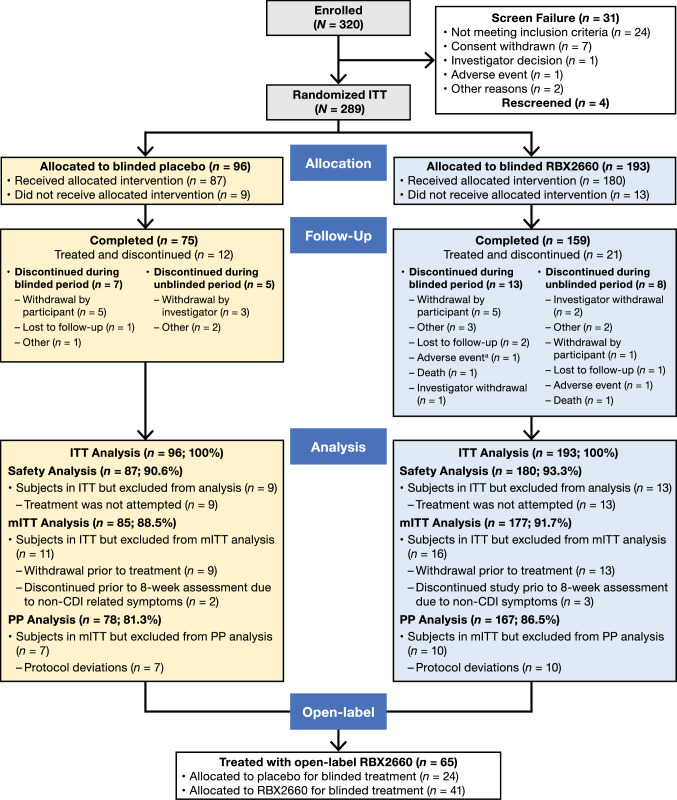
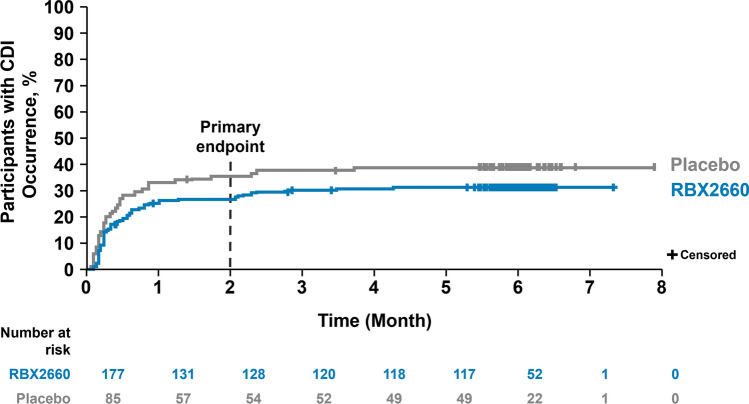
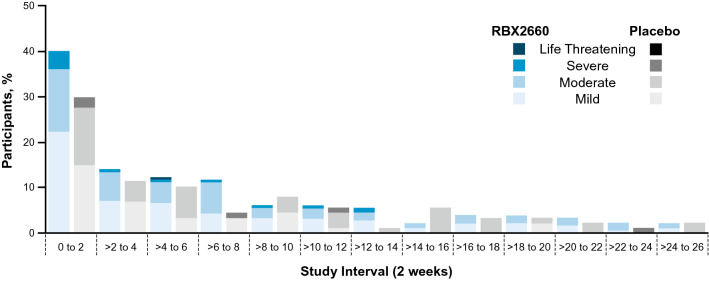
Recurrent Clostridioides difficile infection, associated with dysbiosis of gut microbiota, has substantial disease burden in the USA. RBX2660 is a live biotherapeutic product consisting of a broad consortium of microbes prepared from human stool that is under investigation for the reduction of recurrent C. difficile infection. A randomized, double-blind, placebo-controlled, phase III study, with a Bayesian primary analysis integrating data from a previous phase IIb study, was conducted. Adults who had one or more C. difficile infection recurrences with a positive stool assay for C. difficile and who were previously treated with standard-of-care antibiotics were randomly assigned 2:1 to receive a subsequent blinded, single-dose enema of RBX2660 or placebo. The primary endpoint was treatment success, defined as the absence of C. difficile infection diarrhea within 8 weeks of study treatment. Of the 320 patients screened, 289 were randomly assigned and 267 received blinded treatment (n = 180, RBX2660; n = 87, placebo). Original model estimates of treatment success were 70.4% versus 58.1% with RBX2660 and placebo, respectively. However, after aligning the data to improve the exchangeability and interpretability of the Bayesian analysis, the model-estimated treatment success rate was 70.6% with RBX2660 versus 57.5% with placebo, with an estimated treatment effect of 13.1% and a posterior probability of superiority of 0.991. More than 90% of the participants who achieved treatment success at 8 weeks had sustained response through 6 months in both the RBX2660 and the placebo groups. Overall, RBX2660 was well tolerated, with manageable adverse events. The incidence of treatment-emergent adverse events was higher in RBX2660 recipients compared with placebo and was mostly driven by a higher incidence of mild gastrointestinal events. RBX2660 is a safe and effective treatment to reduce recurrent C. difficile infection following standard-of-care antibiotics with a sustained response through 6 months. NCT03244644; 9 August, 2017. Clostridioides difficile is a diarrhea-causing bacterium that is associated with potentially serious and fatal consequences. Antibiotics used to treat or prevent infections have a side effect of damaging the healthy protective gut bacteria (microbiota). Damage to the gut microbiota can allow C. difficile to over-grow and produce toxins that injure the colon. Paradoxically, the standard of care treatment of C. difficile infection (CDI) is antibiotics. Although initially effective for the control of diarrhea, antibiotics can leave a patient at risk for CDI recurrence after antibiotic treatment is stopped. Live biotherapeutic products are microbiota-based treatments used to repair the gut microbiota. These products have been shown to reduce the recurrence of CDI. RBX2660 is an investigational microbiota-based live biotherapeutic. RBX2660 contains a diverse set of microorganisms. RBX2660 has been developed to reduce CDI recurrence in adults following antibiotic treatment for recurrent CDI. This study was conducted to demonstrate that RBX2660 is effective and safe in treating patients with recurrent CDI. Treatment was considered successful in participants who did not experience CDI recurrence within 8 weeks after administration. Overall, statistical modeling demonstrated that 70.6% of participants treated with RBX2660 and 57.5% of participants treated with placebo remained free of CDI recurrence through 8 weeks. A 13.1 percentage point increase in treatment success was observed with RBX2660 treatment compared with placebo. In participants who achieved treatment success at 8 weeks, more than 90% remained free of CDI recurrence through 6 months. The most common side effects with RBX2660 treatment were abdominal pain and diarrhea. No serious treatment-related side effects were reported. The current data from the comprehensive clinical development program support a positive benefit-risk profile for RBX2660 in the reduction of CDI recurrence in adults following antibiotic therapy for recurrent CDI.
Overview
The claims and statistics of this paper haven’t been checked yet.
Run the check — free, no account needed. It reads the open-access text and checks the sources it cites.
Integrity signals
Registry
Cites
Statistics
Figures
Verification
Claims the paper makes
The claims and statistics of this paper haven’t been checked yet.
Run the check — free, no account needed. It reads the open-access text and checks the sources it cites.
Claims other papers make about this one
Each is checked against this paper’s own text: does it say what the citing paper says it does?
In the citing paper
“Notably, FMT has achieved a significant milestone following the recent FDA approval of RBX2660 (Rebyota) and SER-109 (Vowst) for the prevention of recurrent Clostridioides difficile infection, highlighting the therapeutic potential of FMT in human disease.729–731”
From Microbiota–gut–brain axis and its therapeutic applications in neurodegenerative diseases (2024) · cites this paper as [730]
Self-check
Percentages, sums and reported differences re-computed from the paper’s own numbers.
The self-check needs the paper’s full text.
Citations
Cites
McDonald, L. C., Gerding, D. N., Johnson, S., Bakken, J. S., Carroll, K. C., Coffin, S. E., Dubberke, E. R., Garey, K. W., Gould, C. V., Kelly, C., et al. (2018) · Clinical Infectious Diseases · doi:10.1093/cid/cix1085 · Cited by 2,690
Drug-Resistant E. coli Bacteremia Transmitted by Fecal Microbiota Transplant
DeFilipp, Z., Bloom, P. P., Torres Soto, M., Mansour, M. K., Sater, M. R. A., Huntley, M. H., Turbett, S., Chung, R. T., Chen, Y.-B., & Hohmann, E. L. (2019) · New England Journal of Medicine · doi:10.1056/nejmoa1910437 · Cited by 1,281 · cited 1×
“In 2019, two immunocompromised adults developed serious infections after receiving FMT prepared with stool from the same donor containing a causative pathogen; one died [18].”
BackgroundTreating Clostridium difficile infection with fecal microbiota transplantation
Bakken, J. S., Borody, T., Brandt, L. J., Brill, J. V., Demarco, D. C., Franzos, M. A., Kelly, C., Khoruts, A., Louie, T., Martinelli, L. P., et al. (2011) · Clinical Gastroenterology and Hepatology · doi:10.1016/j.cgh.2011.08.014 · Cited by 1,003
Self-citationTrends in U.S. Burden of Clostridioides difficile Infection and Outcomes
Guh, A. Y., Mu, Y., Winston, L. G., Johnston, H. L., Olson, D. M., Farley, M. M., Wilson, L. E., Holzbauer, S., Phipps, E. C., Dumyati, G. K., et al. (2020) · New England Journal of Medicine · doi:10.1056/nejmoa1910215 · Cited by 874 · cited 2×
“Clinical guidelines recommend a two-step or three-step testing algorithm to diagnose CDI [5, 6], but clinical practice relies on symptoms and available testing, most frequently PCR in the USA [14].”
MethodJohnson, S., Lavergne, V., Skinner, A. M., Gonzales-Luna, A. J., Garey, K. W., Kelly, C. P., & Wilcox, M. H. (2021) · Clinical Infectious Diseases · doi:10.1093/cid/ciab549 · Cited by 696 · cited 1×
“Clinical guidelines recommend a two-step or three-step testing algorithm to diagnose CDI [5, 6], but clinical practice relies on symptoms and available testing, most frequently PCR in the USA [14].”
ACG Clinical Guidelines: Prevention, Diagnosis, and Treatment of Clostridioides difficile Infections
Kelly, C. R., Fischer, M., Allegretti, J. R., LaPlante, K. L., Stewart, D. B., Limketkai, B. N., & Stollman, N. (2021) · The American Journal of Gastroenterology · doi:10.14309/ajg.0000000000001278 · Cited by 638 · cited 1×
“Clinical guidelines recommend a two-step or three-step testing algorithm to diagnose CDI [5, 6], but clinical practice relies on symptoms and available testing, most frequently PCR in the USA [14].”
SER-109, an Oral Microbiome Therapy for Recurrent Clostridioides difficile Infection
Feuerstadt, P., Louie, T. J., Lashner, B., Wang, E. E. L., Diao, L., Bryant, J. A., Sims, M., Kraft, C. S., Cohen, S. H., Berenson, C. S., et al. (2022) · New England Journal of Medicine · doi:10.1056/nejmoa2106516 · Cited by 558 · cited 6×
“While several laboratory tests are available (e.g., PCR, glutamate dehydrogenase with EIA for toxin A/B, EIA for toxin A/B), no single test can reliably diagnose the disease in the absence of clinical symptoms.”
MethodInfluentialSelf-citationOrenstein, R., Dubberke, E., Hardi, R., Ray, A., Mullane, K., Pardi, D. S., & Ramesh, M. S. (2016) · Clinical Infectious Diseases · doi:10.1093/cid/civ938 · Cited by 197
Adverse events in faecal microbiota transplant: a review of the literature
Baxter, M., & Colville, A. (2015) · Journal of Hospital Infection · doi:10.1016/j.jhin.2015.10.024 · Cited by 188
Tariq, R., Pardi, D. S., Bartlett, M. G., & Khanna, S. (2018) · Clinical Infectious Diseases · doi:10.1093/cid/ciy721 · Cited by 180
Self-citation
Cited by
Sorted by citations
Items 101–200 of 301
Wu, D., Zhang, C., Liu, Y., Yao, J., Yang, X., Wu, S., Du, J., & Yang, X. (2023) · Journal of Microbiology Immunology and Infection · doi:10.1016/j.jmii.2023.02.005 · Cited by 14
Fecal Microbiota Transplantation in 2025: Two Steps Forward, One Step Back
Miller, C. B., Bader, G. A., & Kay, C. (2026) · Current Gastroenterology Reports · doi:10.1007/s11894-025-01030-1 · Cited by 11
Fecal Microbiota, Live-jslm for the Prevention of Recurrent Clostridioides difficile Infection
Feuerstadt, P., Crawford, C. V., Tan, X., Pokhilko, V., Bancke, L. L., Ng, S., Guthmueller, B., Bidell, M. R., Tillotson, G., Johnson, S., et al. (2023) · Journal of Clinical Gastroenterology · doi:10.1097/mcg.0000000000001947 · Cited by 13
Self-citationClinical application of live biotherapeutic products in infectious diseases
Navalkele, B. D., & Chopra, T. (2024) · Frontiers in Microbiomes · doi:10.3389/frmbi.2024.1415083 · Cited by 11
Synthetic microbial consortia for the treatment of Clostridioides difficile infection in mice model
Liu, J., Zhu, W., Lessing, D. J., & Chu, W. (2023) · Microbial Biotechnology · doi:10.1111/1751-7915.14333 · Cited by 10
Gut microbiota and microbiota-based therapies for Clostridioides difficile infection
Chopra, T., Hecht, G. A., & Tillotson, G. (2023) · Frontiers in Medicine · doi:10.3389/fmed.2022.1093329 · Cited by 12
Long-read metagenomics for strain tracking after faecal microbiota transplant
Fan, Y., Ni, M., Aggarwala, V., Mead, E. A., Ksiezarek, M., Cao, L., Kamm, M. A., Borody, T. J., Paramsothy, S., Kaakoush, N. O., et al. (2025) · Nature Microbiology · doi:10.1038/s41564-025-02164-8 · Cited by 14
“Faecal microbiota transplant (FMT) has emerged as a therapeutic strategy, transforming the treatment paradigms for patients with recurrent Clostridioides difficile infection (rCDI) 1,2 .”
Nam, J., Lee, Y., Lee, S., Choi, H., Lee, S. Y., & Yang, D. (2025) · Biotechnology Advances · doi:10.1016/j.biotechadv.2025.108782 · Cited by 11
Clostridioides Difficile: A Concise Review of Best Practices and Updates
Yakout, A., Bi, Y., & Harris, D. M. (2024) · Journal of Primary Care & Community Health · doi:10.1177/21501319241249645 · Cited by 11
Claypool, J., Lindved, G., Myers, P. N., Ward, T., Nielsen, H. B., & Blount, K. (2025) · Gut Microbes · doi:10.1080/19490976.2025.2520412 · Cited by 9
“24 In a randomized, placebo-controlled, phase 3 study (PUNCH TM CD3; NCT03244644), RBL was superior to placebo in preventing rCDI, 16 and restorative shifts in participants’ gut microbiome and metabolome compositions were detected as early as 1 week after RBL administration and sustained for ≥6…”
Lodise, T. P., Guo, A. X., Yang, M., Cook, E. E., Song, W., Yang, D., Wang, Q., Zhao, A., & Bochan, M. R. (2023) · Advances in Therapy · doi:10.1007/s12325-023-02506-0 · Cited by 10
“Patients with treatment failure at 8 weeks were assumed to recur at the end of the first week based on the median time to recurrence reported in the PUNCH CD3 trial [10] and thus were assumed to incur rCDI-related medical cost for 51 weeks out of the total 52 weeks in the year annually (i.”
BackgroundMethodInfluentialReygner, J., Delannoy, J., Barba-Goudiaby, M.-T., Gasc, C., Levast, B., Gaschet, E., Ferraris, L., Paul, S., Kapel, N., Waligora‐Dupriet, A., et al. (2024) · Applied and Environmental Microbiology · doi:10.1128/aem.00016-24 · Cited by 11
Kraft, C. S., Sims, M., Silverman, M., Louie, T. J., Feuerstadt, P., Huang, E. S., Khanna, S., Berenson, C. S., Wang, E. E. L., Cohen, S. H., et al. (2024) · Infectious Diseases and Therapy · doi:10.1007/s40121-024-01007-z · Cited by 9
“…in a Bayesian analysis of the combined phase 3 PUNCH CD3 and phase 2 PUNCH CD2 trials, the modeled estimated treat-ment success for RBL in the mITT population, defined as the absence of CDI diarrhea within 8 weeks of study treatment, was 70.6% [35] corresponding to a CDI recurrence rate of 29.4%.”
BackgroundInfluentialSelf-citationA Review of Therapies for Clostridioides difficile Infection
Morado, F., & Nanda, N. (2024) · Antibiotics · doi:10.3390/antibiotics14010017 · Cited by 9
“Based on the Bayesian analysis integrating Punch CD2 trial data, treatment success occurred in 70.6% FM, live-jslm vs. 57.5% placebo (13.1% treatment difference), with a posterior probability of superiority of 0.991, exceeding the prespecified cutoff of 0.975 [64].”
InfluentialSingh, C., Singh, A., Singh, D., & Upadhyay, R. (2025) · Medicine in Microecology · doi:10.1016/j.medmic.2025.100121 · Cited by 11
Alonso, C. D., Tillotson, G., Bidell, M. R., Guthmueller, B., Hoeyer, F., Fischer, M., & Dubberke, E. R. (2025) · Open Forum Infectious Diseases · doi:10.1093/ofid/ofaf117 · Cited by 11
Park, H., Abrams, J. A., Uhlemann, A., & Freedberg, D. E. (2025) · The Journal of Infectious Diseases · doi:10.1093/infdis/jiaf194 · Cited by 9
Raeisi, H., Spigaglia, P., Sadeghi, A., Barbanti, F., Tillotson, G. S., Safarpour, H., Zali, M., & Mojarad, E. N. (2025) · Gut Pathogens · doi:10.1186/s13099-025-00717-0 · Cited by 10
“The phase III trial of Rebyota demonstrated the efficacy of this drug in reducing the rate of rCDI after antibiotic treatment compared with placebo (70.6% vs. 57.5% success rate, respectively) [58].”
InfluentialDesign and application of synthetic human gut microbial communities
Kim, M. S., & Bisanz, J. E. (2025) · Gut Microbes · doi:10.1080/19490976.2025.2575923 · Cited by 10
“As shown with RBX2660 105,106,108,124 and in basic research, 17,26,125 microbiome-based therapies provide an effective alternative to repeated administration of antibiotics to combat rCDI through ecological mechanisms.”
Advances in Therapeutic Strategies for the Management of Clostridioides difficile Infection
Vitiello, A., Sabbatucci, M., Zovi, A., Salzano, A., Ponzo, A., & Boccellino, M. (2024) · Journal of Clinical Medicine · doi:10.3390/jcm13051331 · Cited by 9
“RBX2660 acts by repopulating and restoring the gut microbiome 7 days after treatment and up to 24 months [49–51].”
BackgroundResultInfluentialTillotson, G., Archbald‐Pannone, L. R., Johnson, S., Ng, S., Ando, M., Harvey, A., Bancke, L. L., & Feuerstadt, P. (2022) · Open Forum Infectious Diseases · doi:10.1093/ofid/ofac703 · Cited by 9
Self-citationKim, D., Lee, J., Clovis, S., Kwak, J., Pai, H., Rho, M., Ciufolini, M. A., Han, M., Park, J., Kim, Y., et al. (2023) · Journal of Medicinal Chemistry · doi:10.1021/acs.jmedchem.3c01309 · Cited by 9
The Impact of Diet on Clostridioides difficile Infection: A Review
Castro, M., Silver, H. J., Hazleton, K. Z., Lozupone, C., & Nicholson, M. R. (2025) · The Journal of Infectious Diseases · doi:10.1093/infdis/jiaf233 · Cited by 8
“In addition, although these treatments improve recurrence compared to placebo, recurrent CDI is still common—for example, REYBOTA has a recurrence rate of 29.4% versus 42.5% with placebo and VOWST has a 12% recurrence rate versus 40% with placebo [9, 10].”
InfluentialWhat’s New and What’s Next in Fecal Microbiota Transplantation?
Baydoun, H., Hussain, N., Wu, K., Kelly, C. R., & Fischer, M. (2025) · Biologics · doi:10.2147/btt.s486372 · Cited by 8
Antimicrobial Resistance: The Answers
Millar, B. C., Cates, M. J., Torrisi, M. S., Round, A. J., Warde, A., Lowery, C. J., & Moore, J. E. (2026) · British Journal of Biomedical Science · doi:10.3389/bjbs.2026.15559 · Cited by 9
“On 30 November 2022, the FDA approved REBYOTA ® , the first live biotherapeutic faecal microbiota [205, 206], prepared from human stools donated by screened individuals and administered by enema, for the treatment of individuals ≥ 18 years following antibacterial treatment for recurrent…”
Therapeutics for Clostridioides difficile infection: molecules and microbes
Khanna, S., & Voth, E. R. (2023) · Expert Review of Gastroenterology & Hepatology · doi:10.1080/17474124.2023.2250716 · Cited by 8
“reach the enrollment target for phase three study [38].”
BackgroundResultSelf-citationBarko, P. C., Nguyen-Edquilang, J., Williams, D. A., & Gal, A. (2024) · PLoS ONE · doi:10.1371/journal.pone.0294730 · Cited by 8
Blair, H. A. (2023) · Drugs & Therapy Perspectives · doi:10.1007/s40267-023-01023-y · Cited by 8
“RBX2660 was effective at reducing recurrent CDI, as evidenced by a significantly higher treatment success rate with RBX2660 than with placebo in the mITT population (Table 2) [18].”
BackgroundMethodResultInfluentialSaeed, A., Batra, N., Rezgui, R., Alshaghdali, K., Alkhalaf, I., Yadav, D. K., & Dey, P. (2024) · Journal of King Saud University - Science · doi:10.1016/j.jksus.2024.103374 · Cited by 7
The 3 Ds: Depression, Dysbiosis, and Clostridiodes difficile
Boustany, A., Feuerstadt, P., & Tillotson, G. (2024) · Advances in Therapy · doi:10.1007/s12325-024-02972-0 · Cited by 7
Self-citationWilson, M. R., Golan, Y., Nguyen, D., Yazdani, M., & Amin, A. (2025) · Infectious Diseases and Therapy · doi:10.1007/s40121-025-01169-4 · Cited by 7
“For the scenario analysis including RBL, a relative risk reduction with RBL of 0.31 based on the RBL phase 3 trial was assumed [14].”
InfluentialMicrobiome Therapeutics for Clostridioides difficile Infection
Lucky, C. W., Medernach, R. L., Kelly, B. J., Kwon, J. H., & Woodworth, M. H. (2025) · Infectious Disease Clinics of North America · doi:10.1016/j.idc.2025.07.007 · Cited by 8
Boyle, B. L., & Khanna, S. (2024) · Future Microbiology · doi:10.1080/17460913.2024.2364583 · Cited by 7
Self-citationHow to develop a controlled human infection model for Clostridioides difficile
Hensen, A. D. O., Vehreschild, M. J. G. T., Gerding, D. N., Krut, O., Chen, W. H., Young, V. B., Tzipori, S. R., Solbach, P., Gibani, M. M., Chiu, C., et al. (2024) · Clinical Microbiology and Infection · doi:10.1016/j.cmi.2024.08.025 · Cited by 7
Duo, H., Yang, Y., Zhang, G., Chen, Y., Cao, Y., Luo, L., Pan, H., & Ye, Q. (2024) · Frontiers in Pharmacology · doi:10.3389/fphar.2024.1430724 · Cited by 7
Doosetty, S., Umeh, C. A., EASTWOOD, W., Samreen, I., Penchala, A., Kaur, H., Chilinga, C., Kaur, G., Mohta, T., Nakka, S., et al. (2024) · Cureus · doi:10.7759/cureus.58862 · Cited by 7
“Furthermore, the randomized controlled trials in our study reported the modified intention to treat analysis, excluding participants who discontinued treatment before outcome evaluation or had eligibility deviations, as reported in the studies [17,18].”
MethodEncapsulation protocol for fecal microbiota transplantation
Sipos, D., Varga, A., Kappéter, Á., Halda-Kiss, B., Kása, P., Pál, S., Kocsis, B., & Péterfi, Z. (2024) · Frontiers in Cellular and Infection Microbiology · doi:10.3389/fcimb.2024.1424376 · Cited by 8
Prosty, C. J., Bortolussi‐Courval, É., Dubé, L.-R., Lee, T. C., & McDonald, E. G. (2024) · CMI Communications · doi:10.1016/j.cmicom.2024.105041 · Cited by 5
Loratadine as an Anti-inflammatory Agent Against Clostridium difficile Toxin B
Xie, Y., Irwin, S. L., Estrada, A. C., Nelson, B., Bullock, A., Fontenot, L., Feng, H., Sun, M., & Koon, H. W. (2024) · The Journal of Infectious Diseases · doi:10.1093/infdis/jiae021 · Cited by 6
Gut Microbiota and New Microbiome-Targeted Drugs for Clostridioides difficile Infections
Lee, A., Yoo, J. S., & Yoon, E.-J. (2024) · Antibiotics · doi:10.3390/antibiotics13100995 · Cited by 6
“A phase III trial of a single dose of REBYOTA TM was demonstrated to have an efficacy of 70.6% in eight weeks in subjects with more than two recurrences of CDI and over 90% of subjects with treatment success had sustained response through six months compared to the placebo [121].”
InfluentialKhanna, S., Yoho, D. S., Handel, D. V., Clark, B. J., Awad, T., Guthmueller, B., Armandi, D., Knapple, W., Safdar, N., Baggott, B. B., et al. (2025) · Therapeutic Advances in Gastroenterology · doi:10.1177/17562848251339697 · Cited by 7
“%) were given contact laxatives (e.g., bisacodyl, citric acid/magnesium oxide/sodium picosulfate) for bowel preparation prior to RBL.”
InfluentialSelf-citationFerris, A. H., Gaisinskaya, P., & Nandi, N. (2023) · Primary Care Clinics in Office Practice · doi:10.1016/j.pop.2023.03.010 · Cited by 7
McFarland, L. V., Goldstein, E. J. C., & Kullar, R. (2023) · Microorganisms · doi:10.3390/microorganisms11061534 · Cited by 6
Berry, P., & Khanna, S. (2024) · Future Microbiology · doi:10.1080/17460913.2024.2403892 · Cited by 5
Self-citationWen, X., Liu, X., Wan, K., Liu, H., Zhang, C., Zhang, X., & Wen, Q. (2025) · Frontiers in Cellular and Infection Microbiology · doi:10.3389/fcimb.2025.1641564 · Cited by 6
Gut virome dysbiosis contributes to premature ovarian insufficiency by modulating gut bacteriome
Jin, J., Yao, G., Zhang, X., Zhang, T. X., Ye, H., Zhou, X., Yu, Y., Zhao, Y., Qin, Z., Chen, H., et al. (2026) · Gut Microbes · doi:10.1080/19490976.2025.2611645 · Cited by 5
“Notably, several FMT-based therapies have recently received FDA approval for clinical use, 77-79 lending cautious optimism to the future clinical application of FVT. 80-82 However, this model rapidly induces ovarian dysfunction through pharmacological damage, simulating an acute ovarian damage…”
Bethlehem, L., Bartu, L., Marke, G., Mar, P., Feldman, S., Eggers, J., Ruprecht, C., Britton, G. J., Aggarwala, V., Bongers, G., et al. (2026) · Nature Medicine · doi:10.1038/s41591-026-04442-2 · Cited by 6
Fecal microbiota transplantation: from empirical remedy to precision medicine
Zhao, J., 樊翌明, Yang, K., & Gao, H. (2026) · Frontiers in Microbiomes · doi:10.3389/frmbi.2026.1863308 · Cited by 6
Human microbiome: Impact of newly approved treatments on C. difficile infection
Bland, C. M., Love, B. L., & Jones, B. M. (2024) · American Journal of Health-System Pharmacy · doi:10.1093/ajhp/zxae249 · Cited by 5
Fecal Microbiota, Live-jslm (RBL; REBYOTA™) for Recurrent Clostridioides difficile Infection
Garcia, M. L., Castex, J., Duhaime, E., & Monk, M. (2024) · The Journal for Nurse Practitioners · doi:10.1016/j.nurpra.2024.105195 · Cited by 5
Straining to define a healthy microbiome
Seekatz, A. M. (2025) · mSphere · doi:10.1128/msphere.00797-24 · Cited by 4
Reveles, K. R., Strey, K. A., Abdul‐Mutakabbir, J. C., Mendoza, V. M., & Carreno, J. J. (2023) · Clinical Infectious Diseases · doi:10.1093/cid/ciad586 · Cited by 6
Reveles, K. R., Gonzales-Luna, A. J., Golan, Y., Alonso, C. D., Guthmueller, B., Tan, X., Bidell, M. R., Pokhilko, V., Crawford, C. V., & Skinner, A. M. (2024) · Open Forum Infectious Diseases · doi:10.1093/ofid/ofae341 · Cited by 5
“…products (LBPs) are a class of US Food and Drug Administration (FDA)–approved microbiota-based therapies that have been evaluated in phase 2 and 3 studies for prevention of recurrent CDI (rCDI) in those with a history of CDI and following standard-of-care (SOC) antibiotic treatment [15, 16].”
BackgroundAssessing live microbial therapeutic transmission
Faith, J. J. (2025) · Gut Microbes · doi:10.1080/19490976.2024.2447836 · Cited by 4
Weerakoon, S., Avula, S., Mandefro, B. T., Sundara, S. V., Lu, X., Busmail, H., & Malasevskaia, I. A. (2025) · Cureus · doi:10.7759/cureus.90737 · Cited by 4
“The RCTs employed different control groups-placebo [19,21], standard antibiotics [5,22], and autologous FMT [18], which influenced the magnitude of treatment effects observed.”
InfluentialEngineering commensal microbes for host health
Brown, E. A., Brevi, A., Zong, D. M., & Zarrinpar, A. (2026) · Cell Host & Microbe · doi:10.1016/j.chom.2026.05.025 · Cited by 4
Gut Microbial Composition and Antibiotic Resistance Profiles in Dairy Calves with Diarrhea
Zhang, L., Bai, J., Guo, Q., Long, L., Jia, Y., Qiu, X., Zhou, D., Zhang, Z., & Niu, H. (2024) · Life · doi:10.3390/life15010010 · Cited by 4
Approach to Clostridioides difficile diarrheal infection
Lourenço, L. C., Prosty, C. J., Huttner, A. C., Lee, T. C., & McDonald, E. G. (2025) · CMI Communications · doi:10.1016/j.cmicom.2025.105079 · Cited by 4
Boton, N., Patel, P., Beekmann, S. E., Polgreen, P. M., Buckel, W. R., Mahoney, M. V. G., Mehrotra, P., & Lee, M. S. L. (2025) · Open Forum Infectious Diseases · doi:10.1093/ofid/ofaf335 · Cited by 4
“Two new microbiome-based therapies, fecal microbiota live-jslm and fecal microbiota spores live-brpk, were approved by the FDA based on phase 3 clinical trials demonstrating their safety and efficacy in preventing recurrent CDI [29, 30].”
Oneto, C., & Khanna, S. (2023) · The American Journal of Gastroenterology · doi:10.14309/ajg.0000000000002577 · Cited by 4
Self-citationEuropean Practice for CDI Treatment
Fitzpatrick, F., Brennan, R., van Prehn, J., Skally, M., Brady, M., Burns, K., Rooney, C. M., & Wilcox, M. H. (2024) · Advances in experimental medicine and biology · doi:10.1007/978-3-031-42108-2_4 · Cited by 4
Fecal Microbiota Transplantation as Emerging Treatment in European Countries 2.0
Porcari, S., Maida, M. F., Bibbò, S., Mcilroy, J. R., Ianiro, G., & Cammarota, G. (2024) · Advances in experimental medicine and biology · doi:10.1007/978-3-031-42108-2_5 · Cited by 4
Sehgal, K., & Feuerstadt, P. (2024) · Frontiers in Microbiomes · doi:10.3389/frmbi.2024.1399440 · Cited by 6
Self-citationRaeisi, H., Leeflang, J., Hasan, S., & Woods, S. L. (2024) · Probiotics and Antimicrobial Proteins · doi:10.1007/s12602-024-10398-x · Cited by 4
Vinterberg, J. E., Oddsdottir, J., Nye, M., & Pinton, P. (2025) · Infectious Diseases and Therapy · doi:10.1007/s40121-024-01105-y · Cited by 5
“Finally, eight trials [7, 13, 20–22, 31, 33, 46] excluded patients with a history of prior microbiota-based therapy, while the rest did not provide information on this aspect.”
InfluentialMetagenomic source tracking after microbiota transplant therapy
Hoops, S., Moutsoglou, D., Vaughn, B. P., Khoruts, A., & Knights, D. (2025) · Gut Microbes · doi:10.1080/19490976.2025.2487840 · Cited by 4
Using gut microorganisms to treat cancer
Seo, Y. D., Ajami, N. J., & Wargo, J. A. (2023) · Nature Medicine · doi:10.1038/s41591-023-02460-y · Cited by 4
Dureja, C., Rutherford, J. T., Pavel, F. B. A., Norseeda, K., Prah, I., Sun, D., Hevener, K. E., & Hurdle, J. G. (2024) · Antimicrobial Agents and Chemotherapy · doi:10.1128/aac.01222-23 · Cited by 4
Fecal Transplant: The Benefits and Harms of Fecal Microbiota Transplantation
Goldenberg, D., & Melmed, G. (2023) · Springer eBooks · doi:10.1007/978-3-031-46712-7_9 · Cited by 4
Rise to the Challenge: Master the Management of Clostridioides difficile Infection
Voth, E. R., & Khanna, S. (2024) · Mayo Clinic Proceedings · doi:10.1016/j.mayocp.2024.02.022 · Cited by 4
Self-citationRisk Factors, Presentation, Diagnosis, and Treatment of C. difficile Infection in the Older Adult
Reznik, E., Ying, X., & Crawford, C. V. (2025) · Current Treatment Options in Gastroenterology · doi:10.1007/s11938-024-00467-z · Cited by 3
Advances in Understanding the Pathogenesis of Clostridioides difficile Infection
Seekatz, A. M., & Abt, M. C. (2025) · Infectious Disease Clinics of North America · doi:10.1016/j.idc.2025.07.001 · Cited by 3
Bergmann, K., & Zuberbier, T. (2025) · Allergy · doi:10.1111/all.70045 · Cited by 3
Mishra, R., Harvey, A., Guo, A. X., Tillotson, G., Feuerstadt, P., Khanna, S., Shannon, W. D., & Blount, K. (2025) · Anaerobe · doi:10.1016/j.anaerobe.2025.103006 · Cited by 3
Self-citationKhanna, S., Yoho, D. S., Handel, D. V., Clark, B. J., Awad, T., Guthmueller, B., Armandi, D., Knapple, W., Safdar, N., Baggott, B. B., et al. (2025) · Therapeutic Advances in Gastroenterology · doi:10.1177/17562848251396744 · Cited by 3
“12,17,19,20 Across trials of RBL to date and regardless of administration route, the majority of TEAEs in participants who received RBL have been mild or moderate in severity and gastrointestinal in nature.”
Self-citationArya, R., Zimmet, A. N., Holubar, M. K., & Alegria, W. (2025) · Antimicrobial Stewardship & Healthcare Epidemiology · doi:10.1017/ash.2025.10144 · Cited by 3
Ma, C., Zou, Z., Zhao, W., Rao, Y., Liu, B., Sun, M., & Chen, D. (2026) · Microbial Pathogenesis · doi:10.1016/j.micpath.2026.108381 · Cited by 5
Han, W., Li, Q., & Yuan, G. (2026) · Frontiers in Immunology · doi:10.3389/fimmu.2026.1802676 · Cited by 4
The human microbiome at translational crossroads: an ecological and causal perspective
Wong, S. H. (2026) · Singapore Medical Journal · doi:10.4103/singaporemedj.smj-2026-102 · Cited by 3
“[11,12] Outside recurrent CDI, however, microbiome‑based interventions remain largely investigational.”
Advances and challenges in microbiome transplantation
Sen, P., Kaulmann, D., Youngster, I., Abdeen, S. K., & Elinav, E. (2026) · Cell Host & Microbe · doi:10.1016/j.chom.2026.06.006 · Cited by 4
Gut microbiota in health and disease
Li, Y. N., Xiao, X., Jiang, X., Li, X., WANG, W., & Lin, R. (2026) · Molecular Biomedicine · doi:10.1186/s43556-026-00512-6 · Cited by 6
Knapple, W., Yoho, D. S., Sheh, A., Thul, J., & Feuerstadt, P. (2024) · Therapeutic Advances in Gastroenterology · doi:10.1177/17562848241239547 · Cited by 3
Self-citationAroniadis, O. C., Guthmueller, B., Dehlin, K., Srivastava, S., Feuerstadt, P., Lembo, A. J., & Weber, H. C. (2025) · Infectious Diseases and Therapy · doi:10.1007/s40121-025-01208-0 · Cited by 3
“These products have demonstrated efficacy in preventing rCDI across numerous randomized controlled trials [5].”
Self-citationEngineering live bacterial therapeutics to treat human diseases
Hwang, I. Y. (2023) · Current Opinion in Systems Biology · doi:10.1016/j.coisb.2023.100492 · Cited by 3
Ghosh, S. K., Antunes, A., Rinta‐Kokko, H., Chaparova, E., Lay-Flurrie, S. L., Tricotel, A., & Andersson, F. (2024) · International Journal of Infectious Diseases · doi:10.1016/j.ijid.2024.02.010 · Cited by 3
Dudzicz, S., Więcek, A., & Adamczak, M. (2024) · Nutrients · doi:10.3390/nu16050671 · Cited by 3
“The incidence of treatment adverse events was higher in the RBX2660 group compared with placebo and was mostly a higher incidence of mild gastrointestinal events [73].”
BackgroundHunt, A., Drwiega, E. N., Wang, Y., & Danziger, L. H. (2024) · American Journal of Health-System Pharmacy · doi:10.1093/ajhp/zxae066 · Cited by 3
Javed, Q. U. A., Afzal, M., Ilyas, K., Sarfraz, A., & Sarfraz, Z. (2022) · European Journal of Internal Medicine · doi:10.1016/j.ejim.2022.12.020 · Cited by 3
Khanna, S., Seo, S., Yang, M., García-Horton, V., Gao, Y., Kim, H. H., Ormenaj, L., & Guo, A. X. (2025) · Infectious Diseases and Therapy · doi:10.1007/s40121-025-01130-5 · Cited by 2
Self-citationOrtiz, A. M., Casta, F. C., Bodykevich, E. G., Flynn, J. K., Fennessey, C. M., Brooks, K., Ruiz, D., Yee, D. S., Simpson, J., Rahmberg, A. R., et al. (2025) · Mucosal Immunology · doi:10.1016/j.mucimm.2025.06.002 · Cited by 2
How to set up and manage a microbiome research facility
Henderickx, J. G. E., Smits, W. K., Zeller, G., & Kuijper, E. J. (2026) · Clinical Microbiology and Infection · doi:10.1016/j.cmi.2026.02.007 · Cited by 2
Dai, M., Lin, Y., Gan, R., Shen, X., Park, S. Y., Lee, S., & Su, Q. (2026) · Microbiota Medicine Research · doi:10.1002/mmr3.70004 · Cited by 1
Ascandari, A., Aminu, S., Benhida, R., & Daoud, R. (2026) · Briefings in Bioinformatics · doi:10.1093/bib/bbag316 · Cited by 2
Role of oral microbiome in cancer immunotherapy
Khalil, W., Song, H., Li, Z., He, Y., Xu, C., & Ye, Q. (2026) · Seminars in Cancer Biology · doi:10.1016/j.semcancer.2026.06.006 · Cited by 4
Prosty, C. J., Carignan, A., Chan, A. K., Chen, Y., Daley, P., Daneman, N., Kandel, C., Longtin, Y., Pérez-Patrigeón, S., Wuerz, T., et al. (2026) · Trials · doi:10.1186/s13063-026-09883-1 · Cited by 2
“Newer microbiome therapeutics, such as SER-109 [17] and RBX2660 [18], also reduce risk of rCDI, but their use is limited by cost and inaccessibility.”
Maternal and infant gut microbiome
Wang, H., Tin, F., Chen, H., Jiao, F., Wu, M., Sun, S., Lin, L., Li, D., Zheng, H., Niu, Z., et al. (2026) · iMeta · doi:10.1002/imt2.70151 · Cited by 2
Microbial ecology between Clostridioides difficile and gut microbiota
Kamiya, S. (2023) · Bioscience of Microbiota Food and Health · doi:10.12938/bmfh.2023-033 · Cited by 2
“[66] recently reported the efficacy and safety of RBX2660, which consists of a broad consortium of microbes prepared from human stool in a phase III randomized double-blind, placebo-controlled trial for prevention of recurrent CDI.”
Best Practices in the Management of Clostridioides difficile Infection in Developing Nations
Mendo-López, R., Alonso, C. D., & Villafuerte-Gálvez, J. (2024) · Tropical Medicine and Infectious Disease · doi:10.3390/tropicalmed9080185 · Cited by 2
“RBX-2660 (Rebyota), a rectally-administered microbiota suspension prepared from human stools demonstrated safety and modest effectiveness for prevention of recurrent CDI in adults following standard-of-care treatment [102].”
BackgroundHoeg, A., Kuchma, N., Krane, A., Graiziger, C. T., Thomas, J., Kelly, C. R., & Khoruts, A. (2024) · Journal of Clinical Gastroenterology · doi:10.1097/mcg.0000000000002108 · Cited by 2
The role of the intestinal microbiome in inflammation and cancer
Zeißig, S., Frost, F., Haller, D., Stallmach, A., Vehreschild, M. J. G. T., & Schneider, K. M. (2025) · Deutsches Ärzteblatt international · doi:10.3238/arztebl.m2025.0142 · Cited by 2
Metadata
- Authors
- Khanna, S., Assi, M., Lee, C., Yoho, D., Louie, T., Knapple, W., Aguilar, H., Garcia-Diaz, J., Wang, G. P., Berry, S. M., Marion, J., Su, X., Braun, T., Bancke, L., & Feuerstadt, P.
- Affiliations
- Mayo Clinic (US)
- University of Kansas (US)
- University of Victoria (CA)
- Kaiser Permanente (US)
- University of Calgary (CA)
- University of Florida (US)
- Berry Consultants, LLC (United States) (US)
- Yale University (US)
- Corresponding author
- Khanna, Sahil
- ORCID
- Venue
- Drugs
- Published
- 2022-10
- Volume
- 82
- Issue
- 15
- Pages
- 1527-1538
- ISSN
- 0012-6667 (ISSN-L)
- 1179-1950
- PMC
- PMC9607700
- OpenAlex
- W4307250618
- Cited by
- 301
- References
- 17
- Citations by year
- 2026: 71 · 2025: 76 · 2024: 85 · 2023: 64 · 2022: 5
- FWCI
- 28.11
- Type
- journal article
- Language
- en
- Update notices
- correction (2022-11-07)
- Open access
- hybrid
- doi.org
- Licence
- Locations
- Drugs (publishedVersion, cc-by-nc)
- PubMed Central (publishedVersion, cc-by-nc)
- PubMed (publishedVersion)
- Figshare (submittedVersion, cc-by-nc)
- Figshare
- Funders
- Rebiotix Inc., a Ferring Company
- Topics
- Health Sciences › Medicine › Infectious Diseases › Clostridium difficile and Clostridium perfringens research
- Life Sciences › Biochemistry, Genetics and Molecular Biology › Molecular Biology › Gut microbiota and health
- Life Sciences › Agricultural and Biological Sciences › Food Science › Probiotics and Fermented Foods
- Keywords
- recurrent Clostridium difficile infection, RBX2660, live biotherapeutic products, recurrent infection prevention, fecal microbiota transplantation, enema, gut dysbiosis, treatment success, adverse events, antibiotic-associated diarrhea, treatment-emergent adverse events, sustained response, exchangeability, posterior probability
- MeSH terms
- Fecal Microbiota Transplantation, Adult, Anti-Bacterial Agents, Bayes Theorem, Clostridium Infections, Diarrhea, Humans, Recurrence, Clostridioides difficile, Treatment Outcome
About these checks
Registry, retraction, Cites and statistics results are computed, not judged, with one exception: a printed reference that no index lists is read once by a model before it counts as a citation error. Claims are extracted by a model and kept only when their quote appears verbatim in the text; each cited source is then checked, with a model’s help, for whether it says what the claim relies on. Those verdicts can be wrong — read the claim’s quote and the cited source before relying on one.
Statistics and arithmetic are recomputed, not judged.
Confidence bands are shown only for fields calibrated on our annotated test set. None is calibrated yet, so no band is shown.
What counts as a claim ›How we measure confidence ›How we check this ›
Are you an author, or do you see a problem with this page? Request a review
