

The DOI matches its Crossref record; 17 of the 17 references it cites were found in a registry or an index.
Efficacy and Safety of RBX2660 in PUNCH CD3, a Phase III, Randomized, Double-Blind, Placebo-Controlled Trial with a Bayesian Primary Analysis for the Prevention of Recurrent Clostridioides difficile Infection
Open accessAbstract
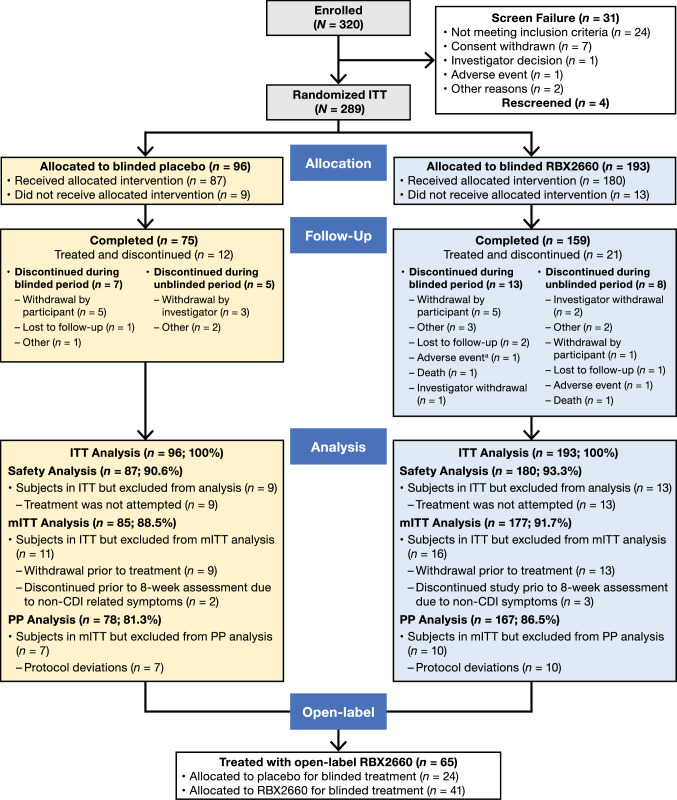
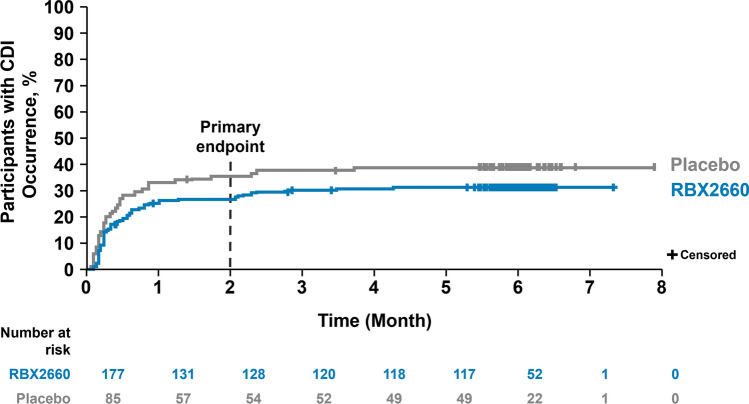
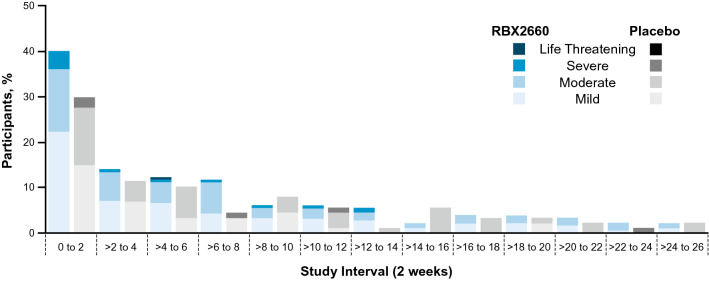
Recurrent Clostridioides difficile infection, associated with dysbiosis of gut microbiota, has substantial disease burden in the USA. RBX2660 is a live biotherapeutic product consisting of a broad consortium of microbes prepared from human stool that is under investigation for the reduction of recurrent C. difficile infection. A randomized, double-blind, placebo-controlled, phase III study, with a Bayesian primary analysis integrating data from a previous phase IIb study, was conducted. Adults who had one or more C. difficile infection recurrences with a positive stool assay for C. difficile and who were previously treated with standard-of-care antibiotics were randomly assigned 2:1 to receive a subsequent blinded, single-dose enema of RBX2660 or placebo. The primary endpoint was treatment success, defined as the absence of C. difficile infection diarrhea within 8 weeks of study treatment. Of the 320 patients screened, 289 were randomly assigned and 267 received blinded treatment (n = 180, RBX2660; n = 87, placebo). Original model estimates of treatment success were 70.4% versus 58.1% with RBX2660 and placebo, respectively. However, after aligning the data to improve the exchangeability and interpretability of the Bayesian analysis, the model-estimated treatment success rate was 70.6% with RBX2660 versus 57.5% with placebo, with an estimated treatment effect of 13.1% and a posterior probability of superiority of 0.991. More than 90% of the participants who achieved treatment success at 8 weeks had sustained response through 6 months in both the RBX2660 and the placebo groups. Overall, RBX2660 was well tolerated, with manageable adverse events. The incidence of treatment-emergent adverse events was higher in RBX2660 recipients compared with placebo and was mostly driven by a higher incidence of mild gastrointestinal events. RBX2660 is a safe and effective treatment to reduce recurrent C. difficile infection following standard-of-care antibiotics with a sustained response through 6 months. NCT03244644; 9 August, 2017. Clostridioides difficile is a diarrhea-causing bacterium that is associated with potentially serious and fatal consequences. Antibiotics used to treat or prevent infections have a side effect of damaging the healthy protective gut bacteria (microbiota). Damage to the gut microbiota can allow C. difficile to over-grow and produce toxins that injure the colon. Paradoxically, the standard of care treatment of C. difficile infection (CDI) is antibiotics. Although initially effective for the control of diarrhea, antibiotics can leave a patient at risk for CDI recurrence after antibiotic treatment is stopped. Live biotherapeutic products are microbiota-based treatments used to repair the gut microbiota. These products have been shown to reduce the recurrence of CDI. RBX2660 is an investigational microbiota-based live biotherapeutic. RBX2660 contains a diverse set of microorganisms. RBX2660 has been developed to reduce CDI recurrence in adults following antibiotic treatment for recurrent CDI. This study was conducted to demonstrate that RBX2660 is effective and safe in treating patients with recurrent CDI. Treatment was considered successful in participants who did not experience CDI recurrence within 8 weeks after administration. Overall, statistical modeling demonstrated that 70.6% of participants treated with RBX2660 and 57.5% of participants treated with placebo remained free of CDI recurrence through 8 weeks. A 13.1 percentage point increase in treatment success was observed with RBX2660 treatment compared with placebo. In participants who achieved treatment success at 8 weeks, more than 90% remained free of CDI recurrence through 6 months. The most common side effects with RBX2660 treatment were abdominal pain and diarrhea. No serious treatment-related side effects were reported. The current data from the comprehensive clinical development program support a positive benefit-risk profile for RBX2660 in the reduction of CDI recurrence in adults following antibiotic therapy for recurrent CDI.
Overview
The claims and statistics of this paper haven’t been checked yet.
Run the check — free, no account needed. It reads the open-access text and checks the sources it cites.
Integrity signals
Registry
Cites
Statistics
Figures
Verification
Claims the paper makes
The claims and statistics of this paper haven’t been checked yet.
Run the check — free, no account needed. It reads the open-access text and checks the sources it cites.
Claims other papers make about this one
Each is checked against this paper’s own text: does it say what the citing paper says it does?
In the citing paper
“Notably, FMT has achieved a significant milestone following the recent FDA approval of RBX2660 (Rebyota) and SER-109 (Vowst) for the prevention of recurrent Clostridioides difficile infection, highlighting the therapeutic potential of FMT in human disease.729–731”
From Microbiota–gut–brain axis and its therapeutic applications in neurodegenerative diseases (2024) · cites this paper as [730]
Self-check
Percentages, sums and reported differences re-computed from the paper’s own numbers.
The self-check needs the paper’s full text.
Citations
Cites
McDonald, L. C., Gerding, D. N., Johnson, S., Bakken, J. S., Carroll, K. C., Coffin, S. E., Dubberke, E. R., Garey, K. W., Gould, C. V., Kelly, C., et al. (2018) · Clinical Infectious Diseases · doi:10.1093/cid/cix1085 · Cited by 2,690
Drug-Resistant E. coli Bacteremia Transmitted by Fecal Microbiota Transplant
DeFilipp, Z., Bloom, P. P., Torres Soto, M., Mansour, M. K., Sater, M. R. A., Huntley, M. H., Turbett, S., Chung, R. T., Chen, Y.-B., & Hohmann, E. L. (2019) · New England Journal of Medicine · doi:10.1056/nejmoa1910437 · Cited by 1,281 · cited 1×
“In 2019, two immunocompromised adults developed serious infections after receiving FMT prepared with stool from the same donor containing a causative pathogen; one died [18].”
BackgroundTreating Clostridium difficile infection with fecal microbiota transplantation
Bakken, J. S., Borody, T., Brandt, L. J., Brill, J. V., Demarco, D. C., Franzos, M. A., Kelly, C., Khoruts, A., Louie, T., Martinelli, L. P., et al. (2011) · Clinical Gastroenterology and Hepatology · doi:10.1016/j.cgh.2011.08.014 · Cited by 1,003
Self-citationTrends in U.S. Burden of Clostridioides difficile Infection and Outcomes
Guh, A. Y., Mu, Y., Winston, L. G., Johnston, H. L., Olson, D. M., Farley, M. M., Wilson, L. E., Holzbauer, S., Phipps, E. C., Dumyati, G. K., et al. (2020) · New England Journal of Medicine · doi:10.1056/nejmoa1910215 · Cited by 874 · cited 2×
“Clinical guidelines recommend a two-step or three-step testing algorithm to diagnose CDI [5, 6], but clinical practice relies on symptoms and available testing, most frequently PCR in the USA [14].”
MethodJohnson, S., Lavergne, V., Skinner, A. M., Gonzales-Luna, A. J., Garey, K. W., Kelly, C. P., & Wilcox, M. H. (2021) · Clinical Infectious Diseases · doi:10.1093/cid/ciab549 · Cited by 696 · cited 1×
“Clinical guidelines recommend a two-step or three-step testing algorithm to diagnose CDI [5, 6], but clinical practice relies on symptoms and available testing, most frequently PCR in the USA [14].”
ACG Clinical Guidelines: Prevention, Diagnosis, and Treatment of Clostridioides difficile Infections
Kelly, C. R., Fischer, M., Allegretti, J. R., LaPlante, K. L., Stewart, D. B., Limketkai, B. N., & Stollman, N. (2021) · The American Journal of Gastroenterology · doi:10.14309/ajg.0000000000001278 · Cited by 638 · cited 1×
“Clinical guidelines recommend a two-step or three-step testing algorithm to diagnose CDI [5, 6], but clinical practice relies on symptoms and available testing, most frequently PCR in the USA [14].”
SER-109, an Oral Microbiome Therapy for Recurrent Clostridioides difficile Infection
Feuerstadt, P., Louie, T. J., Lashner, B., Wang, E. E. L., Diao, L., Bryant, J. A., Sims, M., Kraft, C. S., Cohen, S. H., Berenson, C. S., et al. (2022) · New England Journal of Medicine · doi:10.1056/nejmoa2106516 · Cited by 558 · cited 6×
“While several laboratory tests are available (e.g., PCR, glutamate dehydrogenase with EIA for toxin A/B, EIA for toxin A/B), no single test can reliably diagnose the disease in the absence of clinical symptoms.”
MethodInfluentialSelf-citationOrenstein, R., Dubberke, E., Hardi, R., Ray, A., Mullane, K., Pardi, D. S., & Ramesh, M. S. (2016) · Clinical Infectious Diseases · doi:10.1093/cid/civ938 · Cited by 197
Adverse events in faecal microbiota transplant: a review of the literature
Baxter, M., & Colville, A. (2015) · Journal of Hospital Infection · doi:10.1016/j.jhin.2015.10.024 · Cited by 188
Tariq, R., Pardi, D. S., Bartlett, M. G., & Khanna, S. (2018) · Clinical Infectious Diseases · doi:10.1093/cid/ciy721 · Cited by 180
Self-citation
Cited by
Sorted by citations
Items 201–300 of 301
The Microbiome and Antimicrobial Stewardship in Surgical Patients
Creel, J., & Maves, R. C. (2023) · Surgical Infections · doi:10.1089/sur.2022.422 · Cited by 2
Koo, H., & Morrow, C. D. (2023) · Scientific Reports · doi:10.1038/s41598-023-41128-y · Cited by 2
“The FDA has recently approved FMT for the treatment of recurrent C. difficile 4,5 .”
BackgroundFecal Transplantation in Hematopoietic Transplantation
Peled, J. U., & van den Brink, M. R. M. (2023) · Journal of Clinical Oncology · doi:10.1200/jco.23.01169 · Cited by 2
Cotto, C., Baker, K. A., Fallon, E., & Rimon, S. (2024) · Gastroenterology Nursing · doi:10.1097/sga.0000000000000847 · Cited by 2
“Most are transient, mild to moderate in nature, and occur within the first 2 weeks after treatment (Khanna et al., 2022).”
Sehgal, K., & Feuerstadt, P. (2023) · Translational Gastroenterology and Hepatology · doi:10.21037/tgh-23-46 · Cited by 2
“The more modern trials considering LBPs included an open-label administration of the treatment if there was a recurrence, regardless of whether they received placebo or active therapy initially (8,9).”
BackgroundSelf-citationAssessing Engraftment Following Fecal Microbiota TransplantPreprint
Herman, C., Barker, B. M., Bartelli, T. F., Chandra, V., Krajmalnik‐Brown, R., Jewell, M., Li, L., Liao, C., McAllister, F. M., Nirmalkar, K., et al. (2024) · PubMed · doi:10.48550/arxiv.2404.07325 · Cited by 2
“For example, Khanna et al. (2022) 45 considered a successful clinical outcome to be no occurrences of a C. difficile infection for six months after the FMT intervention.”
BackgroundProtection against Clostridioides difficile disease by a naturally avirulent C. difficile strainPreprint
Dong, Q., Harper, S., McSpadden, E., Son, S. S., Allen, M.-M., Lin, H., Smith, R. C., Metcalfe, C. K., Burgo, V., Woodson, C., et al. (2024) · bioRxiv (Cold Spring Harbor Laboratory) · doi:10.1101/2024.05.06.592814 · Cited by 2
The New Horizon of Clostridioides difficile Infection Treatment
Kuijper, E. J., & Garey, K. W. (2024) · Gastroenterology · doi:10.1053/j.gastro.2024.10.032 · Cited by 2
Bethlehem, L., Bartu, L., Marke, G., Mar, P., Feldman, S., Eggers, J., Ruprecht, C., Britton, G. J., Aggarwala, V., Bongers, G., et al. (2025) · medRxiv · doi:10.1101/2025.09.08.25335342 · Cited by 2
“The approvals of two stool-derived products, fecal microbiota, live-jslm (Rebyota) 1 and fecal microbiota spores, live-brpk (Vowst) 2 , for the treatment of recurrent C. difficile infection (rCDI) provide a key milestone in the development of live microbial therapeutics.”
Current treatments for recurrent Clostridium difficile infection
Kowalewski, J., Recka, K., Michałka, D., Grzelak, A., Jędrocha, O., Bęben, D., Godyńska, S., Obacz, E., Miliwek, J., & Grodek, Z. (2024) · Journal of Pre-Clinical and Clinical Research · doi:10.26444/jpccr/189968 · Cited by 1
“A Phase 3 trial confirmed the efficacy of the treatment after standard antibiotic therapy, a reduction in recurrences at six months, safety of use, and few adverse events [40].”
BackgroundMcDonnell, K. (2025) · Journal of Clinical Medicine · doi:10.3390/jcm14062040 · Cited by 1
Bridging the bench‐to‐bedside divide in microbiome research
Turjeman, S., & Koren, O. (2025) · Clinical and Translational Medicine · doi:10.1002/ctm2.70358 · Cited by 1
Adamowicz, E. M., Kraft, C. S., Ward, T., Mehta, N., Shannon, W. D., Mishra, R., & Blount, K. (2025) · Open Forum Infectious Diseases · doi:10.1093/ofid/ofaf382 · Cited by 2
“Full demographics for the cohort are described elsewhere [12].”
InfluentialPredictive Modeling for Clostridioides difficile Infection
Rao, K. K., & Wiens, J. (2025) · Infectious Disease Clinics of North America · doi:10.1016/j.idc.2025.07.015 · Cited by 1
Jiang, Q., Liu, D., Lu, W., Sang, H., Gong, X., & Li, Y. (2025) · World Journal of Gastroenterology · doi:10.3748/wjg.v31.i36.110355 · Cited by 1
“The global incidence of CDI has increased in recent years, largely driven by widespread antibiotic use[9,10].”
Abduljabbar, M., Al-Rawi, S. S. M., Midhin, B. K., Mohammadzadeh, R., Hasan, R. N., Kouhzad, M., Alanchari, N., & Rajabi, E. (2025) · Journal of Gastrointestinal Cancer · doi:10.1007/s12029-025-01321-w · Cited by 1
New investigational agents for the treatment of Clostridioides difficile infections
Tran, M.-C. N., Eubank, T. A., Kullar, R., McFarland, L. V., Garey, K. W., & Goldstein, E. J. C. (2025) · Expert Opinion on Investigational Drugs · doi:10.1080/13543784.2025.2579016 · Cited by 1
“In this study, adults who had >1 CDI recurrence and who were previously treated with standard-of-care antibiotics were randomly assigned 2:1 to receive RBX2660 or placebo [61].”
Lee, C., Feuerstadt, P., Louie, T., Bancke, L. L., Guthmueller, B., Harvey, A., Hoeyer, F., Orenstein, R., Dubberke, E. R., & Khanna, S. (2025) · Therapeutic Advances in Gastroenterology · doi:10.1177/17562848251395566 · Cited by 1
Self-citationDiagnosis and Management of Clostridioides difficile
Kelly, C. R., & Feuerstadt, P. (2025) · The American Journal of Gastroenterology · doi:10.14309/ajg.0000000000003844 · Cited by 2
Self-citationNeue antimikrobielle Substanzen gegen zunehmende Resistenzen
Tischer, J., Dietze, N., Marx, K., Trawinski, H., & Lübbert, C. (2026) · Die Innere Medizin · doi:10.1007/s00108-025-02026-9 · Cited by 1
Khanna, S. (2026) · Expert Opinion on Pharmacotherapy · doi:10.1080/14656566.2026.2634960 · Cited by 1
“…there have been two FDA-approved live biotherapeutic products: 1) fecal microbiota, live-jslm (rectal administration) and 2) fecal microbiota spores, live-brpk (oral administration) that are indicated to prevent recurrence after antibiotic treat-ment for recurrent CDI after any recurrence [3,4].”
Self-citationThe intestinal microbiota as a key modulator of acute graft-versus-host disease
Paredes, J. E., Schmiester, M., Jenq, R. R., & van den Brink, M. R. M. (2026) · Nature reviews. Cancer · doi:10.1038/s41568-026-00910-6 · Cited by 2
Fecal microbiota transplantation in chronic liver disease: Current and future state of the art
Bloom, P. P., & Khanna, S. (2026) · Hepatology Communications · doi:10.1097/hc9.0000000000000927 · Cited by 1
Self-citationNutraceuticals and the Microbiota–Gut–Brain Axis: A Pathway for Preventing Cognitive Decline
Castillo-Moral, Á., Toda-Ferran, C., Bulló, M., Teichenné, J., & Escoté, X. (2026) · Nutrition Reviews · doi:10.1093/nutrit/nuag017 · Cited by 1
Prosty, C. J., Desormeau, B., Lee, T. C., & McDonald, E. G. (2026) · Journal of the Association of Medical Microbiology and Infectious Disease Canada · doi:10.3138/jammi-2025-0014 · Cited by 1
Özdemir, Y. E., Sürme, S., Özdemir, M. Ş., & Mustafayev, K. (2026) · Future Microbiology · doi:10.1080/17460913.2026.2661277 · Cited by 2
Deshpande, A., Hohmann, E. L., Burns, C., Tomeo, N. J., & Allegretti, J. R. (2026) · Gastro Hep Advances · doi:10.1016/j.gastha.2026.101025 · Cited by 1
“The FDA approval of RBX2660 in 2022 and SER-109 in 2023 is expected to change the treatment landscape for patients with recurrent CDI.”
InfluentialChopra, T., Handel, D. V., Baggott, B. B., Orenstein, R., Reveles, K. R., Guthmueller, B., Srivastava, S., & Khanna, S. (2026) · Infectious Diseases and Therapy · doi:10.1007/s40121-026-01374-9 · Cited by 1
Self-citationTransplantation of encapsulated fecal microbiota: research progress and future trends
Lin, M.-L., & Gao, H. (2026) · World Journal of Pediatrics · doi:10.1007/s12519-026-01056-z · Cited by 1
Berry, P., Allegretti, J. R., & Khanna, S. (2026) · Gastroenterology Clinics of North America · doi:10.1016/j.gtc.2026.05.010 · Cited by 1
Self-citationBerry, P., Bharadiya, V. M., Pardi, D. S., & Khanna, S. (2026) · The American Journal of Gastroenterology · doi:10.14309/ajg.0000000000004083 · Cited by 1
Self-citationGong, E. J., Bang, C. S., Lee, J. J., & Baik, G. H. (2026) · The American Journal of Gastroenterology · doi:10.14309/ajg.0000000000004133 · Cited by 1
Nomiri, S., Yazdani, F., Heidary, H., Sadeghi, A., Tarzemani, S., Sadeghloo, Z., Niasar, M. S., Tillotson, G., Safarpour, H., & Raeisi, H. (2026) · Probiotics and Antimicrobial Proteins · doi:10.1007/s12602-026-11164-x · Cited by 1
Mechanisms linking the gut microbiota to colorectal cancer development and progression
Zheng, H., Zhang, W., Pang, Q., & Deng, H. (2026) · Microbiological Research · doi:10.1016/j.micres.2026.128689 · Cited by 1
Consultants, M. I. D., Hise, N. V., Tillotson, G., Meehan, J., Ghera, E., Harting, B. P., & Nathan, R. V. (2023) · Private Practice Infectious Disease · doi:10.55636/ppid3020001 · Cited by 1
Yamada, C. H., Ortis, G. B., Buso, G. M., Martins, T. C., Zequinão, T., Telles, J. P., Wollmann, L. C., Montenegro, C. D. O., Dantas, L. R., Cruz, J. A. W., et al. (2024) · Microorganisms · doi:10.3390/microorganisms12081741 · Cited by 1
“However, further studies are needed, including clinical trials, to confirm these results.”
ResultPediatric Clostridioides difficile Infection: Essential Concepts, Management Nuances, and Updates
Winkie, C., & Gisser, J. M. (2024) · Current Treatment Options in Pediatrics · doi:10.1007/s40746-024-00310-8 · Cited by 1
“Both have been found to significantly reduce recurrence of CDI among adults in phase III clinical trials [87, 88].”
Microbiota restoration for recurrent Clostridioides difficile infection
Khanna, S. (2024) · Panminerva Medica · doi:10.23736/s0031-0808.24.05111-5 · Cited by 1
Self-citationDas gastrointestinale Mikrobiom – Vision und Mission
Stallmach, A. (2025) · DMW - Deutsche Medizinische Wochenschrift · doi:10.1055/a-2303-3368 · Cited by 1
Predictive Probabilities Made Simple: A Fast and Accurate Method for Clinical Trial Decision‐Making
Marion, J., Lorenzi, E., Allen‐Savietta, C., Berry, S. M., & Viele, K. (2025) · Statistics in Medicine · doi:10.1002/sim.70120 · Cited by 1
“This process becomes computationally pro-hibitive if the primary analysis is computationally demanding, e.g., as in Reference [11], where the primary analysis is a Bayesian model requiring Markov chain Monte Carlo integration.”
Self-citationWhere does RBX2660 fit within clinical practice?
Feuerstadt, P. (2023) · Expert Review of Anti-infective Therapy · doi:10.1080/14787210.2023.2171985 · Cited by 1
Self-citationCohen, S. H., Louie, T., & McGovern, B. (2023) · JAMA · doi:10.1001/jama.2023.0496 · Cited by 1
Self-citationRosenberg, J., & Ritter, T. E. (2023) · Expert Review of Anti-infective Therapy · doi:10.1080/14787210.2023.2219894 · Cited by 1
“FMBL also requires storage in an ultracold freezer, unless used within 5 days [11].”
BackgroundInfluentialSiguenza, N., Bailey, S., Sadegi, M., Gootin, H., Tiu, M. D., Price, J. D., Ramer‐Tait, A. E., & Zarrinpar, A. (2025) · bioRxiv (Cold Spring Harbor Laboratory) · doi:10.1101/2025.01.21.634159 · Cited by 1
“While microbiome-based therapies derived from donor communities 9 or anaerobic spores 10 have recently entered the market, engineered LBTs have yet to achieve clinical success.”
Current and future approaches in Clostridioides difficile management
Gherlan, G. S. (2022) · Romanian Journal of Infectious Diseases · doi:10.37897/rjid.2022.2.6
Nwankwo, C. I., Yousaf, S., Oboli, V. N., Sharaf, F., Khalid, K. N., Erhiawarie, F., Tejere, E., Latif, A., Chioma, O. E., Ikekpeazu, C. V., et al. (2023) · Journal of Advances in Medicine and Medical Research · doi:10.9734/jammr/2023/v35i115024
Psomas, C. K., Villar, S. S., Guery, B. P., Halfon, P., & Marchetti, G. C. (2023) · Journal of Virus Eradication · doi:10.1016/j.jve.2023.100332
Mikrobiom: von der Pathophysiologie in die Klinik?
Scharl, M. M., & Rogler, G. (2023) · DMW - Deutsche Medizinische Wochenschrift · doi:10.1055/a-1951-0063
Das intestinale Mikrobiom bei gastroenterologischen Krankheitsbildern
Reindl, W. (2023) · Gastroenterologie up2date · doi:10.1055/a-1824-0120
An Anti-inflammatory Approach to Drug Repurposing forClostridioides difficileInfection
Villafuerte-Gálvez, J., & Kelly, C. P. (2024) · The Journal of Infectious Diseases · doi:10.1093/infdis/jiae022
Mikrobiom: von der Pathophysiologie in die Klinik?
Scharl, M. M., & Rogler, G. (2024) · Aktuelle Ernährungsmedizin · doi:10.1055/a-2223-5913
Gomez, A. (2024) · doi:10.46409/sr.uidq7261
“A different FMT process has come out, treating recurrent C.diff infections with a simple enema that can be done outpatient without the need for bowel prep or sedation (Khanna et al., 2022).”
Herbin, S. R., Crum, H., & Gens, K. D. (2024) · Journal of Pharmacy Practice · doi:10.1177/08971900241248883
Clostridioides difficile infection
Crawford, C. V., & Dawod, E. (2024) · doi:10.1093/med/9780192863584.003.0025
Present and future of fecal microbiome transplantation in cirrhosis
Tafader, A., & Bajaj, J. S. (2024) · Liver Transplantation · doi:10.1097/lvt.0000000000000542
Microbiome-based Therapeutics: Cutting-edge Innovation
Komeya, M., & Lundy, S. D. (2024) · European Urology Focus · doi:10.1016/j.euf.2024.10.011
Gastroenterological Surgery and Management of Clostridioides difficile Infection: A Review
Takano, T., Aiba, H., Kaku, M., & Kunishima, H. (2025) · Journal of the Anus Rectum and Colon · doi:10.23922/jarc.2024-078
Murray, J., Kefayat, A., Finlayson, M., Seenan, J. P., Hsu, R., & Din, S. (2025) · The Journal of the Royal College of Physicians of Edinburgh · doi:10.1177/14782715251332318
Kao, D. H., Wong, K., Lee, C., Steiner, T. S., Franz, R., McDougall, C., Silva, M., Schmidt, T., Walter, J., Löebenberg, R., et al. (2025) · SSRN Electronic Journal · doi:10.2139/ssrn.5216159
Self-citationEffects of Antibiotics on Intestinal Microbiota and Potential Treatment Options
Dokumacı, A. D. (2025) · Uludağ Üniversitesi Tıp Fakültesi Dergisi · doi:10.32708/uutfd.1599099
“The prepared fecal microbiota was recognized as a live biotherapeutic product in Australia and the United States in 2022 and 2023, respectively 97 .”
Mehta, N., Little, K., Woodworth, M. H., Goodenough, D., Dhonau, R., & Fridkin, S. K. (2025) · Gastroenterology · doi:10.1053/j.gastro.2025.05.028
Chen, C.-C., & Chiu, C.-H. (2025) · Elsevier eBooks · doi:10.1016/b978-0-443-11760-2.00094-x
Manufacture of Clostridioides difficile Spores for Experimental Infection of Human Volunteers
Hensen, A. D. O., Harmanus, C., Voorvelt, C., Geelen, A. R., Hamdioui, M. E., Kuijper, E. J., Pattacini, L., Schipper, P., van Amerongen-Westra, I. M., Meij, P., et al. (2025) · The Journal of Infectious Diseases · doi:10.1093/infdis/jiaf612
Clostridioides difficile Infection: Harmonizing Patient Care
Allegretti, J. R., Amin, A. N., Hohmann, E. L., Dubberke, E. R., Feuerstadt, P., Fischer, M., Johnson, S., Ziporyn, T. D., & Kelly, C. R. (2026) · Gastro Hep Advances · doi:10.1016/j.gastha.2026.100896
Self-citationMethodological insights into fecal microbiota transplantation: Dissecting key approaches for success
Mundhra, S. K., & Kochhar, R. (2026) · World Journal of Methodology · doi:10.5662/wjm.v16.i1.108875 · Cited by 1
Prosty, C. J., Desormeau, B., Lee, T. C., & McDonald, E. G. (2026) · Journal of the Association of Medical Microbiology and Infectious Disease Canada · doi:10.3138/jammi-2025-0014_mcdonald
Specialty grand challenge in gastrointestinal infections
Khanna, S. (2026) · Frontiers in Gastroenterology · doi:10.3389/fgstr.2026.1808344
Self-citationChallenges and future directions in head and neck microbiome research
Venugopal, D. C., & Srinivas, K. S. (2026) · Advances in immunology · doi:10.1016/bs.ai.2026.03.010
Turner, R., Tweed, C., Duong, T., Ford, D., Clements, M., Parmar, M., Turkova, A., & White, I. R. (2026) · Clinical Trials · doi:10.1177/17407745261437669
Khanna, S., & Bloom, P. P. (2026) · Expert Review of Anti-infective Therapy · doi:10.1080/14787210.2026.2659725
Self-citationProtocolo de manejo de la infección por Clostridioides difficile
Corbacho-Loarte, M. D., de Morales, A. G. G.-R., Cancio-Suárez, M. R., Suárez-Robles, M., Díaz-Álvarez, J., Cano, C. M., Navarro-Soler, R., Gayoso-Cantero, D., & Moreno, S. (2026) · Medicine - Programa de Formación Médica Continuada Acreditado · doi:10.1016/j.med.2026.04.024
Khanna, S., Allegretti, J. R., Hashash, J. G., & Feuerstadt, P. (2026) · Gastroenterology · doi:10.1053/j.gastro.2026.03.008
Self-citationClostridioides difficile Revisited: What Clinicians Need to Know
Owens, J. (2026) · EMJ Microbiology & Infectious Diseases · doi:10.33590/microbiolinfectdisam/k3w21yv4
Mehta, N., & Hvas, C. L. (2026) · Clinical Infectious Diseases · doi:10.1093/cid/ciag264
Yamada, Y., Nemoto, M., Miyazaki, M., Hirata, H., Hosogoe, K., Nakashima, A., Kushima, H., Ishii, H., & Imakyure, O. (2026) · BioTech · doi:10.3390/biotech15020044
“Micro-biota restoration therapies, such as fecal microbiota transplantation and microbiota-based live biotherapeutic products, are primarily used after standard-of-care antibiotics to prevent recurrent CDI [22–25].”
Khanna, S., Feuerstadt, P., Allegretti, J. R., & Pardi, D. S. (2026) · The Journal of Infectious Diseases · doi:10.1093/infdis/jiag307
Self-citationSteiner, T. S., Louie, T. J., Kao, D., Smyth, D., Guthmueller, B., Jason, T., Elliott, S. N., Srivastava, S., & Lee, C. (2026) · Journal of the Canadian Association of Gastroenterology · doi:10.1093/jcag/gwag021
Self-citationManagement of Clostridioides difficile Infection in Patients with Inflammatory Bowel Disease
Zou, W. Y., & Newman, K. L. (2026) · Gastroenterology Clinics of North America · doi:10.1016/j.gtc.2026.05.007
Translational human gut microbiome research: What are the missing pieces of the puzzle?
Fassarella, M., & Smidt, H. (2026) · Journal of Translational Medicine · doi:10.1186/s12967-026-08490-7
“…typically randomized and controlled, minimizing bias and enabling robust evaluation of treatment effects in large patient populations, ranging from several hundred to several thousand participants, and are conducted across multiple centres to ensure diversity and generalizability of findings [94].”
Qi, X.-Y., Wang, M.-Y., Wei, T.-C., Shao, F.-B., Liu, S.-H., Han, D., Cheng, J.-W., Zhao, Y.-H., Shi, L., Luo, J., et al. (2026) · Immunologic Research · doi:10.1007/s12026-026-09800-3
Ecological and dietary strategies to constrain Clostridioides difficile
Engevik, M. A., Hecht, A. L., Allegretti, J. R., & Kashyap, P. (2026) · Cell Host & Microbe · doi:10.1016/j.chom.2026.05.023
Kahook, Z., Alamgir, M., Mohan, V., Ramasamy, A. B., Sumartono, A. H. I., Manucharyan, A., Adhikari, P., Jeripeti, S., Mohanarajan, M., Sherry, A., et al. (2026) · The Egyptian Journal of Internal Medicine · doi:10.1186/s43162-026-00673-4
“The success of microbial consortia and synthetic LBPs will expand beyond established disease groups, including rCDI and IBD, surpassing preclinical models [12, 40].”
The intersection of engineered live biotherapeutics, the microbiome, and drug delivery
Crook, N., & Nguyen, J. (2026) · Advanced Drug Delivery Reviews · doi:10.1016/j.addr.2026.115939
Szabó, B. G., Korózs, D., Bator, M., Jeszenszky, K., Lakatos, Gopcsa, L., Reményi, P., & Sinkó, J. (2026) · Clinical Pharmacology & Therapeutics · doi:10.1002/cpt.70408
“40,44 However, these approvals cannot be extrapolated directly to hematology, HSCT, or GvHD indications without dedicated clinical evidence.”
InfluentialThe Microbiome in the Development and Treatment of Inflammatory Bowel Disease
Zhetkenev, S., Konovalov, R., Akhmetkaliyev, A., & Sonnenberg-Riethmacher, E. (2026) · Biomedicines · doi:10.3390/biomedicines14081754
“This LBP is already in Phase 3 of clinical trials and has shown good results as a treatment to reduce recurrent C. difficile infection [273,274].”
Im, H., Liu, Y., Thompson, J. C., Miranda-Contreras, G. I., Loke, K., Bacon, R., Lucas, L., Amador‐Noguez, D., Gray, S. M., & Venturelli, O. S. (2026) · bioRxiv (Cold Spring Harbor Laboratory) · doi:10.64898/2026.08.04.742850
Cristian, R.-E., Vrâncianu, C. O., Constantin, M., Păun, M., Milea, E. C., Malaescu, D., & Chifiriuc, M. C. (2026) · Gut Microbes · doi:10.1080/19490976.2026.2722482
“65,66 Although these approaches share the objective of restoring colonization resistance, they differ substantially in microbial complexity, manufacturing, formulation, delivery, and degree of compositional control.”
Dichter, J. (2026) · The FASEB Journal · doi:10.1096/fj.202602616rr
“The FDA-approved defined microbial products for recurrent C. difficile infection, SER-109 and RBX2660, demonstrate that this approach can reach the clinic [21, 49].”
Jiang, M., Yang, M., Du, P., & Sun, Z. (2026) · Biomolecules · doi:10.3390/biom16091291
The impact of TcdB conformational dynamics on vaccination against Clostridioides difficile
Kempher, M. L., Shadid, T. M., Lang, G. A., Honold, S. T., May, J. N., Hall, E. J., Larabee, J. L., Lang, M. L., & Ballard, J. D. (2026) · PLoS Pathogens · doi:10.1371/journal.ppat.1014627
“Despite this, several toxin-based vaccines that elicited strong neutralizing antibody responses have failed in clinical trials [22–25 ,39 In this study, we eliminated residual toxicities in vaccine candidate TcdB2 Δ1769–1787 by introducing two additional mutations (D270N and C698S) that removed…”
Bifidobacteria and Clostridioides difficile infection: review of emerging therapeutic perspectives
Obry, L., & Brosse, A. (2026) · Anaerobe · doi:10.1016/j.anaerobe.2026.103085
Novel options for the management of C. difficile : a look into the future
Granata, G., Petrosillo, N., & Taglietti, F. (2026) · Expert Review of Anti-infective Therapy · doi:10.1080/14787210.2026.2739273
O’Flaherty, E. A. A., & van Sinderen, D. (2026) · Microbiome Research Reports · doi:10.20517/mrr.2026.29
Hasanuzzaman, M., Bang, C. S., Lee, J. J., & Gong, E. J. (2026) · Journal of Korean Medical Science · doi:10.3346/jkms.2026.41.e335
“47 The CDI experience indicates that ecosystem-level interventions can produce robust clinical outcomes.”
Proteobacteria: A Toolbox for Clinicians
Fusco, W. G., Margarita, E., Capuano, E., Severino, A., Porcari, S., Varca, S., Galasso, T., Lener, E., Gasbarrini, A., & Ianiro, G. (2026) · Microorganisms · doi:10.3390/microorganisms14102238
“Microbiota consortia are advanced products derived from FMT, defined as multi-strain communities of commensal bacteria [199,200].”
Cheemadan, A., Harnvoravongchai, P., More, S., Kashyap, P., & Scaria, J. (2026) · bioRxiv (Cold Spring Harbor Laboratory) · doi:10.64898/2026.10.07.757339
“The present findings also motivate testing in recurrence models 40,41 , where administration after standard CDI treatment could evaluate protection during a subsequent period of susceptibility 41,42 .”
Barriers to Diagnosis and Treatment of Clostridioides difficile Infection: A Narrative Review
Berry, P., Bharadiya, V. M., & Khanna, S. (2026) · Antibiotics · doi:10.3390/antibiotics15101004
“Two FDA-approved donor-derived microbiota restoration therapies, fecal microbiota, live-jslm (REBYOTA; abbreviated as RBL for brevity), and fecal microbiota spores, live-brpk (VOWST; abbreviated as VOS for brevity), are now available for recurrence prevention after antibacterial treatment [12–15].”
InfluentialSelf-citationZehra, H., Kuchma, N., Lin, A., MORRIS, G., Solano, O. I., Lopez, S., Kabage, A. J., Vaughn, B. P., Weingarden, A. R., Fischer, M., et al. (2026) · Journal of Clinical Gastroenterology · doi:10.1097/mcg.0000000000002424
“5,13,14 Rates were found to be similar between active and placebo arms, underscoring the difficulty in separating gastrointestinal symptoms related to FMT from those related to PI-IBS.”
Ahmed, M. A. E.-G. E.-S., El-Lakany, R. R., Ramadan, M., & Goda, R. M. (2026) · Frontiers in Cellular and Infection Microbiology · doi:10.3389/fcimb.2026.1992944
Saini, D. K. (2026) · Medicine in Microecology · doi:10.1016/j.medmic.2026.100185
Metadata
- Authors
- Khanna, S., Assi, M., Lee, C., Yoho, D., Louie, T., Knapple, W., Aguilar, H., Garcia-Diaz, J., Wang, G. P., Berry, S. M., Marion, J., Su, X., Braun, T., Bancke, L., & Feuerstadt, P.
- Affiliations
- Mayo Clinic (US)
- University of Kansas (US)
- University of Victoria (CA)
- Kaiser Permanente (US)
- University of Calgary (CA)
- University of Florida (US)
- Berry Consultants, LLC (United States) (US)
- Yale University (US)
- Corresponding author
- Khanna, Sahil
- ORCID
- Venue
- Drugs
- Published
- 2022-10
- Volume
- 82
- Issue
- 15
- Pages
- 1527-1538
- ISSN
- 0012-6667 (ISSN-L)
- 1179-1950
- PMC
- PMC9607700
- OpenAlex
- W4307250618
- Cited by
- 301
- References
- 17
- Citations by year
- 2026: 71 · 2025: 76 · 2024: 85 · 2023: 64 · 2022: 5
- FWCI
- 28.11
- Type
- journal article
- Language
- en
- Update notices
- correction (2022-11-07)
- Open access
- hybrid
- doi.org
- Licence
- Locations
- Drugs (publishedVersion, cc-by-nc)
- PubMed Central (publishedVersion, cc-by-nc)
- PubMed (publishedVersion)
- Figshare (submittedVersion, cc-by-nc)
- Figshare
- Funders
- Rebiotix Inc., a Ferring Company
- Topics
- Health Sciences › Medicine › Infectious Diseases › Clostridium difficile and Clostridium perfringens research
- Life Sciences › Biochemistry, Genetics and Molecular Biology › Molecular Biology › Gut microbiota and health
- Life Sciences › Agricultural and Biological Sciences › Food Science › Probiotics and Fermented Foods
- Keywords
- recurrent Clostridium difficile infection, RBX2660, live biotherapeutic products, recurrent infection prevention, fecal microbiota transplantation, enema, gut dysbiosis, treatment success, adverse events, antibiotic-associated diarrhea, treatment-emergent adverse events, sustained response, exchangeability, posterior probability
- MeSH terms
- Fecal Microbiota Transplantation, Adult, Anti-Bacterial Agents, Bayes Theorem, Clostridium Infections, Diarrhea, Humans, Recurrence, Clostridioides difficile, Treatment Outcome
About these checks
Registry, retraction, Cites and statistics results are computed, not judged, with one exception: a printed reference that no index lists is read once by a model before it counts as a citation error. Claims are extracted by a model and kept only when their quote appears verbatim in the text; each cited source is then checked, with a model’s help, for whether it says what the claim relies on. Those verdicts can be wrong — read the claim’s quote and the cited source before relying on one.
Statistics and arithmetic are recomputed, not judged.
Confidence bands are shown only for fields calibrated on our annotated test set. None is calibrated yet, so no band is shown.
What counts as a claim ›How we measure confidence ›How we check this ›
Are you an author, or do you see a problem with this page? Request a review
