

Understanding How Chorea Affects Health-Related Quality of Life in Huntington Disease: An Online Survey of Patients and Caregivers in the United States
Open accessThe DOI matches its Crossref record; 42 of the 42 references it cites were found in a registry or an index.
Abstract
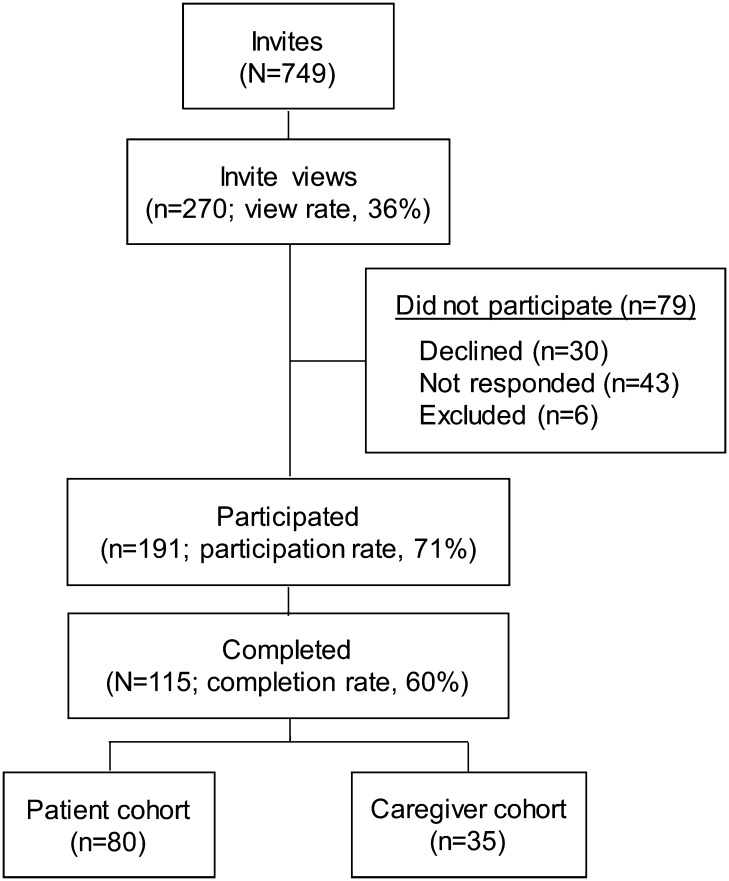
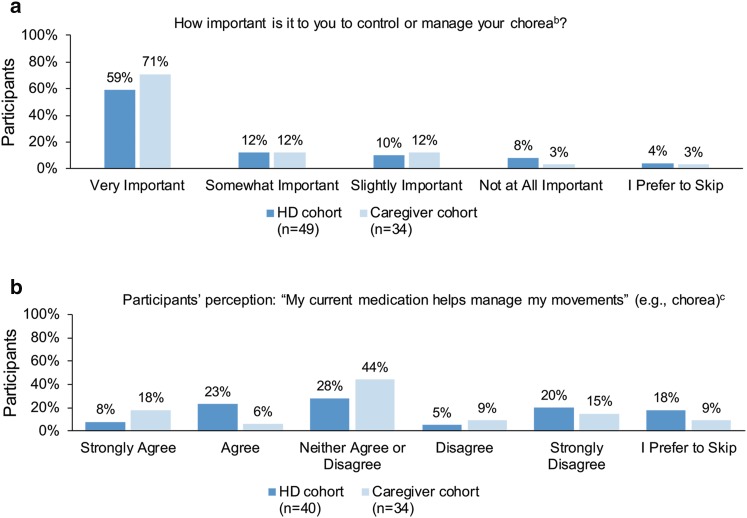
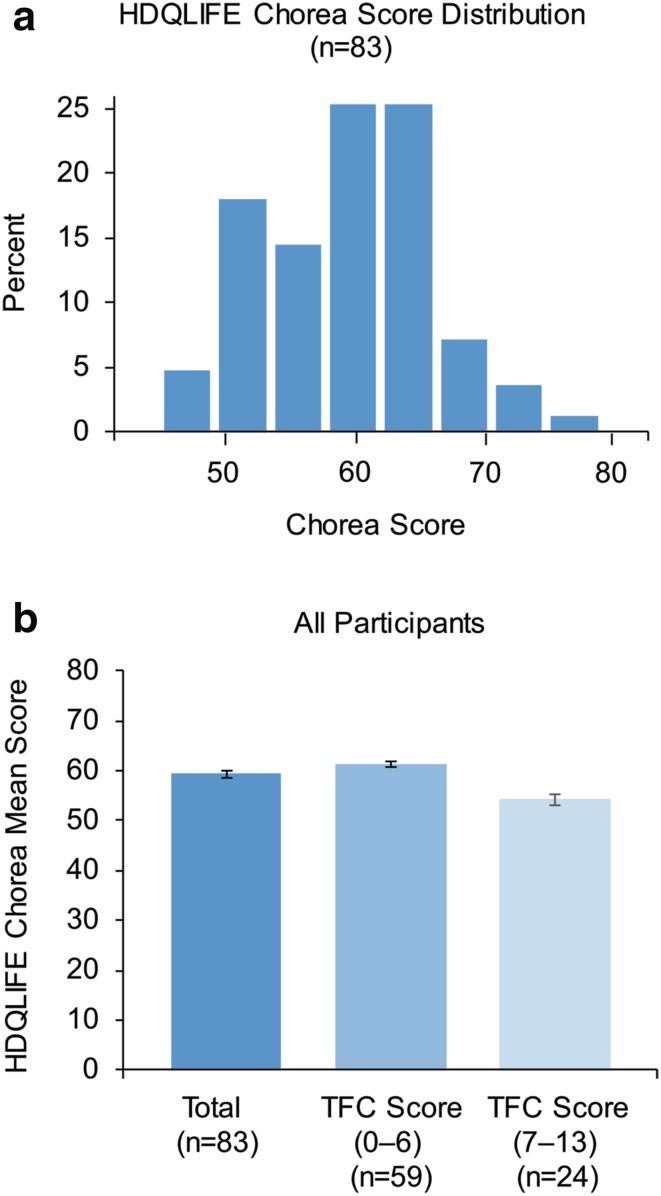
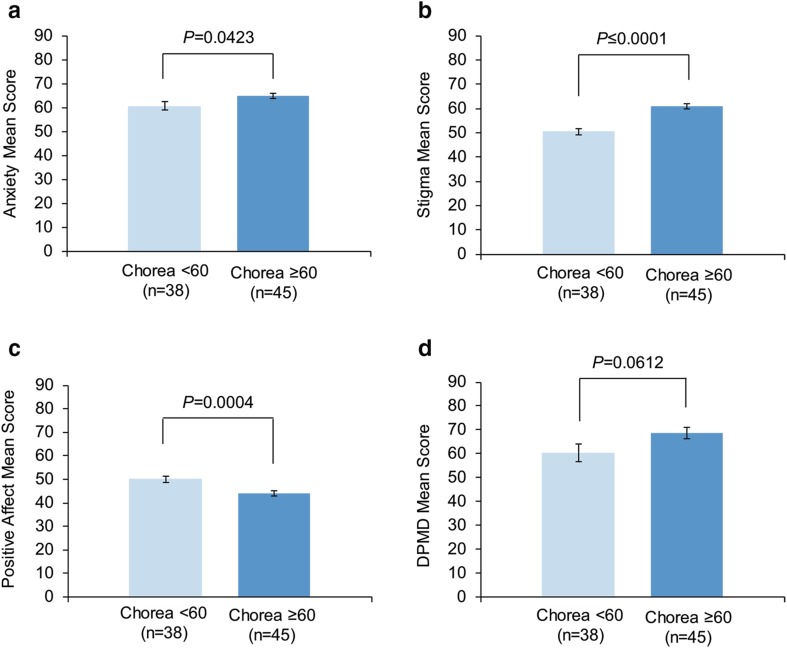
BACKGROUND: Chorea is the hallmark motor feature of Huntington disease (HD) and can negatively impact daily functioning and health-related quality of life (HRQoL). OBJECTIVE: The objective of this study was to evaluate how chorea impacts HRQoL and overall functioning among HD patients participating on the PatientsLikeMe website ( www.PatientsLikeMe.com ). METHODS: A survey was provided to HD participants and/or their caregivers via PatientsLikeMe (9 February 2017-22 March 2017), comprising multiple-choice and open-ended questions designed to assess how chorea impacts HRQoL and overall functioning, and the importance of treating chorea. The HDQLIFE measurement system was used to evaluate patient-reported outcomes of chorea and compare Anxiety and Stigma scores in participants with high chorea versus those with low chorea [HDQLIFE Chorea scores ≥ 60 (n = 45) vs. < 60 (n = 38)]. RESULTS: A total of 115 participants (n = 35 caregivers; n = 80 individuals with HD) were included in this study. Among those experiencing chorea (n = 83, 74% of respondents), 66% indicated it was 'Very Important' to manage chorea; however, only 47% agreed that their current medication regimen helped manage their movements. In general, respondents reported that chorea negatively affected HRQoL [HDQLIFE Chorea mean score (standard deviation): 59.3 (6.1)]. Consistent with this, significantly higher Anxiety (P = 0.0423) and stigma (P < 0.0001) scores were observed among respondents with high chorea than in those with low chorea. CONCLUSIONS: These results highlight the negative impact of chorea on HRQoL and overall functioning in individuals with HD. Better chorea treatment options are needed to successfully manage symptoms and to help improve HRQoL in these individuals, and patient experiences of anxiety and stigma should be considered in treatment plans.
Overview
The claims and statistics of this paper haven’t been checked yet.
Free: it reads the open-access text and checks the first 5 claims that cite a source we can check. Create a free account to check every claim.
Integrity signals
Registry
Cites
Statistics
Figures
Verification
Claims the paper makes
The claims and statistics of this paper haven’t been checked yet.
Free: it reads the open-access text and checks the first 5 claims that cite a source we can check. Create a free account to check every claim.
Claims other papers make about this one
Each is checked against this paper’s own text: does it say what the citing paper says it does?
The source backs part of the claim, not all of it — or backs it for a different population, condition or comparison.
In the citing paper
“HD gene expansion carriers with anxiety also report greater depression, irritability, apathy, pain, involuntary movements/chorea, and suicidality [10, 12–16].”
From Guided self-help for anxiety among Huntington’s disease gene expansion carriers (GUIDE-HD) compared to treatment as usual: a randomised controlled feasibility trial (2023) · cites this paper as [14]
Experimental — accuracy not yet measured
Self-check
Percentages, sums and reported differences re-computed from the paper’s own numbers.
The self-check needs the paper’s full text.
Citations
Cites
Three Approaches to Qualitative Content Analysis
Hsieh, H.-F., & Shannon, S. E. (2005) · Qualitative Health Research · doi:10.1177/1049732305276687 · Cited by 44,601 · cited 2×
“on a qualitative review of the interviews using content analysis [22, 23], themes included emotional burden, anxiety, stress, and depression.”
BackgroundMethodRegression Diagnostics: Identifying Influential Data and Sources of Collinearity
Belsley, D. A., Kuh, E., & Welsch, R. E. (1980) · Wiley Series in Probability and Statistics · doi:10.1002/0471725153 · Cited by 7,297 · cited 2×
“on a qualitative review of the interviews using content analysis [22, 23], themes included emotional burden, anxiety, stress, and depression.”
BackgroundRegression Diagnostics -- Identifying Influential Data and Sources of Collinearity
Beaumont, C. D., Belsley, D. A., Kuh, E., & Welsch, R. E. (1981) · The Journal of the Operational Research Society · doi:10.2307/2581267 · Cited by 6,359
Cella, D., Riley, W., Stone, A., Rothrock, N., Reeve, B., Yount, S., Amtmann, D., Bode, R., Buysse, D., Choi, S., et al. (2010) · Journal of Clinical Epidemiology · doi:10.1016/j.jclinepi.2010.04.011 · Cited by 5,128 · cited 1×
“this study, the Anxiety (to assess patient-reported anxiety), Stigma (to assess patient perceptions of stigma), and Positive Affect and Well-Being (to assess overall emotional well-being) [32, 34] short forms were administered.”
BackgroundHuntington's disease: a clinical review
Roos, R. A. (2010) · Orphanet Journal of Rare Diseases · doi:10.1186/1750-1172-5-40 · Cited by 1,037 · cited 2×
“Alternatively, some respondents may have had confusion in distinguishing chorea from other symptoms such as tics or ataxia, which can be a problem for both patients and clinicians [6].”
BackgroundHuntington disease: natural history, biomarkers and prospects for therapeutics
Ross, C. A., Aylward, E. H., Wild, E. J., Langbehn, D. R., Long, J. D., Warner, J. H., Scahill, R. I., Leavitt, B. R., Stout, J. C., Paulsen, J. S., et al. (2014) · Nature Reviews Neurology · doi:10.1038/nrneurol.2014.24 · Cited by 1,016
Tabrizi, S. J., Langbehn, D. R., Leavitt, B. R., Roos, R. A., Durr, A., Craufurd, D., Kennard, C., Hicks, S. L., Fox, N. C., Scahill, R. I., et al. (2009) · The Lancet Neurology · doi:10.1016/s1474-4422(09)70170-x · Cited by 984
Sharing Health Data for Better Outcomes on PatientsLikeMe
Wicks, P., Massagli, M., Frost, J., Brownstein, C., Okun, S., Vaughan, T., Bradley, R., & Heywood, J. (2010) · Journal of Medical Internet Research · doi:10.2196/jmir.1549 · Cited by 603 · cited 2×
“The potential of PatientsLikeMe to provide help to patients with other neurological conditions, such as amyotrophic lateral sclerosis, Parkinson disease, MS, and epilepsy, has been described previously [20, 21].”
BackgroundSelf-citationThe incidence and prevalence of Huntington's disease: A systematic review and meta‐analysis
Pringsheim, T., Wiltshire, K., Day, L., Dykeman, J., Steeves, T., & Jette, N. (2012) · Movement Disorders · doi:10.1002/mds.25075 · Cited by 587
Impact of the motor complications of Parkinson's disease on the quality of life
Chapuis, S., Ouchchane, L., Metz, O., Gerbaud, L., & Durif, F. (2005) · Movement Disorders · doi:10.1002/mds.20279 · Cited by 521
Research works printed but not linked: 1
- Teva Pharmaceutical Industries [press release]. Teva announces FDA approval of AUSTEDO™ (deutetrabenazine) tablets for the treatment of chorea associated with Huntington’s disease. 2017. http://www.tevapharm.com/news/teva_announces_fda_approval_of_austedo_deutetrabenazine_tablets_for_the_treatment_of_chorea_associated_with_huntington_s_disease_04_17.aspx. Accessed 2 May 2018.
Cited by
Furr-Stimming, E. E., Claassen, D. O., Kayson, E., Goldstein, J. L., Mehanna, R., Zhang, H., Liang, G. S. L., Haubenberger, D., Adams, J., Beck, C. A., et al. (2023) · The Lancet Neurology · doi:10.1016/s1474-4422(23)00127-8 · Cited by 76
Self-citationDelivery of RNAs to Specific Organs by Lipid Nanoparticles for Gene Therapy
Godbout, K., & Tremblay, J. P. (2022) · Pharmaceutics · doi:10.3390/pharmaceutics14102129 · Cited by 53
“Alzheimer’s disease [80], Huntington’s chorea [81], epilepsy [82], and brain cancer [83] are just some examples of brain diseases.”
BackgroundExercise in Huntington’s Disease: Current State and Clinical Significance
Mueller, S. M., Petersen, J. A., & Jung, H. H. (2019) · Tremor and Other Hyperkinetic Movements · doi:10.5334/tohm.515 · Cited by 40
State-of-the-art pharmacological approaches to reduce chorea in Huntington’s disease
Gibson, J. S., & Claassen, D. O. (2021) · Expert Opinion on Pharmacotherapy · doi:10.1080/14656566.2021.1876666 · Cited by 38
Röschel, A., Wagner, C., & Dür, M. (2021) · PLoS ONE · doi:10.1371/journal.pone.0261815 · Cited by 29
Sherman, C. W., Iyer, R. G., Abler, V., Antonelli, A., & Carlozzi, N. E. (2019) · Neuropsychological Rehabilitation · doi:10.1080/09602011.2018.1564675 · Cited by 18
“impairments, it is not surprising that this progressive decline and associated symptoms can have a profound impact on health-related quality of life (HRQOL; i.e., mental, social, and physical well-being; Carlozzi et al., 2017; Carlozzi & Tulsky, 2013; Carlozzi, Hahn, Goodnight, et al., 2018; Cella, 1995; Dorey et al.,…”
BackgroundSelf-citationClaassen, D. O., Ayyagari, R., García-Horton, V., Zhang, S., Alexander, J., & Leo, S. (2021) · Neurology and Therapy · doi:10.1007/s40120-021-00309-5 · Cited by 20
“Thus, HD can significantly impact quality of life, with patients often experiencing loss of employment, ability to raise a family, and decision-making ability due to their symptoms [3, 4].”
BackgroundClaassen, D. O., DeCourcy, J. J., Mellor, J., Johnston, C., & Iyer, R. G. (2021) · Journal of health economics and outcomes research · doi:10.36469/001c.24620 · Cited by 16
Self-citationCiências Biológicas e da Saúde: Investigação e Prática II
Cancino‐Díaz, J. C. (2023) · Editora Artemis eBooks · doi:10.37572/edart_250223750 · Cited by 8
Vadlamani, N., Ibrahimli, S., Khan, F. A., Castillo, J. A., Amaravadi, K. S. S., Nalisetty, P., & Khan, S. (2024) · Cureus · doi:10.7759/cureus.71476 · Cited by 7
Defining Utility Values for Chorea Health States in Patients with Huntington’s Disease
Claassen, D. O., Ayyagari, R., Goldschmidt, D., Zhou, M., Leo, S., & Ribalov, R. (2022) · Advances in Therapy · doi:10.1007/s12325-022-02046-z · Cited by 6
To, T. M., Ta, J. T., Patel, A. M., Arndorfer, S. M., Abbass, I. M., & Gandhy, R. (2023) · Journal of Medical Economics · doi:10.1080/13696998.2023.2228166 · Cited by 6
Lin, L., Cai, M., Su, F., Wu, T., Yuan, K., Li, Y., Luo, Y., Chen, D., & Pei, Z. (2023) · Neurological Sciences · doi:10.1007/s10072-023-07179-9 · Cited by 5
“Chorea is the most common clinical manifestation of HD and can interfere with daily functioning, thus negatively affecting quality of life [26, 27].”
Dale, M., Eccles, F. J. R., Melvin, K., Khan, Z., Jones, L., Zarotti, N., Kiani, R., Johnson, J., Wells, R., & Simpson, J. (2023) · Pilot and Feasibility Studies · doi:10.1186/s40814-023-01364-5 · Cited by 4
Ćwirlej-Sozańska, A. B., Sozański, B., Kupczyk, M., Leszczak, J., Kwołek, A., Wilmowska-Pietruszyńska, A., & Wiśniowska-Szurlej, A. (2021) · Journal of Clinical Medicine · doi:10.3390/jcm10051053 · Cited by 4
“This is confirmed by the fact that quality of life is closely related to physical and mental health [47].”
Frank, S., Anderson, K. E., Fernandez, H. H., Hauser, R. A., Claassen, D. O., Stamler, D. A., Factor, S. A., Shahed, J. J., Barkay, H., Wilhelm, A., et al. (2024) · Neurology and Therapy · doi:10.1007/s40120-024-00600-1 · Cited by 4
Self-citationPérez‐Pérez, J., García-López, S., Fernández‐Valle, T., Painous, C., Pascual, M. R., Ruiz, P., Diago, E. B., Delgado, E. C., Pastor, B. V., Villaplana, M. C. P., et al. (2024) · Neurology and Therapy · doi:10.1007/s40120-024-00655-0 · Cited by 5
Integrating Digital and Ancillary Technologies in the Modern Clinical Evaluation of Chorea
Saranza, G., & Lin, C. (2025) · Movement Disorders Clinical Practice · doi:10.1002/mdc3.70238 · Cited by 4
“3 Furthermore, the traditional approach is inherently adaptable; physicians can modify treatment strategies in real time based on patient feedback or unexpected fi ndings during examinations.”
Huang, J., Chen, F.-F., Wen, S., Tao, P., Meng, C., Chen, W., & Zhou, C. (2025) · Frontiers in Pharmacology · doi:10.3389/fphar.2025.1637577 · Cited by 3
DeCourcy, J. J., Mellor, J., Johnston, C., Iyer, R. G., & Claassen, D. O. (2021) · Journal of health economics and outcomes research · doi:10.36469/jheor.2021.24620 · Cited by 3
Self-citationHealthcare utilization, costs, and epidemiology of Huntington’s disease in Israel
Barer, Y., Ribalov, R., Yaari, A., Maor, R., Arow, Q., LOGAN, J. R., Chodick, G., & Gurevich, T. (2023) · Clinical Parkinsonism & Related Disorders · doi:10.1016/j.prdoa.2023.100208 · Cited by 5
“Although we cannot confirm whether all PwHD in our study experienced chorea symptoms, the proportion is expected to be very high, as chorea is typically prevalent in ~ 90% of those with adult-onset HD [3].”
BackgroundClaassen, D. O., Ayyagari, R., García-Horton, V., Zhang, S., & Leo, S. (2023) · PubMed Central · doi:10.9740/mhc.2023.10.207 · Cited by 3
Exploring the Role of Deutetrabenazine in the Treatment of Chorea Linked with Huntington's Disease
Tripathi, S., Sharma, Y., & Kumar, D. (2024) · Current Clinical Pharmacology · doi:10.2174/0127724328312991241001051813 · Cited by 2
Online Health Communities: an alternative feasible data registry tool for developing countries
Abdelraheem, O. M., Sami, D. G., & Salama, M. (2023) · Health Research Policy and Systems · doi:10.1186/s12961-023-00976-w · Cited by 2
“These include neurodegenerative diseases such as Amyotrophic Lateral Sclerosis (ALS) [16–18], Huntington’s disease [19], Parkinson’s disease [20–22], Multiple sclerosis [23–25], and Osteogenesis imperfecta [26], as well as neurological diseases such as Epilepsy [27, 28], Bipolar disorder, depression [29], and Insomnia…”
BackgroundKim, H., Serbin, M., Hansen, R. N., Lee, K., Haubenberger, D., Klepitskaya, O., Hinton, S. C., & Jen, E. (2024) · Journal of Medical Economics · doi:10.1080/13696998.2024.2412470 · Cited by 1
“15,16 19 There is currently no cure for HD, and management is focused on symptom control.”
Longitudinal assessment of chorea in Huntington’s disease using digital passive monitoring
Lugrin, C., Alecci, L., Simillion, C., Volkova-Volkmar, E., Giboin, L., Kinsella, F. C., McColgan, P., Wild, E. J., & Dorn, J. F. (2026) · npj Digital Medicine · doi:10.1038/s41746-026-02661-y · Cited by 1
“However, its impact extends beyond the motor domain: in addition to its impact on the ability to function independently, visible motor dysfunction leads to stigma and social isolation 6,7 .”
Furr-Stimming, E. E., Bang, J., Brown, A. E., Bulica, B., Frank, S., Houghton, D., McFarland, N. R., Mestre, T., Aradi, S. D., Sung, V., et al. (2026) · Journal of Huntington s Disease · doi:10.1177/18796397261468482 · Cited by 1
PROGRAMAS DE REABILITAÇÃO MOTORA NA PESSOA COM DOENÇA DE HUNTINGTON: REVISÃO SISTEMÁTICA DE EFICÁCIA
Batista, S., Santos, H., Martíns, R., Albuquerque, C., & Dinis, A. I. M. D. C. (2023) · Editora Artemis eBooks · doi:10.37572/edart_2502237505 · Cited by 1
Furr-Stimming, E. E., Claassen, D. O., Sen, G. P., Klepitskaya, O., Serbin, M., Kim, H., Hinton, S. C., & Haubenberger, D. (2025) · Neurology and Therapy · doi:10.1007/s40120-024-00703-9
Sung, V., Claassen, D. O., Ribalov, R., Yaari, A., Guillaume, X., Calvé, P. L., Levin, A. P., Kim, M., & Gurevich, T. (2025) · Expert Review of Neurotherapeutics · doi:10.1080/14737175.2025.2602188
Dancing in Chaos: The Need for a Classification System for Chorea
Patino, J., Mahajan, A., Mendizabal, A., Moore, K. P. L., Zuchowski, K., Rosso, M., Espay, A. J., Bang, J., Testa, C. M., Duker, A. P., et al. (2026) · Movement Disorders Clinical Practice · doi:10.1002/mdc3.70505
Larochette, C. (2020) · theses.fr (ABES) · doi:10.70675/3d8105acz6ee0z43a6z8debz132ec6a6d579 · Cited by 1
Tindall, T., Simpson, J., Dale, M., & Gunn, S. (2026) · Journal of Genetic Counseling · doi:10.1002/jgc4.70230
“Another study used Neuro-QoL Stigma as both predictor and outcome (Sokol et al., 2023) to evaluate whether health-related quality of life variables were associated with future advance care planning over 24 months.”
Sung, V., White, A., Romdhani, H., Sethi, S., Goldschmidt, D., Ayyagari, R., Chaijale, N., Yaari, A., Gordon, M. F., Yang, A., et al. (2026) · Journal of Huntington s Disease · doi:10.1177/18796397261468475
Farghama, K., Khan, M. S., Wajid, M., Shaffique, S., Khan, M. U., Umar, A., & Farooq, S. S. (2026) · Health Nanotechnology · doi:10.1186/s44301-026-00043-7
Metadata
- Authors
- Thorley, E. M., Iyer, R. G., Wicks, P., Curran, C., Gandhi, S. K., Abler, V., Anderson, K. E., & Carlozzi, N. E.
- Affiliations
- PatientsLikeMe (United States) (US)
- Teva Pharmaceuticals (United States) (US)
- Georgetown University (US)
- University of Michigan (US)
- Corresponding author
- Thorley, Eileen Mack
- Venue
- The Patient - Patient-Centered Outcomes Research
- Published
- 2018-05-11
- Volume
- 11
- Issue
- 5
- Pages
- 547-559
- ISSN
- 1178-1653 (ISSN-L)
- 1178-1661
- PMC
- PMC6132452
- OpenAlex
- W2802977944
- Cited by
- 32
- References
- 42
- Citations by year
- 2026: 3 · 2025: 4 · 2024: 5 · 2023: 9 · 2022: 2 · 2021: 6 · 2020: 1 · 2019: 1 · 2018: 1
- FWCI
- 1.03
- Type
- journal article
- Language
- en
- Open access
- hybrid
- doi.org
- Licence
- cc-by-nc
- creativecommons.org/licenses/by-nc/4.0 (tdm)
- Locations
- Patient (publishedVersion, cc-by-nc)
- Europe PMC (PubMed Central) (publishedVersion, other-oa)
- PubMed Central (publishedVersion, cc-by-nc)
- PubMed (publishedVersion)
- RePEc: Research Papers in Economics (submittedVersion)
- Topics
- Life Sciences › Neuroscience › Cellular and Molecular Neuroscience › Genetic Neurodegenerative Diseases
- Health Sciences › Medicine › Clinical Neurology › Deep Brain Stimulation and Movement Disorders
- Health Sciences › Medicine › Clinical Neurology › Neurological and metabolic disorders
- Keywords
- Huntington's disease, chorea, health-related quality of life, anxiety, stigma, patient-reported outcomes, caregivers, daily functioning, PatientsLikeMe
- MeSH terms
- Adult, Aged, Aged, 80 and over, Chorea, Female, Humans, Huntington Disease, Male, Middle Aged, Patients, Quality of Life, Surveys and Questionnaires, United States, Caregivers, Young Adult
About these checks
Registry, retraction, Cites and statistics results are computed, not judged, with one exception: a printed reference that no index lists is read once by a model before it counts as a citation error. Claims are extracted by a model and kept only when their quote appears verbatim in the text; each cited source is then checked, with a model’s help, for whether it says what the claim relies on. Those verdicts can be wrong — read the claim’s quote and the cited source before relying on one.
Statistics and arithmetic are recomputed, not judged.
Confidence bands are shown only for fields calibrated on our annotated test set. None is calibrated yet, so no band is shown.
What counts as a claim ›How we measure confidence ›How we check this ›
Are you an author, or do you see a problem with this page? Request a review
Data sources
Bibliographic data: Semantic Scholar, OpenAlex, Crossref.
Contains information from the Semantic Scholar Academic Graph Datasets, made available under the ODC Attribution License (ODC-BY 1.0).
Semantic Scholar’s data is described in: Kinney, R., et al. (2023). The Semantic Scholar Open Data Platform. arXiv:2301.10140.
