

Understanding How Chorea Affects Health-Related Quality of Life in Huntington Disease: An Online Survey of Patients and Caregivers in the United States
Open accessThe DOI matches its Crossref record; 42 of the 42 references it cites were found in a registry or an index.
Abstract
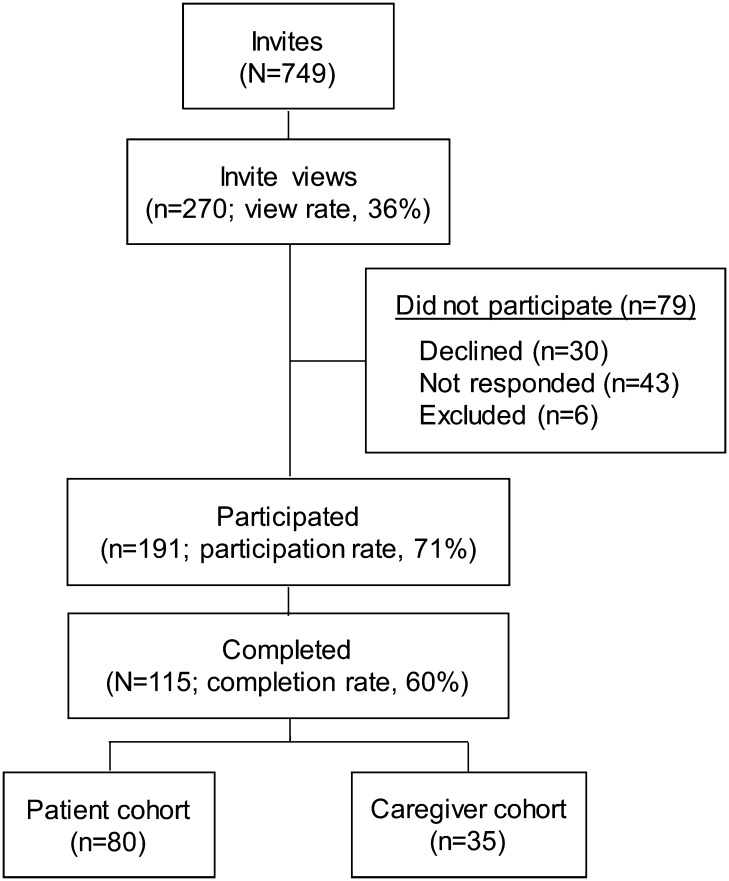
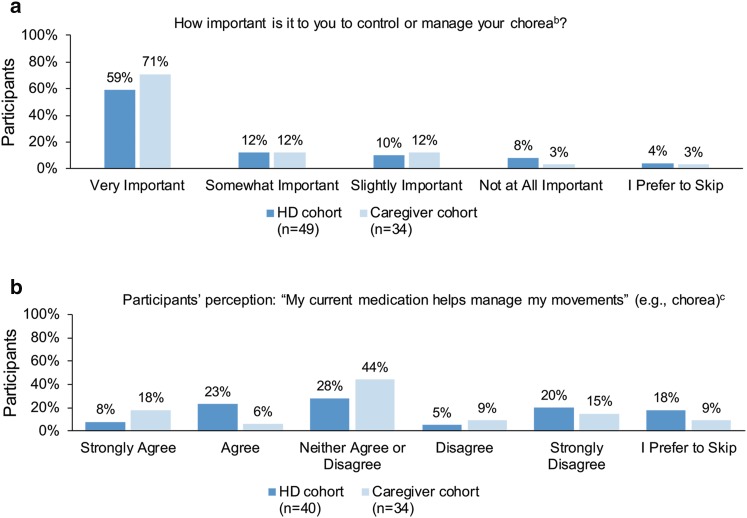
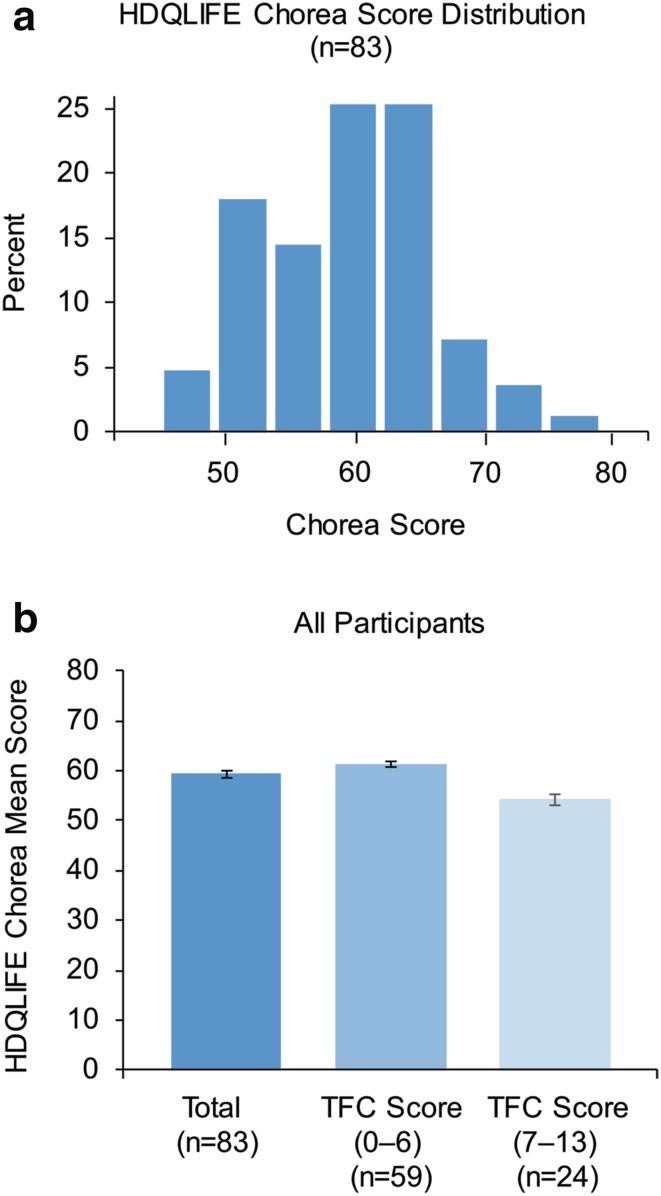
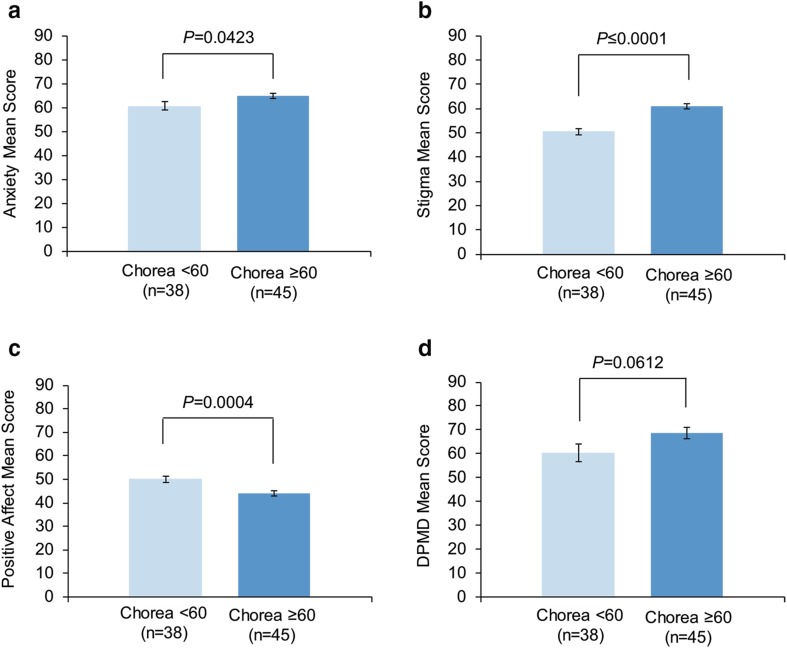
BACKGROUND: Chorea is the hallmark motor feature of Huntington disease (HD) and can negatively impact daily functioning and health-related quality of life (HRQoL). OBJECTIVE: The objective of this study was to evaluate how chorea impacts HRQoL and overall functioning among HD patients participating on the PatientsLikeMe website ( www.PatientsLikeMe.com ). METHODS: A survey was provided to HD participants and/or their caregivers via PatientsLikeMe (9 February 2017-22 March 2017), comprising multiple-choice and open-ended questions designed to assess how chorea impacts HRQoL and overall functioning, and the importance of treating chorea. The HDQLIFE measurement system was used to evaluate patient-reported outcomes of chorea and compare Anxiety and Stigma scores in participants with high chorea versus those with low chorea [HDQLIFE Chorea scores ≥ 60 (n = 45) vs. < 60 (n = 38)]. RESULTS: A total of 115 participants (n = 35 caregivers; n = 80 individuals with HD) were included in this study. Among those experiencing chorea (n = 83, 74% of respondents), 66% indicated it was 'Very Important' to manage chorea; however, only 47% agreed that their current medication regimen helped manage their movements. In general, respondents reported that chorea negatively affected HRQoL [HDQLIFE Chorea mean score (standard deviation): 59.3 (6.1)]. Consistent with this, significantly higher Anxiety (P = 0.0423) and stigma (P < 0.0001) scores were observed among respondents with high chorea than in those with low chorea. CONCLUSIONS: These results highlight the negative impact of chorea on HRQoL and overall functioning in individuals with HD. Better chorea treatment options are needed to successfully manage symptoms and to help improve HRQoL in these individuals, and patient experiences of anxiety and stigma should be considered in treatment plans.
Overview
The claims and statistics of this paper haven’t been checked yet.
Free: it reads the open-access text and checks the first 5 claims that cite a source we can check. Create a free account to check every claim.
Integrity signals
Registry
Cites
Statistics
Figures
Verification
Claims the paper makes
The claims and statistics of this paper haven’t been checked yet.
Free: it reads the open-access text and checks the first 5 claims that cite a source we can check. Create a free account to check every claim.
Claims other papers make about this one
Each is checked against this paper’s own text: does it say what the citing paper says it does?
The source backs part of the claim, not all of it — or backs it for a different population, condition or comparison.
In the citing paper
“HD gene expansion carriers with anxiety also report greater depression, irritability, apathy, pain, involuntary movements/chorea, and suicidality [10, 12–16].”
From Guided self-help for anxiety among Huntington’s disease gene expansion carriers (GUIDE-HD) compared to treatment as usual: a randomised controlled feasibility trial (2023) · cites this paper as [14]
Experimental — accuracy not yet measured
Self-check
Percentages, sums and reported differences re-computed from the paper’s own numbers.
The self-check needs the paper’s full text.
Citations
Cites
Three Approaches to Qualitative Content Analysis
Hsieh, H.-F., & Shannon, S. E. (2005) · Qualitative Health Research · doi:10.1177/1049732305276687 · Cited by 44,601 · cited 2×
“on a qualitative review of the interviews using content analysis [22, 23], themes included emotional burden, anxiety, stress, and depression.”
BackgroundMethodRegression Diagnostics: Identifying Influential Data and Sources of Collinearity
Belsley, D. A., Kuh, E., & Welsch, R. E. (1980) · Wiley Series in Probability and Statistics · doi:10.1002/0471725153 · Cited by 7,297 · cited 2×
“on a qualitative review of the interviews using content analysis [22, 23], themes included emotional burden, anxiety, stress, and depression.”
BackgroundRegression Diagnostics -- Identifying Influential Data and Sources of Collinearity
Beaumont, C. D., Belsley, D. A., Kuh, E., & Welsch, R. E. (1981) · The Journal of the Operational Research Society · doi:10.2307/2581267 · Cited by 6,359
Cella, D., Riley, W., Stone, A., Rothrock, N., Reeve, B., Yount, S., Amtmann, D., Bode, R., Buysse, D., Choi, S., et al. (2010) · Journal of Clinical Epidemiology · doi:10.1016/j.jclinepi.2010.04.011 · Cited by 5,128 · cited 1×
“this study, the Anxiety (to assess patient-reported anxiety), Stigma (to assess patient perceptions of stigma), and Positive Affect and Well-Being (to assess overall emotional well-being) [32, 34] short forms were administered.”
BackgroundHuntington's disease: a clinical review
Roos, R. A. (2010) · Orphanet Journal of Rare Diseases · doi:10.1186/1750-1172-5-40 · Cited by 1,037 · cited 2×
“Alternatively, some respondents may have had confusion in distinguishing chorea from other symptoms such as tics or ataxia, which can be a problem for both patients and clinicians [6].”
BackgroundHuntington disease: natural history, biomarkers and prospects for therapeutics
Ross, C. A., Aylward, E. H., Wild, E. J., Langbehn, D. R., Long, J. D., Warner, J. H., Scahill, R. I., Leavitt, B. R., Stout, J. C., Paulsen, J. S., et al. (2014) · Nature Reviews Neurology · doi:10.1038/nrneurol.2014.24 · Cited by 1,016
Tabrizi, S. J., Langbehn, D. R., Leavitt, B. R., Roos, R. A., Durr, A., Craufurd, D., Kennard, C., Hicks, S. L., Fox, N. C., Scahill, R. I., et al. (2009) · The Lancet Neurology · doi:10.1016/s1474-4422(09)70170-x · Cited by 984
Sharing Health Data for Better Outcomes on PatientsLikeMe
Wicks, P., Massagli, M., Frost, J., Brownstein, C., Okun, S., Vaughan, T., Bradley, R., & Heywood, J. (2010) · Journal of Medical Internet Research · doi:10.2196/jmir.1549 · Cited by 603 · cited 2×
“The potential of PatientsLikeMe to provide help to patients with other neurological conditions, such as amyotrophic lateral sclerosis, Parkinson disease, MS, and epilepsy, has been described previously [20, 21].”
BackgroundSelf-citationThe incidence and prevalence of Huntington's disease: A systematic review and meta‐analysis
Pringsheim, T., Wiltshire, K., Day, L., Dykeman, J., Steeves, T., & Jette, N. (2012) · Movement Disorders · doi:10.1002/mds.25075 · Cited by 587
Impact of the motor complications of Parkinson's disease on the quality of life
Chapuis, S., Ouchchane, L., Metz, O., Gerbaud, L., & Durif, F. (2005) · Movement Disorders · doi:10.1002/mds.20279 · Cited by 521
Tetrabenazine as antichorea therapy in Huntington disease: A randomized controlled trial
Huntington Study Group (2006) · Neurology · doi:10.1212/01.wnl.0000198586.85250.13 · Cited by 471
Huntington Study Group, Frank, S., Testa, C. M., Stamler, D., Kayson, E., Davis, C., Edmondson, M. C., Kinel, S., Leavitt, B., Oakes, D., et al. (2016) · JAMA · doi:10.1001/jama.2016.8655 · Cited by 403
Self-citationBehavioral changes in Huntington Disease.
Craufurd, D., Thompson, J. C., & Snowden, J. S. (2001) · PubMed · Cited by 397
Rate of functional decline in Huntington’s disease
Marder, K., Zhao, H., Myers, R. H., Cudkowicz, M., Kayson, E., Kieburtz, K., Orme, C., Paulsen, J., Penney, J. B., Siemers, E., et al. (2000) · Neurology · doi:10.1212/wnl.54.2.452 · Cited by 362
Gershon, R. C., Lai, J. S., Bode, R., Choi, S., Moy, C., Bleck, T., Miller, D., Peterman, A., & Cella, D. (2012) · Quality of Life Research · doi:10.1007/s11136-011-9958-8 · Cited by 361 · cited 1×
“emotional, cognitive, and social function [33].”
Tetrabenazine as antichorea therapy in Huntington disease: A randomized controlled trial
Savani, A. A., & Login, I. S. (2007) · Neurology · doi:10.1212/01.wnl.0000259143.52138.5c · Cited by 299
Treatment of hyperkinetic movement disorders
Jankovic, J. (2009) · The Lancet Neurology · doi:10.1016/s1474-4422(09)70183-8 · Cited by 252
Shoulson, I. (1981) · Neurology · doi:10.1212/wnl.31.10.1333 · Cited by 234
Differences in duration of Huntington's disease based on age at onset
Foroud, T., Gray, J., Ivashina, J., & Conneally, P. M. (1999) · Journal of Neurology, Neurosurgery & Psychiatry · doi:10.1136/jnnp.66.1.52 · Cited by 234
The Neurology Quality-of-Life Measurement Initiative
Cella, D., Nowinski, C., Peterman, A., Victorson, D., Miller, D., Lai, J.-S., & Moy, C. (2011) · Archives of Physical Medicine and Rehabilitation · doi:10.1016/j.apmr.2011.01.025 · Cited by 206 · cited 2×
“HDQLIFE [29] also includes generic domains from the Patient-Reported Outcomes Measurement Information System (PROMIS)/Quality of Life in Neurological Disorders (Neuro-QoL) measurement system, which was developed [32] as a standard patient-reported outcomes (PRO) measurement tool to assess patient physical, Patients’ a…”
BackgroundMethodArmstrong, M. J., & Miyasaki, J. M. (2012) · Neurology · doi:10.1212/wnl.0b013e318263c443 · Cited by 180
Bandstra, N. F., Camfield, C., & CAMFIELD, P. R. (2008) · Canadian Journal of Neurological Sciences / Journal Canadien des Sciences Neurologiques · doi:10.1017/s0317167100009082 · Cited by 128
Fritz, N. E., Rao, A. K., Kegelmeyer, D. A., Kloos, A., Busse, M. E., Hartel, L. J., Carrier, J., & Quinn, L. (2017) · Journal of Huntington s Disease · doi:10.3233/jhd-170260 · Cited by 118 · cited 1×
“There is no cure for the disease, but one of the defining motor symptoms in patients living with HD, chorea— which is characterized as abnormal, abrupt, irregular, unpredictable, and non-stereotyped movements—can be treated pharmacologically [6, 7] and supported with physical therapy [8].”
BackgroundGroves, M., van Duijn, E., Anderson, K., Craufurd, D., Edmondson, M. C., Goodman, N., van Kammen, D. P., & Goodman, L. (2011) · PLoS Currents · doi:10.1371/currents.rrn1259 · Cited by 102
Self-citationAubeeluck, A., Buchanan, H., & Stupple, E. J. N. (2011) · Quality of Life Research · doi:10.1007/s11136-011-0062-x · Cited by 100 · cited 1×
“For example, caregivers may need to subordinate their own needs to those of the patient and their caregiving role, and thus their HRQoL is greatly and negatively impacted [18, 19].”
BackgroundBurgunder, J.-M., Guttman, M., Perlman, S., Goodman, N., van Kammen, D. P., & Goodman, L. (2011) · PLoS Currents · doi:10.1371/currents.rrn1260 · Cited by 98 · cited 5×
“As the hallmark neurological feature of HD, chorea is present in 90% of patients with adult-onset HD [7, 9].”
BackgroundInfluentialThe Many Facets of Unawareness in Huntington Disease
McCusker, E. A., & Loy, C. T. (2014) · Tremor and Other Hyperkinetic Movements · doi:10.5334/tohm.231 · Cited by 87
Grytten, N., & Måseide, P. (2006) · Chronic Illness · doi:10.1177/17423953060020030101 · Cited by 86
Carlozzi, N. E., & Tulsky, D. S. (2013) · Journal of Health Psychology · doi:10.1177/1359105312438109 · Cited by 78 · cited 2×
“HD has a profound impact on daily life across physical/functional, cognitive, emotional, and social domains for affected patients, with increasing challenges as the disease progresses [4, 5].”
BackgroundSelf-citationBanaszkiewicz, K., Sitek, E. J., Rudzińska, M., Sołtan, W., Sławek, J., & Szczudlik, A. (2012) · Journal of Neural Transmission · doi:10.1007/s00702-012-0787-x · Cited by 73 · cited 1×
“For example, caregivers may need to subordinate their own needs to those of the patient and their caregiving role, and thus their HRQoL is greatly and negatively impacted [18, 19].”
BackgroundHo, A., Hocaoglu, M., & for the European Huntington's Disease Network Quality of Life Working Group (2011) · Clinical Genetics · doi:10.1111/j.1399-0004.2011.01748.x · Cited by 65
HDQLIFE: development and assessment of health-related quality of life in Huntington disease (HD)
Carlozzi, N. E., Schilling, S. G., Lai, J., Paulsen, J. S., Hahn, E. A., Perlmutter, J. S., Ross, C. A., Downing, N. R., Kratz, A. L., McCormack, M. K., et al. (2016) · Quality of Life Research · doi:10.1007/s11136-016-1386-3 · Cited by 65 · cited 5×
“For the purposes of this study, we administered [29] the six-item short form of HDQLIFE Chorea, in addition to three items from the long-form full HDQLIFE Chorea item bank.”
BackgroundMethodInfluentialSelf-citationPhysical Therapy Intervention for People With Huntington Disease
Busse, M. E., Khalil, H. W., Quinn, L., & Rosser, A. (2008) · Physical Therapy · doi:10.2522/ptj.20070346 · Cited by 64 · cited 1×
“A recent survey of physical therapists reported under-referral to supportive services that can help prevent falls, provide useful equipment, and promote lifestyle adjustments for the management of chorea and other motor symptoms [38].”
BackgroundReilmann, R. (2013) · Movement Disorders · doi:10.1002/mds.25500 · Cited by 62 · cited 1×
“Limited evidence is available to support dosing and finding the safest and most effective combinations of drugs to manage HD because psychiatric and behavioral symptoms can be quite complex [14, 37].”
BackgroundFrank, S., Testa, C. M., Stamler, D. A., Kayson, E., Davis, C. S., Edmondson, M. C., Kinel, S., Leavitt, B. R., Oakes, D., O’Neill, C. J., et al. (2016) · Publisher · Cited by 45
Self-citationPatients optimizing epilepsy management via an online community
Hixson, J., Barnes, D. E., Parko, K., Durgin, T. L., Bebber, S. L. V., Graham, A. C., & Wicks, P. J. (2015) · Neurology · doi:10.1212/wnl.0000000000001728 · Cited by 42 · cited 1×
“The potential of PatientsLikeMe to provide help to patients with other neurological conditions, such as amyotrophic lateral sclerosis, Parkinson disease, MS, and epilepsy, has been described previously [20, 21].”
BackgroundSelf-citationA Diabetes-Specific Measure of Patient Desire to Participate in Medical Decision Making
Golin, C., Dimatteo, M., Leaks, B., Duan, N., & Gelberg, L. (2001) · The diabetes educator · doi:10.1177/014572170102700613 · Cited by 34 · cited 3×
“The Desire to Participate in Medical Decision Making (DPMD) scale, a brief, reliable, and valid measure that can be adapted to any condition [28], was administered to assess patient engagement in their medical care.”
BackgroundMethodInfluentialThe Many Facets of Unawareness in Huntington Disease
McCusker, E. A., & Loy, C. T. (2014) · PubMed Central · doi:10.7916/d8fj2fd3 · Cited by 31 · cited 1×
“Therefore, the reported perceptions of patients may deviate from their actual experiences due to unawareness or diminished awareness of motor, cognitive, behavioral, and functional aspects of HD [39].”
BackgroundAnderson, K. E. (2011) · Handbook of clinical neurology · doi:10.1016/b978-0-444-52014-2.00002-1 · Cited by 26
Self-citationCarlozzi, N. E., Ready, R. E., Frank, S., Cella, D. F., Hahn, E. A., Goodnight, S. M., Schilling, S. G., Boileau, N. R., & Dayalu, P. (2017) · Movement Disorders · doi:10.1002/mds.27046 · Cited by 20 · cited 1×
“ability and validity data support the use of this measure in HD [31].”
MethodSelf-citationCarlozzi, N. E., Downing, N. R., Schilling, S. G., Lai, J., Goodnight, S. M., Miner, J. A., & Frank, S. (2016) · Quality of Life Research · doi:10.1007/s11136-016-1307-5 · Cited by 19 · cited 13×
“For the purposes of this study, we administered [29] the six-item short form of HDQLIFE Chorea, in addition to three items from the long-form full HDQLIFE Chorea item bank.”
BackgroundMethodInfluentialSelf-citationAgreement between clinician-rated versus patient-reported outcomes in Huntington disease
Carlozzi, N. E., Boileau, N. R., Perlmutter, J. S., Chou, K. L., Stout, J. C., Paulsen, J. S., McCormack, M. K., Cella, D. F., Nance, M., Lai, J., et al. (2018) · Journal of Neurology · doi:10.1007/s00415-018-8852-5 · Cited by 12 · cited 14×
“TFC scores were then stratified by HD and caregiver cohort for comparison between the two groups.”
MethodInfluentialSelf-citation
Research works printed but not linked: 1
- Teva Pharmaceutical Industries [press release]. Teva announces FDA approval of AUSTEDO™ (deutetrabenazine) tablets for the treatment of chorea associated with Huntington’s disease. 2017. http://www.tevapharm.com/news/teva_announces_fda_approval_of_austedo_deutetrabenazine_tablets_for_the_treatment_of_chorea_associated_with_huntington_s_disease_04_17.aspx. Accessed 2 May 2018.
Cited by
Furr-Stimming, E. E., Claassen, D. O., Kayson, E., Goldstein, J. L., Mehanna, R., Zhang, H., Liang, G. S. L., Haubenberger, D., Adams, J., Beck, C. A., et al. (2023) · The Lancet Neurology · doi:10.1016/s1474-4422(23)00127-8 · Cited by 76
Self-citationDelivery of RNAs to Specific Organs by Lipid Nanoparticles for Gene Therapy
Godbout, K., & Tremblay, J. P. (2022) · Pharmaceutics · doi:10.3390/pharmaceutics14102129 · Cited by 53
“Alzheimer’s disease [80], Huntington’s chorea [81], epilepsy [82], and brain cancer [83] are just some examples of brain diseases.”
BackgroundExercise in Huntington’s Disease: Current State and Clinical Significance
Mueller, S. M., Petersen, J. A., & Jung, H. H. (2019) · Tremor and Other Hyperkinetic Movements · doi:10.5334/tohm.515 · Cited by 40
State-of-the-art pharmacological approaches to reduce chorea in Huntington’s disease
Gibson, J. S., & Claassen, D. O. (2021) · Expert Opinion on Pharmacotherapy · doi:10.1080/14656566.2021.1876666 · Cited by 38
Röschel, A., Wagner, C., & Dür, M. (2021) · PLoS ONE · doi:10.1371/journal.pone.0261815 · Cited by 29
Metadata
- Authors
- Thorley, E. M., Iyer, R. G., Wicks, P., Curran, C., Gandhi, S. K., Abler, V., Anderson, K. E., & Carlozzi, N. E.
- Affiliations
- PatientsLikeMe (United States) (US)
- Teva Pharmaceuticals (United States) (US)
- Georgetown University (US)
- University of Michigan (US)
- Corresponding author
- Thorley, Eileen Mack
- Venue
- The Patient - Patient-Centered Outcomes Research
- Published
- 2018-05-11
- Volume
- 11
- Issue
- 5
- Pages
- 547-559
- ISSN
- 1178-1653 (ISSN-L)
- 1178-1661
- PMC
- PMC6132452
- OpenAlex
- W2802977944
- Cited by
- 32
- References
- 42
- Citations by year
- 2026: 3 · 2025: 4 · 2024: 5 · 2023: 9 · 2022: 2 · 2021: 6 · 2020: 1 · 2019: 1 · 2018: 1
- FWCI
- 1.03
- Type
- journal article
- Language
- en
- Open access
- hybrid
- doi.org
- Licence
- cc-by-nc
- creativecommons.org/licenses/by-nc/4.0 (tdm)
- Locations
- Patient (publishedVersion, cc-by-nc)
- Europe PMC (PubMed Central) (publishedVersion, other-oa)
- PubMed Central (publishedVersion, cc-by-nc)
- PubMed (publishedVersion)
- RePEc: Research Papers in Economics (submittedVersion)
- Topics
- Life Sciences › Neuroscience › Cellular and Molecular Neuroscience › Genetic Neurodegenerative Diseases
- Health Sciences › Medicine › Clinical Neurology › Deep Brain Stimulation and Movement Disorders
- Health Sciences › Medicine › Clinical Neurology › Neurological and metabolic disorders
- Keywords
- Huntington's disease, chorea, health-related quality of life, anxiety, stigma, patient-reported outcomes, caregivers, daily functioning, PatientsLikeMe
- MeSH terms
- Adult, Aged, Aged, 80 and over, Chorea, Female, Humans, Huntington Disease, Male, Middle Aged, Patients, Quality of Life, Surveys and Questionnaires, United States, Caregivers, Young Adult
About these checks
Registry, retraction, Cites and statistics results are computed, not judged, with one exception: a printed reference that no index lists is read once by a model before it counts as a citation error. Claims are extracted by a model and kept only when their quote appears verbatim in the text; each cited source is then checked, with a model’s help, for whether it says what the claim relies on. Those verdicts can be wrong — read the claim’s quote and the cited source before relying on one.
Statistics and arithmetic are recomputed, not judged.
Confidence bands are shown only for fields calibrated on our annotated test set. None is calibrated yet, so no band is shown.
What counts as a claim ›How we measure confidence ›How we check this ›
Are you an author, or do you see a problem with this page? Request a review
Data sources
Bibliographic data: Semantic Scholar, OpenAlex, Crossref.
Contains information from the Semantic Scholar Academic Graph Datasets, made available under the ODC Attribution License (ODC-BY 1.0).
Semantic Scholar’s data is described in: Kinney, R., et al. (2023). The Semantic Scholar Open Data Platform. arXiv:2301.10140.
