

The Physiological Regulation of Skeletal Muscle Fatty Acid Supply and Oxidation During Moderate-Intensity Exercise
Open accessThe DOI matches its Crossref record; 93 of the 93 references it cites were found in a registry or an index.
Abstract
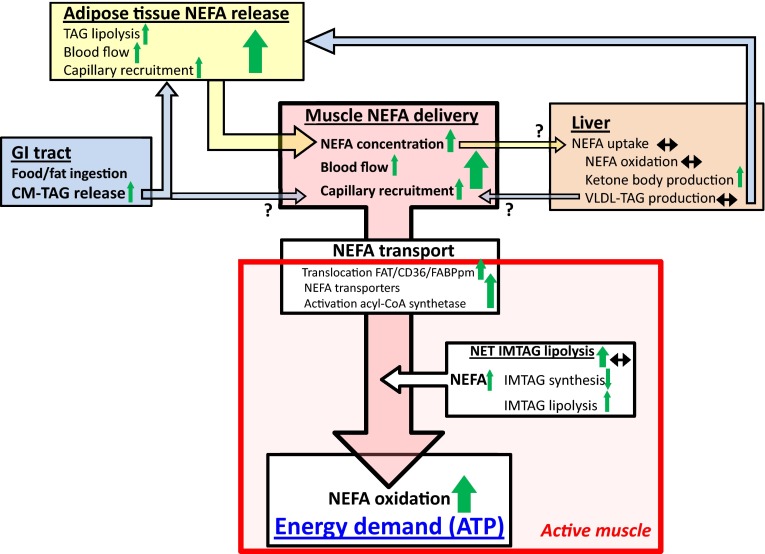
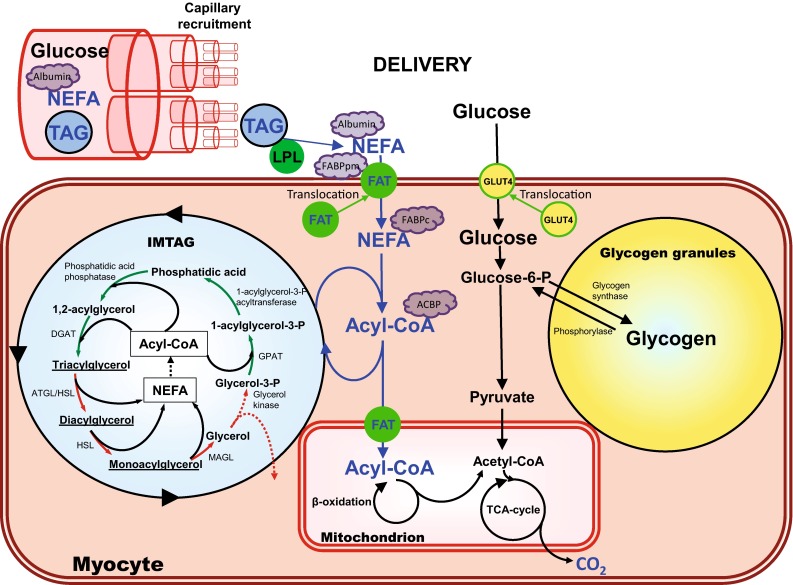
Energy substrates that are important to the working muscle at moderate intensities are the non-esterified fatty acids (NEFAs) taken up from the circulation and NEFAs originating from lipolysis of the intramuscular triacylglycerol (IMTAG). Moreover, NEFA from lipolysis via lipoprotein lipase (LPL) in the muscle of the very-low-density lipoproteins and in the (semi) post-prandial state chylomicrons may also contribute. In this review, the NEFA fluxes and oxidation by skeletal muscle during prolonged moderate-intensity exercise are described in terms of the integration of physiological systems. Steps involved in the regulation of the active muscle NEFA uptake include (1) increased energy demand; (2) delivery of NEFA to the muscle; (3) transport of NEFA into the muscle by NEFA transporters; and (4) activation of the NEFAs and either oxidation or re-esterification into IMTAG. The increased metabolic demand of the exercising muscle is the main driving force for all physiological regulatory processes. It elicits functional hyperemia, increasing the recruitment of capillaries and muscle blood flow resulting in increased NEFA delivery and accessibility to NEFA transporters and LPL. It also releases epinephrine that augments adipose tissue NEFA release and thereby NEFA delivery to the active muscle. Moreover, NEFA transporters translocate to the plasma membrane, further increasing the NEFA uptake. The majority of the NEFAs taken up by the active muscle is oxidized and a minor portion is re-esterified to IMTAG. Net IMTAG lipolysis occurs; however, the IMTAG contribution to total fat oxidation is rather limited compared to plasma-derived NEFA oxidation, suggesting a complex role and regulation of IMTAG utilization.
Overview
The claims and statistics of this paper haven’t been checked yet.
Free: it reads the open-access text and checks the first 5 claims that cite a source we can check. Create a free account to check every claim.
Integrity signals
Registry
Cites
Statistics
Figures
Verification
Claims the paper makes
The claims and statistics of this paper haven’t been checked yet.
Free: it reads the open-access text and checks the first 5 claims that cite a source we can check. Create a free account to check every claim.
Claims other papers make about this one
Each is checked against this paper’s own text: does it say what the citing paper says it does?
The source backs part of the claim, not all of it — or backs it for a different population, condition or comparison.
In the citing paper
“As exercise intensity increases, there is a simultaneous and progressive increase in epinephrine [13] from the adrenal glands.”
From Understanding the factors that effect maximal fat oxidation. (2018) · cites this paper as [13]
Experimental — accuracy not yet measuredThe source backs part of the claim, not all of it — or backs it for a different population, condition or comparison.
In the citing paper
“However, endurance training has been shown to increase blood flow to subcutaneous adipose tissue by 2–3 fold [13], which can increase overall FA transport to working muscle.”
From Understanding the factors that effect maximal fat oxidation. (2018) · cites this paper as [13]
Experimental — accuracy not yet measuredThe source backs part of the claim, not all of it — or backs it for a different population, condition or comparison.
In the citing paper
“Due to poor circulation in type II diabetics, a high percentage of liberated FAs as a result of exercise-induced, catecholamine-stimulated lipolysis are not released into the circulation during high intensity exercise [13].”
From Understanding the factors that effect maximal fat oxidation. (2018) · cites this paper as [13]
Experimental — accuracy not yet measuredThe cited source says what the claim attributes to it.
In the citing paper
“In summary, transport of FAs across the cell membrane positively affects FAox [13, 26, 30].”
From Understanding the factors that effect maximal fat oxidation. (2018) · cites this paper as [13]
The cited source says what the claim attributes to it.
In the citing paper
“Another factor that significantly influences FAox is the duration of exercise [13, 45, 48].”
From Understanding the factors that effect maximal fat oxidation. (2018) · cites this paper as [13]
1 more claim about this paper
Create a free account to see every claim other papers make about this one.
Self-check
Percentages, sums and reported differences re-computed from the paper’s own numbers.
The self-check needs the paper’s full text.
Citations
Cites
Steensberg, A., van Hall, G., Osada, T., Sacchetti, M., Saltin, B., & Pedersen, B. K. (2000) · The Journal of Physiology · doi:10.1111/j.1469-7793.2000.00237.x · Cited by 1,095 · cited 1×
“Interleukin-6 (IL-6) is produced by skeletal muscle during exercise in increasing amounts with increased duration [63], and when recombinant human IL-6 (rhIL-6) is infused it increases systemic lipolysis [64].”
BackgroundThe effects of increasing exercise intensity on muscle fuel utilisation in humans
van Loon, L. J. C., Greenhaff, P. L., Constantin‐Teodosiu, D., Saris, W. H. M., & Wagenmakers, A. J. M. (2001) · The Journal of Physiology · doi:10.1111/j.1469-7793.2001.00295.x · Cited by 897
Bonnard, C., Durand, A., Peyrol, S., Chanseaume, E., Chauvin, M.-A., Morio, B., Vidal, H., & Rieusset, J. (2008) · Journal of Clinical Investigation · doi:10.1172/jci32601 · Cited by 819 · cited 1×
“Perhaps IMTAG with its continuous high turnover rate may act as a ‘buffer’ for intramyocellular NEFAs, which in a high(er) concentration may be toxic [83, 84] and in a low(er) concentration compromises energy provision to the active muscles.”
BackgroundSubstrate Turnover during Prolonged Exercise in Man
Ahlborg, G., Felig, P., Hagenfeldt, L., Hendler, R., & Wahren, J. (1974) · Journal of Clinical Investigation · doi:10.1172/jci107645 · Cited by 786 · cited 3×
“The resting muscle blood flow is low and 45–55 % of all NEFA delivered to the muscle is taken up [10, 12, 15, 17] and is clearly dependent on the NEFA concentration [6].”
BackgroundInterleukin-6 stimulates lipolysis and fat oxidation in humans
van Hall, G., Steensberg, A., Sacchetti, M., Fischer, C., Keller, C., Schjerling, P., Hiscock, N., Møller, K., Saltin, B., Febbraio, M. A., et al. (2003) · The Journal of Clinical Endocrinology & Metabolism · doi:10.1210/jc.2002-021687 · Cited by 767 · cited 1×
“Interleukin-6 (IL-6) is produced by skeletal muscle during exercise in increasing amounts with increased duration [63], and when recombinant human IL-6 (rhIL-6) is infused it increases systemic lipolysis [64].”
BackgroundMuscle triglyceride utilization during exercise: effect of training
Hurley, B. F., Nemeth, P. M., Martin, W. H., Hagberg, J. M., Dalsky, G. P., & Holloszy, J. O. (1986) · Journal of Applied Physiology · doi:10.1152/jappl.1986.60.2.562 · Cited by 522
The concept of symmorphosis: a testable hypothesis of structure-function relationship.
Weibel, E. R., Taylor, C. R., & Hoppeler, H. (1991) · Proceedings of the National Academy of Sciences · doi:10.1073/pnas.88.22.10357 · Cited by 488
Kiens, B., Essen‐Gustavsson, B., Christensen, N. J., & Saltin, B. (1993) · The Journal of Physiology · doi:10.1113/jphysiol.1993.sp019823 · Cited by 444 · cited 1×
“Endurance training increases the capacity of the muscle to take up NEFA [91], potentially by enhancing the number of capillaries and/or recruitment and the muscle NEFA oxidative capacity [91].”
BackgroundPhysical Activity and Exercise in the Regulation of Human Adipose Tissue Physiology
Thompson, D., Karpe, F., Lafontan, M., & Frayn, K. (2012) · Physiological Reviews · doi:10.1152/physrev.00012.2011 · Cited by 402
Adrenergic regulation of lipolysis in situ at rest and during exercise.
Arner, P., Kriegholm, E., Engfeldt, P., & Bolinder, J. (1990) · Journal of Clinical Investigation · doi:10.1172/jci114516 · Cited by 373
Cited by
Understanding the factors that effect maximal fat oxidation.
Purdom, T., Kravitz, L., Dokladny, K., & Mermier, C. (2018) · Journal of the International Society of Sports Nutrition · doi:10.1186/s12970-018-0207-1 · Cited by 247
“In summary, transport of FAs across the cell membrane positively affects FAox [13, 26, 30].”
BackgroundInfluentialThe Regulation of Fat Metabolism during Aerobic Exercise
Muscella, A., Stefàno, E., Lunetti, P., Capobianco, L., & Marsigliante, S. (2020) · Biomolecules · doi:10.3390/biom10121699 · Cited by 237
“Therefore, IMTG are not an energy source that is rapidly usable, and muscle glycogen utilization is necessary during continuous moderate exercise [74,88].”
BackgroundKemps, H., Kränkel, N., Dörr, M., Moholdt, T., Wilhelm, M., Paneni, F., Serratosa, L., Ekker Solberg, E., Hansen, D., Halle, M., et al. (2019) · European Journal of Preventive Cardiology · doi:10.1177/2047487318820420 · Cited by 144
Carnitine in Human Muscle Bioenergetics: Can Carnitine Supplementation Improve Physical Exercise?
Gnoni, A., Longo, S., Gnoni, G. V., & Giudetti, A. M. (2020) · Molecules · doi:10.3390/molecules25010182 · Cited by 146
Myalgic Encephalomyelitis/Chronic Fatigue Syndrome: the biology of a neglected disease
Arron, H. E., Marsh, B. D., Khan, M. A., Jaeger, B., Kell, D., & Pretorius, E. (2024) · Frontiers in Immunology · doi:10.3389/fimmu.2024.1386607 · Cited by 141
Fatty acid oxidation and photoreceptor metabolic needs
Fu, Z., Kern, T. S., Hellström, A., & Smith, L. E. H. (2020) · Journal of Lipid Research · doi:10.1194/jlr.tr120000618 · Cited by 109
“In heart and skeletal muscle, fatty acids are oxidized to acetyl-CoA, which enters the Krebs cycle for energy production in mitochondria (53, 54).”
BackgroundChanges in fat oxidation in response to various regimes of high intensity interval training (HIIT)
Astorino, T. A., & Schubert, M. M. (2017) · European Journal of Applied Physiology · doi:10.1007/s00421-017-3756-0 · Cited by 86
A map of metabolic phenotypes in patients with myalgic encephalomyelitis/chronic fatigue syndrome
Hoel, F., Hoel, A., Pettersen, I. K. N., Rekeland, I. G., Risa, K., Alme, K., Sørland, K., Fosså, A., Lien, K., Herder, I., et al. (2021) · JCI Insight · doi:10.1172/jci.insight.149217 · Cited by 70
“These programs also involve immune and inflammatory processes and overlap with mechanisms supporting energetics, performance, and recovery in the context of physical activity and restitution (35, 36).”
BackgroundLiu, J., Zhu, L., & Su, Y. (2020) · Frontiers in Physiology · doi:10.3389/fphys.2020.00214 · Cited by 82
Silva‐Vignato, B., Coutinho, L. L., Poleti, M., César, A. S. M., Moncau, C. T., Regitano, L. C. D. A., & Balieiro, J. C. D. C. (2019) · BMC Genomics · doi:10.1186/s12864-018-5345-y · Cited by 83
Obesity-Related Changes in Human Plasma Lipidome Determined by the Lipidyzer Platform
Pikó, P., Pál, L., Szűcs, S., Kósa, Z., Sándor, J., & Ádány, R. (2021) · Biomolecules · doi:10.3390/biom11020326 · Cited by 49
“During physical activity, TGs are remobilized and transported to muscles where they are decomposed by β-oxidation to serve as energy source in normal weight subjects [38].”
BackgroundLi, H., Herrmann, T. R. W., Seeßle, J., Liebisch, G., Merle, U., Stremmel, W., & Chamulitrat, W. (2022) · Bioscience Reports · doi:10.1042/bsr20211854 · Cited by 51
Roles of lipid metabolism and its regulatory mechanism in idiopathic pulmonary fibrosis: A review
Tian, Y., Duan, C., Feng, J., Liao, J., Yang, Y., & Sun, W. (2022) · The International Journal of Biochemistry & Cell Biology · doi:10.1016/j.biocel.2022.106361 · Cited by 43
IL-6 Linkage to Exercise-Induced Shifts in Lipid-Related Metabolites: A Metabolomics-Based Analysis
Nieman, D. C., Sha, W., & Pappan, K. L. (2016) · Journal of Proteome Research · doi:10.1021/acs.jproteome.6b00892 · Cited by 40
Li, L., Lv, H., Jiang, Z., Qiao, F., Chen, L., Zhang, M., & Du, Z. (2020) · The Journal of Physiology · doi:10.1113/jp279814 · Cited by 35
“Moreover, some studies have indicated that the free fatty acids (FFA) used as substrates for FAO in muscle are mostly taken up from circulation (van Hall 2015) and the FAO inhibition in muscle would lower the uptake of FFA from circulation and cause systemic accumulation of FFA in other organs.”
BackgroundCold exposure alters lipid metabolism of skeletal muscle through HIF-1α-induced mitophagy
Chen, W., Xu, Z., You, W., Zhou, Y., Wang, L., Huang, Y., & Shan, T. (2023) · BMC Biology · doi:10.1186/s12915-023-01514-4 · Cited by 35
Postexercise repletion of muscle energy stores with fructose or glucose in mixed meals
Rosset, R., Lecoultre, V., Egli, L., Cros, J., Dokumaci, A. S., Zwygart, K., Boesch, C., Kreis, R., Schneiter, P., & Tappy, L. (2017) · The American Journal of Clinical Nutrition · doi:10.3945/ajcn.116.138214 · Cited by 23
Dialysis Procedures Alter Metabolic Conditions
Stegmayr, B. G. (2017) · Nutrients · doi:10.3390/nu9060548 · Cited by 36
An insight into farm animal skeletal muscle metabolism based on a metabolomics approach
Muroya, S. (2022) · Meat Science · doi:10.1016/j.meatsci.2022.108995 · Cited by 34
Aye, M. M., Butler, A. E., Kilpatrick, E. S., Kirk, R., Vince, R. V., Rigby, A. S., Sandeman, D. D., & Atkin, S. L. (2018) · Frontiers in Endocrinology · doi:10.3389/fendo.2018.00592 · Cited by 27
“Following exercise, there was a significant reduction in NEFA AUC during the lipid saline infusion for controls and for both the saline and lipid infusions for the PCOS group, suggesting exercise induced effective removal of circulating NEFA (32).”
BackgroundAdvances in the Understanding and Treatment of Mitochondrial Fatty Acid Oxidation Disorders
Goetzman, E. S. (2017) · Current Genetic Medicine Reports · doi:10.1007/s40142-017-0125-6 · Cited by 28
Re-Evaluating the Oxidative Phenotype: Can Endurance Exercise Save the Western World?
Kolodziej, F., & O’Halloran, K. D. (2021) · Antioxidants · doi:10.3390/antiox10040609 · Cited by 29
“However, this effect could be facilitated by mitochondrial transporter regulation, especially considering that IMTG is considered a predominant FA source for β-oxidation over FFA [71].”
BackgroundInfluentialXu, J., Lodge, T., Kingdon, C. C., Strong, J. W. L., Maclennan, J., Lacerda, E., Kujawski, S., Zalewski, P., Huang, W. E., & Morten, K. (2023) · Advanced Science · doi:10.1002/advs.202302146 · Cited by 28
“In combination with the altered unsaturated fatty acid levels in the ME and MS groups, this may suggest that lipolysis is induced where glycerol is broken down into free 295 fatty acids, usually occurring during times of energy deprivation, such as fasting and exercising (42, 43).”
BackgroundThe role of Ap2a2 in PPARα‐mediated regulation of lipolysis in adipose tissue
Montgomery, M. K., Bayliss, J. A., Keenan, S. N., Rhost, S., Ting, S. B., & Watt, M. J. (2019) · The FASEB Journal · doi:10.1096/fj.201900909rr · Cited by 26
“fatty acids derived fromadipose tissue lipolysis (35).”
BackgroundProteomic profiling of fatty acid binding proteins in muscular dystrophy
Dowling, P., Gargan, S., Zweyer, M., Swandulla, D., & Ohlendieck, K. (2020) · Expert Review of Proteomics · doi:10.1080/14789450.2020.1732214 · Cited by 23
Ma, X., Chen, H., Cao, L., Zhao, S., Zhao, C., Yin, S., & Hu, H. (2021) · Phytotherapy Research · doi:10.1002/ptr.7310 · Cited by 22
“Speed from 8 to 14 m/min is considered to be a moderate-intensity exercise (Ferreira et al., 2007; Seiler et al., 2015), which stimulates adipose tissue to release NEFAs into blood (van Hall, 2015) to support energy requirement for the sprint stage of moderate-intensity exercise.”
BackgroundMotta, J. M. E., Souza, L. N., Vieira, B. B., Dellê, H., Consolim‐Colombo, F. M., Egan, B. M., & Lopes, H. F. (2021) · Journal of Clinical Hypertension · doi:10.1111/jch.14190 · Cited by 20
Muroya, S., Ogasawara, H., Nohara, K., Oe, M., Ojima, K., & Hojito, M. (2019) · Asian-Australasian Journal of Animal Sciences · doi:10.5713/ajas.19.0682 · Cited by 19
“In humans, moderate-intensity exercise induces changes in energy metabolism, resulting in fatty acid generation and release from adipose tissues into the circulation [7].”
BackgroundFujita, N., Aono, S., Karasaki, K., Sera, F., Kurose, T., Fujino, H., & Urakawa, S. (2018) · PLoS ONE · doi:10.1371/journal.pone.0196895 · Cited by 18
Nieman, D. C., Gillitt, N. D., & Sha, W. (2018) · Metabolomics · doi:10.1007/s11306-018-1444-7 · Cited by 19
Huang, S., Shangguan, R., Chen, S., Lai, X., Han, H., & Sun, J. (2025) · Sports Medicine - Open · doi:10.1186/s40798-025-00862-5 · Cited by 16
Biomolecules of Muscle Fatigue in Metabolic Myopathies
Schirinzi, E., Ricci, G., Torri, F., Mancuso, M., & Siciliano, G. (2023) · Biomolecules · doi:10.3390/biom14010050 · Cited by 13
“In addition, fatty acids are essential structural components of cell membranes, contributing to membrane fluidity and playing a role in cell signaling and networking [66,67].”
BackgroundBertholdt, L., Gudiksen, A., Ringholm, S., & Pilegaard, H. (2019) · Pflügers Archiv - European Journal of Physiology · doi:10.1007/s00424-019-02332-w · Cited by 13
Supruniuk, E., Mikłosz, A., & Chabowski, A. (2020) · International Journal of Molecular Sciences · doi:10.3390/ijms21218382 · Cited by 13
Li, L.-J., Ma, J., Li, S., Chen, X., & Zhang, J. (2019) · Archives of Physiology and Biochemistry · doi:10.1080/13813455.2019.1639763 · Cited by 11
“At rest, fatty acids taken up by skeletal muscle are converted to triglycerides through re-esterification; during exercise, energy substrates are fatty acids originating from circulation and from lipolysis of IMTG (Newsom et al. 2011, Van 2015).”
BackgroundTong, Y., Huang, J., Wang, S., Awa, R., Tagawa, T., Zhang, Z., Cao, T., Kobori, H., & Suzuki, K. (2024) · International Journal of Molecular Sciences · doi:10.3390/ijms25126627 · Cited by 11
Ling, Y., Zheng, Q., Jing, J. I. N. G., Sui, M., Zhu, L., Li, Y., Zhang, Y., Liu, Y., Fang, F., & Zhang, X. (2020) · Journal of Integrative Agriculture · doi:10.1016/s2095-3119(20)63268-3 · Cited by 8
Dietary Manipulations Concurrent to Endurance Training
Rothschild, J. A., & Earnest, C. P. (2018) · Journal of Functional Morphology and Kinesiology · doi:10.3390/jfmk3030041 · Cited by 10
“Fat metabolism during exercise is a complex process involving many sites of regulation that may be affected by dietary intake including the release of free fatty acids (FFA) from adipose tissue and delivery to working muscle, transport of fat into the cell, binding and transport of fat in the cytoplasm, transport of f…”
BackgroundOh, J., Lee, Y., Han, Y., Kim, J., Park, C., Oh, D.-R., Yun, H., Lee, G., Kim, J., & Choi, C. (2020) · Preventive Nutrition and Food Science · doi:10.3746/pnf.2020.25.4.380 · Cited by 10
“In muscle tissue, inadequate levels of energy and reduced intramuscular glycogen are aided by energy from NEFA to maintain muscular activity (van Hall, 2015).”
BackgroundAdipose Lipolysis Unchanged by Preexercise Carbohydrate Regardless of Glycemic Index
Baur, D., Willingham, B. D., Smith, K. A., Kisiolek, J. N., Morrissey, M. C., Saracino, P. G., Ragland, T. J., & Ormsbee, M. J. (2017) · Medicine & Science in Sports & Exercise · doi:10.1249/mss.0000000000001498 · Cited by 7
“(55%–75% V̇O2max), catecholamines are the primary stimulator of adipose tissue lipolysis (1).”
BackgroundLiu, Q., Li, R., Chen, G., Wang, J., Hu, B., Li, C., Zhu, X., & Lu, Y. (2019) · Molecular Medicine Reports · doi:10.3892/mmr.2019.10189 · Cited by 11
“Skeletal muscles are able to oxidize non‐esterified fatty acids, or to store fatty acids (Fas) as TG, accumulating intramuscular triacylglycerol (iMTaG) (15).”
BackgroundThe ergogenic activity of cider vinegar: A randomized cross-over, double-blind, clinical trial
Chiu, H., Chiang, M., Liao, H.-J., Shen, Y., Venkatakrishnan, K., Cheng, I.-S., & Wang, C. (2020) · Sports Medicine and Health Science · doi:10.1016/j.smhs.2020.02.001 · Cited by 9
Yadav, R., Swetanshu, & Singh, P. (2023) · Current Problems in Cardiology · doi:10.1016/j.cpcardiol.2023.102345 · Cited by 9
Figueira, B., Bravo, J., Raimundo, A. M. D. M., & Reis, A. (2025) · Scientific Reports · doi:10.1038/s41598-025-05378-2 · Cited by 9
“This pattern may reflect transient metabolic fluxes related to increased fatty acid mobilization during sustained moderate-intensity exercise 32 , or suggest that a longer intervention may be required to elicit reductions.”
A Single Bout of Ultra-Endurance Exercise Reveals Early Signs of Muscle Aging in Master Athletes
Coudy‐Gandilhon, C., Gueugneau, M., Chambon, C., Taillandier, D., Combaret, L., Polge, C., Millet, G. Y., Féasson, L., & Béchet, D. (2022) · International Journal of Molecular Sciences · doi:10.3390/ijms23073713 · Cited by 7
“The blood flow to the active muscles increases several-fold upon exercise [30], and a higher capillary LC/PF index may then favor O2 supply, substrates delivery to, and oxidative metabolism in myofibers.”
Chronic alcohol-related myopathy: a closer look at the role of lipids
Ganjayi, M. S., Krauss, T. A., Willis, C. R. G., & Baumann, C. W. (2024) · Frontiers in Physiology · doi:10.3389/fphys.2024.1492405 · Cited by 5
BMP11 Negatively Regulates Lipid Metabolism in C2C12 Muscle Cells
Pham, H. G., Park, J. P., & Yun, J. W. (2020) · Biotechnology and Bioprocess Engineering · doi:10.1007/s12257-020-0254-8 · Cited by 5
Miyoshi, M., Usami, M., Nishiyama, Y., Kai, M., Suzuki, A., Maeshige, N., Yamaguchi, A., Ma, X., & Shinohara, M. (2023) · Clinical Nutrition ESPEN · doi:10.1016/j.clnesp.2023.06.011 · Cited by 4
Chen, L., Zhu, Y., Fei, Z., Hinkle, S. N., Xia, T., Liu, X., Rahman, M. L., Li, M., Wu, J., Weir, N. L., et al. (2020) · Nutrients · doi:10.3390/nu12113544 · Cited by 4
“Fatty acids are an important source of fuel for skeletal muscle, particularly during PA with moderate intensity and longer duration [23].”
Wang, T., Huang, J., Ren, W., Meng, J., Yao, X., Chu, H., Yao, R., Zhai, M., & Zeng, Y. (2025) · Biology · doi:10.3390/biology14111581 · Cited by 4
“Consequently, itaconic acid cannot be readily converted into isocitric acid, resulting in its temporary accumulation [38].”
Marques, L., Neves, J., Pereira, A., Santiago, A., Troia, S., Vilarinho, R., Amorim, M. M., & Noites, A. (2025) · Obesities · doi:10.3390/obesities5020031 · Cited by 5
“ESWT, RF, and exercise appear to be sufficient to activate a global lipolytic cascade [14,41].”
Li, J., Lu, Z., Yuan, L., Wang, Q., Zhu, J., Bao, D., Grimm, R., Wang, X., Wang, X., Xue, H., et al. (2023) · NMR in Biomedicine · doi:10.1002/nbm.5045 · Cited by 3
Gangadhara, R. M., Gowda, D., Gowda, S. G. B., Upadhyay, G., Chainani, N., Kain, V., Halade, G. V., & Hui, S.-P. (2025) · Frontiers in Nutrition · doi:10.3389/fnut.2025.1673002 · Cited by 2
Zhu, H., Pan, J., Wen, J., Dang, X., Chen, X., Fan, Y., Lu, W., & Jiang, W. (2025) · Frontiers in Cardiovascular Medicine · doi:10.3389/fcvm.2025.1485755 · Cited by 2
Saghiv, M. S., & Sagiv, M. S. (2020) · Springer eBooks · doi:10.1007/978-3-030-48806-2_2 · Cited by 2
Prado, V. C., Quines, C. B., Rosa, S. G., Cechella, J. L., & Nogueira, C. W. (2019) · Canadian Journal of Physiology and Pharmacology · doi:10.1139/cjpp-2018-0620 · Cited by 3
Endurance exercise: a model of physiological integration
Calderón‐Montero, F. J., Ramos-Álvarez, J. J., & Capellá, I. L. (2021) · Archivos de medicina del deporte: revista de la Federación Española de Medicina del Deporte y de la Confederación Iberoamericana de Medicina del Deporte · doi:10.18176/archmeddeporte.00062 · Cited by 3
Johnsson, K. A., George, J., Parks, E. J., & Katsanos, C. S. (2025) · American Journal of Physiology-Endocrinology and Metabolism · doi:10.1152/ajpendo.00162.2025 · Cited by 2
McCarthy, O. M., Kristensen, K. B., Ranjan, A. G., Nicholas, C., Holst, J. J., Bracken, R. M., Nørgaard, K., & Schmidt, S. (2025) · Nutrients · doi:10.3390/nu17233637 · Cited by 1
Wissler, E. H. (2018) · Springer eBooks · doi:10.1007/978-3-662-57397-6_4 · Cited by 1
Zhifeng, S., & Maotang, W. (2023) · Revista Brasileira de Medicina do Esporte · doi:10.1590/1517-8692202329012022_0737 · Cited by 1
Nobarı, H., Saedmocheshi, S., Johnson, K. E., Prieto-González, P., & Valdés-Badilla, P. (2024) · Clinical Nutrition Open Science · doi:10.1016/j.nutos.2024.04.004 · Cited by 2
What Do We Know of Human Fuel Use during Aerobic Exercise, and How Do We Know It?
Axsom, J., & Arany, Z. P. (2025) · Physiology · doi:10.1152/physiol.00002.2025 · Cited by 3
Exercise-Induced Chaperokine Activity of Hsp70: Possible Role in Chronic Diseases
Shamsi, M. M., Hassan, Z. M., & Gharakhanlou, R. (2019) · Heat shock proteins · doi:10.1007/978-3-030-02254-9_10 · Cited by 4
Cancello, R., Lucchetti, E., Gobbi, M., & Brunani, A. (2020) · Springer eBooks · doi:10.1007/978-3-030-32274-8_4 · Cited by 4
Vitamin B3 salvage and NAD\(^+\) metabolism in skeletal muscle
Fletcher, R. S. (2017) · University of Birmingham Institutional Research Archive (University of Birmingham)
The Influence Of A Whey Protein Preload Prior To Carbohydrate Consumption On Cycling Performance
Irvine, C., Sokoloski, M., Rowland, I., Gordon, R., & Ben-Ezra, V. (2020) · Medicine & Science in Sports & Exercise · doi:10.1249/01.mss.0000671204.89803.e1
Rugbeer, N., Constantinou, D., & Torres, G. (2021) · South African Journal of Sports Medicine · doi:10.17159/2078-516x/2021/v33i1a8894
Desroches, A. J., Domingue, F., Laurencelle, L., & Lajoie, C. (2021) · Baltic Journal of Sport and Health Sciences · doi:10.33607/bjshs.v3i122.1110
“Gonzalez, J. T., Fuchs, C. J., Betts, J. A., Van Loon, L. J. C. (2016).”
BackgroundInfluentialAbolfathi, F., Ranjbar, R., Tabandeh, M. R., & Habibi, A. (2024) · Cytokine · doi:10.1016/j.cyto.2024.156793 · Cited by 2
Aerobic and Combined Exercise Effect on Obese and Hypertensive PatientsPreprint
Kiflu, A., & Taddese, A. (2025) · Research Square · doi:10.21203/rs.3.rs-8144620/v1
Chen, W., Xu, Z., You, W., Zhou, Y., Wang, L., Huang, Y., & Shan, T. (2023) · Figshare · doi:10.6084/m9.figshare.22615613
Chen, W., Xu, Z., You, W., Zhou, Y., Wang, L., Huang, Y., & Shan, T. (2023) · Figshare · doi:10.6084/m9.figshare.22615622
Chen, W., Xu, Z., You, W., Zhou, Y., Wang, L., Huang, Y., & Shan, T. (2023) · Figshare · doi:10.6084/m9.figshare.22615604
Chen, W., Xu, Z., You, W., Zhou, Y., Wang, L., Huang, Y., & Shan, T. (2023) · Figshare · doi:10.6084/m9.figshare.22615610
Chen, W., Xu, Z., You, W., Zhou, Y., Wang, L., Huang, Y., & Shan, T. (2023) · Figshare · doi:10.6084/m9.figshare.22615601
Metadata
- Authors
- van Hall, G.
- Venue
- Sports Medicine
- Published
- 2015-11
- Volume
- 45
- Issue
- S1
- Pages
- 23-32
- ISSN
- 0112-1642 (ISSN-L)
- 1179-2035
- PMC
- PMC4672010
- OpenAlex
- W2100180716
- Cited by
- 77
- References
- 93
- Citations by year
- 2025: 10 · 2024: 5 · 2023: 12 · 2022: 4 · 2021: 8 · 2020: 16 · 2019: 9 · 2018: 6 · 2017: 6 · 2016: 1
- FWCI
- 0.43
- Type
- journal article
- Language
- en
- Open access
- hybrid
- doi.org
- Locations
- Sports Medicine (publishedVersion, cc-by)
- Europe PMC (PubMed Central) (publishedVersion, cc-by)
- PubMed Central (publishedVersion, cc-by)
- PubMed (publishedVersion)
- Research at the University of Copenhagen (University of Copenhagen) (publishedVersion, cc-by)
- Funders
- PepsiCo
- Sundhed og Sygdom, Det Frie Forskningsråd (02-512-55)
- National Research Foundation
- Danmarks Grundforskningsfond (# 02-512-55, 504–14)
- Novo Nordisk
- Gran Sasso Science Institute
- Medical Research Council
- Topics
- Health Sciences › Nursing › Nutrition and Dietetics › Muscle metabolism and nutrition
- Health Sciences › Medicine › Physiology (medical) › Cardiovascular and exercise physiology
- Health Sciences › Medicine › Physiology (medical) › Adipose Tissue and Metabolism
- Keywords
- free fatty acids, fatty acid oxidation, skeletal muscle, moderate-intensity exercise, lipolysis, lipoprotein lipase, functional hyperemia, epinephrine, adipose tissue lipolysis, substrate utilization, energy metabolism
- MeSH terms
- Adipose Tissue, Energy Metabolism, Fatty Acids, Fatty Acids, Nonesterified, Humans, Lipolysis, Triglycerides, Exercise, Muscle, Skeletal, Postprandial Period
About these checks
Registry, retraction, Cites and statistics results are computed, not judged, with one exception: a printed reference that no index lists is read once by a model before it counts as a citation error. Claims are extracted by a model and kept only when their quote appears verbatim in the text; each cited source is then checked, with a model’s help, for whether it says what the claim relies on. Those verdicts can be wrong — read the claim’s quote and the cited source before relying on one.
Statistics and arithmetic are recomputed, not judged.
Confidence bands are shown only for fields calibrated on our annotated test set. None is calibrated yet, so no band is shown.
What counts as a claim ›How we measure confidence ›How we check this ›
Are you an author, or do you see a problem with this page? Request a review
Data sources
Bibliographic data: Semantic Scholar, OpenAlex, Crossref.
Contains information from the Semantic Scholar Academic Graph Datasets, made available under the ODC Attribution License (ODC-BY 1.0).
Semantic Scholar’s data is described in: Kinney, R., et al. (2023). The Semantic Scholar Open Data Platform. arXiv:2301.10140.
