

The Physiological Regulation of Skeletal Muscle Fatty Acid Supply and Oxidation During Moderate-Intensity Exercise
Open accessThe DOI matches its Crossref record; 93 of the 93 references it cites were found in a registry or an index.
Abstract
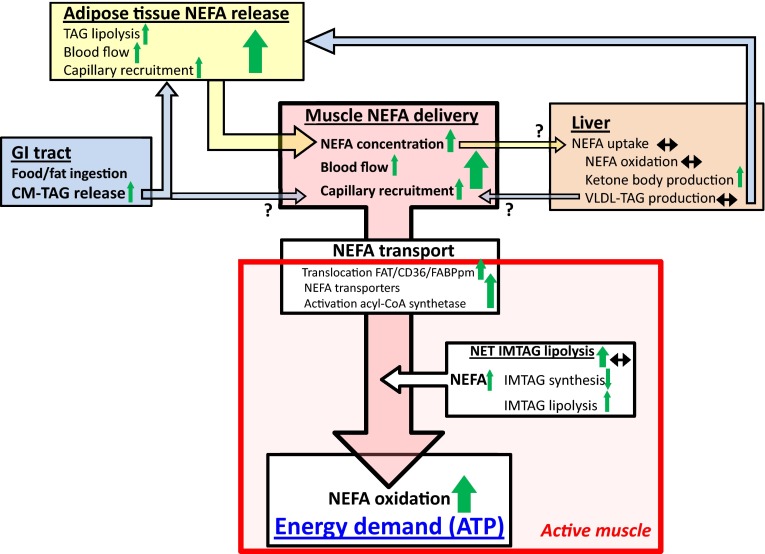
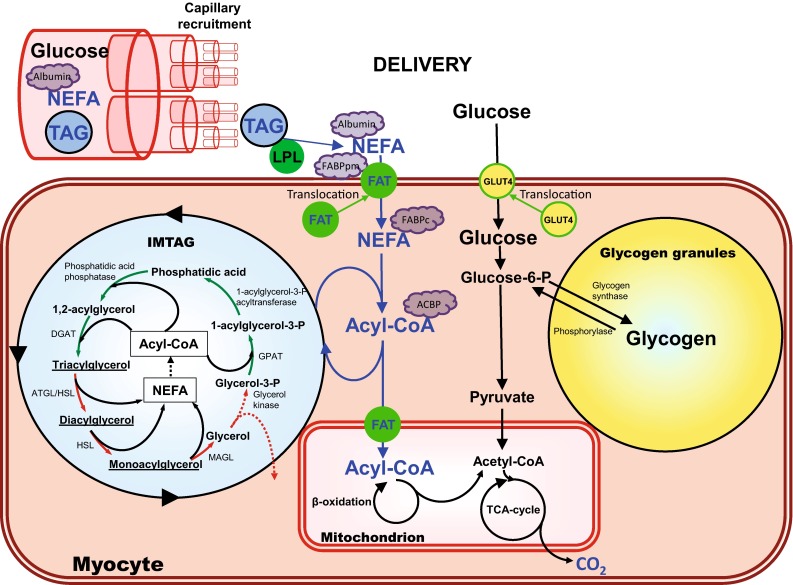
Energy substrates that are important to the working muscle at moderate intensities are the non-esterified fatty acids (NEFAs) taken up from the circulation and NEFAs originating from lipolysis of the intramuscular triacylglycerol (IMTAG). Moreover, NEFA from lipolysis via lipoprotein lipase (LPL) in the muscle of the very-low-density lipoproteins and in the (semi) post-prandial state chylomicrons may also contribute. In this review, the NEFA fluxes and oxidation by skeletal muscle during prolonged moderate-intensity exercise are described in terms of the integration of physiological systems. Steps involved in the regulation of the active muscle NEFA uptake include (1) increased energy demand; (2) delivery of NEFA to the muscle; (3) transport of NEFA into the muscle by NEFA transporters; and (4) activation of the NEFAs and either oxidation or re-esterification into IMTAG. The increased metabolic demand of the exercising muscle is the main driving force for all physiological regulatory processes. It elicits functional hyperemia, increasing the recruitment of capillaries and muscle blood flow resulting in increased NEFA delivery and accessibility to NEFA transporters and LPL. It also releases epinephrine that augments adipose tissue NEFA release and thereby NEFA delivery to the active muscle. Moreover, NEFA transporters translocate to the plasma membrane, further increasing the NEFA uptake. The majority of the NEFAs taken up by the active muscle is oxidized and a minor portion is re-esterified to IMTAG. Net IMTAG lipolysis occurs; however, the IMTAG contribution to total fat oxidation is rather limited compared to plasma-derived NEFA oxidation, suggesting a complex role and regulation of IMTAG utilization.
Overview
The claims and statistics of this paper haven’t been checked yet.
Free: it reads the open-access text and checks the first 5 claims that cite a source we can check. Create a free account to check every claim.
Integrity signals
Registry
Cites
Statistics
Figures
Verification
Claims the paper makes
The claims and statistics of this paper haven’t been checked yet.
Free: it reads the open-access text and checks the first 5 claims that cite a source we can check. Create a free account to check every claim.
Claims other papers make about this one
Each is checked against this paper’s own text: does it say what the citing paper says it does?
The source backs part of the claim, not all of it — or backs it for a different population, condition or comparison.
In the citing paper
“As exercise intensity increases, there is a simultaneous and progressive increase in epinephrine [13] from the adrenal glands.”
From Understanding the factors that effect maximal fat oxidation. (2018) · cites this paper as [13]
Experimental — accuracy not yet measuredThe source backs part of the claim, not all of it — or backs it for a different population, condition or comparison.
In the citing paper
“However, endurance training has been shown to increase blood flow to subcutaneous adipose tissue by 2–3 fold [13], which can increase overall FA transport to working muscle.”
From Understanding the factors that effect maximal fat oxidation. (2018) · cites this paper as [13]
Experimental — accuracy not yet measuredThe source backs part of the claim, not all of it — or backs it for a different population, condition or comparison.
In the citing paper
“Due to poor circulation in type II diabetics, a high percentage of liberated FAs as a result of exercise-induced, catecholamine-stimulated lipolysis are not released into the circulation during high intensity exercise [13].”
From Understanding the factors that effect maximal fat oxidation. (2018) · cites this paper as [13]
Experimental — accuracy not yet measuredThe cited source says what the claim attributes to it.
In the citing paper
“In summary, transport of FAs across the cell membrane positively affects FAox [13, 26, 30].”
From Understanding the factors that effect maximal fat oxidation. (2018) · cites this paper as [13]
The cited source says what the claim attributes to it.
In the citing paper
“Another factor that significantly influences FAox is the duration of exercise [13, 45, 48].”
From Understanding the factors that effect maximal fat oxidation. (2018) · cites this paper as [13]
1 more claim about this paper
Create a free account to see every claim other papers make about this one.
Self-check
Percentages, sums and reported differences re-computed from the paper’s own numbers.
The self-check needs the paper’s full text.
Citations
Cites
Steensberg, A., van Hall, G., Osada, T., Sacchetti, M., Saltin, B., & Pedersen, B. K. (2000) · The Journal of Physiology · doi:10.1111/j.1469-7793.2000.00237.x · Cited by 1,095 · cited 1×
“Interleukin-6 (IL-6) is produced by skeletal muscle during exercise in increasing amounts with increased duration [63], and when recombinant human IL-6 (rhIL-6) is infused it increases systemic lipolysis [64].”
BackgroundThe effects of increasing exercise intensity on muscle fuel utilisation in humans
van Loon, L. J. C., Greenhaff, P. L., Constantin‐Teodosiu, D., Saris, W. H. M., & Wagenmakers, A. J. M. (2001) · The Journal of Physiology · doi:10.1111/j.1469-7793.2001.00295.x · Cited by 897
Bonnard, C., Durand, A., Peyrol, S., Chanseaume, E., Chauvin, M.-A., Morio, B., Vidal, H., & Rieusset, J. (2008) · Journal of Clinical Investigation · doi:10.1172/jci32601 · Cited by 819 · cited 1×
“Perhaps IMTAG with its continuous high turnover rate may act as a ‘buffer’ for intramyocellular NEFAs, which in a high(er) concentration may be toxic [83, 84] and in a low(er) concentration compromises energy provision to the active muscles.”
BackgroundSubstrate Turnover during Prolonged Exercise in Man
Ahlborg, G., Felig, P., Hagenfeldt, L., Hendler, R., & Wahren, J. (1974) · Journal of Clinical Investigation · doi:10.1172/jci107645 · Cited by 786 · cited 3×
“The resting muscle blood flow is low and 45–55 % of all NEFA delivered to the muscle is taken up [10, 12, 15, 17] and is clearly dependent on the NEFA concentration [6].”
BackgroundInterleukin-6 stimulates lipolysis and fat oxidation in humans
van Hall, G., Steensberg, A., Sacchetti, M., Fischer, C., Keller, C., Schjerling, P., Hiscock, N., Møller, K., Saltin, B., Febbraio, M. A., et al. (2003) · The Journal of Clinical Endocrinology & Metabolism · doi:10.1210/jc.2002-021687 · Cited by 767 · cited 1×
“Interleukin-6 (IL-6) is produced by skeletal muscle during exercise in increasing amounts with increased duration [63], and when recombinant human IL-6 (rhIL-6) is infused it increases systemic lipolysis [64].”
BackgroundMuscle triglyceride utilization during exercise: effect of training
Hurley, B. F., Nemeth, P. M., Martin, W. H., Hagberg, J. M., Dalsky, G. P., & Holloszy, J. O. (1986) · Journal of Applied Physiology · doi:10.1152/jappl.1986.60.2.562 · Cited by 522
The concept of symmorphosis: a testable hypothesis of structure-function relationship.
Weibel, E. R., Taylor, C. R., & Hoppeler, H. (1991) · Proceedings of the National Academy of Sciences · doi:10.1073/pnas.88.22.10357 · Cited by 488
Kiens, B., Essen‐Gustavsson, B., Christensen, N. J., & Saltin, B. (1993) · The Journal of Physiology · doi:10.1113/jphysiol.1993.sp019823 · Cited by 444 · cited 1×
“Endurance training increases the capacity of the muscle to take up NEFA [91], potentially by enhancing the number of capillaries and/or recruitment and the muscle NEFA oxidative capacity [91].”
BackgroundPhysical Activity and Exercise in the Regulation of Human Adipose Tissue Physiology
Thompson, D., Karpe, F., Lafontan, M., & Frayn, K. (2012) · Physiological Reviews · doi:10.1152/physrev.00012.2011 · Cited by 402
Adrenergic regulation of lipolysis in situ at rest and during exercise.
Arner, P., Kriegholm, E., Engfeldt, P., & Bolinder, J. (1990) · Journal of Clinical Investigation · doi:10.1172/jci114516 · Cited by 373
Fatty acid transport across the cell membrane: Regulation by fatty acid transporters
Schwenk, R. W., Holloway, G. P., Luiken, J. J. F. P., Bonen, A., & Glatz, J. F. C. (2010) · Prostaglandins, Leukotrienes and Essential Fatty Acids (PLEFA) · doi:10.1016/j.plefa.2010.02.029 · Cited by 318
Fatty acid oxidation is directly regulated by carbohydrate metabolism during exercise
Coyle, E. F., Jeukendrup, A. E., Wagenmakers, A. J., & Saris, W. H. (1997) · American Journal of Physiology-Endocrinology and Metabolism · doi:10.1152/ajpendo.1997.273.2.e268 · Cited by 292
Hemodynamic adaptations to exercise
Saltin, B. (1985) · The American Journal of Cardiology · doi:10.1016/0002-9149(85)91054-9 · Cited by 284
Regulation of glucose and glycogen metabolism during and after exercise
Jensen, T. E., & Richter, E. A. (2012) · The Journal of Physiology · doi:10.1113/jphysiol.2011.224972 · Cited by 274
New Insights into the Interaction of Carbohydrate and Fat Metabolism During Exercise
Spriet, L. L. (2014) · Sports Medicine · doi:10.1007/s40279-014-0154-1 · Cited by 271
Muscle blood f low at onset of dynamic exercise in humans
Rådegran, G., & Saltin, B. (1998) · American Journal of Physiology-Heart and Circulatory Physiology · doi:10.1152/ajpheart.1998.274.1.h314 · Cited by 271
Mitochondrial dysfunction and lipotoxicity
Schrauwen, P., Schrauwen-Hinderling, V., Hoeks, J., & Hesselink, M. K. C. (2010) · Biochimica et Biophysica Acta (BBA) - Molecular and Cell Biology of Lipids · doi:10.1016/j.bbalip.2009.09.011 · Cited by 268
Increased plasma FFA uptake and oxidation during prolonged exercise in trained vs. untrained humans
Turcotte, L. P., Richter, E. A., & Kiens, B. (1992) · American Journal of Physiology-Endocrinology and Metabolism · doi:10.1152/ajpendo.1992.262.6.e791 · Cited by 258 · cited 5×
“Moreover, the NEFA delivery to the active muscles (NEFA concentration 9 plasma flow) is an even better determinant of the NEFA uptake than the NEFA concentration [10].”
BackgroundInfluentialRelationship between fatty acid delivery and fatty acid oxidation during strenuous exercise
Romijn, J. A., Coyle, E. F., Sidossis, L. S., Zhang, X. J., & Wolfe, R. R. (1995) · Journal of Applied Physiology · doi:10.1152/jappl.1995.79.6.1939 · Cited by 248 · cited 7×
“intralipid/heparin infusion increases the active muscle net NEFA uptake and fat oxidation [21], and even total fat oxidation at the relative high workload of 85 % of VO2max [22].”
BackgroundInfluentialPreferential Uptake of Dietary Fatty Acids in Adipose Tissue and Muscle in the Postprandial Period
Bickerton, A. S. T., Roberts, R., Fielding, B. A., Hodson, L., Blaak, E. E., Wagenmakers, A. J. M., Gilbert, M., Karpe, F., & Frayn, K. N. (2007) · Diabetes · doi:10.2337/db06-0822 · Cited by 246
van Loon, L. J. C., Koopman, R., Stegen, J. H. C. H., Wagenmakers, A. J. M., Keizer, H. A., & Saris, W. H. M. (2003) · The Journal of Physiology · doi:10.1113/jphysiol.2003.052431 · Cited by 231
IL-6 selectively stimulates fat metabolism in human skeletal muscle
Wolsk, E., Mygind, H., Grøndahl, T. S., Pedersen, B. K., & van Hall, G. (2010) · American Journal of Physiology-Endocrinology and Metabolism · doi:10.1152/ajpendo.00328.2010 · Cited by 221 · cited 1×
“However, concomitant IL-6 infusion and exercise fails to raise fatty acid delivery or oxidation [65], and at rest rhIL-6 infusion does not increase adipose NEFA release but does increase NEFA release from skeletal muscle [66].”
BackgroundWhy do arms extract less oxygen than legs during exercise?
Calbet, J. A. L., Holmberg, H.-C., Rosdahl, H., van Hall, G., Jensen-Urstad, M., & Saltin, B. (2005) · American Journal of Physiology-Regulatory, Integrative and Comparative Physiology · doi:10.1152/ajpregu.00824.2004 · Cited by 220
Effects of cortisol on lipolysis and regional interstitial glycerol levels in humans
Djurhuus, C. B., Gravholt, C. H., Nielsen, S., Mengel, A., Christiansen, J. S., Schmitz, O. E., & Møller, N. (2002) · American Journal of Physiology-Endocrinology and Metabolism · doi:10.1152/ajpendo.00544.2001 · Cited by 219
Chylomicron clearance in normal and hyperlipidemic man
Grundy, S. M., & Mok, H. Y. I. (1976) · Metabolism · doi:10.1016/s0026-0495(76)80006-6 · Cited by 218
Watt, M. J., Heigenhauser, G. J. F., Dyck, D. J., & Spriet, L. L. (2002) · The Journal of Physiology · doi:10.1113/jphysiol.2002.018820 · Cited by 201
Uptake and release of free fatty acids and other metabolites in the legs of exercising men.
Havel, R. J., Pernow, B., & Jones, N. L. (1967) · Journal of Applied Physiology · doi:10.1152/jappl.1967.23.1.90 · Cited by 199
Atrial natriuretic peptide contributes to the physiological control of lipid mobilization in humans
Moro, C., Crampes, F., Sengenes, C., Glisezinski, I. D., Galitzky, J., Thalamas, C., Lafontan, M., & Berlan, M. (2004) · The FASEB Journal · doi:10.1096/fj.03-1086fje · Cited by 176
Seip, R. L., Mair, K., Cole, T. G., & Semenkovich, C. F. (1997) · American Journal of Physiology-Endocrinology and Metabolism · doi:10.1152/ajpendo.1997.272.2.e255 · Cited by 173
Lipid Mobilization with Physiological Atrial Natriuretic Peptide Concentrations in Humans
Birkenfeld, A. L., Boschmann, M., Moro, C., Adams, F., Heusser, K., Franke, G., Berlan, M., Luft, F. C., Lafontan, M., & Jordan, J. (2005) · The Journal of Clinical Endocrinology & Metabolism · doi:10.1210/jc.2004-1953 · Cited by 165
Haller, R. G., & Vissing, J. (2002) · Archives of Neurology · doi:10.1001/archneur.59.9.1395 · Cited by 155
Availability of substrates and capacity for prolonged heavy exercise in man.
Pernow, B., & Saltin, B. (1971) · Journal of Applied Physiology · doi:10.1152/jappl.1971.31.3.416 · Cited by 153
Regulation and limitations to fatty acid oxidation during exercise
Jeppesen, J., & Kiens, B. (2012) · The Journal of Physiology · doi:10.1113/jphysiol.2011.225011 · Cited by 151
The physiological regulation of glucose flux into muscle in vivo
Wasserman, D. H., Kang, L., Ayala, J. E., Fueger, P. T., & Lee-Young, R. S. (2011) · Journal of Experimental Biology · doi:10.1242/jeb.048041 · Cited by 150
Influence of exercise duration on post-exercise steroid hormone responses in trained males
Tremblay, M. S., Copeland, J. L., & Helder, W. V. (2005) · European Journal of Applied Physiology · doi:10.1007/s00421-005-1380-x · Cited by 147
De Bock, K., Richter, E. A., Russell, A. P., Eijnde, B. O., Derave, W., Ramaekers, M., Koninckx, E., Léger, B., Verhaeghe, J., & Hespel, P. (2005) · The Journal of Physiology · doi:10.1113/jphysiol.2005.083170 · Cited by 145 · cited 1×
“underestimate IMTAG utilization by the different fiber types since only type I fibers have been suggested to utilize IMTAG during 2 h of 60 and 75 % of VO2max bicycling exercise [37, 38] as well as after 2 h of highintensity knee-extensor exercise [39].”
MethodHuijsman, E., van de Par, C., Economou, C., van der Poel, C., Lynch, G. S., Schoiswohl, G., Haemmerle, G., Zechner, R., & Watt, M. J. (2009) · American Journal of Physiology-Endocrinology and Metabolism · doi:10.1152/ajpendo.00190.2009 · Cited by 145 · cited 1×
“A net IMTAG utilization with prolonged moderate-intensity exercise is observed for mixed muscle as a result of a reduced rate of IMTAG synthesis [6] and potentially an increased IMTAG lipolysis by adipose tissue TAG lipase responsible for the contraction-induced IMTAG lipolysis [31, 32].”
BackgroundLimits for oxygen and substrate transport in mammals
Hoppeler, H., & Weibel, E. R. (1998) · Journal of Experimental Biology · doi:10.1242/jeb.201.8.1051 · Cited by 139
Hagenfeldt, L., & Wahren, J. (1968) · Scandinavian Journal of Clinical and Laboratory Investigation · doi:10.3109/00365516809076994 · Cited by 138
Intramuscular substrate utilization during prolonged exercise
Esséen, B. (1977) · Annals of the New York Academy of Sciences · doi:10.1111/j.1749-6632.1977.tb38183.x · Cited by 133
Additive effects of cortisol and growth hormone on regional and systemic lipolysis in humans
Djurhuus, C. B., Gravholt, C. H., Nielsen, S., Pedersen, S. B., Møller, N., & Schmitz, O. (2004) · American Journal of Physiology-Endocrinology and Metabolism · doi:10.1152/ajpendo.00199.2003 · Cited by 131 · cited 1×
“It has been suggested that infused cortisol and growth hormone stimulate systemic and adipose tissue lipolysis in an additive manner; however, it has to be mentioned that the cortisol levels were substantially higher than seen for any form of exercise [62].”
BackgroundLPA2 receptor mediates mitogenic signals in human colon cancer cells
Yun, C. C., Sun, H., Wang, D., Rusovici, R., Castleberry, A. M., Hall, R. A., & Shim, H. (2005) · American Journal of Physiology-Cell Physiology · doi:10.1152/ajpcell.00610.2004 · Cited by 129
Samra, J. S., Clark, M. L., Humphreys, S. M., MacDonald, I. A., Bannister, P. A., & Frayn, K. N. (1998) · The Journal of Clinical Endocrinology & Metabolism · doi:10.1210/jcem.83.2.4547 · Cited by 123
Larson-Meyer, D. E., Newcomer, B. R., & Hunter, G. R. (2002) · American Journal of Physiology-Endocrinology and Metabolism · doi:10.1152/ajpendo.2002.282.1.e95 · Cited by 123
Fat as a fuel: emerging understanding of the adipose tissue–skeletal muscle axis
Frayn, K. N. (2010) · Acta Physiologica · doi:10.1111/j.1748-1716.2010.02128.x · Cited by 121 · cited 1×
“sorptive conditions or increased during exercise [8].”
Karpe, F., Fairé, U. D., Mercuri, M. F., BOND, M., Hellénius, M.-L., & Hamsten, A. (1998) · Atherosclerosis · doi:10.1016/s0021-9150(98)00184-1 · Cited by 118
Human Skeletal Muscle Fatty Acid and Glycerol Metabolism During Rest, Exercise and Recovery
van Hall, G., Sacchetti, M., Rådegran, G., & Saltin, B. (2002) · The Journal of Physiology · doi:10.1113/jphysiol.2002.023796 · Cited by 118
Effects of a physiological GH pulse on interstitial glycerol in abdominal and femoral adipose tissue
Gravholt, C. H., Schmitz, O., Simonsen, L., Bülow, J., Christiansen, J. S., & Møller, N. (1999) · American Journal of Physiology-Endocrinology and Metabolism · doi:10.1152/ajpendo.1999.277.5.e848 · Cited by 115
Lafontan, M., Moro, C., Sengenes, C., Galitzky, J., Crampes, F., & Berlan, M. (2005) · Arteriosclerosis, Thrombosis, and Vascular Biology · doi:10.1161/01.atv.0000183728.14712.d8 · Cited by 114
AL Mulla, N., Simonsen, L., & Bülow, J. (2000) · The Journal of Physiology · doi:10.1111/j.1469-7793.2000.00919.x · Cited by 110
Bergman, B. C., Perreault, L., Hunerdosse, D. M., Koehler, M. C., Samek, A. M., & Eckel, R. H. (2010) · Journal of Applied Physiology · doi:10.1152/japplphysiol.00684.2009 · Cited by 103
Glycerol and nonesterified fatty acid metabolism in human muscle and adipose tissue in vivo
Coppack, S. W., Persson, M., Judd, R. L., & Miles, J. M. (1999) · American Journal of Physiology-Endocrinology and Metabolism · doi:10.1152/ajpendo.1999.276.2.e233 · Cited by 103
Samra, J. S., Simpson, E. J., Clark, M. L., Forster, C. D., Humphreys, S. M., Macdonald, I. A., & Frayn, K. N. (1996) · American Journal of Physiology-Endocrinology and Metabolism · doi:10.1152/ajpendo.1996.271.5.e834 · Cited by 102
McFarlan, J. T., Yoshida, Y., Jain, S. S., Han, X.-X., Snook, L. A., Lally, J., Smith, B. K., Glatz, J. F. C., Luiken, J. J. F. P., Sayer, R. A., et al. (2012) · Journal of Biological Chemistry · doi:10.1074/jbc.m111.315358 · Cited by 98
Jain, S. S., Chabowski, A., Snook, L. A., Schwenk, R. W., Glatz, J. F. C., Luiken, J. J. F. P., & Bonen, A. (2009) · FEBS Letters · doi:10.1016/j.febslet.2009.06.020 · Cited by 96
Kanaley, J. A., Shadid, S., Sheehan, M. T., Guo, Z., & Jensen, M. D. (2009) · The Journal of Physiology · doi:10.1113/jphysiol.2009.180695 · Cited by 92 · cited 1×
“The rate of resting muscle NEFA re-esterification into IMTAG is high [6, 28, 29], accounting for *50 to 60 % of the total NEFA uptake [6, 30].”
BackgroundNa+-dependent HCO3− uptake into the rat choroid plexus epithelium is partially DIDS sensitive
Bouzinova, E. V., Praetorius, J., Virkki, L. V., Nielsen, S., Boron, W. F., & Aalkjaer, C. (2005) · American Journal of Physiology-Cell Physiology · doi:10.1152/ajpcell.00313.2005 · Cited by 92
Odland, L. M., Heigenhauser, G. J. F., Wong, D., Hollidge-Horvat, M. G., & Spriet, L. L. (1998) · American Journal of Physiology-Regulatory, Integrative and Comparative Physiology · doi:10.1152/ajpregu.1998.274.4.r894 · Cited by 90
Watt, M. J., Holmes, A. G., Steinberg, G. R., Mesa, J. L., Kemp, B. E., & Febbraio, M. A. (2004) · American Journal of Physiology-Endocrinology and Metabolism · doi:10.1152/ajpendo.00542.2003 · Cited by 89
van Loon, L. J. C., Thomason-Hughes, M., Constantin-Teodosiu, D., Koopman, R., Greenhaff, P. L., Hardie, D. G., Keizer, H. A., Saris, W. H. M., & Wagenmakers, A. J. M. (2005) · American Journal of Physiology-Endocrinology and Metabolism · doi:10.1152/ajpendo.00092.2005 · Cited by 87
Nielsen, J. N., Wojtaszewski, J. F. P., Haller, R. G., Hardie, D. G., Kemp, B. E., Richter, E. A., & Vissing, J. (2002) · The Journal of Physiology · doi:10.1113/jphysiol.2002.018044 · Cited by 84
Regional Fat Metabolism in Human Splanchnic and Adipose Tissues; The Effect of Exercise
van Hall, G., Bülow, J., Sacchetti, M., Mulla, N. A., Lyngsø, D., & Simonsen, L. (2002) · The Journal of Physiology · doi:10.1113/jphysiol.2002.022392 · Cited by 83
Role of the sympathoadrenergic system in adipose tissue metabolism during exercise in humans
Stallknecht, B., Lorentsen, J., Enevoldsen, L. H., Bülow, J., Biering‐Sørensen, F., Galbo, H., & Kjær, M. (2001) · The Journal of Physiology · doi:10.1111/j.1469-7793.2001.00283.x · Cited by 82
Differential binding of triglyceride-rich lipoproteins to lipoprotein lipase
Xiang, S.-Q., Cianflone, K., Kalant, D., & Sniderman, A. D. (1999) · Journal of Lipid Research · doi:10.1016/s0022-2275(20)33411-8 · Cited by 82
Intramuscular fatty acid metabolism in contracting and non‐contracting human skeletal muscle
Sacchetti, M., Saltin, B., Osada, T., & van Hall, G. (2002) · The Journal of Physiology · doi:10.1113/jphysiol.2001.013912 · Cited by 81
Sjøberg, K. A., Rattigan, S., Hiscock, N., Richter, E. A., & Kiens, B. (2011) · American Journal of Physiology-Heart and Circulatory Physiology · doi:10.1152/ajpheart.01174.2010 · Cited by 81
The combined effects of exercise and food intake on adipose tissue and splanchnic metabolism
Enevoldsen, L. H., Simonsen, L., Macdonald, I. A., & Bülow, J. (2004) · The Journal of Physiology · doi:10.1113/jphysiol.2004.076588 · Cited by 79
Holloway, G. P., Jain, S. S., Bezaire, V., Han, X. X., Glatz, J. F. C., Luiken, J. J. F. P., Harper, M.-E., & Bonen, A. (2009) · American Journal of Physiology-Regulatory, Integrative and Comparative Physiology · doi:10.1152/ajpregu.91021.2008 · Cited by 77
Björkegren, J., Karpe, F., Milne, R. W., & Hamsten, A. (1998) · Journal of Lipid Research · doi:10.1016/s0022-2275(20)32522-0 · Cited by 72
De Glisezinski, I., Larrouy, D., Bajzova, M., Koppo, K., Polak, J., Berlan, M., Bulow, J., Langin, D., Marques, M. A., Crampes, F., et al. (2009) · The Journal of Physiology · doi:10.1113/jphysiol.2009.168906 · Cited by 71
Miller, G. D. (1997) · Medicine & Science in Sports & Exercise · doi:10.1097/00005768-199705000-00034 · Cited by 64
Fat metabolism during exercise in patients with McArdle disease
Ørngreen, M. C., Jeppesen, T. D., Andersen, S. T., Taivassalo, T., Hauerslev, S., Preisler, N. R., Haller, R. G., van Hall, G., & Vissing, J. (2009) · Neurology · doi:10.1212/01.wnl.0000343002.74480.e4 · Cited by 62
Marked resistance of femoral adipose tissue blood flow and lipolysis to adrenaline in vivo
Manolopoulos, K. N., Karpe, F., & Frayn, K. N. (2012) · Diabetologia · doi:10.1007/s00125-012-2676-0 · Cited by 56
Harrison, M., Moyna, N. M., Zderic, T. W., O’Gorman, D. J., McCaffrey, N., Carson, B. P., & Hamilton, M. T. (2012) · Lipids in Health and Disease · doi:10.1186/1476-511x-11-64 · Cited by 52 · cited 1×
“exercise per se increases muscle LPL activity, which has previously been shown not to occur via more direct muscle LPL activity measurements [76, 77].”
BackgroundVissing, J., Dunø, M., Schwartz, M., & Haller, R. G. (2009) · Brain · doi:10.1093/brain/awp065 · Cited by 51
High triacylglycerol turnover rate in human skeletal muscle
Sacchetti, M., Saltin, B., Olsen, D. B., & Van Hall, G. (2004) · The Journal of Physiology · doi:10.1113/jphysiol.2004.075135 · Cited by 50
Tobin, L., Simonsen, L., & Bülow, J. (2010) · Clinical Physiology and Functional Imaging · doi:10.1111/j.1475-097x.2010.00964.x · Cited by 49
Moro, C., Pillard, F., de Glisezinski, I., Crampes, F., Thalamas, C., Harant, I., Marques, M., Lafontan, M., & Berlan, M. (2007) · Obesity · doi:10.1038/oby.2007.267 · Cited by 47
GH secretion in acute exercise may result in post-exercise lipolysis
Wee, J. S., Charlton, C., Simpson, H., Jackson, N. C., Shojaee‐Moradie, F., Stolinski, M., Pentecost, C., & Umpleby, A. M. (2005) · Growth Hormone & IGF Research · doi:10.1016/j.ghir.2005.08.003 · Cited by 47
Healy, M. L., Gibney, J., Pentecost, C., Croos, P., Russell-Jones, D. L., Sönksen, P. H., & Umpleby, A. M. (2006) · The Journal of Clinical Endocrinology & Metabolism · doi:10.1210/jc.2005-0916 · Cited by 46
Alsted, T. J., Ploug, T., Prats, C., Serup, A. K., Høeg, L., Schjerling, P., Holm, C., Zimmermann, R., Fledelius, C., Galbo, H., et al. (2013) · The Journal of Physiology · doi:10.1113/jphysiol.2013.260794 · Cited by 43
Prats, C., Gomez-Cabello, A., Nordby, P., Andersen, J. L., Helge, J. W., Dela, F., Baba, O., & Ploug, T. (2013) · PLoS ONE · doi:10.1371/journal.pone.0077774 · Cited by 41
Nutritive blood flow as an essential element supporting muscle anabolism
Clark, M. G., Rattigan, S., & Barrett, E. J. (2006) · Current Opinion in Clinical Nutrition & Metabolic Care · doi:10.1097/01.mco.0000222097.90890.c2 · Cited by 39
Zehnder, M., Christ, E. R., Ith, M., Acheson, K. J., Pouteau, E., Kreis, R., Trepp, R., Diem, P., Boesch, C., & Décombaz, J. (2006) · European Journal of Applied Physiology · doi:10.1007/s00421-006-0279-5 · Cited by 39 · cited 1×
“limited by delivery or uptake seems to be not utilized optimally as its pool is not even close to fully utilized [5].”
BackgroundExercise and insulin-mediated capillary recruitment in muscle.
Rattigan, S., Wheatley, C., Richards, S. M., Barrett, E. J., & Clark, M. G. (2005) · PubMed · Cited by 39
Control of lipid oxidation during exercise: role of energy state and mitochondrial factors
Sahlin, K., & Harris, R. C. (2008) · Acta Physiologica · doi:10.1111/j.1748-1716.2008.01879.x · Cited by 38
Effect of Changes in Fat Availability on Exercise Capacity in McArdle Disease
Andersen, S., Jeppesen, T. D., Taivassalo, T., Sveen, M., Heinicke, K., Haller, R. G., & Vissing, J. (2009) · Archives of Neurology · doi:10.1001/archneurol.2009.93 · Cited by 37
Hagenfeldt, L., & Wahren, J. (1972) · Scandinavian Journal of Clinical and Laboratory Investigation · doi:10.3109/00365517209080281 · Cited by 34
Hiscock, N., Fischer, C. P., Sacchetti, M., van Hall, G., Febbraio, M. A., & Pedersen, B. K. (2005) · American Journal of Physiology-Endocrinology and Metabolism · doi:10.1152/ajpendo.00274.2004 · Cited by 30
Bucci, M., Borra, R., Någren, K., Maggio, R., Tuunanen, H., Oikonen, V., Ry, S. D., Viljanen, T., Taittonen, M. T., Rigazio, S., et al. (2011) · American Journal of Physiology-Endocrinology and Metabolism · doi:10.1152/ajpendo.00680.2010 · Cited by 29
B�low, J., Enevoldsen, L. H., Simonsen, L., & Henriksen, O. M. (2004) · Diabetologia · doi:10.1007/s00125-004-1374-y · Cited by 28
Increased PFK activity and GLUT4 protein content in McArdle’s disease
Robertshaw, H. A., Raha, S., Kaczor, J. J., & Tarnopolsky, M. A. (2008) · Muscle & Nerve · doi:10.1002/mus.20947 · Cited by 16
Enevoldsen, L. H., Simonsen, L., & Bülow, J. (2005) · The Journal of Physiology · doi:10.1113/jphysiol.2005.091975 · Cited by 14
Cited by
Understanding the factors that effect maximal fat oxidation.
Purdom, T., Kravitz, L., Dokladny, K., & Mermier, C. (2018) · Journal of the International Society of Sports Nutrition · doi:10.1186/s12970-018-0207-1 · Cited by 247
“In summary, transport of FAs across the cell membrane positively affects FAox [13, 26, 30].”
BackgroundInfluentialThe Regulation of Fat Metabolism during Aerobic Exercise
Muscella, A., Stefàno, E., Lunetti, P., Capobianco, L., & Marsigliante, S. (2020) · Biomolecules · doi:10.3390/biom10121699 · Cited by 237
“Therefore, IMTG are not an energy source that is rapidly usable, and muscle glycogen utilization is necessary during continuous moderate exercise [74,88].”
BackgroundKemps, H., Kränkel, N., Dörr, M., Moholdt, T., Wilhelm, M., Paneni, F., Serratosa, L., Ekker Solberg, E., Hansen, D., Halle, M., et al. (2019) · European Journal of Preventive Cardiology · doi:10.1177/2047487318820420 · Cited by 144
Carnitine in Human Muscle Bioenergetics: Can Carnitine Supplementation Improve Physical Exercise?
Gnoni, A., Longo, S., Gnoni, G. V., & Giudetti, A. M. (2020) · Molecules · doi:10.3390/molecules25010182 · Cited by 146
Myalgic Encephalomyelitis/Chronic Fatigue Syndrome: the biology of a neglected disease
Arron, H. E., Marsh, B. D., Khan, M. A., Jaeger, B., Kell, D., & Pretorius, E. (2024) · Frontiers in Immunology · doi:10.3389/fimmu.2024.1386607 · Cited by 141
Metadata
- Authors
- van Hall, G.
- Venue
- Sports Medicine
- Published
- 2015-11
- Volume
- 45
- Issue
- S1
- Pages
- 23-32
- ISSN
- 0112-1642 (ISSN-L)
- 1179-2035
- PMC
- PMC4672010
- OpenAlex
- W2100180716
- Cited by
- 77
- References
- 93
- Citations by year
- 2025: 10 · 2024: 5 · 2023: 12 · 2022: 4 · 2021: 8 · 2020: 16 · 2019: 9 · 2018: 6 · 2017: 6 · 2016: 1
- FWCI
- 0.43
- Type
- journal article
- Language
- en
- Open access
- hybrid
- doi.org
- Locations
- Sports Medicine (publishedVersion, cc-by)
- Europe PMC (PubMed Central) (publishedVersion, cc-by)
- PubMed Central (publishedVersion, cc-by)
- PubMed (publishedVersion)
- Research at the University of Copenhagen (University of Copenhagen) (publishedVersion, cc-by)
- Funders
- PepsiCo
- Sundhed og Sygdom, Det Frie Forskningsråd (02-512-55)
- National Research Foundation
- Danmarks Grundforskningsfond (# 02-512-55, 504–14)
- Novo Nordisk
- Gran Sasso Science Institute
- Medical Research Council
- Topics
- Health Sciences › Nursing › Nutrition and Dietetics › Muscle metabolism and nutrition
- Health Sciences › Medicine › Physiology (medical) › Cardiovascular and exercise physiology
- Health Sciences › Medicine › Physiology (medical) › Adipose Tissue and Metabolism
- Keywords
- free fatty acids, fatty acid oxidation, skeletal muscle, moderate-intensity exercise, lipolysis, lipoprotein lipase, functional hyperemia, epinephrine, adipose tissue lipolysis, substrate utilization, energy metabolism
- MeSH terms
- Adipose Tissue, Energy Metabolism, Fatty Acids, Fatty Acids, Nonesterified, Humans, Lipolysis, Triglycerides, Exercise, Muscle, Skeletal, Postprandial Period
About these checks
Registry, retraction, Cites and statistics results are computed, not judged, with one exception: a printed reference that no index lists is read once by a model before it counts as a citation error. Claims are extracted by a model and kept only when their quote appears verbatim in the text; each cited source is then checked, with a model’s help, for whether it says what the claim relies on. Those verdicts can be wrong — read the claim’s quote and the cited source before relying on one.
Statistics and arithmetic are recomputed, not judged.
Confidence bands are shown only for fields calibrated on our annotated test set. None is calibrated yet, so no band is shown.
What counts as a claim ›How we measure confidence ›How we check this ›
Are you an author, or do you see a problem with this page? Request a review
Data sources
Bibliographic data: Semantic Scholar, OpenAlex, Crossref.
Contains information from the Semantic Scholar Academic Graph Datasets, made available under the ODC Attribution License (ODC-BY 1.0).
Semantic Scholar’s data is described in: Kinney, R., et al. (2023). The Semantic Scholar Open Data Platform. arXiv:2301.10140.
