

The DOI matches its Crossref record; 44 of the 44 references it cites were found in a registry or an index.
A Comparison of the Energetic Cost of Running in Marathon Racing Shoes
Open accessAbstract
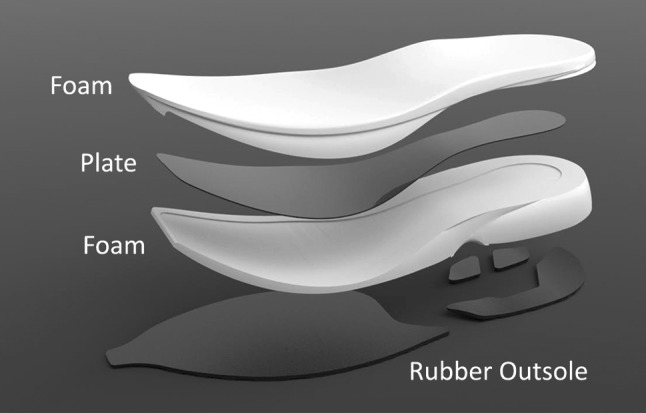
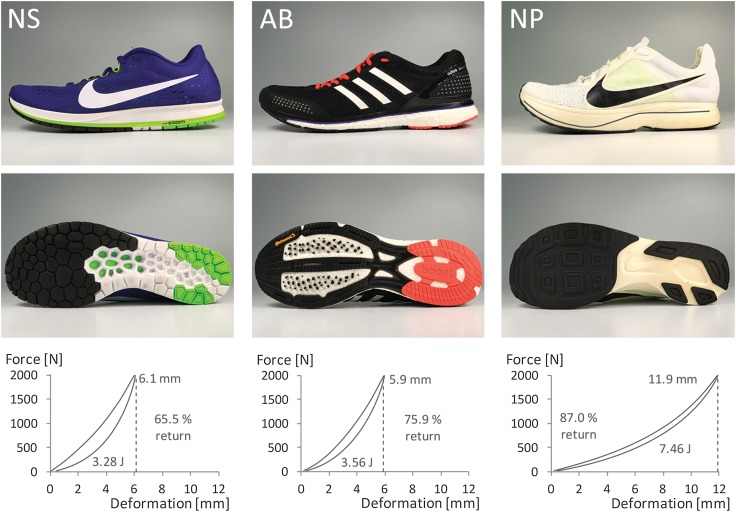
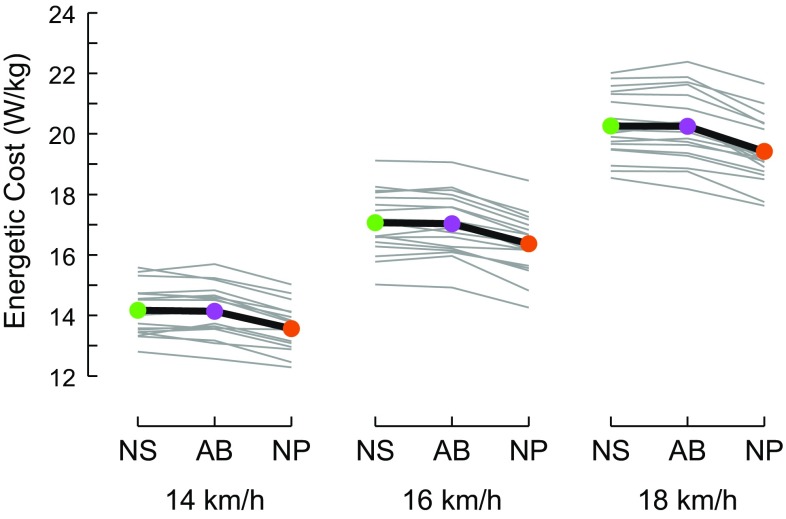
BACKGROUND: Reducing the energetic cost of running seems the most feasible path to a sub-2-hour marathon. Footwear mass, cushioning, and bending stiffness each affect the energetic cost of running. Recently, prototype running shoes were developed that combine a new highly compliant and resilient midsole material with a stiff embedded plate. OBJECTIVE: The aim of this study was to determine if, and to what extent, these newly developed running shoes reduce the energetic cost of running compared with established marathon racing shoes. METHODS: 18 high-caliber athletes ran six 5-min trials (three shoes × two replicates) in prototype shoes (NP), and two established marathon shoes (NS and AB) during three separate sessions: 14, 16, and 18 km/h. We measured submaximal oxygen uptake and carbon dioxide production during minutes 3-5 and averaged energetic cost (W/kg) for the two trials in each shoe model. RESULTS: Compared with the established racing shoes, the new shoes reduced the energetic cost of running in all 18 subjects tested. Averaged across all three velocities, the energetic cost for running in the NP shoes (16.45 ± 0.89 W/kg; mean ± SD) was 4.16 and 4.01% lower than in the NS and AB shoes, when shoe mass was matched (17.16 ± 0.92 and 17.14 ± 0.97 W/kg, respectively, both p < 0.001). The observed percent changes were independent of running velocity (14-18 km/h). CONCLUSION: The prototype shoes lowered the energetic cost of running by 4% on average. We predict that with these shoes, top athletes could run substantially faster and achieve the first sub-2-hour marathon.
Overview
The claims and statistics of this paper haven’t been checked yet.
Run the check — free, no account needed. It reads the open-access text and checks the sources it cites.
Integrity signals
Registry
Cites
Statistics
Figures
Verification
Claims the paper makes
The claims and statistics of this paper haven’t been checked yet.
Run the check — free, no account needed. It reads the open-access text and checks the sources it cites.
Claims other papers make about this one
Each is checked against this paper’s own text: does it say what the citing paper says it does?
In the citing paper
“which achieves a 4% mean reduction in the oxygen cost of running [72].”
Self-check
Percentages, sums and reported differences re-computed from the paper’s own numbers.
The self-check needs the paper’s full text.
Citations
Cites
Maximal Oxygen Intake as an Objective Measure of Cardio-Respiratory Performance
TAYLOR, H. L., BUSKIRK, E. R., & Henschel, A. F. (1955) · Journal of Applied Physiology · doi:10.1152/jappl.1955.8.1.73 · Cited by 1,366 · cited 1×
“Our criterion for reaching _ VO2max was a plateau in oxygen consumption rate after an increase in incline [33].”
BackgroundThe mechanics of running: How does stiffness couple with speed?
McMahon, T. A., & Cheng, G. C. (1990) · Journal of Biomechanics · doi:10.1016/0021-9290(90)90042-2 · Cited by 1,122 · cited 1×
“Though limited, this simplified testing method does provide a clean, general characterization of midsole mechanical energy storage and return capabilities in a direction relevant to the spring-mass behavior of runners [27].”
MethodJustification of the 4-mmol/l lactate threshold
Heck, H., Mader, A., Hess, G., Mücke, S., Müller, R., & Hollmann, W. (1985) · International Journal of Sports Medicine · doi:10.1055/s-2008-1025824 · Cited by 888 · cited 2×
“The remaining 18 subjects were running at an intensity below the onset of blood lactate accumulation (OBLA), which specifies an [La] of 4 mmol/L [28], and the average [La] at 18 km/h was 2.”
BackgroundMethodScaling Body Support in Mammals: Limb Posture and Muscle Mechanics
Biewener, A. A. (1989) · Science · doi:10.1126/science.2740914 · Cited by 865 · cited 1×
“This improves the mechanical advantage of the muscles acting around the joints, which reduces the energetic cost of body weight support [14, 37].”
BackgroundStorage of elastic strain energy in muscle and other tissues
Alexander, R. M., & Bennet-Clark, H. C. (1977) · Nature · doi:10.1038/265114a0 · Cited by 851 · cited 1×
“Other ligaments and tendons of the leg store and return additional energy [39, 40].”
BackgroundThe spring in the arch of the human foot
Ker, R. F., Bennett, M. B., Bibby, S., Kester, R. C., & Alexander, R. M. (1987) · Nature · doi:10.1038/325147a0 · Cited by 780
Derivation of formulae used to calculate energy expenditure in man.
Brockway, J. M. (1987) · PubMed · Cited by 567
McMahon, T. A., Valiant, G., & Frederick, E. C. (1987) · Journal of Applied Physiology · doi:10.1152/jappl.1987.62.6.2326 · Cited by 453
Runners adjust leg stiffness for their first step on a new running surface
Ferris, D. P., Liang, K., & Farley, C. T. (1999) · Journal of Biomechanics · doi:10.1016/s0021-9290(99)00078-0 · Cited by 425 · cited 2×
“When running on compliant surfaces, people maintain their center of mass mechanics by reducing knee flexion during the stance period, which increases leg stiffness [31].”
BackgroundEnergetics and mechanics of human running on surfaces of different stiffnesses
Kerdok, A. E., Biewener, A. A., McMahon, T. A., Weyand, P. G., & Herr, H. (2002) · Journal of Applied Physiology · doi:10.1152/japplphysiol.01164.2000 · Cited by 411 · cited 4×
“Experiments using special treadmills with springy or cushioned surfaces have demonstrated up to 12% energy savings [13, 14] that are attributed to two factors.”
BackgroundInfluentialThe energetics of endurance running
di Prampero, P. E., Atchou, G., Brückner, J. C., & Moia, C. (1986) · European Journal of Applied Physiology · doi:10.1007/bf02343797 · Cited by 376 · cited 1×
“sustained: the maximal rate of oxygen uptake ( _ VO2max), the lactate threshold, and the energetic cost of running (running economy) [5, 6].”
BackgroundMechanics and energetics of human locomotion on sand
Lejeune, T. M., Willems, P. A., & Heglund, N. C. (1998) · Journal of Experimental Biology · doi:10.1242/jeb.201.13.2071 · Cited by 363
Slow Component of V˙O2 Kinetics: Mechanistic Bases and Practical Applications
JONES, A. M., GRASSI, B., CHRISTENSEN, P. M., KRUSTRUP, P., BANGSBO, J., & POOLE, D. C. (2011) · Medicine & Science in Sports & Exercise · doi:10.1249/mss.0b013e31821fcfc1 · Cited by 353 · cited 1×
“The energetic cost of running for elite marathon runners is likely lower than in our high-caliber, sub-elite runners [43, 44], and the energetic cost of running may slowly increase over the duration of a marathon [45], due to slow component increases in oxygen uptake kinetics [46] and muscle damage [47], as compared w…”
BackgroundModeling: optimal marathon performance on the basis of physiological factors
Joyner, M. J. (1991) · Journal of Applied Physiology · doi:10.1152/jappl.1991.70.2.683 · Cited by 348 · cited 1×
“sustained: the maximal rate of oxygen uptake ( _ VO2max), the lactate threshold, and the energetic cost of running (running economy) [5, 6].”
BackgroundRunning economy of elite male and elite female runners
DANIELS, J., & DANIELS, N. (1992) · Medicine & Science in Sports & Exercise · doi:10.1249/00005768-199204000-00015 · Cited by 345 · cited 1×
“, lower energetic cost of running) can be expected to outperform runners with a higher energetic cost of running [8].”
BackgroundHuman tendon behaviour and adaptation, in vivo
Magnusson, S. P., Narici, M. V., Maganaris, C. N., & Kjaer, M. (2008) · The Journal of Physiology · doi:10.1113/jphysiol.2007.139105 · Cited by 330 · cited 1×
“Other ligaments and tendons of the leg store and return additional energy [39, 40].”
BackgroundEconomy of running: beyond the measurement of oxygen uptake
Fletcher, J. R., Esau, S. P., & MacIntosh, B. R. (2009) · Journal of Applied Physiology · doi:10.1152/japplphysiol.00307.2009 · Cited by 299 · cited 1×
“However, since oxygen uptake alone does not reflect metabolic substrate differences [7], we prefer to define running economy as the energetic cost of running at a specific velocity expressed in W/kg.”
BackgroundShoe Midsole Longitudinal Bending Stiffness and Running Economy, Joint Energy, and EMG
ROY, J.-P. R., & Stefanyshyn, D. J. (2006) · Medicine & Science in Sports & Exercise · doi:10.1249/01.mss.0000193562.22001.e8 · Cited by 297 · cited 2×
“Such plates can reduce the energetic cost of running by * 1% [22] through changes in the leverage of the ankle joint and the foot–toe joint (metatarsophalangeal joint) [22–24].”
BackgroundMuscle fiber necrosis associated with human marathon runners
Hikida, R. S., Staron, R. S., Hagerman, F. C., Sherman, W. M., & Costill, D. L. (1983) · Journal of the Neurological Sciences · doi:10.1016/0022-510x(83)90037-0 · Cited by 276 · cited 1×
“The energetic cost of running for elite marathon runners is likely lower than in our high-caliber, sub-elite runners [43, 44], and the energetic cost of running may slowly increase over the duration of a marathon [45], due to slow component increases in oxygen uptake kinetics [46] and muscle damage [47], as compared w…”
BackgroundThe Physiology of the World Record Holder for the Women's Marathon
JONES, A. M. (2006) · International Journal of Sports Science & Coaching · doi:10.1260/174795406777641258 · Cited by 256
Physiological characteristics of the best Eritrean runners—exceptional running economy
Lucía, A., Esteve-Lanao, J., Oliván, J., Gómez‐Gallego, F., Juan, A. F. S., Santiago, C., Pérez, M., Chamorro-Viña, C., & Foster, C. (2006) · Applied Physiology Nutrition and Metabolism · doi:10.1139/h06-029 · Cited by 241 · cited 1×
“The energetic cost of running for elite marathon runners is likely lower than in our high-caliber, sub-elite runners [43, 44], and the energetic cost of running may slowly increase over the duration of a marathon [45], due to slow component increases in oxygen uptake kinetics [46] and muscle damage [47], as compared w…”
BackgroundForce treadmill for measuring vertical and horizontal ground reaction forces
Kram, R., Griffin, T. M., Donelan, J. M., & Chang, Y. (1998) · Journal of Applied Physiology · doi:10.1152/jappl.1998.85.2.764 · Cited by 239 · cited 1×
“Following the warm up, subjects completed six 5-min trials at one of the three velocities (14, 16, or 18 km/h, randomized) on a level force-measuring treadmill with a rigid, reinforced aluminum deck, that recorded horizontal and vertical ground reaction forces [29].”
MethodMetabolic Cost of Running Barefoot versus Shod
Franz, J. R., Wierzbinski, C. M., & Kram, R. (2012) · Medicine & Science in Sports & Exercise · doi:10.1249/mss.0b013e3182514a88 · Cited by 230 · cited 1×
“Lighter running shoes reduce the energetic cost of running [10, 11], likely due to the reduced inertia for leg swing.”
BackgroundAltered Running Economy Directly Translates to Altered Distance-Running Performance
HOOGKAMER, W., KIPP, S., SPIERING, B. A., & KRAM, R. (2016) · Medicine & Science in Sports & Exercise · doi:10.1249/mss.0000000000001012 · Cited by 230 · cited 4×
“[9] established that percent changes in the energetic cost of running due to altered shoe mass translate to similar percent changes in 3000-m running performance, when both are evaluated at the same running velocity.”
BackgroundInfluentialSelf-citationThe efficiency of muscle contraction
Smith, N. P., Barclay, C. J., & Loiselle, D. S. (2004) · Progress in Biophysics and Molecular Biology · doi:10.1016/j.pbiomolbio.2003.11.014 · Cited by 207 · cited 1×
“However, to operate the tendons as springs, the muscles that connect tendons to bones must actively contract, which consumes metabolic energy [41].”
BackgroundVariable Gearing During Locomotion in the Human Musculoskeletal System
Carrier, D. R., Heglund, N. C., & Earls, K. D. (1994) · Science · doi:10.1126/science.8036513 · Cited by 195
The Effect of Footwear on Running Performance and Running Economy in Distance Runners
FULLER, J. T., Bellenger, C. R., Thewlis, D., Tsiros, M. D., & Buckley, J. D. (2014) · Sports Medicine · doi:10.1007/s40279-014-0283-6 · Cited by 166 · cited 1×
“However, reported energetic savings due to running shoe properties are typically trivial to small [35].”
BackgroundThe gearing function of running shoe longitudinal bending stiffness
Willwacher, S., König, M., Braunstein, B., Goldmann, J., & Brüggemann, G. (2014) · Gait & Posture · doi:10.1016/j.gaitpost.2014.05.005 · Cited by 145
Variation in the aerobic demand of running among trained and untrained subjects
Morgan, D. W., BRANSFORD, D. R., COSTILL, D. L., Daniels, J., Howley, E. T., & Krahenbuhl, G. S. (1995) · Medicine & Science in Sports & Exercise · doi:10.1249/00005768-199503000-00017 · Cited by 138 · cited 1×
“The energetic cost of running for elite marathon runners is likely lower than in our high-caliber, sub-elite runners [43, 44], and the energetic cost of running may slowly increase over the duration of a marathon [45], due to slow component increases in oxygen uptake kinetics [46] and muscle damage [47], as compared w…”
BackgroundHow Biomechanical Improvements in Running Economy Could Break the 2-hour Marathon Barrier
Hoogkamer, W., Kram, R., & Arellano, C. J. (2017) · Sports Medicine · doi:10.1007/s40279-017-0708-0 · Cited by 137 · cited 1×
“[3], the energetic cost of overground running increases curvilinearly with velocity, due in part to air resistance.”
BackgroundSelf-citationSofter and more resilient running shoe cushioning properties enhance running economy
Worobets, J. T., Wannop, J. W., Tomaras, E. K., & Stefanyshyn, D. J. (2014) · Footwear Science · doi:10.1080/19424280.2014.918184 · Cited by 130 · cited 4×
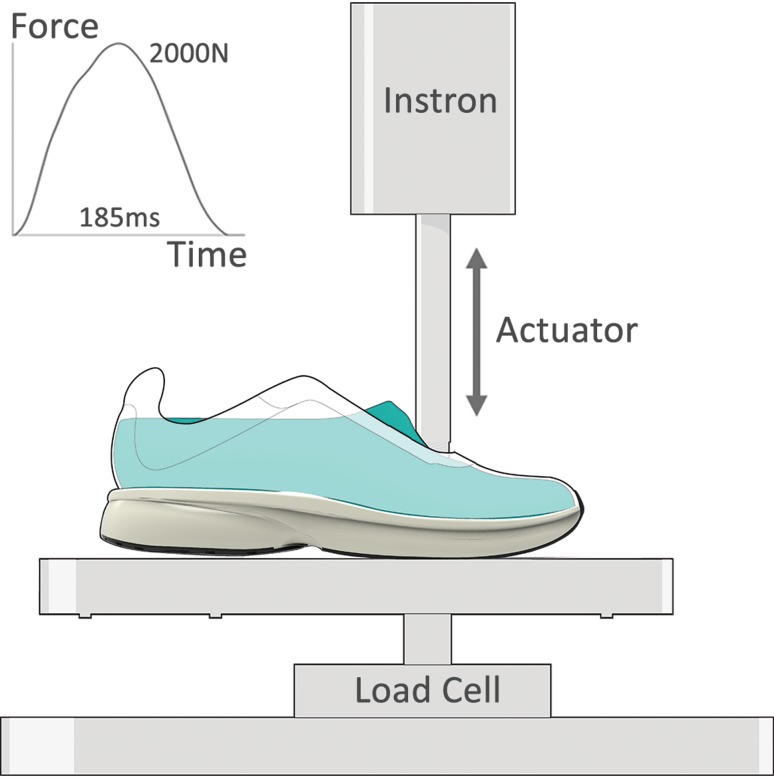
“Rather than a more conventional energy-constrained impact test [25], we implemented a force-constrained mechanical testing approach [20, 26].”
BackgroundMethodInfluentialDaniels, J. (2022) · Human Kinetics eBooks · doi:10.5040/9781718219113 · Cited by 127
A Test of the Metabolic Cost of Cushioning Hypothesis during Unshod and Shod Running
TUNG, K. D., Franz, J. R., & Kram, R. (2013) · Medicine & Science in Sports & Exercise · doi:10.1249/mss.0b013e3182a63b81 · Cited by 125 · cited 2×
“Experiments using special treadmills with springy or cushioned surfaces have demonstrated up to 12% energy savings [13, 14] that are attributed to two factors.”
BackgroundOh, K., & Park, S. (2017) · Journal of Biomechanics · doi:10.1016/j.jbiomech.2017.01.014 · Cited by 114
Factors affecting the energy cost of level running at submaximal speed
Lacour, J.-R., & BOURDIN, M. (2015) · European Journal of Applied Physiology · doi:10.1007/s00421-015-3115-y · Cited by 112 · cited 1×
“The energetic cost of running for elite marathon runners is likely lower than in our high-caliber, sub-elite runners [43, 44], and the energetic cost of running may slowly increase over the duration of a marathon [45], due to slow component increases in oxygen uptake kinetics [46] and muscle damage [47], as compared w…”
BackgroundThe energetics of running and running shoes
Shorten, M. R. (1993) · Journal of Biomechanics · doi:10.1016/0021-9290(93)90078-s · Cited by 111 · cited 1×
“, they dissipate some energy as heat [18].”
BackgroundThe two-hour marathon: who and when?
Joyner, M. J., Ruiz, J. R., & Lucía, A. (2010) · Journal of Applied Physiology · doi:10.1152/japplphysiol.00563.2010 · Cited by 110
Observing the coach-created motivational environment across training and competition in youth sport
Smith, N., Quested, E., Appleton, P. R., & Duda, J. L. (2016) · Journal of Sports Sciences · doi:10.1080/02640414.2016.1159714 · Cited by 91
Energetics of running in top-level marathon runners from Kenya
Tam, E., Rossi, H., Moia, C., Berardelli, C., Rosa, G., Capelli, C., & Ferretti, G. (2012) · European Journal of Applied Physiology · doi:10.1007/s00421-012-2357-1 · Cited by 89
McMahon, T. A., & Greene, P. R. (1978) · Scientific American · doi:10.1038/scientificamerican1278-148 · Cited by 86 · cited 1×
“Second, treadmill surfaces can store and return mechanical energy [14, 16, 17].”
BackgroundCharacterizing the Mechanical Properties of Running-Specific Prostheses
Beck, O. N., Taboga, P., & Grabowski, A. M. (2016) · PLoS ONE · doi:10.1371/journal.pone.0168298 · Cited by 81 · cited 1×
“Rather than a more conventional energy-constrained impact test [25], we implemented a force-constrained mechanical testing approach [20, 26].”
MethodMetabolic cost of running is greater on a treadmill with a stiffer running platform
Smith, J. A. H., McKerrow, A. D., & Kohn, T. A. (2016) · Journal of Sports Sciences · doi:10.1080/02640414.2016.1225974 · Cited by 30 · cited 1×
“Second, treadmill surfaces can store and return mechanical energy [14, 16, 17].”
BackgroundThe perfect mile: three athletes, one goal, and less than four minutes to achieve it
(2005) · Choice Reviews Online · doi:10.5860/choice.42-3484 · Cited by 10 · cited 1×
“Like the quest to run the first sub-4-minute mile [1], the possibility of running a sub-2-hour marathon has captivated the interest of the public, athletes, and scientists [2–4].”
BackgroundTwo Hours: The Quest to Run the Impossible Marathon
Caesar, E. (2015) · Cited by 3
Research works printed but not linked: 3
- Frederick EC, Daniels JT, Hayes JW. The effect of shoe weight on the aerobic demands of running. In: Bachl N, Prokop L, Suckert R, editors. Curr Top Sports Med Proc World Congr Sports Med. Vienna: Urban and Schwarzenberg; 1984. p. 616–25.
- Frederick EC, Clarke TE, Larsen JL, et al. The effects of shoe cushioning on the oxygen demands of running. In: Nigg BM, Kerr BA, editors. Biomechanical aspects of sports shoes and playing surfaces. Calgary: The University of Calgary; 1983. p. 107–14.
- Frederick EC, Howley ET, Powers SK. Lower O2 cost while running in air-cushion type shoes. Med Sci Sports Exerc. 1980;12:81–2.
Cited by
Sorted by citations
Reducing the metabolic rate of walking and running with a versatile, portable exosuit
Kim, J., Lee, G., Heimgartner, R., Revi, D. A., Karavas, N. C., Nathanson, D., Galiana, I., Eckert-Erdheim, A. M., Murphy, P., Perry, D., et al. (2019) · Science · doi:10.1126/science.aav7536 · Cited by 504
Soft Robotic Suits: State of the Art, Core Technologies, and Open Challenges
Xiloyannis, M., Alicea, R., Georgarakis, A.-M., Haufe, F. L., Wolf, P., Masia, L., & Riener, R. (2021) · IEEE Transactions on Robotics · doi:10.1109/tro.2021.3084466 · Cited by 253
“16 % compared to established racing shoes [145].”
BackgroundHoogkamer, W., Kipp, S., & Kram, R. (2018) · Sports Medicine · doi:10.1007/s40279-018-1024-z · Cited by 192
Self-citationWitte, K. A., Fiers, P., Sheets, A. L., & Collins, S. H. (2020) · Science Robotics · doi:10.1126/scirobotics.aay9108 · Cited by 188
Running economy, mechanics, and marathon racing shoes
Hunter, I., McLeod, A. R., Valentine, D., Low, T., Ward, J., & Hager, R. (2019) · Journal of Sports Sciences · doi:10.1080/02640414.2019.1633837 · Cited by 170
“44 m/s was chosen since it matched one of the speeds used in the previous study and provided an intensity wellbelow each subject’s anaerobic threshold (Hoogkamer et al., 2018).”
BackgroundMethodResultInfluential
Metadata
- Authors
- Hoogkamer, W., Kipp, S., Frank, J. H., Farina, E. M., Luo, G., & Kram, R.
- Affiliations
- University of Colorado Boulder (US)
- Nike (United States) (US)
- Corresponding author
- Hoogkamer, Wouter
- Venue
- Sports Medicine
- Published
- 2017-11-16
- Volume
- 48
- Issue
- 4
- Pages
- 1009-1019
- ISSN
- 0112-1642 (ISSN-L)
- 1179-2035
- PMC
- PMC5856879
- OpenAlex
- W2770125989
- Cited by
- 434
- References
- 44
- Citations by year
- 2026: 58 · 2025: 71 · 2024: 68 · 2023: 61 · 2022: 51 · 2021: 43 · 2020: 42 · 2019: 28 · 2018: 12
- FWCI
- 10.10
- Type
- journal article
- Language
- en
- Update notices
- correction (2017-12-16)
- Open access
- hybrid
- doi.org
- Locations
- Sports Medicine (publishedVersion, cc-by)
- PubMed Central (publishedVersion, cc-by)
- PubMed (publishedVersion)
- Funders
- NIKE
- Topics
- Physical Sciences › Engineering › Biomedical Engineering › Lower Extremity Biomechanics and Pathologies
- Health Sciences › Medicine › Orthopedics and Sports Medicine › Sports Performance and Training
- Physical Sciences › Engineering › Biomedical Engineering › Sports Dynamics and Biomechanics
- Keywords
- running shoes, submaximal oxygen uptake, CO2 emissions, running speed
- MeSH terms
- Adult, Altitude, Biomechanical Phenomena, Energy Metabolism, Humans, Male, Running, Shoes, Young Adult, Athletes
About these checks
Registry, retraction, Cites and statistics results are computed, not judged, with one exception: a printed reference that no index lists is read once by a model before it counts as a citation error. Claims are extracted by a model and kept only when their quote appears verbatim in the text; each cited source is then checked, with a model’s help, for whether it says what the claim relies on. Those verdicts can be wrong — read the claim’s quote and the cited source before relying on one.
Statistics and arithmetic are recomputed, not judged.
Confidence bands are shown only for fields calibrated on our annotated test set. None is calibrated yet, so no band is shown.
What counts as a claim ›How we measure confidence ›How we check this ›
Are you an author, or do you see a problem with this page? Request a review
