

The DOI matches its Crossref record; 44 of the 44 references it cites were found in a registry or an index.
A Comparison of the Energetic Cost of Running in Marathon Racing Shoes
Open accessAbstract
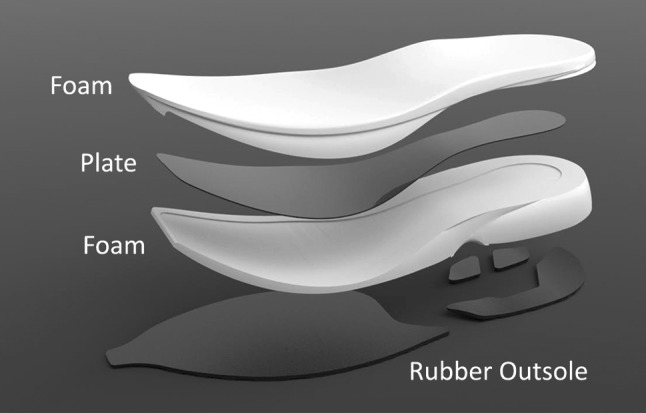
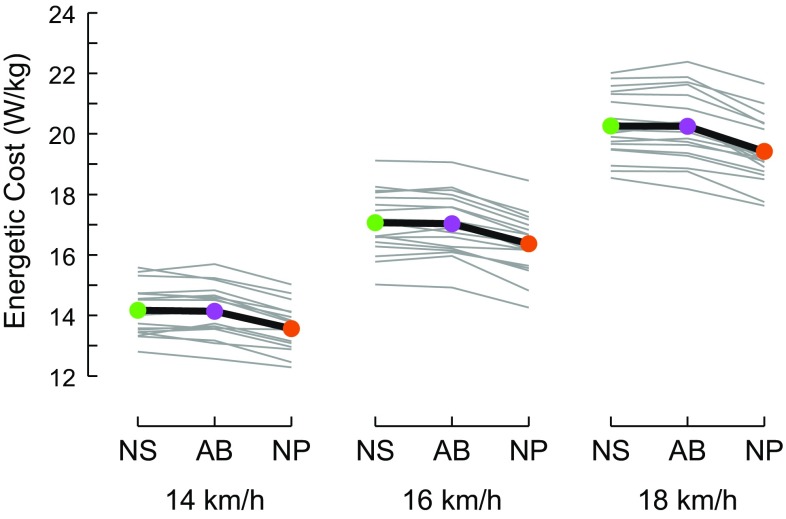
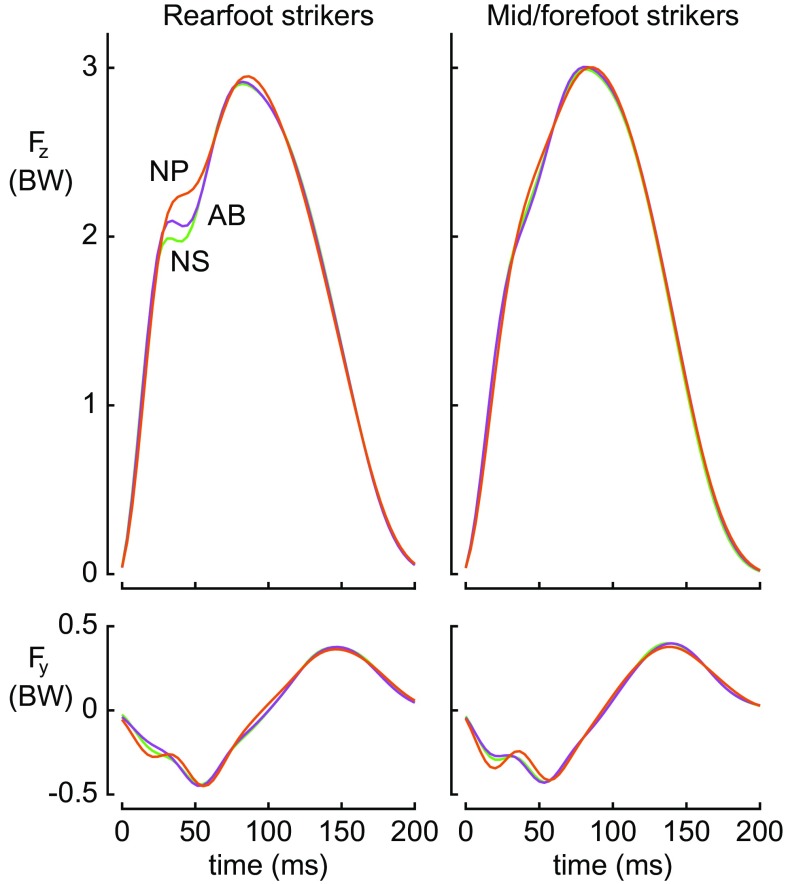
BACKGROUND: Reducing the energetic cost of running seems the most feasible path to a sub-2-hour marathon. Footwear mass, cushioning, and bending stiffness each affect the energetic cost of running. Recently, prototype running shoes were developed that combine a new highly compliant and resilient midsole material with a stiff embedded plate. OBJECTIVE: The aim of this study was to determine if, and to what extent, these newly developed running shoes reduce the energetic cost of running compared with established marathon racing shoes. METHODS: 18 high-caliber athletes ran six 5-min trials (three shoes × two replicates) in prototype shoes (NP), and two established marathon shoes (NS and AB) during three separate sessions: 14, 16, and 18 km/h. We measured submaximal oxygen uptake and carbon dioxide production during minutes 3-5 and averaged energetic cost (W/kg) for the two trials in each shoe model. RESULTS: Compared with the established racing shoes, the new shoes reduced the energetic cost of running in all 18 subjects tested. Averaged across all three velocities, the energetic cost for running in the NP shoes (16.45 ± 0.89 W/kg; mean ± SD) was 4.16 and 4.01% lower than in the NS and AB shoes, when shoe mass was matched (17.16 ± 0.92 and 17.14 ± 0.97 W/kg, respectively, both p < 0.001). The observed percent changes were independent of running velocity (14-18 km/h). CONCLUSION: The prototype shoes lowered the energetic cost of running by 4% on average. We predict that with these shoes, top athletes could run substantially faster and achieve the first sub-2-hour marathon.
Overview
The claims and statistics of this paper haven’t been checked yet.
Run the check — free, no account needed. It reads the open-access text and checks the sources it cites.
Integrity signals
Registry
Cites
Statistics
Figures
Verification
Claims the paper makes
The claims and statistics of this paper haven’t been checked yet.
Run the check — free, no account needed. It reads the open-access text and checks the sources it cites.
Claims other papers make about this one
Each is checked against this paper’s own text: does it say what the citing paper says it does?
In the citing paper
“which achieves a 4% mean reduction in the oxygen cost of running [72].”
Self-check
Percentages, sums and reported differences re-computed from the paper’s own numbers.
The self-check needs the paper’s full text.
Citations
Cites
Maximal Oxygen Intake as an Objective Measure of Cardio-Respiratory Performance
TAYLOR, H. L., BUSKIRK, E. R., & Henschel, A. F. (1955) · Journal of Applied Physiology · doi:10.1152/jappl.1955.8.1.73 · Cited by 1,366 · cited 1×
“Our criterion for reaching _ VO2max was a plateau in oxygen consumption rate after an increase in incline [33].”
BackgroundThe mechanics of running: How does stiffness couple with speed?
McMahon, T. A., & Cheng, G. C. (1990) · Journal of Biomechanics · doi:10.1016/0021-9290(90)90042-2 · Cited by 1,122 · cited 1×
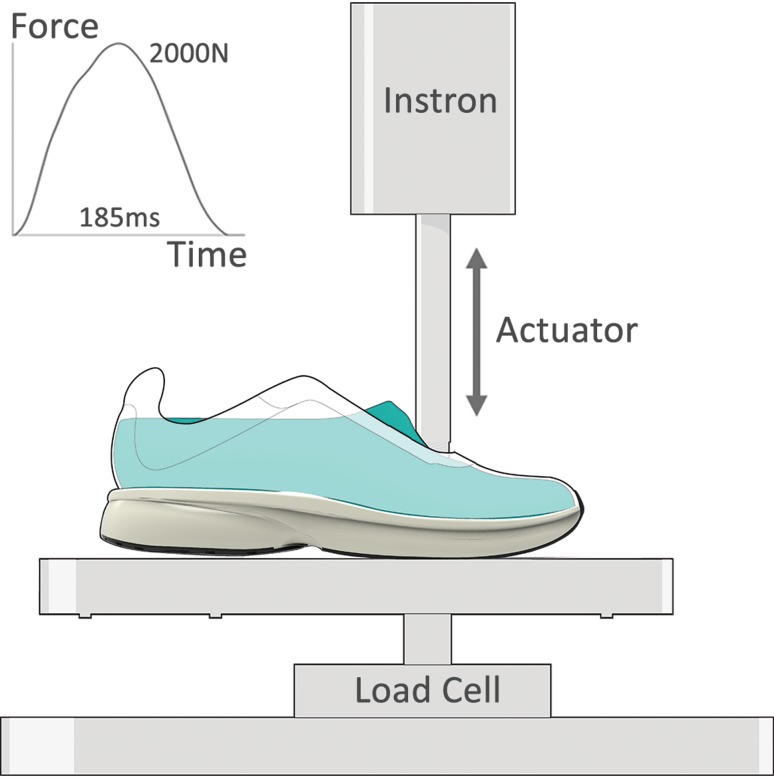
“Though limited, this simplified testing method does provide a clean, general characterization of midsole mechanical energy storage and return capabilities in a direction relevant to the spring-mass behavior of runners [27].”
MethodJustification of the 4-mmol/l lactate threshold
Heck, H., Mader, A., Hess, G., Mücke, S., Müller, R., & Hollmann, W. (1985) · International Journal of Sports Medicine · doi:10.1055/s-2008-1025824 · Cited by 888 · cited 2×
“The remaining 18 subjects were running at an intensity below the onset of blood lactate accumulation (OBLA), which specifies an [La] of 4 mmol/L [28], and the average [La] at 18 km/h was 2.”
BackgroundMethodScaling Body Support in Mammals: Limb Posture and Muscle Mechanics
Biewener, A. A. (1989) · Science · doi:10.1126/science.2740914 · Cited by 865 · cited 1×
“This improves the mechanical advantage of the muscles acting around the joints, which reduces the energetic cost of body weight support [14, 37].”
BackgroundStorage of elastic strain energy in muscle and other tissues
Alexander, R. M., & Bennet-Clark, H. C. (1977) · Nature · doi:10.1038/265114a0 · Cited by 851 · cited 1×
“Other ligaments and tendons of the leg store and return additional energy [39, 40].”
BackgroundThe spring in the arch of the human foot
Ker, R. F., Bennett, M. B., Bibby, S., Kester, R. C., & Alexander, R. M. (1987) · Nature · doi:10.1038/325147a0 · Cited by 780
Derivation of formulae used to calculate energy expenditure in man.
Brockway, J. M. (1987) · PubMed · Cited by 567
McMahon, T. A., Valiant, G., & Frederick, E. C. (1987) · Journal of Applied Physiology · doi:10.1152/jappl.1987.62.6.2326 · Cited by 453
Runners adjust leg stiffness for their first step on a new running surface
Ferris, D. P., Liang, K., & Farley, C. T. (1999) · Journal of Biomechanics · doi:10.1016/s0021-9290(99)00078-0 · Cited by 425 · cited 2×
“When running on compliant surfaces, people maintain their center of mass mechanics by reducing knee flexion during the stance period, which increases leg stiffness [31].”
BackgroundEnergetics and mechanics of human running on surfaces of different stiffnesses
Kerdok, A. E., Biewener, A. A., McMahon, T. A., Weyand, P. G., & Herr, H. (2002) · Journal of Applied Physiology · doi:10.1152/japplphysiol.01164.2000 · Cited by 411 · cited 4×
“Experiments using special treadmills with springy or cushioned surfaces have demonstrated up to 12% energy savings [13, 14] that are attributed to two factors.”
BackgroundInfluential
Research works printed but not linked: 3
- Frederick EC, Daniels JT, Hayes JW. The effect of shoe weight on the aerobic demands of running. In: Bachl N, Prokop L, Suckert R, editors. Curr Top Sports Med Proc World Congr Sports Med. Vienna: Urban and Schwarzenberg; 1984. p. 616–25.
- Frederick EC, Clarke TE, Larsen JL, et al. The effects of shoe cushioning on the oxygen demands of running. In: Nigg BM, Kerr BA, editors. Biomechanical aspects of sports shoes and playing surfaces. Calgary: The University of Calgary; 1983. p. 107–14.
- Frederick EC, Howley ET, Powers SK. Lower O2 cost while running in air-cushion type shoes. Med Sci Sports Exerc. 1980;12:81–2.
Cited by
Sorted by citations
Reducing the metabolic rate of walking and running with a versatile, portable exosuit
Kim, J., Lee, G., Heimgartner, R., Revi, D. A., Karavas, N. C., Nathanson, D., Galiana, I., Eckert-Erdheim, A. M., Murphy, P., Perry, D., et al. (2019) · Science · doi:10.1126/science.aav7536 · Cited by 504
Soft Robotic Suits: State of the Art, Core Technologies, and Open Challenges
Xiloyannis, M., Alicea, R., Georgarakis, A.-M., Haufe, F. L., Wolf, P., Masia, L., & Riener, R. (2021) · IEEE Transactions on Robotics · doi:10.1109/tro.2021.3084466 · Cited by 253
“16 % compared to established racing shoes [145].”
BackgroundHoogkamer, W., Kipp, S., & Kram, R. (2018) · Sports Medicine · doi:10.1007/s40279-018-1024-z · Cited by 192
Self-citationWitte, K. A., Fiers, P., Sheets, A. L., & Collins, S. H. (2020) · Science Robotics · doi:10.1126/scirobotics.aay9108 · Cited by 188
Running economy, mechanics, and marathon racing shoes
Hunter, I., McLeod, A. R., Valentine, D., Low, T., Ward, J., & Hager, R. (2019) · Journal of Sports Sciences · doi:10.1080/02640414.2019.1633837 · Cited by 170
“44 m/s was chosen since it matched one of the speeds used in the previous study and provided an intensity wellbelow each subject’s anaerobic threshold (Hoogkamer et al., 2018).”
BackgroundMethodResultInfluentialBarnes, K. R., & Kilding, A. E. (2018) · Sports Medicine · doi:10.1007/s40279-018-1012-3 · Cited by 169
JONES, A. M. (2023) · The Journal of Physiology · doi:10.1113/jp284205 · Cited by 161
“…foam can improve running economy by ∼ 4% when athletes are tested while running for short durations in a fresh state (Black et al., 2022; Hoogkamer, Kipp et al., 2018), it is feasible, though yet to be confirmed, that the effect might be at least as great towards the end of a race when…”
Reducing the Energy Cost of Human Running Using an Unpowered Exoskeleton
Nasiri, R., Ahmadi, A., & Ahmadabadi, M. N. (2018) · IEEE Transactions on Neural Systems and Rehabilitation Engineering · doi:10.1109/tnsre.2018.2872889 · Cited by 142
“Furthermore, in 2018, [20] presented a new marathon”
BackgroundErgogenic Effect of Nitrate Supplementation: A Systematic Review and Meta-analysis
Senefeld, J. W., Wiggins, C. C., Regimbal, R. J., Dominelli, P. B., Baker, S. E., & Joyner, M. J. (2020) · Medicine & Science in Sports & Exercise · doi:10.1249/mss.0000000000002363 · Cited by 146
Ortega, J. A., Healey, L. A., Swinnen, W., & Hoogkamer, W. (2021) · Sports Medicine · doi:10.1007/s40279-020-01406-5 · Cited by 134
“However, the contribution of the shoe to external MTP joint moment, power and work can be estimated from the measured dorsiflexion angle and longitudinal bending stiffness of the shoe, and then subtracted (see [5]).”
BackgroundMethodResultInfluentialSelf-citationHébert‐Losier, K., Finlayson, S. J., Driller, M. W., Dubois, B., Esculier, J.-F., & Beaven, C. M. (2020) · Journal of sport and health science/Journal of Sport and Health Science · doi:10.1016/j.jshs.2020.11.012 · Cited by 128
“8% oxygen consumption improvements in high-caliber runners wearing VP4 (184 g) at 16 km/h compared to those wearing Adidas Adios Boost (230 g), whereas both Hoogkamer et al.(6) and Barnes and Kilding(7) reported approximately 3.”
BackgroundMethodInfluentialExtrapolating Metabolic Savings in Running: Implications for Performance Predictions
Kipp, S., Kram, R., & Hoogkamer, W. (2019) · Frontiers in Physiology · doi:10.3389/fphys.2019.00079 · Cited by 129
Self-citationSwifter, higher, stronger: What’s on the menu?
Burke, L. M., & Hawley, J. A. (2018) · Science · doi:10.1126/science.aau2093 · Cited by 135
Recent Improvements in Marathon Run Times Are Likely Technological, Not Physiological
Muñiz-Pardos, B., Sutehall, S., Angeloudis, K., Guppy, F. M., Bosch, A. N., & Pitsiladis, Y. P. (2021) · Sports Medicine · doi:10.1007/s40279-020-01420-7 · Cited by 113
“Laboratory studies have reported improvements of approximately 4% in running economy (RE) while exercising in CFP shoes at a submaximal intensity (commonly between 14 and 18 km h−1) during a period of approximately 5 min [66, 71, 72].”
BackgroundSun, X., Lam, W., Zhang, X., Wang, J., & Fu, W. (2020) · Europe PMC (PubMed Central) · Cited by 109
Bermon, S., Garrandes, F., Szabo, A., Berkovics, I., & Adami, P. E. (2021) · Frontiers in Sports and Active Living · doi:10.3389/fspor.2021.653173 · Cited by 96
“, 2017), and/or a highermidsole thickness/body mass ratio, facilitating a higher percentage of energy return in female runners (Hoogkamer et al., 2018).”
BackgroundBurke, L. M., Sharma, A. P., Heikura, I. A., Forbes, S. F., Holloway, M., McKay, A. K. A., Bone, J. L., Leckey, J. J., Welvaert, M., & Ross, M. L. (2020) · PLOS ONE · doi:10.1371/journal.pone.0234027 · Cited by 96
“By contrast, the world of distance running is currently enamoured and/or outraged by improvements in performance achieved by new shoe technology [71], which achieves a 4% mean reduction in the oxygen cost of running [72].”
BackgroundLongitudinal bending stiffness does not affect running economy in Nike Vaporfly Shoes
Healey, L. A., & Hoogkamer, W. (2021) · Journal of sport and health science/Journal of Sport and Health Science · doi:10.1016/j.jshs.2021.07.002 · Cited by 95
“6% longer compared to controls.(8) 10 Similar findings have also been reported in shoes with flat plates.”
BackgroundMethodResultInfluentialSelf-citationEffects of running shoe construction on performance in long distance running
Nigg, B. M., Čigoja, S., & Nigg, S. (2020) · Footwear Science · doi:10.1080/19424280.2020.1778799 · Cited by 90
Technological advances in elite marathon performance
Senefeld, J. W., Haischer, M. H., JONES, A. M., Wiggins, C. C., Beilfuss, R. N., Joyner, M. J., & Hunter, S. K. (2021) · Journal of Applied Physiology · doi:10.1152/japplphysiol.00002.2021 · Cited by 88
Hooren, B. V., Jukić, I., Cox, M., Frenken, K. G., Bautista, I. J., & Moore, I. S. (2024) · Sports Medicine · doi:10.1007/s40279-024-01997-3 · Cited by 94
Is it the shoes? A simple proposal for regulating footwear in road running
Burns, G. T., & Tam, N. (2019) · British Journal of Sports Medicine · doi:10.1136/bjsports-2018-100480 · Cited by 83
Optimal footwear longitudinal bending stiffness to improve running economy is speed dependent
Day, E. M., & Hahn, M. E. (2019) · Footwear Science · doi:10.1080/19424280.2019.1696897 · Cited by 75
“Because modern marathon racing shoes weigh 200 (cid:1) 250 g (Hoogkamer et al., 2018) we felt it unreasonable to add mass to make all shoes 350 g as participants in our study are most likely accustomed to running as faster speeds in lighter weight shoes.”
InfluentialA comparison of running economy across seven highly cushioned racing shoes with carbon-fibre plates
Joubert, D. P., & Jones, G. P. (2022) · Footwear Science · doi:10.1080/19424280.2022.2038691 · Cited by 74
“These trends however are consistent with the previously studied Nike VF (Barnes & Kilding, 2019; Hoogkamer et al., 2018).”
BackgroundMethodResultInfluentialNigg, B. M., Čigoja, S., & Nigg, S. (2020) · British Journal of Sports Medicine · doi:10.1136/bjsports-2020-102550 · Cited by 72
Čigoja, S., Firminger, C. R., Asmussen, M. J., Fletcher, J. R., Edwards, W. B., & Nigg, B. M. (2019) · Journal of science and medicine in sport · doi:10.1016/j.jsams.2019.06.015 · Cited by 70
Čigoja, S., Fletcher, J. R., Esposito, M., Stefanyshyn, D. J., & Nigg, B. M. (2021) · Scientific Reports · doi:10.1038/s41598-020-80791-3 · Cited by 71
“The main features included (1) a single curved carbon fibre plate embedded in the midsole, (2) highly resilient midsole material, and (3) a greater stack height (i.”
BackgroundSong, Y., Cen, X., Chen, H., Sun, D., Munivrana, G., Kovács, B., Bíró, I., & Gu, Y. (2023) · Journal of Biomechanics · doi:10.1016/j.jbiomech.2023.111597 · Cited by 66
Adding carbon fiber to shoe soles may not improve running economy: a muscle-level explanation
Beck, O. N., Golyski, P. R., & Sawicki, G. S. (2020) · Scientific Reports · doi:10.1038/s41598-020-74097-7 · Cited by 80
Rodrigo‐Carranza, V., González‐Mohíno, F., Santos‐Concejero, J., & González‐Ravé, J. M. (2021) · European Journal of Sport Science · doi:10.1080/17461391.2021.1955014 · Cited by 65
“shyn, 2006)), running speeds (Group 1 (Barnes & Kilding, 2019; Flores, Le Gendre, Rao, Berton, & Delattre, 2019; Hoogkamer et al., 2018; Roy & Stefanyshyn, 2006), ∼14km·h, Group 2 (Barnes & Kilding, 2019; Hébert-Losier et al.”
InfluentialHébert‐Losier, K., & Pamment, M. (2022) · Sports Biomechanics · doi:10.1080/14763141.2022.2110512 · Cited by 65
“In 2017, Hoogkamer et al. (2017) proposed that shoe design could contribute to a sub 2-hour marathon performance, which Eliud Kipchoge achieved as part of the INEOS 1:59 Challenge.”
BackgroundFlores, N., Delattre, N., Berton, É., & Rao, G. (2018) · European Journal of Applied Physiology · doi:10.1007/s00421-018-4038-1 · Cited by 69
Joyner, M. J., Hunter, S. K., Lucía, A., & JONES, A. M. (2020) · Journal of Applied Physiology · doi:10.1152/japplphysiol.00793.2019 · Cited by 62
Shoe feature recommendations for different running levels: A Delphi study
Honert, E. C., Mohr, M., Lam, W., & Nigg, S. (2020) · PLoS ONE · doi:10.1371/journal.pone.0236047 · Cited by 58
Influence of Shoe Mass on Performance and Running Economy in Trained Runners
Rodrigo‐Carranza, V., González‐Mohíno, F., Santos‐Concejero, J., & González‐Ravé, J. M. (2020) · Frontiers in Physiology · doi:10.3389/fphys.2020.573660 · Cited by 57
“Some of these factors can be changed chronically through training (Barnes and Kilding, 2015), whereas others can be modified acutely through interventions such as changes in footwear (Hoogkamer et al., 2018).”
BackgroundHoitz, F., Mohr, M., Asmussen, M. J., Lam, W., Nigg, S., & Nigg, B. M. (2020) · Footwear Science · doi:10.1080/19424280.2020.1773936 · Cited by 57
Gearing Up the Human Ankle-Foot System to Reduce Energy Cost of Fast Walking
Ray, S. F., & Takahashi, K. Z. (2020) · Scientific Reports · doi:10.1038/s41598-020-65626-5 · Cited by 55
“Our metabolic reductions are also greater than those achieved by Hoogkamer et al.18 (~4”
The implications of time on the ground on running economy: less is not always better
Lussiana, T., Patoz, A., Gindre, C., Mourot, L., & Hébert‐Losier, K. (2019) · Journal of Experimental Biology · doi:10.1242/jeb.192047 · Cited by 54
Knopp, M. U., Muñiz-Pardos, B., Wackerhage, H., Schönfelder, M., Guppy, F. M., Pitsiladis, Y. P., & Ruiz, D. (2023) · Sports Medicine · doi:10.1007/s40279-023-01816-1 · Cited by 53
“26% benefit in energetic cost (W/kg) of the new advanced footwear technology versus flats [28].”
BackgroundDay, E. M., Alcantara, R. S., McGeehan, M. A., Grabowski, A. M., & Hahn, M. E. (2021) · Journal of Biomechanics · doi:10.1016/j.jbiomech.2021.110323 · Cited by 51
Reusser, M., Sousa, C. V., Villiger, E., Cruz, J. R. A., Hill, L., Rosemann, T. J., Nikolaidis, P. Τ., & Knechtle, B. (2021) · Frontiers in Physiology · doi:10.3389/fphys.2021.631237 · Cited by 51
Whiting, C. S., Hoogkamer, W., & Kram, R. (2021) · Journal of sport and health science/Journal of Sport and Health Science · doi:10.1016/j.jshs.2021.10.004 · Cited by 49
“7 All 4 laboratory studies were performed on level treadmills or tracks.(4) 7 However, the”
MethodResultInfluentialSelf-citationČigoja, S., Asmussen, M. J., Firminger, C. R., Fletcher, J. R., Edwards, W. B., & Nigg, B. M. (2020) · Sports Medicine - Open · doi:10.1186/s40798-020-0241-9 · Cited by 49
Human running performance from real-world big data
Thorsten Emig, A., & Peltonen, J. T. (2020) · Nature Communications · doi:10.1038/s41467-020-18737-6 · Cited by 50
Rodrigo‐Carranza, V., Hoogkamer, W., González‐Ravé, J. M., Muñoz, S. H., Serna‐Moreno, M. D. C., Gutiérrez, A. R., & González‐Mohíno, F. (2023) · Scandinavian Journal of Medicine and Science in Sports · doi:10.1111/sms.14526 · Cited by 48
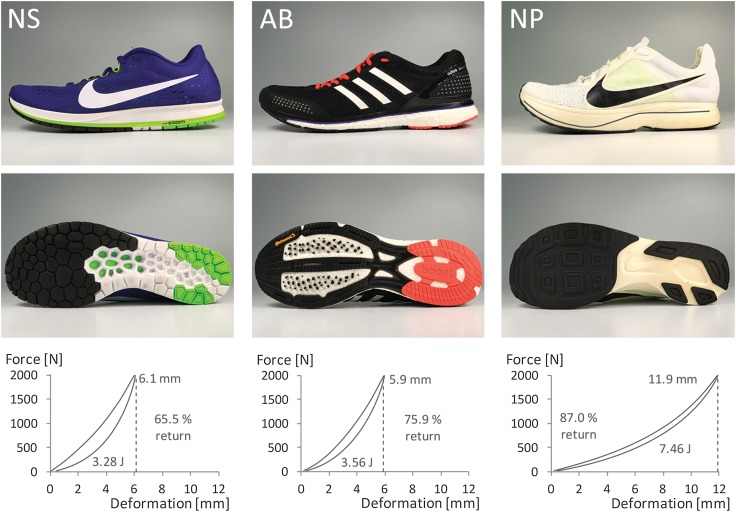
“Hoogkamer et al. 10 analyzed the mechanical energy return of these three midsole materials, which was 66% for an EVA midsole with air bag, 76% for a thermoplastic polyurethane midsole, and 87% for a PEBA midsole.”
BackgroundResultInfluentialSelf-citationEffects of Highly Cushioned and Resilient Racing Shoes on Running Economy at Slower Running Speeds
Joubert, D. P., Dominy, T. A., & Burns, G. T. (2023) · International Journal of Sports Physiology and Performance · doi:10.1123/ijspp.2022-0227 · Cited by 46
Bone Stress Injuries in Runners Using Carbon Fiber Plate Footwear
Tenforde, A. S., Hoenig, T., Saxena, A., & Hollander, K. (2023) · Sports Medicine · doi:10.1007/s40279-023-01818-z · Cited by 45
“The mechanism for injury in each case cannot be determined due to limitations of a case report format and lack of studies to describe the changes in lower extremity biomechanics between forms of training and racing footwear in both sexes [5].”
BackgroundJiang, J., Liu, F., Chen, B., Li, Y., Yang, X., Tian, F., Xu, D., & Zhai, W. (2022) · Polymer · doi:10.1016/j.polymer.2022.125244 · Cited by 44
Falisse, A. M. D., Afschrift, M., & Groote, F. D. (2022) · PLoS ONE · doi:10.1371/journal.pone.0256311 · Cited by 42
“Our simulation results are in line with experimental observations during running where using shoe wear that increases foot stiffness reduces metabolic cost [40].”
ResultImpact of advanced footwear technology on elite men’s in the evolution of road race performance
Rodrigo‐Carranza, V., González‐Mohíno, F., Santos‐Concejero, J., & González‐Ravé, J. M. (2022) · Journal of Sports Sciences · doi:10.1080/02640414.2023.2183103 · Cited by 41
Čigoja, S., Fletcher, J. R., & Nigg, B. M. (2021) · Journal of sport and health science/Journal of Sport and Health Science · doi:10.1016/j.jshs.2020.12.007 · Cited by 41
Improving running economy through altered shoe bending stiffness across speeds
McLeod, A. R., Bruening, D. A., Johnson, A. W., Ward, J., & Hunter, I. (2020) · Footwear Science · doi:10.1080/19424280.2020.1734870 · Cited by 40
“Moderate increases in longitudinal bending stiffness have been associated with a decrease in running metabolic energy cost (Fuller et al., 2015; Hoogkamer et al., 2017; Madden, Sakaguchi, Tomaras, Wannop, & Stefanyshyn, 2016; Oh & Park, 2017; Roy & Stefanyshyn, 2006).”
BackgroundRodrigo‐Carranza, V., González‐Mohíno, F., del Cerro, J. S., Santos‐Concejero, J., & González‐Ravé, J. M. (2021) · Scientific Reports · doi:10.1038/s41598-021-01807-0 · Cited by 43
Running Shoes of the Postmodern Footwear Era: A Narrative Overview of Advanced Footwear Technology
Burns, G. T., & Joubert, D. P. (2024) · International Journal of Sports Physiology and Performance · doi:10.1123/ijspp.2023-0446 · Cited by 39
“It was notable that the initial energy return values reported for the PEBA and EVA shoes were similar in the unused condition ( ∼ 75%), which is substantially lower than has been reported in other AFT models, 1,15 though, as the authors mention, PEBA foams are not necessarily all similar.”
BackgroundMethodResultInfluentialBeck, O. N., Kipp, S., Byrnes, W. C., & Kram, R. (2018) · Journal of Applied Physiology · doi:10.1152/japplphysiol.00940.2017 · Cited by 39
Dyer, B. T. J. (2020) · Sports Medicine - Open · doi:10.1186/s40798-020-00250-1 · Cited by 39
The Relationship between Running Power and Running Economy in Well-Trained Distance Runners
Austin, C., Hokanson, J. F., McGinnis, P. M., & Patrick, S. (2018) · Sports · doi:10.3390/sports6040142 · Cited by 38
Can We Quantify the Benefits of “Super Spikes” in Track Running?
Healey, L. A., Bertschy, M., Kipp, S., & Hoogkamer, W. (2022) · Sports Medicine · doi:10.1007/s40279-022-01657-4 · Cited by 38
“While the spring function of the foam has been argued to be the major factor for the observed running economy improvements in the Vaporfly shoes [23, 32, 39], it has not yet been quantified for spikes.”
BackgroundSelf-citationThe Influence of Footwear Midsole Thickness on Running Economy and Frontal Plane Ankle Stability
Barrons, Z. B., Wannop, J. W., & Stefanyshyn, D. J. (2023) · Footwear Science · doi:10.1080/19424280.2023.2218321 · Cited by 36
“Reported to improve running economy of both elite and recreational runners (Hebert-Losier et al., 2022; Hoogkamer et al., 2018), the Vaporfly 4% combined three features that have since become ubiquitous with advanced footwear technology (AFT) or so called ‘super shoes’ (i.”
BackgroundRodrigo‐Carranza, V., Hoogkamer, W., Salinero, J. J., Rodríguez‐Barbero, S., González‐Ravé, J. M., & González‐Mohíno, F. (2023) · Medicine & Science in Sports & Exercise · doi:10.1249/mss.0000000000003254 · Cited by 36
Self-citationTechnological advances in elite sport: Where does one draw the line?
Muñiz-Pardos, B., Bekele, K., Mayo, C., & Pitsiladis, Y. P. (2024) · Journal of Applied Physiology · doi:10.1152/japplphysiol.00132.2024 · Cited by 36
Hoogkamer, W., Snyder, K. L., & Arellano, C. J. (2018) · Sports Medicine · doi:10.1007/s40279-018-0991-4 · Cited by 36
Self-citationBrown, N., Deshpande, A., Garland, A., Pradeep, S. A., Fadel, G., Pilla, S., & Li, G. (2023) · Materials & Design · doi:10.1016/j.matdes.2023.112428 · Cited by 36
Barrons, Z. B., Rodrigo‐Carranza, V., Bertschy, M., & Hoogkamer, W. (2024) · Sports Medicine · doi:10.1007/s40279-023-01991-1 · Cited by 35
“Here, we quantify the magnitude of error that can be incurred when relying on single-trial comparisons to identify differential responses to AFT, as demonstrated through a retrospective examination of data from a previously published study [3].”
Self-citationLin, S., Song, Y., Cen, X., Kovács, B., Fekete, G., & Sun, D. (2022) · Bioengineering · doi:10.3390/bioengineering9100497 · Cited by 35
“[29], by applying shoes with increased bending stiffness, all 18 tested participants have decreased the energetic cost of running.”
BackgroundHoogkamer, W. (2020) · Footwear Science · doi:10.1080/19424280.2019.1710579 · Cited by 35
Self-citationToward a Robust Definition of Sport Sex
Handelsman, D. J. (2024) · Endocrine Reviews · doi:10.1210/endrev/bnae013 · Cited by 34
Physiological Resilience: What Is It and How Might It Be Trained?
JONES, A. M., & Kirby, B. S. (2025) · Scandinavian Journal of Medicine and Science in Sports · doi:10.1111/sms.70032 · Cited by 37
“It is known that the new running shoes can acutely improve running economy when measured in short running bouts [35, 36] and it is possible that the effect is even greater in a fatigued condition such as towards the end of a marathon.”
Running into Fatigue: The Effects of Footwear on Kinematics, Kinetics, and Energetics
Sanno, M., Epro, G., Brüggemann, G., & Willwacher, S. (2020) · Medicine & Science in Sports & Exercise · doi:10.1249/mss.0000000000002576 · Cited by 33
Muñiz-Pardos, B., Sutehall, S., Gellaerts, J., Falbriard, M., Mariani, B., Bosch, A. N., Asrat, M., Schaible, J., & Pitsiladis, Y. P. (2018) · Current Sports Medicine Reports · doi:10.1249/jsr.0000000000000550 · Cited by 33
Ergogenic distance running shoes: how do we think they work and how can we understand them better?
Kram, R. (2022) · Footwear Science · doi:10.1080/19424280.2022.2127545 · Cited by 32
Balsalobre‐Fernández, C., Romero‐Moraleda, B., Cupeiro, R., Peinado, A. B., Butragueño, J., & Benito, P. J. (2018) · PLoS ONE · doi:10.1371/journal.pone.0200517 · Cited by 35
How to run 50% faster without external energy
Sutrisno, A., & Braun, D. J. (2020) · Science Advances · doi:10.1126/sciadv.aay1950 · Cited by 30
“A spring in series with the legs can mitigate collisional energy losses but requires the legs to provide a large force to support the body, unlike the wheel of a bicycle (10, 13, 14).”
Miller, D. E., Tan, G. R., Farina, E. M., Sheets, A. L., & Collins, S. H. (2022) · Journal of NeuroEngineering and Rehabilitation · doi:10.1186/s12984-022-01023-5 · Cited by 30
“Passive support, which leverages the compliance and resilience of materials to provide a metabolic benefit, have included the Nike Vaporfly marathon shoe (4% reduction) [10]; a passive elastic hip exosuit (5% reduction) [11]; a rubber band connected between the feet (6% reduction) [12]; a passive exo-tendon hip exoske…”
BackgroundMechanical Properties of Treadmill Surfaces Compared to Other Overground Sport Surfaces
Colino, E., Felipe, J. L., Hooren, B. V., Gallardo, L., Meijer, K., Lucía, A., Fernández, J. L., & García‐Unanue, J. (2020) · Sensors · doi:10.3390/s20143822 · Cited by 30
The Nike Vaporfly 4%: a game changer to improve performance without biomechanical explanation yet
Patoz, A., Lussiana, T., Breine, B., & Gindre, C. (2022) · Footwear Science · doi:10.1080/19424280.2022.2077844 · Cited by 28
“adaptations, which were, if any, small (Barnes & Kilding, 2019; Hoogkamer et al., 2018; 2019; Hunter et al., 2019).”
BackgroundMethodInfluentialEffects of Ketone Bodies on Endurance Exercise
Sansone, M., Sansone, A., Borrione, P., Romanelli, F., Luigi, L. D., & Sgrò, P. (2018) · Current Sports Medicine Reports · doi:10.1249/jsr.0000000000000542 · Cited by 28
Alsenoy, K. K. V., van der Linden, M. L., Girard, O., & Santos, D. (2021) · European Journal of Sport Science · doi:10.1080/17461391.2021.1998642 · Cited by 28
Highly Cushioned Shoes Improve Running Performance in Both the Absence and Presence of Muscle Damage
Black, M. I., Kranen, S. H., Kadach, S., Vanhatalo, A., Winn, B., Farina, E. M., Kirby, B. S., & Jones, A. M. (2021) · Medicine & Science in Sports & Exercise · doi:10.1249/mss.0000000000002832 · Cited by 27
“Similar to the findings of the present study, this effect was independent of running speed (23).”
ResultA Design Space of Sports Interaction Technology
Postma, D. B. W., van Delden, R. W., Koekoek, J., Walinga, W. W., van Hilvoorde, I. M., van Beijnum, B.-J. F., Salim, F. A., & Reidsma, D. (2022) · Foundations and Trends® in Human–Computer Interaction · doi:10.1561/1100000087 · Cited by 31
Dynamic angular stiffness about the metatarsophalangeal joint increases with running speed
Day, E. M., & Hahn, M. E. (2019) · Human Movement Science · doi:10.1016/j.humov.2019.102501 · Cited by 27
Optimizing running a race on a curved track
Aftalion, A., & Martinon, P. (2019) · PLoS ONE · doi:10.1371/journal.pone.0221572 · Cited by 26
“Because the runner has a limited capacity, the propulsive force is bounded from above by a constant f M , that is Typical values for f M range from 13 for a sprint at the world level [19] to 5 for a marathon [20].”
BackgroundChen, H., Shao, E., Sun, D., Xuan, R., Baker, J. S., & Gu, Y. (2022) · Frontiers in Physiology · doi:10.3389/fphys.2022.907016 · Cited by 26
“In addition, other kinematic and kinetic data have been shown to correlate with energy expenditure while running (Hoogkamer et al., 2018).”
BackgroundMai, P., Robertz, L., Robbin, J., Bill, K., Weir, G., Kurz, M., Trudeau, M. B., Hollander, K., Hamill, J., & Willwacher, S. (2023) · BMC Sports Science Medicine and Rehabilitation · doi:10.1186/s13102-023-00760-x · Cited by 25
“On the contrary, a reduction in GRF braking impulse in footwear with higher bending stiffness was found in one study [134].”
BackgroundThe metabolic cost of emulated aerodynamic drag forces in marathon running
da Silva, E. S., Kram, R., & Hoogkamer, W. (2022) · Journal of Applied Physiology · doi:10.1152/japplphysiol.00086.2022 · Cited by 25
Self-citationThe Effect of EVA and TPU Custom Foot Orthoses on Running Economy, Running Mechanics, and Comfort
Alsenoy, K. K. V., Ryu, J. H., & Girard, O. (2019) · Frontiers in Sports and Active Living · doi:10.3389/fspor.2019.00034 · Cited by 24
“Controlling kinetic and kinematic responses (dose-response) across a group of participants hasn’t been investigated previously (Griffiths and Spooner, 2018; Hoogkamer et al., 2018).”
BackgroundChollet, M., Michelet, S., Horvais, N., Pavailler, S., & Giandolini, M. (2022) · European Journal of Applied Physiology · doi:10.1007/s00421-022-05060-9 · Cited by 24
MARTINEZ, E., Hoogkamer, W., Powell, D. W., & Paquette, M. R. (2024) · Medicine & Science in Sports & Exercise · doi:10.1249/mss.0000000000003411 · Cited by 24
“The improved RE is consistent with previous findings that “ super shoes ” improve RE compared with traditional shoes (23) or racing flats (6,7) in both men and women.”
BackgroundMethodResultInfluentialSelf-citationHighlighting the present state of biomechanics in shoe research (2000–2023)
Nigg, B. M., Nigg, S., Hoitz, F., Subramanium, A., Vienneau, J., Wannop, J. W., Khassetarash, A., Alizadeh, S., Matijevich, E., Honert, E. C., et al. (2023) · Footwear Science · doi:10.1080/19424280.2023.2209044 · Cited by 23
“The first published work on the prototype of the Vaporfly demonstrated a remarkable 4% average improvement in running economy compared to then-record holding marathon shoe (Adios BOOST 2; (Hoogkamer et al., 2018)).”
BackgroundEnergy return in footwear – revisited
Shorten, M. R. (2024) · Footwear Science · doi:10.1080/19424280.2024.2369995 · Cited by 23
“Hoogkamer et al. (2018) reported energy return (in Joules) for the NP shoe was more than double that of the NS and AB control conditions.”
InfluentialDay, E. M., & Hahn, M. E. (2019) · Journal of Sports Sciences · doi:10.1080/02640414.2019.1661562 · Cited by 23
“Stiffer footwear has also been shown to potentially improve RE (Hoogkamer et al., 2017; Madden et al., 2015; Oh & Park, 2017; Roy & Stefanyshyn, 2006), a measure of the volume of oxygen required to run at a given velocity collected via expiratory gas, and a predictor of distance running performance (Daniels, 1985; Hoo…”
BackgroundInfluentialMatijevich, E., Honert, E. C., Fan, Y., Lam, G., & Nigg, B. M. (2022) · Journal of Biomechanics · doi:10.1016/j.jbiomech.2022.111217 · Cited by 23
Hunter, I., Bradshaw, C., McLeod, A. R., Ward, J., & Standifird, T. W. (2022) · Journal of Sports Science and Medicine · doi:10.52082/jssm.2022.127 · Cited by 22
“Research on a recently popular racing shoe suggested that the energy savings caused by the shoe may be greater for rearfoot striking than midfoot striking runners (Hoogkamer et al., 2018).”
BackgroundResultInfluentialEffect of Shoe and Surface Stiffness on Lower Limb Tendon Strain in Jumping
Firminger, C. R., Bruce, O. L., Wannop, J. W., Stefanyshyn, D. J., & Edwards, W. B. (2019) · Medicine & Science in Sports & Exercise · doi:10.1249/mss.0000000000002004 · Cited by 22
“Previous research has shown that increased shoe bending stiffness can significantly improve jump height (40) and running economy (43); however, our results illustrate that these performance gains may come at the expense of increased Achilles tendinopathy risk.”
ResultMason, J., Starc, L. C., Morin, J.-B., McClelland, E. L., & Zech, A. (2024) · Frontiers in Sports and Active Living · doi:10.3389/fspor.2024.1386627 · Cited by 21
“Most recently, Martinez and colleagues (38) reported metabolic power improvements of 4.2% and running economy improvements of 3.9% when trained female runners ran in AFT compared to control shoes, which is consistent with fi ndings in males (15).”
BackgroundMethodInfluentialThe future of footwear biomechanics research
Willwacher, S., & Weir, G. (2023) · Footwear Science · doi:10.1080/19424280.2023.2199011 · Cited by 23
Postma, D. B. W., van Delden, R. W., & van Hilvoorde, I. M. (2022) · Frontiers in Sports and Active Living · doi:10.3389/fspor.2022.899613 · Cited by 20
“With the introduction of the Nike Alpha Fly shoes, Nike created a shoe that was able to reduce the overall metabolic cost in running by 4% (Hoogkamer et al., 2018).”
MethodRuiz‐Alias, S. A., Molina‐Molina, A., Soto-Hermoso, V. M., & García‐Pinillos, F. (2022) · Sports Biomechanics · doi:10.1080/14763141.2022.2089589 · Cited by 20
Paradisis, G. P., Zacharogiannis, E. G., Bissas, A., & Hanley, B. (2023) · International Journal of Sports Physiology and Performance · doi:10.1123/ijspp.2023-0115 · Cited by 19
Rodrigo‐Carranza, V., Hoogkamer, W., González‐Ravé, J. M., & González‐Mohíno, F. (2024) · Scandinavian Journal of Medicine and Science in Sports · doi:10.1111/sms.14687 · Cited by 19
Self-citation
Metadata
- Authors
- Hoogkamer, W., Kipp, S., Frank, J. H., Farina, E. M., Luo, G., & Kram, R.
- Affiliations
- University of Colorado Boulder (US)
- Nike (United States) (US)
- Corresponding author
- Hoogkamer, Wouter
- Venue
- Sports Medicine
- Published
- 2017-11-16
- Volume
- 48
- Issue
- 4
- Pages
- 1009-1019
- ISSN
- 0112-1642 (ISSN-L)
- 1179-2035
- PMC
- PMC5856879
- OpenAlex
- W2770125989
- Cited by
- 434
- References
- 44
- Citations by year
- 2026: 58 · 2025: 71 · 2024: 68 · 2023: 61 · 2022: 51 · 2021: 43 · 2020: 42 · 2019: 28 · 2018: 12
- FWCI
- 10.10
- Type
- journal article
- Language
- en
- Update notices
- correction (2017-12-16)
- Open access
- hybrid
- doi.org
- Locations
- Sports Medicine (publishedVersion, cc-by)
- PubMed Central (publishedVersion, cc-by)
- PubMed (publishedVersion)
- Funders
- NIKE
- Topics
- Physical Sciences › Engineering › Biomedical Engineering › Lower Extremity Biomechanics and Pathologies
- Health Sciences › Medicine › Orthopedics and Sports Medicine › Sports Performance and Training
- Physical Sciences › Engineering › Biomedical Engineering › Sports Dynamics and Biomechanics
- Keywords
- running shoes, submaximal oxygen uptake, CO2 emissions, running speed
- MeSH terms
- Adult, Altitude, Biomechanical Phenomena, Energy Metabolism, Humans, Male, Running, Shoes, Young Adult, Athletes
About these checks
Registry, retraction, Cites and statistics results are computed, not judged, with one exception: a printed reference that no index lists is read once by a model before it counts as a citation error. Claims are extracted by a model and kept only when their quote appears verbatim in the text; each cited source is then checked, with a model’s help, for whether it says what the claim relies on. Those verdicts can be wrong — read the claim’s quote and the cited source before relying on one.
Statistics and arithmetic are recomputed, not judged.
Confidence bands are shown only for fields calibrated on our annotated test set. None is calibrated yet, so no band is shown.
What counts as a claim ›How we measure confidence ›How we check this ›
Are you an author, or do you see a problem with this page? Request a review
