

Foam Rolling Training Effects on Range of Motion: A Systematic Review and Meta-Analysis
Open accessThe DOI matches its Crossref record; 66 of the 67 references it cites were found in a registry or an index.
Abstract
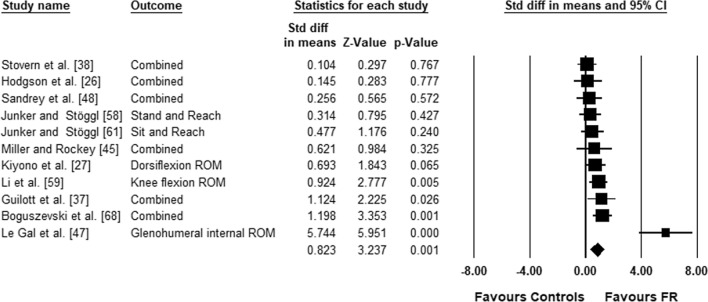
Background: A single foam-rolling exercise can acutely increase the range of motion (ROM) of a joint. However, to date the adaptational effects of foam-rolling training over several weeks on joint ROM are not well understood. Objective: The purpose of this meta-analysis was to investigate the effects of foam-rolling training interventions on joint ROM in healthy participants. Methods: Results were assessed from 11 studies (either controlled trials [CT] or randomized controlled trials [RCTs]) and 46 effect sizes by applying a random-effect meta-analysis. Moreover, by applying a mixed-effect model, we performed subgroup analyses, which included comparisons of the intervention duration (≤ 4 weeks vs > 4 weeks), comparisons between muscles tested (e.g., hamstrings vs quadriceps vs triceps surae), and study designs (RCT vs CT). Results: Our main analysis of 290 participants with a mean age of 23.9 (± 6.3 years) indicated a moderate effect of foam-rolling training on ROM increases in the experimental compared to the control group (ES = 0.823; Z = 3.237; 95% CI 0.325–1.322; p = 0.001; I2 = 72.76). Subgroup analyses revealed no significant differences between study designs (p = 0.36). However, a significant difference was observed in the intervention duration in favor of interventions > 4 weeks compared to ≤ 4 weeks for ROM increases (p = 0.049). Moreover, a further subgroup analysis showed significant differences between the muscles tested (p = 0.047) in the eligible studies. Foam rolling increased joint ROM when applied to hamstrings and quadriceps, while no improvement in ankle dorsiflexion was observed when foam rolling was applied to triceps surae. Conclusion: Longer duration interventions (> 4 weeks) are needed to induce ROM gains while there is evidence that responses are muscle or joint specific. Future research should examine possible mechanisms underpinning ROM increases following different foam-rolling protocols, to allow for informed recommendations in healthy and clinical populations.
Overview
The claims and statistics of this paper haven’t been checked yet.
Free: it reads the open-access text and checks the first 5 claims that cite a source we can check. Create a free account to check every claim.
Integrity signals
Registry
Cites
Statistics
Figures
Verification
Claims the paper makes
The claims and statistics of this paper haven’t been checked yet.
Free: it reads the open-access text and checks the first 5 claims that cite a source we can check. Create a free account to check every claim.
Self-check
Percentages, sums and reported differences re-computed from the paper’s own numbers.
The self-check needs the paper’s full text.
Citations
Cites
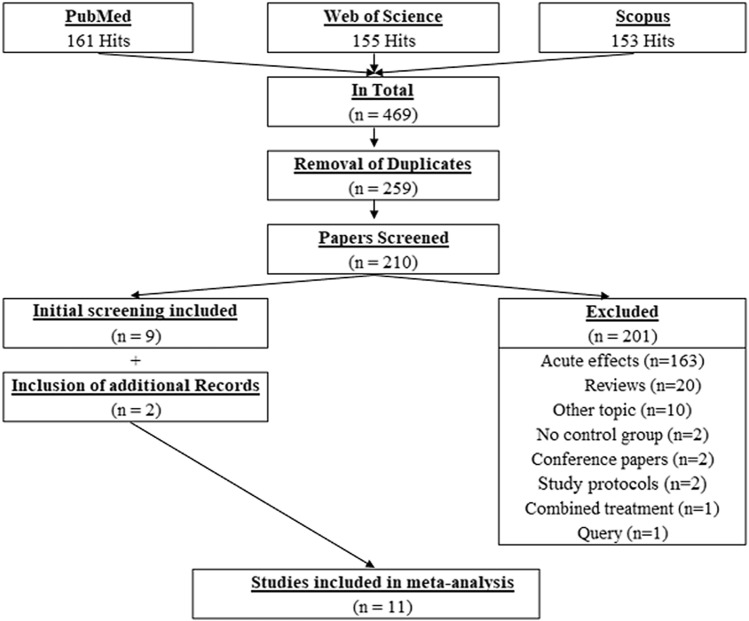
Preferred Reporting Items for Systematic Reviews and Meta-Analyses: the PRISMA statement
Moher, D., Liberati, A., Tetzlaff, J., Altman, D. G., & for the PRISMA Group (2009) · BMJ · doi:10.1136/bmj.b2535 · Cited by 83,823
Preferred Reporting Items for Systematic Reviews and Meta-Analyses: The PRISMA Statement
Moher, D., Liberati, A., Tetzlaff, J., Altman, D. G., & The PRISMA Group (2009) · PLoS Medicine · doi:10.1371/journal.pmed.1000097 · Cited by 64,042
Measuring inconsistency in meta-analyses
Higgins, J. P. T., Thompson, S. G., Deeks, J. J., & Altman, D. G. (2003) · BMJ · doi:10.1136/bmj.327.7414.557 · Cited by 63,139 · cited 1×
“I2 statistics were calculated to assess the heterogeneity among the included studies, and thresholds of 25%, 50%, and 75% were defined as having a low, moderate, and high level of heterogeneity, respectively [32, 33].”
Wang, G., Ma, R., Qiao, G., Wada, K., Aizawa, Y., & Satoh, T. (2015) · Integrative Medicine International · doi:10.1159/000368408 · Cited by 18,657
Borenstein, M., Hedges, L. V., Higgins, J. P. T., & Rothstein, H. R. (2009) · doi:10.1002/9780470743386 · Cited by 14,225 · cited 2×
“Although there is no general rule of thumb [30], we only performed subgroup analyses when there were ≥ 3 studies included in the respective subgroups.”
Progressive Statistics for Studies in Sports Medicine and Exercise Science
HOPKINS, W. G., MARSHALL, S. W., BATTERHAM, A. M., & HANIN, J. (2009) · Medicine & Science in Sports & Exercise · doi:10.1249/mss.0b013e31818cb278 · Cited by 9,128 · cited 1×
“[31], the effects for a standardized mean difference of < 0.”
Reliability of the PEDro Scale for Rating Quality of Randomized Controlled Trials
Maher, C. G., Sherrington, C., Herbert, R. D., Moseley, A. M., & Elkins, M. (2003) · Physical Therapy · doi:10.1093/ptj/83.8.713 · Cited by 4,808 · cited 1×
“92), indicating a low risk of bias [34, 35].”
Behm, D. G., Blazevich, A. J., Kay, A. D., & McHugh, M. (2016) · Applied Physiology, Nutrition, and Metabolism · doi:10.1139/apnm-2015-0235 · Cited by 762
Self-citationA review of the acute effects of static and dynamic stretching on performance
Behm, D. G., & Chaouachi, A. (2011) · European Journal of Applied Physiology · doi:10.1007/s00421-011-1879-2 · Cited by 751
Self-citationBrockett, C. L., & Chapman, G. J. (2016) · Orthopaedics and Trauma · doi:10.1016/j.mporth.2016.04.015 · Cited by 597
Factors Affecting Force Loss With Prolonged Stretching
Behm, D. G., Button, D. C., & Butt, J. C. (2001) · Canadian Journal of Applied Physiology · doi:10.1139/h01-017 · Cited by 408
Self-citationEffect of Acute Static Stretch on Maximal Muscle Performance: A Systematic Review
KAY, A. D., & BLAZEVICH, A. J. (2012) · Medicine & Science in Sports & Exercise · doi:10.1249/mss.0b013e318225cb27 · Cited by 400 · cited 2×
“Increased ROM of the stretched limb has been attributed to musculotendinous and neural responses [2, 15].”
Passive properties of human skeletal muscle during stretch maneuvers
Magnusson, S. P. (1998) · Scandinavian Journal of Medicine & Science in Sports · doi:10.1111/j.1600-0838.1998.tb00171.x · Cited by 399
Region specific patellar tendon hypertrophy in humans following resistance training
Kongsgaard, M., Reitelseder, S., Pedersen, T. G., Holm, L., Aagaard, P., Kjaer, M., & Magnusson, S. P. (2007) · Acta Physiologica · doi:10.1111/j.1748-1716.2007.01714.x · Cited by 377 · cited 1×
“Higher values in Achilles tendon stiffness [42] have been reported compared with values obtained for the human patellar tendon [43, 44] and this may also limit ROM increases following a long-term intervention.”
Effects of self-myofascial release: A systematic review
Beardsley, C., & Škarabot, J. (2015) · Journal of Bodywork and Movement Therapies · doi:10.1016/j.jbmt.2015.08.007 · Cited by 365 · cited 1×
“Furthermore, such neurological changes may be caused by the friction-induced increases in temperature of the skin, muscle tissue, and fascia as well as the stress generated by the pressure exerted by rolling the muscles [61].”
A Meta-Analysis of the Effects of Foam Rolling on Performance and Recovery
Wiewelhove, T., Döweling, A., Schneider, C., Hottenrott, L., Meyer, T., Kellmann, M., Pfeiffer, M., & Ferrauti, A. (2019) · Frontiers in Physiology · doi:10.3389/fphys.2019.00376 · Cited by 307
Zügel, M., Maganaris, C. N., Wilke, J., Jurkat-Rott, K., Klingler, W., Wearing, S. C., Findley, T., Barbe, M. F., Steinacker, J. M., Vleeming, A., et al. (2018) · British Journal of Sports Medicine · doi:10.1136/bjsports-2018-099308 · Cited by 222
Can chronic stretching change the muscle‐tendon mechanical properties? A review
Freitas, S. R., Mendes, B., Le Sant, G., Andrade, R. J., Nordez, A., & Milanovic, Z. (2018) · Scandinavian Journal of Medicine & Science in Sports · doi:10.1111/sms.12957 · Cited by 214
Do Self-Myofascial Release Devices Release Myofascia? Rolling Mechanisms: A Narrative Review
Behm, D. G., & Wilke, J. (2019) · Sports Medicine · doi:10.1007/s40279-019-01149-y · Cited by 211 · cited 1×
“Although it is not clear if foam rolling releases myofascia [10], acute increases in soft tissue elasticity, pain threshold, and subsequently stretch tolerance have also been observed [13] and it is assumed that altered pain perception is also a possible mechanism for long-term increases in ROM rather than changes in…”
Self-citationKonrad, A., & Tilp, M. (2014) · Clinical Biomechanics · doi:10.1016/j.clinbiomech.2014.04.013 · Cited by 195
Self-citationHalperin, I., Aboodarda, S. J., Button, D. C., Andersen, L. L., & Behm, D. G. (2014) · Europe PMC (PubMed Central) · Cited by 176
Self-citationMechanical properties of the human patellar tendon, in vivo
Hansen, P., Bojsen-Moller, J., Aagaard, P., Kjaer, M., & Magnusson, S. P. (2006) · Clinical Biomechanics · doi:10.1016/j.clinbiomech.2005.07.008 · Cited by 175
Behm, D. G., Kay, A. D., Trajano, G. S., & Blazevich, A. J. (2020) · European Journal of Applied Physiology · doi:10.1007/s00421-020-04538-8 · Cited by 169 · cited 1×
“, ≥ 60 s per muscle group) in isolation (with no dynamic warm-up activities) may transiently decrease strength and power performance [2, 3, 8, 15], no subsequent performance deficits have been reported after an acute bout of foam rolling [16, 17].”
Self-citationWilke, J., Müller, A.-L., Giesche, F., Power, G., Ahmedi, H., & Behm, D. G. (2020) · Sports Medicine · doi:10.1007/s40279-019-01205-7 · Cited by 164
Self-citationAn Acute Bout of Self-Myofascial Release in the Form of Foam Rolling Improves Performance Testing
Peacock, C. A., Krein, D. D., Silver, T. A., Sanders, G. J., & von Carlowitz, K.-P. A. (2014) · International Journal of Exercise Science · doi:10.70252/dtpm9041 · Cited by 159 · cited 1×
“There is some evidence of performance increments following acute foam-roller interventions [64] and 5 of the 11 studies included in this meta-analysis reported strengthbased measurements and particularly promising results following foam rolling [26, 38, 45, 58, 65].”
Konrad, A., Stafilidis, S., & Tilp, M. (2017) · Scandinavian Journal of Medicine & Science in Sports · doi:10.1111/sms.12725 · Cited by 157
Self-citationMechanical properties of the human Achilles tendon, in vivo
Kongsgaard, M., Nielsen, C. H., Hegnsvad, S., Aagaard, P., & Magnusson, S. P. (2011) · Clinical Biomechanics · doi:10.1016/j.clinbiomech.2011.02.011 · Cited by 129 · cited 1×
“Higher values in Achilles tendon stiffness [42] have been reported compared with values obtained for the human patellar tendon [43, 44] and this may also limit ROM increases following a long-term intervention.”
Neurophysiological Mechanisms Underpinning Stretch-Induced Force Loss
Trajano, G. S., Nosaka, K., & Blazevich, A. J. (2017) · Sports Medicine · doi:10.1007/s40279-017-0682-6 · Cited by 123 · cited 1×
“Therefore, it is possible that a CNSmediated effect induced by unilateral foam rolling could affect the ROM of the contralateral, non-stretched muscle [54].”
The Foam Roll as a Tool to Improve Hamstring Flexibility
Junker, D. H., & STÖGGL, T. L. (2015) · The Journal of Strength and Conditioning Research · doi:10.1519/jsc.0000000000001007 · Cited by 103 · cited 1×
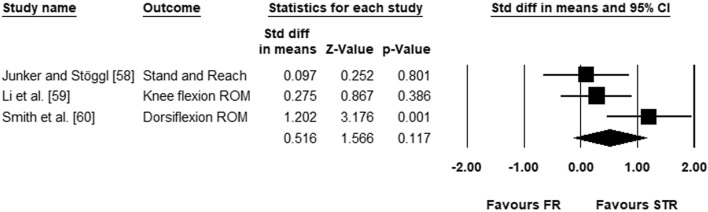
“Apart from the two already included studies in the main analysis [55, 56], we have also found a further study in our systematic search [57] where the effects of foam rolling with either static stretching [56, 57], or PNF stretching [58] were compared.”
Simpson, C. L., Kim, B. D. H., Bourcet, M. R., Jones, G. R., & Jakobi, J. M. (2017) · Scandinavian Journal of Medicine & Science in Sports · doi:10.1111/sms.12822 · Cited by 102 · cited 1×
“Stretch-induced musculotendinous changes with the stretched limb can include an increase in muscle compliance [49, 50], viscoelastic tissue changes [51], and muscle architectural adaptations [52, 53].”
Neuromuscular factors influencing the maximum stretch limit of the human plantar flexors
Blazevich, A. J., Cannavan, D., Waugh, C. M., Fath, F., Miller, S. C., & Kay, A. D. (2012) · Journal of Applied Physiology · doi:10.1152/japplphysiol.00882.2012 · Cited by 98
Effect of PNF stretching training on the properties of human muscle and tendon structures
Konrad, A., Gad, M., & Tilp, M. (2015) · Scandinavian Journal of Medicine & Science in Sports · doi:10.1111/sms.12228 · Cited by 91
Self-citationJunker, D. H., & STÖGGL, T. L. (2019) · PubMed Central · Cited by 88
Nakamura, M., Onuma, R., Kiyono, R., Yasaka, K., Sato, S., Yahata, K., Fukaya, T., & Konrad, A. (2021) · Journal of Sports Science and Medicine · doi:10.52082/jssm.2021.62 · Cited by 85
Self-citationFoam Rolling Prescription: A Clinical Commentary
Behm, D. G., Alizadeh, S., Anvar, S. H., Mahmoud, M. M. I., Ramsay, E., Hanlon, C., & Cheatham, S. W. (2020) · The Journal of Strength and Conditioning Research · doi:10.1519/jsc.0000000000003765 · Cited by 82 · cited 1×
“[11] in their clinical commentary, suggested that the optimal frequency for an acute increase in ROM is likely 2–4 s of rolling time for a single roll in one direction over the length of a body part.”
Self-citationFlexibility is not Related to Stretch-Induced Deficits in Force or Power.
Behm, D. G., Bradbury, E. E., Haynes, A. T., Hodder, J. N., Leonard, A. M., & Paddock, N. (2006) · Europe PMC (PubMed Central) · Cited by 81
Self-citationKonrad, A., Reiner, M. M., Thaller, S., & Tilp, M. (2019) · European Journal of Sport Science · doi:10.1080/17461391.2019.1580319 · Cited by 78
Self-citationReiner, M. M., Glashüttner, C., Bernsteiner, D., Tilp, M., Guilhem, G., Morales‐Artacho, A. J., & Konrad, A. (2021) · European Journal of Applied Physiology · doi:10.1007/s00421-021-04619-2 · Cited by 75 · cited 1×
“Since a single foam-rolling treatment with an additional vibration stimulus has the potential to induce positive results in terms of ROM [12, 62] and performance parameters [17, 63], future studies on the long-term effects of foam rolling should take vibration foam rolling into account.”
Self-citationBehm, D. G. (2018) · doi:10.4324/9781315110745 · Cited by 73
Self-citationGuillot, A., Kerautret, Y., Queyrel, F., Schobb, W., & Rienzo, F. D. (2019) · Europe PMC (PubMed Central) · Cited by 71
Chronic effects of muscle and nerve-directed stretching on tissue mechanics
Andrade, R. J., Freitas, S. R., Hug, F., Le Sant, G., Lacourpaille, L., Gross, R., Quillard, J.-B., McNair, P. J., & Nordez, A. (2020) · Journal of Applied Physiology · doi:10.1152/japplphysiol.00239.2019 · Cited by 70
Panidi, I., Bogdanis, G. C., Terzis, G., Donti, A., Konrad, A., Gaspari, V., & Donti, O. (2021) · Frontiers in Physiology · doi:10.3389/fphys.2021.701338 · Cited by 69 · cited 2×
“According to recent unilateral study designs with longerterm static stretching training interventions, an increase in joint ROM of the contralateral leg has been observed following 12 and 24 weeks of training [24, 25].”
Self-citationEffects of ballistic stretching training on the properties of human muscle and tendon structures
Konrad, A., & Tilp, M. (2014) · Journal of Applied Physiology · doi:10.1152/japplphysiol.00195.2014 · Cited by 66
Self-citationBehm, D. G., Alizadeh, S., Anvar, S. H., Drury, B., Granacher, U., & Moran, J. (2021) · Sports Medicine · doi:10.1007/s40279-020-01422-5 · Cited by 66 · cited 1×
“I2 statistics were calculated to assess the heterogeneity among the included studies, and thresholds of 25%, 50%, and 75% were defined as having a low, moderate, and high level of heterogeneity, respectively [32, 33].”
Self-citationCalleja, M., & Connell, D. (2010) · Seminars in Musculoskeletal Radiology · doi:10.1055/s-0030-1254520 · Cited by 65
Konrad, A., Tilp, M., & Nakamura, M. (2021) · Frontiers in Physiology · doi:10.3389/fphys.2021.720531 · Cited by 62 · cited 3×
“Since a single foam-rolling treatment with an additional vibration stimulus has the potential to induce positive results in terms of ROM [12, 62] and performance parameters [17, 63], future studies on the long-term effects of foam rolling should take vibration foam rolling into account.”
Self-citationMoran, J., Ramírez‐Campillo, R., Liew, B. X. W., Chaabène, H., Behm, D. G., García‐Hermoso, A., Izquierdo, M., & Granacher, U. (2020) · Sports Medicine · doi:10.1007/s40279-020-01367-9 · Cited by 59 · cited 1×
“92), indicating a low risk of bias [34, 35].”
Self-citationLongo, S., Cè, E., Bisconti, A. V., Rampichini, S., Doria, C., Borrelli, M., Limonta, E., Coratella, G., & Esposito, F. (2021) · European Journal of Applied Physiology · doi:10.1007/s00421-021-04654-z · Cited by 58
Konrad, A., Nakamura, M., Bernsteiner, D., & Tilp, M. (2021) · Journal of Sports Science and Medicine · doi:10.52082/jssm.2021.535 · Cited by 57
Self-citationKillen, B. S., Zelizney, K. L., & Ye, X. (2019) · Journal of Sport Rehabilitation · doi:10.1123/jsr.2017-0356 · Cited by 54 · cited 1×
“Although, there are studies reporting contralateral effects following a single bout of foam rolling [47, 48], to date it is not known if long-term foam-rolling interventions can induce crossover effects.”
Altered Triceps Surae Muscle–Tendon Unit Properties after 6 Months of Static Stretching
MOLTUBAKK, M. M., VILLARS, F. O., MAGULAS, M. M., MAGNUSSON, S. P., SEYNNES, O. R., & BOJSEN-MØLLER, J. (2021) · Medicine & Science in Sports & Exercise · doi:10.1249/mss.0000000000002671 · Cited by 47 · cited 1×
“According to recent unilateral study designs with longerterm static stretching training interventions, an increase in joint ROM of the contralateral leg has been observed following 12 and 24 weeks of training [24, 25].”
Effects of Static Stretching and Foam Rolling on Ankle Dorsiflexion Range of Motion
Smith, J., WASHELL, B. R., AINI, M. F., BROWN, S., & Hall, M. (2019) · Medicine & Science in Sports & Exercise · doi:10.1249/mss.0000000000001964 · Cited by 43 · cited 2×
“Apart from the two already included studies in the main analysis [55, 56], we have also found a further study in our systematic search [57] where the effects of foam rolling with either static stretching [56, 57], or PNF stretching [58] were compared.”
Nakamura, M., Yahata, K., Sato, S., Kiyono, R., Yoshida, R., Fukaya, T., Nunes, J. P., & Konrad, A. (2021) · Frontiers in Physiology · doi:10.3389/fphys.2021.656579 · Cited by 40
Self-citationNakamura, M., Sato, S., Kiyono, R., Yoshida, R., Yasaka, K., Yahata, K., & Konrad, A. (2021) · The Journal of Strength and Conditioning Research · doi:10.1519/jsc.0000000000004123 · Cited by 40
Self-citationEffects of 5-Week Foam Rolling Intervention on Range of Motion and Muscle Stiffness
Kiyono, R., Onuma, R., Yasaka, K., Sato, S., Yahata, K., & Nakamura, M. (2020) · The Journal of Strength and Conditioning Research · doi:10.1519/jsc.0000000000003757 · Cited by 39
Self-citationNakamura, M., Konrad, A., Kiyono, R., Sato, S., Yahata, K., Yoshida, R., Yasaka, K., Murakami, Y., Sanuki, F., & Wilke, J. (2021) · Frontiers in Physiology · doi:10.3389/fphys.2021.702042 · Cited by 39 · cited 1×
“Although, there are studies reporting contralateral effects following a single bout of foam rolling [47, 48], to date it is not known if long-term foam-rolling interventions can induce crossover effects.”
Self-citationFoam Rollers Show No Increase in the Flexibility of the Hamstring Muscle Group
Miller, J. K., Rockey, A. M., & Doberstein, S. T. (2006) · Cited by 35
Notes on visceral adhesions as fascial pathology
Hedley, G. (2010) · Journal of Bodywork and Movement Therapies · doi:10.1016/j.jbmt.2009.10.005 · Cited by 33
Hodgson, D. D., Lima, C. D., Low, J. L., & Behm, D. G. (2018) · International Journal of Sports Physical Therapy · doi:10.26603/ijspt20180835 · Cited by 32
Self-citationKonrad, A., & Tilp, M. (2020) · Europe PMC (PubMed Central) · Cited by 32
Self-citationEffects of Self-Myofascial Release on Shoulder Function and Perception in Adolescent Tennis Players
Gal, J. L., Begon, M., Gillet, B., & Rogowski, I. (2017) · Journal of Sport Rehabilitation · doi:10.1123/jsr.2016-0240 · Cited by 31
The acute time course of muscle and tendon tissue changes following one minute of static stretching
Konrad, A., & Tilp, M. (2020) · Current Issues in Sport Science (CISS) · doi:10.15203/ciss_2020.003 · Cited by 22
Self-citationKonrad, A., Reiner, M. M., Bernsteiner, D., Glashüttner, C., Thaller, S., & Tilp, M. (2021) · International Journal of Environmental Research and Public Health · doi:10.3390/ijerph18052510 · Cited by 22
Self-citationBoguszewski, D., Falkowska, M., Adamczyk, J. G., & Białoszewski, D. (2017) · Biomedical Human Kinetics · doi:10.1515/bhk-2017-0012 · Cited by 13
Sandrey, M. A., Lancellotti, C., & Hester, C. (2020) · Journal of Sport Rehabilitation · doi:10.1123/jsr.2018-0494 · Cited by 12
Li, L., Huang, F., Huang, Q., Liu, L., Opoku-Antwi, E., & Nguyen, T.-T. (2020) · PubMed · Cited by 5
Research works printed but not linked: 2
- 36. Starrett K, Cordoza G. Becoming a supple leopard 2nd edition: the ultimate guide to resolving pain, preventing injury, and optimizing athletic performance. New York: Victory Belt Publishing; 2015. https:// www. amazon. de/ Becom ing-Supple-Leopa rd-2nd-Perfo rmance/ dp/ 16286 00837
- 38. Stovern O, Henning C, Porcari JP, Doberstein S, Emineth K, Arney BE, et al. The effect of training with a foam roller on ankle and knee range of motion, hamstring flexibility, agility, and verti- cal jump height. ijrep.org. 2019;15:39-49. https:// ijrep. org/ wp- conte nt/ uploa ds/ lana-downl oads/ 2020/ 01/ stove rn. et_. al_. fall_. 2019. pdf
Cited by
Resistance Training Induces Improvements in Range of Motion: A Systematic Review and Meta-Analysis
Alizadeh, S., Daneshjoo, A., Zahiri, A., Anvar, S. H., Goudini, R., Hicks, J. P., Konrad, A., & Behm, D. G. (2023) · Sports Medicine · doi:10.1007/s40279-022-01804-x · Cited by 99
“Furthermore, any significant effects of RT on ROM may be moderated by variables such as the sex and trained state of the individual or the frequency and duration [27, 28] of RT.”
BackgroundSelf-citationBehm, D. G., Alizadeh, S., Daneshjoo, A., Anvar, S. H., Graham, A. P., Zahiri, A., Goudini, R., Edwards, C., Culleton, R., Scharf, C., et al. (2023) · Sports Medicine - Open · doi:10.1186/s40798-023-00652-x · Cited by 115
Self-citationTakeuchi, K., Nakamura, M., Fukaya, T., Konrad, A., & Mizuno, T. (2023) · Journal of Sports Science and Medicine · doi:10.52082/jssm.2023.465 · Cited by 73
Self-citationLong‐term static stretching can decrease muscle stiffness: A systematic review and meta‐analysis
Takeuchi, K., Nakamura, M., Konrad, A., & Mizuno, T. (2023) · Scandinavian Journal of Medicine and Science in Sports · doi:10.1111/sms.14402 · Cited by 69
Self-citationWarneke, K., Thomas, E., Blazevich, A. J., Afonso, J. R., Behm, D. G., Marchetti, P. H., Trajano, G. S., Nakamura, M., Ayala, F., Longo, S., et al. (2025) · Journal of sport and health science/Journal of Sport and Health Science · doi:10.1016/j.jshs.2025.101067 · Cited by 49
“52 (cid:1) 54 Additionally, foam rolling has been shown to induce comparably large ROM increases, 55,56 while other interventions such as eccentric resistance training are also possible.”
Self-citation
Metadata
- Authors
- Konrad, A., Nakamura, M., Tilp, M., Donti, O., & Behm, D. G.
- Affiliations
- Memorial University of Newfoundland (CA)
- Niigata University of Health and Welfare (JP)
- University of Graz (AT)
- Corresponding author
- Konrad, Andreas
- Venue
- Sports Medicine
- Published
- 2022-05-26
- Volume
- 52
- Issue
- 10
- Pages
- 2523-2535
- ISSN
- 0112-1642 (ISSN-L)
- 1179-2035
- PMC
- PMC9474417
- OpenAlex
- W4281560999
- Semantic Scholar
- 96de8a306a3005018f8600059352bc5a6ac5cf3d
- Cited by
- 72
- References
- 67
- Citations by year
- 2026: 12 · 2025: 17 · 2024: 21 · 2023: 19 · 2022: 3
- FWCI
- 2.15
- Type
- journal article
- Language
- en
- Open access
- hybrid
- doi.org
- Licence
- cc-by
- creativecommons.org/licenses/by/4.0 (tdm)
- creativecommons.org/licenses/by/4.0 (vor)
- Locations
- Sports Medicine (publishedVersion, cc-by)
- PubMed Central (publishedVersion, cc-by)
- PubMed (publishedVersion)
- Funders
- Austrian Science Fund (J 4484)
- Topics
- Health Sciences › Health Professions › Physical Therapy, Sports Therapy and Rehabilitation › Myofascial pain diagnosis and treatment
- Health Sciences › Medicine › Orthopedics and Sports Medicine › Sports Performance and Training
- Physical Sciences › Engineering › Biomedical Engineering › Lower Extremity Biomechanics and Pathologies
- Keywords
- foam rolling, range of motion, joint flexibility, training duration, hamstrings, quadriceps, triceps surae, ankle dorsiflexion, healthy volunteers
- MeSH terms
- Hamstring Muscles, Adult, Humans, Range of Motion, Articular, Muscle, Skeletal, Quadriceps Muscle, Young Adult
About these checks
Registry, retraction, Cites and statistics results are computed, not judged, with one exception: a printed reference that no index lists is read once by a model before it counts as a citation error. Claims are extracted by a model and kept only when their quote appears verbatim in the text; each cited source is then checked, with a model’s help, for whether it says what the claim relies on. Those verdicts can be wrong — read the claim’s quote and the cited source before relying on one.
Statistics and arithmetic are recomputed, not judged.
Confidence bands are shown only for fields calibrated on our annotated test set. None is calibrated yet, so no band is shown.
What counts as a claim ›How we measure confidence ›How we check this ›
Are you an author, or do you see a problem with this page? Request a review
Data sources
Bibliographic data: Semantic Scholar, OpenAlex, Crossref.
Contains information from the Semantic Scholar Academic Graph Datasets, made available under the ODC Attribution License (ODC-BY 1.0).
Semantic Scholar’s data is described in: Kinney, R., et al. (2023). The Semantic Scholar Open Data Platform. arXiv:2301.10140.
