

Influence of resistance training proximity-to-failure on skeletal muscle hypertrophy: a systematic review with meta-analysis.
Open accessThe DOI matches its Crossref record; 41 of the 41 references it cites were found in a registry or an index.
Abstract
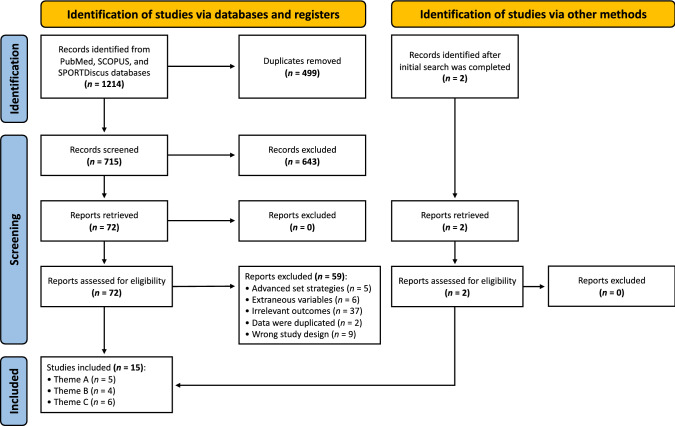
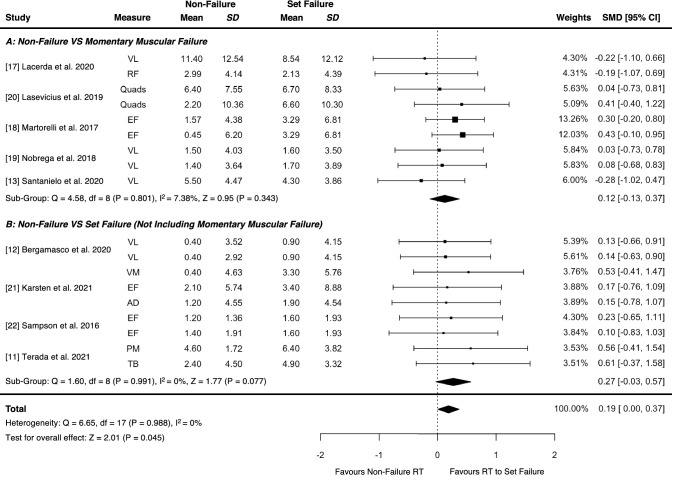
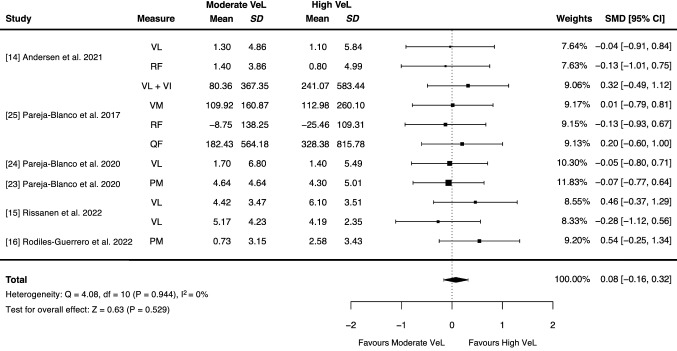
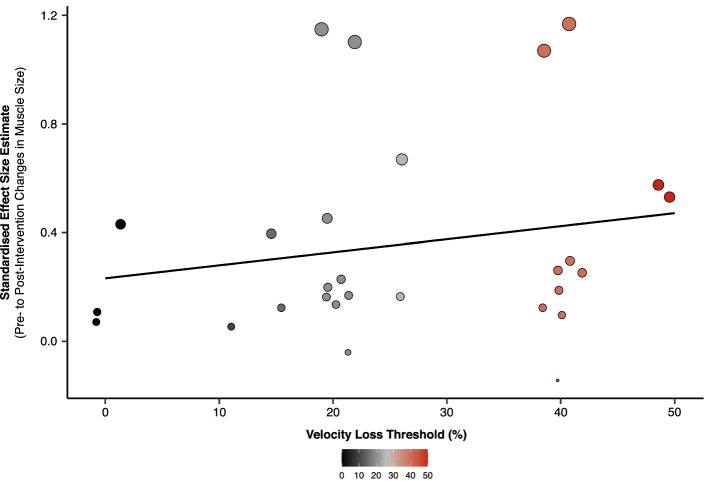
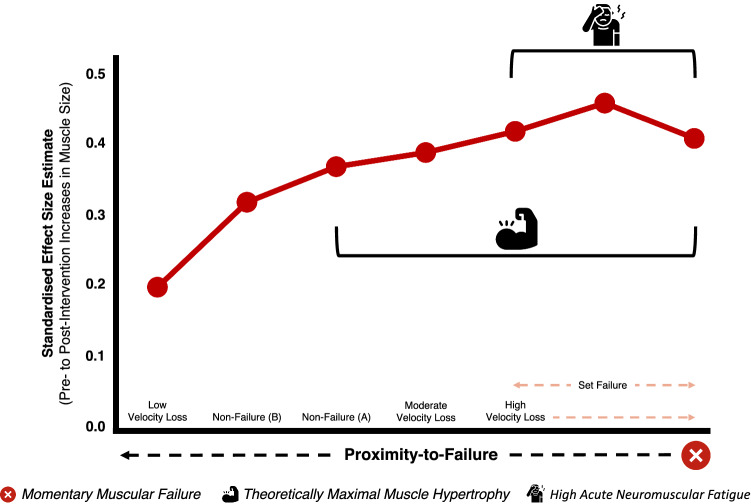
BACKGROUND AND OBJECTIVE: This systematic review with meta-analysis investigated the influence of resistance training proximity-to-failure on muscle hypertrophy. METHODS: Literature searches in the PubMed, SCOPUS and SPORTDiscus databases identified a total of 15 studies that measured muscle hypertrophy (in healthy adults of any age and resistance training experience) and compared resistance training performed to: (A) momentary muscular failure versus non-failure; (B) set failure (defined as anything other than momentary muscular failure) versus non-failure; or (C) different velocity loss thresholds. RESULTS: There was a trivial advantage for resistance training performed to set failure versus non-failure for muscle hypertrophy in studies applying any definition of set failure [effect size=0.19 (95% confidence interval 0.00, 0.37), p=0.045], with no moderating effect of volume load (p=0.884) or relative load (p=0.525). Given the variability in set failure definitions applied across studies, sub-group analyses were conducted and found no advantage for either resistance training performed to momentary muscular failure versus non-failure for muscle hypertrophy [effect size=0.12 (95% confidence interval -0.13, 0.37), p=0.343], or for resistance training performed to high (>25%) versus moderate (20-25%) velocity loss thresholds [effect size=0.08 (95% confidence interval -0.16, 0.32), p=0.529]. CONCLUSION: Overall, our main findings suggest that (i) there is no evidence to support that resistance training performed to momentary muscular failure is superior to non-failure resistance training for muscle hypertrophy and (ii) higher velocity loss thresholds, and theoretically closer proximities-to-failure do not always elicit greater muscle hypertrophy. As such, these results provide evidence for a potential non-linear relationship between proximity-to-failure and muscle hypertrophy.
Overview
The claims and statistics of this paper haven’t been checked yet.
Free: it reads the open-access text and checks the first 5 claims that cite a source we can check. Create a free account to check every claim.
Integrity signals
Registry
Cites
Statistics
Figures
Verification
Claims the paper makes
The claims and statistics of this paper haven’t been checked yet.
Free: it reads the open-access text and checks the first 5 claims that cite a source we can check. Create a free account to check every claim.
Claims other papers make about this one
Each is checked against this paper’s own text: does it say what the citing paper says it does?
In the citing paper
“Sufficient effort (assessed using various scales) can be accomplished by completing sets with various RTx and completion of “near-failure” or a target of 2–3 repetitions in reserve (RIR) (24,97–99,128,137,188–190).”
Self-check
Percentages, sums and reported differences re-computed from the paper’s own numbers.
The self-check needs the paper’s full text.
Citations
Cites
Preferred Reporting Items for Systematic Reviews and Meta-Analyses: the PRISMA statement
Moher, D., Liberati, A., Tetzlaff, J., Altman, D. G., & for the PRISMA Group (2009) · BMJ · doi:10.1136/bmj.b2535 · Cited by 83,823
PRISMA Extension for Scoping Reviews (PRISMA-ScR): Checklist and Explanation
Tricco, A. C., Lillie, E., Zarin, W., O'Brien, K. K., Colquhoun, H., Levac, D., Moher, D., Peters, M. D. J., Horsley, T., Weeks, L., et al. (2018) · Annals of Internal Medicine · doi:10.7326/m18-0850 · Cited by 43,565 · cited 1×
“As described in our previous scoping review [3], the literature search followed the PRISMA-ScR (Preferred Reporting Items for Systematic Reviews and Meta-Analyses for Scoping Reviews) guidelines [27].”
MethodConducting Meta-Analyses in R with the metafor Package
Viechtbauer, W. (2010) · Journal of Statistical Software · doi:10.18637/jss.v036.i03 · Cited by 20,464
Preferred Reporting Items for Systematic Reviews and Meta-Analyses: The PRISMA Statement
Moher, D., Liberati, A., Tetzlaff, J., & Altman, D. G. (2009) · Journal of Clinical Epidemiology · doi:10.1016/j.jclinepi.2009.06.005 · Cited by 19,575
Skeletal muscle fatigue: cellular mechanisms
Allen, D. G., Lamb, G. D., & Westerblad, H. (2008) · Physiological Reviews · doi:10.1152/physrev.00015.2007 · Cited by 2,495 · cited 1×
“For example, in a given set, type II muscle fibres are likely exposed to higher levels of mechanical tension as proximity-to-failure nears, but high levels of acute neuromuscular fatigue may impair neural drive (via ‘central’ mechanisms [37, 38]) and/or excitation–contraction coupling (via ‘peripheral’ mechanisms [39,…”
BackgroundBasics of meta‐analysis: I 2 is not an absolute measure of heterogeneity
Borenstein, M., Higgins, J. P. T., Hedges, L. V., & Rothstein, H. R. (2017) · Research Synthesis Methods · doi:10.1002/jrsm.1230 · Cited by 1,848
Molecular and cellular adaptation of muscle in response to exercise: perspectives of various models
Booth, F. W., & Thomason, D. B. (1991) · Physiological Reviews · doi:10.1152/physrev.1991.71.2.541 · Cited by 714 · cited 1×
“Resistance training (RT) promotes skeletal muscle hypertrophy, a physiological adaptation involving the structural remodelling of muscle tissue that leads to an increase in muscle fibre, and ultimately, whole-muscle cross-sectional area [1].”
BackgroundPareja‐Blanco, F., Rodríguez‐Rosell, D., Sánchez‐Medina, L., Sanchis‐Moysi, J., Dorado, C., Mora‐Custodio, R., Yáñez‐García, J. M., Morales‐Alamo, D., Pérez‐Suárez, I., Calbet, J. A. L., et al. (2017) · Scandinavian Journal of Medicine & Science in Sports · doi:10.1111/sms.12678 · Cited by 505 · cited 1×
“For example, one study found that participants who performed the squat exercise until 40% velocity loss reached momentary muscular failure ~ 56% of the time [25], suggesting that the occurrence of momentary muscular failure likely varies between high velocity loss conditions across studies and contributes to the varia…”
BackgroundSmart, N. A., Waldron, M., Ismail, H., Giallauria, F., Vigorito, C., Cornelissen, V., & Dieberg, G. (2015) · International Journal of Evidence-Based Healthcare · doi:10.1097/xeb.0000000000000020 · Cited by 499
Zourdos, M. C., Klemp, A., Dolan, C., Quiles, J. M., Schau, K. A., Jo, E., Helms, E., Esgro, B., Duncan, S., Garcia Merino, S., et al. (2016) · Journal of Strength and Conditioning Research · doi:10.1519/jsc.0000000000001049 · Cited by 418 · cited 1×
“Differences in CI width between loading conditions was likely owing to the variability in proximity-to-failure achieved amongst both set failure and non-failure conditions; particularly during lower load RT, as individuals are more likely to underestimate their proximity-to-failure when performing RT with lower loads…”
BackgroundSelf-citation
Research works printed but not linked: 1
- Carpinelli RN The size principle and a critical analysis of the unsubstantiated heavier-is-better recommendation for resistance training J Exerc Sci Fit 2008 6 2 67 86
Cited by
Exercise Metabolism and Adaptation in Skeletal Muscle
Smith, J. A. B., Murach, K. A., Dyar, K. A., & Zierath, J. R. (2023) · Nature Reviews Molecular Cell Biology · doi:10.1038/s41580-023-00606-x · Cited by 342
Robinson, Z. P., Pelland, J. C., Remmert, J. F., Refalo, M. C., Jukic, I., Steele, J., & Zourdos, M. C. (2024) · Sports Medicine · doi:10.1007/s40279-024-02069-2 · Cited by 63
Self-citationNuzzo, J. L., Pinto, M. D., Kirk, B. J. C., & Nosaka, K. (2024) · Sports Medicine · doi:10.1007/s40279-024-02009-0 · Cited by 56
“We acknowledge that greater gains in muscle size and strength are possible with higher exercise volumes and intensities [72, 133, 134].”
BackgroundCURRIER, B. S., D’SOUZA, A. C., SINGH, M. A. F., LOWISZ, C. V., RAWSON, E. S., SCHOENFELD, B. J., SMITH-RYAN, A. E., STEEN, J. P., THOMAS, G. A., TRIPLETT, N. T., et al. (2026) · Medicine & Science in Sports & Exercise · doi:10.1249/mss.0000000000003897 · Cited by 105
Refalo, M. C., Helms, E. R., Hamilton, D. L., & Fyfe, J. J. (2023) · Sports Medicine - Open · doi:10.1186/s40798-023-00554-y · Cited by 48
“energy depletion and intramuscular perturbations in metabolite concentration and calcium (Ca+2) kinetics that impair cross-bridge formation) mechanisms underpinning the neuromuscular fatigue observed [47, 48], which may suppress (i) force production by type II muscle fibres and their exposure to mechanical tension dur…”
BackgroundSelf-citationDynamic and Static Workout of In Vitro Skeletal Muscle Tissue through a Weight Training Device
Jo, B., Motoi, K., Morimoto, Y., & Takeuchi, S. (2024) · Advanced Healthcare Materials · doi:10.1002/adhm.202401844 · Cited by 33
Wu, T., Chen, Q., Lin, X., Xu, M., Chen, X., Luo, C.-J., Zhuang, Y., Wei, Y.-Q., Wu, J.-B., Xiong, J., et al. (2023) · Critical Care · doi:10.1186/s13054-023-04698-x · Cited by 31
“RT is another non-pharmacological intervention that has been studied extensively in a variety of healthy [14] and clinical populations [15] to directly or indirectly support muscle protein turnover [16].”
BackgroundFlewwelling, L. D., Hannaian, S. J., Cao, V., Chaillou, T., Churchward‐Venne, T. A., & Cheng, A. J. (2024) · American Journal of Physiology-Cell Physiology · doi:10.1152/ajpcell.00266.2024 · Cited by 27
Bersiner, K., Park, S., Schaaf, K., Yang, W., Theis, C., Jacko, D., & Gehlert, S. (2023) · Physical Activity and Nutrition · doi:10.20463/pan.2023.0021 · Cited by 23
Ruple, B. A., Plotkin, D. L., Smith, M. A., Godwin, J. S., Sexton, C. L., McIntosh, M. C., Kontos, N. J., Beausejour, J. P., Pagan, J. I., Rodriguez, J. P., et al. (2023) · Physiological Reports · doi:10.14814/phy2.15679 · Cited by 28
The Importance of Recovery in Resistance Training Microcycle Construction
Sousa, C. A., Zourdos, M. C., Storey, A. G., & Helms, E. R. (2024) · Journal of Human Kinetics · doi:10.5114/jhk/186659 · Cited by 27
Self-citationHelms, E. R., Spence, A., Sousa, C. A., Kreiger, J., Taylor, S., Oranchuk, D. J., Dieter, B. P., & Watkins, C. M. (2023) · Sports Medicine - Open · doi:10.1186/s40798-023-00651-y · Cited by 21
Self-citationRefalo, M. C., Remmert, J. F., Pelland, J. C., Robinson, Z. P., Zourdos, M. C., Hamilton, D. L., Fyfe, J. J., & Helms, E. R. (2023) · The Journal of Strength and Conditioning Research · doi:10.1519/jsc.0000000000004653 · Cited by 24
“Importantly, the proximity to failure in which an RT set is terminated may influence long-term RT outcomes such as strength development (5) and muscle hypertrophy (28) along with the neuromuscular fatigue incurred from RT (27,33).”
BackgroundSelf-citationSinger, A., Wolf, M., Generoso, L., Arias, E., Delcastillo, K., Echevarria, E., Martinez, A., Androulakis Korakakis, P., Refalo, M. C., Swinton, P. A., et al. (2024) · Frontiers in Sports and Active Living · doi:10.3389/fspor.2024.1429789 · Cited by 14
Self-citationHERMANN, T., MOHAN, A. E., ENES, A., SAPUPPO, M., PIÑERO, A., ZAMANZADEH, A., ROBERTS, M., COLEMAN, M., KORAKAKIS, P. A., WOLF, M., et al. (2025) · Medicine & Science in Sports & Exercise · doi:10.1249/mss.0000000000003728 · Cited by 12
Self-citationForelli, F., Marine, P., Moiroux-Sahraoui, A., Mazeas, J., Thoelen, M., Swinnen, B., Bizzini, M., van Melick, N., & Rambaud, A. J. M. (2025) · BMJ Open Sport & Exercise Medicine · doi:10.1136/bmjsem-2025-002503 · Cited by 16
“5 43 These results support the conclusions of previous studies, which show that training to failure is likely leading the athlete to perform repetitions which do not bring any benefits in terms of adaptations in strength and muscle volume.”
Knowledge of gym goers on myths and truths in resistance training
Unger, A., Mosgan, C., Wolte, C., Pettauer, S., & Wilke, J. (2025) · Scientific Reports · doi:10.1038/s41598-025-87485-8 · Cited by 10
Xie, Y., Gu, Y., Li, Z., Zhang, L., & Hei, Y. (2025) · Frontiers in Nutrition · doi:10.3389/fnut.2025.1579024 · Cited by 8
“This aligns with previous studies indicating that excessive resistance training intensity does not necessarily result in better muscle gain than moderate-or low-intensity resistance training (119–121).”
What is resistance exercise? A review of current uses and potential ways forward
Lohmann, L. H., Afonso, J. R., Behm, D. G., Siegel, S., Keiner, M., WIRTH, K. J., Blazevich, A. J., Helms, E. R., Spence, A., & Warneke, K. (2026) · European Journal of Applied Physiology · doi:10.1007/s00421-026-06148-2 · Cited by 9
“…(i.e., the level of exhaustion which relates to how far a subject is from the inability to perform further repetitions due to neuromuscular fatigue (Refalo et al. 2022)) seems less important for muscle strength improvements (Robinson et al. 2024), two major points support the idea that high effort…”
Self-citationEffectiveness of exercise on sarcopenia in HIV patients: a systematic review of current literature
SeyedAlinaghi, S., Mehraeen, E., Mirzapour, P., Rahimzadeh, P., Yazdi, A. A., Roozbahani, M. M., Godarzee, H. M., Molla, A., Soltanali, Z., Ghayomzadeh, M., et al. (2025) · AIDS Care · doi:10.1080/09540121.2025.2452528 · Cited by 9
“Recent research has delved into optimizing muscular adaptations from resistance training, focusing on the number of repetitions relative to the repetition maximum (i.e., proximity to muscular failure) within each set (Refalo et al., 2023).”
Effect weight training on muscular hypertrophy: a systematic review
Ihsan, F., Nasrulloh, A., Nugroho, S., & Yuniana, R. (2023) · Pedagogy of Physical Culture and Sports · doi:10.15561/26649837.2023.0601 · Cited by 11
Davis, B. H., Spielmann, G., Johannsen, N. M., Fairchild, V., Allerton, T. D., & Irving, B. A. (2025) · Physiological Reports · doi:10.14814/phy2.70274 · Cited by 6
The acute effects of resistance training on arterial stiffness: A systematic review
Karanasios, E., Ryan‐Stewart, H., & Faulkner, J. (2023) · Journal of Trainology · doi:10.17338/trainology.12.1_5 · Cited by 6
“43 Research has shown that performing repetitions closer to failure augments the amount of muscles fibres recruited 44 , thus increasing the amount of muscle mass involved in the training task.”
Enes, A. A. N., Piñero, A., Hermann, T., Zamanzadeh, A., Hennessy, T., Montenegro, D., Parnell, C., Jia, A., Weitzman, T., Wolf, M., et al. (2025) · The Journal of Strength and Conditioning Research · doi:10.1519/jsc.0000000000005302 · Cited by 3
Strey, B. M., Irigoyen, A., McMahon, G. E., & Pinto, R. S. (2026) · Sport Sciences for Health · doi:10.1007/s11332-025-01586-5 · Cited by 6
Karanasios, E., Hannah, S., Ryan‐Stewart, H., & Faulkner, J. (2025) · Physiological Reports · doi:10.14814/phy2.70196 · Cited by 3
Martikainen, O., Niiranen, H., Rytkönen, T., Schoenfeld, B. J., Ahtiainen, J. P., & Hulmi, J. J. (2025) · Journal of Science in Sport and Exercise · doi:10.1007/s42978-025-00338-8 · Cited by 4
Progressive Overload Affects the Magnitude of Muscle Hypertrophy
Kassiano, W., Santos-Melo, V., Manske, I., LISBOA, F., Miguel, A., Gomes, F., Prado, A., Stavinski, N. G. D. L., Costa, B., & Cyrino, E. S. (2026) · Medicine & Science in Sports & Exercise · doi:10.1249/mss.0000000000003968 · Cited by 3
Roberts, M. D., Bamman, M. M., Hornberger, T. A., Mackey, A. L., Derave, W., Atherton, P. J., Phillips, S. M., Schoenfeld, B. J., Nader, G. A., Hecksteden, A., et al. (2026) · Journal of Applied Physiology · doi:10.1152/japplphysiol.00289.2026 · Cited by 3
Fonseca, P. A. B., Ide, B. N., Pascher, E., & da Mota, G. R. (2023) · Sports Medicine · doi:10.1007/s40279-023-01946-6 · Cited by 2
“4.1.1 of their article [1], the authors claim that the equalization of VL would be unnecessary, and that set volume would have a more potent effect on muscle hypertrophy.”
InfluentialIzquierdo, J. M., & Marqués-Jiménez, D. (2024) · Cultura Ciencia y Deporte · doi:10.12800/ccd.v19i59.2068 · Cited by 2
Self-knowledge from resistance training
Rolla, G. (2024) · Phenomenology and the Cognitive Sciences · doi:10.1007/s11097-024-10020-z · Cited by 2
Less time, same gains: Comparison of superset vs. traditional set training on muscular adaptations
Burke, R., Hermann, T. M., Piñero, A., Mohan, A., Augustin, F., Sapuppo, M., Coleman, M., Wolf, M., Korakakis, P. A., Swinton, P. A., et al. (2025) · Science & Sports · doi:10.1016/j.scispo.2025.07.011 · Cited by 6
Mitsui, R., 高璿凱, & Morimoto, Y. (2026) · Biofabrication · doi:10.1088/1758-5090/ae6c5e · Cited by 1
Tons of Resistance Exercise Research, But Does it Apply to Highly Trained Athletes?
Fry, A. C., Schechter, E. G. K., Johnson, Q. R., & Cabarkapa, D. (2026) · The Journal of Strength and Conditioning Research · doi:10.1519/jsc.0000000000005603 · Cited by 1
Peinado, P. J. B., & Sotillo, A. A. (2024) · IntechOpen eBooks · doi:10.5772/intechopen.1007051 · Cited by 2
Ramirez, M., Gebauer, M., Mermier, C. M., Little, J. P., Lin, L., Palley, G., Hsiao, Y., Mota, R. I., Mang, Z. A., Amorim, F. T., et al. (2024) · JMIR Research Protocols · doi:10.2196/63598
“More recently, attention has also been directed to the degree of effort during resistance exercise sets as a potentially important variable that can be manipulated to affect adaptative outcomes [27].”
BackgroundAkgül, M. Ş., Uysal, H. Ş., Keskin, N. K., Çetin, T., Başdemirci, M., Akgül, M. N., Yıldız, Z., ÇİFTÇİ, E., & Soslu, R. (2025) · Medicina · doi:10.3390/medicina61050804 · Cited by 3
“…exhaustion are the most valid descriptor of volume [18] and report comparable hypertrophic gains with both high-load and low-load resistance training protocols to voluntary exhaustion [13,19], the aforementioned studies did not utilize a voluntary exhaustion training protocol with BFR.”
Chernozub, A., Чернозуб, А. А., Hlukhov, I., Drobot, K., Synytsia, A., Rymyk, R., Pyatnychuk, H., Leshchak, O., Malanyuk, L., & Potop, V. (2024) · Journal of Physical Education and Sport · doi:10.7752/jpes.2024.02038 · Cited by 1
Ardi, N. F., Emilia, E., Rosmiati, R., Rukmana, E., & Nusri, A. (2023) · Journal of Sport Science and Fitness · doi:10.15294/jssf.v9i1.72516
Is The Maximal Effort Method Killing Our Athletes? What Would Coaches Say?
El-gazzar, H. (2024) · Journal of Applied Sports Science · doi:10.21608/jass.2024.272411.1103
Ruiz‐Alias, S. A., Ramírez‐Campillo, R., Quidel-Catrilelbún, M. E. L., García‐Pinillos, F., & Pérez‐Castilla, A. (2024) · The Journal of Strength and Conditioning Research · doi:10.1519/jsc.0000000000004805 · Cited by 1
Ainhagne, M., Martinho, D. V., do Nascimento, M. A., de Salles, B. F., de Oliveira, M. R., dos Santos, L., & Ribeiro, A. S. (2025) · Brazilian Journal of Kinanthropometry and Human Performance · doi:10.1590/1980-0037.2025v27e99657
Grant, W. M., Goods, P. S. R., Wall, B. A., Davids, C. J., Narang, B. J., Debevec, T., & Scott, B. R. (2025) · PubMed · doi:10.1519/jsc.0000000000005190
Campos, P. H. A., Barreto, R. V., Fontanetti, G., da Silva, L. S. L., Gomes, M. M., & de Lima, L. C. R. (2026) · JMIR Research Protocols · doi:10.2196/67537
Enes, A. A. N., Nass, G., Alves, R. C., Mohan, A. E., Piñero, A., Oneda, G., Leonel, D. F., Schoenfeld, B. J., & de Souza, T. P. (2025) · Journal of Human Kinetics · doi:10.5114/jhk/209051 · Cited by 1
“While optimal hypertrophy may be attained by employing high-effort training routines (Refalo et al., 2021, 2023), such a level of effort may influence sRPE responses (Refalo et al., 2023), and indeed the linearity of the sRPE-muscular hypertrophy relationship has not been thoroughly investigated.”
Nettum, V., Mathisen, T. F., Slater, G., Seynnes, O., & Paulsen, G. (2025) · Performance Enhancement & Health · doi:10.1016/j.peh.2025.100404
Wu, T.-T., Chen, Q.-L., 林秀霞, Xu, M.-L., Chen, X.-X., Luo, C.-J., Zhuang, Y.-N., Wei, Y.-Q., 吴静冰, Xiong, J., et al. (2023) · Figshare · doi:10.6084/m9.figshare.24844573
Refalo, M. C., Helms, E. R., Hamilton, D. L., & Fyfe, J. J. (2024) · Figshare · doi:10.6084/m9.figshare.26567261
Self-citationPhysical Activity in People with Hemophilia
Cruz‐Montecinos, C., Joaquin, C., Andersen, L. L., Daffunchio, C., Soto, V., López, M., Pérez‐Alenda, S., Chimeno‐Hernández, A., Stephensen, D., & Núñez-Cortés, R. (2025) · Seminars in Thrombosis and Hemostasis · doi:10.1055/a-2778-9890 · Cited by 3
Programación de la fuerza. Un enfoque científico aplicado al entrenamiento
Ochoa, F. J. C. (2025) · doi:10.61728/ae20257781
Kraft, J. A., Molina, S. L., Russell, W. D., Holtz, M. E., & Green, J. M. (2026) · Research Quarterly for Exercise and Sport · doi:10.1080/02701367.2025.2601155
“This relationship was much lower than the predictive relationships reported for the pull-up (R 2 = 0.88) (Sánchez-Moreno et al., 2020) or the bench press (R 2 = 0.97) and squat (R 2 = 0.93) measured across 50, 60, 70, and 80% 1RM (Refalo et al., 2023).”
InfluentialPareja‐Blanco, F., Sánchez‐Valdepeñas, J., Cornejo‐Daza, P. J., & Rodiles-Guerrero, L. (2026) · Medicine & Science in Sports & Exercise · doi:10.1249/mss.0000000000003988 · Cited by 1
McMahon, G., Morse, C. I., Burden, A., Winwood, K. L., & Onambélé-Pearson, G. L. (2026) · The Journal of Strength and Conditioning Research · doi:10.1519/jsc.0000000000005561 · Cited by 1
Wu, S., Xie, L., Zhao, Z., Zheng, X., Yin, X., Hou, J., Zhou, K., & Tang, P. (2026) · BMC Sports Science Medicine and Rehabilitation · doi:10.1186/s13102-026-01861-z · Cited by 1
“Although previous meta-analyses have examined resistance training performed to failure versus non-failure, most have primarily focused on maximal strength and muscular hypertrophy [30, 36–38].”
Cowley, N., Refalo, M. C., Nicholson, Timmins, R. G., Munteanu, G., & Weakley, J. A. (2026) · Journal of Sports Sciences · doi:10.1080/02640414.2026.2703381 · Cited by 1
“However, a closer proximity-to-failure has also been shown to result in greater neuromuscular fatigue, leading to larger within-and post-session perceptual responses and decrements in performance (Refalo et al., 2022; Vieira et al., 2022).”
Self-citationTENSÃO MECÂNICA E PROXIMIDADE DA FALHA NA HIPERTROFIA MUSCULAR
Reis, J. M. A. D. S., Gadelha, J. G., Júnior, J. J. A. D. S., Reis, J. D. S., & Sampaio, A. N. (2026) · RECIMA21 - Revista Científica Multidisciplinar · doi:10.47820/recima21.v7i8.8686 · Cited by 1
Vasconcelos, T., Ruivo, A., Refalo, M. C., Lucas, G. C., Vasconcelos, P. R., Brito, J. P., Vilaça‐Alves, J., & Oliveira, R. F. S. (2026) · The Journal of Strength and Conditioning Research · doi:10.1519/jsc.0000000000005494
Self-citationVasconcelos, T., Alves, A. R., Refalo, M. C., Lucas, G. C., Vasconcelos, P. R., Brito, J. P., Casanova, F., Vilaça‐Alves, J., & Oliveira, R. F. S. (2026) · Muscles · doi:10.3390/muscles5030061
“These collective limitations underscore the findings from Refalo and colleagues [12], whereby a robust within-subject design with direct (and highly accurate) RIR prediction revealed equivalent hypertrophic outcomes between training to momentary muscular failure and 1 to 2 RIR.”
InfluentialSelf-citationVasconcelos, T., Alves, A. R., Brito, J. P., & Oliveira, R. F. S. (2026) · Applied Sciences · doi:10.3390/app16178724
Serrano, J. M., & Lobo, J. (2026) · Performance Enhancement & Health · doi:10.1016/j.peh.2026.100463
Metadata
- Authors
- Refalo, M. C., Helms, E. R., Trexler, E. T., Hamilton, D. L., & Fyfe, J. J.
- Affiliations
- Deakin University (AU)
- Auckland University of Technology (NZ)
- Corresponding author
- Refalo, Martin C.
- Venue
- Sports Medicine
- Published
- 2022-11-05
- Volume
- 53
- Issue
- 3
- Pages
- 649-665
- ISSN
- 0112-1642 (ISSN-L)
- 1179-2035
- PMC
- PMC9935748
- OpenAlex
- W4308253344
- Cited by
- 61
- References
- 41
- Citations by year
- 2026: 17 · 2025: 18 · 2024: 14 · 2023: 12
- FWCI
- 2.41
- Type
- journal article
- Language
- en
- Open access
- hybrid
- doi.org
- Licence
- cc-by
- creativecommons.org/licenses/by/4.0 (tdm)
- creativecommons.org/licenses/by/4.0 (vor)
- Locations
- Sports Medicine (publishedVersion, cc-by)
- PubMed Central (publishedVersion, cc-by)
- PubMed (publishedVersion)
- Tuwhera (Auckland University of Technology) (submittedVersion, cc-by)
- Funders
- Deakin University
- Topics
- Health Sciences › Medicine › Orthopedics and Sports Medicine › Sports Performance and Training
- Health Sciences › Medicine › Physiology (medical) › Cardiovascular and exercise physiology
- Health Sciences › Nursing › Nutrition and Dietetics › Muscle metabolism and nutrition
- Keywords
- resistance training, muscle hypertrophy, velocity loss threshold, skeletal muscle, training load, nonlinear relationship
- MeSH terms
- Humans, Hypertrophy, Muscle, Skeletal, Muscle Strength, Resistance Training
About these checks
Registry, retraction, Cites and statistics results are computed, not judged, with one exception: a printed reference that no index lists is read once by a model before it counts as a citation error. Claims are extracted by a model and kept only when their quote appears verbatim in the text; each cited source is then checked, with a model’s help, for whether it says what the claim relies on. Those verdicts can be wrong — read the claim’s quote and the cited source before relying on one.
Statistics and arithmetic are recomputed, not judged.
Confidence bands are shown only for fields calibrated on our annotated test set. None is calibrated yet, so no band is shown.
What counts as a claim ›How we measure confidence ›How we check this ›
Are you an author, or do you see a problem with this page? Request a review
Data sources
Bibliographic data: Semantic Scholar, OpenAlex, Crossref.
Contains information from the Semantic Scholar Academic Graph Datasets, made available under the ODC Attribution License (ODC-BY 1.0).
Semantic Scholar’s data is described in: Kinney, R., et al. (2023). The Semantic Scholar Open Data Platform. arXiv:2301.10140.
