

Barriers to Autism Spectrum Disorder Diagnosis for Young Women and Girls: a Systematic Review
Open accessThe DOI matches its Crossref record; 51 of the 51 references it cites were found in a registry or an index; 72 of the 133 sources its claims cite were checked for support.
Abstract
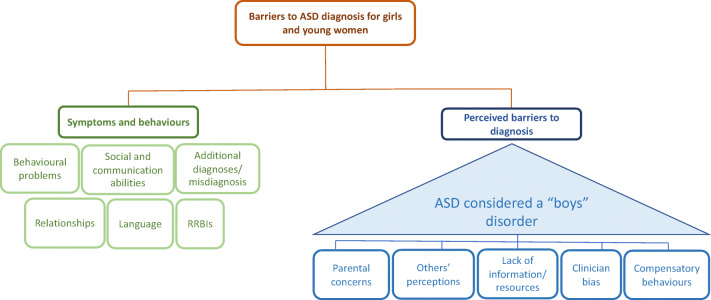
There is increased recognition that women and girls with autism spectrum disorders (ASD) are underserved by the clinical criteria and processes required to receive a diagnosis. This mixed-methods systematic review aimed to identify key barriers to obtaining an ASD diagnosis in girls and young women under 21 years. Six themes were identified that focused on perceived gendered symptoms, namely behavioural problems, social and communication abilities, language, relationships, additional diagnoses/difficulties and restricted and repetitive behaviours and interests. Five themes were identified as (parental) perceived barriers to diagnosis, namely compensatory behaviours, parental concerns, others' perceptions, lack of information/resources and clinician bias. This review highlights the importance of enhancing widespread understanding and recognition of ASD presentation in females across development. PROSPERO Centre for Reviews and Dissemination (ID 2018 CRD42018087235). SUPPLEMENTARY INFORMATION: The online version of this article (10.1007/s40489-020-00225-8) contains supplementary material, which is available to authorized users.
Overview
CoChat Summary
## TL;DR
This mixed-methods systematic review found that girls and young women under 21 may face both symptom-related and perception-related barriers to autism spectrum disorder (ASD) diagnosis. Across 20 included studies, the review highlights camouflaging/compensatory behaviors, gendered expectations, and clinician bias as recurring reasons females may be missed or diagnosed later.
## Key findings
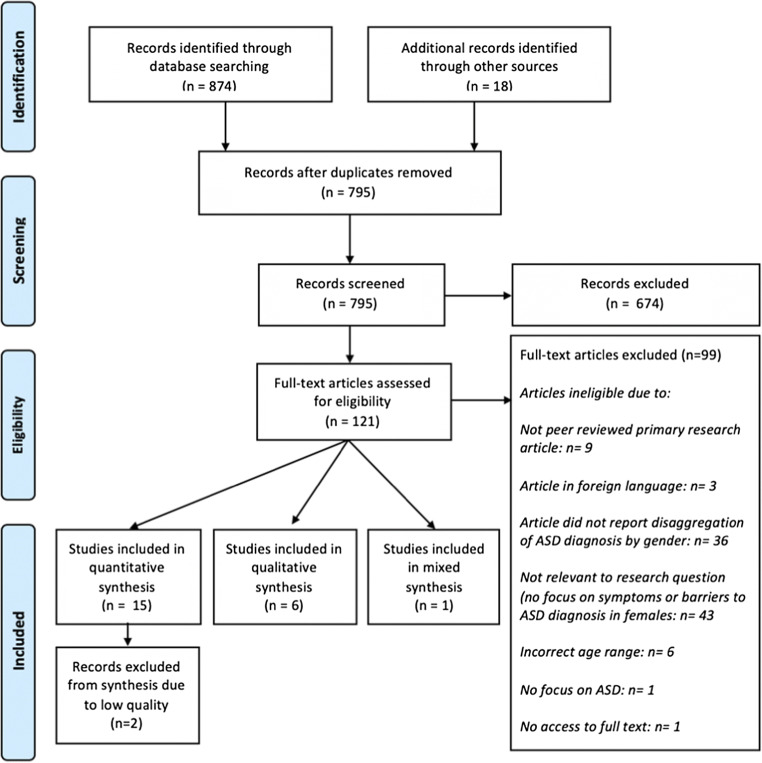
- The review included 13 quantitative, 6 qualitative, and 1 mixed-methods paper, with 23,760 participants in total, including 3,197 females with ASD, 92 parents/family members, 0 teachers, and 3 professional providers.
- It identified 6 symptom/behavior themes as diagnostic barriers: behavioral problems, social and communication abilities, language, relationships, additional diagnoses/difficulties, and restricted/repetitive behaviors and interests (RRBIs).
- It identified 5 perceived-barrier themes: compensatory behaviors, parental concerns, others’ perceptions, lack of information/resources, and clinician bias.
- The review reports that, in several studies, girls needed additional problems or more pronounced traits to be noticed or to receive diagnosis; for example, parent-reported RRBI symptoms were less predictive of ASD diagnosis for females than for males, and verbally able girls had a significantly higher age of diagnosis than boys in one population-based study.
## Methods
- Mixed-methods systematic review of peer-reviewed English-language primary qualitative and/or quantitative studies on barriers to ASD diagnosis in girls and young women aged 21 or younger.
- Searched PsycInfo, EMBASE, Medline, and CINAHL for studies published up to October 2018, plus citation/reference searching and author/expert contact.
- Data were synthesized using narrative review and thematic analysis; study quality was appraised with CASP (or adapted CASP for quantitative studies).
## Limitations
- The paper states that few studies directly addressed the review question; many comparisons of gender-related barriers were a by-product of other study aims, making synthesis difficult.
- The included studies were highly heterogeneous in topic focus, design, and sample type, and many had unequal gender sampling (the discussion notes approximately 80% male samples), limiting power and generalizability.
- The review included only English-language papers, which the authors say may reduce cultural variation in the evidence.
- Evident from the text: some subgroup findings relied on small female samples or single studies (for example, one study with 16 females), so several conclusions are based on limited evidence.
Model-written summary. Check it against the paper before relying on it.
Integrity signals
Registry
Cites
Statistics
Figures
Verification
Claims the paper makes
63 Valid · 1 Not valid · 42 Not checked · 49 Own results and interpretations
Every source the paper cites for this claim was checked and supports it.
In the paper
“The study also included the parent-completed Social Communication Questionnaire (SCQ), on which current communication skills were reported to be significantly better for ASD boys than girls.”
§ Barriers to Autism Spectrum Disorder Diagnosis for Young Women and Girls: a Systematic Review > Results > Social Communication Abilities
What the sources say
- Supportedcites Rynkiewicz et al. 2016 matched to “An investigation of the ‘female camouflage effect’ in autism using a computerized ADOS-2 and a test of sex/gender differences” (2016) source
The Methods state that parents provided SCQ Current and Lifetime information. The Results and discussion report that, based on parental SCQ answers, current communication skills were significantly better for boys with autism than for girls with autism. (LLM, conf=0.94)
plainstates an association- Asserted: passes — The authors put it forward as true.
- Checkable: passes — It can be checked against evidence.
- Load-bearing: unclear — It is unclear whether the paper’s conclusions depend on it.
- Based: passes — The paper gives a reason why it holds.
- Supported
The cited sources support only part of this claim — read each source’s verdict below.
In the paper
“Salomone et al. (2016) found that for verbally able individuals (i.e. those with phrase speech) in a population-based sample, girls had a significantly higher age of diagnosis than boys.”
§ Barriers to Autism Spectrum Disorder Diagnosis for Young Women and Girls: a Systematic Review > Results > Language
What the sources say
- Partly supportedcites Salomone et al. 2016 matched to “Child's verbal ability and gender are associated with age at diagnosis in a sample of young children with ASD in Europe” (2016) sourceExperimental — accuracy not yet measured
The Results report that, among children with complex phrase speech, girls had a significantly higher age at diagnosis than boys (p=.028). However, the Additional information section explicitly says the recruited sample cannot be considered representative of the general population of children with ASD, so calling it population-based is not supported. (LLM, conf=0.91)
plainstates an association- Asserted: passes — The authors put it forward as true.
- Checkable: passes — It can be checked against evidence.
- Load-bearing: passes — The paper’s conclusions depend on it.
- Based: passes — The paper gives a reason why it holds.
- Partly supported
Every source the paper cites for this claim was checked and supports it.
In the paper
“This was also true for low IQ, with girls meeting diagnostic criteria having lower intellectual abilities than those who did not meet the criteria.”
§ Barriers to Autism Spectrum Disorder Diagnosis for Young Women and Girls: a Systematic Review > Results > Behavioural Problems
What the sources say
- Supportedcites Dworzynski et al. 2012 matched to “How Different Are Girls and Boys Above and Below the Diagnostic Threshold for Autism Spectrum Disorders?” (2012) source
The Dichotomous Measures section (Figure 2) reports that diagnosed girls had four to nine times higher odds of falling more than 1.5 standard deviations below the mean on early cognitive-ability measures than high-CAST girls who were not diagnosed. This supports the claim about lower intellectual abilities in the low-IQ analysis. (LLM, conf=0.92)
plainstates an association- Asserted: passes — The authors put it forward as true.
- Checkable: passes — It can be checked against evidence.
- Load-bearing: unclear — It is unclear whether the paper’s conclusions depend on it.
- Based: passes — The paper gives a reason why it holds.
- Supported
Every source the paper cites for this claim was checked and supports it.
In the paper
“Rynkiewicz et al.’s (2016) study included the use of the Faces Test to assess emotion recognition in a clinical sample of 5- to 10-year olds and found that girls with ASD made significantly more mistakes than boys, indicating poorer emotion recognition skills.”
§ Barriers to Autism Spectrum Disorder Diagnosis for Young Women and Girls: a Systematic Review > Results > Social Communication Abilities
What the sources say
- Supportedcites Rynkiewicz et al. 2016 matched to “An investigation of the ‘female camouflage effect’ in autism using a computerized ADOS-2 and a test of sex/gender differences” (2016) source
The Methods describe a clinical sample of children aged 5–10 and identify the Faces Test as a measure of emotion recognition. The Abstract Results explicitly state that girls with autism made significantly more mistakes than boys on that test; the Results and discussion likewise report lower scores for girls. Page numbers are not available in our copy. (LLM, conf=0.94)
hedgedstates an associationn = 16- Asserted: passes — The authors put it forward as true.
- Checkable: passes — It can be checked against evidence.
- Load-bearing: unclear — It is unclear whether the paper’s conclusions depend on it.
- Based: passes — The paper gives a reason why it holds.
- Supported
Every source the paper cites for this claim was checked and supports it.
In the paper
“However, there is increasing evidence that a female autism phenotype may exist.”
§ Barriers to Autism Spectrum Disorder Diagnosis for Young Women and Girls: a Systematic Review > Abstract > Supplementary Information
What the sources say
- Supportedcites Rubenstein et al. 2015 matched to “A Review of the Differences in Developmental, Psychiatric, and Medical Endophenotypes Between Males and Females with Autism Spectrum Disorder” (2015) source
The Discussion (page not available in our copy) reports evidence of sex differences in autism presentation, including repetitive behaviours and intellectual disability. It also calls for further research to understand the female ASD phenotype, consistent with the claim’s cautious wording that such a phenotype may exist. (LLM, conf=0.88)
hedged- Asserted: passes — The authors put it forward as true.
- Checkable: passes — It can be checked against evidence.
- Load-bearing: passes — The paper’s conclusions depend on it.
- Based: passes — The paper gives a reason why it holds.
- Supported
78 more claims · 30 with their cited sources checked
Create a free account to see all 155 claims and every source verdict.
- Probably not a substantial claim. 31
- It may state two separate claims as one. 53
Self-check
Percentages, sums and reported differences re-computed from the paper’s own numbers.
Each contradiction between two passages listed here was confirmed by an independent check.
Rated minor: it would not touch a result — a value no result rests on, a p-value that stays on the same side of the significance level, or a conflict that is clerical, resolved elsewhere in the paper, or outside its own findings.
In the paper
§ Barriers to Autism Spectrum Disorder Diagnosis for Young Women and Girls: a Systematic Review > Results
“A total of 13 quantitative, six qualitative, and one mixed-methods papers were included in this review”
§ Barriers to Autism Spectrum Disorder Diagnosis for Young Women and Girls: a Systematic Review > Discussion
“In total, we synthesised 15 quantitative papers, six qualitative, and one mixed-methods study.”
Citations
Cites
Using thematic analysis in psychology
Braun, V., & Clarke, V. (2006) · Qualitative Research in Psychology · doi:10.1191/1478088706qp063oa · Cited by 194,414
What Is the Male-to-Female Ratio in Autism Spectrum Disorder? A Systematic Review and Meta-Analysis
Loomes, R., Hull, L., & Mandy, W. P. L. (2017) · Journal of the American Academy of Child & Adolescent Psychiatry · doi:10.1016/j.jaac.2017.03.013 · Cited by 2,804
Lord, C., Rutter, M., Goode, S., Heemsbergen, J., Jordan, H., Mawhood, L., & Schopler, E. (1989) · Journal of Autism and Developmental Disorders · doi:10.1007/bf02211841 · Cited by 2,030
Autism Diagnostic Interview-Revised
Rutter, M., LeCouteur, A., & Lord, C. (2016) · PsycTESTS Dataset · doi:10.1037/t18128-000 · Cited by 1,627
Mays, N., Pope, C., & Popay, J. (2005) · Journal of Health Services Research & Policy · doi:10.1258/1355819054308576 · Cited by 1,375 · cited 1×
“…and qualitative studies were synthesised in a narrative review to summarize, explain, and interpret evidence from the included papers; thematic analysis was conducted to draw out themes from the data, as outlined by Mays et al. (2005) on conducting systematic reviews from mixed evidence sources.”
Method“Putting on My Best Normal”: Social Camouflaging in Adults with Autism Spectrum Conditions
Hull, L., Petrides, K. V., Allison, C., Smith, P., Baron-Cohen, S., Lai, M.-C., & Mandy, W. (2017) · Journal of Autism and Developmental Disorders · doi:10.1007/s10803-017-3166-5 · Cited by 1,365
Dworzynski, K., Ronald, A., Bolton, P., & Happé, F. (2012) · Journal of the American Academy of Child & Adolescent Psychiatry · doi:10.1016/j.jaac.2012.05.018 · Cited by 633
Shattuck, P. T., Durkin, M., Maenner, M., Newschaffer, C., Mandell, D. S., Wiggins, L., Lee, L.-C., Rice, C., Giarelli, E., Kirby, R., et al. (2009) · Journal of the American Academy of Child & Adolescent Psychiatry · doi:10.1097/chi.0b013e31819b3848 · Cited by 623 · cited 1×
“There are increasing concerns that autistic females are being missed, diagnosed later than males or misdiagnosed (Giarelli et al. 2010; Holtmann et al. 2007; Loomes et al. 2017; Shattuck et al. 2009).”
BackgroundThe Female Autism Phenotype and Camouflaging: a Narrative Review
Hull, L., Petrides, K. V., & Mandy, W. (2020) · Review Journal of Autism and Developmental Disorders · doi:10.1007/s40489-020-00197-9 · Cited by 614 · cited 1×
“The fact that girls may be better able than boys to compensate for, or adapt to, aspects of ASD characteristics, described as the ‘camouflage’ hypothesis, has been increasingly documented in the literature (e.g. Hull et al. 2020; Milner et al. 2019).”
BackgroundDean, M., Harwood, R., & Kasari, C. (2017) · Autism · doi:10.1177/1362361316671845 · Cited by 566
Research works printed but not linked: 2
- Gould, J., & Ashton-Smith, J. (2011). Missed diagnosis or misdiagnosis? Girls and women on the autism spectrum. Good Autism Practice (GAP), 12(1), 34–41.
- Watson, L. E. (2014). “Living life in the moment”: chronic stress and coping among families of high-functioning adolescent girls with autism spectrum disorder (Doctoral dissertation, Boston College).
Cited by
Items 101–200 of 354
Imjai, N., Promma, W., Visedsun, N., Usman, B., & Aujirapongpan, S. (2024) · International Journal of Information Management Data Insights · doi:10.1016/j.jjimei.2024.100308 · Cited by 22
Hechler, F. C., Tuomainen, O., Weber, N., Fahr, F., Karlek, B., Maroske, M., Misia, M., & Caruana, N. (2025) · Molecular Autism · doi:10.1186/s13229-025-00643-7 · Cited by 12
Autism, ADHD, and Their Traits in Adults with Obesity: A Scoping Review
Makin, L., Meyer, A., Zesch, E., Mondelli, V., & Tchanturia, K. (2025) · Nutrients · doi:10.3390/nu17050787 · Cited by 16
Dialectical Behavior Therapy in Autism
Weiner, L., Bemmouna, D., Costache, M. E., & Martz, É. (2025) · Current Psychiatry Reports · doi:10.1007/s11920-025-01596-7 · Cited by 16
“…specific social factors, including sex-specific socialization practices, elevated rates of sexual abuse (compared to non-autistic women and autistic men), and the negative impact of late ASC diagnosis[15, 64, 66], as ASC clinical diagnosis is still more easily established in men than in women [67].”
Qualitative Analysis of the Experiences and Perspectives of Autistic Speech-Language Pathologists
Oates, M., & Bean, A. (2023) · American Journal of Speech-Language Pathology · doi:10.1044/2023_ajslp-22-00399 · Cited by 12
Bianco, T. D., Estrin, G. L., Tillmann, J., Oakley, B. F. M., Crawley, D., Cáceres, A. S. J., Hayward, H., Potter, M., Mackay, W., Smit, P., et al. (2023) · Autism · doi:10.1177/13623613231200297 · Cited by 13
“…within study populations, it becomes possible to start exploring hypotheses on why people on the autism spectrum from low resource settings gain limited access to support (Eilenberg et al., 2019; Lockwood Estrin et al., 2021) and how this impacts their mental health outcomes (Doherty et al., 2022).”
BackgroundSelf-citationNadrowski, K. (2023) · Journal of Sex & Marital Therapy · doi:10.1080/0092623x.2023.2276149 · Cited by 12
“Mentalization is especially difficult for people in the autism spectrum (White, Hill, Happé, & Frith, 2009), a condition underdiagnosed in females (Lockwood Estrin, Milner, Spain, Happé, & Colvert, 2021).”
BackgroundRyan, L., Beer, H., Thomson, E., Philcox, E., & Kelly, C. A. (2022) · Qeios · doi:10.32388/uah9vu · Cited by 10
Bowers, C., & Widdowson, M. (2023) · International Journal of Transactional Analysis Research & Practice · doi:10.29044/v14i1p32 · Cited by 10
Pritchard-Rowe, E., de Lemos, C., Howard, K., & Gibson, J. L. (2024) · Autism · doi:10.1177/13623613241257601 · Cited by 9
Mamo, W. G., Alhajyaseen, W., Brijs, K., Dirix, H., Vanroelen, G., Hussain, Q., Brijs, T., & Ross, V. (2024) · Transportation Research Part F Traffic Psychology and Behaviour · doi:10.1016/j.trf.2024.07.030 · Cited by 10
Galán-Vera, I. Z., Bello, M. A. R., Sarhani-Robles, A., & Naranjo, N. V. (2025) · Archives of Psychiatric Nursing · doi:10.1016/j.apnu.2025.151864 · Cited by 15
Menstruation and Autism: A Qualitative Systematic Review
Ellis, R., Williams, G., Caemawr, S., Craine, M., Holloway, W., Williams, K., Shaw, S. C. K., & Grant, A. (2025) · Autism in Adulthood · doi:10.1089/aut.2024.0307 · Cited by 10
O’Sharkey, K., Mitra, S., Chow, T., Thompson, L. K., Su, J. G., Cockburn, M., & Ritz, B. R. (2025) · Environmental Health Perspectives · doi:10.1289/ehp15573 · Cited by 13
Nazari, S., Ramos‐Cabo, S., Nalabolu, S. R., Barnes, C. C., Andreason, C., Zahiri, J., Esquivel, A., Arias, S. J., Grzybowski, A., Lombardo, M. V., et al. (2025) · Nature Human Behaviour · doi:10.1038/s41562-025-02132-6 · Cited by 12
“This has also led to concerns about equity in detecting and diagnosing ASD in girls and providing clinical care for girls with ASD 25 .”
Cahalan, S., Mitroff, S. R., Subiaul, F., & Rosenblau, G. (2025) · Personality Neuroscience · doi:10.1017/pen.2025.10002 · Cited by 14
McCrossin, R. (2023) · Children · doi:10.3390/children10020272 · Cited by 9
Guastello, A. D., Lieneman, C. C., Bailey, B., Munson, M. S., Barthle-Herrera, M. A., Higham, M., Druskin, L. R., & McNeil, C. B. (2023) · Frontiers in Psychiatry · doi:10.3389/fpsyt.2023.1072645 · Cited by 8
English, M. C. W., Poulsen, R. E., Maybery, M. T., McAlpine, D., Sowman, P. F., & Pellicano, E. (2024) · doi:10.31234/osf.io/gfaeq · Cited by 9
Teo, T., Koh, H. C., Zambri, N. M., Zaccario, M. L., Sossin, K. M., & Wong, C. M. (2024) · Journal of Racial and Ethnic Health Disparities · doi:10.1007/s40615-024-01957-7 · Cited by 8
“Perhaps certain ethnic groups have different expressions of social skills or are better able to “mask” social skills deficits, as in the same way that research has shown girls tend to be compared to boys, leading to the later identification and diagnosis of autism [38].”
Classification of Autism Spectrum Disorder using CNN & Transfer Learning
Das, S., Chaudhury, P., & Tripathy, H. K. (2024) · International Conference on Advancements in Smart, Secure and Intelligent Computing (ASSIC) · doi:10.1109/assic60049.2024.10507982 · Cited by 7
“Growing worries exist that women with autism are being overlooked, diagnosed later than men, or given the incorrect diagnosis [3].”
BackgroundValidation of the camouflaging autistic traits questionnaire short form (CATQ-SF)
Hull, L., Mandy, W., Belcher, H., & Petrides, K. V. (2024) · Comprehensive Psychiatry · doi:10.1016/j.comppsych.2024.152525 · Cited by 16
Conti, E., Calderoni, S., Guerrera, S., Guzzetta, A., Palermo, G., GIACOMO, A. D., Tancredi, R., Vicari, S., & Turi, M. (2024) · Children · doi:10.3390/children11121474 · Cited by 9
Newbutt, N. A., & Bradley, R. (2024) · Journal of Responsible Technology · doi:10.1016/j.jrt.2024.100102 · Cited by 11
Daily‐life executive functions and bimanual performance in children with unilateral cerebral palsy
Kalkantzi, A., Kleeren, L., Baeyens, D., Decraene, L., Crotti, M., Klingels, K., Campenhout, A. V., Verheyden, G., Ortibus, E., Feys, H., et al. (2025) · Developmental Medicine & Child Neurology · doi:10.1111/dmcn.16297 · Cited by 13
“40,41 Nonetheless, the chart review offered the opportunity of gaining more insights into the population's characteristics, strengthening the outcomes of this study.”
Abu-Ramadan, T. M., Tassone, A. U., Andrzejewski, T. M., Breitenfeldt, K. E., Batista, S. G., & McDonnell, C. G. (2025) · Journal of Autism and Developmental Disorders · doi:10.1007/s10803-025-06986-7 · Cited by 11
Fernández, R. V., Plaza-Sanz, M., Hernández-Layna, C., Verde‐Cagiao, M., Benito-Ruiz, G., & Carvajal, F. (2023) · Frontiers in Psychiatry · doi:10.3389/fpsyt.2023.1088727 · Cited by 11
Scaffei, E., Mazziotti, R. M., Conti, E., Costanzo, V., Calderoni, S., Stoccoro, A., Carmassi, C., Tancredi, R., Baroncelli, L., & Battini, R. (2023) · Brain Sciences · doi:10.3390/brainsci13060951 · Cited by 10
Fong, V. C., McLaughlin, J., Schneider, M., & Bruno, G. (2024) · Research in Autism · doi:10.1016/j.rasd.2023.102314 · Cited by 9
Wu, R., Leow, K. Q., Yu, N., Rafter, C., Rosenbaum, K., Hamilton, A. F. D. C., & White, S. J. (2024) · Scientific Reports · doi:10.1038/s41598-024-55075-9 · Cited by 8
“Together with the finding that females require more inherited factors than males to exhibit autism 103 , BAP mothers might possess some protective factors that mean they display fewer autistic traits than their children, but reserve some autism-like cognitive styles that predispose them to better…”
BackgroundBuffle, P. L., & Naranjo, D. (2021) · Revista Ecuatoriana de Pediatría · doi:10.52011/113 · Cited by 19
Moseley, R. L., Atkinson, C., Surman, R., Greville-Harris, M., May, L., & Vuillier, L. (2023) · Journal of Eating Disorders · doi:10.1186/s40337-023-00746-7 · Cited by 15
Birkeneder, S., Bullen, J. C., McIntyre, N. S., Zajic, M. C., Lerro, L., Solomon, M., Sparapani, N., & Mundy, P. C. (2023) · Journal of Autism and Developmental Disorders · doi:10.1007/s10803-023-06051-1 · Cited by 11
“Neverthe-less, characterization of autism in females is a priority for future research (Estrin et al., 2021; Wood-Downie et al., 2021) and these data are notable because they raise the possibility that the C-JARS may contribute to the study of sex differences in childhood social development in…”
BackgroundMcQuaid, G. A., Ratto, A. B., Jack, A., Khuu, A., Smith, J. V., Duane, S. C., Clawson, A., Lee, N., Verbalis, A. D., Pelphrey, K. A., et al. (2023) · doi:10.31234/osf.io/kc6ax · Cited by 7
Homelessness in autistic women: Defining the research agenda
Estrin, G. L., Aseervatham, V., de Barros, C. M., Chapple, T., Churchard, A., Harper, M., Jones, E. J. H., Mandy, W., Milner, V. L., O’Brien, S., et al. (2022) · Women s Health · doi:10.1177/17455057221141291 · Cited by 12
Self-citationLin, Y., Mason, D., Hirsch, C. R., & Happe, F. G. E. (2024) · Journal of Autism and Developmental Disorders · doi:10.1007/s10803-024-06310-9 · Cited by 8
“Given the increasing attention on autistic women and girls (Hull et al., 2020 ; Lockwood Estrin et al., 2021 ; Milner et al., 2019 ), the present study may still be valuable, but awaits replication in a more sex-balanced sample.”
Self-citationLarcher, F. M., & Grözinger, M. (2024) · Research in Autism · doi:10.1016/j.rasd.2024.102502 · Cited by 5
Reasonable adjustments for autistic clinicians: A qualitative study
Smith, H., Shaw, S. C. K., Doherty, M., & Ives, J. (2025) · PLoS ONE · doi:10.1371/journal.pone.0319082 · Cited by 14
Comparative Analysis of Autistic Women Across the Lifespan: Childhood vs. Adulthood Diagnosis
Diemer, M. C., Ros‐Demarize, R., Bradley, C. C., Kanne, S. M., Kim, S. H., Parish‐Morris, J., Snyder, L. G., Wodka, E. L., & Carpenter, L. A. (2025) · Autism Research · doi:10.1002/aur.70073 · Cited by 14
“While Begeer et al. (2013) identified that females tend to be diagnosed later than males across the spectrum and lifespan, to the authors' knowledge, no studies have compared the experiences of autistic women diagnosed in childhood to those diagnosed in adulthood (Lockwood Estrin et al. 2021).”
Srivarathan, A., Bradford, A. M., Shearkhani, S., Heimlich, L., Jefferson, S., Miller, K., Smith, K. M., Haskell, H. W., & Giardina, T. D. (2025) · BMJ Quality & Safety · doi:10.1136/bmjqs-2025-018723 · Cited by 79
“40 Research has demonstrated lower referral rates to specialty care and early intervention for Hispanic/Latino children, 41 and limited provider knowledge of ASD symptoms among Black/African American children.”
Approaching Autism Diagnosis and Care Through the Lens of Gender Diversity
Goss, M., Huynh, C. K., Taing, M., & Brumback, A. C. (2023) · Child Neurology Open · doi:10.1177/2329048x231219201 · Cited by 6
“12,25 As autism awareness increases, patients like John are now presenting in adolescence for evaluation of previously undiagnosed autism.”
BackgroundDennis, D., Henderson‐Wilson, C., Watson, J., & Lawson, J. T. (2024) · Sustainability · doi:10.3390/su16031077 · Cited by 12
Bungert, L., Li, C. E., Cardinaux, A. L., O’Brien, A. M., Cannon, J. J., Shkolnik, V., Gabrieli, J. D. E., Strang, J. F., & Sinha, P. (2024) · Autism in Adulthood · doi:10.1089/aut.2023.0121 · Cited by 8
Aerts, T., Boonen, A., Geenen, L., Stulens, A., Masin, L., Pancho, A., Francis, A., Pepermans, E., Baggerman, G., Roy, F. M. V., et al. (2024) · Open Biology · doi:10.1098/rsob.240113 · Cited by 6
Davies, J., Islaam, L., Carter, S., Redmayne, B. J. M., Cooper, K., Mandy, W., & Crane, L. (2024) · Autism in Adulthood · doi:10.1089/aut.2024.0059 · Cited by 12
Hodge, M. A., Sutherland, R., Boulton, K., Baracz, S. J., Ong, N., Bennett, B., Guastella, A. J., & Silove, N. (2024) · Autism · doi:10.1177/13623613241303550 · Cited by 7
“…reports that AMAB children are referred to specialist diagnostic services 10 times more frequently than AFAB and when AFAB children are referred, they are less likely to receive a diagnosis, even if their symptom presentation is similar in severity to AMAB children (Lockwood Estrin et al., 2021).”
Late diagnosis of autistic women in Spain: A participatory study
Gargallo-Nieto, L., Rodríguez-Zafra, A., Clemente-Sánchez, M., & García-Molina, I. (2025) · Women s Studies International Forum · doi:10.1016/j.wsif.2025.103177 · Cited by 7
Mutual Understanding: The Role of Neurotype-Matching and Perceptions in Communication Effectiveness
Jameson, M., & Bean, A. (2025) · American Journal of Speech-Language Pathology · doi:10.1044/2025_ajslp-25-00043 · Cited by 6
Kirkovski, M., Papavasiliou, G., Speranza, B., Scarfo, J., Albein-Urios, N., Linardon, J., Phillipou, A., Fuller-Tyszkiewicz, M., & Enticott, P. (2024) · Psychiatry Research · doi:10.1016/j.psychres.2024.116285 · Cited by 6
Jameson, M., & Bean, A. (2025) · Journal of Speech Language and Hearing Research · doi:10.1044/2025_jslhr-24-00827 · Cited by 4
Lacroix, A., Tzang, C.-C., Yu, J., Jacob, B. K., Alexandrovsky, M., Winge-Breen, A., Rodak, T., & Lai, M. (2025) · Frontiers in Neuroendocrinology · doi:10.1016/j.yfrne.2025.101229 · Cited by 11
The Correlation Between Screen Time and the Probability of Developing Autism Spectrum Disorder
Mosa, S., Armishty, F. S., Haji, M. F., Ali, M., Ahmed, P., Husain, S., & Suleiman, K. (2024) · Cureus · doi:10.7759/cureus.73231 · Cited by 9
Trundle, G., Alexander, Z., & Chester, V. (2025) · Advances in Autism · doi:10.1108/aia-08-2024-0055 · Cited by 6
Florit‐Pons, J., Pronina, M., Igualada, A., Prieto, P., & Norbury, C. (2025) · Child Development · doi:10.1111/cdev.70015 · Cited by 6
“…there is no specific study showing that girls tend to perform differently than boys on multimodal tasks, it is well-known that there is a general tendency for girls with neurodevelopmental conditions to be underdetected and un-derdiagnosed (Ahufinger and Aguilera 2022; Lockwood Estrin et al. 2021).”
Tuna, A. (2023) · Center for Educational Policy Studies Journal · doi:10.26529/cepsj.1382 · Cited by 10
Oliver, M., Poysden, Z., & Gillespie‐Smith, K. (2024) · Review Journal of Autism and Developmental Disorders · doi:10.1007/s40489-024-00472-z · Cited by 4
Kaittila, A., Leinonen, L., Alin, M., Vornanen, R., Kraav, S., Eriksson, P. K., & Anis, M. (2025) · Child & Youth Services · doi:10.1080/0145935x.2025.2449639 · Cited by 15
“Clinical biases also contributed to these individuals being underserved in the diagnostic process (Lockwood et al., 2021).”
InfluentialAccess to Care for US Children with Co-Occurrence of Autism Spectrum Disorder and Epilepsy
Zhang, W., & Thompson, K. L. (2022) · Children · doi:10.3390/children9071094 · Cited by 4
Schnabel, A., & Bastow, C. (2023) · Advances in Autism · doi:10.1108/aia-11-2021-0046 · Cited by 7
Females evaluated for autism: characteristics and co-occurring and differential DSM-5 diagnoses
Yeung, T. S., Greene, R. K., Dick, C. C., & Duvall, S. W. (2023) · The Clinical Neuropsychologist · doi:10.1080/13854046.2023.2281709 · Cited by 5
“Considering the possible barriers to ASD diagnosis in females, additional focus is needed (Lockwood Estrin et al., 2021).”
“I Know It’s Very Spectrum-y”: Autistic Women Reflect on Sensory Aspects of Food and Eating
Stephenson, H., Jones, S. C., Lowe, J., & Milne, L. C. (2024) · Autism in Adulthood · doi:10.1089/aut.2023.0114 · Cited by 7
Arutiunian, V., Santhosh, M., Neuhaus, E., Sullivan, C. A. W., Bernier, R., Bookheimer, S. Y., Dapretto, M., Geschwind, D. H., Jack, A., McPartland, J. C., et al. (2024) · Autism Research · doi:10.1002/aur.3193 · Cited by 4
“…autistic features by many ASD females may be more nuanced, and, thus, difficult for clinicians to assess and diagnose using standardized diagnostic measures (e.g., Beggiato et al., 2017; Estrin et al., 2021; Kirovski et al., 2013; Lai & Baron-Cohen, 2015; Rea et al., 2023; Tsirgiotis et al., 2022).”
Chan, M. J., Han, E. K. L., & Crane, L. (2025) · International Journal of Disability Development and Education · doi:10.1080/1034912x.2024.2448432 · Cited by 4
“These factors include children engaging in compensatory behaviours, a lack of information and resources for teachers (Estrin et al., 2020), gender differences in behavioural presentations (Johnson, 2017), uncertainty of future developmental progress (Oberklaid et al., 2013), typical behaviours…”
Díaz‐Pons, A., Castaño-Castaño, S., de la Foz, V. O., & Ayesa‐Arriola, R. (2025) · European Child & Adolescent Psychiatry · doi:10.1007/s00787-025-02837-z · Cited by 4
“Raising awareness among healthcare providers of these sex differences could improve the accuracy and timeli - ness of diagnoses in both male and female infants [78, 98].”
InfluentialA Design for All: De-Neurotypicalizing Business Schools and Achieving Substantive Performativity
Spoor, J. R., Jameson, T. P., Billsberry, J., & Vogus, T. J. (2026) · Academy of Management Learning and Education · doi:10.5465/amle.2025.0023 · Cited by 4
No differences in implicit hand maps among different degrees of autistic traits
Hidaka, S., Chen, N., Ishii, N., Iketani, R., Suzuki, K., Longo, M. R., & Wada, M. (2023) · Autism Research · doi:10.1002/aur.2979 · Cited by 3
“Also, it should also be notable that the AQ scores for females may be underestimated, as the understanding of ASD traits in females is still developing (Lockwood Estrin et al., 2021).”
BackgroundOkoroji, C., Kolsky, R. M., Williamson, A. A., & Mautone, J. A. (2023) · Child & Youth Care Forum · doi:10.1007/s10566-023-09769-2 · Cited by 4
“There is also evidence of significantly lower rates of ASD diagnosis for girls than boys (Loomes et al., 2017), raising concerns of missed and/or delayed ASD diagnosis in girls (Lockwood Estrin et al., 2021).”
Theory of Mind and Social Informant Discrepancy in Autism
Collins, A. S., Carroll, K. J., Gerber, A. S., Keenan, E. G., & Lerner, M. D. (2024) · Child Psychiatry & Human Development · doi:10.1007/s10578-024-01676-4 · Cited by 7
“Third: Our sample was mostly male; autism may manifest itself differently in women and girls and further research is needed in order to see if our observations generalize to a more diverse population [54].”
Evaluating an Autistic Burnout Measurement in Women
Schoondermark, F., Spek, A. A., & Kiep, M. (2024) · Journal of Autism and Developmental Disorders · doi:10.1007/s10803-024-06438-8 · Cited by 8
Bennett, R., Sturdee, M., Kershaw, P., & Smith, I. (2025) · Research in Autism · doi:10.1016/j.reia.2025.202644 · Cited by 4
Baumbusch, J., Lloyd, J. E. V., & Fong, V. C. (2025) · Autism · doi:10.1177/13623613251345532 · Cited by 4
Guidelines to Assist in Autism Diagnostic Assessments with Females: A Delphi Study
Trundle, G., Chester, V., Alexander, Z., Morris, P. O., & Crump, I. (2025) · Autism in Adulthood · doi:10.1089/aut.2024.0325 · Cited by 5
Meneguzzo, P., Magno, M., Garolla, A., Bonello, E., Tenconi, E., & Todisco, P. (2025) · International Journal of Eating Disorders · doi:10.1002/eat.24529 · Cited by 5
Seeing the unseen: Neurodiversity in the emergency department
Dwyer, S., & Rogan, A. (2022) · Emergency Medicine Australasia · doi:10.1111/1742-6723.14038 · Cited by 4
da Silva, J. F., Honorato, M. M., Cremaschi, R. C., & Coelho, F. M. S. (2023) · Journal of Neurosciences in Rural Practice · doi:10.25259/jnrp_53_2022 · Cited by 4
Toward digital participation in individuals with Autism Spectrum Disorder
Pliska, L., Neitzel, I., & Ritterfeld, U. (2023) · Frontiers in Communication · doi:10.3389/fcomm.2023.1224585 · Cited by 10
Correlates of Impairment and Growth in Families of Young Autistic Children
MacKenzie, K. T., Crown, M. J., Northrup, J. B., Rutenberg, E. L., Hartman, A. G., & Mazefsky, C. A. (2024) · Journal of Autism and Developmental Disorders · doi:10.1007/s10803-024-06339-w · Cited by 4
“This aligns with literature suggesting that early autism identification is less frequent for young girls unless they have lower intellectual ability or greater behavioral problems (Lockwood et al., 2021), which may explain why these families also reported greater family impairment.”
Social Media Shaping Autism Perception and IdentityPreprint
Skafle, I., Nordahl‐Hansen, A., & Gabarrón, E. (2023) · doi:10.31234/osf.io/emn5u · Cited by 3
Cooke, K., Walsh-Adams, J., Pecora, L. A., & Stokes, M. A. (2025) · Springer eBooks · doi:10.1007/978-3-031-40858-8_279-1 · Cited by 3
Moreira, A. G., Fink, B. K., & Saud, G. H. (2023) · Revista Foco · doi:10.54751/revistafoco.v16n8-005 · Cited by 3
Lyall, K., Dickerson, A. S., Green, A. M., Frndak, S., Croen, L., Ames, J., Avalos, L. A., Aschner, J. L., Bush, N. R., Camargo, C. A., et al. (2025) · Autism Research · doi:10.1002/aur.3296 · Cited by 2
“In addition, while evidence shows a 4:1 male to female sex ratio in autism, studies suggest differences in diagnostic recognition, trait presentation, and age at diagnosis for females (Christensen et al. 2016; Lockwood Estrin et al. 2020; Valicenti-McDermott et al. 2012).”
Item Analysis of an Early Social Responsiveness Scale for Assessing Autism Risk
Boynton, C., Ousley, O., & Factor, R. S. (2025) · Behavioral Sciences · doi:10.3390/bs15050615 · Cited by 2
“However, this ratio might be lower, as there is emerging evidence suggesting underdiagnosis in autistic females (Lockwood et al., 2021).”
Baczewski, L. M., Campos, L., Lee, J., Nordahl, C. W., van der Miesen, A. I. R., McClellan, L. S., Parwani, S., Tishelman, A. C., Song, M., & Strang, J. F. (2025) · Transgender Health · doi:10.1089/trgh.2024.0242 · Cited by 2
Ward, M., & Powell, L. (2025) · International Journal of Inclusive Education · doi:10.1080/13603116.2025.2560002 · Cited by 3
Pollock, A., & Krupka, Z. (2025) · Autism · doi:10.1177/13623613251386983 · Cited by 7
“Despite this growing recognition, significant challenges persist in accessing a diagnosis (Lockwood Estrin et al., 2021).”
The Development of Mental State Verb Use Among Autistic Children
Eilon, I., & Novogrodsky, R. (2025) · Autism & Developmental Language Impairments · doi:10.1177/23969415251389127 · Cited by 3
“In addition, there is some evidence that autistic females may show different language pro fi les from males (Lockwood Estrin et al., 2021; Kauschke et al., 2016), but it is unclear how this difference affects MSVs.”
Pettitt, L., Satherley, R., & Hale, L. S. (2025) · Journal of Eating Disorders · doi:10.1186/s40337-025-01420-w · Cited by 3
Adamo, K., Morgan, J. J., Bengochea, A., Slicker, G., & Hilpert, J. C. (2026) · Research in Neurodiversity · doi:10.1016/j.rin.2026.100022 · Cited by 3
Grief, Relief, and Belief: A Social Media Study on Late Identification of Neurodivergence
Mair, A. P. A., Gonzalez-Figueroa, M., McConachie, D., Goodall, K., & Gillespie‐Smith, K. (2026) · Autism · doi:10.1177/13623613261437916 · Cited by 3
“…stereotypes which discount presentations of neurodivergence that do not align with normative assumptions and stereotypes (Huang et al., 2020; Lockwood Estrin et al., 2021), and the cost of a diagnosis and/or waiting times for assessment (Nayyar et al., 2024) can also impact upon age of…”
InfluentialMartini, M. I., Butwicka, A., & Taylor, M. J. (2023) · JAMA Psychiatry · doi:10.1001/jamapsychiatry.2022.5155 · Cited by 2
Silva, A. E., Harding, J. E., Chakraborty, A., Dai, D. W. T., Gamble, G. D., McKinlay, C. J. D., Nivins, S., Shah, R. K., Thompson, B. S., & for the Children with HYpoglycemia and their Later Development (CHYLD) Study Team (2023) · Journal of Autism and Developmental Disorders · doi:10.1007/s10803-023-06035-1 · Cited by 2
“…to be under-diagnosed according to current ASD clinical criteria, perhaps due to effective learned compensation strat - egies (Dean, et al., 2017; Lockwood Estrin, et al., 2021), and may implicate ventral stream function, responsible for object and face recognition, as a contributor to the sex…”
Neurotype Cafe: A Case Study in Neurodiverse Self-Representation
Dias, L., Schneider, B. R., & Bohrer, R. (2024) · International Conference on the Foundations of Digital Games (FDG) · doi:10.1145/3649921.3656974 · Cited by 2
Perfil alimentar e nutricional de crianças com Transtorno do Espectro Autista
dos Santos, N. A. S., Magalhães, M. D. J. S., Michalski, S. D. F. M., Silva, R. J. A., Silva, P. S., da Silva, L. B., & Gomes, F. G. (2024) · Revista Eletrônica Acervo Saúde · doi:10.25248/reas.e14941.2024 · Cited by 4
SpeechMatch—A novel digital approach to supporting communication for neurodiverse groups
Lennard, S., Tromans, S. J., Taub, R., Mitchell, S., & Shankar, R. (2024) · Healthcare Technology Letters · doi:10.1049/htl2.12090 · Cited by 3
“Communication difficulties are reported widely in the ID community, a national cross-sectional study of 601 adults with ID [19], reporting that ‘57.9% of participants experienced communication difficulties, with 23.5% reporting severe difficulties’.”
InfluentialSelf-Reported Multidimensional Gender Identity in Autistic and Non-Autistic Children
To, J. C. S., Hui, M. M. C., & Kung, K. T. F. (2024) · Journal of Autism and Developmental Disorders · doi:10.1007/s10803-024-06667-x · Cited by 2
Tien, I. S., Wolpe, S., Pearson, A., & Seers, K. (2025) · Neurodiversity · doi:10.1177/27546330241306380 · Cited by 4
Ghosn, F., Perea, M., Lizarán, M., Labusch, M., Moreno-Giménez, A., Sahuquillo-Leal, R., Almansa, B., Buesa, J., Campos, L., Pérez, J. A., et al. (2025) · Autism · doi:10.1177/13623613251323493 · Cited by 4
“Most participants in the autistic group were males (87.5%; see Lockwood Estrin et al., 2021), and this percentage was maintained in the non-autistic group to ensure balance.”
InfluentialFoxall, V., Leckey, J., Brandt, A., Jacques, S., & Johnson, S. A. (2025) · Review Journal of Autism and Developmental Disorders · doi:10.1007/s40489-025-00510-4 · Cited by 5
What Happens After Autism Screening—Factors That Predict Evaluation Attendance
Wieckowski, A. T., Brown, M., Register, H. M., FEIN, D. A., Stahmer, A. C., McClure, L. A., Dufek, S., & Robins, D. L. (2025) · Journal of Autism and Developmental Disorders · doi:10.1007/s10803-025-07143-w · Cited by 2
‘Connected to the Soul’: Autoethnography, Neurodiversity and Literacies in Times of Ongoing Change
Bailey, C. (2022) · Cultural studies and transdisciplinarity in education · doi:10.1007/978-981-16-6944-6_6 · Cited by 7
Metadata
- Authors
- Lockwood Estrin, G., Milner, V., Spain, D., Happé, F., & Colvert, E.
- Affiliations
- King's College London (GB)
- Venue
- Review Journal of Autism and Developmental Disorders
- Published
- 2020-10-29
- Volume
- 8
- Issue
- 4
- Pages
- 454-470
- ISSN
- 2195-7177 (ISSN-L)
- 2195-7185
- PMC
- PMC8604819
- OpenAlex
- W3095823263
- Cited by
- 444
- References
- 51
- Citations by year
- 2026: 99 · 2025: 96 · 2024: 104 · 2023: 94 · 2022: 43 · 2021: 8
- FWCI
- 4.40
- Type
- journal article
- Language
- en
- Open access
- hybrid
- doi.org
- Licence
- cc-by
- creativecommons.org/licenses/by/4.0 (tdm)
- creativecommons.org/licenses/by/4.0 (vor)
- Locations
- Review Journal of Autism and Developmental Disorders (publishedVersion, cc-by)
- PubMed Central (publishedVersion, cc-by)
- PubMed (publishedVersion)
- BIROn (Birkbeck, University of London) (submittedVersion)
- Oxford University Research Archive (ORA) (University of Oxford) (submittedVersion, cc-by)
- Research Portal (King's College London) (submittedVersion, other-oa)
- Funders
- Wellcome Trust (204706/Z/16/Z)
- Economic and Social Research Council (ES/M011488/1)
- Topics
- Life Sciences › Neuroscience › Cognitive Neuroscience › Autism Spectrum Disorder Research
- Health Sciences › Medicine › Psychiatry and Mental health › Child Nutrition and Feeding Issues
- Health Sciences › Medicine › Endocrinology, Diabetes and Metabolism › Sexual Differentiation and Disorders
- Keywords
- autism spectrum disorder, girls and young women, barriers to diagnosis, gender differences in autism, compensatory behavior, parental concerns, clinician bias, restricted and repetitive behaviors, social communication, underdiagnosis
About these checks
Registry, retraction, Cites and statistics results are computed, not judged, with one exception: a printed reference that no index lists is read once by a model before it counts as a citation error. Claims are extracted by a model and kept only when their quote appears verbatim in the text; each cited source is then checked, with a model’s help, for whether it says what the claim relies on. Those verdicts can be wrong — read the claim’s quote and the cited source before relying on one.
The claim verdicts this report counts are experimental: their accuracy is not yet measured.
A language model drew the claims from the paper on 2026-09-30, under version 3 of the claim definition (model deepseek-v4.1-flash, prompt extract-v3).
A second model labelled each claim on 2026-09-30 (model jev-1.13-20260917, definition revision gold-guideline-v0.2).
Cited sources are checked with a language model’s help (gpt-6-sol).
Statistics and arithmetic are recomputed, not judged.
Confidence bands are shown only for fields calibrated on our annotated test set. None is calibrated yet, so no band is shown.
What counts as a claim ›How we measure confidence ›How we check this ›
Are you an author, or do you see a problem with this page? Request a review
Data sources
Bibliographic data: Semantic Scholar, OpenAlex, Crossref.
Contains information from the Semantic Scholar Academic Graph Datasets, made available under the ODC Attribution License (ODC-BY 1.0).
Semantic Scholar’s data is described in: Kinney, R., et al. (2023). The Semantic Scholar Open Data Platform. arXiv:2301.10140.
