

Barriers to Autism Spectrum Disorder Diagnosis for Young Women and Girls: a Systematic Review
Open accessThe DOI matches its Crossref record; 51 of the 51 references it cites were found in a registry or an index; 72 of the 133 sources its claims cite were checked for support.
Abstract
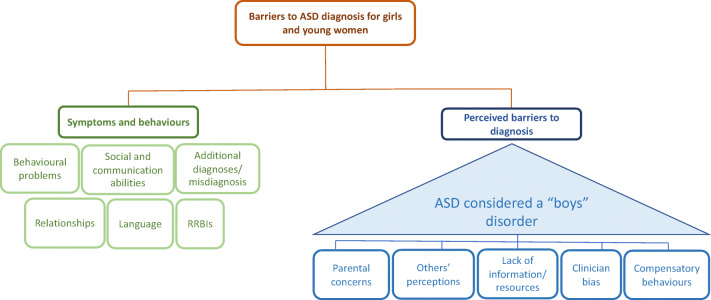
There is increased recognition that women and girls with autism spectrum disorders (ASD) are underserved by the clinical criteria and processes required to receive a diagnosis. This mixed-methods systematic review aimed to identify key barriers to obtaining an ASD diagnosis in girls and young women under 21 years. Six themes were identified that focused on perceived gendered symptoms, namely behavioural problems, social and communication abilities, language, relationships, additional diagnoses/difficulties and restricted and repetitive behaviours and interests. Five themes were identified as (parental) perceived barriers to diagnosis, namely compensatory behaviours, parental concerns, others' perceptions, lack of information/resources and clinician bias. This review highlights the importance of enhancing widespread understanding and recognition of ASD presentation in females across development. PROSPERO Centre for Reviews and Dissemination (ID 2018 CRD42018087235). SUPPLEMENTARY INFORMATION: The online version of this article (10.1007/s40489-020-00225-8) contains supplementary material, which is available to authorized users.
Overview
CoChat Summary
## TL;DR
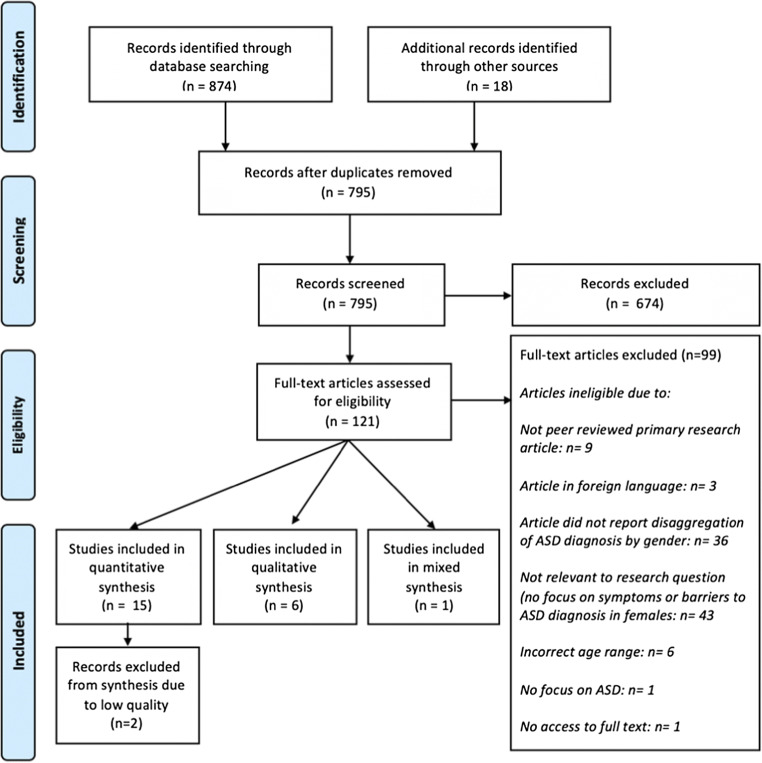
This mixed-methods systematic review found that girls and young women under 21 may face both symptom-related and perception-related barriers to autism spectrum disorder (ASD) diagnosis. Across 20 included studies, the review highlights camouflaging/compensatory behaviors, gendered expectations, and clinician bias as recurring reasons females may be missed or diagnosed later.
## Key findings
- The review included 13 quantitative, 6 qualitative, and 1 mixed-methods paper, with 23,760 participants in total, including 3,197 females with ASD, 92 parents/family members, 0 teachers, and 3 professional providers.
- It identified 6 symptom/behavior themes as diagnostic barriers: behavioral problems, social and communication abilities, language, relationships, additional diagnoses/difficulties, and restricted/repetitive behaviors and interests (RRBIs).
- It identified 5 perceived-barrier themes: compensatory behaviors, parental concerns, others’ perceptions, lack of information/resources, and clinician bias.
- The review reports that, in several studies, girls needed additional problems or more pronounced traits to be noticed or to receive diagnosis; for example, parent-reported RRBI symptoms were less predictive of ASD diagnosis for females than for males, and verbally able girls had a significantly higher age of diagnosis than boys in one population-based study.
## Methods
- Mixed-methods systematic review of peer-reviewed English-language primary qualitative and/or quantitative studies on barriers to ASD diagnosis in girls and young women aged 21 or younger.
- Searched PsycInfo, EMBASE, Medline, and CINAHL for studies published up to October 2018, plus citation/reference searching and author/expert contact.
- Data were synthesized using narrative review and thematic analysis; study quality was appraised with CASP (or adapted CASP for quantitative studies).
## Limitations
- The paper states that few studies directly addressed the review question; many comparisons of gender-related barriers were a by-product of other study aims, making synthesis difficult.
- The included studies were highly heterogeneous in topic focus, design, and sample type, and many had unequal gender sampling (the discussion notes approximately 80% male samples), limiting power and generalizability.
- The review included only English-language papers, which the authors say may reduce cultural variation in the evidence.
- Evident from the text: some subgroup findings relied on small female samples or single studies (for example, one study with 16 females), so several conclusions are based on limited evidence.
Model-written summary. Check it against the paper before relying on it.
Integrity signals
Registry
Cites
Statistics
Figures
Verification
Claims the paper makes
63 Valid · 1 Not valid · 42 Not checked · 49 Own results and interpretations
Every source the paper cites for this claim was checked and supports it.
In the paper
“The study also included the parent-completed Social Communication Questionnaire (SCQ), on which current communication skills were reported to be significantly better for ASD boys than girls.”
§ Barriers to Autism Spectrum Disorder Diagnosis for Young Women and Girls: a Systematic Review > Results > Social Communication Abilities
What the sources say
- Supportedcites Rynkiewicz et al. 2016 matched to “An investigation of the ‘female camouflage effect’ in autism using a computerized ADOS-2 and a test of sex/gender differences” (2016) source
The Methods state that parents provided SCQ Current and Lifetime information. The Results and discussion report that, based on parental SCQ answers, current communication skills were significantly better for boys with autism than for girls with autism. (LLM, conf=0.94)
plainstates an association- Asserted: passes — The authors put it forward as true.
- Checkable: passes — It can be checked against evidence.
- Load-bearing: unclear — It is unclear whether the paper’s conclusions depend on it.
- Based: passes — The paper gives a reason why it holds.
- Supported
The cited sources support only part of this claim — read each source’s verdict below.
In the paper
“Salomone et al. (2016) found that for verbally able individuals (i.e. those with phrase speech) in a population-based sample, girls had a significantly higher age of diagnosis than boys.”
§ Barriers to Autism Spectrum Disorder Diagnosis for Young Women and Girls: a Systematic Review > Results > Language
What the sources say
- Partly supportedcites Salomone et al. 2016 matched to “Child's verbal ability and gender are associated with age at diagnosis in a sample of young children with ASD in Europe” (2016) sourceExperimental — accuracy not yet measured
The Results report that, among children with complex phrase speech, girls had a significantly higher age at diagnosis than boys (p=.028). However, the Additional information section explicitly says the recruited sample cannot be considered representative of the general population of children with ASD, so calling it population-based is not supported. (LLM, conf=0.91)
plainstates an association- Asserted: passes — The authors put it forward as true.
- Checkable: passes — It can be checked against evidence.
- Load-bearing: passes — The paper’s conclusions depend on it.
- Based: passes — The paper gives a reason why it holds.
- Partly supported
Every source the paper cites for this claim was checked and supports it.
In the paper
“This was also true for low IQ, with girls meeting diagnostic criteria having lower intellectual abilities than those who did not meet the criteria.”
§ Barriers to Autism Spectrum Disorder Diagnosis for Young Women and Girls: a Systematic Review > Results > Behavioural Problems
What the sources say
- Supportedcites Dworzynski et al. 2012 matched to “How Different Are Girls and Boys Above and Below the Diagnostic Threshold for Autism Spectrum Disorders?” (2012) source
The Dichotomous Measures section (Figure 2) reports that diagnosed girls had four to nine times higher odds of falling more than 1.5 standard deviations below the mean on early cognitive-ability measures than high-CAST girls who were not diagnosed. This supports the claim about lower intellectual abilities in the low-IQ analysis. (LLM, conf=0.92)
plainstates an association- Asserted: passes — The authors put it forward as true.
- Checkable: passes — It can be checked against evidence.
- Load-bearing: unclear — It is unclear whether the paper’s conclusions depend on it.
- Based: passes — The paper gives a reason why it holds.
- Supported
Every source the paper cites for this claim was checked and supports it.
In the paper
“Rynkiewicz et al.’s (2016) study included the use of the Faces Test to assess emotion recognition in a clinical sample of 5- to 10-year olds and found that girls with ASD made significantly more mistakes than boys, indicating poorer emotion recognition skills.”
§ Barriers to Autism Spectrum Disorder Diagnosis for Young Women and Girls: a Systematic Review > Results > Social Communication Abilities
What the sources say
- Supportedcites Rynkiewicz et al. 2016 matched to “An investigation of the ‘female camouflage effect’ in autism using a computerized ADOS-2 and a test of sex/gender differences” (2016) source
The Methods describe a clinical sample of children aged 5–10 and identify the Faces Test as a measure of emotion recognition. The Abstract Results explicitly state that girls with autism made significantly more mistakes than boys on that test; the Results and discussion likewise report lower scores for girls. Page numbers are not available in our copy. (LLM, conf=0.94)
hedgedstates an associationn = 16- Asserted: passes — The authors put it forward as true.
- Checkable: passes — It can be checked against evidence.
- Load-bearing: unclear — It is unclear whether the paper’s conclusions depend on it.
- Based: passes — The paper gives a reason why it holds.
- Supported
Every source the paper cites for this claim was checked and supports it.
In the paper
“However, there is increasing evidence that a female autism phenotype may exist.”
§ Barriers to Autism Spectrum Disorder Diagnosis for Young Women and Girls: a Systematic Review > Abstract > Supplementary Information
What the sources say
- Supportedcites Rubenstein et al. 2015 matched to “A Review of the Differences in Developmental, Psychiatric, and Medical Endophenotypes Between Males and Females with Autism Spectrum Disorder” (2015) source
The Discussion (page not available in our copy) reports evidence of sex differences in autism presentation, including repetitive behaviours and intellectual disability. It also calls for further research to understand the female ASD phenotype, consistent with the claim’s cautious wording that such a phenotype may exist. (LLM, conf=0.88)
hedged- Asserted: passes — The authors put it forward as true.
- Checkable: passes — It can be checked against evidence.
- Load-bearing: passes — The paper’s conclusions depend on it.
- Based: passes — The paper gives a reason why it holds.
- Supported
78 more claims · 30 with their cited sources checked
Create a free account to see all 155 claims and every source verdict.
- Probably not a substantial claim. 31
- It may state two separate claims as one. 53
Self-check
Percentages, sums and reported differences re-computed from the paper’s own numbers.
Each contradiction between two passages listed here was confirmed by an independent check.
Rated minor: it would not touch a result — a value no result rests on, a p-value that stays on the same side of the significance level, or a conflict that is clerical, resolved elsewhere in the paper, or outside its own findings.
In the paper
§ Barriers to Autism Spectrum Disorder Diagnosis for Young Women and Girls: a Systematic Review > Results
“A total of 13 quantitative, six qualitative, and one mixed-methods papers were included in this review”
§ Barriers to Autism Spectrum Disorder Diagnosis for Young Women and Girls: a Systematic Review > Discussion
“In total, we synthesised 15 quantitative papers, six qualitative, and one mixed-methods study.”
Citations
Cites
Using thematic analysis in psychology
Braun, V., & Clarke, V. (2006) · Qualitative Research in Psychology · doi:10.1191/1478088706qp063oa · Cited by 194,414
What Is the Male-to-Female Ratio in Autism Spectrum Disorder? A Systematic Review and Meta-Analysis
Loomes, R., Hull, L., & Mandy, W. P. L. (2017) · Journal of the American Academy of Child & Adolescent Psychiatry · doi:10.1016/j.jaac.2017.03.013 · Cited by 2,804
Lord, C., Rutter, M., Goode, S., Heemsbergen, J., Jordan, H., Mawhood, L., & Schopler, E. (1989) · Journal of Autism and Developmental Disorders · doi:10.1007/bf02211841 · Cited by 2,030
Autism Diagnostic Interview-Revised
Rutter, M., LeCouteur, A., & Lord, C. (2016) · PsycTESTS Dataset · doi:10.1037/t18128-000 · Cited by 1,627
Mays, N., Pope, C., & Popay, J. (2005) · Journal of Health Services Research & Policy · doi:10.1258/1355819054308576 · Cited by 1,375 · cited 1×
“…and qualitative studies were synthesised in a narrative review to summarize, explain, and interpret evidence from the included papers; thematic analysis was conducted to draw out themes from the data, as outlined by Mays et al. (2005) on conducting systematic reviews from mixed evidence sources.”
Method“Putting on My Best Normal”: Social Camouflaging in Adults with Autism Spectrum Conditions
Hull, L., Petrides, K. V., Allison, C., Smith, P., Baron-Cohen, S., Lai, M.-C., & Mandy, W. (2017) · Journal of Autism and Developmental Disorders · doi:10.1007/s10803-017-3166-5 · Cited by 1,365
Dworzynski, K., Ronald, A., Bolton, P., & Happé, F. (2012) · Journal of the American Academy of Child & Adolescent Psychiatry · doi:10.1016/j.jaac.2012.05.018 · Cited by 633
Shattuck, P. T., Durkin, M., Maenner, M., Newschaffer, C., Mandell, D. S., Wiggins, L., Lee, L.-C., Rice, C., Giarelli, E., Kirby, R., et al. (2009) · Journal of the American Academy of Child & Adolescent Psychiatry · doi:10.1097/chi.0b013e31819b3848 · Cited by 623 · cited 1×
“There are increasing concerns that autistic females are being missed, diagnosed later than males or misdiagnosed (Giarelli et al. 2010; Holtmann et al. 2007; Loomes et al. 2017; Shattuck et al. 2009).”
BackgroundThe Female Autism Phenotype and Camouflaging: a Narrative Review
Hull, L., Petrides, K. V., & Mandy, W. (2020) · Review Journal of Autism and Developmental Disorders · doi:10.1007/s40489-020-00197-9 · Cited by 614 · cited 1×
“The fact that girls may be better able than boys to compensate for, or adapt to, aspects of ASD characteristics, described as the ‘camouflage’ hypothesis, has been increasingly documented in the literature (e.g. Hull et al. 2020; Milner et al. 2019).”
BackgroundDean, M., Harwood, R., & Kasari, C. (2017) · Autism · doi:10.1177/1362361316671845 · Cited by 566
Research works printed but not linked: 2
- Gould, J., & Ashton-Smith, J. (2011). Missed diagnosis or misdiagnosis? Girls and women on the autism spectrum. Good Autism Practice (GAP), 12(1), 34–41.
- Watson, L. E. (2014). “Living life in the moment”: chronic stress and coping among families of high-functioning adolescent girls with autism spectrum disorder (Doctoral dissertation, Boston College).
Cited by
Items 201–300 of 354
1361 Early Identification of girls at risk of ‘late’ ASD diagnosis
Roy, P., Chiat, S., & Warwick, J. (2022) · doi:10.1136/archdischild-2022-rcpch.142 · Cited by 2
Åkerlund, S., Håkansson, A., & Claesdotter‐Knutsson, E. (2023) · Frontiers in Psychology · doi:10.3389/fpsyg.2022.1068001 · Cited by 3
Gibson, M. T., Schmidt‐Kassow, M., & Paulmann, S. (2023) · PLoS ONE · doi:10.1371/journal.pone.0293233 · Cited by 4
“Although ASD is more commonly diagnosed in males than females [13], testing both groups is crucial due to gender-related differences in autistic characteristics across behavioral and neural domains [14, 15].”
BackgroundOkamoto, C. T., do Valle, D. A., Paes, A., Chemin, A. P., Ferreira, J., Luz, L. G., Nakanishi, M. A., & Santos, V. (2024) · International Journal of Developmental Disabilities · doi:10.1080/20473869.2023.2294391 · Cited by 1
“The conventional diagnostic criteria for ASD tend to align more closely with the male profile, presenting a potential obstacle in the identification and diagnosis of ASD in females (Lockwood Estrin et al. 2021).”
Aurebekk, I. K. J. (2024) · Tidsskrift for Den norske legeforening · doi:10.4045/tidsskr.23.0738 · Cited by 3
Exploring Online Communication in Self-Identified Autistic Adolescents
Oates, M., McCauley, R. J., & Bean, A. (2024) · Journal of Speech Language and Hearing Research · doi:10.1044/2024_jslhr-23-00707 · Cited by 4
Autism: Clinical impacts and late diagnosis in women - Literature review
Lima, P. R. D., Diman, L. L., Moura, L. C. M., Henning, B. J., & Schueda, M. A. (2024) · International Seven Journal of Health Research · doi:10.56238/isevjhv3n2-009 · Cited by 4
Enhancing the learning-to-drive process for autistic learners in Qatar
Mamo, W. G., Alhajyaseen, W., Dirix, H., Brijs, K., Brijs, T., Soliman, A. M., Makondo, R., Sayed, H., Tahir, M. O. E., Alabdulla, M., et al. (2024) · Case Studies on Transport Policy · doi:10.1016/j.cstp.2024.101209 · Cited by 1
Evans, M., Papadopoulos, C., & Burnham, J. (2024) · Journal of Policy and Practice in Intellectual Disabilities · doi:10.1111/jppi.12509 · Cited by 1
Adelson, R. P., Ciobanu, M., Garikipati, A., Castell, N. J., Barnes, G., Tawara, K., Singh, N. P., Rumph, J. K., Mao, Q., Vaish, A., et al. (2024) · Cureus · doi:10.7759/cureus.62377 · Cited by 2
“Collectively, these barriers mean that many children on the autism spectrum are unable to receive care or receive treatment far below the recommended level [31-33].”
BackgroundMoore, D., Jordan, A. L., Wainwright, E. M., Failla, M. D., Connell, H., & Gauntlett‐Gilbert, J. (2024) · Journal of Pain · doi:10.1016/j.jpain.2024.104757 · Cited by 2
Sex-typical toy, activity, and playmate preferences in autistic and non-autistic children
To, J. C. S., & Kung, K. T. F. (2025) · Autism · doi:10.1177/13623613251321207 · Cited by 3
“Notably, autism diagnosis in girls tends to be delayed (Giarelli et al., 2010), which may be related to differences in behavioral manifestation (Lockwood Estrin et al., 2021).”
Prevalence of autism among adults in Canada: results from a simulation modelling study
Collins, E., Edjoc, R., Farrow, A., Dharma, C., Georgiades, S., Holmes, K., Orchard, C., O’Donnell, S. C., Palmeter, S., Salt, M., et al. (2025) · BMJ Open · doi:10.1136/bmjopen-2024-089414 · Cited by 4
“7 23 27–29 While biological factors may contribute to a lower autism risk in females, 28 diagnostic criteria have largely been shaped by traits observed in male populations, making it more challenging to identify autism in females.”
Udhnani, M. D., Becker, L., & Lecavalier, L. (2025) · Journal of Autism and Developmental Disorders · doi:10.1007/s10803-025-06857-1 · Cited by 4
Hashiguchi, D., Dias, A. L. A., & Romcy-Pereira, R. N. (2026) · PLoS ONE · doi:10.1371/journal.pone.0353839 · Cited by 1
Developmental and Congenital Disabilities
Lund, E. M., & Trieber, M. A. (2025) · Oxford University Press eBooks · doi:10.1093/oxfordhb/9780197525456.013.0054 · Cited by 1
Huyst, V., Praet, J. T. V., Tsoumanis, A., Vanbaelen, T., Sauvage, A.-S., Dewinter, J., Noens, I. L. J., Damme, K. V., & Roelens, K. (2025) · AIDS Care · doi:10.1080/09540121.2025.2565432 · Cited by 2
“…could influence the autism prevalence, as the male-to-female sex ratio for autism is 4.2:1 (Zeidan et al., 2022), though this sex difference might just reflect an inadequacy of diagnostic processes to detect female autism rather than a true prevalence difference (Lockwood Estrin et al., 2021).”
InfluentialVincent, J. (2025) · Disability & Society · doi:10.1080/09687599.2025.2570348 · Cited by 5
“…among males than females through clinical bias (Mademtzi et al. 2018, Navot, Jorgenson, and Webb 2017), diagnostic tools which favour male presentations (Rynkiewicz et al. 2016), and compensatory behaviours which make traits less discernable among girls and women (Lockwood Estrin et al. 2021).”
Autistic traits, gender and age interact to influence attitudes towards Artificial Intelligence
Hechler, F. C., Tuomainen, O., & Caruana, N. (2025) · Computers in Human Behavior Reports · doi:10.1016/j.chbr.2025.100847 · Cited by 1
Łukasiewicz-Wieleba, J., Reis, S. M., & Gierczyk, M. (2025) · International Journal of Pedagogy Innovation and New Technologies · doi:10.71358/ijpint.2541 · Cited by 1
Ames, J., Anderson, M., Cronbach, E., Gassner, D. L., Greenberg, M., Lee, C. M., Onaiwu, M. G., & Croen, L. (2025) · Autism in Adulthood · doi:10.1089/aut.2024.0323 · Cited by 1
Long, E. E., & Gaffrey, M. S. (2026) · Journal of Developmental & Behavioral Pediatrics · doi:10.1097/dbp.0000000000001455 · Cited by 1
Validating the German Translation of the Revised Comprehensive Autistic Trait Inventory
Hechler, F. C., Caruana, N., Fahr, F., Karlek, B., Maroske, M., Misia, M., & Tuomainen, O. (2026) · Autism in Adulthood · doi:10.1177/25739581251406751 · Cited by 1
Wilson, S. E., Fleming, J. I., Jamieson, O. S., & Therrien, W. J. (2026) · Remedial and Special Education · doi:10.1177/07419325251409318 · Cited by 2
Keenan, J., Doherty, M., & Shaw, S. C. K. (2026) · Teaching and Learning in Medicine · doi:10.1080/10401334.2025.2608185 · Cited by 3
Uglik‐Marucha, N., Show, S., Vitoratou, S., Happe, F. G. E., & Belcher, H. (2026) · PLoS ONE · doi:10.1371/journal.pone.0337600 · Cited by 4
Self-citationTowards the equal recognition of autism in girls and women
Cary, A. E. (2026) · BMJ · doi:10.1136/bmj.s120 · Cited by 1
Khudiakova, V., Sin, J., Suzuki, M., & Barnicot, K. (2026) · Journal of Developmental and Physical Disabilities · doi:10.1007/s10882-026-10055-x · Cited by 7
“One (Lockwood Estrin et al., 2021) focused on girls and women under 21 years old.”
Expanding Understanding of Autism Spectrum Disorder in Girls and Women: A New Paradigm
Bitensky, D., Clauss‐Ehlers, C. S., & Veksler, K. M. (2026) · Behavioral Sciences · doi:10.3390/bs16030396 · Cited by 1
“Misdiagnosis can lead to individuals receiving clinical interventions that do not address primary concerns, potentially resulting in ineffective treatment (Dell’Osso & Carpita, 2023; Lockwood Estrin et al., 2021).”
InfluentialNicolaidis, C., Moura, I., Baker-Ericzén, M. J., Scharer, M., Maslak, J., Kripke-Ludwig, R., Horner‐Johnson, W., Love, J. E., Raymaker, D., Joyce, A., et al. (2026) · Autism · doi:10.1177/13623613261476381 · Cited by 6
“While this may be in part from convenience sample biases (Rødgaard et al., 2022), it also may reflect diagnostic disparities (Lockwood Estrin et al., 2021) or diagnostic measure biases (D'Mello et al., 2022), leading to an underrepresentation of women in samples from service systems.”
Labno, A., Abel, K. M., Aked, H., Bhui, K. S., Brooks, H. L., Crease, M., Deighton, J., Edridge, C., Fonagy, P., Grace, E., et al. (2026) · BMJ Open · doi:10.1136/bmjopen-2025-115245 · Cited by 1
Sperry, M. P., & O’Neill, T. A. (2026) · PLoS ONE · doi:10.1371/journal.pone.0345801 · Cited by 3
“A large portion of individuals with neurodivergent traits and features are undiagnosed [55,56] likely due to the barriers associated with seeking and obtaining a diagnosis.”
Kiani, A., & Ebrahimi, F. (2026) · Iranian Journal of Psychiatry and Behavioral Sciences · doi:10.5812/ijpbs-158044 · Cited by 1
Love, A. M. A., Edwards, C., Rideout, B., Hollenberg, L., Clapham, H., McKeown, G., Robinson, A., Cai, R. Y., Benzie, C. A., Rabba, A. S., et al. (2026) · Midwifery · doi:10.1016/j.midw.2026.104868 · Cited by 2
Michel, L., Bataillon, C., Bonnet‐Brilhault, F., Malvy, J., Rambault, A., Tuller, L., & Latinus, M. (2026) · Autism & Developmental Language Impairments · doi:10.1177/23969415261451402 · Cited by 1
Co-Occurring Autism and Obsessive-Compulsive Disorder: Evidence-Based Assessment and Intervention
Messerli, M. C., Yagi, K., Morgan, M. B., Trent, E. S., Onyeka, O. “., Storch, E. A., & Wiese, A. D. (2026) · Journal of Health Service Psychology · doi:10.1007/s42843-026-00160-y · Cited by 1
Epistemic injustice in plain sight evidence from medical data
Floris, M. (2026) · Medicine Health Care and Philosophy · doi:10.1007/s11019-026-10393-9 · Cited by 1
Borgi, M., Chiarotti, F., Aresu, G., Gitti, F., Fazzi, E. M., Pierini, A., Sebastiani, T., Marcelli, M., Scifo, R., Stagi, P., et al. (2022) · Brain Sciences · doi:10.3390/brainsci12020263 · Cited by 2
“However, the high variability of the sex ratio observed in our Italian sample suggests the presence of a gender bias in ASD diagnosis, as reported in the literature [25].”
ResultThe 'Aha' Moment: Exploring autism narratives as told by the mothers of autistic girls
Wickens, M. V. (2022) · Murmurations Journal of Transformative Systemic Practice · doi:10.28963/4.2.4 · Cited by 2
Neubauer, J. C., Kaiser, A., & Hohmann, S. (2023) · Zeitschrift für Kinder- und Jugendpsychiatrie und Psychotherapie · doi:10.1024/1422-4917/a000962 · Cited by 1
Zack, D. S., Carroll, B., Magallanes, A., & Edgar, V. B. (2024) · Journal of Pediatric Health Care · doi:10.1016/j.pedhc.2024.07.008 · Cited by 2
Lynch, J., Murphy, A. F., & da Cruz, D. M. C. (2024) · Discover Psychology · doi:10.1007/s44202-024-00234-2 · Cited by 4
Woman in the brain, or the fraught relationship between feminism and mental health
Greco, C. (2024) · Medical Humanities · doi:10.1136/medhum-2024-013033 · Cited by 3
“Psychology and psychiatry are less interested in the social explanations of autism and tend to attribute the underdi-agnosis of women to the different presentations of the condition (cf Lockwood Estrin et al 2021).”
Frederick, R. M., Smárason, O., Boedeker, P., Spencer, S. D., Guzick, A. G., & Storch, E. A. (2024) · Journal of Autism and Developmental Disorders · doi:10.1007/s10803-024-06680-0 · Cited by 1
“These findings – which require interpretation with increased functional impairment of girls at follow-up may involve known challenges in identification of autism in girls (Estrin et al., 2021).”
Hopkins, M. P. (2025) · Undergraduate Journal of Public Health · doi:10.3998/ujph.7613 · Cited by 3
“This is particularly crucial as autistic women face an uphill battle to receive support and diagnosis in adulthood (Lockwood Estrin et al., 2021); for example, gender bias may lead a clinician to misdiagnose an autistic woman with Borderline Personality Disorder, leading to inadequate…”
Analysis of Functional Connectome Pipelines for the Diagnosis of Autism Spectrum Disorders
Jiménez-Valverde, C., Maza-Quiroga, R. M., López-Rodríguez, D., Thurnhofer‐Hemsi, K., López‐Rubio, E., & Luque‐Baena, R. M. (2022) · Lecture notes in computer science · doi:10.1007/978-3-031-06527-9_21 · Cited by 1
Furtado, A. V. B. P., Topázio, N. A. A., & Mello, C. S. (2022) · Research Society and Development · doi:10.33448/rsd-v11i11.33622
AVALIAÇÃO DO USO DE TELAS DIGITAIS POR CRIANÇAS E ADOLESCENTES EM TEMPOS DE PANDEMIA
Sandes, M. F., Guedes, T. R., & Meneses, K. C. B. (2023) · Brazilian Journals Editora eBooks · doi:10.35587/brj.ed.0002014 · Cited by 1
Lopes, C. C. C., Santiago, R. F. M., Barbosa, A. A. L., Magalhães, T. F., Farias, A. G., Mendes, A. N., Abtibol, K. A. B. C., Machado, M. A., de Morais, A. C. Q., da Silva, F. A., et al. (2023) · Journal of Community Medicine & Public Health · doi:10.29011/2577-2228.100318
“It is noteworthy that the number of children with ASD has been increasing significantly, which has been attributed to the expansion of diagnostic criteria, greater awareness of the disorders and, to a lesser extent, the increase in disorders in the general population [12-14].”
BackgroundRyan, L., Beer, H., Thomson, E., Philcox, E., & Kelly, C. A. (2022) · Qeios · doi:10.32388/uah9vu.2 · Cited by 1
Genetic relationship between the immune system and autism spectrum disorder and traitsPreprint
Arenella, M., Fanelli, G., Kiemeney, L. A. L. M., McAlonan, G. M., Murphy, D., & Bralten, J. (2023) · medRxiv · doi:10.1101/2023.10.16.23296896 · Cited by 1
Pritchard-Rowe, E., de Lemos, C., Howard, K., & Gibson, J. L. (2023) · doi:10.31234/osf.io/gfd6q
Raising Children with Autism Spectrum Disorder: Challenges and SuggestionsPreprint
Sun, T., & Heng, K. (2024) · SSRN Electronic Journal · doi:10.2139/ssrn.4881582 · Cited by 1
Lacroix, A., Tzang, C.-C., Yu, J. X., Jacob, B., Alexandrovsky, M., Winge-Breen, A., Rodak, T., & Lai, M.-C. (2025) · medRxiv · doi:10.1101/2025.09.12.25335643 · Cited by 9
Hi, how do I human this: Neurodiversity-Affirming Design for Autistic Adults' Formation of Identity
Silva, M. P., Steeds, M., & Doherty, K. (2026) · CHI Conference on Human Factors in Computing Systems · doi:10.1145/3772318.3791446
Autism and anorexia nervosa: longitudinal prediction of eating disorder outcomesPreprint
Leppänen, J., Sedgewick, F., Halls, D., & Tchanturia, K. (2022) · Research Square · doi:10.21203/rs.3.rs-1791109/v1
Introducing a Theoretical Travel Guide
Pluquailec, J. (2022) · Springer eBooks · doi:10.1007/978-3-031-09274-9_2
Ryan, L., Beer, H., Thomson, E., Philcox, E., & Kelly, C. A. (2022) · Qeios · doi:10.32388/uah9vu.3 · Cited by 1
Toledo, A. D. O., Grube, G., & Kalva, D. C. (2023) · Brazilian Journals Editora eBooks · doi:10.35587/brj.ed.0002004
THE IMPORTANCE OF THE PSYCHIATRIST AS A MEMBER OF THE MULTIDISCIPLINARY PAIN TEAM
de Abreu, B. S. D. C., Leeuwen, F. V. V., Filho, L. O. S. D. S., & Reis, F. (2023) · Brazilian Journals Editora eBooks · doi:10.35587/brj.ed.0002005
Botelho, K. V. D. S. S., Silva, R. M., Trigueiros, L. M. B. D. M., Santos, P. B. S., Lima, M. J. D. S., & Leite, M. V. (2023) · Brazilian Journals Editora eBooks · doi:10.35587/brj.ed.0002009
Soder, R. M., Machado, G. F., & Carli, P. D. (2023) · Brazilian Journals Editora eBooks · doi:10.35587/brj.ed.0002002
TELECONSULTA EM INSUFICIÊNCIA CARDÍACA: REVISÃO DE ESCOPO
de Vasconcelos, G. G., Cestari, V. R. F., Sobral, M. G. V., Lopes, C. A., Oliveira, M. Í. L., Lima, J. L. C., & Pessoa, V. L. M. D. P. (2023) · Brazilian Journals Editora eBooks · doi:10.35587/brj.ed.0001999
NEUROMA DE NERVO RADIAL APÓS CORREÇÃO CIRÚRGICA DA LESÃO SECUNDÁRIA DE FRATURA DIAFISÁRIA DE ÚMERO
Cardoso, M. Q., & Júnior, P. R. D. M. (2023) · Brazilian Journals Editora eBooks · doi:10.35587/brj.ed.0002016
PREVALÊNCIA DE DISTÚRBIOS RESPIRATÓRIOS EM PACIENTES COM FISSURA LABIOPALATINA: REVISÃO SISTEMÁTICA
Kniphoff, G. J., da Silva, M. R., & Cardoso, M. C. D. A. F. (2023) · Brazilian Journals Editora eBooks · doi:10.35587/brj.ed.0002008
de Lara, I. C. A., Sanches, C. H., Paglia, B. A. R., & da Silva, M. F. P. T. B. (2023) · Brazilian Journals Editora eBooks · doi:10.35587/brj.ed.0002015
TRANSTORNOS DISSOCIATIVOS EM PACIENTES VÍTIMAS DE ABUSO SEXUAL NA INFÂNCIA
de Corrêa, J. B. C., Ramos, K. S., Ramos, K. S., Maia, M. P. L. F., Zucatelli, P. F., Caldas, I. F. R., Prado, J. W. L., & Tannus, L. D. O. (2023) · Brazilian Journals Editora eBooks · doi:10.35587/brj.ed.0002017
PÉ DIABÉTICO NA ATENÇÃO BÁSICA: UMA REVISÃO DE LITERATURA
Campos, V. S. M. J. P., Arraes, W. P. C. G., Rodrigues, M. V. C., Souza, P. F. A. V. D. B., Tenório, L. L. J., Bulhões, P. R. F., de Morais, S. A., Ferraz, R. A. S., Rabeschini, J. M. D., & de Almeida, E. (2023) · Brazilian Journals Editora eBooks · doi:10.35587/brj.ed.0002011
SAÚDE MENTAL DA EQUIPE DE ENFERMAGEM NO CONTEXTO DA PANDEMIA COVID19
da Silva, W. M., & Santana, M. C. F. D. S. (2023) · Brazilian Journals Editora eBooks · doi:10.35587/brj.ed.0002012
Lacroix, A. (2023) · UGA Éditions eBooks · doi:10.4000/books.ugaeditions.29935
Heady, N. (2023) · Cronfa (Swansea University) · doi:10.23889/suthesis.63857
Alcohol masked my autism so well, that nobody noticed it until I got sober
Flood, C. (2023) · Women s Health · doi:10.1177/17455057231180986
Caregiver-Reported Barriers to Care for Children and Adults with Williams SyndromePreprint
Barnhardt, E. W., Martens, M. A., & Walton, J. (2023) · Research Square · doi:10.21203/rs.3.rs-3749238/v1
Yang, D., Svoboda, A. M., George, T. G., Mansfield, P. K., Wheelock, M. D., Schroeder, M. L., Rafferty, S. M., Sherafati, A., Tripathy, K., Burns‐Yocum, T. M., et al. (2024) · Research Square · doi:10.21203/rs.3.rs-3959343/v1
Echoes of Understanding: An In-Depth Exploration of Autism Awareness and Community Support Initia
Beigh, S., Alzahrani, S. M., Fahad, N., Alghamdi, Y. A., Jabbar, A., Babiker, W. A. M., Al-Shehri, M. S., Abdalla, B. A. E., Nour, L. M., & Ahmad, R. M. (2024) · Natural Resources for Human Health · doi:10.53365/nrfhh/188176
Epidemiology of Mental Health Disorders in Female Children and Adolescents
Leung, K., Alexander, L., Goicochea, S., & Cuffe, S. P. (2024) · Springer eBooks · doi:10.1007/978-3-031-58293-6_2
Understanding and Improving the Experiences of Autistic Girls and Women in Healthcare
Hotez, E., Rosenau, K. A., Chiang, L., Brown, K. M., Lejbman, J. M., Ricketts, W. D., & VanderVeen, N. T. (2024) · Advances in psychology, mental health, and behavioral studies (APMHBS) book series · doi:10.4018/979-8-3693-1285-8.ch009
Flurey, C. (2024) · Springer eBooks · doi:10.1007/978-3-031-62593-0_9
Hechler, F. C., Tuomainen, O., Weber, N., Fahr, F., Karlek, B., Maroske, M., Misia, M., & Caruana, N. (2024) · Research Square · doi:10.21203/rs.3.rs-4667044/v1
Hechler, F. C., Tuomainen, O., Weber, N., Fahr, F., Karlek, B., Maroske, M., Misia, M., & Caruana, N. (2024) · PsyArXiv (OSF Preprints) · doi:10.31234/osf.io/se6zn
Rogoski, B. D. N., Caldas, R. C. S., de Souza, V. G. L., Louzeiro, R., Vasconcelos, L. A., & Flores, E. P. (2024) · Trends in Psychology · doi:10.1007/s43076-024-00398-9 · Cited by 2
“Why race, when, to give just one example, gender is so clearly an important factor in the context of autistic people’s access to diagnosis and therapy (Estrin et al., 2021)?”
Pascarella, L. A., Erickson, C. A., & Minshawi, N. F. (2024) · Autism and child psychopathology series · doi:10.1007/978-3-031-64499-3_2
Mainstream Education for Children with Autism Spectrum Disorder
Reed, P., & Osborne, L. A. (2024) · Autism and child psychopathology series · doi:10.1007/978-3-031-64499-3_22 · Cited by 1
Gender differences in repetitive behaviours in children diagnosed with autism spectrum disorder
Behin, M., Stošić, J., & Šimleša, S. (2024) · Hrvatska revija za rehabilitacijska istraživanja · doi:10.31299/hrri.60.2.4
Experiences of students diagnosed with autism at a Brazilian university
Barbosa, A. D. C., Sobrinho, R. C., & Fero, K. (2024) · Revista Educação Especial · doi:10.5902/1984686x88589 · Cited by 2
Misunderstood, excluded, and othered: Lay constructions of autistic women
Rhodes, M., & Seeley-Wait, E. (2025) · Feminism & Psychology · doi:10.1177/09593535241306535 · Cited by 1
“For example, in comparison to autistic men, autistic women may show more motivation to achieve social inclusion (Lockwood Estrin et al., 2021) and a higher tendency for internalising behaviours (such as depression or anxiety) than externalising behaviours (such as conduct problems; Bargiela et al.,…”
Grundlagen der Diagnostik und Therapie
(2024) · Elsevier eBooks · doi:10.1016/b978-3-437-22487-4.16001-0
Grant, S., Norton, S., & Hoekstra, R. A. (2025) · Autism in Adulthood · doi:10.1089/aut.2024.0186
“…research interest in recent years, 73,76,133 – 135 and many studies have demonstrated clear links between cam-ou fl aging and poorer mental health outcomes, 75,78,136 greater camou fl aging in autistic women, 137 – 139 and a relationship between camou fl aging scores and age at autism diagnosis.”
Neal, A. J., McFayden, T. C., Goldblum, J., Bristol, S. K., & Harrop, C. (2025) · Research in Autism · doi:10.1016/j.reia.2025.202576 · Cited by 1
MacNaul, H. L., Castro‐Villarreal, F., Neely, L. C., Sullivan, J. R., & Nichols, S. L. (2025) · Journal of Community Psychology · doi:10.1002/jcop.70007 · Cited by 1
Senior, C., & Waller, L. (2025) · PsyArXiv (OSF Preprints) · doi:10.31234/osf.io/yx7bd_v1
Tucker‐Retter, E. K., & Westermeyer, H. D. (2025) · Veterinary Ophthalmology · doi:10.1111/vop.70030 · Cited by 1
“Women are known to have increased barriers to diagnosis of many conditions, including neurodevelopmental disorders [18, 37] Literature on this subject is predominantly focused on ADHD and ASC.”
InfluentialSu, P. L., Watson, D. G., Camarata, S., & Bodfish, J. W. (2025) · Languages · doi:10.3390/languages10070161
Tsafrir, S., Barzilay, R., Gothelf, D., & Begin, M. (2025) · Journal of Autism and Developmental Disorders · doi:10.1007/s10803-025-06935-4 · Cited by 1
McKeown, A., Good, A., Lee, R., Richmond, C., & Walker, T. (2025) · Child & Youth Care Forum · doi:10.1007/s10566-025-09879-z
Risk-Taking and Delinquent Behaviors among Youth with or without Developmental Disabilities
Christensen, L. L., & Baker, B. L. (2025) · Journal of Mental Health Research in Intellectual Disabilities · doi:10.1080/19315864.2025.2542143
“In general, there is growing attention to the presentation of ASD for females and factors that lead to missed or misdiagnosis (Lockwood Estrin et al., 2021).”
Viewer comments on virtual experience of autism – 360° video and themes of reactions
Youngblood, S. A., Youngblood, N. E., & Chung, A. (2025) · Advances in Autism · doi:10.1108/aia-02-2025-0020
Malone, D., Keating, K., & Ryan, C. (2025) · Journal of Autism and Developmental Disorders · doi:10.1007/s10803-025-07044-y · Cited by 2
Hall, K. C., Marraccini, M. E., Karpinsky, M., Middleton, T. J., Knotek, S. E., Mankowski, J., Evarrs, S., & Maddox, B. B. (2025) · Journal of Affective Disorders · doi:10.1016/j.jad.2025.120383 · Cited by 1
From misunderstanding towards recognition: narratives of autistic women and girls in news articles
Perälä, S., Pesonen, H. V., & Äärelä, T. (2025) · Advances in Autism · doi:10.1108/aia-05-2025-0050
Metadata
- Authors
- Lockwood Estrin, G., Milner, V., Spain, D., Happé, F., & Colvert, E.
- Affiliations
- King's College London (GB)
- Venue
- Review Journal of Autism and Developmental Disorders
- Published
- 2020-10-29
- Volume
- 8
- Issue
- 4
- Pages
- 454-470
- ISSN
- 2195-7177 (ISSN-L)
- 2195-7185
- PMC
- PMC8604819
- OpenAlex
- W3095823263
- Cited by
- 444
- References
- 51
- Citations by year
- 2026: 99 · 2025: 96 · 2024: 104 · 2023: 94 · 2022: 43 · 2021: 8
- FWCI
- 4.40
- Type
- journal article
- Language
- en
- Open access
- hybrid
- doi.org
- Licence
- cc-by
- creativecommons.org/licenses/by/4.0 (tdm)
- creativecommons.org/licenses/by/4.0 (vor)
- Locations
- Review Journal of Autism and Developmental Disorders (publishedVersion, cc-by)
- PubMed Central (publishedVersion, cc-by)
- PubMed (publishedVersion)
- BIROn (Birkbeck, University of London) (submittedVersion)
- Oxford University Research Archive (ORA) (University of Oxford) (submittedVersion, cc-by)
- Research Portal (King's College London) (submittedVersion, other-oa)
- Funders
- Wellcome Trust (204706/Z/16/Z)
- Economic and Social Research Council (ES/M011488/1)
- Topics
- Life Sciences › Neuroscience › Cognitive Neuroscience › Autism Spectrum Disorder Research
- Health Sciences › Medicine › Psychiatry and Mental health › Child Nutrition and Feeding Issues
- Health Sciences › Medicine › Endocrinology, Diabetes and Metabolism › Sexual Differentiation and Disorders
- Keywords
- autism spectrum disorder, girls and young women, barriers to diagnosis, gender differences in autism, compensatory behavior, parental concerns, clinician bias, restricted and repetitive behaviors, social communication, underdiagnosis
About these checks
Registry, retraction, Cites and statistics results are computed, not judged, with one exception: a printed reference that no index lists is read once by a model before it counts as a citation error. Claims are extracted by a model and kept only when their quote appears verbatim in the text; each cited source is then checked, with a model’s help, for whether it says what the claim relies on. Those verdicts can be wrong — read the claim’s quote and the cited source before relying on one.
The claim verdicts this report counts are experimental: their accuracy is not yet measured.
A language model drew the claims from the paper on 2026-09-30, under version 3 of the claim definition (model deepseek-v4.1-flash, prompt extract-v3).
A second model labelled each claim on 2026-09-30 (model jev-1.13-20260917, definition revision gold-guideline-v0.2).
Cited sources are checked with a language model’s help (gpt-6-sol).
Statistics and arithmetic are recomputed, not judged.
Confidence bands are shown only for fields calibrated on our annotated test set. None is calibrated yet, so no band is shown.
What counts as a claim ›How we measure confidence ›How we check this ›
Are you an author, or do you see a problem with this page? Request a review
Data sources
Bibliographic data: Semantic Scholar, OpenAlex, Crossref.
Contains information from the Semantic Scholar Academic Graph Datasets, made available under the ODC Attribution License (ODC-BY 1.0).
Semantic Scholar’s data is described in: Kinney, R., et al. (2023). The Semantic Scholar Open Data Platform. arXiv:2301.10140.
