

Barriers to Autism Spectrum Disorder Diagnosis for Young Women and Girls: a Systematic Review
Open accessThe DOI matches its Crossref record; 51 of the 51 references it cites were found in a registry or an index; 72 of the 133 sources its claims cite were checked for support.
Abstract
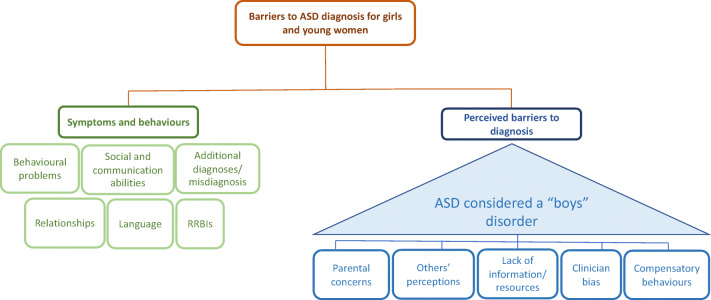
There is increased recognition that women and girls with autism spectrum disorders (ASD) are underserved by the clinical criteria and processes required to receive a diagnosis. This mixed-methods systematic review aimed to identify key barriers to obtaining an ASD diagnosis in girls and young women under 21 years. Six themes were identified that focused on perceived gendered symptoms, namely behavioural problems, social and communication abilities, language, relationships, additional diagnoses/difficulties and restricted and repetitive behaviours and interests. Five themes were identified as (parental) perceived barriers to diagnosis, namely compensatory behaviours, parental concerns, others' perceptions, lack of information/resources and clinician bias. This review highlights the importance of enhancing widespread understanding and recognition of ASD presentation in females across development. PROSPERO Centre for Reviews and Dissemination (ID 2018 CRD42018087235). SUPPLEMENTARY INFORMATION: The online version of this article (10.1007/s40489-020-00225-8) contains supplementary material, which is available to authorized users.
Overview
CoChat Summary
## TL;DR
This mixed-methods systematic review found that girls and young women under 21 may face both symptom-related and perception-related barriers to autism spectrum disorder (ASD) diagnosis. Across 20 included studies, the review highlights camouflaging/compensatory behaviors, gendered expectations, and clinician bias as recurring reasons females may be missed or diagnosed later.
## Key findings
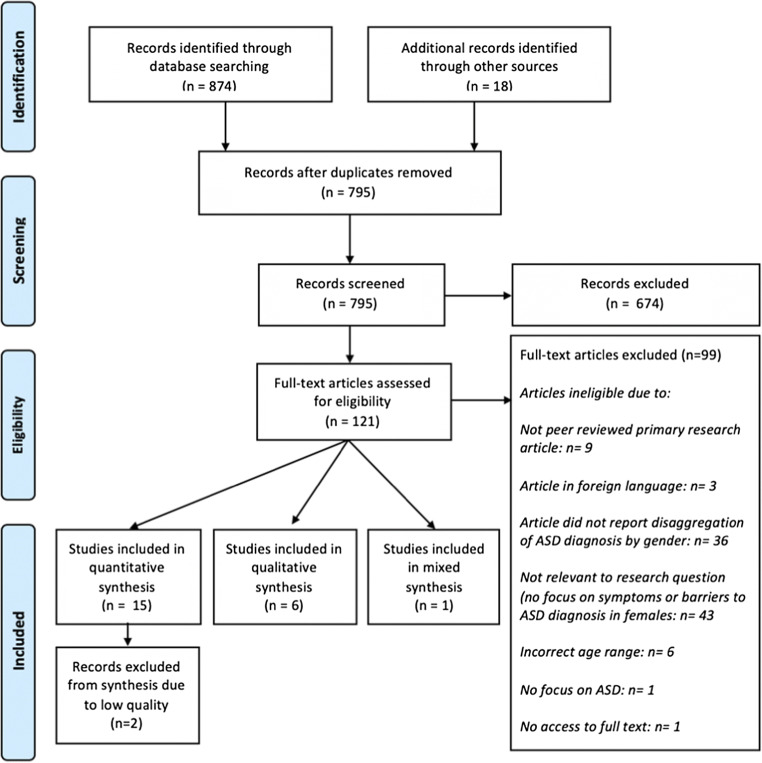
- The review included 13 quantitative, 6 qualitative, and 1 mixed-methods paper, with 23,760 participants in total, including 3,197 females with ASD, 92 parents/family members, 0 teachers, and 3 professional providers.
- It identified 6 symptom/behavior themes as diagnostic barriers: behavioral problems, social and communication abilities, language, relationships, additional diagnoses/difficulties, and restricted/repetitive behaviors and interests (RRBIs).
- It identified 5 perceived-barrier themes: compensatory behaviors, parental concerns, others’ perceptions, lack of information/resources, and clinician bias.
- The review reports that, in several studies, girls needed additional problems or more pronounced traits to be noticed or to receive diagnosis; for example, parent-reported RRBI symptoms were less predictive of ASD diagnosis for females than for males, and verbally able girls had a significantly higher age of diagnosis than boys in one population-based study.
## Methods
- Mixed-methods systematic review of peer-reviewed English-language primary qualitative and/or quantitative studies on barriers to ASD diagnosis in girls and young women aged 21 or younger.
- Searched PsycInfo, EMBASE, Medline, and CINAHL for studies published up to October 2018, plus citation/reference searching and author/expert contact.
- Data were synthesized using narrative review and thematic analysis; study quality was appraised with CASP (or adapted CASP for quantitative studies).
## Limitations
- The paper states that few studies directly addressed the review question; many comparisons of gender-related barriers were a by-product of other study aims, making synthesis difficult.
- The included studies were highly heterogeneous in topic focus, design, and sample type, and many had unequal gender sampling (the discussion notes approximately 80% male samples), limiting power and generalizability.
- The review included only English-language papers, which the authors say may reduce cultural variation in the evidence.
- Evident from the text: some subgroup findings relied on small female samples or single studies (for example, one study with 16 females), so several conclusions are based on limited evidence.
Model-written summary. Check it against the paper before relying on it.
Integrity signals
Registry
Cites
Statistics
Figures
Verification
Claims the paper makes
63 Valid · 1 Not valid · 42 Not checked · 49 Own results and interpretations
Every source the paper cites for this claim was checked and supports it.
In the paper
“The study also included the parent-completed Social Communication Questionnaire (SCQ), on which current communication skills were reported to be significantly better for ASD boys than girls.”
§ Barriers to Autism Spectrum Disorder Diagnosis for Young Women and Girls: a Systematic Review > Results > Social Communication Abilities
What the sources say
- Supportedcites Rynkiewicz et al. 2016 matched to “An investigation of the ‘female camouflage effect’ in autism using a computerized ADOS-2 and a test of sex/gender differences” (2016) source
The Methods state that parents provided SCQ Current and Lifetime information. The Results and discussion report that, based on parental SCQ answers, current communication skills were significantly better for boys with autism than for girls with autism. (LLM, conf=0.94)
plainstates an association- Asserted: passes — The authors put it forward as true.
- Checkable: passes — It can be checked against evidence.
- Load-bearing: unclear — It is unclear whether the paper’s conclusions depend on it.
- Based: passes — The paper gives a reason why it holds.
- Supported
The cited sources support only part of this claim — read each source’s verdict below.
In the paper
“Salomone et al. (2016) found that for verbally able individuals (i.e. those with phrase speech) in a population-based sample, girls had a significantly higher age of diagnosis than boys.”
§ Barriers to Autism Spectrum Disorder Diagnosis for Young Women and Girls: a Systematic Review > Results > Language
What the sources say
- Partly supportedcites Salomone et al. 2016 matched to “Child's verbal ability and gender are associated with age at diagnosis in a sample of young children with ASD in Europe” (2016) sourceExperimental — accuracy not yet measured
The Results report that, among children with complex phrase speech, girls had a significantly higher age at diagnosis than boys (p=.028). However, the Additional information section explicitly says the recruited sample cannot be considered representative of the general population of children with ASD, so calling it population-based is not supported. (LLM, conf=0.91)
plainstates an association- Asserted: passes — The authors put it forward as true.
- Checkable: passes — It can be checked against evidence.
- Load-bearing: passes — The paper’s conclusions depend on it.
- Based: passes — The paper gives a reason why it holds.
- Partly supported
Every source the paper cites for this claim was checked and supports it.
In the paper
“This was also true for low IQ, with girls meeting diagnostic criteria having lower intellectual abilities than those who did not meet the criteria.”
§ Barriers to Autism Spectrum Disorder Diagnosis for Young Women and Girls: a Systematic Review > Results > Behavioural Problems
What the sources say
- Supportedcites Dworzynski et al. 2012 matched to “How Different Are Girls and Boys Above and Below the Diagnostic Threshold for Autism Spectrum Disorders?” (2012) source
The Dichotomous Measures section (Figure 2) reports that diagnosed girls had four to nine times higher odds of falling more than 1.5 standard deviations below the mean on early cognitive-ability measures than high-CAST girls who were not diagnosed. This supports the claim about lower intellectual abilities in the low-IQ analysis. (LLM, conf=0.92)
plainstates an association- Asserted: passes — The authors put it forward as true.
- Checkable: passes — It can be checked against evidence.
- Load-bearing: unclear — It is unclear whether the paper’s conclusions depend on it.
- Based: passes — The paper gives a reason why it holds.
- Supported
Every source the paper cites for this claim was checked and supports it.
In the paper
“Rynkiewicz et al.’s (2016) study included the use of the Faces Test to assess emotion recognition in a clinical sample of 5- to 10-year olds and found that girls with ASD made significantly more mistakes than boys, indicating poorer emotion recognition skills.”
§ Barriers to Autism Spectrum Disorder Diagnosis for Young Women and Girls: a Systematic Review > Results > Social Communication Abilities
What the sources say
- Supportedcites Rynkiewicz et al. 2016 matched to “An investigation of the ‘female camouflage effect’ in autism using a computerized ADOS-2 and a test of sex/gender differences” (2016) source
The Methods describe a clinical sample of children aged 5–10 and identify the Faces Test as a measure of emotion recognition. The Abstract Results explicitly state that girls with autism made significantly more mistakes than boys on that test; the Results and discussion likewise report lower scores for girls. Page numbers are not available in our copy. (LLM, conf=0.94)
hedgedstates an associationn = 16- Asserted: passes — The authors put it forward as true.
- Checkable: passes — It can be checked against evidence.
- Load-bearing: unclear — It is unclear whether the paper’s conclusions depend on it.
- Based: passes — The paper gives a reason why it holds.
- Supported
Every source the paper cites for this claim was checked and supports it.
In the paper
“However, there is increasing evidence that a female autism phenotype may exist.”
§ Barriers to Autism Spectrum Disorder Diagnosis for Young Women and Girls: a Systematic Review > Abstract > Supplementary Information
What the sources say
- Supportedcites Rubenstein et al. 2015 matched to “A Review of the Differences in Developmental, Psychiatric, and Medical Endophenotypes Between Males and Females with Autism Spectrum Disorder” (2015) source
The Discussion (page not available in our copy) reports evidence of sex differences in autism presentation, including repetitive behaviours and intellectual disability. It also calls for further research to understand the female ASD phenotype, consistent with the claim’s cautious wording that such a phenotype may exist. (LLM, conf=0.88)
hedged- Asserted: passes — The authors put it forward as true.
- Checkable: passes — It can be checked against evidence.
- Load-bearing: passes — The paper’s conclusions depend on it.
- Based: passes — The paper gives a reason why it holds.
- Supported
78 more claims · 30 with their cited sources checked
Create a free account to see all 155 claims and every source verdict.
- Probably not a substantial claim. 31
- It may state two separate claims as one. 53
Self-check
Percentages, sums and reported differences re-computed from the paper’s own numbers.
Each contradiction between two passages listed here was confirmed by an independent check.
Rated minor: it would not touch a result — a value no result rests on, a p-value that stays on the same side of the significance level, or a conflict that is clerical, resolved elsewhere in the paper, or outside its own findings.
In the paper
§ Barriers to Autism Spectrum Disorder Diagnosis for Young Women and Girls: a Systematic Review > Results
“A total of 13 quantitative, six qualitative, and one mixed-methods papers were included in this review”
§ Barriers to Autism Spectrum Disorder Diagnosis for Young Women and Girls: a Systematic Review > Discussion
“In total, we synthesised 15 quantitative papers, six qualitative, and one mixed-methods study.”
Citations
Cites
Using thematic analysis in psychology
Braun, V., & Clarke, V. (2006) · Qualitative Research in Psychology · doi:10.1191/1478088706qp063oa · Cited by 194,414
What Is the Male-to-Female Ratio in Autism Spectrum Disorder? A Systematic Review and Meta-Analysis
Loomes, R., Hull, L., & Mandy, W. P. L. (2017) · Journal of the American Academy of Child & Adolescent Psychiatry · doi:10.1016/j.jaac.2017.03.013 · Cited by 2,804
Lord, C., Rutter, M., Goode, S., Heemsbergen, J., Jordan, H., Mawhood, L., & Schopler, E. (1989) · Journal of Autism and Developmental Disorders · doi:10.1007/bf02211841 · Cited by 2,030
Autism Diagnostic Interview-Revised
Rutter, M., LeCouteur, A., & Lord, C. (2016) · PsycTESTS Dataset · doi:10.1037/t18128-000 · Cited by 1,627
Mays, N., Pope, C., & Popay, J. (2005) · Journal of Health Services Research & Policy · doi:10.1258/1355819054308576 · Cited by 1,375 · cited 1×
“…and qualitative studies were synthesised in a narrative review to summarize, explain, and interpret evidence from the included papers; thematic analysis was conducted to draw out themes from the data, as outlined by Mays et al. (2005) on conducting systematic reviews from mixed evidence sources.”
Method“Putting on My Best Normal”: Social Camouflaging in Adults with Autism Spectrum Conditions
Hull, L., Petrides, K. V., Allison, C., Smith, P., Baron-Cohen, S., Lai, M.-C., & Mandy, W. (2017) · Journal of Autism and Developmental Disorders · doi:10.1007/s10803-017-3166-5 · Cited by 1,365
Dworzynski, K., Ronald, A., Bolton, P., & Happé, F. (2012) · Journal of the American Academy of Child & Adolescent Psychiatry · doi:10.1016/j.jaac.2012.05.018 · Cited by 633
Shattuck, P. T., Durkin, M., Maenner, M., Newschaffer, C., Mandell, D. S., Wiggins, L., Lee, L.-C., Rice, C., Giarelli, E., Kirby, R., et al. (2009) · Journal of the American Academy of Child & Adolescent Psychiatry · doi:10.1097/chi.0b013e31819b3848 · Cited by 623 · cited 1×
“There are increasing concerns that autistic females are being missed, diagnosed later than males or misdiagnosed (Giarelli et al. 2010; Holtmann et al. 2007; Loomes et al. 2017; Shattuck et al. 2009).”
BackgroundThe Female Autism Phenotype and Camouflaging: a Narrative Review
Hull, L., Petrides, K. V., & Mandy, W. (2020) · Review Journal of Autism and Developmental Disorders · doi:10.1007/s40489-020-00197-9 · Cited by 614 · cited 1×
“The fact that girls may be better able than boys to compensate for, or adapt to, aspects of ASD characteristics, described as the ‘camouflage’ hypothesis, has been increasingly documented in the literature (e.g. Hull et al. 2020; Milner et al. 2019).”
BackgroundDean, M., Harwood, R., & Kasari, C. (2017) · Autism · doi:10.1177/1362361316671845 · Cited by 566
Research works printed but not linked: 2
- Gould, J., & Ashton-Smith, J. (2011). Missed diagnosis or misdiagnosis? Girls and women on the autism spectrum. Good Autism Practice (GAP), 12(1), 34–41.
- Watson, L. E. (2014). “Living life in the moment”: chronic stress and coping among families of high-functioning adolescent girls with autism spectrum disorder (Doctoral dissertation, Boston College).
Cited by
O'Nions, E., Petersen, I., Buckman, J. E. J., Charlton, R., Cooper, C., Corbett, A., Happé, F., Manthorpe, J., Richards, M., Saunders, R., et al. (2023) · The Lancet Regional Health - Europe · doi:10.1016/j.lanepe.2023.100626 · Cited by 206
Self-citationD'Mello, A. M., Frosch, I. R., Li, C. E., Cardinaux, A. L., & Gabrieli, J. D. E. (2022) · Autism Research · doi:10.1002/aur.2795 · Cited by 185
“Females face greater barriers to obtaining an autism diagnosis which may bias the sex ratio and result in a smaller pool of females before the point of research (for a review, see Lockwood Estrin et al., 2020).”
BackgroundIs There a Bias Towards Males in the Diagnosis of Autism? A Systematic Review and Meta-Analysis
Cruz, S., Zubizarreta, S. C.-P., Costa, A. D., Araújo, R., Martinho, J., Tubío-Fungueiriño, M., Sampaio, A., Cruz, R., Carracedo, Á., & Fernández‐Prieto, M. (2024) · Neuropsychology Review · doi:10.1007/s11065-023-09630-2 · Cited by 185
Understanding the Self-identification of Autism in Adults: a Scoping Review
Overton, G. L., Marsà-Sambola, F., Martin, R., & Cavenagh, P. (2023) · Review Journal of Autism and Developmental Disorders · doi:10.1007/s40489-023-00361-x · Cited by 136
“Research to address the barriers that females encounter is increasing, but it is still a largely under-researched topic (Lockwood Estrin et al., 2021).”
Mental health misinformation on social media: Review and future directions
Starvaggi, I., Dierckman, C., & Lorenzo-Luaces, L. (2024) · Current Opinion in Psychology · doi:10.1016/j.copsyc.2023.101738 · Cited by 88
Sex Differences in Mental Health Problems and Psychiatric Hospitalization in Autistic Young Adults
Martini, M. I., Kuja‐Halkola, R., Butwicka, A., Rietz, E. D., D'Onofrio, B. M., Happe, F. G. E., Kanina, A., Larsson, H., Lundström, S., Martin, J., et al. (2022) · JAMA Psychiatry · doi:10.1001/jamapsychiatry.2022.3475 · Cited by 106
Self-citationWang, J., Ma, B., Wang, J., Zhang, Z., & Chen, O. (2022) · Frontiers in Psychiatry · doi:10.3389/fpsyt.2022.963102 · Cited by 119
Putnam, O. C., McFayden, T. C., & Harrop, C. (2024) · Journal of Autism and Developmental Disorders · doi:10.1007/s10803-024-06498-w · Cited by 81
“…bias in the evaluation of autism characteristics in females, a phenomenon reported by autistic females and their families (Cridland et al., 2014; Lockwood Estrin et al., 2021), it may also reflect differences in how clinician-rated observational measures (e.g., ADOS-2, Lord & Rutter, 2012) and…”
Milner, V. L., Mohamed, L., & Happe, F. G. E. (2025) · Neurodiversity · doi:10.1177/27546330251326056 · Cited by 80
“One possible explanation is the historic pre-dominance of male research samples, and subsequently, a biased understanding of neurodiversity that does not re fl ect the experiences and presentations of some females (Bolte et al., 2023; Faheem et al., 2022; Lockwood Estrin et al., 2021).”
Self-citationArdeleanu, K., Steinberg, H., Garfield, T., Voltaire, S., Shea, L., Brown, M., Chvasta, K., & Tan, C. (2024) · Autism · doi:10.1177/13623613241297222 · Cited by 101
“Individuals assigned female at birth (AFAB) are frequently underdiagnosed with autism because they present differently than clinicians expect, contributing to diagnostic delays for this population (Bargiela et al., 2016; Lockwood Estrin et al., 2021; Zener, 2019).”
Milner, V. L., Mandy, W., Happe, F. G. E., & Colvert, E. (2022) · Autism · doi:10.1177/13623613221098240 · Cited by 86
“In line with this suggestion, a recent systematic review of 20 peer-reviewed papers found that camouflaging may be a major barrier to diagnosis for young women and girls (Lockwood-Estrin et al., 2021).”
BackgroundSelf-citationDoyle, N., McDowall, A., & Waseem, U. (2022) · Autism in Adulthood · doi:10.1089/aut.2021.0082 · Cited by 60
Calderoni, S. (2022) · Journal of Neuroscience Research · doi:10.1002/jnr.25000 · Cited by 76
“The findings reviewed here highlight the necessity for studying s/g- specific approaches for ASD diagnosis, since a proportion of girls may have a more subtle presentation of symptoms, which may not be detected by existing diagnostic tools (Lockwood Estrin et al., 2020).”
BackgroundNjotto, L. L., Simin, J., Fornes, R., Odsbu, I., Mussche, I., Callens, S. F. J., Engstrand, L. G., Bruyndonckx, R., & Brusselaers, N. (2023) · Drug Safety · doi:10.1007/s40264-023-01297-1 · Cited by 70
Cage, E., & McManemy, E. (2022) · Frontiers in Psychology · doi:10.3389/fpsyg.2021.792945 · Cited by 72
Early Diagnosis of Autism Spectrum Disorder: What the Pediatricians Should Know
SINGHI, P. D., & Malhi, P. (2022) · The Indian Journal of Pediatrics · doi:10.1007/s12098-022-04363-1 · Cited by 75
Belcher, H., Uglik‐Marucha, N., Vitoratou, S., Ford, R. M., & Morein‐Zamir, S. (2023) · BJPsych Open · doi:10.1192/bjo.2023.562 · Cited by 61
Social media shaping autism perception and identity
Skafle, I., Gabarrón, E., & Nordahl‐Hansen, A. (2024) · Autism · doi:10.1177/13623613241230454 · Cited by 75
“The lack of information about the experiences of autistic women and girls has been confirmed in recent literature and considered a barrier for getting a diagnosis for girls and women (Lockwood Estrin et al., 2021).”
BackgroundPotential mechanisms underlying the association between feeding and eating disorders and autism
Adams, K. L., Mandy, W., Catmur, C., & Bird, G. (2024) · Neuroscience & Biobehavioral Reviews · doi:10.1016/j.neubiorev.2024.105717 · Cited by 55
“…a diagnosis of an FED when autism is the root cause of their symptoms, as autism is seen as more likely to affect males and female manifestations of the condition are less known (Lockwood Estrin et al., 2021), and because FEDs are seen as more likely to affect females (Strother et al., 2012).”
BackgroundNavarro‐Pardo, E., López-Ramón, M. F., Alonso-Esteban, Y., & Marín, F. A. (2021) · Children · doi:10.3390/children8040262 · Cited by 56
“Is it worth mentioning the study conducted by Lockwood-Estrin and collaborators [74] in which they carried out a systematic study to determine the possible intrinsic difficulties that could be the basis for the existing biases in women’s ASD diagnosis (i.”
BackgroundCervantes, P. E., Brown, D. S., & Horwitz, S. M. (2022) · Autism · doi:10.1177/13623613221091316 · Cited by 43
“…injury diagnosis across groups, youth in the ASD group were much more likely to be male; this finding is unsurprising given the sex ratio found in population-level ASD prevalence studies (Maenner et al., 2020) and existing barriers to ASD diagnosis for females (Lockwood Estrin et al., 2021).”
ResultAutistic women’s diagnostic experiences: Interactions with identity and impacts on well-being
Harmens, M., Sedgewick, F., & Hobson, H. (2022) · Women s Health · doi:10.1177/17455057221137477 · Cited by 52
Underwood, J. F. G., DelPozo‐Baños, M., Frizzati, A., John, A. M., & Hall, J. (2021) · Autism · doi:10.1177/13623613211059674 · Cited by 57
“…quality studies, a reliable estimate of male to female ratio was around 3:1, although there is increased recognition that women and girls with autism are underserved and unrecognised based on current diagnostic criteria and service provision (Lockwood Estrin et al., 2020; Loomes et al., 2017).”
BackgroundVincent, J., & Ralston, K. (2024) · Autism · doi:10.1177/13623613231182756 · Cited by 38
Does camouflaging predict age at autism diagnosis? A comparison of autistic men and women
Milner, V. L., Colvert, E., Hull, L., Cook, J. M., Ali, D., Mandy, W., & Happe, F. G. E. (2023) · Autism Research · doi:10.1002/aur.3059 · Cited by 66
“Camouflaging may contribute to delayed autism diagnosis, particularly for women and girls (Hull, Lai, et al., 2020; Hull, Petrides, & Mandy, 2020; Lockwood Estrin et al., 2021).”
BackgroundSelf-citationAutism and anorexia nervosa: Longitudinal prediction of eating disorder outcomes
Leppänen, J., Sedgewick, F., Halls, D., & Tchanturia, K. (2022) · Frontiers in Psychiatry · doi:10.3389/fpsyt.2022.985867 · Cited by 54
“Autism is a neurodevelopmental condition present from early childhood, but it is often missed among girls and women resulting in late diagnosis during adolescence or early adulthood (12–14).”
BackgroundAutistic People's Experience of Empathy and the Autistic Empathy Deficit Narrative
Kimber, L., Verrier, D. B., & Connolly, S. (2024) · Autism in Adulthood · doi:10.1089/aut.2023.0001 · Cited by 59
“33,34 In addition, research has shown that individuals who self-identify are usually accurate.”
Dillon, E. F., Kanne, S. M., Landa, R. J., Annett, R. D., Bernier, R., Bradley, C. C., Carpenter, L. A., Kim, S. H., Parish‐Morris, J., Schultz, R. T., et al. (2021) · Journal of Autism and Developmental Disorders · doi:10.1007/s10803-021-05385-y · Cited by 47
McQuaid, G. A., Ratto, A. B., Jack, A., Khuu, A., Smith, J. V., Duane, S. C., Clawson, A., Lee, N., Verbalis, A. D., Pelphrey, K. A., et al. (2024) · Autism · doi:10.1177/13623613241243117 · Cited by 47
“…intersect with other, external factors—for instance, the predominance of young-cisgender-male conceptualizations of autism in patterns of referral (Loomes et al., 2017; Whitlock et al., 2020), clinical diagnostic training (Lockwood Estrin et al., 2020), and research samples (D’Mello et al., 2022).”
Choose your Own Adventure: Pathways to Adulthood Autism Diagnosis in Australia
Huang, Y., Arnold, S. R. C., Foley, K., & Trollor, J. N. (2021) · Journal of Autism and Developmental Disorders · doi:10.1007/s10803-021-05169-4 · Cited by 36
Matthews, N. L., Skepnek, E., Mammen, M. A., James, J. S., Malligo, A., Lyon, A., Mitchell, M., Kiefer, S. L., & Smith, C. J. (2021) · Autism Research · doi:10.1002/aur.2591 · Cited by 36
“A complementary interpretation could be that parents of females were relieved that the telehealth procedures were sensitive enough to identify autism in their daughters considering previously documented barriers to diagnosis among females (Estrin et al., 2020).”
BackgroundNeurodiversity in elite sport: a systematic scoping review
Hoare, E., Reyes, J., OLIVE, L. S., Willmott, C., Steer, E., Berk, M., & Hall, K. (2023) · BMJ Open Sport & Exercise Medicine · doi:10.1136/bmjsem-2023-001575 · Cited by 44
“This systematic scoping review was prospectively registered on Open Science Framework on 12 August 2022 ( osf.io/36w7m).”
Latest clinical frontiers related to autism diagnostic strategies
Cortese, S., Bellato, A., Gabellone, A., Marzulli, L., Matera, E., Parlatini, V., Petruzzelli, M. G., Persico, A. M., Delorme, R., Fusar‐Poli, P., et al. (2025) · Cell Reports Medicine · doi:10.1016/j.xcrm.2024.101916 · Cited by 48
“…conceptualization of ASD as well as the growing evidence of ‘‘camouflaging’’ behavior in females, masking their autistic traits by overcompensating in other areas, 36–38 at the expense of requiring a major psychological effort, enhancing the risk of developing depression in adolescence or adulthood.”
Weiner, L., Costache, M. E., Bemmouna, D., Rabot, J., Weibel, S., Dubreucq, M., Dubreucq, J., & Coutelle, R. (2023) · Women s Health · doi:10.1177/17455057231174763 · Cited by 37
Age at diagnosis and diagnostic delay across attention-deficit hyperactivity and autism spectrums
Knott, R., Mellahn, O. J., Tiego, J., Kallady, K., Brown, L. E., Coghill, D., Williams, K. J., Bellgrove, M. A., & Johnson, B. P. (2023) · Australian & New Zealand Journal of Psychiatry · doi:10.1177/00048674231206997 · Cited by 37
“The difficulties identifying milder or atypical presentations appear to be heightened for females (Lockwood Estrin et al., 2020; Wright et al., 2015).”
BackgroundMapping neurodevelopmental diversity in executive function
Mareva, S., Lead Investigators, Astle, D. E., Baker, K., Gathercole, S. E., Holmes, J., Kievit, R., Manly, T., Team of Researchers and PhD Students, Akarca, D., et al. (2024) · Cortex · doi:10.1016/j.cortex.2023.11.021 · Cited by 45
Autism disclosure – The decisions autistic adults make
Farsinejad, A., Russell, A., & Butler, C. (2022) · Research in Autism · doi:10.1016/j.rasd.2022.101936 · Cited by 41
Autistic Traits Correlate with Chronic Musculoskeletal Pain: A Self-Selected Population Based Survey
Ryan, L., Beer, H., Thomson, E., Philcox, E., & Kelly, C. (2023) · OBM Neurobiology · doi:10.21926/obm.neurobiol.2301155 · Cited by 29
Gillett, G., Leeves, L., Patel, A., Prisecaru, A., Spain, D., & Happe, F. G. E. (2022) · Australian & New Zealand Journal of Psychiatry · doi:10.1177/00048674221114603 · Cited by 45
“…assessment when assessing and treating individuals diagnosed with a PD, given the importance of early ASD diagnosis (Elder et al., 2017) and the known under-recognition of ASD among certain groups, such as women and older adults (Lai and Baron-Cohen, 2015; Lockwood Estrin et al., 2021).”
BackgroundSelf-citationBhavnani, S., Estrin, G. L., Arora, R., Kumar, D., Abhilashi, M. K., Vajaratkar, V. P., Juneja, M., Gulati, S., Patel, V., Green, J., et al. (2021) · Journal of Autism and Developmental Disorders · doi:10.1007/s10803-021-05047-z · Cited by 35
Self-citationMilner, V. L., Colvert, E., Mandy, W., & Happe, F. G. E. (2022) · Autism Research · doi:10.1002/aur.2873 · Cited by 35
“Camouflaging has been posited as a barrier to diagnosis for autistic females, and a possible contributor to the disparity in autism diagnoses between males and females (Lockwood Estrin et al., 2021).”
Self-citationMcQuaid, G. A., Strang, J. F., & Jack, A. (2024) · Autism in Adulthood · doi:10.1089/aut.2023.0034 · Cited by 40
Yau, N., Anderson, S., & Smith, I. (2023) · Research in Autism · doi:10.1016/j.rasd.2022.102101 · Cited by 35
Bridge-building between communities: Imagining the future of biomedical autism research
Heraty, S., Lautarescu, A., Belton, D., Boyle, A., Cirrincione, P., Doherty, M., Douglas, S., Plas, J. R. D., den Bosch, K. V., Violland, P., et al. (2023) · Cell · doi:10.1016/j.cell.2023.08.004 · Cited by 31
Tsirgiotis, J. M., Young, R. L., & Weber, N. (2023) · Autism · doi:10.1177/13623613231190682 · Cited by 30
“This was also the case for teacher-reported RRBIs.”
BackgroundInfluentialDerbyshire, E. J., & Maes, M. H. J. (2023) · Nutrients · doi:10.3390/nu15132876 · Cited by 30
Lang, J., Wylie, G., Haig, C. E., Gillberg, C., & Minnis, H. (2024) · PLoS ONE · doi:10.1371/journal.pone.0296077 · Cited by 28
“Other studies have shown that it is less common for females to be identified before school-age in comparison to males [13, 58].”
BackgroundHobson, H., Toseeb, U., & Gibson, J. L. (2024) · International Journal of Language & Communication Disorders · doi:10.1111/1460-6984.13009 · Cited by 31
“A perfect storm”: Autistic experiences of menopause and midlife
Brady, M. J., Jenkins, C. A., Turner‐Cobb, J. M., Moseley, R. L., van Rensburg, M. J., & Matthews, R. J. (2024) · Autism · doi:10.1177/13623613241244548 · Cited by 31
“…people assigned female at birth (AFAB) are more likely to be unidentified or misdiagnosed, as the image of and clinical criteria for autism tend to reflect the stereo-typical presentation often seen in boys and men (Bargiela et al., 2016; Gould & Ashton-Smith, 2011; Lockwood Estrin et al., 2021).”
BackgroundFriedman, A., Paltoglou, A. E., & Sorte, R. (2024) · Neurodiversity · doi:10.1177/27546330241307828 · Cited by 39
Spain, D., Stewart, G. R., Mason, D., Robinson, J., Simone, J., Gillan, N., Ensum, I., & Happe, F. G. E. (2022) · Frontiers in Psychiatry · doi:10.3389/fpsyt.2022.789449 · Cited by 29
Self-citationGray, L. J., & Durand, H. (2023) · BMC Women s Health · doi:10.1186/s12905-023-02370-8 · Cited by 26
Goldblum, J., McFayden, T. C., Bristol, S. K., Putnam, O. C., Wylie, A. C., & Harrop, C. (2023) · Journal of Autism and Developmental Disorders · doi:10.1007/s10803-023-06104-5 · Cited by 31
“Additionally, females with fewer support needs are often missed in the diagnostic process entirely (Lockwood Estrin et al., 2021), which may be linked to a genetic female protective effect (Zhang et al., 2020).”
Xu, F., Gage, N. A., Zeng, S., Zhang, M., Iun, A., O’Riordan, M., & Kim, E. (2024) · Journal of Autism and Developmental Disorders · doi:10.1007/s10803-024-06563-4 · Cited by 38
Widnall, E., Epstein, S., Polling, C., Velupillai, S. U., Jewell, A., Dutta, R., Simonoff, E. A., Stewart, R. J., Gilbert, R. E., Ford, T. J., et al. (2022) · BMC Medicine · doi:10.1186/s12916-022-02329-w · Cited by 34
“Under recognition and barriers to ASD diagnosis in girls has been more widely discussed within recent literature [54, 55].”
BackgroundLilley, R., Lawson, W. B., Hall, G., Mahony, J., Clapham, H., Heyworth, M., Arnold, S. R. C., Trollor, J. N., Yudell, M., & Pellicano, E. (2022) · Journal of Autism and Developmental Disorders · doi:10.1007/s10803-022-05667-z · Cited by 35
“…scepticism from healthcare providers about adult autism diagnosis has also been previously noted (Bargiela et al, 2016; Finch et al., 2022; Huang et al., 2021b; Jones et al, 2014) as well as autistic females being underserved by clinical criteria and diagnostic processes (Estrin et al., 2020).”
Autistic People’s Perinatal Experiences I: A Survey of Pregnancy Experiences
Hampton, S., Allison, C. L., Baron‐Cohen, S., & Holt, R. (2022) · Journal of Autism and Developmental Disorders · doi:10.1007/s10803-022-05754-1 · Cited by 28
“Barriers may be pronounced for those, such as women, who may present atypically and engage in greater masking of their autistic characteristics (Lockwood Estrin et al., 2021).”
BackgroundTime is of the essence: Age at autism diagnosis, sex assigned at birth, and psychopathology
Smith, J. V., McQuaid, G. A., Wallace, G. L., Neuhaus, E., Lopez, A., Ratto, A. B., Jack, A., Khuu, A., Webb, S. J., Verbalis, A. D., et al. (2024) · Autism · doi:10.1177/13623613241249878 · Cited by 30
“…by many individuals assigned female at birth may be more nuanced (Rea et al., 2022), and thus difficult for clinicians to assess and diagnose using existing standardized diagnostic measures (Beggiato et al., 2017; Kirkovski et al., 2013; Lai & Baron-Cohen, 2015; Lockwood Estrin et al., 2021).”
Defining Neurodiversity and Identifying Neurominorities
Doyle, N. (2024) · Palgrave studies in equity, diversity, inclusion, and indigenization in business · doi:10.1007/978-3-031-55072-0_2 · Cited by 40
Makin, L., Zesch, E., Meyer, A., Mondelli, V., & Tchanturia, K. (2025) · European Eating Disorders Review · doi:10.1002/erv.3177 · Cited by 27
“Due to wait times and other challenges associated with receiving a formal autism diagnosis, particularly in women (Crane et al. 2018; Lockwood Estrin et al. 2021; NHS 2023), studies have instead often looked at autistic traits or probable autism in patients and found these to still be of clinical…”
Heady, N., Watkins, A. J., John, A. M., & Hutchings, H. A. (2022) · Systematic Reviews · doi:10.1186/s13643-022-01923-6 · Cited by 27
Genetic relationship between the immune system and autism
Arenella, M., Fanelli, G., Kiemeney, L. A. L. M., McAlonan, G. M., Murphy, D., & Bralten, J. (2023) · Brain Behavior & Immunity - Health · doi:10.1016/j.bbih.2023.100698 · Cited by 27
“…of the possibility of any inter-sex variability is that women are largely under-represented in the ASD clinical population due to higher prevalence of diagnosed ASD in men as compared to women (Halladay et al., 2015), but also the ’masking’ of ASD symptoms in females (Lockwood Estrin et al., 2020).”
BackgroundBailey, C. (2023) · Literacy · doi:10.1111/lit.12320 · Cited by 29
Nedungadi, P., Shah, S. M., Stokes, M. A., Nair, V. K., Moorkoth, A., & Raman, R. (2024) · Frontiers in Psychiatry · doi:10.3389/fpsyt.2023.1294254 · Cited by 30
Gupta, N., & Gupta, M. (2023) · Cureus · doi:10.7759/cureus.39446 · Cited by 31
“A few other scenarios include a lack of response to multimodal interventions with worsening of presenting symptoms, temporal link in the emergence of suicidal thoughts and behaviors two to three weeks after an increase in the dose of SSRI, positive history for developmental delays, speech delays, splinter skills, and…”
BackgroundFunctional inorganic nanomaterials for optical cancer theranostics
Song, K., Su, X., Zhao, W. H., Ai, F., Umar, A., & Baskoutas, S. (2024) · Chemical Engineering Journal · doi:10.1016/j.cej.2024.150067 · Cited by 20
Engendering misunderstanding: autism and borderline personality disorder
Watts, J. (2023) · International journal of psychiatry in clinical practice · doi:10.1080/13651501.2023.2187843 · Cited by 17
Decoding the genetic landscape of autism: A comprehensive review
Al‐Beltagi, M., Saeed, N. K., Bediwy, A. S., Bediwy, E. A., & Elbeltagi, R. M. (2024) · World Journal of Clinical Pediatrics · doi:10.5409/wjcp.v13.i3.98468 · Cited by 29
Rujeedawa, T., & Zaman, S. H. (2022) · International Journal of Environmental Research and Public Health · doi:10.3390/ijerph19031315 · Cited by 29
“In addition, the concern of parents of girls tends to be met with scepticism by society [50].”
BackgroundInfluentialMahony, C., & O’Ryan, C. (2022) · Frontiers in Psychiatry · doi:10.3389/fpsyt.2022.985713 · Cited by 24
Fotheringham, F., Cebula, K. R., Fletcher‐Watson, S., Foley, S., & Crompton, C. J. (2023) · Neurodiversity · doi:10.1177/27546330231205770 · Cited by 25
“…did not require a formal diagnosis, as there are myriad barriers to formal diagnosis of neurodiver-gent conditions, for example due to sociodemographic and clinical factors (Russell et al., 2019; Lockwood Estrin et al., 2021), as well as insuf fi cient funding and resources (Harding et al., 2023).”
BackgroundKirby, A. V., Conner, C. M., & Mazefsky, C. A. (2024) · Autism Research · doi:10.1002/aur.3120 · Cited by 21
“However, understanding has begun to shift over the last decade and there is growing interest in and attention on understanding autism and autistic experiences among women and girls (e.g., Lockwood Estrin et al., 2021; Ratto et al., 2018).”
BackgroundReproductive healthcare in adolescents with autism and other developmental disabilities
Ames, J., Anderson, M., Cronbach, E., Lee, C., Onaiwu, M. G., Vallerie, A. M., & Croen, L. (2024) · American Journal of Obstetrics and Gynecology · doi:10.1016/j.ajog.2024.01.005 · Cited by 24
Differently different?: A commentary on the emerging social cognitive neuroscience of female autism
Rippon, G. (2024) · Biology of Sex Differences · doi:10.1186/s13293-024-00621-3 · Cited by 25
“As we have seen, large numbers of brain imaging autism research studies did not measure sex differences, with the availability of female participants anyway being severely curtailed by many barriers, including those of recognition and referral, as well as active exclusion [41].”
Levels of Self-representation and Their Sociocognitive Correlates in Late-Diagnosed Autistic Adults
Moseley, R. L., Liu, C. H., Gregory, N. J., Smith, P. L., Baron‐Cohen, S., & Sui, J. (2021) · Journal of Autism and Developmental Disorders · doi:10.1007/s10803-021-05251-x · Cited by 21
Galvin, J., Evans, E. H., Talbot, C. V., Wilson, C., & Richards, G. (2022) · PLoS ONE · doi:10.1371/journal.pone.0276249 · Cited by 15
“This is particularly interesting considering that females are more likely than males to camouflage or hide their autistic traits [71], that autism may generally be underdiagnosed in females [72], and that autism is sometimes misdiagnosed as anxiety or depression [73].”
BackgroundVidya, S., Gupta, K., Aly, A., Wills, A. J., Ifeachor, E., & Shankar, R. (2025) · EClinicalMedicine · doi:10.1016/j.eclinm.2025.103452 · Cited by 27
RetractedPsychosexual Education Interventions for Autistic Youth and Adults—A Systematic Review
Ragaglia, B., Caputi, M., & Bulgarelli, D. (2023) · Education Sciences · doi:10.3390/educsci13030224 · Cited by 13
Munroe, A., & Dunleavy, M. (2023) · Irish Educational Studies · doi:10.1080/03323315.2023.2260371 · Cited by 19
“Historically, autism was perceived as a ‘ male disorder ’ (Estrin et al. 2021) and up until recently it could be argued that the production of knowledge about autism could be regarded as the production of knowledge about male autism (Moore et al. 2022; Saxe 2017).”
BackgroundFox, J. (2024) · Autism in Adulthood · doi:10.1089/aut.2023.0100 · Cited by 17
“53 Early autism research predominantly studied the experiences of autistic boys from Anglo-Saxon and European cultural backgrounds, which shaped the current diagnostic criteria and the dominant construction of autism.”
Disney, G., Yang, Y., Summers, P. M., et al. (2025) · The Medical Journal of Australia · doi:10.5694/mja2.52594 · Cited by 13
English, M. C. W., Poulsen, R. E., Maybery, M. T., McAlpine, D., Sowman, P. F., & Pellicano, E. (2025) · Autism · doi:10.1177/13623613251347740 · Cited by 36
Intersecting effects of sex/gender and autism on structural language: A scoping review
Oates, M., & Bean, A. (2023) · Autism · doi:10.1177/13623613221151095 · Cited by 15
Gould, W. A., MacKinnon, K. R., Lam, J. S. H., Enxuga, G., Abramovich, A., & Ross, L. E. (2023) · Culture Medicine and Psychiatry · doi:10.1007/s11013-023-09838-0 · Cited by 14
Yang, D., Svoboda, A. M., George, T. G., Mansfield, P. K., Wheelock, M. D., Schroeder, M. L., Rafferty, S. M., Sherafati, A., Tripathy, K., Burns‐Yocum, T. M., et al. (2024) · Molecular Autism · doi:10.1186/s13229-024-00614-4 · Cited by 13
Thriving… or Just Surviving? Autistic Journeys in Higher Education
Horlin, C., Almond, K., Bowen, A., & Robertson, A. (2024) · Current Psychiatry Reports · doi:10.1007/s11920-024-01560-x · Cited by 22
The Autism Intervention Research Network on Physical Health (AIR-P) Research Agenda
Kuo, A. A., Hotez, E., Rosenau, K. A., Gragnani, C. M., Fernandes, P., Haley, M., Rudolph, D., Croen, L., Massolo, M. L., Holmes, L. G., et al. (2022) · PEDIATRICS · doi:10.1542/peds.2020-049437d · Cited by 16
Leung, B. K., Merlin, S., Walker, A. K., Lawther, A. J., Paxinos, G., Eapen, V., Clarke, R. A., Balleine, B. W., & Furlong, T. M. (2023) · Behavioural Brain Research · doi:10.1016/j.bbr.2023.114610 · Cited by 11
Ononiwu, M., Azonuche, T. I., Imoh, P. O., & Enyejo, J. O. (2023) · International Journal of Scientific Research in Science and Technology · doi:10.32628/ijsrst2302542 · Cited by 23
Brief report: Autism spectrum disorder diagnostic persistence in a 10-year longitudinal study
Orm, S., Andersen, P. N., Fossum, I. N., Øie, M. G., & Skogli, E. W. (2022) · Research in Autism · doi:10.1016/j.rasd.2022.102007 · Cited by 12
The psychometric properties of the Greek version of the Social Communication Questionnaire
Karaminis, T. N., & Stavrakaki, S. (2022) · Autism Research · doi:10.1002/aur.2790 · Cited by 17
“These results are relevant to recent studies suggesting the importance of taking into account gender differences in screening for autism (Evans et al., 2019; see also Lockwood Estrin et al., 2020; Ratto et al., 2018).”
ResultMaciver, D., Roy, A. S., Johnston, L., Boilson, M., Curnow, E., Johnstone‐Cooke, V., & Rutherford, M. (2025) · Autism · doi:10.1177/13623613251383343 · Cited by 21
“Diagnosis is also influenced by societal assumptions (Lockwood Estrin et al., 2021).”
InfluentialMcLinden, H., & Sedgewick, F. (2022) · British Journal of Special Education · doi:10.1111/1467-8578.12442 · Cited by 14
Smith-Young, J., Pike, A. D., Swab, M., & Chafe, R. (2024) · JBI Evidence Synthesis · doi:10.11124/jbies-23-00332 · Cited by 23
Kopp, S., Asztély, K., Landberg, S., Wærn, M., Bergman, S., & Gillberg, C. (2023) · Journal of Attention Disorders · doi:10.1177/10870547231158751 · Cited by 17
“As a consequence the female presentations have been overlooked both in research and clinical settings (Lai et al., 2022; Lockwood Estrin et al., 2021; Young et al., 2020).”
BackgroundMethodInfluentialAssessing structural language skills of autistic adults: Focus on sentence repetition
Manenti, M., Tuller, L., Houy‐Durand, E., Bonnet‐Brilhault, F., & Prévost, P. (2023) · Lingua · doi:10.1016/j.lingua.2023.103598 · Cited by 13
Lei, J., Cooper, K., & Hollocks, M. J. (2024) · Autism in Adulthood · doi:10.1089/aut.2024.0005 · Cited by 14
Camouflaging and autism: Conceptualisation and methodological issues
Arnold, W. M., Bitsika, V., & Sharpley, C. F. (2026) · Autism · doi:10.1177/13623613261420085 · Cited by 17
“…qualitative research (Arnold et al., 2023a; Cook et al., 2024; Higgins et al., 2021; Huang et al., 2020; Lai & Baron-Cohen, 2015; Lai et al., 2022; Lockwood Estrin et al., 2021; Mantzalas, Richdale and Dissanayake, 2022; Pearson & Rose, 2021; Zhuang et al., 2023), suggesting that autistic…”
Blackmore, C. E., Nolan, A., Stoencheva, V., Greenwood, N., Liu‐Thwaites, N., Maltezos, S., & McAlonan, G. M. (2023) · BJPsych Open · doi:10.1192/bjo.2023.24 · Cited by 9
Zhang, B., Wu, H., Zhang, C., Wan, L., & Yang, G. (2024) · Neurology and Therapy · doi:10.1007/s40120-024-00665-y · Cited by 13
Metadata
- Authors
- Lockwood Estrin, G., Milner, V., Spain, D., Happé, F., & Colvert, E.
- Affiliations
- King's College London (GB)
- Venue
- Review Journal of Autism and Developmental Disorders
- Published
- 2020-10-29
- Volume
- 8
- Issue
- 4
- Pages
- 454-470
- ISSN
- 2195-7177 (ISSN-L)
- 2195-7185
- PMC
- PMC8604819
- OpenAlex
- W3095823263
- Cited by
- 444
- References
- 51
- Citations by year
- 2026: 99 · 2025: 96 · 2024: 104 · 2023: 94 · 2022: 43 · 2021: 8
- FWCI
- 4.40
- Type
- journal article
- Language
- en
- Open access
- hybrid
- doi.org
- Licence
- cc-by
- creativecommons.org/licenses/by/4.0 (tdm)
- creativecommons.org/licenses/by/4.0 (vor)
- Locations
- Review Journal of Autism and Developmental Disorders (publishedVersion, cc-by)
- PubMed Central (publishedVersion, cc-by)
- PubMed (publishedVersion)
- BIROn (Birkbeck, University of London) (submittedVersion)
- Oxford University Research Archive (ORA) (University of Oxford) (submittedVersion, cc-by)
- Research Portal (King's College London) (submittedVersion, other-oa)
- Funders
- Wellcome Trust (204706/Z/16/Z)
- Economic and Social Research Council (ES/M011488/1)
- Topics
- Life Sciences › Neuroscience › Cognitive Neuroscience › Autism Spectrum Disorder Research
- Health Sciences › Medicine › Psychiatry and Mental health › Child Nutrition and Feeding Issues
- Health Sciences › Medicine › Endocrinology, Diabetes and Metabolism › Sexual Differentiation and Disorders
- Keywords
- autism spectrum disorder, girls and young women, barriers to diagnosis, gender differences in autism, compensatory behavior, parental concerns, clinician bias, restricted and repetitive behaviors, social communication, underdiagnosis
About these checks
Registry, retraction, Cites and statistics results are computed, not judged, with one exception: a printed reference that no index lists is read once by a model before it counts as a citation error. Claims are extracted by a model and kept only when their quote appears verbatim in the text; each cited source is then checked, with a model’s help, for whether it says what the claim relies on. Those verdicts can be wrong — read the claim’s quote and the cited source before relying on one.
The claim verdicts this report counts are experimental: their accuracy is not yet measured.
A language model drew the claims from the paper on 2026-09-30, under version 3 of the claim definition (model deepseek-v4.1-flash, prompt extract-v3).
A second model labelled each claim on 2026-09-30 (model jev-1.13-20260917, definition revision gold-guideline-v0.2).
Cited sources are checked with a language model’s help (gpt-6-sol).
Statistics and arithmetic are recomputed, not judged.
Confidence bands are shown only for fields calibrated on our annotated test set. None is calibrated yet, so no band is shown.
What counts as a claim ›How we measure confidence ›How we check this ›
Are you an author, or do you see a problem with this page? Request a review
Data sources
Bibliographic data: Semantic Scholar, OpenAlex, Crossref.
Contains information from the Semantic Scholar Academic Graph Datasets, made available under the ODC Attribution License (ODC-BY 1.0).
Semantic Scholar’s data is described in: Kinney, R., et al. (2023). The Semantic Scholar Open Data Platform. arXiv:2301.10140.
