

Obesity: a gender-view
Open accessThe DOI matches its Crossref record; 64 of the 64 references it cites were found in a registry or an index.
Abstract
PURPOSE: There is a growing awareness of the importance of understanding gender differences in obesity. The aim of this short review was to revise the current evidence on anthropometric characteristics and nutritional and pharmacological aspects of obesity from a gender perspective. METHODS: A literature search within PubMed was performed. Selected publications related to obesity and gender differences were reviewed. RESULTS: The prevalence of obesity among men is higher than in women, but women have a higher percentage of body fat content compared to men, and gender appears to be an important factor in the manifestation of central (android) or peripheral (gynoid) obesity. In addition, while in most clinical trials, women are still underrepresented, in clinical registration trials of anti-obesity drugs, women are commonly up-represented and gender-specific analysis is uncommon. Considering that adipose tissue is one of the factors affecting the volume of distribution of many drugs, mainly lipophilic drugs, gender differences might be expected in the pharmacokinetics and pharmacodynamics of anti-obesity drugs. Indeed, although Liraglutide 3 mg, a long-acting glucagon-like peptide-1 receptor agonist, and naltrexone/bupropion display lipophilic properties, currently, a gender-dose adjustment for both these drugs administration is not recommended. In addition, despite that predicted responders to treatment offer substantial opportunities for efficient use, especially of expensive new therapies, such as anti-obesity drugs, data on gender differences to identify early responders to both these have not yet been investigated. Finally, bariatric surgery gender disparity reflects healthcare practices. Weight loss similar, but differing effects: women need more correction and face psychology challenges; men have worse physiology and fewer comorbidity improvements. CONCLUSION: Gender differences exist in obesity prevalence and phenotype, body fat distribution, drug efficacy, clinical trial representation, and different secondary effects of bariatric surgery. Gender is an important variable in obesity analysis.
Overview
The claims and statistics of this paper haven’t been checked yet.
Free: it reads the open-access text and checks the first 5 claims that cite a source we can check. Create a free account to check every claim.
Integrity signals
Registry
Cites
Statistics
Figures
Verification
Claims the paper makes
The claims and statistics of this paper haven’t been checked yet.
Free: it reads the open-access text and checks the first 5 claims that cite a source we can check. Create a free account to check every claim.
Claims other papers make about this one
Each is checked against this paper’s own text: does it say what the citing paper says it does?
In the citing paper
“However, a higher proportion of women participate in weight-loss clinical trials [106].”
From Symptomatic Adverse Events and Quality of Life Related to Incretin-Based Medicines for Obesity: A Systematic Review Involving >400,000 Subjects (2025) · cites this paper as [106]
Self-check
Percentages, sums and reported differences re-computed from the paper’s own numbers.
The self-check needs the paper’s full text.
Citations
Cites
Trends in Obesity Among Adults in the United States, 2005 to 2014
Flegal, K. M., Kruszon-Moran, D., Carroll, M. D., Fryar, C. D., & Ogden, C. L. (2016) · JAMA · doi:10.1001/jama.2016.6458 · Cited by 2,803 · cited 1×
“According to the National Health and Nutrition Examination Survey (NHANES) 2005–2014, the prevalence of obesity among women is higher than among man, at 40% versus 35%, respectively [1].”
BackgroundObesity and Kidney Disease: Hidden Consequences of the Epidemic
Kovesdy, C. P., Furth, S. L., Zoccali, C., & on behalf of the World Kidney Day Steering Committee (2017) · American Journal of Nephrology · doi:10.1159/000458467 · Cited by 2,217
Gender differences in food choice: The contribution of health beliefs and dieting
Wardle, J., Haase, A. M., Steptoe, A., Nillapun, M., Jonwutiwes, K., & Bellisie, F. (2004) · Annals of Behavioral Medicine · doi:10.1207/s15324796abm2702_5 · Cited by 1,358 · cited 2×
“Dieting and the need for a healthier diet represented the main drivers behind women’s preferences [42].”
BackgroundResultPeterli, R., Wölnerhanssen, B. K., Peters, T., Vetter, D., Kröll, D., Borbély, Y., Schultes, B., Beglinger, C., Drewe, J., Schiesser, M., et al. (2018) · JAMA · doi:10.1001/jama.2017.20897 · Cited by 1,267 · cited 1×
“Regarding outcomes, there are minimal differences in weight loss between men and women after bariatric surgery [58, 63, 64].”
BackgroundSex differences in human adipose tissues – the biology of pear shape
Karastergiou, K., Smith, S. R., Greenberg, A. S., & Fried, S. K. (2012) · Biology of Sex Differences · doi:10.1186/2042-6410-3-13 · Cited by 1,109 · cited 2×
“It has been shown that, given the same BMI, women have a 10% higher fat mass compared to men [34].”
BackgroundSex differences in metabolic regulation and diabetes susceptibility
Tramunt, B., Smati, S., Grandgeorge, N., Lenfant, F., Arnal, J.-F., Montagner, A., & Gourdy, P. (2020) · Diabetologia · doi:10.1007/s00125-019-05040-3 · Cited by 923 · cited 2×
“It seems that female sex has a favorable effect on insulin sensitivity, despite women having higher adiposity relative to men [5].”
BackgroundThe sexual dimorphism of obesity
Palmer, B. F., & Clegg, D. J. (2015) · Molecular and Cellular Endocrinology · doi:10.1016/j.mce.2014.11.029 · Cited by 919 · cited 1×
“Therefore, in women, the increased estrogen levels activate the sympathetic system and downregulate androgen receptor expression in the SAT, favoring fat deposition [28].”
BackgroundSuppressive effects of androgens on the immune system
Trigunaite, A., Dimo, J., & Jørgensen, T. N. (2015) · Cellular Immunology · doi:10.1016/j.cellimm.2015.02.004 · Cited by 551 · cited 2×
“Testosterone is suppressive of both the adaptive and innate immune responses [10], whereas estrogen may promote inflammatory responses [9].”
BackgroundSex Differences in Body Composition
Bredella, M. A. (2017) · Advances in Experimental Medicine and Biology · doi:10.1007/978-3-319-70178-3_2 · Cited by 523 · cited 2×
“Estrogen reduction during menopause is associated with the shift from gluteofemoral to central adipose tissue accumulation in women [30].”
BackgroundModulation of appetite by gonadal steroid hormones
Asarian, L., & Geary, N. (2006) · Philosophical Transactions of the Royal Society B: Biological Sciences · doi:10.1098/rstb.2006.1860 · Cited by 514 · cited 2×
“Conversely, gonadectomized males reduce food intake [38].”
Background
Cited by
Obesity, Dietary Patterns, and Hormonal Balance Modulation: Gender-Specific Impacts
Mazza, E., Troiano, E., Ferro, Y., Lisso, F., Tosi, M., Turco, E., Pujia, R., & Montalcini, T. (2024) · Nutrients · doi:10.3390/nu16111629 · Cited by 131
“…has prompted numerous researchers to explore the gender-specific pathogenic mechanisms and phenotypic characteristics of obesity, aiming to discern gender-tailored weight loss strategies [17], especially considering the increasing prevalence of infertility in couples, attributed to both genders.”
BackgroundInfluentialWan, H., Cao, H., & Ning, P. (2024) · Scientific Reports · doi:10.1038/s41598-024-66692-9 · Cited by 86
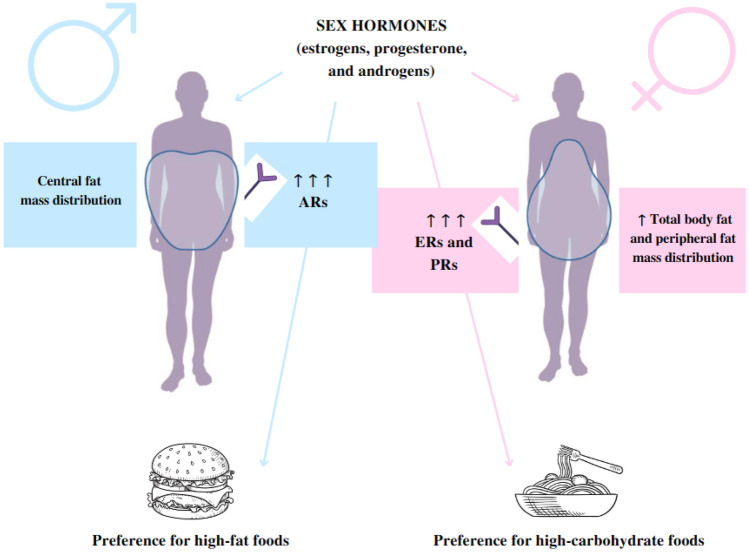
“Androgens are generally associated with more fat accumulation in the abdomen, whereas estrogens may influence fat accumulation in the buttocks and thighs 21 .”
BackgroundCao, X., Wang, N., Yang, M. J., & Zhang, C. (2025) · International Journal of Molecular Sciences · doi:10.3390/ijms26146962 · Cited by 79
“Estrogen up-regulates PNPLA3 to promote TG storage in subcutaneous adipose tissue (SAT), whereas androgen increases the VAT/SAT ratio; sex hormones also influence eating style, with men preferring fats and women preferring carbohydrates [60].”
Social, cultural and ethnic determinants of obesity: From pathogenesis to treatment
Capoccia, D., Milani, I., Colangeli, L., Parrotta, M. E., Leonetti, F., & Guglielmi, V. (2025) · Nutrition Metabolism and Cardiovascular Diseases · doi:10.1016/j.numecd.2025.103901 · Cited by 68
Ayesh, H., Nasser, S. A., Ferdinand, K. C., & Leon, B. G. C. (2025) · Circulation Research · doi:10.1161/circresaha.124.325535 · Cited by 46
Muscogiuri, G., Verde, L., Frías-Toral, E., Reytor-González, C., Annunziata, G., Proganò, M., Savastano, S., Simancas‐Racines, D., Colao, A., & Barrea, L. (2024) · Journal of Translational Medicine · doi:10.1186/s12967-024-05733-3 · Cited by 39
“Sexual dimorphism influences several features of obesity, including body composition, endocrine hormonal profiles, and low-grade chronic inflammation [7, 8].”
BackgroundInfluentialSelf-citationMASLD: Prevalence, Mechanisms, and Sex-Based Therapies in Postmenopausal Women
Milani, I., Chinucci, M., Leonetti, F., & Capoccia, D. (2025) · Biomedicines · doi:10.3390/biomedicines13040855 · Cited by 38
“Social and environmental stressors significantly affect the relationship between ovarian hormones and food preferences, with emotional stress often leading to increased consumption of fatty and sugary foods [277].”
Rinaldi, R., Nucci, S. D., Donghia, R., Donvito, R., Cerabino, N., Chito, M. D., Penza, A., Mongelli, F. P., Shahini, E., Zappimbulso, M., et al. (2024) · Nutrients · doi:10.3390/nu16101408 · Cited by 38
“Weight loss has similar but distinct effects: women have to face more psychological obstacles, while men have fewer comorbidity benefits [10].”
BackgroundFemale obesity: clinical and psychological assessment toward the best treatment
Guglielmi, V., Grave, R. D., Leonetti, F., & Solini, A. (2024) · Frontiers in Endocrinology · doi:10.3389/fendo.2024.1349794 · Cited by 45
Examining the growing challenge: Prevalence of diabetes in young adults (Review)
Murtaza, G., Riaz, S., Zafar, M., Raza, M. A., Kaleem, I., Imran, H., Al‑Harbi, A., Sabouri, A., Niaz, T. A., & Bashir, S. (2024) · Medicine International · doi:10.3892/mi.2024.201 · Cited by 40
“This youthful population in Asia comprising 65% of the total popu‑ lation is rapidly adapting to new lifestyles that were previously unfamiliar to them (26,28).”
Çol, B. K., Başaran, A. G., & Köse, B. G. (2024) · Frontiers in Psychology · doi:10.3389/fpsyg.2024.1407233 · Cited by 33
“This is thought to be because, similar to other studies (Muscogiuri et al., 2024; McCarthy and Warne, 2022; Kim and Shin, 2020), the rate of being overweight/obese in female students (10.5”
InfluentialAuerbach, N., Liu, V. N., Huang, D. R., Clift, A. K., Al-Ammouri, M., & El-Osta, A. A. R. (2025) · BMJ Public Health · doi:10.1136/bmjph-2024-002519 · Cited by 31
“The recent release of the final draft guidance from NICE approving tirze-patide for obesity treatment highlights the importance of understanding perceptions and attitudes toward GLP-1RAs.”
Burns, J. L., Miller, C. H., Fontaine‐Bisson, B., & Connor, K. L. (2025) · Journal of Trace Elements in Medicine and Biology · doi:10.1016/j.jtemb.2025.127684 · Cited by 30
D’Antonoli, T. A., Blüthgen, C., Cuocolo, R., Klontzas, M. E., Ponsiglione, A., & Koçak, B. (2025) · Diagnostic and Interventional Radiology · doi:10.4274/dir.2025.253445 · Cited by 43
Liver and obesity: a narrative review
Lonardo, A., & Weiskirchen, R. (2025) · Exploration of Medicine · doi:10.37349/emed.2025.1001334 · Cited by 23
Sawicka‐Gutaj, N., Gruszczyński, D., Nijakowski, K., Derwich-Rudowicz, A., Krenz, M., Kumar, A. A., Lu, P.-Y., & Ruchała, M. (2026) · International Journal of Obesity · doi:10.1038/s41366-026-02088-1 · Cited by 24
“Looking ahead, further research should aim to de fi ne the most effective combinations of pharmacotherapy and lifestyle interventions, with a focus on preserving lean mass and sustaining long-term metabolic health.”
Weighty matters: Unraveling the impact of obesity on colorectal cancer and nutritional interventions
Simancas‐Racines, D., Reytor-González, C., Frías-Toral, E., Katsanos, C. S., & Hidalgo, R. (2025) · Seminars in Cancer Biology · doi:10.1016/j.semcancer.2025.06.004 · Cited by 21
Sanctis, J. B. D., Noria, G. B., & García, A. H. (2025) · International Journal of Molecular Sciences · doi:10.3390/ijms26020862 · Cited by 17
“Additionally, alterations in energy demands or surgical interventions may affect the dynamics of visceral adipose tissue, potentially enhancing the local immune cell response by stabilizing the inflammatory environment [45,46].”
InfluentialThe role of BDNF on food intake and overweight: Linking neuroplasticity and obesity
Sequeira‐Cordero, A., Brenes, J. C., & Vindas-Smith, R. (2025) · Progress in Neuro-Psychopharmacology and Biological Psychiatry · doi:10.1016/j.pnpbp.2025.111457 · Cited by 16
Pharmacological treatment of obesity in adults in Norway 2004–2022
Ruiz, P. L., Karlstad, Ø., Nøkleby, K., Slåtsve, K., Gulseth, H. L., Meyer, H. E., Sveen, K. A., Qvigstad, E., & Furu, K. (2024) · Diabetes, Obesity and Metabolism · doi:10.1111/dom.15515 · Cited by 14
Sambola, A., Campuzano, R., Castro, A., Goya, M., Coronado, P., Fernández-Olmo, R., Tablado, M. Á. M., Ortiz-Cortés, C., Ortolà, X., Pallarés‐Carratalá, V., et al. (2025) · Revista Española de Cardiología · doi:10.1016/j.recesp.2025.01.015 · Cited by 13
Gender-Difference in Response to Treatment with Liraglutide 3.0 mg
Milani, I., Guarisco, G., Chinucci, M., Gaita, C., Leonetti, F., & Capoccia, D. (2024) · doi:10.20944/preprints202405.0568.v1 · Cited by 11
Sex-Differences in Response to Treatment with Liraglutide 3.0 mg
(2024) · doi:10.3390/jcm13123369 · Cited by 11
“In addition, the availability of new anti-obesity drugs has renewed interest in pharmacological therapy of obesity, which has been recognized as an innovative strategy for its management [6].”
BackgroundResultInfluentialLamichhane, G., Lee, D., Franks, R., Olawale, F., Jin, J.-B., Egan, J. M., & Kim, Y. (2024) · Biology · doi:10.3390/biology13070472 · Cited by 14
“Factors such as higher fat mass in females, discrepancies due to different sex hormones, and behavioral disparities are among the gender-specific factors affecting obesity that are often overlooked [36].”
BackgroundMuscogiuri, G., Caporusso, M., Caruso, P., Poggi, C. D., Vitale, M., Zurru, A., Colao, A., & the Italian Study Group on Gender Difference in Endocrine Diseases (2024) · Journal of Endocrinological Investigation · doi:10.1007/s40618-024-02491-3 · Cited by 14
“Conversely, estrogens have protective effects, in fact, in the post-menopausal period, due to the physiological decline of estrogens, this effect declines, so insulin sensitivity gets worse and the risk of impaired glucose metabolism and T2D increases [ 11, 45].”
InfluentialSelf-citationIncreasing Obesity Rates Worldwide from 1976 to 2016: The Obesity Epidemic
Keller, K., Schmitt, V. H., Hahad, O., Espinola–Klein, C., & Hobohm, L. (2026) · Journal of Clinical Medicine · doi:10.3390/jcm15010394 · Cited by 12
“In accordance with other studies [31–33], our results showed a higher prevalence of obesity in women.”
Sambola, A., Campuzano, R., Castro, A., Goya, M., Coronado, P., Fernández-Olmo, R., Tablado, M. Á. M., Ortiz-Cortés, C., Ortolà, X., Pallarés‐Carratalá, V., et al. (2025) · Revista Española de Cardiología (English Edition) · doi:10.1016/j.rec.2025.01.005 · Cited by 10
“47,48 Women have less initial success with abstinence and a greater negative emotional response.”
Correlation Between Obesity and Mental Health Status in Riyadh, Saudi Arabia
Nasser, K. A. A., Alsaffar, Y. K., & Alhazmi, A. (2024) · Cureus · doi:10.7759/cureus.53976 · Cited by 11
“This observation is closely related to findings reported in the study by Cooper et al. and other studies [28, 29].”
ResultSexual dimorphism in the development and function of the melanocortin system
Claret, M., & Haddad-Tóvolli, R. (2025) · Reviews in Endocrine and Metabolic Disorders · doi:10.1007/s11154-025-09983-4 · Cited by 7
“Similarly, in humans, men are more susceptible to developing metabolic disorders, with higher rates of T2D during childhood and reproductive age [6, 35–37].”
Isaac, B. T. J., Alexander, C., John, R., Barney, A. M., Thangakunam, B., & Christopher, D. J. (2025) · Scientific Reports · doi:10.1038/s41598-025-08953-9 · Cited by 7
Liu, T., Sun, Y., & Zhao, X. (2025) · Molecules · doi:10.3390/molecules30183721 · Cited by 7
“Notably, significant gender differences exist in the pathophysiological mechanisms of obesity; for example, estrogen levels play a crucial role in female obesity [144].”
Ilie, I. R. P., Ghibu, S., Butucă, A., Dobrea, C. M., Frum, A., Homorodean, C., Chiş, A. A., & Morgovan, C. (2026) · Pharmaceuticals · doi:10.3390/ph19060876 · Cited by 7
Téoule, P., Požek, E., Hielscher, T., Reißfelder, C., Stier, C. K., Otto, M., & Schölch, S. (2024) · Die Chirurgie · doi:10.1007/s00104-024-02149-z · Cited by 7
Use of Semaglutide (Wegovy) in Adults in France: A Nationwide Drug Utilization Study
Haddy, N., Jourdain, H., Desplas, D., Bertrand, M., Jabagi, M.-J., Rives‐Lange, C., & Zureik, M. (2025) · BioDrugs · doi:10.1007/s40259-024-00699-6 · Cited by 7
“Similar trends have been observed for bariatric surgery [21], in which women are more likely than men to undergo these procedures (22% for men vs 78% for women) [22–24].”
InfluentialStorz, M. A., Stübing, F., & Huber, R. (2025) · Nutrition Journal · doi:10.1186/s12937-025-01088-7 · Cited by 7
“There has been a growing awareness about the importance of understanding sex differences in obesity [39].”
Predictive performance of traditional and novel anthropometric indices for diabetes and hypertension
Pezeshki, M., Esmaeili, S., Mahdavi‐Gorabi, A., Sadegi, T., Kiaee, Z. F., Assar, O., Semnani, K., & Qorbani, M. (2025) · Journal of Diabetes Investigation · doi:10.1111/jdi.70172 · Cited by 6
“This limitation famously impacts the use of BMI 30 ; however, it stands to reason that it also applies to indices derived from the same indirect measurements of adiposity.”
Sehn, A. P., Brand, C., Tornquist, L., Tornquist, D., Silveira, J. F. D. C., Gaya, A. R., Cristi‐Montero, C., Burns, R. D., Renner, J. D. P., & Reuter, C. P. (2024) · European Journal of Sport Science · doi:10.1002/ejsc.12070 · Cited by 7
Jeong, J.-S., Jegal, H., Ko, J., Kim, J., Kim, J., Chung, E.-H., Boo, S.-Y., Lee, S. H., Lee, G., Park, S., et al. (2025) · International Journal of Nanomedicine · doi:10.2147/ijn.s508676 · Cited by 6
“46,47 In obese individuals in a systemic inflammatory state, exposure to TiO 2 -NPs may induce inflammation.”
Alexandre, M., Poínhos, R., CRI-O Group, Oliveira, B. M. P. M., & Correia, F. (2025) · Nutrients · doi:10.3390/nu17111858 · Cited by 7
“In fact, the conventional view holds that females’ adipose tissue is mainly distributed in the hips and thighs (gynoid obesity), whereas males have an abdominal and upper thoracic distribution of adipose tissue (android obesity) [47].”
The Relationship between Executive Functions and Body Weight: Sex as a Moderating Variable
Ilardi, C. R., Monda, A., Iavarone, A., Chieffi, S., Casillo, M., Messina, A., Villano, I., Federico, G., Alfano, V., Salvatore, M., et al. (2024) · Behavioral Sciences · doi:10.3390/bs14030258 · Cited by 6
“This likely results from the interplay of socio-cultural, environmental, and genetic factors [73].”
BackgroundAlessi, D., McCreery, C. V., & Zomorrodi, A. R. (2025) · Frontiers in Physiology · doi:10.3389/fphys.2025.1586750 · Cited by 6
Fernández-Cardero, Á., Sierra-Cinos, J. L., López-Jiménez, A., Cuadrado, C., de Miguel, B. B., García‐Conesa, M., Bravo, L., & Sarriá, B. (2024) · Nutrients · doi:10.3390/nu16081143 · Cited by 6
“These results dissent from previous studies showing that woman, regardless of their weight, consume more foods rich in carbohydrates and simple sugars, while men tend to have a higher consumption of food rich in fats [42].”
ResultKushner, R. F., Johansen, O. E., Araujo Torres, K., Phan, T.-M., & Marczewska, A. (2025) · Obesities · doi:10.3390/obesities5020029 · Cited by 5
“However, a higher proportion of women participate in weight-loss clinical trials [106].”
Oguta, J. O., Breeze, P. R., Wambiya, E. O. A., Akoth, C., Mbuthia, G. W., Otieno, P. O., Ombiro, O. N., Kisaka, Y., Mbau, L. K., Onyango, E., et al. (2024) · Global Heart · doi:10.5334/gh.1363 · Cited by 5
Asadabadi, F. S., & Karami, K. (2025) · BMC Public Health · doi:10.1186/s12889-025-22832-y · Cited by 6
“Girls also experience more psychological challenges than boys when it comes to issues related to obesity and body image [15].”
Rectus diastasis in males: a narrative review
Nienhuijs, S. W., Wijgers, R., Schipper, E. E., Reilingh, T. S. D. V., & Wegdam, J. A. (2025) · Hernia · doi:10.1007/s10029-025-03404-w · Cited by 5
Beyond Sex Differences: Body Composition and Dietary Behaviors
Evans, C., Tartar, J. L., Banks, J., Austin, J., & António, J. (2025) · Muscles · doi:10.3390/muscles4030038 · Cited by 6
“Women tend to have higher levels of leptin, a hormone that regulates appetite, likely due to higher amounts of body fat [22].”
Huang, T., Liao, X., Zhang, Y., Wang, P., Li, P., Fang, J., & Shao, X. (2025) · Medicine · doi:10.1097/md.0000000000044372 · Cited by 5
“[96] Given the protective effects of estrogen against abdominal adiposity and potential differences in treat-ment responses between pre-and postmenopausal women, the generalizability of our findings to male populations may be limited.”
New Body Mass Index Cut-Off Point for Obesity Diagnosis in Young Thai Adults
Kuichanuan, T., Kitisatorn, T., & Pongchaiyakul, C. (2024) · Nutrients · doi:10.3390/nu16142216 · Cited by 5
“Obesity is more common in women than men for several reasons, including societal, environmental, behavioral, and physiological factors, metabolic responses, and hormonal impacts [20].”
BackgroundUnravelling metabolic factors impacting iNKT cell biology in obesity
Wilkin, C., Piette, J. G., & Legrand-Poels, S. (2024) · Biochemical Pharmacology · doi:10.1016/j.bcp.2024.116436 · Cited by 5
Gong, J., Liu, F., Yu, P., Wang, P., Si, C., Wang, X., Zhou, H., Gu, J., Qin, A., & Song, F. (2024) · BMC Medicine · doi:10.1186/s12916-024-03592-9 · Cited by 5
Cicala, G., Russo, G., Santoro, V., Franchina, T., Silvestris, N., Santarpía, M., Spina, E., & Barbieri, M. A. (2024) · Pharmaceuticals · doi:10.3390/ph17101266 · Cited by 5
Formisano, E., Proietti, E., Borgarelli, C., Sukkar, S. G., Albertelli, M., Boschetti, M., & Pisciotta, L. (2024) · Journal of Endocrinological Investigation · doi:10.1007/s40618-024-02368-5 · Cited by 6
“In 2010, the Italian prevalences of overweight and obesity were 31.8% and 8.9%, respectively, but these data are progressively increasing [30, 31].”
BackgroundInfluentialA Survey on the Evaluation of Monosodium Glutamate (MSG) Taste in Austria
Iannilli, E., Pötz, E. L., & Hummel, T. R. (2024) · Foods · doi:10.3390/foods14010022 · Cited by 5
“However, the association between umami taste phenotypes and variations in umami taste receptor genes remains unclear at this point, and further studies are needed [85].”
Asemani, S., Jourabchi‐Ghadim, N., Arefhosseini, S., & Ebrahimi‐Mameghani, M. (2025) · Science Progress · doi:10.1177/00368504251333218 · Cited by 5
Altıntaş, F., Akca, H., Anber, T., Sayın, D., Tunç-Ata, M., Küçükatay, V., & Akbudak, İ. H. (2025) · Physiology & Behavior · doi:10.1016/j.physbeh.2025.114822 · Cited by 4
Reytor-González, C., Jiménez-Flores, E., Toral-Noristz, M., Campuzano-Donoso, M., Román-Galeano, N. M., & Simancas‐Racines, D. (2025) · International Journal of Molecular Sciences · doi:10.3390/ijms262211130 · Cited by 4
“This chronic inflammation promotes insulin resistance, ectopic fat deposition, vascular dysfunction, and multi-organ damage [4,6].”
Hu, Q., Xu, Z., Su, Z., Li, Z., Zhao, X., Pan, L., & Wang, L. (2026) · Frontiers in Nutrition · doi:10.3389/fnut.2026.1760511 · Cited by 4
Sex differences in Alzheimer's disease plasma biomarker levels and clinical utility
Milà‐Alomà, M., Hausle, I., Myoraku, A., Sorensen, C., Thropp, P., Shaw, L. M. J., Weiner, M. W., Tosun, D., & Initiative, A. D. N. (2026) · Alzheimer s & Dementia · doi:10.1002/alz.71244 · Cited by 6
Aldakhil, S., Alromaih, Y., Aljuaylan, N., Alkhalaf, G. A., Alharbi, A., & Alsaud, J. S. (2025) · Cureus · doi:10.7759/cureus.81735 · Cited by 5
Abdelrahman, Z. R., Maaliah, M. S., & Abdalla, S. (2025) · Food Science & Nutrition · doi:10.1002/fsn3.70934 · Cited by 4
“Many factors play significant roles in obesity prevalence including biological, behavioral, socio-economic factors, and type of gender (Muscogiuri et al. 2024).”
The Role of Tranexamic Acid in Sleeve Gastrectomy: A Systematic Review and Meta-Analysis
Al-Juhani, A. A., Sharaf, G. F., Aseri, S., Alosaimi, H., Alharkan, S. A., Alghamdi, J. K., Hariri, F. S., Daak, L. I., & Daak, I. (2024) · Cureus · doi:10.7759/cureus.54269 · Cited by 4
“…the actual sex-based prevalence of obesity and sex-based cases undergoing LSG surgery could be attributed to the fact that body image disturbances are more common in females, who are often dissatisfied with their weight and are more likely to try various diets to lose weight than males [48,49].”
BackgroundLee, K. M., Mun, J. Y. Y., Choong, E.-L., & Janssen, S. M. J. (2024) · Psychological Reports · doi:10.1177/00332941241302805 · Cited by 4
“However, despite engaging in physical activity more often, a higher percentage of males are categorised as overweight or obese, which could be due to their predisposition towards high-fat foods (Muscogiuri et al., 2024).”
Wang, Z., Hu, L., Chen, A., Wu, Y., Wang, G., Xie, X., He, Q., Xue, Y., Lin, J., Zheng, Z., et al. (2025) · Nutrition Metabolism and Cardiovascular Diseases · doi:10.1016/j.numecd.2025.104287 · Cited by 5
Akkila, S. S., Noel, K. I., & Ibraheem, M. M. (2025) · Al-Rafidain Journal of Medical Sciences · doi:10.54133/ajms.v8i2.1782 · Cited by 3
“…findings in that obesity is more prevalent in females in many countries, as women have higher levels of body fat, which, when combined with their generally shorter stature and less physical activity, result in greater values for anthropometric parameters of obesity like BMI and WHtR [23-25].”
Zhang, G., Zhang, H., Liu, G. G., & Shi, L. (2025) · Healthcare · doi:10.3390/healthcare13172225 · Cited by 3
Machado‐Fragua, M. D., Sabia, S., Fayossé, A., Silva, G. C., Landré, B., & Singh‐Manoux, A. (2025) · Obesity Reviews · doi:10.1111/obr.70054 · Cited by 3
“Previous research has shown sex differences in the distribution of BMI categories and in the prevalence of IADL/ADL limitations [26–28].”
Nowak, D., Fronczek, M., Czapor, T., Osadnik, T., Gierlotka, M. J., Tomasik, T., Windak, A., Kuras, A., Miga, M., Kulkowska-Gaj, A., et al. (2026) · Kardiologia Polska · doi:10.33963/v.phj.110885 · Cited by 4
Liuli, A., Zhang, T., & Feng, Z. (2026) · Frontiers in Endocrinology · doi:10.3389/fendo.2026.1822659 · Cited by 5
“Estrogen tends to promote gluteofemoral and subcutaneous fat storage while limiting visceral fat expansion, whereas androgens and androgen metabolism in fl uence both adipose distribution and adipocyte function in a sex-dependent manner (27, 207, 224, 225).”
Reconsidering Semaglutide Use for Chronic Obesity in Patients of Asian Descent: A Critical Review
Lu, J., Williams, G., & Fanning, S. (2024) · Cureus · doi:10.7759/cureus.73111 · Cited by 3
Davies, J. C., Choo-Kang, C., Soepnel, L. M., Geffen, H., Africa, C., Mtintsilana, A., Bovet, P., Viswanathan, B., Bedu-Addo, K., Plange‐Rhule, J., et al. (2025) · Scientific Reports · doi:10.1038/s41598-025-85383-7 · Cited by 4
Santangelo, C., Scazzocchio, B., Varí, R., Ajmone‐Cat, M. A., Tammaro, A., Tait, S., Masciola, I., Tassinari, R., Vincentini, O., Benedetto, R. D., et al. (2024) · Nutrients · doi:10.3390/nu16213595 · Cited by 3
de Oliveira, T. M., Moreira, P. D. A., dos Anjos, M. S., de Assumpção, D., & Corona, L. P. (2025) · Cadernos de Saúde Pública · doi:10.1590/0102-311xpt233323 · Cited by 3
Zhou, M., Wang, Y., Yao, S., Wen, X., Sun, J., Wang, Y., & Huang, L. S. (2025) · Archives of Public Health · doi:10.1186/s13690-025-01545-z · Cited by 3
“Specifically, men show higher obesity rates than women [29]; second, individuals with higher education levels have a clearer understanding of the risks related to obesity-related diseases and pay more attention to the prevention of obesity in themselves and others [30]; and third, people with lower…”
What Is the Role of Sex Differences in Obesity-Associated Chronic Kidney Disease?
Sandino, J., González-García, C., Hernández-Velasco, P., Morales, E., & Sandino, J. (2025) · The Nephron journals/Nephron journals · doi:10.1159/000546354 · Cited by 3
“For instance, in men, excess fat is mainly located in central visceral areas, which may explain the increased cardiovascular risk of obese men compared to obese women, who tend to store excess fat in non-visceral tissue [7].”
Impacts of Diets and Food Plans in Health and Diseases—A Narrative Review
Rahman, M. M., Pandit, M., Thukral, B., & Khandoker, M. M. (2025) · Food Safety and Health · doi:10.1002/fsh3.70043 · Cited by 5
O’Hara, R., Stephenson, J. R., Goyder, E., Eastburn, S., & Jordan, H. (2025) · BMC Public Health · doi:10.1186/s12889-025-24152-7 · Cited by 2
“Other literature exploring obesity prevention and management strategies has also highlighted gender related heterogeneity [38–41].”
Pariès, M., Teiti, I., Aubry, M., Patin, É., Madec, Y., Chung, K., Boucheron, P., Lastère, S., Etoundi, M., Paoaafaite, T., et al. (2025) · The Lancet Regional Health - Western Pacific · doi:10.1016/j.lanwpc.2025.101746 · Cited by 3
“52 These factors may partly explain the higher prevalence of the MHO phenotype in women (261 women, 52 ⋅ 4% vs. 147 men, 42 ⋅ 8%; p = 0 ⋅ 034) in our study.”
Bozo, S., Pojani, E., Hoxha, I. I., Hoxha-Lami, B., & Bozo, D. (2026) · Edelweiss Applied Science and Technology · doi:10.55214/2576-8484.v10i2.12167 · Cited by 2
“For instance, women often have higher body fat percentages, which can influence the bioavailability of vitamin D [46].”
Acetamiprid exerts sex-specific effects on adipose tissue of subjects with severe obesity
Zanchi, G., Tammaro, A., Monteleone, V., Varí, R., Santangelo, C., Silecchia, G., Petrucciani, N., Manella, S., Silenzi, A., Tait, S., et al. (2026) · Frontiers in Toxicology · doi:10.3389/ftox.2026.1769863 · Cited by 2
Hur, H. J., Yang, H. J., Kim, M. J., Jang, H.-J., Lee, B.-K., Kim, M.-S., & Park, S. (2026) · Nutrition & Metabolism · doi:10.1186/s12986-026-01116-1 · Cited by 2
“Sex-specific adipokine profiles—higher leptin in women and lower adiponectin in men—further modulate dietary responses [28, 29].”
Choi, Y., Jang, J., & Kim, N. (2024) · Ewha Medical Journal · doi:10.12771/emj.2024.e19 · Cited by 2
“Our data revealed a sex difference in the increased risk of GC, with the difference being more pronounced in men with obesity [35].”
BackgroundThe Hormonal dysregulation and its consequences in Obese Women - overview
Pala, K., Tomaszewska, W., Siudziński, P., Łyko, M., Skoczylas, A., Golińska, M., Nowak, A., Kurasz, J., Podlasiewicz, W., Dudziak, P., et al. (2025) · Journal of Education Health and Sport · doi:10.12775/jehs.2025.77.56907 · Cited by 3
Enhancing Obesity Risk Classification: Tackling Data Imbalance with SMOTE and Deep Learning
Syofian, M., & Maulana, I. (2024) · Jurnal Riset Informatika · doi:10.34288/jri.v6i4.349 · Cited by 2
Onboarding obesity management in cardiovascular care: A cardiologist's guide to latest advances
Schiele, F., Diévart, F., Jacobi, D., Angoulvant, D., Czernichow, S., Puymirat, É., Sabouret, P. F., & Aboyans, V. (2025) · American Journal of Preventive Cardiology · doi:10.1016/j.ajpc.2025.100987 · Cited by 2
Khadari, H. A., Mousavi, R. F., & Abrishami, L. H. (2025) · Biological Research For Nursing · doi:10.1177/10998004251340024 · Cited by 2
“…conditions are particularly prevalent among women and are strongly associated with the development of metabolic syndrome, which can further result in type 2 diabetes, cardiovascular diseases, and non-alcoholic fatty liver disease (Flegal et al., 2016; Muscogiuri et al., 2024; Vardell, 2020).”
Attygalle, D. S. V., Silva, D. K. M. D., & Warnakulasuriya, S. S. P. (2025) · medRxiv · doi:10.1101/2025.04.25.25326095 · Cited by 2
“This finding supports the global trends where males are more likely to exhibit higher BMI levels [37].”
Motivational dysregulation with melanocortin 4 receptor haploinsufficiency
Steiner, A. M., Roscoe, R. F., Booze, R. M., & Mactutus, C. F. (2024) · NeuroImmune Pharmacology and Therapeutics · doi:10.1515/nipt-2024-0011 · Cited by 1
Hemodilution and Serum Progesterone Regulation in Males with Obesity
Shen, S.-W., You, J.-J., Xu, X., Ping, Z., Song, C., Shen, Z., & Li, F. (2025) · Journal of Inflammation Research · doi:10.2147/jir.s525354 · Cited by 1
“In Dataset 1, a positive association between lymphocyte counts and progesterone concentrations (β = 0.151, p 0.05) suggests an adaptive immune response to obesity-related inflammation.”
InfluentialGinting, J. B., & Suci, T. (2025) · Healthy Tadulako Journal (Jurnal Kesehatan Tadulako) · doi:10.22487/htj.v11i1.1481 · Cited by 1
Yang, M., & Wang, T. (2025) · Journal of Prevention & Intervention in the Community · doi:10.1080/10852352.2025.2586383 · Cited by 1
“Previous literature suggests that males have a higher prevalence of overweight (24.0 � BMI 30.0) (Xie et al., 2023) and obesity (BMI � 30.0) (Muscogiuri et al., 2024), indicating significantly higher BMI among males compared to females.”
InfluentialZhang, Y., Ma, R., Ma, Y., & Zhou, R. (2025) · Frontiers in Public Health · doi:10.3389/fpubh.2025.1680402 · Cited by 2
“The underlying reasons include the frequent association of male obesity with “muscularity” or “health,” leading to delayed diagnosis and intervention, whereas females are more likely to be screened and monitored due to aesthetic standards, facilitating early intervention (33).”
The Relationship Between Obesity and Leptin Levels with Olfactory Dysfunction
Rambe, A. Y. M., Sani, B. M., Nursiah, S., Pahala, M., Harahap, H., Yudhistira, A., & Ashar, T. (2025) · Indian Journal of Otolaryngology and Head & Neck Surgery · doi:10.1007/s12070-025-06200-1 · Cited by 1
Repiská, G., Gurecká, R., Belica, I., Janšáková, K., Babinská, K., Lakatošová, S., Tomova, A., Jasenovec, T., Dukonyová, D., Blaško, F., et al. (2025) · Bratislavské lekárske listy/Bratislava medical journal · doi:10.1007/s44411-025-00443-8 · Cited by 2
“The need of gender specific approach in obesity-related studies, as well as in clinical practice was pointed out in literature as well [31].”
Sex differences in risk factors among Alzheimer's dementia patients with metabolic encephalopathy
Ojo, D. T., Broughton, P. X., Imeh‐Nathaniel, A., Faulstich, N. G., Patterson, J. W., Bucci, K. J., Pham, D., Brewer, P. C., Omar, S. H., Roley, L. T., et al. (2025) · Archives of Gerontology and Geriatrics Plus · doi:10.1016/j.aggp.2025.100213 · Cited by 1
Khiangte, L., Laldinpuia, J., & Sangthang, S. (2025) · Precision Nutrition · doi:10.1097/pn9.0000000000000124 · Cited by 1
The effect of moderate-intensity combined exercise in decreasing inflammation in young obese women
Rejeki, P. S., Prabowo, K. S., Ihsan, M. A., Hakim, F. A., Sari, D. R., Kartiko, D. C., Indarto, D., Dewi, N. T., Zamri, E. N., & Pranoto, A. (2025) · Pedagogy of Physical Culture and Sports · doi:10.15561/26649837.2025.0604 · Cited by 1
“[2], which may be attributed to differences in adipose tissue distribution and hormonal influence [3].”
Rafi, M. A., Anika, U. S., & Hossain, G. (2026) · BMJ Open · doi:10.1136/bmjopen-2025-112257 · Cited by 1
Sarmiento-Andrade, Y., Ordóñez, M. A. O., Sisalima, J. P., Suárez, R., Cabrera, R. S. A., Bautista-Valarezo, E., & Badanta, B. (2026) · Journal of Clinical Medicine · doi:10.3390/jcm15020628 · Cited by 1
Estrogen Exposure is Associated With Reduced Otosclerosis Risk in Obesity and Hormone Therapy
Smith, M., Iyer, S., Clark, D. E. S., Warren, S., & McKinnon, B. J. (2026) · Otology & Neurotology Open · doi:10.1097/ono.0000000000000083 · Cited by 1
“Last, it is important to note that clinical classification of obesity is based on BMI and does not accordingly account for individuals with increased muscle mass, or differentiate between central, visceral, and subcutaneous adiposity (13).”
Metadata
- Authors
- Muscogiuri, G., Verde, L., Vetrani, C., Barrea, L., Savastano, S., & Colao, A.
- Affiliations
- University of Naples Federico II (IT)
- Federico II University Hospital (IT)
- Corresponding author
- Muscogiuri, G.
- Venue
- Journal of Endocrinological Investigation
- Published
- 2023-09-23
- Volume
- 47
- Issue
- 2
- Pages
- 299-306
- ISSN
- 0391-4097 (ISSN-L)
- 1720-8386
- PMC
- PMC10859324
- OpenAlex
- W4386982751
- Semantic Scholar
- 546a1413b23a170081b88c5992513d5d1be0ba3a
- Cited by
- 164
- References
- 64
- Citations by year
- 2026: 63 · 2025: 66 · 2024: 34 · 2023: 1
- FWCI
- 5.96
- Type
- journal article
- Language
- en
- Open access
- hybrid
- doi.org
- Licence
- cc-by
- creativecommons.org/licenses/by/4.0 (tdm)
- creativecommons.org/licenses/by/4.0 (vor)
- Locations
- Journal of Endocrinological Investigation (publishedVersion, cc-by)
- PubMed Central (publishedVersion, cc-by)
- PubMed (publishedVersion)
- Funders
- Università degli Studi di Napoli Federico II
- Topics
- Health Sciences › Medicine › Pharmacology (medical) › Pharmacology and Obesity Treatment
- Health Sciences › Medicine › Public Health, Environmental and Occupational Health › Obesity, Physical Activity, Diet
- Health Sciences › Medicine › Public Health, Environmental and Occupational Health › Obesity and Health Practices
- Keywords
- obesity, gender differences, body fat distribution, android obesity, gynoid obesity, anti-obesity drugs, pharmacokinetics, pharmacodynamics, liraglutide, naltrexone/bupropion, GLP-1 receptor agonists, bariatric surgery outcomes, obesity prevalence
- MeSH terms
- Liraglutide, Female, Humans, Male, Obesity, Weight Loss, Anti-Obesity Agents, Bariatric Surgery
About these checks
Registry, retraction, Cites and statistics results are computed, not judged, with one exception: a printed reference that no index lists is read once by a model before it counts as a citation error. Claims are extracted by a model and kept only when their quote appears verbatim in the text; each cited source is then checked, with a model’s help, for whether it says what the claim relies on. Those verdicts can be wrong — read the claim’s quote and the cited source before relying on one.
Statistics and arithmetic are recomputed, not judged.
Confidence bands are shown only for fields calibrated on our annotated test set. None is calibrated yet, so no band is shown.
What counts as a claim ›How we measure confidence ›How we check this ›
Are you an author, or do you see a problem with this page? Request a review
Data sources
Bibliographic data: Semantic Scholar, OpenAlex, Crossref.
Contains information from the Semantic Scholar Academic Graph Datasets, made available under the ODC Attribution License (ODC-BY 1.0).
Semantic Scholar’s data is described in: Kinney, R., et al. (2023). The Semantic Scholar Open Data Platform. arXiv:2301.10140.
