

The DOI matches its Crossref record; 66 of the 66 references it cites were found in a registry or an index.
Humidity Sensing of Stretchable and Transparent Hydrogel Films for Wireless Respiration Monitoring
Open accessAbstract
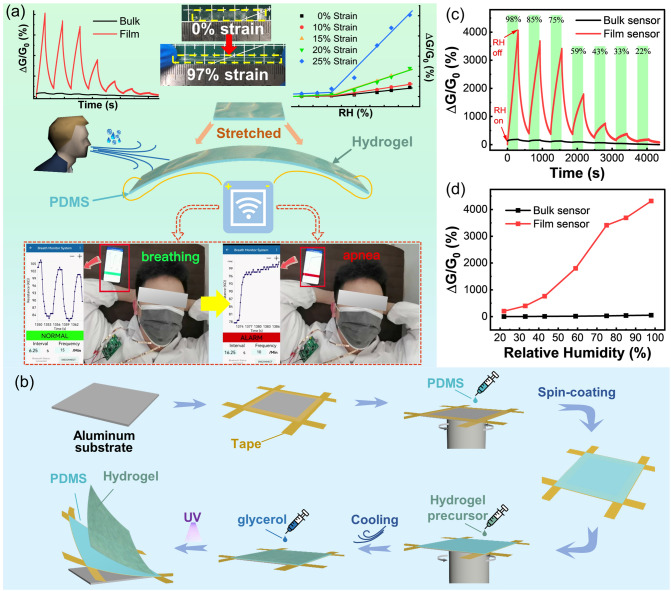
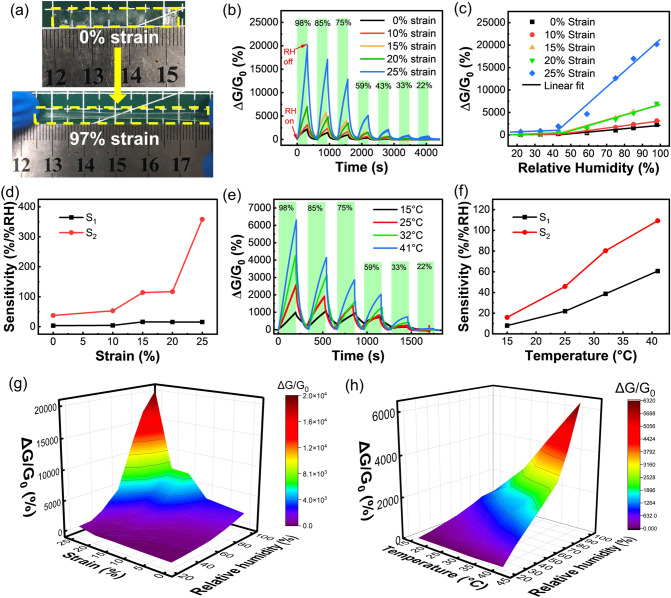
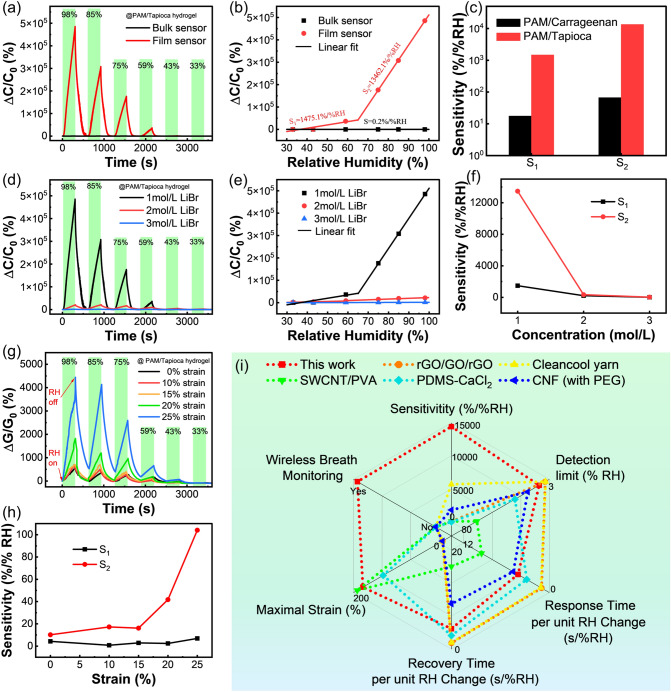
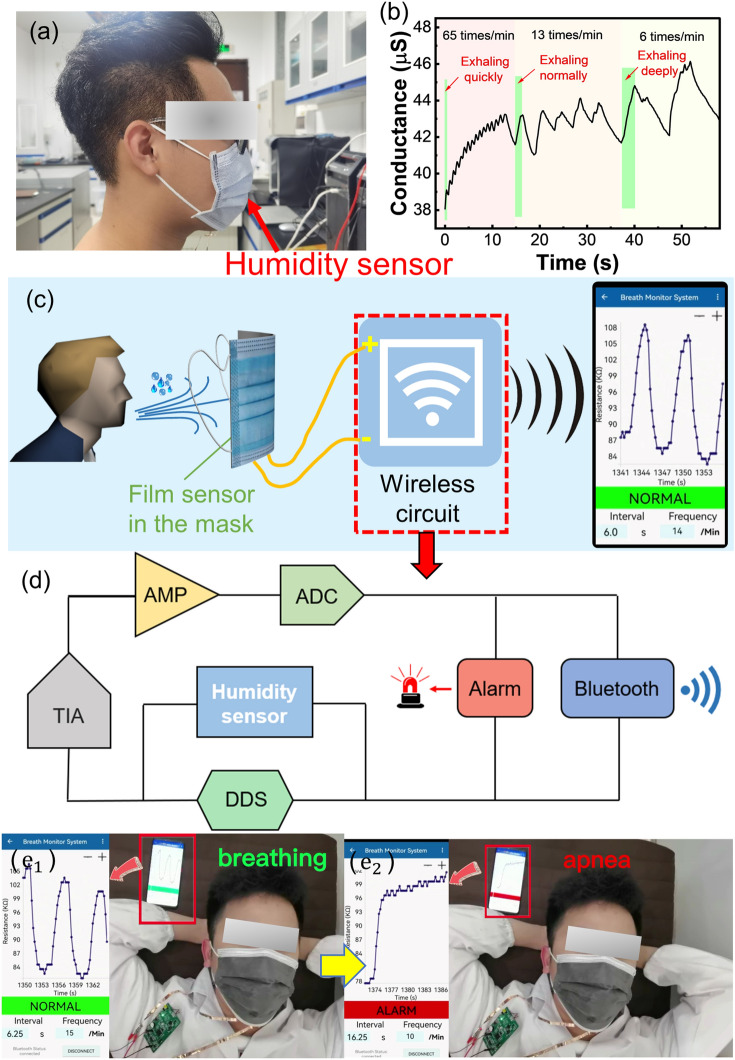
Respiratory monitoring plays a pivotal role in health assessment and provides an important application prospect for flexible humidity sensors. However, traditional humidity sensors suffer from a trade-off between deformability, sensitivity, and transparency, and thus the development of high-performance, stretchable, and low-cost humidity sensors is urgently needed as wearable electronics. Here, ultrasensitive, highly deformable, and transparent humidity sensors are fabricated based on cost-effective polyacrylamide-based double network hydrogels. Concomitantly, a general method for preparing hydrogel films with controllable thickness is proposed to boost the sensitivity of hydrogel-based sensors due to the extensively increased specific surface area, which can be applied to different polymer networks and facilitate the development of flexible integrated electronics. In addition, sustainable tapioca rich in hydrophilic polar groups is introduced for the first time as a second cross-linked network, exhibiting excellent water adsorption capacity. Through the synergistic optimization of structure and composition, the obtained hydrogel film exhibits an ultrahigh sensitivity of 13,462.1%/%RH, which is unprecedented. Moreover, the hydrogel film-based sensor exhibits excellent repeatability and the ability to work normally under stretching with even enhanced sensitivity. As a proof of concept, we integrate the stretchable sensor with a specially designed wireless circuit and mask to fabricate a wireless respiratory interruption detection system with Bluetooth transmission, enabling real-time monitoring of human health status. This work provides a general strategy to construct high-performance, stretchable, and miniaturized hydrogel-based sensors as next-generation wearable devices for real-time monitoring of various physiological signals.
Overview
The claims and statistics of this paper haven’t been checked yet.
Run the check — free, no account needed. It reads the open-access text and checks the sources it cites.
Integrity signals
Registry
Cites
Statistics
Figures
Verification
Claims the paper makes
The claims and statistics of this paper haven’t been checked yet.
Run the check — free, no account needed. It reads the open-access text and checks the sources it cites.
Claims other papers make about this one
Each is checked against this paper’s own text: does it say what the citing paper says it does?
The source backs part of the claim, not all of it — or backs it for a different population, condition or comparison.
In the citing paper
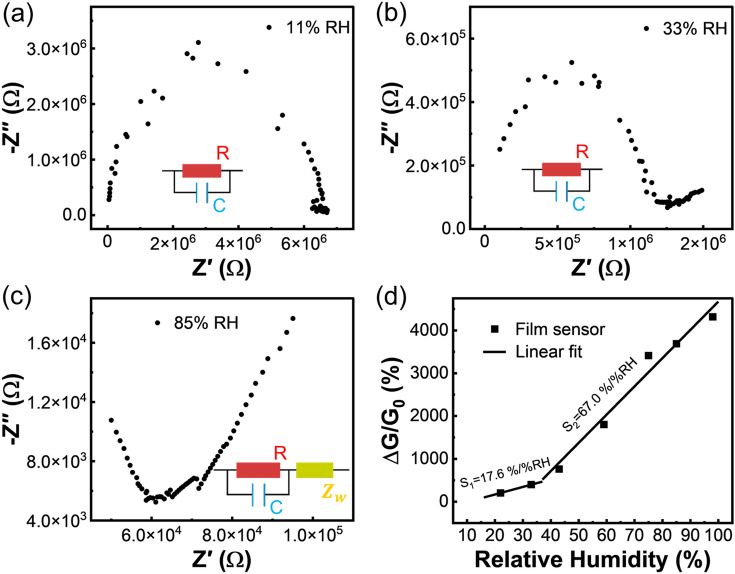
“When the humidity increases to 33% RH, the complex EIS spectrum still exhibits a complete semicircle. However, the graded Warburg impedance is introduced, and short diagonal lines appear in the low-frequency region, as shown in Fig. 12c.”
From Functionalized Hydrogel-Based Wearable Gas and Humidity Sensors. (2023) · cites this paper as Liang et al. [206]
Experimental — accuracy not yet measuredThe source backs part of the claim, not all of it — or backs it for a different population, condition or comparison.
In the citing paper
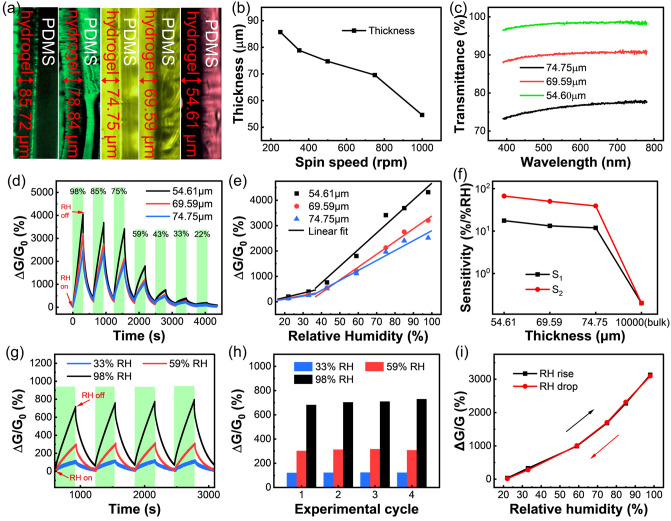
“Spin coating, combined with sol–gel method, was used to prepare thin-film hydrogel humidity sensors with thicknesses of a few microns and sensitivity of up to 13,462.1% RH%−1, which exceeds that of bulk hydrogels (Fig. 12e).”
From Functionalized Hydrogel-Based Wearable Gas and Humidity Sensors. (2023) · cites this paper as Liang et al. [206]
Experimental — accuracy not yet measuredThe source backs part of the claim, not all of it — or backs it for a different population, condition or comparison.
In the citing paper
“Liang et al. [206] prepared a transparent DN hydrogel with good mechanical deformability using PAM and cassava gum as raw materials, and introduced polyol and LiBr to further enhance its stability and reliability.”
From Functionalized Hydrogel-Based Wearable Gas and Humidity Sensors. (2023) · cites this paper as Liang et al. [206]
Experimental — accuracy not yet measuredThe cited source says what the claim attributes to it.
In the citing paper
“When the humidity was continuously increased to 37–98% RH, the semicircular part of the complex EIS spectrum gradually disappeared, and the slash part was gradually elongated, as shown in Fig. 12d. In this humidity range, the Warburg impedance becomes the main factor of the EIS spectrum, and the hydrogel-sensitive film absorbs more water molecules, thereby forming a continuous hydrated layer”
From Functionalized Hydrogel-Based Wearable Gas and Humidity Sensors. (2023) · cites this paper as Liang et al. [206]
The cited source says what the claim attributes to it.
In the citing paper
“As shown in Fig. 12b, the complex EIS spectrum becomes semicircular under a dry environment. The amount of water molecules adsorbed by the sensitive film is small, and ion-conducting channels are not formed.”
From Functionalized Hydrogel-Based Wearable Gas and Humidity Sensors. (2023) · cites this paper as Liang et al. [206]
The cited source says what the claim attributes to it.
In the citing paper
“Liang et al. [206] used electrochemical impedance spectroscopy (EIS) to detect the impedance changes of hydrogels at different humidity levels and confirmed their effects on the conductivity of hydrogels.”
From Functionalized Hydrogel-Based Wearable Gas and Humidity Sensors. (2023) · cites this paper as Liang et al. [206]
The cited source says what the claim attributes to it.
In the citing paper
“Furthermore, the humidity response of the hydrogel was highly dependent on its thickness.”
From Functionalized Hydrogel-Based Wearable Gas and Humidity Sensors. (2023) · cites this paper as Liang et al. [206]
The cited source says what the claim attributes to it.
In the citing paper
“The mask is able to recognize breathing patterns, demonstrating its potential application in sleep apnea disorders monitoring.”
From Functionalized Hydrogel-Based Wearable Gas and Humidity Sensors. (2023) · cites this paper as Liang et al. [206]
The cited source says what the claim attributes to it.
In the citing paper
“The hydrogel sensor has a high sensitivity of 13,462.1% RH%−1 to humidity and can still operate in the stretched state.”
From Functionalized Hydrogel-Based Wearable Gas and Humidity Sensors. (2023) · cites this paper as Liang et al. [206]
The cited source says what the claim attributes to it.
In the citing paper
“By integrating this hydrogel sensor, self-designed circuitry, and the mask, the authors also fabricated a mask that allows wireless breathing monitoring, as shown in Fig. 15c1-c2.”
From Functionalized Hydrogel-Based Wearable Gas and Humidity Sensors. (2023) · cites this paper as Liang et al. [206]
Self-check
Percentages, sums and reported differences re-computed from the paper’s own numbers.
The self-check needs the paper’s full text.
Citations
Cites
Nonaqueous Liquid Electrolytes for Lithium-Based Rechargeable Batteries
Xu, K. (2004) · Chemical Reviews · doi:10.1021/cr030203g · Cited by 7,653
Advanced Carbon for Flexible and Wearable Electronics
Wang, C., Xia, K., Wang, H., Liang, X., Yin, Z., & Zhang, Y. (2018) · Advanced Materials · doi:10.1002/adma.201801072 · Cited by 1,312
Self-citationCellulose‐Based Flexible Functional Materials for Emerging Intelligent Electronics
Zhao, D., Zhu, Y., Cheng, W., Chen, W., Wu, Y., & Yu, H. (2020) · Advanced Materials · doi:10.1002/adma.202000619 · Cited by 857
Huang, Y., Zhong, M., Shi, F.-K., Liu, X., Tang, Z., Wang, Y., Huang, Y., Hou, H., Xie, X., & Zhi, C. (2017) · Angewandte Chemie International Edition · doi:10.1002/anie.201705212 · Cited by 564
Skin-like mechanoresponsive self-healing ionic elastomer from supramolecular zwitterionic network
Zhang, W., Wu, B., Sun, S., & Wu, P. (2021) · Nature Communications · doi:10.1038/s41467-021-24382-4 · Cited by 556
Xiong, Y., Shen, Y., Lan, T., Hu, Y., Zhu, P., Sun, R., & Wong, C. (2020) · Nano Energy · doi:10.1016/j.nanoen.2019.104436 · Cited by 555
Flexible MXene‐Based Composites for Wearable Devices
Ma, C., Ma, M., Si, C., Ji, X., & Wan, P. (2021) · Advanced Functional Materials · doi:10.1002/adfm.202009524 · Cited by 553
Solution-processable, soft, self-adhesive, and conductive polymer composites for soft electronics
Tan, P., Wang, H., Xiao, F., Lu, X., Shang, W., Deng, X., Song, H., Xu, Z., Cao, J., Gan, T., et al. (2022) · Nature Communications · doi:10.1038/s41467-022-28027-y · Cited by 419
Self-citationHighly conductive and elastic nanomembrane for skin electronics
Jung, D., Lim, C., Shim, H. J., Kim, Y., Park, C., Jung, J., Han, S. I., Sunwoo, S.-H., Cho, K. W., Cha, G. D., et al. (2021) · Science · doi:10.1126/science.abh4357 · Cited by 403
Lan, L., Le, X., Dong, H., Xie, J., Ying, Y. B., & Ping, J. F. (2020) · Biosensors and Bioelectronics · doi:10.1016/j.bios.2020.112360 · Cited by 397
Cited by
Sorted by citations
Items 101–166 of 166
Hydrogel-based drug delivery systems - a review
Kamini, & Puri, D. (2024) · Polymer-Plastics Technology and Materials · doi:10.1080/25740881.2024.2369670 · Cited by 9
Toward Environmentally Friendly Hydrogel‐Based Flexible Intelligent Sensor Systems
Sarkar, S. K., & Takei, K. (2025) · Advanced Intelligent Discovery · doi:10.1002/aidi.202500041 · Cited by 9
Advances and Prospects of Chemiresistive Breath Humidity Sensors
Qiao, Y., Yang, M., Rao, S., Ji, C., Duan, X., Yang, X., Chen, S., & Zang, L. (2026) · Chemosensors · doi:10.3390/chemosensors14020033 · Cited by 8
Wang, Q., Ma, S., Lin, Z., Zhang, H., Lin, S., Liu, Z., Yuan, Y., Xia, Y., Liang, Y., & Ren, L. (2026) · Materials Today · doi:10.1016/j.mattod.2026.103325 · Cited by 8
Self-citationFacile Construction of Self‐Powered Electronic Textiles for Comprehensive Respiration Analysis
Zhang, J., Ren, W., Chen, S., Wang, R., Luo, H., Diao, Y., Han, Y., Gan, F., & Wu, X. (2024) · Advanced Intelligent Systems · doi:10.1002/aisy.202300558 · Cited by 8
Colorimetric Fabry‐Pérot Sensor with Hetero‐Structured Dielectric for Humidity Monitoring
Li, Z., Tian, L., Wu, W., Feng, L., Khaniyev, B., Mukhametkarimov, Y. S., Ibraimov, M., Zhou, F., Liu, W., & Liu, J. (2024) · Small Methods · doi:10.1002/smtd.202401485 · Cited by 8
Self-citationNanofibrous metal oxide semiconductor for sensory face masks
Ma, Q., Wang, H., Sun, Y., Ahn, J., & Wang, B. (2024) · Wearable electronics. · doi:10.1016/j.wees.2024.09.001 · Cited by 7
Self-citationEthanolamine-modified gel electrolyte of zinc ion battery
Wang, Y., Jiang, Z., Yang, Q., He, Q., Zarifzoda, A. Q., & Chen, F. (2024) · Journal of Alloys and Compounds · doi:10.1016/j.jallcom.2024.177192 · Cited by 7
Huang, Y., Hao, C., Wang, X., Bao, Z., Liu, T., Li, J., Li, S., Pi, M., & Zhang, D. (2025) · IEEE Sensors Journal · doi:10.1109/jsen.2025.3575104 · Cited by 7
Self-citationWang, J., Sharma, V., Nikolaeva, V. O., Alimi, L. O., Chen, Z., Lin, W., & Khashab, N. M. (2025) · Advanced Materials · doi:10.1002/adma.202518313 · Cited by 7
Zhao, J., Pan, X., Yuan, M., Long, Y., Niu, Y., Sun, Y., Wang, J., Lin, T. C., Gan, J., Xu, F., et al. (2026) · Soft Science · doi:10.20517/ss.2025.93 · Cited by 7
A Fluorescent Hydrogel with AIE Emission for Dehydration‐Visualizable Wearable Sensors
Liu, Y., Li, Y., Yu, S., Niu, K., Liu, H., Xing, L., & Ma, S. (2024) · Macromolecular Rapid Communications · doi:10.1002/marc.202400279 · Cited by 7
Sneha, N., & Kiruthika, S. (2024) · Sensors & Diagnostics · doi:10.1039/d3sd00330b · Cited by 6
Flexible strain sensors based on carbon nanotubes and silver nanowires and polydimethylsiloxane
Duan, A., Lin, X. Y., Ding, T., Sun, Y. J., Wang, L., Huang, C., Li, B., & Wang, Y. (2025) · Journal of Materials Science Materials in Electronics · doi:10.1007/s10854-025-14498-4 · Cited by 6
Miniaturized Flexible Non‐Contact Interface Based on Heat Shrinkage Technology
Xiao, Y., Zhang, Y., Qu, C., Zhang, S., Liu, H., & Xu, Y. F. (2023) · Small Methods · doi:10.1002/smtd.202300316 · Cited by 6
Yang, Z. B., & Ya, X. (2023) · AIP Advances · doi:10.1063/5.0168550 · Cited by 6
Lee, C., Cho, H., Choi, J., Lee, C., Lee, S., Kim, D., & Kim, S. (2025) · European Polymer Journal · doi:10.1016/j.eurpolymj.2025.113731 · Cited by 5
Helical Soft Robots with Magnetic and Photocatalytic Components for Water Remediation
Xuan, P., Gong, J., Fu, T., Zhou, Y., Qin, J., Chen, H., Wang, T., Xue, G., Peng, X., Qian, Y., et al. (2025) · Small · doi:10.1002/smll.202412516 · Cited by 5
Li, L., Wang, X., Wang, W., Zhang, W., Xing, L., Wang, Y., Xie, L., Zhou, Y., Fatehi, P., You, X., et al. (2025) · Advanced Functional Materials · doi:10.1002/adfm.202518604 · Cited by 5
Liang, A., Liu, W., Yao, M., Song, B., Chen, X., Wei, J., & Duan, J. (2025) · Langmuir · doi:10.1021/acs.langmuir.5c03896 · Cited by 5
Amino-modified graphdiyne-based flexible respiratory sensor for monitoring sleep apnea syndrome
Xu, Z., Wang, J., Yu, Q., Liu, J., Ye, X., Xu, J., & Xu, W. (2025) · Science China Materials · doi:10.1007/s40843-025-3724-y · Cited by 5
High performance multifunctional bio-gel sensor prepared with konjac glucomannan and κ-carrageenan
Wang, Y., Huang, Z., Zhang, D., Li, M., Wen, X., Lei, X., Ye, Z., & Pang, J. (2025) · Carbohydrate Polymers · doi:10.1016/j.carbpol.2025.124215 · Cited by 5
Li, X., Zhang, X., Zhu, Z., Zhang, W. L., & Liu, Y. D. (2025) · Journal of Materials Chemistry C · doi:10.1039/d5tc00135h · Cited by 4
Fast and high-response humidity sensor based on ionically crosslinked gum tragacanth hydrogel
Cui, Y., Du, Y., Jia, Y., Xu, W., Bi, Y., Xia, X., & Yang, Q. (2025) · Sensors and Actuators B Chemical · doi:10.1016/j.snb.2025.139062 · Cited by 4
Jiang, Y., Hao, L., Wang, X., Xie, P., Dong, K., Peng, H., & Ma, G. (2026) · ACS Applied Polymer Materials · doi:10.1021/acsapm.6c00193 · Cited by 4
Li, C., Lu, L., Cai, L., Ren, P., Yin, X., Ye, S., Wang, T., & Zhang, X. (2025) · Chemical Engineering Journal · doi:10.1016/j.cej.2025.163807 · Cited by 4
Zhao, Y., Feng, H., Shang, Q., & Jiao, L. (2024) · Journal of Sol-Gel Science and Technology · doi:10.1007/s10971-024-06475-w · Cited by 4
Ding, D., Ren, F., Fan, Y., Yuan, S., Wang, Y., Fan, B., Lan, Z., Guo, Z., Sun, Z., Jin, Y., et al. (2025) · International Journal of Biological Macromolecules · doi:10.1016/j.ijbiomac.2025.141775 · Cited by 4
Ji, X., Han, K., Zhao, Z., Zhao, H., Zhu, B., & Li, Y. (2025) · Reactive and Functional Polymers · doi:10.1016/j.reactfunctpolym.2025.106287 · Cited by 4
Zhang, C., Ye, K., Li, G., Zhou, J., Yao, C., Zeng, H., Wu, C., & Wang, J. (2025) · Journal of Polymer Science · doi:10.1002/pol.20250673 · Cited by 3
Yi, Y., Wang, Z., Du, R., Li, J., Zhang, S., Wang, C., Wang, D. J., Niu, S., Zhang, J., Han, Z., et al. (2026) · Nano Letters · doi:10.1021/acs.nanolett.5c05714 · Cited by 3
Self-citationFaramarzi, N., Kannanthodi, N. B., Casling, A. N., Ali, B., Mansouri, S. L., D’Aloia, A. G., Bidsorkhi, H. C., & Sarto, M. S. (2026) · Advanced Healthcare Materials · doi:10.1002/adhm.202504991 · Cited by 3
Zhu, H., Han, H., Sun, G., Zhang, H., Hu, H., & Xiao, C. (2023) · Fibers and Polymers · doi:10.1007/s12221-023-00444-w · Cited by 3
Integrated oral wearable devices: From smart sensing to closed-loop theranostics
Shi, F., Li, C., Du, J., Han, Q., Zhang, F., Lee, M.-G., Kim, D., Wang, K., Wang, L., Xu, L., et al. (2026) · Coordination Chemistry Reviews · doi:10.1016/j.ccr.2026.217750 · Cited by 2
Smart masks with breathing sensors: Opportunities and challenges in digital health diagnostics
Tai, W.-A., Hsueh, W., Chen, T.-L., & Fu, L. (2026) · Sensors and Actuators B Chemical · doi:10.1016/j.snb.2026.139846 · Cited by 2
杜建衡, Xiao, Y., Hu, S., Xu, W., Wang, G., Zhang, M., Yao, D., & Qu, F. (2026) · Moore and More · doi:10.1007/s44275-026-00044-9 · Cited by 2
Anti-freezing Dough for Renewable and Reconfigurable Flexible Strain Sensors
Liao, H., Han, J., Xiao, Y., Xiao, T., Su, J., & Zhang, Z. (2024) · Journal of Electronic Materials · doi:10.1007/s11664-024-10981-6 · Cited by 2
Functional Hydrogels for Wearable Electronics
Zameer, A., Qin, Y., Xu, H., Liang, Q., & Zhang, Q. M. (2025) · Macromolecular Chemistry and Physics · doi:10.1002/macp.202400491 · Cited by 3
Scalable electrode substrates for environmentally stable and flexible humidity sensors
Gong, Z., Chen, Z., Xi, F., Liu, B., Si, Y., Wen, J., Ji, X., Tanwei, M., Chen, C., Li, P., et al. (2025) · Chemical Engineering Journal · doi:10.1016/j.cej.2025.169730 · Cited by 2
Measuring thoracic excursion using a wearable patch antenna
Toro, J. A., Zuluaga, S. M. Y., & Granada, W. F. M. (2024) · Journal of Engineered Fibers and Fabrics · doi:10.1177/15589250241255986 · Cited by 1
An Integrated and Flexible Humidity Sensor for Noncontact Handwriting Recognition
Xiao, Y., Yao, J., & Zhu, S. (2025) · Advanced Intelligent Systems · doi:10.1002/aisy.202401043 · Cited by 2
Dual functional kirigami paper for simultaneously motion-monitoring and electrothermal heating
Liu, J., Yang, B., Zhang, H., Ni, Y., & Zhang, M. (2024) · Nano Research · doi:10.26599/nr.2025.94907428 · Cited by 1
Liu, C., & Liu, Z. (2025) · Gels · doi:10.3390/gels11080570 · Cited by 1
Lee, S. I., Kim, J. H., Wibowo, A. F., Azizi, M. J., Sembiring, Y. S. B., Entifar, S. A. N., Vo, T. T., Slamet, M. N., Wang, Y., Lee, J., et al. (2026) · Macromolecular Research · doi:10.1007/s13233-025-00484-6 · Cited by 1
Li, X.-J., Zhang, F., Li, K.-Y., Li, X., Tao, Z.-H., Wang, K., Zhang, Z., Fang, G., Wang, Z.-X., Xie, J.-Y., et al. (2026) · Chemical Engineering Journal · doi:10.1016/j.cej.2026.176397 · Cited by 1
Li, T. J., Cao, P., Jiang, W., & Zhang, K. (2026) · Small Structures · doi:10.1002/sstr.70468 · Cited by 1
Wang, Q., Ma, D., Fang, H., Wu, D., & Sun, J. (2025) · Biosensors and Bioelectronics · doi:10.1016/j.bios.2025.117944 · Cited by 1
Lu, C., Wang, X., Shen, Y., Xu, S., Wang, C., Zhang, D., Huang, C., Wang, J., Yong, Q., & Chu, F. (2023) · Research Square · doi:10.21203/rs.3.rs-3234842/v1
Özbal, A., Dikmen, Z., & Bütün, V. (2023) · International Journal of Polymeric Materials · doi:10.1080/00914037.2023.2250048
Pan, Y., Lu, X., Yu, R., Jing, L., Xu, Y., Poon, W. Y., Zhong, H., Chen, S., Duan, M., Liu, Y., et al. (2025) · Small · doi:10.1002/smll.202502976
Li, P., Gao, Z., & Liang, C. (2025) · Chinese Science Bulletin (Chinese Version) · doi:10.1360/csb-2025-5240
Self-powered flexible humidity sensors based on amorphous boron arsenide nanosheets
Wu, Z., Zhang, Y., Gao, B., He, D., Yan, Y., Meng, Y., Shao, H., Li, B., Wang, W., Li, D., et al. (2025) · Nano Research · doi:10.26599/nr.2026.94908321
Self-citationSpider Silk in Fiber-Optic Sensors: Properties, Applications and Challenges
Liu, S., & Zhang, D. (2026) · Textiles · doi:10.3390/textiles6010005
Chen, J., Peng, C. X., Yang, B., Zhou, L., Jiang, Z., Liu, Z., Liu, Y., & Tang, L. (2026) · Smart Materials and Structures · doi:10.1088/1361-665x/ae65ef
Oxygen-vacancy-rich Na2Ti3O7/Ti3C2Tx arrays via H2O2 etching for humidity sensors
Zhao, X., Yue, H., Guo, C., Dong, X., Wang, T., Gao, R., Cheng, X., & Xu, Y. (2026) · Chemical Engineering Journal · doi:10.1016/j.cej.2026.177726
Eom, Y., Choi, H.-J., Yang, C., Oh, W. T., Ahn, J., Park, S. A., Lim, H., Choi, K.-B., Lee, J., Koh, W., et al. (2026) · Sensors and Actuators B Chemical · doi:10.1016/j.snb.2026.140310
Chen, C. J., Wang, Q., Zhang, F., Dong, X., Li, X., Xie, J., Wang, Z., Li, K., Li, X. X., Tao, Z., et al. (2026) · ACS Applied Materials & Interfaces · doi:10.1021/acsami.6c07753
Yin, Y., Tu, Q., Bu, Y., Feng, S., Cai, H., Xu, Q., You, R., Zhuang, J., Lu, Y., & Chen, J. Y. (2026) · Colloids and Surfaces A Physicochemical and Engineering Aspects · doi:10.1016/j.colsurfa.2026.141401
Hou, J., Zhou, Z., Liu, Y., Guo, C., Zhang, X., Huo, L.-H., Cheng, X., & Xu, Y. (2026) · Advanced Functional Materials · doi:10.1002/adfm.77500
Rao, W., Huang, X., Wang, J., Lu, Y., & Cao, H. (2026) · SSRN Electronic Journal · doi:10.2139/ssrn.7309211
Choi, C., & Kim, H. (2026) · Journal of Sensor and Actuator Networks · doi:10.3390/jsan15050074
Sun, Y., Li, L., Shi, Y., Jiao, J., Li, T., Tang, X., Long, Y., He, L. M., Xu, J., & Zhang, L. (2026) · Sensors · doi:10.3390/s26185980
Abbasi, N., Bharti, N., Gaur, S., Balasubramanian, K., Gupta, R., & Venkatesan, H. (2026) · Small · doi:10.1002/smll.75969
Zhao, X., Liu, H., Wang, Z., Zhao, X., Wu, J., Wei, S., Wu, W., Li, Y., Liu, T., & Liu, Z. (2026) · Chemical Engineering Journal · doi:10.1016/j.cej.2026.183576
Self-citationRecent Advances in Flexible Humidity Sensors for Sleep-Disordered Breathing Monitoring
劉, 小., Meng, W., 程远娟, & Li, C. (2026) · ACS Applied Nano Materials · doi:10.1021/acsanm.6c04492
Molecular engineering on MIL-101(Cr) for enhanced humidity sensing
Wu, K., Zhang, C., & He, Q. (2026) · Sensors and Actuators B Chemical · doi:10.1016/j.snb.2026.141188
Metadata
- Authors
- Liang, Y., Ding, Q., Wang, H., Wu, Z., Li, J., Li, Z., Tao, K., Gui, X., & Wu, J.
- Affiliations
- Sun Yat-sen University (CN)
- Northwestern Polytechnical University (CN)
- Corresponding author
- Wu, Jin
- Venue
- Nano-Micro Letters
- Published
- 2022-09-12
- Volume
- 14
- Issue
- 1
- Pages
- 183-183
- ISSN
- 2150-5551 (ISSN-L)
- 2311-6706
- PMC
- PMC9468213
- OpenAlex
- W4295242544
- Cited by
- 162
- References
- 66
- Citations by year
- 2026: 26 · 2025: 51 · 2024: 44 · 2023: 38 · 2022: 3
- FWCI
- 9.88
- Type
- journal article
- Language
- en
- Open access
- gold
- doi.org
- Locations
- Nano-Micro Letters (publishedVersion, cc-by)
- PubMed Central (publishedVersion, cc-by)
- PubMed (publishedVersion)
- DOAJ (DOAJ: Directory of Open Access Journals) (submittedVersion, cc-by-sa)
- Funders
- Shanghai Jiao Tong University
- Topics
- Physical Sciences › Engineering › Biomedical Engineering › Advanced Sensor and Energy Harvesting Materials
- Physical Sciences › Engineering › Electrical and Electronic Engineering › Gas Sensing Nanomaterials and Sensors
- Physical Sciences › Engineering › Electrical and Electronic Engineering › Nanomaterials and Printing Technologies
- Keywords
- humidity sensing, stretchable hydrogels, double-network hydrogel, polyacrylamide, tapioca, water adsorption, wearable electronics, Bluetooth communication, physiological monitoring
About these checks
Registry, retraction, Cites and statistics results are computed, not judged, with one exception: a printed reference that no index lists is read once by a model before it counts as a citation error. Claims are extracted by a model and kept only when their quote appears verbatim in the text; each cited source is then checked, with a model’s help, for whether it says what the claim relies on. Those verdicts can be wrong — read the claim’s quote and the cited source before relying on one.
Statistics and arithmetic are recomputed, not judged.
Confidence bands are shown only for fields calibrated on our annotated test set. None is calibrated yet, so no band is shown.
What counts as a claim ›How we measure confidence ›How we check this ›
Are you an author, or do you see a problem with this page? Request a review
