

The DOI matches its Crossref record; 11 of the 11 references it cites were found in a registry or an index.
Culture of integrity – institutional response to integrity during COVID19
Abstract
COVID19 forced most education institutions to move their education provisions to digital platforms almost overnight to ensure continued learning for students. Variable factors relating to educational technologies, ease of use, accessibility and funding meant the process was more challenging for some than others. However even the most agile and well-prepared educational institutions faced a hurdle during remote learning when it came to integrity in assessing students online. This article tracks the efforts by one western university in a Middle Eastern country, tracing back the systemic changes, evolution of policies and procedures that culminated into a campus-wide response that helped redesign assessments, increased awareness among faculty towards recognising and reporting cases, and the implementation of integrity pledges. It is believed this article presents a well-rounded case study as a good practice guide for other tertiary institutions on the importance of building a culture of integrity prior to any crisis, that can help whether such situations need to arrive in the future.
Overview
The claims and statistics of this paper haven’t been checked yet.
Run the check — free, no account needed. It reads the open-access text and checks the sources it cites.
Integrity signals
Registry
Cites
Statistics
Figures
Verification
Claims the paper makes
The claims and statistics of this paper haven’t been checked yet.
Run the check — free, no account needed. It reads the open-access text and checks the sources it cites.
Claims other papers make about this one
Each is checked against this paper’s own text: does it say what the citing paper says it does?
In the citing paper
“In such contexts, the risk is fragmented governance, where institutions adopt isolated tools or policies without aligning them to the dominant drivers identified across the literature and without coordinating responsibility across organisational levels (Ellis & Murdoch, 2024;Khan et al., 2022).”
From Drivers of academic dishonesty and multi-level prevention strategies: an umbrella review (2026) · cites this paper as Khan et al., 2022
In the citing paper
“Concerns have intensified as universities scale online and blended provision and as digital tools broaden the opportunity structure for misconduct, creating new tensions between accessibility, valid assessment and defensible integrity processes (Khan et al., 2022;Susnjak, 2024).”
From Drivers of academic dishonesty and multi-level prevention strategies: an umbrella review (2026) · cites this paper as Khan et al., 2022
Self-check
Percentages, sums and reported differences re-computed from the paper’s own numbers.
The self-check needs the paper’s full text.
Citations
Cites
Khalil, R., Mansour, A. E., Fadda, W. A., Almisnid, K., Aldamegh, M., Al-Nafeesah, A., Alkhalifah, A., & Al-Wutayd, O. (2020) · BMC Medical Education · doi:10.1186/s12909-020-02208-z · Cited by 893
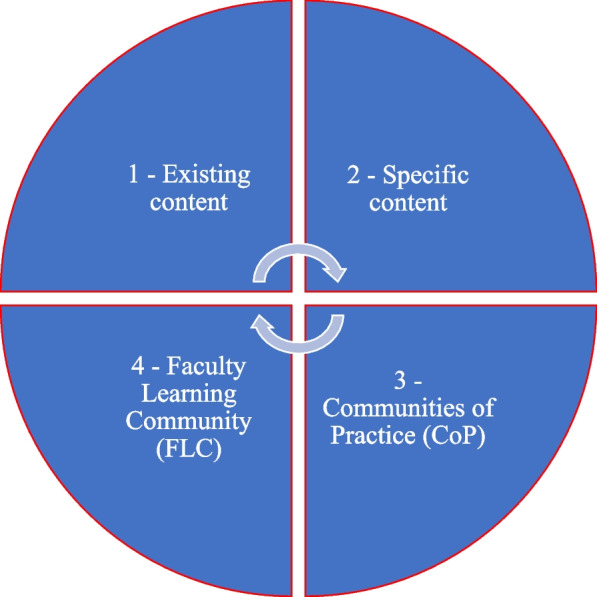
Introduction to faculty learning communities
Cox, M. D. (2004) · New Directions for Teaching and Learning · doi:10.1002/tl.129 · Cited by 613 · cited 1×
“FLC’s foster connections between educators, to provide a collaborative community that supports each other on pedagogical issues (Cox 2004).”
BackgroundContract cheating by STEM students through a file sharing website: a Covid-19 pandemic perspective
Lancaster, T., & Cotarlan, C. (2021) · International Journal for Educational Integrity · doi:10.1007/s40979-021-00070-0 · Cited by 312 · cited 3×
“Furthermore, during support sessions, it was observed that although faculty members voiced they thought it may be easier for students to cheat in online assessment, something that can also be seen in Lederman (2020); they also accepted that support provided by the faculties during workshops in understanding assessment…”
BackgroundAcademic Integrity in Online Assessment: A Research Review
Holden, O. L., Norris, M. E., & Kuhlmeier, V. A. (2021) · Frontiers in Education · doi:10.3389/feduc.2021.639814 · Cited by 310 · cited 2×
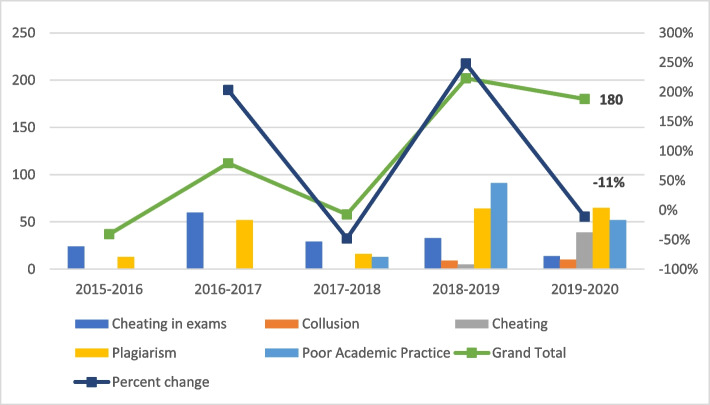
“decreased, or remained the same during the pandemic, echoing Holden et al. (2020) as we look at percentage of increase or decrease, rather than actual figures.”
BackgroundSotiriadou, P., Logan, D., Daly, A., & Guest, R. (2020) · Studies in Higher Education · doi:10.1080/03075079.2019.1582015 · Cited by 265
A systematic review of research on cheating in online exams from 2010 to 2021
Noorbehbahani, F., Mohammadi, A., & Aminazadeh, M. (2022) · Education and Information Technologies · doi:10.1007/s10639-022-10927-7 · Cited by 236
Plagiarism in Higher Education: Tackling Tough Topics in Academic Integrity
Eaton, S. E. (2021) · doi:10.5040/9798400697142 · Cited by 199
State-of-the-art in detecting academic plagiarism
Meuschke, N., & Gipp, B. (2013) · International Journal for Educational Integrity · doi:10.21913/ijei.v9i1.847 · Cited by 112
Rogerson, A. M. (2017) · International Journal for Educational Integrity · doi:10.1007/s40979-017-0021-6 · Cited by 93
Using Learning Analytics for Preserving Academic Integrity
Amigud, A., Arnedo-Moreno, J., Daradoumis, T., & Guerrero-Roldan, A.-E. (2017) · The International Review of Research in Open and Distributed Learning · doi:10.19173/irrodl.v18i5.3103 · Cited by 61
Research works printed but not linked: 118
- Almahasees Z, Khaled M, Omar, AM (2021) Faculty’s and Students’ Perceptions of Online Learning During COVID-19. Frontiers in Education 6. https://doi.org/10.3389/feduc.2021.638470 · DOI
- AP (2020) More than 70 West Point cadets accused of cheating on exam. Your Army. Army Times. The Associated Press. Published 21 Dec 2020. Available URL: https://www.armytimes.com/news/your-army/2020/12/21/more-than-70-west-point-cadets-accused-of-cheating-on-exam/
- Awdry R, Newton PM (2019) Staff views on commercial contract cheating in higher education: a survey study in Australia and the UK. High Educ 78:593–610. https://doi.org/10.1007/s10734-019-00360-0 · DOI
- Baird M, Clare J (2017) (2017) Removing the opportunity for contract cheating in business capstones: a crime prevention case study. Int J Educ Integr 13:6. https://doi.org/10.1007/s40979-017-0018-1 · DOI
- Ballantine et al (2018) Can future managers and business executives be influenced to behave more ethically in the workplace? The impact of approaches to learning on business students cheating behavior. J Bus Ethics 149(1):245–258 · DOI
- Beebe M (2010) E-learning in Afghanistan. Learning International Networks Consortium. Massachusetts Institute of Technology. https://linc.mit.edu/linc2010/proceedings/session1Beebe.pdf
- Bemmel MB (2014) Cheating in Online Classes: A Preliminary Investigation. Doctoral Thesis Dissertation. Nova Southeaster University. https://files.eric.ed.gov/fulltext/ED552873.pdf
- Benson L, Rodier K, Enström R et al (2019) Developing a university-wide academic integrity E-learning tutorial: a Canadian case. Int J Educ Integr 15, 5 (2019). https://doi.org/10.1007/s40979-019-0045-1 · DOI
- Bertram Gallant T (2008) Academic integrity in the twenty- frst century: A teaching and learning imperative. Wiley, Hoboken, NJ
- Betram-Gallant T, Drinan P (2006) Institutionalizing academic integrity: administrator perceptions and institutional actions. NASPA J 43(4):61–81. https://doi.org/10.2202/1949-6605.1723 · DOI
- Betta J, Owczarzak-Skomra A (2019) Agile crisis management. Scientific Journal of the Military University of Land Forces, 51 · DOI
- Bjelobaba S (2020) Academic Integrity Teacher Training: Preventive Pedagogical Practices On The Course Level in Integrity in Education for Future Happiness. Ed. Khan, Hill, Folynek (2020) pp 9–18. Mendel University Press, Czech Republic · DOI
- Blaschke LM (2012) Heutagogy and lifelong learning: a review of heutagogical practice and self-determined learning. Int Rev Res Open Distributed Learn 13(1):56–71. https://doi.org/10.19173/irrodl.v13i1.1076 · DOI
- Brennan J, Shah T (2000) Quality assessment and institutional change: Experiences from 14 countries, Higher Education, Vol. 40
- Bretag T (2015 November 16-18). Who is responsible for educational integrity? Keynote Address to 7 th Asia Pacific Conference on Educational Integrity, Albury- Wodonga, NSW/Victoria, Australia · DOI
- Bretag T, Harper R, Burton M, Ellis C, Newton P, Rozenberg R, Saddiqui S, Haeringen K.v (2019) Contract cheating: a survey of Australian university students, Studies in Higher Education, 44:11, 1837-1856. https://doi.org/10.1080/03075079.2018.1462788 · DOI · Paper page
- Brown C, Czerniewicz L, Noakes T (2016) Online content creation: looking at students’ social media practices through a Connected Learning lens. Learn Media Technol 41(1):140–159. https://doi.org/10.1080/17439884.2015.1107097 · DOI
- Cavalcanti ER, Pires C. Ed, Cavalcanti EP, Pires VF (2012) Detection and evaluation of cheating on college exams using supervised classification. Inform Educ 11(2):169–190 · DOI
- Coalter T, Lim CL, Wanorie T (2007) Factors that Influence Faculty Actions: A Study on Faculty Responses to Academic Dishonesty. International Journal for the Scholarship of Teaching and Learning. 1.1Article 12. Available at: https://doi.org/10.20429/ijsotl.2007.010112 · DOI · Paper page
- Cronan TP, McHaney R, Douglas DE, Mullins JK (2017) Changing the academic integrity climate on campus using a technology-based intervention. Ethics Behav 27(2):89–105. https://doi.org/10.1080/10508422.2016.1161514 · DOI
- Curtis GJ, Slade C, Bretag T, McNeill M (2021) Developing and evaluating nationwide expert-delivered academic integrity workshops for the higher education sector in Australia. High Educ Res Dev. https://doi.org/10.1080/07294360.2021.1872057 · DOI
- Dawson MM, Overfield JA (2006) Plagiarism: do students know what it is? Bioscience Educ 8:1–15. https://doi.org/10.3108/beej.8.1 Taylor & Francis Online · DOI
- Dendir S, Maxwell RS (2020) Cheating in online courses: Evidence from online proctoring. Computers in Human Behavior Reports, 2, 1–10. https://doi.org/10.1016/j.chbr.2020.100033 · DOI
- Denisova-Schmidt E (2016) The Global Challenge of Academic Integrity. International Higher Education. 87:Fall 2016. 4–6. https://ejournals.bc.edu/index.php/ihe/article/download/9494/8459/ · DOI
- Denzin NK (1975) The research art: The theoretical introduction to sociological methods. Aldine, Chicago (First edition, 1970)
- Despeisse M (2018) Games and simulations in industrial engineering education: A review of the cognitive and affective learning outcomes. In M. Rabe, A. A. Juan, N. Mustafee, A. Skoogh, S. Jain, & B. Johansson (Eds.), Proceedings of the 2018 winter simulation conference (pp. 446–4057). Gothenburg. https://doi.org/10.1109/WSC.2018.8632285 · DOI
- du Rocher AR (2020) Active learning strategies and academic self-efficacy relate to both attentional control and attitudes towards plagiarism. Act Learn High Educ 21(3):203–216. https://doi.org/10.1177/1469787418765515 · DOI
- Ellis C, Haeringen KV, Harper R, Bretag, et al (2020) Does authentic assessment assure academic integrity? Evidence from contract cheating data. Higher Educ Res Dev 39(3):454–469. https://doi.org/10.1080/07294360.2019.1680956 · DOI
- Emirates 24/7 (2016) Conference to tackle students cheating. Emirates 24/7 30 january 2026. https://www.emirates247.com/news/conference-to-tackle-students-cheating-2016-01-30-1.619180
- Finch, J (1997) Power, Legitimacy and Academic Standards, in Brennan, J. de Vries, P. and Williams, R. (Eds.) Standards and Quality in Higher Education, Higher Education Policy Series, Vol. 37, Jessica Kingsley
- FitzGerald E, Ferguson R, Adams A, Gaved M, Mor Y, Thomas R (2013) Augmented reality and mobile learning: the state of the art. Int J Mobile Blended Learn (IJMBL) 5(4):43–58. https://doi.org/10.4018/ijmbl.2013100103 · DOI
- Freeman M, Clarkeburn H, Treleaven L, Brew A, Sachs J (2007) A collaborative approach to improving academic honesty. In: Brew A, Sachs J (eds) Transforming a University: The scholarship of teaching and learning in practice. Sydney University Press, Sydney, 153–161
- Gábor O, István T, Beáta, B et al (2015) Teacher enthusiasm: a potential cure of academic cheating. Front Psychol 6. https://doi.org/10.3389/fpsyg.2015.00318 · DOI
- Garrison DR, Kanuka, H (2004) Blended learning: Uncovering its transformative potential in higher education. Internet Higher Educ 7.2.95–105, ISSN 1096–7516, https://doi.org/10.1016/j.iheduc.2004.02.001 · DOI · Paper page
- Genereux RL, McLeod BA (1995) Circumstances surrounding cheating: a questionnaire study of college students. Res High Educ 36(6):687–704 · DOI
- Gigliotti A, Ralph A (2019) Crisis Leadership in Higher Education: Theory and Practice. Rutgers University Press, Ithaca. https://doi.org/10.36019/9781978801868 · DOI
- Grodotzki J, Upadhya S, Tekkaya AE (2021) Engineering education amid a global pandemic. Adv Industrial Manuf Engineering 3:100058 · DOI
- Guangul FM, Suhail AH, Khalit MI, Khidhir BA (2020) Challenges of remote assessment in higher education in the context of COVID-19: a case study of Middle East College. Educ Assess Eval Account. https://doi.org/10.1007/s11092-020-09340-w · DOI
- Hamilton M, Richardson J (2007) An academic integrity approach to learning and assessment design. J Learn Design 2(1):37–51 (https://files.eric.ed.gov/fulltext/EJ903902.pdf) · DOI
- Haney S (2020) Online learning brings new challenges regarding academic dishonesty. The Lancer Feed. 5 Nov 2020. Available URL: https://lancerfeed.press/top-stories/2020/11/05/online-learning-brings-new-challenges-regarding-academic-dishonesty/
- Harper R, Bretag T, Rundle K (2020) Detecting contract cheating: examining the role of assessment type. High Educ Res Dev 40:1–16. https://doi.org/10.1080/07294360.2020.1724899 · DOI
- Harris L, Harrison D, McNally D, Ford C (2020) Academic integrity in an online culture: do Mccabe’s findings hold true for online, adult learners? J Acad Ethics 18:419–434. https://doi.org/10.1007/s10805-019-09335-3 · DOI
- Hase S, Kenyon C (2000) From andragogy to heutagogy. Ultibase Articles. 5. 1–10. Available URL: https://www.researchgate.net/publication/301339522_From_andragogy_to_heutagogy
- Hemby KV, Wilkinson K, Crews, TB (2006) Converting assessment of traditional classroom assignments to the e-learning environment [Electronic Version]. Online Journal for Workforce Education and Development, 2, Article 2. Available URL: http://opensiuc.lib.siu.edu/cgi/viewcontent.cgi?article=1041&context=ojwed. Accessed 9 June 2012
- Hendershott A, Drinan P, Cross M (2000) Toward enhancing a culture of academic integrity. NASPA J 37(4):587–598. https://doi.org/10.2202/1949-6605.111 · DOI
- Hill R (1995) A European student perspective on quality. Qual Higher Educ. 1:67–75. https://doi.org/10.1080/1353832950010107 · DOI
- Hill C, Khan ZR (2021) Calling Out The Elephant In The Room: Integrity And Ethical Practices In Times Of Crises – Experience From The Middle-East. European Conference On Academic Integrity And Plagiarism 2021. Book Of Abstracts. https://academicintegrity.eu/conference/proceedings/2021/book_of_abstracts2021.pdf
- Hill C, Khan ZR, Kralikova V (2020) 6th International Conference PAEB2020 - First Virtual ENAI Conference. Conference Proceedings. ISBN : 9788190267991. Arif Books Distributor LLC. Dubai. UAE. https://academicintegrity.eu/conference/wp-content/uploads/2020/10/Conference-Abstract.pdf
- Holden O, Kuhlmeier VA, Norris M (2020) Academic Integrity in Online Testing: A Research Review. https://doi.org/10.31234/osf.io/rjk7g · DOI
- Hou AYC, Hill C, Chen KHJ et al (2018) A comparative study of international branch campuses in Malaysia, Singapore, China, and South Korea: regulation, governance, and quality assurance. Asia Pacific Educ Rev 19:543–555. https://doi.org/10.1007/s12564-018-9550-9 · DOI
- Hudd SS, Apgar C, Bronson EF, Lee RG (2009) Creating a campus culture of integrity: comparing the perspectives of full- and part-time faculty. J Higher Educ 80(2):146–177. https://doi.org/10.1080/00221546.2009.11772137 · DOI
- Hulsart R, McCarthy V (2011) Utilizing a culture of trust to promote academic integrity. J Continuing Higher Educ 59:92–96. https://doi.org/10.1080/07377363.2011.568827 Taylor & Francis Onlin] · DOI
- Hysaj A, Suleymanova S (2021) Safeguarding Academic Integrity in Crisis Induced Environment: A Case Study of Emirati Engineering and IT Students in a Private University in the UAE. International Conference on Human-Computer Interaction. Springer, Cham, 236–245
- Janke S, Rudert SC, Petersen Ä, Fritz TM, Daumiller M (2021) Cheating in the wake of COVID-19: How dangerous is ad-hoc online testing for academic integrity?, Computers and Education Open, 2. 2021. 100055. ISSN 2666-5573. https://doi.org/10.1016/j.caeo.2021.100055 · DOI
- Jordan AE (2001) College student cheating: The role of motivation, perceived norms, attitudes, and knowledge of institutional policy. Ethics Behav 11(3):233–247. https://doi.org/10.1207/S15327019EB1103_3 · DOI
- Karam J (2018) Sustainability of International Branch Campuses: A Case Study of Management Practices in the Arabian Gulf (Unpublished doctoral thesis). University of Calgary, Calgary, AB. https://doi.org/10.11575/PRISM/31889http://hdl.handle.net/1880/106603 doctoral thesis · DOI
- Keener TA, Galvez Peralta M, Smith M et al (2019) (2019) Student and faculty perceptions: appropriate consequences of lapses in academic integrity in health sciences education. BMC Med Educ 19:209. https://doi.org/10.1186/s12909-019-1645-4 · DOI
- Kendall J, Kendall KE (2012) Storytelling as a qualitative method for IS research: heralding the heroic and echoing the mythic. Australasian J Informa Syst 17(2). https://doi.org/10.3127/ajis.v17i2.697 · DOI
- Khan S, Kambris MEK, Alfalahi H (2022) Perspectives of University Students and Faculty on remote education experiences during COVID-19- a qualitative study. Educ Inf Technol 27:4141–4169. https://doi.org/10.1007/s10639-021-10784-w · DOI
- Khan ZR (2014) Developing a factor-model to understand the impact of factors on higher education students’ likelihood to e-cheat, Doctor of Philosophy thesis, School of Information Systems and Technology, University of Wollongong, 2014. https://ro.uow.edu.au/theses/4545
- Khan ZR (2010) 'E-cheating in the UAE: a critical review of existing literature', Proceedings of the 2010 International Conference on E-Learning, E-Business, Enterprise Information Systems, & E-Government, EEE 2010, CSREA Press, USA, p 320–324
- Khan ZR, Sivasubramaniam S, Anand P, et al (2021) ‘e’-thinking teaching and assessment to uphold academic integrity: lessons learned from emergency distance learning. Int J Educ Integr 17, 17. https://doi.org/10.1007/s40979-021-00079-5 · DOI
- Khan ZR (2016) Exploring Emerging Academic Integrity Issues in Education Sector (Ed). Proceedings International Conference on Academic Integrity Middle East Chapter. University of Wollongong in Dubai. UAE
- Khan ZR, Mumtaz S, Rakhman SS (2020a) Mentoring to affect student perceptions of academic integrity in Academic Language and Learning Support Services in Higher Education. In: Velliaris D (ed), Ch 4. IGI Global, p 98–118. https://doi.org/10.4018/978-1-7998-2878-5.ch004 · DOI
- Khan ZR, Hemnani P, Raheja S, Joshy J (2020b) Raising Awareness on Contract Cheating –Lessons Learned from Running Campus-Wide Campaigns. J Acad Ethics 18:175–191. https://doi.org/10.1007/s10805-020-09365-2 · DOI
- Khan ZR, Sharma V, Thomas T (2020c) AI Triage – Helping Faltering Students Rehabilitate From Academic Misconducts in Integrity in Education for Future Happiness. In: Khan ZR, Hill C, Foltynek T (eds) Mendel University Press, Ch7. pp 90–101. ISBN 978-80-7509-771-2 · DOI
- Khan ZR, Samuel SD (2009) E-cheating, online sources and technologies – a critical review of existing literature. Proceedings from 9th Global Conference of Business and Economics. Cambridge University, UK. October 16 – 17
- King CG, Guyette RW, Piotrowski C (2009) Online exams and cheating: an empirical analysis of business students’ views. Journal of Educators Online 6(1):11. https://doi.org/10.1111/j.2042-3306.1989.tb02693.x · DOI
- Knight J (2011) Three types of educational hubs: student, talent, knowledge. Are indicators useful or feasible? Observatory on Borderless Higher Education, London
- Krishnamurthi M, Rhode J (2018) Addressing Academic Integrity in Education and Innovation. Int J Inform Educ Techn 8(11). http://www.ijiet.org/vol8/1140-ME0018.pdf · DOI
- Lalilma D, Dangwal LK (2021) Blended learning: an innovative approach. Universal J Educ Res 5(1):129–136 (https://files.eric.ed.gov/fulltext/EJ1124666.pdf) · DOI
- Lewis PJ, Hildebrandt K (2019) Storytelling as qualitative research. Foundation Sage Research Methods. https://doi.org/10.4135/9781526421036754858 · DOI
- Li M, Luo L, Sikdar S, Nizam NI, Gao S, Shan H, Kruger M, Kruger U, Mohamed H, Xia L, Wang G (2021) Optimized collusion prevention for online exams during social distancing. npj Sci Learn 6:5. https://doi.org/10.1038/s41539-020-00083-3 · DOI
- Lim CP, Wang L (eds) (2016) Blended learning for quality higher education: Selected case studies on implementation from Asia-Pacific. UNESCO Bangkok Office, Bangkok
- Lindlof TR, Taylor BC (2002) Qualitative communication research methods, 2nd edn. Sage, Thousand Oaks, CA
- Lowe MS, Londino-Smolar G, Wendeln KEA et al (2018) Promoting academic integrity through a stand-alone course in the learning management system. Int J Educ Integr 14:13. https://doi.org/10.1007/s40979-018-0035-8 · DOI
- Lumsden K (2018) Narratives and storytelling in qualitative research. Social Research Association. National Council for Voluntary Organizations, London
- Macdonald R, Carroll J (2006) Plagiarism — a complex issue requiring a holistic institutional approach. Assess Eval High Educ 31(2):233–245. https://doi.org/10.1080/02602930500262536Taylor&FrancisOnline · DOI
- Malinowski B (1922) Argonauts of the Western Pacific. London: Routledge & Kegan Paul
- McCabe DL, Trevino L (1993) Academic Dishonesty: honor codes and other contextual influences. J Higher Educ 64:522–538
- McCabe DL, Feghali T, Abdallah H (2008) Academic Dishonesty in the Middle East: Individual and Contextual Factors. Res High Educ 49(5):451–467 · DOI
- McCabe DL, Butterfield KD and Trevino LJ (2017) Cheating in College: Why Students Do It and What Educators Can Do About It. John Hopkins University Press, USA. ISBN 1421424010
- McCall B, Shallcross L, Wilson M, Fuller C, Hayward A (2021) Storytelling as a research tool used to explore insights and as an intervention in public health: a systematic narrative review. Int J Public Health 2021(66):1604262. https://doi.org/10.3389/ijph.2021.1604262 PMID: 34795554; PMCID: PMC8592844 · DOI
- Meccawy M, Meccawy Z, Alsobhi A (2021) Teaching and Learning in Survival Mode: Students and Faculty Perceptions of Distance Education during the COVID-19 Lockdown. Sustainability. 13. 8053. https://ideas.repec.org/a/gam/jsusta/v13y2021i14p8053-d597039.html · DOI
- Mellar H, Peytcheva-Forsyth R, Kocdar S et al (2018) (2018) Addressing cheating in e-assessment using student authentication and authorship checking systems: teachers’ perspectives. Int J Educ Integr 14:2. https://doi.org/10.1007/s40979-018-0025-x · DOI
- Merkel W (2021) College of confusion: An analysis of one University’s multiple plagiarism policies. System 96. https://doi.org/10.1016/j.system.2020.102399 · DOI
- Morris EJ, Carroll J (2016) Developing a Sustainable Holistic Institutional Approach: Dealing with Realities “on the Ground” When Implementing an Academic Integrity Policy. In: Bretag, T. (eds) Handbook of Academic Integrity. Springer, Singapore. https://doi.org/10.1007/978-981-287-098-8_23 · DOI
- Morrow L (2022) Beyond the traditional: academic integrity in Canadian librarianship. In S. E. Eaton & J. Christensen Hughes (Eds.), Academic integrity in Canada: An enduring and essential challenge. Springer · DOI
- Newstead SE, Franklyn-Stokes A, Arrmnstead P (1996) Individual differences in student cheating. J Educ Psychol 88:229–241 · DOI
- Newton D (2020) Another problem with shifting education online: cheating. Higher Education. The Hechinger Report. Published 7 Aug 2020. Available URL: https://lancerfeed.press/top-stories/2020/11/05/online-learning-brings-new-challenges-regarding-academic-dishonesty/
- Nguyen JG, Keuseman KJ, Humston JJ (2020) Minimize Online Cheating for Online Assessments During COVID-19 Pandemic. https://doi.org/10.1021/acs.jchemed.0c00790 · DOI
- Nora WLY, Zhang KC (2010) Motives of cheating among secondary students: the role of self-efficacy and peer influence. Asia Pacific Educ Rev 11:573–584. https://doi.org/10.1007/s12564-010-9104-2 · DOI
- Olafson L, Schraw G, Nadelson L, Nadelson S, Kehrwald N (2013) Exploring the judgement-action gap: college students and academic dishonesty. Ethics Behav 23(2):148–162 · DOI
- Orr J (2018) Developing a Campus Academic Integrity Education Seminar. J Acad Ethics 16, 195–209. https://doi.org/10.1007/s10805-018-9304-7 · DOI
- Orosz G, Tóth-Király I, Bőthe B, Kusztor A, Üllei Kovács Zs, Jánvári M (2015) Teacher enthusiasm: a potential cure of academic cheating. Frontiers in Psychology, 6:318. https://doi.org/10.3389/fpsyg.2015.00318 · DOI
- Özüdoğru G (2021) Problems faced in distance education during Covid-19 Pandemic. Participatory Educational Research 8 (4), 321-333. https://doi.org/10.17275/per.21.92.8.4 · DOI
- Park C (2003) In other words: plagiarism by university students — literature and lessons. Assess Eval High Educ 28(5):471–489. https://doi.org/10.1080/02602930301677Taylor&FrancisOnline · DOI
- Perkins M, Gezgin UB, Roe J (2020) Reducing plagiarism through academic misconduct education. Int J Educ Integr 16, 3. https://doi.org/10.1007/s40979-020-00052-8 · DOI · Paper page
- Peters MA (2019) Academic integrity: an interview with Tracey Bretag. Educ Philos Theory 51(8):751–756. https://doi.org/10.1080/00131857.2018.1506726 · DOI
- Pincus HS, Schmelkin LP (2003) Faculty perceptions of academic dishonesty. J Higher Educ 74(2):196–209. https://doi.org/10.1080/00221546.2003.11777196 · DOI
- Potts D (2004) Storytelling as a qualitative tool. QRCA Views 2(3):15–20. Available URL:https://cdn.ymaws.com/www.qrca.org/resource/collection/AA96A06F-BF6E-4E2C-8146-CA689849AE8B/QRCAViewsSpring04.pdf
- Pruvot EB, Estermann T (2018) University Governance: Autonomy, Structures and Inclusiveness. In: Curaj A, Deca L, Pricopie R. (eds) European Higher Education Area: The Impact of Past and Future Policies. Springer. Cham. https://doi.org/10.1007/978-3-319-77407-7_37 · DOI
- Raines DA, Ricci P, Brown SL (2011) Cheating in online courses: the student definition. J Effect Teach 11(1):80–89 (https://files.eric.ed.gov/fulltext/EJ1092169.pdf)
- Rasmussen P (1997) A Danish Approach to Quality in Higher Education, The Case of Aalborg University, in Brennan, J. de Vries, P. and Williams, R. (eds.) Standards and Quality in Higher Education, Higher Education Policy Series, Vol. 37, Jessica Kingsley
- Rock P (2001) Symbolic interactionism and ethnography. In: Atkinson P, Coffey A, Delamont S, Lofland J, Lofland L (eds) Handbook of Ethnography. Sage, London, pp 477–492
- Rogerson AM (2016) Being AWARE about academic integrity. Higher Education Compliance and Quality Forum 2016. Higher Ed Services Pty Ltd., Australia, pp 1–37
- Sakamoto D, Tsuda K (2019) A detection method for plagiarism reports of students. Proc Comp Sci 159:1329–1338. https://doi.org/10.1016/j.procs.2019.09.303 · DOI · Paper page
- Supernak J, Ramirez A, Supernak E (2021) COVID-19: How Do Engineering Students Assess its Impact on Their Learning? Advances in Applied Sociology 11:14–25. https://doi.org/10.4236/aasoci.2021.111002 · DOI
- Tanner L, Piper C (2010) Succumbing to temptation--to cheat or not to cheat? Faculty and student perceptions of academic integrity in distance education courses. Paper presented at the World Conference on E-Learning in Corporate, Government, Healthcare, and Higher Education 2010, Orlando, Florida, USA
- Thacker EJ, McKenzie A (2022) Using quality assurance frameworks to support an institutional culture of academic integrity at Canadian universities. In S. E. Eaton & J. Christensen Hughes (Eds.), Academic integrity in Canada: An enduring and essential challenge. Springer · DOI
- UOWD (2020) University of Wollongong in Dubai Marks Regional Milestone, Hosts International Conference on Plagiarism across Europe and Beyond Virtually. UOWD. 4 May 2020. https://www.uowdubai.ac.ae/news/university-wollongong-dubai-marks-regional-milestone-hosts-international-conference-plagiarism
- Valizadeh M (2021) Cheating in Online Learning Programs: learner’s perceptions and solutions. Turkish Online J Distance Educ-TOJDE. 23.1. Article 12. ISSN 1302–6488 · DOI
- Vilchez, M. (2011). Cheating in Online Courses: A Qualitative Study. International Journal of Instructional Technology & Distance Learning. 8.1. ISSN 1550–6908. https://digitalcommons.fiu.edu/cgi/viewcontent.cgi?article=1015&context=tl_fac
- Vroeijenstijn AI (1995) Governments and university: opponents or allies in quality assurance? Higher Educ Rev London 27:3
- Vučković D, Peković S, Blečić M, Dokovic R (2020) (2020) Attitudes towards cheating behavior during assessing students᾽performance: student and teacher perspectives. Int J Educ Integ 16:13. https://doi.org/10.1007/s40979-020-00065-3 · DOI
- Wheeler G (2018) The Tokyo Medical University entrance exam scandal: lessons learned. Int J Educ Integr 14:14. https://doi.org/10.1007/s40979-018-0039-4 · DOI
- Wilkins S (2010) Higher education in the United Arab Emirates: an analysis of the outcomes of significant increases in supply and competition. J High Educ Policy Manag 32(4):389–400 · DOI
- Yap K, Nazri M, Bakar A, Zaki A, Kamalrudin M, Sidek S (2014) A review on agile decision making in crisis management. A Review on Agile Decision Making in Crisis Management 26(4):1535–1541
Cited by
Sorted by citations
Drivers of academic dishonesty and multi-level prevention strategies: an umbrella review
Estrella-Bote, V. D. R., Vallespir-Adillón, M., Julián, M., & Comas-Forgas, R. (2026) · Revista Digital de Investigación en Docencia Universitaria · doi:10.19083/ridu.2026.2492
Metadata
- Authors
- Khan, Z. R., Priya, J., & Tuffnell, C.
- ORCID
- Khan, Zeenath Reza
- Venue
- International Journal for Educational Integrity
- Published
- 2022-11-28
- Volume
- 18
- Issue
- 1
- ISSN
- 1833-2595
- PMC
- PMC9702660
- Cited by
- 12
- References
- 11
- Language
- en
About these checks
Registry, retraction, Cites and statistics results are computed, not judged, with one exception: a printed reference that no index lists is read once by a model before it counts as a citation error. Claims are extracted by a model and kept only when their quote appears verbatim in the text; each cited source is then checked, with a model’s help, for whether it says what the claim relies on. Those verdicts can be wrong — read the claim’s quote and the cited source before relying on one.
Statistics and arithmetic are recomputed, not judged.
Confidence bands are shown only for fields calibrated on our annotated test set. None is calibrated yet, so no band is shown.
What counts as a claim ›How we measure confidence ›How we check this ›
Are you an author, or do you see a problem with this page? Request a review
How to cite
Cite CoChat for the checks on this page, and the paper for its own findings.
- This page
- CoChat. (2026). Citation check: Culture of integrity – institutional response to integrity during COVID19. https://app.cochat.ai/papers/10.1007/s40979-022-00118-9
- The paper
- Khan, Z. R., Priya, J., & Tuffnell, C. (2022). Culture of integrity – institutional response to integrity during COVID19. International Journal for Educational Integrity. https://doi.org/10.1007/s40979-022-00118-9
