

Recent Advances on PEM Fuel Cells: From Key Materials to Membrane Electrode Assembly
Open accessThe DOI matches its Crossref record; 281 of the 281 references it cites were found in a registry or an index; 44 of the 222 sources its claims cite were checked for support.
Abstract
This review critically covers recent progress of key materials for MEAs, focusing on how to integrate materials into electrodes and MEAs, along with advanced designs and manufacturing techniques.
Overview
CoChat Summary
TL;DR
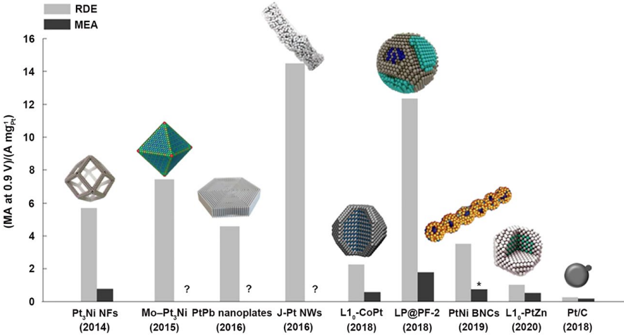
This critical review surveys recent progress in key PEM fuel cell materials—catalysts, membranes/ionomers, and gas diffusion layers—and state-of-the-art membrane electrode assembly (MEA) manufacturing. It argues that despite advances, cost and lifetime barriers remain, especially low-Pt-loading performance loss, PGM-free catalyst instability, and gaps between rotating-disk-electrode (RDE) activity and MEA performance.
Key findings
- Pt-based catalysts remain the benchmark: the first-generation Toyota Mirai had total Pt loading of 0.365 mg Pt cm⁻² versus 35 mg Pt cm⁻² for a 1962 practical fuel cell, and the second-generation Mirai stack reached 5.4 kW L⁻¹ versus 3.1 kW L⁻¹ for the first generation; Mirai anode/cathode loadings were 0.05 and 0.315 mg Pt cm⁻², respectively.
- Advanced Pt catalysts show high RDE activity: jagged Pt nanowires reached ECSA up to 118 m² g⁻¹ and mass activity of 13.6 A mg Pt⁻¹ at 0.9 V; sulfur-anchored intermetallics were controlled to <5 nm after up to 1 000 °C sintering and reached 1.3–1.8 A mg Pt⁻¹ at 0.9 V; Fe-N-C catalysts achieved a half-wave potential of (0.88 ± 0.01) V vs. RHE, but PGM-free catalysts remain less active and stable than Pt in acidic PEM fuel cells.
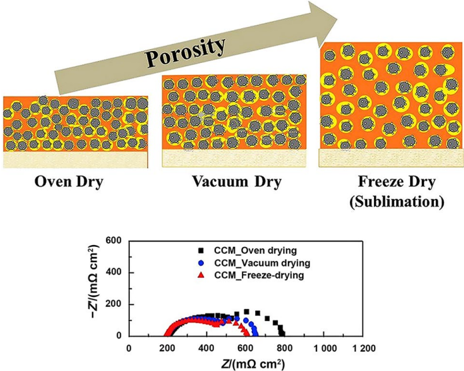
- MEA manufacturing advances include CCM over CCS, slot-die and roll-to-roll coating, and freeze-drying to increase catalyst-layer porosity; a moderate ionomer content of ~26 wt.% gave the highest electrokinetic performance, and decal transfer cost was estimated at ~1.67 times the electrode coating process at 500 000 units/year.
- Material and operational constraints persist: PFSA membranes may be <10 µm thick but suffer higher gas crossover; PA-doped PBI membranes can operate from −20 to 200 °C; a protonated phosphonic acid PEM fuel cell delivered 780 mW cm⁻² at 160 °C with minimal degradation over 2 500 h and 700 thermal cycles; GDL thickness is typically 200–400 µm, and DOE heavy-duty targets are 25 000 and 30 000 h for 2025 and 2030.
Methods
- Design: critical review, not a primary experimental study; it focuses on “mature materials” used in industrial production and on integrating materials into electrodes and MEAs.
- Data/sample: literature and prior studies on ORR catalysts, membranes/ionomers, GDLs, and MEA fabrication steps; no new experimental sample or dataset is reported.
- Analysis: narrative synthesis organized by material class and manufacturing step, with tables of physical/electrochemical characterization methods for screening catalysts, membranes, ionomers, and GDLs, plus discussion of constraints and advanced integration strategies.
Limitations
- Stated: decreasing Pt loading causes performance loss and the low-Pt barrier is not completely addressed; PGM-free catalysts such as Fe-N-C degrade severely and remain far behind Pt; PFSA membranes have a restricted operating window and hydrocarbon ionomers are not mature for scale-up; optimal GDL porosity and pore-size distribution are not widely agreed; catalyst ink stability and high-efficiency, low-cost dispersion remain challenging; ordered catalyst layers may be difficult to scale up; and roll-to-roll coating faces multiple precision, lamination, and defect-control challenges.
- Evident from the text: as a review, it provides no primary experimental validation and relies on cited literature; it also repeatedly notes that RDE activity often cannot be reproduced in MEA testing, so reported catalyst performance may not translate directly to practical MEAs.
Model-written summary. Check it against the paper before relying on it.
Integrity signals
Registry
Cites
Statistics
Figures
















Verification
Claims the paper makes
40 Valid · 13 Not valid · 138 Not checked · 98 Own results and interpretations
The cited sources support only part of this claim — read each source’s verdict below.
In the paper
“In addition to the significant progress in Pt-based catalysts for ORR, a large number of efforts have been devoted to Pt-group-metal-free (PGM-free) catalysts, which are promising alternatives to replace costly and scarce Pt catalysts [44,45].”
§ Recent Advances on PEM Fuel Cells: From Key Materials to Membrane Electrode Assembly > 2.1 Catalysts
What the sources say
- Partly supportedcites [44] 44. Du, L., Zhang, G.X., Sun, S.H.: Proton exchange membrane (PEM) fuel cells with platinum group metal (PGM)-free cath- ode. Automot. Innov. 4, 131-143 (2021). https:// doi. org/ 10. 1007/ s42154-021-00146-0 sourceExperimental — accuracy not yet measured
The Introduction says Pt-based PGM catalysts raise fuel-cell costs and calls replacing cathode PGMs with PGM-free alternatives a promising strategy. The section on high-performance PGM-free catalysts also describes them as a promising replacement. Our copy does not establish the claim that Pt is scarce. (LLM, conf=0.84)
- Not checked — no full text of the sourcecites [45] 45. Du, L., Xing, L.X., Zhang, G.X., et al.: Strategies for engineer- ing high-performance PGM-free catalysts toward oxygen reduc- tion and evolution reactions. Small Methods 4, 2000016 (2020). https:// doi. org/ 10. 1002/ smtd. 20200 0016 source
plain- Asserted: passes — The authors put it forward as true.
- Checkable: passes — It can be checked against evidence.
- Load-bearing: unclear — It is unclear whether the paper’s conclusions depend on it.
- Based: passes — The paper gives a reason why it holds.
- Partly supported
Every source the paper cites for this claim was checked and supports it.
In the paper
“Over the past decades, several kinds of PGM-free catalysts have been developed, among which the most representative is Fe-N-C due to its superior activity as a site for ORR [47].”
§ Recent Advances on PEM Fuel Cells: From Key Materials to Membrane Electrode Assembly > 2.1 Catalysts
What the sources say
- Supportedcites [47] 47. Du, L., Zhang, G.X., Liu, X.H., et al.: Biomass-derived nonpre- cious metal catalysts for oxygen reduction reaction: the demand- oriented engineering of active sites and structures. Carbon Energy 2, 561-581 (2020). https:// doi. org/ 10. 1002/ cey2. 73 source
Section 3 identifies single-atom Fe-N-C as a representative, promising PGM-free ORR catalyst. Section 3.2 describes its FeNₓ moieties as among the most promising PGM-free active sites for ORR. The source does not claim Fe-N-C outperforms PGM-based catalysts, but the citing sentence does not make that comparison. (LLM, conf=0.88)
plainstates a cause- Asserted: passes — The authors put it forward as true.
- Checkable: passes — It can be checked against evidence.
- Load-bearing: unclear — It is unclear whether the paper’s conclusions depend on it.
- Based: passes — The paper gives a reason why it holds.
- Supported
Every source the paper cites for this claim was checked and supports it.
In the paper
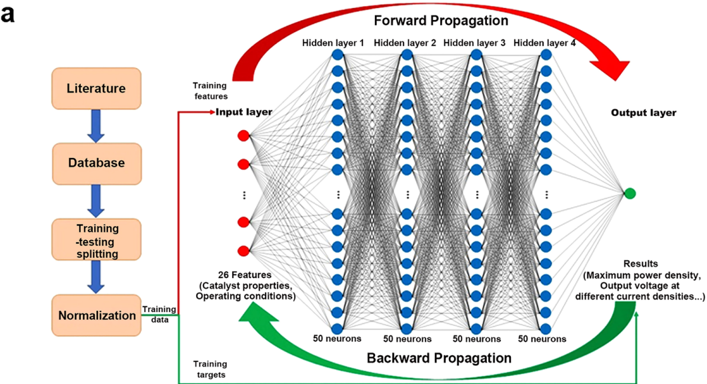
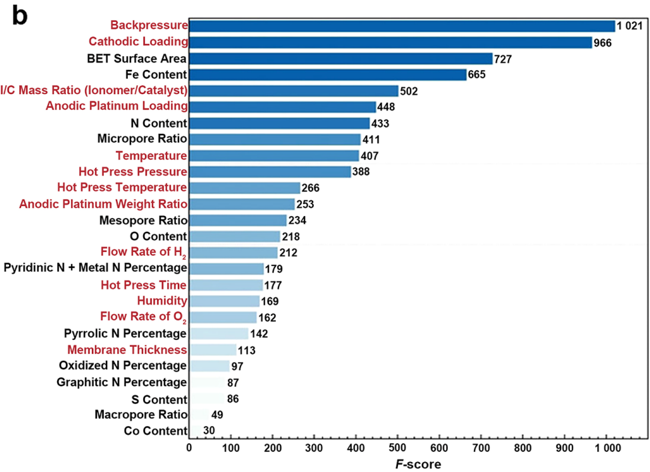
“As shown in Fig. 3a, b, a reliable ensemble learner, XGBoost, was established and trained to rank the degrees of importance among 26 complicated features in PEM fuel cells.”
§ Recent Advances on PEM Fuel Cells: From Key Materials to Membrane Electrode Assembly > 2.1 Catalysts
What the sources say
- Supportedcites [57] 57. Ding, R., Wang, R., Ding, Y.Q., et al.: Designing AI-aided analy- sis and prediction models for nonprecious metal electrocatalyst- based proton-exchange membrane fuel cells. Angew. Chem. Int. Ed. 59, 19175-19183 (2020). https:// doi. org/ 10. 1002/ anie. 20200 6928 source
The Conclusion (p. of our copy) states almost verbatim that 'a reliable ensemble learner, XGBoost, ranked the degrees of importance among 26 complicated features', and the Methods section (Machine Learning Algorithms Applied as Computational Tools) confirms XGBoost was chosen 'to provide a fair assessment of the importance among the 26 features'. The Feature Importance Ranking section reports the F-score-based ranking shown in Figure 3 and describes XGBoost as 'a reliable learner' (91.4% weighted precision), matching the citing sentence's Fig. 3a,b reference. The PEMFC/NPME context is the paper's own subject throughout. (LLM, conf=0.94)
boostedstates an association- Asserted: passes — The authors put it forward as true.
- Checkable: passes — It can be checked against evidence.
- Load-bearing: unclear — It is unclear whether the paper’s conclusions depend on it.
- Based: passes — The paper gives a reason why it holds.
- Supported
The cited sources support only part of this claim — read each source’s verdict below.
In the paper
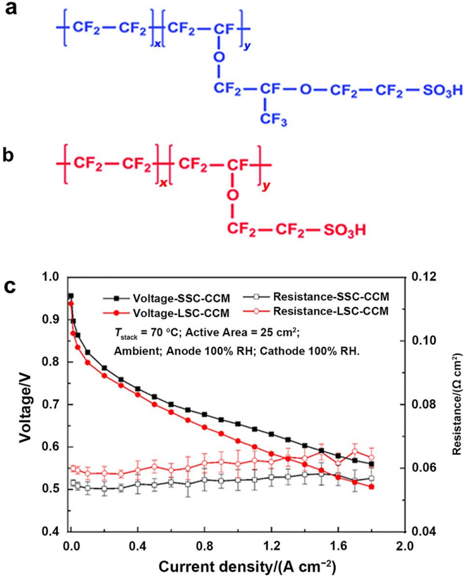
“to therefore present better performance in MEA, particularly at low humidity (Fig. 5c).”
§ Recent Advances on PEM Fuel Cells: From Key Materials to Membrane Electrode Assembly > 2.2 Membranes and Ionomers
What the sources say
- Partly supportedcites [78] 78. Li, T., Shen, J.B., Chen, G.Y., et al.: Performance comparison of proton exchange membrane fuel cells with Nafion and aquiv- ion perfluorosulfonic acids with different equivalent weights as the electrode binders. ACS Omega 5, 17628-17636 (2020). https:// doi. org/ 10. 1021/ acsom ega. 0c021 10 sourceExperimental — accuracy not yet measured
The Results and Discussion section (Static Performance Response to Operation Conditions; page not provided) reports better performance for Aquivion-based SSC-CCMs than Nafion-based LSC-CCMs, with the difference greatest at low humidity. But the Experimental Section (Preparation of CCM; page not provided) says both were made by spraying different electrode-binder ionomers onto the same Gore membrane. The study therefore does not establish that an Aquivion membrane outperforms a Nafion membrane in an MEA. (LLM, conf=0.90)
plainstates a cause- Asserted: passes — The authors put it forward as true.
- Checkable: passes — It can be checked against evidence.
- Load-bearing: unclear — It is unclear whether the paper’s conclusions depend on it.
- Based: passes — The paper gives a reason why it holds.
- Partly supported
The cited sources support only part of this claim — read each source’s verdict below.
In the paper
“Recently, dual single-atom catalysts were proposed to achieve better ORR intrinsic activity, e.g., Fe/ Co-N-C [53,54].”
§ Recent Advances on PEM Fuel Cells: From Key Materials to Membrane Electrode Assembly > 2.1 Catalysts
What the sources say
- Partly supportedcites [53] 53. Gollasch, M., Müller-Hülstede, J., Schmies, H., et al.: Elucidat- ing synergistic effects of different metal ratios in bimetallic Fe/ Co-N-C catalysts for oxygen reduction reaction. Catalysts 11, 841 (2021). https:// doi. org/ 10. 3390/ catal 11070 841 sourceExperimental — accuracy not yet measured
Our copy does support the concept the citing sentence attaches to this source: the Introduction (Sec. 1) frames bimetallic Fe/Co-N-C with atomically dispersed Me-N sites as a route to 'tackle the downsides of each individual metal' (Fe's high ORR activity plus Co's stability), and the Conclusions (Sec. 4) confirm 'Proposed atomically dispersed Me-N sites have been achieved'. However, the source does not use the term 'dual single-atom catalysts', and its own data do not show an intrinsic-activity gain: Sec. 2.2.1/Table 1 reports that all bimetallic catalysts have higher Tafel slopes (72-83 mV dec-1) than the monometallic ones (57-63), 'hence the higher kinetic activity' being lower, and the Conclusions state monometallic Fe-N-C shows the highest ORR activity. So the 'proposed to achieve better ORR intrinsic activity' part is only supported as a stated hypothesis/motivation, not as a finding of this work. (LLM, conf=0.72)
- Not checked — no full text of the sourcecites [54] 54. Han, Y., Yin, S.H., Chen, Y.H., et al.: Experimental and DFT studies of oxygen reduction reaction promoted by binary site Fe/Co-N-C catalyst in acid. J. Electroanal. Chem. 914, 116322 (2022). https:// doi. org/ 10. 1016/j. jelec hem. 2022. 116322 source
plainstates a cause- Asserted: passes — The authors put it forward as true.
- Checkable: passes — It can be checked against evidence.
- Load-bearing: unclear — It is unclear whether the paper’s conclusions depend on it.
- Based: passes — The paper gives a reason why it holds.
- Partly supported
144 more claims · 27 with their cited sources checked
Create a free account to see all 289 claims and to verify the 15 references still open.
- It may state two separate claims as one. 103
- Probably not a substantial claim. 49
- Borderline: one of the tests for a substantial claim is unclear. 1
Self-check
Percentages, sums and reported differences re-computed from the paper’s own numbers.
Each contradiction between two passages listed here was confirmed by an independent check.
Rated minor: it would not touch a result — a value no result rests on, a p-value that stays on the same side of the significance level, or a conflict that is clerical, resolved elsewhere in the paper, or outside its own findings.
In the paper
§ Recent Advances on PEM Fuel Cells: From Key Materials to Membrane Electrode Assembly > 3 State-of-the-Art Membrane Electrode Assembly Manufacturing Processes
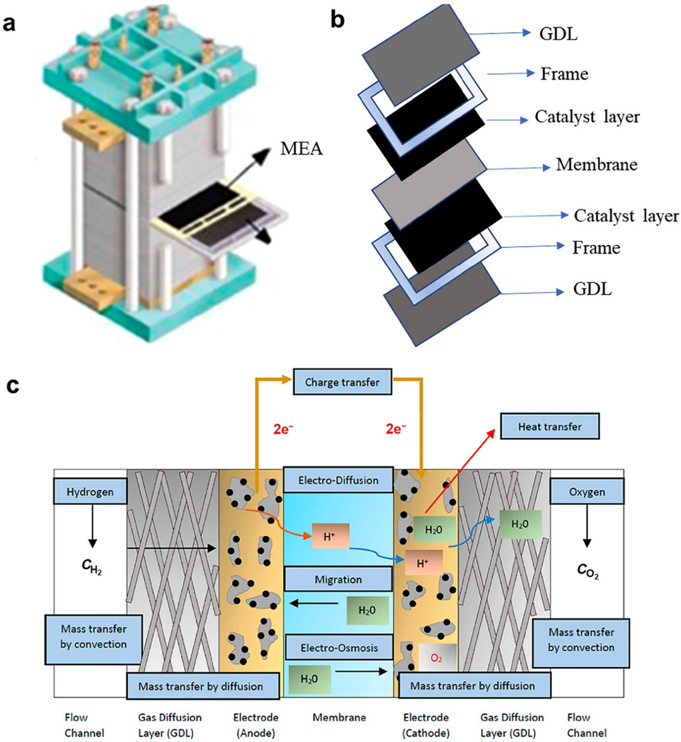
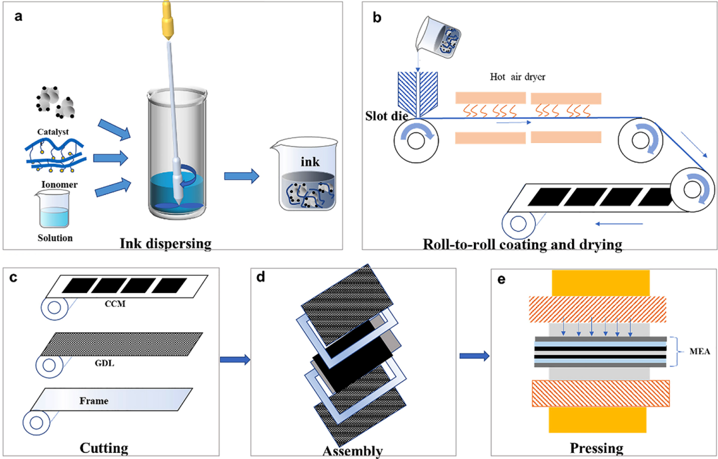
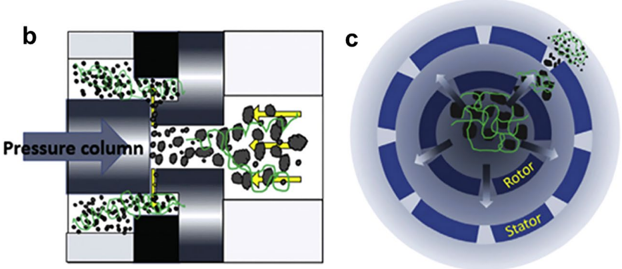
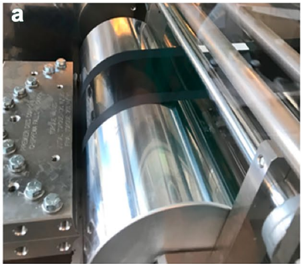
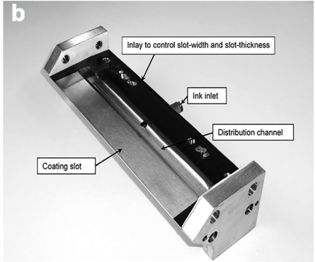
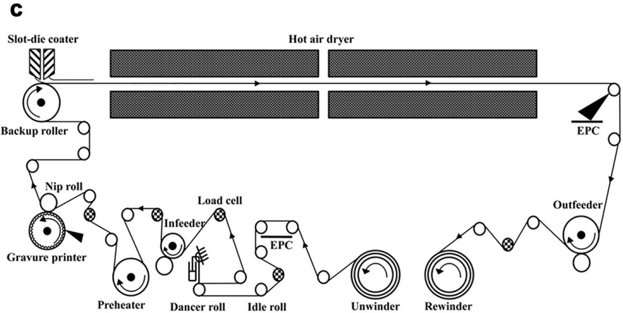
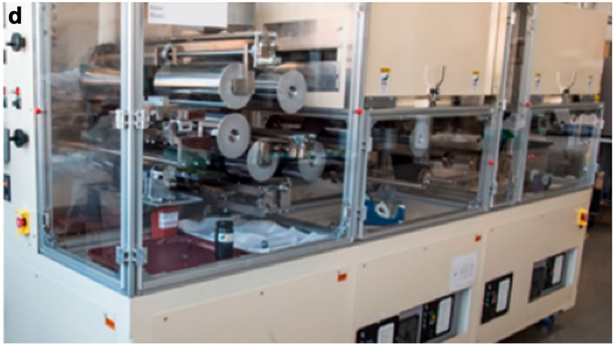
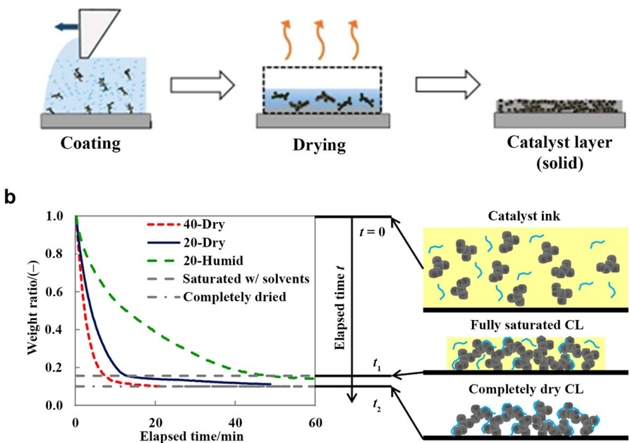
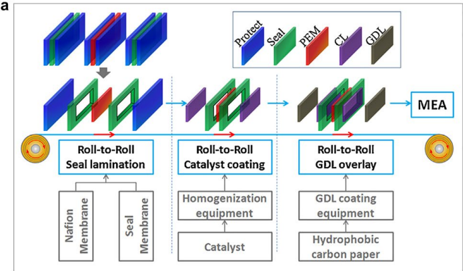
“The MEA fabrication process generally includes ink dispersing, electrode coating, electrode drying, slitting and cutting, component assembly, and pressing (Fig. 12a-f).”
§ Recent Advances on PEM Fuel Cells: From Key Materials to Membrane Electrode Assembly > Materials integration into the MEAs.
“Figure: 12 Fig. 12 a Fig.12a-e General MEA fabrication process, including ink dispersing, coating, drying, cutting, assembly, and pressing”
Rated minor: it would not touch a result — a value no result rests on, a p-value that stays on the same side of the significance level, or a conflict that is clerical, resolved elsewhere in the paper, or outside its own findings.
In the paper
§ Recent Advances on PEM Fuel Cells: From Key Materials to Membrane Electrode Assembly > 3.2.2 Assembly Step
“The role of the GDL is discussed in Sect.2.4.”
§ Recent Advances on PEM Fuel Cells: From Key Materials to Membrane Electrode Assembly > 2.3 Gas Diffusion Layer (GDL)
“## 2.3 Gas Diffusion Layer (GDL)”
Citations
Cites
Single-atom catalysis of CO oxidation using Pt1/FeOx
Qiao, B., Wang, A., Yang, X., Allard, L. F., Jiang, Z., Cui, Y., Liu, J., Li, J., & Zhang, T. (2011) · Nature Chemistry · doi:10.1038/nchem.1095 · Cited by 7,526 · cited 1×
“Among various PGM-free catalysts, composites involving so-called single-atom moieties are emerging [46], i.e., transition metal–nitrogen–carbon (M–”
Electrocatalyst approaches and challenges for automotive fuel cells
Debe, M. K. (2012) · Nature · doi:10.1038/nature11115 · Cited by 5,885 · cited 2×
“This indicates less than one faulty MEA in 30 000 products [230].”
Computational high-throughput screening of electrocatalytic materials for hydrogen evolution
Greeley, J., Jaramillo, T. F., Bonde, J., Chorkendorff, I., & Nørskov, J. K. (2006) · Nature Materials · doi:10.1038/nmat1752 · Cited by 4,097 · cited 1×
“A high d-band center benefits the adsorption of oxygen-containing species but leads to slow intermediate desorption and active site poisoning, while a low d-band center suffers from slow adsorption of oxygen and low kinetics [37, 38].”
Why gold is the noblest of all the metals
Hammer, B., & Norskov, J. K. (1995) · Nature · doi:10.1038/376238a0 · Cited by 3,935 · cited 1×
“The d-band center of Pt sites has been widely accepted as a descriptor for ORR intrinsic activity [35–37].”
Batteries and fuel cells for emerging electric vehicle markets
Cano, Z. P., Banham, D., Ye, S., Hintennach, A., Lu, J., Fowler, M., & Chen, Z. (2018) · Nature Energy · doi:10.1038/s41560-018-0108-1 · Cited by 2,873 · cited 1×
“While PEM fuel cells have risen and declined in recent centuries, they presently play a key role in building a sustainable society [1].”
Self-citationFrom the Sabatier principle to a predictive theory of transition-metal heterogeneous catalysis
Medford, A. J., Vojvodic, A., Hummelshøj, J. S., Voss, J., Abild-Pedersen, F., Studt, F., Bligaard, T., Nilsson, A., & Nørskov, J. K. (2015) · Journal of Catalysis · doi:10.1016/j.jcat.2014.12.033 · Cited by 2,254
Stamenkovic, V., Mun, B. S., Mayrhofer, K. J. J., Ross, P. N., Markovic, N. M., Rossmeisl, J., Greeley, J., & Nørskov, J. K. (2006) · Angewandte Chemie International Edition · doi:10.1002/anie.200504386 · Cited by 2,109 · cited 1×
“A high d-band center benefits the adsorption of oxygen-containing species but leads to slow intermediate desorption and active site poisoning, while a low d-band center suffers from slow adsorption of oxygen and low kinetics [37, 38].”
Wang, D., Xin, H. L., Hovden, R., Wang, H., Yu, Y., Muller, D. A., DiSalvo, F. J., & Abruña, H. D. (2013) · Nature Materials · doi:10.1038/nmat3458 · Cited by 2,082
Review and analysis of PEM fuel cell design and manufacturing
Mehta, V., & Cooper, J. S. (2003) · Journal of Power Sources · doi:10.1016/s0378-7753(02)00542-6 · Cited by 1,685 · cited 1×
“16c) [194–200].”
Biaxially strained PtPb/Pt core/shell nanoplate boosts oxygen reduction catalysis
Bu, L., Zhang, N., Guo, S., Zhang, X., Li, J., Yao, J., Wu, T., Lu, G., Ma, J.-Y., Su, D., et al. (2016) · Science · doi:10.1126/science.aah6133 · Cited by 1,642 · cited 1×
“To date, various strategies to improve the performance have been developed, such as alloying Pt with transition metals [23, 24], building the core–shell structure [25, 26], nanowires [27–29], nanoplates [30], and nanoframes [31, 32].”
Research works printed but not linked: 1
- Jie, N.: Investigation of the colloidal behaviour of carbon black and perfluorosulfonated ionomer in various solvents. Dissertation, Queen’s University (2016). http://hdl.handle.net/1974/14081.
Cited by
Items 201–272 of 272
Maximizing performance in the oxygen reduction reaction with nitrogen-supported bimetallic catalyst
Pavlets, A. S., Moguchikh, E. A., Astravukh, Y. V., Pankov, I. V., Pal, V., Bayan, Y. A., Nikolskiy, A., Kozakov, A. T., & Alekseenko, A. A. (2025) · Inorganic Chemistry Communications · doi:10.1016/j.inoche.2025.115244 · Cited by 1
Zhang, B., Zhou, X., Wu, Z., Huang, J., Bai, L., Li, Z., Wang, X., & Sun, M. B. (2025) · ACS Applied Nano Materials · doi:10.1021/acsanm.5c01572 · Cited by 3
Carena, E., Caizán‐Juanarena, L., Marchionni, A., Filippi, J., Berretti, E., Marrani, A. G., Santoro, C., Muhyuddin, M., & Ferrara, C. (2026) · Nanoscale · doi:10.1039/d5nr05348j · Cited by 2
Payri, R., Martí-Aldaraví, P., Gómez-Vilanova, A., et al. (2025) · International Journal of Engine Research · doi:10.1177/14680874251338922 · Cited by 1
“8 Proton-Exchange Membrane (PEM) fuel cell technology 9 has emerged as a promising alternative for clean and efficient energy in transportation, 10 particularly for long-haul applications involving heavy-duty trucks.”
Operando and ex situ comparison of Pt and Pt3Co catalyst degradation under ORR in PEMFC
Bogar, M., Yakovlev, Y. V., Pollastri, S., Hrbek, T., Kalabis, D., Marussi, G., Crosera, M., Biagi, R., Amenitsch, H. W., Taccani, R., et al. (2025) · Chemical Engineering Journal Green and Sustainable · doi:10.1016/j.cejgas.2025.100017 · Cited by 1
Block copolymer-based CO2 separation membranes: synthesis, microstructures and recent progress
Wei, J., Deng, M., Yin, D., Sun, D., Yang, L., Yao, L., Jiang, W., Yi, S., Deng, J., Ma, X., et al. (2026) · Advanced Membranes · doi:10.1016/j.advmem.2026.100211 · Cited by 4
Yang, D., Guo, Y., Zhang, Z., Wang, J., Zheng, W., Yang, D., Ming, P., & Li, B. (2026) · International Journal of Hydrogen Energy · doi:10.1016/j.ijhydene.2026.154539 · Cited by 2
Operando Magnetic Resonance Imaging for Visualizing Electrochemical Triple‐Phase Boundary
Jiang, W., Cao, S., Qiu, C., Sun, H., Wang, L., Sheng, J., Ji, L., Liu, S., Ni, Z.-R., Yin, S., et al. (2025) · Angewandte Chemie · doi:10.1002/ange.202506183 · Cited by 5
Fabrication of catalyst layers of proton exchange membrane fuel cell via magnetron sputtering method
Sun, R., Lan, C., Zhang, T., Hu, X., Chen, T., Zhang, Z., Xu, X., Xia, Z., & Wang, S. (2025) · International Journal of Hydrogen Energy · doi:10.1016/j.ijhydene.2025.150602 · Cited by 1
Li, C., Wang, H., Qian, F., Li, S., Sang, Q., Chen, Q., Liao, J., Zhu, Y., Liu, Y., & Zhang, S. (2025) · Chemical Engineering Journal · doi:10.1016/j.cej.2025.163572 · Cited by 1
Addressing nanotoxicological risks in green hydrogen technologies: a safety by design perspective
Simeone, F. C., Berretti, E., Lavacchi, A., Muhyuddin, M., Santoro, C., & Perissi, I. (2026) · Sustainable Energy Technologies and Assessments · doi:10.1016/j.seta.2026.105073 · Cited by 1
Zabara, M. A., Iskandarani, B., Yürüm, A., Gürsel, S. A., & Kaplan, B. Y. (2025) · ACS Applied Energy Materials · doi:10.1021/acsaem.5c02079 · Cited by 1
Garwol, A. (2024) · Journal of Konbin · doi:10.5604/01.3001.0054.9219
Martini, M. B., Adam, C. G., & Fernández, J. L. (2026) · International Journal of Hydrogen Energy · doi:10.1016/j.ijhydene.2026.155829
Luo, W., Feng, A., Xie, H., Wei, Y., Lu, J., Thondaiman, P., & Wang, Q. (2026) · Batteries · doi:10.3390/batteries12080275 · Cited by 2
Zhang, Z., Wang, Y., Fang, P., Zhao, W., Hou, Y., Li, F., Chai, M., & Li, Y. (2026) · Journal of Energy Chemistry · doi:10.1016/j.jechem.2026.01.047
Experimental design in PEM fuel cell composite membrane for better water management
Ahmed, T. M., Al–Othman, A., Shamayleh, A., et al. (2026) · International Journal of Hydrogen Energy · doi:10.1016/j.ijhydene.2026.156639
Ashraf, F., Qaiser, A. A., Abid, N., & Sharif, S. (2026) · RSC Advances · doi:10.1039/d5ra09259k
Wang, Z., Wu, W., Guo, F., Jiang, H., Wei, Q., Chen, R., Liu, Z., Xiao, Y., He, G., & Cheng, N. (2026) · Applied Catalysis B: Environmental · doi:10.1016/j.apcatb.2026.126914
Garcia-Corral, A., Martín, S., Gonzalez-Rodriguez, L., Castillo, J. L., & García‐Ybarra, P. L. (2026) · Journal of Power Sources · doi:10.1016/j.jpowsour.2026.241002
Cao, D., Zhang, M., Wang, H. B., Zhang, Y., Luo, F., Yang, Z., Qin, R., & Zheng, N. (2026) · Small · doi:10.1002/smll.74717
Lavajoo, A., Ahmadi, P., & Rosen, M. A. (2026) · International Journal of Hydrogen Energy · doi:10.1016/j.ijhydene.2026.156927
Functionalization and characterization of supports for catalysts in fuel cells
Müller, M., Kintzel, B., Seidel, C., Günthel, M., Kunkel, R., & Tübke, J. (2026) · Applied Surface Science · doi:10.1016/j.apsusc.2026.166885 · Cited by 1
Practical industrial application of hydrogen energy
Li, B., & Li, Z. (2026) · Elsevier eBooks · doi:10.1016/b978-0-443-29120-3.00007-3
Low-fluorine ionomers in catalyst layers: Toward PFSA-reduced PEM fuel cells
Makhlooghiazad, F., Hirth, L., Gierse, S., Gallastegui, A., Casado, N., Kiaee, Z., & Zamel, N. (2026) · International Journal of Hydrogen Energy · doi:10.1016/j.ijhydene.2026.155287
Prospects of Open Cathode Fuel Cells in Future Powertrains
Verma, S., Sandeep, R. S., Pandey, M. M., et al. (2025) · Energy, environment, and sustainability · doi:10.1007/978-981-96-6624-9_13
Molten salt electrochemical synthesis of magnetically recyclable Fe–Pt nanoparticles
Tokushige, M., & Kunihiro, T. (2026) · Materials Chemistry and Physics · doi:10.1016/j.matchemphys.2026.132352
Fuel Cell Technologies, their Types and Components: A Panaromic Review
Duarah, P., Kalita, P., & Khalid, F. (2025) · Springer eBooks · doi:10.1007/978-981-95-1853-1_6
Defect and Interface Engineering for the Oxygen Reduction Reaction
Cruz‐Martínez, H., Santiago‐Silva, L., García‐Hilerio, B., & Luján, V. A. F. (2025) · Wiley eBooks · doi:10.1002/9783527850273.ch16
Yeo, R. Y. Z., Ang, W. L., Bakar, M. H. A., et al. (2024) · Fuel Cells · doi:10.1002/fuce.202400035
“Various membranes, such as Nafion and commercial cation-anion exchange, were previously studied with respect to the application in MEAs [18] and MFCs [19].”
Ronovský, M., Dunseath, O., Hrbek, T., Kúš, P., Gatalo, M., Polani, S., Kubát, J., Götz, D., Nedumkulam, H., Sartori, A., et al. (2024) · ChemRxiv · doi:10.26434/chemrxiv-2024-g9lx2 · Cited by 2
Lee, H.-B., Kim, S. J., Bae, H., Jeon, Y., Park, J., Jung, M., Park, J.-Y., Kwon, S., Kim, H.-S., Prasanna, K., et al. (2026) · Journal of Power Sources · doi:10.1016/j.jpowsour.2026.240601
Polymeric schiff base materials: From molecular engineering to advanced technological applications
Ahmad, R., Raza, S., Khan, S., et al. (2026) · Materials Today Chemistry · doi:10.1016/j.mtchem.2026.104017
Platinum-based catalysts for oxygen reduction reaction: Advances, challenges, and prospects
Kumar, A., Bishnoi, P., Azamovich, K. B., Yusuf, M., AlQahtani, D., Nisar, K. S., Ahmad, A., & Malik, I. (2026) · Journal of Electroanalytical Chemistry · doi:10.1016/j.jelechem.2026.120636
Modeling Impact of Crack Density on the Performance of the Microporous Layer in PEMFCs
Ding, L., Tang, M., Li, M., Yu, Y., Wang, X., & Gao, H. (2026) · ACS Omega · doi:10.1021/acsomega.6c06384
From half-cell to heavy-duty: a critical review of MXene catalysts for PEMFC cathodes
Kule, T. D., Bahru, T. B., Getachew, N. A., Kassa, T. S., Yessuf, A. M., Mohideen, M. M., Shibeshi, P. T., & Liu, Y. (2026) · Fuel · doi:10.1016/j.fuel.2026.141216
Yoshida, E., Arai, H., & Katayama, N. (2025) · International Conference on Renewable Energy Research and Applications (ICRERA) · doi:10.1109/icrera66237.2025.11283979
Bimetallic Electrocatalysts Based on Modified Carbon Supports for the Oxygen Reduction Reaction
Pavlets, A. S., Moguchikh, E. A., Bayan, Y. A., Nikulin, A. Y., Alekseenko, D. V., & Alekseenko, A. A. (2026) · Nanobiotechnology Reports · doi:10.1134/s2635167625601123
Lee, B., Lim, K. H., Hong, J. W., Lee, S. Y., Han, J., & Kim, H. (2026) · Journal of Power Sources · doi:10.1016/j.jpowsour.2026.241352 · Cited by 1
CHACHULI, S. H. M., Abdullah, M. A., Lim, K. L., et al. (2026) · Sustainable Energy & Fuels · doi:10.1039/d6se00424e
Borisov, G. R., Stoyanov, L., Bachev, I., et al. (2026) · Electrochem · doi:10.3390/electrochem7030026
“Within this component, the fundamental electrochemical reactions take place, namely the hydrogen oxidation reaction (HOR) at the anode and the oxygen reduction reaction (ORR) at the cathode, through which the chemical energy of the fuel is directly converted into electrical energy [9,10].”
A Reinforced Perfluorosulfonic Acid Membrane with PE Mesh
Dou, Y., Su, B., Jin, Y., Zhang, W., Wang, Y., & Wang, Y. (2026) · Membranes · doi:10.3390/membranes16050177
Xie, Y., Hao, C., Xie, J., Liu, J., Lin, M., Tan, C., Wang, Z., Xiong, Y., Shen, P. K., & Tian, Z. Q. (2026) · Journal of Energy Chemistry · doi:10.1016/j.jechem.2026.07.005 · Cited by 1
Özdemir, J. H., Aktaş, B. B., Ozdemir, Ö. K., et al. (2026) · International Journal of Hydrogen Energy · doi:10.1016/j.ijhydene.2026.154887
李俊篯, Lo, T. W. B., Yung, K., & Lin, C. (2026) · Applied Catalysis A General · doi:10.1016/j.apcata.2026.120989
Suhaimi, N. H., Zakaria, Z., Manan, N. S. A., Ramesh, S., Hanapi, I. H., Kamarudin, S. K., Saharudin, M. S., Azmi, M. A., Wani, A. A., & Hanapi, S. (2026) · Energy & Fuels · doi:10.1021/acs.energyfuels.6c01901
Türk, O. K., Zengin, İ. H., & Cakmakci, M. (2025) · Elsevier eBooks · doi:10.1016/b978-0-44-313219-3.00022-8
Water-mediated surface hydroxyl replenishment enables low-temperature CO-PROX over Pt/M-Fe(OH)x
Wang, L., Jiang, F., Liu, W., et al. (2026) · Applied Catalysis A General · doi:10.1016/j.apcata.2026.120880
Comprehensive Study of the Stability of PtCu/C Catalysts for Low-Temperature Fuel Cells
Belenov, S. V., Moguchikh, E. A., Pavlets, A. S., Pankov, I. V., & Меньщиков, В. С. (2024) · Nanobiotechnology Reports · doi:10.1134/s2635167624600913
Progress in electrochemical methane oxidation from catalyst to reactor scale
Wang, M., & Gates, I. D. (2026) · Cell Reports Physical Science · doi:10.1016/j.xcrp.2026.103414
Ortolani, M., Abboud, G., Borzoni, G., Nocciolini, D., & Demir, A. G. (2026) · Procedia CIRP · doi:10.1016/j.procir.2026.07.083
Hesham, H., RAHMAN, M. A., Bassioni, G., Swief, R. A., Helmy, S., & Ezzat, M. (2026) · Science and Technology Nexus · doi:10.25259/stn_35_2026
Shah, S. S., Ahmad, T., Khalid, S., Khan, S., Ullah, S., Khan, Q., & Aziz, M. A. (2026) · Frontiers in Catalysis · doi:10.3389/fctls.2026.1914047
Template‐Based Structured Electrodes for High Power and Durable Proton Exchange Membrane Fuel Cells
Ren, Y., Liu, L., Hwang, D. K., & Lee, C. (2026) · SusMat · doi:10.1002/sus2.70081 · Cited by 1
“Spray coating is widely used due to its operational simplicity and equipment accessibility [ 172 ].”
Saad, B., El-Sehiemy, R. A., Hasanien, H. M., et al. (2026) · International Journal of Hydrogen Energy · doi:10.1016/j.ijhydene.2026.155464
Choi, W., Lim, J., Kang, I., Oh, E., So, S., Kang, H. S., & Oh, K. (2026) · Small · doi:10.1002/smll.202512653 · Cited by 1
AI-assisted structure reconstruction and multiphysics modeling of gas diffusion layers
Yuan, S., Fan, L., Wang, Y., Wu, S., Xu, R., Deng, H., Wang, Y., Zhu, J., Liu, J., Hou, Z., et al. (2026) · Energy and AI · doi:10.1016/j.egyai.2026.100843 · Cited by 1
Overcoming ohmic losses in PEMFCs: A review of recent progress
Alobeid, M., Kılıç, A. E., Çelik, S., & Özcan, H. (2026) · International Journal of Hydrogen Energy · doi:10.1016/j.ijhydene.2026.157384
Zhou, Q., Zou, M., Zhao, M., Huang, Q., & Tang, S. (2026) · Materials Today Chemistry · doi:10.1016/j.mtchem.2026.103764 · Cited by 1
Self-citationAn overview of the uses of polymers with intrinsic microporosity as binders for electrocatalysis
Bugliarelli, V., Porporato, S., Lettieri, S., Etzi, M., Nardo, E. D., Astorino, C., Ferraro, G., Bartoli, M., Pirri, C. F., & Bocchini, S. (2026) · Current Opinion in Solid State and Materials Science · doi:10.1016/j.cossms.2026.101295
Fuel cell materials and technologies toward carbon neutrality
Hegde, S. N., Suranagi, S. R., Kariduraganavar, S. M., et al. (2026) · Elsevier eBooks · doi:10.1016/b978-0-443-36334-4.00006-9
N-doping on Pt/C catalyst using fluidized bed reactor atomic layer deposition for PEMFC applications
Madheswaran, D. K., Jegadheeshwari, S., Krishna, R., Chandramohan, P., Meenakshi, C. M., Rathinasabapathi, G., & Suresh, G. (2026) · AIP conference proceedings · doi:10.1063/5.0348465
Min, J., Woo, S., Park, S., Bae, B., Yim, S., & Kang, Y. S. (2026) · Journal of Materials Research and Technology · doi:10.1016/j.jmrt.2026.07.205
Li, T., Song, K., Feng, C., Liu, C., & Jiang, D. (2026) · Mechanisms and machine science · doi:10.1007/978-3-032-01363-7_9
Wang, N., Gong, Y., Wang, Y., et al. (2026) · Inorganic Chemistry · doi:10.1021/acs.inorgchem.6c03568
Self-citationFahs, A., Chailan, J., Sgreccia, E., Vagnarelli, M., Pasquini, L., Knauth, P., & Vona, M. L. D. (2026) · Journal of Polymer Science · doi:10.1002/pola.70284
Design and Simulation of Proton Exchange Membrane Fuel Cell Power Generator 10 kW
Siregar, B. S., Widhiyanurrohmansyah, R., Firmansyah, E., & Sentanuhady, J. (2025) · International Conference on Technology and Policy in Energy and Electric Power (ICT-PEP) · doi:10.1109/ict-pep67281.2025.11232328 · Cited by 1
Azzano, J. L. A. (2024) · El Servicio de Difusión de la Creación Intelectual (National University of La Plata) · doi:10.35537/10915/168129
Sabri, M., Asaad, S. M., Tawalbeh, M., et al. (2025) · Elsevier eBooks · doi:10.1016/b978-0-443-29875-2.00011-5
Chen, H., Yang, D., Chu, T., Chen, B., Zheng, W., Wang, J. C., Yang, D., Ming, P., & Li, B. (2026) · ACS Applied Materials & Interfaces · doi:10.1021/acsami.6c02112 · Cited by 1
Analysis of a Boost-Fed Full-Bridge Converter as a Voltage Stabilizer for a Fuel Cell Source
Rusli, M., Miftaks, T. I., Muslim, M. A., et al. (2024) · Electrical Power, Electronics, Communications, Controls and Informatics Seminar (EECCIS) · doi:10.1109/eeccis62037.2024.10840171
“The cathode reduces oxygen while the anode oxidizes hydrogen [11].”
Ultrasonic process for the manufacture of proton exchange membrane fuel cell electrode assembly
Tougne, C., Cavoué, T., Morin, A., et al. (2025) · Journal of Power Sources · doi:10.1016/j.jpowsour.2025.238061
“Hot pressing requires specific molds, temperatures (100 – 170 ◦ C), and pressing times (3 – 15 min) to ensure strong adhesion [7,10 – 12].”
Metadata
- Authors
- Mo, S., Du, L., Huang, Z., Chen, J., Zhou, Y., Wu, P., Meng, L., Wang, N., Xing, L., Zhao, M., Yang, Y., Tang, J., Zou, Y., & Ye, S.
- Affiliations
- Guangzhou University (CN)
- Corresponding author
- Xing, Lixin
- Ye, Siyu
- Venue
- Electrochemical Energy Reviews
- Published
- 2023-08-17
- Volume
- 6
- Issue
- 1
- ISSN
- 2520-8136 (ISSN-L)
- 2520-8489
- OpenAlex
- W4385950481
- Semantic Scholar
- c0da1c409a6ea52ab5ae981dd027dfa5bbc1427c
- Cited by
- 277
- References
- 267
- Citations by year
- 2026: 82 · 2025: 119 · 2024: 75 · 2023: 1
- FWCI
- 20.53
- Type
- journal article
- Language
- en
- Open access
- hybrid
- doi.org
- Licence
- cc-by
- creativecommons.org/licenses/by/4.0 (tdm)
- creativecommons.org/licenses/by/4.0 (vor)
- Locations
- Electrochemical Energy Reviews (publishedVersion, cc-by)
- Funders
- National Key Research and Development Program of China (2020YFB1505800)
- National Natural Science Foundation of China (22250710133, 51803042)
- Outstanding Youth Project of Natural Science Foundation of Guangdong Province (2022B1515020020)
- Funding by Science and Technology Projects in Guangzhou (202206050003, 202201010603)
- Topics
- Physical Sciences › Engineering › Electrical and Electronic Engineering › Fuel Cells and Related Materials
- Physical Sciences › Energy › Renewable Energy, Sustainability and the Environment › Electrocatalysts for Energy Conversion
- Physical Sciences › Materials Science › Materials Chemistry › Advancements in Solid Oxide Fuel Cells
- Keywords
- proton exchange membrane fuel cells, membrane electrode assembly, fuel cell materials, fuel cell manufacturing, fuel cell lifetime, fuel cell cost, electrode materials, fuel cell vehicles
About these checks
Registry, retraction, Cites and statistics results are computed, not judged, with one exception: a printed reference that no index lists is read once by a model before it counts as a citation error. Claims are extracted by a model and kept only when their quote appears verbatim in the text; each cited source is then checked, with a model’s help, for whether it says what the claim relies on. Those verdicts can be wrong — read the claim’s quote and the cited source before relying on one.
The claim verdicts this report counts are experimental: their accuracy is not yet measured.
A language model drew the claims from the paper on 2026-10-10, under version 3 of the claim definition (model deepseek-v4.1-flash, prompt extract-v3).
A second model labelled each claim on 2026-10-10 (model jev-1.13-20260917, definition revision gold-guideline-v0.2).
Cited sources are checked with a language model’s help (gpt-6-sol and qwen3.8-omni-flash).
Statistics and arithmetic are recomputed, not judged.
Confidence bands are shown only for fields calibrated on our annotated test set. None is calibrated yet, so no band is shown.
What counts as a claim ›How we measure confidence ›How we check this ›
Are you an author, or do you see a problem with this page? Request a review
Data sources
Bibliographic data: Semantic Scholar, OpenAlex, Crossref.
Contains information from the Semantic Scholar Academic Graph Datasets, made available under the ODC Attribution License (ODC-BY 1.0).
Semantic Scholar’s data is described in: Kinney, R., et al. (2023). The Semantic Scholar Open Data Platform. arXiv:2301.10140.
