

The DOI matches its Crossref record; 46 of the 46 references it cites were found in a registry or an index.
AI Risk Assessment: A Scenario-Based, Proportional Methodology for the AI Act
Abstract
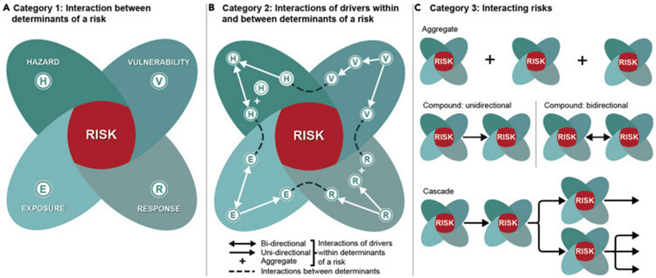
The EU Artificial Intelligence Act (AIA) defines four risk categories for AI systems: unacceptable, high, limited, and minimal. However, it lacks a clear methodology for the assessment of these risks in concrete situations. Risks are broadly categorized based on the application areas of AI systems and ambiguous risk factors. This paper suggests a methodology for assessing AI risk magnitudes, focusing on the construction of real-world risk scenarios. To this scope, we propose to integrate the AIA with a framework developed by the Intergovernmental Panel on Climate Change (IPCC) reports and related literature. This approach enables a nuanced analysis of AI risk by exploring the interplay between (a) risk determinants, (b) individual drivers of determinants, and (c) multiple risk types. We further refine the proposed methodology by applying a proportionality test to balance the competing values involved in AI risk assessment. Finally, we present three uses of this approach under the AIA: to implement the Regulation, to assess the significance of risks, and to develop internal risk management systems for AI deployers.
Overview
The claims and statistics of this paper haven’t been checked yet.
Run the check — free, no account needed. It reads the open-access text and checks the sources it cites.
Integrity signals
Registry
Cites
Statistics
Figures
Verification
Claims the paper makes
The claims and statistics of this paper haven’t been checked yet.
Run the check — free, no account needed. It reads the open-access text and checks the sources it cites.
Claims other papers make about this one
Each is checked against this paper’s own text: does it say what the citing paper says it does?
In the citing paper
“the three-tier classification system for GPAIs -standard, openly licensed, and systemically risky -may fail to account for the peculiarities of downstream applications, potentially leading to over-inclusive or underinclusive risk categories [5,6].”
From Generative AI in EU law: Liability, privacy, intellectual property, and cybersecurity (2024) · cites this paper as [5]
Self-check
Percentages, sums and reported differences re-computed from the paper’s own numbers.
The self-check needs the paper’s full text.
Citations
Cites
(2013) · American Economic Review · doi:10.1257/aer.103.6.i · Cited by 7,413
A framework for vulnerability analysis in sustainability science
Turner, B. L., Kasperson, R. E., Matson, P. A., McCarthy, J. J., Corell, R. W., Christensen, L., Selin, N. E., Kasperson, J. X., Luers, A. L., Martello, M. L., et al. (2003) · Proceedings of the National Academy of Sciences · doi:10.1073/pnas.1231335100 · Cited by 4,378
On the quantitative definition of risk
Kaplan, S., & Garrick, B. J. (1981) · Risk Analysis · doi:10.1111/j.1539-6924.1981.tb01350.x · Cited by 3,103
The Brussels Effect: How the European Union Rules the World
Bradford, A. (2020) · doi:10.1093/oso/9780190088583.001.0001 · Cited by 1,349
A Theory of Constitutional Rights
Alexy, R., & Rivers, J. (2002) · Cited by 1,244
Determinants of Risk: Exposure and Vulnerability
Cardona, O.-D., van Aalst, M. K., Birkmann, J., Fordham, M., McGregor, G., Perez, R., Pulwarty, R. S., Schipper, E. L. F., Sinh, B. T., Décamps, H., et al. (2012) · Managing the Risks of Extreme Events and Disasters to Advance Climate Change Adaptation · doi:10.1017/cbo9781139177245.005 · Cited by 1,007
A framework for complex climate change risk assessment
Simpson, N. P., Mach, K. J., Constable, A., Hess, J., Hogarth, R., Howden, M., Lawrence, J., Lempert, R. J., Muccione, V., Mackey, B., et al. (2021) · One Earth · doi:10.1016/j.oneear.2021.03.005 · Cited by 722
Really Responsive Risk-Based Regulation
Black, J., & Baldwin, R. (2010) · Law & Policy · doi:10.1111/j.1467-9930.2010.00318.x · Cited by 387
On Balancing and Subsumption. A Structural Comparison
Alexy, R. (2003) · Ratio Juris · doi:10.1046/j.0952-1917.2003.00244.x · Cited by 350
Vulnerability and vulnerable groups from an intersectionality perspective
Kuran, C. H. A., Morsut, C., Kruke, B. I., Krüger, M., Segnestam, L., Orru, K., Nævestad, T. O., Airola, M., Keränen, J., Gabel, F., et al. (2020) · International Journal of Disaster Risk Reduction · doi:10.1016/j.ijdrr.2020.101826 · Cited by 349
Research works printed but not linked: 3
- Garrett, B., & Monahan, J. (2020). Judging risk. California Law Review, 108(2), 439–493.
- Mahler, T. (2007). Defining legal risk. SSRN Scholarly Paper. Rochester, NY. https://papers.ssrn.com/abstract=1014364
- Sunstein, C. R. (2004). Risk and reason. Cambridge Books, Cambridge University Press. https://ideas.repec.org/b/cup/cbooks/9780521016254.html
Cited by
Generative AI in EU law: Liability, privacy, intellectual property, and cybersecurity
Novelli, C., Casolari, F., Hacker, P., Spedicato, G., & Floridi, L. (2024) · Computer Law & Security Review · doi:10.1016/j.clsr.2024.106066 · Cited by 124
Self-citationTruly risk-based regulation of Artificial Intelligence: how to implement the EU's AI act
Ebers, M. (2025) · European Journal of Risk Regulation · doi:10.1017/err.2024.78 · Cited by 126
Generative Ai in EU Law: Liability, Privacy, Intellectual Property, and Cybersecurity
Novelli, C., Casolari, F., Hacker, P., Spedicato, G., & Floridi, L. (2024) · doi:10.2139/ssrn.4821952 · Cited by 57
Self-citationWarthon, M. (2024) · Internet Policy Review · doi:10.14763/2024.3.1801 · Cited by 4
Zabolotna, H. (2026) · Visnyk of the Lviv University. Series Law · doi:10.30970/vla.2026.82.182
Metadata
- Authors
- Novelli, C., Casolari, F., Rotolo, A., Taddeo, M., & Floridi, L.
- ORCID
- Novelli, Claudio
- Venue
- Digital Society
- Published
- 2024-03-07
- Volume
- 3
- Issue
- 1
- ISSN
- 2731-4650
- 2731-4669
- Cited by
- 90
- References
- 46
- Language
- en
- Funders
- Alma Mater Studiorum - Università di Bologna
About these checks
Registry, retraction, Cites and statistics results are computed, not judged, with one exception: a printed reference that no index lists is read once by a model before it counts as a citation error. Claims are extracted by a model and kept only when their quote appears verbatim in the text; each cited source is then checked, with a model’s help, for whether it says what the claim relies on. Those verdicts can be wrong — read the claim’s quote and the cited source before relying on one.
Statistics and arithmetic are recomputed, not judged.
Confidence bands are shown only for fields calibrated on our annotated test set. None is calibrated yet, so no band is shown.
What counts as a claim ›How we measure confidence ›How we check this ›
Are you an author, or do you see a problem with this page? Request a review
How to cite
Cite CoChat for the checks on this page, and the paper for its own findings.
- This page
- CoChat. (2026). Citation check: AI Risk Assessment: A Scenario-Based, Proportional Methodology for the AI Act. https://app.cochat.ai/papers/10.1007/s44206-024-00095-1
- The paper
- Novelli, C., Casolari, F., Rotolo, A., Taddeo, M., & Floridi, L. (2024). AI Risk Assessment: A Scenario-Based, Proportional Methodology for the AI Act. Digital Society. https://doi.org/10.1007/s44206-024-00095-1
Data sources
Bibliographic data: Semantic Scholar, OpenAlex, Crossref.
Contains information from the Semantic Scholar Academic Graph Datasets, made available under the ODC Attribution License (ODC-BY 1.0).
Semantic Scholar’s data is described in: Kinney, R., et al. (2023). The Semantic Scholar Open Data Platform. arXiv:2301.10140.
