

Applications of biochar in medical and related environmental fields: current status and future perspectives
Open accessThe DOI matches its Crossref record; 88 of the 88 references it cites were found in a registry or an index.
Abstract
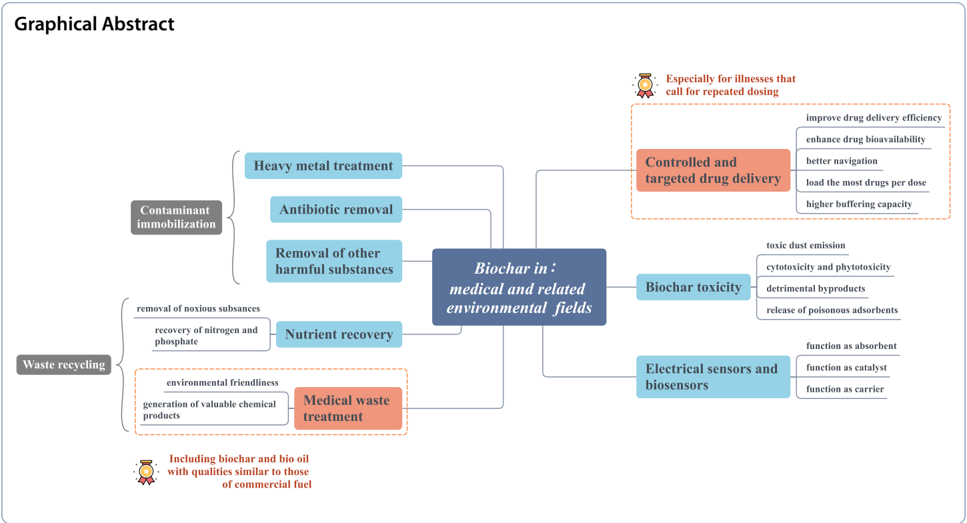
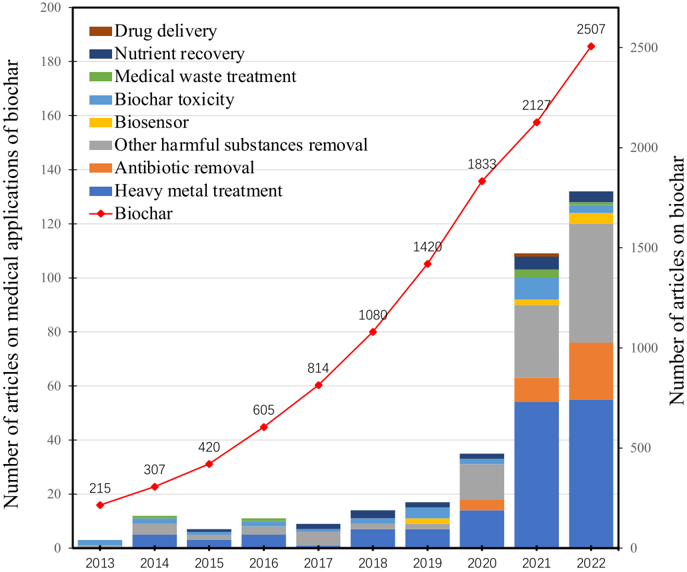
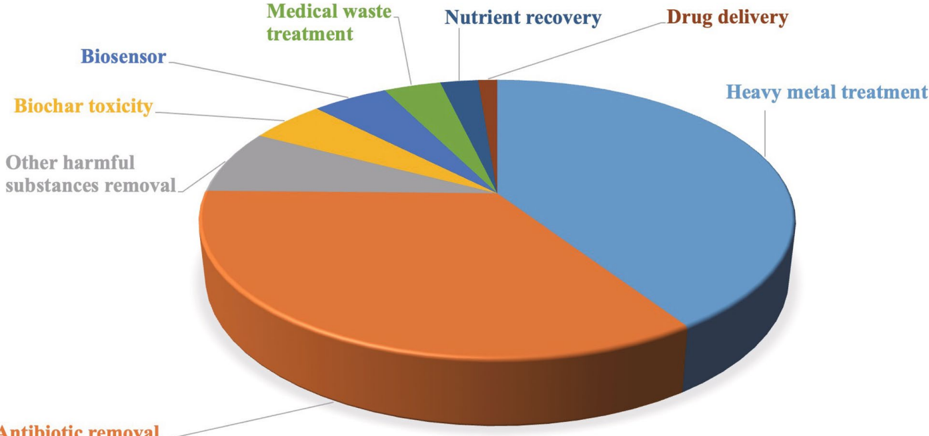
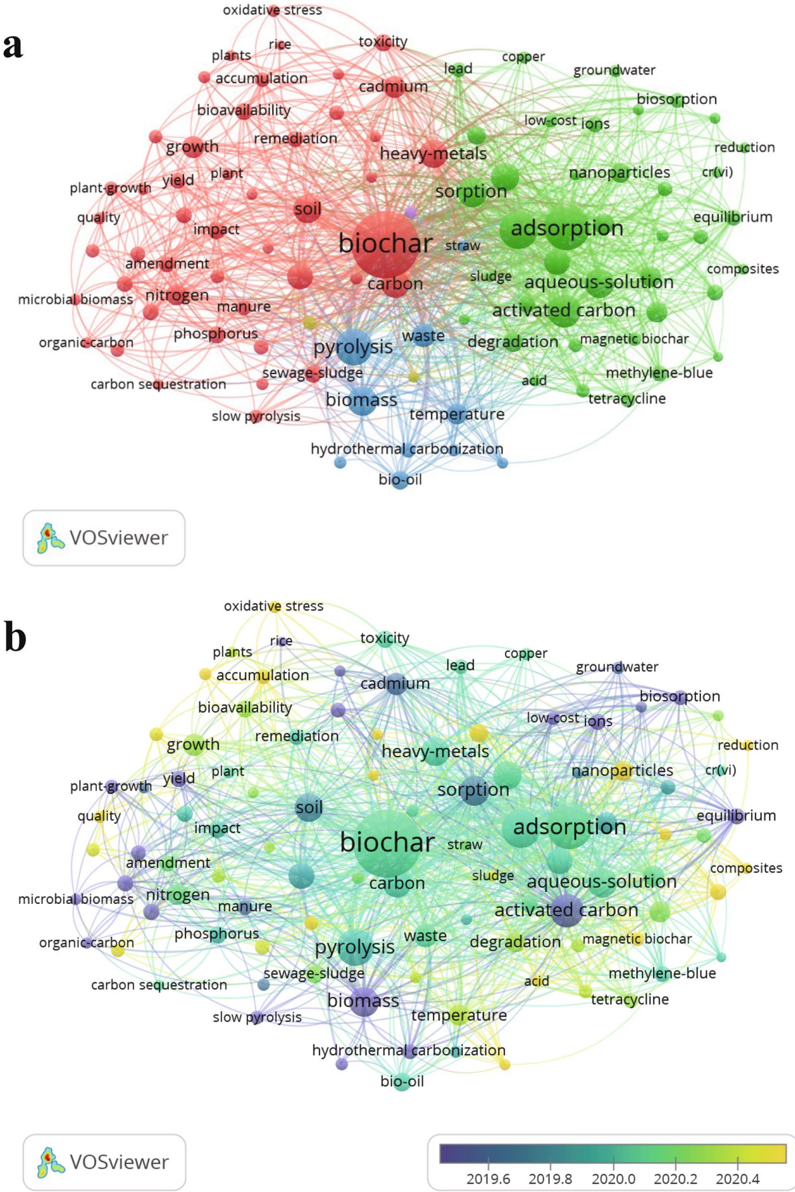
Biochar (BC) is a stable, carbon-rich material produced through biomass pyrolysis in an oxygen-restricted environment. In recent years, BC has gained recognition as an environmentally friendly material and has been extensively researched for its various applications related to human health. However, the medical applications of biochar remain relatively unexplored. This review aims to analyze recent publications from PubMed, focusing on the direct association between biochar and medical science over the past 3 years. The analysis identified five main subjects: contaminant immobilization, medical waste treatment and nutrient recovery, biochar toxicity, electrical sensors and biosensors, and drug delivery. Among these subjects, drug delivery and biosensors demonstrated the most direct relevance to the medical field. To enhance the validity of our findings, a bibliometric analysis was performed using the Web of Science Core Collection to visualize the trends in medical applications of biochar over time. The results further support our analysis. Finally, potential directions for future medical applications of biochar were discussed. This review underscores the necessity for further research on the medical applications of biochar. By exploring its potential in drug delivery, biosensors, and other domains, biochar has the potential to revolutionize medicine. Graphical Abstract
Overview
The claims and statistics of this paper haven’t been checked yet.
Free: it reads the open-access text and checks the first 5 claims that cite a source we can check. Create a free account to check every claim.
Integrity signals
Registry
Cites
Statistics
Figures
Verification
Claims the paper makes
The claims and statistics of this paper haven’t been checked yet.
Free: it reads the open-access text and checks the first 5 claims that cite a source we can check. Create a free account to check every claim.
Self-check
Percentages, sums and reported differences re-computed from the paper’s own numbers.
The self-check needs the paper’s full text.
Citations
Cites
Zhang, Q.-Q., Ying, G.-G., Pan, C.-G., Liu, Y.-S., & Zhao, J.-L. (2015) · Environmental Science & Technology · doi:10.1021/acs.est.5b00729 · Cited by 3,852 · cited 1×
“…“ Antibiotic Pollution Map of Rivers in China ”, the norfloxacin (NOR) concentration in the Pearl River (Guangdong province) was even higher than 1000 ng/L, while the average antibiotic concentration in China’s major rivers was approximately 303 ng/L (Zhang et al. 2015; Liang et al. 2022).”
BackgroundPatel, M., Kumar, R., Kishor, K., Mlsna, T., Pittman, C. U., & Mohan, D. (2019) · Chemical Reviews · doi:10.1021/acs.chemrev.8b00299 · Cited by 2,654 · cited 2×
“Besides contaminating soil and water supply, genes that are resistant to antibiotics are also produced when antibiotics are left in the environment, which are widely distributed in food chain and damage the ecosystem (Qiao et al. 2018; Patel et al. 2019).”
BackgroundControlled Drug Delivery Systems: Current Status and Future Directions
Adepu, S., & Ramakrishna, S. (2021) · Molecules · doi:10.3390/molecules26195905 · Cited by 1,691 · cited 1×
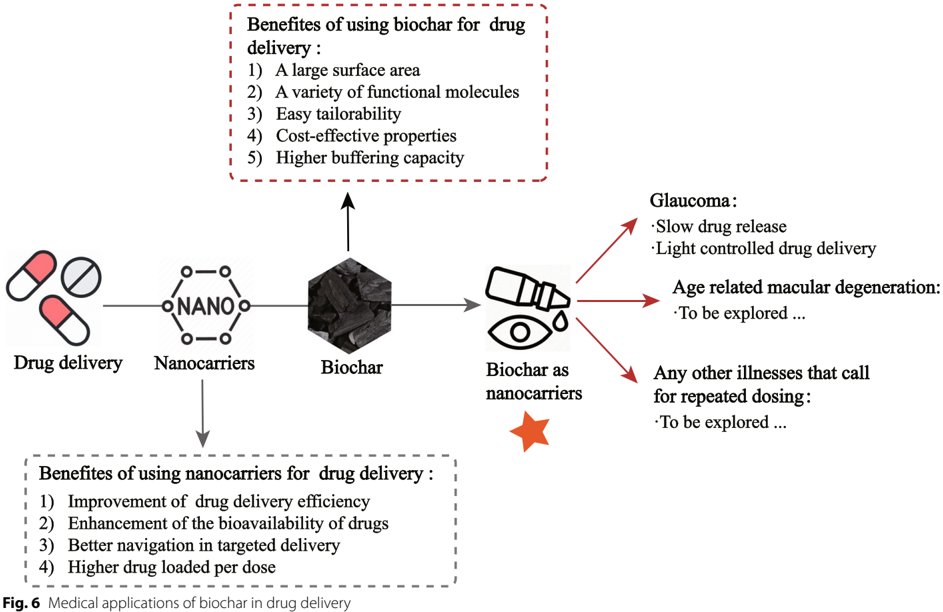
“Drawing upon the comprehensive review by Adepu and Ramakrishna (2021), a detailed list of the advantages of biochar over commonly employed nano-carriers was compiled, which is presented in Table 4 (Adepu and Ramakrishna 2021).”
MethodReview of antibiotic resistance in China and its environment
Qiao, M., Ying, G.-G., Singer, A. C., & Zhu, Y.-G. (2018) · Environment International · doi:10.1016/j.envint.2017.10.016 · Cited by 1,494
A review of biochar as a low-cost adsorbent for aqueous heavy metal removal
Inyang, M. I., Gao, B., Yao, Y., Xue, Y., Zimmerman, A., Mosa, A., Pullammanappallil, P., Ok, Y. S., & Cao, X. (2016) · Critical Reviews in Environmental Science and Technology · doi:10.1080/10643389.2015.1096880 · Cited by 1,397 · cited 2×
“The highly absorbent nature of biochar enables effective removal of heavy metals from wastewater (Inyang et al. 2016), as well as other toxic substances such as triclosan (TCS) (Ma et al. 2022), potentially toxic elements (PTEs) (Muhammad et al. 2020), and antibiotics in contaminated soil (Qiao et…”
BackgroundA review on thermal and catalytic pyrolysis of plastic solid waste (PSW)
Al-Salem, S. M., Antelava, A., Constantinou, A., Manos, G., & Dutta, A. (2017) · Journal of Environmental Management · doi:10.1016/j.jenvman.2017.03.084 · Cited by 1,200 · cited 2×
“Furthermore, catalytic pyrolysis proved to be even more advantageous by facilitating higher reaction rates at lower temperatures, thereby influencing product selectivity and enhancing overall efficiency (Al-Salem et al. 2017; Purnomo et al. 2021).”
BackgroundSurface chemistry variations among a series of laboratory-produced biochars
Mukherjee, A., Zimmerman, A. R., & Harris, W. (2011) · Geoderma · doi:10.1016/j.geoderma.2011.04.021 · Cited by 1,171 · cited 1×
“Also, it is reported that as a carrier, biochar shows a higher buffering capacity (Mukherjee et al. 2011), which is undoubtedly beneficial for the controlled release of substances.”
BackgroundKlemeš, J. J., Fan, Y. V., Tan, R. R., & Jiang, P. (2020) · Renewable and Sustainable Energy Reviews · doi:10.1016/j.rser.2020.109883 · Cited by 985 · cited 1×
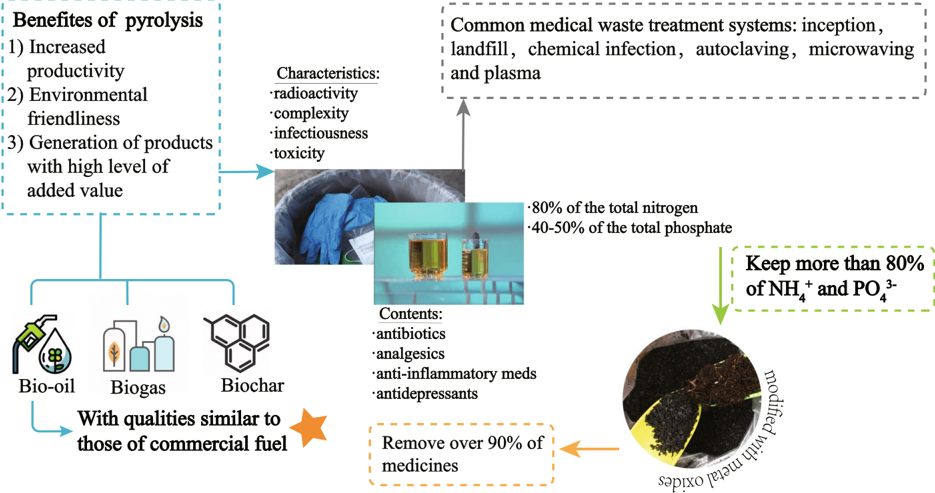
“Medical waste also demonstrates traits of radioactivity, complexity, infectiousness, and toxicity (Su et al. 2021) making it even more difficult to manage this type of trash and placing an immense pressure on the current waste management system (Klemeš et al. 2020; Purnomo et al. 2021).”
BackgroundAntibiotic Pollution in the Environment: From Microbial Ecology to Public Policy
Kraemer, S. A., Ramachandran, A., & Perron, G. G. (2019) · Microorganisms · doi:10.3390/microorganisms7060180 · Cited by 932 · cited 2×
“In addition to biodegradable routes, non-biodegradable pathways, including Photolysis, Ozonation, advanced oxidation processes, and Fenton processes, have been explored for antibiotic degradation (Kraemer et al. 2019; Katiyar et al. 2022).”
BackgroundXiao, X., Chen, B., Chen, Z., Zhu, L., & Schnoor, J. L. (2018) · Environmental Science & Technology · doi:10.1021/acs.est.7b06487 · Cited by 914 · cited 1×
“…nutrient recovery (Xu et al. 2019), wastewater treatment (Liu et al. 2022a, b), contaminant immobilization (Li et al. 2021), soil amendment strategies (Sashidhar et al. 2020), and carbon sequestration in soil (Xiao et al. 2018), all of which have direct or indirect implications for human health.”
BackgroundControlled drug delivery systems: Past forward and future back
Park, K. (2014) · Journal of Controlled Release · doi:10.1016/j.jconrel.2014.03.054 · Cited by 720 · cited 1×
“When it comes to drug delivery, nanoparticle is undoubtedly the most popular material in the past 10 years (Park 2014), and the employment of nanoparticles as drug carriers is the focus of recent research.”
BackgroundBiochar for the removal of contaminants from soil and water: a review
Qiu, M., Liu, L., Ling, Q., Cai, Y., Yu, S., Wang, S., Fu, D., Hu, B., & Wang, X. (2022) · Biochar · doi:10.1007/s42773-022-00146-1 · Cited by 690 · cited 1×
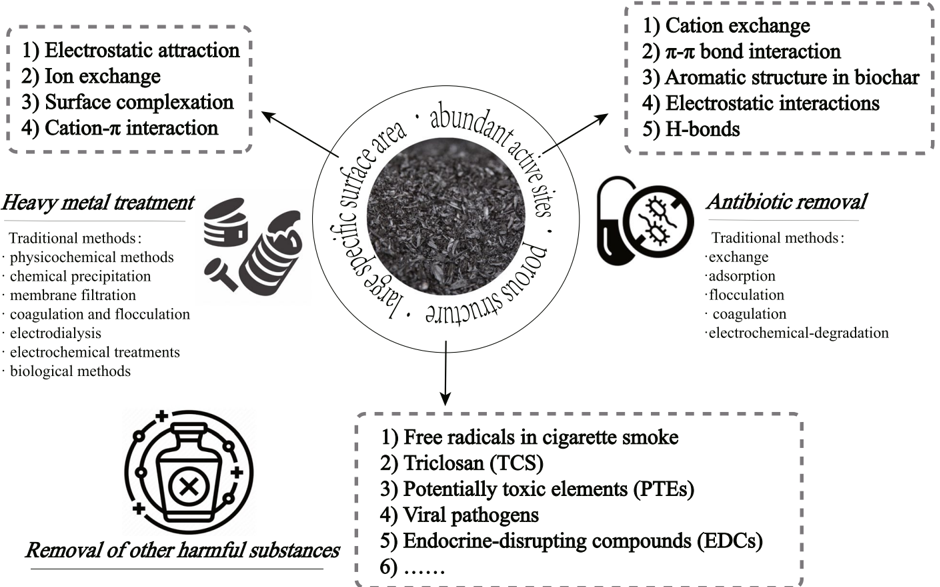
“And the mechanism of biochar for eliminating HMs can be summarized as ion exchange, electrostatic attraction, surface compl-exation, cation-π interaction, and coprecipitation (Pan et al. 2021; Qiu et al. 2022).”
BackgroundHe, L., Zhong, H., Liu, G., Dai, Z., Brookes, P. C., & Xu, J. (2019) · Environmental Pollution · doi:10.1016/j.envpol.2019.05.151 · Cited by 668 · cited 1×
“As a result, the negatively charged biochar can electrostatically attract positively charged metal cations, thereby facilitating their absorption (He et al. 2019).”
BackgroundReview of organic and inorganic pollutants removal by biochar and biochar-based composites
Liang, L., Xi, F., Tan, W., Meng, X., Hu, B., & Wang, X. (2021) · Biochar · doi:10.1007/s42773-021-00101-6 · Cited by 662 · cited 1×
“Biochar is a carbon-rich and porous material generated through pyrolysis at temperatures ranging from 300 to 900 °C under oxygen-deficient conditions (Liang et al. 2021).”
BackgroundLian, F., & Xing, B. (2017) · Environmental Science & Technology · doi:10.1021/acs.est.7b02528 · Cited by 641 · cited 1×
“…with its inorganic mineral species and diverse functional groups, including amide, carbonyl, alkyne, sulfenyl, ether, hydroxyl, carboxyl, and siloxane (Lian and Xing 2017; Liu et al. 2022a), bestows it with a remarkable capacity to adsorb and immobilize heavy metals (HMs) (Liu et al. 2019).”
BackgroundAhmad, F., Zhu, D., & Sun, J. (2021) · Environmental Sciences Europe · doi:10.1186/s12302-021-00505-y · Cited by 610 · cited 1×
“Prior to the use in soil– plant systems, researchers thoroughly assessed the degradation effects of bacteria in biochar pores on antibiotics (Fiaz et al. 2021; Katiyar et al. 2022).”
BackgroundAlhashimi, H. A., & Aktas, C. B. (2017) · Resources, Conservation and Recycling · doi:10.1016/j.resconrec.2016.11.016 · Cited by 547 · cited 4×
“Statistics showed that the average greenhouse gas emissions and average energy demands of biochar were − 0.9 kg CO 2 eq/kg and 6.1 MJ/kg, respectively, and were 6.6 kg CO 2 eq/kg and 97 MJ/kg, respectively, for activated carbon (Alhashimi and Aktas 2017).”
BackgroundInfluentialDu, C., Zhang, Z., Yu, G., Wu, H., Chen, H., Zhou, L., Zhang, Y., Su, Y., Tan, S., Yang, L., et al. (2021) · Chemosphere · doi:10.1016/j.chemosphere.2020.129501 · Cited by 543 · cited 1×
“Currently, several strategies are employed to address the issue of antibiotic pollution, including ion exchange, adsorption, flocculation, coagulation, electrochemical degradation, ozonation, and membrane filtration (Du et al. 2021; Langbehn et al. 2021; Wu and Hu 2021).”
MethodPhosphate and potassium recovery from source separated urine through struvite precipitation
Wilsenach, J. A., Schuurbiers, C. A. H., & van Loosdrecht, M. C. M. (2007) · Water Research · doi:10.1016/j.watres.2006.10.014 · Cited by 439 · cited 1×
“…have shown that although human urine constitutes only about 1% of the total volume of municipal wastewater, it contributes significantly to the overall nitrogen and phosphate content, accounting for approximately 80% of the total nitrogen and 40%-50% of the total phosphate (Wilsenach et al. 2007).”
BackgroundPan, X., Gu, Z., Chen, W., & Li, Q. (2021) · Science of The Total Environment · doi:10.1016/j.scitotenv.2020.142104 · Cited by 436 · cited 1×
“And the mechanism of biochar for eliminating HMs can be summarized as ion exchange, electrostatic attraction, surface compl-exation, cation-π interaction, and coprecipitation (Pan et al. 2021; Qiu et al. 2022).”
BackgroundSustainability of direct biodiesel synthesis from microalgae biomass: A critical review
Goh, B. H. H., Ong, H. C., Cheah, M. Y., Chen, W.-H., Yu, K. L., & Mahlia, T. M. I. (2019) · Renewable and Sustainable Energy Reviews · doi:10.1016/j.rser.2019.02.012 · Cited by 405 · cited 1×
“…application of new catalysts, improved equipment and the development of new processes to construct an advanced gas cleaning system, the emission of toxic gases can be reduced and the production of valuable products can be promoted to maximize economic and environmental benefits (Goh et al. 2019).”
BackgroundPotential hazards of biochar: The negative environmental impacts of biochar applications
Xiang, L., Liu, S., Ye, S., Yang, H., Song, B., Qin, F., Shen, M., Tan, C., Zeng, G., & Tan, X. (2021) · Journal of Hazardous Materials · doi:10.1016/j.jhazmat.2021.126611 · Cited by 377 · cited 1×
“Xiang et al. (2021) also conducted a systematic review on the potential toxicity of biochar.”
BackgroundProduction and beneficial impact of biochar for environmental application: A comprehensive review
Zhou, Y., Qin, S., Verma, S., Sar, T., Sarsaiya, S., Ravindran, B., Liu, T., Sindhu, R., Patel, A. K., Binod, P., et al. (2021) · Bioresource Technology · doi:10.1016/j.biortech.2021.125451 · Cited by 351 · cited 1×
“…removal through non-biodegradable pathways, revealing various interactions between biochar and adsorbed antibiotics, such as cation exchange, π-π bond interactions, the presence of aromatic structures in biochar, hydrogen bonding, and electrostatic interactions (An et al. 2021; Zhou et al. 2021).”
BackgroundRemediation of cadmium and lead polluted soil using thiol-modified biochar
Fan, J., Cai, C., Chi, H., Reid, B. J., Coulon, F., Zhang, Y., & Hou, Y. (2020) · Journal of Hazardous Materials · doi:10.1016/j.jhazmat.2020.122037 · Cited by 333 · cited 1×
“…as a feasible, cost-effective, and ecologically sustainable approach for neutralizing HMs. Chemical immobilization acts by reducing the biological reactivity and mobility of HMs through mechanisms such as precipitation, adsorption, complexation, and ion exchange (Fan et al. 2020; Khan et al. 2020).”
BackgroundLi, Y., Yu, H., Liu, L., & Yu, H. (2021) · Journal of Hazardous Materials · doi:10.1016/j.jhazmat.2021.126655 · Cited by 287 · cited 1×
“These applications include nutrient recovery (Xu et al. 2019), wastewater treatment (Liu et al. 2022a, b), contaminant immobilization (Li et al. 2021), soil amendment strategies (Sashidhar et al. 2020), and carbon sequestration in soil (Xiao et al. 2018), all of which have direct or indirect…”
BackgroundWu, S., & Hu, Y. H. (2021) · Chemical Engineering Journal · doi:10.1016/j.cej.2020.127739 · Cited by 283 · cited 1×
“Currently, several strategies are employed to address the issue of antibiotic pollution, including ion exchange, adsorption, flocculation, coagulation, electrochemical degradation, ozonation, and membrane filtration (Du et al. 2021; Langbehn et al. 2021; Wu and Hu 2021).”
MethodSelf-citationGong, H., Zhao, L., Rui, X., Hu, J., & Zhu, N. (2022) · Journal of Hazardous Materials · doi:10.1016/j.jhazmat.2022.128668 · Cited by 278 · cited 5×
“The US Agency for Toxic Substance and Disease Registry (ATSDR) also listed As, Pb, Cd, and Hg as the top 4 heavy metals that require immobilization, followed by Ni, Cr, Cu, and Zn (Gong et al. 2022).”
BackgroundMethodInfluentialLangbehn, R. K., Michels, C., & Soares, H. M. (2021) · Environmental Pollution · doi:10.1016/j.envpol.2021.116603 · Cited by 249 · cited 1×
“Currently, several strategies are employed to address the issue of antibiotic pollution, including ion exchange, adsorption, flocculation, coagulation, electrochemical degradation, ozonation, and membrane filtration (Du et al. 2021; Langbehn et al. 2021; Wu and Hu 2021).”
MethodCOVID-19 waste management: Effective and successful measures in Wuhan, China
Singh, N., Tang, Y., Zhang, Z., & Zheng, C. (2020) · Resources, Conservation and Recycling · doi:10.1016/j.resconrec.2020.105071 · Cited by 227 · cited 1×
“According to reports, medical waste has increased explosively from 3.64 kg/ day per 1000 persons to 27.32 kg/day (Di Maria et al. 2020; Singh et al. 2020; Yang et al. 2021) since the outbreak started.”
BackgroundInfluentialOsman, A. I., Farghali, M., Ihara, I., Elgarahy, A. M., Ayyad, A., Mehta, N., Ng, K. H., Abd El-Monaem, E. M., Eltaweil, A. S., Hosny, M., et al. (2023) · Environmental Chemistry Letters · doi:10.1007/s10311-023-01573-7 · Cited by 214 · cited 1×
“Based on this, the pyrolysis conditions can be changed as needed to achieve the desired product (Osman et al. 2023).”
BackgroundAdsorption and desorption of phosphate on biochars
Trazzi, P. A., Leahy, J. J., Hayes, M. H. B., & Kwapinski, W. (2016) · Journal of Environmental Chemical Engineering · doi:10.1016/j.jece.2015.11.005 · Cited by 198 · cited 1×
“A study conducted by Trazzi et al. (2016) revealed that biochar produced at higher pyrolysis temperatures, specifically 700 °C, exhibited enhanced phosphorus absorption but also higher levels of phosphorus desorption.”
BackgroundSun, P., Li, Y., Meng, T., Zhang, R., Song, M., & Ren, J. (2018) · Water Research · doi:10.1016/j.watres.2018.09.051 · Cited by 185
Harsono, S. S., Grundmann, P., Lau, L. H., Hansen, A., Salleh, M. A. M., Meyer‐Aurich, A., Idris, A., & Ghazi, T. I. M. (2013) · Resources Conservation and Recycling · doi:10.1016/j.resconrec.2013.04.005 · Cited by 181 · cited 1×
“The return on investment (ROI) and internal rate of return (IRR) of biochar production reached 17.58% and 8.96%, respectively, which was moderately economically viable, with a payback period of 10 years (Harsono et al. 2013).”
BackgroundInfluentialWu, C., Li, F., Yi, S., & Ge, F. (2021) · Journal of Environmental Management · doi:10.1016/j.jenvman.2021.113185 · Cited by 175 · cited 3×
“However, these methods often face challenges related to technical limitations, theoretical deficiencies, and high costs, impeding their widespread implementation (Wu et al. 2021a).”
BackgroundValorisation of medical waste through pyrolysis for a cleaner environment: Progress and challenges
Su, G., Ong, H. C., Ibrahim, S., Fattah, I. M. R., Mofijur, M., & Chong, C. T. (2021) · Environmental Pollution · doi:10.1016/j.envpol.2021.116934 · Cited by 168 · cited 6×
“Conventional medical waste treatment systems encompass various methods, including incineration, landfill-ing, chemical disinfection, autoclaving, microwaving, and plasma treatment (Su et al. 2021).”
BackgroundInfluentialPark, J. H., Ok, Y. S., Kim, S. H., Cho, J. S., Heo, J. S., Delaune, R. D., & Seo, D. C. (2015) · Environmental Geochemistry and Health · doi:10.1007/s10653-015-9709-9 · Cited by 166 · cited 1×
“However, research has shown that the absorption efficiency can be significantly improved by doping biochar with minerals such as Mg, Fe, Al, and Ca (Park et al. 2015; Xu et al. 2019; Shakoor et al. 2021).”
BackgroundLife-cycle environmental and economic assessment of medical waste treatment
Hong, J., Zhan, S., Yu, Z., Hong, J., & Qi, C. (2017) · Journal of Cleaner Production · doi:10.1016/j.jclepro.2017.10.206 · Cited by 166 · cited 2×
“Moreover, the pyrolysis process was regarded as a win-win strategy for both the environment and the economy due to its electricity and sodium hydroxide generation processes (Hong et al. 2018).”
BackgroundTechnological review on thermochemical conversion of COVID-19-related medical wastes
Purnomo, C. W., Kurniawan, W., & Aziz, M. (2021) · Resources Conservation and Recycling · doi:10.1016/j.resconrec.2021.105429 · Cited by 162 · cited 5×
“Additionally, they have presented detailed information as shown in Table 3, elucidating the distinctive characteristics of different medical waste treatment methods (Purnomo et al. 2021).”
BackgroundInfluentialLiu, Y., Dai, Q., Jin, X., Dong, X., Peng, J., Wu, M., Liang, N., Pan, B., & Xing, B. (2018) · Environmental Science & Technology · doi:10.1021/acs.est.8b00672 · Cited by 158 · cited 1×
“…also causes the emission of some noxious substances, including furans, dioxins, volatile organic compounds (VOCs), heavy metals, PCBs, and PAHs, among which PAHs have been linked to Salmonella/microbial mutagenicity (Anjum et al. 2014) and suppression of urease enzyme activity (Liu et al. 2018).”
BackgroundShao, B., Liu, Z., Tang, L., Liu, Y., Liang, Q., Wu, T., Pan, Y., Zhang, X., Tan, X., & Yu, J. (2022) · Journal of Hazardous Materials · doi:10.1016/j.jhazmat.2022.129067 · Cited by 158 · cited 2×
“Biochar has gained significant attention as a promising material for the immobilization of contaminants, primarily due to its abundant active sites, porous structure, and large specific surface area (Shao et al. 2022).”
BackgroundKhan, M. A., Mahmood-ur-Rahman, Ramzani, P. M. A., Zubair, M., Rasool, B., Khan, M. K., Ahmed, A., Khan, S. A., Turan, V., & Iqbal, M. (2020) · Science of The Total Environment · doi:10.1016/j.scitotenv.2019.136294 · Cited by 153 · cited 1×
“…as a feasible, cost-effective, and ecologically sustainable approach for neutralizing HMs. Chemical immobilization acts by reducing the biological reactivity and mobility of HMs through mechanisms such as precipitation, adsorption, complexation, and ion exchange (Fan et al. 2020; Khan et al. 2020).”
BackgroundEngineered biochars for recovering phosphate and ammonium from wastewater: A review
Shakoor, M. B., Ye, Z.-L., & Chen, S. (2021) · Science of The Total Environment · doi:10.1016/j.scitotenv.2021.146240 · Cited by 153 · cited 2×
“…feedstock type and simple synthesis method; 2) biochar can be modified with magnetic substance and 43 − ) and ammonium (NH 4 + ); 4) biochar contains high carbon contents, stable structure, and high cation exchange capacity (CEC) that are beneficial in sustainable adsorption (Shakoor et al. 2021).”
BackgroundMethodBiochar and environmental sustainability: Emerging trends and techno-economic perspectives
Khan, N., Chowdhary, P., Gnansounou, E., & Chaturvedi, P. (2021) · Bioresource Technology · doi:10.1016/j.biortech.2021.125102 · Cited by 150 · cited 1×
“Moreover, many harmful substances, such as heavy metals and polychlorinated pollutants, are easily combined on the skeleton of polycyclic aromatic hydrocarbons, showing hydrophobicity and not easy to be degraded (Khan et al. 2021).”
BackgroundEfficient removal of norfloxacin in water using magnetic molecularly imprinted polymer
Fang, L., Miao, Y., Wei, D., Zhang, Y., & Zhou, Y. (2020) · Chemosphere · doi:10.1016/j.chemosphere.2020.128032 · Cited by 149 · cited 1×
“Apart from drug-resistant issues, antibiotic leftovers in the environment may also cause direct health problems including impaired immunity, noxious damage, and allergic reactions (Fang et al. 2021; Liang et al. 2022).”
BackgroundOverview on catalytic deoxygenation for biofuel synthesis using metal oxide supported catalysts
Ooi, X. Y., Gao, W., Ong, H. C., Lee, H. V., Juan, J. C., Chen, W., & Lee, K. T. (2019) · Renewable and Sustainable Energy Reviews · doi:10.1016/j.rser.2019.06.031 · Cited by 141 · cited 1×
“Ooi et al (2019) have demonstrated that the addition of catalysts can reduce toxic gas emissions such as nitrogenous and oxygenates compounds.”
BackgroundLiu, M., Almatrafi, E., Zhang, Y., Xu, P., Song, B., Zhou, C., Zeng, G., & Zhu, Y. (2022) · Science of The Total Environment · doi:10.1016/j.scitotenv.2021.150531 · Cited by 138 · cited 6×
“Moreover, biochar exhibits favorable modifiability, enabling the incorporation of chemical modifiers to augment its efficacy in remediation, a practice that is gaining increasing attention in recent studies (Liu et al. 2022a).”
BackgroundInfluentialSAKNIMIT, M., INATSUKI, I., SUGIYAMA, Y., & YAGAMI, K.-I. (1988) · Experimental Animals · doi:10.1538/expanim1978.37.3_341 · Cited by 133 · cited 1×
“The infectivity of the virus was reported to be reduced by at least 4 log 10 after thermal treatment at 80 °C for just 1 min (Saknimit et al. 1988).”
BackgroundShin, H., Tiwari, D., & Kim, D.-J. (2020) · Journal of Water Process Engineering · doi:10.1016/j.jwpe.2020.101484 · Cited by 125 · cited 1×
“Furthermore, Shin et al. (2020) discovered that a solution containing 2% citric acid facilitated greater phosphorus desorption compared to a regular solution.”
BackgroundMaria, F. D., Beccaloni, E., Bonadonna, L., Cini, C., Confalonieri, E., Rosa, G. L., Milana, M. R., Testai, E., & Scaini, F. (2020) · The Science of The Total Environment · doi:10.1016/j.scitotenv.2020.140803 · Cited by 118 · cited 1×
“According to reports, medical waste has increased explosively from 3.64 kg/ day per 1000 persons to 27.32 kg/day (Di Maria et al. 2020; Singh et al. 2020; Yang et al. 2021) since the outbreak started.”
BackgroundInfluentialBiochar for delivery of agri-inputs: Current status and future perspectives
Sashidhar, P., Kochar, M., Singh, B., Gupta, M., Cahill, D., Adholeya, A., & Dubey, M. (2020) · Science of The Total Environment · doi:10.1016/j.scitotenv.2019.134892 · Cited by 111 · cited 2×
“Sashidhar et al. (2020) have thoroughly reviewed the application of biochar as a carrier in soil remediation.”
BackgroundKe, B., Nguyen, H., Bui, X.-N., Bui, H.-B., Choi, Y., Zhou, J., Moayedi, H., Costache, R., & Nguyen-Trang, T. (2021) · Chemosphere · doi:10.1016/j.chemosphere.2021.130204 · Cited by 110 · cited 3×
“According to previous reports, water contaminated with heavy metals, including arsenic, iron, and cadmium has become the most important pollut-ant posing dangers to human health (e.g., liver, lungs, and stomach) (Nguyen and Trinh 2020; Ke et al. 2021).”
BackgroundMethodRecent Advances of Biochar-Based Electrochemical Sensors and Biosensors
Li, Y., Xu, R. L., Wang, H., Xu, W., Tian, L., Huang, J., Liang, C., & Zhang, Y. (2022) · Biosensors · doi:10.3390/bios12060377 · Cited by 110 · cited 5×
“The morphology of biochar may be a crucial element in enhancing the catalytic performance (Li et al. 2022).”
BackgroundInfluentialMagnetic Fe2O3/biochar composite prepared in a molten salt medium for antibiotic removal in water
Liang, H., Zhu, C., Ji, S., Kannan, P., & Chen, F. (2022) · Biochar · doi:10.1007/s42773-021-00130-1 · Cited by 108 · cited 11×
“Apart from drug-resistant issues, antibiotic leftovers in the environment may also cause direct health problems including impaired immunity, noxious damage, and allergic reactions (Fang et al. 2021; Liang et al. 2022).”
BackgroundMethodInfluentialDong, X., He, L., Liu, Y., & Piao, Y. (2018) · Electrochimica Acta · doi:10.1016/j.electacta.2018.09.129 · Cited by 106 · cited 1×
“Dong et al. (2018) developed a highly conductive and absorbable biochar nano-particles (BCNPs) for the detection of 17 β-estradiol in water.”
BackgroundGelardi, D. L., Li, C., & Parikh, S. J. (2019) · Science of The Total Environment · doi:10.1016/j.scitotenv.2019.05.007 · Cited by 106 · cited 8×
“However, the release of dangerous gases continues to be the biggest issue with pyrolysis, including PAHs, HCl, SO 2 , and NO x .”
BackgroundInfluentialYang, L., Xiao, Y., Wu, X., Wang, J., Yan, X., Jiang, S., & Chen, Z. (2020) · Resources Conservation and Recycling · doi:10.1016/j.resconrec.2020.105074 · Cited by 105 · cited 1×
“According to reports, medical waste has increased explosively from 3.64 kg/ day per 1000 persons to 27.32 kg/day (Di Maria et al. 2020; Singh et al. 2020; Yang et al. 2021) since the outbreak started.”
BackgroundInfluentialPharmaceutical removal in synthetic human urine using biochar
Solanki, A., & Boyer, T. H. (2017) · Environmental Science: Water Research & Technology · doi:10.1039/c6ew00224b · Cited by 102 · cited 4×
“The findings demonstrated that the tested biochars exhibited superior pharmaceutical removal, adsorbing more than 90% of each pharmaceutical compound (Solanki and Boyer 2017).”
BackgroundInfluentialFrom waste to fertilizer: Nutrient recovery from wastewater by pristine and engineered biochars
Marcińczyk, M., Ok, Y. S., & Oleszczuk, P. (2022) · Chemosphere · doi:10.1016/j.chemosphere.2022.135310 · Cited by 102 · cited 3×
“) and phosphate (PO − ) from wastewater, including artificial wetlands, chemical precipitation, biochemical degradation, and flocculation/coagulation (Marcińczyk et al. 2022).”
BackgroundInfluentialHosny, M., Fawzy, M., & Eltaweil, A. S. (2022) · Journal of Environmental Management · doi:10.1016/j.jenvman.2022.115238 · Cited by 101 · cited 1×
“To address this issue, the combination of biochar with magnetic media has been proposed, as it not only enhances the efficiency of pollutant adsorption but also enables the rapid isolation of pollutants using external magnets (Hosny et al. 2022; Liang et al. 2022).”
BackgroundXiao, R., Wang, P., Mi, S., Ali, A., Liu, X., Li, Y., Guan, W., Li, R., & Zhang, Z. (2019) · Ecotoxicology and Environmental Safety · doi:10.1016/j.ecoenv.2019.06.005 · Cited by 100 · cited 2×
“In addressing these concerns, Li et al. (2020) and Xiao et al. (2019) have proposed chemical immobilization as a feasible, cost-effective, and ecologically sustainable approach for neutralizing HMs. Chemical immobilization acts by reducing the biological reactivity and mobility of HMs through…”
BackgroundAntibiotic bioremediation by new generation biochar: Recent updates
Patel, A. K., Katiyar, R., Chen, C.-W., Singhania, R. R., Awasthi, M. K., Bhatia, S., Bhaskar, T., & Dong, C.-D. (2022) · Bioresource Technology · doi:10.1016/j.biortech.2022.127384 · Cited by 99 · cited 5×
“In recent years, substantial advancements have been made in the application of biochar to alleviate the direct effects of antibiotics on bacteria, thereby facilitating the direct or indirect removal of antibiotic contaminants from the environment (Patel et al. 2022).”
BackgroundMethodInfluentialUllah, F., Ji, G., Irfan, M., Gao, Y., Shafiq, F., Sun, Y., Ain, Q. U., & Li, A. (2022) · Environmental Pollution · doi:10.1016/j.envpol.2022.120271 · Cited by 97 · cited 1×
“Based on these results, the researchers concluded that biochar derived from the pyrolysis of medical waste could serve as a highly effective adsorbent for treating contaminated wastewater and mitigating the environmental risks associated with toxic substances (Ullah et al. 2022).”
BackgroundCancelliere, R., Tinno, A. D., Lellis, A. M. D., Contini, G., Micheli, L., & Signori, E. (2022) · Biosensors and Bioelectronics · doi:10.1016/j.bios.2022.114467 · Cited by 82 · cited 4×
“Consequently, most existing detection methods are time-consuming, labor-intensive, and require large sample sizes (Cancelliere et al. 2022).”
BackgroundMethodInfluentialMuhammad, N., Nafees, M., Khan, M. H., Ge, L., & Lisak, G. (2020) · Environmental Pollution · doi:10.1016/j.envpol.2019.113887 · Cited by 81 · cited 2×
“As an absorbent, biochars (BCs) demonstrated noteworthy abilities in the removal of potentially toxic elements (PTEs) (Muhammad et al. 2020), viral pathogens in urban stormwater runoff (Graham et al. 2021; Yao et al. 2021), endocrine-disrupting compounds (EDCs) in water bodies (Nasir et al. 2022),…”
BackgroundLiu, M., Che, Y., Wang, L., Zhao, Z., Zhang, Y.-C. S. L.-G., Wei, L., & Xiao, Y. (2019) · Chemosphere · doi:10.1016/j.chemosphere.2019.06.160 · Cited by 78 · cited 1×
“…with its inorganic mineral species and diverse functional groups, including amide, carbonyl, alkyne, sulfenyl, ether, hydroxyl, carboxyl, and siloxane (Lian and Xing 2017; Liu et al. 2022a), bestows it with a remarkable capacity to adsorb and immobilize heavy metals (HMs) (Liu et al. 2019).”
BackgroundFang, Y., Ali, A., Gao, Y., Zhao, P., Li, R., Li, X., Liu, J., Luo, Y., Peng, Y., Wang, H., et al. (2022) · Biochar · doi:10.1007/s42773-022-00171-0 · Cited by 77 · cited 2×
“Biochar also has a lot of promising applications in the sustainable treatment and reuse of human excrement and medical waste (Fang et al. 2022; (Solanki and Boyer 2017; Wei et al. 2022).”
BackgroundInfluentialZhang, X., Gong, Z., Allinson, G., Li, X., & Jia, C. (2022) · Chemosphere · doi:10.1016/j.chemosphere.2022.134333 · Cited by 71 · cited 3×
“It was able to lower the abundance of prospective ARG hosts (the genera Brevundimonas and Rhodanobacter and phylum Proteobacteria) and several resistance genes, such as aacA/aphD, tetR, tetM, tetH, aadA9, tet(PB), tetS, czcA, aacC, and tetT (Zhang et al. 2022).”
BackgroundInfluentialKalinke, C., Wosgrau, V., de Oliveira, P. R., de Oliveira, G. A., Martins, G., Mangrich, A. S., Bergamini, M. F., & Junior, L. H. M. (2019) · Talanta · doi:10.1016/j.talanta.2019.03.079 · Cited by 69 · cited 4×
“Utilizing the catalytic property of biochar, Kalinke et al. (2019) devised a non-enzymatic biosensor capable of detecting glucose levels in human saliva.”
BackgroundMethodInfluentialWu, P., Wang, Z., Bolan, N. S., Wang, H., Wang, Y., & Chen, W. (2021) · Biochar · doi:10.1007/s42773-021-00120-3 · Cited by 67 · cited 3×
“However, these methods often face challenges related to technical limitations, theoretical deficiencies, and high costs, impeding their widespread implementation (Wu et al. 2021a).”
BackgroundWei, Z., Şenbayram, M., Zhao, X. S., Li, C., Jin, K., Wu, M., Rahman, M., Shan, J., & Yan, X. (2022) · Biochar · doi:10.1007/s42773-022-00166-x · Cited by 62 · cited 1×
“Biochar also has a lot of promising applications in the sustainable treatment and reuse of human excrement and medical waste (Fang et al. 2022; (Solanki and Boyer 2017; Wei et al. 2022).”
BackgroundLi, F., Wu, X., Ji, W., Gui, X., Chen, Y., Zhao, J., Zhou, C., & Ren, T. (2020) · Journal of Analytical and Applied Pyrolysis · doi:10.1016/j.jaap.2020.104945 · Cited by 61 · cited 1×
“In addressing these concerns, Li et al. (2020) and Xiao et al. (2019) have proposed chemical immobilization as a feasible, cost-effective, and ecologically sustainable approach for neutralizing HMs. Chemical immobilization acts by reducing the biological reactivity and mobility of HMs through…”
BackgroundSustainable management of plastic wastes in COVID-19 pandemic: The biochar solution
Igalavithana, A. D., Yuan, X., Attanayake, C. P., Wang, S., You, S., Tsang, D. C. W., Nzihou, A., & Ok, Y. S. (2022) · Environmental Research · doi:10.1016/j.envres.2022.113495 · Cited by 60 · cited 2×
“Most medical wastes are made of plastic, which has long been known for endangering marine life and generating an adverse environmental impact (Igalavithana et al. 2022) with low degradability.”
BackgroundNew energy value chain through pyrolysis of hospital plastic waste
Paraschiv, M., Kuncser, R., Tazerout, M. L., & Prisecaru, T. I. (2015) · Applied Thermal Engineering · doi:10.1016/j.applthermaleng.2015.04.070 · Cited by 59 · cited 1×
“In addition to bio-oil, Paraschiv et al. (2015) tested the properties of ).”
BackgroundRavi, S., Sharratt, B. S., Li, J., Olshevski, S., Meng, Z., & Zhang, J. (2016) · Scientific Reports · doi:10.1038/srep35984 · Cited by 59 · cited 1×
“According to previous reports, biochar-repaired soil is more likely to produce PM 10 (Ravi et al. 2016), a class of harmful airborne particles with a diameter of less than 10 μM and the inhalation of which has been associated with respiratory illnesses, chronic heart disease, and renal disease…”
Xu, K., Zhang, C., Dou, X., Ma, W., & Wang, C. (2017) · Environmental Geochemistry and Health · doi:10.1007/s10653-017-9986-6 · Cited by 57 · cited 5×
“As of now, employing biochar to extract nutrients from urine has grown to be an important part of wastewater management (Xu et al. 2019) for the following reasons: 1) biochar is cost-effective with a wide range of feedstock type and simple synthesis method; 2) biochar can be modified with magnetic…”
BackgroundInfluentialKatiyar, R., Chen, C., Singhania, R. R., Tsai, M., Saratale, G. D., Pandey, A., Dong, C., & Patel, A. K. (2022) · Bioengineered · doi:10.1080/21655979.2022.2108564 · Cited by 50 · cited 2×
“In addition to biodegradable routes, non-biodegradable pathways, including Photolysis, Ozonation, advanced oxidation processes, and Fenton processes, have been explored for antibiotic degradation (Kraemer et al. 2019; Katiyar et al. 2022).”
BackgroundAnjum, R., Krakat, N., Reza, M. T., & Klocke, M. (2014) · Ecotoxicology and Environmental Safety · doi:10.1016/j.ecoenv.2014.06.005 · Cited by 48 · cited 1×
“…also causes the emission of some noxious substances, including furans, dioxins, volatile organic compounds (VOCs), heavy metals, PCBs, and PAHs, among which PAHs have been linked to Salmonella/microbial mutagenicity (Anjum et al. 2014) and suppression of urease enzyme activity (Liu et al. 2018).”
BackgroundNaeem, M. A., Abdullah, M. I., Imran, M., Shahid, M. A. R., Abbas, G., Amjad, M., Natasha, N., Shah, G. M., Khan, W., Alamri, S. A., et al. (2021) · Chemosphere · doi:10.1016/j.chemosphere.2021.133203 · Cited by 43 · cited 2×
“…in the removal of potentially toxic elements (PTEs) (Muhammad et al. 2020), viral pathogens in urban stormwater runoff (Graham et al. 2021; Yao et al. 2021), endocrine-disrupting compounds (EDCs) in water bodies (Nasir et al. 2022), and toxic trace elements in the ecosystem (Naeem et al. 2022).”
BackgroundMacro, colloidal and nanobiochar for oxytetracycline removal in synthetic hydrolyzed human urine
Ramanayaka, S., Kumar, M., Etampawala, T. N. B., & Vithanage, M. S. (2020) · Environmental Pollution · doi:10.1016/j.envpol.2020.115683 · Cited by 42 · cited 2×
“In a study by Ramanayaka et al. (2020), the adsorptive removal of co-occurring nutrients and oxytetracycline (OTC) in hydrolyzed synthetic human urine was investigated using biochar of different particle sizes, including macro biochar (BC), nanobiochar (NBC), and colloidal biochar (CBC).”
BackgroundMethodInfluentialMa, Y., Zhang, T., Zhu, P., Cai, H., Yang, J., Gao, K., & Li, J. (2022) · The Science of The Total Environment · doi:10.1016/j.scitotenv.2022.153453 · Cited by 42 · cited 7×
“They continued to exam 11 key TCS breakdown intermediates and discovered that the photocatalyst significantly reduced each of them as well (Ma et al. 2022).”
BackgroundResultInfluentialCow dung-derived biochars engineered as antibacterial agents for bacterial decontamination
Yao, Q., Borjihan, Q., Qu, H., Guo, Y., Zhao, Z., Qiao, L., Li, T., Dong, A., & Liu, Y. (2021) · Journal of Environmental Sciences · doi:10.1016/j.jes.2020.12.022 · Cited by 32 · cited 1×
“…in the removal of potentially toxic elements (PTEs) (Muhammad et al. 2020), viral pathogens in urban stormwater runoff (Graham et al. 2021; Yao et al. 2021), endocrine-disrupting compounds (EDCs) in water bodies (Nasir et al. 2022), and toxic trace elements in the ecosystem (Naeem et al.…”
BackgroundGraham, K. E., Anderson, C. E., & Boehm, A. B. B. (2021) · Water Research · doi:10.1016/j.watres.2021.117829 · Cited by 30 · cited 1×
“…noteworthy abilities in the removal of potentially toxic elements (PTEs) (Muhammad et al. 2020), viral pathogens in urban stormwater runoff (Graham et al. 2021; Yao et al. 2021), endocrine-disrupting compounds (EDCs) in water bodies (Nasir et al. 2022), and toxic trace elements in the…”
BackgroundWang, F., Song, Y., Huang, J., Wu, B., Wang, Y., Pang, Y., Zhang, W., Zhu, Z., Ma, F., Wang, X., et al. (2021) · Macromolecular Bioscience · doi:10.1002/mabi.202100202 · Cited by 28 · cited 2×
“Moreover, literature have demonstrated that biochar is feasible to be used in the treatment of illnesses requiring regular, long-term dosing (such as diabetes and age-related macular degeneration) (Wang et al. 2021).”
BackgroundProcessing of natural fibre and method improvement for removal of endocrine-disrupting compounds
Nasir, H. M., Wee, S. Y., Aris, A. Z., Abdullah, L. C., & Ismail, I. (2021) · Chemosphere · doi:10.1016/j.chemosphere.2021.132726 · Cited by 27 · cited 2×
“2021), endocrine-disrupting compounds (EDCs) in water bodies (Nasir et al. 2022), and toxic trace elements in the ecosystem (Naeem et al.”
BackgroundGaN MSM UV Detectors With Different Electrode Materials
An, Y., Liao, J., Wu, C. H., Zhang, R., Li, Y., & Li, T. (2021) · IEEE Journal of the Electron Devices Society · doi:10.1109/jeds.2021.3106097 · Cited by 17 · cited 2×
“Extensive literature has investigated the utilization of biochar for antibiotic removal through non-biodegradable pathways, revealing various interactions between biochar and adsorbed antibiotics, such as cation exchange, π-π bond interactions, the presence of aromatic structures in biochar, hydrogen bonding, and elec…”
BackgroundBiochar Nanozyme from Silkworm Excrement for Scavenging Vapor-Phase Free Radicals in Cigarette Smoke
Liu, Q., Zhao, S., Zhang, Y., An, X., Wang, Q., Li, S., Lin, A., Du, Y., & Wei, H. (2021) · ACS Applied Bio Materials · doi:10.1021/acsabm.1c01080 · Cited by 16
Katsikaros, A. G., & Chrysikopoulos, C. V. (2019) · The Science of The Total Environment · doi:10.1016/j.scitotenv.2019.134858 · Cited by 12 · cited 1×
“Antibiotics are widely present in urine, with more than 75% of the discharged antibiotics remaining unprocessed (Katsikaros and Chrysikopoulos 2020).”
BackgroundNguyen, N. V., & Trinh, H. L. (2020) · Journal of Mining and Earth Sciences · doi:10.46326/jmes.2020.61(2).14 · Cited by 3 · cited 2×
“According to previous reports, water contaminated with heavy metals, including arsenic, iron, and cadmium has become the most important pollut-ant posing dangers to human health (e.g., liver, lungs, and stomach) (Nguyen and Trinh 2020; Ke et al. 2021).”
Background
Research works printed but not linked: 1
- Som U, Rahman F, Hossain S (2018) Recovery of pyrolytic oil from thermal pyrolysis of medical waste. J Eng Sci 5(2):H5-H8
Cited by
Life cycle assessment of biochar as a green sorbent for soil remediation
Osman, A. I., Farghali, M., & Rashwan, A. K. (2024) · Current Opinion in Green and Sustainable Chemistry · doi:10.1016/j.cogsc.2024.100882 · Cited by 76
Active Learning-Based Guided Synthesis of Engineered Biochar for CO 2 Capture
Yuan, X., Suvarna, M., Lim, J. Y., Pérez‐Ramírez, J., Wang, X., & Ok, Y. S. (2024) · Environmental Science & Technology · doi:10.1021/acs.est.3c10922 · Cited by 66
Razzak, S. A. (2024) · Journal of Analytical and Applied Pyrolysis · doi:10.1016/j.jaap.2024.106622 · Cited by 58
Deng, J., Zhang, W., Zhang, L., Qin, C., Wang, H., & Ling, W. (2024) · Environment International · doi:10.1016/j.envint.2024.108972 · Cited by 55
Solid waste-derived carbonaceous catalysts for environmental and energy applications
Jiang, T., Wang, B., Hassan, M., & Zou, Q. (2024) · Carbon Research · doi:10.1007/s44246-024-00166-5 · Cited by 39
“…pyrolysis conditions, such as pyrolysis temperature, heating rate, residence time, and types of protective gas, can influence the yield, SSA, porosity, pH, functional group content, as well as the types and amounts of persistent free radicals (PFRs) of CCs (Sun et al. 2024; Zhuo et al. 2023).”
Metadata
- Authors
- Zhuo, Q., Liang, Y., Hu, Y., Shi, M., Zhao, C., & Zhang, S.
- Affiliations
- Shanghai Medical College of Fudan University (CN)
- Corresponding author
- Zhao, Chen
- Zhang, Shujie
- Venue
- Carbon Research
- Published
- 2023-09-18
- Volume
- 2
- Issue
- 1
- ISSN
- 2731-6696 (ISSN-L)
- OpenAlex
- W4386829977
- Cited by
- 39
- References
- 88
- Citations by year
- 2026: 11 · 2025: 20 · 2024: 8
- FWCI
- 3.09
- Type
- journal article
- Language
- en
- Open access
- hybrid
- doi.org
- Licence
- cc-by
- creativecommons.org/licenses/by/4.0 (tdm)
- creativecommons.org/licenses/by/4.0 (vor)
- Locations
- Carbon Research (publishedVersion, cc-by)
- DOAJ (DOAJ: Directory of Open Access Journals) (submittedVersion)
- Funders
- National Natural Science Foundation of China (8201001029)
- Topics
- Physical Sciences › Energy › Fuel Technology › Thermochemical Biomass Conversion Processes
- Physical Sciences › Environmental Science › Water Science and Technology › Adsorption and biosorption for pollutant removal
- Physical Sciences › Engineering › Biomedical Engineering › Graphene and Nanomaterials Applications
- Keywords
- biochar, medical applications, drug delivery, biosensors, electrical sensors, contaminant immobilization, medical waste treatment, nutrient recovery, biomass pyrolysis, carbon-rich materials
About these checks
Registry, retraction, Cites and statistics results are computed, not judged, with one exception: a printed reference that no index lists is read once by a model before it counts as a citation error. Claims are extracted by a model and kept only when their quote appears verbatim in the text; each cited source is then checked, with a model’s help, for whether it says what the claim relies on. Those verdicts can be wrong — read the claim’s quote and the cited source before relying on one.
Statistics and arithmetic are recomputed, not judged.
Confidence bands are shown only for fields calibrated on our annotated test set. None is calibrated yet, so no band is shown.
What counts as a claim ›How we measure confidence ›How we check this ›
Are you an author, or do you see a problem with this page? Request a review
Data sources
Bibliographic data: Semantic Scholar, OpenAlex, Crossref.
Contains information from the Semantic Scholar Academic Graph Datasets, made available under the ODC Attribution License (ODC-BY 1.0).
Semantic Scholar’s data is described in: Kinney, R., et al. (2023). The Semantic Scholar Open Data Platform. arXiv:2301.10140.
