

The DOI matches its Crossref record; 109 of the 109 references it cites were found in a registry or an index.
Tau oligomer induced HMGB1 release contributes to cellular senescence and neuropathology linked to Alzheimer’s disease and frontotemporal dementia
Open accessAbstract
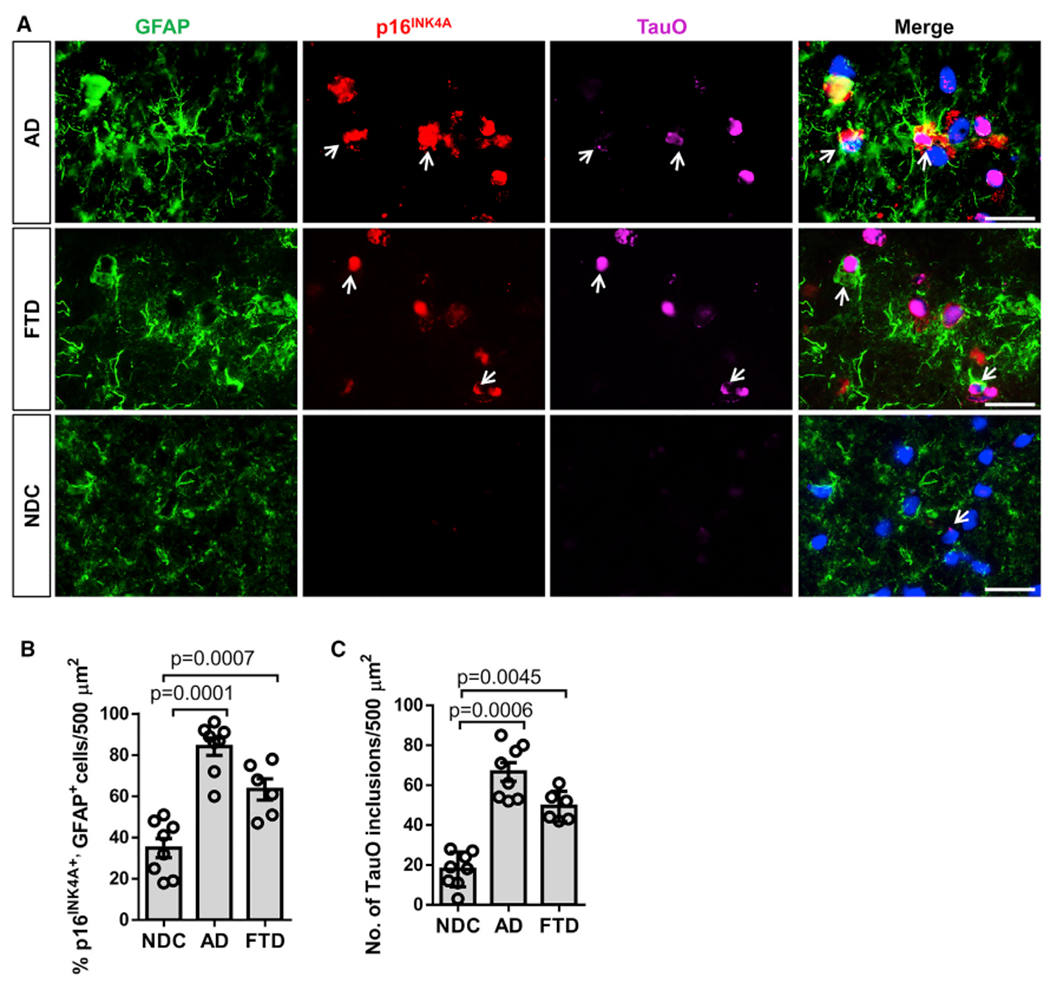
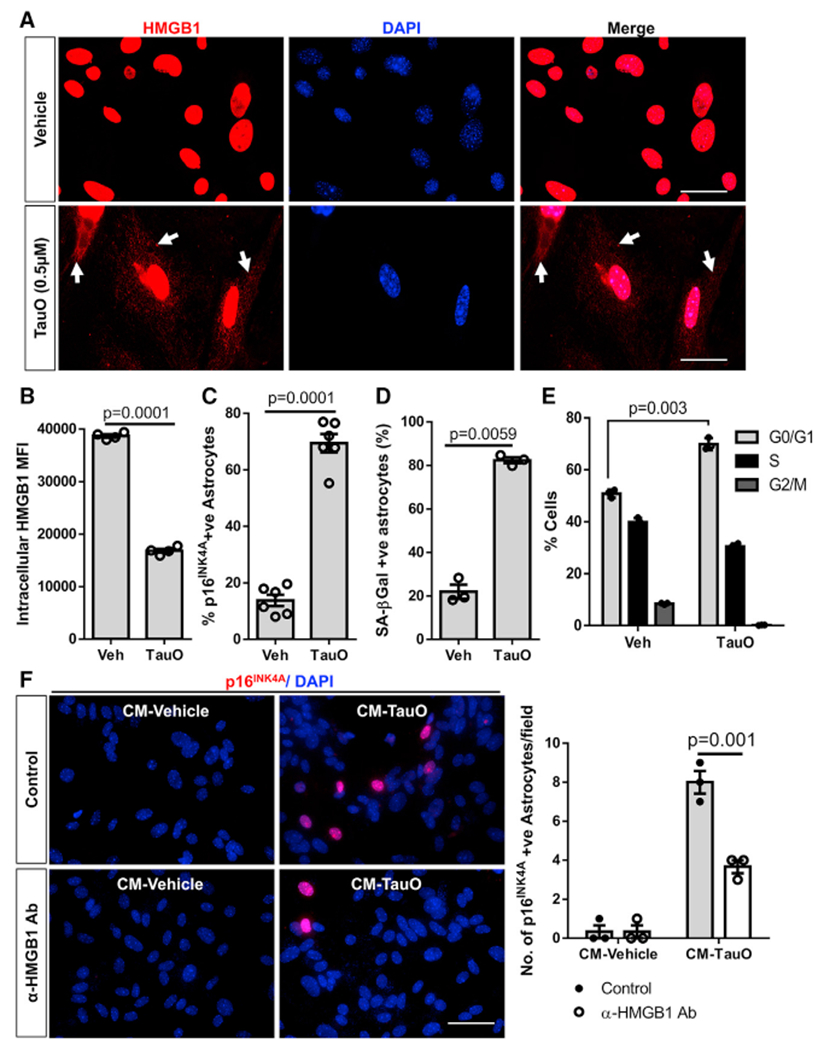
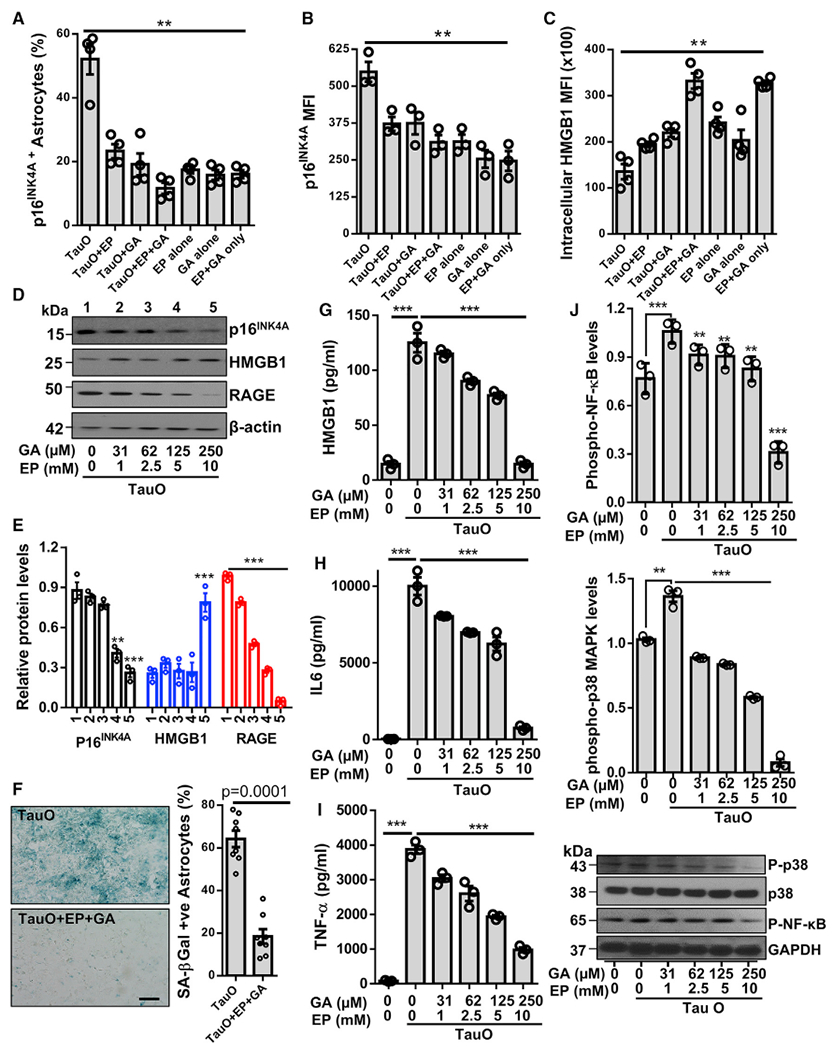
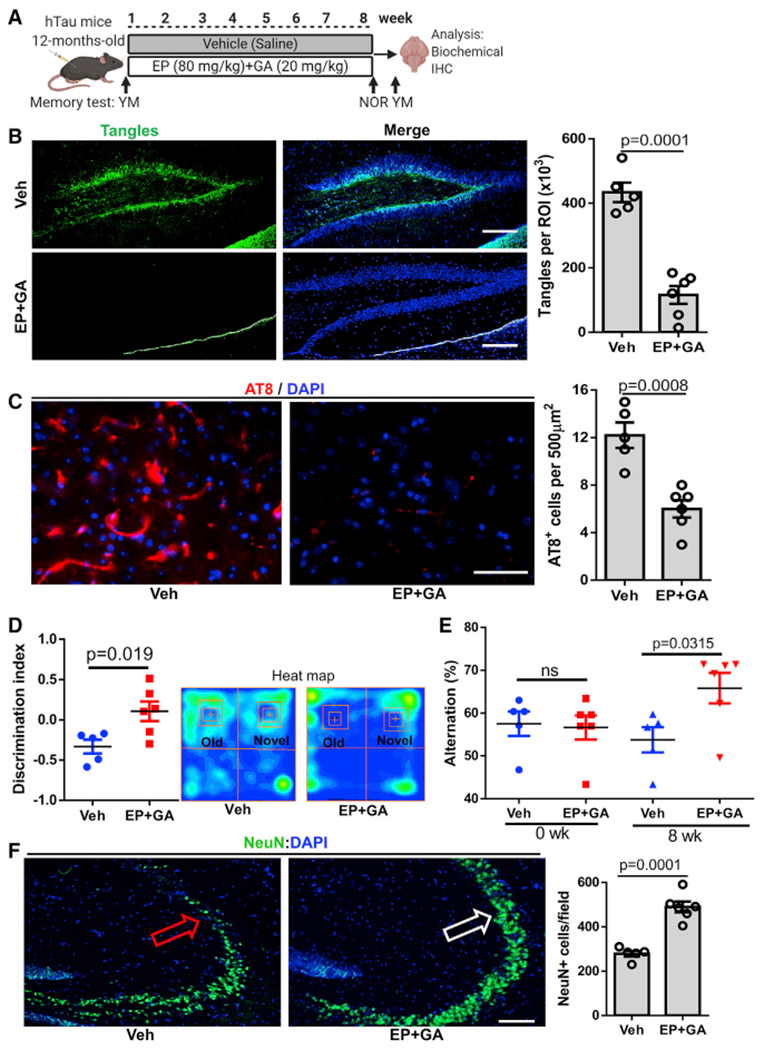
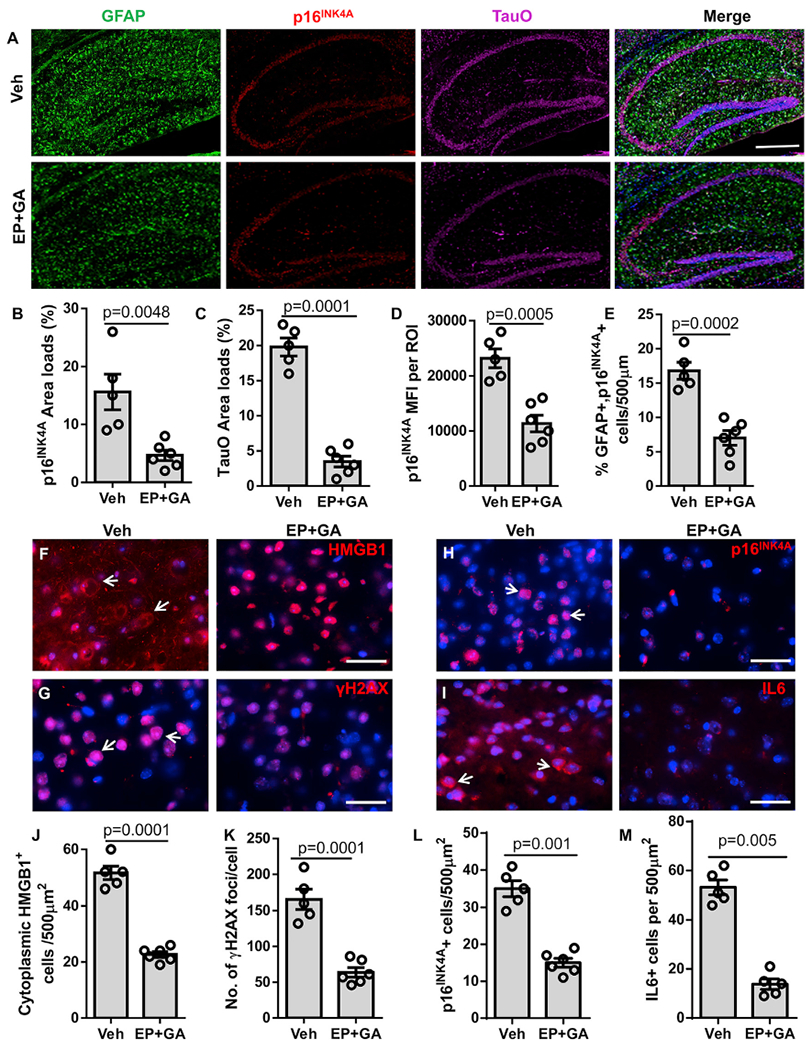
Aging, pathological tau oligomers (TauO), and chronic inflammation in the brain play a central role in tauopathies, including Alzheimer's disease (AD) and frontotemporal dementia (FTD). However, the underlying mechanism of TauO-induced aging-related neuroinflammation remains unclear. Here, we show that TauO-associated astrocytes display a senescence-like phenotype in the brains of patients with AD and FTD. TauO exposure triggers astrocyte senescence through high mobility group box 1 (HMGB1) release and inflammatory senescence-associated secretory phenotype (SASP), which mediates paracrine senescence in adjacent cells. HMGB1 release inhibition using ethyl pyruvate (EP) and glycyrrhizic acid (GA) prevents TauO-induced senescence through inhibition of p38-mitogen-activated protein kinase (MAPK) and nuclear factor κB (NF-κB)-the essential signaling pathways for SASP development. Despite the developed tauopathy in 12-month-old hTau mice, EP+GA treatment significantly decreases TauO and senescent cell loads in the brain, reduces neuroinflammation, and thus ameliorates cognitive functions. Collectively, TauO-induced HMGB1 release promotes cellular senescence and neuropathology, which could represent an important common pathomechanism in tauopathies including AD and FTD.
Overview
The claims and statistics of this paper haven’t been checked yet.
Run the check — free, no account needed. It reads the open-access text and checks the sources it cites.
Integrity signals
Registry
Cites
Statistics
Figures
Verification
Claims the paper makes
The claims and statistics of this paper haven’t been checked yet.
Run the check — free, no account needed. It reads the open-access text and checks the sources it cites.
Claims other papers make about this one
Each is checked against this paper’s own text: does it say what the citing paper says it does?
The check wasn’t confident either way, so it gives no verdict — never disputed.
In the citing paper
“Ast-AD revealed fewer GFAP-positive cells than S100B-positive ones, with low HMGB1 and IL-10 and elevated IL-6 and C/EBPα gene levels, already pointing to some altered properties [27,72,120].”
From Emerging Role of miR-21-5p in Neuron–Glia Dysregulation and Exosome Transfer Using Multiple Models of Alzheimer’s Disease (2022) · cites this paper as [120]
Experimental — accuracy not yet measuredIn the citing paper
“exposure to pathological protein aggregates such as Aβ and TauO triggers HMGB1 release, chronic inflammation, and upregulation of RAGE and TLR4 signaling pathways. 57”
From Senescence, brain inflammation, and oligomeric tau drive cognitive decline in Alzheimer's disease: Evidence from clinical and preclinical studies (2024) · cites this paper as [57]
In the citing paper
“we and others demonstrated that extracellular HMGB1 promotes paracrine senescence in neighboring cells and induces chronic tissue inflammation via the SASP, 56 , 57”
From Senescence, brain inflammation, and oligomeric tau drive cognitive decline in Alzheimer's disease: Evidence from clinical and preclinical studies (2024) · cites this paper as [57]
In the citing paper
“We reported that in postmortem brain tissue from AD patients, translocation of HMGB1 from the nucleus to the cytoplasm is a molecular signature of senescence and brain inflammation. 57”
From Senescence, brain inflammation, and oligomeric tau drive cognitive decline in Alzheimer's disease: Evidence from clinical and preclinical studies (2024) · cites this paper as [57]
In the citing paper
“Senolytic therapy has shown promising results in various animal models, including tauopathies.”
From Senescence, brain inflammation, and oligomeric tau drive cognitive decline in Alzheimer's disease: Evidence from clinical and preclinical studies (2024) · cites this paper as [57]
Self-check
Percentages, sums and reported differences re-computed from the paper’s own numbers.
The self-check needs the paper’s full text.
Citations
Cites
Preparation of separate astroglial and oligodendroglial cell cultures from rat cerebral tissue.
McCarthy, K. D., & de Vellis, J. (1980) · The Journal of Cell Biology · doi:10.1083/jcb.85.3.890 · Cited by 3,825
Adult Neurogenesis in the Mammalian Brain: Significant Answers and Significant Questions
Ming, G.-L., & Song, H. (2011) · Neuron · doi:10.1016/j.neuron.2011.05.001 · Cited by 2,651
High-mobility group box 1 protein (HMGB1): nuclear weapon in the immune arsenal
Lotze, M. T., & Tracey, K. J. (2005) · Nature reviews. Immunology · doi:10.1038/nri1594 · Cited by 2,490
Zhang, Y., Sloan, S. A., Clarke, L. E., Caneda, C., Plaza, C. A., Blumenthal, P. D., Vogel, H., Steinberg, G. K., Edwards, M. S. B., Li, G., et al. (2016) · Neuron · doi:10.1016/j.neuron.2015.11.013 · Cited by 2,295
Senolytics improve physical function and increase lifespan in old age
Xu, M., Pirtskhalava, T., Farr, J. N., Weigand, B. M., Palmer, A. K., Weivoda, M. M., Inman, C. L., Ogrodnik, M. B., Hachfeld, C. M., Fraser, D. G., et al. (2018) · Nature Medicine · doi:10.1038/s41591-018-0092-9 · Cited by 2,287
A complex secretory program orchestrated by the inflammasome controls paracrine senescence
Acosta, J. C., Banito, A., Wuestefeld, T., Georgilis, A., Janich, P., Morton, J. P., Athineos, D., Kang, T.-W., Lasitschka, F., Andrulis, M., et al. (2013) · Nature Cell Biology · doi:10.1038/ncb2784 · Cited by 2,278 · cited 1×
“Senescent cells are known to accumulate with age and contribute to chronic tissue inflammation and paracrine senescence through their persistent SASP secretion (Acosta et al., 2013).”
BackgroundPhase 3 Trials of Solanezumab for Mild-to-Moderate Alzheimer's Disease
Doody, R. S., Thomas, R. G., Farlow, M., Iwatsubo, T., Vellas, B., Joffe, S., Kieburtz, K., Raman, R., Sun, X., Aisen, P. S., et al. (2014) · New England Journal of Medicine · doi:10.1056/nejmoa1312889 · Cited by 1,668
Jeon, O. H., Kim, C., Laberge, R.-M., Demaria, M., Rathod, S., Vasserot, A. P., Chung, J. W., Kim, D. H., Poon, Y., David, N., et al. (2017) · Nature Medicine · doi:10.1038/nm.4324 · Cited by 1,515
NLRP3 inflammasome activation drives tau pathology
Ising, C., Venegas, C., Zhang, S., Scheiblich, H., Schmidt, S. V., Vieira-Saecker, A., Schwartz, S., Albasset, S., McManus, R. M., Tejera, D., et al. (2019) · Nature · doi:10.1038/s41586-019-1769-z · Cited by 1,487
Self-citationA proteomic atlas of senescence-associated secretomes for aging biomarker development
Basisty, N., Kale, A., Jeon, O. H., Kuehnemann, C., Payne, T., Rao, C., Holtz, A., Shah, S., Sharma, V., Ferrucci, L., et al. (2020) · PLOS Biology · doi:10.1371/journal.pbio.3000599 · Cited by 1,348
Cited by
Sorted by citations
Items 201–233 of 233
Wang, M., Tian, T., Zhou, H., Jiang, S.-Y., Jiao, Y.-Y., Zhu, Z., Xia, J., Ma, J.-H., & Du, R.-H. (2024) · Figshare · doi:10.6084/m9.figshare.25530301
Wang, C., Wang, X., Sun, S., Chang, Y., Lian, P., Guo, H., Zheng, S., Ma, R., & Li, G. (2024) · Figshare · doi:10.6084/m9.figshare.25824768
Introduction to microglial aging and its involvement in neurodegenerative diseases
Ben-Azu, B., Gargus, M., Verkhratsky, A., & Tremblay, M. (2026) · Elsevier eBooks · doi:10.1016/b978-0-443-27340-7.00007-3
Dialogue entre le complément C1 et l'alarmine HMGB1 dans l'inflammation
Lorvellec, M. (2024) · theses.fr (ABES) · doi:10.70675/0098aa7azc426z4ad1zb78czeee46320fdb2
Role of T-cell immunity in the pathophysiology of Alzheimer’s disease and other Tauopathies
Matta, K. (2024) · theses.fr (ABES) · doi:10.70675/cea4fe5ez67c3z4445z92f7z39af62ba059b
Сенюк, І., Кравченко, В. М., Galuzinska, L. V., Honcharov, O., Sulashvili, N., & Щербак, О. В. (2026) · Farmatsevtychnyi zhurnal · doi:10.32352/0367-3057.1.26.08
Hennes, M., Thorwirth, M., Lao, C. L., Stogsdill, J. A., Arlotta, P., Fischer-Sternjak, J., Richter, M. L., & Götz, M. (2026) · bioRxiv (Cold Spring Harbor Laboratory) · doi:10.64898/2026.04.16.718928
Exosomes from joints mediate depressive-like behaviors in MIA arthritis mice
Li, Z., Gao, Y., Ma, H., Xiong, Y., Wang, J., & Ning, G. (2026) · Brain Research Bulletin · doi:10.1016/j.brainresbull.2026.111929
Song, H., Yang, M., Wu, S., Dai, Q., Qin, W., Xie, W., Chen, Y., Jiang, X., Zhang, X., Deng, X., et al. (2026) · iScience · doi:10.1016/j.isci.2026.116033
Sajjadi, E., Sharif‐Paghaleh, E., Akrami, M., Shahpasand, K., Haririan, I., & Maghsoudian, S. (2026) · Pharmaceutics · doi:10.3390/pharmaceutics18050626
Senolytic Therapy as a Preventive Strategy for Spine Degeneration and Pain
Darband, S. G., Cherif, H., Mannarino, M., Sagir, J., Millecamps, M., Ouellet, J. A., Stone, L. S., & Haglund, L. (2026) · Advanced Science · doi:10.1002/advs.202522770
Programmed cell death pathways in human microglia: Modeling and therapeutic targeting
Koppinen, T. K., Takacs, L., Collin, L., Mracsko, E. Z., & Keaney, J. (2026) · Glial health research. · doi:10.1016/j.ghres.2026.100015
Multitarget Actions of Pentacyclic Triterpenic Acids in Alzheimer’s Disease: Mechanistic Insights
Sharma, N., & An, S. S. A. (2026) · Molecules · doi:10.3390/molecules31122018
Puangmalai, N., Sengupta, U., Bhatt, N. N., Suthprasertporn, N., Al‐Shaebi, F., Shchankin, N., Liew, J. Y., Chatterjee, T., Pansuriya, D., Balci, A. E., et al. (2026) · iScience · doi:10.1016/j.isci.2026.116399
Self-citationZhang, K.-R., Zhu, T., Liu, A., Deng, J., Han, Y., Qi, S., Liu, X., Jiang, T., Zhai, M. X., He, Y.-Y., et al. (2026) · Advanced Materials · doi:10.1002/adma.73920
Anthocyanins and Aging Intervention: Mechanisms and Prospects
Liu, K., & Chen, B. (2026) · Journal of Nutrition · doi:10.1016/j.tjnut.2026.101721
Chen, Y., Zhu, D., Xu, W., Miao, X., & Jiang, Z. (2026) · Acta Biomaterialia · doi:10.1016/j.actbio.2026.07.020
Neurotoxic Tau Oligomers: Isolation, Preparation, and Characterization
Khan, S., Haque, M. A., & Kayed, R. (2026) · Neuromethods · doi:10.1007/978-1-0716-5234-3_9
Self-citationSenescent cell heterogeneity in brain aging and neurodegenerative disease
Graves, S. I., Vasques, P. D. C., & Baker, D. J. (2026) · Neuron · doi:10.1016/j.neuron.2026.06.020
Krauklis, S. A., Keceli, S. K., Campbell, E. M., & Abbineni, P. S. (2026) · Journal of Neurochemistry · doi:10.1111/jnc.70532
Molecular and epigenetic landscapes of immunosenescence in biological aging: A narrative review
Mittal, R., Saavedra, D., Mittal, M., Jaramillo, C., & Hirani, K. (2026) · Aging advances. · doi:10.4103/agingadv.agingadv-d-25-00038
Microbiome‐blood–brain barrier interactions in aging — mechanisms and therapeutic potential
Cuervo-Zanatta, D., Balasubramanian, H. B., Pasokh, A., & Zille, M. (2026) · FEBS Letters · doi:10.1002/1873-3468.70412
Zhang, X., Zhang, Y., Tang, M.-M., Zhang, J.-M., Ya-qin, X., Yang, J.-J., Liu, C.-M., & Yu, M. (2026) · Molecular Biomedicine · doi:10.1186/s43556-026-00548-8
Wang, G., Hiramoto, K., Ma, N., Ohnishi, S., Yoshikawa, N., Murata, M., & Kawanishi, S. (2026) · International Journal of Molecular Sciences · doi:10.3390/ijms27167399
Ferroptosis and Alzheimer’s disease: Neuroimmune crosstalk and pharmacological opportunities
Marakhovskaya, Y. A., Churov, A. V., Arbatsky, M. S., & Sergeeva, S. P. (2026) · Brain Research · doi:10.1016/j.brainres.2026.150514
Wu, Z., Xue, N., Cheng, H., Hu, H., Sun, L., & Ren, Z. (2026) · Cell Biochemistry and Function · doi:10.1002/cbf.70311
Cai, X., Li, W., Chen, C., Peng, L., Yang, L., Lin, X., Liu, H., Jia, J., Jiao, Y., & Li, Y. (2026) · Brain and Behavior · doi:10.1002/brb3.71773
Seol, S.-I., Kim, J., Davaanyam, D., Park, S., Lee, E.-H., Han, P.-L., Kim, T.-K., & Lee, J.-K. (2026) · International Journal of Molecular Sciences · doi:10.3390/ijms27198681
HMGB1 functional plasticity in neurodegenerative diseases and its translational implications
Cai, W., Yi, Y., Zeng, R., Yin, Y., Zhao, J., Zhang, J., Fu, G., & Xu, H. (2026) · Frontiers in Immunology · doi:10.3389/fimmu.2026.1928641
Cellular senescence: six decades of discovery and reinvention
Klaver, M., Steeneken, L. S., Veeningen, N., Altulea, A., & Demaria, M. (2026) · The EMBO Journal · doi:10.1038/s44318-026-00922-w
Astrocyte Structure–Function Relationship in Senescence and Neurodegeneration
Serebryanaya, D. V., Kolgaeva, K. A., Dya, G. A., Ermakov, I. M., & Belousov, V. V. (2026) · Biochemistry (Moscow) · doi:10.1134/s000629792660208x
Mishchenko, T. A., Grechukhina, A. A., Kulikov, S. S., Olajide, O. J., Mitroshina, Е. V., Krysko, D. V., & Vedunova, M. V. (2026) · Biochemistry (Moscow) · doi:10.1134/s0006297926601565
Metadata
- Authors
- Gaikwad, S., Puangmalai, N., Bittar, A., Montalbano, M., Garcia, S., McAllen, S., Bhatt, N., Sonawane, M., Sengupta, U., & Kayed, R.
- Affiliations
- The University of Texas Medical Branch at Galveston (US)
- Corresponding author
- Kayed, Rakez
- ORCID
- Venue
- Cell Reports
- Publisher
- Elsevier BV
- Published
- 2021-07
- Volume
- 36
- Issue
- 3
- Pages
- 109419
- ISSN
- 2211-1247 (ISSN-L)
- PMC
- PMC8341760
- OpenAlex
- W3186179545
- Cited by
- 234
- References
- 109
- Citations by year
- 2026: 49 · 2025: 55 · 2024: 52 · 2023: 43 · 2022: 28 · 2021: 6
- FWCI
- 20.24
- Type
- journal article
- Language
- en
- Open access
- gold
- doi.org
- Licence
- Locations
- Cell Reports (publishedVersion, cc-by-nc-nd)
- SSRN Electronic Journal (acceptedVersion)
- PubMed (publishedVersion)
- PubMed Central (acceptedVersion, cc-by-nc-nd)
- Funders
- National Institutes of Health (R01AG054025, R01AG060718, R01NS094557, RFA1AG055771)
- American Heart Association (17CSA33620007)
- Topics
- Life Sciences › Neuroscience › Cellular and Molecular Neuroscience › Alzheimer's disease research and treatments
- Life Sciences › Neuroscience › Neurology › Neuroinflammation and Neurodegeneration Mechanisms
- Life Sciences › Biochemistry, Genetics and Molecular Biology › Cell Biology › Telomeres, Telomerase, and Senescence
- Keywords
- tau oligomers, HMGB1 release, cellular senescence, astrocytes, senescence-associated secretory phenotype, neuroinflammation, Alzheimer's disease, frontotemporal dementia, tauopathy, p38 MAPK, NF-κB, ethyl pyruvate, glycyrrhizin, paracrine senescence, cognitive function
- MeSH terms
- Alzheimer Disease, Animals, Astrocytes, Brain, Cell Nucleus, Cells, Cultured, Cognition Disorders, Humans, Mice, Inbred C57BL, Mice, Transgenic, Phenotype, Pyruvates, tau Proteins, Cellular Senescence, Glycyrrhizic Acid, Protein Transport, HMGB1 Protein, Mice, Frontotemporal Dementia
About these checks
Registry, retraction, Cites and statistics results are computed, not judged, with one exception: a printed reference that no index lists is read once by a model before it counts as a citation error. Claims are extracted by a model and kept only when their quote appears verbatim in the text; each cited source is then checked, with a model’s help, for whether it says what the claim relies on. Those verdicts can be wrong — read the claim’s quote and the cited source before relying on one.
Statistics and arithmetic are recomputed, not judged.
Confidence bands are shown only for fields calibrated on our annotated test set. None is calibrated yet, so no band is shown.
What counts as a claim ›How we measure confidence ›How we check this ›
Are you an author, or do you see a problem with this page? Request a review
