

The DOI matches its Crossref record; 109 of the 109 references it cites were found in a registry or an index.
Tau oligomer induced HMGB1 release contributes to cellular senescence and neuropathology linked to Alzheimer’s disease and frontotemporal dementia
Open accessAbstract
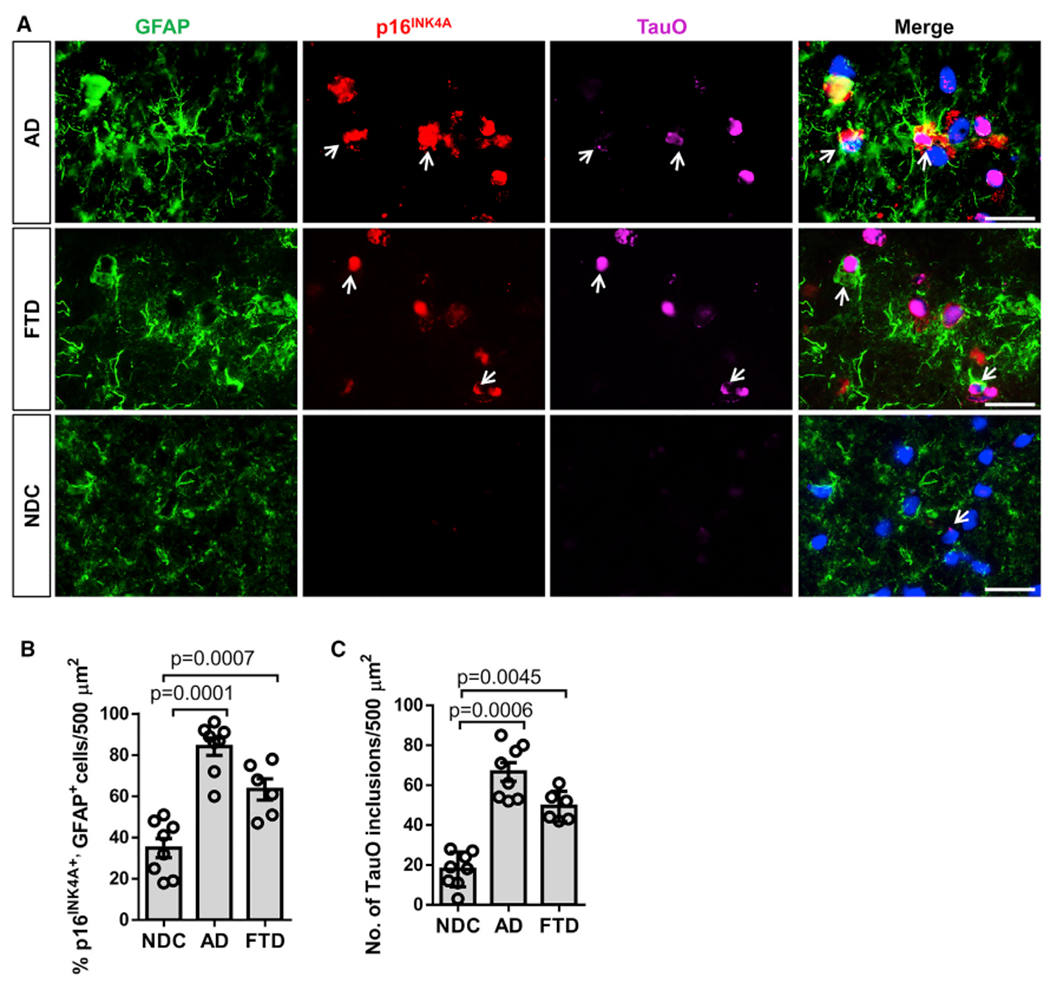
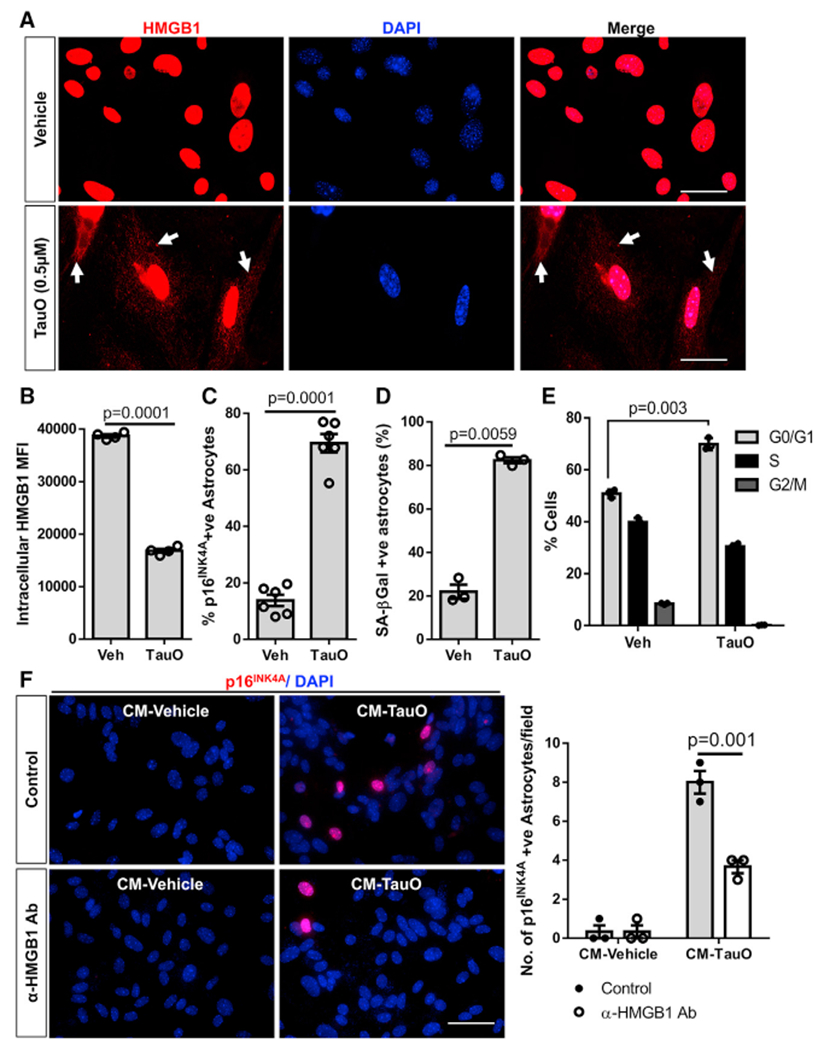
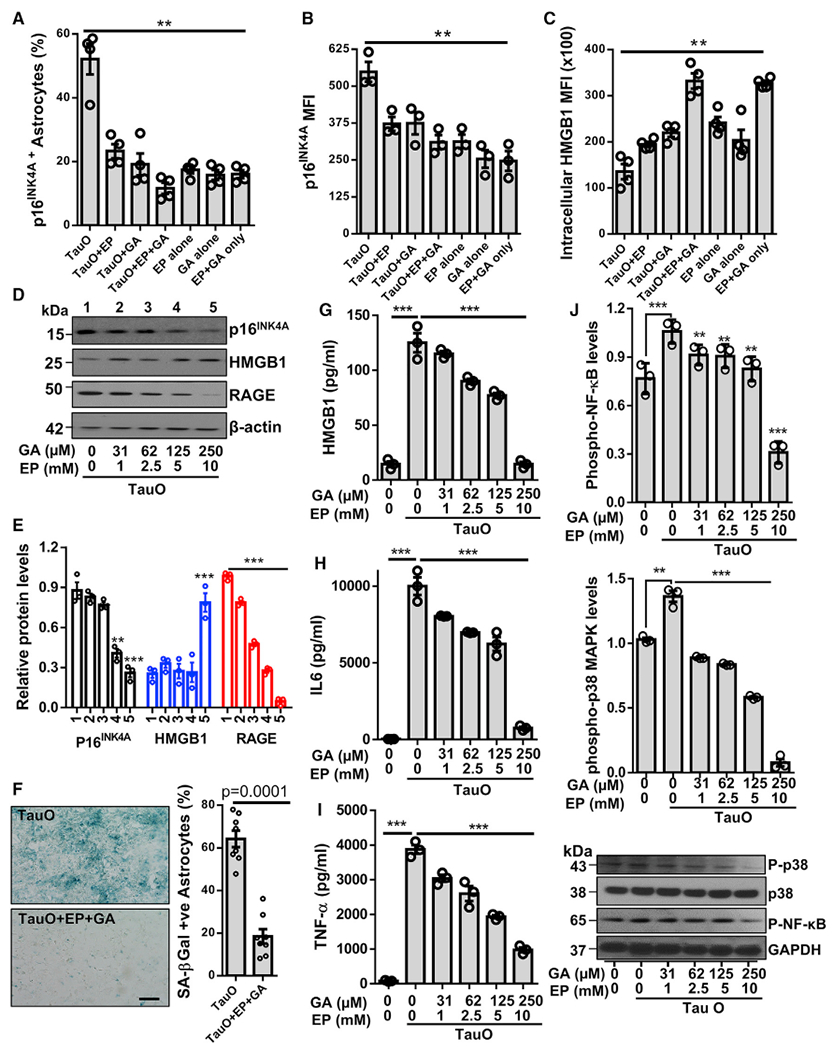
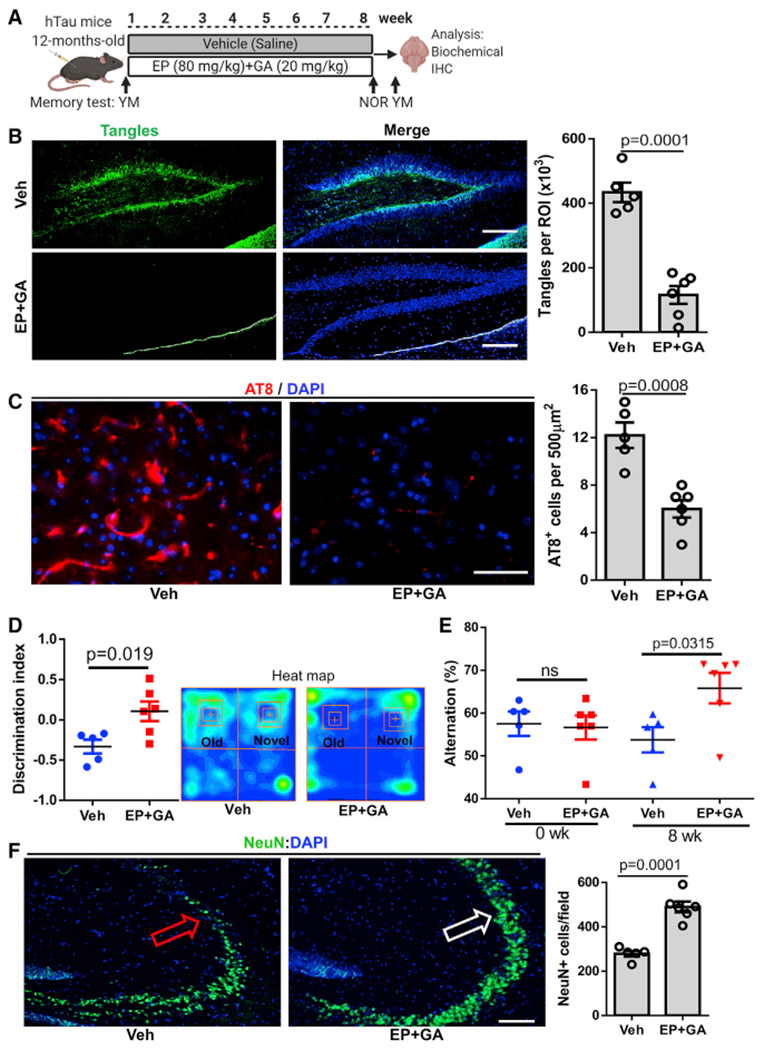
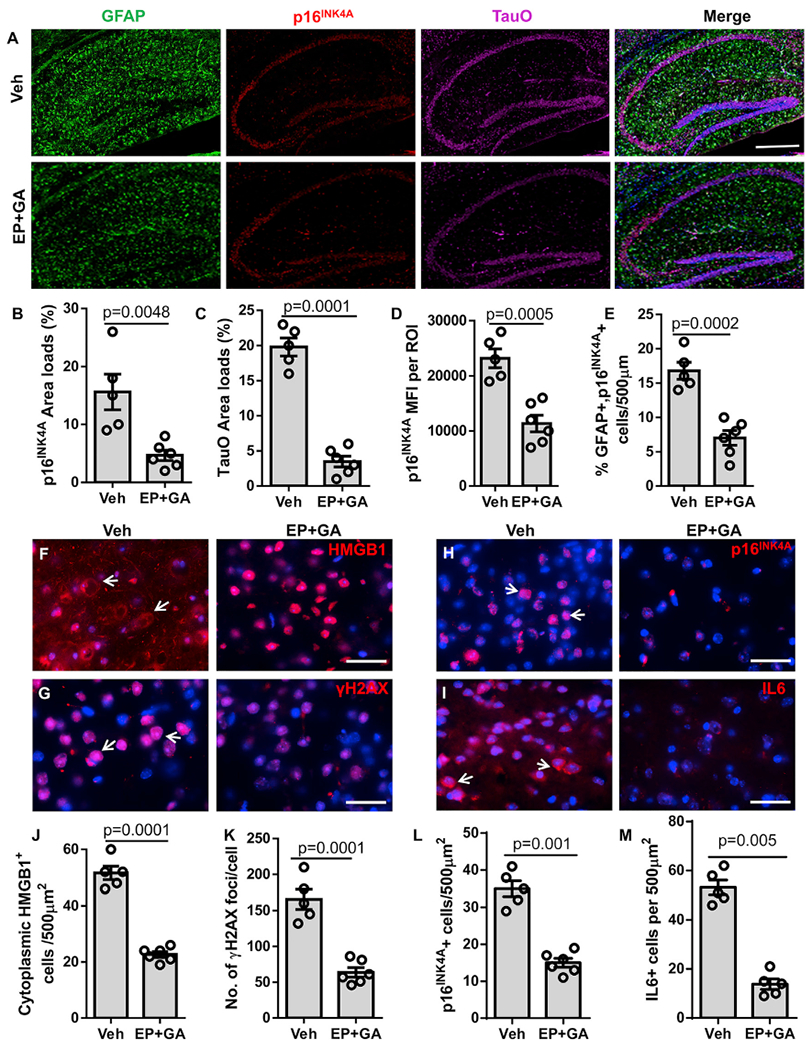
Aging, pathological tau oligomers (TauO), and chronic inflammation in the brain play a central role in tauopathies, including Alzheimer's disease (AD) and frontotemporal dementia (FTD). However, the underlying mechanism of TauO-induced aging-related neuroinflammation remains unclear. Here, we show that TauO-associated astrocytes display a senescence-like phenotype in the brains of patients with AD and FTD. TauO exposure triggers astrocyte senescence through high mobility group box 1 (HMGB1) release and inflammatory senescence-associated secretory phenotype (SASP), which mediates paracrine senescence in adjacent cells. HMGB1 release inhibition using ethyl pyruvate (EP) and glycyrrhizic acid (GA) prevents TauO-induced senescence through inhibition of p38-mitogen-activated protein kinase (MAPK) and nuclear factor κB (NF-κB)-the essential signaling pathways for SASP development. Despite the developed tauopathy in 12-month-old hTau mice, EP+GA treatment significantly decreases TauO and senescent cell loads in the brain, reduces neuroinflammation, and thus ameliorates cognitive functions. Collectively, TauO-induced HMGB1 release promotes cellular senescence and neuropathology, which could represent an important common pathomechanism in tauopathies including AD and FTD.
Overview
The claims and statistics of this paper haven’t been checked yet.
Run the check — free, no account needed. It reads the open-access text and checks the sources it cites.
Integrity signals
Registry
Cites
Statistics
Figures
Verification
Claims the paper makes
The claims and statistics of this paper haven’t been checked yet.
Run the check — free, no account needed. It reads the open-access text and checks the sources it cites.
Claims other papers make about this one
Each is checked against this paper’s own text: does it say what the citing paper says it does?
The check wasn’t confident either way, so it gives no verdict — never disputed.
In the citing paper
“Ast-AD revealed fewer GFAP-positive cells than S100B-positive ones, with low HMGB1 and IL-10 and elevated IL-6 and C/EBPα gene levels, already pointing to some altered properties [27,72,120].”
From Emerging Role of miR-21-5p in Neuron–Glia Dysregulation and Exosome Transfer Using Multiple Models of Alzheimer’s Disease (2022) · cites this paper as [120]
Experimental — accuracy not yet measuredIn the citing paper
“exposure to pathological protein aggregates such as Aβ and TauO triggers HMGB1 release, chronic inflammation, and upregulation of RAGE and TLR4 signaling pathways. 57”
From Senescence, brain inflammation, and oligomeric tau drive cognitive decline in Alzheimer's disease: Evidence from clinical and preclinical studies (2024) · cites this paper as [57]
In the citing paper
“we and others demonstrated that extracellular HMGB1 promotes paracrine senescence in neighboring cells and induces chronic tissue inflammation via the SASP, 56 , 57”
From Senescence, brain inflammation, and oligomeric tau drive cognitive decline in Alzheimer's disease: Evidence from clinical and preclinical studies (2024) · cites this paper as [57]
In the citing paper
“We reported that in postmortem brain tissue from AD patients, translocation of HMGB1 from the nucleus to the cytoplasm is a molecular signature of senescence and brain inflammation. 57”
From Senescence, brain inflammation, and oligomeric tau drive cognitive decline in Alzheimer's disease: Evidence from clinical and preclinical studies (2024) · cites this paper as [57]
In the citing paper
“Senolytic therapy has shown promising results in various animal models, including tauopathies.”
From Senescence, brain inflammation, and oligomeric tau drive cognitive decline in Alzheimer's disease: Evidence from clinical and preclinical studies (2024) · cites this paper as [57]
Self-check
Percentages, sums and reported differences re-computed from the paper’s own numbers.
The self-check needs the paper’s full text.
Citations
Cites
Preparation of separate astroglial and oligodendroglial cell cultures from rat cerebral tissue.
McCarthy, K. D., & de Vellis, J. (1980) · The Journal of Cell Biology · doi:10.1083/jcb.85.3.890 · Cited by 3,825
Adult Neurogenesis in the Mammalian Brain: Significant Answers and Significant Questions
Ming, G.-L., & Song, H. (2011) · Neuron · doi:10.1016/j.neuron.2011.05.001 · Cited by 2,651
High-mobility group box 1 protein (HMGB1): nuclear weapon in the immune arsenal
Lotze, M. T., & Tracey, K. J. (2005) · Nature reviews. Immunology · doi:10.1038/nri1594 · Cited by 2,490
Zhang, Y., Sloan, S. A., Clarke, L. E., Caneda, C., Plaza, C. A., Blumenthal, P. D., Vogel, H., Steinberg, G. K., Edwards, M. S. B., Li, G., et al. (2016) · Neuron · doi:10.1016/j.neuron.2015.11.013 · Cited by 2,295
Senolytics improve physical function and increase lifespan in old age
Xu, M., Pirtskhalava, T., Farr, J. N., Weigand, B. M., Palmer, A. K., Weivoda, M. M., Inman, C. L., Ogrodnik, M. B., Hachfeld, C. M., Fraser, D. G., et al. (2018) · Nature Medicine · doi:10.1038/s41591-018-0092-9 · Cited by 2,287
A complex secretory program orchestrated by the inflammasome controls paracrine senescence
Acosta, J. C., Banito, A., Wuestefeld, T., Georgilis, A., Janich, P., Morton, J. P., Athineos, D., Kang, T.-W., Lasitschka, F., Andrulis, M., et al. (2013) · Nature Cell Biology · doi:10.1038/ncb2784 · Cited by 2,278 · cited 1×
“Senescent cells are known to accumulate with age and contribute to chronic tissue inflammation and paracrine senescence through their persistent SASP secretion (Acosta et al., 2013).”
BackgroundPhase 3 Trials of Solanezumab for Mild-to-Moderate Alzheimer's Disease
Doody, R. S., Thomas, R. G., Farlow, M., Iwatsubo, T., Vellas, B., Joffe, S., Kieburtz, K., Raman, R., Sun, X., Aisen, P. S., et al. (2014) · New England Journal of Medicine · doi:10.1056/nejmoa1312889 · Cited by 1,668
Jeon, O. H., Kim, C., Laberge, R.-M., Demaria, M., Rathod, S., Vasserot, A. P., Chung, J. W., Kim, D. H., Poon, Y., David, N., et al. (2017) · Nature Medicine · doi:10.1038/nm.4324 · Cited by 1,515
NLRP3 inflammasome activation drives tau pathology
Ising, C., Venegas, C., Zhang, S., Scheiblich, H., Schmidt, S. V., Vieira-Saecker, A., Schwartz, S., Albasset, S., McManus, R. M., Tejera, D., et al. (2019) · Nature · doi:10.1038/s41586-019-1769-z · Cited by 1,487
Self-citationA proteomic atlas of senescence-associated secretomes for aging biomarker development
Basisty, N., Kale, A., Jeon, O. H., Kuehnemann, C., Payne, T., Rao, C., Holtz, A., Shah, S., Sharma, V., Ferrucci, L., et al. (2020) · PLOS Biology · doi:10.1371/journal.pbio.3000599 · Cited by 1,348
Clearance of senescent glial cells prevents tau-dependent pathology and cognitive decline
Bussian, T. J., Aziz, A., Meyer, C. F., Swenson, B. L., van Deursen, J. M., & Baker, D. J. (2018) · Nature · doi:10.1038/s41586-018-0543-y · Cited by 1,289
Normal aging induces A1-like astrocyte reactivity
Clarke, L. E., Liddelow, S. A., Chakraborty, C., Münch, A. E., Heiman, M., & Barres, B. A. (2018) · Proceedings of the National Academy of Sciences · doi:10.1073/pnas.1800165115 · Cited by 1,237
A Phase 3 Trial of Semagacestat for Treatment of Alzheimer's Disease
Doody, R. S., Raman, R., Farlow, M., Iwatsubo, T., Vellas, B., Joffe, S., Kieburtz, K., He, F., Sun, X., Thomas, R. G., et al. (2013) · New England Journal of Medicine · doi:10.1056/nejmoa1210951 · Cited by 1,224
Freund, A., Patil, C. K., & Campisi, J. (2011) · The EMBO Journal · doi:10.1038/emboj.2011.69 · Cited by 1,039 · cited 1×
“We found that EP+GA inhibited TauO-induced activation of p38-MAPK and NF-κB signaling pathways–the critical regulators of the SASP that activated by various intracellular and extracellular stressors (Freund et al., 2011).”
BackgroundZhang, P., Kishimoto, Y., Grammatikakis, I., Gottimukkala, K., Cutler, R. G., Zhang, S., Abdelmohsen, K., Bohr, V. A., Misra Sen, J., Gorospe, M., et al. (2019) · Nature Neuroscience · doi:10.1038/s41593-019-0372-9 · Cited by 977
Salminen, A., Kauppinen, A., & Kaarniranta, K. (2012) · Cellular Signalling · doi:10.1016/j.cellsig.2011.12.006 · Cited by 763
Satoh, A., Brace, C. S., Rensing, N., Cliften, P. F., Wozniak, D. F., Herzog, E. D., Yamada, K. A., & Imai, S. (2013) · Cell Metabolism · doi:10.1016/j.cmet.2013.07.013 · Cited by 747
Hyperphosphorylation and aggregation of tau in mice expressing normal human tau isoforms
Andorfer, C., Kress, Y., Espinoza, M., De Silva, R., Tucker, K. L., Barde, Y., Duff, K., & Davies, P. (2003) · Journal of Neurochemistry · doi:10.1046/j.1471-4159.2003.01879.x · Cited by 722
Neuroinflammation as a common feature of neurodegenerative disorders
Guzman-Martinez, L., Maccioni, R. B., Andrade, V., Navarrete, L. P., Pastor, M. G., & Ramos-Escobar, N. (2019) · Frontiers in Pharmacology · doi:10.3389/fphar.2019.01008 · Cited by 702
The aging astrocyte transcriptome from multiple regions of the mouse brain.
Boisvert, M. M., Erikson, G. A., Shokhirev, M. N., & Allen, N. J. (2018) · Cell Reports · doi:10.1016/j.celrep.2017.12.039 · Cited by 702
Glycyrrhizin Binds to High-Mobility Group Box 1 Protein and Inhibits Its Cytokine Activities
Mollica, L., Marchis, F. D., Spitaleri, A., Dallacosta, C., Pennacchini, D., Zamai, M., Agresti, A., Trisciuoglio, L., Musco, G., & Bianchi, M. E. (2007) · Chemistry & Biology · doi:10.1016/j.chembiol.2007.03.007 · Cited by 613
Tau protein aggregation is associated with cellular senescence in the brain
Musi, N., Valentine, J. M., Sickora, K. R., Baeuerle, E., Thompson, C. S., Shen, Q., & Orr, M. E. (2018) · Aging Cell · doi:10.1111/acel.12840 · Cited by 595
Astrocyte Senescence as a Component of Alzheimer’s Disease
Bhat, R., Crowe, E. P., Bitto, A., Moh, M., Katsetos, C. D., Garcia, F. U., Johnson, F. B., Trojanowski, J. Q., Sell, C., & Torres, C. (2012) · PLoS ONE · doi:10.1371/journal.pone.0045069 · Cited by 586
Ethyl pyruvate prevents lethality in mice with established lethal sepsis and systemic inflammation
Ulloa, L., Ochani, M., Yang, H., Tanovic, M., Halperin, D. M., Yang, R., Czura, C. J., Fink, M. P., & Tracey, K. J. (2002) · Proceedings of the National Academy of Sciences · doi:10.1073/pnas.192222999 · Cited by 585
Evaluation of CSF-tau and CSF-Aβ42 as diagnostic markers for Alzheimer disease in clinical practice
Andreasen, N., Minthon, L., Davidsson, P., Vanmechelen, E., Vanderstichele, H., Winblad, B., & Blennow, K. (2001) · Archives of Neurology · doi:10.1001/archneur.58.3.373 · Cited by 573
LRP1 is a master regulator of tau uptake and spread
Rauch, J. N., Luna, G., Guzman, E., Audouard, M., Challis, C., Sibih, Y. E., Leshuk, C., Hernandez, I., Wegmann, S., Hyman, B. T., et al. (2020) · Nature · doi:10.1038/s41586-020-2156-5 · Cited by 541
González-Reyes, R. E., Nava-Mesa, M. O., Vargas-Sánchez, K., Ariza-Salamanca, D. F., & Mora-Muñoz, L. (2017) · Frontiers in Molecular Neuroscience · doi:10.3389/fnmol.2017.00427 · Cited by 541
Aging-related tau astrogliopathy (ARTAG): Harmonized evaluation strategy
Kovacs, G. G., Ferrer, I., Grinberg, L. T., Alafuzoff, I., Attems, J., Budka, H., Cairns, N. J., Crary, J. F., Duyckaerts, C., Ghetti, B., et al. (2016) · Acta Neuropathologica · doi:10.1007/s00401-015-1509-x · Cited by 532
Chinta, S. J., Woods, G., Demaria, M., Rane, A., Zou, Y., McQuade, A., Rajagopalan, S., Limbad, C., Madden, D. T., Campisi, J., et al. (2018) · Cell Reports · doi:10.1016/j.celrep.2017.12.092 · Cited by 530 · cited 1×
“, 2010), indicating that astrocyte senescence is more abundant in the brain (Bitto et al., 2010; Bussian et al., 2018; Chinta et al., 2018; Cohen and Torres, 2019; Han et al., 2020; Limbad et al., 2020).”
BackgroundCalogero, S., Grassi, F., Aguzzi, A., Voigtländer, T., Ferrier, P., Ferrari, S., & Bianchi, M. E. (1999) · Nature Genetics · doi:10.1038/10338 · Cited by 528
Identification of oligomers at early stages of tau aggregation in Alzheimer's disease
Lasagna‐Reeves, C. A., Castillo‐Carranza, D. L., Sengupta, U., Sarmiento, J., Troncoso, J., Jackson, G. R., & Kayed, R. (2012) · The FASEB Journal · doi:10.1096/fj.11-199851 · Cited by 527
Self-citationMicroglia and Astrocytes in Alzheimer's Disease: Implications for Therapy
Fakhoury, M. (2017) · Current Neuropharmacology · doi:10.2174/1570159x15666170720095240 · Cited by 502
Isolation and Culture of Mouse Cortical Astrocytes
Schildge, S., Bohrer, C., Beck, K., & Schachtrup, K. (2013) · Journal of Visualized Experiments · doi:10.3791/50079 · Cited by 479
Sirtuin signaling in cellular senescence and aging
Lee, S.-H., Lee, J.-H., Lee, H., & Min, K. (2019) · BMB Reports · doi:10.5483/bmbrep.2019.52.1.290 · Cited by 449
p53-dependent release of Alarmin HMGB1 is a central mediator of senescent phenotypes
Davalos, A. R., Kawahara, M., Malhotra, G. K., Schaum, N., Huang, J., Ved, U., Beausejour, C. M., Coppe, J.-P., Rodier, F., & Campisi, J. (2013) · Journal of Cell Biology · doi:10.1083/jcb.201206006 · Cited by 439
Human astrocytes: structure and functions in the healthy brain
Vasile, F., Dossi, E., & Rouach, N. (2017) · Brain Structure and Function · doi:10.1007/s00429-017-1383-5 · Cited by 428
Mitogen‐activated protein kinase p38 defines the common senescence‐signalling pathway
Iwasa, H., Han, J., & Ishikawa, F. (2003) · Genes to Cells · doi:10.1046/j.1365-2443.2003.00620.x · Cited by 407
Anti-Aβ Therapeutics in Alzheimer's Disease: The Need for a Paradigm Shift
Golde, T. E., Schneider, L. S., & Koo, E. H. (2011) · Neuron · doi:10.1016/j.neuron.2011.01.002 · Cited by 382
Neurons May Live for Decades with Neurofibrillary Tangles
Morsch, R., Simon, W., & Coleman, P. D. (1999) · Journal of Neuropathology and Experimental Neurology · doi:10.1097/00005072-199902000-00008 · Cited by 370
Preparation and Characterization of Neurotoxic Tau Oligomers
Lasagna-Reeves, C. A., Castillo-Carranza, D. L., Guerrero-Muñoz, M. J., Jackson, G. R., & Kayed, R. (2010) · Biochemistry · doi:10.1021/bi1016233 · Cited by 359
Self-citationOeckl, P., Halbgebauer, S., Anderl-Straub, S., Steinacker, P., Huss, A. M., Neugebauer, H., von Arnim, C. A. F., Diehl-Schmid, J., Grimmer, T., Kornhuber, J., et al. (2019) · Journal of Alzheimer’s Disease · doi:10.3233/jad-180325 · Cited by 345
Salminen, A., Ojala, J., Kaarniranta, K., Haapasalo, A., Hiltunen, M., & Soininen, H. (2011) · European Journal of Neuroscience · doi:10.1111/j.1460-9568.2011.07738.x · Cited by 333
Age-Dependent Impairment of Cognitive and Synaptic Function in the htau Mouse Model of Tau Pathology
Polydoro, M., Acker, C. M., Duff, K., Castillo, P. E., & Davies, P. (2009) · The Journal of Neuroscience · doi:10.1523/jneurosci.1065-09.2009 · Cited by 329
Tau Oligomers: Cytotoxicity, Propagation, and Mitochondrial Damage
Shafiei, S. S., Guerrero-Muñoz, M. J., & Castillo-Carranza, D. L. (2017) · Frontiers in Aging Neuroscience · doi:10.3389/fnagi.2017.00083 · Cited by 314
Paudel, Y. N., Shaikh, M. F., Chakraborti, A., Kumari, Y., Aledo-Serrano, Á., Aleksovska, K., Alvim, M. K. M., & Othman, I. (2018) · Frontiers in Neuroscience · doi:10.3389/fnins.2018.00628 · Cited by 311
Increased levels of granular tau oligomers: An early sign of brain aging and Alzheimer's disease
Maeda, S., Sahara, N., Saito, Y., Murayama, S., Ikai, A., & Takashima, A. (2006) · Neuroscience Research · doi:10.1016/j.neures.2005.11.009 · Cited by 301
Deciphering the astrocyte reaction in Alzheimer's disease
Perez-Nievas, B. G., & Serrano-Pozo, A. (2018) · Frontiers in Aging Neuroscience · doi:10.3389/fnagi.2018.00114 · Cited by 282
Astrocyte senescence: Evidence and significance
Cohen, J., & Torres, C. (2019) · Aging Cell · doi:10.1111/acel.12937 · Cited by 281
Chun, H., Im, H., Kang, Y. J., Kim, Y., Shin, J. H., Won, W., Lim, J., Ju, Y. H., Park, Y. M., Kim, S., et al. (2020) · Nature Neuroscience · doi:10.1038/s41593-020-00735-y · Cited by 278
Astrocytes are necessary for blood–brain barrier maintenance in the adult mouse brain
Heithoff, B. P., George, K. K., Phares, A. N., Zuidhoek, I. A., Muñoz‐Ballester, C., & Robel, S. (2020) · Glia · doi:10.1002/glia.23908 · Cited by 271
Senescent human melanocytes drive skin ageing via paracrine telomere dysfunction
Victorelli, S., Lagnado, A., Halim, J., Moore, W., Talbot, D., Barrett, K., Chapman, J., Birch, J., Ogrodnik, M., Meves, A., et al. (2019) · The EMBO Journal · doi:10.15252/embj.2019101982 · Cited by 258
Paudel, Y. N., Angelopoulou, E., Piperi, C., Othman, I., Aamir, K., & Shaikh, M. F. (2020) · Cells · doi:10.3390/cells9020383 · Cited by 257
Nicaise, A. M., Wagstaff, L. J., Willis, C. M., Paisie, C. A., Chandok, H., Robson, P., Fossati, V., Williams, A., & Crocker, S. J. (2019) · Proceedings of the National Academy of Sciences · doi:10.1073/pnas.1818348116 · Cited by 228
Richetin, K., Steullet, P., Pachoud, M., Perbet, R., Parietti, E., Maheswaran, M., Eddarkaoui, S., Bégard, S., Pythoud, C., Rey, M. J., et al. (2020) · Nature Neuroscience · doi:10.1038/s41593-020-00728-x · Cited by 214
Glial Inclusions in CNS Degenerative Diseases
Chin, S., & Goldman, J. E. (1996) · Journal of Neuropathology & Experimental Neurology · doi:10.1097/00005072-199605000-00001 · Cited by 210
Stress-induced senescence in human and rodent astrocytes
Bitto, A., Sell, C., Crowe, E., Lorenzini, A., Malaguti, M., Hrelia, S., & Torres, C. (2010) · Experimental Cell Research · doi:10.1016/j.yexcr.2010.06.021 · Cited by 204
Transgenic Mouse Model of Tau Pathology in Astrocytes Leading to Nervous System Degeneration
Forman, M. S., Lal, D., Zhang, B., Dabir, D. V., Swanson, E., Lee, V. M.-Y., & Trojanowski, J. Q. (2005) · The Journal of Neuroscience · doi:10.1523/jneurosci.0081-05.2005 · Cited by 198
Astrocyte senescence promotes glutamate toxicity in cortical neurons
Limbad, C., Oron, T. R., Alimirah, F., Davalos, A. R., Tracy, T. E., Gan, L., Desprez, P.-Y., & Campisi, J. (2020) · PLOS ONE · doi:10.1371/journal.pone.0227887 · Cited by 183
Nilson, A. N., English, K. C., Gerson, J. E., Whittle, T. B., Crain, C. N., Xue, J. J., Sengupta, U., Castillo‐Carranza, D. L., Zhang, W., Gupta, P. K., et al. (2016) · Journal of Alzheimer s Disease · doi:10.3233/jad-160912 · Cited by 178
Self-citationAstrocyte Senescence and Alzheimer’s Disease: A Review
Han, X., Zhang, T., Liu, H., Mi, Y., & Gou, X. (2020) · Frontiers in Aging Neuroscience · doi:10.3389/fnagi.2020.00148 · Cited by 177
Phase 3 Trials of Solanezumab and Bapineuzumab for Alzheimer's Disease
Doody, R. S., Farlow, M. R., & Aisen, P. S. S. (2014) · New England Journal of Medicine · doi:10.1056/nejmc1402193 · Cited by 175
Kwon, Y., Son, D., Chung, T., & Lee, Y. (2019) · Journal of Medicinal Food · doi:10.1089/jmf.2019.4459 · Cited by 165
Ghag, G., Bhatt, N. N., Cantu, D. V., Guerrero‐Munoz, M. J., Ellsworth, A., Sengupta, U., & Kayed, R. (2018) · Protein Science · doi:10.1002/pro.3499 · Cited by 161
Self-citationFujita, K., Motoki, K., Tagawa, K., Chen, X., Hama, H., Nakajima, K., Homma, H., Tamura, T., Watanabe, H., Katsuno, M., et al. (2016) · Scientific Reports · doi:10.1038/srep31895 · Cited by 160
Isolation and Culture of Mouse Cortical Astrocytes
Schildge, S., Bohrer, C., Beck, K., & Schachtrup, K. (2013) · Journal of Visualized Experiments · doi:10.3791/50079-v · Cited by 157
Ethyl pyruvate: a novel anti‐inflammatory agent
Fink, M. P. (2007) · Journal of Internal Medicine · doi:10.1111/j.1365-2796.2007.01789.x · Cited by 156
Placental membrane aging and HMGB1 signaling associated with human parturition
Menon, R., Behnia, F., Polettini, J., Saade, G. R., Campisi, J., & Velarde, M. (2016) · Aging · doi:10.18632/aging.100891 · Cited by 143
The Alarmin HMGB1 Mediates Age-Induced Neuroinflammatory Priming
Fonken, L. K., Frank, M. G., Kitt, M. M., D'Angelo, H. M., Norden, D. M., Weber, M. D., Barrientos, R. M., Godbout, J. P., Watkins, L. R., & Maier, S. F. (2016) · The Journal of Neuroscience · doi:10.1523/jneurosci.1161-16.2016 · Cited by 139
P53 aggregation, interactions with tau, and impaired DNA damage response in Alzheimer’s disease
Farmer, K. M., Ghag, G., Puangmalai, N., Montalbano, M., Bhatt, N. N., & Kayed, R. (2020) · Acta Neuropathologica Communications · doi:10.1186/s40478-020-01012-6 · Cited by 130
Self-citationPiacentini, R., Puma, D. D. L., Mainardi, M., Lazzarino, G., Tavazzi, B., Arancio, O., & Grassi, C. (2017) · Glia · doi:10.1002/glia.23163 · Cited by 128
Astrocytes from old Alzheimer's disease mice are impaired in Aβ uptake and in neuroprotection
Iram, T., Trudler, D., Kain, D., Kanner, S., Galron, R., Vassar, R. J., Barzilai, A., Blinder, P., Fishelson, Z., & Frenkel, D. (2016) · Neurobiology of Disease · doi:10.1016/j.nbd.2016.08.001 · Cited by 121
Thorn-shaped astrocytes: possibly secondarily induced tau-positive glial fibrillary tangles
Ikeda, K., Akiyama, H., Kondo, H., Haga, C., Tanno, E., Tokuda, T., & Ikeda, S. (1995) · Acta Neuropathologica · doi:10.1007/bf00318575 · Cited by 119
Astroglia and Tau: New Perspectives
Kovacs, G. G. (2020) · Frontiers in Aging Neuroscience · doi:10.3389/fnagi.2020.00096 · Cited by 115
Puangmalai, N., Bhatt, N. N., Montalbano, M., Sengupta, U., Gaikwad, S., Ventura, F. L., McAllen, S., Ellsworth, A., García, S., & Kayed, R. (2020) · Cell Death and Disease · doi:10.1038/s41419-020-2503-3 · Cited by 113
Self-citationExpansion and Cell-Cycle Arrest: Common Denominators of Cellular Senescence
Ogrodnik, M., Salmonowicz, H., Jurk, D., & Passos, J. F. (2019) · Trends in Biochemical Sciences · doi:10.1016/j.tibs.2019.06.011 · Cited by 104
Reid, M. J., Beltran-Lobo, P., Johnson, L., Perez‐Nievas, B. G., & Noble, W. J. (2020) · Frontiers in Neurology · doi:10.3389/fneur.2020.572850 · Cited by 98
Chen, H., Guan, B., Wang, B., Pu, H.-W., Bai, X., Chen, X., Liu, J., Li, C., Qiu, J., Yang, D., et al. (2019) · Translational Stroke Research · doi:10.1007/s12975-019-00772-1 · Cited by 95
Gerson, J., Castillo-Carranza, D. L., Sengupta, U., Bodani, R., Prough, D. S., DeWitt, D. S., Hawkins, B. E., & Kayed, R. (2016) · Journal of Neurotrauma · doi:10.1089/neu.2015.4262 · Cited by 94 · cited 2×
“NOR testing performed to measure the memory deficits in hTau mice, as described previously (Gerson et al., 2016; Polydoro et al., 2009).”
MethodSelf-citationProtein astrogliopathies in human neurodegenerative diseases and aging
Kovács, G. G., Lee, V. M., & Trojanowski, J. Q. (2017) · Brain Pathology · doi:10.1111/bpa.12536 · Cited by 93
Arélin, K., Kinoshita, A., Whelan, C. M., Irizarry, M. C., Rebeck, G. W., Strickland, D. K., & Hyman, B. T. (2002) · Molecular Brain Research · doi:10.1016/s0169-328x(02)00203-6 · Cited by 92
Zandarashvili, L., Sahu, D., Lee, K., Lee, Y. S., Singh, P., Rajarathnam, K., & Iwahara, J. (2013) · Journal of Biological Chemistry · doi:10.1074/jbc.m113.449942 · Cited by 89
RNA-binding proteins Musashi and tau soluble aggregates initiate nuclear dysfunction
Montalbano, M., McAllen, S., Puangmalai, N., Sengupta, U., Bhatt, N. N., Johnson, O. D., Kharas, M. G., & Kayed, R. (2020) · Nature Communications · doi:10.1038/s41467-020-18022-6 · Cited by 86
Self-citationShen, H., Hu, X., Liu, C., Wang, S., Zhang, W., Gao, H. Y., Stetler, R. A., Gao, Y., & Chen, J. (2009) · Neurobiology of Disease · doi:10.1016/j.nbd.2009.12.010 · Cited by 81
Bennett‐Guerrero, E., Swaminathan, M., Grigore, A. M., Roach, G. W., Aberle, L. G., Johnston, J. M., & Fink, M. P. (2008) · Journal of Cardiothoracic and Vascular Anesthesia · doi:10.1053/j.jvca.2008.08.005 · Cited by 80
Funayama, A., Shishido, T., Netsu, S., Narumi, T., Kadowaki, S., Takahashi, H., Miyamoto, T., Watanabe, T., Woo, C.-H., Abe, J., et al. (2013) · Cardiovascular Research · doi:10.1093/cvr/cvt128 · Cited by 79
Tau oligomers in cerebrospinal fluid in Alzheimer's disease
Sengupta, U., Portelius, E., Hansson, O., Farmer, K., Castillo‐Carranza, D., Woltjer, R., Zetterberg, H., Galasko, D., Blennow, K., & Kayed, R. (2017) · Annals of Clinical and Translational Neurology · doi:10.1002/acn3.382 · Cited by 77
Self-citationTau Secretion: Good and Bad for Neurons
Pernègre, C., Duquette, A., & Leclerc, N. M. (2019) · Frontiers in Neuroscience · doi:10.3389/fnins.2019.00649 · Cited by 70
Lye, J. J., Latorre, E., Lee, B. P., Bandinelli, S., Holley, J. E., Gutowski, N. J., Ferrucci, L., & Harries, L. W. (2019) · GeroScience · doi:10.1007/s11357-019-00100-3 · Cited by 69
Astrocytic Tau Deposition Is Frequent in Typical and Atypical Alzheimer Disease Presentations
Nolan, A., Resende, E. D. P. F., Petersen, C., Neylan, K. D., Spina, S., Huang, E. J., Seeley, W. W., Miller, Z., & Grinberg, L. T. (2019) · Journal of Neuropathology & Experimental Neurology · doi:10.1093/jnen/nlz094 · Cited by 69
Sun, Y., Chen, H., Dai, J., Wan, Z., Xiong, P., Xu, Y. X., Han, Z., Chai, W., Gong, F., & Zheng, F. (2018) · Frontiers in Immunology · doi:10.3389/fimmu.2018.01518 · Cited by 69
Glycyrrhizin Protects Rats from Sepsis by Blocking HMGB1 Signaling
Zhao, F., Fang, Y., Deng, S., Li, X., Zhou, Y., Gong, Y., Zhu, H., & Wang, W. (2017) · BioMed Research International · doi:10.1155/2017/9719647 · Cited by 66
Kim, Y. M., Park, E., Kim, J. H., Park, S. W., Kim, H. J., & Chang, K. C. (2016) · International Immunopharmacology · doi:10.1016/j.intimp.2016.11.002 · Cited by 66
Detection of Neuritic Plaques in Alzheimer's Disease Mouse Model
Ly, P. T. T., Cai, F., & Song, W. (2011) · Journal of Visualized Experiments · doi:10.3791/2831 · Cited by 63
Hou, S., Zhang, T., Li, Y., Guo, F., & Jin, X. (2017) · Journal of Diabetes Research · doi:10.1155/2017/2865912 · Cited by 61
Multisite Assessment of Aging-Related Tau Astrogliopathy (ARTAG)
Kovács, G. G., Xie, S. X., Lee, E. B., Robinson, J. L., Caswell, C., Irwin, D. J., Toledo, J. B., Johnson, V. E., Smith, D. H., Alafuzoff, I. I., et al. (2017) · Journal of Neuropathology & Experimental Neurology · doi:10.1093/jnen/nlx041 · Cited by 54
Relationship between increase in astrocytic GLT-1 glutamate transport and late-LTP
Pita-Almenar, J. D., Zou, S., Colbert, C. M., & Eskin, A. (2012) · Learning & Memory · doi:10.1101/lm.023259.111 · Cited by 52
Neuroinflammation in Response to Intracerebral Injections of Different HMGB1 Redox Isoforms
Aucott, H., Lundberg, J., Salo, H., Klevenvall, L., Damberg, P., Ottosson, L., Andersson, U., Holmin, S., & Harris, H. E. (2018) · Journal of Innate Immunity · doi:10.1159/000487056 · Cited by 51
Tau internalization: A complex step in tau propagation
Zhao, J., Wu, H., & Tang, X. (2021) · Ageing Research Reviews · doi:10.1016/j.arr.2021.101272 · Cited by 47
HMGB1 as a Potential Therapeutic Target
Wang, H., Li, W., Goldstein, R. S., Tracey, K. J., & Sama, A. E. (2006) · Novartis Foundation symposium · doi:10.1002/9780470059593.ch6 · Cited by 47
Ikeda, K., Haga, C., Akiyama, H., Kase, K., & Iritani, S. (1992) · Neuroscience Letters · doi:10.1016/0304-3940(92)90820-w · Cited by 47
Tau Propagation, Different Tau Phenotypes, and Prion-like Properties of Tau
Hyman, B. T. (2014) · Neuron · doi:10.1016/j.neuron.2014.06.004 · Cited by 44
Tau Oligomers as Pathogenic Seeds: Preparation and Propagation In Vitro and In Vivo
Gerson, J. E., Sengupta, U., & Kayed, R. (2016) · Methods in molecular biology · doi:10.1007/978-1-4939-6598-4_9 · Cited by 43
Self-citationZhang, T., Guan, X., Gribben, J. G., Liu, F., & Jia, L. (2019) · Cell Death and Disease · doi:10.1038/s41419-019-1563-8 · Cited by 39
Tang, Q., Cao, Y., Xiong, W., Ke, X., Zhang, J., Xia, Y., & Liu, D. (2020) · Experimental and Therapeutic Medicine · doi:10.3892/etm.2020.8668 · Cited by 27
Alarmin Detection in Senescent Cells
Kim, D., & Davalos, A. R. (2018) · Methods in molecular biology · doi:10.1007/978-1-4939-8931-7_8 · Cited by 14
Gómez‐Tortosa, E., Baradaran‐Heravi, Y., Álvarez, V. G., Sainz, M. J., Jurczynska, C. P., Guerrero, R., Agüero, P., Broeckhoven, C. V., van der Zee, J., & Gutiérrez, A. R. (2018) · Neurobiology of Aging · doi:10.1016/j.neurobiolaging.2018.11.010 · Cited by 11
Detection of Neuritic Plaques in Alzheimer's Disease Mouse Model
Ly, P. T. T., Cai, F., & Song, W. (2011) · Journal of Visualized Experiments · doi:10.3791/2831-v · Cited by 10
Chun, H., Kim, Y., Kang, Y. J., Im, H., Shin, J. H., Ju, Y. H., Won, W., Park, Y. M., Lim, J., Lee, J., et al. (2019) · IBRO Reports · doi:10.1016/j.ibror.2019.07.377 · Cited by 5
Cited by
Sorted by citations
Aging and aging-related diseases: from molecular mechanisms to interventions and treatments
Guo, J., Huang, X., Dou, L., Yan, M., Shen, T., Tang, W., & Li, J. (2022) · Signal Transduction and Targeted Therapy · doi:10.1038/s41392-022-01251-0 · Cited by 1,976
Alzheimer’s disease: insights into pathology, molecular mechanisms, and therapy
Zheng, Q., & Wang, X. (2024) · Protein & Cell · doi:10.1093/procel/pwae026 · Cited by 483
SenNet recommendations for detecting senescent cells in different tissues
Suryadevara, V., Hudgins, A. D., Rajesh, A., Pappalardo, A., Karpova, A., Dey, A. K., Hertzel, A., Agudelo, A., Rocha, A., Soygur, B., et al. (2024) · Nature Reviews Molecular Cell Biology · doi:10.1038/s41580-024-00738-8 · Cited by 408
“…cells have been used to validate the modulation of these markers and corresponding aged or diseased phenotypes 102–104, 109, Senescence profiles of brain ageing are found also in tissues affected by neurodegenerative pathologies such as Alzheimer disease and Parkinson disease 106,107,109–113 .”
The multifunctional protein HMGB1: 50 years of discovery
Tang, D., Kang, R., Zeh, H. J., & Lotze, M. T. (2023) · Nature reviews. Immunology · doi:10.1038/s41577-023-00894-6 · Cited by 405
Sengupta, U., & Kayed, R. (2022) · Progress in Neurobiology · doi:10.1016/j.pneurobio.2022.102270 · Cited by 318
Self-citation
Metadata
- Authors
- Gaikwad, S., Puangmalai, N., Bittar, A., Montalbano, M., Garcia, S., McAllen, S., Bhatt, N., Sonawane, M., Sengupta, U., & Kayed, R.
- Affiliations
- The University of Texas Medical Branch at Galveston (US)
- Corresponding author
- Kayed, Rakez
- ORCID
- Venue
- Cell Reports
- Publisher
- Elsevier BV
- Published
- 2021-07
- Volume
- 36
- Issue
- 3
- Pages
- 109419
- ISSN
- 2211-1247 (ISSN-L)
- PMC
- PMC8341760
- OpenAlex
- W3186179545
- Cited by
- 234
- References
- 109
- Citations by year
- 2026: 49 · 2025: 55 · 2024: 52 · 2023: 43 · 2022: 28 · 2021: 6
- FWCI
- 20.24
- Type
- journal article
- Language
- en
- Open access
- gold
- doi.org
- Licence
- Locations
- Cell Reports (publishedVersion, cc-by-nc-nd)
- SSRN Electronic Journal (acceptedVersion)
- PubMed (publishedVersion)
- PubMed Central (acceptedVersion, cc-by-nc-nd)
- Funders
- National Institutes of Health (R01AG054025, R01AG060718, R01NS094557, RFA1AG055771)
- American Heart Association (17CSA33620007)
- Topics
- Life Sciences › Neuroscience › Cellular and Molecular Neuroscience › Alzheimer's disease research and treatments
- Life Sciences › Neuroscience › Neurology › Neuroinflammation and Neurodegeneration Mechanisms
- Life Sciences › Biochemistry, Genetics and Molecular Biology › Cell Biology › Telomeres, Telomerase, and Senescence
- Keywords
- tau oligomers, HMGB1 release, cellular senescence, astrocytes, senescence-associated secretory phenotype, neuroinflammation, Alzheimer's disease, frontotemporal dementia, tauopathy, p38 MAPK, NF-κB, ethyl pyruvate, glycyrrhizin, paracrine senescence, cognitive function
- MeSH terms
- Alzheimer Disease, Animals, Astrocytes, Brain, Cell Nucleus, Cells, Cultured, Cognition Disorders, Humans, Mice, Inbred C57BL, Mice, Transgenic, Phenotype, Pyruvates, tau Proteins, Cellular Senescence, Glycyrrhizic Acid, Protein Transport, HMGB1 Protein, Mice, Frontotemporal Dementia
About these checks
Registry, retraction, Cites and statistics results are computed, not judged, with one exception: a printed reference that no index lists is read once by a model before it counts as a citation error. Claims are extracted by a model and kept only when their quote appears verbatim in the text; each cited source is then checked, with a model’s help, for whether it says what the claim relies on. Those verdicts can be wrong — read the claim’s quote and the cited source before relying on one.
Statistics and arithmetic are recomputed, not judged.
Confidence bands are shown only for fields calibrated on our annotated test set. None is calibrated yet, so no band is shown.
What counts as a claim ›How we measure confidence ›How we check this ›
Are you an author, or do you see a problem with this page? Request a review
