

The DOI matches its Crossref record; 86 of the 87 references it cites were found in a registry or an index.
Ten striking facts about agricultural input use in Sub-Saharan Africa
Open accessAbstract
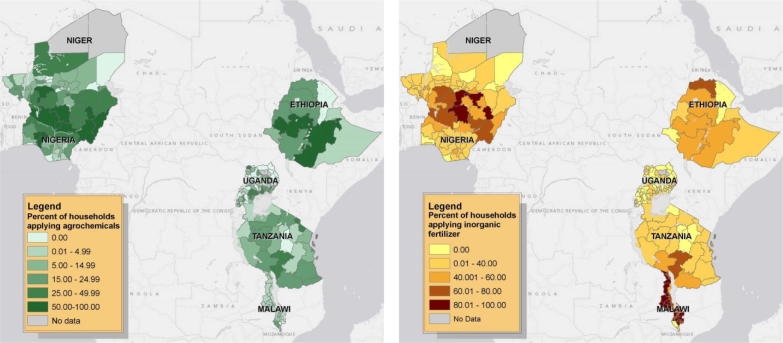
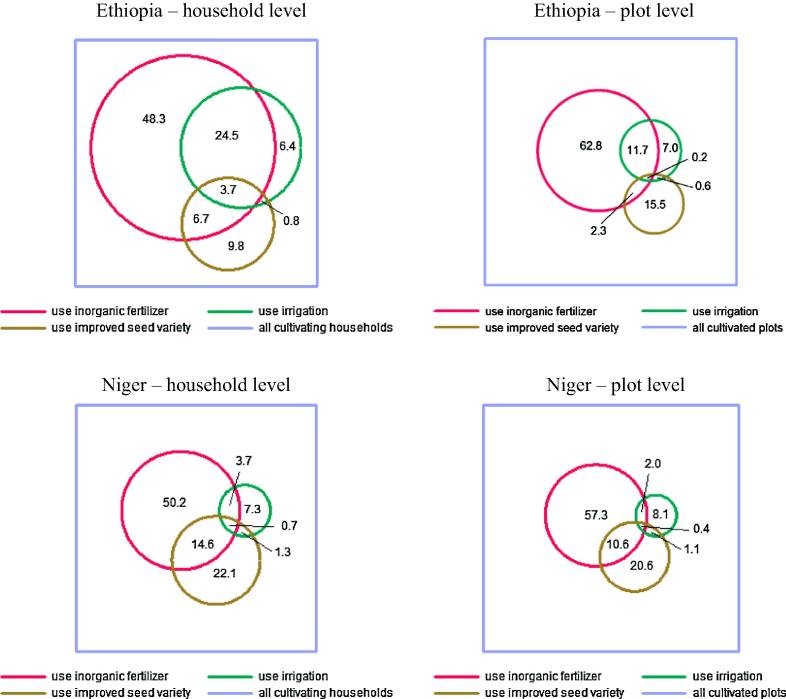
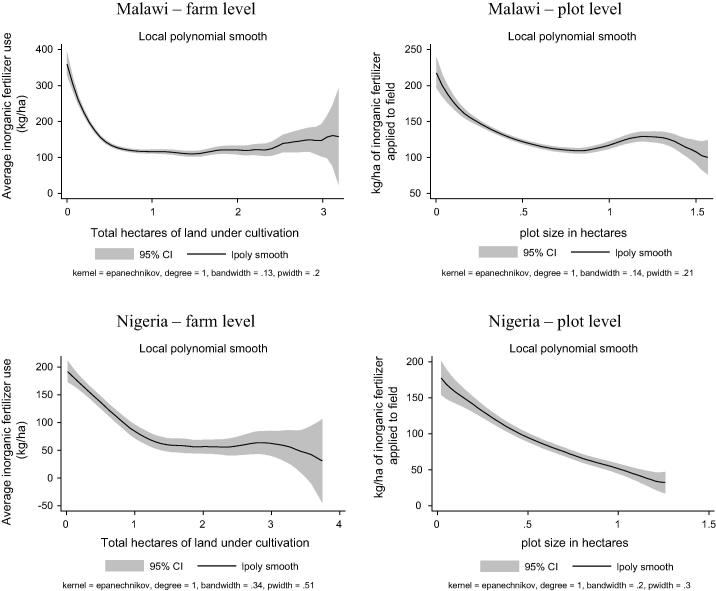
Conventional wisdom holds that Sub-Saharan African farmers use few modern inputs despite the fact that most poverty-reducing agricultural growth in the region is expected to come largely from expanded use of inputs that embody improved technologies, particularly improved seed, fertilizers and other agro-chemicals, machinery, and irrigation. Yet following several years of high food prices, concerted policy efforts to intensify fertilizer and hybrid seed use, and increased public and private investment in agriculture, how low is modern input use in Africa really? This article revisits Africa's agricultural input landscape, exploiting the unique, recently collected, nationally representative, agriculturally intensive, and cross-country comparable Living Standard Measurement Study-Integrated Surveys on Agriculture (LSMS-ISA) covering six countries in the region (Ethiopia, Malawi, Niger, Nigeria, Tanzania, and Uganda). Using data from over 22,000 households and 62,000 agricultural plots, we offer ten potentially surprising facts about modern input use in Africa today.
Overview
The claims and statistics of this paper haven’t been checked yet.
Run the check — free, no account needed. It reads the open-access text and checks the sources it cites.
Integrity signals
Registry
Cites
Statistics
Figures
Verification
Claims the paper makes
The claims and statistics of this paper haven’t been checked yet.
Run the check — free, no account needed. It reads the open-access text and checks the sources it cites.
Self-check
Percentages, sums and reported differences re-computed from the paper’s own numbers.
The self-check needs the paper’s full text.
Citations
Cites
Assessing the Impact of the Green Revolution, 1960 to 2000
Evenson, R. E., & Gollin, D. (2003) · Science · doi:10.1126/science.1078710 · Cited by 2,228 · cited 1×
“The gains from diffusion of these inputs were enjoyed broadly, including to consumers (Evenson and Gollin, 2003), helping to stimulate historically unprecedented economic growth and poverty reduction in east and southeast Asia (David and Otsuka, 1994).”
BackgroundTransforming Traditional Agriculture.
Balogh, T., & Schultz, T. W. (1964) · The Economic Journal · doi:10.2307/2228861 · Cited by 1,994
Safeguarding production—losses in major crops and the role of crop protection
Oerke, E.-C., & Dehne, H. W. (2003) · Crop Protection · doi:10.1016/j.cropro.2003.10.001 · Cited by 1,425 · cited 1×
“30% of attainable yields as collected from sources around the world (Oerke and Dehne, 2004).”
BackgroundThe role of agriculture in economic development
Johnston, B. F., & Mellor, J. W. (1961) · American Economic Review · Cited by 948
Agrifood Industry Transformation and Small Farmers in Developing Countries
Reardon, T., Barrett, C. B., Berdegué, J. A., & Swinnen, J. (2009) · World Development · doi:10.1016/j.worlddev.2008.08.023 · Cited by 945 · cited 2×
“…a middle class, increased access to market and other information through cell phones, and transformation of some food marketing channels—may have changed on-farm incentives and resulted in updates to farm management practices, including modern input use (e.g., Reardon et al., 2009; Tiffen, 2003).”
BackgroundInfluentialSelf-citationIntegrated Soil Fertility Management
Vanlauwe, B., Bationo, A., Chianu, J. N., Giller, K. E., Merckx, R., Mokwunye, U., Ohiokpehai, O., Pypers, P., Tabo, R., Shepherd, K. D., et al. (2010) · Outlook on Agriculture · doi:10.5367/000000010791169998 · Cited by 764
Fertilizer Use in African Agriculture
Morris, M., Kelly, V. A., Kopicki, R. J., & Byerlee, D. (2007) · World Bank, Washington, DC eBooks · doi:10.1596/978-0-8213-6880-0 · Cited by 661
The relation between farm size and farm productivity
Feder, G. (1985) · Journal of Development Economics · doi:10.1016/0304-3878(85)90059-8 · Cited by 622 · cited 1×
“The inverse (negative) relationship between farm size and productivity is a well-studied and fairly entrenched phenomenon in the agricultural development literature (e.g., Carter, 1984; Feder, 1985; Barrett et al., 2010).”
BackgroundGlobal pesticide consumption and pollution: with China as a focus
Zhang, W., Jiang, F., & Ou, J. (2011) · Cited by 590
Food Security, Farming, and Climate Change to 2050: Scenarios, Results, Policy Options
Nelson, G. C., Rosegrant, M. W., Palazzo, A., Gray, I. D., Ingersoll, C., Robertson, R., Tokgöz, S., Zhu, T., Sulser, T. B., Ringler, C., et al. (2010) · International Food Policy Research Institute eBooks · doi:10.2499/9780896291867 · Cited by 578
Cited by
Sorted by citations
Items 301–400 of 595
An act of defiance? Measuring farmer deviation from personalised extension recommendations in Zambia
Tambo, J. A., & Matimelo, M. (2021) · Journal of Agricultural Economics · doi:10.1111/1477-9552.12455 · Cited by 8
A meta-analysis of factors speeding the adoption of agricultural intensification methods in Africa
Tey, Y. S., & Brindal, M. (2023) · The Journal of Agricultural Education and Extension · doi:10.1080/1389224x.2023.2240758 · Cited by 8
“Our fi ndings appear to contradict previous research that attributes lower adoption rates for high-yielding varieties among female farmers in Africa to their relatively limited access to resources (e.g. Sheahan and Barrett 2017).”
Masso, C., Gweyi-Onyango, J. P., Luoga, H. P., Yemefack, M., & Vanlauwe, B. (2024) · Sustainability · doi:10.3390/su16114816 · Cited by 6
Obour, P. B., Dadzie, F. A., Arthur, E., et al. (2018) · Renewable Agriculture and Food Systems · doi:10.1017/s1742170518000340 · Cited by 8
Abdunnur, A. (2020) · International Journal of Energy Economics and Policy · doi:10.32479/ijeep.9172 · Cited by 8
“These included the broadened use of cutting edge techniques, for example, improved seed, manures, and other agro-engineered mixes, instruments, and water system (Sheahan and Barrett, 2017).”
BackgroundAdams, A., Osei‐Amponsah, C., & Jumpah, E. T. (2020) · Journal of Agribusiness and Rural Development · doi:10.17306/j.jard.2020.01286 · Cited by 8
“136 www.jard.edu.pl to their male counterparts (Fisher and Kandiwa, 2014; Sheahan and Barrett, 2017).”
BackgroundResultNicholas, H. L., Devine, A. P., Robertson, I., & Mabbett, I. (2023) · Agronomy · doi:10.3390/agronomy13051233 · Cited by 9
Challenges of Sustainable Agriculture in Developing Countries
Antle, J. M., & Ray, S. (2020) · Palgrave studies in agricultural economics and food policy · doi:10.1007/978-3-030-34599-0_4 · Cited by 9
From targeting to tailoring : baskets of options for legume cultivation among African smallholders
Ronner, E. (2018) · doi:10.18174/430727 · Cited by 8
Kinyanjui, S. N. (2019) · doi:10.18174/503185 · Cited by 8
“4 in increasing fertilizer application rates (Sheahan and Barrett, 2017), compared to a mean value of 13 kg ha reported a decade ago (Minot and Benson, 2009).”
BackgroundInfluentialAgriculture in Africa — Telling Myths from Facts: A Synthesis
Christiaensen, L. (2017) · World Bank, Washington, DC eBooks · doi:10.1596/1813-9450-7979 · Cited by 8
Sagnon, A., Traoré, M., Tibiri, E. B., Zongo, S., Bonkoungou, I. J. O., Nakamura, S., Barro, N., Tiendrébéogo, F., & Sarr, P. S. (2024) · Frontiers in Sustainable Food Systems · doi:10.3389/fsufs.2024.1445683 · Cited by 7
Nshakira‐Rukundo, E., Tabe‐Ojong, M. P. J., Gebrekidan, B. H., Agaba, M., Padmaja, S. S., & Dhehibi, B. (2026) · Communications Earth & Environment · doi:10.1038/s43247-025-03171-7 · Cited by 8
Ahmed, H., & Miller, E. E. (2022) · INCOSE International Symposium · doi:10.1002/iis2.12868 · Cited by 7
Steinke, J., Habtemariam, L. T., Kubitza, C., Maczek, M., Altincicek, B., & Sieber, S. (2023) · The Journal of Development Studies · doi:10.1080/00220388.2023.2182684 · Cited by 10
“Overall, men tend to have larger farming plots than women and often experience better access to agroinputs and output markets, contributing to greater farm productivity (Lambrecht, Schuster, Asare Samwini, & Pelleriaux, 2018; Mason, Ndlovu, Parkins, & Luckert, 2015; Sheahan & Barrett, 2017).”
BackgroundBiopesticides versus synthetic pesticides usage in Africa
Ayilara, M. S., Akinola, S. A., Adeleke, B. S., Gbadegesin, L. A., ADEJUMO, G. D., Glick, B. R., & Babalola, O. O. (2024) · Elsevier eBooks · doi:10.1016/b978-0-443-21781-4.00016-5 · Cited by 7
Seed Systems in the Four Shallot Producing Areas of Java: A Focus Group Discussion
Adiyoga, W. (2021) · E3S Web of Conferences · doi:10.1051/e3sconf/202123201003 · Cited by 7
Household diversification and market dependence: understanding vulnerability in rural West Africa
Turner, M. D., & Ayantunde, A. A. (2021) · The Journal of Peasant Studies · doi:10.1080/03066150.2021.1936505 · Cited by 7
“Dryland farmers often seek to grow a range of cultivars and species to smooth out variations in yields and prices (Sheahan and Barrett 2017).”
BackgroundMghenyi, E., Dankers, C., Thurlow, J., et al. (2022) · World Bank, Washington, DC eBooks · doi:10.1596/978-1-4648-1724-3 · Cited by 7
Xie, H., Dile, Y., Ringler, C., Srinivasan, R., & Worqlul, A. (2023) · Environmental Research Communications · doi:10.1088/2515-7620/acd6db · Cited by 6
Factors Affecting Sorghum Production in Western Ethiopia: Evidence from Smallholder Farmers
Degefa, K., Abebe, G., & Biru, G. (2023) · International Journal on Food Agriculture and Natural Resources · doi:10.46676/ij-fanres.v4i2.109 · Cited by 7
Wong, C. A., Lobell, D. B., & Mauter, M. S. (2023) · Environmental Science & Technology · doi:10.1021/acs.est.3c05435 · Cited by 7
Poverty Imputation in Contexts Without Consumption Data: A Revisit With Further Refinements
Dang, H.-A. H., Kilic, T., Abanokova, K., & Carletto, C. (2024) · Review of Income and Wealth · doi:10.1111/roiw.12714 · Cited by 8
How small is beautiful? Farm size and economic development in Africa
Giller, K. E., & Andersson, J. (2025) · Routledge eBooks · doi:10.4324/9781032649696-19 · Cited by 7
Role of Biotechnology in Pesticide Remediation
Mir, M. Y., Rohela, G. K., Hamid, S., et al. (2020) · Springer eBooks · doi:10.1007/978-3-030-46075-4_13 · Cited by 7
Malacarne, J., & Paul, L. A. (2022) · Food Policy · doi:10.1016/j.foodpol.2022.102332 · Cited by 7
van Vugt, D. (2018) · doi:10.18174/456315 · Cited by 9
“There is little mechanization or irrigation and almost no use of credit to procure agricultural inputs (Sheahan and Barrett, 2017).”
BackgroundAdong, A., Ambler, K., Bloem, J. R., de Brauw, A., Herskowitz, S., Islam, A. K. M. S., & Wagner, J. (2025) · Food Policy · doi:10.1016/j.foodpol.2025.102838 · Cited by 9
Ndip, F. E., & Sakurai, T. (2025) · Agriculture & Food Security · doi:10.1186/s40066-025-00525-4 · Cited by 6
“The region constitutes the lowest in terms of fertilizer use [16, 61, 65].”
Pesticide Use Practices among Female Headed Households in the Amhara Region, Ethiopia
Asmare, B. A., Freyer, B., & Bingen, J. (2022) · Sustainability · doi:10.3390/su142215215 · Cited by 6
Tlatlaa, J. S., Tryphone, G. M., & Nassary, E. K. (2023) · Frontiers in Sustainable Food Systems · doi:10.3389/fsufs.2023.1298459 · Cited by 6
“In the vast landscape of agriculture, where each decision made by smallholder farmers can significantly impact crop yield and overall productivity, the nuanced interplay of variables often remains a subject of intricate exploration (Sheahan and Barrett, 2017; Pawlak and Kołodziejczak, 2019).”
BackgroundOrach, H., Shen, Q., Arthur, A. A., Twumasi, M. A., & Zhang, S. (2024) · Environmental Science and Pollution Research · doi:10.1007/s11356-024-35769-3 · Cited by 6
“Yet following several years of high food prices, concerted policy efforts to intensify fertilizer and hybrid seed use, and increased public and private investment in agriculture (Sheahan and Barrett 2017).”
Johnson, R. A. B., Hann, K., Leno, A., Timire, C., Bangura, A. J. A., George, M. I. Z., Davtyan, H., Satyanarayana, S., Nair, D., Mansaray, A. H. D., et al. (2022) · International Journal of Environmental Research and Public Health · doi:10.3390/ijerph19084792 · Cited by 6
Asante, I. K., Ocran, J. K., & Inkoom, E. W. (2023) · Environmental Protection Research · doi:10.37256/epr.3120232074 · Cited by 6
Sridhara, S., Manoj, K. N., & Gopakkali, P. (2023) · Energy · doi:10.1016/j.energy.2023.127740 · Cited by 6
The farmer and the fates: Locus of control and investment in rainfed agriculture
Malacarne, J. (2023) · Applied Economic Perspectives and Policy · doi:10.1002/aepp.13403 · Cited by 6
Intra-household discrete choice experiment for trait preferences: a new method
Mukerjee, R., Faye, N. F., Badji, M. J., et al. (2023) · Frontiers in Sustainable Food Systems · doi:10.3389/fsufs.2023.1257076 · Cited by 6
Assessing prevalence of misperceptions in agricultural activities of smallholder farmers in Tanzania
Magesa, M. M., Jonathan, J., & Urassa, J. K. (2024) · Information Development · doi:10.1177/02666669241232423 · Cited by 6
“Farmers ’ suspicion of adulterated fertilizer was not backed by reliable evidence (Michelson et al., 2020), levels of fertilizer usage, and application levels by those who do use fertilizer, generally remain low (Sheahan and Barrett, 2017).”
Rodrigues, L. C. C., & Féres, J. G. (2021) · Revista de Economia e Sociologia Rural · doi:10.1590/1806-9479.2021.244491 · Cited by 6
Ingabire, C., Mshenga, P. M., Amacker, M., et al. (2018) · Gender and Women s Studies · doi:10.31532/gendwomensstud.2.1.004 · Cited by 6
Heterogeneous Impacts of Main and Feeder Road Improvements: Evidence from Ethiopia
Iimi, A., Mengesha, H. A., Markland, J., et al. (2018) · World Bank, Washington, DC eBooks · doi:10.1596/1813-9450-8548 · Cited by 6
Klinnert, A., Rogna, M., Barbosa, A., Tillie, P., & Baldoni, E. (2025) · Agricultural Water Management · doi:10.1016/j.agwat.2025.109488 · Cited by 5
Kumar, S. (2024) · INDIAN JOURNAL OF AGRICULTURAL ECONOMICS · doi:10.63040/25827510.2025.01.004 · Cited by 5
Ayalew, H., Berhane, G., Wondale, M., & Breisinger, C. (2025) · Agricultural Economics · doi:10.1111/agec.70083 · Cited by 6
Closing maize yield gaps in North China plain: Based on plot-scale farmer survey and simulation
Hu, Y., Chen, Y., Duan, B., Dong, T., Qian, X., Li, Z., Fan, Y., Wang, A., Yang, S., Wangsheng, 高. G., et al. (2026) · Agricultural Systems · doi:10.1016/j.agsy.2026.104697 · Cited by 5
Water storage practices for small-scale irrigation systems in East Hararghe zone, Ethiopia
Jilito, M. F., Wedajo, D. Y., Feyisa, B. W., & Tuke, T. W. (2021) · Water Science & Technology Water Supply · doi:10.2166/ws.2021.017 · Cited by 5
Nigus, H. Y., Mohnen, P., & Nillesen, E. (2024) · European Review of Agricultural Economics · doi:10.1093/erae/jbae033 · Cited by 7
Whelan, M. G., Le, Q. B., & Hall, D. C. (2021) · Risk Analysis · doi:10.1111/risa.13753 · Cited by 5
“The contrast between need for behavior change and/or expressed intent from low-income small-scale farmers and the resulting behavior change goes well beyond HPAI in Vietnam and has a long history (Macours, 2019; Sheahan & Barrett, 2017).”
BackgroundRagsdale, K., Read-Wahidi, M. R., Zhou, Q. M., et al. (2022) · Food Security · doi:10.1007/s12571-022-01263-2 · Cited by 5
“…– males tend have more access to arable land, training, and important inputs, such as inorganic fertilizer and high-quality certified seed (O’Sullivan et al., 2014; Sheahan & Barrett, 2017; see also Lambrecht et al., 2018), factors that help explain the gender gap in agricultural productivity.”
BackgroundInfluentialMakate, C., & Makate, M. (2022) · Sustainability · doi:10.3390/su142214904 · Cited by 5
Özden, C. (2023) · Turkish Journal of Agriculture - Food Science and Technology · doi:10.24925/turjaf.v11i9.1751-1755.6359 · Cited by 5
Jithitikulchai, T. (2023) · African Journal of Agricultural and Resource Economics · doi:10.53936/afjare.2023.18(2).10 · Cited by 7
Katengeza, S. P. (2020) · Springer eBooks · doi:10.1007/978-3-030-37537-9_31 · Cited by 5
Monjardino, M., Kuehne, G., & Cummins, J. (2020) · Experimental Agriculture · doi:10.1017/s0014479720000204 · Cited by 6
“…to address these challenges through the promotion of new technologies or practice changes at the farm level in an attempt to increase yields, income, efficiency, resilience and/or food security in smallholder farms (Dixon et al., 2010; Schreinemachers et al., 2017; Sheahan and Barrett, 2017).”
BackgroundSoropa, G., Manyanga, M. A., Nyapwere, N., & Munjonji, L. (2021) · Journal of soil science and plant nutrition · doi:10.1007/s42729-021-00659-x · Cited by 5
Heterogeneity in returns to agricultural technologies with incomplete diffusion: Evidence from Ghana
Mohammed, S., & Abdulai, A. (2021) · Review of Development Economics · doi:10.1111/rode.12837 · Cited by 5
Using yield gap analysis to give sustainable intensification local meaning
Silva, . V. (2017) · doi:10.18174/425752 · Cited by 5
Impacts of increasing community resilience through humanitarian aid in Pakistan
Avdeenko, A., & Frölich, M. (2019) · doi:10.23846/tw6ie100 · Cited by 5
Takeshima, H., Abdoulaye, T., Andam, K. S., et al. (2022) · doi:10.2499/p15738coll2.136474 · Cited by 5
Maize varietal turnover in eastern Africa: Current challenges and future research directions
Groote, H. D., Kariuki, S. W., Ndegwa, M., Mbugua, M., Chivasa, W., & Jaleta, M. (2025) · Global Food Security · doi:10.1016/j.gfs.2025.100888 · Cited by 4
Real-time detection of potato spoilage by gas sensor array coupled with microbiological analysis
Tangirbergen, A., Tleubekova, A. D., Yergaliuly, G., Kurmanbayeva, A., Soltabayev, B., & Soltabayeva, A. (2025) · LWT · doi:10.1016/j.lwt.2025.118926 · Cited by 4
Fast Machines, Big Losses: The Hidden Costs of Agricultural Machinery Socialization Services
An, N., & Zhang, Z. (2025) · Agricultural Economics · doi:10.1111/agec.70085 · Cited by 4
Do subsidies on seed and fertilizer lead to child labour? Evidence from Malawi
Frempong, R. B. (2022) · Development Policy Review · doi:10.1111/dpr.12646 · Cited by 4
Policies enhancing agricultural value chains in developing countries: An Evidence Gap Map
Yeritsyan, A., Tabares, E., Ishdorj, A., Mjelde, J. W., Mishra, V., Foster, M., & Norton, R. D. (2024) · Journal of Agriculture and Food Research · doi:10.1016/j.jafr.2024.101418 · Cited by 4
Mmbughu, A. E., Katundu, M. A., & Mrimi, M. (2025) · Discover Sustainability · doi:10.1007/s43621-025-00962-y · Cited by 4
“This aligns with findings by [51], who also emphasized the pivotal role of fertilizers in enhancing agricultural productivity.”
Labor Displacement in Agriculture: Evidence from Oil Palm Expansion in Indonesia
Kubitza, C., Krishna, V. V., Klasen, S., Kopp, T., Nuryartono, N. R., & Qaim, M. (2023) · Land Economics · doi:10.3368/le.100.3.122122-0109r1 · Cited by 6
“Still, labor-saving technol-ogies—such as mechanization and herbicide application—are often perceived as key technologies to increase agricultural labor productivity in developing countries (Haggblade et al. 2017; Sheahan and Barrett 2017; Adu-Baffour, Daum, and Birner 2019).”
BackgroundAboderin, O. S., Bankole, F. A., Oyekunle, M., et al. (2023) · Polnohospodarstvo · doi:10.2478/agri-2023-0015 · Cited by 4
Hunger or Illness? a trade-off on fertilizer use
Ai, H., Fan, B., & Zhou, Z. (2024) · Ecological Indicators · doi:10.1016/j.ecolind.2024.112432 · Cited by 5
Can adoption of improved seed varieties spur long-term food security in Malawi?
Salonga, D. T., Khonje, M. G., & Matchaya, G. C. (2024) · Environment Development and Sustainability · doi:10.1007/s10668-024-05281-2 · Cited by 4
Rebuilding Irrigation Infrastructure and Institutions: Evidence from Afghanistan
BenYishay, A., Glenn, C., Goodman, S., & Trichler, R. (2024) · Economic Development and Cultural Change · doi:10.1086/733269 · Cited by 4
Akidiva, A., Nyangori, G., Kinoti, D., et al. (2024) · Frontiers in Sustainable Food Systems · doi:10.3389/fsufs.2024.1454379 · Cited by 4
Boakye, K. O., Darko, G., Asante, B. O., Tanor, E., Logah, V., & Dodd, M. (2025) · Urban Agriculture & Regional Food Systems · doi:10.1002/uar2.70012 · Cited by 6
“This outcome is supported by studies (Mariano et al., 2012; Sheahan & Barrett, 2017), which found that farmers using modern inputs like agrochemicals tend to have higher awareness and adoption rates of improved agricultural practices.”
Gendered perceptions in maize supply chains: Evidence from Uganda
Campenhout, B. V., & De, A. (2022) · Development Policy Review · doi:10.1111/dpr.12662 · Cited by 4
Dzanku, F. M. (2018) · Food Policy · doi:10.1016/j.foodpol.2018.02.003 · Cited by 4
Pali, P. N., Schut, M., Kibwika, P., et al. (2018) · International Journal of Agricultural Sustainability · doi:10.1080/14735903.2018.1471830 · Cited by 4
“Uganda is characterized as a low-input country with fertilizer use averaging 1.2 kg/ha (Sheahan & Barrett, 2017), poor use of quality seed (MAAIF, 2015) and poor coverage of extension services (Barungi, Guloba, & Adong, 2015).”
BackgroundInfluentialAbay, K. A., Bevis, L. E. M., & Barrett, C. B. (2019) · National Bureau of Economic Research · doi:10.3386/w26066 · Cited by 4
Self-citationGendered perceptions in maize supply chains: Evidence from Uganda
Campenhout, B. V., & De, A. (2021) · doi:10.2499/p15738coll2.134733 · Cited by 4
Maize yield gaps and their mitigation in Ethiopia: an integrated assessment
Assefa, B. T. (2023) · doi:10.18174/585728 · Cited by 4
In the Weeds: Effects of Temperature on Agricultural Input Decisions in Moderate ClimatesPreprint
Jagnani, M., Barrett, C. B., Liu, Y., et al. (2017) · SSRN Electronic Journal · doi:10.2139/ssrn.3056840 · Cited by 4
Self-citationMahari, H. T., Kahsay, Z. A., Abraha, G. G., et al. (2025) · Food Science & Nutrition · doi:10.1002/fsn3.70371 · Cited by 3
Estefan, A., Ordóñez, R., Parilli, C., & Winters, P. (2025) · Food Policy · doi:10.1016/j.foodpol.2025.102952 · Cited by 5
Nzira, J. E., & Chegere, M. (2025) · Journal of Agriculture and Food Research · doi:10.1016/j.jafr.2025.102339 · Cited by 3
What determines market participation and trade intensity? The case of smallholders in Kenya
Nyarindo, W., & Mugera, A. W. (2025) · Scientific African · doi:10.1016/j.sciaf.2025.e03057 · Cited by 3
Thapa, G. B., Choudhary, D., Pandit, N. R., & Dongol, P. (2025) · Experimental Agriculture · doi:10.1017/s0014479725100203 · Cited by 4
Kadigi, I. L. (2026) · Discover Sustainability · doi:10.1007/s43621-026-02665-4 · Cited by 4
Kadigi, I. L. (2026) · Journal of Simulation · doi:10.1080/17477778.2026.2622936 · Cited by 3
Jemaneh, S. A., Tilahun, M., Thorn, J., Siyum, Z. G., & Dallimer, M. (2026) · Agricultural Systems · doi:10.1016/j.agsy.2026.104670 · Cited by 3
Hidden one-stop shops in transforming agrifood value chains: Agro-input retailers in Myanmar
Goeb, J., Minten, B., van Asselt, J., Reardon, T., Aung, Z. W., & Htar, M. T. (2026) · Food Policy · doi:10.1016/j.foodpol.2026.103079 · Cited by 3
Is dirt cheap? The economic costs of failing to meet soil health requirements on smallholder farms
Gourlay, S., & Kilic, T. (2023) · Agricultural Economics · doi:10.1111/agec.12796 · Cited by 3
Jankiewicz, M. (2024) · Sustainable Development · doi:10.1002/sd.3205 · Cited by 3
Examining the Determinants of Ecological Footprint in ASEAN-5 Countries
Ashari, N. R., Utama, M. B., & Irwan, W. (2024) · EkBis Jurnal Ekonomi dan Bisnis · doi:10.14421/ekbis.2024.8.2.2337 · Cited by 3
“In addition, with growing ecological awareness, agricultural landowners have readily adopted environmentally friendly and personally tailored rural systems, offering numerous social and natural benefits (Sheahan & Barrett, 2017).”
Kuteya, A., Kalinda, T. H., & Kuntashula, E. (2025) · Agrekon · doi:10.1080/03031853.2025.2515877 · Cited by 3
“(2013), Sheahan & Barrett (2017), Chirwa and Dorward (2013), and Jayne et al .”
Waste management and the prospect of biodegradable wastes from agricultural processes
Onu, P., & Mbohwa, C. (2021) · Elsevier eBooks · doi:10.1016/b978-0-323-85402-3.00006-1 · Cited by 3
Jacobson, M. G. (2022) · Elsevier eBooks · doi:10.1016/b978-0-323-91223-5.00018-6 · Cited by 3
Adoption of climate-smart agriculture practices in the Gorganrood basin in Golestan province
Taimour, H., Farhadian, H., & Saadvandi, M. (2023) · Ecohydrology & Hydrobiology · doi:10.1016/j.ecohyd.2023.06.011 · Cited by 3
Musana, B., Nabahungu, N. L., Bucagu, C., et al. (2024) · CABI Agriculture and Bioscience · doi:10.1186/s43170-024-00271-w · Cited by 3
“In spite of the commitment of most African countries to increase the use of inorganic fertilizer from 8 to 50 kg ha − 1 (Wanzala 2011), crop productivity has remained unsatisfactory due to various factors, among which is the low purchasing power of smallholder farmers (Sheahan and Barrett 2017).”
BackgroundFerlini, F. (2020) · Rivista Italiana di Ornitologia · doi:10.4081/rio.2020.430 · Cited by 3
IS INCREASING INPUT USE FOR RICE PRODUCTION A PROFITABLE PROPOSITION IN TANZANIA?
Rashid, F. N. (2020) · Acta oeconomica et informatica · doi:10.15414/raae.2020.23.02.54-63 · Cited by 3
Alia, D. Y., Diagne, A., Adegbola, P. Y., & Kinkingninhoun-Mêdagbé, F. M. (2018) · Journal of African Development · doi:10.5325/jafrideve.20.2.0091 · Cited by 5
Did the Plan Sénégal Emergent Affect Cropping Decisions in the Senegal River Basin?
Moss, C. B., Mbaye, S., Naseem, A., et al. (2018) · Economies · doi:10.3390/economies6030042 · Cited by 3
“A basic tenet of development is structural transformation: the transition of labor from subsistence farming to non-farm employment simultaneously with the emergence of commercial agriculture to feed the growing labor force (Lewis 1954; Timmer 1988; Timmer and Akkus 2008; Sheahan and Barrett 2017).”
Background
Metadata
- Authors
- Sheahan, M., & Barrett, C. B.
- Affiliations
- Cornell University (US)
- Corresponding author
- Sheahan, Megan
- Venue
- Food Policy
- Publisher
- Elsevier BV
- Published
- 2017-02
- Volume
- 67
- Pages
- 12-25
- ISSN
- 0306-9192 (ISSN-L)
- PMC
- PMC5384438
- OpenAlex
- W2534397573
- Semantic Scholar
- 0119de42f830ef1f9a0fb240310e89ecd368143f
- Cited by
- 594
- References
- 87
- Citations by year
- 2026: 74 · 2025: 69 · 2024: 60 · 2023: 76 · 2022: 61 · 2021: 70 · 2020: 75 · 2019: 47 · 2018: 40 · 2017: 19
- FWCI
- 120.77
- Type
- journal article
- Language
- en
- Open access
- hybrid
- doi.org
- Locations
- Food Policy (publishedVersion, cc-by)
- PubMed Central (publishedVersion, cc-by)
- PubMed (publishedVersion)
- RePEc: Research Papers in Economics (submittedVersion)
- Funders
- International Fine Particle Research Institute
- Topics
- Life Sciences › Agricultural and Biological Sciences › General Agricultural and Biological Sciences › Agricultural Innovations and Practices
- Life Sciences › Agricultural and Biological Sciences › General Agricultural and Biological Sciences › Agricultural Economics and Practices
- Social Sciences › Economics, Econometrics and Finance › Economics and Econometrics › Agricultural economics and policies
- Keywords
- agricultural input use, modern agricultural inputs, fertilizer use, improved varieties, hybrid seeds, agrochemicals, agricultural machinery, irrigation, agricultural intensification, smallholder farmers, sub-Saharan Africa, food prices, agricultural growth
About these checks
Registry, retraction, Cites and statistics results are computed, not judged, with one exception: a printed reference that no index lists is read once by a model before it counts as a citation error. Claims are extracted by a model and kept only when their quote appears verbatim in the text; each cited source is then checked, with a model’s help, for whether it says what the claim relies on. Those verdicts can be wrong — read the claim’s quote and the cited source before relying on one.
Statistics and arithmetic are recomputed, not judged.
Confidence bands are shown only for fields calibrated on our annotated test set. None is calibrated yet, so no band is shown.
What counts as a claim ›How we measure confidence ›How we check this ›
Are you an author, or do you see a problem with this page? Request a review
