

The DOI matches its Crossref record; 86 of the 87 references it cites were found in a registry or an index.
Ten striking facts about agricultural input use in Sub-Saharan Africa
Open accessAbstract
Conventional wisdom holds that Sub-Saharan African farmers use few modern inputs despite the fact that most poverty-reducing agricultural growth in the region is expected to come largely from expanded use of inputs that embody improved technologies, particularly improved seed, fertilizers and other agro-chemicals, machinery, and irrigation. Yet following several years of high food prices, concerted policy efforts to intensify fertilizer and hybrid seed use, and increased public and private investment in agriculture, how low is modern input use in Africa really? This article revisits Africa's agricultural input landscape, exploiting the unique, recently collected, nationally representative, agriculturally intensive, and cross-country comparable Living Standard Measurement Study-Integrated Surveys on Agriculture (LSMS-ISA) covering six countries in the region (Ethiopia, Malawi, Niger, Nigeria, Tanzania, and Uganda). Using data from over 22,000 households and 62,000 agricultural plots, we offer ten potentially surprising facts about modern input use in Africa today.
Overview
The claims and statistics of this paper haven’t been checked yet.
Run the check — free, no account needed. It reads the open-access text and checks the sources it cites.
Integrity signals
Registry
Cites
Statistics
Figures
Verification
Claims the paper makes
The claims and statistics of this paper haven’t been checked yet.
Run the check — free, no account needed. It reads the open-access text and checks the sources it cites.
Self-check
Percentages, sums and reported differences re-computed from the paper’s own numbers.
The self-check needs the paper’s full text.
Citations
Cites
Assessing the Impact of the Green Revolution, 1960 to 2000
Evenson, R. E., & Gollin, D. (2003) · Science · doi:10.1126/science.1078710 · Cited by 2,228 · cited 1×
“The gains from diffusion of these inputs were enjoyed broadly, including to consumers (Evenson and Gollin, 2003), helping to stimulate historically unprecedented economic growth and poverty reduction in east and southeast Asia (David and Otsuka, 1994).”
BackgroundTransforming Traditional Agriculture.
Balogh, T., & Schultz, T. W. (1964) · The Economic Journal · doi:10.2307/2228861 · Cited by 1,994
Safeguarding production—losses in major crops and the role of crop protection
Oerke, E.-C., & Dehne, H. W. (2003) · Crop Protection · doi:10.1016/j.cropro.2003.10.001 · Cited by 1,425 · cited 1×
“30% of attainable yields as collected from sources around the world (Oerke and Dehne, 2004).”
BackgroundThe role of agriculture in economic development
Johnston, B. F., & Mellor, J. W. (1961) · American Economic Review · Cited by 948
Agrifood Industry Transformation and Small Farmers in Developing Countries
Reardon, T., Barrett, C. B., Berdegué, J. A., & Swinnen, J. (2009) · World Development · doi:10.1016/j.worlddev.2008.08.023 · Cited by 945 · cited 2×
“…a middle class, increased access to market and other information through cell phones, and transformation of some food marketing channels—may have changed on-farm incentives and resulted in updates to farm management practices, including modern input use (e.g., Reardon et al., 2009; Tiffen, 2003).”
BackgroundInfluentialSelf-citationIntegrated Soil Fertility Management
Vanlauwe, B., Bationo, A., Chianu, J. N., Giller, K. E., Merckx, R., Mokwunye, U., Ohiokpehai, O., Pypers, P., Tabo, R., Shepherd, K. D., et al. (2010) · Outlook on Agriculture · doi:10.5367/000000010791169998 · Cited by 764
Fertilizer Use in African Agriculture
Morris, M., Kelly, V. A., Kopicki, R. J., & Byerlee, D. (2007) · World Bank, Washington, DC eBooks · doi:10.1596/978-0-8213-6880-0 · Cited by 661
The relation between farm size and farm productivity
Feder, G. (1985) · Journal of Development Economics · doi:10.1016/0304-3878(85)90059-8 · Cited by 622 · cited 1×
“The inverse (negative) relationship between farm size and productivity is a well-studied and fairly entrenched phenomenon in the agricultural development literature (e.g., Carter, 1984; Feder, 1985; Barrett et al., 2010).”
BackgroundGlobal pesticide consumption and pollution: with China as a focus
Zhang, W., Jiang, F., & Ou, J. (2011) · Cited by 590
Food Security, Farming, and Climate Change to 2050: Scenarios, Results, Policy Options
Nelson, G. C., Rosegrant, M. W., Palazzo, A., Gray, I. D., Ingersoll, C., Robertson, R., Tokgöz, S., Zhu, T., Sulser, T. B., Ringler, C., et al. (2010) · International Food Policy Research Institute eBooks · doi:10.2499/9780896291867 · Cited by 578
Cited by
Sorted by citations
Items 101–200 of 595
Aligning Product Chemistry and Soil Context for Agronomic Reuse of Human-Derived Resources
Trimmer, J. T., Margenot, A. J., Cusick, R. D., & Guest, J. S. (2019) · Environmental Science & Technology · doi:10.1021/acs.est.9b00504 · Cited by 43
Constraints to adopting soil fertility management practices in Malawi: A choice experiment approach
Krah, K., Michelson, H., Perge, E., & Jindal, R. (2019) · World Development · doi:10.1016/j.worlddev.2019.104651 · Cited by 46
Pasley, H., Camberato, J. J., Cairns, J. E., Zaman‐Allah, M., Das, B., & Vyn, T. J. (2020) · Nutrient Cycling in Agroecosystems · doi:10.1007/s10705-020-10049-x · Cited by 44
“The average rate of inorganic N fertilizer applied in SSA, however, is only 5–7 kg N ha-1 in 2010/11 and is expected to only reach * 12 kg N ha-1 in 2020 (Sheahan and Barrett 2017; AfricaFertilizer.org 2019).”
Gender focused training and knowledge enhances the adoption of climate resilient seeds
Dar, M. H., Waza, S. A., Nayak, S., et al. (2020) · Technology in Society · doi:10.1016/j.techsoc.2020.101388 · Cited by 43
Are small farms more performant than larger ones in developing countries?
Delvaux, P. A. G., Riesgo, L., & y Paloma, S. G. (2020) · Science Advances · doi:10.1126/sciadv.abb8235 · Cited by 44
“Consequently, the situation is still not comparable to the Asian case and substitution of labor by machinery is not happening on a large scale (85), weakening the IR but still definitively to a lesser extent.”
BackgroundAnang, B. T., Alhassan, H., & Danso-Abbeam, G. (2020) · Cogent Food & Agriculture · doi:10.1080/23311932.2020.1833421 · Cited by 42
“A notable feature of the Simar and Wilson DEA approach that we employ in this study is the double bootstrap, which provides bias-corrected TE scores. According to Simar Tetteh Anang et al., Cogent Food & Agriculture (2020), 6: 1833421 https://doi.”
BackgroundMethodInfluentialImpact of credit market conditions on agriculture productivity in Sub-Saharan Africa
Shuaibu, M., & Nchake, M. A. (2021) · Agricultural Finance Review · doi:10.1108/afr-05-2020-0063 · Cited by 42
Gwara, S., Wale, E. Z., Odindo, A. O., & Buckley, C. A. (2021) · Agriculture · doi:10.3390/agriculture11020153 · Cited by 46
“Sheahan and Barrett [29] in their six country study show average fertilizer application rates of 26 kg per hectare justifying the need for alternative sources of fertilizers.”
BackgroundIntegrated Strategies for Durable Rice Blast Resistance in Sub-Saharan Africa
Mutiga, S., Rotich, F., Were, V. M., Kimani, J., Mwongera, D. T., Mgonja, E. M., Onaga, G., Konate, A. K., Razanaboahirana, C., Bigirimana, J., et al. (2021) · Plant Disease · doi:10.1094/pdis-03-21-0593-fe · Cited by 41
A sustainable future for Africa through continental free trade and agricultural development
Janssens, C., Havlík, P., Boere, E., Palazzo, A., Mosnier, A., Leclère, D., Balkovič, J., & Maertens, M. (2022) · Nature Food · doi:10.1038/s43016-022-00572-1 · Cited by 42
“Attention should also be given to weak rural credit markets 32 and high transportation costs that reduce access to modern inputs 37,38 .”
BackgroundPopulation pressure and soil quality in Sub-Saharan Africa: Panel evidence from Kenya
Mugizi, F. M. P., & Matsumoto, T. (2020) · Land Use Policy · doi:10.1016/j.landusepol.2020.104499 · Cited by 41
Sustainable intensification of agriculture in sub-Saharan Africa: first things first
Vanlauwe, B., & Dobermann, A. (2020) · Frontiers of Agricultural Science and Engineering · doi:10.15302/j-fase-2020351 · Cited by 41
“Countries in SSA are at different stages of development and structural transformation, and there is also huge variation within countries in the use of inputs such as seed, fertilizers and other agrochemicals, machinery and irrigation([6]).”
BackgroundHow is organic farming performing agronomically and economically in sub-Saharan Africa?
Schader, C., Heidenreich, A., Kadzere, I., Egyir, I., Muriuki, A., Bandanaa, J., Clottey, J., Ndung’u, J., Grovermann, C., Lazzarini, G., et al. (2021) · Global Environmental Change · doi:10.1016/j.gloenvcha.2021.102325 · Cited by 39
Challenges and opportunities in smallholder agriculture digitization in South Africa
Nxumalo, G., & Chauke, H. (2025) · Frontiers in Sustainable Food Systems · doi:10.3389/fsufs.2025.1583224 · Cited by 59
Barrett, C. B., Christian, P., & Shiferaw, B. A. (2017) · Agricultural Economics · doi:10.1111/agec.12382 · Cited by 38
“…Worldwide, the expiration of patents on a wide range of commonly used formulations and the rise of low-cost suppliers from Asia and Latin America has sparked a recent surge in agro-chemicals use across the developing world (Haggblade et al. 2017), including Africa (Sheahan and Barrett 2017).”
BackgroundSelf-citationDams: Effects of Hydrological Infrastructure on Development
Dillon, A., & Fishman, R. (2019) · Annual Review of Resource Economics · doi:10.1146/annurev-resource-100518-093913 · Cited by 41
Abay, K. A., Abay, M. H., Amare, M., Berhane, G., & Aynekulu, E. (2021) · Agricultural Economics · doi:10.1111/agec.12689 · Cited by 39
Knowledge and Adoption of Complex Agricultural Technologies: Evidence from an Extension Experiment
Hörner, D., Bouguen, A., Frölich, M., & Wollni, M. (2021) · The World Bank Economic Review · doi:10.1093/wber/lhab025 · Cited by 44
Zandi, G., & Haseeb, M. (2019) · International Journal of Financial Research · doi:10.5430/ijfr.v10n5p215 · Cited by 36
“We also apply CIPS unit root test, Westerlund (2007) bootstrap cointegration, Panel Pedroni and Kao co-integration, FMOLS, DOLS and heterogeneous panel causality methods.”
MethodBirhanu, M. Y., Alemayehu, T., Bruno, J. E., et al. (2021) · Sustainability · doi:10.3390/su13158539 · Cited by 36
“This is common in agricultural data as some producers may not use all the inputs for different reasons [35].”
BackgroundFeng, S., Lakshmanan, P., Zhang, Y., Zhang, T., Liang, T., Zhang, W., Chen, X., & Wang, X. (2023) · Journal of Cleaner Production · doi:10.1016/j.jclepro.2023.138939 · Cited by 36
Masa, R., Khan, Z., & Chowa, G. A. N. (2020) · Children and Youth Services Review · doi:10.1016/j.childyouth.2020.105180 · Cited by 36
“…did not examine their association, we recognize that macroeconomic factors such as food production, supply chain, and prices likely affect access to food access and the prevalence of food insecurity in each country (Conceição, Levine, Lipton, & Warren-Rodríguez, 2016; Sheahan & Barrett, 2017).”
BackgroundAgricultural Productivity and Soil Carbon Dynamics: A Bioeconomic Model
Berazneva, J., Conrad, J. M., Güereña, D., Lehmann, J. C., & Woolf, D. (2019) · American Journal of Agricultural Economics · doi:10.1093/ajae/aaz014 · Cited by 37
“While fertilizer use in Kenya, and elsewhere in SSA, is greater and more widespread than is often acknowledged, application rates are highest in countries with input subsidy programs (Sheahan and Barrett 2017).”
BackgroundArgaw, T. L., Phimister, E., & Roberts, D. (2020) · Journal of Agricultural Economics · doi:10.1111/1477-9552.12404 · Cited by 34
“Journal of Agricultural Economics published by John Wiley & Sons Ltd on behalf of Agricultural Economics Society male farmers with plots owned by women less productive compared to plots owned by men (Udry, 1996; Sheahan and Barrett, 2017).”
BackgroundChamberlin, J., Jayne, T. S., & Snapp, S. S. (2021) · Land Degradation and Development · doi:10.1002/ldr.3940 · Cited by 34
Lu, W., Addai, K. N., & Ng’ombe, J. N. (2021) · Agrekon · doi:10.1080/03031853.2021.1992290 · Cited by 36
“Continental crop yields lag behind other world regions, while productivity growth continues to be sluggish (Julien, Bravo-Ureta, and Rada 2019; Sheahan and Barrett 2017).”
BackgroundGenetic trends in CIMMYT’s tropical maize breeding pipelines
Prasanna, B. M., Burgueño, J. A., Beyene, Y., et al. (2022) · Scientific Reports · doi:10.1038/s41598-022-24536-4 · Cited by 34
Did product certification and e-commerce benefit agricultural producers in China?
Liu, S., Jin, Y., & Zheng, F. (2024) · Food Policy · doi:10.1016/j.foodpol.2024.102688 · Cited by 33
Reshaping Agriculture Eco-efficiency in China: From Greenhouse Gas Perspective
Wang, G., Zhao, M., Zhao, B., Liu, X., & Wang, Y. (2025) · Ecological Indicators · doi:10.1016/j.ecolind.2025.113268 · Cited by 35
Yamdeu, J. H. G., Ligowe, I. S., Kieffer, M., Kamalongo, D., Kambwiri, A., Kuwali, P., Thierfelder, C., Dougill, A. J., Gong, Y. Y., & Orfila, C. (2022) · Frontiers in Nutrition · doi:10.3389/fnut.2021.804663 · Cited by 32
“Maize yield in many SSA countries is low, and reducing yield gap (difference between actual and potential yields) necessitates the use of highyielding varieties, improved on-field pest control and crop disease prevention, and continued promotion of optimised modern agricultural inputs (43, 44).”
BackgroundAbay, K. A. (2020) · Agricultural Economics · doi:10.1111/agec.12557 · Cited by 32
The economics of agricultural innovation
Alston, J. M., & Pardey, P. G. (2021) · Handbook of agricultural economics · doi:10.1016/bs.hesagr.2021.10.001 · Cited by 32
Circular economy and six approaches to improve potassium life cycle for global crop production
Yakovleva, N. P., Chiwona, A. G., Manning, D. A. C., & Heidrich, O. (2021) · Resources Policy · doi:10.1016/j.resourpol.2021.102426 · Cited by 32
Fertilizer, soil health, and economic shocks: A synthesis of recent evidence
Abay, K. A., Chamberlin, J., Chivenge, P., & Spielman, D. J. (2025) · Food Policy · doi:10.1016/j.foodpol.2025.102892 · Cited by 30
Digal, L. N., & Placencia, S. G. P. (2018) · Organic Agriculture · doi:10.1007/s13165-018-0222-1 · Cited by 33
“However, in order to increase productivity and reduce crop losses, the modernized conventional agriculture came with an intensified use of agro-chemical inputs (Sheahan and Barrett 2017; Edgerton 2009; Aktar et al. 2009).”
BackgroundGuo, X., Huang, S., & Wang, Y. (2020) · Mathematical Problems in Engineering · doi:10.1155/2020/6351802 · Cited by 30
“Currently scholars mainly discussed on topics such as how to measure the level of agricultural mechanization [3, 26, 27], the influencing factors of agricultural mechanization development [28, 29], the spatial distribution of agricultural mechanization [30, 31], the influence of agricultural mechanization on agricultu…”
BackgroundOtoo, M., Lefore, N., Schmitter, P., et al. (2018) · doi:10.5337/2018.207 · Cited by 30
Okori, P., Munthali, W., Msere, H., et al. (2022) · Agriculture & Food Security · doi:10.1186/s40066-022-00375-4 · Cited by 29
“For crops well supported by private sector and government investments, such as maize in Malawi, sowing of modern varieties, while improved [12], in general, crowds out other food security crops [13, 45].”
BackgroundMwambo, F. M., Fürst, C., Martius, C., Jimenez-Martinez, M., Nyarko, B. K., & Borgemeister, C. (2021) · Journal of Cleaner Production · doi:10.1016/j.jclepro.2021.126132 · Cited by 32
Mosisa, W., Dechassa, N., Kibret, K., et al. (2022) · Agrosystems Geosciences & Environment · doi:10.1002/agg2.20322 · Cited by 29
Blockeel, J., Schader, C., Heidenreich, A., Grovermann, C., Kadzere, I., Egyir, I. S., Muriuki, A. W., Bandanaa, J., Tanga, C. M., Clottey, J. K., et al. (2023) · Journal of Rural Studies · doi:10.1016/j.jrurstud.2023.01.010 · Cited by 30
Heterogeneous Effects of Agricultural Technology Adoption on Smallholder Household Welfare in Ghana
Addai, K. N., Temoso, O., & Ng’ombe, J. N. (2023) · Journal of Agricultural and Applied Economics · doi:10.1017/aae.2023.16 · Cited by 29
Willingness to pay for agricultural mechanization services by smallholder farmers in Malawi
Tufa, A. H., Alene, A. D., Ngoma, H., et al. (2023) · Agribusiness · doi:10.1002/agr.21841 · Cited by 28
The economic consequences of fertilizer supply shocks
Morão, H. (2025) · Food Policy · doi:10.1016/j.foodpol.2025.102835 · Cited by 39
Review: Role of herbivores in sustainable agriculture in Sub-Saharan Africa
Ayantunde, A. A., Duncan, A. J., van Wijk, M. T., & Thorne, P. S. (2018) · animal · doi:10.1017/s175173111800174x · Cited by 28
“Increased use of mobile phones has facilitated real-time access to market information particularly prices of agricultural products (grains and live animals) which is influencing the decision of many rural farmers on when and where to sell their produce (Sheahan and Barrett, 2017).”
BackgroundDoes agricultural intensification pay in the context of structural transformation?
Aihounton, G. D. B., & Christiaensen, L. (2023) · Food Policy · doi:10.1016/j.foodpol.2023.102571 · Cited by 27
Trend of soil salinization in Africa and implications for agro-chemical use in semi-arid croplands
Omuto, C., Kome, G. K., Ramakhanna, S. J., et al. (2024) · The Science of The Total Environment · doi:10.1016/j.scitotenv.2024.175503 · Cited by 27
Fraudulent pesticides in West Africa: a quality assessment of glyphosate products in Mali
Haggblade, S., Diarra, A., Jiang, W. W., et al. (2019) · International Journal of Pest Management · doi:10.1080/09670874.2019.1668076 · Cited by 27
“…MI 48824- 1312, USA 2019 Informa UK Limited, trading as Taylor & Francis Group Over the past 15 years, studies in Ethiopia and across half a dozen countries in West Africa suggest that herbicide markets have grown far faster than regulatory capacity (Diarra and Haggblade, 2017; Tamru et al. 2017).”
BackgroundGender and the dynamics of technology adoption: Empirical evidence from a household‐level panel data
Mishra, K., Sam, A. G., Diiro, G., & Miranda, M. J. (2020) · Agricultural Economics · doi:10.1111/agec.12596 · Cited by 30
Can plant clinics enhance judicious use of pesticides? Evidence from Rwanda and Zambia
Tambo, J. A., Romney, D. L., Mugambi, I., Mbugua, F., Bundi, M., Uzayisenga, B., Matimelo, M., & Ndhlovu, M. (2021) · Food Policy · doi:10.1016/j.foodpol.2021.102073 · Cited by 30
“Based on an analysis of 2010 – 2012 nationally representative datasets from six SSA countries, Sheahan and Barrett (2017) observed that only about 16% of households applied pesticides in their farms.”
MethodFear of fraud and willingness to pay for hybrid maize seed in Kenya
Gharib, M. H., Palm‐Forster, L. H., Lybbert, T. J., & Messer, K. D. (2021) · Food Policy · doi:10.1016/j.foodpol.2021.102040 · Cited by 27
“Maize is a staple crop in East Africa and is especially important for food security in the region (Sheahan and Barrett, 2017).”
BackgroundWahab, I. (2019) · GeoJournal · doi:10.1007/s10708-019-10039-9 · Cited by 27
Traore, A., Falconnier, G. N., Couëdel, A., Sultan, B., Chimonyo, V. G. P., Adam, M., & Affholder, F. (2023) · Field Crops Research · doi:10.1016/j.fcr.2023.109180 · Cited by 26
Hazell, P., Haggblade, S., & Reardon, T. (2024) · Annual Review of Resource Economics · doi:10.1146/annurev-resource-101623-105713 · Cited by 26
Sawe, T., Eldegard, K., Totland, Ø., Andrew, S. M., & Nielsen, A. (2020) · Ecology and Evolution · doi:10.1002/ece3.6278 · Cited by 26
“In sub-Saharan Africa, most researchers emphasize low levels of soil nutrients and insufficient rainfall as the main factors responsible for low agriculture production (Sheahan & Barrett, 2017).”
BackgroundDigital trust substitution technologies to support smallholder livelihoods in Sub-Saharan Africa
Lee, N. M., Varshney, L. R., Michelson, H., Goldsmith, P., & Davis, A. S. (2021) · Global Food Security · doi:10.1016/j.gfs.2021.100604 · Cited by 26
Does integrated soil fertility management increase returns to land and labor?
Hörner, D., & Wollni, M. (2022) · Agricultural Economics · doi:10.1111/agec.12699 · Cited by 26
Tabe‐Ojong, M. P. J. (2022) · Journal of Development Effectiveness · doi:10.1080/19439342.2022.2130961 · Cited by 26
“For instance, Sheahan and Barrett (2017) report higher fertiliser use rates in Malawi and Nigeria that both operate a government-led input subsidisation program.”
BackgroundOrganic fertilizer use by smallholder farmers: typology of management approaches in northern Ghana
Daadi, B. E., & Latacz‐Lohmann, U. (2020) · Renewable Agriculture and Food Systems · doi:10.1017/s1742170520000228 · Cited by 25
“Despite government subsidies, the cost of mineral fertilizer is relatively high for the average farm household to acquire without compromising some consumption needs (Sheahan and Barrett, 2017; and Zingore et al., 2007).”
BackgroundSatellite evidence of substantial rain-induced soil emissions of ammonia across the Sahel
Hickman, J. E., Dammers, E., Galy‐Lacaux, C., & van der Werf, G. R. (2018) · Atmospheric chemistry and physics · doi:10.5194/acp-18-16713-2018 · Cited by 25
“However, N additions in Sahelian countries such as Niger tend to be very low, even for farmers who use fertilizer (Masso et al., 2017; Sheahan and Barrett, 2017).”
BackgroundAsante, B. O., Addai, K. N., Prah, S., et al. (2023) · Review of Development Economics · doi:10.1111/rode.13014 · Cited by 24
Fertilizer demand and profitability amid global fuel-food-fertilizer crisis: Evidence from Ethiopia
Assefa, T. W., Berhane, G., Abate, G. T., & Abay, K. A. (2025) · Food Policy · doi:10.1016/j.foodpol.2024.102785 · Cited by 23
Palmas, S., & Chamberlin, J. (2020) · PLoS ONE · doi:10.1371/journal.pone.0239149 · Cited by 23
“But levels of fertilizer usage, and application levels by those who do use fertilizer, generally remain low across the region [3].”
BackgroundLin, S., Wang, C., Lei, Q., Wei, K., Wang, Q., Deng, M., Su, L., Liu, S., & Duan, X. (2023) · Agronomy · doi:10.3390/agronomy13102468 · Cited by 23
Labour productivity in agricultural sector of Sub-Sahara Africa (2010–2017)
Ibidunni, A. S., Ufua, D. E., Okorie, U. E., et al. (2019) · African Journal of Economic and Management Studies · doi:10.1108/ajems-02-2019-0083 · Cited by 23
Policy and performance in Uganda's seed sector: Opportunities and challenges
Bagamba, F., Ntakyo, P. R., Otim, G., Spielman, D. J., & Campenhout, B. V. (2022) · Development Policy Review · doi:10.1111/dpr.12665 · Cited by 27
“…the importance of seasonal seed replacement for maize, recent studies suggest that just a fraction of farmers use improved maize seed, with an even smaller share using certified maize seed (Table 1; Van Campenhout, Spielman, and Lecoutere, 2021; Bold et al., 2017; Sheahan and Barrett, 2017).”
Root traits for low input agroecosystems in Africa: Lessons from three case studies
Ndoye, M. S., Burridge, J., Bhosale, R., Grondin, A., & Laplaze, L. (2022) · Plant Cell & Environment · doi:10.1111/pce.14256 · Cited by 22
Profitability of climate-smart soil fertility investment varies widely across sub-Saharan Africa
McCullough, E., Quinn, J. D., & Simons, A. M. (2022) · Nature Food · doi:10.1038/s43016-022-00493-z · Cited by 23
Pérez, P. V., Greiner, B. E., & von Cossel, M. (2022) · Earth · doi:10.3390/earth3020038 · Cited by 25
Amare, M., Parvathi, P., & Nguyễn, T. T. (2023) · Canadian Journal of Agricultural Economics/Revue canadienne d agroeconomie · doi:10.1111/cjag.12326 · Cited by 23
Geffersa, A. G. (2024) · Annals of Public and Cooperative Economics · doi:10.1111/apce.12446 · Cited by 24
Wang, W., Mensah, I. A., Atingabili, S., & Omari-Sasu, A. Y. (2025) · Scientific Reports · doi:10.1038/s41598-025-99276-2 · Cited by 29
Economic Connectiveness and Pro-Poor Growth in Sub-Saharan Africa: The Role of Agriculture
Sassi, M. (2023) · Sustainability · doi:10.3390/su15032026 · Cited by 21
Credit constraint and agricultural technology adoptions: evidence from Ethiopia
Lemecha, M. E. (2023) · Agricultural Finance Review · doi:10.1108/afr-06-2022-0075 · Cited by 25
Campolo, J., Güereña, D., Maharjan, S., & Lobell, D. B. (2020) · Field Crops Research · doi:10.1016/j.fcr.2020.107987 · Cited by 20
Mumin, Y. A., & Abdulai, A. (2020) · Applied Economic Perspectives and Policy · doi:10.1002/aepp.13126 · Cited by 24
Does rainfall variability explain low uptake of agricultural credit? Evidence from Ethiopia
Abay, K. A., Koru, B., Chamberlin, J., & Berhane, G. (2021) · European Review of Agricultural Economics · doi:10.1093/erae/jbab013 · Cited by 20
“Rooyen, Stewart and Wet (2012) provide a thorough review of the impact of microfinance in sub-Saharan Africa.”
BackgroundInfluentialDaadi, B. E., & Latacz‐Lohmann, U. (2021) · Journal of Agricultural and Applied Economics · doi:10.1017/aae.2021.8 · Cited by 20
“Yet, the resource-poor farmers in the region apply mineral fertilizer at a rate far below world standard (AfDB, 2006; Ayalew et al., 2020; Sheahan and Barrett, 2017), though there is quite recent evidence of increased fertilizer use, particularly for cereal production in some countries…”
BackgroundUsage and Impacts of Technologies and Management Practices in Ethiopian Smallholder Maize Production
Assefa, B. T., Chamberlin, J., van Ittersum, M. K., et al. (2021) · Agriculture · doi:10.3390/agriculture11100938 · Cited by 20
“A similar result was documented in [19] indicating that about 88% of maize-producing households in Ethiopia combined fertilizer and improved varieties, the highest share in SSA followed by Malawi (82%).”
ResultYitayew, A., Abdulai, A., & Yigezu, Y. A. (2022) · European Review of Agricultural Economics · doi:10.1093/erae/jbac006 · Cited by 22
Mobile Money, Agricultural Intensification, and Household Welfare: Panel Evidence from Rural Uganda
Tabetando, R., Matsumoto, T., & Fani, D. C. R. (2022) · Journal of Agricultural and Applied Economics · doi:10.1017/aae.2022.25 · Cited by 20
Daum, T., Seidel, A., Awoke, B. G., et al. (2022) · Experimental Agriculture · doi:10.1017/s0014479723000091 · Cited by 20
Jindo, K., Andersson, J., Quist-Wessel, F. P. M., Onyango, J., & Langeveld, J. W. A. (2023) · Food Security · doi:10.1007/s12571-023-01394-0 · Cited by 27
“The products available through the Agrics programme address pertinent problems in African rural areas, such as post-harvest crop losses (Sheahan & Barrett, 2017), access to electricity (not least for mobile phone charging), and the need for additional on-farm income generation (especially for…”
BackgroundChanging Agricultural Landscapes in Ethiopia: Examining Application of Adaptive Management Approach
Haileslassie, A., Mekuria, W., Schmitter, P., et al. (2020) · Sustainability · doi:10.3390/su12218939 · Cited by 20
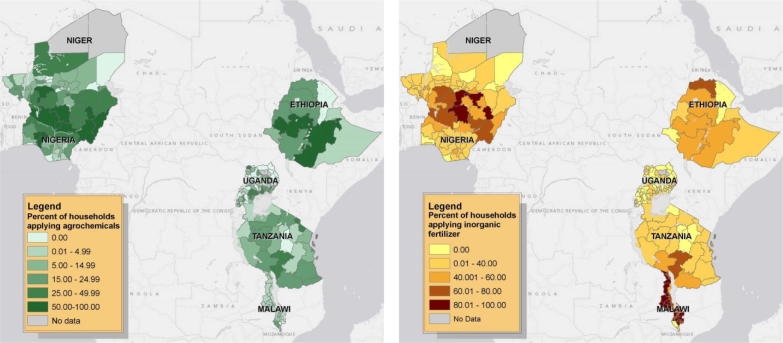
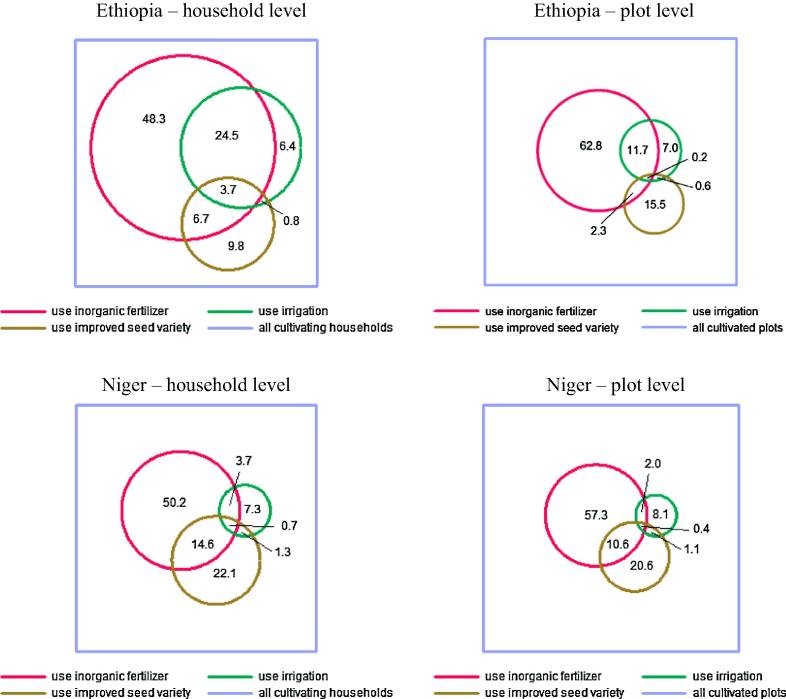
“Recent work by Sheahan and Barrett [63] revealed that less than 4% of farm households in Ethiopia use integrated inputs consisting of inorganic fertilizer, irrigation, and improved seed varieties, which implies that there are untapped productivity gains to be made from coordinated modern input use by deploying governa…”
BackgroundTechnology and managerial performance of farm operators by age in Ghana
Asravor, J., Tsiboe, F., Asravor, R. K., Wiredu, A. N., & Zeller, M. (2023) · Journal of Productivity Analysis · doi:10.1007/s11123-023-00679-y · Cited by 19
“This is particularly germane given that in contrast to other regions of the world, farm production systems in SSA are the least mechanized (Sheahan and Barrett 2017), with limited technological progress (Tavneet and Udry 2022).”
Geffersa, A. G. (2023) · Agrekon · doi:10.1080/03031853.2023.2277423 · Cited by 19
“Additionally, low rates of technology adoption, varying widely across countries due to factors like soil quality and market conditions, contribute to the weak link between agricultural productivity and rural poverty reduction (Takahashi, Muraoka, and Otsuka 2019; Sheahan and Barrett 2017).”
BackgroundGeffersa, A. G., & Islam, M. M. (2024) · Agribusiness · doi:10.1002/agr.21949 · Cited by 19
Onyango, J., Kitaka, N. K., van Bruggen, J. J. A., et al. (2024) · Scientific Reports · doi:10.1038/s41598-024-67460-5 · Cited by 18
Getnet, G. T., Bantider, A., & Yayeh, D. (2024) · Heliyon · doi:10.1016/j.heliyon.2024.e41242 · Cited by 19
Saidia, P. S., Asch, F., Kimaro, A. A., et al. (2019) · Agricultural Water Management · doi:10.1016/j.agwat.2019.105712 · Cited by 18
Jilito, M. F., & Wedajo, D. Y. (2020) · Turkish Journal of Agriculture - Food Science and Technology · doi:10.24925/turjaf.v8i11.2286-2292.2988 · Cited by 18
Eldridge, E., Rancourt, M., Langley, A., & Héroux, D. (2022) · Sustainability · doi:10.3390/su14094971 · Cited by 18
Wongnaa, C. A., Abudu, A., Abdul‐Rahaman, A., Akey, E. A., & Prah, S. (2023) · Agricultural Finance Review · doi:10.1108/afr-03-2023-0039 · Cited by 24
Faecal sludge pyrolysis as a circular economic approach to waste management and nutrient recovery
Nicholas, H. L., Winrow, E. J., Devine, A. P., Robertson, I., & Mabbett, I. (2023) · Environment Development and Sustainability · doi:10.1007/s10668-023-04219-4 · Cited by 19
“These limitations are higher in nations with constrained or non-existent agricultural input subsidy schemes and generally only one-third of Saharan African farmers apply inorganic fertilizers (Sheahan & Barrett, 2017).”
Jelliffe, J., Bravo‐Ureta, B. E., Deom, C. M., & Okello, D. K. (2018) · Sustainability · doi:10.3390/su10051597 · Cited by 18
“It is also observed that these trends vary by region and crop [10,32,33].”
BackgroundThe Emerging Importance of Rice as a Strategic Crop in Ethiopia
Alemu, D., & Thompson, J. (2020) · doi:10.19088/apra.2020.009 · Cited by 18
Fishman, R., Smith, S. C., Bobić, V., & Sulaiman, M. (2021) · The Review of Economics and Statistics · doi:10.1162/rest_a_01029 · Cited by 19
“4For information on low seed use in sub-Saharan Africa, see World Bank (2007) and Sheahan and Barrett (2017).”
BackgroundDigital Information Provision and Behavior Change: Lessons from Six Experiments in East Africa
Fabregas, R., Kremer, M. R., Lowes, M., On, R., & Zane, G. (2024) · American Economic Journal Applied Economics · doi:10.1257/app.20220072 · Cited by 26
Hanjra, M. A., & Williams, T. O. (2020) · Springer eBooks · doi:10.1007/978-3-030-42148-9_6 · Cited by 19
“Africa shows early signs of “coupled growth”, i.e. agricultural growth and structural transformation (e.g. in Ethiopia, Rwanda) (Abro et al. 2014; Barrett et al. 2017; Sheahan and Barrett 2017).”
BackgroundDaymard, A. (2022) · World Development · doi:10.1016/j.worlddev.2022.105865 · Cited by 17
Metadata
- Authors
- Sheahan, M., & Barrett, C. B.
- Affiliations
- Cornell University (US)
- Corresponding author
- Sheahan, Megan
- Venue
- Food Policy
- Publisher
- Elsevier BV
- Published
- 2017-02
- Volume
- 67
- Pages
- 12-25
- ISSN
- 0306-9192 (ISSN-L)
- PMC
- PMC5384438
- OpenAlex
- W2534397573
- Semantic Scholar
- 0119de42f830ef1f9a0fb240310e89ecd368143f
- Cited by
- 594
- References
- 87
- Citations by year
- 2026: 74 · 2025: 69 · 2024: 60 · 2023: 76 · 2022: 61 · 2021: 70 · 2020: 75 · 2019: 47 · 2018: 40 · 2017: 19
- FWCI
- 120.77
- Type
- journal article
- Language
- en
- Open access
- hybrid
- doi.org
- Locations
- Food Policy (publishedVersion, cc-by)
- PubMed Central (publishedVersion, cc-by)
- PubMed (publishedVersion)
- RePEc: Research Papers in Economics (submittedVersion)
- Funders
- International Fine Particle Research Institute
- Topics
- Life Sciences › Agricultural and Biological Sciences › General Agricultural and Biological Sciences › Agricultural Innovations and Practices
- Life Sciences › Agricultural and Biological Sciences › General Agricultural and Biological Sciences › Agricultural Economics and Practices
- Social Sciences › Economics, Econometrics and Finance › Economics and Econometrics › Agricultural economics and policies
- Keywords
- agricultural input use, modern agricultural inputs, fertilizer use, improved varieties, hybrid seeds, agrochemicals, agricultural machinery, irrigation, agricultural intensification, smallholder farmers, sub-Saharan Africa, food prices, agricultural growth
About these checks
Registry, retraction, Cites and statistics results are computed, not judged, with one exception: a printed reference that no index lists is read once by a model before it counts as a citation error. Claims are extracted by a model and kept only when their quote appears verbatim in the text; each cited source is then checked, with a model’s help, for whether it says what the claim relies on. Those verdicts can be wrong — read the claim’s quote and the cited source before relying on one.
Statistics and arithmetic are recomputed, not judged.
Confidence bands are shown only for fields calibrated on our annotated test set. None is calibrated yet, so no band is shown.
What counts as a claim ›How we measure confidence ›How we check this ›
Are you an author, or do you see a problem with this page? Request a review
