

The DOI matches its Crossref record; 48 of the 48 references it cites were found in a registry or an index.
The mitochondria-targeted anti-oxidant MitoQ decreases ischemia-reperfusion injury in a murine syngeneic heart transplant model
Open accessAbstract
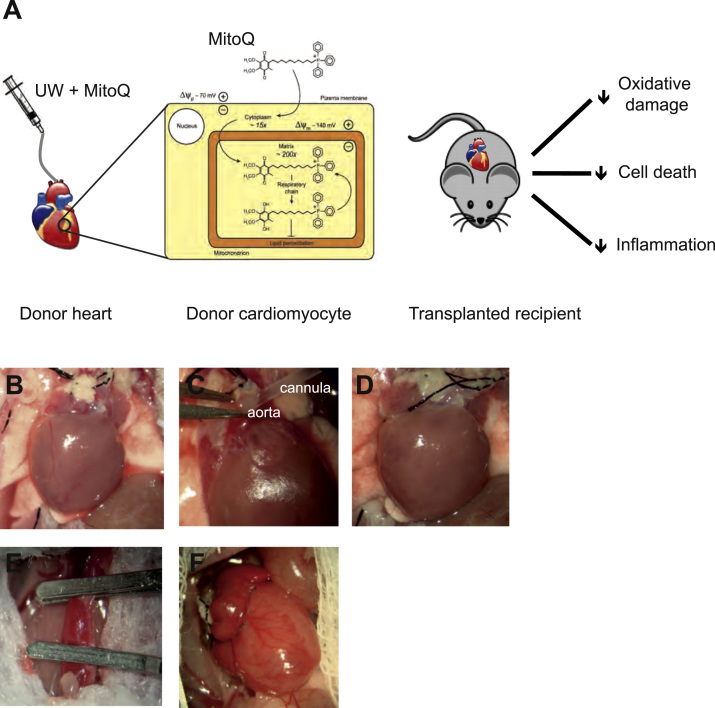
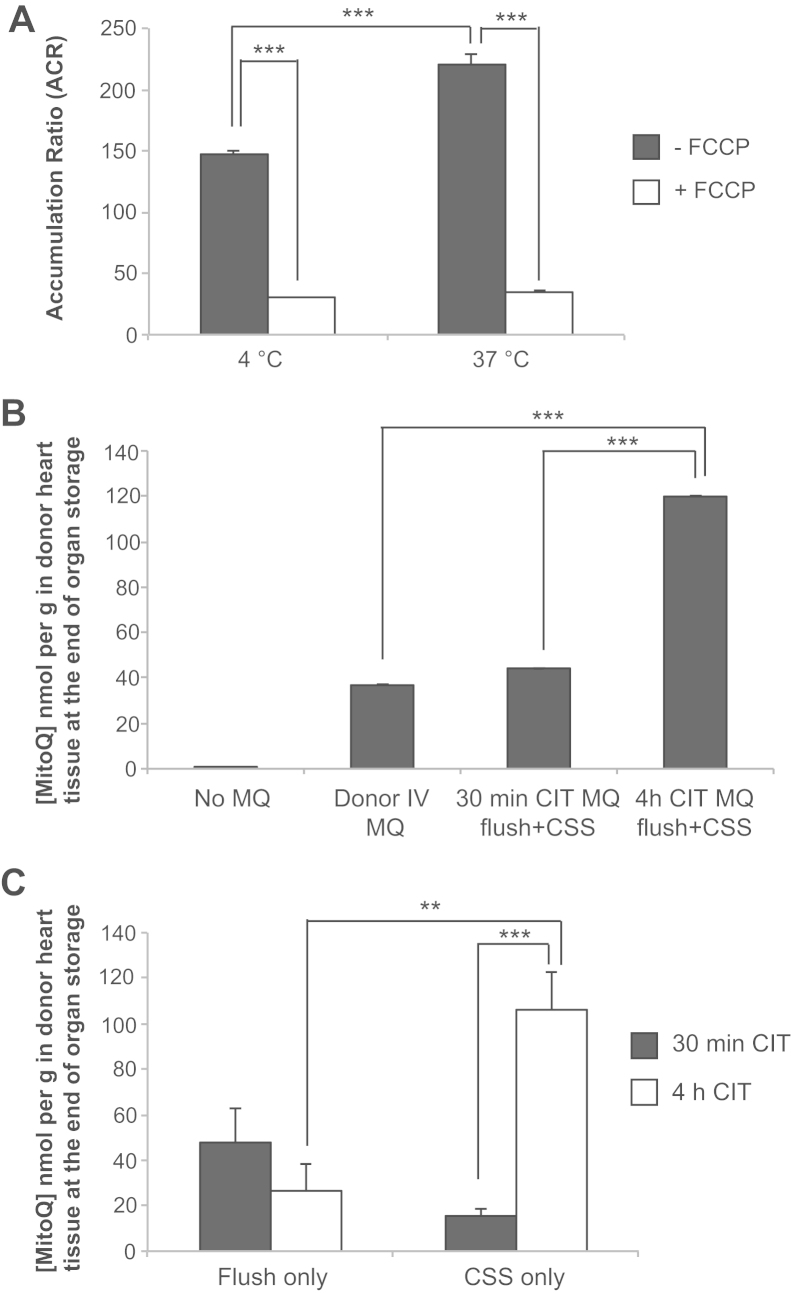
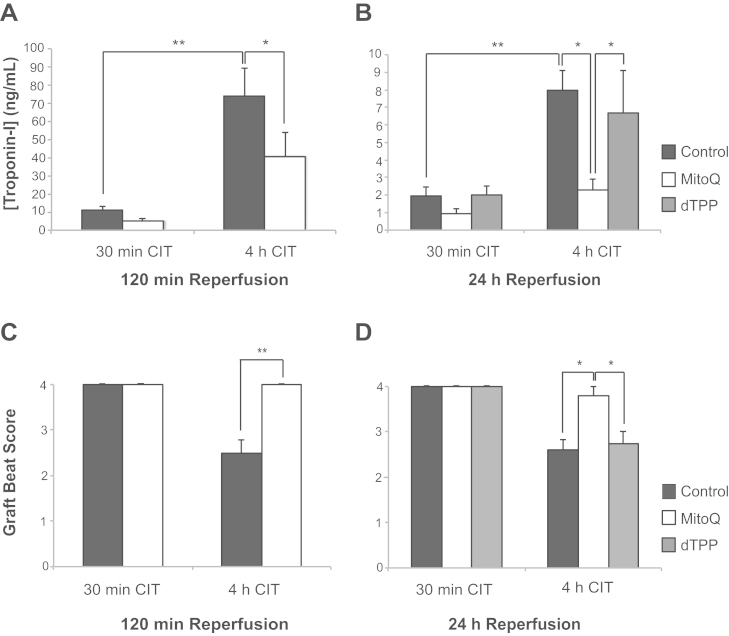
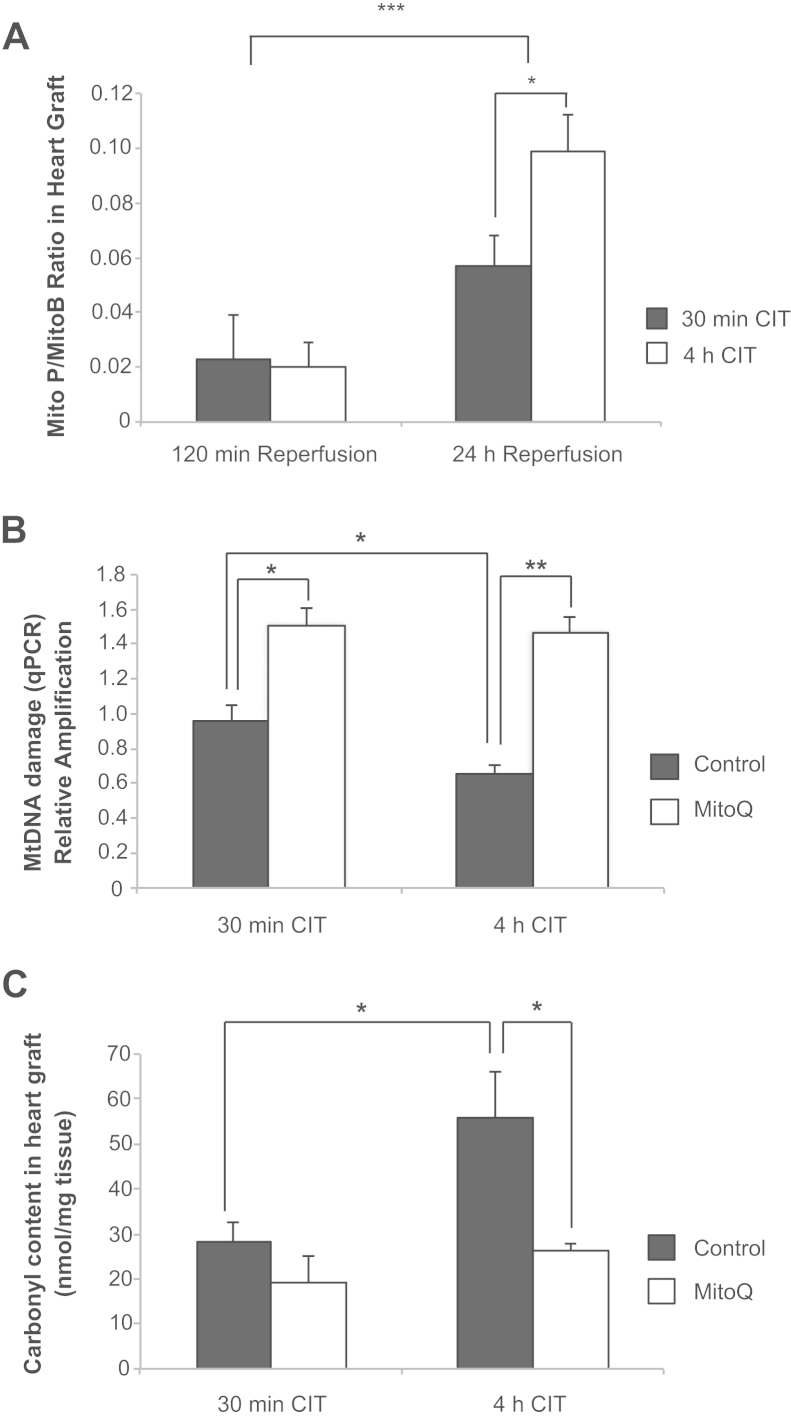
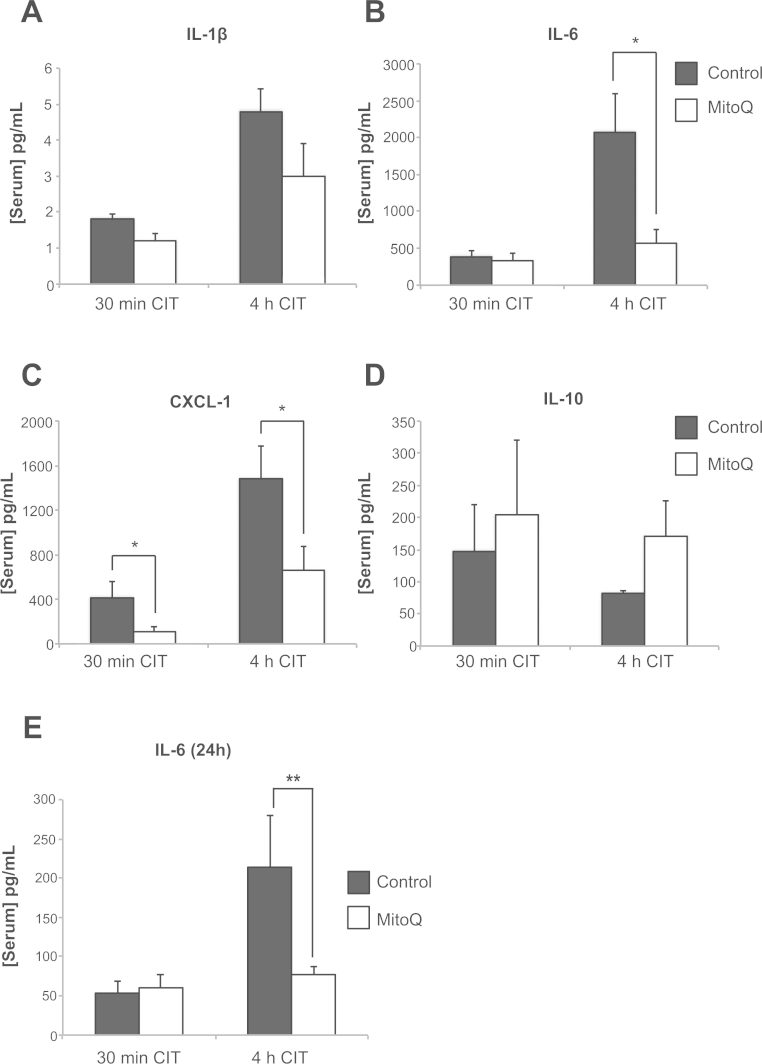
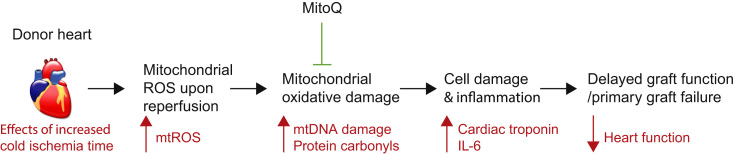
BACKGROUND: Free radical production and mitochondrial dysfunction during cardiac graft reperfusion is a major factor in post-transplant ischemia-reperfusion (IR) injury, an important underlying cause of primary graft dysfunction. We therefore assessed the efficacy of the mitochondria-targeted anti-oxidant MitoQ in reducing IR injury in a murine heterotopic cardiac transplant model. METHODS: Hearts from C57BL/6 donor mice were flushed with storage solution alone, solution containing the anti-oxidant MitoQ, or solution containing the non-anti-oxidant decyltriphenylphosphonium control and exposed to short (30 minutes) or prolonged (4 hour) cold preservation before transplantation. Grafts were transplanted into C57BL/6 recipients and analyzed for mitochondrial reactive oxygen species production, oxidative damage, serum troponin, beating score, and inflammatory markers 120 minutes or 24 hours post-transplant. RESULTS: MitoQ was taken up by the heart during cold storage. Prolonged cold preservation of donor hearts before IR increased IR injury (troponin I, beating score) and mitochondrial reactive oxygen species, mitochondrial DNA damage, protein carbonyls, and pro-inflammatory cytokine release 24 hours after transplant. Administration of MitoQ to the donor heart in the storage solution protected against this IR injury by blocking graft oxidative damage and dampening the early pro-inflammatory response in the recipient. CONCLUSIONS: IR after heart transplantation results in mitochondrial oxidative damage that is potentiated by cold ischemia. Supplementing donor graft perfusion with the anti-oxidant MitoQ before transplantation should be studied further to reduce IR-related free radical production, the innate immune response to IR injury, and subsequent donor cardiac injury.
Overview
The claims and statistics of this paper haven’t been checked yet.
Run the check — free, no account needed. It reads the open-access text and checks the sources it cites.
Integrity signals
Registry
Cites
Statistics
Figures
Verification
Claims the paper makes
The claims and statistics of this paper haven’t been checked yet.
Run the check — free, no account needed. It reads the open-access text and checks the sources it cites.
Claims other papers make about this one
Each is checked against this paper’s own text: does it say what the citing paper says it does?
In the citing paper
“MitoQ has been used extensively in animal models of disease and been shown to be protective against ischemia/reperfusion injury, cardiac hypertrophy, and hypertension (210, 211) among other pathologies.”
From Sources of Vascular Nitric Oxide and Reactive Oxygen Species and Their Regulation (2019) · cites this paper as [211]
Self-check
Percentages, sums and reported differences re-computed from the paper’s own numbers.
The self-check needs the paper’s full text.
Citations
Cites
A role for mitochondria in nlrp3 inflammasome activation
Zhou, R., Yazdi, A. S., Menu, P., & Tschopp, J. (2011) · Nature · doi:10.1038/nature09663 · Cited by 5,602
Circulating mitochondrial DAMPs cause inflammatory responses to injury
Zhang, Q., Raoof, M., Chen, Y., Sumi, Y., Sursal, T., Junger, W., Brohi, K., Itagaki, K., & Hauser, C. J. (2010) · Nature · doi:10.1038/nature08780 · Cited by 3,812
Mitochondria in innate immune responses
West, A. P., Shadel, G. S., & Ghosh, S. (2011) · Nature Reviews Immunology · doi:10.1038/nri2975 · Cited by 1,376
Halestrap, A. P. (2003) · Cardiovascular Research · doi:10.1016/s0008-6363(03)00533-9 · Cited by 1,244
Selective Targeting of a Redox-active Ubiquinone to Mitochondria within Cells
Kelso, G. F., Porteous, C. M., Coulter, C. V., Hughes, G., Porteous, W. K., Ledgerwood, E. C., Smith, R. A. J., & Murphy, M. P. (2001) · Journal of Biological Chemistry · doi:10.1074/jbc.m009093200 · Cited by 1,091
Self-citationKawaguchi, M., Takahashi, M., Hata, T., Kashima, Y., Usui, F., Morimoto, H., Izawa, A., Takahashi, Y., Masumoto, J., Koyama, J., et al. (2011) · Circulation · doi:10.1161/circulationaha.110.982777 · Cited by 884
The mitochondrial permeability transition from in vitro artifact to disease target
Bernardi, P., Krauskopf, A., Basso, E., Petronilli, V., Blalchy‐Dyson, E., Di Lisa, F., & Forte, M. A. (2006) · The FEBS Journal · doi:10.1111/j.1742-4658.2006.05213.x · Cited by 627
Targeting an antioxidant to mitochondria decreases cardiac ischemia-reperfusion injury
Adlam, V. J., Harrison, J. C., Porteous, C. M., James, A. M., Smith, R. A. J., Murphy, M. P., & Sammut, I. A. (2005) · The FASEB Journal · doi:10.1096/fj.05-3718com · Cited by 618
Self-citationSnow, B. J., Rolfe, F. L., Lockhart, M. M., Frampton, C. M., O'Sullivan, J. D., Fung, V., Smith, R. A. J., Murphy, M. P., Taylor, K. M., & On behalf of the Protect Study Group (2010) · Movement Disorders · doi:10.1002/mds.23148 · Cited by 606
Self-citationAnimal and human studies with the mitochondria‐targeted antioxidant MitoQ
Smith, R. A. J., & Murphy, M. P. (2010) · Annals of the New York Academy of Sciences · doi:10.1111/j.1749-6632.2010.05627.x · Cited by 560
Self-citation
Cited by
Sorted by citations
Brand, M. D. (2016) · Free Radical Biology and Medicine · doi:10.1016/j.freeradbiomed.2016.04.001 · Cited by 1,063
Mitochondria as a therapeutic target for common pathologies
Murphy, M. P., & Hartley, R. C. (2018) · Nature Reviews Drug Discovery · doi:10.1038/nrd.2018.174 · Cited by 846
Self-citationA Unifying Mechanism for Mitochondrial Superoxide Production during Ischemia-Reperfusion Injury
Chouchani, E. T., Pell, V. R., James, A. M., Work, L. M., Saeb-Parsy, K., Frezza, C., Krieg, T., & Murphy, M. P. (2016) · Cell Metabolism · doi:10.1016/j.cmet.2015.12.009 · Cited by 752
Self-citationSources of Vascular Nitric Oxide and Reactive Oxygen Species and Their Regulation
Tejero, J., Shiva, S., & Gladwin, M. T. (2019) · Physiological Reviews · doi:10.1152/physrev.00036.2017 · Cited by 541
Mitochondria in acute myocardial infarction and cardioprotection
Ramachandra, C. J. A., Hernández‐Reséndiz, S., Crespo-Avilan, G. E., Lin, Y., & Hausenloy, D. J. (2020) · EBioMedicine · doi:10.1016/j.ebiom.2020.102884 · Cited by 348
Metadata
- Authors
- Dare, A. J., Logan, A., Prime, T. A., Rogatti, S., Goddard, M., Bolton, E. M., Bradley, J. A., Pettigrew, G. J., Murphy, M. P., & Saeb-Parsy, K.
- Affiliations
- University of Cambridge (GB)
- National Health Service (GB)
- Corresponding author
- Murphy, Michael P.
- ORCID
- Venue
- The Journal of Heart and Lung Transplantation
- Publisher
- Elsevier BV
- Published
- 2015-11
- Volume
- 34
- Issue
- 11
- Pages
- 1471-1480
- ISSN
- 1053-2498 (ISSN-L)
- PMC
- PMC4626443
- OpenAlex
- W1788023720
- Cited by
- 119
- References
- 48
- Citations by year
- 2026: 10 · 2025: 19 · 2024: 13 · 2023: 8 · 2022: 7 · 2021: 14 · 2020: 13 · 2019: 7 · 2018: 11 · 2017: 8 · 2016: 9
- FWCI
- 9.41
- Type
- journal article
- Language
- en
- Open access
- hybrid
- doi.org
- Licence
- Locations
- The Journal of Heart and Lung Transplantation (publishedVersion, cc-by)
- PubMed Central (publishedVersion, cc-by)
- PubMed (publishedVersion)
- Topics
- Health Sciences › Medicine › Surgery › Transplantation: Methods and Outcomes
- Health Sciences › Medicine › Cardiology and Cardiovascular Medicine › Cardiac Ischemia and Reperfusion
- Health Sciences › Medicine › Surgery › Organ Transplantation Techniques and Outcomes
- Keywords
- MitoQ, mitochondria-targeted antioxidants, ischemia-reperfusion injury, heart transplantation, primary graft dysfunction, oxidative stress, mitochondrial reactive oxygen species, cold ischemia, donor heart preservation, mitochondrial DNA damage, inflammatory cytokines
- MeSH terms
- Animals, Antioxidants, Disease Models, Animal, Female, Male, Mice, Inbred C57BL, Mitochondria, Heart, Organ Preservation, Organophosphorus Compounds, Ubiquinone, Reperfusion Injury, Heart Transplantation, Free Radical Scavengers, Rats, Wistar, Reactive Oxygen Species, Oxidative Stress, Micronutrients, Mice, Rats, Primary Graft Dysfunction
About these checks
Registry, retraction, Cites and statistics results are computed, not judged, with one exception: a printed reference that no index lists is read once by a model before it counts as a citation error. Claims are extracted by a model and kept only when their quote appears verbatim in the text; each cited source is then checked, with a model’s help, for whether it says what the claim relies on. Those verdicts can be wrong — read the claim’s quote and the cited source before relying on one.
Statistics and arithmetic are recomputed, not judged.
Confidence bands are shown only for fields calibrated on our annotated test set. None is calibrated yet, so no band is shown.
What counts as a claim ›How we measure confidence ›How we check this ›
Are you an author, or do you see a problem with this page? Request a review
