

The DOI matches its Crossref record; 73 of the 75 references it cites were found in a registry or an index.
Recent advances in wearable sensors and portable electronics for sleep monitoring
Open accessAbstract
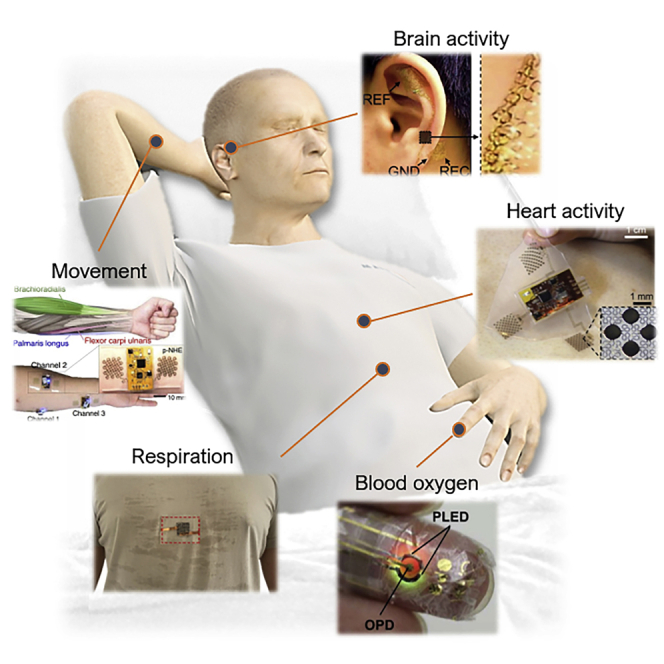
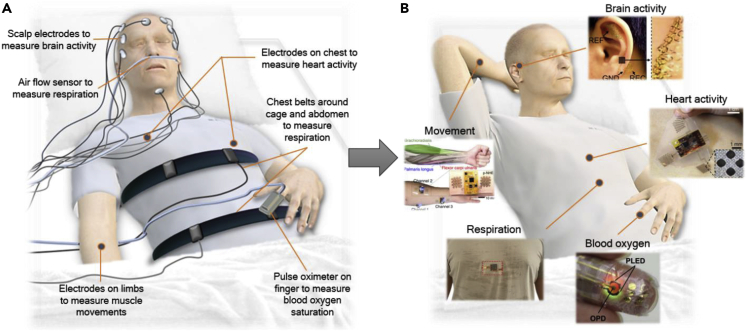
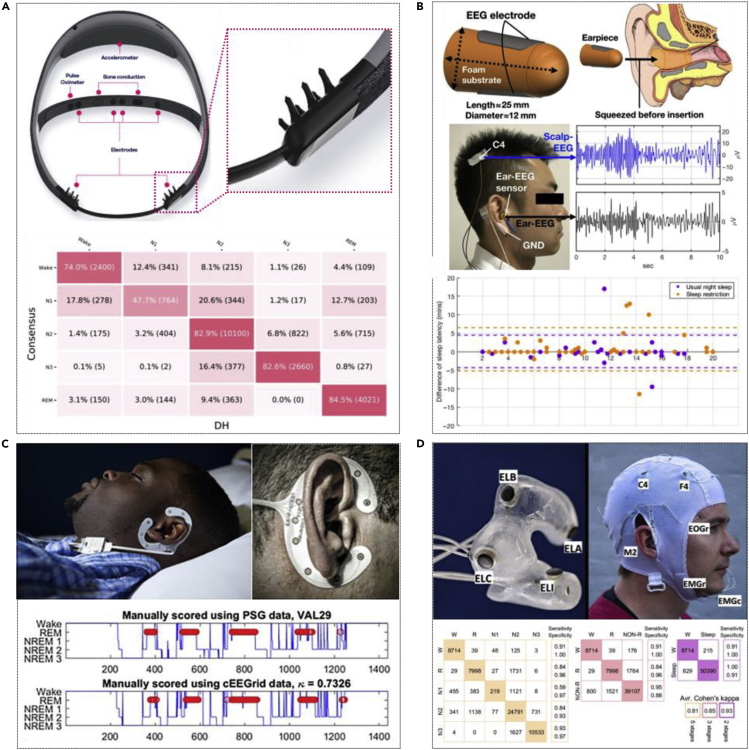
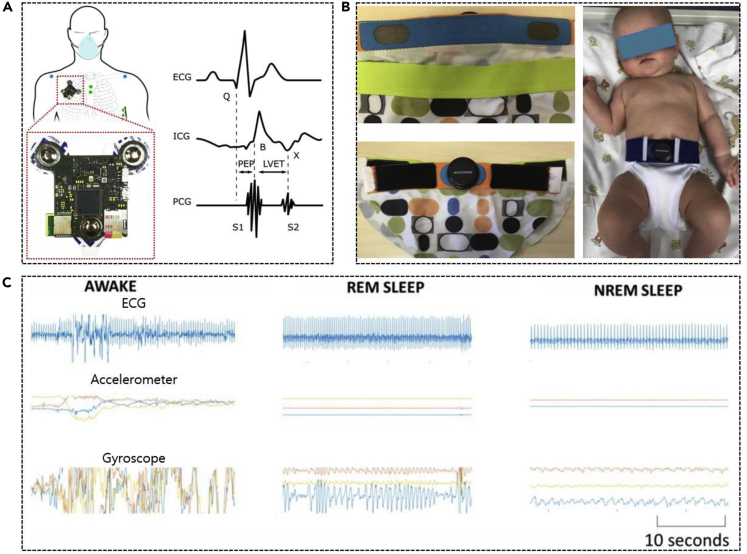
Despite the increasing awareness of the importance of sleep, the number of people suffering from insufficient sleep has increased every year. The gold-standard sleep assessment uses polysomnography (PSG) with various sensors to identify sleep patterns and disorders. However, due to the high cost of PSG and limited availability, many people with sleep disorders are left undiagnosed. Recent wearable sensors and electronics enable portable, continuous monitoring of sleep at home, overcoming the limitations of PSG. This report reviews the advances in wearable sensors, miniaturized electronics, and system packaging for home sleep monitoring. New devices available in the market and systems are collectively summarized based on their overall structure, form factor, materials, and sleep assessment method. It is expected that this review provides a comprehensive view of newly developed technologies and broad insights on wearable sensors and portable electronics toward advanced sleep monitoring as well as at-home sleep assessment.
Overview
The claims and statistics of this paper haven’t been checked yet.
Run the check — free, no account needed. It reads the open-access text and checks the sources it cites.
Integrity signals
Registry
Cites
Statistics
Figures
Verification
Claims the paper makes
The claims and statistics of this paper haven’t been checked yet.
Run the check — free, no account needed. It reads the open-access text and checks the sources it cites.
Claims other papers make about this one
Each is checked against this paper’s own text: does it say what the citing paper says it does?
In the citing paper
“The validation studies could align wearable data with gold-standard polysomnography (PSG) in measuring sleep duration and detecting sleep events [241].”
From The emergence of AI-based wearable sensors for digital health technology: a review (2023) · cites this paper as [241]
Self-check
Percentages, sums and reported differences re-computed from the paper’s own numbers.
The self-check needs the paper’s full text.
Citations
Cites
Huang, Y., & Zhao, N. (2020) · Psychiatry Research · doi:10.1016/j.psychres.2020.112954 · Cited by 3,736
Sleep Health: Can We Define It? Does It Matter?
Buysse, D. J. (2014) · SLEEP · doi:10.5665/sleep.3298 · Cited by 2,777
The epidemiology of adult obstructive sleep apnea
Punjabi, N. M. (2008) · Proceedings of the American Thoracic Society · doi:10.1513/pats.200709-155mg · Cited by 2,361
AASM Scoring Manual Updates for 2017 (Version 2.4)
Berry, R. B., Brooks, R., Gamaldo, C. E., Harding, S. M., Lloyd, R. M., Quan, S. F., Troester, M. M., & Vaughn, B. V. (2017) · Journal of Clinical Sleep Medicine · doi:10.5664/jcsm.6576 · Cited by 1,605
The role and validity of actigraphy in sleep medicine: an update
Sadeh, A. (2011) · Sleep Medicine Reviews · doi:10.1016/j.smrv.2010.10.001 · Cited by 1,415
Morgenthaler, T., Alessi, C., Friedman, L., Owens, J., Kapur, V., Boehlecke, B., Brown, T., Chesson, A., Coleman, J., Lee-Chiong, T., et al. (2007) · Sleep · doi:10.1093/sleep/30.4.519 · Cited by 1,142
Ultraflexible organic photonic skin
Yokota, T., Zalar, P., Kaltenbrunner, M., Jinno, H., Matsuhisa, N., Kitanosako, H., Tachibana, Y., Yukita, W., Koizumi, M., & Someya, T. (2016) · Science Advances · doi:10.1126/sciadv.1501856 · Cited by 1,024
Why Sleep Matters-The Economic Costs of Insufficient Sleep: A Cross-Country Comparative Analysis.
Hafner, M., Stepanek, M., Taylor, J., Troxel, W., & van Stolk, C. (2017) · Rand health quarterly · doi:10.7249/rb9962 · Cited by 687
A Prospective Study of Sleep Duration and Mortality Risk in Women
Patel, S. R., Ayas, N. T., Malhotra, M. R., White, D. P., Schernhammer, E. S., Speizer, F. E., Stampfer, M. J., & Hu, F. B. (2004) · Sleep · doi:10.1093/sleep/27.3.440 · Cited by 663
Why Sleep Matters—The Economic Costs of Insufficient Sleep: A Cross-Country Comparative Analysis
Hafner, M., Štěpánek, M., Taylor, J., Troxel, W., & Stolk, C. V. (2016) · Rand health quarterly · doi:10.7249/rhq-06-04-11 · Cited by 633
Heart rate variability, sleep and sleep disorders
Stein, P. K., & Pu, Y. (2011) · Sleep Medicine Reviews · doi:10.1016/j.smrv.2011.02.005 · Cited by 528
A Wireless Textile Based Sensor System for Self-Powered Personalized Health Care
Meng, K., Zhao, S., Zhou, Y., Wu, Y., Zhang, S., He, Q., Wang, X., Zhou, Z., Fan, W., Tan, X., et al. (2019) · Matter · doi:10.1016/j.matt.2019.12.025 · Cited by 454
Sleep is of the brain, by the brain and for the brain
Hobson, J. A. (2005) · Nature · doi:10.1038/nature04283 · Cited by 440
Sleep and Mortality: A Population-Based 22-Year Follow-Up Study
Hublin, C., Partinen, M., Koskenvuo, M. J., & Kaprio, J. A. (2007) · SLEEP · doi:10.1093/sleep/30.10.1245 · Cited by 439
DANKER‐HOPFE, H., ANDERER, P., ZEITLHOFER, J., BOECK, M., DORN, H., GRUBER, G., HELLER, E., LORETZ, E., MOSER, D., PARAPATICS, S., et al. (2009) · Journal of Sleep Research · doi:10.1111/j.1365-2869.2008.00700.x · Cited by 417
Arnal, P. J., Thorey, V., Debellemaniere, E., Ballard, M. E., Bou Hernandez, A., Guillot, A., Jourde, H., Harris, M., Guillard, M., Van Beers, P., et al. (2020) · SLEEP · doi:10.1093/sleep/zsaa097 · Cited by 394
Norton, J. J. S., Lee, D. S., Lee, J., Lee, W., Kwon, O., Won, P., Jung, S.-Y., Cheng, H., Jeong, J., Akce, A., et al. (2015) · Proceedings of the National Academy of Sciences · doi:10.1073/pnas.1424875112 · Cited by 389
COVID-19, anxiety, sleep disturbances and suicide
Sher, L. (2020) · Sleep Medicine · doi:10.1016/j.sleep.2020.04.019 · Cited by 374
Zhou, Z., Padgett, S., Cai, Z., Conta, G., Wu, Y., He, Q., Zhang, S., Sun, C., Liu, J., Fan, E., et al. (2020) · Biosensors and Bioelectronics · doi:10.1016/j.bios.2020.112064 · Cited by 318
How useful is the smartwatch ECG?
Isakadze, N., & Martin, S. S. (2019) · Trends in Cardiovascular Medicine · doi:10.1016/j.tcm.2019.10.010 · Cited by 234
Kwon, Y.-T., Kim, Y.-S., Kwon, S., Mahmood, M., Lim, H.-R., Park, S.-W., Kang, S.-O., Choi, J. J., Herbert, R., Jang, Y. C., et al. (2020) · Nature Communications · doi:10.1038/s41467-020-17288-0 · Cited by 233
Watson, N. F. (2016) · Journal of Clinical Sleep Medicine · doi:10.5664/jcsm.6034 · Cited by 229
Wei, J., Xie, J., Zhang, P., Zou, Z., Ping, H., Wang, W., Xie, H., Shen, J. Z., Lei, L., & Fu, Z. (2021) · ACS Applied Materials & Interfaces · doi:10.1021/acsami.0c19512 · Cited by 197
Kinnunen, H., Rantanen, A., Kenttä, T., & Koskimäki, H. (2020) · Physiological Measurement · doi:10.1088/1361-6579/ab840a · Cited by 184
Hartmann, V., Liu, H., Chen, F., Qiu, Q., Hughes, S., & Zheng, D. (2019) · Frontiers in Physiology · doi:10.3389/fphys.2019.00198 · Cited by 173
Clinical Applications of Mobile Health Wearable–Based Sleep Monitoring: Systematic Review
Guillodo, E., Lemey, C., Simonnet, M., Walter, M., Baca-García, E., Masetti, V., Moga, S., Larsen, M., HUGOPSY Network, Ropars, J., et al. (2020) · JMIR mHealth and uHealth · doi:10.2196/10733 · Cited by 167
Levendowski, D. J., Ferini‐Strambi, L., Gamaldo, C. E., Cetel, M. B., Rosenberg, R., & Westbrook, P. R. (2017) · Journal of Clinical Sleep Medicine · doi:10.5664/jcsm.6618 · Cited by 161
Kim, Y., Mahmood, M., Lee, Y.-K., Kim, N. K., Kwon, S., Herbert, R., Kim, D., Cho, H. C., & Yeo, W. (2019) · Advanced Science · doi:10.1002/advs.201900939 · Cited by 158
Autonomic changes during wake–sleep transition: A heart rate variability based approach
Shinar, Z., AKSELROD, S., Dagan, Y., & Baharav, A. (2006) · Autonomic Neuroscience · doi:10.1016/j.autneu.2006.04.006 · Cited by 140
Comparison of Heart Rate Variability from PPG with That from ECG
Lin, W.-H., Wu, D., Li, C., Zhang, H., & Zhang, Y. (2013) · World Congress on Medical Physics and Biomedical Engineering, September 7 - 12, 2009, Munich, Germany · doi:10.1007/978-3-319-03005-0_54 · Cited by 135
Accurate whole-night sleep monitoring with dry-contact ear-EEG
Mikkelsen, K. B., Tabar, Y. R., Kappel, S. L., Christensen, C. B., Toft, H. O., Hemmsen, M. C., Rank, M. L., Otto, M., & Kidmose, P. (2019) · Scientific Reports · doi:10.1038/s41598-019-53115-3 · Cited by 128
Shustak, S., Inzelberg, L., Steinberg, S., Rand, D., David‐Pur, M., Hillel, I., Katzav, S., Fahoum, F., Vos, M. D., Mirelman, A., et al. (2018) · Journal of Neural Engineering · doi:10.1088/1741-2552/aafa05 · Cited by 103
Tran, V. P., Al-Jumaily, A. A., & Islam, S. M. S. (2019) · Big Data and Cognitive Computing · doi:10.3390/bdcc3010003 · Cited by 101
In-Ear SpO2: A Tool for Wearable, Unobtrusive Monitoring of Core Blood Oxygen Saturation
Davies, H. J., Williams, I., Peters, N. S., & Mandic, D. P. (2020) · Sensors · doi:10.3390/s20174879 · Cited by 95
Sigurdson, K., & Ayas, N. (2007) · Canadian Journal of Physiology and Pharmacology · doi:10.1139/y06-095 · Cited by 94
Sterr, A., Ebajemito, J. K., Mikkelsen, K. B., Bonmatí‐Carrión, M., Santhi, N., della Monica, C., Grainger, L., Atzori, G., Revell, V. L., Debener, S., et al. (2018) · Frontiers in Human Neuroscience · doi:10.3389/fnhum.2018.00452 · Cited by 91
Large Scale Triboelectric Nanogenerator and Self-Powered Flexible Sensor for Human Sleep Monitoring
Ding, X., Cao, H., Zhang, X., Li, M., & Liu, Y. (2018) · Sensors · doi:10.3390/s18061713 · Cited by 87
Wireless Wearable Magnetometer-Based Sensor for Sleep Quality Monitoring
Milici, S., Lázaro, A., Villarino, R., Girbau, D., & Magnarosa, M. (2018) · IEEE Sensors Journal · doi:10.1109/jsen.2018.2791400 · Cited by 83
Lin, C., Chuang, C., Cao, Z., Singh, A. K., Hung, C.-S., Yu, Y.-H., Nascimben, M., Liu, Y., King, J., Su, T., et al. (2017) · IEEE Access · doi:10.1109/access.2017.2675884 · Cited by 76
Ramírez, J., Rodriquez, D., Urbina, A. D., Cardenas, A., & Lipomi, D. J. (2019) · ACS Applied Nano Materials · doi:10.1021/acsanm.9b00174 · Cited by 76
Klum, M., Urban, M., Tigges, T., Pielmus, A.-G., Feldheiser, A., Schmitt, T., & Orglmeister, R. (2020) · Sensors · doi:10.3390/s20072033 · Cited by 75
A New Wearable System for Home Sleep Apnea Testing, Screening, and Classification
Manoni, A., Loreti, F., Radicioni, V., Pellegrino, D., Torre, L. D., Gumiero, A., Halicki, D., Palange, P., & Irrera, F. (2020) · Sensors · doi:10.3390/s20247014 · Cited by 74
Sringean, J., Taechalertpaisarn, P., Thanawattano, C., & Bhidayasiri, R. (2015) · Parkinsonism & Related Disorders · doi:10.1016/j.parkreldis.2015.11.003 · Cited by 66
Myllymaa, S., Muraja‐Murro, A., Westeren‐Punnonen, S., Hukkanen, T., Lappalainen, R., Mervaala, E., Töyräs, J., Sipilä, K., & Myllymaa, K. (2016) · Journal of Sleep Research · doi:10.1111/jsr.12425 · Cited by 66
Tuominen, J., Peltola, K., Saaresranta, T., & Valli, K. (2019) · Journal of Clinical Sleep Medicine · doi:10.5664/jcsm.7682 · Cited by 66
Importance of Sleep for Health and Wellbeing Amidst COVID-19 Pandemic
Gulia, K. K., & Kumar, V. M. (2020) · Sleep and Vigilance · doi:10.1007/s41782-020-00087-4 · Cited by 62
Flexible surface acoustic wave respiration sensor for monitoring obstructive sleep apnea syndrome
Jin, H., Tao, X., Dong, S., Qin, Y., Yu, L., Luo, J., & Deen, M. J. (2017) · Journal of Micromechanics and Microengineering · doi:10.1088/1361-6439/aa8ae0 · Cited by 56
Sleep assessment devices: types, market analysis, and a critical view on accuracy and validation
Valle, V. I.-D., Silva, J., Navarro-Illana, E., & Cauli, O. (2019) · Expert Review of Medical Devices · doi:10.1080/17434440.2019.1693890 · Cited by 56
Sleep quality is associated with walking under dual-task, but not single-task performance
Agmon, M., Shochat, T., & Kizony, R. (2016) · Gait & Posture · doi:10.1016/j.gaitpost.2016.06.016 · Cited by 49
Sleep Validity of a Non-Contact Bedside Movement and Respiration-Sensing Device
Schade, M. M., Bauer, C. E., Murray, B. R., Gahan, L., Doheny, E. P., Kilroy, H., Zaffaroni, A., & Montgomery‐Downs, H. E. (2019) · Journal of Clinical Sleep Medicine · doi:10.5664/jcsm.7892 · Cited by 49
Nonoue, S., Mashita, M., Haraki, S., Mikami, A., Adachi, H., Yatani, H., Yoshida, A., Taniike, M., & Kato, T. (2016) · Sleep and Biological Rhythms · doi:10.1007/s41105-016-0078-2 · Cited by 48
Rienzo, M. D., Vaini, E., & Lombardi, P. (2018) · Sensors and Actuators A Physical · doi:10.1016/j.sna.2018.02.034 · Cited by 38
Weng, C., Chen, J., Lee, P.-Y., & Huang, C. (2017) · Ultrasound in Medicine & Biology · doi:10.1016/j.ultrasmedbio.2017.04.004 · Cited by 36
Kwasnicki, R. M., Cross, G. W. V., Geoghegan, L., Zhang, Z., Reilly, P., Darzi, A. W., Yang, G. Z., & Emery, R. J. (2018) · European journal of medical research · doi:10.1186/s40001-018-0326-9 · Cited by 35
Dissecting the early steps of MLL induced leukaemogenic transformation using a mouse model of AML
Basilico, S., Wang, X.-N., Kennedy, A., Tzelepis, K., Giotopoulos, G., Kinston, S., Quirós, P. M., Wong, K., Adams, D., Carnevalli, L. S., et al. (2020) · Nature Communications · doi:10.1038/s41467-020-15220-0 · Cited by 35
Alqurashi, Y. D., Nakamura, T., Goverdovsky, V., Moss, J., Polkey, M. I., Mandic, D. P., & Morrell, M. J. (2018) · Nature and Science of Sleep · doi:10.2147/nss.s175998 · Cited by 33
Soft Wireless Bioelectronics and Differential Electrodermal Activity for Home Sleep Monitoring
Kim, H., Kwon, S., Kwon, Y., & Yeo, W. (2021) · Sensors · doi:10.3390/s21020354 · Cited by 32
Jortberg, E., Silva, I., Bhatkar, V. V., McGinnis, R. S., Sen-Gupta, E., Morey, B., Wright, J., Pindado, J., & Bianchi, M. T. (2018) · Nature and Science of Sleep · doi:10.2147/nss.s179588 · Cited by 28
Toward Sensor-Based Sleep Monitoring with Electrodermal Activity Measures
Romine, W. L., Banerjee, T., & Goodman, G. (2019) · Sensors · doi:10.3390/s19061417 · Cited by 27
Design and Implementation of a Multifunction Wearable Device to Monitor Sleep Physiological Signals
Liao, L., Wang, Y., Tsao, Y.-C., Wang, I.-J., Jhang, D.-F., Chuang, C., & Chen, S. (2020) · Micromachines · doi:10.3390/mi11070672 · Cited by 26
An International Study on the Determinants of Poor Sleep Amongst 15,000 Users of Connected Devices
Fagherazzi, G., Fatouhi, D. E., Bellicha, A., Gareh, A. E., Affret, A., Dow, C., Delrieu, L., Vegreville, M., Normand, A., Oppert, J., et al. (2017) · Journal of Medical Internet Research · doi:10.2196/jmir.7930 · Cited by 24
Escalona, O. J., Lynn, W., Perpiñán, G., McFrederick, L., & MCENEANEY, D. J. (2017) · Electronics · doi:10.3390/electronics6040084 · Cited by 22
Polymer-based candle-shaped microneedle electrodes for electroencephalography on hairy skin
Arai, M., Kudo, Y., & Miki, N. (2016) · Japanese Journal of Applied Physics · doi:10.7567/jjap.55.06gp16 · Cited by 21
Pulse Oximetry at the Wrist During Sleep: Performance, Challenges and Perspectives
Braun, F., Theurillat, P., Proenca, M., Lemkaddem, A., Ferrario, D., De Jaegere, K., Horvath, C. M., Roth, C., Brill, A.-K., Lemay, M., et al. (2020) · 2020 42nd Annual International Conference of the IEEE Engineering in Medicine & Biology Society (EMBC) · doi:10.1109/embc44109.2020.9176081 · Cited by 21
RestEaZe: Low-power accurate sleep monitoring using a wearable multi-sensor ankle band
Bobovych, S., Sayeed, F., Banerjee, N., Robucci, R., & Allen, R. P. (2020) · Smart Health · doi:10.1016/j.smhl.2020.100113 · Cited by 19
Wakefulness evaluation during sleep for healthy subjects and OSA patients using a patch-type device
Yoon, H., Hwang, S. H., Choi, S. H., Choi, J., Lee, Y. J., Jeong, D. U., & Park, K. S. (2017) · Computer Methods and Programs in Biomedicine · doi:10.1016/j.cmpb.2017.12.010 · Cited by 16
Melek, M., Manshouri, N., & Kayıkçıoğlu, T. (2020) · Cognitive Neurodynamics · doi:10.1007/s11571-020-09641-2 · Cited by 16
A novel wearable sensor device for continuous monitoring of cardiac activity during sleep
Schneider, J., Schroth, M., Ottenbacher, J., & Stork, W. (2018) · IEEE Sensors Applications Symposium (SAS) · doi:10.1109/sas.2018.8336725 · Cited by 15
Wearable emotion sensor on flexible substrate for mobile health applications
Lam, L. K., & Szypula, A. J. (2018) · IEEE Sensors Applications Symposium (SAS) · doi:10.1109/sas.2018.8336761 · Cited by 15
Ultra-Low Power Wearable Infant Sleep Position Sensor
Yun, I., Jeung, J., Kim, M., Kim, Y.-S., & Chung, Y. (2019) · Sensors · doi:10.3390/s20010061 · Cited by 13
Beppler, E. C., Dieffenderfer, J. P., Songkakul, T., Krystal, A. D., & Bozkurt, A. Y. (2018) · Annual International Conference of the IEEE Engineering in Medicine and Biology Society (EMBC) · doi:10.1109/embc.2018.8513038 · Cited by 7
Gunnarsdottir, K. M., Gamaldo, C. E., Salas, R. M. E., Ewen, J. B., Allen, R. P., Hu, K., & Sarma, S. V. (2020) · Journal of Sleep Research · doi:10.1111/jsr.12991 · Cited by 7
User Experience of Wearable Infant Sleep Monitoring System for Medical Research and Diagnostics
Ilén, E., Leinonen, N. A., Ranta, J., Airaksinen, M., Haataja, L. M., & Vanhatalo, S. (2019) · Aaltodoc (Aalto University) · Cited by 3
Cited by
Sorted by citations
End-to-end design of wearable sensors
Ates, H. C., Nguyen, P. Q., Gonzalez-Macia, L., Morales-Narváez, E., Güder, F., Collins, J. J., & Dincer, C. (2022) · Nature Reviews Materials · doi:10.1038/s41578-022-00460-x · Cited by 1,306
The emergence of AI-based wearable sensors for digital health technology: a review
Shajari, S., Kuruvinashetti, K., Komeili, A., & Sundararaj, U. (2023) · Sensors · doi:10.3390/s23239498 · Cited by 535
Reshaping healthcare with wearable biosensors
Smith, A. A., Li, R., & Tse, Z. T. H. (2023) · Scientific Reports · doi:10.1038/s41598-022-26951-z · Cited by 299
Porous Conductive Textiles for Wearable Electronics
Ding, Y., Jiang, J., Wu, Y., Zhang, Y., Zhou, J., Zhang, Y., Huang, Q., & Zheng, Z. (2024) · Chemical Reviews · doi:10.1021/acs.chemrev.3c00507 · Cited by 283
de Zambotti, M., Goldstein, C. A., Cook, J. D., Menghini, L., Altini, M., Cheng, P., & Robillard, R. (2023) · SLEEP · doi:10.1093/sleep/zsad325 · Cited by 276
Metadata
- Authors
- Kwon, S., Kim, H., & Yeo, W.-H.
- Affiliations
- Georgia Institute of Technology (US)
- Corresponding author
- Yeo, Woon-Hong
- Venue
- iScience
- Publisher
- Elsevier BV
- Published
- 2021-05
- Volume
- 24
- Issue
- 5
- Pages
- 102461
- ISSN
- 2589-0042 (ISSN-L)
- PMC
- PMC8113882
- OpenAlex
- W3156201172
- Cited by
- 209
- References
- 75
- Citations by year
- 2026: 37 · 2025: 45 · 2024: 47 · 2023: 38 · 2022: 34 · 2021: 8
- FWCI
- 2.69
- Type
- journal article
- Language
- en
- Open access
- gold
- doi.org
- Licence
- Locations
- iScience (publishedVersion, cc-by-nc-nd)
- PubMed Central (publishedVersion, cc-by-nc-nd)
- PubMed (publishedVersion)
- DOAJ (DOAJ: Directory of Open Access Journals) (submittedVersion, cc-by-sa)
- Funders
- National Institutes of Health
- Topics
- Physical Sciences › Engineering › Biomedical Engineering › Non-Invasive Vital Sign Monitoring
- Physical Sciences › Engineering › Biomedical Engineering › Advanced Sensor and Energy Harvesting Materials
- Social Sciences › Psychology › Experimental and Cognitive Psychology › Sleep and related disorders
- Keywords
- wearable sensors, portable electronics, sleep monitoring, home sleep testing, sleep disorders, polysomnography, miniaturized electronics, system packaging
About these checks
Registry, retraction, Cites and statistics results are computed, not judged, with one exception: a printed reference that no index lists is read once by a model before it counts as a citation error. Claims are extracted by a model and kept only when their quote appears verbatim in the text; each cited source is then checked, with a model’s help, for whether it says what the claim relies on. Those verdicts can be wrong — read the claim’s quote and the cited source before relying on one.
Statistics and arithmetic are recomputed, not judged.
Confidence bands are shown only for fields calibrated on our annotated test set. None is calibrated yet, so no band is shown.
What counts as a claim ›How we measure confidence ›How we check this ›
Are you an author, or do you see a problem with this page? Request a review
