

Specificity and efficiency of tamoxifen-mediated Cre induction is equivalent regardless of age
Open accessThe DOI matches its Crossref record; 74 of the 75 references it cites were found in a registry or an index; none of the 45 sources its claims cite is checked for support yet.
Abstract
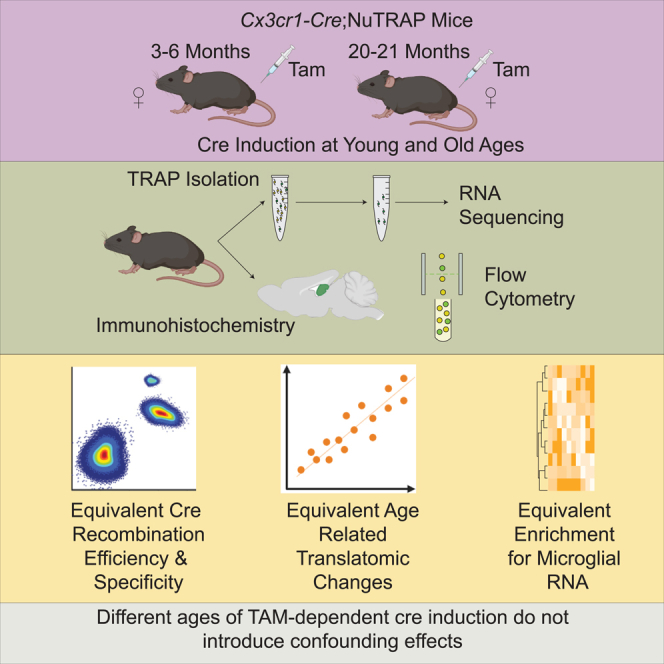
Temporally controlling Cre recombination through tamoxifen (Tam) induction has many advantages for biomedical research. Most studies report early post-natal/juvenile (<2 m.o.) Tam induction, but age-related neurodegeneration and aging studies can require Cre induction in older mice (>12 m.o.). While anecdotally reported as problematic, there are no published comparisons of Tam-mediated Cre induction at early and late ages. Here, microglial-specific Cx3cr1 creERT2 mice were crossed to a floxed NuTRAP reporter to compare Cre induction at early (3–6 m.o.) and late (20 m.o.) ages. Specificity and efficiency of microglial labeling at 21–22 m.o. were identical in mice induced with Tam at early and late ages. Age-related microglial translatomic changes were also similar regardless of Tam induction age. Each Cre and flox mouse line should be independently validated, however, these findings demonstrate that Tam-mediated Cre induction can be performed even into older mouse ages and should be generalizable to other inducible Cre models.
Overview
CoChat Summary
TL;DR
In Cx3cr1creERT2;NuTRAP mice, tamoxifen-induced Cre labeling of microglia at 21–22 months was equally specific and efficient whether induced early (3–6 m.o.) or late (20 m.o.). Age-related microglial translatomic changes were also similar regardless of induction age.
Key findings
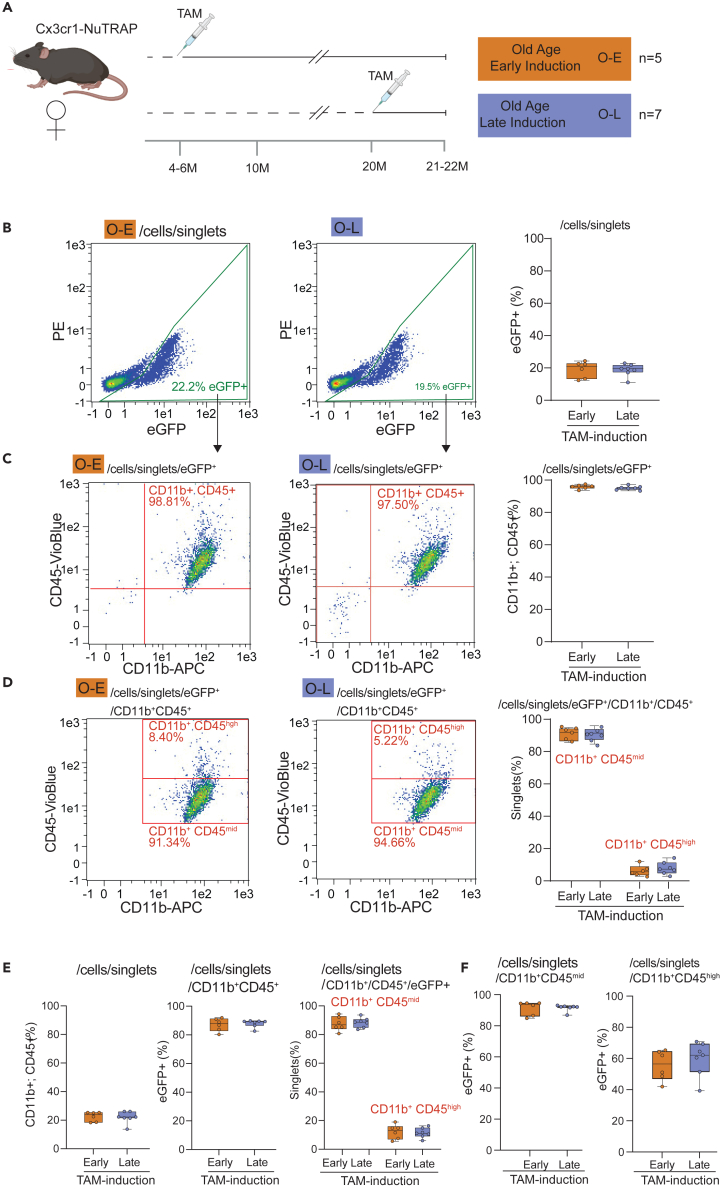
- At 21–22 m.o., ~20% of cortical singlets were eGFP+ in both early (n = 6, 4 females, 2 males) and late (n = 7, 5 females, 2 males) induction groups; >95% of eGFP+ cells were CD11b/CD45 double-positive (~98% in the figure legend). Efficiency was ~90% eGFP+ among CD11b+CD45mid cells and ~60% among CD11b+CD45high cells, with no difference by induction age.
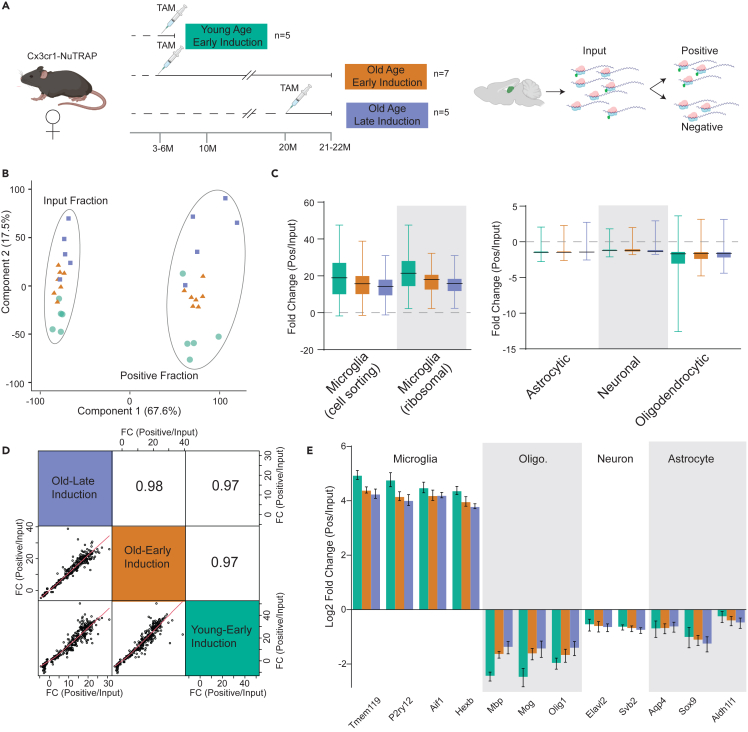
- TRAP RNA-seq separated positive vs. input fractions in PCA component 1 (67.6% variance) but not by induction or collection age; microglial marker enrichment was equivalent across groups and correlated >0.97, while astrocyte, neuron, and oligodendrocyte markers were depleted.
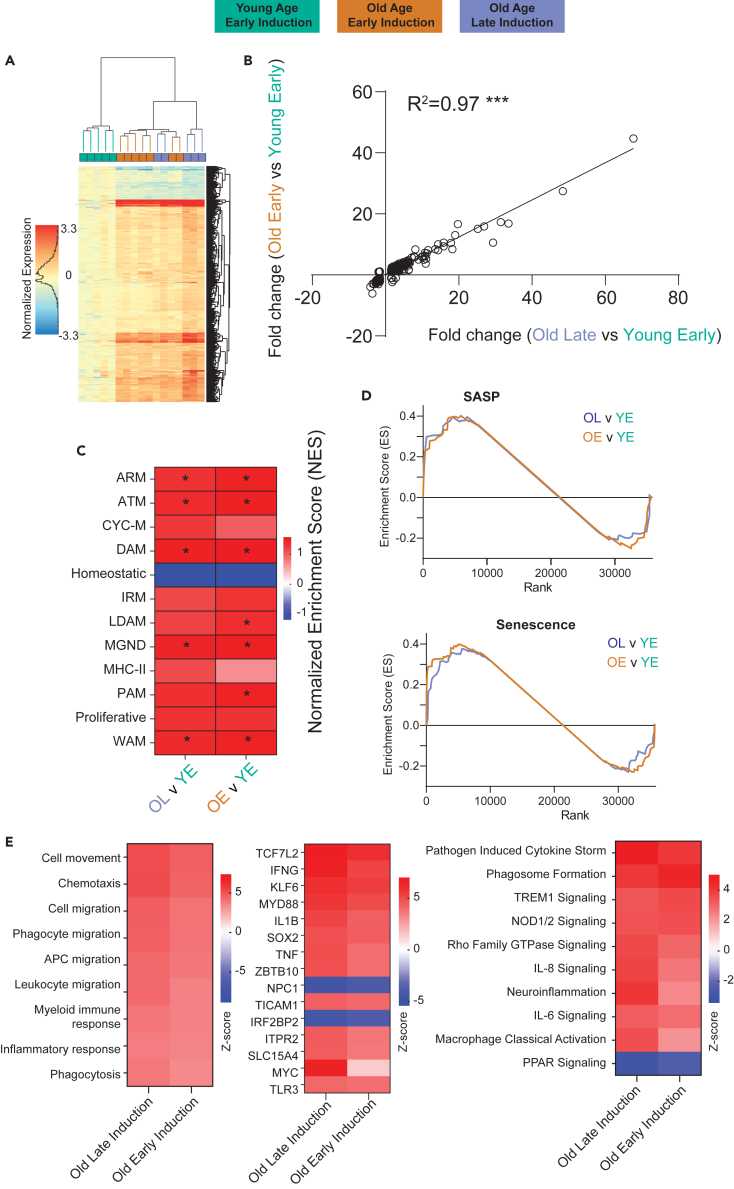
- Differential expression with aging (old early n = 7, old late n = 5, young early n = 5; one-way ANOVA, Benjamini-Hochberg q < 0.1, fold change >|1.25|) was highly correlated between old early and old late induction groups. GSEA showed enrichment of DAM, ARM, MgND, and WAM subtypes and depletion of homeostatic microglia, plus senescence/SASP enrichment, similarly at both induction ages.
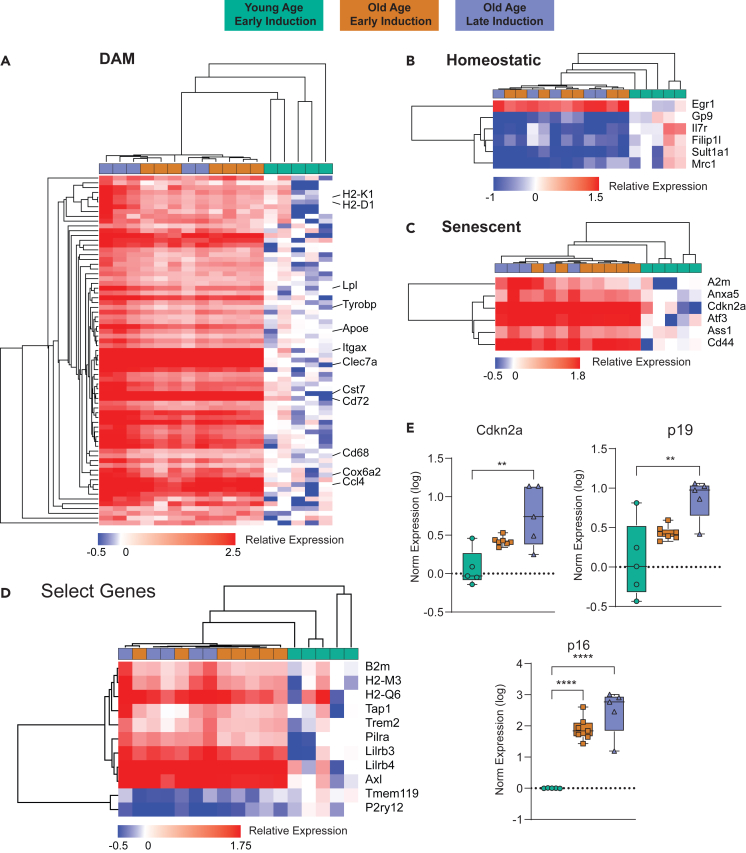
- Specific markers showed consistent age-related changes regardless of induction age: DAM markers increased, homeostatic markers decreased, senescence markers increased (p16Ink4a significantly, p19Arf less), and MHC-I genes B2m, H2-D1, H2-K1, H2-M3 and receptors Lilrb3, Lilrb4, Pilra increased.
Methods
- Cx3cr1creERT2 mice (Jax 020940) were crossed to floxed NuTRAP mice (Jax 029899). Tamoxifen was injected IP at 100 mg/kg daily for five consecutive days in sunflower seed oil at early (3–6 m.o.) or late (20 m.o.) age; brains were collected at 21–22 m.o. (and at 4 m.o. for young TRAP-seq).
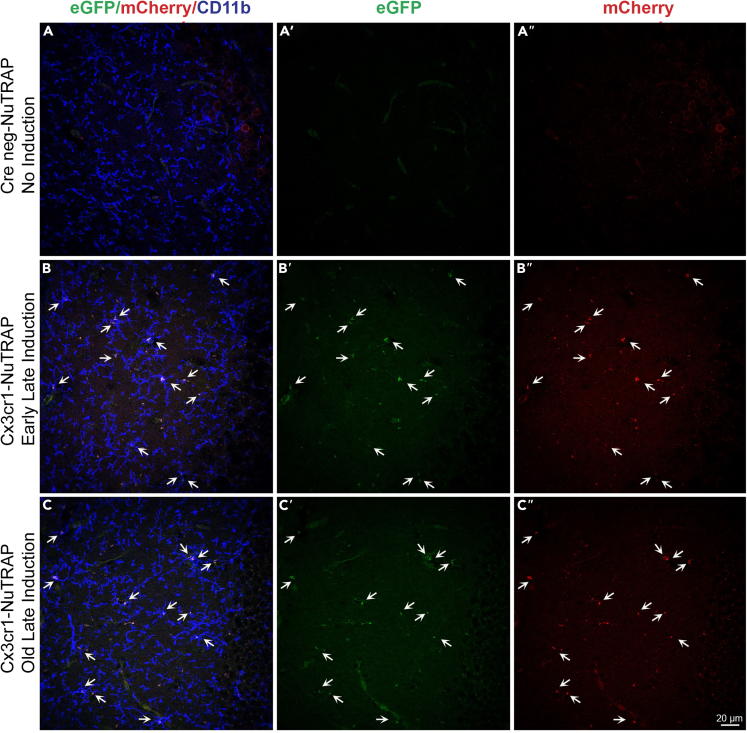
- Cortex single-cell suspensions were analyzed by flow cytometry for CD11b/CD45/eGFP; hippocampal sections were immunostained for mCherry/CD11b/eGFP. Hippocampal TRAP isolation used anti-EGFP immunoprecipitation, followed by RNA-seq on an Illumina NovaSeq 6000.
- RNA-seq analysis used DESeq2 normalization, one-way ANOVA with Benjamini-Hochberg correction (q < 0.1) and fold change >|1.25|, GSEA, and Ingenuity Pathway Analysis. Main RNA-seq groups were young early induction (n = 5 females), old early induction (n = 7 females), and old late induction (n = 5 females); a smaller male set included young n = 4, old-early n = 5, old-late n = 2.
Limitations
- Stated: findings should be generalizable across Cre/ERT2 systems, but each Cre and floxed gene combination should be independently validated; mouse line-specific factors (e.g., cell type, size of flox construct) could alter results, and investigators should consider direct assessments of Cre recombination in addition to imaging, flow cytometry, and enrichment tests.
- Stated/evident: the main molecular findings were in female mice; the male analysis was smaller (young n = 4, old-early n = 5, old-late n = 2) and showed no/limited differences with age of induction.
- Evident: the late induction group had slightly higher fold changes, which the authors attribute to a possible batch effect driven by three samples collected together and to natural variability; no direct measurement of tamoxifen metabolites or half-life by age was performed in this study.
Model-written summary. Check it against the paper before relying on it.
Integrity signals
Registry
Cites
Statistics
Figures
Verification
Claims the paper makes
0 Valid · 0 Not valid · 18 Not checked · 42 Own results and interpretations
A result the paper reports from its own data — it cites no other source for it, so there is none to check. The quote shows it is in the paper.
In the paper
“Specificity and efficiency of microglial labeling at 21–22 m.o. were identical in mice induced with Tam at early and late ages.”
- Also stated in: § Microglial cell labeling specificity and efficiency are equivalent despite the age of cre induction · hedged
“Together, these data suggest that Tam induction of Cx3cr1-NuTRAP mice during early or late age results in similar cell specificity and efficiency of Cre recombination in microglia.”
- Also stated in: § Discussion · boosted
“Flow cytometry analysis of eGFP+ cells demonstrated high and equivalent levels of specificity and efficiency at both induction ages.”
§ Specificity and efficiency of tamoxifen-mediated Cre induction is equivalent regardless of age > Abstract
boosted- Asserted: passes — The authors put it forward as true.
- Checkable: passes — It can be checked against evidence.
- Load-bearing: passes — The paper’s conclusions depend on it.
- Based: passes — The paper gives a reason why it holds.
- Also stated in: § Microglial cell labeling specificity and efficiency are equivalent despite the age of cre induction · hedged
A result the paper reports from its own data — it cites no other source for it, so there is none to check. The quote shows it is in the paper.
In the paper
“Additionally, there was depletion of marker genes for astrocytes, neurons, and oligodendrocytes in the positive fraction as compared to the input (Figures 3C and 3E; Tables S2 and S3).”
§ Specificity and efficiency of tamoxifen-mediated Cre induction is equivalent regardless of age > Results > Age of cre induction does not alter TRAP isolation of microglial-specific RNA efficiency
plain- Asserted: passes — The authors put it forward as true.
- Checkable: passes — It can be checked against evidence.
- Load-bearing: passes — The paper’s conclusions depend on it.
- Based: passes — The paper gives a reason why it holds.
A result the paper reports from its own data — it cites no other source for it, so there is none to check. The quote shows it is in the paper.
In the paper
“We observed increased expression of MHC-I genes B2m, H2-D1, H2-K1, and H2-M3, as well as MHC-I receptors, Lilrb3, Lilrb4, and Pilra (Figure 5D). These increases were seen in both induction ages to a similar degree”
§ Specificity and efficiency of tamoxifen-mediated Cre induction is equivalent regardless of age > Results > Specific microglial responses with age are unaffected by age of Tam induction
plain- Asserted: passes — The authors put it forward as true.
- Checkable: passes — It can be checked against evidence.
- Load-bearing: passes — The paper’s conclusions depend on it.
- Based: passes — The paper gives a reason why it holds.
A result the paper reports from its own data — it cites no other source for it, so there is none to check. The quote shows it is in the paper.
In the paper
“focusing on the most prominent (Figure 5A) DAM markers, there was consistent increase in old samples, regardless of induction age.”
§ Specificity and efficiency of tamoxifen-mediated Cre induction is equivalent regardless of age > Results > Specific microglial responses with age are unaffected by age of Tam induction
plain- Asserted: passes — The authors put it forward as true.
- Checkable: passes — It can be checked against evidence.
- Load-bearing: passes — The paper’s conclusions depend on it.
- Based: passes — The paper gives a reason why it holds.
A result the paper reports from its own data — it cites no other source for it, so there is none to check. The quote shows it is in the paper.
In the paper
“Over 95% of eGFP+ cells were CD11b/CD45 double-positive, (Figure 1C)”
§ Specificity and efficiency of tamoxifen-mediated Cre induction is equivalent regardless of age > Results > Microglial cell labeling specificity and efficiency are equivalent despite the age of cre induction
plainn = 7- Asserted: passes — The authors put it forward as true.
- Checkable: passes — It can be checked against evidence.
- Load-bearing: passes — The paper’s conclusions depend on it.
- Based: passes — The paper gives a reason why it holds.
24 more claims
Create a free account to see all 60 claims and to verify the 45 references still open.
- It may state two separate claims as one. 17
- Probably not a substantial claim. 20
Self-check
Percentages, sums and reported differences re-computed from the paper’s own numbers.
Each contradiction between two passages listed here was confirmed by an independent check.
Rated minor: it would not touch a result — a value no result rests on, a p-value that stays on the same side of the significance level, or a conflict that is clerical, resolved elsewhere in the paper, or outside its own findings.
In the paper
§ Specificity and efficiency of tamoxifen-mediated Cre induction is equivalent regardless of age > Results > Microglial cell labeling specificity and efficiency are equivalent despite the age of cre induction
“Single cell suspensions from aged (21–22 m.o.) cortex were collected from mice induced with Tam at either early (3–6 m.o., n = 6, 4 females, 2 males) or late (20 m.o., n = 7, 5 females, 2 males) age (Figure 1A)”
§ Specificity and efficiency of tamoxifen-mediated Cre induction is equivalent regardless of age > Results > Microglial cell labeling specificity and efficiency are equivalent despite the age of cre induction
“(A) Experimental design of early Tam induction (4–6 m.o.) and late Tam induction (20 m.o.) in Cx3cr1-NuTRAP mice followed by brain collection for both groups at 21–22 m.o.”
Rated minor: it would not touch a result — a value no result rests on, a p-value that stays on the same side of the significance level, or a conflict that is clerical, resolved elsewhere in the paper, or outside its own findings.
In the paper
§ Specificity and efficiency of tamoxifen-mediated Cre induction is equivalent regardless of age > Results > Specific microglial responses with age are unaffected by age of Tam induction
“p16Ink4a is more associated with senescence and demonstrated a significant increase, consistent between induction ages while p19Arf had smaller increases with age (Figure 5E).”
§ Specificity and efficiency of tamoxifen-mediated Cre induction is equivalent regardless of age > Results > Specific microglial responses with age are unaffected by age of Tam induction
“(D) Boxplots showing the change with age in both groups of Cdkn2a and both of its isoforms, p19Arf and p16Ink4a.”
Rated minor: it would not touch a result — a value no result rests on, a p-value that stays on the same side of the significance level, or a conflict that is clerical, resolved elsewhere in the paper, or outside its own findings.
In the paper
§ Specificity and efficiency of tamoxifen-mediated Cre induction is equivalent regardless of age > Results > Age of cre induction does not alter TRAP isolation of microglial-specific RNA efficiency
“there was no further separation by age of induction or age of collection (Figure 3B).”
§ Specificity and efficiency of tamoxifen-mediated Cre induction is equivalent regardless of age > Results > Age of cre induction does not alter TRAP isolation of microglial-specific RNA efficiency
“(B) Translatome profiles separated in the first component between the Input and Positive fractions in the first component and to a degree between young and old mice in the 2nd component.”
Rated minor: it would not touch a result — a value no result rests on, a p-value that stays on the same side of the significance level, or a conflict that is clerical, resolved elsewhere in the paper, or outside its own findings.
In the paper
§ Specificity and efficiency of tamoxifen-mediated Cre induction is equivalent regardless of age > STAR★Methods > Key resources table
“| Mouse: Cx3cr1-cre; NuTRAP: Cx3cr1Jung-cre/ERT2+/wt; NuTRAPflox/wt | Breeding at OMRF | N/A; Bred between 021160 and 029899 |”
§ Specificity and efficiency of tamoxifen-mediated Cre induction is equivalent regardless of age > STAR★Methods > Experimental model and study participant details
“Cx3cr1Jung-Cre/ERT2+/+ (stock #020940)22 males were mated with NuTRAPflox/flox females (stock # 029899)31 to generate the desired progeny, Cx3cr1Jung-cre/ERT2+/wt; NuTRAPflox/wt.32”
Citations
Cites
Causal analysis approaches in Ingenuity Pathway Analysis
Krämer, A., Green, J., Pollard, J., & Tugendreich, S. (2014) · Bioinformatics · doi:10.1093/bioinformatics/btt703 · Cited by 5,724
A Unique Microglia Type Associated with Restricting Development of Alzheimer’s Disease
Keren-Shaul, H., Spinrad, A., Weiner, A., Matcovitch-Natan, O., Dvir-Szternfeld, R., Ulland, T. K., David, E., Baruch, K., Lara-Astaiso, D., Toth, B., et al. (2017) · Cell · doi:10.1016/j.cell.2017.05.018 · Cited by 5,493 · cited 2×
“58 One pattern of note is disease-associated microglia (DAM), first reported 52 and recently reviewed, 59 which are proposed to develop from homeostatic microglia through a progressive change that is initially TREM2-independent (DAM1) and then TREM2-dependent (DAM2).”
BackgroundPleiotropy, natural selection, and the evolution of senescence.
Williams, G. C. (1957) · Evolution · doi:10.1111/j.1558-5646.1957.tb02911.x · Cited by 4,279
Chronic Inflammation (Inflammaging) and Its Potential Contribution to Age-Associated Diseases
Franceschi, C., & Campisi, J. (2014) · The Journals of Gerontology Series A: Biological Sciences and Medical Sciences · doi:10.1093/gerona/glu057 · Cited by 3,891 · cited 1×
“61,62 Evidence demonstrates that senescent microglia contribute to cognitive decline and white matter degradation, 63 and this pattern is observed in multiple different microglial subtypes and disease progressions.”
BackgroundFate Mapping Reveals Origins and Dynamics of Monocytes and Tissue Macrophages under Homeostasis
Yona, S., Kim, K.-W., Wolf, Y., Mildner, A., Varol, D., Breker, M., Strauss-Ayali, D., Viukov, S., Guilliams, M., Misharin, A., et al. (2013) · Immunity · doi:10.1016/j.immuni.2012.12.001 · Cited by 3,245
Cre reporter strains produced by targeted insertion of EYFP and ECFP into the ROSA26 locus
Srinivas, S., Watanabe, T., Lin, C.-S., William, C. M., Tanabe, Y., Jessell, T. M., & Costantini, F. (2001) · BMC Developmental Biology · doi:10.1186/1471-213x-1-4 · Cited by 3,121
Krasemann, S., Madore, C., Cialic, R., Baufeld, C., Calcagno, N., El Fatimy, R., Beckers, L., O’Loughlin, E., Xu, Y., Fanek, Z., et al. (2017) · Immunity · doi:10.1016/j.immuni.2017.08.008 · Cited by 2,979
Microglia promote learning-dependent synapse formation through brain-derived neurotrophic factor
Parkhurst, C. N., Yang, G., Ninan, I., Savas, J. N., Yates, J. R., Lafaille, J. J., Hempstead, B. L., Littman, D. R., & Gan, W.-B. (2013) · Cell · doi:10.1016/j.cell.2013.11.030 · Cited by 2,599
Hammond, T. R., Dufort, C., Dissing-Olesen, L., Giera, S., Young, A., Wysoker, A., Walker, A. J., Segel, M., Nemesh, J., Saunders, A., et al. (2018) · doi:10.1101/406140 · Cited by 2,225
Pleiotropy, natural selection, and the evolution of senescence
Williams, G. C. (1957) · Evolution · doi:10.2307/2406060 · Cited by 1,912
Local self-renewal can sustain CNS microglia maintenance and function throughout adult life
Ajami, B., Bennett, J. L., Krieger, C., Tetzlaff, W., & Rossi, F. M. V. (2007) · Nature Neuroscience · doi:10.1038/nn2014 · Cited by 1,643
Marschallinger, J., Iram, T., Zardeneta, M., Lee, S. E., Lehallier, B., Haney, M. S., Pluvinage, J. V., Mathur, V., Hahn, O., Morgens, D. W., et al. (2020) · Nature Neuroscience · doi:10.1038/s41593-019-0566-1 · Cited by 1,586
Disease-Associated Microglia: A Universal Immune Sensor of Neurodegeneration
Deczkowska, A., Keren-Shaul, H., Weiner, A., Colonna, M., Schwartz, M., & Amit, I. (2018) · Cell · doi:10.1016/j.cell.2018.05.003 · Cited by 1,474 · cited 1×
“58 One pattern of note is disease-associated microglia (DAM), first reported 52 and recently reviewed, 59 which are proposed to develop from homeostatic microglia through a progressive change that is initially TREM2-independent (DAM1) and then TREM2-dependent (DAM2).”
BackgroundMarschallinger, J., Iram, T., Zardeneta, M., Lee, S. E., Lehallier, B., Haney, M. S., Pluvinage, J. V., Mathur, V., Hahn, O., Morgens, D. W., et al. (2019) · doi:10.1101/722827 · Cited by 1,414
A translational profiling approach for the molecular characterization of CNS cell types
Heiman, M., Schaefer, A., Gong, S., Peterson, J. D., Day, M., Ramsey, K. E., Suárez-Fariñas, M., Schwarz, C., Stephan, D. A., Surmeier, D. J., et al. (2008) · Cell · doi:10.1016/j.cell.2008.10.028 · Cited by 1,134 · cited 1×
“34 These tags can be used for INTACT (Isolation of Nuclei TAgged in specific Cell Types) 35 isolation of nuclei or TRAP (translating ribosome affinity purification) 36 isolation of ribosomes to obtain cell type-specific nucleic acids (DNA and RNA, respectively) from cellularly heterogeneous tissues.”
MethodLi, Q., Cheng, Z., Zhou, L., Darmanis, S., Neff, N. F., Okamoto, J., Gulati, G., Bennett, M. L., Sun, L. O., Clarke, L. E., et al. (2019) · Neuron · doi:10.1016/j.neuron.2018.12.006 · Cited by 1,129
Microglia in the adult brain arise from Ly-6ChiCCR2+ monocytes only under defined host conditions
Mildner, A., Schmidt, H., Nitsche, M., Merkler, D., Hanisch, U.-K., Mack, M., Heikenwalder, M., Brück, W., Priller, J., & Prinz, M. (2007) · Nature Neuroscience · doi:10.1038/nn2015 · Cited by 1,089
Regulation of Cre Recombinase Activity by Mutated Estrogen Receptor Ligand-Binding Domains
Feil, R., Wagner, J., Metzger, D., & Chambon, P. (1997) · Biochemical and Biophysical Research Communications · doi:10.1006/bbrc.1997.7124 · Cited by 991
Cell-type-specific isolation of ribosome-associated mRNA from complex tissues
Sanz, E., Yang, L., Su, T., Morris, D. R., McKnight, G. S., & Amieux, P. S. (2009) · Proceedings of the National Academy of Sciences · doi:10.1073/pnas.0907143106 · Cited by 976 · cited 1×
“34 These tags can be used for INTACT (Isolation of Nuclei TAgged in specific Cell Types) 35 isolation of nuclei or TRAP (translating ribosome affinity purification) 36 isolation of ribosomes to obtain cell type-specific nucleic acids (DNA and RNA, respectively) from cellularly heterogeneous tissues.”
MethodSala Frigerio, C., Wolfs, L., Fattorelli, N., Thrupp, N., Voytyuk, I., Schmidt, I., Mancuso, R., Chen, W.-T., Woodbury, M. E., Srivastava, G., et al. (2019) · Cell Reports · doi:10.1016/j.celrep.2019.03.099 · Cited by 926
Ligand-activated site-specific recombination in mice.
Feil, R., Brocard, J., Mascrez, B., LeMeur, M., Metzger, D., & Chambon, P. (1996) · Proceedings of the National Academy of Sciences · doi:10.1073/pnas.93.20.10887 · Cited by 907
Indra, A. K., Warot, X., Brocard, J., Bornert, J.-M., Xiao, J.-H., Chambon, P., & Metzger, D. (1999) · Nucleic Acids Research · doi:10.1093/nar/27.22.4324 · Cited by 756
Role of Microglia in Central Nervous System Infections
Rock, R. B., Gekker, G., Hu, S., Sheng, W. S., Cheeran, M., Lokensgard, J. R., & Peterson, P. K. (2004) · Clinical Microbiology Reviews · doi:10.1128/cmr.17.4.942-964.2004 · Cited by 723 · cited 1×
“Micro-glia exhibits various phenotypic states 48–51 in response to sterile inflammation with aging.”
BackgroundA new type of microglia gene targeting shows TAK1 to be pivotal in CNS autoimmune inflammation
Goldmann, T., Wieghofer, P., Müller, P. F., Wolf, Y., Varol, D., Yona, S., Brendecke, S. M., Kierdorf, K., Staszewski, O., Datta, M., et al. (2013) · Nature Neuroscience · doi:10.1038/nn.3531 · Cited by 688
Sauer, B. (1987) · Molecular and Cellular Biology · doi:10.1128/mcb.7.6.2087 · Cited by 482
Brain Cell Type Specific Gene Expression and Co-expression Network Architectures
McKenzie, A. T., Wang, M., Hauberg, M. E., Fullard, J. F., Kozlenkov, A., Keenan, A., Hurd, Y. L., Dracheva, S., Casaccia, P., Roussos, P., et al. (2018) · Scientific Reports · doi:10.1038/s41598-018-27293-5 · Cited by 481 · cited 1×
“Assessment of cell marker lists developed by the field 45 showed equivalent enrichments of microglial markers in young and old mice, and from different induction ages.”
BackgroundWhite matter aging drives microglial diversity
Safaiyan, S., Besson-Girard, S., Kaya, T., Cantuti-Castelvetri, L., Liu, L., Ji, H., Schifferer, M., Gouna, G., Usifo, F., Kannaiyan, N., et al. (2021) · Neuron · doi:10.1016/j.neuron.2021.01.027 · Cited by 477 · cited 1×
“…been defined, including: (1) disease-associated (DAM), 52 (2) interferon-response (IRM), 53 (3) lipid-droplet (LDAM), 54 (4) white-matter-associated (WAM), 55 (5) activated-response (ARM), 53 (6) neurodegenerative (MGnD), 56 and (7) proliferative-region-associated (PAM) 57 microglia, among others.”
Deal, R. B., & Henikoff, S. (2011) · Nature Protocols · doi:10.1038/nprot.2010.175 · Cited by 386
Mouse Cre-LoxP system: general principles to determine tissue-specific roles of target genes
Kim, H., Kim, M., Im, S.-K., & Fang, S. (2018) · Laboratory Animal Research · doi:10.5625/lar.2018.34.4.147 · Cited by 341
Microglia in Alzheimer's disease at single-cell level. Are there common patterns in humans and mice?
Chen, Y., & Colonna, M. (2021) · Journal of Experimental Medicine · doi:10.1084/jem.20202717 · Cited by 339
Cell-specific deletion of C1qa identifies microglia as the dominant source of C1q in mouse brain
Fonseca, M. I., Chu, S.-H., Hernandez, M. X., Fang, M. J., Modarresi, L., Selvan, P., MacGregor, G. R., & Tenner, A. J. (2017) · Journal of Neuroinflammation · doi:10.1186/s12974-017-0814-9 · Cited by 337 · cited 1×
“69 Additionally, with the emergence of microglial phenotype analysis, subtypes populations such as DAMs, WAMS, LDAMs, etc. increase with age and may have a protective effect that becomes deleterious.”
Abremski, K., Hoess, R., & Sternberg, N. (1983) · Cell · doi:10.1016/0092-8674(83)90311-2 · Cited by 331
Microglial Physiology and Pathophysiology: Insights from Genome-wide Transcriptional Profiling
Crotti, A., & Ransohoff, R. M. (2016) · Immunity · doi:10.1016/j.immuni.2016.02.013 · Cited by 323
Novel Hexb-based tools for studying microglia in the CNS
Masuda, T., Amann, L., Sankowski, R., Staszewski, O., Lenz, M., d´Errico, P., Snaidero, N., Costa Jordão, M. J., Böttcher, C., Kierdorf, K., et al. (2020) · Nature Immunology · doi:10.1038/s41590-020-0707-4 · Cited by 317 · cited 1×
“23,65 However, to our knowledge there are no studies that have empirically tested for equivalent specificity, efficiency, or consistency of detecting age-related biological changes after inducing cre recombination at olderages.”
BackgroundAging, Cellular Senescence, and Alzheimer’s Disease
Liu, R.-M. (2022) · International Journal of Molecular Sciences · doi:10.3390/ijms23041989 · Cited by 267
The Kaleidoscope of Microglial Phenotypes
Dubbelaar, M. L., Kracht, L., Eggen, B. J. L., & Boddeke, E. W. G. M. (2018) · Frontiers in Immunology · doi:10.3389/fimmu.2018.01753 · Cited by 260
Tmem119-EGFP and Tmem119-CreERT2 Transgenic Mice for Labeling and Manipulating Microglia
Kaiser, T., & Feng, G. (2019) · eneuro · doi:10.1523/eneuro.0448-18.2019 · Cited by 259
Tmem119-EGFP and Tmem119-CreERT2 transgenic mice for labeling and manipulating microglia
Kaiser, T., & Feng, G. (2019) · doi:10.1101/624825 · Cited by 258
Temporally and spatially regulated somatic mutagenesis in mice
Schwenk, F., Kuhn, R., Rajewsky, K., Angrand, P.-O., & Stewart, A. F. (1998) · Nucleic Acids Research · doi:10.1093/nar/26.6.1427 · Cited by 189
JORDAN, V (2007) · Steroids · doi:10.1016/j.steroids.2007.07.009 · Cited by 177
A new genetic strategy for targeting microglia in development and disease
McKinsey, G. L., Lizama, C. O., Keown-Lang, A. E., Niu, A., Santander, N., Larpthaveesarp, A., Chee, E., Gonzalez, F. F., & Arnold, T. D. (2020) · eLife · doi:10.7554/elife.54590 · Cited by 176
Inflammaging and human longevity in the omics era
Monti, D., Ostan, R., Borelli, V., Castellani, G., & Franceschi, C. (2017) · Mechanisms of Ageing and Development · doi:10.1016/j.mad.2016.12.008 · Cited by 167
The Apolipoprotein E Antagonistic Pleiotropy Hypothesis: Review and Recommendations
Tuminello, E. R., & Han, S. D. (2011) · International Journal of Alzheimer’s Disease · doi:10.4061/2011/726197 · Cited by 166
Roh, H. C., Tsai, L. T.-Y., Lyubetskaya, A., Tenen, D., Kumari, M., & Rosen, E. D. (2017) · Cell Reports · doi:10.1016/j.celrep.2016.12.087 · Cited by 149
Refined protocols of tamoxifen injection for inducible DNA recombination in mouse astroglia
Jahn, H. M., Kasakow, C. V., Helfer, A. G., Michely, J. A., Verkhratsky, A., Maurer, H. H., Scheller, A., & Kirchhoff, F. (2018) · Scientific Reports · doi:10.1038/s41598-018-24085-9 · Cited by 142
What evidence is there for the existence of individual genes with antagonistic pleiotropic effects?
Leroi, A. M., Bartke, A., Benedictis, G. D., Franceschi, C., Gartner, A., Gonos, E. S., Feder, M. E., Kivisild, T., Lee, S. Y., Özer, N. K., et al. (2004) · Mechanisms of Ageing and Development · doi:10.1016/j.mad.2004.07.012 · Cited by 140
Single-cell analysis of the aging female mouse hypothalamus
Hajdarovic, K. H., Yu, D., Hassell, L.-A., Evans, S. A., Packer, S., Neretti, N., & Webb, A. E. (2022) · Nature Aging · doi:10.1038/s43587-022-00246-4 · Cited by 131
Chang, L.-H., Andres, M., Sadino, J., Jiang, C. S., Nakama, H., Miller, E. N., & Ernst, T. (2011) · NeuroImage · doi:10.1016/j.neuroimage.2011.07.010 · Cited by 128
Rangaraju, S., Raza, S. A., Li, N. X., Betarbet, R., Dammer, E. B., Duong, D., Lah, J. J., Seyfried, N. T., & Levey, A. I. (2018) · Frontiers in Immunology · doi:10.3389/fimmu.2018.00405 · Cited by 126
Pleiotropic Effects of mTOR and Autophagy During Development and Aging
Schmeisser, K., & Parker, J. A. (2019) · Frontiers in Cell and Developmental Biology · doi:10.3389/fcell.2019.00192 · Cited by 122
A comparative analysis of microglial inducible Cre lines
Faust, T. E., Feinberg, P. A., O’Connor, C., Kawaguchi, R., Chan, A., Strasburger, H., Frosch, M., Boyle, M. A., Masuda, T., Amann, L., et al. (2023) · Cell Reports · doi:10.1016/j.celrep.2023.113031 · Cited by 113 · cited 2×
“Mouse line specific factors (e.g., cell type, size of flox construct) could alter these results and investigators should also consider using direct assessments of Cre recombination 44 in addition to conventional imaging, flow cytometry, and enrichment tests performed here.”
BackgroundMethodHonarpisheh, P., Lee, J., Banerjee, A., Blasco-Conesa, M. P., Honarpisheh, P., d’Aigle, J., Mamun, A. A., Ritzel, R. M., Chauhan, A., Ganesh, B. P., et al. (2020) · Journal of Neuroinflammation · doi:10.1186/s12974-020-02019-5 · Cited by 101
Wilhelm, T., Byrne, J., Medina, R., Kolundžić, E., Geisinger, J., Hajduskova, M., Tursun, B., & Richly, H. (2017) · Genes & Development · doi:10.1101/gad.301648.117 · Cited by 96
Sahasrabuddhe, V., & Ghosh, H. S. (2022) · Cell Reports · doi:10.1016/j.celrep.2021.110252 · Cited by 91 · cited 1×
“70 Based on an average weight of 20 g per mouse, each Tam injection consisted of 100 m L of 20 mg/mL stock solution.”
MethodOcañas, S. R., Pham, K. D., Cox, J. E. J., Keck, A. W., Ko, S., Ampadu, F. A., Porter, H. L., Ansere, V. A., Kulpa, A., Kellogg, C. M., et al. (2023) · Journal of Neuroinflammation · doi:10.1186/s12974-023-02870-2 · Cited by 86
Self-citationAltered morphological dynamics of activated microglia after induction of status epilepticus
Avignone, E., Lepleux, M., Angibaud, J., & Nägerl, U. V. (2015) · Journal of Neuroinflammation · doi:10.1186/s12974-015-0421-6 · Cited by 85
Valny, M., Honsa, P., Kirdajova, D., Kamenik, Z., & Anderova, M. (2016) · Frontiers in Cellular Neuroscience · doi:10.3389/fncel.2016.00243 · Cited by 79
Comparative analysis of CreER transgenic mice for the study of brain macrophages: A case study
Chappell‐Maor, L., Kolesnikov, M., Kim, J., Shemer, A., Haimon, Z., Grozovski, J., Boura‐Halfon, S., Masuda, T., Prinz, M., & Jung, S. (2020) · European Journal of Immunology · doi:10.1002/eji.201948342 · Cited by 70
Ocañas, S. R., Pham, K. D., Blankenship, H. E., Machalinski, A. H., Chucair-Elliott, A. J., & Freeman, W. M. (2022) · eneuro · doi:10.1523/eneuro.0348-21.2022 · Cited by 55
Self-citationWhite matter-associated microglia: New players in brain aging and neurodegenerative diseases
Ahn, K., Lee, S.-J., & Mook-Jung, I. (2022) · Ageing Research Reviews · doi:10.1016/j.arr.2022.101574 · Cited by 51
Chucair‐Elliott, A. J., Ocañas, S. R., Stanford, D. R., Ansere, V. A., Buettner, K. B., Porter, H. L., Eliason, N. L., Reid, J. J., Sharpe, A. L., Stout, M. B., et al. (2020) · Communications Biology · doi:10.1038/s42003-020-01418-x · Cited by 50
Self-citationRedefining Microglial Identity in Health and Disease at Single-Cell Resolution
Provenzano, F., Pérez, M. J., & Deleidi, M. (2021) · Trends in Molecular Medicine · doi:10.1016/j.molmed.2020.09.001 · Cited by 45
Immunologic Applications of Conditional Gene Modification Technology in the Mouse
Sharma, S., & Zhu, J. (2014) · Current Protocols in Immunology · doi:10.1002/0471142735.im1034s105 · Cited by 42
Tamoxifen and CYP2D6: A Controversy in Pharmacogenetics
Cronin-Fenton, D. P., & Damkier, P. (2018) · Advances in Pharmacology · doi:10.1016/bs.apha.2018.03.001 · Cited by 42
Microglial MHC-I induction with aging and Alzheimer’s is conserved in mouse models and humans
Kellogg, C. M., Pham, K., Machalinski, A. H., Porter, H. L., Blankenship, H. E., Tooley, K. B., Stout, M. B., Rice, H. C., Sharpe, A. L., Beckstead, M. J., et al. (2023) · GeroScience · doi:10.1007/s11357-023-00859-6 · Cited by 39
Self-citationIntroduction to Statistical Methods for Analyzing Large Data Sets: Gene-Set Enrichment Analysis
Clark, N. R., & Ma’ayan, A. (2011) · Science Signaling · doi:10.1126/scisignal.2001966 · Cited by 31
Limitations of Tamoxifen Application for In Vivo Genome Editing Using Cre/ERT2 System
Ilchuk, L. A., Stavskaya, N. I., Varlamova, E. A., Khamidullina, A. I., Tatarskiy, V. V., Mogila, V. A., Kolbutova, K. B., Bogdan, S. A., Sheremetov, A. M., Baulin, A. N., et al. (2022) · International Journal of Molecular Sciences · doi:10.3390/ijms232214077 · Cited by 31
Translatomic response of retinal Müller glia to acute and chronic stress
Chucair‐Elliott, A. J., Ocañas, S. R., Pham, K. D., Veldt, M. V. D., Cheyney, A., Stanford, D. R., Gurley, J. M., Elliott, M. H., & Freeman, W. M. (2022) · Neurobiology of Disease · doi:10.1016/j.nbd.2022.105931 · Cited by 29
Self-citationChucair-Elliott, A. J., Ocanas, S. R., Stanford, D. R., Hadad, N., Wronowski, B., Otalora, L., Stout, M. B., & Freeman, W. M. (2019) · GeroScience · doi:10.1007/s11357-019-00090-2 · Cited by 24
Self-citationReassessing neurodegenerative disease: immune protection pathways and antagonistic pleiotropy
Provenzano, F., & Deleidi, M. (2021) · Trends in Neurosciences · doi:10.1016/j.tins.2021.06.006 · Cited by 21
Li, H., Ye, T., Liu, X., Guo, R., Yang, X., Li, Y., Qi, D., Wei, Y., Zhu, Y., Wen, L., et al. (2023) · Journal of Pharmaceutical Analysis · doi:10.1016/j.jpha.2023.05.008 · Cited by 15
Differential usage of DNA modifications in neurons, astrocytes, and microglia
Tooley, K. B., Chucair‐Elliott, A. J., Ocañas, S. R., Machalinski, A. H., Pham, K. D., Hoolehan, W., Kulpa, A. M., Stanford, D. R., & Freeman, W. M. (2023) · Epigenetics & Chromatin · doi:10.1186/s13072-023-00522-6 · Cited by 15
Self-citationPossible Role of Activin in the Adiponectin Paradox-Induced Progress of Alzheimer’s Disease
Hashimoto, M., Ho, G. J., Sugama, S., Takenouchi, T., Waragai, M., Sugino, H., Inoue, S., & Masliah, E. (2021) · Journal of Alzheimer s Disease · doi:10.3233/jad-210206 · Cited by 12
Functional characterization of 22 novel CYP2D6 variants for the metabolism of Tamoxifen
Hu, X.-X., Zhou, Q., Lan, T., Huang, X.-X., Liang, B.-Q., Dai, D.-P., Cai, J.-P., & Hu, G.-X. (2016) · Journal of Pharmacy and Pharmacology · doi:10.1111/jphp.12556 · Cited by 6
Cell-Specific Paired Interrogation of the Mouse Ovarian Epigenome and Transcriptome
Ocañas, S. R., Isola, J. V. V., Saccon, T. D., Pham, K. D., Chucair‐Elliott, A. J., Schneider, A., Freeman, W. M., & Stout, M. B. (2023) · Journal of Visualized Experiments · doi:10.3791/64765 · Cited by 2
Self-citation
Cited by
Model systems to study tumor-microbiome interactions in early-onset colorectal cancer
Richter, K. M., Wrage, M., Krekeler, C., Oliveira, T. D., Conradi, L., Menck, K., & Bleckmann, A. (2025) · EMBO Molecular Medicine · doi:10.1038/s44321-025-00198-3 · Cited by 13
Liu, J., Zaidi, A. H., & Pike, C. J. (2025) · Journal of Neuroinflammation · doi:10.1186/s12974-025-03534-z · Cited by 11
Looprasertkul, S., Yamazaki, R., Osanai, Y., & Ohno, N. (2025) · Glia · doi:10.1002/glia.70070 · Cited by 5
Need of orthogonal approaches in neurological disease modeling in mouse
Bossini, L., & Sessa, A. (2024) · Frontiers in Molecular Neuroscience · doi:10.3389/fnmol.2024.1399953
Glutamine Metabolism Supports α cell Mass and Glucagon SecretionPreprint
Schornack, A. M. R., Rodgers, T. J., Shou, M., Siv, W., Yin, L., Sellick, K., Chigurupati, V., Debo, J., Saraf, S. S., Nickles, P. G., et al. (2026) · bioRxiv (Cold Spring Harbor Laboratory) · doi:10.64898/2026.07.09.735845
Metadata
- Authors
- Kellogg, C. M., Pham, K., Ko, S., Cox, J. E. J., Machalinski, A. H., Stout, M. B., Sharpe, A. L., Beckstead, M. J., Chucair-Elliott, A. J., Ocañas, S. R., & Freeman, W. M.
- Affiliations
- Oklahoma Medical Research Foundation (US)
- University of Oklahoma Health Sciences Center (US)
- Corresponding author
- Freeman, Willard M.
- ORCID
- Venue
- iScience
- Publisher
- Elsevier BV
- Published
- 2023-12
- Volume
- 26
- Issue
- 12
- Pages
- 108413
- ISSN
- 2589-0042 (ISSN-L)
- PMC
- PMC10696116
- OpenAlex
- W4388534274
- Semantic Scholar
- 4e06f44483ff8eb888d9c933723c6d4a924b85cd
- Cited by
- 10
- References
- 72
- Citations by year
- 2026: 6 · 2025: 3 · 2024: 1
- FWCI
- 1.03
- Type
- journal article
- Language
- en
- Open access
- gold
- doi.org
- Licence
- cc-by-nc-nd
- www.elsevier.com/tdm/userlicense/1.0/ (tdm)
- www.elsevier.com/legal/tdmrep-license (tdm)
- creativecommons.org/licenses/by-nc-nd/4.0/ (vor)
- Locations
- iScience (publishedVersion, cc-by-nc-nd)
- bioRxiv (Cold Spring Harbor Laboratory) (submittedVersion)
- PubMed Central (publishedVersion, cc-by-nc-nd)
- PubMed (publishedVersion)
- PubMed Central (submittedVersion)
- PubMed (submittedVersion)
- DOAJ (DOAJ: Directory of Open Access Journals) (submittedVersion, cc-by-sa)
- Funders
- National Institutes of Health
- National Institute on Aging (F31AG064861, P30AG050911, R01AG059430, R21AG072811, T32AG052363)
- NIH Office of the Director (DP5OD033443, I01BX003906, I01BX005396, IK6BX006033)
- U.S. Department of Veterans Affairs
- Biomedical Laboratory Research and Development, VA Office of Research and Development
- Topics
- Life Sciences › Neuroscience › Neurology › Neuroinflammation and Neurodegeneration Mechanisms
- Life Sciences › Biochemistry, Genetics and Molecular Biology › Molecular Biology › CRISPR and Genetic Engineering
- Life Sciences › Biochemistry, Genetics and Molecular Biology › Genetics › Animal Genetics and Reproduction
- Keywords
- tamoxifen, Cre recombination, CreERT2, microglia, CX3CR1, aging, neurodegeneration
About these checks
Registry, retraction, Cites and statistics results are computed, not judged, with one exception: a printed reference that no index lists is read once by a model before it counts as a citation error. Claims are extracted by a model and kept only when their quote appears verbatim in the text; each cited source is then checked, with a model’s help, for whether it says what the claim relies on. Those verdicts can be wrong — read the claim’s quote and the cited source before relying on one.
A language model drew the claims from the paper on 2026-11-19, under version 3 of the claim definition (model deepseek-v4.1-flash, prompt extract-v3).
A second model labelled each claim on 2026-11-19 (model jev-1.13-20260917, definition revision gold-guideline-v0.2).
Statistics and arithmetic are recomputed, not judged.
Confidence bands are shown only for fields calibrated on our annotated test set. None is calibrated yet, so no band is shown.
What counts as a claim ›How we measure confidence ›How we check this ›
Are you an author, or do you see a problem with this page? Request a review
Data sources
Bibliographic data: Semantic Scholar, OpenAlex, Crossref.
Contains information from the Semantic Scholar Academic Graph Datasets, made available under the ODC Attribution License (ODC-BY 1.0).
Semantic Scholar’s data is described in: Kinney, R., et al. (2023). The Semantic Scholar Open Data Platform. arXiv:2301.10140.
