

The DOI matches its Crossref record; 28 of the 28 references it cites were found in a registry or an index.
Enhanced Utilization of Induced Pluripotent Stem Cell–Derived Human Intestinal Organoids Using Microengineered Chips
Open accessAbstract
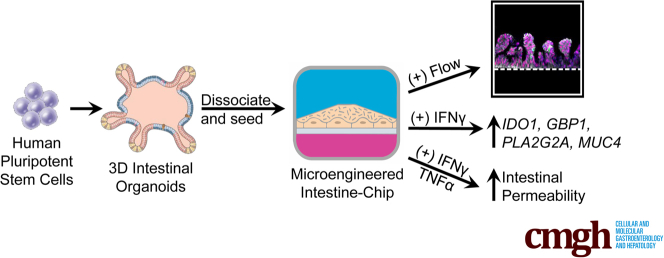
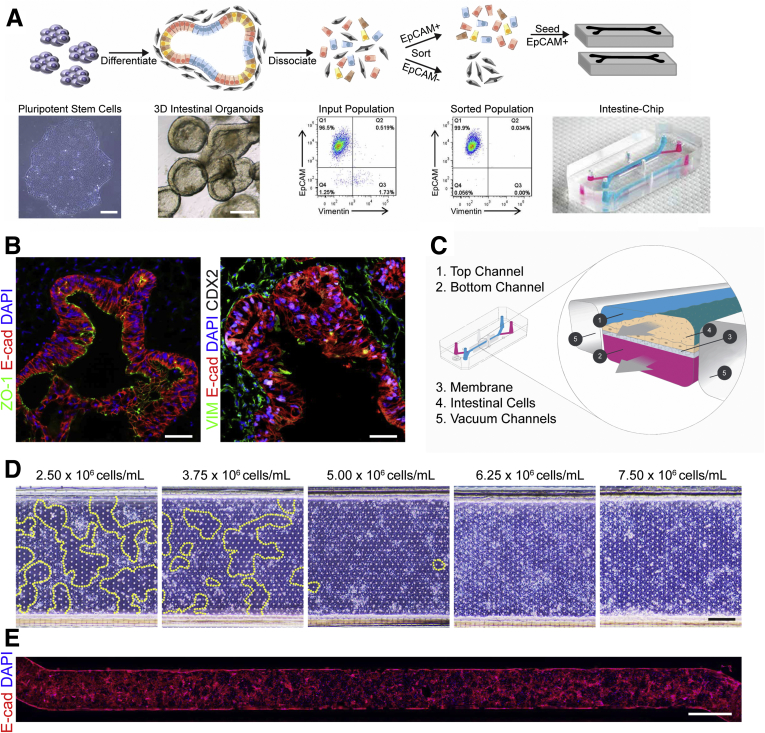
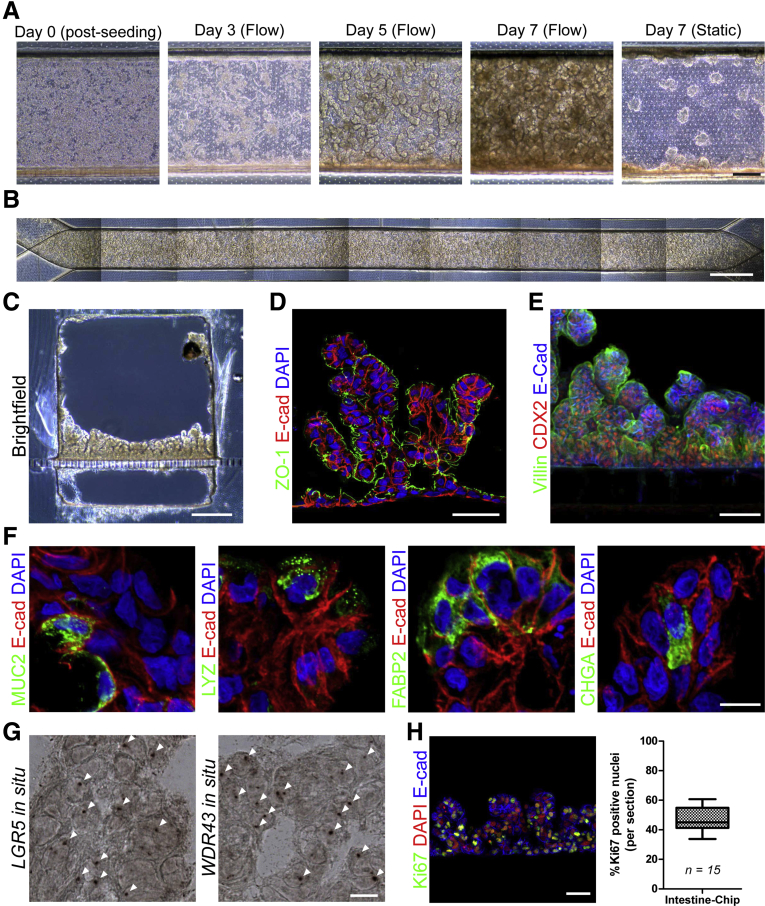
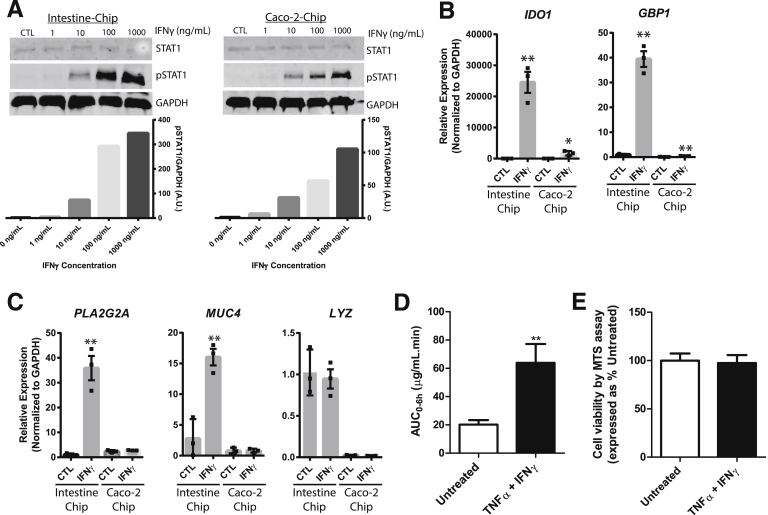
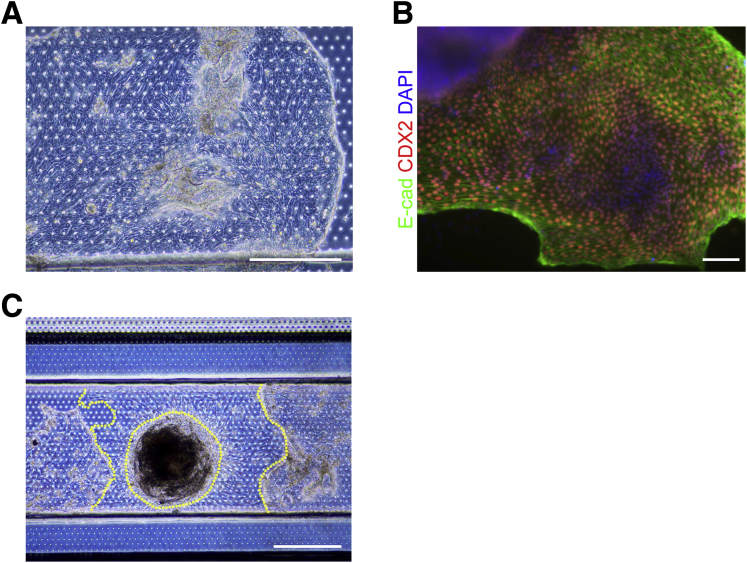
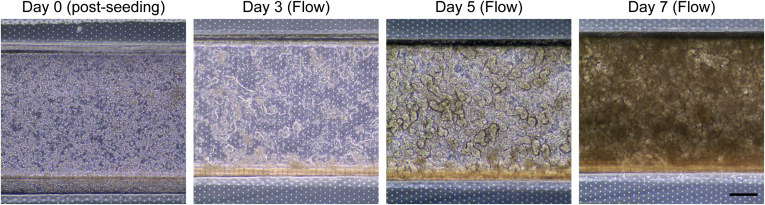
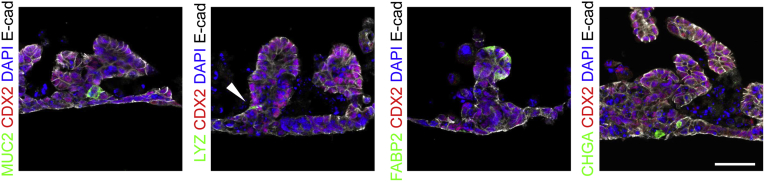
Background and Aims Human intestinal organoids derived from induced pluripotent stem cells have tremendous potential to elucidate the intestinal epithelium's role in health and disease, but it is difficult to directly assay these complex structures. This study sought to make this technology more amenable for study by obtaining epithelial cells from induced pluripotent stem cell–derived human intestinal organoids and incorporating them into small microengineered Chips. We then investigated if these cells within the Chip were polarized, had the 4 major intestinal epithelial subtypes, and were biologically responsive to exogenous stimuli. Methods Epithelial cells were positively selected from human intestinal organoids and were incorporated into the Chip. The effect of continuous media flow was examined. Immunocytochemistry and in situ hybridization were used to demonstrate that the epithelial cells were polarized and possessed the major intestinal epithelial subtypes. To assess if the incorporated cells were biologically responsive, Western blot analysis and quantitative polymerase chain reaction were used to assess the effects of interferon (IFN)-γ, and fluorescein isothiocyanate–dextran 4 kDa permeation was used to assess the effects of IFN-γ and tumor necrosis factor-α on barrier function. Results The optimal cell seeding density and flow rate were established. The continuous administration of flow resulted in the formation of polarized intestinal folds that contained Paneth cells, goblet cells, enterocytes, and enteroendocrine cells along with transit-amplifying and LGR5 + stem cells. Administration of IFN-γ for 1 hour resulted in the phosphorylation of STAT1, whereas exposure for 3 days resulted in a significant upregulation of IFN-γ related genes. Administration of IFN-γ and tumor necrosis factor-α for 3 days resulted in an increase in intestinal permeability. Conclusions We demonstrate that the Intestine-Chip is polarized, contains all the intestinal epithelial subtypes, and is biologically responsive to exogenous stimuli. This represents a more amenable platform to use organoid technology and will be highly applicable to personalized medicine and a wide range of gastrointestinal conditions.
Overview
The claims and statistics of this paper haven’t been checked yet.
Run the check — free, no account needed. It reads the open-access text and checks the sources it cites.
Integrity signals
Registry
Cites
Statistics
Figures
Verification
Claims the paper makes
The claims and statistics of this paper haven’t been checked yet.
Run the check — free, no account needed. It reads the open-access text and checks the sources it cites.
Claims other papers make about this one
Each is checked against this paper’s own text: does it say what the citing paper says it does?
The cited source says what the claim attributes to it.
In the citing paper
“OoC devices have improved the characteristics of hPSC-derived pancreatic islets104, intestinal105, stomach106, and liver77 organoids by supporting physiological flow rates.”
From Organoids (2022) · cites this paper as [104]
Self-check
Percentages, sums and reported differences re-computed from the paper’s own numbers.
The self-check needs the paper’s full text.
Citations
Cites
Identification of stem cells in small intestine and colon by marker gene Lgr5
Barker, N., van Es, J. H., Kuipers, J., Kujala, P., van den Born, M., Cozijnsen, M., Haegebarth, A., Korving, J., Begthel, H., Peters, P. J., et al. (2007) · Nature · doi:10.1038/nature06196 · Cited by 5,687
Reconstituting organ-level lung functions on a chip
Huh, D., Matthews, B. D., Mammoto, A., Montoya-Zavala, M., Hsin, H. Y., & Ingber, D. E. (2010) · Science · doi:10.1126/science.1188302 · Cited by 4,250
Sato, T., Stange, D. E., Ferrante, M., Vries, R. G. J., van Es, J. H., van den Brink, S., van Houdt, W. J., Pronk, A., van Gorp, J., Siersema, P. D., et al. (2011) · Gastroenterology · doi:10.1053/j.gastro.2011.07.050 · Cited by 3,753
Organoid Models and Applications in Biomedical Research
Xinaris, C., Brizi, V., & Remuzzi, G. (2015) · The Nephron journals/Nephron journals · doi:10.1159/000433566 · Cited by 3,519
Bhatia, S. N., & Ingber, D. E. (2014) · Nature Biotechnology · doi:10.1038/nbt.2989 · Cited by 3,305
Directed differentiation of human pluripotent stem cells into intestinal tissue in vitro
Spence, J. R., Mayhew, C. N., Rankin, S. A., Kuhar, M. F., Vallance, J. E., Tolle, K. A., Hoskins, E. E., Kalinichenko, V. V., Wells, S. I., Zorn, A. M., et al. (2010) · Nature · doi:10.1038/nature09691 · Cited by 1,911
Kim, H. J., Huh, D., Hamilton, G., & Ingber, D. E. (2012) · Lab on a Chip · doi:10.1039/c2lc40074j · Cited by 1,734
Self-citationInduced pluripotent stem cell technology: a decade of progress.
Shi, Y., Inoue, H., Wu, J. C., & Yamanaka, S. (2017) · Nature Reviews Drug Discovery · doi:10.1038/nrd.2016.245 · Cited by 1,525
A Human Disease Model of Drug Toxicity–Induced Pulmonary Edema in a Lung-on-a-Chip Microdevice
Huh, D., Leslie, D. C., Matthews, B. D., Fraser, J. P., Jurek, S., Hamilton, G. A., Thorneloe, K. S., McAlexander, M. A., & Ingber, D. E. (2012) · Science Translational Medicine · doi:10.1126/scitranslmed.3004249 · Cited by 993
Self-citationKim, H. J., Li, H., Collins, J. J., & Ingber, D. E. (2016) · Proceedings of the National Academy of Sciences · doi:10.1073/pnas.1522193112 · Cited by 922
Cited by
Sorted by citations
Organs-on-chips: into the next decade
Low, L. A., Mummery, C., Berridge, B. R., Austin, C. P., & Tagle, D. A. (2021) · Nature Reviews Drug Discovery · doi:10.1038/s41573-020-0079-3 · Cited by 1,029
Zhao, Z., Chen, X., Dowbaj, A. M., Sljukic, A., Bratlie, K., Lin, L., Fong, E. L. S., Balachander, G. M., Chen, Z., Soragni, A., et al. (2022) · Nature Reviews Methods Primers · doi:10.1038/s43586-022-00174-y · Cited by 1,082
A complex human gut microbiome cultured in an anaerobic intestine-on-a-chip
Jalili-Firoozinezhad, S., Gazzaniga, F. S., Calamari, E. L., Camacho, D. M., Fadel, C. W., Bein, A., Swenor, B., Nestor, B., Cronce, M. J., Tovaglieri, A., et al. (2019) · Nature Biomedical Engineering · doi:10.1038/s41551-019-0397-0 · Cited by 855
Park, S. E., Georgescu, A., & Huh, D. (2019) · Science · doi:10.1126/science.aaw7894 · Cited by 847
Development of a primary human Small Intestine-on-a-Chip using biopsy-derived organoids
Kasendra, M., Tovaglieri, A., Sontheimer-Phelps, A., Jalili-Firoozinezhad, S., Bein, A., Chalkiadaki, A., Scholl, W., Zhang, C., Rickner, H., Richmond, C. A., et al. (2018) · Scientific Reports · doi:10.1038/s41598-018-21201-7 · Cited by 754
Homeostatic mini-intestines through scaffold-guided organoid morphogenesis
Nikolaev, M., Mitrofanova, O., Broguiere, N., Geraldo, S., Dutta, D., Tabata, Y., Elci, B., Brandenberg, N., Kolotuev, I., Gjorevski, N., et al. (2020) · Nature · doi:10.1038/s41586-020-2724-8 · Cited by 755
Advances in Hydrogels in Organoids and Organs‐on‐a‐Chip
Liu, H., Wang, Y., Cui, K., Guo, Y., Zhang, X., & Qin, J. (2019) · Advanced Materials · doi:10.1002/adma.201902042 · Cited by 361
Chong, P. P., Chin, V. K., Looi, C. Y., Wong, W. F., Madhavan, P., & Yong, P. V. C. (2019) · Frontiers in Microbiology · doi:10.3389/fmicb.2019.01136 · Cited by 353
Rethinking organoid technology through bioengineering
Garreta, E., Kamm, R. D., Lopes, S. M. C. D. S., Lancaster, M. A., Weiss, R., Trepat, X., Hyun, I., & Montserrat, N. (2020) · Nature Materials · doi:10.1038/s41563-020-00804-4 · Cited by 343
Vascularized organoids on a chip: strategies for engineering organoids with functional vasculature
Zhang, S., Wan, Z., & Kamm, R. D. (2021) · Lab on a Chip · doi:10.1039/d0lc01186j · Cited by 331
Multi-lineage human iPSC-derived platforms for disease modeling and drug discovery
Sharma, A., Sances, S., Workman, M. J., & Svendsen, C. N. (2020) · Cell Stem Cell · doi:10.1016/j.stem.2020.02.011 · Cited by 296
Self-citationGut-on-a-chip: Current progress and future opportunities
Ashammakhi, N. A., Nasiri, R., de Barros, N. R., Tebon, P. J., Thakor, J., Goudie, M. J., Shamloo, A., Martín, M. G., & Khademhosseini, A. (2020) · Biomaterials · doi:10.1016/j.biomaterials.2020.120196 · Cited by 255
Fedi, A., Vitale, C., Ponschin, G., Ayehunie, S., Fato, M., & Scaglione, S. (2021) · Journal of Controlled Release · doi:10.1016/j.jconrel.2021.05.028 · Cited by 254
Organoids and organs-on-chips: Insights into human gut-microbe interactions
Puschhof, J., Pleguezuelos‐Manzano, C., & Clevers, H. C. (2021) · Cell Host & Microbe · doi:10.1016/j.chom.2021.04.002 · Cited by 233
Microfluidic organoids-on-a-chip: The future of human models
Saorin, G., Caligiuri, I., & Rizzolio, F. (2022) · Seminars in Cell and Developmental Biology · doi:10.1016/j.semcdb.2022.10.001 · Cited by 213
Development of a Gut-on-a-Chip Model for High Throughput Disease Modeling and Drug Discovery
Beaurivage, C., Naumovska, E., Chang, Y., Elstak, E., Nicolas, A., Wouters, H., van Moolenbroek, G. T., Lanz, H. L., Trietsch, S. J., Joore, J., et al. (2019) · International Journal of Molecular Sciences · doi:10.3390/ijms20225661 · Cited by 185
Xu, Y., Shrestha, N., Véronique Préat, A., & Beloqui, A. (2021) · Advanced Drug Delivery Reviews · doi:10.1016/j.addr.2021.05.005 · Cited by 192
Development of a human primary gut-on-a-chip to model inflammatory processes
Beaurivage, C., Kanapeckaitė, A., Loomans, C. J. M., Erdmann, K. S., Stallen, J., & Janssen, R. A. J. (2020) · Scientific Reports · doi:10.1038/s41598-020-78359-2 · Cited by 173
Intestinal in vitro and ex vivo Models to Study Host-Microbiome Interactions and Acute Stressors
Pearce, S., Coia, H. G., Karl, J. P., Pantoja-Feliciano, I. G., Zachos, N. C., & Racicot, K. (2018) · Frontiers in Physiology · doi:10.3389/fphys.2018.01584 · Cited by 167
Mechanical Stimulation: A Crucial Element of Organ-on-Chip Models
Thompson, C. L., Fu, S., Heywood, H. K., Knight, M. M., & Thorpe, S. D. (2020) · Frontiers in Bioengineering and Biotechnology · doi:10.3389/fbioe.2020.602646 · Cited by 166
Gut organoids: mini-tissues in culture to study intestinal physiology and disease
Almeqdadi, M., Mana, M., Roper, J., & Yilmaz, Ö. H. (2019) · American Journal of Physiology-Cell Physiology · doi:10.1152/ajpcell.00300.2017 · Cited by 160
Primary Cell-Derived Intestinal Models: Recapitulating Physiology
Dutton, J. S., Hinman, S. S., Kim, R., Wang, Y., & Allbritton, N. L. (2018) · Trends in biotechnology · doi:10.1016/j.tibtech.2018.12.001 · Cited by 141
Papamichail, L., Koch, L. S., Veerman, D., Broersen, K., & van der Meer, A. D. (2025) · Frontiers in Bioengineering and Biotechnology · doi:10.3389/fbioe.2025.1515340 · Cited by 120
Human-Derived Organ-on-a-Chip for Personalized Drug Development
Jodat, Y. A., Kang, M., Kiaee, K., Kim, G. J., Martinez, A. F. H., Rosenkranz, A., Bae, H., & Shin, S. R. (2019) · Current Pharmaceutical Design · doi:10.2174/1381612825666190308150055 · Cited by 124
Human Organs-on-Chips for Virology
Tang, H., Abouleila, Y., Si, L., Ortega‐Prieto, A. M., Mummery, C. L., Ingber, D. E., & Mashaghi, A. (2020) · Trends in Microbiology · doi:10.1016/j.tim.2020.06.005 · Cited by 114
Developmentally inspired human ‘organs on chips’
Ingber, D. E. (2018) · Development · doi:10.1242/dev.156125 · Cited by 114
Gut-on-a-chip models for dissecting the gut microbiology and physiology
Valiei, A., Aminian-Dehkordi, J., & Mofrad, M. R. K. (2023) · APL Bioengineering · doi:10.1063/5.0126541 · Cited by 120
Generation of mesenchyme free intestinal organoids from human induced pluripotent stem cells
Mithal, A., Capilla, A., Heinze, D. M., Berical, A. C., Villacorta-Martín, C., Vedaie, M., Jacob, A., Abo, K. M., Szymaniak, A. D., Peasley, M., et al. (2020) · Nature Communications · doi:10.1038/s41467-019-13916-6 · Cited by 115
Fowler, S., Chen, W. L. K., Duignan, D. B., Gupta, A., Hariparsad, N., Kenny, J. R., Lai, W. G., Liras, J., Phillips, J. A., & Gan, J. (2020) · Lab on a Chip · doi:10.1039/c9lc00857h · Cited by 109
Organ-on-a-chip platforms for accelerating the evaluation of nanomedicine
Chen, X., Zhang, Y. S., Zhang, X., & Liu, C. (2020) · Bioactive Materials · doi:10.1016/j.bioactmat.2020.09.022 · Cited by 112
Intestinal organoids: A new paradigm for engineering intestinal epithelium in vitro
Rahmani, S., Breyner, N. M., Su, H.-M., Verdu, E. F., & Didar, T. F. (2019) · Biomaterials · doi:10.1016/j.biomaterials.2018.12.006 · Cited by 98
Saglam‐Metiner, P., İz, S. G., & Avcı, Ç. B. (2018) · Gene · doi:10.1016/j.gene.2018.11.058 · Cited by 100
The Gut–Organ-Axis Concept: Advances the Application of Gut-on-Chip Technology
Guo, Y., Chen, X., Gong, P., Li, G., Yao, W., & Yang, W. (2023) · International Journal of Molecular Sciences · doi:10.3390/ijms24044089 · Cited by 106
The Past, Present and Future of Intestinal In Vitro Cell Systems for Drug Absorption Studies
Youhanna, S. C., & Lauschke, V. M. (2020) · Journal of Pharmaceutical Sciences · doi:10.1016/j.xphs.2020.07.001 · Cited by 103
Microfluidic Organoids-on-a-Chip: Quantum Leap in Cancer Research
Düzağaç, F., Saorin, G., Memeo, L., Canzonieri, V., & Rizzolio, F. (2021) · Cancers · doi:10.3390/cancers13040737 · Cited by 97
Organ-on-Chip Approaches for Intestinal 3D In Vitro Modeling
Pimenta, J. M., Ribeiro, R. D. C., Almeida, R., Costa, P. F., da Silva, M. A., & Pereira, B. (2021) · Cellular and Molecular Gastroenterology and Hepatology · doi:10.1016/j.jcmgh.2021.08.015 · Cited by 94
Zheng, F., Xiao, Y., Liu, H., Fan, Y., & Dao, M. (2021) · Advanced Biology · doi:10.1002/adbi.202000024 · Cited by 96
iPSC-derived organ-on-a-chip models for personalized human genetics and pharmacogenomics studies
Palasantzas, V. E. J. M., Tamargo-Rubio, I., Le, K. T. T., Slager, J., Wijmenga, C., Jonkers, I. H., Kumar, V., Fu, J., & Withoff, S. (2023) · Trends in Genetics · doi:10.1016/j.tig.2023.01.002 · Cited by 94
Microphysiological Systems: Design, Fabrication, and Applications
Wang, K., Man, K., Liu, J., Liu, Y., Chen, Q., Zhou, Y., & Yang, Y. S. (2020) · ACS Biomaterials Science & Engineering · doi:10.1021/acsbiomaterials.9b01667 · Cited by 86
Intestinal organ chips for disease modelling and personalized medicine
Özkan, A., LoGrande, N., Feitor, J. F., Goyal, G., & Ingber, D. E. (2024) · Nature Reviews Gastroenterology & Hepatology · doi:10.1038/s41575-024-00968-3 · Cited by 92
Zhu, J., Ji, L., Chen, Y., Li, H., Huang, M., Dai, Z., Wang, J., Xiang, D., Fu, G., Lei, Z., et al. (2023) · Cell Death Discovery · doi:10.1038/s41420-023-01354-9 · Cited by 92
Mimicking Epithelial Tissues in Three-Dimensional Cell Culture Models
Torras, N., García-Díaz, M., Fernández‐Majada, V., & Martínez, E. (2018) · Frontiers in Bioengineering and Biotechnology · doi:10.3389/fbioe.2018.00197 · Cited by 90
Ballerini, M., Galié, S., Tyagi, P., Catozzi, C., Raji, H., Nabinejad, A., Macandog, A. D. G., Cordiale, A., Slivinschi, B. I., Kugiejko, K. K., et al. (2025) · Nature Biomedical Engineering · doi:10.1038/s41551-024-01318-z · Cited by 98
Middle-out methods for spatiotemporal tissue engineering of organoids
Blatchley, M. R., & Anseth, K. S. (2023) · Nature Reviews Bioengineering · doi:10.1038/s44222-023-00039-3 · Cited by 85
Nelson, M., Charbonneau, M. R., Coia, H. G., Castillo, M. J., Holt, C., Greenwood, E. S., Robinson, P. J., Merrill, E. A., Lubkowicz, D., & Mauzy, C. A. (2021) · Nature Communications · doi:10.1038/s41467-021-23072-5 · Cited by 79
Kulthong, K., Duivenvoorde, L. P. M., Sun, H., Confederat, S., Wu, J., Spenkelink, B., de Haan, L., Marin, V., van der Zande, M., & Bouwmeester, H. (2020) · Toxicology in Vitro · doi:10.1016/j.tiv.2020.104815 · Cited by 78
Lechuga, S., Neto, M. B. B., Naydenov, N. G., Rieder, F., & Ivanov, A. I. (2023) · Frontiers in Immunology · doi:10.3389/fimmu.2023.1108289 · Cited by 83
Stem Cells for Next Level Toxicity Testing in the 21st Century
Fritsche, E., Haarmann‐Stemmann, T., Kapr, J., Galanjuk, S., Hartmann, J., Mertens, P. R., Kämpfer, A. A. M., Schins, R. P. F., Tigges, J., & Koch, K. (2020) · Small · doi:10.1002/smll.202006252 · Cited by 78
Long-term flow through human intestinal organoids with the gut organoid flow chip (GOFlowChip)
Sidar, B., Jenkins, B. R., Huang, S., Spence, J. R., Walk, S. T., & Wilking, J. N. (2019) · Lab on a Chip · doi:10.1039/c9lc00653b · Cited by 75
In vitro models of intestinal epithelium: Toward bioengineered systems
Creff, J., Malaquin, L., & Besson, A. (2021) · Journal of Tissue Engineering · doi:10.1177/2041731420985202 · Cited by 79
Direct On-Chip Differentiation of Intestinal Tubules from Induced Pluripotent Stem Cells
Naumovska, E., Aalderink, G., Valencia, C. W., Kosim, K., Nicolas, A., Brown, S., Vulto, P., Erdmann, K. S., & Kurek, D. (2020) · International Journal of Molecular Sciences · doi:10.3390/ijms21144964 · Cited by 72
Recent advances in the applications of iPSC technology
Wiegand, C., & Banerjee, I. (2019) · Current Opinion in Biotechnology · doi:10.1016/j.copbio.2019.05.011 · Cited by 69
Organoids/organs-on-a-chip: new frontiers of intestinal pathophysiological models
Wu, L., Ai, Y., Xie, R., Xiong, J., Wang, Y., & Liang, Q. (2023) · Lab on a Chip · doi:10.1039/d2lc00804a · Cited by 66
Implementing organ-on-chip in a next-generation risk assessment of chemicals: a review
Nitsche, K. S., Müller, I. I., Malcomber, S., Carmichael, P. L., & Bouwmeester, H. (2022) · Archives of Toxicology · doi:10.1007/s00204-022-03234-0 · Cited by 73
Advances in Microfluidic Technologies in Organoid Research
Liu, H., Gan, Z., Qin, X., Wang, Y., & Qin, J. (2023) · Advanced Healthcare Materials · doi:10.1002/adhm.202302686 · Cited by 68
Moerkens, R., Mooiweer, J., Ramírez-Sánchez, A. D., Oelen, R., Franke, L., Wijmenga, C., Barrett, R. J., Jonkers, I. H., & Withoff, S. (2024) · Cell Reports · doi:10.1016/j.celrep.2024.114247 · Cited by 68
Self-citationCassotta, M., Forbes-Hernández, T. Y., Iglesias, R. C., Ruíz, R., Elexpuru-Zabaleta, M., Giampieri, F., & Battino, M. A. (2020) · Nutrients · doi:10.3390/nu12061827 · Cited by 59
Organ-on-a-chip technology: turning its potential for clinical benefit into reality
Haddrick, M., & Simpson, P. B. (2019) · Drug Discovery Today · doi:10.1016/j.drudis.2019.03.011 · Cited by 59
Immunological Regulation of Intestinal Fibrosis in Inflammatory Bowel Disease
Bamias, G., Pizarro, T. T., & Cominelli, F. (2021) · Inflammatory Bowel Diseases · doi:10.1093/ibd/izab251 · Cited by 57
Recent Advances in Cell‐Based In Vitro Models to Recreate Human Intestinal Inflammation
Macedo, M. H., Neto, M. D., Pastrana, L. M., Gonçalves, C., & Xavier, M. (2023) · Advanced Science · doi:10.1002/advs.202301391 · Cited by 59
Youhanna, S. C., Kemas, A. M., Preiss, L. C., Zhou, Y., Shen, J. X., Cakal, S. D., Paqualini, F. S., Goparaju, S. K., Shafagh, R. Z., Lind, J. U., et al. (2022) · Pharmacological Reviews · doi:10.1124/pharmrev.120.000238 · Cited by 61
Advances in human organoids-on-chips in biomedical research
Wang, Y., & Qin, J. (2023) · Life Medicine · doi:10.1093/lifemedi/lnad007 · Cited by 58
Multi-organ-on-a-chip for pharmacokinetics and toxicokinetic study of drugs
Sung, J. H. (2021) · Expert Opinion on Drug Metabolism & Toxicology · doi:10.1080/17425255.2021.1908996 · Cited by 53
Gut-on-a-Chip Models: Current and Future Perspectives for Host–Microbial Interactions Research
Morelli, M., Kurek, D., Ng, C. P., & Queiroz, K. C. S. (2023) · Biomedicines · doi:10.3390/biomedicines11020619 · Cited by 58
Intestine-on-a-chip: Next level in vitro research model of the human intestine
Donkers, J. M., Amirabadi, H. E., & van de Steeg, E. (2020) · Current Opinion in Toxicology · doi:10.1016/j.cotox.2020.11.002 · Cited by 54
From organoids to organoids-on-a-chip: Current applications and challenges in biomedical research
Liu, K., Chen, X., Fan, Z., Ren, F., Liu, J., & Hu, B. (2025) · Chinese Medical Journal · doi:10.1097/cm9.0000000000003535 · Cited by 59
Fanizza, F., Campanile, M., Forloni, G., Giordano, C., & Albani, D. (2022) · Journal of Tissue Engineering · doi:10.1177/20417314221095339 · Cited by 55
A bioengineering perspective on modelling the intestinal epithelial physiology in vitro
Antfolk, M., & Jensen, K. B. (2020) · Nature Communications · doi:10.1038/s41467-020-20052-z · Cited by 57
Engineering the 3D structure of organoids
Moss, S. P., Bakırcı, E., & Feinberg, A. W. (2024) · Stem Cell Reports · doi:10.1016/j.stemcr.2024.11.009 · Cited by 52
Mini-gut: a promising model for drug development
Yin, Y., de Jonge, H. R., Wu, X., & Yin, Y. (2019) · Drug Discovery Today · doi:10.1016/j.drudis.2019.06.006 · Cited by 49
Cavero, I., Guillon, J., & Holzgrefe, H. H. (2019) · Expert Opinion on Drug Safety · doi:10.1080/14740338.2019.1634689 · Cited by 50
Shen, J. X., Youhanna, S. C., Shafagh, R. Z., Kele, J., & Lauschke, V. M. (2019) · Chemical Research in Toxicology · doi:10.1021/acs.chemrestox.9b00245 · Cited by 49
In vitro Models of the Small Intestine for Studying Intestinal Diseases
Jung, S.-M., & Kim, S. (2022) · Frontiers in Microbiology · doi:10.3389/fmicb.2021.767038 · Cited by 49
Human Organoids and Organs‐on‐Chips for Addressing COVID‐19 Challenges
Wang, Y., Wang, P., & Qin, J. (2022) · Advanced Science · doi:10.1002/advs.202105187 · Cited by 48
Sunuwar, L., Yin, J., Kasendra, M. J., Karalis, K., Kaper, J. B., Fleckenstein, J. M., & Donowitz, M. (2019) · Infection and Immunity · doi:10.1128/iai.00866-19 · Cited by 46
Fluid shear stress enhances differentiation of jejunal human enteroids in Intestine-Chip
Yin, J., Sunuwar, L., Kasendra, M. J., Yu, H. M., Tse, C., Talbot, C. C., Boronina, T. N., Cole, R. N., Karalis, K., & Donowitz, M. (2020) · American Journal of Physiology-Gastrointestinal and Liver Physiology · doi:10.1152/ajpgi.00282.2020 · Cited by 45
Engineered biomimetic hydrogels for organoids
Li, Y., Saiding, Q., Wang, Z., & Cui, W. (2023) · Progress in Materials Science · doi:10.1016/j.pmatsci.2023.101216 · Cited by 46
Pharmacokinetic and pharmacodynamic insights from microfluidic intestine-on-a-chip models
Lee, S. H., Choi, N., & Sung, J. H. (2019) · Expert Opinion on Drug Metabolism & Toxicology · doi:10.1080/17425255.2019.1700950 · Cited by 44
Intestinal Stem Cell-on-Chip to Study Human Host-Microbiota Interaction
Siwczak, F., Loffet, E. A., Kaminska, M., Koceva, H., Mahé, M. M., & Mosig, A. S. (2021) · Frontiers in Immunology · doi:10.3389/fimmu.2021.798552 · Cited by 44
Models of the Gut for Analyzing the Impact of Food and Drugs
Fois, C. A. M., Le, T. Y. L., Schindeler, A., Naficy, S., McClure, D. D., Read, M. N., Valtchev, P., Khademhosseini, A., & Dehghani, F. (2019) · Advanced Healthcare Materials · doi:10.1002/adhm.201900968 · Cited by 41
Seiler, K. M., Bajinting, A., Alvarado, D. M., Traoré, M. A., Binkley, M. M., Goo, W. H., Lanik, W. E., Ou, J., Ismail, U., Iticovici, M. S., et al. (2020) · Scientific Reports · doi:10.1038/s41598-020-60672-5 · Cited by 43
Dual-Material 3D-Printed Intestinal Model Devices with Integrated Villi-like Scaffolds
Taebnia, N., Zhang, R., Kromann, E. B., Dolatshahi‐Pirouz, A., Andresen, T. L., & Larsen, N. B. (2021) · ACS Applied Materials & Interfaces · doi:10.1021/acsami.1c22185 · Cited by 42
Lee, S. H., & Jun, B. (2018) · Journal of Industrial and Engineering Chemistry · doi:10.1016/j.jiec.2018.11.041 · Cited by 44
In Vitro Models of the Liver: Disease Modeling, Drug Discovery and Clinical Applications
Collins, S. D., Yuen, G., Tu, T., Budzinska, M. A., Spring, K. J., Bryant, K., & Shackel, N. A. (2019) · Codon Publications eBooks · doi:10.15586/hepatocellularcarcinoma.2019.ch3 · Cited by 42
Advancing organoid design through co-emergence, assembly, and bioengineering
Tenreiro, M. F., Branco, M. A., Cotovio, J. P., Cabral, J. M. S., Fernandes, T. G., & Diogo, M. M. (2023) · Trends in biotechnology · doi:10.1016/j.tibtech.2022.12.021 · Cited by 39
Signore, M. A., Pascali, C. D., Giampetruzzi, L., Siciliano, P. A., & Francioso, L. N. (2021) · Sensing and Bio-Sensing Research · doi:10.1016/j.sbsr.2021.100443 · Cited by 41
Pandey, S., Jirásko, M., Lochman, J., Chvátal, A., Dvorakova, M. C., & Kučera, R. (2022) · Journal of Personalized Medicine · doi:10.3390/jpm12091485 · Cited by 39
Peck, R., Hinojosa, C. D., & Hamilton, G. A. (2019) · Clinical Pharmacology & Therapeutics · doi:10.1002/cpt.1688 · Cited by 42
Self-citationGleeson, J. P., Estrada, H. Q., Yamashita, M., Svendsen, C. N., Targan, S. R., & Barrett, R. J. (2020) · International Journal of Molecular Sciences · doi:10.3390/ijms21041438 · Cited by 38
Self-citationOnozato, D., Akagawa, T., Kida, Y., Ogawa, I., Hashita, T., Iwao, T., & Matsunaga, T. (2020) · Biological and Pharmaceutical Bulletin · doi:10.1248/bpb.b20-00088 · Cited by 38
Carlessi, R., Köhn‐Gaone, J., Olynyk, J. K., & Tirnitz‐Parker, J. E. E. (2019) · Codon Publications eBooks · doi:10.15586/hepatocellularcarcinoma.2019 · Cited by 39
In Vitro Models of Intestine Innate Immunity
Roh, T. T., Chen, Y., Rudolph, S., Gee, M. M., & Kaplan, D. L. (2020) · Trends in biotechnology · doi:10.1016/j.tibtech.2020.07.009 · Cited by 38
Mozneb, M., Jenkins, A., Sances, S., Pohlman, S., Workman, M. J., West, D., Ondatje, B. N., El‐Ghazawi, K., Woodbury, A., Garcia, V. J., et al. (2024) · Lab on a Chip · doi:10.1039/d3lc00745f · Cited by 38
Self-citationMicrobiome as an Immunological Modifier
Kumar, M., Singh, P., Murugesan, S., Vétizou, M., McCulloch, J. A., Badger, J. H., Trinchieri, G., & Khodor, S. A. (2019) · Methods in molecular biology · doi:10.1007/978-1-4939-9773-2_27 · Cited by 36
Organoids: Past Learning and Future Directions
O’Connell, L., & Winter, D. C. (2019) · Stem Cells and Development · doi:10.1089/scd.2019.0227 · Cited by 39
Pharmacokinetics‐On‐a‐Chip: In Vitro Microphysiological Models for Emulating of Drugs ADME
Ramadan, Q., Fardous, R. S., Hazaymeh, R., Alshmmari, S. K., & Zourob, M. M. (2021) · Advanced Biology · doi:10.1002/adbi.202100775 · Cited by 37
Baker, T. K., Vleet, T. R. V., Mahalingaiah, P. K. S., Grandhi, T. S. P., Evers, R., Ekert, J. E., Gosset, J. R., Chacko, S. A., & Kopec, A. K. (2023) · Drug Metabolism and Disposition · doi:10.1124/dmd.123.001510 · Cited by 41
Engineering cell heterogeneity into organs-on-a-chip
Mertz, D. R., Ahmed, T., & Takayama, S. (2018) · Lab on a Chip · doi:10.1039/c8lc00413g · Cited by 33
Busch, M., Brouwer, H., Aalderink, G., Bredeck, G., Kämpfer, A. A. M., Schins, R. P. F., & Bouwmeester, H. (2023) · Frontiers in Toxicology · doi:10.3389/ftox.2023.1112212 · Cited by 34
Wang, H., Li, X., Shi, P., You, X., & Zhao, G. (2024) · Materials Today Bio · doi:10.1016/j.mtbio.2024.101079 · Cited by 36
Metadata
- Authors
- Workman, M. J., Gleeson, J. P., Troisi, E. J., Estrada, H. Q., Kerns, S. J., Hinojosa, C. D., Hamilton, G. A., Targan, S. R., Svendsen, C. N., & Barrett, R. J.
- Affiliations
- Cedars-Sinai Medical Center (US)
- Emulate (United States) (US)
- Corresponding author
- Barrett, Robert J.
- ORCID
- Venue
- Cellular and Molecular Gastroenterology and Hepatology
- Publisher
- Elsevier BV
- Published
- 2018
- Volume
- 5
- Issue
- 4
- Pages
- 669-677.e2
- ISSN
- 2352-345X (ISSN-L)
- PMC
- PMC6009013
- OpenAlex
- W2780753528
- Cited by
- 246
- References
- 28
- Citations by year
- 2026: 15 · 2025: 23 · 2024: 31 · 2023: 26 · 2022: 23 · 2021: 38 · 2020: 45 · 2019: 32 · 2018: 13
- FWCI
- 11.08
- Type
- journal article
- Language
- en
- Open access
- gold
- doi.org
- Licence
- Locations
- Cellular and Molecular Gastroenterology and Hepatology (publishedVersion, cc-by-nc-nd)
- Europe PMC (PubMed Central) (publishedVersion, cc-by-nc-nd)
- PubMed Central (publishedVersion, cc-by-nc-nd)
- PubMed (publishedVersion)
- DOAJ (DOAJ: Directory of Open Access Journals) (submittedVersion)
- Funders
- National Institutes of Health
- National Institute of Diabetes and Digestive and Kidney Diseases (R56DK106202-01)
- Topics
- Physical Sciences › Engineering › Biomedical Engineering › 3D Printing in Biomedical Research
- Life Sciences › Biochemistry, Genetics and Molecular Biology › Molecular Biology › Pluripotent Stem Cells Research
- Health Sciences › Medicine › Surgery › Tissue Engineering and Regenerative Medicine
- Keywords
- intestinal organoids, induced pluripotent stem cells, Paneth cells, goblet cells, enterocytes, enteroendocrine cells, Lgr5+ stem cells, interferon-gamma, TNF-α, STAT1 phosphorylation, intestinal permeability, barrier function
About these checks
Registry, retraction, Cites and statistics results are computed, not judged, with one exception: a printed reference that no index lists is read once by a model before it counts as a citation error. Claims are extracted by a model and kept only when their quote appears verbatim in the text; each cited source is then checked, with a model’s help, for whether it says what the claim relies on. Those verdicts can be wrong — read the claim’s quote and the cited source before relying on one.
Statistics and arithmetic are recomputed, not judged.
Confidence bands are shown only for fields calibrated on our annotated test set. None is calibrated yet, so no band is shown.
What counts as a claim ›How we measure confidence ›How we check this ›
Are you an author, or do you see a problem with this page? Request a review
