

DORSSAA: Drug-Target interactOmics Resource Based on Stability/Solubility Alteration Assay
Open accessThe DOI matches its Crossref record; 58 of the 58 references it cites were found in a registry or an index; none of the 44 sources its claims cite is checked for support yet.
Abstract
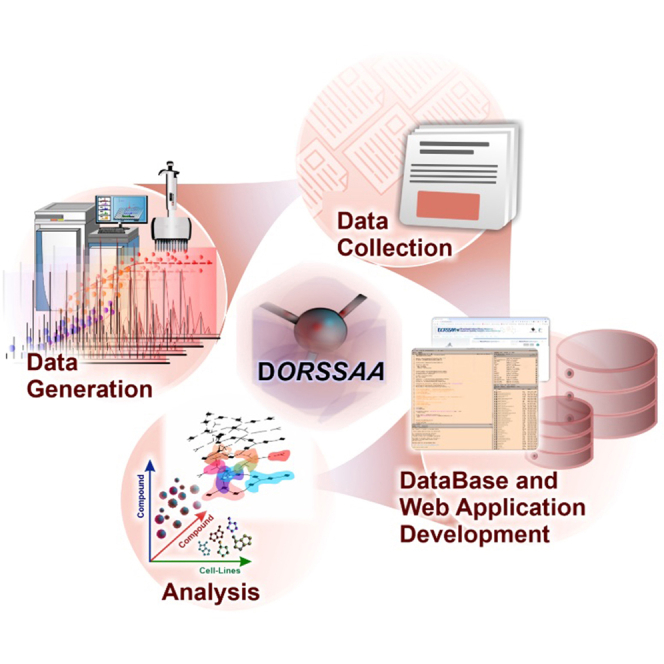
Advancements in high-throughput techniques such as Thermal Proteome Profiling and the high-throughput Proteome Integral Solubility Alteration assay have revolutionized our understanding of drug-protein interactions. Despite these innovations, the absence of an integrative platform for cross-study analysis of stability and solubility alteration data represents a significant bottleneck. To address this gap, we introduce Drug-target interactOmics Resource based on Stability/Solubility Alteration Assay (DORSSAA), an interactive and expandable web-based platform for the systematic analysis and visualization of proteome stability and solubility alteration assay datasets. Currently, DORSSAA features 1,135,985 records spanning 38 cell lines and organisms, 135 compounds, and 40,742 protein targets. Through its user-friendly interface, the resource supports comparative drug-protein interaction analysis and facilitates the discovery of actionable therapeutic targets. Through two case studies, methotrexate target profiling in A549 cells and combinatorial-therapy drug-target interactions in leukemia cell lines, we demonstrate DORSSAA's utility for identifying protein-drug interactions across diverse experimental contexts. This resource empowers researchers to accelerate drug discovery and enhance our understanding of protein behavior. Compared with data repositories and interaction databases, DORSSAA provides direct protein-level evidence of mechanisms of action with strict statistical control for each study. This enables more reliable identification of drug targets, off-target effects, and potential drug combinations.
Overview
CoChat Summary
TL;DR
DORSSAA is an interactive web resource integrating TPP/PISA-family stability and solubility alteration datasets for drug-target interactomics, containing 1,135,985 records across 38 cell lines/organisms, 135 compounds, and 40,742 protein targets. It supports context-aware, cross-study exploration of drug-protein interactions, demonstrated through case studies on methotrexate-DHFR, sapanisertib-H2AFX in AML lines, and SCIN compound retrieval.
Key findings
- DORSSAA contains 1,135,985 drug-protein interaction records spanning 38 cell lines and organisms, 135 compounds, and 40,742 protein targets (as of 25 October 2025), harmonized from 24 publicly available thermal-shift proteomics datasets covering TPP, PISA, and i-PISA, together with an in-house CoPISA dataset.
- In a methotrexate/A549 cell-lysate proof-of-principle query, DHFR (UniProt P00374) was among 15 target records, showed the highest log2-fold change with a significant FDR at threshold 0.05, and was linked in the Compound Query tab to five additional compounds including staurosporine, SNS032, raltitrexed, and panobinostat.
- In an AML case study, sapanisertib was associated with an H2AFX stability shift in MOLM-16 (log2 fold change = −1.673; FDR = 0.03993) and in SKM-1 (log2 fold change = +1.533; p = 0.010); the Ruxolitinib + Ulixertinib combination showed a log2 fold change = 0.986; p = 0.011, presented as hypothesis-generating pathway-level observations.
- In an exploratory SCIN case study, K562 was the strongest available context; nine candidate compounds were retrieved at p ≤ 0.05, with sotrastaurin ranked first (p = 0.005; FC = −0.221), and the Meltome layer reported SCIN melting points in the range of 45 to 50 °C.
Methods
- The authors assembled a harmonized corpus of 24 publicly available thermal-shift proteomics datasets covering TPP, PISA, and i-PISA, plus an in-house CoPISA dataset, spanning 135 small molecules across 38 cancer cell lines or species; treatment context (intact cells vs. lysate/extract) was preserved as study-level metadata.
- Data were reshaped to tidy long format with metadata including PMID, compound, cell line, UniProt ID, gene symbol, replicate, concentration, effect size, and statistical fields; compounds were linked to PubChem InChIKeys, cell lines annotated with Cellosaurus and organism information, and a coverage map plus normalized interaction fact table were materialized into an indexed SQL backend.
- Statistical harmonization converted reported −log10(p) values back to raw p-values where needed, controlled multiple testing within study-defined families per (PMID × compound) using Storey q-values with Benjamini–Yekutieli fallback, used an empirical DMSO-null framework for the K562 PISA study with per-drug Benjamini–Hochberg FDR, and did not apply a single global FDR; the web application was built in R/Shiny with DBI SQL and JavaScript.
Limitations
- The paper states that DORSSAA is not a formal cross-assay benchmarking analysis; differences in assay chemistry, sample type, temperature regime, compound exposure, proteome depth, and statistical processing may influence target detection, ranking, and cross-study reproduction, so it should be viewed as a harmonized exploration and hypothesis-generation resource rather than definitive evidence of full assay-to-assay comparability.
- The paper states that p-values and effect sizes are useful for within-study filtering and exploratory cross-study contextualization but should not be treated as universally interchangeable quantitative measures; DORSSAA does not provide a cumulative global false-discovery rate, and cross-study recurrence is hypothesis-generating. It also includes both lysate/extract-based and intact-cell datasets, which should not be interpreted interchangeably, and intact-cell observations should not automatically be described as direct target identification without orthogonal validation.
- The paper states that the current version intentionally focuses on TPP/PISA-family assays, while other chemoproteomic approaches such as activity-based protein profiling, kinase pulldown methods, LiP-MS, PELSA, pulse proteolysis, and DARTS are future directions. The case-study associations—additional methotrexate-associated proteins, H2AFX shifts, and SCIN candidate compounds—are presented as hypothesis-generating and were not independently validated in the current study.
Model-written summary. Check it against the paper before relying on it.
Integrity signals
Registry
Cites
Statistics
Figures


Verification
Claims the paper makes
0 Valid · 4 Not valid · 28 Not checked · 89 Own results and interpretations
A result the paper reports from its own data — it cites no other source for it, so there is none to check. The quote shows it is in the paper.
In the paper
“Through two case studies, methotrexate target profiling in A549 cells and combinatorial-therapy drug-target interactions in leukemia cell lines, we demonstrate DORSSAA’s utility for identifying protein-drug interactions across diverse experimental contexts.”
§ DORSSAA: Drug-Target interactOmics Resource Based on Stability/Solubility Alteration Assay > Abstract
boostedstates a causen = 2- Asserted: passes — The authors put it forward as true.
- Checkable: passes — It can be checked against evidence.
- Load-bearing: passes — The paper’s conclusions depend on it.
- Based: passes — The paper gives a reason why it holds.
A result the paper reports from its own data — it cites no other source for it, so there is none to check. The quote shows it is in the paper.
In the paper
“In addition, the built-in Meltome layer in DORSSAA provided the available thermal-stability information for SCIN, allowing the researcher to inspect the range of reported melting points in the range of 45 to 50 °C for this protein across the Meltome available contexts.”
§ DORSSAA: Drug-Target interactOmics Resource Based on Stability/Solubility Alteration Assay > Results > Case Study 3: Practical Use of DORSSAA for Exploratory Follow-Up of SCIN
plain- Asserted: passes — The authors put it forward as true.
- Checkable: passes — It can be checked against evidence.
- Load-bearing: unclear — It is unclear whether the paper’s conclusions depend on it.
- Based: passes — The paper gives a reason why it holds.
A result the paper reports from its own data — it cites no other source for it, so there is none to check. The quote shows it is in the paper.
In the paper
“GO enrichment of the methotrexate-associated proteins retrieved from this selected A-549 cell-lysate dataset highlighted six functional categories, including oxidative-stress-related biological processes, illustrating how DORSSAA can support biological interpretation at the single-context retrieval stage.”
§ DORSSAA: Drug-Target interactOmics Resource Based on Stability/Solubility Alteration Assay > Results > Case Study 1: a Proof-of-Principle Retrieval of the Canonical Methotrexate-Dihydrofolate Reductase Interaction Using DORSSAA
plainstates an association- Asserted: passes — The authors put it forward as true.
- Checkable: passes — It can be checked against evidence.
- Load-bearing: unclear — It is unclear whether the paper’s conclusions depend on it.
- Based: passes — The paper gives a reason why it holds.
A result the paper reports from its own data — it cites no other source for it, so there is none to check. The quote shows it is in the paper.
In the paper
“B, in SKM-1 cells, a significant H2AFX shift was also observed with sapanisertib (log2 fold change = +1.533; p = 0.010).”
§ DORSSAA: Drug-Target interactOmics Resource Based on Stability/Solubility Alteration Assay > Results > Case Study 2: Drug-Protein Interactions in Molm16 Cells Investigated Using DORSSAA
plainstates an association- Asserted: passes — The authors put it forward as true.
- Checkable: passes — It can be checked against evidence.
- Load-bearing: unclear — It is unclear whether the paper’s conclusions depend on it.
- Based: passes — The paper gives a reason why it holds.
None of the sources cited for this claim have been checked yet.
In the paper
“We assembled a harmonized corpus of 24 publicly available thermal-shift proteomics datasets, covering TPP, PISA, and i-PISA, together with our in-house CoPISA dataset (20, 20, 21).”
§ DORSSAA: Drug-Target interactOmics Resource Based on Stability/Solubility Alteration Assay > Experimental Procedures > Collection of Proteomics Data
What the sources say
- Not checked yetcites [20] [preprint] Zangene E. Gholizadeh E. Vadadokhau U. Ritz D. Saei A.A. Jafari M. A dataset supporting Combinatorial Proteome Integral Solubility/Stability Alteration Analysis (CoPISA) Sci Data 2026 Jun 29 10.1038/s41597-026-07756-5 Epub ahead of print 42374105 source
- Not checked yetcites [21] Gholizadeh E. Zangene E. Vadadokhau U. Ritz D. Miettinen J.J. Soliymani R. Solubility based mechanistic profiling of combinatorial drug therapy Nat. Commun. 17 2026 PMC13018596 41882025 source
plain- Asserted: passes — The authors put it forward as true.
- Checkable: passes — It can be checked against evidence.
- Load-bearing: passes — The paper’s conclusions depend on it.
- Based: passes — The paper gives a reason why it holds.
35 more claims
Create a free account to see all 121 claims and to verify the 44 references still open.
- It may state two separate claims as one. 51
- Probably not a substantial claim. 52
Citations
Cites
clusterProfiler: an R Package for Comparing Biological Themes Among Gene Clusters
Yu, G., Wang, L.-G., Han, Y., & He, Q.-Y. (2012) · OMICS: A Journal of Integrative Biology · doi:10.1089/omi.2011.0118 · Cited by 36,259
The PRIDE database resources in 2022: a hub for mass spectrometry-based proteomics evidences
Perez-Riverol, Y., Bai, J., Bandla, C., García-Seisdedos, D., Hewapathirana, S., Kamatchinathan, S., Kundu, D. J., Prakash, A., Frericks-Zipper, A., Eisenacher, M., et al. (2022) · Nucleic Acids Research · doi:10.1093/nar/gkab1038 · Cited by 6,125
Mapping identifiers for the integration of genomic datasets with the R/Bioconductor package biomaRt
Durinck, S., Spellman, P. T., Birney, E., & Huber, W. (2009) · Nature Protocols · doi:10.1038/nprot.2009.97 · Cited by 4,197
Correlation between Protein and mRNA Abundance in Yeast
Gygi, S. P., Rochon, Y., Franza, B. R., & Aebersold, R. (1999) · Molecular and Cellular Biology · doi:10.1128/mcb.19.3.1720 · Cited by 3,819
A Next Generation Connectivity Map: L1000 Platform and the First 1,000,000 Profiles
Subramanian, A., Narayan, R., Corsello, S. M., Peck, D. D., Natoli, T. E., Lu, X., Gould, J., Davis, J. F., Tubelli, A. A., Asiedu, J. K., et al. (2017) · Cell · doi:10.1016/j.cell.2017.10.049 · Cited by 3,515
DrugBank 6.0: the DrugBank Knowledgebase for 2024
Knox, C., Wilson, M., Klinger, C. M., Franklin, M., Oler, E., Wilson, A., Pon, A., Cox, J., Chin, N. E. (., Strawbridge, S. A., et al. (2024) · Nucleic Acids Research · doi:10.1093/nar/gkad976 · Cited by 1,727
Tracking cancer drugs in living cells by thermal profiling of the proteome
Savitski, M. M., Reinhard, F. B. M., Franken, H., Werner, T., Savitski, M. F., Eberhard, D., Molina, D. M., Jafari, R., Dovega, R. B., Klaeger, S., et al. (2014) · Science · doi:10.1126/science.1255784 · Cited by 1,187 · cited 1×
“Recent innovations in solubility and stability alteration assays have revolutionized the study of drug-protein interactions (12, 13).”
Quantitative Proteomics of the Cancer Cell Line Encyclopedia
Nusinow, D. P., Szpyt, J., Ghandi, M., Rose, C. M., McDonald, E. R., Kalocsay, M., Jané-Valbuena, J., Gelfand, E., Schweppe, D. K., Jedrychowski, M., et al. (2020) · Cell · doi:10.1016/j.cell.2019.12.023 · Cited by 957 · cited 1×
“However, because most FDA-approved drugs target proteins and protein and RNA levels often correlate weakly, protein-level changes are likely to provide the more relevant readout of compound action (8–11).”
scMC learns biological variation through the alignment of multiple single-cell genomics datasets
Zhang, L., & Nie, Q. (2021) · Genome Biology · doi:10.1186/s13059-020-02238-2 · Cited by 845
Franken, H., Mathieson, T., Childs, D., Sweetman, G. M. A., Werner, T., Tögel, I., Doce, C., Gade, S., Bantscheff, M., Drewes, G., et al. (2015) · Nature Protocols · doi:10.1038/nprot.2015.101 · Cited by 659
Drug–target interaction prediction: databases, web servers and computational models
Chen, X., Yan, C. C., Zhang, X., Zhang, X., Dai, F., Yin, J., & Zhang, Y. (2016) · Briefings in Bioinformatics · doi:10.1093/bib/bbv066 · Cited by 658 · cited 1×
“…the result tables now also expose treatment context from the underlying study metadata, allowing users to distinguish whether a reported association originated from intact-cell or lysate/extract-based experiments and to search these evidence types separately within the interactive table interface.”
Thermal proteome profiling monitors ligand interactions with cellular membrane proteins
Reinhard, F. B. M., Eberhard, D., Werner, T., Franken, H., Childs, D., Doce, C., Savitski, M. F., Huber, W., Bantscheff, M., Savitski, M. M., et al. (2015) · Nature Methods · doi:10.1038/nmeth.3652 · Cited by 315
Proteome Integral Solubility Alteration: A High-Throughput Proteomics Assay for Target Deconvolution
Gaetani, M., Sabatier, P., Saei, A. A., Beusch, C. M., Yang, Z., Lundström, S. L., & Zubarev, R. A. (2019) · Journal of Proteome Research · doi:10.1021/acs.jproteome.9b00500 · Cited by 287 · cited 1×
“By subjecting samples to varying conditions, these methods uncover critical insights into protein behavior and drug interactions across diverse biological contexts (14, 15).”
Self-citationMeltome atlas—thermal proteome stability across the tree of life
Jarzab, A., Kurzawa, N., Hopf, T., Moerch, M., Zecha, J., Leijten, N., Bian, Y., Musiol, E., Maschberger, M., Stoehr, G., et al. (2020) · Nature Methods · doi:10.1038/s41592-020-0801-4 · Cited by 281
Self-citationProteome-wide solubility and thermal stability profiling reveals distinct regulatory roles for ATP
Sridharan, S., Kurzawa, N., Werner, T., Günthner, I., Helm, D., Huber, W., Bantscheff, M., & Savitski, M. M. (2019) · Nature Communications · doi:10.1038/s41467-019-09107-y · Cited by 267
DrugComb: an integrative cancer drug combination data portal
Zagidullin, B., Aldahdooh, J., Zheng, S., Wang, W., Wang, Y., Saad, J., Malyutina, A., Jafari, M., Tanoli, Z., Pessia, A., et al. (2019) · Nucleic Acids Research · doi:10.1093/nar/gkz337 · Cited by 263
Self-citationIdentifying drug targets in tissues and whole blood with thermal-shift profiling
Perrin, J., Werner, T., Kurzawa, N., Rutkowska, A., Childs, D. D., Kalxdorf, M., Poeckel, D., Stonehouse, E., Strohmer, K., Heller, B., et al. (2020) · Nature Biotechnology · doi:10.1038/s41587-019-0388-4 · Cited by 178 · cited 1×
“By subjecting samples to varying conditions, these methods uncover critical insights into protein behavior and drug interactions across diverse biological contexts (14, 15).”
A proteome-wide atlas of drug mechanism of action
Mitchell, D. C., Kuljanin, M., Li, J., Van Vranken, J. G., Bulloch, N., Schweppe, D. K., Huttlin, E. L., & Gygi, S. P. (2023) · Nature Biotechnology · doi:10.1038/s41587-022-01539-0 · Cited by 164
Molecular mechanism of action and pharmacokinetic properties of methotrexate
Maksimović, V., Pavlović-Popović, Z., Vukmirović, S., Cvejić, J., Mooranian, A., Al‐Salami, H., Mikov, M., & Goločorbin-Kon, S. (2020) · Molecular Biology Reports · doi:10.1007/s11033-020-05481-9 · Cited by 148
Miettinen, T. P., Peltier, J., Härtlova, A., Gierliński, M., Jansen, V. M., Trost, M., & Björklund, M. (2018) · The EMBO Journal · doi:10.15252/embj.201798359 · Cited by 101
Cell surface thermal proteome profiling tracks perturbations and drug targets on the plasma membrane
Kalxdorf, M., Günthner, I., Becher, I., Kurzawa, N., Knecht, S., Savitski, M. M., Eberl, H. C., & Bantscheff, M. (2021) · Nature Methods · doi:10.1038/s41592-020-01022-1 · Cited by 100
ProTargetMiner as a proteome signature library of anticancer molecules for functional discovery
Saei, A. A., Beusch, C. M., Chernobrovkin, A., Sabatier, P., Zhang, B., Tokat, Ü. G., Stergiou, E., Gaetani, M., Végvári, Á., & Zubarev, R. A. (2019) · Nature Communications · doi:10.1038/s41467-019-13582-8 · Cited by 81
Self-citationDihydrofolate Reductase (DHFR) Inhibitors: A Comprehensive Review
Sehrawat, R., Rathee, P., Khatkar, S., Akkol, E., Khayatkashani, M., Nabavi, S. M., & Khatkar, A. (2023) · Current Medicinal Chemistry · doi:10.2174/0929867330666230310091510 · Cited by 79
Lysine-specific demethylase 1A restricts ex vivo propagation of human HSCs and is a target of UM171
Subramaniam, A., Žemaitis, K., Talkhoncheh, M. S., Yudovich, D., Bäckström, A., Debnath, S., Chen, J., Jain, M. V., Galeev, R., Gaetani, M., et al. (2020) · Blood · doi:10.1182/blood.2020005827 · Cited by 75
Tanoli, Z., Alam, Z., Vähä-Koskela, M., Ravikumar, B., Malyutina, A., Jaiswal, A., Tang, J., Wennerberg, K., & Aittokallio, T. (2018) · Database · doi:10.1093/database/bay083 · Cited by 71
Anticancer Effect of Deuterium Depleted Water - Redox Disbalance Leads to Oxidative Stress
Zhang, X., Gaetani, M., Chernobrovkin, A. L., & Zubarev, R. A. (2019) · Molecular & Cellular Proteomics · doi:10.1074/mcp.ra119.001455 · Cited by 65
Heppler, L. N., Attarha, S., Persaud, R., Brown, J. I., Wang, P., Petrova, B., Tošić, I., Burton, F., Flamand, Y., Walker, S. R., et al. (2021) · Journal of Biological Chemistry · doi:10.1016/j.jbc.2021.101531 · Cited by 54
Opportunities and challenges in phenotypic screening for neurodegenerative disease research
Brown, D. G., & Wobst, H. J. (2020) · Journal of Medicinal Chemistry · doi:10.1021/acs.jmedchem.9b00797 · Cited by 48
Beusch, C. M., Sabatier, P., & Zubarev, R. A. (2022) · Analytical Chemistry · doi:10.1021/acs.analchem.2c00391 · Cited by 48
Perspective on CETSA literature: toward more quantitative data interpretation
Seashore-Ludlow, B., Axelsson, H., & Lundbäck, T. (2020) · SLAS Discovery · doi:10.1177/2472555219884524 · Cited by 47
Identifying the Target of an Antiparasitic Compound in Toxoplasma Using Thermal Proteome Profiling
Herneisen, A. L., Sidik, S. M., Markus, B. M., Drewry, D. H., Zuercher, W. J., & Lourido, S. (2020) · ACS Chemical Biology · doi:10.1021/acschembio.0c00369 · Cited by 43
Tran, T., & Kavuluru, R. (2018) · Database · doi:10.1093/database/bay092 · Cited by 42
Ruan, C., Ning, W., Liu, Z., Zhang, X., Fang, Z., Li, Y., Dang, Y., Xue, Y., & Ye, M. (2022) · ACS Chemical Biology · doi:10.1021/acschembio.1c00936 · Cited by 36
Large-scale characterization of drug mechanism of action using proteome-wide thermal shift assaysPreprint
Vranken, J. G. V., Li, J., Mintseris, J., Wei, T.-Y., Sniezek, C. M., Gadzuk-Shea, M. M., Gygi, S. P., & Schweppe, D. K. (2024) · eLife · doi:10.7554/elife.95595 · Cited by 32
Türkowsky, D., Lohmann, P., Mühlenbrink, M., Schubert, T., Adrian, L., Goris, T., Jehmlich, N., & von Bergen�, M. (2018) · Journal of Proteomics · doi:10.1016/j.jprot.2018.05.018 · Cited by 30
A simplified thermal proteome profiling approach to screen protein targets of a ligand
Zhang, X., Ruan, C., Zhu, H., Li, K., Zhang, W., Wang, K., Hu, L., & Ye, M. (2020) · PROTEOMICS · doi:10.1002/pmic.201900372 · Cited by 24
Re-evaluating experimental validation in the Big Data era: a conceptual argument
Jafari, M., Guan, Y., Wedge, D. C., & Ansari-Pour, N. (2021) · Genome Biology · doi:10.1186/s13059-021-02292-4 · Cited by 24
Self-citationDrug elucidation: invertebrate genetics sheds new light on the molecular targets of CNS drugs
Dwyer, D. S., Aamodt, E. J., Cohen, B. M., & Buttner, E. A. (2014) · Frontiers in Pharmacology · doi:10.3389/fphar.2014.00177 · Cited by 21
Peuget, S., Zhu, J., Sanz, G., Singh, M., Gaetani, M., Chen, X., Shi, Y., Saei, A. A., Visnes, T., Lindström, M. S., et al. (2020) · Cancer Research · doi:10.1158/0008-5472.can-19-2069 · Cited by 20
Self-citationMirzaie, M., Gholizadeh, E., Miettinen, J. J., Ianevski, F., Ruokoranta, T., Saarela, J., Manninen, M., Miettinen, S., Heckman, C. A., & Jafari, M. (2024) · Oncogenesis · doi:10.1038/s41389-024-00510-9 · Cited by 20
Self-citationThermal Proteome Profiling in Zebrafish Reveals Effects of Napabucasin on Retinoic Acid Metabolism
Leijten, N. M., Bakker, P. A., Spaink, H. P., den Hertog, J., & Lemeer, S. (2020) · Molecular & Cellular Proteomics · doi:10.1074/mcp.ra120.002273 · Cited by 20
Barneh, F., Mirzaie, M., Nickchi, P., Tan, T. Z., Thiery, J. P., Piran, M., Salimi, M., Goshadrou, F., Aref, A. R., & Jafari, M. (2019) · Briefings in Bioinformatics · doi:10.1093/bib/bby030 · Cited by 19
Self-citationGholizadeh, E., Karbalaei, R., Khaleghian, A., Salimi, M., Gilany, K., Soliymani, R., Tanoli, Z., Rezadoost, H., Baumann, M., Jafari, M., et al. (2021) · Molecular Pharmacology · doi:10.1124/molpharm.120.000210 · Cited by 18
Self-citationTanoli, Z., Aldahdooh, J., Alam, F., Wang, Y., Seemab, U., Fratelli, M., Pavlis, P., Hajduch, M., Bietrix, F., Gribbon, P., et al. (2022) · Briefings in Bioinformatics · doi:10.1093/bib/bbab350 · Cited by 16
Goroshchuk, O., Kolosenko, I., Kunold, E., Vidarsdóttir, L., Pirmoradian, M., Azimi, A., Jafari, R., & Palm‐Apergi, C. (2021) · The FASEB Journal · doi:10.1096/fj.202100457rr · Cited by 15
Phaneuf, C. G., Aizikov, K., Grinfeld, D., Kreutzmann, A., Mourad, D., Lange, O., Dai, D., Zhang, B., Belenky, A., Makarov, A. A., et al. (2023) · Communications Chemistry · doi:10.1038/s42004-023-00861-1 · Cited by 15
Barneh, F., Salimi, M., Goshadrou, F., Ashtiani, M., Mirzaie, M., Zali, H., & Jafari, M. (2018) · Journal of Cellular Biochemistry · doi:10.1002/jcb.27196 · Cited by 14
Self-citationSystematic identification of novel cancer genes through analysis of deep shRNA perturbation screens
Montazeri, H., Coto-Llerena, M., Bianco, G., Zangene, E., Taha-Mehlitz, S., Paradiso, V., Srivatsa, S., de Weck, A., Roma, G., Lanzafame, M., et al. (2021) · Nucleic Acids Research · doi:10.1093/nar/gkab627 · Cited by 13
Self-citationCan we assume the gene expression profile as a proxy for signaling network activity?
Piran, M., Karbalaei, R., Piran, M., Aldahdooh, J., Mirzaie, M., Ansari-Pour, N., Tang, J., & Jafari, M. (2020) · Biomolecules · doi:10.3390/biom10060850 · Cited by 11
Self-citationLizano-Fallas, V., del Amor, A. C., & Cristóbal, S. (2021) · Journal of Proteomics · doi:10.1016/j.jprot.2021.104382 · Cited by 10
Preventing proteomics data tombs through collective responsibility and community engagement
Vadadokhau, U., Soliman, M., Castillon, L., Pastor Muñoz, P., Id, L., Natraj Gayathri, S., Srivastava, A., Runeberg, T., González-Armijos, T., Šapovalovaitė, K., et al. (2026) · Scientific Data · doi:10.1038/s41597-026-06614-8 · Cited by 8
Self-citationKakegawa, J., Ohtsuka, S., Yokoyama, M., Hosoi, T., Ozawa, K., & Hatanaka, T. (2021) · Molecular Pharmacology · doi:10.1124/molpharm.121.000243 · Cited by 8
SL-scan identifies synthetic lethal interactions in cancer using metabolic networks
Zangene, E., Marashi, S.-A., & Montazeri, H. (2023) · Scientific Reports · doi:10.1038/s41598-023-42992-4 · Cited by 8
Self-citationNetwork integration of thermal proteome profiling with multi-omics data decodes PARP inhibition
Burtscher, M. L., Gade, S., Garrido-Rodriguez, M., Rutkowska, A., Werner, T., Eberl, H. C., Petretich, M., Knopf, N., Zirngibl, K., Grandi, P., et al. (2024) · Molecular Systems Biology · doi:10.1038/s44320-024-00025-w · Cited by 7
Gholizadeh, E., Zangene, E., Parsons, A., Kontro, M., Heckman, C. A., & Jafari, M. (2025) · Biomedicine & Pharmacotherapy · doi:10.1016/j.biopha.2025.118647 · Cited by 6
Self-citationSolubility based mechanistic profiling of combinatorial drug therapy
Gholizadeh, E., Zangene, E., Vadadokhau, U., Ritz, D., Miettinen, J. J., Soliymani, R., Baumann, M., Wilhelm, M., Kankuri, E., Haynes, P. A., et al. (2026) · Nature Communications · doi:10.1038/s41467-026-70394-3 · Cited by 5
Self-citationZangene, E., Gholizadeh, E., Vadadokhau, U., Ritz, D., Saei, A. A., & Jafari, M. (2026) · Scientific Data · doi:10.1038/s41597-026-07756-5 · Cited by 3
Self-citationInformative missingness in nominal data: a graph-theoretic approach to revealing hidden structure
Zangene, E., Schwämmle, V., & Jafari, M. (2026) · Computational and Structural Biotechnology Journal · doi:10.34133/csbj.0099 · Cited by 2
Self-citation
Cited by
Solubility based mechanistic profiling of combinatorial drug therapy
Gholizadeh, E., Zangene, E., Vadadokhau, U., Ritz, D., Miettinen, J. J., Soliymani, R., Baumann, M., Wilhelm, M., Kankuri, E., Haynes, P. A., et al. (2026) · Nature Communications · doi:10.1038/s41467-026-70394-3 · Cited by 5
Self-citationZangene, E., Gholizadeh, E., Vadadokhau, U., Ritz, D., Saei, A. A., & Jafari, M. (2026) · Scientific Data · doi:10.1038/s41597-026-07756-5 · Cited by 3
Self-citationCoPISA: Combinatorial Proteome Integral Solubility/Stability Alteration analysisPreprint
Zangene, E., Gholizadeh, E., Vadadokhau, U., Ritz, D., Saei, A. A., & Jafari, M. (2026) · bioRxiv (Cold Spring Harbor Laboratory) · doi:10.64898/2026.03.20.713131
Self-citation
Metadata
- Authors
- Zangene, E., Gholizadeh, E., Schwämmle, V., Saei, A. A., Wilhelm, M., Käll, L., & Jafari, M.
- Affiliations
- University of Helsinki (FI)
- Karolinska Institutet (SE)
- Technical University of Munich (DE)
- Science for Life Laboratory (SE)
- Corresponding author
- Jafari, Mohieddin
- Venue
- Molecular & Cellular Proteomics
- Publisher
- Elsevier BV
- Published
- 2026-07
- Volume
- 25
- Issue
- 7
- Pages
- 101603
- ISSN
- 1535-9476 (ISSN-L)
- PMC
- PMC13380709
- OpenAlex
- W4390442279
- Cited by
- 3
- References
- 58
- Citations by year
- 2026: 3
- FWCI
- 3.76
- Type
- journal article
- Language
- en
- Open access
- gold
- doi.org
- Licence
- cc-by
- www.elsevier.com/tdm/userlicense/1.0/ (tdm)
- www.elsevier.com/legal/tdmrep-license (tdm)
- creativecommons.org/licenses/by/4.0/ (vor)
- Locations
- Molecular & Cellular Proteomics (publishedVersion, cc-by)
- bioRxiv (Cold Spring Harbor Laboratory) (submittedVersion, cc-by)
- PubMed Central (publishedVersion, cc-by)
- PubMed (publishedVersion)
- Helda - University of Helsinki Institutional Repository (publishedVersion)
- University of Southern Denmark Research Portal (University of Southern Denmark) (publishedVersion, cc-by)
- Tampere University Institutional Repository (Tampere University) (publishedVersion, cc-by)
- Funders
- Swedish Society of Medicine
- Swedish Research Council
- Tampere University and Tampere University of Applied Sciences
- Jane and Aatos Erkko Fundation
- Research Council for Biosciences and Environment
- Topics
- Life Sciences › Pharmacology, Toxicology and Pharmaceutics › Drug Discovery › Computational Drug Discovery Methods
- Physical Sciences › Chemistry › Spectroscopy › Advanced Proteomics Techniques and Applications
- Life Sciences › Biochemistry, Genetics and Molecular Biology › Molecular Biology › Bioinformatics and Genomic Networks
- Keywords
- drug-target interactions, thermal proteome profiling, drug-protein interactions, drug target identification, off-target effects, combination therapy, methotrexate, leukemia cell lines, A549 cells, mechanism of action
- MeSH terms
- A549 Cells, Humans, Methotrexate, Solubility, Proteome, Proteomics, Protein Stability, Drug Discovery
About these checks
Registry, retraction, Cites and statistics results are computed, not judged, with one exception: a printed reference that no index lists is read once by a model before it counts as a citation error. Claims are extracted by a model and kept only when their quote appears verbatim in the text; each cited source is then checked, with a model’s help, for whether it says what the claim relies on. Those verdicts can be wrong — read the claim’s quote and the cited source before relying on one.
A language model drew the claims from the paper on 2026-11-22, under version 3 of the claim definition (model deepseek-v4.1-flash, prompt extract-v3).
A second model labelled each claim on 2026-11-22 (model jev-1.13-20260917, definition revision gold-guideline-v0.2).
Statistics and arithmetic are recomputed, not judged.
Confidence bands are shown only for fields calibrated on our annotated test set. None is calibrated yet, so no band is shown.
What counts as a claim ›How we measure confidence ›How we check this ›
Are you an author, or do you see a problem with this page? Request a review
Data sources
Bibliographic data: Semantic Scholar, OpenAlex, Crossref.
Contains information from the Semantic Scholar Academic Graph Datasets, made available under the ODC Attribution License (ODC-BY 1.0).
Semantic Scholar’s data is described in: Kinney, R., et al. (2023). The Semantic Scholar Open Data Platform. arXiv:2301.10140.
