

The DOI matches its Crossref record; 53 of the 58 references it cites were found in a registry or an index.
Targeting BRCA1 and BRCA2 Deficiencies with G-Quadruplex-Interacting Compounds
Open accessAbstract
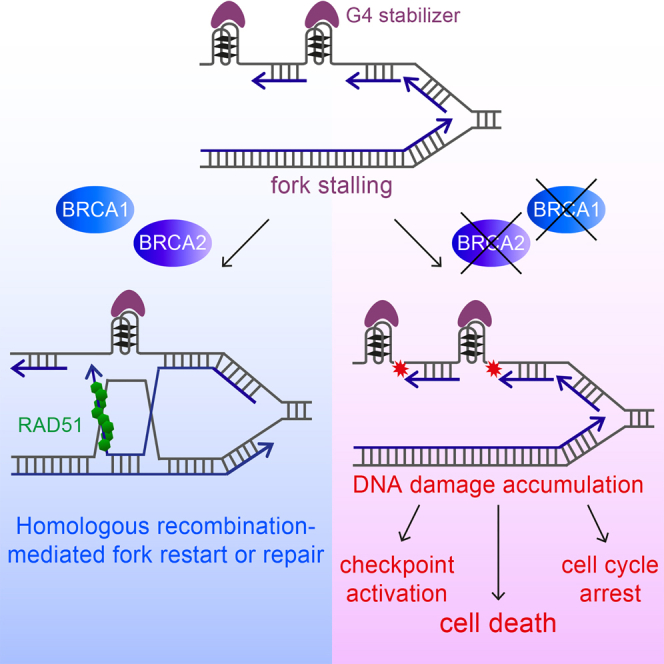
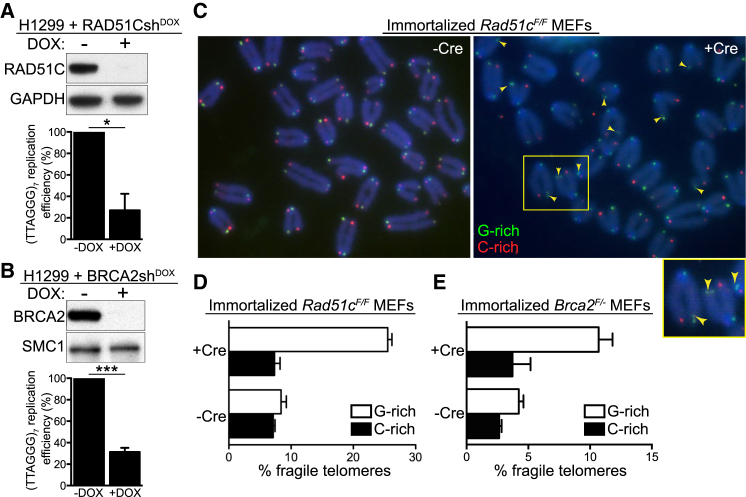
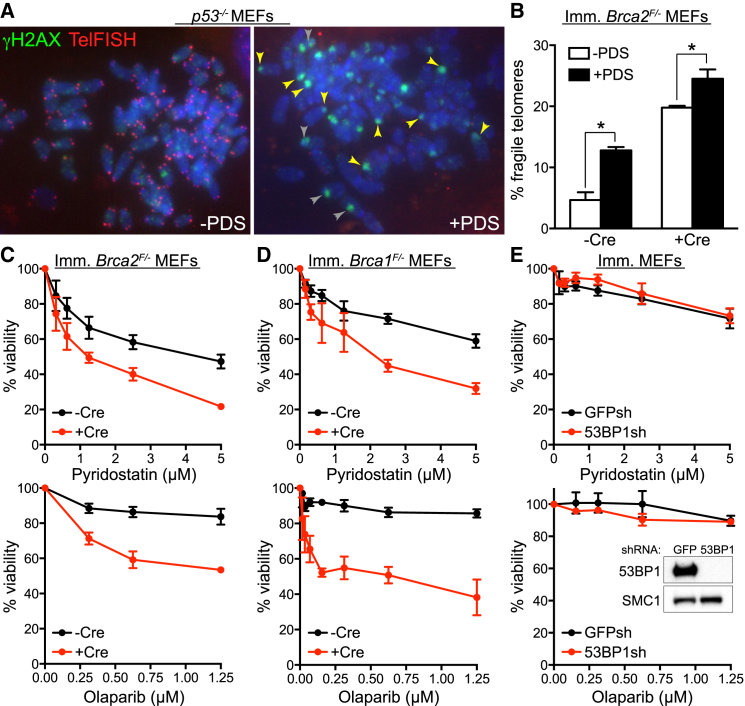
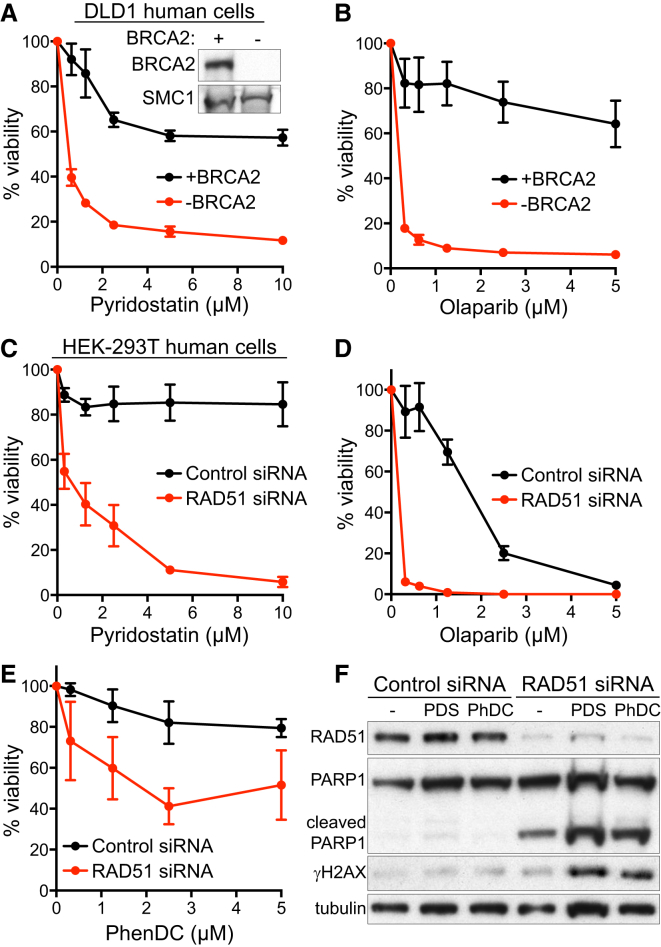
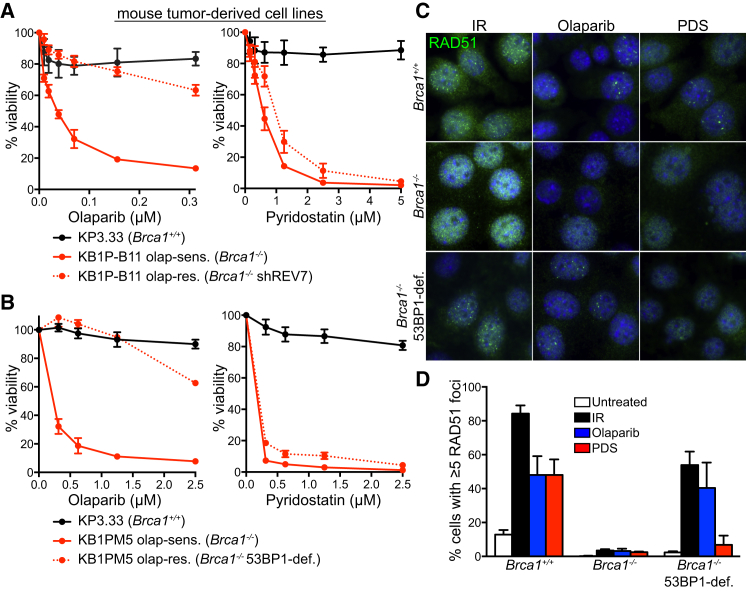
G-quadruplex (G4)-forming genomic sequences, including telomeres, represent natural replication fork barriers. Stalled replication forks can be stabilized and restarted by homologous recombination (HR), which also repairs DNA double-strand breaks (DSBs) arising at collapsed forks. We have previously shown that HR facilitates telomere replication. Here, we demonstrate that the replication efficiency of guanine-rich (G-rich) telomeric repeats is decreased significantly in cells lacking HR. Treatment with the G4-stabilizing compound pyridostatin (PDS) increases telomere fragility in BRCA2-deficient cells, suggesting that G4 formation drives telomere instability. Remarkably, PDS reduces proliferation of HR-defective cells by inducing DSB accumulation, checkpoint activation, and deregulated G2/M progression and by enhancing the replication defect intrinsic to HR deficiency. PDS toxicity extends to HR-defective cells that have acquired olaparib resistance through loss of 53BP1 or REV7. Altogether, these results highlight the therapeutic potential of G4-stabilizing drugs to selectively eliminate HR-compromised cells and tumors, including those resistant to PARP inhibition.
Overview
The claims and statistics of this paper haven’t been checked yet.
Run the check — free, no account needed. It reads the open-access text and checks the sources it cites.
Integrity signals
Registry
Cites
Statistics
Figures
Verification
Claims the paper makes
The claims and statistics of this paper haven’t been checked yet.
Run the check — free, no account needed. It reads the open-access text and checks the sources it cites.
Claims other papers make about this one
Each is checked against this paper’s own text: does it say what the citing paper says it does?
The cited source says what the claim attributes to it.
In the citing paper
“This effect seems to be aggravated in cells with an impaired DNA repair machinery and deficiencies in homologous recombination. (72).”
From G-quadruplex-mediated genomic instability drives SNVs in cancer (2024) · cites this paper as [72]
Self-check
Percentages, sums and reported differences re-computed from the paper’s own numbers.
The self-check needs the paper’s full text.
Citations
Cites
A simple technique for quantitation of low levels of DNA damage in individual cells
Singh, N. P., McCoy, M. T., Tice, R. R., & Schneider, E. L. (1988) · Experimental Cell Research · doi:10.1016/0014-4827(88)90265-0 · Cited by 10,828 · cited 1×
“Alkaline Single-Cell Gel Electrophoresis Comet Assay Thecometassaywasperformedaspreviouslydescribed (Singh et al., 1988).”
MethodGenomic instability — an evolving hallmark of cancer
Negrini, S., Gorgoulis, V. G., & Halazonetis, T. D. (2010) · Nature Reviews Molecular Cell Biology · doi:10.1038/nrm2858 · Cited by 2,397 · cited 1×
“Genomic instability is a hallmark of cancer caused by failure of normal DNA replication and/or repair mechanisms (Halazonetis Mo et al., 2008; Negrini et al., 2010).”
BackgroundQuantitative visualization of DNA G-quadruplex structures in human cells
Biffi, G., Tannahill, D., McCafferty, J., & Balasubramanian, S. (2013) · Nature Chemistry · doi:10.1038/nchem.1548 · Cited by 2,173 · cited 1×
“G4 structures have been subsequently detected with several other structure-specific antibodies (Biffi et al., 2013; Henderson et al., 2014; Schaffitzel et al., 2001) and interacting small molecules (Lam et al., 2013; Müller et al., 2010; Rodriguez et al., 2012).”
BackgroundCauses and consequences of replication stress
Zeman, M. K., & Cimprich, K. A. (2014) · Nature Cell Biology · doi:10.1038/ncb2897 · Cited by 2,079 · cited 1×
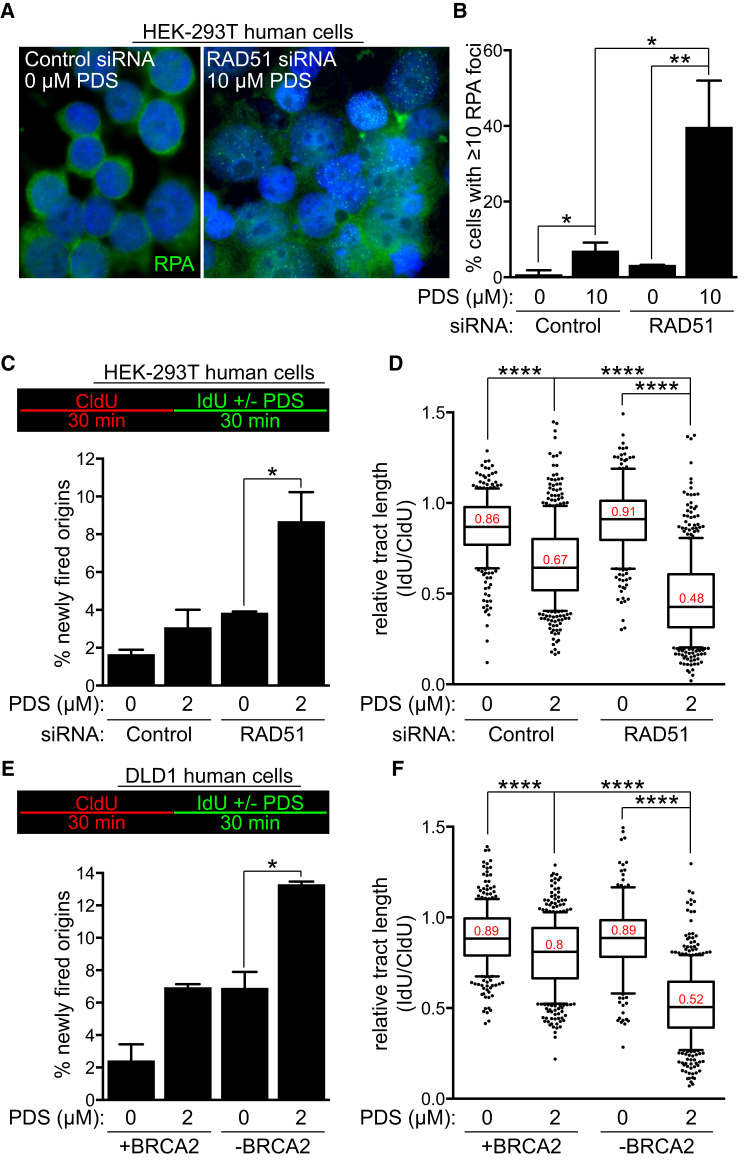
“RPA accumulation on the chromatin, together with elevated frequency of origin firing and reduced replication rates, represents signatures of replicative stress (Zeman and Cimprich, 2014).”
BackgroundCrystal structure of parallel quadruplexes from human telomeric DNA
Parkinson, G., Lee, M. P. H., & Neidle, S. (2002) · Nature · doi:10.1038/nature755 · Cited by 1,863 · cited 1×
“Importantly, telomeric G-rich DNA sequences have a high propensity to adopt G4 configurations (Parkinson et al., 2002).”
BackgroundAn Oncogene-Induced DNA Damage Model for Cancer Development
Halazonetis, T. D., Gorgoulis, V. G., & Bartek, J. (2008) · Science · doi:10.1126/science.1140735 · Cited by 1,851
Prevalence of quadruplexes in the human genome
Huppert, J. L., & Balasubramanian, S. (2005) · Nucleic Acids Research · doi:10.1093/nar/gki609 · Cited by 1,795 · cited 2×
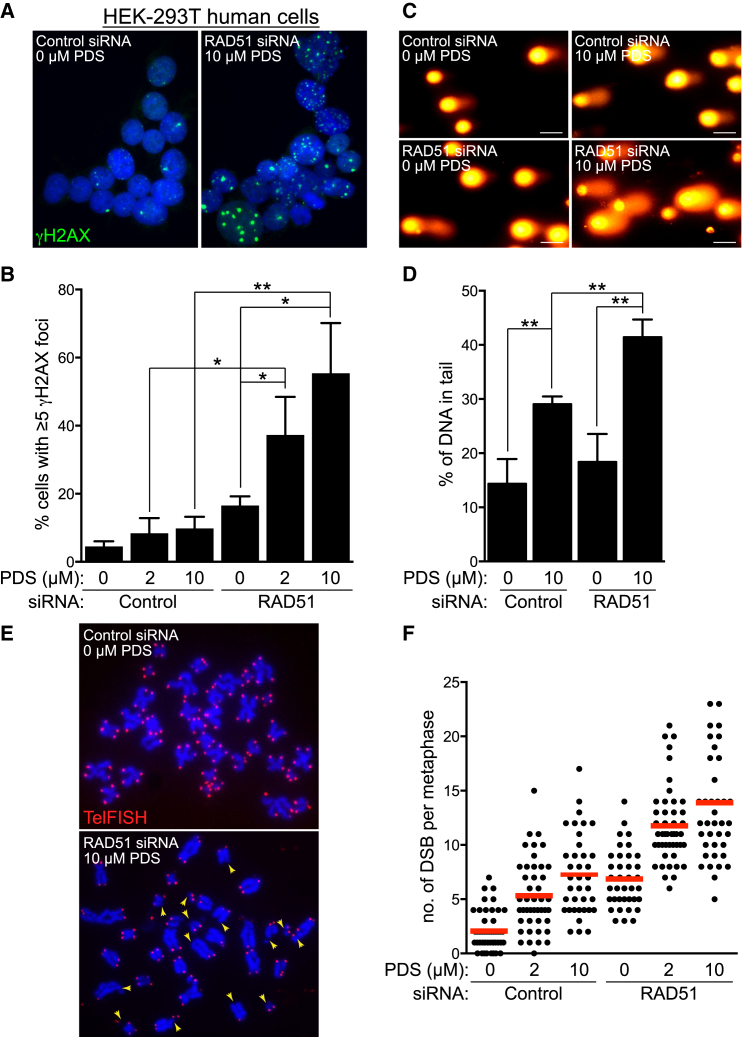
“A conundrum posed by this quantificationwas that PDS induced approximately fifteen DSBs per metaphase in cells lacking RAD51, yet in silico predictions suggested thatmore than 300,000 genomic sites can adopt G4 configurations (Huppert and Balasubramanian, 2005).”
Background53BP1 Inhibits Homologous Recombination in Brca1-Deficient Cells by Blocking Resection of DNA Breaks
Bunting, S. F., Callén, E., Wong, N., Chen, H.-T., Polato, F., Gunn, A., Bothmer, A., Feldhahn, N., Fernandez-Capetillo, O., Cao, L., et al. (2010) · Cell · doi:10.1016/j.cell.2010.03.012 · Cited by 1,671 · cited 4×
“…Zimmer, Eliana M.C. Tacconi, Cecilia Folio, ..., Annamaria Biroccio, Julian E. Sale, Madalena Tarsounas Correspondence madalena.tarsounas@oncology.ox.ac.uk In Brief Zimmer et al. discovered that homologous recombination activities of BRCA1 and BRCA2…”
BackgroundInfluentialHelix formation by guanylic acid.
Gellert, M., Lipsett, M., & Davies, D. R. (1962) · Proceedings of the National Academy of Sciences of the United States of America · doi:10.1073/pnas.48.12.2013 · Cited by 1,430 · cited 2×
“The ability of G-rich DNA to adopt G4 secondary structures in vitro was reported over 50 years ago (Gellert et al., 1962).”
BackgroundSchlacher, K., Christ, N., Siaud, N., Egashira, A., Wu, H., & Jasin, M. (2011) · Cell · doi:10.1016/j.cell.2011.03.041 · Cited by 1,292 · cited 2×
“HR factors act to stabilize stalled replication forks by preventing their nucleolytic degradation (Hashimoto et al., 2010; Schlacher et al., 2011) to restart arrested forks (Lambert et al., 2010) and to repair double-strand breaks (DSBs) arising from disintegrated forks (Aze et al., 2013).”
Background
Research works printed but not linked: 1
- Bouwman, 2014, Molecular pathways: how can BRCA-mutated tumors become resistant to PARP inhibitors?, Clin. Cancer Res., 20, 540, 10.1158/1078-0432.CCR-13-0225 · DOI
Cited by
Sorted by citations
The regulation and functions of DNA and RNA G-quadruplexes
Varshney, D., Spiegel, J., Zyner, K. G., Tannahill, D., & Balasubramanian, S. (2020) · Nature Reviews Molecular Cell Biology · doi:10.1038/s41580-020-0236-x · Cited by 1,292
The Structure and Function of DNA G-Quadruplexes
Spiegel, J., Adhikari, S., & Balasubramanian, S. (2020) · Trends in Chemistry · doi:10.1016/j.trechm.2019.07.002 · Cited by 920
“G4 ligands such as pyridostatin and RHPS4 cause DNA double-strand breaks in cancer cells and activate DNA repair pathways [47,117].”
BackgroundInfluentialDNA G-quadruplexes in the human genome: detection, functions and therapeutic potential
Hänsel‐Hertsch, R., Antonio, M. D., & Balasubramanian, S. (2017) · Nature Reviews Molecular Cell Biology · doi:10.1038/nrm.2017.3 · Cited by 882
CX-5461 is a DNA G-quadruplex stabilizer with selective lethality in BRCA1/2 deficient tumours
Xu, H., Antonio, M. D., McKinney, S. E., Mathew, V., Ho, B., O’Neil, N. J., Santos, N. D., Silvester, J., Wei, V., Garcia, J., et al. (2017) · Nature Communications · doi:10.1038/ncomms14432 · Cited by 601
A genetic map of the response to DNA damage in human cells
Olivieri, M., Cho, T., Álvarez-Quilón, A., Li, K., Schellenberg, M. J., Zimmermann, M., Hustedt, N., Rossi, S., Adam, S., Melo, H., et al. (2019) · bioRxiv · doi:10.1101/845446 · Cited by 520
“Like pyridostatin, CX5461 shows activity against HR-deficient cells and tumors (Xu et al., 2017; Zimmer et al., 2016), suggesting a common mechanism of action.”
BackgroundG-quadruplexes: a promising target for cancer therapy
Kosiol, N., Juranek, S., Brossart, P., Heine, A., & Paeschke, K. (2021) · Molecular Cancer · doi:10.1186/s12943-021-01328-4 · Cited by 561
“BRCA1, BRCA2, Rad51 deficient cells) exhibited slow growth, fragile telomeres, DNA double strand breaks and checkpoint activation [94].”
BackgroundClinical and translational advances in ovarian cancer therapy
Konstantinopoulos, P. A., & Matulonis, U. A. (2023) · Nature Cancer · doi:10.1038/s43018-023-00617-9 · Cited by 394
Quadruplex nucleic acids as targets for anticancer therapeutics
Neidle, S. (2017) · Nature Reviews Chemistry · doi:10.1038/s41570-017-0041 · Cited by 467
The antitumorigenic roles of BRCA1–BARD1 in DNA repair and replication
Tarsounas, M., & Sung, P. (2020) · Nature Reviews Molecular Cell Biology · doi:10.1038/s41580-020-0218-z · Cited by 389
Self-citationDe Magis, A., Manzo, S. G., Russo, M., Marinello, J., Morigi, R., Sordet, O., & Capranico, G. (2019) · Proceedings of the National Academy of Sciences · doi:10.1073/pnas.1810409116 · Cited by 332
“G4 ligands, including PDS, were recently shown to be more active in reducing the proliferation of BRCA1/2-deficient cancer cells by accumulating DNA damage, chromosomal aberrations, and persistent checkpoint activation (6, 7).”
BackgroundThe impact of replication stress on replication dynamics and DNA damage in vertebrate cells
Técher, H., Koundrioukoff, S., Nicolas, A. G., & Debatisse, M. (2017) · Nature Reviews Genetics · doi:10.1038/nrg.2017.46 · Cited by 287
Landscape of G-quadruplex DNA structural regions in breast cancer
Hänsel-Hertsch, R., Simeone, A., Shea, A., Hui, W. W. I., Zyner, K. G., Marsico, G., Rueda, O. M., Bruna, A., Martin, A., Zhang, X., et al. (2020) · Nature Genetics · doi:10.1038/s41588-020-0672-8 · Cited by 223
Interplay between Fanconi anemia and homologous recombination pathways in genome integrity
Michl, J., Zimmer, J., & Tarsounas, M. (2016) · The EMBO Journal · doi:10.15252/embj.201693860 · Cited by 217
“FANCD 2 also inhibits FANCI-mediated dormant origin firing, independently of its monoubiquitination status.”
InfluentialSelf-citationMin, J., Wright, W. E., & Shay, J. W. (2017) · Molecular and Cellular Biology · doi:10.1128/mcb.00226-17 · Cited by 204
“Treatment with the G-quadruplex (here referred to as G4) ligand PDS (pyridostatin) induced more fragile telomeres, as previously reported (17, 18).”
BackgroundMethodBRCA2 abrogation triggers innate immune responses potentiated by treatment with PARP inhibitors
Reisländer, T., Lombardi, E. P., Groelly, F. J., Miar, A., Porru, M., Vito, S. D., Wright, B., Lockstone, H. E., Biroccio, A., Harris, A. L., et al. (2019) · Nature Communications · doi:10.1038/s41467-019-11048-5 · Cited by 197
Self-citationTranscription–replication conflicts underlie sensitivity to PARP inhibitors
Petropoulos, M., Karamichali, A., Rossetti, G. G., Freudenmann, A., Iacovino, L. G., Dionellis, V. S., Sotiriou, S. K., & Halazonetis, T. D. (2024) · Nature · doi:10.1038/s41586-024-07217-2 · Cited by 217
Xie, H., Ma, K., Zhang, K., Zhou, J., Li, L., Yang, W., Gong, Y., Cai, L., & Gong, K. (2021) · Cell Death & Disease · doi:10.1038/s41419-020-03229-8 · Cited by 155
G-Quadruplexes at Telomeres: Friend or Foe?
Bryan, T. M. (2020) · Molecules · doi:10.3390/molecules25163686 · Cited by 194
Mutant ATRX: uncovering a new therapeutic target for glioma
Haase, S., Garcia-Fabiani, M. B., Carney, S. V., Altshuler, D. B., Núñez, F. J., Mendez, F., Núñez, F. M., Lowenstein, P. R., & Castro, M. G. (2018) · Expert Opinion on Therapeutic Targets · doi:10.1080/14728222.2018.1487953 · Cited by 161
Nishio, M., Tsukakoshi, K., & Ikebukuro, K. (2021) · Biosensors and Bioelectronics · doi:10.1016/j.bios.2021.113030 · Cited by 145
Targeting Senescent Cells for a Healthier Aging: Challenges and Opportunities
Song, S., Tchkonia, T., Jiang, J., Kirkland, J. L., & Sun, Y. (2020) · Advanced Science · doi:10.1002/advs.202002611 · Cited by 129
G-quadruplex–R-loop interactions and the mechanism of anticancer G-quadruplex binders
Miglietta, G., Russo, M. V., & Capranico, G. (2020) · Nucleic Acids Research · doi:10.1093/nar/gkaa944 · Cited by 132
“The knowledge came from observations in cancer cells deficient for BRCA1/2 genes, critical players of HRR, as G4 binders were shown to be more active in DSB accumulation and persistent checkpoint activation in these cell types (112).”
BackgroundZhi-yin, S., Wang, X., Cheng, S.-Q., Su, X., & Ou, T. (2019) · Molecules · doi:10.3390/molecules24030396 · Cited by 142
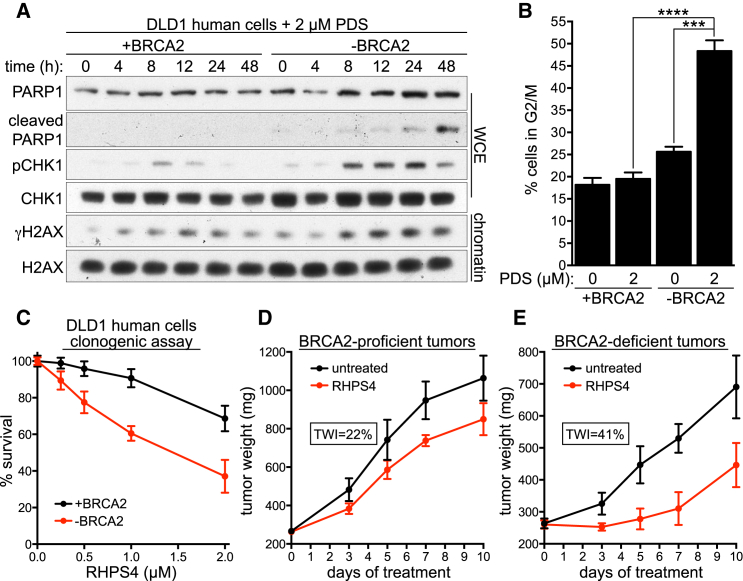
“PDS increases telomere fragility in BRCA2-deficient cells via stabilization of the G-quadruplex in the telomeric region, and thus reduces proliferation of homologous recombination (HR)-defective cells by inducing double-strand breaks accumulation and checkpoint activation, and deregulating G2/M progression [168].”
BackgroundPOLQ seals post-replicative ssDNA gaps to maintain genome stability in BRCA-deficient cancer cells.
Belan, O., Sebald, M., Adamowicz, M., Anand, R., Vančevska, A., Neves, J., Grinkevich, V., Hewitt, G., Segura-Bayona, S., Bellelli, R., et al. (2022) · Molecules and Cells · doi:10.1016/j.molcel.2022.11.008 · Cited by 115
Przetocka, S., Porro, A., Bolck, H. A., Walker, C., Lezaja, A., Trenner, A., von Aesch, C., Himmels, S.-F., D’Andrea, A. D., Ceccaldi, R., et al. (2018) · Molecular Cell · doi:10.1016/j.molcel.2018.09.014 · Cited by 125
Lai, X., Broderick, R., Bergoglio, V., Zimmer, J., Badie, S., Niedźwiedź, W., Hoffmann, J., & Tarsounas, M. (2017) · Nature Communications · doi:10.1038/ncomms15983 · Cited by 107
Self-citationLigand-induced native G-quadruplex stabilization impairs transcription initiationPreprint
Li, C., Wang, H., Yin, Z., Fang, P., Xiao, R., Xiang, Y., Wang, W., Li, Q., Huang, B., Huang, J., et al. (2021) · Genome Research · doi:10.1101/gr.275431.121 · Cited by 115
“The application of G4 ligands as potential anticancer drugs is currently being evaluated (Zimmer et al. 2016; Zyner et al. 2019), with some of them currently reaching advanced phase I and phase II trials as candidate therapeutic agents (Drygin et al.”
BackgroundInfluentialExploiting replication gaps for cancer therapy
Cong, K., & Cantor, S. B. (2022) · Molecular Cell · doi:10.1016/j.molcel.2022.04.023 · Cited by 107
BRCA1 gene: function and deficiency
Takaoka, M., & Miki, Y. (2017) · International Journal of Clinical Oncology · doi:10.1007/s10147-017-1182-2 · Cited by 133
Chatterjee, P., Schweizer, M. T., Lucas, J. M., Coleman, I., Nyquist, M. D., Frank, S. B., Tharakan, R., Mostaghel, E. A., Luo, J., Pritchard, C. C., et al. (2019) · Journal of Clinical Investigation · doi:10.1172/jci127613 · Cited by 107
“GAGTGTTTCCC_TTTTTT (65) into the EZ-Tet-pLKO-Hygro vector”
Genetic interactions of G-quadruplexes in humans
Zyner, K. G., Mulhearn, D. S., Adhikari, S., Cuesta, S. M., Antonio, M. D., Erard, N., Hannon, G. J., Tannahill, D., & Balasubramanian, S. (2019) · eLife · doi:10.7554/elife.46793 · Cited by 138
“It is reassuring that in this list we independently validated the known G4 sensitisers BRCA1/2, ATRX and HERC2 (McLuckie et al., 2013; Wang et al., 2019; Watson et al., 2013; Wu et al., 2018; Xu et al., 2017; Zimmer et al., 2016; Figure 3D).”
BackgroundResultInfluentialHow to untie G-quadruplex knots and why?
Lejault, P., Mitteaux, J., Sperti, F. R., & Monchaud, D. (2021) · Cell chemical biology · doi:10.1016/j.chembiol.2021.01.015 · Cited by 96
FANCD2 limits replication stress and genome instability in cells lacking BRCA2
Michl, J., Zimmer, J., Buffa, F. M., McDermott, U., & Tarsounas, M. (2016) · Nature Structural & Molecular Biology · doi:10.1038/nsmb.3252 · Cited by 95
Self-citationG-quadruplex stabilization via small-molecules as a potential anti-cancer strategy
Awadasseid, A., Ma, X., Wu, Y., & Zhang, W. (2021) · Biomedicine & Pharmacotherapy · doi:10.1016/j.biopha.2021.111550 · Cited by 99
Xu, H., & Hurley, L. H. (2022) · Bioorganic & Medicinal Chemistry Letters · doi:10.1016/j.bmcl.2022.129016 · Cited by 84
Exploiting synthetic lethality to target BRCA1/2-deficient tumors: where we stand
Patel, P. S., Algouneh, A., & Hakem, R. (2021) · Oncogene · doi:10.1038/s41388-021-01744-2 · Cited by 98
RTEL1 suppresses G-quadruplex-associated R-loops at difficult-to-replicate loci in the human genome
Wu, W., Bhowmick, R., Vogel, I., Özer, Ö., Ghisays, F., Thakur, R. S., León, E., Richter, P. H., Ren, L., Petrini, J. H. J., et al. (2020) · Nature Structural & Molecular Biology · doi:10.1038/s41594-020-0408-6 · Cited by 92
Mechanisms of DNA Replication and Repair: Insights from the Study of G-Quadruplexes
Bryan, T. M. (2019) · Molecules · doi:10.3390/molecules24193439 · Cited by 97
“cells lacking HR proteins BRCA1 and BRCA2 to death caused by G4-stabilizing ligands [17,70].”
BackgroundInfluentialPotential Roles for G-Quadruplexes in Mitochondria
Falabella, M., Fernandez, R. J., Johnson, F. B., & Kaufman, B. A. (2018) · Current Medicinal Chemistry · doi:10.2174/0929867325666180228165527 · Cited by 98
When Genome Maintenance Goes Badly Awry
Kass, E. M., Moynahan, M. E., & Jasin, M. (2016) · Molecular Cell · doi:10.1016/j.molcel.2016.05.021 · Cited by 84
“New strategies are also being developed, including one that targets a specific defect incurred by BRCA1/2 mutant cells when replicating through DNA structures (Zimmer et al., 2016).”
Mammalian CST averts replication failure by preventing G-quadruplex accumulation
Zhang, M., Wang, B., Li, T., Liu, R., Xiao, Y., Geng, X., Li, G., Liu, Q., Price, C. M., Liu, Y., et al. (2019) · Nucleic Acids Research · doi:10.1093/nar/gkz264 · Cited by 86
“The G4 DNA is thought to play roles in various cellular processes including transcriptional activation, stimulation of meiotic recombination, chromatin assembly and rudimentary telomere capping[32, 33].”
BackgroundModeling Therapy Resistance in BRCA1/2 -Mutant Cancers
Dréan, A., Williamson, C. T., Brough, R., Brandsma, I., Menon, M. R., Konde, A., García-Murillas, I., Pemberton, H. N., Frankum, J. R., Rafiq, R., et al. (2017) · Molecular Cancer Therapeutics · doi:10.1158/1535-7163.mct-17-0098 · Cited by 84
“BRCA2 (29,30), to validate these observations.”
BRCA2 functions: from DNA repair to replication fork stabilization
Fradet‐Turcotte, A., Sitz, J., Grapton, D., & Orthwein, A. (2016) · Endocrine Related Cancer · doi:10.1530/erc-16-0297 · Cited by 91
“Consistent with the ability of this molecule to stabilize replication roadblocks, PSD leads to replication stress in cells depleted in BRCA1 or RAD51 (Zimmer et al. 2016).”
BackgroundInfluentialBeauvarlet, J., Bensadoun, P., Darbo, E., Labrunie, G., Rousseau, B., Richard, E., Draskovic, I., Londono-Vallejo, A., Dupuy, J.-W., Nath Das, R., et al. (2019) · Nucleic Acids Research · doi:10.1093/nar/gkz095 · Cited by 73
“In the latter study, inhibition of DNA repair using a PARP inhibitor enhanced the antitumor effect of G4 ligand RHPS4 in vitro and in tumor xenografts (51).”
BackgroundG-quadruplex in cancer biology and drug discovery
Nakanishi, C., & Seimiya, H. (2020) · Biochemical and Biophysical Research Communications · doi:10.1016/j.bbrc.2020.03.178 · Cited by 102
Treatment of Ovarian Cancer Beyond PARP Inhibition: Current and Future Options
Garg, V., & Oza, A. M. (2023) · Drugs · doi:10.1007/s40265-023-01934-0 · Cited by 71
“G4-induced genomic instability has been linked to carcinogenesis, although synthetic lethality in this context is being explored as a therapeutic target in HRD cancers [164].”
BackgroundRecent advances on G-quadruplex for biosensing, bioimaging and cancer therapy
Xu, J., Jiang, R., He, H.-L., Ma, C.-B., & Tang, Z.-W. (2021) · TrAC Trends in Analytical Chemistry · doi:10.1016/j.trac.2021.116257 · Cited by 69
Kerkour, A., Marquevielle, J., Иващенко, С. А., Yatsunyk, L. A., Mergny, J., & Salgado, G. F. J. (2017) · Journal of Biological Chemistry · doi:10.1074/jbc.m117.781906 · Cited by 95
On the Road to Fight Cancer: The Potential of G-Quadruplex Ligands as Novel Therapeutic Agents
Alessandrini, I., Recagni, M., Zaffaroni, N., & Folini, M. (2021) · International Journal of Molecular Sciences · doi:10.3390/ijms22115947 · Cited by 83
“The exposure of ALT-positive osteosarcoma cells to Tetra-Pt(bpy) inhibited the strand invasion/annealing step of telomeric homologous recombination (HR) thus resulting in reduced telomere sister chromatin exchanges as well as in a decrease in the number of telomere-localized RPA and RAD51 foci, which indicate a reduct…”
BackgroundInfluentialYang, D. (2019) · Methods in molecular biology · doi:10.1007/978-1-4939-9666-7_1 · Cited by 84
RNF168 regulates R-loop resolution and genomic stability in BRCA1/2-deficient tumors
Patel, P. S., Abraham, K. J., Guturi, K. K. N., Halaby, M., Khan, Z., Palomero, L., Ho, B., Duan, S., St‐Germain, J. R., Algouneh, A., et al. (2021) · Journal of Clinical Investigation · doi:10.1172/jci140105 · Cited by 78
“Exposed ssDNA in R-loops can form G4 structures, DNA secondary structures that can act as barriers to fork progression and promote genomic instability (40).”
BackgroundBRCA1 and BRCA2 tumor suppressors protect against endogenous acetaldehyde toxicity
Tacconi, E. M., Lai, X., Folio, C., Porru, M., Zonderland, G., Badie, S., Michl, J., Sechi, I., Rogier, M., Matía, V., et al. (2017) · EMBO Molecular Medicine · doi:10.15252/emmm.201607446 · Cited by 69
“The shRNAs targeting human BRCA1 (AGT ATG CAA ACA GCT ATA AT) or BRCA2 (GGG AAA CAC TCA GAT TAA A (Zimmer et al, 2016)) were cloned into pLKOTetOn and constructs were introduced into H1299 cells using lentiviral infection.”
InfluentialSelf-citationThe Hammer and the Dance of Cell Cycle Control
Παναγόπουλος, Α., & Altmeyer, M. (2020) · Trends in Biochemical Sciences · doi:10.1016/j.tibs.2020.11.002 · Cited by 75
G-quadruplex resolution: From molecular mechanisms to physiological relevance
Sato, K., & Knipscheer, P. (2023) · DNA repair · doi:10.1016/j.dnarep.2023.103552 · Cited by 67
The Relevance of G-Quadruplexes for DNA Repair
Linke, R., Limmer, M., Juranek, S., Heine, A., & Paeschke, K. (2021) · International Journal of Molecular Sciences · doi:10.3390/ijms222212599 · Cited by 70
G4-Interacting DNA Helicases and Polymerases: Potential Therapeutic Targets
Estep, K. N., Butler, T. J., Ding, J., & Brosh, R. M. (2019) · Current Medicinal Chemistry · doi:10.2174/0929867324666171116123345 · Cited by 58
Rescue from replication stress during mitosis
Fragkos, M., & Naim, V. (2017) · Cell Cycle · doi:10.1080/15384101.2017.1288322 · Cited by 67
The p97–Ataxin 3 complex regulates homeostasis of the DNA damage response E3 ubiquitin ligase RNF8
Singh, A. N., Oehler, J., Torrecilla, I., Kilgas, S., Li, S., Vaz, B., Guérillon, C., Fielden, J., Hernández-Carralero, E., Cabrera, E., et al. (2019) · The EMBO Journal · doi:10.15252/embj.2019102361 · Cited by 61
Self-citationHERC2 Facilitates BLM and WRN Helicase Complex Interaction with RPA to Suppress G-Quadruplex DNA
Wu, W., Rokutanda, N., Takeuchi, J., Lai, Y., Maruyama, R., Togashi, Y., Nishikawa, H., Arai, N., Miyoshi, Y., Suzuki, N., et al. (2018) · Cancer Research · doi:10.1158/0008-5472.can-18-1877 · Cited by 57
Mitotic DNA synthesis is caused by transcription-replication conflicts in BRCA2-deficient cells
Groelly, F. J., Dagg, R. A., Petropoulos, M., Rossetti, G. G., Prasad, B., Παναγόπουλος, Α., Paulsen, T., Karamichali, A., Jones, S. E., Ochs, F., et al. (2022) · Molecular Cell · doi:10.1016/j.molcel.2022.07.011 · Cited by 58
“The H1299 cells used in this study carry a doxycycline (DOX)-inducible short hairpin RNA (shRNA) againstBRCA2 (Zimmer et al., 2016), which enables the effective inhibition of BRCA2 expression after 48 h of DOX treatment (Figure S1A).”
BackgroundSelf-citationDNA damage processing at telomeres: The ends justify the means
Fouquerel, E., Parikh, D., & Opresko, P. L. (2016) · DNA repair · doi:10.1016/j.dnarep.2016.05.022 · Cited by 50
The chemotherapeutic drug CX-5461 is a potent mutagen in cultured human cells
Koh, G., Boushaki, S., Zhao, S., Pregnall, A., Sadiyah, F., Badja, C., Memari, Y., Georgakopoulos-Soares, I., & Nik-Zainal, S. (2023) · Nature Genetics · doi:10.1038/s41588-023-01602-9 · Cited by 45
Detection of alternative DNA structures and its implications for human disease
Matos-Rodrigues, G. E., Hisey, J. A., Nussenzweig, A., & Mirkin, S. M. (2023) · Molecular Cell · doi:10.1016/j.molcel.2023.08.018 · Cited by 66
Ligands stimulating antitumour immunity as the next G-quadruplex challenge
Miglietta, G., Marinello, J., Russo, M., & Capranico, G. (2022) · Molecular Cancer · doi:10.1186/s12943-022-01649-y · Cited by 44
“Therefore, past research in the field focused on developing more cytotoxic ligands, some of which have shown antitumour activity in human tumour xenograft models, in particular in combination regimen or in homologous recombination (HR) repair-deficient tumours [25, 26].”
BackgroundERCC1/XPF Is Important for Repair of DNA Double-Strand Breaks Containing Secondary Structures
Li, S., Lu, H., Wang, Z., Hu, Q., Wang, H., Xiang, R., Chiba, T., & Wu, X. (2019) · iScience · doi:10.1016/j.isci.2019.05.017 · Cited by 40
“It has been shown that G4-stabilizing compounds can selectively eliminate HR-compromised tumors, including those with a BRCA1 or BRCA2 deficiency (Zimmer et al., 2016).”
BackgroundOkazaki fragment maturation: DNA flap dynamics for cell proliferation and survival
Sun, H., Ma, L., Tsai, Y.-F., Abeywardana, T., Shen, B., & Zheng, L. (2022) · Trends in Cell Biology · doi:10.1016/j.tcb.2022.06.014 · Cited by 48
de Krijger, I., Boersma, V., & Jacobs, J. (2021) · Trends in Cell Biology · doi:10.1016/j.tcb.2021.04.002 · Cited by 40
Yan, S., Xuan, J., Brajanovski, N., Tancock, M. R. C., Madhamshettiwar, P. B., Simpson, K. J., Ellis, S. L., Kang, J., Cullinane, C. M., Sheppard, K. E., et al. (2020) · British Journal of Cancer · doi:10.1038/s41416-020-01158-z · Cited by 46
Porro, A., Berti, M., Pizzolato, J., Bologna, S., Kaden, S., Saxer, A., Ma, Y., Nagasawa, K., Sartori, A. A., & Jiricny, J. (2017) · Nature Communications · doi:10.1038/s41467-017-01074-6 · Cited by 47
Lefebvre, J., Guetta, C., Poyer, F., Mahuteau‐Betzer, F., & Teulade‐Fichou, M. (2017) · Angewandte Chemie International Edition · doi:10.1002/anie.201703783 · Cited by 58
PARP3 is a promoter of chromosomal rearrangements and limits G4 DNA
Day, T. A., Layer, J. V., Cleary, J. P., Guha, S., Stevenson, K. E., Tivey, T. R., Kim, S. S., Schinzel, A. C., Izzo, F., Doench, J. G., et al. (2017) · Nature Communications · doi:10.1038/ncomms15110 · Cited by 43
Masai, H., & Tanaka, T. (2020) · Biochemical and Biophysical Research Communications · doi:10.1016/j.bbrc.2020.05.132 · Cited by 53
“PDS induces DSB accumulation, checkpoint activation, and deregulated G2/M progression and enhances the replication defect intrinsic to HR deficiency therapeutic potential of G4stabilizing ligand to selectively eliminate HRcompromised cells and tumors, including those resistant to PARP inhibition [95]”
BackgroundInfluentialThe Helicase PIF1 Facilitates Resection over Sequences Prone to Forming G4 Structures.
Jimeno, S., Camarillo, R., Mejías-Navarro, F., Fernández-Ávila, M. J., Soria-Bretones, I., Prados-Carvajal, R., & Huertas, P. (2018) · Cell Reports · doi:10.1016/j.celrep.2018.12.029 · Cited by 39
“Interestingly, a recent study has shown that BRCA1 depletion causes sensitivity to pyridostatin (Xu et al., 2017; Zimmer et al., 2016).”
BackgroundAnti‐tumoural activity of the G‐quadruplex ligand pyridostatin against BRCA1/2‐deficient tumours
Groelly, F. J., Porru, M., Zimmer, J., Benainous, H., Visser, Y. D., Kosova, A. A., Vito, S. D., Serra, V., Ryan, A. J., Leonetti, C., et al. (2022) · EMBO Molecular Medicine · doi:10.15252/emmm.202114501 · Cited by 43
Self-citationDNA folds threaten genetic stability and can be leveraged for chemotherapy
Zell, J., Sperti, F. R., Britton, S., & Monchaud, D. (2020) · RSC Chemical Biology · doi:10.1039/d0cb00151a · Cited by 59
Salvati, E., Botta, L., Amato, J., Leva, F. S. D., Zizza, P., Gioiello, A., Pagano, B., Graziani, G., Tarsounas, M., Randazzo, A., et al. (2017) · Journal of Medicinal Chemistry · doi:10.1021/acs.jmedchem.6b01563 · Cited by 45
Self-citationHillmann, J. S., Maass, N., Bauerschlag, D., & Flörkemeier, I. (2025) · BMC Medicine · doi:10.1186/s12916-024-03826-w · Cited by 39
Beyond Kinases: Targeting Replication Stress Proteins in Cancer Therapy
Baillie, K. E., & Stirling, P. C. (2020) · Trends in cancer · doi:10.1016/j.trecan.2020.10.010 · Cited by 42
G-quadruplexes in cancer-related gene promoters: from identification to therapeutic targeting
Romano, F., Porzio, A. D., Iaccarino, N., Riccardi, G., Lorenzo, R. D., Laneri, S., Pagano, B., Amato, J., & Randazzo, A. (2023) · Expert Opinion on Therapeutic Patents · doi:10.1080/13543776.2023.2271168 · Cited by 43
“Another correlation with G4s is represented by activation of PARP enzymes upon treatment with a G4 ligand [342,343].”
BackgroundDuskova, K., Lejault, P., Benchimol, É., Guillot, R., Britton, S., Granzhan, A., & Monchaud, D. (2019) · Journal of the American Chemical Society · doi:10.1021/jacs.9b11150 · Cited by 46
Homologous recombination deficiency and host anti-tumor immunity in triple-negative breast cancer
Telli, M. L., Stover, D. G., Loi, S., Aparicio, S. A. J. R., Carey, L., Domchek, S. M., Newman, L. A., Sledge, G. W., & Winer, E. P. (2018) · Breast Cancer Research and Treatment · doi:10.1007/s10549-018-4807-x · Cited by 43
DDX11 loss causes replication stress and pharmacologically exploitable DNA repair defects
Jegadesan, N. K., & Branzei, D. (2021) · Proceedings of the National Academy of Sciences · doi:10.1073/pnas.2024258118 · Cited by 35
“We found that double mutants between DDX11 KO and either si BRCA1 or si BRCA2 are more sensitive than single mutants toward olaparib, cisplatin, and G4 stabilizing drugs, such as Pyr-idostatin and Telomestatin, shown previously to sensitize DDX11 and BRCA1/2 mutant cells (8, 30) (Fig.”
Zuo1 supports G4 structure formation and directs repair toward nucleotide excision repair
Magis, A. D., Götz, S., Hajikazemi, M., Fekete-Szücs, E., Caterino, M., Juranek, S., & Paeschke, K. (2020) · Nature Communications · doi:10.1038/s41467-020-17701-8 · Cited by 55
From R-Loops to G-Quadruplexes: Emerging New Threats for the Replication Fork
Maffia, A., Ranise, C., & Sabbioneda, S. (2020) · International Journal of Molecular Sciences · doi:10.3390/ijms21041506 · Cited by 40
Diagnosis and treatment of ALT tumors: is Trabectedin a new therapeutic option?
Pompili, L., Leonetti, C., Biroccio, A., & Salvati, E. (2017) · Journal of Experimental & Clinical Cancer Research · doi:10.1186/s13046-017-0657-3 · Cited by 37
“As explained above, longer telomeres and the high recombination frequency, also increased by TERRA transcripition, are consistent with a higher replication stress, telomeric fragile sites, DNA-RNA hybrids (R-loops) and secondary structures (G-quadruplexes).”
InfluentialSelf-citationAdvances in cGAS-STING Signaling Pathway and Diseases
Yang, Y., Huang, Y., & Zeng, Z. (2022) · Frontiers in Cell and Developmental Biology · doi:10.3389/fcell.2022.800393 · Cited by 31
Positive and negative regulators of RAD51/DMC1 in homologous recombination and DNA replication
Ito, M., Fujita, Y., & Shinohara, A. (2023) · DNA repair · doi:10.1016/j.dnarep.2023.103613 · Cited by 41
Chlorambucil targets BRCA1/2‐deficient tumours and counteracts PARP inhibitor resistance
Tacconi, E. M., Badie, S., Gregoriis, G. D., Reisländer, T., Lai, X., Porru, M., Folio, C., Moore, J., Kopp, A., Torres, J. B., et al. (2019) · EMBO Molecular Medicine · doi:10.15252/emmm.201809982 · Cited by 37
“In contrast, BRCA2-deficient cells, with intrinsic defects in replication fork progression and stability (Zimmer et al, 2016), showed detectable levels of RPA Ser33 phosphorylation even in the absence of any treatment (0 h), and these were markedly increased upon incubation with 1 lM chlorambucil…”
BackgroundInfluentialSelf-citationCancer-associated mutations in the iron-sulfur domain of FANCJ affect G-quadruplex metabolism
Odermatt, D. C., Lee, W. T. C., Wild, S., Jóźwiakowski, S. K., Rothenberg, E., & Gari, K. (2020) · PLoS Genetics · doi:10.1371/journal.pgen.1008740 · Cited by 35
Duskova, K., Lamarche, J., Amor, S., Caron, C., Queyriaux, N., Gaschard, M., Penouilh, M., Robillard, G., Delmas, D., Devillers, C. H., et al. (2019) · Journal of Medicinal Chemistry · doi:10.1021/acs.jmedchem.8b01978 · Cited by 37
Heme oxygenase-1 protects cells from replication stress
Chudy, P., Kochan, J. A., Wawro, M., Nguyen, P., Gorczyca, M. E., Varanko, A., Retka, A., Ghadei, S. S., Napieralska, E., Grochot‐Przeczek, A., et al. (2024) · Redox Biology · doi:10.1016/j.redox.2024.103247 · Cited by 30
“Indeed, administration of small molecules stabilizing G-quadruplexes slowed down DNA replication and stalled replication forks [13].”
BackgroundMutSβ regulates G4-associated telomeric R-loops to maintain telomere integrity in ALT cancer cells
Sakellariou, D., Bak, S. T., Işık, E., Barroso, S. I., Porro, A., Aguilera, A., Bártek, J., Janščák, P., & Peña-Dı́az, J. (2022) · Cell Reports · doi:10.1016/j.celrep.2022.110602 · Cited by 33
Breast Cancer Predisposition Genes and Synthetic Lethality
Neiger, H. E., Siegler, E. L., & Shi, Y. H. (2021) · International Journal of Molecular Sciences · doi:10.3390/ijms22115614 · Cited by 33
Crossroads of telomere biology and anticancer drug discovery
Seimiya, H. (2020) · Cancer Science · doi:10.1111/cas.14540 · Cited by 38
Ubiquitin-mediated DNA damage response is synthetic lethal with G-quadruplex stabilizer CX-5461
Masud, T., Soong, C., Xu, H., Biele, J., Bjornson, S., McKinney, S. E., & Aparicio, S. A. J. R. (2021) · Scientific Reports · doi:10.1038/s41598-021-88988-w · Cited by 24
BMPQ-1 binds selectively to (3+1) hybrid topologies in human telomeric G-quadruplex multimers
Gao, C., Liu, Z., Hou, H., Ding, J., Chen, X., Xie, C., Song, Z., Hu, Z., Feng, M.-Q., Mohamed, H. I., et al. (2020) · Nucleic Acids Research · doi:10.1093/nar/gkaa870 · Cited by 26
“The telomere dysfunction coming from the G-quadruplex ligands can lead to phenomena similar to that of DNA damage in eliciting cell cycle arrest and apoptosis (48).”
BackgroundObi, I. R., Rentoft, M., Singh, V., Jamroškovič, J., Chand, K., Chorell, E., Westerlund, F., & Sabouri, N. (2020) · Nucleic Acids Research · doi:10.1093/nar/gkaa820 · Cited by 30
“For instance pyridostatin, a small G4-stabilizing molecule, inhibits telomerase activity in vitro (34), slows replication fork progression (35) and elevates the levels of -H2AX, a marker of DNA damage, in human cells (36).”
BackgroundLee, H.-S., Carmena, M., Liskovykh, M., Peat, E., Kim, J.-H., Oshimura, M., Masumoto, H., Teulade-Fichou, M., Pommier, Y., Earnshaw, W. C., et al. (2018) · Cancer Research · doi:10.1158/0008-5472.can-18-0894 · Cited by 26
“It is worth noting that we cannot exclude additional mechaisms of action for these G4 ligands such as transcriptional inactivation of genes important for chromosome segregation or induction of chromosomal DSBs as previously was described for other G4 stabilizers (21,48,49).”
BackgroundTelomere Targeting Approaches in Cancer: Beyond Length Maintenance
Vertecchi, E., Rizzo, A., & Salvati, E. (2022) · International Journal of Molecular Sciences · doi:10.3390/ijms23073784 · Cited by 29
“Pyridostatin G-quadruplex i-motifs DDR activation BRCA1/2 mut Colon cancer Renal cancer [88,89]”
BackgroundAn emerging picture of FANCJ’s role in G4 resolution to facilitate DNA replication
Brosh, R. M., & Wu, Y. (2021) · NAR Cancer · doi:10.1093/narcan/zcab034 · Cited by 24
“Indeed, BRCA1or BRCA2-deficient cancer cells are hypersensitive to ligands that bind to and stabilize G4 DNA structures (85).”
Background
Metadata
- Authors
- Zimmer, J., Tacconi, E. M. C., Folio, C., Badie, S., Porru, M., Klare, K., Tumiati, M., Markkanen, E., Halder, S., Ryan, A., Jackson, S. P., Ramadan, K., Kuznetsov, S. G., Biroccio, A., Sale, J. E., & Tarsounas, M.
- Affiliations
- University of Oxford (GB)
- Instituto Nazionale Tumori Regina Elena (IT)
- University of Helsinki (FI)
- University of Cambridge (GB)
- MRC Laboratory of Molecular Biology (GB)
- Corresponding author
- Tarsounas, Madalena
- ORCID
- Venue
- Molecular Cell
- Publisher
- Elsevier BV
- Published
- 2016-02
- Volume
- 61
- Issue
- 3
- Pages
- 449-460
- ISSN
- 1097-2765 (ISSN-L)
- PMC
- PMC4747901
- OpenAlex
- W2207187217
- Cited by
- 261
- References
- 58
- Citations by year
- 2026: 13 · 2025: 24 · 2024: 32 · 2023: 28 · 2022: 22 · 2021: 37 · 2020: 33 · 2019: 25 · 2018: 16 · 2017: 22 · 2016: 9
- FWCI
- 6.81
- Type
- journal article
- Language
- en
- Open access
- hybrid
- doi.org
- Locations
- Molecular Cell (publishedVersion, cc-by)
- PubMed Central (publishedVersion, cc-by)
- PubMed (publishedVersion)
- Zurich Open Repository and Archive (University of Zurich) (acceptedVersion, cc-by)
- Työväentutkimus Vuosikirja (submittedVersion, other-oa)
- Apollo (University of Cambridge) (submittedVersion, cc-by)
- Zurich Open Repository and Archive (University of Zurich) (submittedVersion, cc-by)
- Zurich Open Repository and Archive (University of Zurich)
- Funders
- Wellcome Trust (WT092096, 092096)
- Cancer Research UK (17201, 18796, S_3001, 11224)
- Schweizerischer Nationalfonds zur Förderung der Wissenschaftlichen Forschung (141197)
- Medical Research Council (MC_PC_12001/1)
- Topics
- Life Sciences › Biochemistry, Genetics and Molecular Biology › Molecular Biology › DNA and Nucleic Acid Chemistry
- Life Sciences › Biochemistry, Genetics and Molecular Biology › Cell Biology › Telomeres, Telomerase, and Senescence
- Life Sciences › Biochemistry, Genetics and Molecular Biology › Molecular Biology › DNA Repair Mechanisms
- Keywords
- G-quadruplex, BRCA1, BRCA2, homologous recombination deficiency, telomere replication, telomere instability, pyridostatin, DNA damage checkpoint, G2/M transition, olaparib resistance, 53BP1, REV7, PARP inhibitor resistance, replication fork collapse
- MeSH terms
- Poly(ADP-ribose) Polymerase Inhibitors, Tumor Suppressor p53-Binding Protein 1, Aminoquinolines, Animals, Antineoplastic Agents, Dose-Response Relationship, Drug, Humans, Male, Mice, Nude, Neoplasms, Picolinic Acids, Time Factors, Transfection, Biomarkers, Tumor, Telomere, Drug Resistance, Neoplasm, BRCA1 Protein, Xenograft Model Antitumor Assays, BRCA2 Protein, RNA Interference, Tumor Burden, Intracellular Signaling Peptides and Proteins, Cell Proliferation, DNA Breaks, Double-Stranded, G-Quadruplexes, HEK293 Cells, Molecular Targeted Therapy, G2 Phase Cell Cycle Checkpoints, Mad2 Proteins
About these checks
Registry, retraction, Cites and statistics results are computed, not judged, with one exception: a printed reference that no index lists is read once by a model before it counts as a citation error. Claims are extracted by a model and kept only when their quote appears verbatim in the text; each cited source is then checked, with a model’s help, for whether it says what the claim relies on. Those verdicts can be wrong — read the claim’s quote and the cited source before relying on one.
Statistics and arithmetic are recomputed, not judged.
Confidence bands are shown only for fields calibrated on our annotated test set. None is calibrated yet, so no band is shown.
What counts as a claim ›How we measure confidence ›How we check this ›
Are you an author, or do you see a problem with this page? Request a review
