

The DOI matches its Crossref record; 56 of the 58 references it cites were found in a registry or an index.
Glucagon-to-insulin ratio is pivotal for splanchnic regulation of FGF-21 in humans
Open accessAbstract
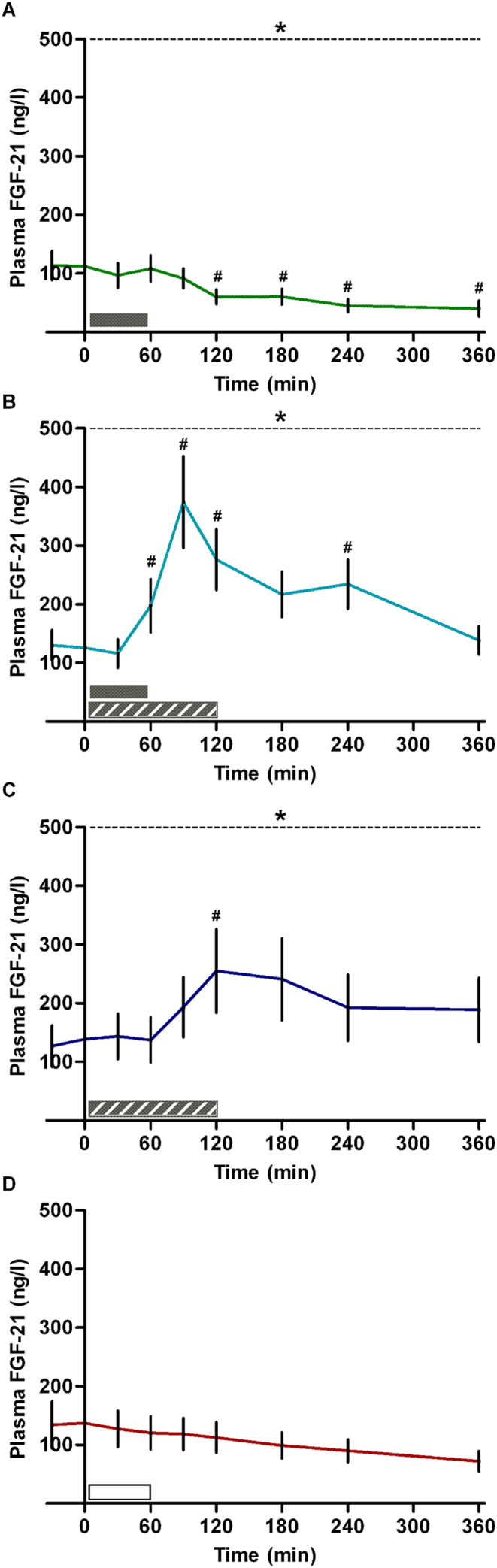
BACKGROUND & AIMS: Fibroblast growth factor 21 (FGF-21) is a liver-derived metabolic regulator induced by energy deprivation. However, its regulation in humans is incompletely understood. We addressed the origin and regulation of FGF-21 secretion in humans. METHODS: By determination of arterial-to-venous differences over the liver and the leg during exercise, we evaluated the organ-specific secretion of FGF-21 in humans. By four different infusion models manipulating circulating glucagon and insulin, we addressed the interaction of these hormones on FGF-21 secretion in humans. RESULTS: We demonstrate that the splanchnic circulation secretes FGF-21 at rest and that it is rapidly enhanced during exercise. In contrast, the leg does not contribute to the systemic levels of FGF-21. To unravel the mechanisms underlying the regulation of exercise-induced hepatic release of FGF-21, we manipulated circulating glucagon and insulin. These studies demonstrated that in humans glucagon stimulates splanchnic FGF-21 secretion whereas insulin has an inhibitory effect. CONCLUSIONS: Collectively, our data reveal that 1) in humans, the splanchnic bed contributes to the systemic FGF-21 levels during rest and exercise; 2) under normo-physiological conditions FGF-21 is not released from the leg; 3) a dynamic interaction of glucagon-to-insulin ratio regulates FGF-21 secretion in humans.
Overview
The claims and statistics of this paper haven’t been checked yet.
Run the check — free, no account needed. It reads the open-access text and checks the sources it cites.
Integrity signals
Registry
Cites
Statistics
Figures
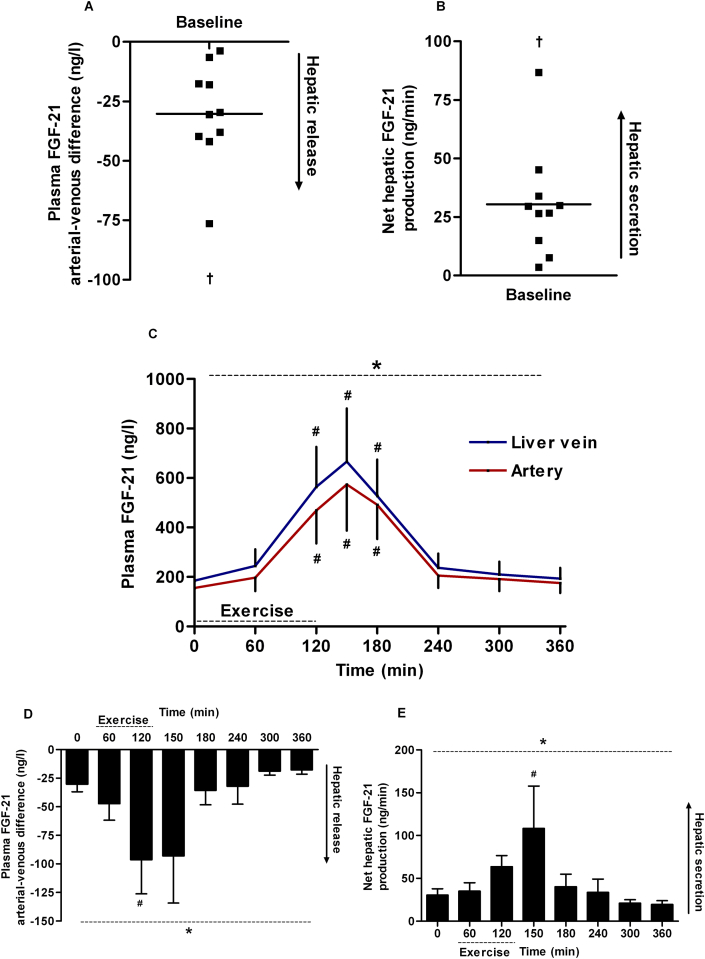
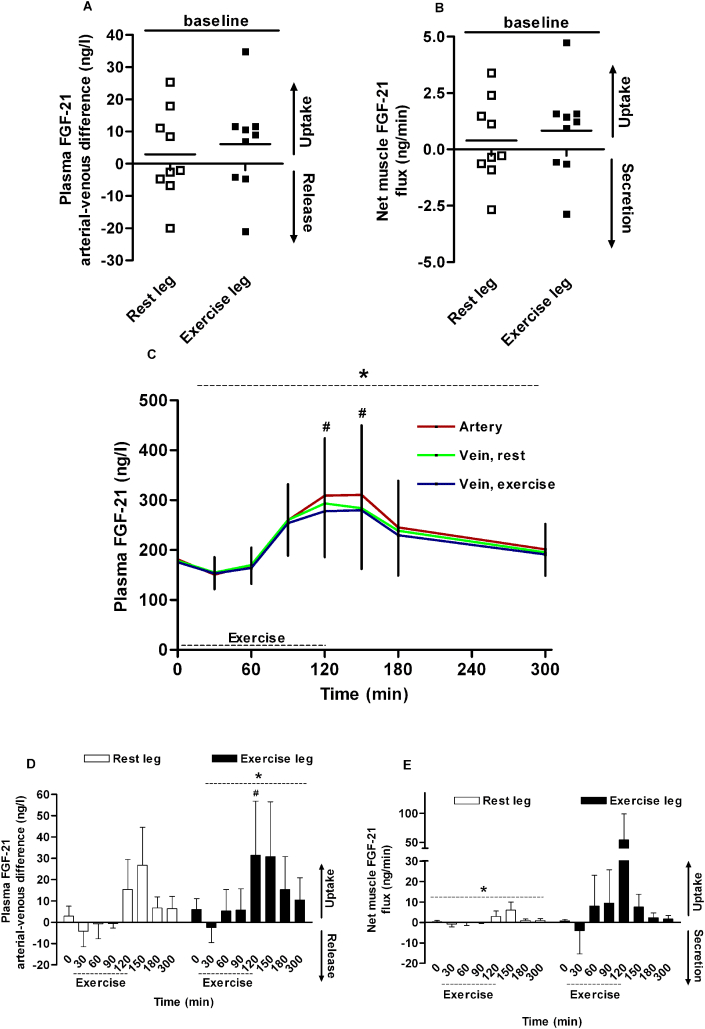
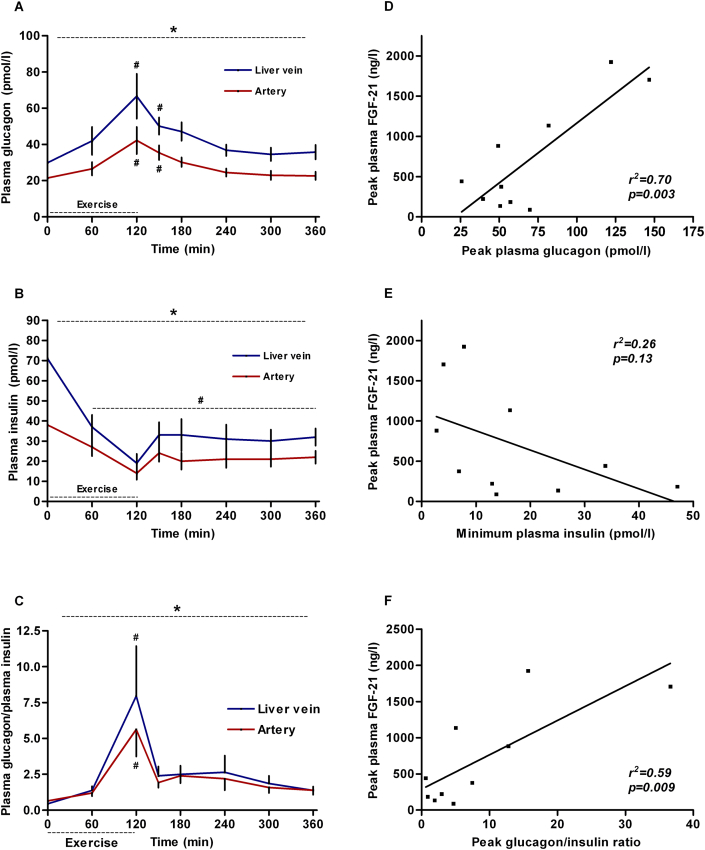
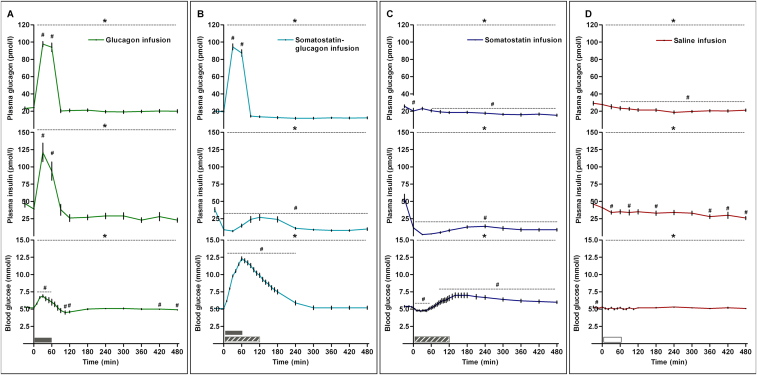
Verification
Claims the paper makes
The claims and statistics of this paper haven’t been checked yet.
Run the check — free, no account needed. It reads the open-access text and checks the sources it cites.
Claims other papers make about this one
Each is checked against this paper’s own text: does it say what the citing paper says it does?
In the citing paper
“circulating levels of FGF21 are now known to be derived primarily, if not exclusively, from the liver under physiological conditions in both rodents6 and humans7.”
From Metabolic messengers: FGF21 (2021) · cites this paper as [7]
In the citing paper
“Notably, despite the expression of Fgf21 mRNA in these tissues, under most physiological conditions, circulating levels of FGF21 are derived primarily from the liver (46, 86).”
From Fibroblast Growth Factor 21: A Versatile Regulator of Metabolic Homeostasis (2018) · cites this paper as [46]
In the citing paper
“In addition, in humans in response to exercise, FGF21 is produced from the liver not muscle (46).”
From Fibroblast Growth Factor 21: A Versatile Regulator of Metabolic Homeostasis (2018) · cites this paper as [46]
Self-check
Percentages, sums and reported differences re-computed from the paper’s own numbers.
The self-check needs the paper’s full text.
Citations
Cites
1 retracted
Berglund, E. D., Kang, L., Lee, R. S., Hasenour, C. M., Lustig, D. G., Lynes, S. E., Donahue, E. P., Swift, L. L., Charron, M. J., & Wasserman, D. H. (2010) · American Journal of Physiology-Endocrinology and Metabolism · doi:10.1152/ajpendo.00263.2010 · Cited by 100
RetractedFGF-21 as a novel metabolic regulator
Kharitonenkov, A., Shiyanova, T. L., Koester, A., Ford, A. M., Micanovic, R., Galbreath, E. J., Sandusky, G. E., Hammond, L. J., Moyers, J. S., Owens, R. A., et al. (2005) · Journal of Clinical Investigation · doi:10.1172/jci23606 · Cited by 2,125
Inagaki, T., Dutchak, P., Zhao, G., Ding, X., Gautron, L., Parameswara, V., Li, Y., Goetz, R., Mohammadi, M., Esser, V., et al. (2007) · Cell Metabolism · doi:10.1016/j.cmet.2007.05.003 · Cited by 1,504
Badman, M. K., Pissios, P., Kennedy, A. R., Koukos, G., Flier, J. S., & Maratos-Flier, E. (2007) · Cell Metabolism · doi:10.1016/j.cmet.2007.05.002 · Cited by 1,495
Xu, J., Lloyd, D. J., Hale, C., Stanislaus, S., Chen, M., Sivits, G., Vonderfecht, S., Hecht, R., Li, Y.-S., Lindberg, R. A., et al. (2009) · Diabetes · doi:10.2337/db08-0392 · Cited by 1,151
Koliaki, C., Szendroedi, J., Kaul, K., Jelenik, T., Nowotny, P., Jankowiak, F., Herder, C., Carstensen, M., Krausch, M., Knoefel, W. T., et al. (2015) · Cell Metabolism · doi:10.1016/j.cmet.2015.04.004 · Cited by 1,032
Zhang, X., Yeung, D. C. Y., Karpisek, M., Stejskal, D., Zhou, Z.-G., Liu, F., Wong, R. L. C., Chow, W.-S., Tso, A. W. K., Lam, K. S. L., et al. (2008) · Diabetes · doi:10.2337/db07-1476 · Cited by 908
The effects of LY2405319, an FGF21 analog, in obese human subjects with type 2 diabetes
Gaich, G., Chien, J. Y., Fu, H., Glass, L. C., Deeg, M. A., Holland, W. L., Kharitonenkov, A., Bumol, T., Schilske, H. K., & Moller, D. E. (2013) · Cell Metabolism · doi:10.1016/j.cmet.2013.08.005 · Cited by 885
Identification of a novel FGF, FGF-21, preferentially expressed in the liver
Nishimura, T., Nakatake, Y., Konishi, M., & Itoh, N. (2000) · Biochimica et Biophysica Acta (BBA) - Gene Structure and Expression · doi:10.1016/s0167-4781(00)00067-1 · Cited by 847
Kim, K. H., Jeong, Y. T., Oh, H., Kim, S. H., Cho, J. M., Kim, Y.-N., Kim, S. S., Kim, D. H., Hur, K. Y., Kim, H. K., et al. (2013) · Nature Medicine · doi:10.1038/nm.3014 · Cited by 774
Cited by
Sorted by citations
Items 101–122 of 122
Dâmaso, A. R., Corgosinho, F. C., Masquio, D. C. L., Figueiredo, N., Kattah, F. M., Cercato, C., Tock, L., & Campos, R. M. D. S. (2026) · Obesity Reviews · doi:10.1111/obr.70093 · Cited by 6
Okahata, S., Sakamoto, K., Mitsumatsu, T., Kondo, Y., Tanaka, S., & Shiba, T. (2018) · Diabetes Obesity and Metabolism · doi:10.1111/dom.13505 · Cited by 4
Sobhi, H. F., Zhao, X., Plomgaard, P., Hoene, M., Hansen, J. S., Karus, B., Niess, A. M., Häring, H. U., Lehmann, R., Adams, S. H., et al. (2020) · American Journal of Physiology-Endocrinology and Metabolism · doi:10.1152/ajpendo.00510.2019 · Cited by 4
Self-citationMahmoud, M. M., Hameed, N. Q. A., Aldreny, B. A., Kamar, S. S., Rashed, L. A., & Gouda, S. A. A. (2024) · Archives of Physiology and Biochemistry · doi:10.1080/13813455.2024.2410791 · Cited by 3
The stimulatory effects of glucagon on cortisol and GH secretion occur independently from FGF-21
Akkar, I., Karaca, Z., Taheri, S., Ünlühızarcı, K., Hacıoğlu, A., & Keleştimur, F. (2021) · Endocrine · doi:10.1007/s12020-021-02829-4 · Cited by 4
Fliflet, A. M., Spradlin, R. A., Tan, Y., Vijayan, A. N., Choi, S. J., Kao, W., Aksamitiene, E., Nelappana, M. B., Ding, S., Huang, K., et al. (2026) · The FASEB Journal · doi:10.1096/fj.202505096rr · Cited by 2
Effect of exercise on Fibroblast Growth Factor 21 levels in healthy males and females
Peterson, M. N., Richardson, K. A., & Funderburk, L. (2025) · PLoS ONE · doi:10.1371/journal.pone.0321738 · Cited by 2
Fibroblast growth factor 21: new insights from human studies
Hansen, J. S., & Plomgaard, P. (2016) · Cardiovascular Endocrinology · doi:10.1097/xce.0000000000000084 · Cited by 2
Self-citationMalaikah, S., Willis, S. A., Henson, J. J., Sargeant, J. A., Yates, T. E., Thackray, A. E., Goltz, F. R., Roberts, M. J., Bernard-Deshong, D., Aithal, G. P., et al. (2023) · Applied Physiology, Nutrition, and Metabolism · doi:10.1139/apnm-2022-0445 · Cited by 1
Myokines, Measurement, and Technical Considerations
Willis, C. R. G., Deane, C. S., & Etheridge, T. (2023) · Neuromethods · doi:10.1007/978-1-0716-3315-1_12
Cross-talk between hepatokines as Liver indused-exercise factors and organokinesPreprint
Rad, R. S. (2023) · Research Square · doi:10.21203/rs.3.rs-3734627/v1
de Mendonça, M. (2023) · Digital Library of Theses and Dissertations (Universidade de São Paulo) · doi:10.11606/t.42.2023.tde-14122023-105911
Бажан, Н. М., & En, M. (2023) · Успехи физиологических наук · doi:10.31857/s0301179823040033
The Potential Protective Mechanisms of Exercise-Responsive Molecules in Chronic Kidney Disease
Chang, J. S. (2024) · Exercise Science · doi:10.15857/ksep.2024.00472
Peterson, M. N., Adair, K. E., & Funderburk, L. (2024) · bioRxiv (Cold Spring Harbor Laboratory) · doi:10.1101/2024.12.26.630421
Sun, Y. X., Huang, P. H., Zhao, X., Tang, Z., Xu, T., Wang, X.-W., Qi, Z.-X., Lin, W.-R., Minyou, L., & Gu, Y. (2025) · World Journal of Hepatology · doi:10.4254/wjh.v17.i6.104693
Zhang, Z., Zhang, X., Ma, M., Zhang, Y., & Hai, B. (2026) · Sports Medicine and Health Science · doi:10.1016/j.smhs.2026.09.001
Exerkine-Mediated Inter-Organ Crosstalk and Translational Perspectives in Metabolic Diseases
Zhou, B., Zhang, S., Zhang, Z., Ran, S., Guo, H., Wang, S., & Meng, H. (2026) · Current Obesity Reports · doi:10.1007/s13679-026-00752-1
The Myokine Landscape: Sources, Signaling, and Context-Dependent Actions
Casadevall, C., Ramírez-Sarmiento, A., Camps-Ubach, R., Barreiro, E., Orozco‐Levi, M., & Gea, J. (2026) · Cells · doi:10.3390/cells15181682
Physical activity and improvement of physiological parameters by training
Reis, R. A. D. M., Arida, R. M., da Nobrega, A. C. L., Mattos, J. D., Freitas, H. R., Ramos, M. C. S., Fortunato, R. S., Matta, L., Ferreira, G. C., & Canetti, C. D. A. (2026) · Frontiers in Sports and Active Living · doi:10.3389/fspor.2026.1944574
Ju, W., Zhang, C., Zhang, T., Liu, Y., Wang, X., Zeng, L., Cao, Y., Lin, H., Li, O., Wang, P. G., et al. (2026) · Molecular Biomedicine · doi:10.1186/s43556-026-00615-0
Kon, M., Ato, S., & Matsuo, K. (2026) · International Journal of Sports Medicine · doi:10.1055/a-2975-4387
Metadata
- Authors
- Hansen, J. S., Clemmesen, J. O., Secher, N. H., Hoene, M., Drescher, A., Weigert, C., Pedersen, B. K., & Plomgaard, P.
- Affiliations
- University of Copenhagen (DK)
- Rigshospitalet (DK)
- University of Tübingen (DE)
- Helmholtz Munich (DE)
- Corresponding author
- Plomgaard, Peter
- ORCID
- Venue
- Molecular Metabolism
- Publisher
- Elsevier BV
- Published
- 2015-08
- Volume
- 4
- Issue
- 8
- Pages
- 551-560
- ISSN
- 2212-8778 (ISSN-L)
- PMC
- PMC4529499
- OpenAlex
- W1906775291
- Cited by
- 123
- References
- 58
- Citations by year
- 2026: 8 · 2025: 6 · 2024: 7 · 2023: 15 · 2022: 8 · 2021: 13 · 2020: 14 · 2019: 15 · 2018: 11 · 2017: 9 · 2016: 13 · 2015: 4
- FWCI
- 5.36
- Type
- journal article
- Language
- en
- Open access
- gold
- doi.org
- Licence
- Locations
- Molecular Metabolism (publishedVersion, cc-by-nc-nd)
- PubMed Central (publishedVersion, cc-by-nc-nd)
- PubMed (publishedVersion)
- Research at the University of Copenhagen (University of Copenhagen) (publishedVersion, other-oa)
- DOAJ (DOAJ: Directory of Open Access Journals) (submittedVersion, cc-by-sa)
- Site cant be reached (submittedVersion, cc-by-nc-nd)
- PuSH - Publication Server of Helmholtz Zentrum München (submittedVersion, cc-by-nc-nd)
- Funders
- Danmarks Grundforskningsfond (DNRF55)
- Bundesministerium für Bildung und Forschung
- Region Hovedstaden
- Strategiske Forskningsråd (09-067009, 09-075724)
- Center for Muskelforskning
- Deutsche Forschungsgemeinschaft (GRK 1302/2)
- Leibniz-Gemeinschaft (SAW-FBN-2013-3)
- Topics
- Life Sciences › Biochemistry, Genetics and Molecular Biology › Molecular Biology › Fibroblast Growth Factor Research
- Health Sciences › Medicine › Hepatology › Liver physiology and pathology
- Health Sciences › Medicine › Endocrinology, Diabetes and Metabolism › Growth Hormone and Insulin-like Growth Factors
- Keywords
- FGF21, splanchnic circulation, physical activity, insulin, glucagon, legs, energy deprivation, metabolic regulation
About these checks
Registry, retraction, Cites and statistics results are computed, not judged, with one exception: a printed reference that no index lists is read once by a model before it counts as a citation error. Claims are extracted by a model and kept only when their quote appears verbatim in the text; each cited source is then checked, with a model’s help, for whether it says what the claim relies on. Those verdicts can be wrong — read the claim’s quote and the cited source before relying on one.
Statistics and arithmetic are recomputed, not judged.
Confidence bands are shown only for fields calibrated on our annotated test set. None is calibrated yet, so no band is shown.
What counts as a claim ›How we measure confidence ›How we check this ›
Are you an author, or do you see a problem with this page? Request a review
