

The DOI matches its Crossref record; 56 of the 58 references it cites were found in a registry or an index.
Glucagon-to-insulin ratio is pivotal for splanchnic regulation of FGF-21 in humans
Open accessAbstract
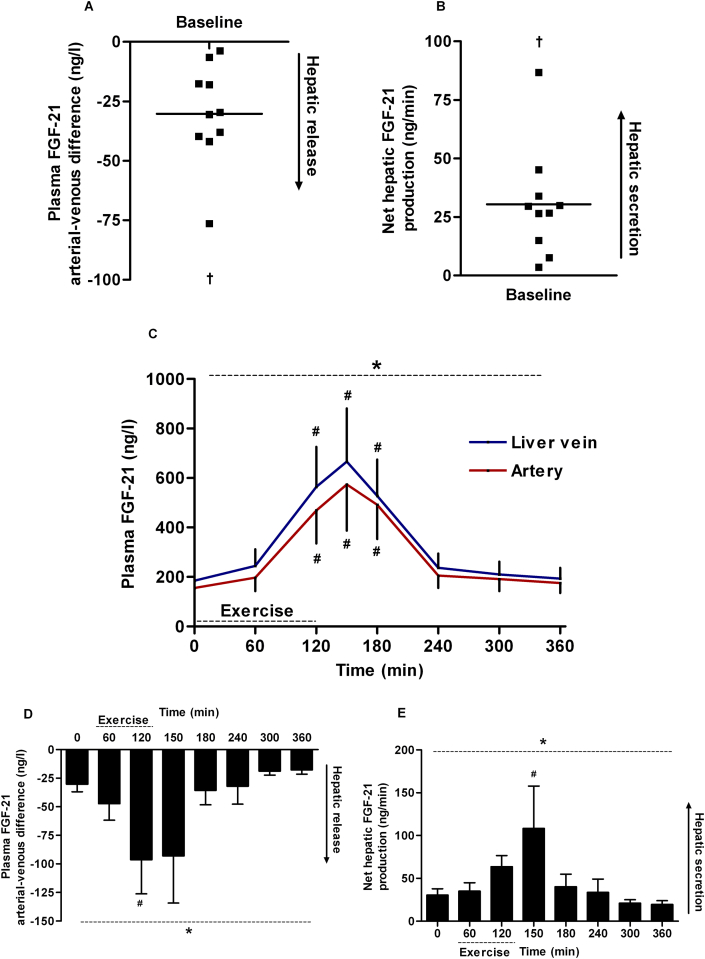
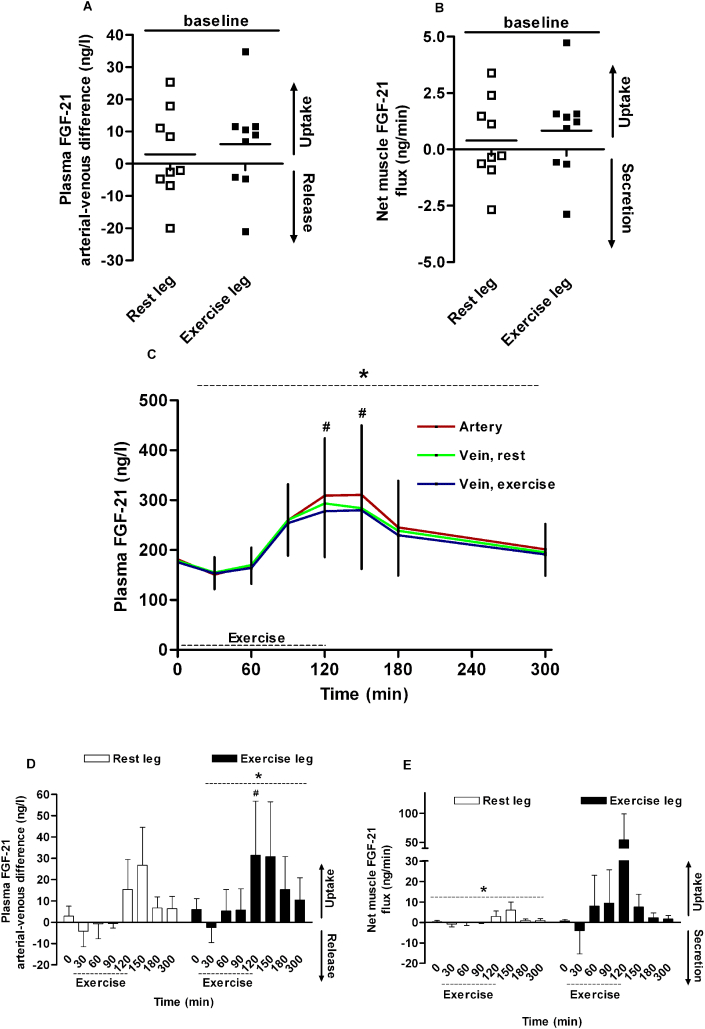
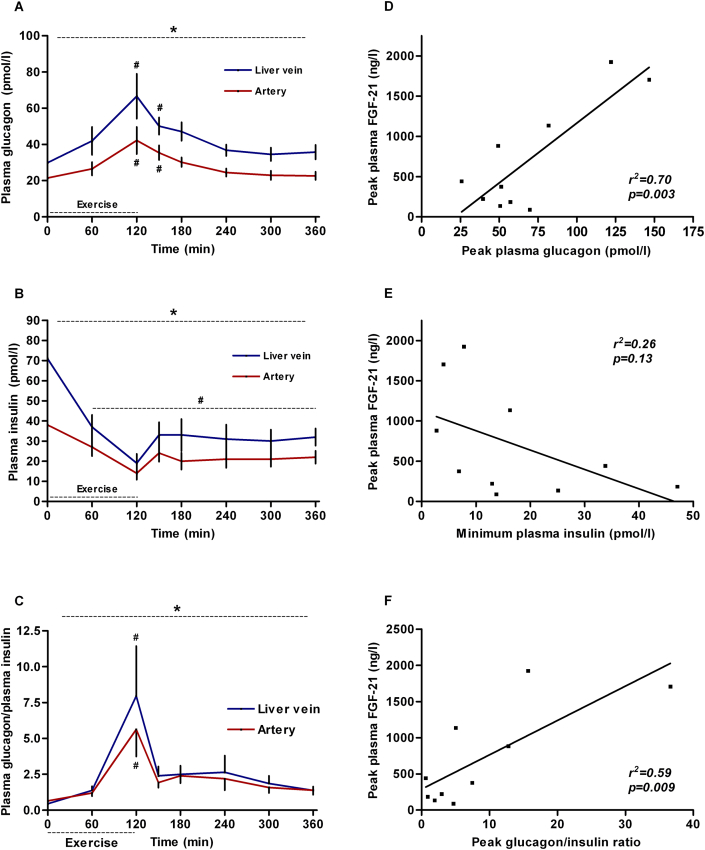
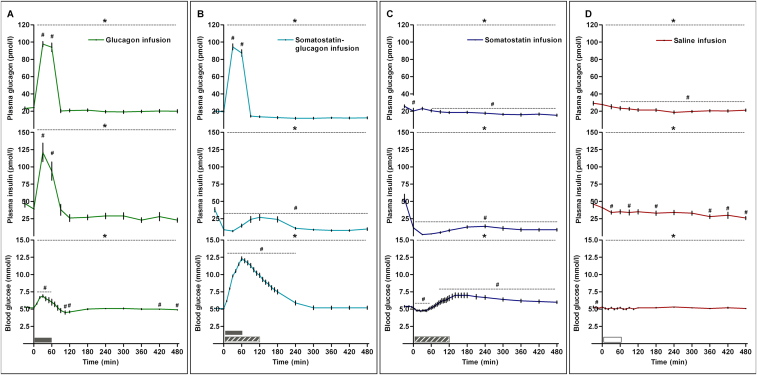
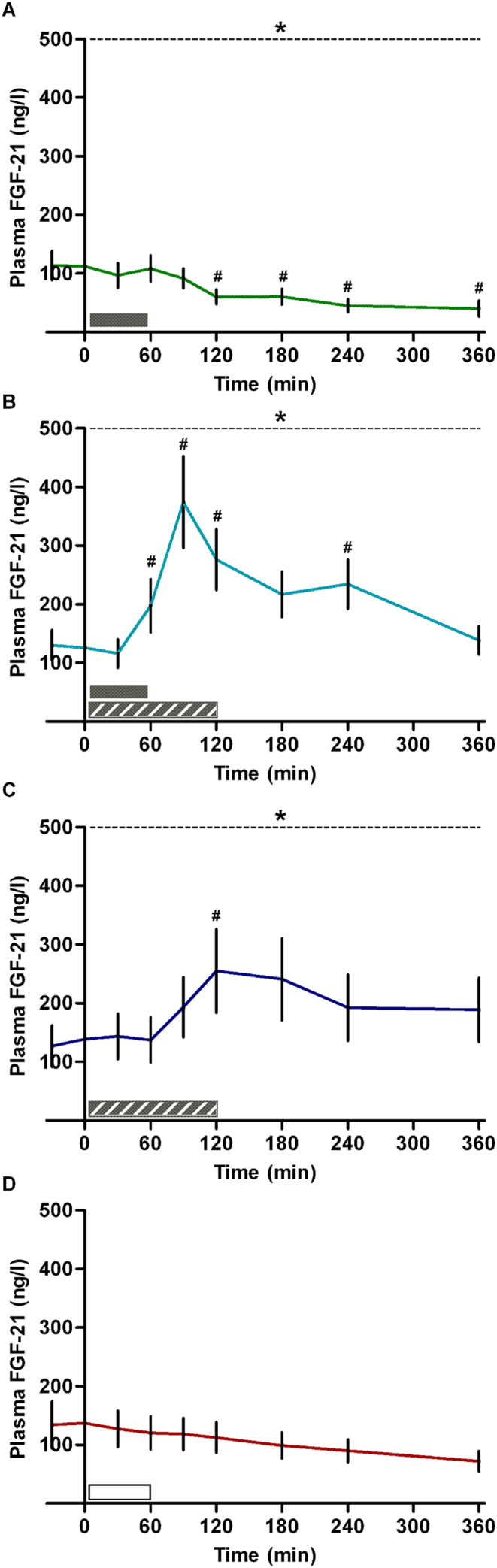
BACKGROUND & AIMS: Fibroblast growth factor 21 (FGF-21) is a liver-derived metabolic regulator induced by energy deprivation. However, its regulation in humans is incompletely understood. We addressed the origin and regulation of FGF-21 secretion in humans. METHODS: By determination of arterial-to-venous differences over the liver and the leg during exercise, we evaluated the organ-specific secretion of FGF-21 in humans. By four different infusion models manipulating circulating glucagon and insulin, we addressed the interaction of these hormones on FGF-21 secretion in humans. RESULTS: We demonstrate that the splanchnic circulation secretes FGF-21 at rest and that it is rapidly enhanced during exercise. In contrast, the leg does not contribute to the systemic levels of FGF-21. To unravel the mechanisms underlying the regulation of exercise-induced hepatic release of FGF-21, we manipulated circulating glucagon and insulin. These studies demonstrated that in humans glucagon stimulates splanchnic FGF-21 secretion whereas insulin has an inhibitory effect. CONCLUSIONS: Collectively, our data reveal that 1) in humans, the splanchnic bed contributes to the systemic FGF-21 levels during rest and exercise; 2) under normo-physiological conditions FGF-21 is not released from the leg; 3) a dynamic interaction of glucagon-to-insulin ratio regulates FGF-21 secretion in humans.
Overview
The claims and statistics of this paper haven’t been checked yet.
Run the check — free, no account needed. It reads the open-access text and checks the sources it cites.
Integrity signals
Registry
Cites
Statistics
Figures
Verification
Claims the paper makes
The claims and statistics of this paper haven’t been checked yet.
Run the check — free, no account needed. It reads the open-access text and checks the sources it cites.
Claims other papers make about this one
Each is checked against this paper’s own text: does it say what the citing paper says it does?
In the citing paper
“circulating levels of FGF21 are now known to be derived primarily, if not exclusively, from the liver under physiological conditions in both rodents6 and humans7.”
From Metabolic messengers: FGF21 (2021) · cites this paper as [7]
In the citing paper
“Notably, despite the expression of Fgf21 mRNA in these tissues, under most physiological conditions, circulating levels of FGF21 are derived primarily from the liver (46, 86).”
From Fibroblast Growth Factor 21: A Versatile Regulator of Metabolic Homeostasis (2018) · cites this paper as [46]
In the citing paper
“In addition, in humans in response to exercise, FGF21 is produced from the liver not muscle (46).”
From Fibroblast Growth Factor 21: A Versatile Regulator of Metabolic Homeostasis (2018) · cites this paper as [46]
Self-check
Percentages, sums and reported differences re-computed from the paper’s own numbers.
The self-check needs the paper’s full text.
Citations
Cites
1 retracted
Berglund, E. D., Kang, L., Lee, R. S., Hasenour, C. M., Lustig, D. G., Lynes, S. E., Donahue, E. P., Swift, L. L., Charron, M. J., & Wasserman, D. H. (2010) · American Journal of Physiology-Endocrinology and Metabolism · doi:10.1152/ajpendo.00263.2010 · Cited by 100
RetractedFGF-21 as a novel metabolic regulator
Kharitonenkov, A., Shiyanova, T. L., Koester, A., Ford, A. M., Micanovic, R., Galbreath, E. J., Sandusky, G. E., Hammond, L. J., Moyers, J. S., Owens, R. A., et al. (2005) · Journal of Clinical Investigation · doi:10.1172/jci23606 · Cited by 2,125
Inagaki, T., Dutchak, P., Zhao, G., Ding, X., Gautron, L., Parameswara, V., Li, Y., Goetz, R., Mohammadi, M., Esser, V., et al. (2007) · Cell Metabolism · doi:10.1016/j.cmet.2007.05.003 · Cited by 1,504
Badman, M. K., Pissios, P., Kennedy, A. R., Koukos, G., Flier, J. S., & Maratos-Flier, E. (2007) · Cell Metabolism · doi:10.1016/j.cmet.2007.05.002 · Cited by 1,495
Xu, J., Lloyd, D. J., Hale, C., Stanislaus, S., Chen, M., Sivits, G., Vonderfecht, S., Hecht, R., Li, Y.-S., Lindberg, R. A., et al. (2009) · Diabetes · doi:10.2337/db08-0392 · Cited by 1,151
Koliaki, C., Szendroedi, J., Kaul, K., Jelenik, T., Nowotny, P., Jankowiak, F., Herder, C., Carstensen, M., Krausch, M., Knoefel, W. T., et al. (2015) · Cell Metabolism · doi:10.1016/j.cmet.2015.04.004 · Cited by 1,032
Zhang, X., Yeung, D. C. Y., Karpisek, M., Stejskal, D., Zhou, Z.-G., Liu, F., Wong, R. L. C., Chow, W.-S., Tso, A. W. K., Lam, K. S. L., et al. (2008) · Diabetes · doi:10.2337/db07-1476 · Cited by 908
The effects of LY2405319, an FGF21 analog, in obese human subjects with type 2 diabetes
Gaich, G., Chien, J. Y., Fu, H., Glass, L. C., Deeg, M. A., Holland, W. L., Kharitonenkov, A., Bumol, T., Schilske, H. K., & Moller, D. E. (2013) · Cell Metabolism · doi:10.1016/j.cmet.2013.08.005 · Cited by 885
Identification of a novel FGF, FGF-21, preferentially expressed in the liver
Nishimura, T., Nakatake, Y., Konishi, M., & Itoh, N. (2000) · Biochimica et Biophysica Acta (BBA) - Gene Structure and Expression · doi:10.1016/s0167-4781(00)00067-1 · Cited by 847
Kim, K. H., Jeong, Y. T., Oh, H., Kim, S. H., Cho, J. M., Kim, Y.-N., Kim, S. S., Kim, D. H., Hur, K. Y., Kim, H. K., et al. (2013) · Nature Medicine · doi:10.1038/nm.3014 · Cited by 774
The metabolic state of diabetic monkeys is regulated by fibroblast growth factor-21
Kharitonenkov, A., Wroblewski, V. J., Koester, A., Chen, Y.-F., Clutinger, C. K., Tigno, X. T., Hansen, B. C., Shanafelt, A. B., & Etgen, G. J. (2007) · Endocrinology · doi:10.1210/en.2006-1168 · Cited by 738
Potthoff, M. J., Inagaki, T., Satapati, S., Ding, X., He, T., Goetz, R., Mohammadi, M., Finck, B. N., Mangelsdorf, D. J., Kliewer, S. A., et al. (2009) · Proceedings of the National Academy of Sciences · doi:10.1073/pnas.0904187106 · Cited by 704
Fon Tacer, K., Bookout, A. L., Ding, X., Kurosu, H., John, G. B., Wang, L., Goetz, R., Mohammadi, M., Kuro-o, M., Mangelsdorf, D. J., et al. (2010) · Molecular Endocrinology · doi:10.1210/me.2010-0142 · Cited by 700
Glucagonocentric restructuring of diabetes: A pathophysiologic and therapeutic makeover
Unger, R. H., & Cherrington, A. D. (2012) · Journal of Clinical Investigation · doi:10.1172/jci60016 · Cited by 670
A new glucagon and GLP-1 co-agonist eliminates obesity in rodents
Day, J. W., Ottaway, N., Patterson, J. T., Gelfanov, V., Smiley, D., Gidda, J., Findeisen, H., Bruemmer, D., Drucker, D. J., Chaudhary, N., et al. (2009) · Nature Chemical Biology · doi:10.1038/nchembio.209 · Cited by 641
Increased Fibroblast Growth Factor 21 in Obesity and Nonalcoholic Fatty Liver Disease
Dushay, J., Chui, P. C., Gopalakrishnan, G. S., Varela–Rey, M., Crawley, M., Fisher, F. M., Badman, M. K., Martinez–Chantar, M. L., & Maratos–Flier, E. (2010) · Gastroenterology · doi:10.1053/j.gastro.2010.04.054 · Cited by 607
FGF21 is an endocrine signal of protein restriction
Laeger, T., Henagan, T. M., Albarado, D. C., Redman, L. M., Bray, G. A., Noland, R. C., Münzberg, H., Hutson, S. M., Gettys, T. W., Schwartz, M. W., et al. (2014) · Journal of Clinical Investigation · doi:10.1172/jci74915 · Cited by 593 · cited 1×
“In humans, free fatty acids (FFAs) [7], low protein intake independent of energy restriction [8] and glucagon [9,10] have been linked to increased plasma FGF-21.”
BackgroundCirculating FGF21 Is Liver Derived and Enhances Glucose Uptake During Refeeding and Overfeeding
Markan, K. R., Naber, M. C., Ameka, M. K., Anderegg, M. D., Mangelsdorf, D. J., Kliewer, S. A., Mohammadi, M., & Potthoff, M. J. (2014) · Diabetes · doi:10.2337/db14-0595 · Cited by 590
Gälman, C., Lundåsen, T., Kharitonenkov, A., Bina, H. A., Eriksson, M., Hafström, I., Dahlin, M., Åmark, P., Angelin, B., & Rudling, M. (2008) · Cell Metabolism · doi:10.1016/j.cmet.2008.06.014 · Cited by 512
FGF21 is an Akt‐regulated myokine
Izumiya, Y., Bina, H. A., Ouchi, N., Akasaki, Y., Kharitonenkov, A., & Walsh, K. (2008) · FEBS Letters · doi:10.1016/j.febslet.2008.10.021 · Cited by 415
The metabolic actions of glucagon revisited
Habegger, K. M., Heppner, K. M., Geary, N., Bartness, T. J., DiMarchi, R., & Tschöp, M. H. (2010) · Nature Reviews Endocrinology · doi:10.1038/nrendo.2010.187 · Cited by 406
βKlotho Is Required for Fibroblast Growth Factor 21 Effects on Growth and Metabolism
Ding, X., Boney-Montoya, J., Owen, B. M., Bookout, A. L., Coate, K. C., Mangelsdorf, D. J., & Kliewer, S. A. (2012) · Cell Metabolism · doi:10.1016/j.cmet.2012.08.002 · Cited by 403
Chavez, A. O., Molina-Carrion, M., Abdul-Ghani, M. A., Folli, F., DeFronzo, R. A., & Tripathy, D. (2009) · Diabetes Care · doi:10.2337/dc09-0684 · Cited by 390
PPARα is a key regulator of hepatic FGF21
Lundåsen, T., Hunt, M., Nilsson, L.-M., Sanyal, S., Angelin, B., Alexson, S., & Rudling, M. (2007) · Biochemical and Biophysical Research Communications · doi:10.1016/j.bbrc.2007.06.068 · Cited by 361
Berglund, E. D., Li, C. Y., Bina, H. A., Lynes, S. E., Michael, M. D., Shanafelt, A. B., Kharitonenkov, A., & Wasserman, D. H. (2009) · Endocrinology · doi:10.1210/en.2009-0221 · Cited by 297
Acute Exercise Induces FGF21 Expression in Mice and in Healthy Humans
Kim, K. H., Kim, S. H., Min, Y.-K., Yang, H.-M., Lee, J.-B., & Lee, M.-S. (2013) · PLoS ONE · doi:10.1371/journal.pone.0063517 · Cited by 290
Metabolic Regulation: A Human Perspective
Frayn, K. N. (1996) · Cited by 273
The Glucagon Receptor Is Required for the Adaptive Metabolic Response to Fasting
Longuet, C., Sinclair, E. M., Maida, A., Baggio, L. L., Maziarz, M., Charron, M. J., & Drucker, D. J. (2008) · Cell Metabolism · doi:10.1016/j.cmet.2008.09.008 · Cited by 272
Interplay between FGF21 and insulin action in the liver regulates metabolism
Emanuelli, B., Vienberg, S. G., Smyth, G., Cheng, C., Stanford, K. I., Arumugam, M., Michael, M. D., Adams, A. C., Kharitonenkov, A., & Kahn, C. R. (2014) · Journal of Clinical Investigation · doi:10.1172/jci67353 · Cited by 251
Fibroblast Growth Factor 21 Mediates Specific Glucagon Actions
Habegger, K. M., Stemmer, K., Cheng, C., Müller, T. D., Heppner, K. M., Ottaway, N., Holland, J., Hembree, J. L., Smiley, D., Gelfanov, V., et al. (2013) · Diabetes · doi:10.2337/db12-1116 · Cited by 245
Fructose ingestion acutely stimulates circulating FGF21 levels in humans
Dushay, J. R., Toschi, E., Mitten, E. K., Fisher, F. M., Herman, M. A., & Maratos-Flier, E. (2015) · Molecular Metabolism · doi:10.1016/j.molmet.2014.09.008 · Cited by 233
Mashili, F. L., Austin, R. L., Deshmukh, A. S., Fritz, T., Caidahl, K., Bergdahl, K., Zierath, J. R., Chibalin, A., Moller, D. E., Kharitonenkov, A., et al. (2011) · Diabetes/Metabolism Research and Reviews · doi:10.1002/dmrr.1177 · Cited by 226
Keipert, S., Ost, M., Johann, K., Imber, F., Jastroch, M., van Schothorst, E. M., Keijer, J., & Klaus, S. (2014) · American Journal of Physiology-Endocrinology and Metabolism · doi:10.1152/ajpendo.00330.2013 · Cited by 221 · cited 2×
“However, skeletal muscle cells also secrete FGF-21 [28] during mitochondrial stress, and FGF-21 has been suggested to be a so-called “mitokine” [29,30].”
BackgroundInsulin signaling is required for insulin’s direct and indirect action on hepatic glucose production
Fisher, S. J., & Kahn, C. R. (2003) · Journal of Clinical Investigation · doi:10.1172/jci16426 · Cited by 211
Hansen, J., Brandt, C., Nielsen, A. R., Hojman, P., Whitham, M., Febbraio, M. A., Pedersen, B. K., & Plomgaard, P. (2011) · Endocrinology · doi:10.1210/en.2010-0868 · Cited by 200
Self-citationFibroblast Growth Factor-21 Is Induced in Human Skeletal Muscles by Hyperinsulinemia
Hojman, P., Pedersen, M., Nielsen, A. R., Krogh-Madsen, R., Yfanti, C., Åkerstrom, T., Nielsen, S., & Pedersen, B. K. (2009) · Diabetes · doi:10.2337/db09-0713 · Cited by 198
Self-citationMetabolic Regulation: A Human Perspective
Ljungqvist, O. H. (2010) · Clinical Nutrition · doi:10.1016/j.clnu.2010.12.002 · Cited by 189
LY2405319, an engineered FGF21 variant, improves the metabolic status of diabetic monkeys
Adams, A. C., Halstead, C. A., Hansen, B. C., Irizarry, A. R., Martin, J. A., Myers, S. R., Reynolds, V. L., Smith, H. W., Wroblewski, V. J., & Kharitonenkov, A. (2013) · PLoS ONE · doi:10.1371/journal.pone.0065763 · Cited by 169
Mai, K., Andres, J., Biedasek, K., Weicht, J., Bobbert, T., Sabath, M., Meinus, S., Reinecke, F., Möhlig, M., Weickert, M. O., et al. (2009) · Diabetes · doi:10.2337/db08-1775 · Cited by 159
Glucagon is a primary controller of hepatic glycogenolysis and gluconeogenesis during muscular work
Wasserman, D. H., Spalding, J. A., Lacy, D. B., Colburn, C. A., Goldstein, R. E., & Cherrington, A. D. (1989) · American Journal of Physiology-Endocrinology and Metabolism · doi:10.1152/ajpendo.1989.257.1.e108 · Cited by 155
Targeting the glucagon receptor family for diabetes and obesity therapy
Cho, Y. M., Merchant, C. E., & Kieffer, T. J. (2012) · Pharmacology & Therapeutics · doi:10.1016/j.pharmthera.2012.05.009 · Cited by 144
Gluconeogenesis and hepatic glycogenolysis during exercise at the lactate threshold
Emhoff, C.-A. W., Messonnier, L. A., Horning, M. A., Fattor, J. A., Carlson, T. J., & Brooks, G. A. (2013) · Journal of Applied Physiology · doi:10.1152/japplphysiol.01202.2012 · Cited by 139
Hepatic fuel metabolism during muscular work: role and regulation
Wasserman, D. H., & Cherrington, A. D. (1991) · American Journal of Physiology-Endocrinology and Metabolism · doi:10.1152/ajpendo.1991.260.6.e811 · Cited by 137
Wahren, J., Sato, Y., Östman, J., Hagenfeldt, L., & Felig, P. (1984) · Journal of Clinical Investigation · doi:10.1172/jci111340 · Cited by 123
Skak, C., & Keiding, S. (1987) · Liver International · doi:10.1111/j.1600-0676.1987.tb00336.x · Cited by 94
Arafat, A. M., Kaczmarek, P., Skrzypski, M., Pruszyńska‐Oszmałek, E., Kolodziejski, P. A., Szczepankiewicz, D., Sassek, M., Wojciechowicz, T., Wiedenmann, B. J., Pfeiffer, A. F. H., et al. (2012) · Diabetologia · doi:10.1007/s00125-012-2803-y · Cited by 90
Exercise-induced fall in insulin and hepatic carbohydrate metabolism during muscular work
Wasserman, D. H., Williams, P. E., Lacy, D. B., Goldstein, R. E., & Cherrington, A. D. (1989) · American Journal of Physiology-Endocrinology and Metabolism · doi:10.1152/ajpendo.1989.256.4.e500 · Cited by 81
Lee, M. S., Choi, S., Ha, E. S., An, S.-Y., Kim, T. H., Han, S. J., Kim, H. J., Kim, D. J., KANG, Y. Y., & Lee, K. W. (2012) · Metabolism · doi:10.1016/j.metabol.2012.01.012 · Cited by 80
The stress response of the liver to physical exercise
Hoene, M., & Weigert, C. (2026) · PubMed · doi:10.22029/eir.2010.1658 · Cited by 60
Self-citationPhysiological modulation of circulating FGF21: relevance of free fatty acids and insulin
Mai, K., Bobbert, T., Groth, C., Aßmann, A., Meinus, S., Kraatz, J., Andres, J., Arafat, A. M., Pfeiffer, A. F. H., Möhlig, M., et al. (2010) · American Journal of Physiology-Endocrinology and Metabolism · doi:10.1152/ajpendo.00020.2010 · Cited by 58
Dynamic Change of Serum FGF21 Levels in Response to Glucose Challenge in Human
Lin, Z., Gong, Q., Wu, C., Yu, J., Lü, T., Pan, X., Lin, S., & Li, X. (2012) · The Journal of Clinical Endocrinology & Metabolism · doi:10.1210/jc.2012-1132 · Cited by 58
Hoene, M., Franken, H., Fritsche, L., Lehmann, R., Pohl, A. K., Häring, H., Zell, A., Schleicher, E. D., & Weigert, C. (2010) · Diabetologia · doi:10.1007/s00125-010-1666-3 · Cited by 41
Self-citationExercise-Induced Rise in Glucagon and Ketogenesis During Prolonged Muscular Work
Wasserman, D. H., Spalding, J. A., Bracy, D. P., Lacy, D. B., & Cherrington, A. D. (1989) · Diabetes · doi:10.2337/diab.38.6.799 · Cited by 41
Osada, T., & Rådegran, G. (2002) · Journal of Applied Physiology · doi:10.1152/japplphysiol.00848.2001 · Cited by 40
PATEL, V. G., Joharapurkar, A. A., Dhanesha, N., Kshirsagar, S. G., Patel, K., Bahekar, R. H., Shah, G. B., & Jain, M. R. (2013) · Canadian Journal of Physiology and Pharmacology · doi:10.1139/cjpp-2013-0189 · Cited by 32
Lindegaard, B., Hvid, T., Grøndahl, T. S., Frøsig, C., Gerstoft, J., Højman, P., & Pedersen, B. K. (2013) · PLoS ONE · doi:10.1371/journal.pone.0055632 · Cited by 32
Self-citation
Cited by
Sorted by citations
Muscle–Organ Crosstalk: The Emerging Roles of Myokines
Severinsen, M. C. K., & Pedersen, B. K. (2020) · Endocrine Reviews · doi:10.1210/endrev/bnaa016 · Cited by 1,226
“The Fibroblast growth factor 21 (FGF-21) (150) and Follistatin (151) are released from human liver during exercise and this release is controlled by the glucagon-to-insulin ratio (152).”
BackgroundSelf-citationExtracellular Vesicles Provide a Means for Tissue Crosstalk during Exercise
Whitham, M., Parker, B. L., Friedrichsen, M. H., Hingst, J. R., Hjorth, M., Hughes, W. E., Egan, C. L., Cron, L., Watt, K. I., Kuchel, R. P., et al. (2018) · Cell Metabolism · doi:10.1016/j.cmet.2017.12.001 · Cited by 700
The endocrine function of adipose tissues in health and cardiometabolic disease
Scheja, L., & Heeren, J. (2019) · Nature Reviews Endocrinology · doi:10.1038/s41574-019-0230-6 · Cited by 663
The potential of endurance exercise-derived exosomes to treat metabolic diseases
Safdar, A., Saleem, A., & Tarnopolsky, M. A. (2016) · Nature Reviews Endocrinology · doi:10.1038/nrendo.2016.76 · Cited by 463
Skeletal Muscle as an Endocrine Organ: The Role of Myokines in Exercise Adaptations
Hoffmann, C., & Weigert, C. (2017) · Cold Spring Harbor Perspectives in Medicine · doi:10.1101/cshperspect.a029793 · Cited by 393
Self-citation
Metadata
- Authors
- Hansen, J. S., Clemmesen, J. O., Secher, N. H., Hoene, M., Drescher, A., Weigert, C., Pedersen, B. K., & Plomgaard, P.
- Affiliations
- University of Copenhagen (DK)
- Rigshospitalet (DK)
- University of Tübingen (DE)
- Helmholtz Munich (DE)
- Corresponding author
- Plomgaard, Peter
- ORCID
- Venue
- Molecular Metabolism
- Publisher
- Elsevier BV
- Published
- 2015-08
- Volume
- 4
- Issue
- 8
- Pages
- 551-560
- ISSN
- 2212-8778 (ISSN-L)
- PMC
- PMC4529499
- OpenAlex
- W1906775291
- Cited by
- 123
- References
- 58
- Citations by year
- 2026: 8 · 2025: 6 · 2024: 7 · 2023: 15 · 2022: 8 · 2021: 13 · 2020: 14 · 2019: 15 · 2018: 11 · 2017: 9 · 2016: 13 · 2015: 4
- FWCI
- 5.36
- Type
- journal article
- Language
- en
- Open access
- gold
- doi.org
- Licence
- Locations
- Molecular Metabolism (publishedVersion, cc-by-nc-nd)
- PubMed Central (publishedVersion, cc-by-nc-nd)
- PubMed (publishedVersion)
- Research at the University of Copenhagen (University of Copenhagen) (publishedVersion, other-oa)
- DOAJ (DOAJ: Directory of Open Access Journals) (submittedVersion, cc-by-sa)
- Site cant be reached (submittedVersion, cc-by-nc-nd)
- PuSH - Publication Server of Helmholtz Zentrum München (submittedVersion, cc-by-nc-nd)
- Funders
- Danmarks Grundforskningsfond (DNRF55)
- Bundesministerium für Bildung und Forschung
- Region Hovedstaden
- Strategiske Forskningsråd (09-067009, 09-075724)
- Center for Muskelforskning
- Deutsche Forschungsgemeinschaft (GRK 1302/2)
- Leibniz-Gemeinschaft (SAW-FBN-2013-3)
- Topics
- Life Sciences › Biochemistry, Genetics and Molecular Biology › Molecular Biology › Fibroblast Growth Factor Research
- Health Sciences › Medicine › Hepatology › Liver physiology and pathology
- Health Sciences › Medicine › Endocrinology, Diabetes and Metabolism › Growth Hormone and Insulin-like Growth Factors
- Keywords
- FGF21, splanchnic circulation, physical activity, insulin, glucagon, legs, energy deprivation, metabolic regulation
About these checks
Registry, retraction, Cites and statistics results are computed, not judged, with one exception: a printed reference that no index lists is read once by a model before it counts as a citation error. Claims are extracted by a model and kept only when their quote appears verbatim in the text; each cited source is then checked, with a model’s help, for whether it says what the claim relies on. Those verdicts can be wrong — read the claim’s quote and the cited source before relying on one.
Statistics and arithmetic are recomputed, not judged.
Confidence bands are shown only for fields calibrated on our annotated test set. None is calibrated yet, so no band is shown.
What counts as a claim ›How we measure confidence ›How we check this ›
Are you an author, or do you see a problem with this page? Request a review
