

The DOI matches its Crossref record; 56 of the 56 references it cites were found in a registry or an index.
Development and Validation of a Scalable Next-Generation Sequencing System for Assessing Relevant Somatic Variants in Solid Tumors
Open accessAbstract
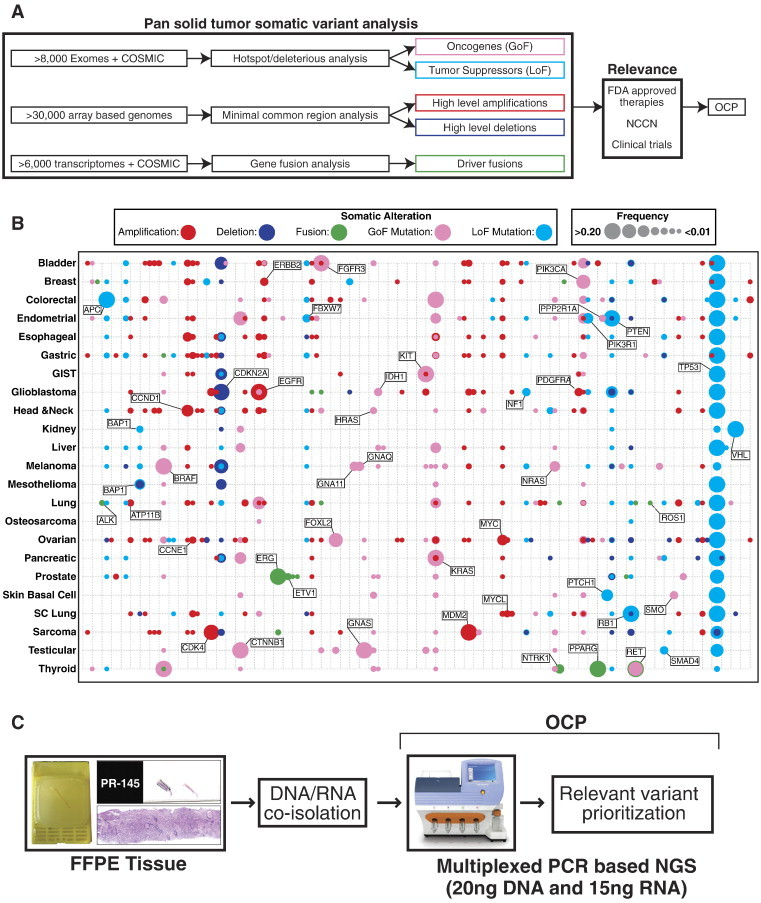
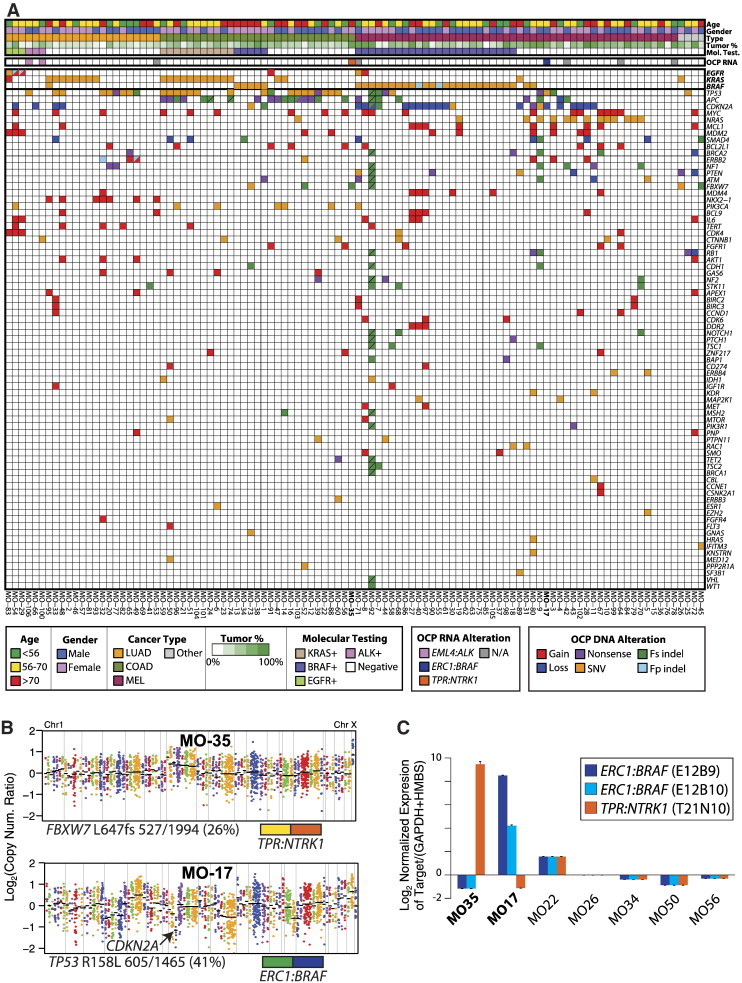
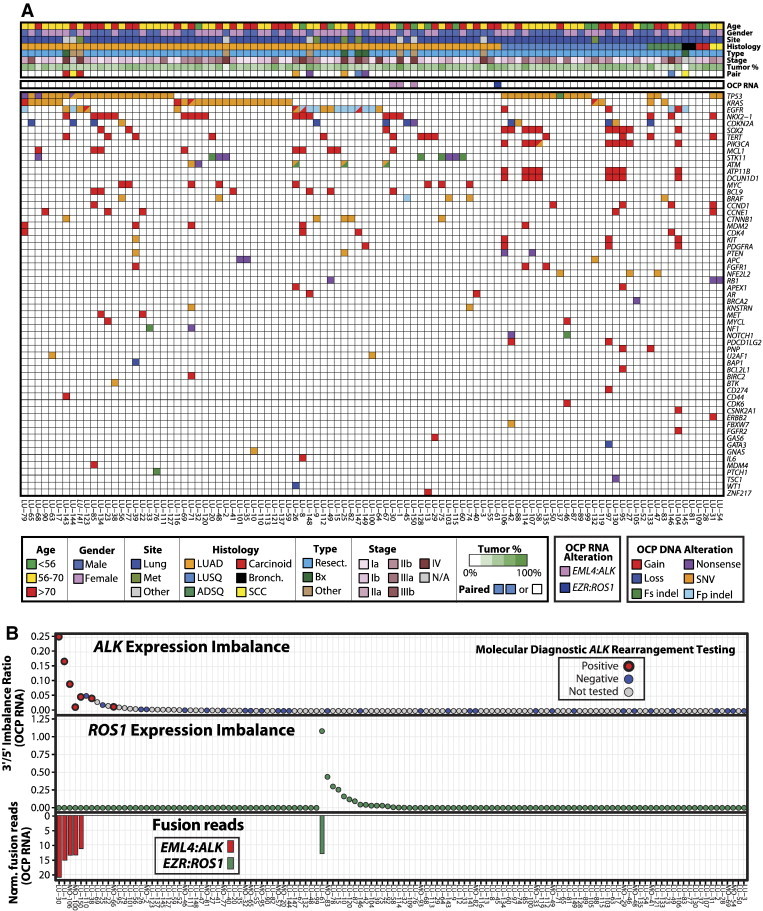
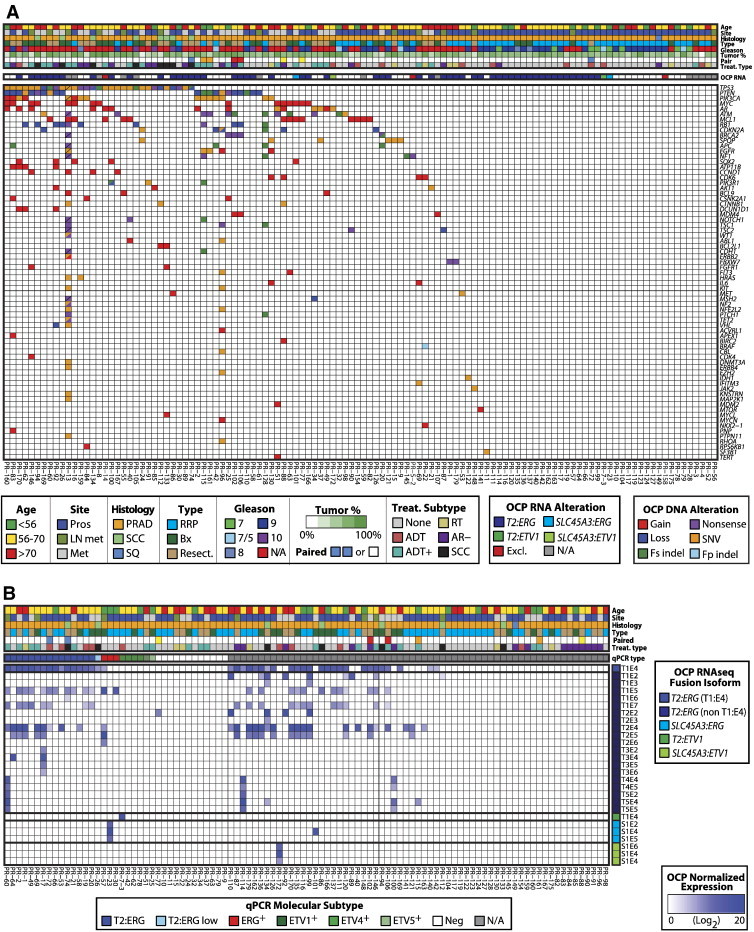
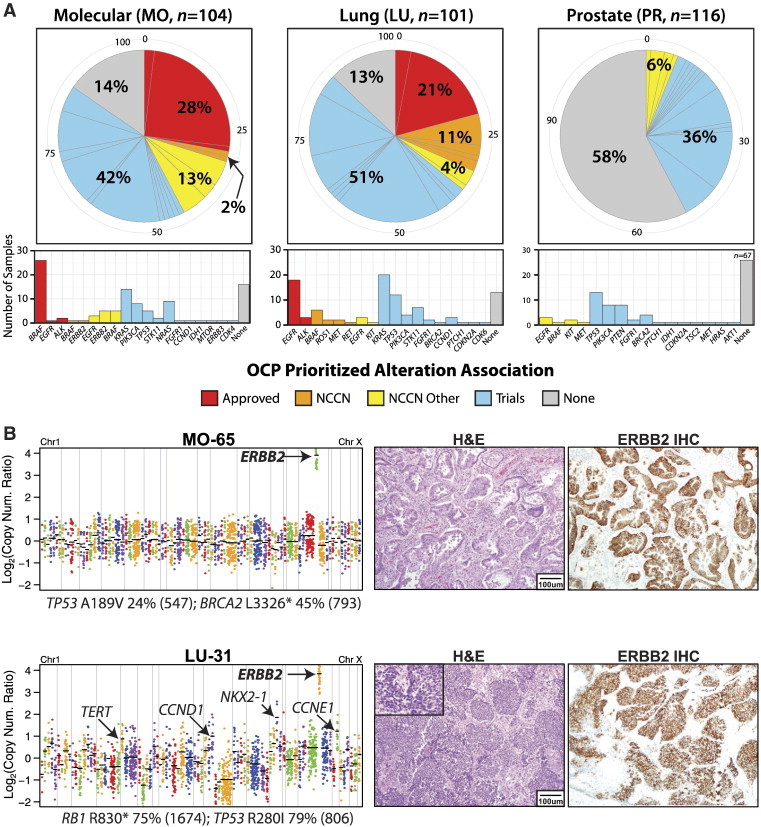
Next-generation sequencing (NGS) has enabled genome-wide personalized oncology efforts at centers and companies with the specialty expertise and infrastructure required to identify and prioritize actionable variants. Such approaches are not scalable, preventing widespread adoption. Likewise, most targeted NGS approaches fail to assess key relevant genomic alteration classes. To address these challenges, we predefined the catalog of relevant solid tumor somatic genome variants (gain-of-function or loss-of-function mutations, high-level copy number alterations, and gene fusions) through comprehensive bioinformatics analysis of >700,000 samples. To detect these variants, we developed the Oncomine Comprehensive Panel (OCP), an integrative NGS-based assay [compatible with <20 ng of DNA/RNA from formalin-fixed paraffin-embedded (FFPE) tissues], coupled with an informatics pipeline to specifically identify relevant predefined variants and created a knowledge base of related potential treatments, current practice guidelines, and open clinical trials. We validated OCP using molecular standards and more than 300 FFPE tumor samples, achieving >95% accuracy for KRAS, epidermal growth factor receptor, and BRAF mutation detection as well as for ALK and TMPRSS2:ERG gene fusions. Associating positive variants with potential targeted treatments demonstrated that 6% to 42% of profiled samples (depending on cancer type) harbored alterations beyond routine molecular testing that were associated with approved or guideline-referenced therapies. As a translational research tool, OCP identified adaptive CTNNB1 amplifications/mutations in treated prostate cancers. Through predefining somatic variants in solid tumors and compiling associated potential treatment strategies, OCP represents a simplified, broadly applicable targeted NGS system with the potential to advance precision oncology efforts.
Overview
The claims and statistics of this paper haven’t been checked yet.
Run the check — free, no account needed. It reads the open-access text and checks the sources it cites.
Integrity signals
Registry
Cites
Statistics
Figures
Verification
Claims the paper makes
The claims and statistics of this paper haven’t been checked yet.
Run the check — free, no account needed. It reads the open-access text and checks the sources it cites.
Claims other papers make about this one
Each is checked against this paper’s own text: does it say what the citing paper says it does?
In the citing paper
“Targeted multiplexed hotspot panels (e.g., Agena Oncocarta [Agena Bioscience, San Diego, CA], 47 SNaPshot [Applied Biosystems, Foster City, CA], 48 and next-generation sequencing [NGS] panels 49,50 ) have already been developed and are available in College of American Pathologists (CAP)-accredited academic and commercial laboratories.”
Self-check
Percentages, sums and reported differences re-computed from the paper’s own numbers.
The self-check needs the paper’s full text.
Citations
Cites
Vogelstein, B., Papadopoulos, N., Velculescu, V. E., Zhou, S., Diaz, L. A., & Kinzler, K. W. (2013) · Science · doi:10.1126/science.1235122 · Cited by 7,863
Mutational heterogeneity in cancer and the search for new cancer-associated genes
Lawrence, M. S., Stojanov, P., Polak, P., Kryukov, G. V., Cibulskis, K., Sivachenko, A., Carter, S. L., Stewart, C., Mermel, C. H., Roberts, S. A., et al. (2013) · Nature · doi:10.1038/nature12213 · Cited by 5,461
Recurrent Fusion of TMPRSS2 and ETS Transcription Factor Genes in Prostate Cancer
Tomlins, S. A., Rhodes, D. R., Perner, S., Dhanasekaran, S. M., Mehra, R., Sun, X.-W., Varambally, S., Cao, X., Tchinda, J., Kuefer, R., et al. (2005) · Science · doi:10.1126/science.1117679 · Cited by 3,846
Self-citationDiscovery and saturation analysis of cancer genes across 21 tumour types
Lawrence, M. S., Stojanov, P., Mermel, C. H., Robinson, J. T., Garraway, L. A., Golub, T. R., Meyerson, M., Gabriel, S. B., Lander, E. S., & Getz, G. (2014) · Nature · doi:10.1038/nature12912 · Cited by 3,096
Improved Overall Survival in Melanoma with Combined Dabrafenib and Trametinib
Robert, C., Karaszewska, B., Schachter, J., Rutkowski, P. L., Mackiewicz, A. A., Stroyakovskiy, D., Lichinitser, M., Dummer, R., Grange, F., Mortier, L., et al. (2014) · New England Journal of Medicine · doi:10.1056/nejmoa1412690 · Cited by 2,763
AR-V7 and Resistance to Enzalutamide and Abiraterone in Prostate Cancer
Antonarakis, E. S., Lu, C., Wang, H., Luber, B., Nakazawa, M., Roeser, J. C., Chen, Y., Mohammad, T. A., Chen, Y., Fedor, H. L., et al. (2014) · New England Journal of Medicine · doi:10.1056/nejmoa1315815 · Cited by 2,710
The mutational landscape of lethal castration-resistant prostate cancer
Grasso, C. S., Wu, Y.-M., Robinson, D. R., Cao, X., Dhanasekaran, S. M., Khan, A. P., Quist, M. J., Jing, X., Lonigro, R. J., Brenner, J. C., et al. (2012) · Nature · doi:10.1038/nature11125 · Cited by 2,517
Self-citationCOSMIC: exploring the world's knowledge of somatic mutations in human cancer
Forbes, S. A., Beare, D. M., Gunasekaran, P., Leung, K., Bindal, N., Boutselakis, H., Ding, M., Bamford, S., Cole, C. G., Ward, S. A., et al. (2014) · Nucleic Acids Research · doi:10.1093/nar/gku1075 · Cited by 2,294
Frampton, G. M., Fichtenholtz, A., Otto, G. A., Wang, K., Downing, S. R., He, J., Schnall-Levin, M., White, J., Sanford, E. M., An, P., et al. (2013) · Nature Biotechnology · doi:10.1038/nbt.2696 · Cited by 2,157 · cited 4×
“Large companies have also been established with the goal of providing comprehensive NGS-based precision oncology services [18]; however, interpretation of results and prioritizing treatment strategiesmay still be outsourced.”
BackgroundInfluentialRhodes, D. R., Sundaram, S. K., Mahavisno, V., Varambally, R., Yu, J., Briggs, B., Barrette, T. R., Anstett, M. J., Kincead-Beal, C., Kulkarni, P., et al. (2007) · Neoplasia · doi:10.1593/neo.07112 · Cited by 2,057
Self-citation
Cited by
Sorted by citations
The Molecular Taxonomy of Primary Prostate Cancer
Abeshouse, A. A., Ahn, J., Akbani, R., Ally, A., Amin, S. B., Andry, C., Annala, M., Aprikian, A. G., Armenia, J., Arora, A., et al. (2015) · Cell · doi:10.1016/j.cell.2015.10.025 · Cited by 3,126
Tepotinib in Non–Small-Cell Lung Cancer with MET Exon 14 Skipping Mutations
Paik, P. K., Felip, E., Veillon, R., Sakai, H., Cortot, A. B., Garassino, M. C., Mazières, J., Viteri, S., Senellart, H., van Meerbeeck, J. P., et al. (2020) · New England Journal of Medicine · doi:10.1056/nejmoa2004407 · Cited by 904
Overcoming therapy resistance in EGFR-mutant lung cancer
Passaro, A., Jänne, P. A., Mok, T., & Peters, S. (2021) · Nature Cancer · doi:10.1038/s43018-021-00195-8 · Cited by 565
FGFR inhibitors: Effects on cancer cells, tumor microenvironment and whole-body homeostasis (Review)
Katoh, M. (2016) · International Journal of Molecular Medicine · doi:10.3892/ijmm.2016.2620 · Cited by 407
Tumor microenvironment and cancer therapy resistance
Sun, Y. (2015) · Cancer Letters · doi:10.1016/j.canlet.2015.07.044 · Cited by 391
Metadata
- Authors
- Hovelson, D. H., McDaniel, A. S., Cani, A. K., Johnson, B., Rhodes, K., Williams, P. D., Bandla, S., Bien, G., Choppa, P., Hyland, F., Gottimukkala, R., Liu, G., Manivannan, M., Schageman, J., Ballesteros-Villagrana, E., Grasso, C. S., Quist, M. J., Yadati, V., Amin, A., Siddiqui, J., Betz, B. L., Knudsen, K. E., Cooney, K. A., Feng, F. Y., Roh, M. H., Nelson, P. S., Liu, C.-J., Beer, D. G., Wyngaard, P., Chinnaiyan, A. M., Sadis, S., Rhodes, D. R., & Tomlins, S. A.
- Affiliations
- University of Michigan (US)
- Thermo Fisher Scientific (United States) (US)
- Oregon Health & Science University (US)
- Thomas Jefferson University (US)
- Fred Hutch Cancer Center (US)
- Howard Hughes Medical Institute (US)
- Corresponding author
- Tomlins, Scott A.
- ORCID
- Venue
- Neoplasia
- Publisher
- Elsevier BV
- Published
- 2015-04
- Volume
- 17
- Issue
- 4
- Pages
- 385-399
- ISSN
- 1476-5586 (ISSN-L)
- PMC
- PMC4415141
- OpenAlex
- W2141420424
- Cited by
- 224
- References
- 56
- Citations by year
- 2026: 1 · 2025: 7 · 2024: 13 · 2023: 17 · 2022: 14 · 2021: 21 · 2020: 23 · 2019: 29 · 2018: 28 · 2017: 28 · 2016: 28 · 2015: 14
- FWCI
- 10.80
- Type
- journal article
- Language
- en
- Open access
- gold
- doi.org
- Licence
- Locations
- Neoplasia (publishedVersion, cc-by-nc-nd)
- Europe PMC (PubMed Central) (publishedVersion, cc-by-nc-nd)
- PubMed Central (publishedVersion, cc-by-nc-nd)
- PubMed (publishedVersion)
- DOAJ (DOAJ: Directory of Open Access Journals) (submittedVersion, cc-by-sa)
- Funders
- National Human Genome Research Institute (UM1HG006508)
- National Cancer Institute (R01CA159945, R01CA183857, R01CA181605, R01CA154365, P50CA186786)
- Topics
- Life Sciences › Biochemistry, Genetics and Molecular Biology › Cancer Research › Cancer Genomics and Diagnostics
- Life Sciences › Biochemistry, Genetics and Molecular Biology › Genetics › Genomics and Rare Diseases
- Life Sciences › Biochemistry, Genetics and Molecular Biology › Genetics › BRCA gene mutations in cancer
- Keywords
- targeted next-generation sequencing, solid tumors, somatic mutations, actionable mutations, gene fusion, copy number alterations, formalin-fixed paraffin-embedded tissue, precision oncology, KRAS, EGFR, BRAF, anaplastic lymphoma kinase, TMPRSS2-ERG fusion, CTNNB1, prostate cancer, targeted therapy
- MeSH terms
- Transcriptional Regulator ERG, Anaplastic Lymphoma Kinase, Aged, DNA Mutational Analysis, DNA, Neoplasm, Female, Humans, Male, Middle Aged, Mutation, Neoplasms, Proto-Oncogene Proteins, Retrospective Studies, Serine Endopeptidases, Trans-Activators, Proto-Oncogene Proteins p21(ras), ras Proteins, Computational Biology, Receptor Protein-Tyrosine Kinases, Proto-Oncogene Proteins B-raf, beta Catenin, High-Throughput Nucleotide Sequencing, ErbB Receptors
About these checks
Registry, retraction, Cites and statistics results are computed, not judged, with one exception: a printed reference that no index lists is read once by a model before it counts as a citation error. Claims are extracted by a model and kept only when their quote appears verbatim in the text; each cited source is then checked, with a model’s help, for whether it says what the claim relies on. Those verdicts can be wrong — read the claim’s quote and the cited source before relying on one.
Statistics and arithmetic are recomputed, not judged.
Confidence bands are shown only for fields calibrated on our annotated test set. None is calibrated yet, so no band is shown.
What counts as a claim ›How we measure confidence ›How we check this ›
Are you an author, or do you see a problem with this page? Request a review
