

The DOI matches its Crossref record; 215 of the 215 references it cites were found in a registry or an index.
Neuromodulation of Attention
Open accessAbstract
Attention is critical to high-level cognition and attention deficits are a hallmark of neurologic and neuropsychiatric disorders. Although years of research indicates that distinct neuromodulators influence attentional control, a mechanistic account that traverses levels of analysis (cells, circuits, behavior) is missing. However, such an account is critical to guide the development of next-generation pharmacotherapies aimed at forestalling or remediating the global burden associated with disorders of attention. Here, we summarize current neuroscientific understanding of how attention affects single neurons and networks of neurons. We then review key results that have informed our understanding of how neuromodulation shapes these neuron and network properties and thereby enables the appropriate allocation of attention to relevant external or internal events. Finally, we highlight areas where we believe hypotheses can be formulated and tackled experimentally in the near future, thereby critically increasing our mechanistic understanding of how attention is implemented at the cellular and network levels.
Overview
The claims and statistics of this paper haven’t been checked yet.
Run the check — free, no account needed. It reads the open-access text and checks the sources it cites.
Integrity signals
Registry
Cites
Statistics
Figures
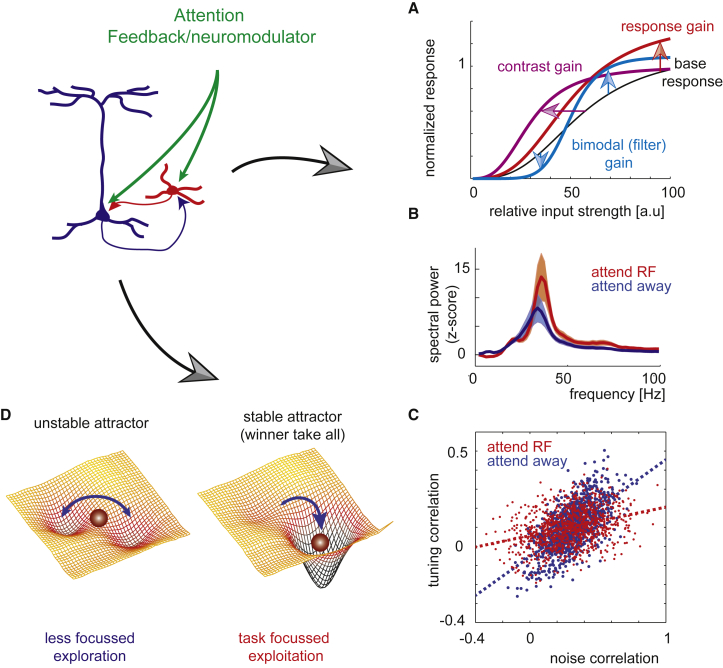
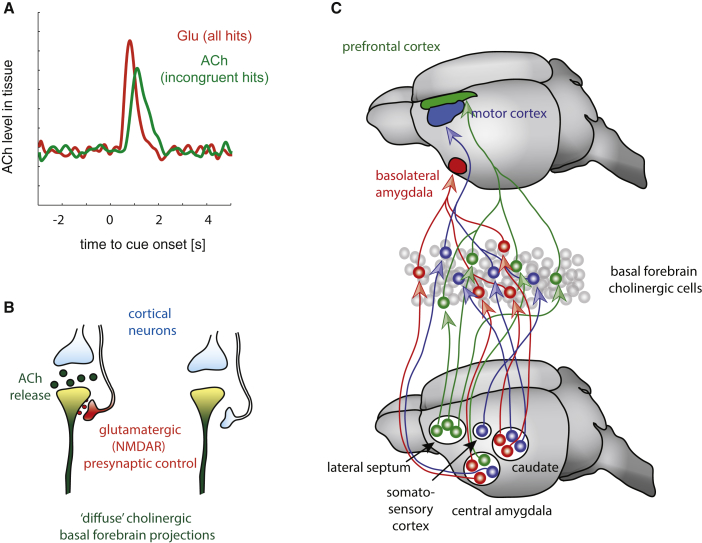
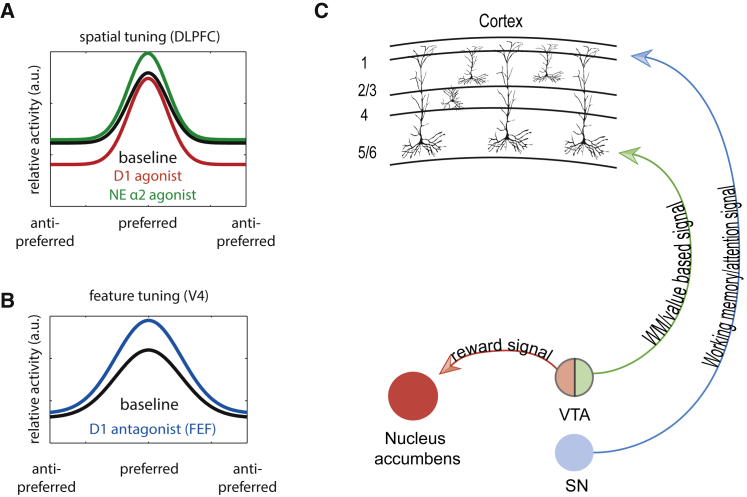
Verification
Claims the paper makes
The claims and statistics of this paper haven’t been checked yet.
Run the check — free, no account needed. It reads the open-access text and checks the sources it cites.
Claims other papers make about this one
Each is checked against this paper’s own text: does it say what the citing paper says it does?
The source backs part of the claim, not all of it — or backs it for a different population, condition or comparison.
In the citing paper
“Among numerous cognitive domains, working memory serves as the basis of other higher order cognitive processes including but not limited to recognition memory (27–29), which is mediated by mPFC function.”
From Effects of Lisdexamfetamine, a Prodrug of D-Amphetamine, on Locomotion, Spatial Cognitive Processing and Neurochemical Profiles in Rats: A Comparison With Immediate-Release Amphetamine (2022) · cites this paper as [28]
Experimental — accuracy not yet measuredIn the citing paper
“In network models of local cortical circuits, state-dependent increases in inhibitory and excitatory drive can cause convergence of competing, unstable patterns of activity to a single, stable representation221”
From Mechanisms underlying gain modulation in the cortex (2020) · cites this paper as [221]
Self-check
Percentages, sums and reported differences re-computed from the paper’s own numbers.
The self-check needs the paper’s full text.
Citations
Cites
Control of goal-directed and stimulus-driven attention in the brain
Corbetta, M., & Shulman, G. L. (2002) · Nature Reviews Neuroscience · doi:10.1038/nrn755 · Cited by 12,881
A neural substrate of prediction and reward
Schultz, W., Dayan, P., & Montague, P. R. (1997) · Science · doi:10.1126/science.275.5306.1593 · Cited by 9,388
Neural Mechanisms of Selective Visual Attention
Desimone, R., & Duncan, J. (1995) · Annual Review of Neuroscience · doi:10.1146/annurev.ne.18.030195.001205 · Cited by 8,388
The relation of strength of stimulus to rapidity of habit formation
Yerkes, R. M., & Dodson, J. D. (1908) · Journal of Comparative Neurology and Psychology · doi:10.1002/cne.920180503 · Cited by 6,911
Aston-Jones, G., & Cohen, J. D. (2005) · Annual Review of Neuroscience · doi:10.1146/annurev.neuro.28.061604.135709 · Cited by 4,472
Modulation of Oscillatory Neuronal Synchronization by Selective Visual Attention
Fries, P., Reynolds, J. H., Rorie, A. E., & Desimone, R. (2001) · Science · doi:10.1126/science.1055465 · Cited by 2,786
The physiology, signaling, and pharmacology of dopamine receptors
Beaulieu, J.-M., & Gainetdinov, R. R. (2011) · Pharmacological Reviews · doi:10.1124/pr.110.002642 · Cited by 2,763
Rhythms for cognition: communication through coherence
Fries, P. (2015) · Neuron · doi:10.1016/j.neuron.2015.09.034 · Cited by 2,725
Mnemonic coding of visual space in the monkey's dorsolateral prefrontal cortex
Funahashi, S., Bruce, C. J., & Goldman-Rakic, P. S. (1989) · Journal of Neurophysiology · doi:10.1152/jn.1989.61.2.331 · Cited by 2,685
Berridge, C. W., & Waterhouse, B. D. (2003) · Brain Research Reviews · doi:10.1016/s0165-0173(03)00143-7 · Cited by 2,529
Cited by
Sorted by citations
Predictive Processing: A Canonical Cortical Computation
Keller, G. B., & Mrsic-Flogel, T. D. (2018) · Neuron · doi:10.1016/j.neuron.2018.10.003 · Cited by 836
Embedded Devices for Neuromorphic Time-Series Assessment
Mazumder, A. N., Hosseini, M., & Mohsenin, T. (2022) · Research Explorer (The University of Manchester) · doi:10.13016/m2ksy0-wxr3 · Cited by 662
Pupil Size as a Window on Neural Substrates of Cognition
Joshi, S., & Gold, J. I. (2020) · Trends in Cognitive Sciences · doi:10.1016/j.tics.2020.03.005 · Cited by 620
Dopamine and Cognitive Control in Prefrontal Cortex
Ott, T., & Nieder, A. (2019) · Trends in Cognitive Sciences · doi:10.1016/j.tics.2018.12.006 · Cited by 530
Dopamine: The Neuromodulator of Long-Term Synaptic Plasticity, Reward and Movement Control
Speranza, L., di Porzio, U., Viggiano, D., Donato, A. D., & Volpicelli, F. (2021) · Cells · doi:10.3390/cells10040735 · Cited by 472
Metadata
- Authors
- Thiele, A., & Bellgrove, M. A.
- Affiliations
- Newcastle University (GB)
- Monash University (AU)
- Corresponding author
- Thiele, Alexander
- Venue
- Neuron
- Publisher
- Elsevier BV
- Published
- 2018-02
- Volume
- 97
- Issue
- 4
- Pages
- 769-785
- ISSN
- 0896-6273 (ISSN-L)
- PMC
- PMC6204752
- OpenAlex
- W2788231085
- Cited by
- 350
- References
- 215
- Citations by year
- 2026: 36 · 2025: 33 · 2024: 54 · 2023: 52 · 2022: 45 · 2021: 50 · 2020: 32 · 2019: 35 · 2018: 13
- FWCI
- 4.34
- Type
- journal article
- Language
- en
- Open access
- hybrid
- doi.org
- Licence
- Locations
- Neuron (publishedVersion, cc-by)
- Europe PMC (PubMed Central) (publishedVersion, cc-by)
- PubMed Central (publishedVersion, cc-by)
- PubMed (publishedVersion)
- Monash University Research Portal (Monash University) (submittedVersion, cc-by)
- Newcastle University ePrints (Newcastle Univesity) (cc-by)
- Funders
- Wellcome Trust (093104)
- MRC (MR/P013031/1)
- NC3R (NC/P000940/1)
- Australian Research Council (FT130101488, DP150100986)
- Newcastle University
- Monash University
- Topics
- Life Sciences › Neuroscience › Cognitive Neuroscience › Neural dynamics and brain function
- Life Sciences › Neuroscience › Cognitive Neuroscience › Neural and Behavioral Psychology Studies
- Life Sciences › Neuroscience › Cellular and Molecular Neuroscience › Neuroscience and Neuropharmacology Research
- Keywords
- attention, neuromodulation, attention deficits, single neurons, neural circuits, attentional control, attention allocation
- MeSH terms
- Acetylcholine, Animals, Attention, Biogenic Amines, Brain, Dopamine, Humans, Neural Pathways, Neurons, Norepinephrine, Serotonin
About these checks
Registry, retraction, Cites and statistics results are computed, not judged, with one exception: a printed reference that no index lists is read once by a model before it counts as a citation error. Claims are extracted by a model and kept only when their quote appears verbatim in the text; each cited source is then checked, with a model’s help, for whether it says what the claim relies on. Those verdicts can be wrong — read the claim’s quote and the cited source before relying on one.
Statistics and arithmetic are recomputed, not judged.
Confidence bands are shown only for fields calibrated on our annotated test set. None is calibrated yet, so no band is shown.
What counts as a claim ›How we measure confidence ›How we check this ›
Are you an author, or do you see a problem with this page? Request a review
