

The DOI matches its Crossref record; 128 of the 131 references it cites were found in a registry or an index.
Effectiveness of regional DTI measures in distinguishing Alzheimer’s disease, MCI, and normal aging
Open accessAbstract
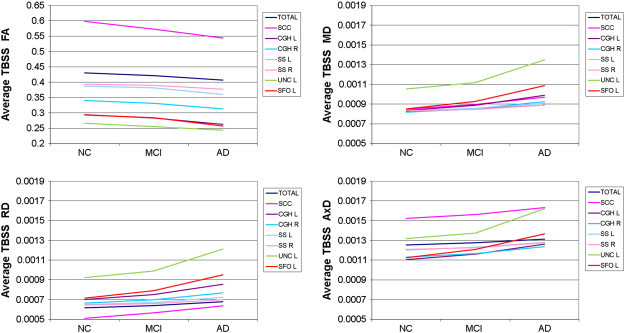
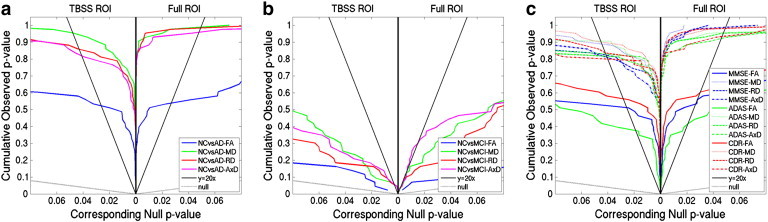
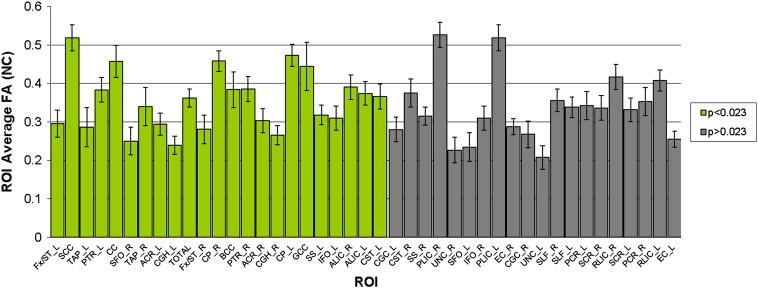
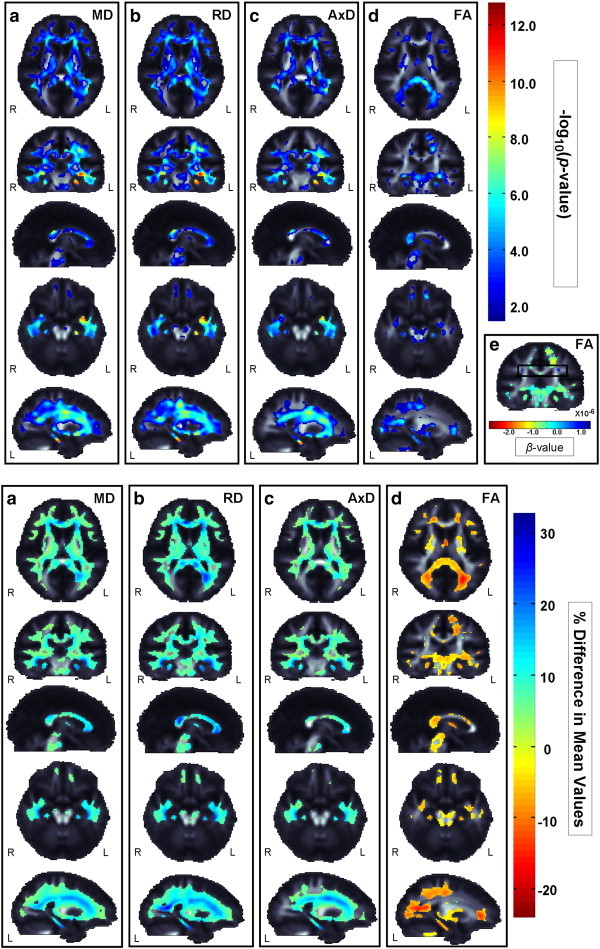
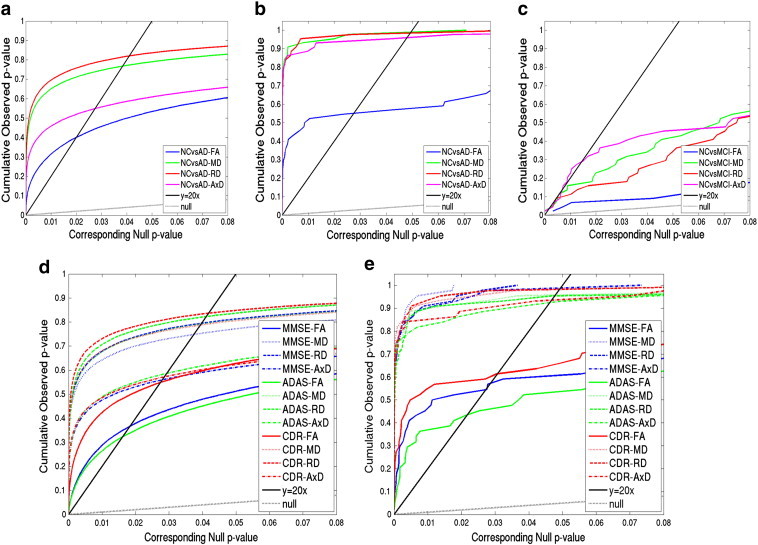
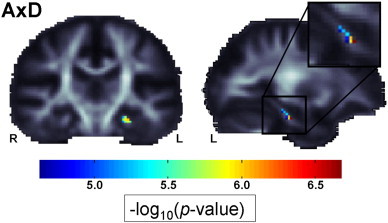
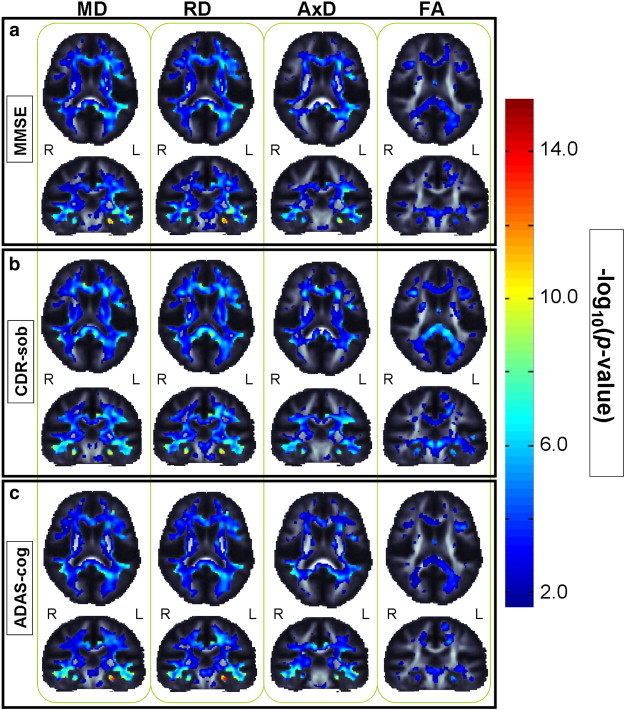
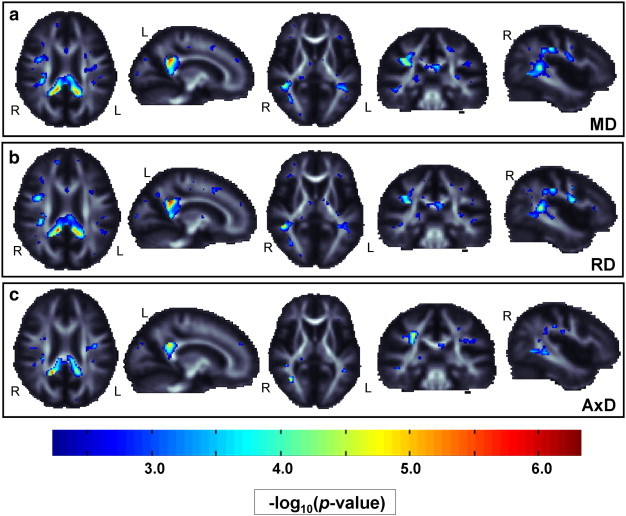
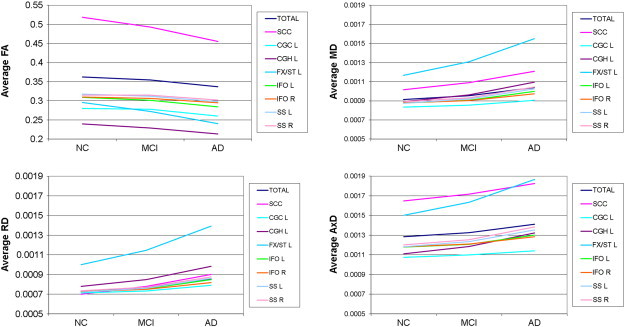
The Alzheimer's Disease Neuroimaging Initiative (ADNI) recently added diffusion tensor imaging (DTI), among several other new imaging modalities, in an effort to identify sensitive biomarkers of Alzheimer's disease (AD). While anatomical MRI is the main structural neuroimaging method used in most AD studies and clinical trials, DTI is sensitive to microscopic white matter (WM) changes not detectable with standard MRI, offering additional markers of neurodegeneration. Prior DTI studies of AD report lower fractional anisotropy (FA), and increased mean, axial, and radial diffusivity (MD, AxD, RD) throughout WM. Here we assessed which DTI measures may best identify differences among AD, mild cognitive impairment (MCI), and cognitively healthy elderly control (NC) groups, in region of interest (ROI) and voxel-based analyses of 155 ADNI participants (mean age: 73.5 ± 7.4; 90 M/65 F; 44 NC, 88 MCI, 23 AD). Both VBA and ROI analyses revealed widespread group differences in FA and all diffusivity measures. DTI maps were strongly correlated with widely-used clinical ratings (MMSE, CDR-sob, and ADAS-cog). When effect sizes were ranked, FA analyses were least sensitive for picking up group differences. Diffusivity measures could detect more subtle MCI differences, where FA could not. ROIs showing strongest group differentiation (lowest p-values) included tracts that pass through the temporal lobe, and posterior brain regions. The left hippocampal component of the cingulum showed consistently high effect sizes for distinguishing groups, across all diffusivity and anisotropy measures, and in correlations with cognitive scores.
Overview
The claims and statistics of this paper haven’t been checked yet.
Run the check — free, no account needed. It reads the open-access text and checks the sources it cites.
Integrity signals
Registry
Cites
Statistics
Figures
Verification
Claims the paper makes
The claims and statistics of this paper haven’t been checked yet.
Run the check — free, no account needed. It reads the open-access text and checks the sources it cites.
Claims other papers make about this one
Each is checked against this paper’s own text: does it say what the citing paper says it does?
The source backs part of the claim, not all of it — or backs it for a different population, condition or comparison.
In the citing paper
“Among the three cognitive assessments, CDR-sob showed the strongest correlations with dMRI indices, in line with prior ADNI brain imaging studies (Hua et al., 2009; Nir et al., 2013).”
From Diffusion MRI Indices and Their Relation to Cognitive Impairment in Brain Aging: The Updated Multi-protocol Approach in ADNI3 (2019) · cites this paper as Nir et al., 2013
Experimental — accuracy not yet measuredThe source backs part of the claim, not all of it — or backs it for a different population, condition or comparison.
In the citing paper
“Similarly, in ADNI2, AxDDTI was the most sensitive to differences between CN and MCI diagnosis (Nir et al., 2013).”
From Diffusion MRI Indices and Their Relation to Cognitive Impairment in Brain Aging: The Updated Multi-protocol Approach in ADNI3 (2019) · cites this paper as Nir et al., 2013
Experimental — accuracy not yet measuredThe cited source says what the claim attributes to it.
In the citing paper
“As in our prior analysis of ADNI2 (Nir et al., 2013), FADTI was the least sensitive DTI measure.”
From Diffusion MRI Indices and Their Relation to Cognitive Impairment in Brain Aging: The Updated Multi-protocol Approach in ADNI3 (2019) · cites this paper as Nir et al., 2013
The cited source says what the claim attributes to it.
In the citing paper
“dMRI has since been used in numerous studies to understand the effects of AD on white matter (WM) microstructure and brain connectivity (Daianu et al., 2013a,b; Nir et al., 2013; Prasad et al., 2013).”
From Diffusion MRI Indices and Their Relation to Cognitive Impairment in Brain Aging: The Updated Multi-protocol Approach in ADNI3 (2019) · cites this paper as Nir et al., 2013
The cited source says what the claim attributes to it.
In the citing paper
“Lower FADTI and higher MDDTI are most frequently reported in studies of AD (Kavcic et al., 2008; Clerx et al., 2012; Nir et al., 2013; Maggipinto et al., 2017; Mayo et al., 2017)”
From Diffusion MRI Indices and Their Relation to Cognitive Impairment in Brain Aging: The Updated Multi-protocol Approach in ADNI3 (2019) · cites this paper as Nir et al., 2013
The cited source says what the claim attributes to it.
In the citing paper
“These are all regions that show early degenerative changes in MCI and AD (Mielke et al., 2009; Nir et al., 2013; Maggipinto et al., 2017; Powell et al., 2018).”
From Diffusion MRI Indices and Their Relation to Cognitive Impairment in Brain Aging: The Updated Multi-protocol Approach in ADNI3 (2019) · cites this paper as Nir et al., 2013
Self-check
Percentages, sums and reported differences re-computed from the paper’s own numbers.
The self-check needs the paper’s full text.
Citations
Cites
Controlling the False Discovery Rate: A Practical and Powerful Approach to Multiple Testing
Benjamini, Y., & Hochberg, Y. (1995) · Journal of the Royal Statistical Society Series B: Statistical Methodology · doi:10.1111/j.2517-6161.1995.tb02031.x · Cited by 109,482
Folstein, M. F., Folstein, S. E., & McHugh, P. R. (1975) · Journal of Psychiatric Research · doi:10.1016/0022-3956(75)90026-6 · Cited by 88,282
Hirono, N., Mori, E., Ikejiri, Y., Imamura, T., Shimomura, T., Hashimoto, M., Yamashita, H., & Ikeda, M. (1997) · PubMed · Cited by 21,012
Kok, J. S., Berg, I. J., & Scherder, E. J. A. (2013) · Dementia and Geriatric Cognitive Disorders Extra · doi:10.1159/000353441 · Cited by 20,589
Older Adults' Reasons for Using Technology while Aging in Place
Peek, S. T. M., Luijkx, K. G., Rijnaard, M. D., Nieboer, M. E., van der Voort, C. S., Aarts, S., van Hoof, J., Vrijhoef, H. J., & Wouters, E. (2015) · Gerontology · doi:10.1159/000430949 · Cited by 19,852
Sensitivity and False Alarm Rate of a Fall Sensor in Long-Term Fall Detection in the Elderly
Kangas, M., Korpelainen, R., Vikman, I., Nyberg, L., & Jämsä, T. J. (2014) · Gerontology · doi:10.1159/000362720 · Cited by 19,007
Neuropathological stageing of Alzheimer-related changes.
Braak, H., & Braak, E. (1991) · Acta Neuropathologica · doi:10.1007/bf00308809 · Cited by 16,123 · cited 3×
“…et al., 2004; Medina et al., 2006; Rose et al., 2006; Xie et al., 2006; Zhang et al., 2007; Kavcic et al., 2008; Stebbins and Murphy, 2009), consistent with regions showing earliest pathological changes (Braak and Braak, 1991; Braak and Braak, 1995; Thompson et al., 2007) and our results.”
Jenkinson, M., Bannister, P., Brady, M., & Smith, S. (2002) · NeuroImage · doi:10.1006/nimg.2002.1132 · Cited by 11,888
Fast robust automated brain extraction
Smith, S. M. (2002) · Human Brain Mapping · doi:10.1002/hbm.10062 · Cited by 10,496
Tract-based spatial statistics: Voxelwise analysis of multi-subject diffusion data
Smith, S. M., Jenkinson, M., Johansen‐Berg, H., Rueckert, D., Nichols, T. E., Mackay, C. E., Watkins, K. E., Ciccarelli, O., Cader, M. Z., Matthews, P. M., et al. (2006) · NeuroImage · doi:10.1016/j.neuroimage.2006.02.024 · Cited by 6,598
Research works printed but not linked: 2
- Daianu, 2012, Analyzing the structural k-core of brain connectivity networks in normal aging and Alzheimer's disease, MICCAI NIBAD, 52
- Gutman, 2012, Creating unbiased minimal deformation templates for brain volume registration, Proceedings of the Organization for Human Brain Mapping Annual Conference
Cited by
Sorted by citations
Items 301–349 of 349
Multi-scale 3D-CNN for Alzheimer's Disease Classification
Yan, H. R., Fang, K., Shang, H., Liu, H., Sun, J., & Qiao, J. (2023) · IEEE International Symposium on Circuits and Systems proceedings · doi:10.1109/iscas46773.2023.10181771 · Cited by 1
A Detection Method for Alzheimer's Disease Based on Long-Term Visual Features
Meng, H., Shenghui, Z., Sun, K., & Yuyan, Z. (2023) · International Conference on Networking and Network Applications (NaNA) · doi:10.1109/nana60121.2023.00101 · Cited by 1
Exploring Asymmetrical White Matter Abnormalities in Alzheimer’s using Deep Learning
Srivishagan, S., Kumaralingam, L., Ratnarajah, N., Thanikasalam, K., & Pinidiyaarachchi, A. J. (2023) · Moratuwa Engineering Research Conference (MERCon) · doi:10.1109/mercon60487.2023.10355503 · Cited by 1
Lock, C., Toh, E. M. S., & Keong, N. C. H. (2024) · Frontiers in Human Neuroscience · doi:10.3389/fnhum.2024.1188533 · Cited by 1
Multi-modality conditioned variational U-net for field-of-view extension in brain diffusion MRI
Li, Z., Gao, C., Kanakaraj, P., Bao, S., Zuo, L., Kim, M. E., Newlin, N. R., Rudravaram, G., Khairi, N. M., Huo, Y., et al. (2026) · Magnetic Resonance Imaging · doi:10.1016/j.mri.2026.110617 · Cited by 1
Self-citationАндреевич, П. В., Солодовников, В. И., Sinitsyn, V. E., Михайловна, П. Е., Koberskaya, N. N., Gridin, V. N., & Yakhno, N. N. (2019) · Journal of radiology and nuclear medicine · doi:10.20862/0042-4676-2018-99-6-295-304 · Cited by 1
Modelling the Neuroanatomical Progression of Alzheimer's Disease and Posterior Cortical AtrophyPreprint
Marinescu, R. V. (2020) · arXiv (Cornell University) · doi:10.48550/arxiv.2003.04805 · Cited by 1
Matziorinis, A. M., Leemans, A., Skouras, S., & Koelsch, S. (2023) · Research Square · doi:10.21203/rs.3.rs-3412028/v1 · Cited by 1
Avancini, T. M. C. (2017) · Digital Library of Theses and Dissertations (Universidade de São Paulo) · doi:10.11606/t.5.2017.tde-06062017-103414
汪, 克. (2018) · Advances in Clinical Medicine · doi:10.12677/acm.2018.810153
Prakash, J. J. S., Rajamanickam, K., & Arunnath, R. M. (2019) · Springer eBooks · doi:10.1007/978-981-13-1477-3_3
Morales-Ballesteros, O., & Marrufo-Meléndez, Ó. R. (2020) · Anales de radiología, México/Anales de radiología, México · doi:10.24875/arm.19000146
The white matter network in cognitive normal elderly predict the rate of cognitive declinePreprint
Huang, W.-J., & Shu, N. (2020) · bioRxiv · doi:10.1101/2020.04.16.044479
Wang, Y., Wang, T., Yu, Z., Huang, B., Liu, B., Liu, X., Yin, H., & Liu, J. (2021) · Research Square · doi:10.21203/rs.3.rs-134624/v1
Rallabandi, V. P. S., & Seetharaman, K. (2021) · International Conference on Intelligent Computing and Control Systems (ICICCS) · doi:10.1109/iciccs51141.2021.9432112
Ren, M., Kim, H., Dey, N., & Gerig, G. (2021) · arXiv (Cornell University) · doi:10.48550/arxiv.2106.13188
Ramírez‐Toraño, F. (2021) · UPM Digital Archive (Technical University of Madrid) · doi:10.20868/upm.thesis.66243
Liu, S. (2017) · Springer theses · doi:10.1007/978-981-10-3533-3_1
Çavuşoğlu, B., Ada, E., Emek‐Savaş, D. D., & Yener, G. (2023) · Dokuz Eylül Üniversitesi Tıp Fakültesi Dergisi · doi:10.18614/deutip.1135057
Ruttala, R., Purohit, P., Bhattacharjee, A., BinduKumari, & Roy, P. K. (2022) · JOURNAL OF ADVANCED APPLIED SCIENTIFIC RESEARCH · doi:10.46947/joaasr442022460
A comprehensive analysis of APOE genotype effects on human brain structure in the UK BiobankPreprint
Heise, V., Offer, A. R., Whiteley, W. N., Mackay, C. E., Armitage, J., & Parish, S. (2023) · bioRxiv (Cold Spring Harbor Laboratory) · doi:10.1101/2023.06.19.543571
He, X., Wu, B., Kuo, K., Zhang, W., Ma, Q., Xiang, S., Li, Y., Wang, Z.-Y., Dong, Q., Feng, J., et al. (2023) · Figshare · doi:10.6084/m9.figshare.23512817
Peterson, A. J., Sathe, A., Zaras, D., Yang, Y., Durant, A., Deters, K., Shashikumar, N., Pechman, K. R., Kim, M. E., Gao, C., et al. (2024) · bioRxiv (Cold Spring Harbor Laboratory) · doi:10.1101/2024.06.10.598357
Self-citationYang, L., & Wang, Y. (2025) · Journal of X-Ray Science and Technology · doi:10.1177/08953996241313321
Probabilistic Mapping and Automated Segmentation of Human Brainstem White Matter BundlesPreprint
Olchanyi, M., Schreier, D. R., Li, J., Maffei, C., Sorby‐Adams, A., Kinney, H. C., Healy, B. C., Freeman, H. J., Shless, J. S., Destrieux, C., et al. (2025) · medRxiv · doi:10.1101/2025.05.01.25326687
Associations of APOE e2/e4 dosage and lifestyle on neuroimaging markers in the UK BiobankPreprint
Zhang, Y., van der Meer, D., Luykx, J. J., Linden, D. E. J., Rutten, B. P. F., Gülöksüz, S., & Blokland, G. A. M. (2025) · medRxiv · doi:10.1101/2025.05.12.25327420
Hosseini, Z., Mohebbi, A., Kiani, I., Taghilou, A., Mohammadjafari, A., & Aghamollaii, V. (2025) · Psychiatry and Clinical Neurosciences Reports · doi:10.1002/pcn5.70134
MRI Pulse Sequences and Techniques in Neuroimaging
Hu, P., & Ho, M. (2025) · Springer eBooks · doi:10.1007/978-3-031-90554-4_8
Strobel, J., Kassubek, J., Thaiss, W. M., Anderl‐Straub, S., Uzelac, Ž., Jesse, S., Michelberger, L., Solbach, C., Beer, A. J., Beer, M., et al. (2025) · SSRN Electronic Journal · doi:10.2139/ssrn.5351896
Autobiographical memory in children: relation to neural white matter
Litwin, J., Hill, K., Foley, J. M., Tani, N., Cohen, S. S., Newcombe, N. S., & Olson, I. R. (2025) · Memory · doi:10.1080/09658211.2025.2554938 · Cited by 1
Evaluating Sample-Size Efficiency and Sensitivity of Tractometry in Alzheimer's Disease
Feng, Y., Villalón‐Reina, J. E., Gari, I. B., Alibrando, J. D., Nir, T. M., Jahanshad, N., Chandio, B. Q., & Thompson, P. M. (2026) · IEEE International Symposium on Biomedical Imaging (ISBI) · doi:10.1109/isbi61048.2026.11515697 · Cited by 2
Self-citationAssociation between occupational stress exposure and altered white matter integrity in firefighters
Jeong, H. S., Kim, Y., Joo, Y., Suh, C., Shim, Y., Lee, H., Choi, Y., Jin, Y., Yoon, S. J., & Lyoo, I. K. (2025) · Journal of Affective Disorders · doi:10.1016/j.jad.2025.120792
Ukai, M., Burzynska, A. Z., Moreno, J. A., Latimer, C. S., Henry, J., Alsulami, A., Oldham, K., Flatt, T., Gary, E. G., & McGrath, S. (2025) · Research Square · doi:10.21203/rs.3.rs-7776377/v1
He, X.-Y., Wu, B.-S., Kuo, K., Zhang, W., Ma, Q., Xiang, S.-T., Li, Y.-Z., Wang, Z.-Y., Dong, Q., Feng, J.-F., et al. (2023) · Figshare · doi:10.6084/m9.figshare.23512814
Nasiri, H., Farahani, S., Mozafar, M., Ghiasi, Y., Fard, A. M., Naseri, N., Khodadadi, A., Asl, A. S., Mirzapour, M., Hamidi, H., et al. (2025) · Health Science Reports · doi:10.1002/hsr2.71671
Relationship between amyloid burden, cholinergic integrity, and cognitive function
Lee, L., Chou, C., Shih, Y., Fang, Y.-M., Chiu, Y.-L., Chuang, Y., & Liu, Y.-C. (2025) · Journal of Alzheimer s Disease · doi:10.1177/13872877251406620
Toniolo, S., Attaallah, B., Broulidakis, J., Maio, M. R., Slavkova, E. D., Dickson, S. S., Plant, O., Idris, I., Tabi, Y. A., Butler, C., et al. (2026) · medRxiv · doi:10.64898/2026.02.10.26345988
Jalalvandi, M., Shafaghi, L., & Batouli, S. A. H. (2026) · Brain Research Bulletin · doi:10.1016/j.brainresbull.2026.111786 · Cited by 1
Yu, Z., Zhang, B., Ye, J., Sun, Y., Li, P., Wang, S., Zhang, B., & Liu, S. (2026) · Depression and Anxiety · doi:10.1155/da/5764962
Distance entre distributions : application à l'imagerie médicale et à l'aéronautique
Rebbah, S. (2019) · theses.fr (ABES) · doi:10.70675/ca60f798z256dz4d32za373z7908bbc4b615
Multi-scale and multimodal imaging biomarkers for the early detection of Alzheimer’s disease
Hett, K. (2019) · theses.fr (ABES) · doi:10.70675/0d4a3118z347az4e13z812cz9ad7566ef5ba
Shuai, Y., Feng, Y., Villalón‐Reina, J. E., Nir, T. M., Thomopoulos, S. I., Thompson, P. M., & Chandio, B. Q. (2026) · IEEE International Symposium on Biomedical Imaging (ISBI) · doi:10.1109/isbi61048.2026.11515867
Self-citationNeuroLens: A Holistic Visual Analytics System for Exploring Brain Networks Across Scales
Zhang, W., & Tao, J. (2026) · IEEE Transactions on Visualization and Computer Graphics · doi:10.1109/tvcg.2026.3701404
Functional and Structural Connectivity in a Non-Transgenic Model of Alzheimer’s Disease
Hermán, P., Parent, M., Wang, H., Coman, D., Gangasandra, V., Verhagen, J. V., Rothman, D. L., Hyder, F., & Sanganahalli, B. G. (2026) · Journal of dementia and Alzheimer's disease · doi:10.3390/jdad3030032
Anton, C., Anton, C., El-Hajj, M., Craner, M., & Lui, R. (2026) · Communications in computer and information science · doi:10.1007/978-3-032-34456-4_6
Gidwani, S. H., Chattopadhyay, T., Thomopoulos, S. I., & Thompson, P. M. (2026) · Frontiers in Computational Neuroscience · doi:10.3389/fncom.2026.1902258
Self-citation
Metadata
- Authors
- Nir, T. M., Jahanshad, N., Villalon-Reina, J. E., Toga, A. W., Jack, C. R., Weiner, M. W., & Thompson, P. M.
- Affiliations
- University of California, Los Angeles (US)
- Mayo Clinic (US)
- University of California, San Francisco (US)
- Corresponding author
- Thompson, Paul M.
- ORCID
- Venue
- NeuroImage: Clinical
- Publisher
- Elsevier BV
- Published
- 2013
- Volume
- 3
- Pages
- 180-195
- ISSN
- 2213-1582 (ISSN-L)
- PMC
- PMC3792746
- OpenAlex
- W2028748733
- Cited by
- 348
- References
- 131
- Citations by year
- 2026: 14 · 2025: 37 · 2024: 28 · 2023: 33 · 2022: 29 · 2021: 31 · 2020: 23 · 2019: 32 · 2018: 22 · 2017: 21 · 2016: 27 · 2015: 30 · 2014: 21
- FWCI
- 18.49
- Type
- journal article
- Language
- en
- Open access
- gold
- doi.org
- Licence
- Locations
- NeuroImage Clinical (publishedVersion, cc-by-nc-nd)
- Europe PMC (PubMed Central) (publishedVersion, cc-by-nc-nd)
- PubMed Central (publishedVersion, cc-by-nc-nd)
- PubMed (publishedVersion)
- eScholarship (California Digital Library) (submittedVersion, cc-by-nc-nd)
- Funders
- ADNI (U01 AG024904)
- National Institute on Aging
- National Institute of Biomedical Imaging and Bioengineering
- Abbott
- Alzheimer's Association
- Alzheimer's Drug Discovery Foundation
- Amorfix Life Sciences Ltd.
- AstraZeneca
- Bayer HealthCare
- BioClinica, Inc.
- Biogen Idec Inc.
- Bristol-Myers Squibb Company
- Eisai Inc.
- Elan Pharmaceuticals Inc.
- Eli Lilly and Company
- F. Hoffmann-La Roche Ltd.
- Genentech, Inc.
- GE Healthcare
- Innogenetics, N.V.
- IXICO Ltd.
- Janssen Alzheimer Immunotherapy Research & Development, LLC.
- Johnson & Johnson Pharmaceutical Research & Development LLC.
- Medpace, Inc.
- Merck & Co., Inc.
- Meso Scale Diagnostics, LLC.
- Novartis Pharmaceuticals Corporation
- Pfizer Inc.
- Servier
- Synarc Inc.
- Takeda Pharmaceutical Company
- Canadian Institutes of Health Research
- NIH (P30 AG010129, K01 AG030514)
- NIA
- NIBIB
- National Library of Medicine
- National Center for Research Resources (AG016570, EB01651, LM05639, RR019771)
- Topics
- Health Sciences › Medicine › Psychiatry and Mental health › Dementia and Cognitive Impairment Research
- Health Sciences › Medicine › Radiology, Nuclear Medicine and Imaging › Advanced Neuroimaging Techniques and Applications
- Life Sciences › Neuroscience › Cellular and Molecular Neuroscience › Alzheimer's disease research and treatments
- Keywords
- Alzheimer's disease, mild cognitive impairment, normal aging, diffusion tensor imaging, fractional anisotropy, white matter diffusivity, white matter microstructure, temporal lobe, neurodegeneration biomarkers, cognitive impairment detection, voxel-based analysis, region of interest analysis
About these checks
Registry, retraction, Cites and statistics results are computed, not judged, with one exception: a printed reference that no index lists is read once by a model before it counts as a citation error. Claims are extracted by a model and kept only when their quote appears verbatim in the text; each cited source is then checked, with a model’s help, for whether it says what the claim relies on. Those verdicts can be wrong — read the claim’s quote and the cited source before relying on one.
Statistics and arithmetic are recomputed, not judged.
Confidence bands are shown only for fields calibrated on our annotated test set. None is calibrated yet, so no band is shown.
What counts as a claim ›How we measure confidence ›How we check this ›
Are you an author, or do you see a problem with this page? Request a review
